










A Smorgasbord of Classes at BYU Genealogy Conference
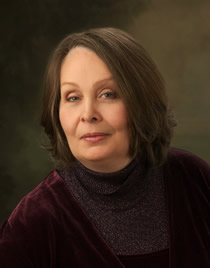
by Sherlene Hall Bartholomew
I have the perfect solution for those of you who are just back from a sweaty, sticky, sun-burny, scratchy, noisy, stressful, costly, and calorific summer vacation:
While planning next summer’s family or personal activities, circle BYU’s annual Genealogy and Family History Conference. This year the conference took 500 of us, in air-conditioned non-jostled comfort, through magnificent family history vistas, selected from among 151 media-highlighted sessions. These time-tunneling, vision-expanding in-class tours were made available early mornings through evenings, July 29-August 1, all tailored to individualized levels of experience. Classes by some of the best teachers around were available to nurture beginners, as well as update seasoned professionals.
I just got back from this year’s confab, my head spinning with all that was there to take in–none of it fattening!
This year Elder Spencer J. Condie warmed hearts, beginning the conference with Tuesday’s devotional address, in which he talked about LDS doctrine and some of his experiences with family history.
At other early morning forums during the week, Brother Kip Sperry, co-director with Paul Smart of this year’s conference, mentioned that the Church has announced that a fully searchable 1880 U.S. Census index is now linked with digital images of the original census documents.
As reported in the Salt Lake Tribune, “this service is the result of an agreement between MyFamily.com Inc. . . . and The Church of Jesus Christ of Latter-day Saints, which through FamilySearch manages the largest repository of genealogical records from around the world. The 1880 U.S. Census index and images, which include more than 50 million names, can be accessed at both https://www.ancestry.com and https://www.familysearch.org .” The release quoted Glade I. Nelson, director of the Church’s Family History Library in Salt Lake City: “Integrating the online index with the actual images online allows users to search the census and go right to an image of the original source online for viewing or printing.”
Brother Sperry also shared exciting news that full keyword searching is now available at Family History Library Catalog on FamilySearch.org.
This year’s local arrangements were handled by Steve Trost from Conferences and Workshops. I want you to know what a feast dedicated leaders prepare at gatherings like this:
First, the Appetizers:
I made a list of other “most exciting tips” to share from this year’s Confab, but only have space to skim the surface. Here are some that caught my eye:
According to Alan Mann, AG, a senior British reference consultant at the Family History Library, adjunct member of BYU’s faculty, and long-time Conference lecture favorite, a sure way to find unknown relatives is to search the RootsWeb Surname List at https://rsl.rootsweb.com/cgi-bin/rslsql.cgi . There, he asserts, you have a 99% chance of finding a living relative working on one of your lines, especially if you take time to enter the first sixteen surnames on your pedigree.
Did you know, he says, that Google, as a search engine, now gets all of Yahoo, too? What find-time can be saved, just knowing that!
Do you have ancestors in Orange County, Indiana? Count yourself lucky! That county has everything on line-what an example for the others, and what fun to visit, whether you have relatives from there or not.
Curt B. Witcher, MLS, FUGA, manager of the Historical Genealogy Department of the Allen County Public Library at Fort Wayne, Indiana, and a featured speaker at this year’s conference, explains how the whole township is important in a census search. “Don’t just stop,” he warns, “when you find your ancestor. Keep going to get the whole picture, including additional relatives who may be in the same area.”
He explains that state archives are a sometimes forgotten resource, as are state historical societies, whose collections can be very important. And did you know that state libraries have the largest collections of state newspapers? As he points out, they are often microfilmed, indexed, and available on inter-library loan.
Mr. Witcher also has important tips for how we, as researchers, can be both concise and precise in our queries, either by letter or on-scene. He explains that by demonstrating this respect for librarians and their time, they can better aid our efforts, as well as those of many others needing their attention.
Michael T. Ritchey, a U.S. reference consultant, class instructor, publications writer, and software specialist at the Family History Library, recommends Census-Online.com as a “must-try” resource. It lists free websites, commercial websites, CDs, and books for census indexes, records, and images. Resources are arranged by state and county. If you use only one census Website, use this, he says, because it links to all the others. This, he details, is a great portal that will get you to over 36,000 census links!
Try switchboard.com, he says, to find modern directories. Did you know that the best source for obituaries in the U.S. is the local public library where your ancestor lived and died? A good directory can tell you where to write to find these libraries, with their important records.
Brother Ritchey explains that with Internet Explorer, Version 6, you can access all the Ellis Island sites and can print off the images for free, where they might otherwise cost you $25 each.
An important CD for active researchers is the Passenger and Immigration Lists Index CD made available at Genealogy.com. This CD, he explains, makes it possible to overcome variant spellings to search what is the largest index of published passenger lists (otherwise, you might search several shelves of published compilations). This CD is especially important, he says, for searching passengers whose ports of entry are not indexed (like New York City from the mid-1840s to the mid-1990s). It also has hard-to-find colonial manifests-a great source of information!
As Brother Ritchie points out, the IGI, with over 600 million names, is an important source of documented information, since one-half of its names are extracted, with sources given. The other half invites our own documentation, because those names are submitted by persons with varying levels of research expertise.
For another view of some of the most valuable genealogy research links, take a good look at Barbara Renick’s site at www.zroots.com/links.htm where she lists her favorite links, all click-ready! Sister Renick teaches at her Regional Family History Center and provides energized, informative lectures at other important conferences, as well.
That’s just a taste of what can be learned at conferences such as this.
Select from these Entres:
Half the fun is planning your attendance at a genealogy conference, choosing which to take from among such offerings this year as “Care and Feeding of Your Personal Computer” (Alan Mann); “My Ancestor Came From England-Where Do I Begin?” (Judy Jones); “Rookie’s Guide to Top U.S. Websites and CDs” (Michael T. Ritchey); “U. S. Census on the Internet” (Barbara Renick); “Mining the Motherlode: Using Periodical Literature for Genealogical Research” (Curt B. Witcher); “They came for Land: Land Records and Ownership” (George Ryskamp); “Using Personal Ancestral File (for Windows) with TempleReady” (Steve Cannon); “Finding and Using Maps in Your Research” (Karen Clifford); “Composing Family History thru Oral Interviews” (Don Norton); “Banks’ Bits and Byts of Photo Editing” (Cindy Lee Banks, Stephen Banks); “Pixel Perfect” (LaRene Gaunt), and Kory L. Meyerink’s well-appreciated presentation, “Genealogical Fallacies: Poor Methods that Lead to False Conclusions.”
Other possible choices involve specialty flings in individual countries, as detailed by professionals in Scandinavian, Swiss, German, Italian, Scottish, English, Welsh, Canadian, and Native American research-not to mention local fests celebrating research how-tos for every U.S. region and specific states.
Other take-offs are devoted to computer skills, learning how to use the latest PAF program, comparisons of genealogy computer programs, skills for better documentation of our research, and instruction for family history center directors.
Virtual tour alternatives guide us in researching specific types of records such as military, census, probate, immigration, urban, and directories
Do you want to publish your family history? There are courses each year at these conferences for that. Are you intent on writing better family stories? More is offered, also there. Aim to sharpen your research techniques and learn more about major repositories? You’ve got it. Tend to “file by pile”? Learn how to organize your papers or, better yet, place them in computer files. It’s all there, along with ever so much more.
Dessert: Getting the Goods
And what is a vacation without shopping? The main hall and separate rooms at the Harman Conference Center are set aside for vendors, so that conference attendees can view demonstrations, ask questions of sellers, and purchase the latest. I’m afraid I went a little wild, buying maps and other research aids.
For example, at an Ancestry.com table I found a CD with 435,000 indexed, instantly searchable records of English Parish Records for Lincolnshire, Leicestershire, and Rutland-and that was just one of stacks available at special Conference discounts! For someone like me, who has scrolled through films of those B. C. (before civil registration) records, that was $25 easily spent.
Another conference benefit is the chance to hobnob with other researchers from all over the world. What a potpourri of backgrounds, accents, interests, and ideas they bring to the table-often over lunch at the nearby Morris Center. I have met and made friends there from such far-away places as Switzerland and New York, as well as shared conference highlights with neighbors from my own home ward.
Not unnoticed by conference attendees is BYU’s proximity to such resources as its own campus Harold B. Lee Library and Salt Lake’s Family History Library, valuable draws for those who can extend their stay.
A Teen-Feed, too?
What I would like to see at these conferences is more of our youth. Each summer our ward sponsors youth trips and camps involving the great outdoors. Why not sponsor summer camps for teens that will exercise their minds and souls in a different way, as they learn how to search for their ancestors? (Such mind-excursions can of course be followed by a good hike up the canyon.)
I propose an extra BYU genealogy conference, specifically geared for young people, who we know are much more agile when it comes to managing computers and absorbing information. Sans that opportunity, parents should not hesitate to employ their adolescent children at adult confabs already in place. No doubt they will catch on faster than you, their parents, and gain skills that will give them a lifetime of meaningful pursuit and pleasure.
Delicious After-Tastes
Another side benefit of attending such conferences comes in sharing what we learn there. My parents live near the Harman Conference Center, in Provo, Utah, so it was convenient to visit them between conference sessions. I might never have taken such joy in “The Search” after my ancestors, were it not for my mother, who sneaked in chances to do family history, like some people pop bonbons. I will be forever grateful to her for communicating her insatiable historical interest and personal delight in finding new ancestors. Dad, too, was a model of support to family history efforts by Mom through the years.

When I dropped by to share my excitement, Mom and Dad caught some of that and were soon sharing personal life sketches and mementos. I had to miss a couple of the next classes, but I did not pass that chance by, as I photocopied for myself 400-plus pages of their history, before returning their precious originals.
Another time I stopped in, I found my mother (who has undergone serious but successful cancer surgery and therapy this year) gleefully reading to my dim-eyed (but not short-sighted) father. She was sharing one of the biographical sketches I photocopied and that she had written for a stimulating BYU personal history writing course taught by Don Norton, another presenter at this Conference.
Now fortified in my resolve to enjoy family history as it happens, I took time to bask in a treasured moment, as my mother read to us with all the personality and spirit she used to employ, reading stories to her seven children, while we were growing up. I sat there wishing I had a video of this experience with Mom reading (of course there are conference sessions giving tips for projects such as that, too).
No Fasting these Sundays!
One other resource I must tell you about is the Utah Valley Regional Family History Center at BYU’s Harold B. Lee Library (HBLL). Many of you have family in Utah and come here summers, on vacation, or to attend conferences such as are held at BYU. While here, don’t forget these informative Sunday classes, held every 2nd and 4th week, except on holidays. Grandparents can get a break from all the noise (or parents can leave children with grandparents, on similar motivation) to do research at the HBLL (before or after Sabbath meetings), from 10 am to 6 pm Sundays, or take outstanding courses there on topics posted on their three-month calendar:
https://uvrfhc.lib.byu.edu/
Making Reservations
I hope you have decided by now to sign up for one of next year’s family history conferences (a separate May conference devoted specifically to computers and genealogy is also sponsored by BYU). For information contact BYU’s Division of Continuing Education, Department of Conferences and Workshops, on the web at https://cc.byu.edu/cw/cwgeneal/ . They can also be reached at (801) 378-4853 and are housed at the Harman Building, BYU, Provo, Utah 84602.
Carry-Out
If your schedule cannot accommodate one of these family history retreats, ask if you can order ahead to get a copy of next year’s compiled presenters’ syllabus. That resource alone may be worth the modest tuition ($169 this year) for attending a four-day feast, immersed in Elijah’s vacation elation.
###
Submitted to Meridian Magazine, August 5, 2003, by Sherlene Hall Bartholomew, copyright 2003.
2003Meridian Magazine. All Rights Reserved.





smGWxAMoFebruary 3, 2014
, binary options trading, [url="https://aardvarkletterpressfinearteditions.com"]binary options trading[/url], 12643, binary options trading, [url="https://binaryoptions345.com"]binary options trading[/url], 3084,