









Episode 1 — The First Answer Came with a Campsite
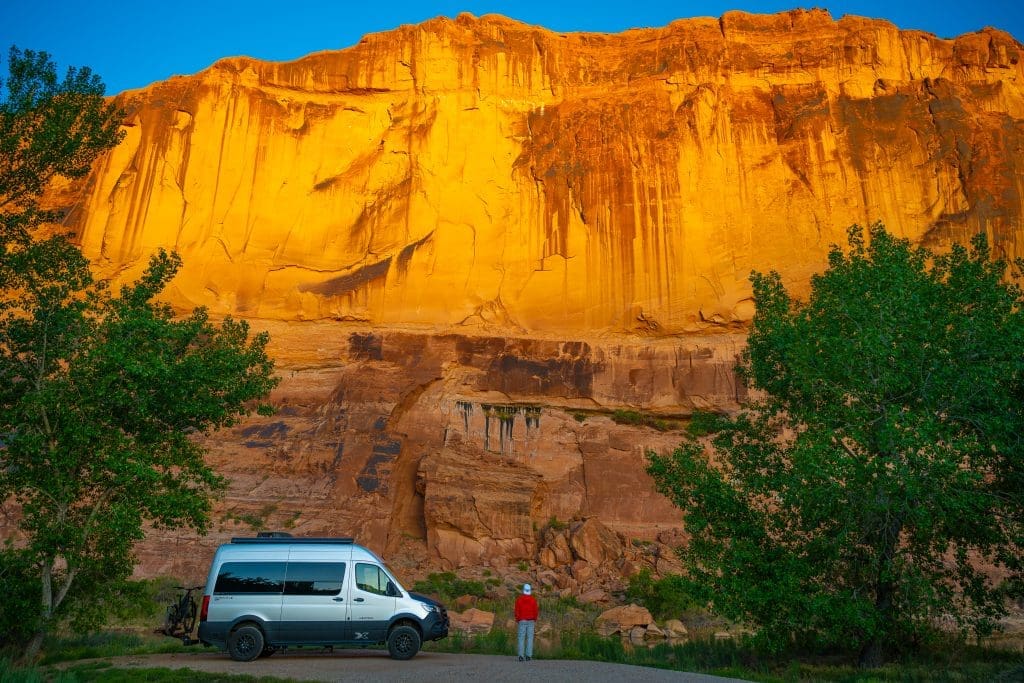
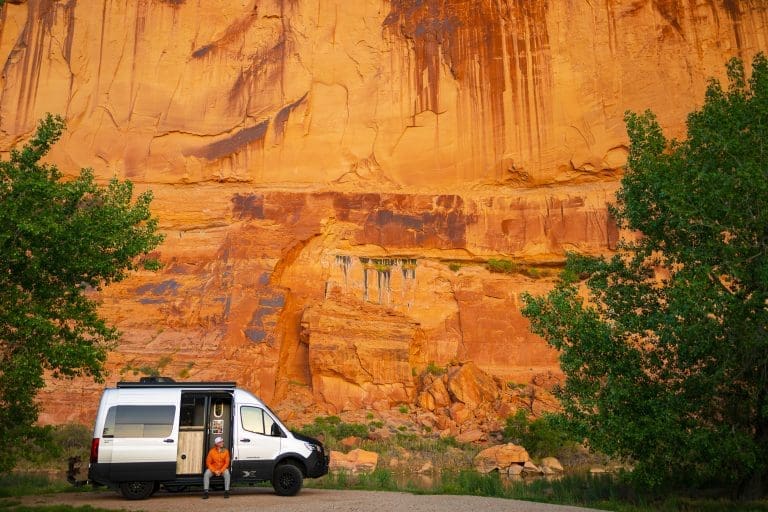
Mornings at Goose Island Campground. The Alligator Back begins to glow as the rising sun chases shadows down the wall. Answers to prayer sometimes work the same way.
The Morning Everything Shifted
I stood there longer than I needed to, watching her car disappear down the street, the red rock walls of Snow Canyon rising behind it. Still, I didn’t move. The night before, we had done everything right. We hiked through lava rock and sand, cooked dinner over a small fire, and sat in the back of the van as the sun dropped behind the cliffs, talking about the expedition I had been planning for months—Ocean to Ice. The one I had planned for us.
She loved it. The van, the road, the idea of long miles and wild places—mountain passes, redwoods, glacial lakes. She was the kind of person you build a life with. And still, something in me wouldn’t settle. That was the part that didn’t make sense. That morning felt quieter, final in a way we hadn’t said out loud. We talked for a few minutes before she left for work. Nothing dramatic. Just a softness underneath everything. We hugged longer than usual. Then she was gone.
I finished packing the van, checked things that didn’t need checking. Re-checked things that definitely didn’t need checking. Progress slowed to desert tortoise speed. Eventually, I climbed into the driver’s seat and started the engine. This was supposed to feel like a launch.
Instead, somewhere on the winding road out of town, rain started tapping against the windshield—and I started crying. Not dramatically, just enough to blur my vision for a moment. I kept glancing at the empty seat next to me. I wasn’t just leaving for an expedition. I was leaving something that should have worked.
And it wasn’t just that. My back had been acting up, and my foot carried a deep, nagging pain I couldn’t quite explain. Extreme sports wipeouts. Years of pushing hard. There’s a bill that comes due for that. I had always trusted my body to show up. Now I wasn’t so sure.
The expedition—the thing I had built everything around—no longer felt solid. It felt exposed. Unpredictable. A lot of things that used to feel certain… didn’t. So I did the only thing I knew to do. I started praying. Not casually. Not out of habit. Deeply. The first impression that came wasn’t complicated: Be specific.
Not general. Not “please bless this to work out.” Specific. So I started small—not because it didn’t matter, but because everything else mattered too much. I asked for a campsite. Not a life answer. Just a campsite.
Then I dialed it up just a notch and asked for one of the handful of BLM spots at Goose Island, just outside Moab—right on the Colorado River beneath the orange sandstone cliffs of the Alligator’s Back. They’re almost always full this time of year. High demand. Very limited supply. The ask was clear. Direct.
Then came the second impression: Let it go.
If it happens, it happens. If it doesn’t, something else will. Relax. No anxiety. That part is harder.
The rain picked up—hard enough to obscure the cliffs and turn the windshield into a moving sheet of water. A call from T-Mobile cut through the moment—trying to fix a problem they had created. The timing felt absurd enough I could have laughed. I didn’t. The frustration rose, the tension came back. So I prayed again. The peace returned. Then the rain turned to snow. Then back to rain. I prayed, then paused, then prayed again.
Each time, the same pattern: Ask. Let go. Peace.
And the van kept moving toward Moab.
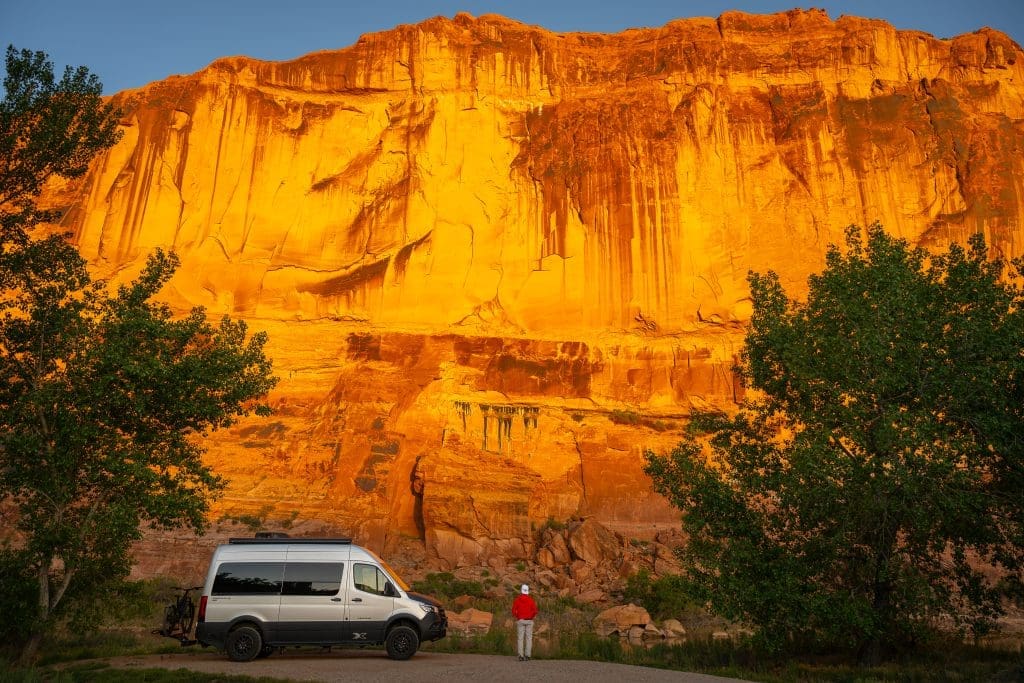
Same moment. Different light. I asked for a campsite. This is what showed up.
I Already Knew It Worked
I’ve spent most of my life learning how to pray—not casually, not occasionally, but intentionally. Enough to know it works. There have been moments when answers came clearly. Not all at once. Not always easily. But clearly enough that I could act on them—enough to shape the direction of my life.
One of those moments came high in the Himalaya, in a snowstorm, marooned in a tent. An answer came—not as a voice, but as clarity. A shift. A knowing that changed what happened next. It altered the course of my life for years.
Later, I built an entire season of my life around that same idea—that prayer wasn’t just something to fall back on, but something you could structure your life around. I called it the Great Adventure. During this time, I treated prayer like an experiment. Almost scientific. Specific questions. Clear asks. A willingness to act on the answers. Tracking what happened. And over time, something surprising happened. The answers came. All of them. Not always in the way I expected, not always on my timeline, but consistently enough to change how I understood what prayer could actually do.
Over the next few years, those results shaped where I lived, the work I took on, and the direction I moved. For a long time, it felt like I was living inside something that had been built carefully, piece by piece—solid, reliable, exactly where I was supposed to be.
But somewhere along the way, something shifted. Not all at once. Just enough to notice. The clarity that once came easily felt quieter. The decisions that once felt straightforward carried more weight—more variables, more uncertainty.
I had changed. And so had the world. Prayer hadn’t stopped working—but I hadn’t moved forward with it in the same way my life had. And that’s what caught me off guard that morning as she drove away. Not that I didn’t know how to pray. But that I might need to learn how to do it again—in a way that matches the life I’m stepping into.
So I Decided to Test It—Fully
So I decided to test it—not casually, not theoretically, not in the margins of a busy life. Fully. The idea had been there before. But this was different. I would give six months to it—completely. As an expedition and an experiment.
The expedition has a name: Ocean to Ice. A long backpacking traverse through the Pacific Northwest and into the Canadian Rockies—roughly 1,000 miles on the trail, moving from one iconic section to another, from coastal forests to alpine passes, from rain to snow.
The terrain is world-class. It’s also secondary. It’s the laboratory. I already knew it worked. I had seen that, clearly. But I had changed. The world had changed. And somewhere along the way, I could feel that the way I was living it hadn’t kept up.
So this wasn’t about proving anything. It was about taking it to the next level—about learning what it looks like to live this at full capacity in today’s world. The real experiment is this: how can a person receive clear answers from God—consistently, deliberately, in real time—while moving through an uncertain and rapidly changing world?
Not occasionally. Repeatedly. And if so, how? The basic rules haven’t changed. But the nuance matters. Each day, I would follow a structure similar to one I used years ago during the Great Adventure: express gratitude, ask specific questions, listen, record, act, track what happens, adjust, and repeat.
Prayer—not just as devotion, but as a disciplined practice. Tested. Lived. If I were going to study prayer, I could have done it in a quiet room somewhere. But this felt like a better place. Out here, the margin for error is thinner. Which makes it a good place to test something like this.
The First Answer Came Quickly
I had asked about the campsite. When I arrived in Moab, I went straight to Goose Island Campground. Every site was taken. It was 5:30 p.m., a time when you don’t usually get lucky. Normally, you’d need to be there early in the morning to have a chance. So I asked again: what now? And then I listened.
The impression was simple: park near the fee station, walk the loop slowly, and check each post. So I did. Flip flops crunching gravel, scanning each small brown post like it might hold the answer.
One by one—nothing.
Then, near the end, a man stood outside his motorhome. We started talking. His name was Turk. He mentioned the spot next to him—where Wayne—was leaving early in the morning.
“You should talk to Wayne.”
Almost immediately, Wayne stepped out of his van.
Turk smiled. “Better grab him while you can.”
I walked over. Wayne and his wife were kind. Easy to talk to.
“You’re looking for a spot?” he asked.
Then, without hesitation:
“Pull in next to us. When we leave in the morning, it’s yours.”
I hesitated. He didn’t.
“Just stay here. It’s no problem.”
So I did. That evening we talked—about travel, faith, and, somehow, how to slurp poached eggs prepared in a microwave. Later, lying in the van with the river moving somewhere just beyond the dark, I replayed it—the question, the prompting, the sequence, the timing.
It had all come together cleanly—no forcing, no second-guessing, no gaps in the sequence. And only then did I fully see what had happened. I had the campsite. But more than that, I had something I hadn’t felt in a while: Confidence.
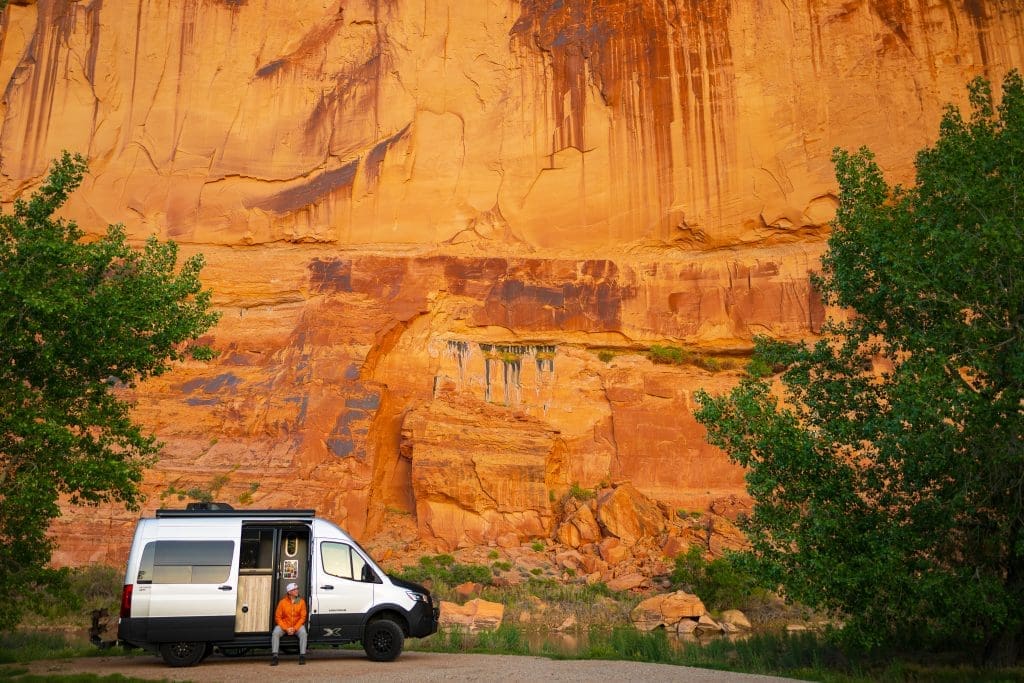
A fitting place to begin.
Not abstract. Not hopeful. Concrete. It wasn’t dramatic. No storm. No life-or-death decision. Just a campsite. But it was clean, direct, and actionable—and it came in response to a deliberate ask. Which is exactly what I’m here to test.
Because if something that clear can come from a question that simple…what happens when the questions aren’t? I’ve seen answers to hard things before. This wasn’t that. Just something small. But it was clear. And that’s where this begins.
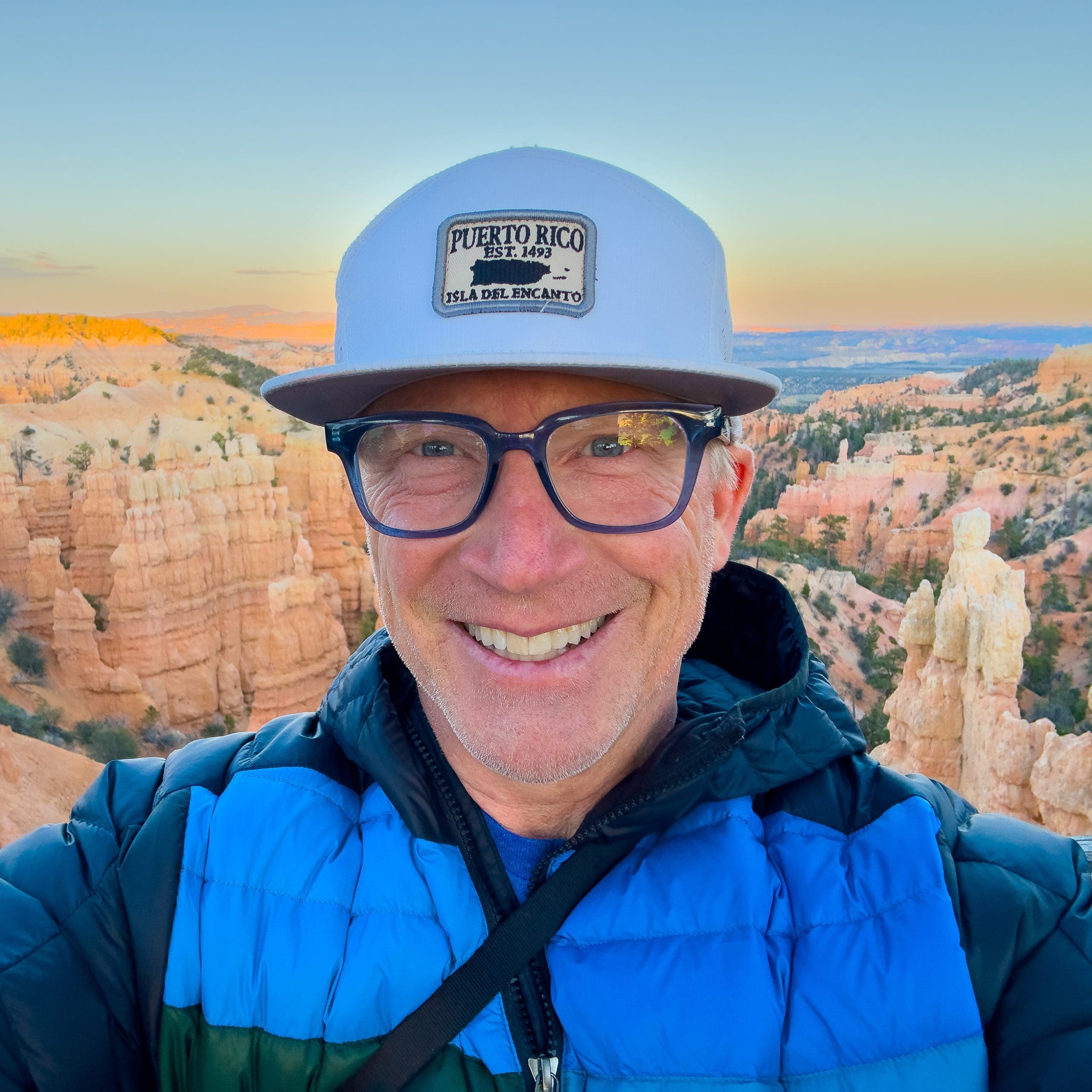
Mike Loveridge is a writer and photographer who left a Fortune 500 marketing career to follow a more deliberate path into the wild. He is currently documenting a season-long backpacking expedition called Ocean to Ice, focused on refining the practice of prayer in the modern world. His work blends bold faith, big adventure, humor, and honest reflection—pointing toward clarity, awe, and direction.




TJApril 27, 2026
I must say your article is an answer to my prayer. When my spouse asked me where my confidence had gone and my head seemed constantly in a state of confusion, I knew somethings were amiss. Prayer, true praying, has changed over time - not aging (as I have been told), not due to my changing circumstances, not due to a difference in my relationships, except perhaps, my relationship with God - learning to pray as I had before with direct questions, more intentionality, and --listening-acting-recording -- heaven's answers.
HelenCApril 25, 2026
Oh, how I would love this life! Mine feels so mundane, stuck in supporting my family when I “should” be retired. Trying to express gratitude for the health to still do so while resenting it so much! Maybe I need to rework my prayers to plead for sincerity and trust that He who knows all is good at His job.