







Among the five books of Moses, Exodus is another precious jewel. In this book we find some of the greatest details about the character of Moses. We see his learning curve, his weaknesses, and his great strengths that make him so revered among the Jews even today. In this article we will use The Joseph Smith Translation, Red-Letter Edition, Old Testament to examine the significant changes made by Joseph Smith. We will also highlight some of the characteristics of Moses and the children of Israel as they made their way to their land of promise as revealed in the JST. 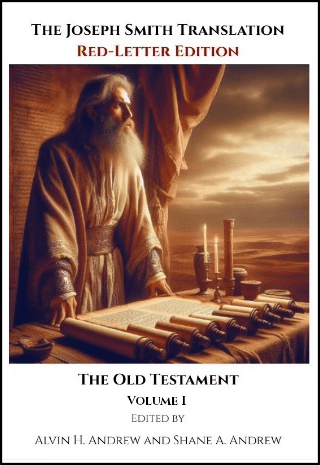
Joseph Smith did not make as many changes to the other books of the Old Testament as he did to Genesis. After he was commanded by the Lord to move his translation efforts to the New Testament (D&C 45:60-32) he did not return to work on the Old Testament until 16 months later. Also, beginning with John 6 Joseph adopted a shorter, more efficient method of transcribing the translation. Prior to John 6 Joseph dictated his changes and the scribes wrote out the complete chapters and verses along with the alterations. Something prompted him to change his method when he got through John 5. From John 6 through Revelation and then from Genesis 25:41 through Malachi Joseph would mark his reference bible where changes were to be made. The scribe would then enter on the manuscript pages, only the references and the changes. This sped up the work substantially but left us guessing about the intent of some of those changes.
Joseph did not make all the changes that he could have made to the Old and New Testament. A well known example of this is found in Malachi. When Moroni appeared to Joseph on the night of 21-22 September 1823, he quoted some verses from Malachi differently than they appear in the King James Version (KJV). When Joseph got to Malachi in his translation process, he made no changes to the book at all.1 There is evidence within the JST manuscripts as well as several of his sermons that he could have modified other verses in the KJV but did not.
Exodus may not have received all the changes of which Joseph was aware. Only 19 of the 40 chapters2 of Exodus were modified and several of those did not have substantial changes. However, some of the modifications were very significant in helping us understand the stories correctly. Among the more well known changes were the story of Moses’ failure to circumcise his son, and Pharoah hardening his heart rather than the Lord hardening Pharoah’s heart.
Exodus 4:24-26
24 And it came to pass, that the Lord appeared unto him as he was in
bythe way, byinthe Inn.inn, that theThe Lord was angry with Moses, and his hand was about to fall upon him,met him, and soughtto kill him, for he had not circumcised his son.25 Then Zipporah took a sharp stone, and circumcised her son, and cast the stone
cut off the foreskin of her son, and cast itat his feet, and said, Surely thou art a bloody husband unto me. art thou to me.26 And the Lord spared Moses, and
So helet him go, because Zipporah, his wife circumcised the child. Andthenshe said, thou art aAbloody husband.thou art, because of the circumcision.And Moses was ashamed, and hid his face from the Lord, and said, I have sinned before the Lord.
While this incident may seem a bit harsh to us, we must remember that by this time Moses had conversed with the Lord on more than one occasion. He was well aware of the covenant of circumcision and for whatever reason had neglected to observe it properly with his son. Moses’ sin was significant because he had not obeyed the Lord’s commandment to circumcise his son at eight days old. Moses had a good wife, Zipporah, who forcefully reminded him of his duty, then she herself performed the ceremony of circumcision.
The outcome of this event is somewhat reminiscent of Joseph Smith’s experience after losing the 116 pages of The Book of Mormon. Joseph lost his opportunity to continue translating for a year by not obeying the voice of the Lord. The Lord foresaw the incident with Joseph and instructed Nephi to write the small plates of Nephi which compensated for the loss of those pages. It’s amazing how this pattern of Study, Pray, and Obey just continues to manifest itself.
Joseph’s modifications to the reactions of Pharaoh, while not particularly surprising, give us a more correct insight into that story as well.
Exodus 4:21
21 And the Lord said unto Moses, When thou goest to return into Egypt, see that thou do all those wonders before Pharaoh, which I have put in thine hand and I will prosper thee; but Pharoah
but Iwill harden his heart, and he willthat he shallnot let the Peoplepeoplego.
Exodus 7:3, 13
3 And Pharoah I will harden his
Pharaoh’sheart, as I said unto thee; and thou shall multiply my signs, and my wonders, in the land of Egypt,13 And Pharoah hardened his
he hardened Pharaoh’sheart, that he hearkened not unto them, as the Lord had said,
Exodus 9:12
12 And the Pharoah hardened his heart,
Lord hardened the heart of Pharaoh,and he hearkened not unto them; as the Lord had spoken unto Moses.
Exodus 10:1, 20, 27
1 And the Lord said unto Moses, Go in unto Pharaoh for he hath
I havehardened his heart, and the hearts heart of his servants, therefore, I willthat I mightshew these my signs before him,20 But
thePharoah hardened his heartLord hardened Pharaoh’s heart, so that he would not let the children of Israel go.27 But
thePharoah hardened his heartLord hardened Pharaoh’s heart,and he would not let them go.
Exodus 11:9-10
9 And the Lord said unto Moses, Pharaoh will
shallnot hearken unto you, thereforethatmy wonders shallmaybe multiplied in the land of Egypt.10 And Moses and Aaron did all these wonders before Pharaoh, and they went out from Pharaoh, and he was in a great anger. And Pharoah hardened his heart,
and the Lord hardened Pharaoh’s heart,so that he would not let the Childrenchildrenof Israel go out of his land.
Exodus 13:4, 8, 17
4 And
IPharoah will harden hisPharaoh’sheart, that he shall follow after them; and I will be honoured upon Pharaoh, and upon all his host; that the Egyptians may know that I am the Lord. And they did so.8 And the Pharoah hardened his heart,
Lord hardened the heart of Pharaohking of Egypt, and he pursued after the children of Israel; and the children of Israel went out with an high hand.17 And I say unto thee
behold, I will hardenthe hearts of the Egyptians shall be hardened and they shall follow them; and I will get me honour upon Pharaoh, and upon all his host, upon his chariots, and upon his horsemen.Another slight but significant change had to do with Jethro, Moses’ father-in-law. Jethro was “the high priest of Midian” and as such would have held the Melchizedek Priesthood, since the lesser law had yet to be imposed upon the children of Israel. Jethro also appears to have been a mentor to Moses prior to the Exodus itself.
Exodus 18:1
1 … Jethro, the high priest of Midian, Moses’ father in law, heard of all that God had done for Moses, and for Israel his people, and that the Lord had brought Israel out of Egypt; …
When the Lord instructed Moses about the judgements he would need to make concerning certain behaviors among the children of Israel, he gave him some very specific instructions. Joseph Smith modified several of those verses as follows.
Exodus 21:20-21
20 And if a man smite his servant, or his maid, with a rod, and he die under his hand; he shall be put to death.
surely punished.21 Notwithstanding, if he continue a day or two and recover, he shall not be put to death,
punished; for he is his servant.money.
Exodus 22:18, 28
18 Thou shalt not suffer a murderer
witchto live.28 Thou shalt not revile against God,
the gods,nor curse the ruler of thy people.
Exodus 23:
3 Neither shalt thou countenance a wicked
poorman in his cause.
In the following verses Joseph Smith provides us with some additional insight when Moses brought the first set of plates down from the mount. Moses had been gone for so long that the children of Israel decided he was not going to return and they needed a God to continue to lead them. They convinced Aaron to make the golden calf for them to worship. While such behavior may seem strange to us, we must acknowledge that for more than 400 years the children of Israel had been in bondage to a polytheistic society, the Egyptians.
Following the death of Joseph who was sold into Egypt, there was no known Prophet among them until Moses appeared on the scene. This situation would be tantamount to the time between the last faithful member of Christ’s Church and the restoration of the Gospel by Joseph Smith, although the latter lasted more than twice as long. These situations bring to mind the Proverb “Where there is no vision, the people perish” (Proverbs 29:18).
Exodus 32:7-14, 35
7 And the Lord said unto Moses, Go, get thee down; for thy people, which thou broughtest out of the land of Egypt, have corrupted themselves;
8 They have turned aside quickly out of the way which I commanded them; they have made them a molten calf, and have worshipped it, and have sacrificed thereunto, and said, These be thy gods, O Israel, which have brought thee up out of the land of Egypt.
9 And the Lord said unto Moses, I have seen this people, and, behold, it is a stiffnecked people;
10 Now therefore let me alone, that my wrath may wax hot against them, and that I may consume them; and I will make of thee a great nation.
11 And Moses besought the Lord his God, and said, Lord, why doth thy wrath wax hot against thy people, which thou hast brought forth out of the land of Egypt with great power, and with a mighty hand?
12 Wherefore should the Egyptians speak, and say, For mischief did he bring them out, to slay them in the mountains, and to consume them from the face of the earth? Turn from thy fierce wrath, and thy people will repent of this evil therefore come thou not against them.
against thy people.13 Remember Abraham, Isaac, and Israel, thy servants, to whom thou swarest by thine own self, and saidst unto them, I will multiply your seed as the stars of heaven, and all this land that I have spoken of will I give unto your seed, and they shall inherit it for ever.
14 And the Lord said unto Moses, if they will repent
Lord repentedof the evil which they have done, I will spare them, and turn away my fierce wrath; but, behold, thou shalt execute judgement upon all that will not repent of this evil this day. Therefore, see thou do this thing that I have commanded thee, or I will execute all that which I hadhethought to do unto myhispeople,35 And the Lord plagued the people, because they worshipped made the calf, which Aaron made.
The JST rendering of the following verses provide a great deal more insight into man being able to see the Lord than the KJV allows. These verses also show the love Moses had developed for the Lord as well as the Lord’s love for Moses.
Exodus 33:17-23
17 And the Lord said unto Moses, I will do this thing also that thou hast spoken; for thou hast found grace in my sight, and I know thee by name.
18 And he said, I beseech thee, shew me thy glory.
19 And he said, I will make all my goodness pass before thee, and I will proclaim the name of the Lord before thee; and will be gracious to whom I will be gracious, and will shew mercy on whom I will shew mercy.
20 And he said, unto Moses, Thou canst not see my face at his time, least mine anger is kindled against thee also, and I destroy thee and thy people; for there shall no man among them see me at this time and live, for they are exceeding sinful, and no sinful man hath at any time, neither shall there be any sinful man at any time, that shall see my face and live,
21 And the Lord said, Behold, thou shalt stand upon a rock, and I will prepare
there isa place by me, for thee;and thou shalt stand upon a rock;22 And it shall come to pass, while my glory passeth by, that I will put thee in a cleft of a
clift of therock, andwillcover thee with my hand, while I pass by,23 And I will take away mine hand, and thou shalt see my back parts, but my face shalt
shallnot be seen, as at other times; for I am angry with my people Israel.
A final significant change of the JST within Exodus provides greater detail on the Priesthood restrictions the Lord placed upon the children of Israel. It was at this time that they lost general access to the Melchizedek Priesthood, the holy order, and the ordinances associated with it. Prior to this time that order of Priesthood had been among the people to one degree or another. At this juncture, all that changed.
Exodus 34:1-3, 14
1 And the Lord said unto Moses, Hew thee two other tables of stones
stonelike unto the first, and I will write upon them also, the words of the Law, according as they were written at the first on thethese tables the words that were in the firsttables, which thou breakest;brakest.but it shall not be according to the first, for I will take away the priesthood out of their midst; therefore my holy order, and the ordinances thereof, shall not go before them; for my presence shall not go up in their midst least I destroy them. But I will give unto them the law as at the first, but it shall be after the law of a carnal commandment; for I have sworn in my wrath, that they shall not enter into my presence, into my rest, in the days of their pilgrimage. Therefore do as I have commanded thee, and be ready in the morning, and come up in the morning unto mount Sinai, and present thyself there, to me, in the top of the mount,2 And be ready in the morning, and come up in the morning unto mount Sinai, and present thyself there to me in the top of the mount.
3 And no man shall come up with thee, neither let any man be seen throughout all the mount; neither let the flocks nor herds feed before that mount.
14 For thou shalt worship no other god; for the Lord, whose name is Jehovah,
Jealous,is a jealous God;
Moses had transformed from being a fearful individual, lacking in confidence and afraid his limitations would hamper him, to becoming a friend to the Lord and a beacon of strength to the children of Israel. There was a mighty and magnificent change in him. To this day Moses is revered and considered one of the most, if not the most, preeminent Old Testament Prophet among the Jews and much of the Christian world. The Joseph Smith Translation brings important clarity into the life of Moses as well as the children of Israel during the exodus.
Through the remainder of the books of Moses, namely Leviticus, Numbers, and Deuteronomy, Joseph made very few changes. Leviticus only has 3 chapters with changes, Numbers has 2 chapters, while Deuteronomy has 4. Some books had significant changes, but that is a conversation for next time. Today we relish the light and inspiration given in Exodus from Joseph Smith, Prophet, Seer, Revelator, and Translator.