






Oh No! We Forgot the Birds
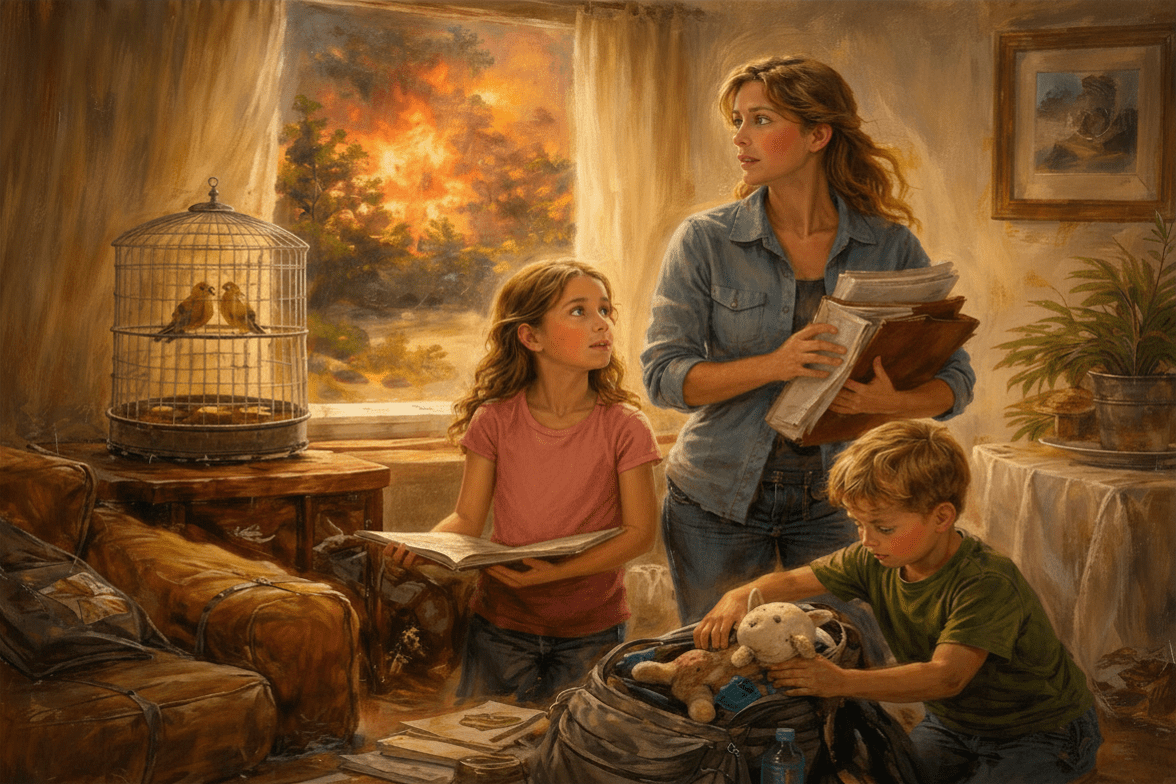
Author’s note: I will not be publishing the article I had planned. Instead, I will be sharing an article I wrote many years ago that is more relevant this year than ever before. Fire season began two months early and has already been very destructive. Tornado season has been devastating and has only just begun. Hurricane season begins soon.There is still much to learn from this article, so I share it again. These children are all now adults and I hope they remember what they learned.
Birthdays are always fun for our family, so when we called our grandson to wish him a happy birthday, we were surprised at the course of the conversation. Our call went something like this:
Me: How has your day been?
RJ: Great they even sang “Happy Birthday” to me in my English class.
Me: Is your birthday bash in full swing yet?
RJ: No, we are waiting for word from the firefighters before we can get started.
Me: What? The fire department!
RJ: Yes, the hill behind our house is on fire and we are ready to evacuate.
With that revelation we quickly got off the phone so the family could get back to preparing and we waited to hear more. Fortunately, they did not have to leave home, but there are lessons to be learned and shared with those of you who will be faced with this scenario someday.
To follow-up, I interviewed each member of the family a few days later and what I learned was instructive and fascinating. Please take the time to read all the way through.
At the time of the interview:
- RJ loves science, Scouting, just finished his Eagle scout project, and robotics.
- Elisabeth loves history. She has read many of the American Girl books and numerous others, and also loves swimming and photography.
- Brooklyn loves her American Girl doll, piano, gymnastics, and her hula-hoop.
- Isobel loves to read, play piano, ballet and jump rope.
My first interview was with RJ:
Me: Tell me how you first discovered there was a fire threatening your house.
RJ: Elisabeth said she smelled something burning so we looked around the house and couldn’t find anything. We went out to the yard and saw huge flames coming down the hill.
Me: What did you think?
RJ: I couldn’t believe it. I didn’t think it could really be happening and that it could reach us. It took about three minutes before I realized it was really happening and we needed to do something.
Me: What happened next?
RJ: Mom decided we needed to get ready to evacuate and she told us to go to our rooms and get our important things and our 72-hour kits (this was before we knew 72 hours was not long enough) and get them into the car.
Me: What did you grab?
RJ: I took the things I would need. I got clothes, my scriptures, scout stuff, wallet, pocketknife, journal and gadgets. (He wants to be an engineer so he builds and loves gadgets.) Side note: yes, today he is an engineer.
Me: Is there anything you forgot?
RJ: No, I don’t think so.
Me: What would you advise others now that you have had this experience?
RJ: I would tell others to have their 72-hour kits handy and updated and to have an idea ahead of time what they would want to bring if they have to evacuate.
Next came my talk with Elisabeth:
Me: What were your thoughts when you saw the fire?
Elizabeth: I thought I should get inside and do something to prepare for this.
Me: What did you do?
Elisabeth: Isobel was crying and really scared so I said a prayer with her and then our whole family said a prayer. Then I took Isobel up to her room and gave her directions to help her gather things and then I went and got my stuff.
Me: What did you get?
Elisabeth: I got the things I thought I couldn’t replace. I knew there were clothes in my 72-hour kit so I didn’t get clothes – I got my camera, pictures of my friends, my yearbooks, journal, and my baptism book with all the notes from our family when I was baptized. It was a weird kind of mindset because I thought if I didn’t get my pictures of my friends then I could never get them back.
Me: What did you do next?
Elisabeth: RJ was really focused and done fast – so he was helping mom. I started getting pictures off the walls and helping the girls get their things.
Me: Is there anything you forgot?
Elisabeth: Don’t think so.
Me: What would you advise others to do to be ready to evacuate?
Elisabeth: I would tell them to have all the things they would want to take gathered in one place so they wouldn’t have to be running around, jumping over furniture to get things.
On to the “little” girls:
Me: How did you feel when you saw the fire?
Brooklyn: Scared. It felt like it was going to come here.
Isobel: Really scared.
Me: What things did you gather?
Brooklyn: My 72-hour kit, stuffed animals, books, baby blanket, pajamas, and Molly [her doll].
Isobel: My 72-hour kit, stuffed animals, baby blanket, journal, and books.
Me: Do you think you forgot anything important?
Brooklyn: Our birds [parakeet and canary].
Isobel: My dolls.
Me: What helped you to be calm and less afraid?
Brooklyn: When I figured out it wasn’t as close as I thought and we had time. Also, I remembered the fire drills at school.
Isobel: Saying a prayer, and then when we found out we wouldn’t have to evacuate.
Me: What did you learn and what would you tell others that would help them prepare?
Brooklyn: Get the topmost important things first and always, always have a 72-hour kit. Everything will be all right. The firefighters might not let you leave. Change the clothes in your 72-hour kit often so they fit you right.
Isobel: Always, always say a prayer and don’t panic.
On to mom:
Me: Tell me about the fire.
Mom: I got a call from a friend that the hill directly behind her home was on fire and it was moving our direction.
The kids already smelled smoke – we all went outside to look. The flames were enormous, and I knew we needed to get moving and get ready to evacuate. I told the kids we were going to pack the car and go hang out with friends. I called Rob at work and let him know what was happening – we got busy gathering and packing the van. Unfortunately, after we got the car packed and tried to drive out the firefighters told us to go home and shelter in place. There is only one road in and out and it was blocked with fire engines and equipment. They told us they would let us know when it was time to get out.
Amazingly I wasn’t scared, I was just all business. There was no panic because we had thought this through beforehand. We had several friends call to say they could see flames in our area, and they invited us to evacuate to their homes. That helped a lot, to know we had a place to go.
Me: What did you gather?
Mom: Our 72-hour kits, the portrait of the kids, laptop, hard drives, Ham radios, and the safe with important papers. I had told the kids we were moving RJ’s birthday party to a new location, so we loaded the gifts and cake in the car as well.
Me: Was there anything you forgot?
Mom: The birds! Can you believe that? When the firefighters turned us around I also went back and got some family heirloom jewelry I had not thought of, and put that in the van in case we got the order to go.
Me: What have you learned and what would you pass along to others?
Mom: We need to back up our files more often and we need to gather everything into one place, so we don’t need to do so much running around to find things.
Dad left work immediately upon hearing the news, but he has a 45-minute commute and was not available to help. When he arrived home the firefighters would not allow him to drive in so he had to park in the supermarket parking lot a mile away and walk home.
Now that you have heard their story, let’s examine a few points.
Pray. Each found peace and strength when they took a moment to pray and ask for protection and guidance. Time for prayer is never wasted time; it can give you direction you may not otherwise hear.
They all referenced kits. Check them for clothing sizes, fresh up food often and keep them where they are easily accessible by every family member. Do not store them where they can’t be reached and retrieved by children. Not every emergency happens when adults are home, and many families are now led by a single parent. Children will need to accept responsibility to safely evacuate.
Did you notice RJ and Elisabeth had two very different responses as they gathered items? One chose the things needed and one the things that could not be replaced. Neither is wrong, just different. For example, it may be easy to replace medications but if everyone is trying to purchase them it may not be as easy as we assume. It is important to really consider what items could not be replaced and which may not be easily purchased.
What did most of the family recommend? Gather items and keep them together as much as possible. At the very least know where each important item is located and always return it to the same place.
For family home evening, gather your family and make a list of all the important items each family member would want to take if they knew they would never be able to return to your home. Once everyone has a list, read each one aloud and brainstorm items that may have been left off. Do not discount items children choose. If you never get to return home those items may be exactly what a child needs to feel safe and “normal.” Now it’s time to prioritize.
Grandma’s wedding ring and a favorite family photo might both be on the list, but which is truly irreplaceable? Do other family members have a copy of that photo? Perhaps it could be replaced. A list like this is of great value whether you have ten minutes to evacuate or an hour.
Create a form with four columns. In the first column, record the items to be gathered in order of importance. Next, record where each item is stored in the second column and, as Elisabeth recommended, gather items into a common location as much as possible. In the third column, record the name of the family member assigned to gather each item and to place it in the car if the time comes to evacuate. The fourth column is left blank for now and can be used to check off the items once they are safely stashed in the car. Finally, post your list in an easily accessible location making it quick to find when evacuation is imminent. Also place a copy in your emergency binder.
In a month or two, arrange with another family to hold an evacuation drill. Have your friends phone your home and inform you that you have 10 or 15 minutes to evacuate. Set a timer and begin gathering your items. When the timer goes off, get in the car, no excuses, and go to your friend’s home. This is your evacuation center. Examine what you have brought with you, reevaluate your plan, and record any changes you need to make. Do all the kids have shoes on for example? Do the clothes in the Five-Day kits still fit? Did you find grandma’s ring? Was the laptop missing in action? How long has it been since your last computer backup?
End your evening with root beer floats and the knowledge that your family will now be more capable of handling a crisis calmly and without panicking.
When evacuating you may have a place to go or circumstances may require you to go to a shelter. Take time now to check with local officials to determine what will and will not be allowed in your area shelters. The following may not be allowed:
• Alcoholic beverages
• Pets (In some areas this rule is changing, but guide dogs are always allowed.)
• Illegal drugs, even if you are using them for medical purposes
• Weapons, including some knives
• Extra food other than special dietary needs (The food in your Five-day kit is fine.)
• Valuables
There will be no place to store jewelry, valuable papers, or large amounts of money. Again, anything in your kit will be fine — just be careful and definitely don’t “advertise” that you have anything of value. Don’t access money in front of anyone! Never give children valuables. Prepare your children for shelter living by warning them that other children may want to “share” their toys and books. Discuss how they should handle this.
The thought of having to evacuate is not a pleasant one. The thought of contracting the flu is not pleasant either, but we have tissues and medications on hand just in case. Studies have shown that those who think about a challenge ahead of time are far more likely to survive and even thrive, than those who have chosen not to consider the possibility.
Fire at your Back Door
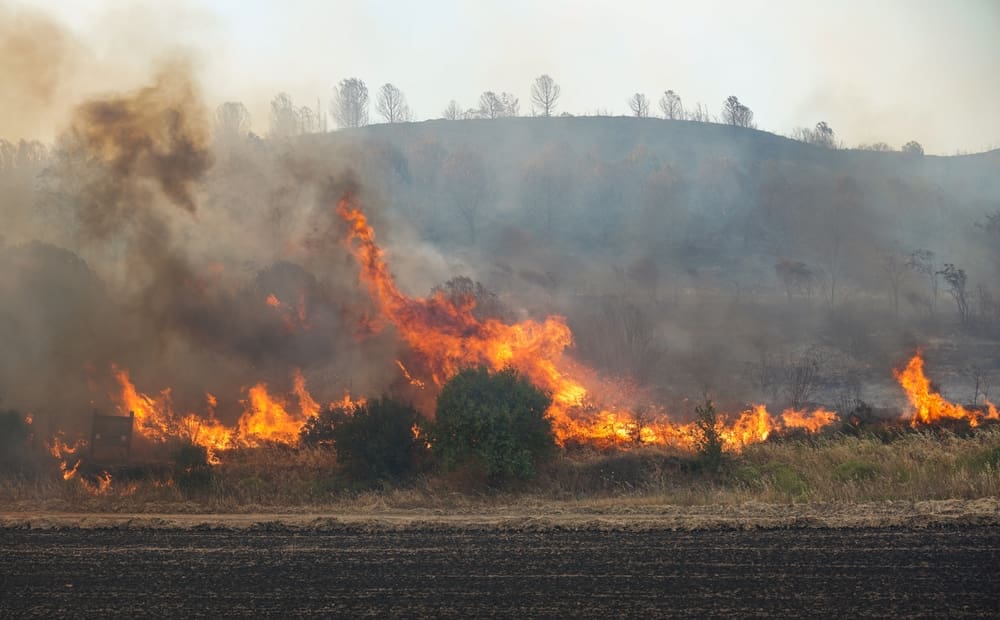
With the recent outbreaks of tornadoes I will address that in my next article as it is now the beginning of tornado season. It really has arrived early this year. The threat of neighborhood and wildfires will remain a threat through the fall making it crucial to prepare, just in case. Studies have shown those who think through a disaster long before it happens thrive when others barely survive.
You have prepared your home, created a family and neighborhood plan, and cleared your property of potential fire risks.
The worst has happened, and it is now time to act, a fire is coming your way.
If Advised to Evacuate, Do It Immediately
- Wet towels or bandanas and take them with you. If you do not have N95 masks in your Five-Day kit holding these over your nose will help you breath in a smoky environment.
- You should have a fire blanket in the house. Take it with you.
- Close all windows, vents and doors but leave them unlocked so rescue workers can check your home to protect it without destroying windows or doors.
- Turn off gas.
- Shut off propane tanks. Move portable propane tanks designed for grills and camping equipment away from your home.
- Leave lights on making it easier for fire fighters to find and defend your home.
- Call your neighbors as you are leaving letting them know your plans and asking if they need help. Warn them if you are aware of an escape route that is blocked.
- Call family members not at home to inform them where you are going and determine a meeting place.
- Call your out of state contact to inform them you are heading for the safe location you have determined earlier and shared with them.
- When you have reached your destination gather all your family members to that location and inform your out of area contact of your safe arrival.
- Grab all your prescriptions and don’t forget prescription eye glasses.
- If you are short on time grab the laundry basket giving you a change of clothes.
- Dress in long sleeves, long pants, and sturdy shoes. It is not unusual for children to arrive at a shelter without shoes.
- When driving keep car windows closed and set controls to recirculate air so you aren’t drawing in smoky air.
- Keep radio on and listen to local station for the most accurate reports.
- If you are in a commercial building never use the elevator.
- If your clothes catch fire remember to Stop, Drop, and Roll. Stop moving, Drop to the ground, Roll to smother the flames. Using your fire blanket to smother the flames is even more effective. If you don’t have one to two consider purchasing some.
What to do After a Wildfire
- Wait for authorities to say it is safe to return home. Follow instructions from officials.
- Wear long sleeves, long pants and sturdy shoes.
- If your home is still standing, look for structural damage before entering the home.
- Turn off electricity if wiring is damaged
- Check the roof immediately. Put out any fires, sparks or embers.
- Check the attic for hidden burning or smoldering sparks.
- Put out any small remaining brush fires.
- For several hours after the fire, maintain a fire watch by walking around your home inside and out, checking for any new hot spots
- Rake any areas that appear to be smoldering and extinguish any embers you find.
- Watch for hidden hazards such as burned trees or branches that may fall, damaged power lines, and unstable buildings.
- If you smell gas, leave immediately and call 911 to contact emergency services.
- Protect yourself from the toxins in ash by wearing an N95 mask and using gloves. Avoid stirring up ash unnecessarily and keep children and pets away from ash piles. Many homes still standing following the fires in Southern California last January contain so many toxins homeowners are not allowed in. The homes will need to be torn down and all their possessions with them.
- Use flashlights instead of candles
- Take photos or videos for insurance. Photograph every damaged area. There is no such things as too many photos.
- Keep receipts for repairs and temporary lodging.
- Contact your insurance company as soon as possible, even in the middle of the night. After hours calls are returned in the order they are received so be first in line.
- Check on neighbors. Many people may need help, but not feel like bothering you when you are dealing with your own disaster.
- Be careful with water and food. Do not use foods stored in boxes or bags. Disinfect cans before opening. Wildfires can contaminate water systems so be aware of any boil water orders.
- The water you put into your pool, hot tub, or water storage barrels can be siphoned to provide water if the electricity is off and your well isn’t working or if community water supplies are interrupted. This water should be treated before using for cooking or drinking but it may be used for bathing, cleaning and flushing toilets. You can also connect a hose to the outlet on your water heater for added water supply.
- Talk with family, friends, support groups and even other survivors. You are not alone and sharing your feelings will help.
- Most importantly give yourself time to grieve. Recovery will take months and even years. Be patient with yourself.
It is so important to research the risk of wildfire in the area where you live. Even if there is not a recent memory of such events, that does not mean the danger is diminished, but may in fact mean the risk has quietly grown worse with years of new undergrowth in wilderness areas, while residential areas have encroached deeper into that wilderness. Drought across much of America and in many areas of the world has increased the risk. Homes built closer and closer to each other adds to the risk that a house fire may quickly become a neighborhood fire.
Now is the time to act. Have you discussed with your family the article: Is a Fire Coming to Your Neighborhood? and taken action? If not, why not? This week copy this article, place it in your emergency binder, and discuss it with your family. Remember if the worst happens and you need to evacuate you will grab your binder as a resource to refer to while rebuilding.
“We cannot provide against every contingency. But we can provide against many contingencies. Let the present situation remind us that this we should do. But let us not panic nor go to extremes. Let us be prudent in every respect. And, above all, my brothers and sisters, let us move forward with faith in the Living God and His Beloved Son.” Gordon B. Hinckley
Protect Against Fires in Your Neighborhood
Wildfires are the fastest-growing disaster threat in the United States and in many areas of the world. As more people build homes in wooded areas, forests, and rural areas, they put themselves at added risk from wildfire. Smaller and smaller lot sizes in cities also increase the danger of a fire racing out of control. Combine these factors with drought, excessive heat, and or high winds, and these fires can be nearly unstoppable. We saw this in the January fires in southern California.
In the January 2025 Southern California wildfires, over 16,276 structures were destroyed, including homes, businesses, and other buildings. The fires, primarily the Palisades and Eaton fires, caused widespread damage and displacement, with over 200,000 people evacuated.
The Palisades Fire, which burned in the Pacific Palisades, destroyed over 6,837 structures. The Eaton Fire, impacting areas near Altadena and Pasadena, destroyed over 9,418 structures. The fires also resulted in at least 30 fatalities and numerous injuries.
The Palisades fire is believed to have been caused by sparks from a fire believed to have been extinguished by the Lachman fire. The Hurst and Auto fires were started by sparks from the Palisades fire.
Wildfires often burn unnoticed until fighting them becomes overwhelming. They spread quickly, igniting brush, trees, outbuildings, and homes. No household sprinkler system, fire extinguisher, or garden hose is up to the task of containing a wildfire.
There are many things we can do right now to prepare for the upcoming fire season. Begin by learning as much as you can about the history of fire in your area. Local government websites are a great resource for this information. Be aware of the weather, which can add to the fire danger, such as Santa Ana winds in southern California. A long period without rain, even if not officially a drought, increases the risk of wildfire as vegetation dries out and housing expands into forested areas.
We think of wildfires as fires in the country, but when we talk about wildfires, we are referring to fires that are “wild”, out of control, whether in a country or urban setting.
Before Wildfire Threatens:
- Have a building professional inspect your property and offer recommendations for reducing the wildfire risk.
- Have a landscaping professional inspect your property and make recommendations for reducing your risks.
- Regularly clean roof and gutters.
- Inspect and clean chimneys at least once a year. Make sure you inspect the damper and spark arrester as well.
- Install 1/2-inch mesh screen beneath porches, decks, floor areas and the home itself. Also, screen openings to floors, roof and attic.
- Install a smoke/carbon monoxide detector on each level of your home, especially outside bedrooms. Test batteries monthly and change them once a year. Changing them on the same day each year will help you remember. Choose a day such as a birthday or holiday.
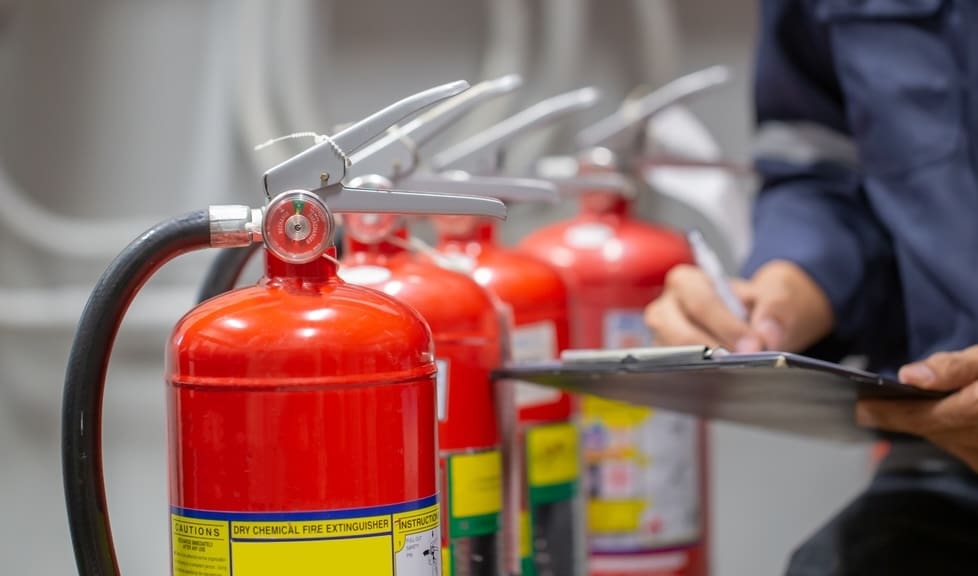
- Purchase at least one good, large, fire extinguisher (ABC type).
- Purchase at least one fire blanket.
- Purchase or organize items that can be used as firefighting tools: a rake, axe, handsaw or chainsaw, hose, bucket, shovel, and bag of sand.
- Enclose eaves and overhangs.
- Cover house vents with ¼ inch, or smaller, wire mesh. Any attic vent, louver, attic fan, or other opening may allow embers and flaming debris to enter your home and ignite.
- Use fire-resistant siding and roofing materials. If you currently have a shake roof or wood siding, replace it as soon as possible. Shake roofing and wood siding will allow your home to be engulfed in a very short time.
- Choose safety glass for windows and sliding glass doors. Badiated heat passing through a windowpane can ignite combustible materials inside. Dual- or triple-pane thermal glass, fire-resistant shutters, and drapes all help reduce the risk.
- Consider installing protective shutters or heavy fire-resistant drapes.
- Prepare for water storage. After a fire, water supplies may be limited. When possible, create and maintain a small pond, well, or pool and store extra water.
- Install freeze-proof exterior water faucets on at least two sides of your home and near other structures on the property. If you cannot do this, make sure you have the materials available to wrap and protect your pipes, so in the event of a fire, you don’t find yourself without water. Yes, wildfires and neighborhood fires can and do happen during winter months.
- Consider purchasing a generator to provide power after the fire has passed. Electric service will probably be down for several days.
- Make sure your house number is clearly visible from the road, making it easier for firefighters to find your home quickly.
- Purchase escape ladders for second-floor bedrooms.
- Make a list of the phone numbers, both landline and cell, for your neighbors. We have friends who were involved in a San Diego wildfire, and they never received an evacuation warning, but they noticed the flames approaching and called their neighbors’ cell phones, and knocked on their doors as they were evacuating. Thanks to their efforts, everyone on their block made it out safely.
Create a Family Plan
- Teach children about fire safety. Keep matches out of their reach.
- Teach older children to use a fire extinguisher.
- Teach your family to have a bucket of sand or water nearby when barbecuing, using tools or toys that create sparks, or when using fireworks.
- Post fire emergency telephone numbers in a place easily accessible.
- Plan several escape routes away from your home – by car and by foot – and practice them as a family.
- Review with your family how officials will warn you if there is danger.
- Create a plan in case you are not at home when the emergency arises, and your children need to evacuate.
- Teach your family about the importance of keeping your property clean to help prevent fires.
- Plan two exits from your home in case doors or windows are blocked by an exterior fire. Practice evacuating using both exits.
- Practice evacuating your home in the middle of the night.
- Plan how your family will stay in touch if you are separated by a wildfire. All family members should know the name and phone number of your out-of-state contact.
- Choose a meeting place outside your neighborhood in case you can’t return home. Hold a drill to practice gathering at this location.
- Post emergency telephone numbers by every phone and teach your children how and when to use them.
Create a Neighborhood Plan
Talk to your neighbors about what they are doing now to prepare for the fire season and how they might be able to respond to fire reports in the area. There may be things you can do together to prevent the spread of fire and to survive if one occurs.
- Gather and distribute a list of home and cell phone numbers for emergencies.
- Decide on a channel to use on walkie-talkies to communicate during a crisis.
- Identify potential fire hazards.
- Determine which hazards can be corrected by working together.
- Notify the proper authorities to correct problems such as common areas with overgrowth.
- Identify roadways which are blocked or poorly marked. During a fire, the line down the center of the road may be your only guide. If roads need attention, notify the city or county authorities so they can be improved now.
- Create a plan for how the neighborhood could work together after a wildfire. Make a list of your neighbors’ skills, such as medical, construction, or technical.
- Consider how you could help neighbors who have special needs, such as seniors or people with disabilities.
- Make plans to take care of children who may be on their own if their parents can’t get home.
- Make a list of neighbors with heavy equipment and other firefighting tools.
- Develop a neighborhood plan for things that need to be done.
- Develop a neighborhood phone tree.
- Plan a neighborhood meeting with the fire department to have questions answered and to get advice.
Create a Safety Zone Around Your Home
Design and landscape your home with wildfire safety in mind. All vegetation is fuel for a wildfire, though some trees and shrubs are more flammable than others. The greater the distance between your home and the vegetation, the greater your protection.
You can take steps now to reduce the potential for disaster. Homes built in pine forests should have a minimum safety zone of 100 feet. Fire spreads very quickly uphill. Homes built on a steep slope, therefore, will require additional protection. The steeper the slope, the more open space you will need to protect your home. All other homes should have a 30-foot safety zone around them.
- Move shrubs and other landscaping away from the sides of the house.
- Cut and water lawns often.
- Prune branches and shrubs to allow for 15 feet between vegetation and chimneys and stove pipes.
- Prune tree limbs 15 feet above the ground.
- Prune tree limbs so they don’t overhang the roof.
- Replace highly flammable vegetation such as pine, eucalyptus, junipers, and firs with less flammable varieties. If in doubt, ask your local fire department or landscape professional for suggestions.
- Remove vines from the walls of your house, out buildings, and garden walls.
- Remove all dead tree branches from the ground level up (these act as ladder fuels for the approaching fire).
- Clear the area of leaves, brush, and fallen limbs.
- Remove debris from under sun decks and porches.
- Replace wooden decks with non-combustible materials such as concrete, brick, rock, or man-made materials. Building a deck structure at ground level will eliminate the danger of a fire starting under a deck.
- Use non-combustible patio furniture and covers.
- Adding a brick or rock wall around your property will help prevent a grass fire from threatening your home.
- Patios and pools are also great improvements in a 30-foot safety zone.
- When possible, install electrical lines underground.
- If you notice branches around power lines, ask the power company to clear them.
- Avoid using bark and wood chip mulch.
- Stack firewood 100 feet away and uphill from any structure.
- Store combustible or flammable materials in approved safety containers away from your home.
- Keep the gas grill and propane tank at least 15 feet from any structure. Clear an area 10 feet around the grill.
- Clear at least a 10-foot area around propane tanks.
- Dispose of newspapers. Do not allow them to stack up.
- Place stove, fireplace, and grill ashes in a metal bucket far from structures. Soak with water.
- Have garden hoses that are long enough to reach any area of your home and other structures on your property.
FEATURES