










“Click here to “like” Meridian Magazine on Facebook.”
“You can sign up for a free subscription by clicking here “
Recent national studies conducted by the American Bible Society and BibleGateway.com ranked Salt Lake City, the headquarters of The Church of Jesus Christ of Latter-day Saints, at the bottom of cities which are “Bible-minded.” Indeed! These surveys, however, reveal more about the methodology than about those surveyed. One study was conducted by the American Bible Society and the other by BibleGateway.com
Given that Salt Lake City and the state of Utah have high concentrations of Latter-day Saints as well many members of Judeo-Christian denominations, the survey results seem ludicrous. In the American Bible Society’s view, Salt Lake City ranked 87. Of the 100 cities surveyed by BibleGateway.com, Salt Lake City was rated as the very least “Bible-minded” city. These results were based on accessing BibleGateway’s own Bible-searching software. (“Godless Cities: Bible Lovers Debate Which City is Most Bible-Minded,” Time.com, 1/29/2014.) Regardless of where they live, most Latter-day Saints, if reading the Bible on an electronic device, would utilize lds.org or Gospel Library of other scriptural apps, or else would read a hard copy of it.
The National Bible Association, an entirely different organization than the ABS, designated Salt Lake City as the National Bible City in 2013. Each November since 1941, the association celebrates National Bible Week during the week of Thanksgiving. Two events were thus held in Salt Lake City: a Saturday evening interfaith concert (Nov. 23) at the Salt Lake Tabernacle and a public reading of Biblical scriptures by political, business, and ecclesiastical leaders in the Utah State Capitol rotunda (Nov. 25). The National Bible Association’s one goal is to encourage people “to read the Bible” and whose motto is “The secret is in the book.”
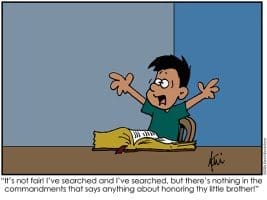
Inasmuch as the Gospel Doctrine course of study is based on one of the Standard Works each year (Book of Mormon, Doctrine and Covenants, New Testament, and Old Testament), the Bible obviously occupies half of those four years. Latter-day Saints are usually familiar with and faithful in reading the Bible as they participate in Sunday School classes and read it with their families and individually. Still, the Old Testament, because of its length and sometimes difficult aspects, is probably the least well-known volume of scripture to Church members.
Most adult members of the Church and many youth as well have read the Book of Mormon cover to cover numerous times. A convert friend of ours read the Book of Mormon 37 times during the first three years after his baptism. (See Janet Peterson, “Convert of Three Years Reads Book of Mormon 37 times,” meridianmagazine.com, August 12, 2012.) Church members are encouraged to continue to regularly read the Book of Mormon in addition to their other studies of scripture. President Ezra Taft Benson declared, “Latter-day Saints should make the study of the Book of Mormon a lifetime pursuit.” (Ezra Taft Benson, “The Book of Mormon—Keystone of Our Religion,” Ensign, May 1974, lds.org.)
Nevertheless, during 2014—an Old Testament year, we could put more time and effort into reading and becoming greater students of the Old Testament.
In a 1974 conference address, President Spencer W. Kimball recounted his first reading of the Bible when he was a young boy: “Let me tell you of one of the goals that I made when I was still but a lad. When I heard a Church leader from Salt Lake City tell us at conference that we should read the scriptures, and I recognized that I had never read the Bible, that very night at the conclusion of that very sermon I walked to my home a block away and climbed up in my little attic room in the top of the house and lighted a little coal-oil lamp that was on the little table, and I read the first chapters of Genesis. A year later I closed the Bible, having read every chapter in that big and glorious book.
“I found that this Bible that I was reading had in it 66 books, and then I was nearly dissuaded when I found that it had in it 1,189 chapters, and then I also found that it had 1,519 pages. It was formidable, but I knew if others did it that I could do it.
“I found that there were certain parts that were hard for a 14-year-old boy to understand. There were some pages that were not especially interesting to me, but when I had the 66 books and 1,189 chapters and 1,519 pages, I had a glowing satisfaction that I had made a goal and that I had achieved it.
“Now I am not telling you this story to boast; I am merely using this as an example to say that if I could do it by coal-oil light, you can do it by electric light. I have always been glad I read the Bible from cover to cover.” (Spencer W. Kimball, “Planning for A Full and Abundant Life,” Ensign, May 1974, lds.org)
If 14-year-old Spencer W. Kimball could have the determination and persistence to read the Bible by coal-light at night after school and chores, then surely we could read the Old Testament this year by daylight, electric light, smartphone light, or computer light. We could enjoy the same “glowing satisfaction” that he did, and we would receive unforeseen blessings and spiritual enlightenment. A thorough study of the Old Testament would be significant preparation for the 2015 Gospel Doctrine course of study, the New Testament.
Latter-day Saints everywhere can be “Bible-minded” and do need not be counted in surveys, “not in stone but in fleshy tables of the heart” (2 Cor. 3:3).






sueApril 8, 2014
I had a Christian experience before I joined the church, so for 17 years I only had the Bible to read. I learned to do subject studies. I particularly love the OT, the Gospels, and Hebrews. But I prefer to, not only read it straight through, but to combine it in subject studies. Using a great set of commentaries, Strong's Concordance of the Bible for Hebrew and Greek meanings of words, all footnotes for further explanations and cross referencing, the Bible Dictionary, and often the topical guide as the basis for a subject study, is very helpful in understanding this important book. I truly believe that understanding the OT is the basis for understanding all of the other scriptures we have. Also there are great books written by scholars that give insights. So much is available, but my experience at church is that people have no grasp of the OT and find it a bit "horrifying." God is the same, and was not different in the OT than in the NT- I always am saddened at this viewpoint. I love all of the scriptures and hope to go deeper and deeper into my understanding and application of them to my life.