










Missionaries vs. High Councilman
A friend from our MTC district, Elder William Mammen, writes from his mission in Spain, North Madrid Mission, “We are impressed with the caliber of the missionaries. They are spiritual giants. We attend District Council with them which they conduct and manage completely. They give instruction, make plans and solve problems as well if not better than any High Council I ever sat on and then go to lunch and act like a group of teenagers so one is reminded that they are just kids. They are very effective missionaries. They make cold contacts, encourage members to recommend contacts. They love, share and invite everyone they meet member and non-member alike to learn of the Savior. They are teaching and baptizing, reaching out to inactives and finding lost sheep. We cannot believe how blessed we are to be a part of this work.
Our missionaries in Puerto Rico are the same–inspiring, mature, loving and spiritual. Take faith, parents and leaders everywhere. The younger generation is much better than you may have ever imagined.
The African Gray Parrot is No Bird Brain
This morning Scot laughed and said, “That’s the fifth garbage truck that’s come this morning,” (which is remarkable since we are at the end of a blocked-off street.) I smiled, too, because we have this delightful friend who lives across the road—an African gray parrot, with a scarlet tail, who perfectly mimics the sound a garbage truck makes when it is backing up. When I say perfect, I really mean it. The sound is mechanical—not like it is coming from a bird and the rhythm is perfect. We are completely fooled every time she does it.

That’s not her only trick. She likes to be a cell phone and she has a variety of squawks, whistles and shrieks that show quite a range. She also mimics other birds, until we think we have an entire musical concert outside and, until, we knew what was happening, we’d hear a song and step out onto the front porch to see if we could catch a glimpse of the passing bird.
Mostly it was her, the happy mimic. Once we realized that, we stopped looking for all the flying songsters in the sky and, instead, were so pleased to meet her. She showed off by doing several flips inside her house to show us just how clever she really is. We learned her name—Corazón, meaning heart
We’d already been in love with her long before her showing off for us. I think that’s because we recognize, uphold, and delight in intelligence, wherever we find it.
Once the poet Robert Frost was writing when a black speck landed on his paper. He
poised my pen in air to stop it with a period of ink,
When something strange about it made me think.
This was no dust speck by my breathing blown,
But unmistakably a living mite, with inclinations it could call its own.
He concluded his poem:
I have a mind myself and recognize
Mind when I meet with it in any guise
No one can know how glad I am to find
On any sheet the least display of mind.
We appreciate every garbage truck and cell phone we hear, and especially the sounds of tropical birds—that fly so freely from one bird across the street, because Corazón has a mind—and entertains us daily.
It Happens, But You Don’t Always See
It is surprising, and even a little breath-taking to see how much the Lord is involved in the details of our lives. Mostly this involvement is silent and unseen, because we are both deaf and blind here on earth, but sometimes it is so clear, you just want to jump for joy, and say, “I thought I saw You.”
The story I tell here is one of those moments. In our mission, Scot and I will lead out on developing family history as a key way for missionaries to meet others. Some of these opportunities will involve 1) missionaries to new friend in a two-on-one encounter or 2) it may involve people getting a bit of information in a quick family history moment in a booth, set up by our mission in a market place. These are two phases of the same program.
We will interest and intrigue people by asking them one of these questions. Do you know what your last name means? Or Do you have a grandparent you are close to who has passed on? Part of our job will be training the missionaries to do this in a natural, normal and effective way.
We are intrigued with the idea: “Your ancestors deserve to be remembered.”
Corrie ten Boom said that the Lord prepares us for a future that only He can see, and this I know. This I am sure of.
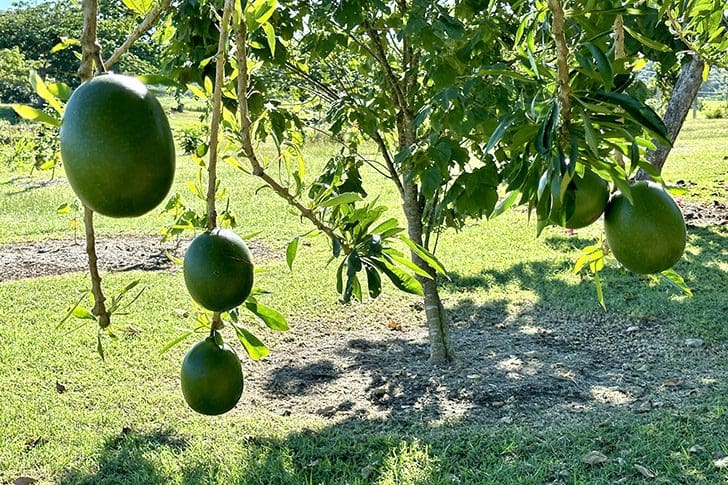
We have to help teach the elders and sisters, so we need to especially know how to greet people and quickly turn their minds to family history. As it turns out it is easy, so easy it is like taking low fruit off the tree. There isn’t anybody—I mean anybody—who doesn’t have a curiosity, an urge that is bigger than they are, a swelling in their DNA and a yearning to talk and learn about their ancestors. A fire is sparked in them because they want to know who they are.
The Lord sets us up with the best of experiences to see this, but He especially has made it easy for Scot and me to see firsthand and have experiences showing just how easy this is to teach, because we have to teach it later to so many others.
We were at a sugar cane plantation, that was once powerful and wealthy, but now has been made into a preserve where you can see historic buildings and learn about the Caribbean flora.

We stopped a young manager, named Angel, to ask him if a nearby tree was a ceiba, though we were fairly sure it was. Somehow our talk turned from ceiba trees to why Caribbean music is so lively to how a large array of our ancestors’ characteristics show up in us, with his leading the conversation all the way.
He said, “If you watched your grandfather or great grandfather, you would see that some of the very gestures of your hands and the movement of your body was just like theirs.” These subtleties in our physical and mental approach to life, or how we’re wired, were also here and there in the many generations before you.
If you could have asked for a perfect conversation starter to ignite him into family history research, if you could have created a chance to talk about the family history work and the temple, this was it. We were silently surprised the conversation had landed here. right as if he had been led along.
Another of the senior missionaries said to him, “Scot Proctor here is an expert in family research. He can help you find your ancestors.” Angel explained that he had a grandfather that he especially loved, and he gave his name and approximate death date.
One name, that’s all it took, just one name and Scot was able to open seven generations of his lines in under one minute. He showed Angel. “Is this your line?” You hear the expression that someone’s jaw drops open, but, this time, it was literal—his jaw dropped open. ‘How did you find that?” Angel asked. It was like Scot’s phone was magic.
We asked Angel if he would be interested in learning more about families and family history and he said, yes.
When we mentioned this to our mission president, Paul Horstmeier, he said that he sees the same things happen with the assistants all the time. They have an experience about something, given like a gift, just before they need to teach it to others.
Many Ministries
As MLS (Member Leadership Support) missionaries we have many ministries. One of them is to strengthen the young elders and sisters. When we called to check on our good friends, the social media sisters, recently, they were both sick, with that flu that congests, creates coughs and makes joints ache. They were practically in tears, and to make matters worse, they had just moved into a new apartment where they had no food.
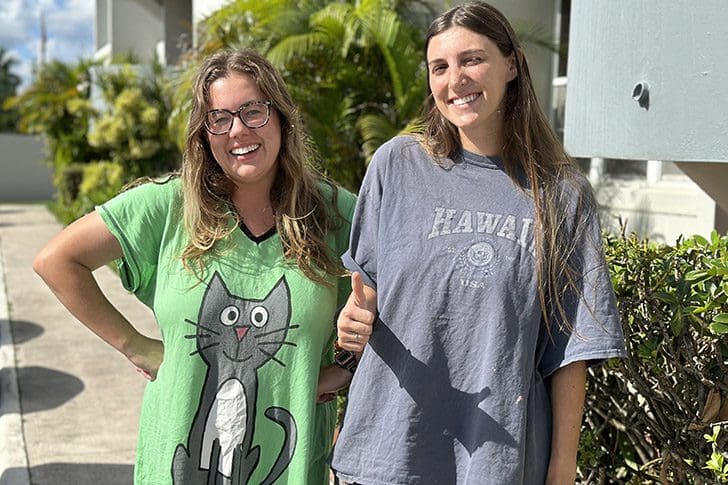

We asked them what they had to eat and they confessed that their fridge held one box of Honeycomb cereal and a roll of film. That sounds like a good metaphor for starvation, but when we came to their apartment laden with food for them, we looked in their fridge and found that they hadn’t been speaking in exaggerations.
Their fridge really did hold only one box of Honeycombs and a roll of film.
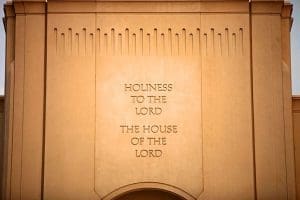
Another of our ministries is to our own neighborhood that stands in the reflected shine of the temple. When the fireworks of individual families went off the night of New Year’s Eve, they burst over the temple. We would like, as much as possible, to interest our neighborhood into what happens inside this beautiful shining building that surely must catch their eye every day. We’d like to talk to them about family history and Jesus Christ.
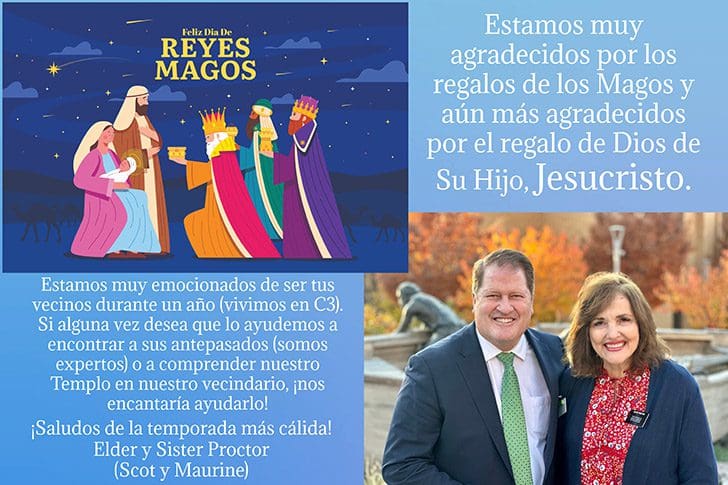 In Puerto Rico, as of this writing, the Christmas lights and décor are still up in all their glory because today is January 6, Three Kings Day. In many ways, it is a bigger holiday than Christmas for them. We decided this was a good day to put greeting cards in the mailboxes of our entire neighborhood, 52 in all, that said, “We are so grateful for the gifts of the Magi and even more grateful for God’s gift of His Son, Jesus Christ.”
We offered to tell anyone about the temple or family history, either of which leads us quickly to the Son of God.

The Sacrifice of All Things
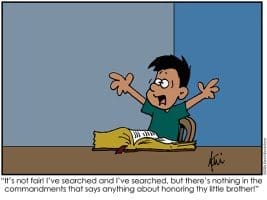
Two of our elders invited us to join them last week as they taught one last lesson before their friend, whom I will call Alex, would be baptized in two days on Sunday. But what a lesson it was because the plan included teaching the Word of Wisdom, the law of chastity, tithing, fast offerings and the Ten Commandments all in one setting. That’s a freight train full of life changes and each point was going to be given only about seven minutes to teach.
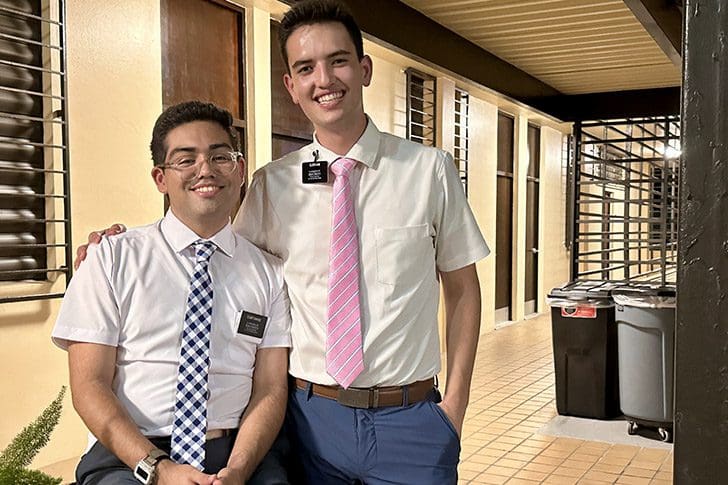
I thought, this can’t be good. Don’t you have to give this kind of rather heavy expectation gradually? Acquaint Alex and bring him along, a little at a time? Would he be resistant or withdraw? Would he storm out of the meeting because he had thought this kingdom of God was all about being loved, and, then, being shocked to learn it was also about being transformed?
We weren’t quite sure what to expect but Alex learned each new idea and nodded his head, yes. He could do that. He would live the Word of Wisdom. Yes. He would live the law of tithing. Yes. He would be chaste. Yes. He would pay fast offerings. Yes. He would keep the Ten Commandments.
It was a quiet response, but not a shallow one. He was humbled before what he learned and was ready for his baptism that followed on Sunday.
These elders must have known Alex well to have left all these commandments that asked so much in one lesson before his baptism. They had met in Panda Express when the elders were eating and studying, and Alex approached them. Maybe it is because Alex found them, that the elders knew how ready he was.
Zooming Along
I wondered, when we came to Puerto Rico, how a mission specifically worked so that 140 young missionaries and four senior couples could flow, weave, and interact together to move in the same direction—especially when they don’t live close together, but are fanned out across an entire large island.
We, like other missionaries, live in our own neighborhood, separated from other missionaries by jammed highways. We don’t see each other often and have no drop-ins unless they are invited. I would like to see everybody so much more often, but our assignments take us where they will, and so we really cherish the time we have when we are together.
Yet, Zoom is a hero for bringing us together and our week has a rhythm and schedule for these calls. Monday night is Miracle Monday where the missionaries come together at 6 p.m. and call as many of our contacts from social media as they can for the next hour, working together to beat our record from the week before.
Tuesday morning is devotional where our mission leaders teach us a principle or perhaps alert us to a requirement. One of those requirements discussed this week for the young elders and sisters, was the necessity of a regular phone audit, where companions check each other’s phones to be sure that they are being used appropriate to mission standards. This is the opportunity for the President to say and inspire the entire mission who has phone service.
Tuesday afternoon is a family council meeting to work on the next phrases of our family history approach to missionary work. And so forth.
We are the happy users of technology and, for being so far apart, we hear from each other all day with messages of upcoming baptisms, happy birthdays and a few personalized cheers.
A Majestic Statue of Columbus
Sitting in a field, far enough from the two-lane road that passes, so that you can hardly capture a photo, is the tallest statue in the hemisphere. It is the 350-foot statue of Christopher Columbus, standing at the ship’s wheel with three masts behind him, each bearing a cross. It is 50 feet taller than the Statue of Liberty and twice the size of Rio de Janeiro’s Christ the Redeemer—and couldn’t be in a place more obscure.

Dubbed The Birth of the New World, you pull your car off the road’s edge, where there is no shoulder, and look past locked gates to the beautiful behemoth. We loved the statue and the people who took 110,000 hours to assemble this. Its view over the beach, and then the blue waters of the Caribbean beyond, are spectacular, but they clearly did not intend for visitors to show up.
This was made for the 500th anniversary of Columbus’s discovery, but nobody would take the statue and put it in their city. Architectural Digest notes, “It was first turned down by Columbus, Ohio, before other cities (including New York, Boston, Cleveland, Fort Lauderdale and Miami) followed suit. Eventually after years of discussions, Birth of the New World finally found a home in Puerto Rico, where Columbus arrived in 1493.
While we were gazing at this beautiful monument through an impenetrable fence Scot said that he would like to take a small bronze plaque and weld it about eye-level on this monolith that said, “And I looked and beheld a man among the Gentiles, who was separated from the seed of my brethren by the many waters; and I beheld the Spirit of God, that it came down and wrought upon the man; and he went forth upon the many waters, even unto the seed of my brethren, who were in the promised land.” (1 Nephi 13:12)



Bob TaylorJanuary 14, 2024
many years ago on my mission, i had a similar experience. we were teaching a young couple, the husband was not active but because of his wife- who was not a member- he was being brought into activity. the very old lessons, the 5th discussion was all the commandments, and was often a stumbling block for investigators. we went in with a prayer in our hearts. every commandment, the wife nodded and committed to living the commandment. we finished the lesson and said, well, Sister ___, do you have any questions. she said yes, just one question. you can imagine how our hearts jumped at this ::)) what is it? well, she said, is that all there is to it? what a relief! no, that was not all, but for her this was the starting point.
Elder Ed SimonsJanuary 12, 2024
I love your mission updates! My wife snd I are Mental Health Advisors living in Argentina and this quote really resonated with me when you said "The younger generation is much better than you may have ever imagined." This generation of young adults are such precious valiant souls and I feel so privileged to serve them and the Lord as we serve them.