






Two Eyewitness Accounts of the Martyrdom

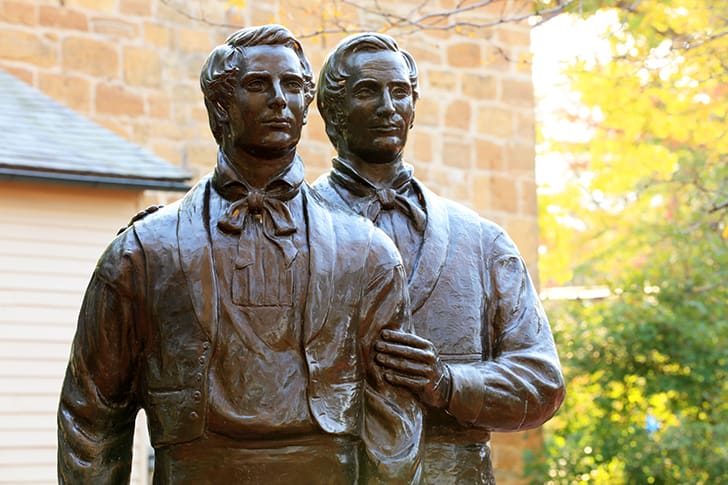
On Thursday, June 27, 1844, four noble men, Joseph Smith the Prophet and President of The Church of Jesus Christ of Latter-day Saints, Hyrum Smith, the Patriarch and Assistant President of The Church, and apostles John Taylor and Willard Richards were held in the Carthage Jail in an upper bedroom of the building. Some minutes after 5:00 PM, a mob of between 100 and 200 men, with their faces painted black, stormed the Carthage Illinois Jail and within minutes they brutally murdered Hyrum and Joseph. Elder John Taylor was shot several times and severely wounded. Elder Willard Richards (who weighed 300 lbs. and was the largest target in the jail) came through the attack without a scratch. Two sealed their testimonies with their blood and the other two witnesses, Elder Richards and Elder Taylor, left accounts of the event which took place on this date, 181 years ago. Grammar, spelling, and syntax have been corrected and modernized from the original accounts for readability. Photographs are by Scot Facer Proctor.
Apostle Willard Richards
TWO MINUTES IN JAIL.
Possibly the following events, occupied near three minutes, but I think only about two, and have penned them for the gratification of many friends.
CARTHAGE, June 27th, 1844.
 A shower of musket balls were thrown up the stairway against the door of the prison in the second story, followed by many rapid footsteps. While Generals Joseph and Hyrum Smith, Mr. Taylor and myself, who were in the front chamber, closed the door of our room against the entry at the head of the stairs, and placed ourselves against it, there being no lock on the door and no ketch that was useable. The door is a common panel, and as soon as we heard the feet at the stairs head, a ball was sent through the door, which passed between us, and showed that our enemies were desperadoes, and we must change our position.
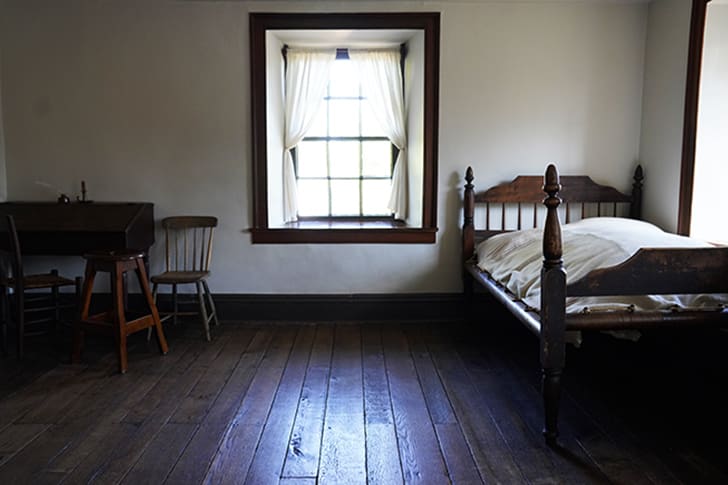
Gen Joseph Smith, Mr. Taylor, and myself sprang back to the front part of the room, and Gen. Hyrum Smith retreated two thirds across the chamber directly in front of and facing the door. A ball was sent through the door which hit Hyrum on the side of his nose when he fell backwards extended at length without moving his feet. From the holes in his vest, (the day was warm and no one had their coats on but myself,) pantaloons, drawers and shirt, it appears evident that a ball must have been thrown from without, through the window, which entered his back on the right side and passing through lodged against his watch, which was in his right vest pocket completely pulverizing the crystal and face, tearing off the hands and mashing the whole body of the watch, at the same instant the ball from the door entered his nose. As he struck the floor he exclaimed emphatically; “I’m a dead man.”
Joseph looked towards him, and responded, “O dear! Brother Hyrum!” and opening the door two or three inches with his left hand, discharged one barrel of a six shooter (pistol) at random in the entry from whence a ball grazed Hyrum’s breast, and entering his throat, passed into his head, while other muskets were aimed at him, and some balls hit him. Joseph continued snapping his revolver, round the casing of the door into the space as before, three barrels of which missed fire, while Mr. Taylor with walking stick stood by his side and knocked down the bayonets and muskets, which were constantly discharging through the door way, while I stood by him ready to lend any assistance with another stick, but could not come within striking distance, with-out going directly before the muzzle of the guns.
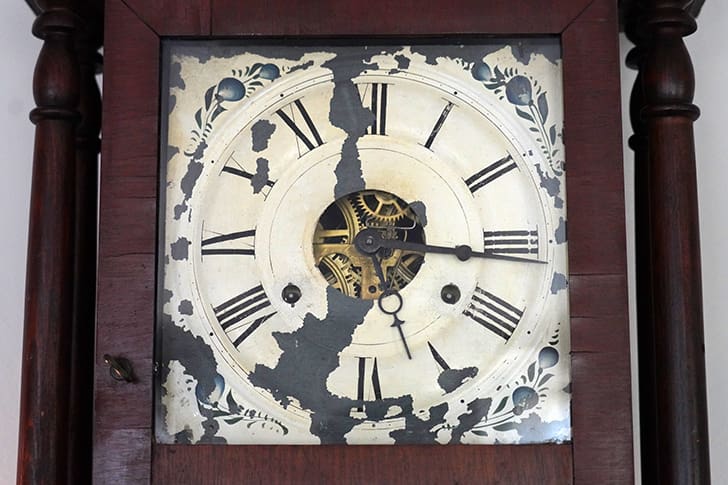
 When the revolver failed, we had no more fire arms, and expecting an immediate rush of the mob, and the door way full of muskets—half way in the room, and no hope but instant death from within—Mr. Taylor rushed into the window, which is some fifteen or twenty feet from the ground. When his body was nearly on a balance, a ball from the door within entered his leg, and a ball from without struck his watch, a patent lever, in his vest pocket, near the left breast, and smashed it in “pie,” leaving the hands standing at 5 o’clock, 16 minutes, and 26 seconds—the force of which ball threw him back on the floor, and he rolled under the bed which stood by his side, where he lay motionless, the mob from the door continuing to fire upon him, cutting away a piece of flesh from his left hip as large as a man’s hand, and were hindered only by my knocking down their muzzles with a stick; while they continued to reach their guns into the room, probably left handed, and aimed their discharge so far around as almost to reach us in the corner of the room to where we retreated and dodged, and then I re-commenced the attack with my stick again.
Joseph attempted as the last resort, to leap the same window from whence Mr. Taylor fell, when two balls pierced him from the door, and one entered his right breast from without, and he fell outward exclaiming, “O Lord my God!” As his feet went out of the window my head went in, the balls whistling all around. He fell on his left side a dead man. At this instant the cry was raised, “He’s leaped the window,” and the mob on the stairs and in the entry ran out. I withdrew from the window, thinking it of no use to leap out on a hundred bayonets, then around Gen. Smith’s body. Not satisfied with this I again reached my head out of the window and watched some seconds, to see if there were any signs of life, regardless of my own, determined to see the end of him I loved; being fully satisfied that he was dead, with a hundred men near the body and more coming round the corner of the jail, and expecting a return to our room, I rushed towards the prison door at the head of the stairs, and through the entry from whence the firing had proceeded, to learn if the doors into the prison were open.

When near the entry, Mr. Taylor called out, “take me.” I pressed my way till I found all the doors unbarred; returning instantly caught Mr. Taylor under my arm, and rushed by the stairs into the dungeon, or inner prison, stretched him on the floor and covered him with a bed in such a manner as not likely to be perceived, expecting an immediate return of the mob. I said to Mr. Taylor, this is a hard case to lay you on the floor, but if your wounds are not fatal, I want you to live to tell the story. I expected to be shot the next moment, and stood before the door awaiting the onset.
–WILLARD RICHARDS.[1]
Apostle John Taylor
Brother Willard says, “Brother Joseph, if there is any scuffing to be done let me get it done and let you go,” and I said “If you will let me go, in a few hours I will have enough men to liberate you even if we tear down the prison.” He objected, preferring peace.
We all of us felt unusually dull and languid with a remarkable depression of spirits. In consonance with those feelings, I sang a song that had lately been introduced into Nauvoo entitled “A poor wayfaring man of grief.”
The song is pathetic and the tune quite plaintive and was very much in accordance with our feelings at the time, for our spirits were all depressed dull and gloomy and surcharged with indefinite ominous forebodings. After a lapse of some time Br. Hyrum requested me again to sing that song. I replied “Brother Hyrum, I do not feel like singing.”
 When he remarked; “Oh! never mind, commence singing and you will get the spirit of it.” At his request I did so. Soon afterwards I was sitting at one of the front windows of the jail, when I saw a number of men, with painted faces, coming around the corner of the jail, and aiming towards the stairs. The other brethren had seen the same; for, as I went to the door, I found Br. Hyrum Smith and Dr. Richards already leaning against it, they both pressed against the door with their shoulders, to prevent its being opened; as the lock and latch were comparatively useless. While in this position, the mob, who had come up stairs and strove to open the door, probably thought it was locked and fired a ball through the keyhole…
…at this Dr. Richards and Br. Hyrum leapt back from the door, Br. Hyrum standing right opposite to the door, with his face towards it; almost instantly another ball passed through the panel of the door and struck Br. Hyrum on the left side of the nose and entering his face and head; simultaneously, at the same instant, another ball from the outside entered his back passing through his body and striking his watch. The ball came from the back through the jail opposite the door and jail and must, from its range, have been fired from the Carthage Greys; as the [line or aim] of fire arms shot close by the jail would have entered the ceiling, we being in the second story and there never was a time after that Hyrum could have received the latter wound. Immediately when the balls struck him he fell [on] his back, crying as he fell “I am a dead man. He never moved afterward.

I shall never forget the feeling of deep sympathy and regard manifested in the countenance of Br. Joseph as he drew nigh to Hyrum & leaning over him exclaimed; “Oh! My poor dear brother Hyrum!” He, however, instantly arose, and with a firm quick step and a determined expression of countenance approached the door, and pulling the six shooter (left by Br. Wheelock), from his pocket, opened the door slightly and snapped the pistol six successive times; only three of the barrels, however, discharged. I afterwards understood that two or three were wounded by these discharges, two of whom, I am informed, died. I had in my hands a large strong hickory stick, brought there by Br. Markham and left by him, which I had seized as soon as I saw the mob approach; and while Br. Joseph was firing the pistol, I stood close behind him.
As soon as he had discharged it, he stepped back and I immediately took his place next the door, whilst he occupied the one I had done while he was shooting. Dr. Richards, at this time, had a knotty walking stick in his hands belonging to me and stood next to Br. Joseph, a little further from the door in an oblique direction, apparently to avoid the rake of the fire from the door. The firing of Br. Joseph made our assailants pause for a moment, very soon after, however, they pushed the door some distance open and protruded and discharged their guns into the room when I parried them off with my stick, giving another direction to the balls.
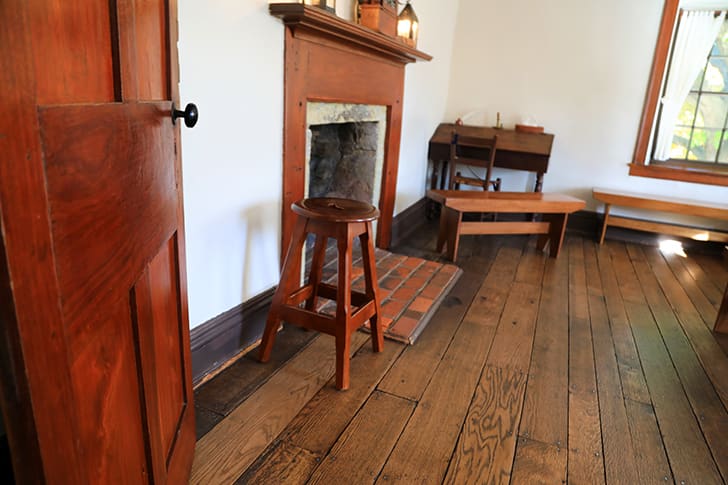
It certainly was a terrible scene; streams of fire as thick as my arm passed by me as these men fired; and unarmed, as we were, it looked like certain death. I remember feeling as though my time had come; but I do not know when, in any critical position I was more calm, unruffled and energetic, and acted with more promptness and decision. It certainly was far from pleasant to be so near the muzzles of those fire arms as they belched forth their liquid flame and deadly balls. While I was engaged in parrying the guns, Br. Joseph said; “That’s right Br. Taylor, parry them off as well as you can.” These were the last words I ever heard him speak on earth.
Every moment the crowd at the door became more dense as they were unquestionably pressed on by those in the rear ascending the stairs until the whole entrance, at the door was literally crowded with muskets and rifles; whilst with the swearing, shouting and demoniacal expressions, of those outside the door and on the stairs and the firing of guns mingled with their horrid oaths and execrations made it look like pandemonium let loose, and was, indeed a fit representation of the horrid deed in which they were engaged.
After parrying the guns for some time, which now protruded thicker and further into the room, and seeing no hope of escape, or protection there, as we were now unarmed, it occurred to me that we might have some friends outside, There might then be some chance of escape; but here there seemed to be none. As I expected them every moment to rush into the room— and nothing but extreme cowardice that kept them out— as the tumult and pressure increased, without any other hope, I made a spring for the window, which was right in front of the jail door, where the mob was standing, and also exposed to the fire of the Carthage Greys, who were stationed some ten or twelve rods off.

The weather was hot, we all of us had our coats off and the window was raised to admit air. As I reached the window and was on the point of leaping out, I was struck by a ball from the door, about midway of my thigh, which struck the bone and flattened out almost to the size of a quarter dollar, and then passed on through the fleshy part to within about half an inch of the outside. I think some prominent nerve must have been severed or injured, for as soon as the ball struck me, I fell like a bird when shot, or an ox struck by a butcher, and lost entirely and instantaneously all power of action or locomotion. I fell onto the window sill and cried out “I am shot.” Not possessing any power to move, I felt myself falling outside of the window; but immediately I fell inside, from to me, at that time, an unknown cause; when I struck the floor my animation seemed restored, as I have sometimes seen squirrels and birds after being shot. As soon as I felt the powers of motion, I crawled under a bed which was in a corner of the room not far from the window when I received my wound. While on my way and under the bed, I was wounded in three other places; one ball entered a little below the left knee and never was extracted; another entered the fore part of my left arm a little above the wrist, and passing down by the joint it lodged in the fleshy part of my hand, about midway in my hand and a little above the upper joint of my little finger.
Another struck me on the fleshy part of the left hip and tore away the flesh, as large as my hand, dashing the mangled fragments of flesh and blood against the wall. My wounds were painful and the sensation produced was as though a ball had passed through and down the whole length of my leg. I very well remember my reflections, at the time. I had a very painful idea of becoming lame and decrepit and being an object of pity, and I felt as though I had rather die than be placed in such circumstances.
It would seem that immediately after my attempt to leap out the window, Joseph also did the same thing, of which circumstance, I have no knowledge only from information. The first thing that I noticed was a cry that he “had leapt out of the window.” A cessation of firing followed, the mob rushed down stairs. Dr. Richards went to the window.
Immediately afterwards I saw the Dr. going towards the jail door, and as there was an iron door at the head of the stairs adjoining our door which led into the cells for criminals, it struck me that the Dr. was going in there and I said to him stop Dr. and take me along; he proceeded to the door and opened it, and then returned and dragged me along to a small cell prepared for criminals.
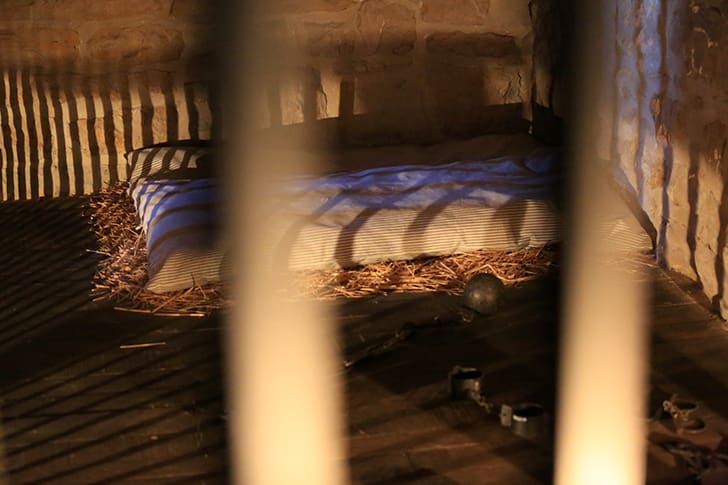 Br. Richards was very much troubled and exclaimed: “Oh! Br. Taylor is it possible that they have killed both Br. Hyrum and Joseph! It cannot surely be, and yet I saw them shoot him,” and elevating his hands two or three times he exclaimed “Oh Lord, my God, spare thy servants!” he then said “Br. Taylor this is a terrible event, and he dragged me further into the cell saying, “I am sorry I cannot do better for you.” and taking an old filthy mattrass he covered me with it and said; “That may hide you and you may yet live to tell the tale; but I expect they will kill me in a few moments.” While laying in this position, I suffered the most excruciating pain.
Soon afterwards Br. Richards came to me informing me that the mob had precipitately fled, and at the same time confirming my worst fears, that Joseph was assuredly dead. I felt a dull lonely sickening sensation at the news. When I reflected that our noble chieftain, the Prophet of the living God, had fallen, and that I had seen his brother in the cold embrace of death, it seemed as though there was an open void or vacuum in the great field of human existence to me, and a dark, gloomy chasm, blank or, void in the Kingdom and that we were left alone. Oh! how lonely was that feeling! How cold, barren and desolate! In the midst of difficulties, he was always the first in motion; in critical positions his counsel was always sought: As our Prophet he approached our God and obtained for us his will; but now our Prophet, our Counsellor, our General, our Leader was gone; and amid the fiery ordeal that we then had to pass through, we were left alone without his aid; and as our future guide, for things spiritual or temporal— for all things pertaining to this world or the next— he had spoken for the last time on earth.
These reflections and a thousand others flashed upon the mind. I thought why must the good perish and the virtuous be destroyed? Why must God’s nobility, the salt of the earth, the most exalted of the human family; and the most perfect types of all excellence, fall victims to the cruel, fiendish hate of incarnate devils?
The poignancy of my grief, I presume, however, was somewhat allayed by the extreme suffering that I endured from my wounds.
Soon afterwards I was taken to the head of the stairs and laid there where I had a full view of our beloved, and now murdered Br. Hyrum. There he lay as I had left him, he had not moved a limb; he lay placid and calm, a monument of greatness even in death; but his noble spirit had le[ft] its tenement and gone to dwell in regions more congenial to his exalted nature. Poor Hyrum! He was a good man and my soul was cemented to his. If ever there was an exemplary, honest, good and virtuous man, an embodiment of all that is noble in the human form, Hyrum Smith was its representative.
While I lay there a number of persons came around, among the rest a physician; the Doctor on seeing a ball lodged in my left hand, took a penknife from his pocket and made an incision in my hand, for the purpose of extracting the ball therefrom; and having obtained a pair of carpenters compasses, made use of them to draw or pry out the ball; alternately using the penknife and compasses. After sawing for some time with a dull pen knife and prying and pulling with the compasses, he ultimately succeeded in extracting the ball, which was about an half-ounce one. Sometime afterwards he remarked to a friend of mine that I “had nerves like the Devil to stand what I did, in its extraction.” I really thought I had need of nerves to stand such surgical butchery, and that whatever my nerves might be, his practice was devilish.[2]
From Eliza R. Snow
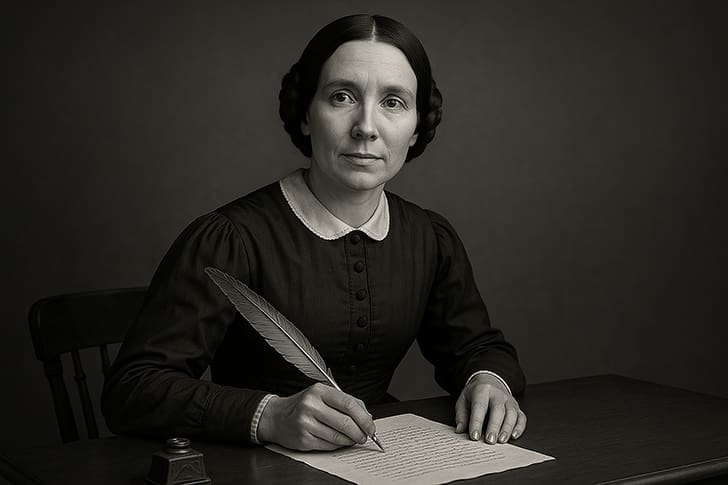
Eliza R. Snow deeply mourned the deaths of Joseph and Hyrum and using her gift of writing, she penned these words that were published three days after the Martyrdom in the Times and Seasons in Nauvoo. We publish but 18 lines of her 83 line poem:
 Now Zion mourns—she mourns an earthly head:
The Prophet and the Patriarch are dead!
The blackest deed that men or devils know
Since Calv’ry’s scene, has laid the brothers low!
One in their life, and one in death—they prov’d
How strong their friendship—how they truly lov’d:
True to their mission, until death they stood,
Then seal’d their testimony with their blood.
All hearts with sorrow bleed, and every eye
Is bath’d in tears—each bosom heaves a sigh—
Heart broken widows’ agonizing groans
Are mingled with the helpless orphans’ moans!
Ye Saints! be still, and know that God is just—
With steadfast purpose in his promise trust:
Girded with sackcloth, own his mighty hand,
And wait his judgments on this guilty land!
The noble martyrs now have gone to move
The cause of Zion in the courts above.[3]
Notes
[1] (Source: Two Minutes in Jail, 19th Century Mormon Article Newspaper Index; 1844-09-14 Brigham Young University – Harold B. Lee Library)
[2] John Taylor, martyrdom account; handwriting of John Taylor; 67 pages; CHL. John Taylor, Martyrdom Account, pp. 47- 54, The Joseph Smith Papers.
[3] Times and Seasons, 1 July 1844, p. 575.
He Was “All He Professed to Be”: How Brigham Young Remembered Joseph

Follow Daniel Peterson on his column on Patheos called “Sic et Non.”
In 1854, to mark the tenth anniversary of the martyrdom of Joseph and Hyrum Smith, a portion of the annual April general conference of the Church of Jesus Christ of Latter-day Saints was adjourned until 27 June. That fact, in and of itself, should be enough to indicate the great respect that the Church’s leaders had for the Prophet Joseph.
But it’s worthwhile to review some of what was actually said on that day—especially now that some (and I’m sorry to have to say it) have begun to claim, quite falsely, that Brigham Young and those in the Quorum of the Twelve eagerly sought to replace Joseph in order to further their own selfish interests, and even conspired against him. One particularly obnoxious suggestion is that Elders John Taylor and Willard Richards personally killed Joseph and Hyrum, on Brigham Young’s orders, before the mob had a chance to carry out its murderous intent. Curiously, the five men who were tried for (and found not guilty of) the assassination of the Smith brothers—Thomas C. Sharp, Mark Aldrich, William N. Grover, Jacob C. Davis, and Levi Williams—failed to mention in their defense that their targets were already dead when that (presumably surprised and puzzled) mob arrived. That seems an important point.
But back to the 27 June 1854 session of general conference: As Brigham Young himself put it, “the object of this adjourned conference” is “bringing to mind, to our remembrance, to realize, and to contemplate what the Lord has done for us in the last days. He has commenced his work for the gathering of Israel, for the redemption of the seed of Abraham. He commenced his work at this time as he has also done upon the earth in all ages of the world, in every dispensation that he has brought forth to the children of men for their salvation, by speaking from the heavens himself, sending his angels, his ministers, his apostles, his servants, his Son, the Savior of the world, to communicate to the children of men the system of salvation.”
“I do not understand,” Brigham said, “how the Lord could give a system of salvation and reveal to the children of men concerning his law without speaking to them, sending his messengers, dictating by himself, the Holy Ghost, his Son, or some of his apostles or agents.” And yet, he declared, “Joseph was killed because the Lord and angels and Jesus had actually spoken to him.”
“It had and has become a crime for the Lord to speak to the children of men,” Brigham told his audience. “It is treason against any government, even the government of the United States. It was considered treason, a violation of every law and statute of the union, the states, and the territories for the Lord Almighty to speak to a man on the earth. It was considered treason, I say,
in this holy land of holy Christians, and for this the Prophet Joseph suffered and died.”
Historians and lawyers might want to argue with Brigham Young as to how precisely accurate his explanation of the motives of Joseph’s killers is, but there can be no doubt of the emotion and conviction with which he spoke, nor of the indignant scorn that he felt for the perpetrators even a decade removed from the martyrdom:
“We have some little proof in this that has been manifested in what is called the courts of justice. The United States District Court for the State of Missouri passed his decision and judgment in the presence of his lawyers, in the presence of witnesses and the holy court, that if Joseph
did believe the testimony that Daniel had left concerning the kingdom of God on the earth
in (the) last days, there was testimony sufficient against him as to condemn him as a treasoner against the government. I say he was considered a treasoner because the Lord was pleased to speak to him.” “Ten years ago this afternoon it will be since he was killed for his treasonable belief and action.”
“What I have got up here for this morning is to testify of Joseph,” Brigham declared. “I am here now, ready to testify, to acknowledge before this congregation—and they may carry it to the four winds—that I am a disciple of Brother Joseph Smith, the man that the Lord revealed himself to, through whom he brought forth the Book of Mormon, revealed the way of life and salvation, the way to gather Israel, to save Israel, build up Zion, and establish the kingdom of God on the earth in (the) last days. I am his disciple.”
“I am,” he continued, “an eyewitness that Joseph . . . was an apostle, the prophet of God. I am a positive witness that Joseph Smith (was) all he professed to be and (a) great deal more in the eyes of heaven. I am (an) apostle here to testify that Joseph was a true prophet of God, that he brought forth the Book of Mormon by the power of God—by the means of Urim (and) Thummim he translated it—that he gave us the revelations that (are) contained in this book of Doctrine (and) Covenants, that they are true. . . . Besides many others I am here to testify that Joseph was father to this people, that he did strive with all the powers he had to sanctify this people, (to) send the gospel to the nations (of the) earth to teach them the way of life and salvation, to sanctify those (who) gathered themselves together to build temples (and) administer in ordinances of (the) holy priesthood and (that he) held the keys of it to the people that they
might enter into the celestial kingdom.”
“I am a witness also that he was father to his brethren. I am a witness that he brought
forth the doctrine that is taught the people now. I am a witness that he was willing to die for his testimony and the people, and he did lay down himself. He sacrificed his family, he sacrificed his feelings, (and) his mission upon the earth and he did go like a lamb to the slaughter
and like a sheep to be shorn, opening not his mouth, went to go and be slain, and was slain, and I am a witness of it. I was not in jail, to be sure, when he was shot, but he died. Aye, and I saw his body since his death and saw where the bullets pierced him and Brother Hyrum. I am a witness of this.”
“Joseph,” Brigham continued, “was striving all the time to sanctify this people. . . . If he had his desire, he would have come here (to the Great Basin West) and would not have left this people until they were sanctified, until the Lord came, and he would lead them into the millennium in the flesh. That was his natural (feeling?).”
And Brigham shared this powerful witness, born of personal experience and years of personal contact and friendship: “I am ever ready to testify that he lived (magnified/worked?) his calling as (a) holy priest. No man lived on this earth from the days of Adam until now, in my belief, that ever did better and did more Christ’s work and honor their priesthood better than Joseph Smith Junior. . . . Brother Joseph Smith was a true man of God, a true prophet of (the) Lord, a true apostle of Jesus Christ. . . . he was one (of the) greatest prophets (who) ever lived, one of (the) best men (who) ever lived.”
Following President Young’s remarks, John Taylor addressed the congregation. Elder Taylor had been with Joseph and Hyrum Smith (and Willard Richards) in Carthage Jail during the 27 June 1844 attack; he still bore within his body some of the lead musket rounds with which he had been gravely wounded that day.
“It is pleasing to know,” Elder Taylor declared, “that we are the disciples of as good a man as Joseph Smith was; of a man that lived in the fear of God and taught his fear, who was faithful all his life long, and (remained faithful) unto the death.”
Elder Taylor continued: “I was blessed to be associated with Brother Joseph Smith and, as President Young said he knew him, so did I. I have been with him under all kinds of circumstances—when the thick clouds of darkness gathered around and the earthquakes seemed to bellow and threaten destruction; when the forces of [the] earth were rallied against him; and in times of prosperity. I have heard him, as many of you have, speak in public to advance the principles of eternal truth, plead with the people to observe the laws of God, and keep his commandments that they might be prepared for a celestial inheritance. I have also been with him in private council so that I have had the opportunity of becoming acquainted with his feelings, ideas, views, with his morality, with his truthfulness, with his integrity. And I know that he was a good man; that he was an honest man; that he was a man of integrity; that he was a prophet of the Lord; that he lived in that capacity and died in that capacity and maintained his integrity to the end. I was not only with him living but with him dying, and this is my testimony concerning Joseph Smith: I know before God and the holy angels. I do not think it; I know it.
“I know that he was a servant of God and prophet of the Lord and lived and died in the faith. I not only know it by my natural sight but by the revelations of God. And I know by the same way that he yet lives, because I have seen him and I know he yet lives. And therefore I rejoice in the testimony that I can bear concerning him. And I know he will live and I know also that he is a friend of this people and watching over their interests. And I know also that he is a friend of President Young and watches over him and he is interested in the welfare, the happiness, and the exaltation of the saints of the Most High.”
A year after the martyrdom, John Taylor published lyrics in the August 1845 issue of “Times and Seasons” that powerfully express his sentiments toward Joseph and Hyrum Smith—and toward those who murdered them. I especially commend to you the moving setting of the first half of Elder Taylor’s words, as arranged by Rob Gardner:
Oh give me back my Prophet dear
And Patriarch, Oh give them back
The Saints of latter-days to cheer,
And lead them in the gospel track!
But Oh they’re gone from my embrace,
From earthly scenes their spirits fled.
Two of the best of Adam’s race
Now lie entombed among the dead.
Ye men of wisdom, tell me why—
No guilt, no crime in them were found,
Their blood doth now so loudly cry
From prison walls and Carthage ground.
Your tongues are mute, but pray attend,
The secret I will now relate
Why those whom God to earth did lend
Have met the suffering martyrs’ fate.
It is because they strove to gain
Beyond the grave a heaven of bliss,
Because they made the gospel plain
And led the Saints to righteousness;
It is because God called them forth
And led them by his own right hand
Christ’s coming to proclaim on earth
And gather Israel to their land.
It is because the priests of Baal
Were desperate their craft to save,
And when they saw it doomed to fall,
They sent the Prophets to their grave.
Like scenes the ancient Prophets saw,
Like these the ancient Prophets fell,
And, till the resurrection dawn,
Prophet and Patriarch, farewell!
***
This column draws extensively from two sources, though I have adjusted punctuation and capitalization and even added some helping words in a few cases, for (I hope) the sake of readability:
LaJean P. Carruth and Mark L. Staker, eds., “John Taylor’s June 27, 1854, Account of the Martyrdom,” BYU Studies 50/3 (July 2011): 25-62.
LaJean Carruth’s transcription of Brigham Young’s 27 June 1854 conference remarks is available in the Church History Department Catalog at https://catalog.churchofjesuschrist.org/assets/e0e8f3e9-1ebe-4d7d-bc90-abb0bdf53169/0/0?lang=eng
Joseph Smith’s Last Journals Record a Tumultuous Time

Please take 90 seconds now to keep Meridian publishing this year. Click here to show your support.
In the last year of Joseph Smith’s life, his influence was at its peak, as he balanced the roles of church president, prophet, mayor, judge and militia leader, all while responding to an escalating conflict around him.
This was a time when close associates like William Law turned to betray him, when a conspiracy was drawn together to assassinate him, when the Warsaw Signal was calling for his death and mobs were mounting. At the same time, Smith was actively directing the construction of the Nauvoo Temple, giving temple instruction, and revealing startling new doctrine as in the King Follett discourse.
The Joseph Smith Papers, Journals, Volume 3 records his journal entries from this turbulent and productive time, giving us insight into the prophet at the center of a growing drama, who at the same time, managed to move the Church forward with continued revelation.
These journal entries cover the last months of his life from May 1843 to June 1844, a time when the Council of Fifty, also known as “the Kingdom of God”, was formed to contemplate relocating the Church to Oregon or the Republic of Texas, when Joseph was appealing to government leaders for redress for the Mormons who had suffered in Missouri, when he determined the only way to grab attention for this cause was to stand for President of the United States himself, when attempts continued in the effort to extradite him to Missouri, and when plural marriage began to be more widely practiced in Nauvoo.
It’s hard to imagine a time of greater conflict and pressure than these months represent.

General Editor, Matthew J. Grow, Volume editors Brent M. Rogers, Alex D. Smith, and Production Editor Alison Palmer each hold a copy of the journals Willard Richards wrote in for Joseph Smith.
The goal of the Joseph Smith Papers Project, which includes multiple volumes, each of which takes years to produce by a team of people, “is to present verbatim transcripts of Joseph Smith’s papers in their entirety, making available the most essential sources of Smith’s life and work and preserving the content of against manuscripts from damage or loss.”
It is at least a twenty-year effort to make Joseph Smith and his life completely transparent, compiling every available document in these volumes. These “include documents that were created by Joseph Smith, whether written or dictated by him or created by others under his direction, or that were owned by Smith, that is received by him and kept in his office (as with incoming correspondence).”
This becomes invaluable source material for scholars on the life of Joseph Smith, but also as one of the volume editors, Brent M. Rogers noted, “People find this volume incredibly fascinating. We know how it ends—with the martyrdom—but the daily variety, complexity and nuances that a reader will find in the prophet’s life demonstrates how much it was to take on.”
Willard Richards as Scribe
One could wish that in this most recent volume, these journal entries were made by Joseph, himself, putting pen to paper, so we could have a window upon the prophet’s thoughts and feelings against this stormy backdrop. However, by this point in his life, Joseph had turned to Willard Richards, his private secretary, to be his scribe and keep his journal for him.
Sometimes months would go by before Joseph would sit down with Richards and consider what had been written.
Willard Richards’ entries for Joseph tend to be terse in style and made based on observation, rather than checking with him for details. Until late in the journal, many entries document relatively few events, sometimes only one a day. Scholars believe this is more a reflection of Richards’ style and personality than his lack of familiarity with events, because at many key moments in Smith’s life during this period, Richards was there as well.
He was there, for instance, when Joseph and Hyrum, rowed across the Mississippi River as they considered if they should escape, just days before the martyrdom. He was there at the martyrdom in the Carthage Jail, though Richard’s entries end June 22, 1844 five days before the martyrdom.

Correctly deciphering Richard’s handwriting has been challenging for the scholars working on this project. They joke that Smith might have chosen someone other than a doctor to keep his journal.
The book notes, “Hurried note taking often resulted in missing words, informal abbreviations, inconsistent spelling, and poorly formed characters,” sometimes mark the work.
It is also true that “Because of Richards’s idiosyncratic handwriting, many passages of this journal have been misread and misunderstood in the past. To provide the most accurate reading possible, experts in Richards’s handwriting have meticulously transcribed Smith’s journal according to the highest standards of documentary editing.”
This editing has involved a process where transcripts were verified three times, each time by a different set of eyes.
In one sense, since Richards kept Smith’s journal, it is farther from the prophet’s voice, but in another, we have the freshness of Joseph Smith’s own thinking in the notes on 60 of the prophet’s sermons given in Nauvoo that Richards included in the journals.
These discourses covered a range of topics such as salvation, resurrection, baptism for the dead, priesthood ordinances and human’s potential to become as God. Many of these were groundbreaking doctrine and new insight for the listeners.
Here for instance are the notes Richards took from a funeral sermon 9 October 1843.
“All men know that all men must die.— What is the object of our coming into existence. then dying and falling away to be here no more? This is a subject we ought to study more than any other, which we ought to study day and night.— If we have any claim on our heavenly father for any thing it is for knowledge on this important subject— could we read and comprehend all that has been writtn from the days of Adam on the relation of man to God & angels. and the spirits of Just men in a future state. we should know very little about it. could you gaze in heaven 5 minute. you would know more— than you possibly would can know by read[ing] all that ever was writtn on the subject.”
Annotations
Where the journal entries need additional explanation or understanding of references to people, events or places, the volume editors have provided extensive annotations, which include, among many others, references to the minutes from the Council of Fifty—which will be published in their entirety in an upcoming volume.
These annotations help to fill in the picture that otherwise could be difficult to understand. Often in the book, the annotations fill more space than the journal entries.

What is clear in these pages is that as the days barrel toward June 27, 1844 and the martyrdom, controversial teachings, the practice of plural marriage, Joseph’s growing political power and fear of a Mormon voting bloc, rouse the growing animosity both of avowed anti-Mormons like Thomas Sharp and those who had once been friends and had become disaffected members of the Church.
Joseph is very much aware of the scheme to assassinate him. From his 27 May 1844, we read:
“Joseph [H.] Jackson F[rancis] M. Higbee. & C[hauncey] L. Higbee were in A. Hamiltns [Artois Hamilton’s] Hotel when we [Joseph Smith and others] arrived. soon after our arrival Chas A. Foster took me in a private room & told me there was a conspiracy again[s]t my life. R[obert] D. Foster. told some of the breth[r]en there was evil determ[ine]d aga[in]st me. (& that with tears in his eyes.)— and that there were those who were determ[ine]d I should not go out of the village [Carthage, Illinois] alive. &c— Jackson was seen Loading his pistol— and swore he would have satisfaction of me and Hiram [Hyrum Smith]—”

Final Two Weeks of Joseph’s Life
Two appendixes appear in this book that further illuminate the last two weeks of Joseph Smith’s life. These are an excerpt from Willard Richards’s journal from 23-27 June and an account by William Clayton of Joseph’s 10-22 June activities. Since both of these men had close proximity to Smith their records provide important primary source material of those dark days leading up to his death.
Two videos prepared by the team who created this book explore some themes from the journal entries:
Joseph Smith: Presidential Candidate
Where is Zion?
To purchase your own copy of the book on Amazon click here.


