








by Thomas C. Baggaley
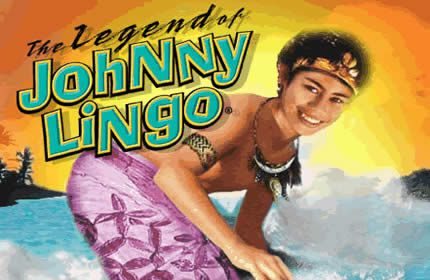
picture from https://www.johnnylingo.com
The story of Johnny Lingo and his eight-cow wife has become so much a part of LDS culture; you might be tempted to believe that Johnny Lingo was an early Polynesian member of the church. The version of the story most members are familiar with is the BYU-produced short film made in 1969 starring Makee K. Blaisdell, who also made a guest appearance on one of the original Star Trek episodes, and Francis Urry, who also played President Lorenzo Snow in another classic church film, The Windows of Heaven, and whose voice is heard narrating the children’s audio tapes and videos of scripture stories produced by the church. It was directed by Wetzel O. Whitaker, who before being approached by BYU president Ernest L. Wilkinson in 1952 to establish a film studio from scratch (now known as the LDS Motion Picture Studio), worked for 16 years as an animator at the Walt Disney Studios on such notable features as Peter Pan, Alice in Wonderland and Cinderella. Whitaker went on to produce and/or direct such notable church classics as The Windows of Heaven, Cipher in the Snow, The Lost Manuscript and of course, Johnny Lingo.
Who knows how many countless Aaronic Priesthood or Young Women’s lessons have involved showing this film over the years? Who can forget such classic lines as “Mahana, you ugly!” or seeing Mahana’s father stomping away from the young couple’s home insisting that he’d been cheated, even though Johnny Lingo paid him nearly twice as large a dowry as any man had paid for a wife before? The film is memorable for its silliness, for its politically incorrect setting, and for its timeless message about some of the consequences (good or bad) of the ways we treat those around us.
Since members can hardly get through seminary without having seen the film at least once, they might be surprised to learn that this story’s origin has nothing to do with the church. The film was actually adapted from a short story by writer Patricia McGerr, who – aside from Johnny Lingo – was best known for her mystery novels and short stories. The story was first published in the mid-1960s and has been translated into dozens of languages and reprinted in hundreds of publications, having been read and enjoyed by millions of people throughout the world. And its origins may go further back than that.
The Legend
LDS producers John Garbett and Jerry Molen (winner of an Academy Award as the producer of Schindler’s List) have decided to follow up The Other Side of Heaven, the highest grossing LDS Cinema film to date, by producing a feature-length version of the Johnny Lingo story. At a private screening of the film in Salt Lake City, Garbett answered a few questions and spoke about the origin of the story, which he says may truly be very old – on the order of a legend. “People I’ve talked to [in the Pacific islands] have told me they knew the story before it was ever published. It may be that long ago there really was a Johnny Lingo.”
For some of those invited to the special screening, there was – at first – a little confusion. Several in attendance mentioned how they had wondered why they should get up on a Saturday morning and go downtown to see a 20-minute film produced in 1969. Once they realized it was a feature-length film based on the same story, the next logical question was how in the world could anyone stretch that story over nearly two hours and keep it interesting? In fact, The Legend of Johnny Lingo (which is the title of the feature) actually deals with much more of the lives of Johnny Lingo and Mahana than the other film.
Without giving too much of the plot away, the film begins when a baby boy is washed up onto Malio Island during a fierce storm. At first the islanders welcome the child into their midst, giving him the name of Tama. However, after a series of misfortunes occur on the island, Tama is blamed and becomes an outcast, living in the house of the poorest family on the island, that of Mahana and her father. Mahana is also an outcast, rejected even by her own father, and the children form a bond. Tama finally is able to leave the island, promising to return for Mahana and take care of her as soon as he can. A lot of time is spent in the growing up process for these characters, especially Tama. In fact, the entire events depicted in the 1969 version only take up about 5 minutes of the feature film, and even those events are handled in a very different (and I personally feel much more satisfying) way than the earlier film.
A New Adaptation
When asked about some of the differences between the two films, including some things that were left out, Garbett made it clear that the filmmakers had not set out to do a remake of the 1969 film; rather they wanted to do their own film adaptation of the original story as written by Patricia McGerr. “Those things were not in the original story. They were added for that particular film,” he explained.
So is The Legend of Johnny Lingo any good? In short, yes it is. It is a fun, sweet, family-oriented film. Although its budget appears to be smaller than The Other Side of Heaven (not necessarily a bad thing) this is a very well-conceived adaptation of the story. Award winning Polynesian screenwriter Riwia Brown has done an excellent job of expanding on the source material, and even the idea of a wedding dowry is approached so subtly and sensitively that it no longer seems like the blatant buying and selling of a wife. Part of this is because the feature length film allows some of the other characters in the story to be developed more fully, especially the female ones.
Mahana, for instance, is a much stronger, more believable character in this version. That they are able to accomplish this and still maintain the story’s underlying message about the effects of attaching labels to people is a credit to the script and to the acting and directing. Joe Falou is strong as the grown up Tama, although perhaps not quite as good as when he played Feki in The Other Side of Heaven – but I thought he was very good in that, so that’s not a knock on his performance in Johnny Lingo at all. Kayte Ferguson is also good as the grown up Mahana, George Henare is excellent as an older Johnny Lingo, and it is an absolute joy to watch Alvin Fitisemanu shine in a larger role as the “Chief Steward.” (In The Other Side of Heaven, Fitisemanu played Tomasi, the large, often-drunk Polynesian who remembered he was a Mormon just in time to save Elder Groberg and Feki from the bullies that the minister had sent to rough them up.)
First-time director Steve Ramirez does make some unusual choices, the most troubling to me being two or three times when there was a sudden shift in both the visual and sound world of the film and I suddenly felt like I was watching a sleek music video, complete with pop music (sung in one of the South Pacific languages – I’m not sure which one). They were very beautiful sequences and I’m sure they will help to sell copies of the soundtrack, but I didn’t feel like they fit into the rest of the film and actually interfered with my ability to stay involved in the story and the world of Johnny Lingo – at least for the duration of those scenes. But overall, it is a well-made picture, and most importantly, it is fun, light and entertaining to watch.
As further evidence of the story’s universal appeal and popularity – even outside the LDS church – The Legend of Johnny Lingo is opening simultaneously on 100 screens in various major cities across the U.S., including Salt Lake City (and other cities in Utah), Atlanta, Dallas/Ft. Worth, Phoenix/Mesa, and Las Vegas next weekend (Labor Day weekend – August 29th).
2003 Meridian Magazine. All Rights Reserved.


