









In this and in future articles, I will suggest ideas from my new book of how to have pleasant and natural conversations with friends and neighbors about our beliefs.
The best way we can help find listeners is to stimulate curiosity – plant a mental seed that makes a person muse, “I wonder what that’s all about?”
Casual, one-off, parenthetical, leave-behind comments.
Current issues in today’s world are natural bridges to mentioning something that relates to our beliefs. And if there’s an easier conversation opener, I don’t know what it would be.
Conversations about inflation, crime, war, immigration, homelessness – you name it – already crackle in the air fed by the latest headlines.
Mentioning a current problem and wondering about the future (which everyone does) is a comfortable vehicle:
Did you see on the news last night that …
What’s your take on [current issue]?
How did we get into this mess, anyway?,
What do you think is going to happen?
What do you feel we should do about it?
As the conversation progresses, comment on it using soft phrases:
The way I see it …
My take on that is …
Let me put this idea on the table …
From my perspective …
I happen to believe …
What would you think about the idea that …
By talking about fears, you become an ally as you demonstrate familiarity with those concerns and thence your friend’s hopes and needs.
You can use today’s issues and problems to introduce easy-to-agree-with points of doctrine …
When I think about (crime) (war) (poverty), I’m reminded what my parents taught me – that there must be opposition in all things.
In other words, problems are necessary for us to progress.
There’s no progress without friction.
Ever driven on black ice?
Then tie issues, especially those that cause suffering, to our pre-mortal existence:
The way I see it, God lets bad things happen so we will learn and make progress.
We were put on earth to learn the difference between good and evil.
We have to pass through sorrow. (Emphasize the through.)
Problems are part of God’s plan so we can learn to be as He is.
BTW, I believe we lived with God in heaven before being born and that’s where the big plan was explained to us.
Is that something you’ve ever wondered about? What’s your philosophy?
If the conversation deepens, try one or more of these short phrases to explain God’s plan as it relates to today’s issues:
In His plan to help us with problems on earth, God would give us agency – the power to choose and be held accountable.
Through His Son, He would create an earth where we could learn to discern good from evil.
He would provide mortal bodies for those who choose to follow His plan.
These bodies would be subject to pain, which in turn would prod us to focus and learn from sad experiences and therefore progress.
He would provide a Redeemer whose leadership and perfect life would give us hope in the face of necessary suffering.
Then return to the issue that began the conversation and wrap up with a light touch.
Well, whatever happens, good people will win out in the end.
Just wish more of our fellow citizens would work together to make things better in the future.
* * *
Next time: Four drop-in statements that will pique curiosity.
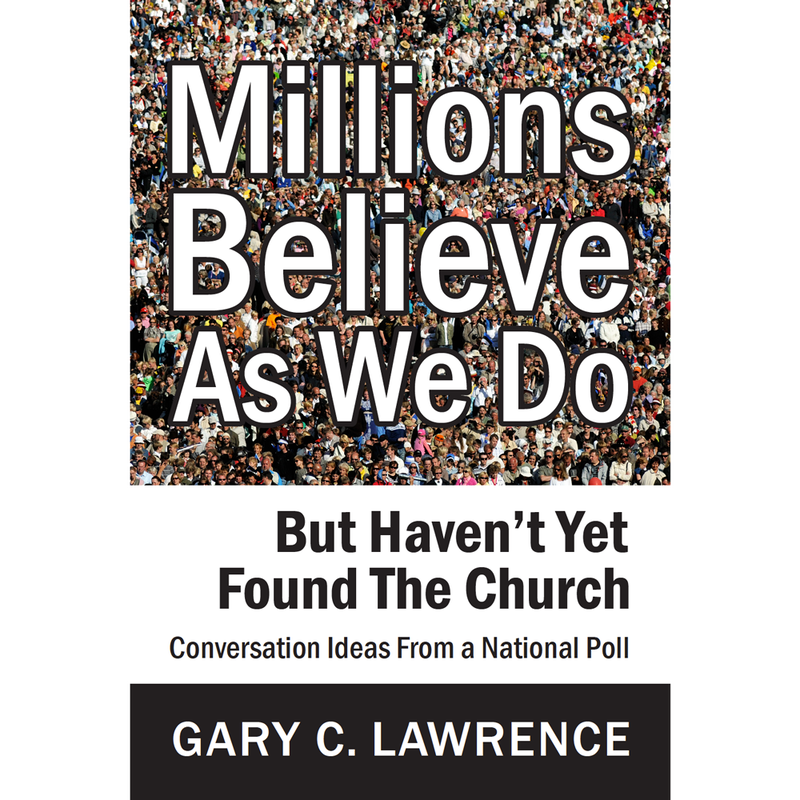
Gary Lawrence is a public opinion researcher and author. His new book – “Millions Believe As We Do But Haven’t Yet Found the Church; Conversation Ideas From a National Poll” – is now in Deseret Book stores and online at deseretbook.com.


Mark MathesonDecember 13, 2023
Gary Lawrence has a fresh view of how we should do missionary work. I wish more people followed his advice. Thanks for the practical wisdom.
HelenCDecember 11, 2023
I recently spent time with my cousin who only knows of the Church through her contact with my mother and me. Believe it it not, the common ground we found was “secret combinations” which she believes is driving most of the evil in today’s world. I told her she could find the Book of Mormon online if she wanted to know more.