









 A year ago, I accepted an invitation to join forces with a team of assorted writers who, like me, had each been invited to compose an essay on unity. The stated goal of the project was ultimately to assemble the resulting collection of essays and publish it as a book. Theoretically, and inevitably, our essays would vary in perspective, voice, length, presentation style, and most everything else, but the compositions would share a common central topic: Unity. Committed to the topic and intrigued by the project, I happily accepted.
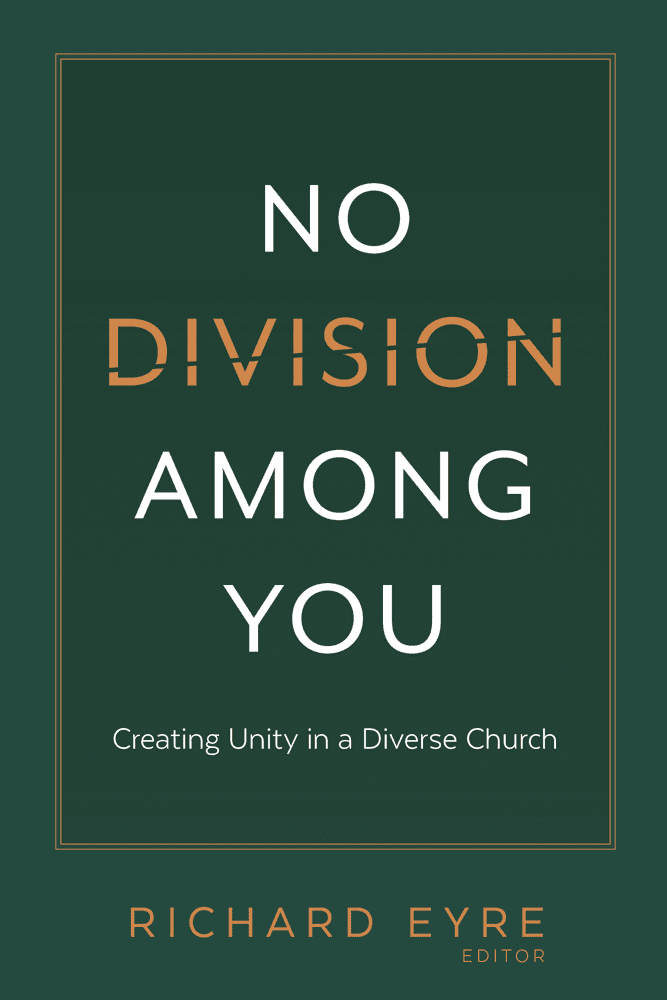
Richard Eyre, the mastermind of the project, assembled his team and promptly began to strategize a plan to advance his vision. I initially thought that with the team in place, the goal was all but accomplished. It shouldn’t have surprised me to quickly learn that the steps from commitment to a cause to achievement of that cause are usually many and unpredictable. While always congenial, the collaboration necessary to get us from start to finish was sometimes a complicated, back-to-the-drawing board process of adjust and readjust. Even as we pressed forward with a determination to achieve our goal, we met with stumbling blocks and junctures that required tenacious rethinking. Perhaps naively, I had assumed that the whole effort would take a few months at most. After all, the writers were experienced, the leadership was as good as it gets, and the cause was unmistakably worthy. More than a year later, the first copies of the book, No Divisions Among You, have just now been printed and are ready to distribute.
That year-long communal effort was something of a microcosm of the very subject we had each written about. We worked at, were devoted to, and achieved a satisfying, deepening unity within ourselves and the group as we engaged in the demanding process of achieving something to which we were all committed.
Ironically, the composition of our individual essays, followed by the sometimes challenging, always helpful suggestions of our fellow writers, followed by the requests and sometimes push back from able editors, followed by collaboration to strategize format and distribution, all demanded decisive unity. We were determined to learn from and capitalize on the strengths and perspectives of others without becoming discouraged or defensive.
Even identifying a date that everyone could meet virtually for an hour-long Zoom call required flexibility and determination. We stuck with it. We were universally committed to raising our unified voices on the very subject of unity, to seeing the book through to publication, and, increasingly, to each other. As I engaged with that group of writers I had come to admire as good thinkers and hard workers on a final Zoom call, I thought how much I admired those diverse, impressive people, many of whom I had never met before the project began. Some wrestling to the ground of unity in thought and action had bound my heart to theirs.
Achieving unity amidst diversity is a formidable goal, even for a group of friendly essayists working side by side to assemble a book. Appropriately honoring the important points of view of the diverse group motivated us to take whatever time it took to listen to all suggestions and to incorporate every valuable thought into the ultimate way forward. The result was a published book of varied points of view. For me, as importantly, it was also a group of blessed new friends and thought partners.
Every Thursday evening and Sunday morning, I serve with The Tabernacle Choir at Temple Square. All that exposure to magnificent music provides me a blessed opportunity to consider and delight in the glorious result of intentional music-making at its finest. On Thursday evenings, Mack Wilberg and Ryan Murphy, the Choir conductors, provide their expert leadership to the weekly rehearsal sessions to prepare the Choir and Orchestra for Music & the Spoken Word programs and broadcasts every Sunday, as well as dozens of other performances constantly in the works.
I listen to their brilliant tutoring with great attention, listening for its application in music-making in other musical circumstances, as well as potential music-making in important figurative ways.
I marvel that those 300+ singers and 100+ instrumentalists unify the music they make every week to achieve together something more stunning and grand than any one of them could accomplish alone. Many of those fine musicians could be, or are in other settings, soloists. But when they assemble as a team, they discipline and accommodate the music they make adjacent each other with grace and modesty to accomplish a unified sound.
At times, the singers unify their voices on a single, unison note. That unity achieves a strength and texture of sound that no single singer could accomplish alone. Other times, they sing several notes simultaneously, always carefully listening to each other, to create a cooperative, pleasing, complex and rich harmony. Sometimes, a single singer offers a few solo measures. It’s all beautiful.
The singers in the Tabernacle Choir rehearse assiduously, taking whatever time is required to listen to every suggestion from the conductors, as well as to the voices at their sides. All of that practice and listening helps assure that all voices make their highest and best contribution to the whole. No voice ceases to be its own, but all are graciously accommodated to the grand, powerful, inspiring sound of the inimitable Tabernacle Choir.
In No Division Among You, the compilation of essays we have just completed, I share in my essay a story about music-making that has long served as a personal metaphor of seeking and achieving some valuable unity in my own life.
“My husband comes from a family of four boys who all love to sing. A favorite family pastime of theirs is playing their guitars and singing harmonies together. Because there was no sister for their boy band, for decades, the second brother assumed the melody lines and all the high notes. He was good at that and embraced his prominent place in the music with aplomb. My husband is the oldest of the four, so it was logical that I would be the first girlfriend to be brought home to join the family fun. I also love to sing, and I quickly assumed what seemed to me to be my obvious claim to the melody lines and the high notes.
“It became immediately clear to me that the brother who had long sung those notes never anticipated a competitor invading his space. Their four-part harmony meant one person per note. I was an intruding number five. We jockeyed for position for a while before I concluded that he wasn’t going to relinquish the notes he had been signing for years. I considered simply sitting silently, but I knew I would miss being a more robust member of the music-making, so I determined to find another way forward. I stretched upward to notes above the melody – a descant. A new voice. That second brother smiled at me approvingly. I had successfully found a way to participate without competing. I didn’t need to sing more loudly or demand my ‘rightful’ place. With some imagination and respect for and from us all, there was room for every voice, and the music was better because of it. That brother and I still bump into each other occasionally when we sing, but we are both committed to making space for each other. The result is satisfying and sometimes even beautiful.”
Ah, that we could all be tenaciously determined to rehearse tirelessly to achieve more unity in this textured, diverse world. With stubborn avoidance of a default cacophony, our resolve would be to realize a richness of harmony in the breadth of our appetite for and engagement with disparate voices. Unity is rarely easy or automatic, but the heavenly mandated goal remains unchanged and worthy: “Unity – a balanced, pleasing, suitable arrangement of parts.”


