











In the Church we are taught the importance of the blessings of our Abrahamic lineage, but too few of us take the time to really understand it. In temples and our patriarchal blessings, the promises of the lineage of Abraham, whether literal or by adoption, are taught to us. Utilizing The Joseph Smith Translation, Red-Letter Edition, Old Testament, (JST)1 we will make some observations of our Abrahamic lineage and the concepts of firstborn, firstlings, and birthright.
In His conversations with Abraham, God made some very spectacular promises. These promises were based on faithfulness and served to point him and his descendants directly to Jesus the Christ, the firstborn of God the Father. (D&C 93:21-22) Those promises were discussed in the last article of this series, so I will simply refer the reader to them here. The promises given to Abraham anciently continue to make him a pivotal figure in our lives today as members of The Church of Jesus Christ of Latter-day Saints.
It is useful at this point to define how the term “firstborn” was used anciently as well as “firstlings.” Pragmatically, the two words mean the same thing. However, from a secular point of view among Semitic people, the firstborn was simply the first male child, born to the first wife. The term firstling on the other hand was generally used to describe the first unblemished male, usually a lamb, to be sacrificed in Hebrew rituals.
The concepts of firstborn and firstling are germane to understanding the ritual of Passover where the blood of an unblemished lamb was used to protect the firstborn of ancient Israel from the destroying angel. Both concepts, firstling and firstborn, were designed both anciently and today, to point us directly to Jesus the Christ, the firstling of the flock if you will, the firstborn son of God the Father and His only begotten in the flesh.
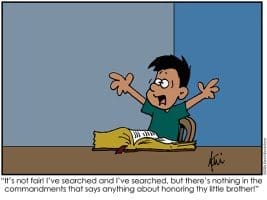
Anciently, the firstborn, by family law or tradition, was blessed to receive the birthright which included a double portion of the inheritance from their father. Where appropriate they were also entitled to the Priesthood. All birthright blessings came with the responsibility of managing all their father’s household and holdings, as well as their own portion of the inheritance. In their household they were also responsible for their younger siblings and other dependent family members such as widows or orphans, as well as the servants and others who part of the household. Obtaining the Priesthood, however, was based on the worthiness of that eldest or firstborn son.
In ancient Hebrew Temple ceremonies, the firstling was the firstborn, but more importantly it was the first, unblemished male. (Deut. 15:19-23) When applied to a child, the firstborn son, not unlike a sacrificial firstling, was to be dedicated to the Lord, although they could be redeemed or relieved of that responsibility through an offering of five shekels, about $3-$5 today. (Ex 13:2, 12-13, 22:29; Num 18:15-16)
A great Old Testament example of dedicating the firstborn to the Lord is found in the story of the Prophet Samuel when Hannah, his mother, placed him into the care of Eli at the Temple of Shiloh. (1 Sam 1:11; 25-28) Samuel as we know went on to be the final Judge of Israel and at the Lord’s direction, instituted the ancient monarchy of that society. There are some beautiful and striking parallels between Hannah’s prayer and song of praise to the Lord regarding her son Samuel (1 Sam 1:1-11) and the praise or what is known as the Magnificat of Mary the mother of Jesus (Luke 1:46-55). However, that discussion will have to wait for another day.
Anciently, the birthright traditionally belonged to the first male born to the first wife as we said before. This is fundamental to the concept of the covenantal birthright as it was practiced at that time. It helps us understand Abraham and Isaac’s determination to keep their sons from marrying people who were not faithful or did not have the covenantal blessings of the Gospel. The rights to the Priesthood by those bound through the Abrahamic covenant required the firstborn to be a worthy and righteous son which included being “born in the covenant” as it was practiced then. Those who were not born under that covenant or strayed from it, then and now, could not become recipients of those Abrahamic promises, unless and until they repented or were converted.
In Genesis 17, the Lord spoke with Abraham and promised him a son from Sarah who was to be called Isaac. Abraham who was 99 at the time, already had a son, Ishmael, from Hagar. When Isaac was born, Ishmael would have been around 13 or 14 years old (Gen. 17:25). At his birth Isaac inherited the birthright of Abraham rather than Ishmael. It may seem unjust to us that Isaac received the birthright. However, Sarah was Abraham’s first wife and therefore her firstborn son would be the rightful heir to the birthright. There is some indication that Ishmael may have disqualified himself in some manner as well.
Bad feelings and difficulties were stirred up between Hagar and Sarah over the birthright issue which incidentally has continued to incite tension between the descendants of Isaac and Ishmael to this day. While far more complex genealogically than stated here, the descendants of Ishmael and his twelve sons are generally found among the Arabic nations of today. Of course, Isaac’s descendants through Jacob and his twelve sons are those of the literal house of Israel, which includes those whose patriarchal blessings so state.
It is interesting to note that from Adam until Jesus Christ the firstborn son never inherited the covenantal birthright and patriarchal priesthood. This was generally because of their unworthiness or perhaps as we see in the case of Ishmael, they were not born to the first wife. Biblically it was always a younger son who obtained the covenantal priesthood birthright among whom were Abel, Seth, Isaac, Jacob, Joseph, and others.
Among the Hebrews, worthiness was a preeminent part in the selection of the rightful priesthood holder and Prophet. Rueben, the first son of Jacob and Leah, was the firstborn and technically should have been the recipient of the birthright. Unfortunately, because of his immoral behavior with Bilhah, he forfeited his birthright and it was given to his younger brother Joseph, Rachael’s firstborn son. There are numerous other examples throughout the Old Testament of the birthright being forfeited by the firstborn.
Shortly after Abraham was promised by God that he would have a son, Isaac, he was visited by three angels. The Joseph Smith Translation informs us that these were three holy men sent by God to inform Abraham of God’s curse upon Sodom and Gomorah. The three angels, or holy men, also reaffirmed the blessing Abraham and Sarah had been given regarding Isaac.
Genesis 18:1-2
1 And the Lord appeared unto Abraham in the plain
him in the plainsof Mamre; and he sat in histhetent door in the heat of the day,2 And he lifted
liftup his eyes and looked, and lo, three men stood by him; Andandwhen he saw,them,he ran to meet them, from the tent door, and bowed himself toward the ground, …9 And they said unto him, Where is Sarah thy wife? And he said, Behold, in the tent.
10 And one of them blessed Abraham; And he said, I will certainly return unto thee from my Journey, and lo, according to the time of life,
and, lo,Sarah thy wife shall have a Son.son. And Sarah heard himitin the tent door.which was behind him.11 And now
NowAbraham and Sarah beingwereold andwellstricken in age; therefore, it hadand itceased to be with Sarah after the manner of women,12 Therefore Sarah laughed within herself, saying, After I have
amwaxed old shall I have pleasure, in my lord,my lordbeing old also?13 And the Angel of the Lord said unto Abraham, Wherefore did Sarah laugh, saying, Shall I of a surety bear a Child,
child,which am old?14 Is any thing too hard for the Lord?
LORD?At the time appointed, behold I will return unto thee from my Journey, which the Lord hath sent me; And according to the time of life, thou mayest know thatandSarah shall have a Son.son.15 Then Sarah denied, saying, I laughed not; for she was afraid. And he said, Nay; but thou didst laugh.
. . .
22 And the Angels, which were holy men, and were sent forth after the order of God,
And the menturned their faces from thence, and went toward Sodom. But Abraham stood yet before the Lord; remembering the things which had been told him.
After the three angels, who were holy men (vs. 22), left Abraham they turned their attention to the City of Sodom as God had commissioned them to do. The JST then gives us quite a different picture of the events surrounding Lot, Abraham’s nephew, and the angel’s experience in the City of Sodom.
Genesis 19:1-11
1 And there came three Angels
two angelsto Sodom in the evening;at even;and Lot sat in the door of his house in the City gate of Sodom. AndandLot seeing the Angels,themrose up to meet them; and he bowed himselfwith his facetoward the ground;2 And he said, Behold now, my lords, turn in now I pray you, into your servant’s house, and tarry all night, and wash your feet, and ye shall rise up early, and go on your ways. And they said, Nay; but we will abide in the streets
streetall night.3 And he pressed upon them, greatly; and they turned in unto him, and entered into his house; and he made them a feast, and did bake unleavened bread, and they did eat.
4 But before they lay down to rest, the men of the City of Sodom
city, even the men of Sodom,compassed the house round, even men which were both old and young, evenallthe people from every quarter;5 And they called unto Lot, and said unto him, Where are the men which came in unto
tothee this night? bring them out unto us, that we may know them.6 And Lot went out of
atthe door unto them, and shut the door after him;7 And said, I pray you brethren, do not so wickedly.
8
9And they said unto him standStandback. And they were angry with him. And they said among themselves, thisagain, Thisone manfellowcame in to sojourn among us, and he will needs now make himself to be a Judge; judge; now we willwedeal worse with him, thanthee, thanwith them. Wherefore they said unto the man, will have the men, and thy daughters also; and we will do unto them as seemeth good.And they pressed sore upon the man, even Lot, and came near to break the door.9 8 Now this was after the wickedness of Sodom, and Lot said, Behold now, I have two daughters which have not known man; let me, I pray you, plead with my brethren, that I may not bring them out unto you, and ye shall not do unto
do ye tothem as seemethisgood in your eyes; for God will not justify his servant in this thing; wherefore let me plead with my brethren, this once only, thatonlyunto these men do nothing, that they may have peace in my house; for therefore came they under the shadow of my roof.
9 And they said, Stand back. And they said again, This one fellow came in to sojourn, and he will needs be a judge; now will we deal worse with thee, than with them. And they pressed sore upon the man, even10 And they were angry with Lot, and came near to break the door, but the Angels of God, which were holy men,
But the menput forth their hand, and pulled Lot into the house untotothem, and shuttothe door.11 And they smote the men with blindness
that were at the door of the house with blindness,both small and great;sothat they could not come at the door and they were angry, so that they wearied themselves to find the door and could not find it.
After the cities of Sodom and Gomorah were destroyed and Lot’s wife turned into a pillar of salt, we encounter a bizarre story worthy of a slot in daytime television. However, it does give us some insight into how strongly ancient Semitic people viewed the continuance of their respective patriarchal lines. This drive to maintain patriarchal lines and bear children is poignantly shown in Isaiah 4, as well.
Genesis, Chapter 20 cont’d XVI2
30 And Lot went up out of Zoar, and dwelt in the Mountain, mountain, and his two daughters with him; for he feared to dwell in Zoar. And and he dwelt in a Cave, cave, he and his two daughters.
31 And the firstborn dealt wickedly, and said unto the younger, Our father is old, and we have there is not a man on in the Earth, earth to come in unto us, to live with us, after the manner of all that live on the Earth; the earth;
32 Therefore, come, Come, let us make our father drink wine, and we will lie with him, that we may preserve seed of our father.
33 And they done wickedly, and made their father drink wine that night; and the firstborn went in and lay with her father; and he perceived not when she lay down, nor when she arose.
34 And it came to pass on the morrow, that the firstborn said unto the younger, Behold, I lay yesternight with my father; let us make him drink wine this night also; and go thou in and lay lie with him, that we may preserve seed of our father.
35 And they made their father drink wine that night also; and the younger arose, and lay with him; and he perceived not when she lay down, nor when she arose,
36 Thus were both the daughters of Lot with Child child by their father.
37 And the first born bare a Son, son, and called his name Moab; the same is the father of the Moabites, the same which is unto this day.
38 And the younger, she also bare a son, and called his name Benammi; the same is the father of the Children children of which, are Ammonites; Ammon the same which are unto this day.
If you remember the story of Lot and his family in Sodom, you will recall that he had daughters whose husbands did not believe such great cities could be destroyed. They apparently did not leave the city with Lot but presumably were destroyed along with the other residents. The two daughters who did accompany their father were obviously not those whose husbands had been warned, since Lot described them as “two daughters which have not known man;” (Gen. 19:8).
The loss of so many of their family, including their mother, may have influenced the remaining two daughters to desperately want children. While it is not clear whether they were genuinely concerned about progeny and patriarchal lines, what is clear, according to the JST, was that the older “dealt wickedly” (vs. 31) and the two “done wickedly”, (vs. 33) in what they did with their father Lot. Those daughters’ descendants were the Moabites and Ammonites, who went on to become a significant nuisance to the Israelites.
The necessity of a faithful Priesthood lineage was so important to those ancient peoples that Lot’s two daughters, mistakenly, were willing to have “done wickedly” to insure a posterity for their father. The concept of the firstborn and firstlings, continues to influence mid-eastern theology to this day, although blood sacrifice is no longer a common practice.
Now how do we tie all these ramblings about firstlings, firstborn, birthright, and descendants together? The Abrahamic covenant made it clear to the ancient Hebrews, and to covenant Israel today, that only through the promises made to Abraham could redemption, salvation and exaltation come to pass. The realization of those promises could only be fulfilled by and through the promised Messiah, Jesus the Christ.
Those of us today who have been privileged to receive those same covenants and blessings promised to Abraham are beneficiaries of that magnificent and faithful servant of the Lord, who was so favored of God that as the JST teaches:
Genesis, Chapter 15 Genesis, Chapter 14
28 And this Melchizedeck3 having thus established righteousness, was called the King of Heaven, by his people, or, in other words, the King of peace. And he lifted up his voice, and he blessed Abram, being the high priest, and the keeper of the store house of God; him whom God had appointed to receive tithes for the poor. Wherefore, Abram paid unto him tithes of all that he had, of all the riches which he possessed, which God had given him more4 than then that which he had need.
29 And it came to pass, that God blessed Abram, and gave unto him riches, and honour, and lands, for an everlasting possession; according to the covenant which he had made, and according to the blessing wherewith Melchizedeck had blessed him.
Once again, we gain additional clarity through The Joseph Smith Translation, and become witnesses of the divine call of Joseph Smith, Prophet, Seer, Revelator, and Translator.






Alvin H. AndrewMarch 27, 2026
I just realized my footnote 1 read rlejst.com. It should be [email protected]. Answering David Cook: I'm sorry, I do not know the answer to that question.
David CookMarch 26, 2026
Is it possible that the origin story of the Moabites and Ammonites could have been a later invention by the Israelites to malign and discredit their longtime enemies?