













This is part 5 of a series on re-enchantment, helping us awaken and see the restored gospel in its expansiveness. To read the others in this series, click on the author’s name.
I. The God Above the Grocery Store
In The Screwtape Letters, C. S. Lewis captures the exact moment when hell feels most endangered by a new convert. It is not when the convert is standing on a mountain peak, overcome by the sublime. It is when he is standing in a dull, ordinary church service.
Screwtape, the senior devil, writes anxiously to his nephew Wormwood:
“One of our great allies at present is the Church itself. Do not misunderstand me. I do not mean the Church as we see it spread out through all time and space and rooted in eternity, terrible as an army with banners… But, fortunately, it is quite invisible to these humans.”1
Instead, Screwtape urges his protégé to weaponize the banality of the local congregation:
“Make him look at the local grocer with the oily expression… Make him notice that the woman in the next pew has squeaky boots.”2
Lewis was not simply being clever; he was being accurate. This is the lived experience of the Saints—the perennial complaint of mortals expecting Sinai and finding, instead, a folding chair and a hymnbook.
In the April 2025 general conference, Elder Dieter F. Uchtdorf bore witness that pierces the heart of this very struggle. He told of a Sunday years ago in Germany when he brought a dear friend—a cultured, spiritual woman not of our faith—to a local branch.3
Like any of us who have ever dared to bring a visitor to church, Elder Uchtdorf was suddenly seized with that peculiar terror: the terror of imperfection. He wanted the aesthetic to match the theology. He wanted the majesty of the Restoration.
Instead, he got the grocery store—the kingdom apparently renting above the canned goods.
The branch met in rented rooms on the second floor of a market. To reach the chapel, they climbed a back staircase that smelled sturdily of produce and cheese. When the meeting began, the disenchanted eye could not help but tally defects. The singing was thin and wavering. The speakers stumbled. The children were restless, creating that specific, chaotic friction that parents optimistically call “reverence.”
Elder Uchtdorf admits he sat and cringed while an inner Screwtape hissed: Is this it? Is this the Kingdom of God? This? He saw the squeaky boots. He heard every off-key note.
But driving his friend home, armed with apologies for the amateurish performance, he never got to use them.
“That was beautiful,” she said.
He was speechless. He had seen a failed performance; she had seen a holy people.
“I’m so impressed with how people treat each other,” she continued. “They all seem to come from different backgrounds, and yet it’s clear that they genuinely love each other. This is what I imagine Christ wanted His Church to be like.”
He had wanted a picture-perfect meeting. She had seen a heart-perfect community. He saw clumsy wooden shoes; she saw the dance—the corps de ballet of the redeemed, as yet wobbly on their feet.
Re-enchantment of worship begins the moment we admit the visitor was right. We must learn to look through the squeaky boots to the reality they conceal. What looks like a boring meeting above a grocery store is, in fact, a rehearsal for the Great Dance of the universe.
II. The Theology: The Social Trinity and the Rhythm of Being
To understand what that friend saw—and what we so often miss—we have to zoom out. We must stop thinking of God as a lonely statue, frozen in solitary perfection, and begin to see Him as a living event, a fellowship, not a figurine.
Restoration theology recovers a stunning truth about the Godhead: the Father, the Son, and the Holy Ghost are not a metaphysical blur, nor three monarchs politely sharing a throne. They are a community.
We are told plainly that “the Father has a body of flesh and bones as tangible as man’s; the Son also” (Doctrine and Covenants 130:22). This is a God who occupies space, who can be touched, who can smile, embrace, and actually be with His children.
Their oneness is not a loss of self but a perfect harmony of will and love. The Lord explains this mystery in the Doctrine and Covenants: He is in the Father and the Father in Him, not by being absorbed like a drop in the ocean, but “because he gave me of his fulness” (see Doctrine and Covenants 93:3–4). They are distinct, embodied Persons moving in such perfect rhythm that they function as One—a kind of eternal pas de trois of love.
The early Christian Fathers had a word for this divine relationship: perichoresis—literally, “dancing around.” The life of God is not a static sitting on a throne; it is a dance of mutual indwelling, an eternal flow of love given and love received—a perichoretic waltz rather than a celestial board meeting, less minutes and motions, more music and mercy.
This reorients our entire view of the Plan of Salvation. We are not only called to obey a Sovereign; we are invited to join a Family. When the Savior prays in John 17, “That they all may be one; as thou, Father, art in me, and I in thee, that they also may be one in us,” He is sending us an engraved invitation to the Dance, a summons written, as it were, in blood and light.
Salvation is not simply acquiring a mansion; it is learning the steps. It is slowly trading our beloved clumsiness for His belovedness—our spiritual slapstick for His splendor. It is the long, patient work of fitting our jagged, selfish little selves into the seamless rhythm of divine love until we discover, with some surprise, that charity has taught our feet what pride never could.
III. The Rehearsal: Why We Go to Church
This changes everything about the “boring” Sunday service.
If the universe is a Dance, then the ward is the dance studio: a modest gymnasium in which we are being fitted for an imperial ball, a celestial cotillion that begins, inconveniently, under basketball hoops. And like any dance studio, it is full of beginners—people who are clumsy, who step on toes, who are out of breath and off the beat and not entirely sure why their hands are supposed to go there.
We often say we “get frustrated” with our wards, as if frustration were a kind of invisible pollen that drifts in through the chapel vents. But as the philosopher Brett Savage reminds us, frustration is something we generate. It is the emotional residue of a demand that the world (or the ward) be other than it is. It is what we feel when our private script for how things ought to go collides with other people’s agency.
So when we sit in the pew and seethe because the lesson is meandering, or the talk is awkward, or the baby is crying, we are not merely enduring a trial—we are actively declining an invitation. We are bringing a consumer mindset into a covenant setting, reviewing a performance instead of joining a rehearsal.
God has gathered this very specific community of beginners—the awkward high priest, the exhausted single mother, the over-eager intellectual, the erratic teenager—not to entertain us, but to polish us, to knock the corners off our souls until they stack together like living stones.
Paul told the Ephesians that we are “no more strangers and foreigners, but fellowcitizens with the saints,” and that we are “fitly framed together” to become a holy temple (Ephesians 2:19–21). Stones do not fit together naturally; they scrape and grate until they are shaped.
You cannot practice charity on a mountaintop by yourself; solitude has no elbows to bump. Charity requires another person—usually one who annoys you. It requires the very concrete promise to “bear one another’s burdens” (Mosiah 18:8). The friction of the ward is not a glitch in the system; it is the whole point—the sand in the oyster from which pearls are meant to emerge. And heaven, if Revelation is any guide, is strangely fond of pearls.
The Church is the laboratory where we learn to stop acting out and start acting with. The Lord’s command is blunt: “Be one; and if ye are not one ye are not mine” (Doctrine and Covenants 38:27).
When we sing the hymns—even off-key—we are literally vibrating together, tuning our wills to a shared text, our theology, for a few verses, set to the same pitch. When we partake of the sacrament, we are not merely eating bread and sipping water; we are synchronizing our covenants. We are, in a small and stumbling way, practicing the rhythm of the Atonement of our Lord.
To the disenchanted eye, it is just a meeting above a grocery store. To the re-enchanted eye, it is a clumsy, beautiful, holy attempt to keep time with the rhythm of the Father and the Son—a celestial symphony played, for now, on very human instruments.
IV. The Public Square: The Saint in the World
The Dance, however, does not stop at the chapel doors. The closing prayer is not an ending; it is a deployment.
A re-enchanted Saint does not leave “holy ground” on Sunday to return to “secular ground” on Monday. According to the theology of the Restoration, there is no such thing as neutral ground: every square inch is either being hallowed or profaned. “The earth is the Lord’s, and the fulness thereof” (Psalm 24:1). Revelation teaches that “the herb, and the good things which come of the earth… are made for the benefit and the use of man… to please the eye and to gladden the heart” (see Doctrine and Covenants 59:17–19). The world, in other words, is arranged as sacrament, not scenery.
The parking lot, the office cubicle, the school hallway, the voting booth, the grocery aisle—these are all territories of the King, currently occupied by amnesiacs who have forgotten the song.
We return here to C. S. Lewis, whose voice has echoed through this series. As we step into the ordinary world of Mondays, we must remember his warning in The Weight of Glory:
“There are no ordinary people. You have never talked to a mere mortal. Nations, cultures, arts, civilization—these are mortal, and their life is to ours as the life of a gnat. But it is immortals whom we joke with, work with, marry, snub, and exploit—immortal horrors or everlasting splendors.”4
This is the lens of the re-enchanted Saint. We follow Paul’s admonition: “Whatsoever ye do, do it heartily, as to the Lord, and not unto men” (Colossians 3:23).
The receptionist is not a “function” to get you past the door; she is an eternal queen in embryo. The irritating client is not an obstacle; he is a brother with whom you co-existed for ages before this earth was formed. The spreadsheet you are building is not meaningless busywork; it is a tiny exercise in organizing matter, a faint echo of the Creation itself.
This is the Saint in the world. We do not go out to conquer the world with criticism; we go out to re-enchant it with recognition. We go out to see the immortal in the mortal, the choreography in the drudgery, the Dance hiding in the daily grind—to treat even Tuesday afternoon as something that has wandered in from Revelation.
V. Final Vision: The Submerged Sunrise
We began this series with the image of the “Amnesiac King”—the man in the factory who has forgotten he is royalty. We end with that same king stepping out of the factory and seeing the sunrise.
Re-enchantment is simply the recovery of sanity—not an escape from reality, but an escape from the thin, anxious parody we have been calling “reality.” It is waking from the nightmare of materialism—the nightmare that told us we were accidents, that our brains were just computers, that our dead were gone forever, and that the universe was cold and empty.
The Restoration wakes us up. It tells us the “Submerged Sunrise” is real. It testifies that “Man was also in the beginning with God” (Doctrine and Covenants 93:29). We are not accidents; we are ancient.
- Essay 1 told us we are eternal intelligences, co-eternal with God, and that our longing is a kind of homesickness.
- Essay 2 told us we are not victims of chaos, but agents authorized to organize our lives through the power of the Word.
- Essay 3 told us scripture is a romance, not a repair manual—more ballad than blueprint.
- Essay 4 told us our bodies and our bread are holy vehicles of glory.
- Essay 5 tells us we belong to a Cosmic Dance that spans the galaxies and includes our neighbors, from Kolob to the cul-de-sac.
Chesterton once wrote, “We do not want a religion that is right where we are right. What we want is a religion that is right where we are wrong.”5
We are wrong about so much. We are wrong when we think we are small. We are wrong when we think we are alone. We are wrong when we think the world is boring. It is not the world that is dull, only our eyes.
The gospel of Jesus Christ is right. It is the good news that the world is our Father’s house, that the walls between worlds are thin, and that the family is gathering. Paul writes that “the earnest expectation of the creature”—the creation itself—“waiteth for the manifestation of the sons of God” (Romans 8:19). The world is waiting for us to remember who we are—for the dancers to arrive, laces tied, at the edge of the floor.
So—look up. The service is over. The organ postlude is playing. But the Dance is only just beginning. Step out of the chapel and into the world, and look at it—really look at it—with the eyes of one who has remembered heaven.
You will find that the whole earth is “crammed with heaven, and every common bush afire with God. But only he who sees takes off his shoes.
The rest sit round it and pluck blackberries”6—busy with the berries, oblivious to the Burning.
Footnotes
1. S. Lewis, The Screwtape Letters, annotated ed., ed. Paul McCusker (New York: HarperOne, 2013), 12.
2. Lewis, The Screwtape Letters, 13.
3. Dieter F. Uchtdorf, “Our Heartfelt All,” The Church of Jesus Christ of Latter-day Saints, General Conference, April 2025, https://www.churchofjesuschrist.org
4. C.S. Lewis, The Weight of Glory and Other Addresses, rev. and expanded ed. (New York: HarperOne, 3029), 45
5. G.K. Chesterton, Heretics, in The Collected Works of G.D. Chesterton, Vol. 1 (San Francisco: Ignatius Press, 1986), 71.
6. “Earth’s crammed with heaven, and every common bush afire with God; But only he who sees, takes off his shoes—The rest sit round it and pluck blackberries…”(Elixabeth Barrett Browning. Aurora Leigh, ed. Margaret Reynolds {Athens, OH; Ohio University Press, 1992], bk. 7, llines 820-823).





Lu BrowerMarch 25, 2026
Loved this insightful message. Gives me a whole new perspective. I really appreciate and enjoy this. Thank you
Gary StrobleMarch 22, 2026
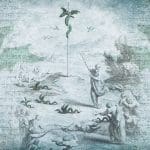
The men in the illustration have shoes on, but the women are barefoot. Hmm.