



Why Did Nephi Say Serpents Could Fly?

Sign up for Meridian’s Free Newsletter, please CLICK HERE
View the article at Book of Mormon Central.
“He sent fiery flying serpents among them”
1 Nephi 17:41
The Know
When Nephi’s brothers were mocking him for attempting to build a boat, Nephi reminded them of the miracles the Lord worked for their ancestors when they wandered in the wilderness, after having been led out of Egypt (1 Nephi 17:17–42). As Nephi told the story of the brazen serpent, he spoke of “flying fiery serpents” (1 Nephi 17:41),[1] instead of simply “fiery serpents” as found in the biblical narrative (Numbers 21:6, 8; Deuteronomy 8:15).
Although the biblical accounts of the brazen serpent in the books of Numbers and Deuteronomy do not mention flying serpents, Isaiah twice mentions “fiery flying serpents” (Isaiah 14:29; 30:6; 2 Nephi 24:29). One of these is in reference to “the beasts of the south,” (Isaiah 30:6), meaning the Negev desert—the very place where the Israelites were when the brazen serpent incident happened.[2]

In every case in Isaiah, Numbers, and Deuteronomy, the Hebrew uses seraphim for fiery serpents.[3] This is the same word used in Isaiah 6 to describe the fiery, winged beings protecting the throne of God (Isaiah 6:2, 6; 2 Nephi 16:2, 6), leading many scholars to suspect that the seraphim of Isaiah’s vision were winged, serpent-like creatures.[4]
Winged serpents are commonly depicted on artifacts in Egypt and Israel from the eighth and seventh centuries BC.[5] One noteworthy example is a stamp seal with a four-winged serpent, found in a seventh century BC home on the slopes of the western hill in Jerusalem.[6] This region of Jerusalem was settled by refugees from the northern Israelite tribes in the late 8th century BC,[7] leading some LDS scholars to believe that this is where Lehi and his family lived (cf. 1 Nephi 5:14–16; Alma 10:3).[8]
Most scholars believe that the “winged snake, cobra-like hybrid” depicted on these artifacts should be “identified with the Biblical saraf,” or “fiery serpent.”[9] Some scholars even think Moses’s brazen serpent mounted on a pole was a winged serpent.[10]
According to J.J.M. Roberts, these winged serpents were seen as “protective spirits closely associated with Judah’s imperial god, and hence protectors of his chosen Davidic kings,” and were thus sometimes used “to symbolize Judean kingship.”[11]
The Why

As attested by the many artifacts from Israel, Nephi was likely immersed in imagery of winged serpents while growing up in Jerusalem. These winged serpents were probably associated with the “fiery serpents” mentioned in biblical passages, and although the brazen serpent had already been destroyed before Lehi’s lifetime (2 Kings 18:4), its form—probably with wings—was likely still remembered. So when Nephi rehearsed the story of the Israelites being bitten by snakes in the wilderness, he naturally called them “flying fiery serpents.”
Given the protective role of the seraphim, one way to interpret the role of the serpents in the wilderness was as protectors of the promised land—keeping the wicked away from those sacred grounds. But the Lord provided a way for the Israelites to enter the promised land—repent, and look to the brazen serpent, raised upon a pole (Numbers 21:4–9).
When Nephi told the story a second time, he drew parallels between the brazen serpent and Jesus Christ (2 Nephi 25:20). Later Nephite prophets “saw the raised brass serpent as a prophetic metaphor for Jesus’ crucifixion” (see Alma 33:19–23; Helaman 8:14–15).[12] Such associations make sense in light of the Israelite connections between the winged serpent and the Davidic king. Nephi understood that it was ultimately a sign of the Messiah—the true Davidic king.
The people of Jerusalem had become wicked, and were going to be destroyed. Like the Israelites of Moses’ day, Lehi’s family had fled into the wilderness and needed to look to the Messiah—“lifted upon the cross” (1 Nephi 11:33)—to live.
Further Reading
- Kent Brown, “Brazen Serpent,” in Book of Mormon Reference Companion, ed. Dennis L. Largey (Salt Lake City, UT: Deseret Book, 2003), 171–172.
- Kent Brown, “Fiery Flying Serpents,” in Book of Mormon Reference Companion, ed. Dennis L. Largey (Salt Lake City, UT: Deseret Book, 2003), 270.
Andrew C. Skinner, “Serpent Symbols and Salvation in the Ancient Near East and the Book of Mormon,” Journal of Book of Mormon Studies 10, no. 2 (2001): 42–55, 70–71.
[1] Royal Skousen, ed., The Book of Mormon: The Earliest Text (New Haven, CT: Yale University Press, 2009), 54. The word order, with flying coming before fiery, is found in the original manuscript. See Royal Skousen, ed., The Original Manuscript of the Book of Mormon: Typographical Facsimile of the Extent Text, The Book of Mormon Critical Text Project, Volume 1 (Provo, UT: FARMS, 2001), 142, line 15. As it appears in Isaiah 14:29 and 30:6, the phrase “fiery flying serpents” (discussed above) is a translation of seraph meopheph, with seraph alone meaning “fiery serpent.” Assuming similar language underlies the translation of Nephi’s statement in 1 Nephi 17:41, the original word order, with flying before fiery, more accurately reflects the Hebrew. See Royal Skousen, Analysis of Textual Variants of the Book of Mormon: Part One, 1 Nephi 1–2 Nephi 10, The Book of Mormon Critical Text Project, Volume 4 (Provo, UT: FARMS, 2004), 369–370.
[2] The Hebrew term translated as south in the KJV is negeb or negev, and refers to the desert between Judah and Egypt. See Joel F. Drinkard Jr., “Negev,” in HarperCollins Bible Dictionary, rev. ed., ed. Mark Allan Powell (New York, NY: HarperOne, 2011), 694–695; Lynn Tatum, “Negeb,” in Eerdmans Dictionary of the Bible, ed. David Noel Freedman (Grand Rapids, MI: Wm. B. Eerdmans, 2000), 955. See alternative translations such as the NIV, NRSV, and JPS, which make it clearer that the Negev is what is being referred to. On the children of Israel being in this area during the brazen serpent incident, see K.A. Kitchen, On the Reliability of the Old Testament (Grand Rapids, MI: Wm. B. Eerdmans, 2003), 193–194. Other historical accounts also mention “flying serpents” in this desert region. See Wallace E. Hunt Jr., “Moses’ Brazen Serpent as It Relates to Serpent Worship in Mesoamerica,” Journal of Book of Mormon Studies 2, no. 2 (1993): 127–129. For a proposed candidate for the “fiery flying serpent,” see Ronald P. Millet and John P. Pratt, “What Fiery Flying Serpent Symbolized Christ?” Meridian Magazine, June 9, 2000. See also, Elder Glen O. Jenson, “Look and Live,” Ensign, March 2002, online at lds.org.
[3] In both Numbers 21:6 and Deuteronomy 8:15, seraph is used with nahas, “serpent,” where as in Numbers 21:8 and Isaiah 14:29; 30:6 it is simply seraph, which are clearly serpents in context.
[4] See J.J.M. Roberts, First Isaiah, Hermeneia—A Critical and Historical Commentary on the Bible (Minneapolis, MN: Fortress Press, 2015), 95–98; Marvin A. Sweeney, “Seraphim,” in HarperCollins Bible Dictionary, 935–936; William B. Nelson, “Seraphim,” in Eerdmans Dictionary, 1186; Matthew A. Thomas, “Serpent,” in Eerdmans Dictionary, 1188; Abigail Stocker and John D. Barry, “Seraphim,” in Lexham Bible Dictionary (Bellingham, WA: Lexham Press, 2016).
[5] Roberts, First Isaiah, 96–97, 226.
[6] Shlomit Weksler-Bdolah, Alexander Onn, Shua Kisilevitz, and Brigitte Ouahnouna, “Layers of Ancient Jerusalem,” Biblical Archaeology Review 38, no. 1 (January/February 2012): 40.
[7] Kitchen, On the Reliability, 52, 59; Mordechai Cogan, “Into Exile: From Assyrian Conquest of Israel to the Fall of Babylon,” in The Oxford History of the Biblical World, ed. Michael D. Coogan (New York, NY: Oxford University Press, 1998), 325; Steven L. McKenzie, “Judah, Kingdom of,” in Eerdmans Dictionary, 746; Israel Finkelstein and Neil Asher Silberman, The Bible Unearthed: Archaeology’s New Vision of Ancient Israel and the Origin of its Sacred Texts (New York, NY: Touchstone, 2001), 243; Charles H. Miller, “Jerusalem,” in HarperCollins Bible Dictionary, 447; Nicholas R. Werse, “Hezekiah, King of Judah,” in Lexham Bible Dictionary.
[8] Jeffrey R. Chadwick, “Lehi’s House at Jerusalem and the Land of his Inheritance,” in Glimpses of Lehi’s Jerusalem, ed. John W. Welch, David Rolph Seely, and Jo Ann H. Seely, (Provo, UT: FARMS, 2004), 87–99, 118–124; Brant A. Gardner, Second Witness: Analytical and Contextual Commentary on the Book of Mormon, 6 vols. (Salt Lake City, UT: Greg Kofford Books, 2007), 1:32; Brant A. Gardner, Traditions of the Fathers: The Book of Mormon as History (Salt Lake City, UT: Greg Kofford Books, 2015), 65–67.
[9] Weksler-Bdolah, et al., “Layers of Ancient Jerusalem,” 40.
[10] Roberts, First Isaiah, 95–96.
[11] Roberts, First Isaiah, 226.
[12] S. Kent Brown, “Brazen Serpent,” in Book of Mormon Reference Companion, ed. Dennis L. Largey (Salt Lake City, UT: Deseret Book, 2003), 172.
The Theology of Second Chances

We speak of repentance as if it arrives in a single clean moment, a decisive turn, a line crossed once and never revisited. Life rarely cooperates. Most people do not step from weakness into strength in one motion. They circle. They stall. They make gains, then lose ground, then try again with quieter resolve. The doctrine of redemption meets them there, not at a finish line, but along a road walked in loops.
A second chance suggests a reset, a fresh start with no residue from the past. Lived experience offers something different. Old habits linger. Patterns resurface under stress. A person kneels, commits, rises with hope, then discovers familiar impulses waiting just ahead. Discouragement whispers, you have been here before. Faith answers, then return again.
Scripture supports this slower rhythm more often than we admit. Consider Alma the Younger. His conversion arrives with force, yet his ministry unfolds over years filled with labor, correction, and endurance. He worries over his people, wrestles with his own limitations, and continues the work. A dramatic beginning does not eliminate the need for steady continuation.
Or take Nephi, who builds a ship after repeated attempts, each step met with resistance from brothers who doubt and undermine. Progress comes in increments, one piece of timber, one act of obedience at a time. The record does not present a flawless ascent. It shows persistence under pressure.
Even Enos offers a quieter pattern. His prayer stretches through a day and into the night. Assurance arrives, yet his concern expands outward, first for his own soul, then for his people, then for future generations. Redemption begins within and grows through continued seeking.
The New Testament provides similar texture. Peter denies the Savior in a moment of fear. No lightning strikes him down. No immediate restoration scene resolves his failure. He weeps, he returns to work, and over time becomes a pillar in the early church. His story unfolds as a series of returns, not a single reversal.
These accounts invite a broader view of grace. Instead of a one-time event, grace operates as ongoing assistance, a steady current beneath daily effort. It meets a person at each attempt, not only at the successful one. When someone stumbles over familiar ground, grace does not withdraw in disappointment. It invites another step forward.
This understanding alters how we view repeated struggle. Shame insists repetition proves insincerity. The gospel offers another reading. Repetition can signal persistence. A person who continues to come back, who continues to pray, who continues to try despite failure, demonstrates a kind of loyalty to the covenant path. Progress may appear uneven, yet direction still matters.
There is also a practical wisdom in small gains. Grand transformations draw attention, yet most change occurs in quiet adjustments. A harsh word held back. A temptation resisted for one more hour. A choice to apologize instead of defend. These moments rarely receive applause. They build capacity. Over time, they reshape character.
Community plays a role as well. Wards and families often celebrate visible milestones, baptisms, callings, achievements. The quieter victories can pass unnoticed. A more generous culture of discipleship recognizes effort, not just outcomes. It allows space for imperfect growth. It offers encouragement without pretending weakness has vanished.
This perspective does not excuse sin. It does not suggest complacency. It calls for continued effort with a longer view. Repentance remains a turning, yet many turns may be required along the same stretch of road. Each turn matters. Each return strengthens spiritual muscle.
The Savior’s ministry illustrates patience with those who struggled repeatedly. He taught, corrected, invited, and walked alongside disciples who misunderstood, argued, and faltered. He did not abandon them for slow progress. He invested in them, trusting growth would come through continued engagement.
For modern disciples, this theology offers relief without lowering expectations. It acknowledges difficulty while maintaining direction. A person need not pretend perfection to remain on the path. Honest effort becomes the measure. Willingness to begin again becomes a sign of faith, not failure.
There is a quiet dignity in the long return. It belongs to those who rise after disappointment, who kneel after another misstep, who choose to try again without certainty of success. Their stories may lack dramatic turns. They carry weight through persistence.
Second chances, then, do not arrive once. They appear as often as a person chooses to return. Redemption functions not only in moments of crisis, but in daily decisions to keep moving, to keep believing, to keep aligning life with covenant promises. Grace meets each step, steady and available, asking for one more effort, one more return, one more beginning.
Reflections on “the Meridian of Time”

From the editors: When we formulated the idea of a magazine for Latter-day Saints, we wanted just the right name that would have our purpose in its meaning. We wanted a name that invited excellence and illumination, and so we chose Meridian. We knew that it meant the highest point of light in one sense and a measure of the world in another. Author Jeff Lindsay is on the same wavelength in this article.
Readers of Meridian Magazine may have thought about the meaning of “meridian” in the scriptures. There’s an interesting range of possibilities and a puzzle or two to ponder.
Four times the Book of Moses uses an extremely rare English term, “the meridian of time,” to describe the time when Christ would come:
For they would not hearken unto his voice, nor believe on his Only Begotten Son, even him whom he declared should come in the meridian of time, who was prepared from before the foundation of the world. (Moses 5:57)
Wherefore teach it unto your children, that all men, everywhere, must repent, or they can in nowise inherit the kingdom of God, for no unclean thing can dwell there, or dwell in his presence; for, in the language of Adam, Man of Holiness is his name, and the name of his Only Begotten is the Son of Man, even Jesus Christ, a righteous Judge, who shall come in the meridian of time. (Moses 6:57)
And now, behold, I say unto you: This is the plan of salvation unto all men, through the blood of mine Only Begotten, who shall come in the meridian of time. (Moses 6:62)
And it came to pass that Enoch looked; and from Noah, he beheld all the families of the earth; and he cried unto the Lord, saying: When shall the day of the Lord come? When shall the blood of the Righteous be shed, that all they that mourn may be sanctified and have eternal life?
And the Lord said: It shall be in the meridian of time, in the days of wickedness and vengeance.
And behold, Enoch saw the day of the coming of the Son of Man, even in the flesh; and his soul rejoiced, saying: The Righteous is lifted up, and the Lamb is slain from the foundation of the world; and through faith I am in the bosom of the Father, and behold, Zion is with me. (Moses 7:45–47)
We first consider relevant meanings of “meridian.” Linguist Stanford Carmack kindly sent me some definitions and examples of use from the extensive Oxford English Dictionary, 2nd edition:
2.2 The point at which the sun or a star attains its highest altitude.
c1450 Lydg. Secrees 347 Phebus‥In merydien fervent as the glede.1647 Crashaw Poems 130 Sharp-sighted as the eagle’s eye, that can Outstare the broad-beam’d day’s meridian.a1667 Cowley Ess., Greatness, There is in truth no Rising or Meridian of the Sun, but only in respect to several places.1728 Pope Dunc. iii. 195 note, The device, A Star rising to the Meridian, with this Motto, Ad Summa.1843 James Forest Days viii, The sun had declined about two hours and a half from the meridian.
b.2.b fig. The point or period of highest development or perfection, after which decline sets in; culmination, full splendour.
1613 Shakes. Hen. VIII, iii. ii. 224 And from that full Meridian of my Glory, I haste now to my Setting.1638 Sir T. Herbert Trav. (ed. 2) 93 Yet in the meridian of his hopes [he] is dejected by valiant Rustang.c1645 Howell Lett. (1655) III. ix. 17 Naturall human knowledg is not yet mounted to its Meridian, and highest point of elevation.1673 Temple United Prov. Wks. 1731 I. 67, I am of Opinion, That Trade has, for some Years ago, pass’d its Meridian, and begun sensibly to decay among them. 1700 Dryden Fables Pref. *Bb, Ovid liv’d when the Roman Tongue was in its Meridian; Chaucer, in the Dawning of our Language. a1761 Cawthorn Poems (1771) 61 My merit in its full meridian shone.a1859 Macaulay Hist. Eng. xxiii. (1861) V. 67 This was the moment at which the fortunes of Montague reached the meridian. The decline was close at hand.1893 G. Hill Hist. Eng. Dress II, 268 Dress was in its meridian of ugliness.
c.2.c The middle period of a man’s life, when his powers are at the full.
c1645 Howell Lett. i. vi. lx. (1655) 307 You seem to marvell I do not marry all this while, considering that I am past the Meridian of my age.1703 E. Ward Lond. Spy xvii. (1706) 406 As for her Age, I believe she was near upon the Meridian.1795 Mason Ch. Mus. ii. 133 When Purcel was in the meridian of his short life.1864 H. Ainsworth John Law Prol. iii. (1881) 19 Though long past his meridian, and derided as an antiquated beau by the fops of the day.1873 Hamerton Intell. Life iv. ii. (1875) 143 Any person who has passed the meridian of life.
The origins of the word “meridian” are explained at Etymology Online:
mid-14c., “noon, midday,” from Old French meridien “of the noon time, midday; the meridian; a southerner” (12c.), and directly from Latin meridianus “of midday, of noon, southerly, to the south,” from meridies “noon, south,” from meridie “at noon,” altered by dissimilation from pre-Latin *medi die, locative of medius “mid-” (from PIE root *medhyo- “middle”) + dies “day” (from PIE root *dyeu- “to shine”).
The cartographic sense of “a great circle or half-circle of a sphere passing through the poles” is attested from late 14c., originally astronomical. Figurative uses tend to suggest “point of highest development or fullest power,” implying a subsequent decline. [emphasis added]
“Meridian” is thus related to noon, the high point of time, the time of greatest light, with the figurative sense of fullest light or divine power, after which there would be a decline. While it has sometimes been understood as a chronological midpoint in 7,000 years of sacred history, it may be fruitful to consider more figurative meanings such as a high point, a time of fulness in power and authority, etc.
A Parallel to “the Meridian of Time” in the Book of Mormon?
One of the surprising things about the Book of Moses is that numerous passages in the small book are reflected in the Book of Mormon, sometimes with precisely matching language or language expressing related concepts, often with a common context – without being readily explained by an appeal to the King James Bible.
This possibility was first raised by Noel B. Reynolds in 1990 in “The Brass Plates Version of Genesis” where thirty-three parallels were found, including several that pointed to an unexpected direction of influence from the Book of Moses to the earlier translated Book of Mormon — a surprise that led Reynolds to hypothesize that a text related to our Book of Moses may have been on the brass plates.
In collaboration with Reynolds, that work was expanded in 2021 in “‘Strong Like unto Moses’: The Case for Ancient Roots in the Book of Moses,” bringing the number of proposed parallels up to ninety-six. In 2024, “Further Evidence from the Book of Mormon for a Book of Moses-Like Text on the Brass Plates” raised the number to 133, and then a project looking at statistics and the distribution of parallels further raised the number to 146 in a 2025 two-part publication (see Part 1 and Part 2 at Interpreter: A Journal of Latter-day Saint Faith and Scholarship).
Currently there are 162 proposed parallels. (The list is published at and will continue to be updated as needed at both AriseFromTheDust.com and JeffLindsay.com.) With that many parallels and with many of them occurring in multiple places in the Book of Mormon, 10.2% of the verses of the Book of Mormon (after excluding the chapters from the Bible that are essentially quoted in the Book of Mormon) are involved in one or more parallels with the Book of Moses.
That average of 10.2% comes from a highly non-uniform distribution, with parallels being nearly twice as frequent in the small plates text (15.8%) as in the remainder of the Book of Mormon (8.67%). The non-uniform distribution may in part be due to the high familiarity with the brass plates of early prophets such as Lehi, Nephi, and Jacob. On the other hand, in Mormon’s writings in his book of Mormon, the number is just under 4.0%.
A recently proposed and still tentative parallel, #162, involves the coming of Christ in the “meridian of time.” But how can this be a parallel when the Book of Mormon does not use the term “meridian of time” or even the word “meridian” at all? In this case, the parallel is not based on identical language but on semantically related language.
In light of the dictionary definitions and etymology of “meridian” discussed above, I propose that the “meridian of time” may be tantamount to “the fulness of time” used by Lehi twice in 2 Nephi 2 and by Nephi in 2 Nephi 11:
Wherefore, thy soul shall be blessed, and thou shalt dwell safely with thy brother, Nephi; and thy days shall be spent in the service of thy God. Wherefore, I know that thou art redeemed, because of the righteousness of thy Redeemer; for thou hast beheld that in the fulness of time he cometh to bring salvation unto men. (2 Nephi 2:3)
And the Messiah cometh in the fulness of time, that he may redeem the children of men from the fall. And because that they are redeemed from the fall they have become free forever, knowing good from evil; to act for themselves and not to be acted upon, save it be by the punishment of the law at the great and last day, according to the commandments which God hath given. (2 Nephi 2:26)
For if there be no Christ there be no God; and if there be no God we are not, for there could have been no creation. But there is a God, and he is Christ, and he cometh in the fulness of his own time. (2 Nephi 11:7)
Nephi appears to be reciting Lehi’s words, not just in using a phrase similar to “the fulness of time” but also Lehi’s words: “And if these things are not there is no God. And if there is no God we are not, neither the earth; for there could have been no creation of things” (2 Nephi 2:13).
Lehi’s phrasing may have other connections to the Book of Moses to consider. In 2 Nephi 2:3, Lehi includes the term “salvation” in “in the fulness of time he cometh to bring salvation unto men,” related to “This is the plan of salvation unto all men” in Moses 6:62 (Parallel 13).
Further, 2 Nephi 2:3 also includes “dwell safely,” perhaps influenced by another parallel with the Book of Moses, Parallel 93, “Dwell in safety forever,” involving Moses 7:20 and 2 Nephi 1:9.
Lehi’s words in 2 Nephi 2:26 include “to act for themselves and not to be acted upon,” which involve Parallel 125, “Agents unto themselves” with Moses 4:3 and 6:56, coupled with 2 Nephi 2:26, 10:23; Alma 12:13; and Helaman 14:30.
Connections to the Book of Moses are also evident in the adjacent verses around 2 Nephi 2:26, as shown with inline annotations:
Adam fell that men might be; and men are, that they might have joy [Parallel 144: “Adam fell that men/we might be” with Moses 6:48]. (2 Nephi 2:25)
Wherefore, men are free according to the flesh; and all things are given them which are expedient unto man. And they are free to choose liberty and eternal life [with v. 28, part of Parallel 14, “eternal life” with Moses 1:39] , through the great Mediator of all men, or to choose captivity and death, according to the captivity and power of the devil [with v. 29, part of Parallel 9, “devil-lead-captive-his will” with Moses 4:4]; for he seeketh that all men might be miserable like unto himself [with vv. 5, 11, 13, 18, and 23, part of Parallel 44, “Misery (either for Satan or his followers)”]. (2 Nephi 2:27)
2 Nephi 2 is one of the richest in the Book of Mormon for parallels with the Book of Moses. In terms of parallels per 1,000 words, it is essentially tied with Ether 8 for the most parallel-rich chapter (Ether 8 is rich in parallels pertaining to secret combinations, but lacks the thematic diversity of Lehi’s speech). Thirteen different parallels are found in its 30 verses, involving seventeen verses, seven of which have more than one parallel.
Lehi’s heavy use of Book of Moses-related material (material not easily explained by an appeal to the KJV Bible) in this chapter increases the likelihood that the reference to the time of the coming of the Messiah might have been influenced by the Book of Moses, even though “the meridian of time” was used in the English translation of the Book of Moses instead of “the fulness of time.”
Time(s) and Fulness in the New Testament
The parallel involving Lehi’s “fulness of time” and the Book of Moses is weakened by similar but not identical language in the New Testament that must be considered. While New Testament language would not have been available to influence Nephi or Lehi, it could have influenced Joseph Smith if or when the choice of wording was his, and likewise could have influenced the choice of English given to Joseph Smith in the translation process (e.g., it could have influenced wording choice by a hypothetical angelic agent assisting in the translation, if such were part of the translation process). Galatians 4:4 speaks of “the fulness of the time”:
But when the fulness of the time was come, God sent forth his Son, made of a woman, made under the law, . . .
“Fulness of the time” conveys an important difference relative to Lehi’s phrasing. It points to a specific time, with the concept of fully reaching a specific moment in time rather than an era that is the zenith of time or history. The Greek word chronos is used here for time, referring to a specific time, a chronological event. The New International Version of the Bible (NIV) has “when the set time had fully come,” while the New English Translation (NET) has “when the appropriate time had come.” Without the definite article before “time,” Lehi’s “fulness of time” seems more analogous to “the meridian of time.”
The other New Testament verse to consider is one often heard in Latter-day Saint discourse, Ephesians 1:10:
That in the dispensation of the fulness of times he might gather together in one all things in Christ, both which are in heaven, and which are on earth; even in him:
This is still slightly different from Lehi’s “fulness of time.” This verse is not about the time of Christ’s mortal ministry, nor about a precise time per se, but about a dispensation. The phrase “fulness of times” in this context may point to the completion of history or the culmination of time (or of multiple eras) when everything is finally put under Christ and united. Latter-day Saints generally understand our current era, called the “dispensation of the fulness of times,” to be the culminating era in the “last days” before the Second Coming of the Lord, preparing the world for the great Millennium.
Paul’s use of the term “dispensation” (sometimes translated as “administration”) can refer to the administrative era of the Restoration when authority and apostolic organization have been restored and the work of gathering begins in earnest, preparing mankind for the Millennium.
The era of “dispensation of the fulness of times,” a phrase used several times in the Doctrine and Covenants (see Doctrine & Covenants 27:13, 76:106, 112:30, and 124:41) can be considered to point to the era of the Restoration in the last days leading up to the Millennium. This need not be the same time as “the fulness of times” itself, as we glean from Doctrine and Covenants 76:106, referring to the punishment of the impenitent wicked:
These are they who are cast down to hell and suffer the wrath of Almighty God, until the fulness of times, when Christ shall have subdued all enemies under his feet, and shall have perfected his work.
In summary, “the dispensation of the fulness of times” begins with the Restoration and leads to the Millennium, while the “fulness of times” itself can point to the final completion of mortal time at the end of the Millennium when Christ has conquered all. But this is an entirely different issue than what Lehi refers to with “the fulness of time” when Christ shall come as a mortal to earth.
Neither of the two New Testament passages can adequately serve as the source for concepts and language in the Book of Mormon verses about the coming of Christ in “the fulness of time.” Thus, in spite of the overlapping New Testament language that weakens the parallel, it is still offered tentatively as a possible conceptual parallel for consideration.
More Puzzles: The Rarity of “Meridian of Time” and Its Presence in Doctrine & Covenants
A puzzling aspect of this inquiry into a potential parallel is how rare “meridian of time” is in English. Searching Google Books reveals no instances of this term before 1870 (obviously missing many Latter-day Saint publications). However, there are two instances of use in the Early Modern English Era, which ran from roughly the late 1500s to about 1700. For example, Sir Thomas Browne (1605-1682) wrote Hydriotaphia, urne-buriall, or, a discourse of the sepulchrall urnes lately found in Norfolk, published in 1658, accessible via Early English Books Online, which has this passage:
… even old ambitions had the advantage of ours, in the attempts of their vain-glories, who acting early, and before the probable meridian of time, have by this time found great accomplishment of their ddsignes [designs], whereby the ancient heroes have already out-lasted their monuments, and Mechanicall preservations: but in this latter scene of time we can not expect such mummies unto our memories, when ambition may fear the prophecy of elias that the world may last but fix [six] thousand years…
This does not seem to involve the coming of Christ, but about a future time — relative to more ancient days — of greater development with respect to the topic of burial urns.
Two more finds were shared with me by linguist Stanford Carmack, whose studies identifying Early Modern English influences on the originally dictated language of the Book of Mormon translation have opened significant new vistas of understanding. The first comes from Joseph Cooper in Misthoskopia, A prospect of heavenly glory for the comfort of Sion’s mourners, written no later than 1699 (the year of Cooper’s death) and published in 1700, roughly at the end of the Early Modern English era:
The good things of this Life, they are only calculated for the Meridian of Time, and do only shine with a borrowed light: So that when Death shall seize upon you, and Judgment overtake you, they will then be gone, and like a Shadow disappear for ever.
This seems to refer to the meridian of one’s mortal life, after which comes decline and death.
A second find also kindly provided by Carmack occurs shortly after the Early Modern English era in Benjamin Bennet (1674–1726), The christian oratory: or, the devotion of the closet (London: S. Chandler, 1725):
The RESOLUTION. ND am I immortal? Doth my Spirit at Death return to God, and exist for ever in a separate State? I wou’d henceforth resolve to live for Eternity, to prepare for my Return: In order to which I resolve Lord, help me by thy Grace to have my Eye fixed on the other World; and, in all my Designs, Undertakings and Ations [Actions], to preserve a constant Reference thither. I wou’d esteem every thing as little, as nothing comparatively, that’s calculated only for the Meridian of Time, that ferveth [serveth] only a present State. I resolve to chuse, prefer, pursue things, as they stand related to Eternity, judging of them by this Mark and Property.
This also refers to one’s fleeting mortal life, contrasting it with the eternal afterlife.
At least these finds may suggest that “the meridian of time” was a part, though perhaps a rare part, of Early Modern English, consistent with Stanford Carmack’s find that the dictated language of the Book of Moses reflects a strong Early Modern English component. This is related to his impressive work on examining the language of the originally dictated text of the Book of Mormon and finding a unique signature of Early Modern English influence that cannot be explained by imitating KJV language or by Joseph’s dialect, but points to elements of Early Modern English that sometimes significantly predate the King James Bible. For a collection of important papers on this topic, see Carmack’s list of publications at Interpreter: A Journal of Latter-day Saint Faith and Scholarship. For his work on the Book of Moses, see his 2021 paper, “The Original English of the Book of Moses and What It Indicates About the Book’s Authorship.” Carmack examined 30 different linguistic categories and compared their traits across the Book of Moses, the Book of Mormon, the King James Bible, Joseph’s early writings, and pseudo-archaic texts that sought to imitate archaic biblical syntax. Carmack’s findings are significant:
Joseph Smith’s native usage can explain 30 percent of Book of Moses usage, pseudo-archaism 44 percent, and King James usage 37 percent. The Book of Mormon, however, is able to account for most of the patterns and forms investigated: 86 percent of them, by this count. (It is possible, of course, to include other features, which would change the percentages somewhat.) But the Book of Mormon falls short of being able to explain a few of the linguistic features mentioned in table 2, most notably the past-tense usage. The few usage issues it cannot explain occur in the early modern period. Indeed, broader early modern usage (most of the time not Joseph Smith’s modern usage) accounts for all the linguistic features. Thus the simplest explanation of the Book of Moses’s English usage would be to adopt an early modern perspective—in other words, that a text showing true early modern sensibility in language use was revealed to Joseph Smith in 1830. [pp. 634–35]
The prominent use of the rare and apparently Early Modern English phrase “meridian of time” in the Book of Moses may be one more factor to consider regarding the linguistic influences on the Book of Moses text. As with the Book of Mormon, the existence of non-KJV Early Modern English in either the Book of Mormon or the Book of Moses is something that scholars did not expect. It is not a conclusion driven by any kind of apologetic agenda. It is based on objective data that may require us to reconsider common and sometimes simplistic assumptions about the translation process(es) related to both texts. Why that influence exists is still a matter of debate, though Early Modern English, especially the kind found in both texts, appears to be well suited to simplifying translation in many languages.
Yet another significant puzzle involves the Doctrine and Covenants, where the rare term “meridian of time” occurs twice, both shown here in context:
That as many as would believe and be baptized in his holy name, and endure in faith to the end, should be saved—
Not only those who believed after he came in the meridian of time, in the flesh, but all those from the beginning, even as many as were before he came, who believed in the words of the holy prophets, who spake as they were inspired by the gift of the Holy Ghost, who truly testified of him in all things, should have eternal life…. (Doctrine and Covenants 20:25–26)
Hearken and listen to the voice of him who is from all eternity to all eternity, the Great I Am, even Jesus Christ—
The light and the life of the world; a light which shineth in darkness and the darkness comprehendeth it not;
The same which came in the meridian of time unto mine own, and mine own received me not. (Doctrine and Covenants 39:1–3)
Section 39 was given in January 1831. According to the timeline for Joseph Smith’s work of his translation of the Bible given by Kent P. Jackson in Understanding Joseph Smith’s Translation of the Bible (Provo, UT: Religious Studies Center, Brigham Young University, and Salt Lake City: Deseret Book, 2022), pp. 3–4, the portion of that project that became the Book of Moses was given between June 1830 and December 30, 1830. Thus, it is logical that the 1831 text of Section 39 would employ a colorful and meaningful phrase from the unique Book of Moses.
The problem is that Section 20, which also uses “the meridian of time,” is based on revelation said to have been given in April 1830, although it was not published until 1835. The generally accepted April 1830 date is well before Joseph Smith began work on his translation of the Bible in June 1830. Was the term “meridian of time” something Joseph picked up from the dictation of the Book of Moses, that was later edited into our Section 20 of the Doctrine and Covenants? Was there a revelatory process associated with Section 20 that brought this term to Joseph’s mind for some reason? Or was “meridian of time” a term from the Book of Lehi in the lost 116 pages of the initial Book of Mormon translation?
While we don’t seem to have original manuscripts from 1830 related to Section 20, there are a few manuscripts prior to the 1835 Doctrine and Covenants that help us better understand the timing of the use of “the meridian of time.” One such source is provided in the Joseph Smith Papers website as “Articles and Covenants, circa April 1830, as Recorded in Gilbert, Notebook [D&C 20].” The Gilbert manuscript does not use “meridian” at all. Here is the passage corresponding to the part of Section 20 that has had “the meridian of time” at least since 1835:
[A]nd that he ascendid into heaven to sit down on the right hand of the Father to reign with Almighty power according to the will of the father that as many as would believe and be baptized in his name & endure in faith to the end should be saved, yea even as many as were before he came in the flesh from the beginning which believed in the words of the holy Prophets which were inspired by the gift of the Holy Ghost which truly testified of him in all things as well as they which should come after which should believe in the gifts & callings of God by the Holy Ghost, which beareth record of the Father & of the son, which father and son and the holy Ghost is one God infinite, eternal without end, Amen. [p. 4, emphasis added]
So in 1831, the relevant revelation had “even as many as were before he came in the flesh” instead of “those who believed after he came in the meridian of time, in the flesh” as we now have in Section 20.
A related manuscript on the Joseph Smith Papers website, “Articles and Covenants, circa April 1830, Symonds Rider Copy [D&C 20],” also contains a copy of the material related to Section 20. It was copied by Symonds Rider in May 1831, again without “the meridian of time.”
Surviving copies of the 1833 Book of Commandments, the publication of which was interrupted by a mob destroying the Church’s printing press, also show that “the meridian of time” had not yet entered what is now Section 20. Like the 1831 copies of the “Articles and Covenants,” it has “even as many as were before he came in the flesh, from the beginning,” with no mention of “the meridian of time.”
However, Chapter 41, with its January 1831 revelation related to our Section 39, has “The same which came in the meridian of time unto my own” in v. 2, the same as our Section 39. It seems plausible that in the final edits made for the 1835 publication, that Section 20 was edited to include its current language with the poetic phrase from the Book of Moses.
Conclusion
The “meridian of time” as used in the Book of Moses may be a particularly appropriate figurative and poetic term for describing the time of Christ’s mortal ministry and the spiritual revolution He brought. This was a meridian or a zenith of history in which the Son of God lived with humans on the earth, founded His church, and completed His infinite work. After the rapid growth of the church, there was decline in both the Old World and the New World that required correction by the Restoration in these last days.
When Lehi spoke of the coming of the Messiah that was to be in the “fulness of time,” his language may have been reflecting a concept he encountered in the brass plates having a version of Genesis closely related to our modern Book of Moses. The four passages there about the coming of Christ in “the meridian of time” may be reflected in Lehi’s related statements in 2 Nephi 2 associating the birth of Christ with “the fullness of time,” where “fullness” has connections to figurative meanings of “meridian,” possibly forming a parallel between the Book of Mormon and the Book of Moses, one of many. Given similar language in the New Testament and the conceptual nature of the parallel, this parallel may be one of the weakest among the 162 proposed so far, but may still be worth considering.
The English translation with “the fullness of time” may reflect word choices by Lehi from his speech, by Nephi in his written record, and by the translation process that gave us the English. When faced with the complex relationships between these inspired and miraculously translated texts, we generally cannot say exactly who intended what and why.
Nevertheless, much can be learned by exploring how similar words and concepts are used elsewhere and considering what that might suggest about the intent of authors or translators, or the depth of meaning in the texts. The word choices in the scriptures are often worth pondering.
Readers of Meridian Magazine may wish to reflect upon the meaning of “meridian” and related concepts in the scriptures, as well as the welcome role this publication plays in bringing more light into these troubled times before the Millennium.
From Progenitors to Posterity: A Sacred Shift in Perspective

We often begin family history by looking backward—names, dates, places, and stories of those who came before us. We search for our ancestors with reverence, curiosity, and hope. Yet there comes a sacred moment when the lens quietly turns. We realize that one day we will be the ancestors. Our posterity will look for us, wonder about us, and try to understand who we were and what mattered most.
“And you have to understand: What you do really matters.”1
-Margit Meissner
Before going further, I want to pause and clarify what I mean by posterity. In this article, posterity refers not only to our direct descendants, but to all future generations of people. If you have ever read a life story that captured your heart—even though the person was not related to you in any way—then you already understand this truth: every story matters.
When our stories are preserved, they become a gift for those who come after us. The experiences we record, the choices we describe, the faith we wrestle with, and the lessons we learn may one day speak directly to someone we will never meet. It is entirely possible that something from your life—an insight, a moment of courage, even a quiet act of faith—could hold the answer another soul is searching for.
This shift—from progenitors to posterity—invites a deeper kind of stewardship. It calls us to live and to record our lives with holy intentionality.
Thanking Posterity, Remembering the Holocaust, and Choosing Action
Margit, a dear friend of mine, fled Europe with her mother in 1940. They arrived in the United States as Jewish refugees carrying little more than hope, faith, and the fragile gift of survival. In time, Margit would come to understand herself as what the world now calls a Holocaust survivor—though she wore that title with quiet humility for much of her life.
Later, she served as a docent at the Holocaust Museum in Washington, DC, guiding visitors through one of history’s darkest chapters. Margit passed away in July of 2019, but the quiet power of her story continues to speak.2
For many years, Margit did not intend to write her story. It was her family—children, nieces, and nephews—who lovingly insisted. They knew the story mattered. They understood that memory is a sacred inheritance. Because of their persistence, her memoir, Margit’s Story,3 came to be.
She opens the introduction with these heartfelt words:
“I HAVE TO THANK my children and my nieces and nephews for having urged me, then pleaded with me, to write our family’s story. They nudged me for years about sorting out the boxes with family letters… organizing and annotating the many photographs that cluttered my closet. I am now grateful for their insistence. Though writing this tome has been difficult, completing it has been a satisfying labor of love.”
Her words feel both humble and prophetic. How often do we need the gentle pressure of those who come after us to recognize that what we call clutter is, in truth, consecrated memory?
Margit understood that memory must be tended carefully. In one interview 4, Margit was asked how the story of the Holocaust might change when there are no surviving witnesses left to tell it. Her answer was sobering. She worried that, for younger generations, the Holocaust might one day feel as distant as the Punic Wars. Her hope was simple yet urgent: preserve the stories, make them accessible, and teach them in ways rising generations can truly receive.
History, when untended, grows quiet.
Memory, when unshared, fades at the edges.
We are approaching that moment quickly. History, when untended, grows quiet. Memory, when unshared, fades at the edges.
One moment from Margit’s life especially pierced her heart. After a museum talk, a young boy turned to and asked: “Mrs. Meissner, what do you really regret in your life?”
Margit was taken aback. After a moment’s thought, she answered honestly. One regret, she said, was never fully learning Russian, though she had tried several times throughout her life. So she did something remarkable. Margit began again—at age ninety.
What a holy pattern for the rest of us. A life of courage does not end with survival; it continues with humility, curiosity, and the willingness to begin again.
Stories are meant to steady our courage.
Margit often said one of her deepest hopes was that young people who heard her story would choose not to be bystanders when they witnessed persecution, scapegoating, or discrimination. She understood something eternal: memory is meant to move us. Stories are meant to steady our courage. Even regret—when humbly received—can become a quiet summons to action.
Having Our Say!
Another witness to the sacred power of memory comes from Bessie and Sadie Delany, the beloved Delany sisters, whose joyful declaration still rings: “Some people grieve to remember, but we celebrate!”
Their lives, beautifully preserved in Having Our Say: The Delany Sisters’ First 100 Years 5, offer another gentle but powerful witness.
When writer Amy Hill Hearth6 first approached the sisters, who were 101 and 103 years old, they hesitated. The Delany sisters didn’t know this writer, nor did see themselves as particularly important. Hearth later reflected that she had to persuade them that their experiences mattered—that their lives were part of history itself.
“At first, they weren’t sure they wanted to be interviewed because they didn’t see themselves as important,” Amy Hearth noted. “I had to persuade them that of course they were important, that their life experiences should be told and shared for the sake of history.”
Eventually, the sisters came to see what so many of us must also learn: recording our stories is part of an ancient and sacred tradition—the passing of knowledge and experience from one generation to the next.
As Hearth wrote in the preface, the project became deeply empowering for the sisters. The very title came from Bessie’s delighted refrain during the interviews: “This is fun! We’re having our say!”
The Delany sisters were also clear about something that still feels instructive today: their story was not meant to be boxed into “black history” or “women’s history,” but understood for what it truly is—American history. It belongs to all of us. 7
Actress Ruby Dee captured their impact beautifully when she observed that the sisters gave history a depth and significance beyond any textbook, standing in the long storytelling tradition of the African griot.
“The Delany sisters give our history a depth and significance that exceeds any history lesson…They have glorified the spaces and times in which I and my family lived [and] they are storytellers in the tradition of the African griot.” – Ruby Dee
Margit knew it.
The Delany sisters lived it.
And perhaps our posterity is quietly hoping we will learn it.
What we preserve today becomes courage for tomorrow.
Spiritually Tangible Memories
“We renew our appeal for the keeping of individual histories and accounts of sacred experiences.” – Spencer W. Kimball
As I have reflected on my own family history journey, I have come to understand something deeply personal:
“Through these precious keepsakes and the spiritually tangible memories, I have discovered my progenitors stories and examples of faith, fortitude, and endurance. I have chosen to build upon those tales of triumph and loss as I have captured, collected, and passed down these treasures to my posterity. I have chosen to teach my descendants those things that matter most, such as their true identity and purpose; for they are sons and daughters of God who belong to the House of Israel, which is a heritage filled with glorious, eternal promises and blessings as well as great and wonderful responsibilities.” 8
To know who we are changes how we live. But knowledge alone is not enough.
It must be lived.
It must be preserved.
It must be shared.
“What Do You Do With All That Knowledge?”
My daughter Sam once observed something that has lingered in my heart:
“It wasn’t until I left home that I realized that many people don’t have that knowledge of where they came from. I’ve always known, thanks to my parents for keeping the stories and traditions alive. My question is, what do you do with all that knowledge, and how do you pass it down?”
Her question lingers still.
As I reflect on my mother’s efforts to pass down our heritage and who she was, I use Sam’s words. She noted, “As Mother’s Day approaches, I find myself in quiet awe of my own mother—her strength, her spirituality, her steady foresight in preserving the tangible reminders of who we are, both in this life and in eternity. She showed me how to mother without a handbook. She gave me the priceless gift of example.”
Sam’s question and thoughts converge into one clear answer:
We live the stories forward.
We preserve them.
We teach them.
We embody them.
We make intentional choices so our descendants inherit not only photographs and journals, but faith and identity.
PattieMarch, a reader of Meridian Magazine once commented:
“Everyone’s history is one that needs to be written–our thoughts, our actions, our deeds so we may help future generations understand that our lives matter and so do theirs. We all have a story to tell. Let it be told.” (See PattieMarch 11, 2020 – Meridian Magazine)
Yes. Let it be told.
Lehi’s Story: Living for Posterity
The Book of Mormon prophet Lehi embodies this forward-looking stewardship more fully than most.
He did not journey into the wilderness toward the land of promise for himself. Lehi left Jerusalem knowing destruction loomed. He bore testimony of the greatness of God even when it placed his life in danger. He knew the value of obedience to God’s guidance and commandments, passing it forward by example. Lehi endured the long and uncertain pilgrimage because he saw beyond his own lifetime.
He moved forward for his posterity.
Lehi did not enjoy the land of promise for long; he died shortly after arriving. I believe as Lehi journeyed toward the land of promise he knew his time there would be short, yet he pressed forward in faith because he knew the blessings would flow forward to those who would come after him.
Lehi understood something eternal: sometimes we labor for blessings we may never personally enjoy. The land of promise may be meant for our children—and our eternal place will be to dwell with our family in the eternities.
Writing the Things of God
The pattern of record keeping runs throughout the Book of Mormon.9 From Nephi to Moroni, prophets treated writing as sacred work. Consider what Nephi wrote about his purpose for the small plates of Nephi, and the commandment he gives to his posterity: “I desire the room that I may write of the things of God. For the fulness of mine intent is that I may persuade men to come unto God . . . Wherefore, the things which are pleasing unto the world I do not write, but the things which are pleasing unto God and unto those who are not of the world. . . I shall give commandment unto my seed, that they shall not occupy these plates with things which are not of worth unto the children of men.” (2 Nephi 6:3-6)
Most of the Book of Mormon follows this pattern, yet somewhere between Enos and Amaleki the record wanes a bit and mentions the purpose is “to preserve our genealogy.” Yet, at the end of The Book of Omni, Amaleki gives a brief history of what has taken place and gives a firm testimony of the Savior, the Holy one of Israel.
The lesson is gentle but clear.
Genealogy alone is not enough.
Names matter—but so do testimonies.
Dates matter—but so do divine encounters.
President Spencer W. Kimball renewed the appeal for individuals to keep personal histories and sacred experiences.10 President Gordon B. Hinckley likewise urged the young women of the Church to write and keep journals, promising that such writing would bless generations yet unborn.
As we write, something sacred happens within us.
Our faith clarifies.
Our gratitude deepens.
Our spiritual anchors strengthen—for storms we have not yet seen.
A Sacred Continuum
As we approach the sunset of our lives, the greatest legacy we can leave to our posterity is a life full of example that will stand as a beacon of goodness for generations to come. Unknown
Family history is not only about sealing generations backward. It is about strengthening generations forward.
As Margit searched through preserved boxes, she discovered letters her mother had carefully kept for decades—letters between engaged parents, letters from children scattered by war, letters that stopped abruptly when loved ones were taken to Auschwitz.
These were not merely papers.
They were witnesses.
They were voices.
They were love that outlived tragedy.
They awakened in Margit a deeper devotion to remembering.
We honor our ancestors by remembering them.
We honor our posterity by leaving a record worthy of remembrance.
Looking Back with Gratitude, Looking Forward with Purpose
Nephi taught that the Lord “knoweth all things from the beginning; wherefore, he prepareth a way” (1 Nephi 9:6). Part of that way includes us—our voices, our witness, our willingness to be known.
My own life is now a quiet shaping influence my posterity will one day seek. They will not search for perfection. They will search for meaning. They will want to know:
What did she believe?
What sacrifices did she make?
Did she trust God when it was hard?
May our descendants find in us not flawlessness, but faith.
Not convenience, but covenant.
Not silence, but testimony.
The shift from progenitors to posterity changes everything. It transforms family history from a hobby or genealogy chart into a holy responsibility. It invites us to live intentionally, record faithfully, and testify boldly.
For one day, our names will be the ones searched.
Our journals will be the ones opened.
Our stories will be the ones longed for.
Let them find that God was with us—
and that He will be with them.
1. TransCen, Inc. “Margit Meissner - TransCen, Inc.” TransCen, Inc, Oct. 2019, www.transcen.org/about-us/board/margit-meissner/. Accessed 3 Mar. 2026.
2. Neider, Tanya A. “How this WWII Jewish Refugee Became a Wise Steward of Her Family’s History - Meridian Magazine.” Latterdaysaintmag.com, Meridian Magazine, 10 March 2024, l. Accessed 25 Feb. 2026.
3. Meissner, Margit. Margit’s Story. Rockville, Maryland, Schreiber Publishing, 2003.
4. Hawkins, Joseph. “My Two Cents: Margit’s Story.” Bethesda Magazine, Today Media, 5 Aug. 2014, bethesdamagazine.com/2014/08/05/my-two-cents-margits-story/. Accessed 25 Feb. 2026.
5. Delany, Sarah L, et al. “Having Our Say: The Delany Sisters’ First 100 Years.” IMDb, IMDb.com, Inc., a subsidiary of Amazon.com, 18 Apr. 1999, www.imdb.com/title/tt0196603/.
6. Amy Hill Hearth, Sarah Louise Delany, Annie Elizabeth Delany, et al. Having Our Say : The Delany Sisters’ First 100 Years. 1993. New York, Kodansha America, Inc. , 1993.
7. Hearth, Amy Hill. “Having Our Say: The Delany Sisters’ First 100 Years - the Book, Published in 1993.” Havingoursay.com, Amy Hill Hearth, 2023, www.havingoursay.com/disc.htm. Accessed 26 Feb. 2026.
8. Neider, Tanya A. “The Box of Keepsakes: Bridging the Generations and Understanding Our Identity - Meridian Magazine.” Latterdaysaintmag.com, Meridian Magazine, 8 May 2024, l. Accessed 25 Feb. 2026.
9. Terry L. Szink, "Writing the Things of God." in Living the Book of Mormon: Abiding by Its Precepts, ed. Gaye Strathearn and Charles Swift (Provo, UT: Religious Studies Center, Brigham Young University; Salt Lake City: Deseret Book, 2007), 125–35.
10. Spencer W. Kimball, The Teachings of Spencer W. Kimball, ed. Edward L. Kimball (Salt Lake City: Bookcraft, 1982), 349.
The King Who Shouldn’t Have Been: Nephi’s Surprising Claim to Divine Authority
To read more from The Interpreter Foundation, CLICK HERE.
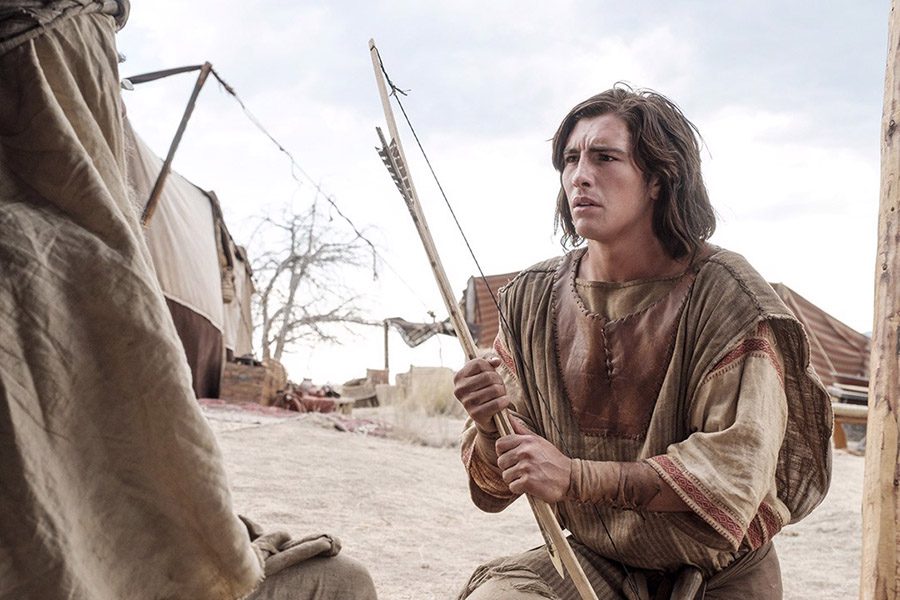
The more you think about it, the more remarkable it is that Nephi ended up leading the Nephites. It goes against standard practice in ancient family and political leadership, where the eldest son almost always took the reins of power. But of course, history is full of exceptions, and Nephi could be considered an “irregular king” in a similar vein as King David, and to be considered legitimate, those kings needed a good explanation for why they were the ones ruling. Noel Hudson takes a close look at these issues in a new article from The Interpreter Foundation entitled “Irregular Kings and Precious Things: Viewing Nephi and Joseph Smith through the Lens of Ancient Near Eastern Kingship,” and he draws some surprising parallels between Nephi and Joseph Smith.
The Takeaway
Hudson expands on the idea that Nephi wrote in part to strengthen his own legitimacy as ruler of the Nephites, based on common legitimization strategies in the Ancient Near East. He also theorizes that Joseph Smith was set up to inherit this kingly legitimacy through connections to Joseph of Egypt and his obtaining of royal artifacts.
The Summary
In this article, Noel Hudson advances the commonly proposed idea—that (as phrased by Noel Reynolds) “Nephi carefully structured his writings to convince his own and later generations that the Lord had selected him over his elder brothers to be Lehi’s political and spiritual successor.” These concerns speak to Nephi’s political legitimacy, an important issue within Ancient Near East cultures. Those who did not assume already-established royal power (which customarily went to the eldest sons of monarchs) had to find a way to demonstrate their royal legitimacy, which was generally a matter of showing that one was chosen by God to lead. Hudson argues that Nephi was one such “irregular king”, and, in the process, suggests that Joseph Smith had similar legitimacy conferred upon him in the course of his prophetic role.
Irregular kings (such as King David, among others) employed a number of strategies to substantiate their claims, including the possession of royal artifacts and the construction of temples that served as concrete symbols of a candidate’s legitimacy and divine favor. And when examined closely, Nephi’s writings highlight many of those strategies, which served to counter the claims of his older brothers and helped thwart the ambitions of future generations of potential usurpers. They include:
- Divine election. Nephi cites explicit promises from God that he would rule over his brethren.
- Royal prerogative. Lehi is recorded as telling Laman and Lemuel to “rebel no more” against Nephi.
- Popular acclamation. Nephi is pressed into service as king as the behest of his own people.
- Military success. Nephi is portrayed as achieving military victories over the Lamanites, and is looked to as a “king or a protector”.
- The unworthy predecessor. There are hints to Zedekiah as an unworthy predecessor of Israelite kingship.
- The unworthy rival. The are many examples where Nephi paints Laman and Lemuel in a poor light.
- Passivity. Nephi implies that he did not seek for the throne and only accepted it hesitantly.
- Transcendent non-retaliation. Nephi shows his worthiness as a leader by forgiving his brothers after they attempted to kill him.
- The merciful victor. After Laman and Lemuel submit to Nephi, Nephi avoids their worship and points them to the worship of God and the veneration of Lehi.
- The younger brother. Nephi is presented as an “archetypal younger brother” who quickly assumes the mantle of leadership from unworthy older rivals.
- Literary themes of legitimacy. Nephi cites imagery related to enthronement in Isaiah 52, wherein Judah arises from the dust to ascend to a royal throne.
- Artifacts of kingship. Nephi possesses symbols of royal power in the sword of Laban, the Liahona, and the brass plates.
- Divine responsibilities. Like other ancient kings, Nephi quickly moves to construct a temple and continues his role as a prophetic and priestly leader, utilizing the same gifts of prophecy and seership present in the royal line of Joseph of Egypt.
Hudson argues that many of these same elements are also present with Joseph Smith, drawing the connections made in the Book of Mormon between him and Joseph of Egypt, Joseph’s legacy of divine power and responsibility, his restoration of the temple, and his possession of many of the same royal artifacts as Nephi, as well as the Urim and Thummim. His popular acclaim as leader is evident (see D&C 135, and though he was never proclaimed as a literal king, his divinely oriented legitimacy has been inherited within the hierarchical structure of the church, serving as a restraint on the unjust use of authority by modern leaders.
As Hudson concludes:
“Drawing upon comparative material from the Ancient Near East, this article identifies a shared cultural logic underlying ancient apologetics of kingship. It argues that the Book of Mormon intentionally adopts this framework in its portrayal of Nephi—and, by prophetic extension, of Joseph Smith—both having been divinely sanctioned leaders… Book of Mormon prophets foresaw and, if my theory is correct, intentionally situated the future prophet of the Restoration within this same legitimating paradigm… Nephi and Joseph Smith emerge as participants in a single theological tradition of irregular kingship—leaders raised up by divine mandate rather than by inheritance or popular election.”
The Reflection
It doesn’t take more than a few read-throughs of 1 and 2 Nephi to pick up on Nephi’s (likely well-justified) defense of his own rule. Given that his rule may have involved the incorporation of indigenous tribes, I suspect building that legitimacy may have been even more important. Either way, Nephi’s subtle rhetoric—using strategies that align so well with ancient traditions—strikes me as too subtle and too authentic to have come from a spurt of creative writing.
The idea that Joseph is an heir to that legitimacy is intriguing as well. Those legitimizing strategies would’ve meant little to his contemporaries, but they likely would have mattered to Moroni and those that came before him. We sometimes see pushback from critics as to why God would entrust a callow youth with the Restoration, but I wonder if Nephi or Alma or Mormon would’ve felt similarly, absent those royal accoutrements. What it might do for us, on the other hand, is help us appreciate the meaning and heft in those symbolic trappings, and recognize his legitimacy as a prophet, despite his faults and foibles.
This post is Kyler Rasmussen’s summary of the article “Irregular Kings and Precious Things: Viewing Nephi and Joseph Smith through the Lens of Ancient Near Eastern Kingship” by Noel Hudson in Volume 67 of Interpreter: A Journal of Latter-day Saint Faith and Scholarship. All of Kyler Rasmussen’s Interpreting Interpreter articles may be seen at https://interpreterfoundation.org/category/summaries/. An introduction to the Interpreting Interpreter series is available at https:/interpreterfoundation.org/interpreting-interpreter-on-abstracting-thought/.
A video introduction to this Interpreter article is now available on all of our social media channels, including on YouTube at https://youtube.com/shorts/P7CXJXViRpc.
The Case Against Sola Scriptura: From the Bible Itself

The Book of Mormon prophet Nephi prophesied quite critically of a future time when “many of the Gentiles shall say: A Bible! A Bible! We have got a Bible, and there cannot be any more Bible. . . . Thou fool, that shall say: A Bible, we have got a Bible, and we need no more Bible” (2 Nephi 29:3, 6).
And, in fact, belief in the sole and complete sufficiency of written scripture—for Christians, the Bible—did become one of the core principles of Protestantism. That belief is neatly expressed in the first of what have come to be known by some as the “five solas”—a term referring to a quintet of Latin phrases that, taken together, summarize the core theological beliefs of the Protestant Reformation: “Sola Scriptura” (scripture alone), “Sola Fide” (faith alone), “Sola Gratia” (grace alone), “Solus Christus” (Christ alone), and “Soli Deo Gloria” (glory to God alone). These phrases assert the Protestant teaching that the Bible is the highest authority, that salvation comes through faith and grace in Jesus Christ, and that all glory belongs to God.
During my mission, and even more often since then—I encountered relatively few serious Evangelical Protestants in German-speaking Switzerland—people seeking to refute the claims of the Restoration, and specifically to reject the Book of Mormon, have confronted me with 2 Timothy 3:15-17. They see the passage, traditionally ascribed to the apostle Paul, as refuting the need for, or even the possibility of, postbiblical scripture or modern revelation. Addressing his protégé Timothy, who was born to a Greek father and a Jewish mother, Paul comments on the young man’s religious upbringing:
“From a child,” he says, “thou hast known the holy scriptures, which are able to make thee wise unto salvation through faith which is in Christ Jesus. All scripture is given by inspiration of God, and is profitable for doctrine, for reproof, for correction, for instruction in righteousness: That the man of God may be perfect, thoroughly furnished unto all good works.”
The argument that some Protestants make from these verses goes as follows: If written scripture is sufficient, on its own, to make us “wise unto salvation,” “thoroughly furnished unto all good works,” and even “perfect,” there seems no point in adding to it. Why add to perfection? If anything, wouldn’t any addition be likely to do damage? At best, it would be redundant.
But there seems to be a fundamental problem, for a Christian, at least, in the attempt to weaponize 2 Timothy against the emergence of new scripture or further revelation: Timothy was probably in his late teens or very early twenties when he first became associated with the apostle Paul, who later describes him as “my own son in the faith” (1 Timothy 1:2). He was, therefore, likely born somewhere between AD 17 and AD 30, during the mortal lifetime of Jesus and well before the composition of any book of Christian scripture. The only “scripture” that Timothy could have known in his youth would have been the Old Testament, probably in Greek translation.
The second epistle to Timothy is typically dated to approximately AD 65, give or take a year or two. But, while lists and specific dates will vary, many of the books of the New Testament itself appear to bear later dates than does 2 Timothy. The chronology that I’ve consulted for this column is typical and mainstream, and it puts the composition of the Gospel of Mark, the Gospel of Matthew, Hebrews, 1 Peter, 2 Peter, Jude, the Revelation of John, the Gospel of John, and the three epistles of John after the writing of 2 Timothy. In other words, according to this chronology—and while others may differ here and there, the variation won’t be enormous and won’t really neutralize my point—fully eleven of the New Testament’s twenty-seven books (including three of the four canonical Gospels) postdate the composition of a text that, supposedly, bars further revelation or additional scriptural books.
That means that, while a Jewish rabbi might be comfortable with this common Evangelical argument against further revelation or scripture, no Protestant Evangelical (and, for that matter, no believing Christian) should be.
Many missionaries and former missionaries will, of course, be familiar with yet another biblical passage, Revelation 22:18-19, which is often cited as a prohibition against postbiblical revelation or scripture:
“For I testify unto every man that heareth the words of the prophecy of this book, If any man shall add unto these things, God shall add unto him the plagues that are written in this book: And if any man shall take away from the words of the book of this prophecy, God shall take away his part out of the book of life, and out of the holy city, and from the things which are written in this book.”
Since these verses stand very near the end of the Revelation of John, which stands at the very end of the Bible itself—so the argument goes—they prohibit adding any further scriptural material to the Bible (and, of course, omitting anything from it).
But the book of Revelation hasn’t always been located at the end of the Bible; the specific order of New Testament books wasn’t fixed for several centuries. Historically, the book of Revelation was controversial, and it was the last New Testament book to achieve effective universal acceptance across Christendom. It wasn’t firmly established in the canon until the late fourth or even fifth century after Christ.
In fact, the books of the New Testament—including John’s Revelation—initially circulated independently as individual letters and Gospels that had been written (or copied) for specific communities. (Bound books were still over the horizon and, obviously, printed volumes were many centuries in the future.) The four now-canonical Gospels (Matthew, Mark, Luke, and John) were probably beginning to circulate together as a collection by a fairly early point in the second century after Christ, but that is obviously after the composition of John’s Revelation.
So what was the function of that stern warning in Revelation 22:18-19 against adding to or omitting from the text? Since the New Testament books—like other ancient texts—originally circulated in the form of rare hand-copied manuscripts, it would have been a simple matter for a careless or designing scribe to alter a document while passing it off as authentic and true to its original. Imagine, say, that J. R. R. Tolkien’s “Lord of the Rings” were circulating only in a relatively small number of hand-copied manuscripts, without legal protections and without convenient comparisons to other copies. It would be easy for a copyist who didn’t like the portrayal of Gollum to omit it altogether or to “improve” it to her own liking. A scribe with different motives might insert a scene in which Frodo and Sam pause to enjoy a refreshing Coca-Cola before beginning the fateful ascent of Mount Doom. And, of course, as compared to tinkering with Tolkien, theological disagreements provided powerful motives for “improving” scripture.
Accordingly, more than a few ancient documents, even beyond the Bible, invoked curses on those who created inaccurate copies. (Practically speaking, it was an author’s attempt to preserve the integrity of what he had written.) The “book” to which Revelation 22:18-19 forbids alterations is, almost certainly, the book of Revelation itself.
Another such warning actually occurs within the Old Testament or Hebrew Bible, at Deuteronomy 4:2: “Ye shall not add unto the word which I command you,” says the Lord, “neither shall ye diminish ought from it, that ye may keep the commandments of the Lord your God which I command you.”
The prohibition is plainly directed against adding false, uninspired, human material to what the Lord has revealed and against suppressing what the Lord has revealed by erasing it from the record. Plainly, this is a prohibition that Latter-day Saints endorse and follow. Like their fellow Christians, Latter-day Saints oppose the mingling of uninspired material with scripture. The question comes down to whether or not a purported new revelation is true, or whether a proposed additional text is genuinely inspired scripture. Merely being new or extrabiblical doesn’t, in and of itself, prove something spurious. Not, at least, according to the Bible—which nowhere announces an end to revelation or declares itself a closed and all-sufficient book.
Indeed, Latter-day Saints recognize that there is much more that we could learn from God and about his dealings with humankind. There are many things that we would like to know. John 21:25, which is the very last verse of the biblical gospel of John, acknowledges that the account that it provides is incomplete: “And there are also many other things which Jesus did, the which, if they should be written every one, I suppose that even the world itself could not contain the books that should be written.”
Is there any serious Christian who wouldn’t eagerly welcome more information about the life, ministry, and teachings of Jesus? Would any believer object if, somehow, several more authentic verses of John’s Gospel were found?
Interestingly, there exists a curious parallel to John 21:25 in the Qur’an, the holy book of Islam. Much like conservative Protestant Christians, most Muslims follow a “religion of the book.” Muhammad is regarded as the last of the prophets and, thus, with no living prophet, the written scripture of the Qur’an is the ultimate authority for the faithful. And yet the Qur’an itself directs Muhammad to say the following: “If the ocean were ink for the words of my Lord, the ocean would run out before the words of my Lord ran out, even if we brought the like of it again in ink” (Qur’an 18:109, my translation). According to the Qur’an, no finite book, no matter how great, can contain all of God’s word.
Nor is scripture self-interpreting, which seems to be a difficulty for those who claim it to be absolutely self-sufficient. A look at John 5:39 will shed some light on this matter. English-speaking Latter-day Saints are familiar with this verse as it is rendered in the King James Bible: “Search the scriptures; for in them ye think ye have eternal life: and they are they which testify of me.” We often cite it as encouraging scripture study, which is definitely a good thing.
Consider, though, four other renderings of the passage:
“Examine the scriptures, since you think that in them you have eternal life. They also testify about me.” (Common English Bible, the CEB)
“You study the Scriptures diligently because you think that in them you have eternal life. These are the very Scriptures that testify about me.” (New International Version, the NIV)
“You pore over the scriptures for you imagine that you will find eternal life in them. And all the time they give their testimony to me!” (J. B. Phillips)
“You search the scriptures, because you think that in them you have eternal life; and it is they that bear witness to me.” (Revised Standard Version, the RSV)
There is disagreement among scholars and translators about whether the Greek verb that the King James translators put into English as “search” is to be taken in the indicative mood (“you search”), as the NIV, Phillips, and RSV translations have it, or in the imperative or command mood (“search ye”), as it appears in the King James Version and the CEB. Both are defensible from the Greek.
In either case, the passage seems to represent Jesus as criticizing his Jewish audience’s misplaced confidence in its own diligent study of the scriptures—which at this time, of course, could only have been those of the Old Testament since, again, the New Testament plainly didn’t yet exist. And, he appears to be saying, salvation is not to be found in written scripture alone, no matter how diligently it is studied. Salvation is in Christ, and Christ was still speaking. Moreover, Latter-day Saints believe he is still speaking today.
A Stack of Invitations from the Book of Mormon

Several years ago, I gave a copy of the Book of Mormon to one of my best friends. After a few days, I asked her what she thought. She said that she started to read, but it was difficult to understand, and she had stopped. I was shocked. My friend was well-educated. She had a master’s degree and taught English at the local college. Nevertheless, I sympathized with her.
The first several times I read the Book of Mormon, I struggled to keep track of the logistics. Who left the land of Nephi and who returned, and how did they all end up in Zarahemla? Why are there two Ammons, and which one cut off the robbers’ arms?
In pondering a newbie’s attempt to understand the Book of Mormon, I have found it meaningful to worry less about the logistics and to view it as a collection of invitations. Virtually every story in the book tells us what happens when someone accepts the invitation to come unto Christ and what happens when they don’t.
Consider the major prophets of the Book of Mormon who extend an invitation to repent and come unto Christ:
- Lehi invites the people of Jerusalem to repent and come unto Christ.
- Lehi invites his sons, Laman and Lemuel, to repent and come unto Christ.
- Nephi invites his brothers Laman and Lemuel to repent and come unto Christ.
- Jacob invites the people of Nephi to repent and come unto Christ.
- King Benjamin invites his whole kingdom to repent and come unto Christ.
- Abinadi invites Noah to repent and come unto Christ.
- Ammon invites Limhi to repent and come unto Christ.
- Alma invites the people of Zarahemla, Gideon, Melek, and Ammonihah to repent and come unto Christ.
- Alma invites the apostate Zoramites to repent and come unto Christ.
- Ammon invites King Lamoni to repent and come unto Christ.
- Aaron invites King Lamoni’s father to repent and come unto Christ.
- Alma invites his son Corianton to repent and come unto Christ.
- Nephi, son of Helaman, invites the Nephites to repent and come unto Christ.
- Samuel the Lamanite invites the Nephites to repent and come unto Christ.
At this point in the story, Christ comes and himself invites the people to repent.
A book that extends the same invitation over and over again may sound boring. However, the story becomes very compelling when we consider what happens to those who accept the invitation to come unto Christ and those who don’t.
We witness miracles that bless the lives of those who accept the invitation to repent. Nephi is led to the brass plates, finds food in the wilderness, and is taught to build a ship. Alma is led out of bondage when the city’s guards mysteriously fall asleep. Moroni defeats an army twice his size (and twice as mean) due to a prophet’s inspiration. The walls of the prison fall down, kill their tormenters, and Alma and Amulek escape unharmed. Throughout the book, the hardest of hearts are softened.
Equally compelling are the stories of those who don’t accept the invitation to repent. Laman and Lemuel receive an electrical shock, get caught in a raging storm, and are cut off from their parents. Noah refuses to repent and is burned at the stake by his own priests. The city of Ammonihah is destroyed in a single day, leaving a scent so noxious that it takes years before anybody can go near the land. Nephi, son of Helaman, invites the people of Nephi to repent, and when they refuse, they experience war and famine.
Reading the Book of Mormon through the lens of invitations can make the story exceptionally meaningful in our lives. Consider the beauty of some of the invitations in the Book of Mormon:
“I speak by way of invitation, saying: Come and be baptized unto repentance, that ye also may be partakers of the fruit of the tree of life.” (Alma 5:62)
“Remember, remember my son, that it is on the rock of our Redeemer, who is Christ, the Son of God, that ye must build your foundation;” (Helaman 5:12)
“Awake, my sons, put on the armor of righteousness.” (2 Nephi 1:23)
“If ye have felt to sing the song of redeeming love, I would ask, can ye feel so now?”(Alma 5:26)
We don’t have to completely understand who begat whom or who conquered whom to benefit from The Book of Mormon. Studying the different stories allows us to consider each invitation as if we, personally, were the recipients of the invitation.
The stories we read aren’t always a simple A leads to B. Sometimes, the consequences of obedience or disobedience in The Book of Mormon aren’t revealed for several chapters. Sometimes the people who do repent go through a period of hardship or trial before they receive blessings.
Nevertheless, as we read, we recognize that we also might experience hardship before we are delivered from our trials, that the repentant can be unjustly imprisoned, or beaten, slain, or burned, that the Lord sometimes allows the righteous to suffer so he can justly judge the wicked. The invitations in the Book of Mormon demonstrate that trials will test our faith, but ultimately, those who accept the invitations are blessed.
JeaNette Goates Smith is the author of Side by Side: Supporting a Spouse in Church Service, published by Deseret Book. She has taught seminary and institute, and at BYU Education Week. She and her husband, Bret, recently returned from serving as mission leaders in the Dominican Republic.
When Fear Knocks, Let Faith Answer

I have a vivid memory from thirty-three years ago of a short getaway my wife and I took from our home in Southern California to Sausalito, a charming town across the bay from San Francisco. I know exactly how long ago it was because of what happened on the day we were to return home. That morning, we were told we could not drive back because a massively destructive earthquake had struck the Los Angeles area while we slept. The shaking had mangled roads and freeways, severing the connections we had always taken for granted.
Yet the memory that has lingered with me most is not the news of the earthquake, but a moment from a few evenings earlier. We had taken the short drive from Sausalito to Muir Beach and spent the night at the Pelican Inn, a rustic yet romantic place built to capture the feeling of a 16th-century English inn. The place was almost hidden, tucked at the end of a winding road where sea-blown fog drifted among pines and alders. Inside, the main room glowed with warmth from a massive stone fireplace framed by weathered timbers. And there, carved into the beam above the hearth, I encountered a phrase that has never left me—Fear Knocked, Faith Answered, Nobody Was There.

Life provides no shortage of moments when fear seems to knock at the door of our hearts. The earthquake itself was a stark reminder of how quickly the foundations of what we assume to be solid can shift beneath us. But fear rarely comes only in natural disasters. It knocks in the doctor’s office when we receive unwelcome news. It knocks in the late-night worry over a struggling child. It knocks in seasons of financial hardship, in loneliness, and in uncertainty about the future.
Fear is one of the adversary’s most common tools. It corrodes trust, clouds vision, and narrows our sense of God’s possibilities for us. In scripture, fear is often the prelude to doubt—Peter stepping out of the boat in faith upon the water until he saw the wind boisterous and began to sink. The Savior’s gentle rebuke, O thou of little faith, wherefore didst thou doubt? (Matthew 14:30-31), reminds us fear is not just an emotional response but a spiritual crossroad—will we give way to despair, or will we let faith answer?
The phrase above the fireplace at the Pelican Inn captures something profound. Faith does not argue with fear. It does not reason with fear. It simply answers. Faith stands at the threshold of our souls and declares that Christ is already there—that He has overcome the world (John 16:33). When faith answers the door, fear finds no foothold. 
The Apostle Paul declared, God hath not given us the spirit of fear; but of power, and of love, and of a sound mind (2 Timothy 1:7). In Latter-day Saint understanding, this power comes through our covenants with God, through the presence of the Holy Ghost, and through the enabling grace of Jesus Christ. We are not left to muster faith in isolation; we are invited to exercise it in partnership with Heaven.
To the early Saints, who faced expulsion, mobs, and relentless uncertainty, the Lord’s words in Doctrine and Covenants 6:34 were clear:Therefore, fear not, little flock; do good; let earth and hell combine against you, for if ye are built upon my rock, they cannot prevail. Anchored in Christ, their faith made fear powerless.
That final phrase—Nobody was there—is what lingers most deeply. When fear knocked and faith answered, there was nothing left of fear. No adversary. No phantom. No weight pressing upon the soul. The knocking was hollow, empty. This is not just poetic imagery—it is spiritual reality.
The Lord Himself assures us, If ye are prepared ye shall not fear (D&C 38:30). Preparedness in this sense is more than food storage or financial prudence, though those matter. It is spiritual preparation: daily prayer, scripture study, temple worship, repentance, service, and keeping our covenants. These actions invite the companionship of the Spirit, who drives out fear and fills us with peace. When fear comes knocking, it finds no vacancy in a heart already filled with Christ.
The words above that old fireplace are not simply a clever homily—they describe a pattern we see again and again in scripture and in the lives of disciples. When young Nephi faced his brothers’ anger and threats, fear must have pressed upon him. Yet his answer was faith, I was led by the Spirit, not knowing beforehand the things which I should do (1 Nephi 4:6). Because faith answered, the fear that could have paralyzed him vanished, and Nephi was enabled to accomplish what seemed impossible.
Likewise, the stripling warriors in Alma’s record could have easily succumbed to terror as they marched into battle, inexperienced and vastly outnumbered. Instead, they had been taught by their mothers that if they did not doubt, God would deliver them (Alma 56:47). Their faith answered the knock of fear, and the result was miraculous preservation. Fear could not stand where faith stood firm.
Modern prophets echo this same truth. President Russell M. Nelson has taught, Faith in Jesus Christ is the greatest power available to us in this life. All things are possible to them that believe. When we let that kind of faith answer the door, the adversary’s whispers of fear dissolve into nothingness—nobody was there. Elder Jeffrey R. Holland has likewise reminded us that despair and fear are never the Lord’s message, declaring, Faith is always pointed toward the future. When faith looks forward with trust in Christ, fear has no substance.
This principle blesses us in the quiet trials of daily life as much as in dramatic moments of history. Fear of the future is answered when we, like Nephi, trust the Lord to guide us one step at a time. Fear of inadequacy is answered when we remember the Lord’s promise to make weak things strong (Ether 12:27). Fear of death is answered in Alma’s testimony of the Resurrection and in the Savior’s assurance that whoso believeth in me, though he were dead, yet shall he live (John 11:25). Each time faith responds, fear is revealed as hollow—a knock without presence, a shadow without form.
That quiet evening at the Pelican Inn impressed upon me a truth I have seen confirmed again and again. Fear will always knock, but it does not have to take up residence. We choose who answers the door. In the end, the engraving on the old timber above the fireplace was not a quaint proverb; it was a sermon—Fear knocked. Faith answered. Nobody was there.
In the light of the restored gospel, this truth shines brighter still. For those who covenant with Christ, who cling to Him with faith and trust, fear will never endure. It is always fleeting, always temporary, always powerless against the love of God.
Is There a Shortcut to Wisdom?

Is there a shortcut to wisdom? In today’s world, we’re all about AI, Chat GPT, instant info from our apps, cooking faster in an air fryer, shortcuts, ordering take-out, multi-tasking, speeding down the freeway, texting– even abbreviating in our texts to make it that much faster. After all, we need to shave time from this activity so we can get to the next one we want to shave time from.
We can condense and rush just about anything, right? Wrong. You cannot gain wisdom quickly. Even if you try to pay all your money for it, you won’t get it any faster.
Knowledge, yes. That can be gained as we’re taught and we learn. Knowledge is facts, skills, and information. But wisdom involves personal experience, empathy, integrity, character, the learning of good judgment, and how we apply our knowledge. The philosopher, Kant, said, “Science is organized knowledge. Wisdom is organized life.”
For example, you can take a parenting class, or read a book on the subject, and feel very well-informed. But until you actually experience parenting, you cannot know what it’s like to apply that knowledge in the real world.
Most of us have heard the phrase, “Knowledge is knowing that the tomato is a fruit. Wisdom is not putting it in a fruit salad.” A robot or a toddler might do it, but an adult should have the experience and judgment to see this exception.
No, you cannot rush experience, nor the judgment we learn from years of living. Many don’t realize that one of the essentials for acquiring wisdom is to serve other people. Elder Marvin J. Ashton once said, “One may have many talents and knowledge but never acquire wisdom because he does not learn to be compassionate with his fellow man. We will never approach godliness until we learn to love and lift. Indifference to others and their plight denies us life’s sweetest moments of joy and service.”
Yes, we can get knowledge from other people, but not their wisdom. Wisdom is harder won; you have to serve others to acquire it. And how fitting it is that our church is way at the high end of the curve on this. Latter-day Saints have many built-in opportunities to serve—from callings, to ministering, to local projects, to providing worldwide aid. But it isn’t just to benefit those in need. It’s because we, too, gain from focusing outward—we gain wisdom!
Remember in Luke 2:52 where we’re told that Jesus “increased in wisdom and stature”? His wisdom wasn’t just knowledge. As we learn about others, we learn about ourselves, and we increase our reliance upon God. It makes us want to improve, to grow, to become more like Him. We learn to sacrifice, to put others first. We learn to be creative, to see how we can best help someone else.
I was thinking of so many scripture heroes whose wisdom came after sharp adversity—from Adam to Solomon to Christ’s apostles, and examples from the Book of Mormon:
Nephi, of course, whose brothers persecuted him relentlessly, eventually plotting to kill him! But each experience brought him greater wisdom.
After Alma converted, he and his followers had to run for their lives. Eventually captured by wicked Lamanites, they became slaves. But the Lord made their afflictions light: “Yea, the Lord did strengthen them that they could bear up their burdens with ease, and they did submit cheerfully and with patience to all the will of the Lord.” (Mosiah 24:15)
Mosiah’s sons repented, then endured many trials in their missionary work. But what resulted? When Alma met up with them much later, they had become “strong in the knowledge of the truth; for they were men of a sound understanding and they had searched the scriptures diligently, that they might know the word of God.” (Alma 17:2). They became wise!
In Mosiah 2:17, King Benjamin said, And behold, I tell you these things that ye may learn wisdom. That ye may learn that when ye are in the service of your fellow beings ye are only in the service of your God.”
“And behold, I tell you these things that ye may learn wisdom. That ye may learn that when ye are in the service of your fellow beings ye are only in the service of your God.”
We could go on and on— and with modern leaders, too. Look at the strength, wisdom, and power of the pioneers, after crossing a nation on foot! And Joseph Smith—a righteous man who was bound and imprisoned, yet met his challenges with unwavering faith and unwavering wisdom!
Remember his agony in Liberty Jail? The Lord told him, “My son, peace be unto thy soul; thine adversity and thine afflictions shall be but a small moment; And then, if thou endure it well, God shall exalt thee on high; thou shalt triumph over all thy foes.” (D&C 121:7–8).
Then in D&C 122:7 the Lord says, “All these things shall give thee experience, and shall be for thy good.”
Do you have adversity in your life? Do you see others with seemingly perfect lives and wonder why you have such mountainous tribulations? Then the Book of Mormon is for you! Get an extra copy and mark just the examples of tribulation. Then the wisdom that followed. Now look at your own life, and see if you don’t have increased wisdom. You will! That copy of the Book of Mormon can be your key to staying faithful and turning to God whenever life gets hard.
No, there isn’t a shortcut to wisdom. As the philosopher, Kierkegaard said, “Life can only be understood backwards; but it must be lived forwards.” How sad it would be to endure great suffering and not learn wisdom from it.
Ironically, I began this article talking about how we try to hurry through life, cutting corners and saving time. I did it to make the point that we cannot rush wisdom. We have to slow down enough to acquire it, don’t we? However, are we using our time to do that? Or do we procrastinate that growth, develop a snap temper, carelessness, a reflex to blame someone else when things go wrong? Do we live deliberately and thoughtfully, and with an eye on the lessons to be learned as we encounter problems?
Allow me to conclude with a quote by Gautama Buddha, who wisely said, “The trouble is you think you have time.”
Joni Hilton is an LDS author, Seminary teacher and shares life hacks at https://m.youtube.com/c/jonihilton. Her novel, Golden, is now an Amazon audiobook.
The Heartland Versus Mesoamerica Part 4: Directions and the East and West Seas

The following comes from The Interpreter Foundation.
Sorenson’s Map and Non-Cardinal Directions
A very common assumption modern readers bring to the Book of Mormon is that most of the English words in the text mean precisely what we assume they do. Royal Skousen and others have examined the words in our English text and found that there are many which represent a more archaic meaning than the one we would typically ascribe to them. These are only a few of those Skousen discusses, but they are representative of the issue of assumed meaning:
But ‘unless’
“I greatly fear lest my case shall be awful but I confess unto God” (Jacob 7:19)
Call ‘need’
“thus we see the great call of the diligence of men to labor in the vineyards of the Lord” (Alma 28:14)
Consigned ‘assigned’
“I am consigned that these are my days” (Helaman 7:9)
Course ‘direction’
“in the course of the land of Nephi, we saw a numerous host of the Lamanites” (Alma 2:24)
Cross ‘to contradict’
“that thereby they might make him cross his words” (Alma 10:16)
Depart ‘to divide’
“the waters of the Red Sea . . . departed hither and thither” (Helaman 8:11)
Depressed ‘rendered weaker’
“and they were depressed in body as well as in spirit” (Alma 56:16)[1]
The concept that there are words in the text that might have a different meaning than what we expect becomes important when the seemingly obvious words for directions appear in the text. We know what north, south, east, and west mean. Obviously.
There is no aspect of Sorenson’s map that has come under greater scrutiny than his use of directions. Where the internal models discussed in the first post in this series (Heartland vs Mesoamerican—Foundational Issues) show a very north/south orientation, Sorenson’s model appears to lay that model on its side. This places his sea east to the north!
Sorenson’s explanation begins with the fact that concepts of directions are culturally dependent.
The Israelites of Palestine, in their most common mental framework, derived directions as though standing with backs to the sea, facing the desert. Yam (“sea”) then meant west,” for the Mediterranean lay in that direction, while qedem (“fore”) stood for “east.” Then yamin (“right hand”) meant “south,” while shemol(“left hand”) denoted “north.”[2]
I have reexamined the issue of directions in the Mesoamerican model. Rather than basing the meaning on Hebrew, I use concepts of directions from Mesoamerica. Mesoamerican directional systems have some linguistic diversity, but the majority are based upon the path of the sun, with some variation of the phrase “from the east to the west” appearing multiple times in the text. In Mesoamerican systems, east and west were defined by the sun, and north and south would be “on the left” or “on the right.” Different languages might flip the meanings based on whether they assume that directions came from facing the sun or having one’s back to the sun. Because the sun’s rising changes along the horizon through the year, the Mesoamerican concept of north was not the vertical line we assume, but rather a pie wedge where what is north sweeps an area because the beginning of the sun’s path changes throughout the year.
Combined with the understanding that directions are relevant to the focal point from which they are given, what is north and south are slightly different in the Book of Mormon when the directions are given from the city of Nephi or later from the city of Bountiful. Thus, I modeled that directional concept on Sorenson’s map and that way, it yields a more explicable understanding of how the Mesoamerican orientation fits into the directional explanations.
Of course, the argument for understanding directions in this way is much more extensive than the summary offered here. I refer readers to the published article for the full details.[3]
In the concept depicted above, it is easy to see a sea west of the land of Nephi. It is perhaps less so when seen from Bountiful. However, this issue of a continuous sea that is both west and south may help explain an interesting verse in Alma: “And now it came to pass that the armies of the Lamanites, on the west sea, south. . .” (Alma 53:8). If tradition beginning in the land of Nephi used “west sea” as a name as much as a directional description, then there is a reason to see the Lamanites on the West Sea, south.
Neville’s Heartland Map and the East and West Seas
Neville’s map uses cardinal directions and therefore neither he nor other Heartland modelers need to nuance our expectations of what directional terms mean. Nevertheless, the geography that he proposes requires some explanation of what a sea is, and therefore what a sea east and a sea west might mean.
Neville does not argue a specific east sea, apparently accepting the Atlantic Ocean. He never discusses how the distance from the Heartland to this east sea may be accounted for. As I noted in the post on “Up, Down and Distance,” there is a serious problem with how far away his east sea is from the Zarahemla heartland.
Where Neville has a real problem is with the west sea. The Atlantic is far away, but he apparently understands that the Pacific is simply too far away to be seen as the west sea. Neville suggests “it is possible that were multiple seas; i.e., the “sea west” could refer to one body of water in one passage and a different body of water in another passage.”[4] This is similar to his suggestion that the River Sidon is sometimes the Mississippi and sometimes the Tennessee River.[5]
While this is possible in theory, the issue is whether the text supports the idea or whether the hypothesis is simply necessary to make the text fit into the selected real-world geography. This underscores the problem of beginning with a fixed pin in mind. Neville’s pins commit him to a geography and therefore he must fit the text to the geography rather than the geography to the text. Neville does not attempt to show how the text uses the west sea differently. He simply asserts that it could be and therefore is.
Neville’s solution depends upon one of the meanings associated with the Hebrew word, yam, typically referencing, seas. He indicates that it could mean a “mighty river.” That meaning allows him to suggest that the Mississippi could be seen as the west sea.[6] The argument that the Book of Mormon peoples continued to use Hebrew has been asserted by multiple defenders of multiple geographies, including the various Mesoamerican models. Although I have personal disagreements with the use of Hebrew as a default language for the Book of Mormon, it is widely enough used that Neville’s suggestion cannot be dismissed outright.
The next problem Neville’s west sea imposes is that he has the Mississippi as the Sidon River as well as the west sea. His solution is to suggest that the Mississippi becomes the west sea only farther south after tributaries have swollen the size of the river.[7] Interestingly, he admits “that doesn’t solve all the issues with seas in the Book of Mormon. It doesn’t even solve all of Alma 22.”[8] Solving Alma 22 requires Neville to posit a difference between the west sea and the sea West. This is where the idea of more than one sea can come in, where the west sea is only the lower Mississippi and the sea west is another body of water, which he suggests is Lake Michigan.[9] As with the Sidon River that becomes the west sea, the idea that there are multiple west seas (or a real distinction between a sea west and a west sea, which he never demonstrates from the text) is a requirement of the desired geography dictating the interpretation. As I noted concerning river travel, the need to adapt the text to fit the desired geography required Neville to invent unnamed and unreferenced rivers, and now to posit multiple west seas (also without textual support), one of which is the Mississippi River which all modern maps rather clearly understand as the same river even though it is fed from multiple tributaries.
Comparison of the Mesoamerican and Heartland Seas
Neither the Mesoamerican nor the Heartland models survive a simplistic reading of east and west. For the Sorenson model, I believe the orientation of the model is explained by using the directional system that was native to the cultures that lived in the model’s geography. For Neville, there is no need to alter the concepts of directions, but he must alter the definitions of bodies of water. In order to fit the text, he must redefine river as sea, but only when it is south of Zarahemla. Then he must create a second west sea after the Nephites have moved north. He asserts, without analysis, that west sea and sea west are fundamentally different rather than different ways of representing the same concept.
While both models have their issues, the Mesoamerican model can be explained with a culturally appropriate understanding. The Heartland model requires having the Sidon become a sea south of Zarahemla (which is nowhere attested in the text), and then have Lake Michigan become the west sea later in the text. Neville never addresses the problem of the distance from the Heartland to the east sea, which is the Atlantic. The Mesoamerican model requires resetting expectations, but the result is a culturally appropriate definition. The Heartland model requires inventing multiple seas as well as a distinction in the upper and lower Mississippi. Parsimony sides with the Mesoamerican model.
[1] Royal Skousen, “The Language of the Original Text of the Book of Mormon,” BYU Studies Quarterly 57, no. 3 (2018): 88.
[2] John L. Sorenson, An Ancient American Setting for the Book of Mormon (Salt Lake City and Provo: Deseret Book and the Foundation for Ancient Research and Mormon Studies, 1985), 38-39.
[3] Brant A. Gardner, “From the East to the West: The Problem of Directions in the Book of Mormon,” Interpreter: A Journal of Latter-day Saint Faith and Scholarship 3 (2013), 119-153. https://journal.interpreterfoundation.org/from-the-east-to-the-west-the-problem-of-directions-in-the-book-of-mormon/.
[4] Jonathan Neville, Moroni’s America. The North American Setting for the Book of Mormon, (Digital Legend, 2016), 33.
[5] Neville, 98.
[6] Neville, 34.
[7] Neville, 34.
[8] Neville, 35.
[9] Neville, 37.
FEATURES