




Becoming Brigham, Episode 17 — Was Zion’s Camp Formative or a Failure?
Was Zion’s Camp a failure—or one of the most important experiences in Brigham Young’s life? When does a peaceful people have the right to fight back? Our hosts examine the tension between the Latter-day Saint commitment to peace and the violent realities of early American history. The discussion turns to Zion’s Camp, the 1834 expedition to Missouri that Brigham Young went through as a formative spiritual experience under the guidance of Joseph Smith. Though often viewed as a military failure, the discussion turns to how Joseph Smith deliberately chose a peaceful resolution over armed conflict after receiving a revelation that the camp should return home rather than fight.

Becoming Brigham, Episode 16 — Who was more loyal, Emma Smith or Brigham Young?

How did Emma’s deeply personal, spousal view of Joseph differ from Brigham Young’s reverent, disciple-like view of the Prophet?
In what ways did both Emma and Brigham remain deeply loyal to Joseph Smith, even though they expressed that loyalty very differently?
Our hosts reflect on the contrasting ways Emma Smith and Brigham Young related to Joseph Smith and how those differences contributed to tension after his death. Camrey and Johnny discuss how Emma knew Joseph intimately as his young wife — seeing both his prophetic calling and his human weaknesses — while Brigham knew him primarily as a disciple knows a prophet, showing deep reverence and unwavering loyalty to every revelation Joseph taught. And yet, despite their differences, both Emma and Brigham died calling upon the name of Joseph, each cherishing the Restoration in their own way.
Becoming Brigham, Episode 14 — The Prophet’s Shadow
How did Brigham Young come to accept radical doctrines like the three degrees of glory and plural marriage when they initially shocked him? Why was Brigham Young willing to follow Joseph Smith even when he didn’t fully understand or even like what Joseph was teaching? What would the Church of Jesus Christ of Latter-day Saints look like today without Brigham Young’s absolute loyalty to the Prophet Joseph Smith?
John Wilson continues his conversation with historian Dr. Gerrit Dirkmaat. They explore Brigham Young’s deep, unwavering loyalty to Joseph Smith and how it shaped his life and leadership. The discussion highlights how Brigham wrestled with some of Joseph’s most radical doctrines, such as the three degrees of glory, baptism for the dead, and plural marriage. Even when these teachings conflicted with his previous beliefs, Brigham ultimately chose to accept them because they came through the Prophet Joseph Smith.
Becoming Brigham, Episode 13 — In spite of differences, what did Brigham Young and Emma Smith have in common deep in their souls?
In this episode the hosts explore the final days of Joseph Smith’s life and how those events shaped both Emma Smith and Brigham Young. The episode also examines the decisions Brigham Young and the Twelve made after the martyrdom. With mobs threatening Nauvoo, the brethren chose to focus on finishing the temple while preparing to go west. John Wilson interviews Church historian Dr. Gerrit Dirkmaat who contrasts Joseph Smith’s passionate, dramatic personality and conversion experiences with Brigham Young’s more gradual, deliberate path to faith, and points out that once Brigham was converted, he never looked back.
The Fire on the Altar: Emerson’s Longing and the Restoration’s Reply

The Spectral Preacher
In 1838, Ralph Waldo Emerson stood before the graduating divinity students at Harvard and said aloud what most of them had only whispered over supper. Christianity, he told them, had become a cold hearth, a place where men gathered to describe the fire that once burned there. The living flame had been swept into labeled jars, catalogued and safe. He wrote plainly: “Men have come to speak of the revelation as somewhat long ago given and done, as if God were dead.”1
Then he described a preacher he had heard:
“A snow storm was falling around us. The snow storm was real; the preacher merely spectral.”
The storm had weight. It pressed against the windows and piled on the sills. The sermon had none. And why? Because the man behind the pulpit spoke of God the way a docent speaks of a pharaoh’s sarcophagus: with reverence for something safely entombed. Religion had become a thing under glass. And like all things under glass, it was perfectly preserved and perfectly dead. Emerson named the sickness with a surgeon’s hand: “The stationariness of religion; the assumption that the age of inspiration is past, that the Bible is closed; the fear of degrading the character of Jesus by representing him as a man; indicate with sufficient clearness the falsehood of our theology.”
“It is the office of a true teacher to show us that God is, not was; that He speaketh, not spake.”
His plea could not have been plainer: “It is the office of a true teacher to show us that God is, not was; that He speaketh, not spake.” He wanted faith with mountain wind in it, faith that left frost on the beard and breath in the lungs. He wanted, in short, a religion that could catch cold. He wanted what he called “the true Christianity,—a faith like Christ’s in the infinitude of man.” And he cried out to those young ministers: “The need was never greater of new revelation than now.”
The Boy in the Grove
What Emerson searched for among the elms of Cambridge, a boy in upstate New York had already encountered. Joseph Smith refused to live on second-hand bread, or, for that matter, second-hand fire. He would not sit politely before the ash of ancient miracles and call it warmth. He walked into a grove of hardwood trees and discovered that God is, not was. That He speaketh, not spake. Christianity stepped out of the glass case and back into the weather, where breath clouds and hands tremble.
We are not curators of vanished wonders. We are summoned into the same column of light.
A God with a body you could see overthrew the pale philosophies. A new book of scripture proved that heaven had not gone mute. Priesthood authority returned to the earth. The heavens that Emerson’s Harvard had declared sealed were torn open; not like a page turned, but like a veil rent. The Restoration did not erase the past; it returned the present tense to religion. We are not curators of vanished wonders. We are summoned into the same column of light. Not to admire it, but to stand within it.
Emerson had waited for a teacher who could prove that God is, not was. That teacher came from a grove of sugar maples, not a divinity school.
The Spirit Does Not Float
The Restoration did not merely announce that God still speaks. It revealed the manner of His speaking, and what His voice does to the body that receives it.
We have a habit of imagining the Holy Ghost as a kind of warm glow, a spiritual quilt draped over the shoulders. Parley P. Pratt would have none of it. Spirit, he insisted, is matter. And the Holy Ghost acts upon the whole man, flesh and sinew:
“The gift of the Holy Ghost… quickens all the intellectual faculties… develops beauty of person, form and features… gives tone to the nerves… In short, it is, as it were, marrow to the bone, joy to the heart, light to the eyes, music to the ears, and life to the whole being.”2
“Tone to the nerves.” “Marrow to the bone.” This is resurrection in rehearsal: the body remembering its future. The Spirit does not hover over the body like morning fog over a millpond. He fills it. He crowds out falsehood the way daylight crowds out a candle. He clears the eyes. He wakes the sleeper to his own royalty. When scripture promises that the Spirit “quickeneth all things” (Moses 6:61), it is not promising that we shall become less human. It promises we shall be human at last, human in full measure, human as the word was always meant to sound. To be filled with the Holy Ghost is the discovery of what we were built for.
This is what Emerson’s spectral preacher lacked. He was, in the most precise sense, a geographer of the divine. That is to say, a man who has mapped every road to a country he has never entered.
Newborn Bards of the Holy Ghost
Emerson did more than diagnose the disease. He glimpsed the cure. His charge to those young ministers remains one of the most stirring sentences in American letters:
“Yourself a newborn bard of the Holy Ghost,—cast behind you all conformity, and acquaint men at first hand with Deity.”
The person who has truly seen God cannot remain silent… The vision demands a voice the way a bell demands its tongue.
A bard is not an echo. A bard is a maker. He does not merely respond to the world; he addresses it truthfully, the way a king addresses a court or a father addresses a son. Emerson understood this: “Always the seer is a sayer.” The person who has truly seen God cannot remain silent, not because the vision demands self-expression, but because truth, once received, demands truthful address. The vision demands a voice the way a bell demands its tongue. This is not performance. It is the only honest way to live in a world where God has spoken.
Orson Pratt explained the inner workings of how this becomes possible:
“Without the aid of the Holy Ghost… a person would have but very little power to change his mind… Hence, it is infinitely important that the affections and desires should be… changed and renewed… To thus renew the mind of man is the work of the Holy Ghost.”3
Here lies the bard’s fire: the power to rewrite the inner script. With the Spirit, we gain the strength to dislike what once dazzled us and to love what once seemed dull. We stop living borrowed lives. We become first-hand witnesses of the Light. Emerson’s “bard” is not a poet in the literary sense alone. He is anyone who has met the living God and refuses to pretend the meeting never happened.
You Cannot Breathe Once a Week
A bard cannot speak without breath. And this life demands more than occasional spiritual oxygen; it demands an entire atmosphere. So the sacramental promise comes with its solemn beauty: that they may always have his Spirit to be with them.
If Emerson diagnosed the death of the soul, President Nelson provides the emergency oxygen for its resuscitation. He has warned with prophetic urgency: “But in coming days, it will not be possible to survive spiritually without the guiding, directing, comforting, and constant influence of the Holy Ghost.”4
Note the word survive. Not thrive. Not excel. Survive. The days ahead will not permit a casual acquaintance with the Spirit. A guest appearance will not do. Only a dwelling Companion can sustain us. A man cannot live on oxygen delivered only on Sundays. The lungs do not work that way. Neither does the soul.
But we must be careful here. The Spirit is not a resource to be managed or a fuel to be topped off. He is a Person, and what President Nelson is describing is not a maintenance schedule but the terms of a relationship. We do not survive the coming days by optimizing our spiritual intake. We survive by remaining in genuine communion with a Being who knows us, addresses us, and will not be reduced to a mechanism. The Holy Ghost does not fill us the way air fills a tank. He fills us the way a true companion fills a life: by being present, by being known, and by being welcomed home. A tank, after all, does not mourn the air when it is empty.
And because He is a Person, He possesses a divine delicacy: He respects the agency of the human soul with a quiet, perfect reverence. He does not intrude where He is not invited, nor does He remain where He is ignored. Elder David A. Bednar has warned that the Spirit speaks quietly and withdraws quietly.5 When we distance Him, He recedes—not out of divine sulking, but out of a profound respect for our choice to walk alone. This is the physics of the spiritual life, as real as gravity. Distance from God is not a sentence passed down from a bench; it is a condition simply lived. Emerson’s spectral preacher had no fire because he had no ongoing encounter with the living God. He was running on the fumes of a revelation he had only read about. We cannot afford to repeat his error. To be bards, to love well and speak truly, we must carry the air of Zion into the smoke of Babylon.
Rekindling the Fire on the Altar
Emerson closed his address with a plea that still burns:
“And now let us do what we can to rekindle the smouldering, nigh quenched fire on the altar.”
He looked westward with longing:
“I look for the hour when that supreme Beauty, which ravished the souls of those eastern men, and chiefly of those Hebrews, and through their lips spoke oracles to all time, shall speak in the West also.”
He looked for a “new Teacher” who would show the shining laws come full circle. He could not have known that the Teacher had already come, that a fourteen-year-old boy had already knelt among the trees and seen the heavens open. But we know. We have the fire Emerson longed for. The question is whether we will carry it or merely label it and set it behind glass again.
The world is filled with people who are solid enough to buy groceries and sign documents, yet who have somehow misplaced the one self that was supposed to do the living. They live on borrowed routines. They call numbness normal. Emerson saw them filling the pews of New England. They fill ours too, if we are not careful.
But we know something older and truer. The Restoration is the announcement that the famine is over. The Holy Ghost is the marrow that wakes the sleeper. The vow is never to return to sleep.
Holiness is not an exception to being human. It is what humanity looks like when nothing is withheld.
Emerson’s charge belongs to us now. Yourself a newborn bard of the Holy Ghost. Acquaint men at first hand with Deity. Do not speak of God as if He were dead.
“Ye are gods; and all of you are children of the most High” (Psalm 82:6). Holiness is not an exception to being human. It is what humanity looks like when nothing is withheld. We were not fashioned to be shadows, nor built for the long defeat of numbness and borrowed days. We were made for the column of light: and that, when we step into it, is what burns. The fire does not ask to be studied. It asks for wood.
Footnotes
1 Ralph Waldo Emerson, “An Address” (also known as The Divinity School Address), delivered at the Harvard Divinity School, Cambridge, MA, July 15, 1838, in The Complete Works of Ralph Waldo Emerson, ed. Edward Waldo Emerson (Boston: Houghton Mifflin, 1903), 1:132–151; see also https://emersoncentral.com/texts/nature-addresses-lectures/addresses/divinity-school-address/
2 Parley P. Pratt, Key to the Science of Theology (Liverpool: F. D. Richards, 1855; repr., Salt Lake City: Deseret Book, 1965), 101–2.
3 Orson Pratt, The Essential Orson Pratt, ed. Breck England (Salt Lake City: Signature Books, 1991), 28–29.
4 Russell M. Nelson, “Revelation for the Church, Revelation for Our Lives,” Ensign, May 2018.
5 David A. Bednar, “That They May Always Have His Spirit to Be with Them,” Ensign 36, no. 5 (May 2006): 29–32.
A Culmination of the Restoration
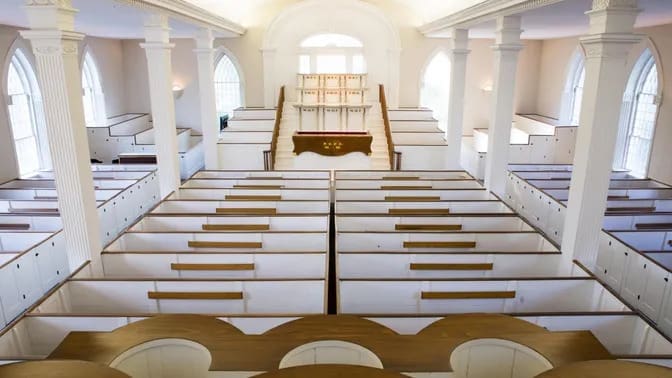
One hundred and ninety years ago, in a remarkable series of visions inside the newly dedicated Kirtland Temple, Joseph Smith and Oliver Cowdery received the keys of temple work. This series of three articles seeks to increase understanding of the priesthood keys restored on that occasion. It includes excerpts from The Heart of Our Covenants: Temple Principles that Draw Us unto Christ by Valiant K. Jones. Used by permission. See www.valiantjones.com or www.cedarfort.com.
This is part 3 of 3.
See the first part article in this series here.
See the second part article in this series here.
This series of articles has expounded on the remarkable series of visions that occurred in the Kirtland Temple on April 3, 1836. The reception of priesthood keys on this occasion was a culmination of a series of restoration experiences. The following table summarizes the most significant of the priesthood restoration events of this dispensation.
Priesthood Restoration Events for Joseph Smith and Oliver Cowdery
| Restorer | When | Where | Purpose and Keys Restored |
| John the Baptist | May 15, 1829 | On the banks of the Susquehanna River, near Harmony, Pennsylvania | Aaronic Priesthood: the keys of the ministering of angels and of repentance and baptism (see D&C 13) |
| Peter, James, and John | Most likely in late May 18291 | In the wilderness between Harmony and Colesville, Pennsylvania (see D&C 128:20) | Melchizedek Priesthood: the keys of spiritual blessings, including the Holy Ghost, and the keys of church administration (see D&C 27, 84, 107) |
| Moses | April 3, 1836 | Temple in Kirtland, Ohio | The keys of the gathering of Israel (see D&C 110) |
| Elias | April 3, 1836 | Temple in Kirtland, Ohio | The keys of the Abrahamic covenant including eternal marriage (see D&C 110) |
| Elijah | April 3, 1836 | Temple in Kirtland, Ohio | The keys of sealing for all ordinances for the living and the dead (see D&C 110) |
Let us review the succession of the receipt of these priesthood keys and see how they build on one another. John the Baptist first appeared to Joseph Smith and Oliver Cowdery to “confer the Priesthood of Aaron, which holds the keys of the ministering of angels, and of the gospel of repentance, and of baptism by immersion for the remission of sins” (D&C 13:1). Next, Peter, James, and John restored the Priesthood of Melchizedek, which holds the “keys of all the spiritual blessings of the church” (D&C 107: 18), including the gift of the Holy Ghost. They also “committed the keys of the kingdom, and a dispensation of the gospel for the last times” (D&C 27:13). Furthermore, “this greater priesthood administereth the gospel and holdeth the key of the mysteries of the kingdom, even the key of the knowledge of God” (D&C 84:19).
At this point, Joseph and Oliver possessed the keys and authority to perform all the ordinances of salvation, but they lacked the authority to spread this work of salvation globally. Moses came and filled this gap, providing “the keys of the gathering of Israel from the four parts of the earth” (D&C 110:11). Joseph and Oliver also lacked the keys and authority necessary to perform the exaltation ordinances of the endowment and eternal marriage. This was remedied with the bestowal of the keys of the Abrahamic covenant by Elias who “committed the dispensation of the gospel of Abraham” (D&C 110:12).
The keys and authority necessary to perform all ordinances had now been restored; however, this was still not enough. Up to this point, any ordinances were provisional and could only be performed for the living. Additional keys were needed to be able to seal the eternal validity of these ordinances in heaven and to make it possible to perform the same ordinances for the dead. These keys were restored by Elijah who restored keys “to turn the hearts of the fathers to the children, and the children to the fathers, lest the whole earth be smitten with a curse” (D&C 110:15).
We might ask why Jesus could not have conferred all these priesthood keys Himself. Certainly He held all priesthood keys, so surely, He could have. However, Christ respects and honors those He calls into stewardship under Him, and He provides opportunities for participation and personal growth as broadly as He can.
Similar to Joseph and Oliver, Christ’s apostles Peter, James, and John received priesthood keys from Moses and Elijah on the Mount of Transfiguration (see Mathew 17, Mark 9, and Luke 9). These two Old Testament prophets had gone to heaven without tasting death, allowing them to be able to return and corporally lay their hands on the heads of Peter, James, and John for the transmission of priesthood keys before Christ broke the bands of death and made resurrection possible. In addition, Joseph Smith has implied that John the Baptist was present.2 However, the Baptist could only have been there in spirit since he had recently died (see Matthew 14:1-12). Therefore, his presence could not have been for the transfer of his keys. That transfer of Aaronic Priesthood keys, although not recorded in the New Testament, had undoubtedly occurred while John the Baptist was living. Perhaps the Baptist came, in spirit, to the Mount of Transfiguration in order to be instructed by Jesus on the future transfer of the priesthood keys that everyone present would participate in 1800 years later: Jesus, John the Baptist, Peter, James, John, Moses, and Elijah.
We might wonder why the keys of Moses, Elias, and Elijah needed to be restored to Joseph Smith, since the work of the priesthood was already under way by the time they came. Their visits occurred in April of 1836, yet the Church had been organized in April of 1830. During the intervening six years, many members had been baptized and received the gift of the Holy Ghost, and many brethren had been ordained to the priesthood. Were these ordinances performed on earth without being sealed in heaven? Also, Samuel Smith had already been set apart in June of 1830 as the first official missionary of the Church, and he had already been sharing copies of the Book of Mormon throughout New England.3 Was this not the start of the gathering of Israel? Furthermore, Joseph Smith had received some degree of revelation regarding eternal marriage as early as 1831,4 and he performed anointings in the upper rooms of the incomplete temple in January of 1836.5
Clearly, the spirit of the restoration of the priesthood keys was already at work on the earth before Moses, Elias, and Elijah appeared. However, all of those early events were very limited in scope. Until the final restoration of the priesthood keys in the Kirtland temple, those actions and ordinances were only provisional. The Lord was laying the foundation of the restoration line upon line and precept upon precept. The work of gathering Israel and the work of forming eternal families could not expand beyond their early limited scopes until all priesthood keys were restored. In addition, the work of salvation for the dead could not and did not occur until after Elijah’s visit.
It appears that Joseph Smith was able to take those initial steps to begin the work of salvation under the authority of the Melchizedek priesthood and the mantle of his prophetic calling. This preliminary authority may have been what Joseph and Oliver received as a pronouncement from God when “the voice of God in the chamber of old Father Whitmer, in Fayette, Seneca county” (D&C 128:21) instructed them on steps to take to establish the Church. In his 1838 history, Joseph Smith placed this sacred, authorizing event shortly after the visit of John the Baptist.6 BYU professor Michael Hubbard MacKay has researched this event and suggested that it brought priesthood authority to Joseph before the bestowal of the keys of the Melchizedek Priesthood by Peter, James, and John.7
Clearly, the scope of Joseph’s early priesthood efforts was limited until he received the fulness of priesthood keys in the Kirtland temple. It is interesting to note that the quorum of the Twelve Apostles had only been established less than a year prior to the restoration of these priesthood keys, and their missionary endeavors had not yet extended beyond short, regional missions in North America. The foundation was being laid so that Joseph could share these keys with the new apostles. After these keys were restored, Joseph started sending missionaries to distant nations across the oceans.8 All of the priesthood keys necessary to direct the work of salvation for the living and the dead were once again upon the earth.
President Packer taught, “Elijah came . . . and bestowed the keys of the sealing power. Thereafter ordinances were not tentative, but permanent. The sealing power was with us. No authorization transcends it in value. That power gives substance and eternal permanence to all ordinances performed with proper authority for both the living and the dead.”9
Restored Keys Extend Christ’s Atonement to All
Because of the events at the Kirtland Temple on April 3, 1836, the restored keys of Moses, Elias, and Elijah are now carried out as a unified system of priesthood ordinances in hundreds of temples scattered throughout the world. The purpose of these keys is to expand the reach of the Atonement of Jesus Christ to everyone who has ever lived upon the earth.
The Prophet Joseph Smith explained why this work is so important: “The greatest responsibility in this world that God has laid upon us is to seek after our dead. The apostle says, ‘They without us cannot be made perfect;’ (Hebrews 11:40) for it is necessary that the sealing power should be in our hands to seal our children and our dead for the fulness of the dispensation of times . . . . It is necessary that those who are going before and those who come after us should have salvation in common with us; and thus hath God made it obligatory upon man. Hence, God said, ‘I will send you Elijah the prophet before the coming of the great and dreadful day of the Lord: he shall turn the heart of the fathers to the children, and the heart of the children to their fathers, lest I come and smite the earth with a curse.’ (Malachi 4:5.)”10
Without the keys restored by Moses, Elias, and Elijah, “the whole earth would be utterly wasted at [Christ’s] coming” (D&C 2:3). But now, through the great work of gathering Israel on both sides of the veil, and through temple work performed under the keys of Elias and Elijah for the living and the dead, the purpose of the creation of the earth is being fulfilled, and Christ will not need to smite it with a curse when He comes. Instead, He will be joyful knowing that the earth’s purpose has been fulfilled, facilitated by the restoration of priesthood keys.
These keys of the priesthood continue with us today. At the time of the death of Joseph Smith, most of the twelve apostles were away on missions. Apostle Wilford Woodruff and quorum president Brigham Young were in New England, and they met together in Boston shortly after learning of the martyrdom. Later, when President Woodruff was prophet himself, he recounted the following memory of that occasion:
“We were overwhelmed with grief and our faces were soon bathed in a flood of tears. … After we had done weeping we began to converse together concerning the death of the prophets [Joseph and Hyrum Smith]. In the course of the conversation, [Brigham] smote his hand upon his thigh and said, ‘Thank God, the keys of the kingdom are here.’ . . .
“President Young . . . referred to the last instructions at the last meeting we had with the Prophet Joseph before starting on our mission. . . . On that occasion the Prophet Joseph rose up and said to us: ‘Brethren, I have desired to live to see this temple built. I shall never live to see it, but you will. I have sealed upon your heads all the keys of the kingdom of God. I have sealed upon you every key, power, principle that the God of heaven has revealed to me. Now, no matter where I may go or what I may do, the kingdom rests upon you.’ . . .
“The keys of the kingdom of God are here, and they are going to stay here, too, until the coming of the Son of Man. Let all Israel understand that. They may not rest upon my head but a short time, but they will then rest on the head of another Apostle, and another after him, and so continue until the coming of the Lord Jesus Christ in the clouds of heaven.”11
We are blessed to have these keys with us today, held active and viable by a living prophet who is a modern apostle of Jesus Christ. It is under the direction of these keys that sacred priesthood ordinances are now performed in temples throughout the earth.
President Nelson said, “Consider how your life would be different if priesthood keys had not been restored to the earth. Without priesthood keys, you could not be endowed with the power of God. Without priesthood keys, the Church could serve only as a significant teaching and humanitarian organization but not much more. Without priesthood keys, none of us would have access to essential ordinances and covenants that bind us to our loved ones eternally and allow us eventually to live with God.
“Priesthood keys distinguish The Church of Jesus Christ of Latter-day Saints from any other organization on earth. Many other organizations can and do make your life better here in mortality. But no other organization can and will influence your life after death.
“Priesthood keys give us the authority to extend all of the blessings promised to Abraham to every covenant-keeping man and woman. Temple work makes these exquisite blessings available to all of God’s children, regardless of where or when they lived or now live. Let us rejoice that priesthood keys are once again on the earth!”12
We do rejoice! We are blessed to live in a time when these priesthood keys are active on the earth, allowing us to participate in the work of salvation and exaltation on both sides of the veil. Besides maintaining our own personal righteousness, there is no better way to show our love for Jesus Christ and to prepare for His Second Coming than to gather the children of Israel under the direction of these priesthood keys so that all have the opportunity to progress along the covenant path toward exaltation.
I Shall Love Thee Better after Death
Many poets have written about a romantic love that will last forever. Eternal love has been a topic of sonnets, songs, and poems throughout all literature. Such longings speak to one of the deepest and most profound emotions men and women experience. However, simply declaring one’s love for another person will not create a bond that will last throughout eternity. Only sealing ordinances administered through priesthood keys will do that.
In her sonnet, “How Do I Love Thee,” Elizabeth Barrett Browning wrote, “How do I love thee? Let me count the ways./ . . . I love thee with the breath,/ Smiles, tears, of all my life; and, if God choose,/ I shall but love thee better after death.13
Desires expressed in poems and songs cannot create bonds that will be sanctioned by God throughout eternity. A person may claim, “I shall but love thee better after death,” but this is only possible if two conditions are met. First, a couple must have an eternal marriage that is solemnized by an authorized temple sealer who has been set apart under the delegated authority of the living prophet of God. And second, that couple must embrace their temple covenants in such a way that those covenants start to change their natures. Only through living our temple covenants can we become sanctified in Christ and have our marriage “sealed by the holy spirit of promise” (D&C 132:7). That process may not be completed in this life, but if we will stay on the path—the covenant path—it will eventually be achieved with the help and grace of Jesus Christ.
This is why the keys of temple work matter. They create the foundation of sanctioned authority upon which eternal marriages can be established as well as the covenant environment in which eternal family relationships can flourish. In his own poetic prose, Elder Parley P. Pratt described the feelings he experienced when he first learned the doctrine of eternal families and the joy that came to him from knowing these eternal truths:
“It was Joseph Smith who taught me how to prize the endearing relationships of father and mother, husband and wife; of brother and sister, son and daughter. It was from him that I learned that the wife of my bosom might be secured to me for time and all eternity; and that the refined sympathies and affections which endeared us to each other emanated from the fountain of divine eternal love. It was from him that I learned that we might cultivate these affections and grow and increase in the same to all eternity . . . .
“I had loved before, but I knew not why. But now I loved—with a pureness—an intensity of elevated, exalted feeling, which would lift my soul from the transitory things of this groveling sphere and expand it as the ocean. I felt that God was my heavenly Father indeed; that Jesus was my brother, and that the wife of my bosom was an immortal, eternal companion . . . . I could now love with the spirit and with the understanding also.”14
This eternal love, so beautifully described by Elder Pratt, is possible because of the sacred temple keys that were restored in the Kirtland temple on April 3, 1836. What a blessing to have these keys effective today under the direction of a living prophet of God in hundreds of temples throughout the world. Like Elder Pratt, I, too, am grateful to be sealed to the wife and children of my bosom for eternity. Only in the Church of Jesus Christ of Latter-day Saints are these eternal blessings available because of the restoration of the sacred priesthood keys of temple work. This is the foundation for a love that truly will be “better after death.”
Valiant K. Jones is the author of The Heart of Our Covenants: Temple Principles that Draw Us unto Christ. For more information, see www.valiantjones.com
Footnotes
1 Larry C. Porter, “The Restoration of the Aaronic and Melchizedek Priesthoods,” Ensign, December 1996, churchofjesuschrist.org/study/ensign/1996/12/the-restoration-of-the-aaronic-and-melchizedek-priesthoods?lang=eng. In June 1829, Joseph Smith received D&C 18, which stated that Oliver Cowdery and David Whitmer were to be called as apostles (verse 9) and were to select additional members of that quorum. This implies that the Melchizedek Priesthood had already been restored by that time.
2 The Joseph Smith Translation of Mark 9:3 says, “And there appeared unto them Elias with Moses, or in other words, John the Baptist and Moses,” and under “Elias” in the Bible Dictionary says, “The curious wording of JST Mark 9:3 does not imply that the Elias at the Transfiguration was John the Baptist, but that in addition to Elijah the prophet, John the Baptist was present.”
3 Ryan Carr, “The First Latter-day Missionary,” New Era, Sept. 2004, lds.org/new-era/2004/09/the-first-latter-day-missionary?lang=eng.
4 The heading to D&C 132 says, “Evidence indicates that some of the principles involved in this revelation [on Eternal Marriage] were known by the Prophet as early as 1831.”
5 Richard O. Cowan, “The Unfolding Restoration of Temple Work,” Ensign, Dec. 2001, lds.org/ensign/2001/12/the-unfolding-restoration-of-temple-work?lang=eng.
6 Joseph Smith, History, 1838–1856, volume A-1 [23 December 1805–30 August 1834], p. 27, The Joseph Smith Papers, josephsmithpapers.org/paper-summary/history-1838-1856-volume-a-1-23-december-1805-30-august-1834/33.
7 Michael Hubbard MacKay, “Event or Process? How “the Chamber of Old Father Whitmer” Helps Us Understand Priesthood Restoration,” BYU Studies Quarterly, Vol. 60, No. 1, 2021, p. 73, byustudies.byu.edu/article/event-or-process-how-the-chamber-of-old-father-whitmer-helps-us-understand-priesthood-restoration/.
8 “Chapter 24 Truth Shall Prevail,” Saints Volume 1, site.churchofjesuschrist.org/study/history/saints-v1/24-truth-shall-prevail?lang=eng.
9 Boyd K. Packer, “Ordinances,” ibid.
10 Joseph Smith Jr., Teachings of the Prophet Joseph Smith, p. 356; see also Joseph Smith Jr., “Chapter 41: Becoming Saviors on Mount Zion,” ibid.
11 Wilford Woodruff, “The Keys of the Kingdom,” Ensign, April 2004, churchofjesuschrist.org/study/ensign/2004/04/the-keys-of-the-kingdom?lang=eng.
12 Russell M. Nelson, “Rejoice in the Gift of Priesthood Keys,” Liahona, May 2024, churchofjesuschrist.org/study/liahona/2024/05/57nelson?lang=eng.
13 Elizabeth Barrett Browning, “How Do I Love Thee? (Sonnet 43),” Academy of American Poets, accessed October 20, 2024, poets.org/poem/how-do-i-love-thee-sonnet-43.
14 Parley P. Pratt, “He Taught Me the Heavenly Order of Eternity,” Ensign, August 2015, churchofjesuschrist.org/study/ensign/2015/08/he-taught-me-the-heavenly-order-of-eternity?lang=eng; formatting modified.
Elijah, the Sealing Powers, and the Kirtland Temple
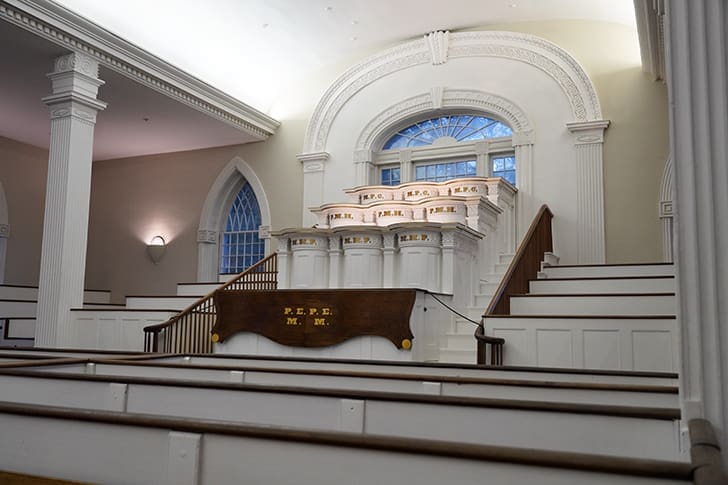
One hundred and ninety years ago, in a remarkable series of visions inside the newly dedicated Kirtland Temple, Joseph Smith and Oliver Cowdery received the keys of temple work. This series of articles seeks to increase understanding of the priesthood keys restored on that occasion. It includes excerpts from The Heart of Our Covenants: Temple Principles that Draw Us unto Christ by Valiant K. Jones. Used by permission. See www.valiantjones.com or www.cedarfort.com.
This is part 2 of 3. See the previous article in this series here
Work for the dead was not performed on the earth until after Christ initiated the preaching of the gospel to the spirits in prison at the time of His death. No proxy work for the dead could occur until after Christ opened the door for this by doing the greatest proxy work of all—atoning for our sins. Peter wrote, “For Christ also hath once suffered for sins, the just for the unjust, that he might bring us to God, being put to death in the flesh, but quickened by the Spirit: by which also he went and preached unto the spirits in prison; which sometime were disobedient . . . For for this cause was the gospel preached also to them that are dead, that they might be judged according to men in the flesh, but live according to God in the spirit” (1 Peter 3:18–20, 4:6).
President Joseph F. Smith’s vision of the spirit world makes it clear that, when Christ died, the dead “were assembled awaiting the advent of the Son of God into the spirit world” (D&C 138:16), apparently with no change in the status of each since their deaths. Christ arrived and organized the faithful to be teachers to those who were in darkness. President Smith described how the Lord initiated this work of redemption of the dead: “I perceived that the Lord went not in person among the wicked and the disobedient who had rejected the truth, to teach them; but behold, from among the righteous, he organized his forces and appointed messengers, clothed with power and authority, and commissioned them to go forth and carry the light of the gospel to them that were in darkness, even to all the spirits of men; and thus was the gospel preached to the dead. . . . Thus was it made known that our Redeemer spent his time during his sojourn in the world of spirits, instructing and preparing the faithful spirits of the prophets who had testified of him in the flesh; that they might carry the message of redemption unto all the dead” (D&C 138:29-30, 36-37).
Christ’s ministry in the spirit world had to occur before authorized proxy ordinances for the dead could be performed on earth. The Bible Dictionary entry for “Temple” confirms this, declaring: “From Adam to the time of Jesus, ordinances were performed in temples for the living only. After Jesus opened the way for the gospel to be preached in the world of spirits, ceremonial work for the dead, as well as for the living, has been done in temples on the earth by faithful members of the Church.”1
Confirming this, President Nelson taught, “From the days of Adam to the meridian of time, temple ordinances were performed for the living only. Ordinances for the dead had to await the Atonement and postmortal ministry of the Savior.”2 This same principle also was taught by President Brigham Young3 and President Joseph Fielding Smith.4 Understanding that temple ordinances were performed only for the living until after Christ’s resurrection will help us understand the keys of Elijah.
Elijah’s Keys Seal All Ordinances for the Living
We often say that Elijah brought the sealing keys of temple work for the dead, and this is true; however, since proxy temple work for the dead did not occur until after the resurrection of Jesus, what purpose did these keys fulfill in Old Testament times? The answer lies in the dual nature of these keys: They apply to ordinances performed both for the living and for the dead. Elijah’s keys seal in heaven all priesthood ordinances performed on earth, regardless of which side of the veil the souls reside on when they are named in the ordinances.
The way in which the sealing keys of Elijah were used in his day was to make sure all ordinances done for the living applied eternally. For priesthood ordinances to apply eternally, they must be performed under the direction of a prophet or apostle who holds the sealing keys of Elijah. Regarding these keys, the Prophet Joseph Smith declared, “It may seem to some to be a very bold doctrine that we talk of—a power which records or binds on earth and binds in heaven. Nevertheless, in all ages of the world, whenever the Lord has given a dispensation of the priesthood to any man by actual revelation, or any set of men, this power has always been given” (D&C 128:9).
One of the defining characteristics of the Great Apostasy was the loss of these sealing keys. The Catholic Church claims an unbroken line of authority from their popes back to Peter. However, even if the earliest popes, who were serving as bishops in Rome, could trace their priesthood ordinations to Peter, this would not be enough. All priesthood ordinances must be performed under the direction of a prophet or apostle who holds proper priesthood keys. The eventual lack of oversight by an authorized apostle on the earth who possessed the keys of Elijah means that any ordinances performed during that absence would not be recognized by God and would not be sealed in heaven. This is why Elijah had to return from heaven to restore those sealing keys to Joseph Smith.
President Boyd K. Packer described the keys of Elijah, explaining “The sealing power . . . gives substance and eternal permanence to all ordinances performed with proper authority for both the living and the dead.”5 This was first taught by Joseph Smith, who said, “Why send Elijah? Because he holds the keys of the authority to administer in all the ordinances of the priesthood; and without the authority is given, the ordinances could not be administered in righteousness.”6 As BYU professor Mark Mathews explained, “Sealing power is the authority to preside over and seal all ordinances of the temple and all ordinances for the living and the dead.”7
President Joseph Fielding Smith elaborated on this doctrine as follows: “Elijah restored to this Church . . . the keys of the sealing power; and that sealing power puts the stamp of approval upon every ordinance that is done in this Church and more particularly those that are performed in the temples of the Lord. . . . Some members of the Church have been confused in thinking that Elijah came with the keys of baptism for the dead or of salvation for the dead. Elijah’s keys were greater than that. They were the keys of sealing, and those keys of sealing pertain to the living and embrace the dead who are willing to repent.”8
President Smith also taught, “This priesthood holds the keys of binding and sealing on earth and in heaven of all the ordinances and principles pertaining to the salvation of man, that they may thus become valid in the celestial kingdom of God.”9
In summary, the way the sealing power of Elijah functions for the living is to assure that ordinances performed under proper priesthood authority on earth are recognized by God in heaven, giving them eternal permanence. For this reason, under “Elijah” in the Bible Dictionary we read, “The power of Elijah is the sealing power of the priesthood by which things bound or loosed on earth are bound or loosed in heaven. Thus the keys of this power are once again operative on the earth and are used in performing all the ordinances of the gospel for the living and the dead.”10 The way in which Elijah’s keys apply to ordinances for the dead will be discussed next.
Elijah’s Keys Extend Exalting Ordinances to the Dead
After Christ broke open the doors of spirit prison, an additional purpose for those keys became viable: The sealing keys of Elijah could then also be used to validate in heaven saving ordinances performed by proxies on earth for those who had already died without those ordinances but later repented and accepted Christ in the spirit world. During His ministry, Jesus Christ explained to Peter that he would receive the priesthood keys of the sealing power for his dispensation, saying, “And I will give thee the keys of the kingdom of heaven: and whatsoever thou shalt bind on earth shall be bound in heaven: and whatsoever thou shalt loose on earth shall be loosed in heaven” (Matthew 16:19). Christ later reiterated this, saying, “Verily I say unto you, Whatsoever ye shall bind on earth shall be bound in heaven: and whatsoever ye shall loose on earth shall be loosed in heaven” (Matthew 18:18).
Notice that the Lord told Peter, “I will give thee.” Christ fulfilled this promise when he took Peter, James, and John to the Mount of Transfiguration and presided over the transfer of priesthood keys from Moses and Elijah to these three leading apostles (see Matthew 17, Mark 9, and Luke 9). Also notice the use of the term whatsoever. Under the keys of Elijah, all saving ordinances performed on earth are sealed as permanent, eternal, and binding in heaven, as previously explained.
In addition, Peter learned that in his dispensation a particular new use for the keys of Elijah would be initiated: After the resurrection of Jesus Christ, Peter and his fellow apostles would be able to employ Elijah’s sealing keys in proxy ordinance work for the dead. It should not surprise us to find that it is an epistle from Peter that explains the preaching of the gospel in the spirit prison (see 1 Peter 3:18-20, 4:6). The foundation for Peter’s understanding of the doctrine of work for the dead undoubtedly came from his experience on the Mount of Transfiguration.
Joseph Smith likewise received a foundation for his understanding of the doctrine of work for the dead when he received from Elijah those same keys for his dispensation in the Kirtland Temple. Joseph continued to learn through revelation more about work for the dead until it became a primary focus of his life during his final years in Nauvoo. The Prophet taught how members of the Church in this last dispensation are to participate in fulfilling the mission of Elijah through the keys that the ancient Tishbite restored, declaring, “How are [the saints] to become saviors on Mount Zion? By building their temples, erecting their baptismal fonts, and going forth and receiving all the ordinances, baptisms, confirmations, washings, anointings, ordinations and sealing powers upon their heads, in behalf of all their progenitors who are dead, and redeem them that they may come forth in the first resurrection and be exalted to thrones of glory with them; and herein is the chain that binds the hearts of the fathers to the children, and the children to the fathers, which fulfills the mission of Elijah.”11
Joseph Smith also taught, “The doctrine or sealing power of Elijah is as follows: —If you have power to seal on earth and in heaven, then we should be wise. The first thing you do, go and seal on earth your sons and daughters unto yourself, and yourself unto your fathers in eternal glory.”12 Notice that the Prophet spoke of two separate sealing experiences—one to your children and another to your fathers or ancestors. The way to “seal on earth your sons and daughters unto yourself” is by being married in the temple so that your children are born in the covenant, or, if they are already born, by having them sealed to you after you are sealed to your spouse in a temple marriage. Such marriages and sealings for the living are performed under the keys of Elias. And the way to seal “yourself unto your fathers” is by performing proxy marriages and sealings for your deceased ancestors. Such ordinances for the dead are possible because of the additional keys of Elijah.
What glorious, good news we find in the combination of this gospel of Abraham and this doctrine of Elijah! A temple marriage for the living will bind a couple’s children to them eternally, for they are born in the covenant—the Abrahamic covenant. However, there is little value in being sealed to those who come in the future if we are not also sealed to those in the past through the keys of Elijah. Without this ability to form sealing links backward, the purposes of the earth would be wasted at the Lord’s second coming (see D&C 2:1-3). Joseph Smith wrote, “These are principles in relation to the dead and the living that cannot be lightly passed over, as pertaining to our salvation. For their salvation is necessary and essential to our salvation, as Paul says concerning the fathers—that they without us cannot be made perfect—neither can we without our dead be made perfect” (D&C 128:15).
Joseph exulted in the restoration of these priesthood keys in his dispensation, writing, “Let your hearts rejoice, and be exceedingly glad. Let the earth break forth into singing. Let the dead speak forth anthems of eternal praise to the King Immanuel, who hath ordained, before the world was, that which would enable us to redeem them out of their prison; for the prisoners shall go free” (D&C 128:22).
Sometimes when we want something to be held very securely, we give keys to two different individuals and require that both come and bring their separate keys to unlock a treasure. This is true of Elias and Elijah. If the keys of Elias enabled eternal marriage for the living, this only unlocked part of the treasure of eternal families. Elijah had to follow and bring his keys to not only validate ordinances for the living, but to also make proxy priesthood ordinances effective for the dead so that the living and the dead could be connected in eternal family bonds.
No wonder the building of temples and the work of salvation and exaltation for the dead is moving forward in our day at such a fantastic pace. These efforts are part of President Nelson’s invitation to “help gather Israel on both sides of the veil.”13 He has said, “That gathering is the most important thing taking place on earth today. Nothing else compares in magnitude, nothing else compares in importance, nothing else compares in majesty. And if you choose to, if you want to, you can be a big part of it. You can be a big part of something big, something grand, something majestic!”14
To be continued…
Valiant K. Jones is the author of The Heart of Our Covenants: Temple Principles that Draw Us unto Christ. For more information, see www.valiantjones.com or www.cedarfort.com.
Footnotes
1 “Temple,” Bible Dictionary, lds.org/scriptures/bd/temple?lang=eng.
2 Russell M. Nelson, “The Spirit of Elijah,” Ensign, November 1994, churchofjesuschrist.org/study/ensign/1994/11/the-spirit-of-elijah?lang=eng.
3 Brigham Young, “Our Relatives, Those Who Do the Will of God, etc.” Journal of Discourses, Vol. 4, p. 285, March 15, 1857, jod.mrm.org/4/279
4 Joseph Fielding Smith, Doctrines of Salvation, Vol. 2, pp. 320-321.
5 Boyd K. Packer, “Ordinances,” BYU Speeches, February 3, 1980, speeches.byu.edu/talks/boyd-k-packer/ordinances/.
6 Joseph Smith Jr., Teachings of the Prophet Joseph Smith, p. 172, scriptures.byu.edu/tpjs/STPJS.pdf; emphasis added.
7 Mark Mathews, “Understanding Priesthood Keys in Leadership | An Interview with Mark Mathews,” Leading Saints Podcast, Leading Saints, Sept 23, 2018, timestamp 33:44, leadingsaints.org/understanding-priesthood-keys-in-leadership/.
8 Joseph Fielding Smith, Doctrines of Salvation, Vol. 3, pp. 129-130; see also Joseph Fielding Smith, “Chapter 17: Sealing Power and Temple Blessings.” Teachings of Presidents of the Church: Joseph Fielding Smith, churchofjesuschrist.org/study/manual/teachings-of-presidents-of-the-church-joseph-fielding-smith/chapter-17-sealing-power-and-temple-blessings?lang=eng.
9 Joseph Fielding Smith, Doctrines of Salvation, Vol. 2, p. 117.
10 “Elijah,” Bible Dictionary, churchofjesuschrist.org/study/scriptures/bd/elijah?lang=eng.
11 Joseph Smith Jr., Teachings of the Prophet Joseph Smith, p. 330; see also Joseph Smith Jr., “Chapter 41: Becoming Saviors on Mount Zion,” Teachings of Presidents of the Church: Joseph Smith, churchofjesuschrist.org/study/manual/teachings-joseph-smith/chapter-41?lang=eng.
12 Joseph Smith Jr., Teachings of the Prophet Joseph Smith, p. 340; see also Joseph Smith Jr., “Chapter 26: Elijah and the Restoration of the Sealing Keys,” Teachings of Presidents of the Church: Joseph Smith, lds.org/manual/teachings-joseph-smith/chapter-26?lang=eng.
13 Russell M. Nelson, “Sisters’ Participation in the Gathering of Israel,” Ensign, November 2018,
14 Russell M. Nelson, “Hope of Israel,” ibid.
Becoming Brigham, Episode 12 — Why did Joseph Smith put Nauvoo under martial law?

Our hosts return to Nauvoo to explore the tragic events of June 1844 leading up to Joseph Smith’s martyrdom. John Wilson interviews local historian Joseph Johnstun, who explains how these tensions escalated into calls for violence. Meanwhile, Camrey and Dan visit the Mansion House to discuss Joseph and Emma Smith’s relationship and their heart-wrenching final days, as well as to delve into Joseph’s painful decision to return to Nauvoo—knowing it likely would mean his death.
The Joseph Smith Translation: Study, Pray, & Obey; A Personal Journey
Successful people follow a set of principles aligned with their specific goals. Often those principles are defined by an expression, a mantra, or set of mantras, relative to the objectives they were trying to accomplish. In the Church we have our own mantras such as “Come Follow Me” or “Hear Him,” which stimulate and focus our minds and souls on the Savior. These expressions are designed to help us keep the Savior forefront and active in our hearts and minds as we pursue our personal mortal journey. Perhaps another guiding mantra worthy of our consideration would be “Study, Pray, and Obey.”
In this Church we have been taught that in order to obtain a kingdom of glory we must become perfect. Presumably, that means that we must become Celestially perfect, Terrestrially perfect, or Telestially perfect to enter into whatever kingdom our behavior in this mortal sojourn qualifies us for. This can be a stressful thing to contemplate. It is particularly so when we realize that no mortal person is perfect nor will they be in this second act of the three act play we call the Plan of Salvation. While not a discussion to pursue here, D&C 93:38 does provide one interesting view on a possible reason for the far-reaching effects of the Atonement and why our role as actors in this play is essential.
My first encounter with this overwhelming objective of becoming perfect came as a young man attending Seminary. It was more than my adolescent mind could deal with at the time. A sashay into D&C 82:7 almost derailed any optimism. It reads “And now, verily I say unto you, I, the Lord, will not lay any sin to your charge; go your ways and sin no more; but unto that soul who sinneth shall the former sins return, saith the Lord your God.” (italics and bolding are mine) How could a person be expected to achieve perfection when each time we sin, “the former sins return”? It seemed like trying to pay down a credit card at 29% interest. You might pay a large monthly sum, but depending on what you owe, it can go up faster than you can pay it down.
As Gospel maturity gradually made its appearance, it became apparent that none of us were ever going to achieve that complete, and required, perfection in this life. However, something else began to appear. The reason “the former sins return” had everything to do with the word obey. The pattern, Study, Pray, and Obey began to take shape.
When we encounter the phrase “but unto that soul who sinneth shall the former sins return” our hearts may sink. But simply put, whenever we sin or transgress, we are in disobedience of God’s commands, His laws. In other words, disobedience is the sin. Therefore, when we repent of a sin and return even to a different one, “the former sins return” because we are once again disobedient. One could look at obey as the only command God has ever really given to us.
Much of what we generally call commandments were given as a result of disobedience to God’s instructions that He had previously given to His Prophets. The nature of disobedience may vary, as well as the relative consequences, but regardless, we fail the test of perfection required to enter any kingdom of glory through disobedience. When considered in the light of the Gospel it is also clear that through the atonement of Jesus Christ, and sincere repentance, we can escape the just consequences of almost any disobedience. Somehow, in a way no mortal fully understands, Jesus’ atonement, through sincere repentance, compensates for disobedience.
Such thinking led to a logical next step. What if we could become of an obedient nature? Then any significant decisions we faced would simply require us to study it out and pray for strength to identify and follow the obedient path. Having an obedient nature would tend to push us in the proper direction. When faced with more general experiences we would have already identified the proper response and our obedient nature could again serve to propel us in the right direction. Can we submit to the Lord our heart and soul in such a way as to allow Him to change us from the “natural man” to a “saint”? He can change our fundamental nature if we will allow Him to help us do so.
Missionary service gave a new perspective into this yet undeveloped mantra. In the missionary discussions, potential converts were committed to study, pray, and attend Church. Attending Church was simply an act of obedience. That pattern solidified the expression. We must study the words of the Lord to his prophets, pray to obtain a testimony and gain strength to follow the truths we learn, and then obey those truths to the best of our ability. It all began to fit!
All these thoughts and experiences prompted a deeper study into why the Lord would give a commandment, to be perfect, that He knew was impossible for us to achieve in this life. Gradually, through study, prayer, then doing our best to obey, it becomes more apparent. It is also some relief to note that Moroni teaches in Ether 12:27, “And if men come unto me I will show unto them their weakness. I give unto men weakness that they may be humble; and my grace is sufficient for all men that humble themselves before me; for if they humble themselves before me, and have faith in me, then will I make weak things become strong unto them.” (italics are mine) God actually gave us some of the weaknesses we have and stands by to help us develop strength to overcome them.
We wouldn’t presume to attribute all our weaknesses to God, nor would it be appropriate to presume that God gave weaknesses of an evil nature. It does appear that He gave each of us a fundamental set of flaws that would makes us stronger if we overcame them. Again the pattern to overcome those weaknesses is the same. We study the scriptures to understand God’s will, pray for strength and direction to work through those difficulties, and obey the promptings of the Holy Ghost to conquer them. While perfection may not completely occur in this mortal life, there are areas where it can be achieved. We can be perfect at saying our prayers. Most of us can be perfect payers of tithes and offerings. Most can be perfect at not murdering anyone. We can obey the Word of Wisdom perfectly. Attending Church, serving and numerous other character traits can become perfect. The pattern “Study, Pray, and Obey” continues to emerge. It is a cyclic thing.
Only through study of the words of the Savior and His prophets, combined with meaningful prayer for strength and insight, and obedience to the truths we learn, can we obtain the assurance that the course we are pursuing, though not perfect, is acceptable to God. We must study “…that you [we] may be instructed more perfectly in theory, in principle, in doctrine, in the law of the gospel, in all things that pertain unto the kingdom of God, that are expedient for you to understand;” (D&C 88:78) and continue to “Search the scriptures; for in them ye think ye have eternal life: and they are they which testify of me.” (John 5:39) We must “Pray always, lest you enter into temptation and lose your reward.”, (D&C 31:12) Finally we must “… Obey my voice, and I will be your God, and ye shall be my people: and walk ye in all the ways that I have commanded you, that it may be well unto you.” (Jeremiah 7:23)
It should be obvious to us by now that in surrendering our will to God we become more closely aligned to the Savior. It was Jesus who declared that He came “not to do mine own will, but the will of him that sent me” (John 6:38). He also taught us that if we do [obey] His will, we would know “of the doctrine, whether it be of God, or whether I speak of myself.” (John 7:17) If a being so strong, so powerful, and so perfect as Jesus Christ could voluntarily submit himself to the will of the Father, is it not likely that if we were to do the same, the very nature of our being would be transformed as well?
Let us turn to some of the words of Joseph Smith and his namesake Joseph who was sold into Egypt.
On March 7, 1831, Joseph Smith received the revelation found in D&C 45. In that revelation, and almost parenthetically, the Lord in verses 60-62 instructed Joseph to cease translating the Genesis chapter he was engaged with and begin working on the New Testament. The Lord further indicated that in doing so, he would “be prepared for the things to come” and “that great things await you.” By the time he received this revelation, Joseph had worked his way to Genesis 24:41.
By this time Joseph had learned a great deal about obeying the Lord. The day following receipt of D&C 45, March 8, 1831, he immediately began his translation of Matthew Chapter 1, in the New Testament. He did not return to work in the Old Testament until some 16 months later in July 1832. This quickness to obey the Lord’s commands had become a mantra for Joseph. Later, in November 1834, he wrote: “No month ever found me more busily engaged than November [1834]; but as my life consisted of activity and unyielding exertions, I made this my rule: When the Lord commands, do it.”1
Joseph who was sold into Egypt was also one who embodied strict obedience to the Lord’s commands. The story of Joseph is recounted in Genesis 37-50, taking up 28% of the LDS King James Version of that book. The lessons we learn from Joseph of Egypt, as well as Joseph Smith, include obedience to the Lord’s commands quickly and absolutely. We learn how to weather adversity, great or small, how to fear God rather than man, how to remain morally clean and a host of other principles including prayer, study, obedience, integrity, honesty, and faith. We also learn that we must never excuse ourselves, regardless of how seemingly small the sin may be, for the sin is always disobedience, therefore “all the former sins return.”
After Joseph Smith completed the New Testament in July 1832, he redirected his attention to the Old Testament where he had previously left off, in Genesis 24. He quickly came to the story of Joseph of Egypt. He did not significantly modify the story of Joseph of Egypt until near the end. It is a marvelous ending to a beautiful story regarding the progenitor of many people including members of the Church, as revealed in their Patriarchal Blessings.
Genesis 50:22-31
22 And Joseph dwelt in Egypt, he, and his father’s house; and Joseph lived an hundred and ten years.
23 And Joseph saw Ephraim’s children of the third generation; the children also of Machir the son of Manasseh were brought up upon Joseph’s knees.
24 And Joseph said unto his Brethren brethren, I die, and go unto my Fathers; and I go down to my grave with Joy. The God of my Father Jacob be with you, to deliver you out of affliction in the day of your bondage; for the Lord hath visited me, and I have obtained a promise of the Lord, that out of the fruit of my loins, the Lord God will raise up a righteous branch, out of my lines; and unto thee, whom my Father Jacob hath named Israel, a prophet, not the Masiah, who is called Shilo; and this prophet shall deliver my people out of Egypt, in the days of thy bondage.
25 And it shall come to pass, that they shall be scattered again, and a branch shall be broken off, and shall be carried into a far country; nevertheless they shall be remembered in the covenants of the Lord, when the Masiah cometh; for he shall be made manifest unto them in the latter days, in the spirit of power; and shall bring them out of darkness unto light; out of hidden darkness, and out of captivity unto freedom.
26 A seer shall the lord my God raise up, who shall be a choice seer unto the fruit of my lines. Thus saith the lord God of my fathers unto me, a choice seer will I raise up out of the fruit of thy loins, and he shall be esteemed highly among the fruit of thy loins. And unto him will I give commandment, that he shall do a work for the fruit of thy loins, his brethren; and he shall bring them to the knowledge of the covenants which I have made with thy father; and he shall do whatsoever work I shall command him; and I will make him great in mine eyes; for he shall do my work; and he shall be great like unto him whom I have said I would raise up unto you, to deliver my people, O house of Israel, out of the land of Egypt; for a seer will I raise up out of the fruit of thy lines, to deliver my people out of the land of Egypt; and he shall be called Moses, and by this name he shall know that he is of thy house, for he shall be nursed by the Kings daughter and shall be called her son.
27 And again, a seer will I raise up out of the fruit of thy loins, and unto him will I give power to bring forth my word unto the seed of thy loins; and not to the bringing forth my word only, saith the Lord, but to the convincing them of my word, which shall have already gone forth among them in the last days. Wherefore, the fruit of thy loins shall write, and the fruit of the loins of Judah shall write; and that which shall be written by the fruit of thy loins, and also that which shall be written by the fruit of the loins of Judah shall grow together unto the confounding of false doctrines, and laying down of contentions, and establishing peace among the fruit of thy loins, and bringing them to the knowledge of their fathers in the latter days; and also to the Knowledge of my covenants, saith the Lord. and out of weakness shall be made strong, in that day when my work shall go forth among all my people, which shall restore them who are of the house of Israel in the last days. And that seer will I bless, and they that seek to destroy him shall be confounded; for this promise I give unto you, for I will remember you from generation to generation; and his name shall be called Joseph, and it shall be after the name of his Father; and he shall be like unto you; for the thing which the Lord shall bring forth by his hand, shall bring my people unto salvation.
Using The Joseph Smith Translation, Red-Letter Edition, Old Testament, we readily identify insights from Joseph of Egypt. In verse 24 we learn that the people of Jacob who will go into bondage will be released by the efforts of a Seer, identified in verse 26 as Moses. Verse 24 also affirms that Shiloh, referred to in Genesis 48:10, is definitely the Messiah, Jesus Christ. Verse 25 promised Joseph of Egypt that a branch of his descendants would be broken off and taken into a far country. We recognize this branch as the peoples of the Book of Mormon, particularly the Nephites and Lamanites. We learn from verse 27 that Joseph of Egypt saw the latter-days and identified Joseph Smith2 as the Seer of the last dispensation and that his work in bringing forth The Book of Mormon would result in reclaiming all of scattered Israel.
All these promises from the Lord came only through the process of Study, Pray, and Obey as it was so powerfully exhibited in the lives of Joseph of Egypt and the Prophet Joseph Smith. The stories of both prophets vividly show the results of following the mantra Study, Pray, and Obey even while under great duress and in the case of Joseph Smith at the expense of his own life.
We are indebted to the Prophet Joseph Smith who through his efforts to Study, Pray, and Obey, The Joseph Smith Translation was created. It provided much of the foundation for his own learning for the restoration of the Gospel of Jesus Christ in the last days. Once again Joseph Smith has shown us that he was the Lord’s Prophet, Seer, Revelator, and Translator.
1. Joseph Smith, History of The Church of Jesus Christ of Latter-day Saints, 7 vols., introduction and notes by B. H. Roberts [Salt Lake City: The Church of Jesus Christ of Latter-day Saints, 1932-1951], 2: 170.)
2. In 2 Nephi :15 Lehi describes how, from the Brass Plates, he knew of the vision of Joseph of Egypt wherein he described Joseph Smith and his ministry in the Latter-Days. Joseph Smith obviously added missing text to the bible in these verses and their truth is borne out by The Book of Mormon.
April 3, 1836: The Restoration of Temple Keys–Moses and Elias
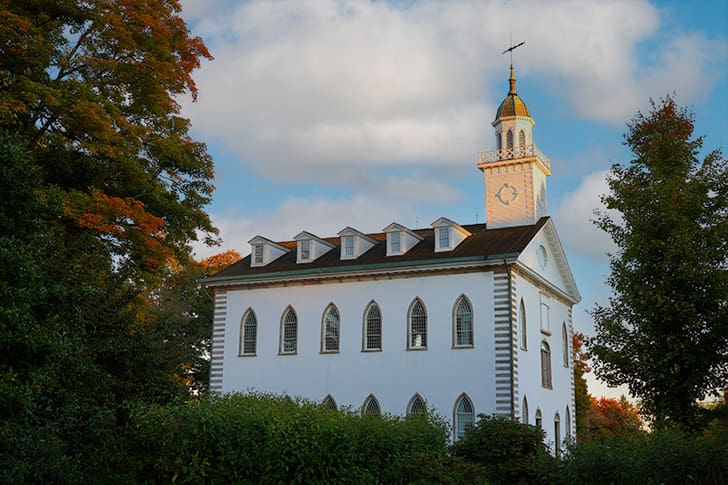
One hundred and ninety years ago, in a remarkable series of visions inside the newly dedicated Kirtland Temple, Joseph Smith and Oliver Cowdery received the keys of temple work. This series of articles seeks to increase understanding of the priesthood keys restored on that occasion.
It includes excerpts from The Heart of Our Covenants: Temple Principles that Draw Us unto Christ by Valiant K. Jones. Used by permission. See www.valiantjones.com or www.cedarfort.com.
When Jesus Christ visited the Nephites after his resurrection, He recited the words that had been given to the prophet Malachi in the old world. These included a prophecy of the future return of Elijah: “Behold, I will send you Elijah the prophet before the coming of the great and dreadful day of the Lord; and he shall turn the heart of the fathers to the children, and the heart of the children to their fathers, lest I come and smite the earth with a curse” (3 Nephi 25:5-6; see also Malachi 4:5-6). Moroni repeated this prophecy, with some modifications, when he appeared to Joseph Smith (see D&C 2 and JS-H 1:36-38).
This prophecy was fulfilled when Joseph Smith and Oliver Cowdery received a remarkable series of visions in the Kirtland Temple on April 3, 1836. The first was an appearance of Jehovah—Jesus Christ himself—who accepted the newly completed and dedicated Kirtland temple. Following this, visions of three special messengers appeared, in sequence, which Joseph described as follows:
“The heavens were again opened unto us; and Moses appeared before us, and committed unto us the keys of the gathering of Israel from the four parts of the earth, and the leading of the ten tribes from the land of the north.
“After this, Elias appeared, and committed the dispensation of the gospel of Abraham, saying that in us and our seed all generations after us should be blessed.
“After this vision had closed, another great and glorious vision burst upon us; for Elijah the prophet, who was taken to heaven without tasting death, stood before us, and said: Behold, the time has fully come, which was spoken of by the mouth of Malachi—testifying that he [Elijah] should be sent, before the great and dreadful day of the Lord come—To turn the hearts of the fathers to the children, and the children to the fathers, lest the whole earth be smitten with a curse—Therefore, the keys of this dispensation are committed into your hands; and by this ye may know that the great and dreadful day of the Lord is near, even at the doors” (D&C 110:11-16).
These three heavenly messengers bestowed upon Joseph Smith and Oliver Cowdery important priesthood keys. President Russell M. Nelson taught that priesthood keys “refer to the right to preside over priesthood authority in the name of the Lord Jesus Christ.”1 This series of articles will review the restoration of the keys of temple work that occurred on April 3, 1836, including their meaning and significance.
The Keys of the Gathering of Israel on Both Sides of the Veil
Moses was a fitting custodian of the keys of the gathering of Israel because it was he who led the children of Israel from Egypt as one body before they were dispersed. That dispersion was first into separate lands of inheritance in Canaan and later among all the nations of the earth. The keys that Moses bestowed on Joseph and Oliver authorized global missionary work, imparting priesthood power to those who would spread the gospel under the direction of all the modern prophets who have carried those keys since 1836. Every missionary of this dispensation has preached gospel truths with power and authority because of the restoration of these priesthood keys.
However, the keys restored by Moses were not given solely for the gathering of people into the gospel net of salvation. They were also given for the gathering of people to temples so that all souls born in all time periods can have the opportunity to receive the blessing of exaltation and eternal families. The keys that Moses restored prepare receptive children of God to receive the blessings of the keys of Elias and Elijah that followed. The keys of Moses needed to be imparted before temple work could begin because, as President Nelson has pointed out, the gathering of Israel occurs “on both sides of the veil.”2
When we search out the names of our ancestors, we are functioning within the spirit of the keys of Moses as much as within the spirit of keys of Elijah. The restored keys of the gathering of Israel function both on the earth and in the spirit world.
The final visitor on that important April 3rd was the prophet Elijah. His role in the restoration of the priesthood keys will be discussed in more detail later; however, the Bible Dictionary gives this summary of his keys: “Elijah held the sealing power of the Melchizedek Priesthood. He appeared on the Mount of Transfiguration in company with Moses (also translated) and conferred the keys of the priesthood on Peter, James, and John (Matt. 17:3). He appeared again, in company with Moses and others, on April 3, 1836, in the Kirtland (Ohio) Temple and conferred the same keys upon Joseph Smith and Oliver Cowdery.
All of this was in preparation for the coming of the Lord, as spoken of in Mal. 4:5–6 (D&C 110:13–16). As demonstrated by his miraculous deeds, the power of Elijah is the sealing power of the priesthood by which things bound or loosed on earth are bound or loosed in heaven. Thus the keys of this power are once again operative on the earth and are used in performing all the ordinances of the gospel for the living and the dead.”3
The keys restored by both Elijah and Moses are clear and beautiful—they make sense. However, our understanding of Elias and the keys he restored is less clear. Frankly, Elias has long been a bit of an enigma for many members of the Church. Part of this is because even his historical identity is unclear. In addition, there is the issue of Elias being both a person and a title. And what is the relationship between the keys of Elias and those of Elijah? Also, at first glance, the keys restored by Elias are not aligned in an obvious way with any particular ordinance. It is all rather confusing. The following discussion will be an attempt to shed some light on all of this.
Who Was Elias?
It is important to recognize that Elijah and Elias are the same name coming to us in English from two other languages. They are like Pedro and Pierre or Carlos and Charles. Elijah is a transliteration into English from the Hebrew form of the name, and Elias is a transliteration from the Greek form of the same name.
Hebrew, Greek, and English are all written in different alphabets or scripts, so when proper names are translated, the best available equivalent letters are typically chosen. However, sometimes adjustments are made because there is no equivalent letter or in order to make the name appear more reasonable in the new language. Thus, when doing a translation directly from Hebrew, early writers chose Elijah in English; but when early translators started with the Greek transliteration of the same name and then anglicized that, they chose Elias. Other KJV Old Testament/New Testament equivalent names include Elisha/Eliseus (Luke 4:27), Isaiah/Esaias (John 12:38), Joshua/Jesus (Acts 7:45), Judah/Judas (Matthew 1:2-3), and Noah/Noe (Matthew 24:38). Additional equivalent names include Miriam/Mary, Hannah/Anna, and Jacob/James.4
When Jesus said, as written in the KJV, “But I tell you of a truth, many widows were in Israel in the days of Elias, when the heaven was shut up three years and six months, when great famine was throughout all the land” (Luke 4:25), He was clearly referring to the Old Testament prophet we know of as Elijah the Tishbite. Likewise, when John the Baptist told the priests and Levites that he was not the Christ or Messiah, and they asked, “What then? Art thou Elias?” (John 1:21), they were asking if he was the Old Testament prophet Elijah—for they knew of the prophecy that Elijah would appear before the coming of the Messiah (see Malachi 4:5-6).
It would not be wrong for us to substitute Elijah in place of Elias in our minds wherever the latter is encountered in the KJV New Testament. In fact, most of the other English translations of the Bible use Elijah in all passages in the New Testament where the King James Version uses Elias. So first and foremost, Elias refers to Elijah the Tishbite.
In addition, Jesus referred to John the Baptist as Elias, meaning Elijah (see Matt. 11:13-14). When the angel Gabriel appeared to Zacharias and prophesied that his wife, Elizabeth, would bear a son who should be named John, the angel said of him, “And many of the children of Israel shall he turn to the Lord their God. And he shall go before him in the spirit and power of Elias [i.e., Elijah], to turn the hearts of the fathers to the children, and the disobedient to the wisdom of the just; to make ready a people prepared for the Lord” (Luke 1:16-17).
Thus, John the Baptist was to be a forerunner of the first coming of Christ “in the spirit and power of Elias [i.e., Elijah]” just as Elijah himself was to be a forerunner of the second coming of Christ. Both would prepare people’s hearts to receive Jesus Christ before He arrived. This provides the basis for the use of Elias as a title, meaning forerunner.
The Prophet Joseph Smith expounded on this second use of Elias. He taught, “The spirit of Elias is to prepare the way for a greater revelation of God…. And when God sends a man into the world to prepare for a greater work, holding the keys of the power of Elias, it was called the doctrine of Elias, even from the early ages of the world.”5
Joseph Smith used Elias in other ways as well. The Bible Dictionary summarizes all of these ways and then states, “Thus the word Elias has many applications and has been placed upon many persons as a title pertaining to both preparatory and restorative functions.”6 Apparently, the duplication of this name in two forms in the King James Bible—Elijah and Elias—provided an impetus for the Lord to inspire Joseph Smith in many ways regarding Elias and the doctrine of Elias.
For Latter-day Saints, the most important event which occurred under the name of Elias took place when the Lord sent a heavenly messenger under that appellation to Joseph Smith and Oliver Cowdery in the Kirtland temple on April 3, 1836. The Bible Dictionary says of this messenger, “A man called Elias apparently lived in mortality in the days of Abraham, who committed the dispensation of the gospel of Abraham to Joseph Smith and Oliver Cowdery…. We have no specific information as to the details of his mortal life or ministry.”7
The lack of specific information regarding this restorer of priesthood keys has led some to conjecture that this angel may have been a prophet known in the Old Testament by some other name. President Joseph Fielding Smith, as an apostle, stated8 that Elias and Noah are the same person.9 President Smith also stated that “some think him to be Melchizedek.”10 Elder Bruce R. McConkie confirmed the uncertainty of the identity of the Elias who appeared in the Kirtland temple, writing, “Whether he was Abraham or Melchizedek or some other prophet, we do not know.”11
Elder McConkie later conjectured, “Apparently this Elias lived in the day of Abraham, and may even have been Abraham himself.”12 It is also possible that the Elias who appeared in the Kirtland temple was none of these, but was a separate prophet who lived in ancient times and whose earthly name was the Hebrew equivalent of Elijah and Elias. The statement on Elias from the Bible Dictionary, cited earlier, seems to agree with this possibility.13
In addition to all these possibilities regarding the identity of Elias, I offer another proposal. It is possible that the two separate visions in the Kirtland Temple, wherein a single messenger appeared each time—the first in the name of Elias and the second in the name of Elijah—were both carried out by the same ancient prophet: Elijah the Tishbite. Perhaps he was directed by God to appear twice under his two separate but related names in order to restore two separate but related priesthood keys, both of which he held.
It is interesting to note that in the New Testament record of a similar occasion—when keys were given to Peter, James, and John on the Mount of Transfiguration—Moses and Elijah appeared together at the same time (see Matt 17:3 and Mark 9:4). Yet in the Kirtland temple, the three messengers appeared sequentially—an arrangement that would have accommodated a repeat appearance by Elijah. Also, this theory creates a stronger parallel with the New Testament record, which speaks of a visit by only those two messengers (see Matt 17:1-13, Mark 9:2-13, and Luke 9:28-26). Perhaps Joseph and Oliver also received only two messengers, with one of them appearing twice in subsequent visions. Perhaps these modern seers were so taken by the glory of their visions and so focused on the messengers’ words that they did not recognize the equality of the angels’ features in the two appearances.
God often works within the paradigms we hold ourselves to, and if Joseph Smith believed that the references to Elias and Elijah in his KJV Bible were references to two separate prophets (and some of the ways Joseph used Elias suggest that he did), then it is possible that God chose to use that paradigm to emphasize the restoration of two separate but related priesthood keys. God rarely clarifies our misunderstandings unless we ask, and it is possible that Joseph never even considered that Elias and Elijah could have been the same person.
Of course, this proposal is only a conjecture; however, there is nothing in Doctrine and Covenants 110 that is inconsistent with this theory. Joseph’s many and varied references to Elias confirm he was not settled on who Elias was. However, this does not affect his stature as a prophet; it simply makes him human. The Lord stated that the revelations in the Doctrine and Covenants “were given unto my servants in their weakness, after the manner of their language, that they might come to understanding” (D&C 1:24; see also 2 Nephi 31:3). In other words, the revelations were given in the imperfect language paradigms that Joseph comprehended so that the principles God deemed most important could be revealed.
Remember, also, that Jesus himself contributed to the complexity of this issue when he referred to John the Baptist as Elias/Elijah (see Matthew 11:7-14). Regardless of all this, if we were to take the second key-bearer at his word when he said he was Elias and then invoke the simplest interpretation of his name, we would conclude that this messenger was Elijah the Tishbite.
Regarding the identity of Elias, Elder John A. Widtsoe wrote, “When Elias, the man, lived, and what he did in his life, must for the present remain in the field of conjecture.”14 Both the Bible and the Book of Mormon refer to many unnamed prophets, confirming that ancient prophets were not always identified.15 The messenger who came as Elias to the Kirtland Temple was undoubtedly a great prophet when he lived on earth, but when he appeared to Joseph and Oliver, his mortal life and mission were secondary in importance to the keys that he was restoring. Maybe this is why the Lord provided this messenger with some anonymity by having him introduce himself as Elias.
All this aside, we must not be so concerned about the identity of Elias that we overlook his purpose. This is an issue faced by people who become attached to a particular missionary who has been teaching them the gospel. If that missionary gets transferred before their baptism, they must decide if it is the missionary or the underlying priesthood authority that matters for their baptism. So it is with Elias. His specific identity and background were not as important as his priesthood authority. Regardless of who this Elias was in mortal life, the most important thing we need to know about him is that he restored important priesthood keys to Joseph Smith and Oliver Cowdery in the Kirtland temple in 1836. That much is certain, and that part is what matters most.
Elias and the Dispensation of the Gospel of Abraham
Regarding the purpose of the heavenly messenger who came in the name of Elias, Joseph and Oliver wrote that he “committed the dispensation of the gospel of Abraham” (D&C 110:12). To understand this declaration, it is helpful to recognize that the word gospel can sometimes be used as a synonym for the word covenant16 and to understand the word dispensation in the sense of dispensing or bestowing rather than as an epoch of time on the earth. With these clarifications, this passage can be interpreted as saying that Elias “committed the bestowing of the covenant of Abraham.”
Consistent with this interpretation, the 2025 Doctrine and Covenants Seminary Teacher Manual explains: “Elias committed the dispensation of the gospel of Abraham. This includes the restoration of the Abrahamic covenant.”17 The fulness of this covenant, which includes the promises of endless posterity, priesthood power, and an eternal promised land inheritance in God’s presence,18 is bestowed through the ordinance of temple marriage. Thus, the keys restored by Elias are the keys of eternal marriage.
This link to eternal marriage becomes clearer when we consider the promise given by Elias “that in us and our seed all generations after us should be blessed.” This statement echoes the promise Abraham received that “in thy seed after thee . . . shall all the families of the earth be blessed” (Abraham 2:11). This promise could only be fulfilled through the union of Abraham with Sarah. Likewise, these same blessings are bestowed on couples married in the temple, where they are sealed together eternally and bestowed the blessing of Abraham, Isaac, and Jacob.
President Nelson confirmed this understanding of the keys of Elias, teaching, “In 1836, keys of ‘the gospel of Abraham’ were conferred (D&C 110:12). In 1843 the Lord declared to the Prophet Joseph Smith that ‘Abraham received promises concerning his seed, and of the fruit of his loins—from whose loins ye are. . . . This promise is yours also, because ye are of Abraham’ (D&C 132:30–31). . . . The ultimate blessings of the Abrahamic covenant are conferred in holy temples. These blessings allow us to come forth in the First Resurrection and inherit thrones, kingdoms, powers, principalities, and dominions, to our ‘exaltation and glory in all things’ (D&C 132:19).”19 Of course, these blessings described by President Nelson are the blessings pronounced upon every couple sealed in eternal marriage.
To paraphrase a little differently the Doctrine and Covenants 110 declaration of the keys restored by Elias, we could say that he bestowed upon Joseph and Oliver a dispensing of the same good news that many generations earlier had been given to Abraham. And what was this particular good news or gospel? It was that Joseph and Oliver now had the power to administer a binding, covenant-marriage link for men and women on earth so that all generations that would come after them would be blessed. Elder Bruce R. McConkie taught, “Elias restored the great commission, given of God to Abraham our father, whereby the seed of Abraham has power to gain eternal blessings forever through eternal marriage; that is, Elias restored the marriage discipline that had eternal efficacy, virtue, and force in the days of Abraham, Isaac, and Jacob.”20
The authority to bind couples in eternal marriage has existed since Adam, but it was strongly associated with Abraham, who was promised that his seed would be as vast as the sands of the sea (see Genesis 22:17, 32:12), so this authority was also called the good news of Abraham or the gospel of Abraham (see Abr. 2:9-11). This approach of naming a divine power after a remarkable prophet is similar to what occurred with the Melchizedek Priesthood, which also existed on the earth since Adam, but which was renamed “because Melchizedek was such a great high priest” (D&C 107:2).
Similarly, the Lord said to Abraham, “For as many as receive this Gospel shall be called after thy name, and shall be accounted thy seed, and shall rise up and bless thee, as their father” (Abraham 2:10). So the new and everlasting covenant of marriage is also called the gospel of Abraham or the Abrahamic covenant, and Elias restored the keys of this covenant.
Elder McConkie elaborated further on this role of Elias, “This Elias … ‘committed the dispensation of the gospel of Abraham’ (D&C 110:12) … meaning the great commission which God gave Abraham in his day. That commission dealt with families, those of Abraham and his seed, who were and are promised continuance ‘in the world and out of the world … as innumerable as the stars; or, if ye were to count the sand upon the seashore ye could not number them’ (D&C 132:30).
As Joseph Smith records it, what Elias actually said to him and Oliver Cowdery was that ‘in us and our seed all generations after us should be blessed’ (D&C 110:12). And so, the Lord be praised, the marriage discipline of Abraham was restored; it is the system that enables a family unit to continue in eternity; it is the system out of which eternal life grows.”21
The heavenly messenger who declared himself to be Elias restored the keys of eternal marriage. I believe these keys encompass not only the temple marriage ceremony but also the temple endowment ceremony, since the endowment prepares us for eternal marriage.22
On their own, the keys restored by Elias are limited to ceremonies performed for the living. When Elias bestowed his priesthood keys, he said, “all generations after us should be blessed.” The keys of Elias provide blessing to posterity who come after us, but they do nothing for ancestors who came before us. In order to bring the same blessings to them, additional priesthood keys were needed. The subsequent visit by Elijah restored the keys that extended those sealing ordinances to the dead—to those progenitors in the spirit world who had not entered into gospel covenants with God while they were living on the earth.
To be continued…
Valiant K. Jones is the author of The Heart of Our Covenants: Temple Principles that Draw Us unto Christ. For more information, see www.valiantjones.com or www.cedarfort.com.
1. Russell M. Nelson, “Keys of the Priesthood,” Ensign, Oct. 2005, 40.
2. Russell M. Nelson, “Hope of Israel,” Worldwide Youth Devotional June 3, 2018, Conference Center, Salt Lake City, Utah, churchofjesuschrist.org/study/broadcasts/worldwide-devotional-for-young-adults/2018/06/hope-of-israel?lang=eng; see also Russell M. Nelson, “The Gathering of Scattered Israel,” Ensign, November 2006, churchofjesuschrist.org/study/ensign/2006/11/the-gathering-of-scattered-israel?lang=eng.
3. Elijah” Bible Dictionary, lds.org/scriptures/bd/elijah?lang=eng.
4. Even though Jacob and James are equivalent names, both are used in the KJV New Testament. For an interesting discussion of these names, see gotquestions.org/James-vs-Jacob.html.
5. Joseph Smith Jr., Teachings of the Prophet Joseph Smith, pp. 335-336.
6. “Elias” Bible Dictionary, lds.org/scriptures/bd/elias?lang=eng, emphasis in the original.
7. Ibid.
8. Joseph Fielding Smith, Conference Report, April 1960, p. 72, archive.org/details/conferencereport1960a/page/n73; see also Joseph Fielding Smith, Answers to Gospel Questions, Vol. 3, pp. 139-141.
9. This conclusion is based on D&C 27:6-7, which says that Elias announced to Zacharias the birth of his future son, John the Baptist. In Luke 1:19, this birth announcement is attributed to the angel Gabriel, whom Joseph Smith declared to be Noah (see Teachings of the Prophet, p. 157). The conclusion of all of this is that Elias is Noah. However, when we remember that Elias is sometimes used as a title meaning forerunner, we realize that the scripture in D&C 27 is probably saying that the angel Gabriel was a forerunner. He was a forerunner to John the Baptist who was a forerunner to Christ. Both Gabriel and John the Baptist were each an Elias.
10. Joseph Fielding Smith, Doctrines of Salvation, Vol. 1, p. 107.
11. Bruce R. McConkie, “Elias,” Mormon Doctrine, p. 220.
12. Bruce R. McConkie, “This Final Glorious Gospel Dispensation,” Ensign, April, 1980, lds.org/ensign/1980/04/this-final-glorious-gospel-dispensation?lang=eng.
13. The Bible Dictionary statement that, “A man called Elias apparently lived in mortality in the days of Abraham” raises some questions. To suggest that this unknown man carried a name that was distinct from the name Elijah ignores the etymology of the name Elias. Remember that Elias is derived from the same Hebrew name as Elijah after passing through Greek, so it is highly unlikely that an ancient prophet would have carried the Greco-Hebrew name Elias. However, it is possible there were two separate ancient prophets with the same Hebrew name and that the Lord has chosen to distinguish them in our day by calling one Elijah and the other Elias. The Old Testament has no record of a second prophet named Elijah, but it is not unreasonable to consider that there could have been multiple men with that name. I assume that this is what the Bible Dictionary statement is suggesting as a possibility.
14. John A. Widtsoe, Evidences and Reconciliations: Aids to Faith in a Modern Day, pp. 243–244.
15. See Hosea 12:13; 1 Samuel 2:27; 1 Kings 13:1-3, 11; 1 Kings 20:13, 22; 28; 2 Kings 23:18, Zechariah 7:3; 1 Nephi 1:4.
16. In D&C 39:11 and 66:2 the Lord refers to the gospel as a covenant. These verses likely refer to the covenant called the law of the gospel; however, they also suggest that gospel and covenant can be synonyms.
17. “Lesson 124—Doctrine and Covenants 110, Part 2: The Restoration of Priesthood Keys,” Doctrine and Covenants Seminary Teacher Manual, churchofjesuschrist.org/study/manual/doctrine-and-covenants-seminary-teacher-manual-2025/393-doctrine-and-covenants-110-part-2?lang=eng.
18. Kent P. Jackson, “The Abrahamic Covenant: A Blessing for All People,” Ensign, February 1990, churchofjesuschrist.org/study/ensign/1990/02/the-abrahamic-covenant-a-blessing-for-all-people?lang=eng; see also, “The Abrahamic Covenant,” Liahona, February 2022, churchofjesuschrist.org/study/liahona/2022/02/the-abrahamic-covenant?lang=eng.
19. Russell M. Nelson, “Special Witnesses of Christ,” Ensign, April 2001, churchofjesuschrist.org/study/ensign/2001/04/special-witnesses-of-christ?lang=eng; see also Russell M. Nelson, “The Everlasting Covenant,” Ibid.
20. Bruce R. McConkie, A New Witness for the Articles of Faith, p. 508; quoted by Robert L. Millet, “The Ancient Covenant Restored,” Ensign, March 1998, lds.org/ensign/1998/03/the-ancient-covenant-restored?lang=eng. See also Bruce R. McConkie, “The Keys of the Kingdom,” Ensign, May 1983, churchofjesuschrist.org/study/ensign/1983/05/the-keys-of-the-kingdom?lang=eng.
21. Bruce R. McConkie, “This Final Glorious Gospel Dispensation,” Ibid.
22. For a discussion of how the endowment can be seen as the first part of the eternal marriage ceremony, see Valiant K. Jones, the Heart of Our Covenants, Cedar Fort, 2025, pp. 18-24.
FEATURES