




Becoming Brigham, Episode 7—Young Brigham Young, Part Two
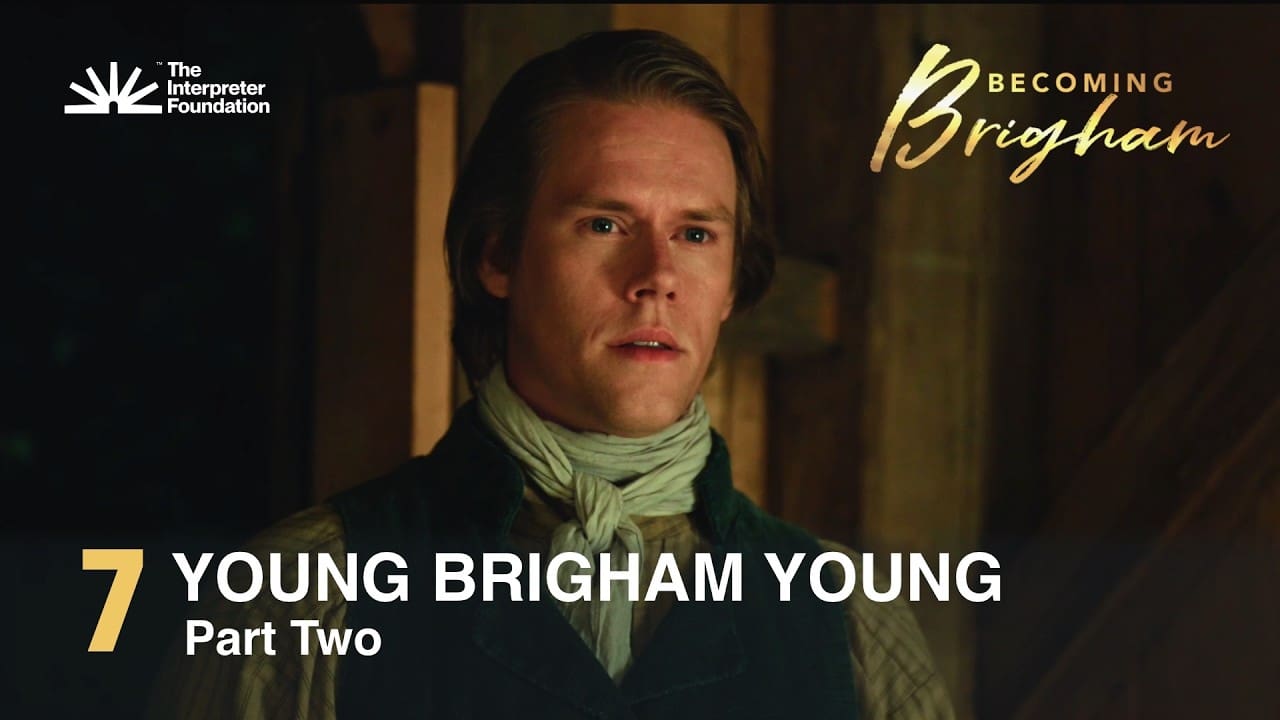
Camrey continues her conversation with Susan Easton Black about the youthful Brigham Young. Our hosts also explore how Brigham came to encounter the Book of Mormon, and how he reacted to this new book of scripture.
The Tragedy of Nauvoo: Remembering the Lost City of the Latter-day Saints
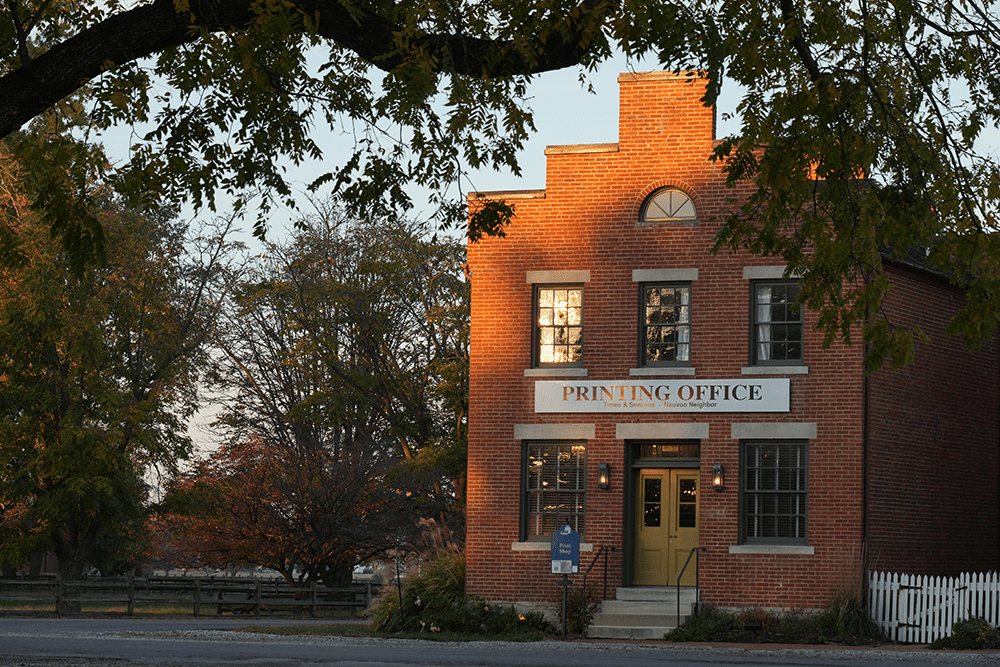
Because of my involvement with the Interpreter Foundation’s new series of mini-documentaries, “Becoming Brigham,” which launched on Monday, 26 January, and which will continue releasing weekly episodes into 2027 (see becomingbrigham.com), I’ve spent several days in and around Nauvoo, Illinois, on each of perhaps five different occasions within roughly the past year. That’s more times than I had visited the town in all of my previous life.
I’ve seen Nauvoo in various seasons, from various angles, spending time in many of its original and reconstructed buildings. I’ve spoken on camera and I’ve reflected silently in Carthage Jail. I’ve stood at the graves of Joseph and Emma and Hyrum Smith.

Perhaps because of this, I’ve come to appreciate more deeply than ever before the tragedy of Nauvoo. I find myself thinking of the lament of the biblical Psalmist, carried away from Jerusalem and its temple into Babylonian captivity:
“By the rivers of Babylon, there we sat down, yea, we wept, when we remembered Zion.
“We hanged our harps upon the willows in the midst thereof.
“For there they that carried us away captive required of us a song; and they that wasted us required of us mirth, saying, Sing us one of the songs of Zion.
“How shall we sing the Lord’s song in a strange land?
“If I forget thee, O Jerusalem, let my right hand forget her cunning.
“If I do not remember thee, let my tongue cleave to the roof of my mouth; if I prefer not Jerusalem above my chief joy.” (Psalm 137:1-6)
Colonel Thomas Kane, a friendly and well-positioned outsider who would become a lifelong friend of the Latter-day Saints, visited the city after the pioneer companies had left. He arrived in September 1846 just after the “Battle of Nauvoo” (10-12 September 1846), when the last remaining sick and destitute members had been driven out. (For many, this wasn’t their first exile.) Later, he wrote an evocative description of what he saw:
“Half encircled by a bend of the river, a beautiful city lay glittering in the fresh morning sun; its bright new dwellings, set in cool green gardens, ranging up around a stately dome-shaped hill, which was crowned by a noble edifice, whose high tapering spire was radiant with white and gold. The city appeared to cover several miles, and beyond it, in the background, there rolled off a fair country, chequered by the careful lines of fruitful husbandry. The un-mistakeable marks of industry, enterprise, and educated wealth everywhere, made the scene one of singular and most striking beauty. It was a natural impulse to visit this inviting region. I procured a skiff, and rowing across the river, landed at the chief wharf of the city. No one met me there. I looked, and saw no one. I could hear no one move, though the quiet everywhere was such that I heard the flies buzz, and the water-ripples break against the shallow of the beach. I walked through the solitary street. The town lay as in a dream, under some deadening spell of loneliness, from which I almost feared to wake it, for plainly it had not slept long. There was no grass growing up in the paved ways; rains had not entirely washed away the prints of dusty footsteps.

“Yet I went about unchecked. I went into empty workshops, rope-walks and smithies. The spinner’s wheel was idle; the carpenter had gone from his work-bench and shavings, his unfinished sash and casing. Fresh bark was in the tanner’s vat, and the fresh-chopped lightwood stood piled against the baker’s oven. The blacksmith’s shop was cold; but his coal heap and lading pool, and crooked water horn were all there, as if he had just gone off for a holiday. No work-people anywhere looked to know my errand.
“If I went into the gardens, clinking the wicket-latch loudly after me, to pull the marigolds, heartsease, and lady-slippers, and draw a drink with the water-sodden well-bucket and its noisy chain; or, knocking off with my stick the tall, heavy-headed dahlias and sunflowers, hunted over the beds for cucumbers and love-apples—no one called out to me from any opened window, or dog sprang forward to bark an alarm.
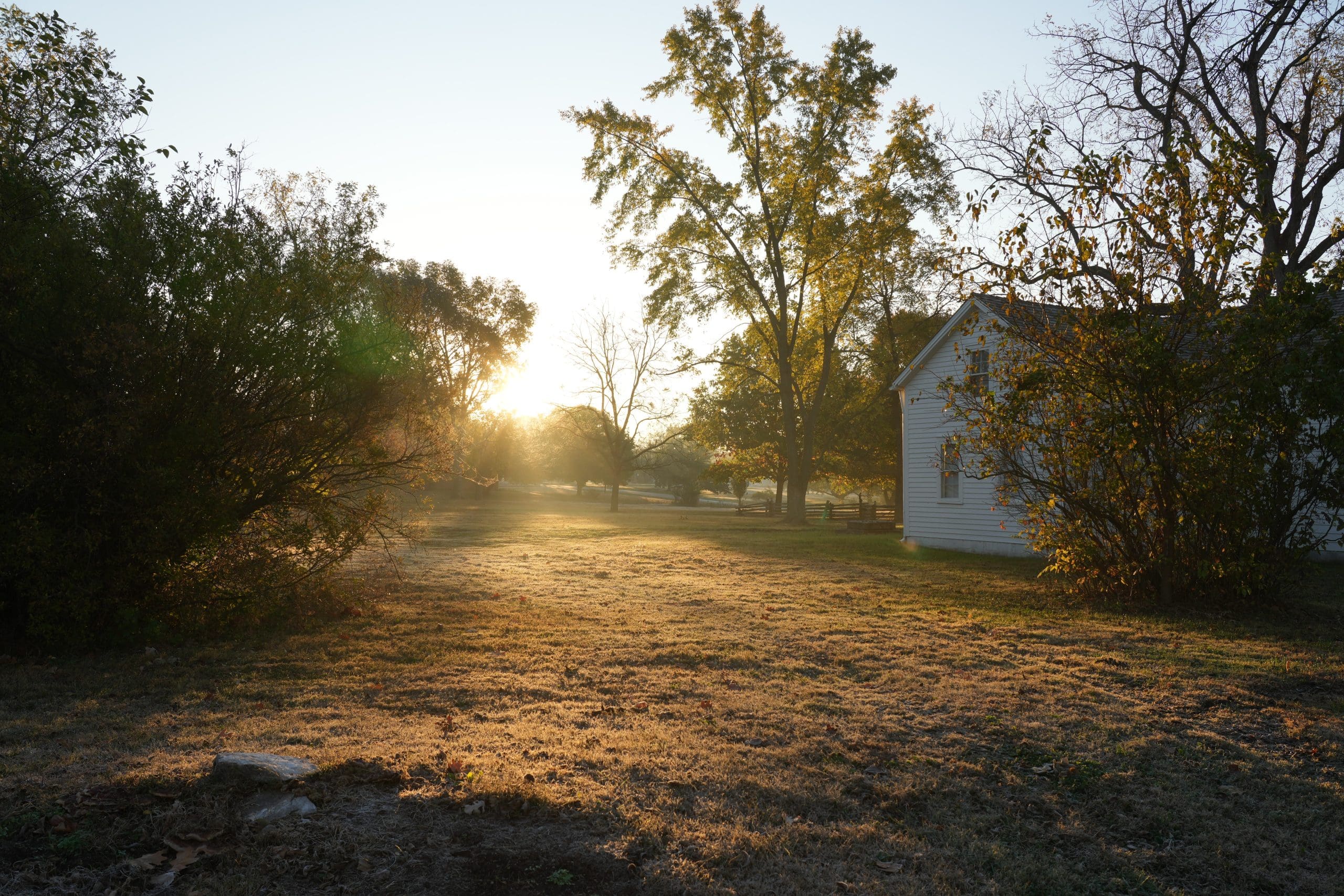
“I could have supposed the people hidden in the houses, but the doors were unfastened; and when at last I timidly entered them, I found dead ashes white upon the hearths, and had to tread a tip-toe, as if walking down the aisle of a country church, to avoid rousing irreverent echoes from the naked floors. On the outskirts of the town was the city graveyard; but there was no record of plague there, nor did it in anywise differ much from other Protestant American cemeteries. Some of the mounds were not long sodded; some of the stones were newly set, their dates recent, and their black inscriptions glossy in the mason’s hardly dried lettering ink. Beyond the graveyard, out in the fields, I saw, in one spot hard by where the fruited boughs of a young orchard had been roughly torn down, the still smouldering remains of a barbecue fire, that had been constructed of rails from the fencing around it. It was the latest sign of life there. Fields upon fields of heavy-headed yellow grain lay rotting un-gathered upon the ground. No one was there to take in their rich harvest.

“As far as the eye could reach they stretched away—they sleeping, too, in the hazy air of autumn. Only two portions of the city seemed to suggest the import of this mysterious solitude. On the southern suburb, the houses looking out upon the country showed, by their splintered wood-work and walls battered to the foundation, that they had lately been the mark of a destructive cannonade. And in and around the splendid Temple, which had been the chief object of my admiration, armed men were barracked, surrounded by their stacks of musketry and pieces of heavy ordnance. These challenged me to render an account of myself, and why I had had the temerity to cross the water without written permit from a leader of their band. . . . Though these men were generally more or less under the influence of ardent spirits.”
Brigham Young was centrally involved in completing the Nauvoo Temple despite intense persecution and internal turmoil, as well as in directing and administering its ordinances even while the Saints began their exodus westward toward the Great Basin—which also took place under his direction. After the departure of the Saints, the temple was vandalized, desecrated, and defaced. A fire set by an arsonist in 1848 destroyed its interior, leaving only an empty shell standing until, on 27 May 1850, a tornado hit the structure. According to Henry Horner’s 1939 Illinois: A Descriptive and Historical Guide, one source claimed that the storm seemed to “single out the Temple,” destroying “the walls with a roar that was heard miles away.”
Responding to news of the temple’s destruction, Brigham responded, “I would rather it should thus be destroyed than remain in the hands of the wicked.”
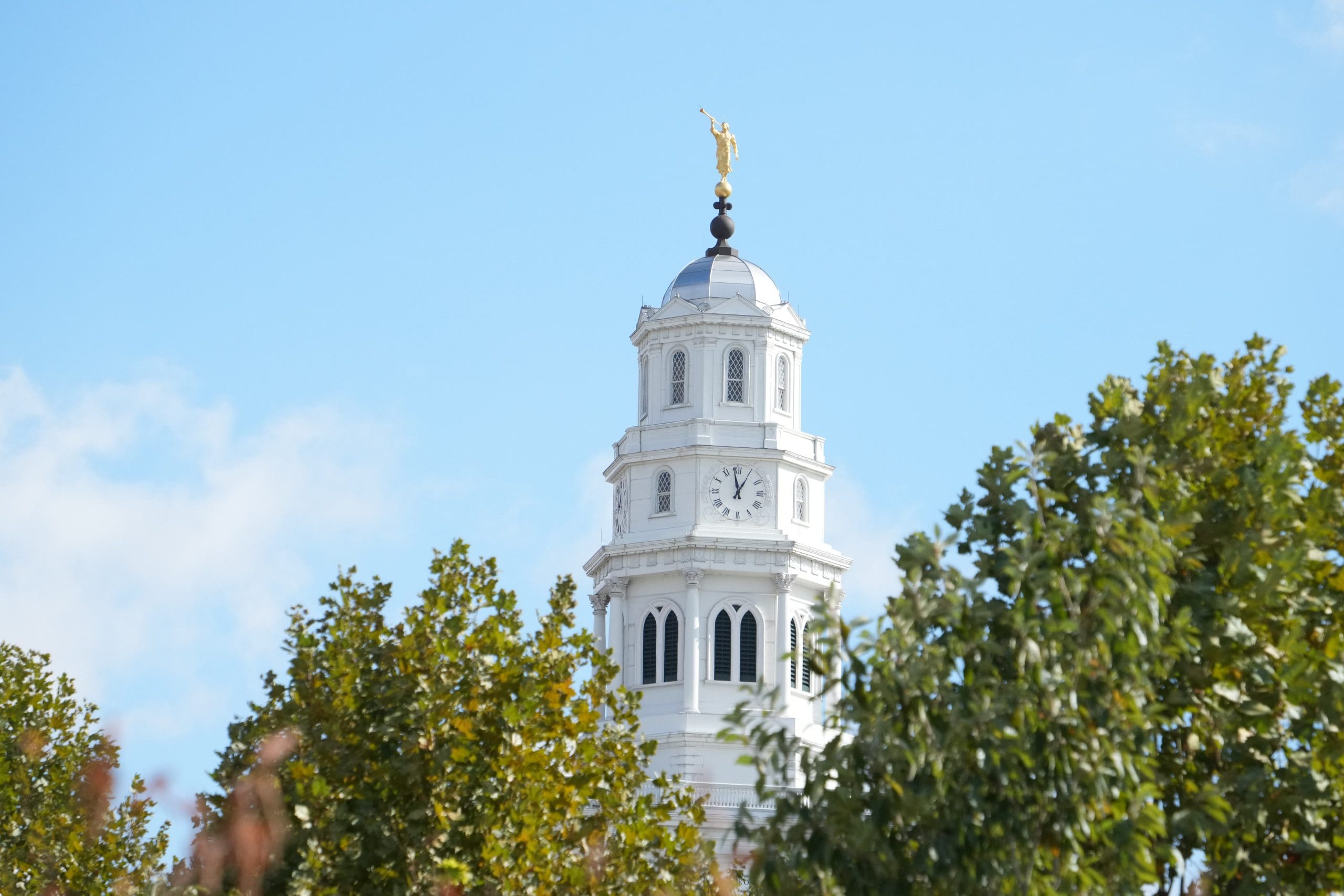
But the exiled Israelites who lamented “by the rivers of Babylon” eventually returned and, after a further and still-lengthier exile, many of their descendants live once more in the land of Israel, with Jerusalem as its capital. Indeed, exile and return, gathering and scattering and regathering, are major recurrent themes of the Hebrew Bible, the Old Testament, and of the Gospel in all its ages. The elements will melt with fervent heat and the heavens will be rolled up like a scroll but, in the end, the earth will be restored and receive its paradisiacal glory. We will lie down in death, but we will rise again.
In its humble and, in a certain sense, mundane way—a matter of bricks, boards, and stone—Nauvoo illustrates the Gospel’s promise of rebirth, of victory over death and defeat. Today, scores of senior missionaries serve in the rebuilt Nauvoo Illinois Temple and explain the brief but deeply significant history of the nineteenth-century Latter-day Saint city to visiting Latter-day Saints and curious nonmembers alike.
I myself have been able to serve and to worship in the temple here—something that, in my first several decades, I could never have predicted. I’ve thought of the Saints who went into exile from Nauvoo while taking one last look at it across the Mississippi River and who then learned of its desecration by drunken mobs, the destruction of its interior by arson, and, finally, its leveling by a tornado. I’ve wondered what those refugees would have made of the fact that it now stands again, fully finished this time, and fully dedicated for the first time, on the bluff overlooking the river. At night, it glows with a light that they, in their pre-electric era, could never have imagined.
I’ve seen what was left of the tavern in Warsaw where Thomas Sharp, the fiercely anti-Mormon editor of the Warsaw Signal, and his associates plotted the assassination of Joseph and Hyrum. I’ve seen the house where he lived.
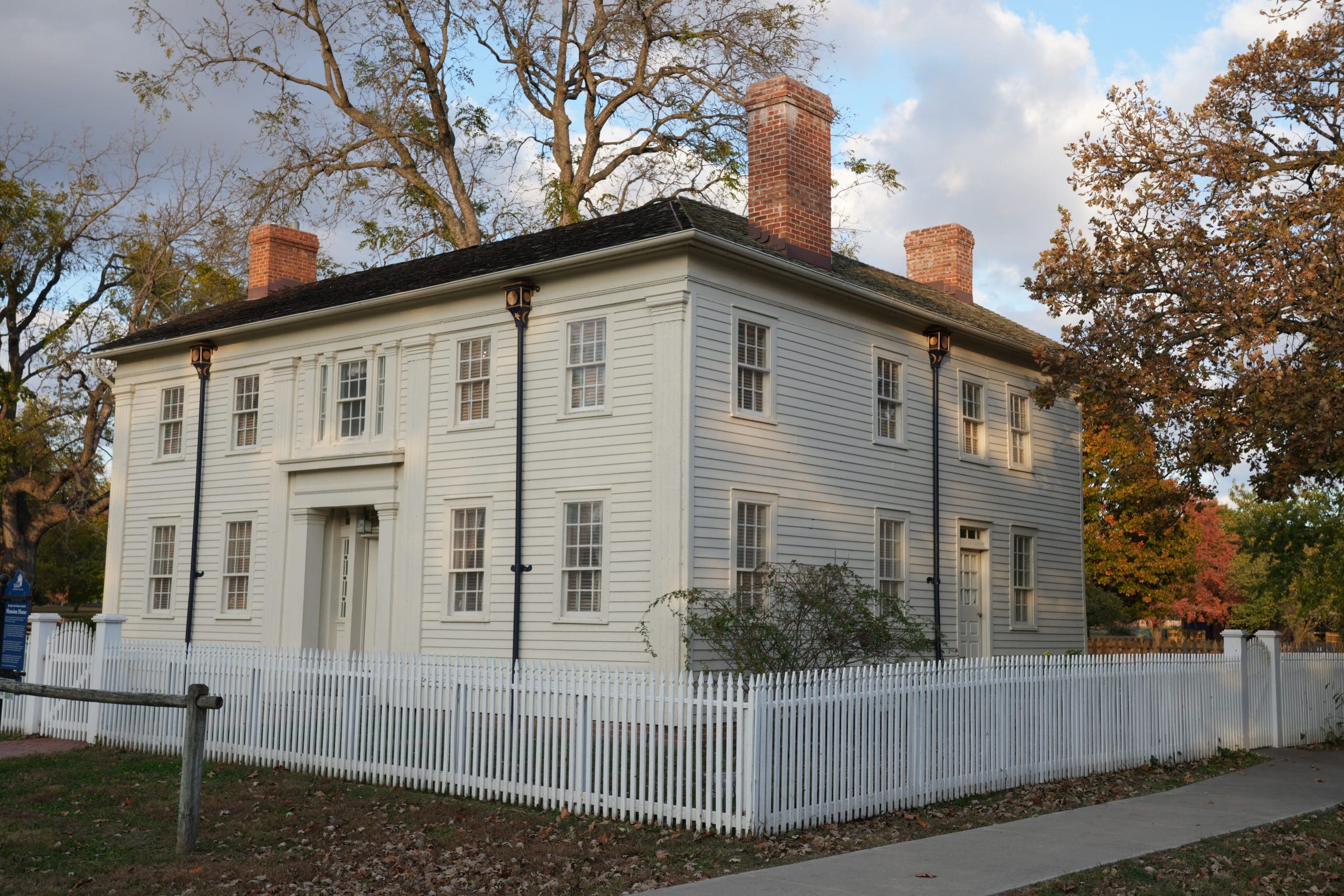
What, I’ve wondered, would Tom Sharp make of that temple on the hill, and of the return of the Latter-day Saints to Nauvoo and surrounding areas? What would he think of the fact that, as I’m told, a Latter-day Saint has restored his home and now occupies it? Would he be surprised to learn that, to the extent that he’s remembered today at all, it’s largely as a footnote to the story of Joseph and Hyrum Smith? Would he and the mobs that he helped to incite be astonished to learn that the Church of Jesus Christ of Latter-day Saints now owns Carthage Jail, in which Joseph and Hyrum were martyred, maintaining it as, in a very real sense, a shrine to their memory? I freely confess that I’m unchristian enough to hope that Sharp and his allies are aware of the return of the Latter-day Saints to Hancock County.
Could early members of the Church have foreseen that the properties that they were forced to abandon would ever be reacquired and restored? That, one day, tens of thousands of their fellow Latter-day Saints would come each year to visit Nauvoo, with reverence but also with smiles? That, to a large extent, it is pilgrims from far away, even from overseas, who patronize the city’s temple? Arriving in vehicles that would have been inconceivable to the wagon trains and handcart companies of the 1840s and 1850s? That, thanks to modern technology, many Saints living thousands of miles away, in places of which those early members could scarcely dream, are able to take “virtual tours” of the homes in which the first Latter-day Saints lived and of the streets that they walked?
“Generations yet unborn,” Joseph Smith prophesied in 1842, “will dwell with peculiar delight upon the scenes that we have passed through, the privations that we have endured; the untiring zeal that we have manifested; the insurmountable difficulties that we have overcome in laying the foundation of a work that brought about the glory and blessings which they will realize.”
And his prophecy has been fulfilled. In all of which, it seems to me, there are obvious lessons to be learned. One of them is that, even in the wreckage of our earthly hopes, when all seems irretrievably lost, there is still hope. The great illustration of this truth, of course, is the resurrection of Jesus Christ, which shows us that not even death is final.
“And God shall wipe away all tears from their eyes; and there shall be no more death, neither sorrow, nor crying, neither shall there be any more pain: for the former things are passed away. (Revelation 21:4)
“Weeping may endure for a night,” says Psalm 30:5, “but joy cometh in the morning.”
“And as for the perils which I am called to pass through,” wrote the Prophet Joseph Smith, from hiding, about a year and a half before his martyrdom, “they seem but a small thing to me, as the envy and wrath of man have been my common lot all the days of my life; and for what cause it seems mysterious, unless I was ordained from before the foundation of the world for some good end, or bad, as you may choose to call it. Judge ye for yourselves. God knoweth all these things, whether it be good or bad. But nevertheless, deep water is what I am wont to swim in. It all has become a second nature to me; and I feel, like Paul, to glory in tribulation; for to this day has the God of my fathers delivered me out of them all, and will deliver me from henceforth; for behold, and lo, I shall triumph over all my enemies, for the Lord God hath spoken it. (Doctrine and Covenants 127:2).
And then he was killed, with his brother. So where was his triumph? Let his mother, Lucy Mack Smith, have the last word here:
“After the [bodies of Joseph and Hyrum] were washed and dressed in their burial clothes, we were allowed to see them. I had for a long time braced every nerve, roused every energy of my soul and called upon God to strengthen me, but when I entered the room … , it was too much; I sank back, crying to the Lord in the agony of my soul, “My God, my God, why hast thou forsaken this family!” A voice replied, “I have taken them to myself, that they might have rest.”
“As I looked upon their peaceful, smiling countenances, I seemed almost to hear them say, “Mother, weep not for us, we have overcome the world by love; we carried to them the gospel, that their souls might be saved; they slew us for our testimony, and thus placed us beyond their power; their ascendancy is for a moment, ours is an eternal triumph.”
**
Watch the episodes of “Becoming Brigham” at becomingbrigham.com. Two quite different settings of Psalm 137 are Don McLean’s round (https://www.youtube.com/watch?v=uTnspbSjKVc) and Linda Ronstadt’s bluegrass version of a reggae tune (https://www.youtube.com/watch?v=u60fXbTsMDg).
Becoming Brigham, Episode 4: Why Brigham Young?

Is there any purpose to revisiting the life and times of Brigham Young? Don’t we already know everything there is to know about this sometimes-controversial historical figure? Camrey, Dan and John are joined in a roundtable discussion by Matt Grow, who is the managing director of the Church History Department.

Becoming Brigham: The Video Series Premieres

For well over a year now, Redbrick Filmworks and the Interpreter Foundation have been working on a series of mini-documentaries bearing the title “Becoming Brigham.” The first episode goes live today, Monday, 26 January, at noon. (And one of the places where it will be accessible is right here at “Meridian Magazine.”). Further installments will appear on successive Mondays. Each episode—of which there will eventually be about 70 or 75—will run approximately fifteen minutes.
They’re hosted by Camrey Bagley Fox, who portrayed Emma Smith in the Interpreter Foundation’s 2021 dramatic film “Witnesses” and its 2024 film “Six Days in August”; by John Donovan Wilson, who played Brigham Young in the latter film; and by a retired Brigham Young University professor of Islamic studies and Arabic who shall remain nameless lest potential audiences be dissuaded from watching. Each episode features footage shot on location in New York, Ohio, Illinois, Iowa, Nebraska, and Utah, as well as extensive interviews with numerous Latter-day Saint historians who are experts on the subjects being discussed.
In fact, one of the most pleasant aspects of the project has been the wonderful support that it’s received from the Church History Department in Salt Lake City and from the overseers of the historical sites where filming has been done. The creators of “Becoming Brigham” have worked closely with Brent Rogers,
Managing Historian of the Church History Department, and have thus far completed interviews with such scholars as Thomas G. Alexander, James B. Allen, Susan Easton Black, LaJean Carruth, Gerrit Dirkmaat, Brett Dowdle, Ron Esplin, Matt Godfrey, Casey Griffiths, Brittany Chapman Nash, Reid Neilson, John Peterson, Paul Reeve, and Lisa Olsen Tait.
What’s behind the project? A significant factor behind it comes from my disappointment, over the past two or three years, at encountering active members of the Church of Jesus Christ of Latter-day Saints who disparage Brigham Young, the Church’s second president.
Some seem compelled to open any discussion of Brigham by describing him as “flawed.” And in an important sense, of course, this is surely true: Jesus Christ excepted, we’re all flawed—including Brigham’s critics. He certainly didn’t claim perfection for himself. “There are weaknesses manifested in men that I am bound to forgive,” he said on one occasion in 1860. “I am right there myself. I am liable to mistakes,” he continued, acknowledging that he was just as set in his feelings as any man alive, but, he said, “I am where I can see the light. I try to keep in the light.”
Often, the clear insinuation of describing Brigham as flawed seems to be that he was somehow uniquely flawed. Trying to reassure me that, despite his imperfections, they still accept him as the Lord’s instrument in his day, some people have explained to me that, well, God can work through wicked men. But I object to such statements. While he surely had his limitations and his flaws, Brigham Young wasn’t a wicked man. He was a good man.
Some go beyond merely talking him down. There are those who say that Brigham Young and the Quorum of the Twelve engineered an “apostolic coup” to usurp leadership of the Church. One active Church member told me that Sidney Rigdon should have assumed the presidency (or, as Sidney liked to call it, the “guardianship”) instead, but was tragically cast aside by the machinations of Brigham and the apostles. A few former members even assert that it was Brigham Young, using John Taylor and Willard Richards as his “hit men,” who planned the death of Joseph and Hyrum Smith at Carthage Jail—perhaps so they could forge Doctrine and Covenants 132 and impose plural marriage upon the Church. This would be mere laughable nonsense—no serious historian of whom I’m aware accepts it—if it weren’t so repugnant, slanderous, and evil. (The mob and the Carthage Greys must have been surprised and baffled when, having arrived to murder Joseph and Hyrum, they found that Elders Taylor and Richards had already done the killing. But they kept the secret throughout their lives, even when some of them were on trial for the crime. Amazing? No, ludicrous.)
The real historical Brigham Young was the last man who would ever have raised his hand against Joseph Smith. He was absolutely dedicated to the Prophet, both before and after the martyrdom in 1844.
An important scene in the Interpreter Foundation’s 2024 feature film “Six Days in August,” solidly rooted in history, beautifully illustrates his dedication. It depicts Brigham and Heber and others traveling secretly to Far West, Missouri, in obedience to Doctrine and Covenants 115:11 and 118:5, which directed them to depart for their mission to England from the temple site there on 26 April 1839. Such direction made perfect sense when the Saints were still located in Missouri. On 27 October 1838, however, Missouri’s governor, Lilburn W. Boggs, had issued his infamous “extermination order” against the Latter-day Saints and, by April 1839, the Church was gathering to western Illinois. Thus, returning to Far West for a departure to England made little earthly sense—it was in the wrong direction, for one thing—and, in fact, being there as a Latter-day Saint was extraordinarily dangerous. For Brigham and Heber and their companions, though, if Joseph Smith said to depart from Far West, they would do it.
In the early days of the Church, many once-faithful Saints fell away because they would no longer sustain Joseph as the Lord’s anointed prophet. In fact, Joseph said of the leaders in Kirtland that there were only two who had never “lifted their heel” against him—”namely Brigham Young and Heber C. Kimball.” (Heber C. Kimball, of course, was Brigham’s closest friend, even before their joining the Church, and eventually served as Brigham’s first counselor in the Church’s First Presidency.)
Another famous story illustrates Brigham’s deference to the Prophet Joseph. On one occasion, Joseph severely rebuked Brigham—who, you may recall, eventually came (for good reason) to be known as “the Lion of the Lord.” After the Prophet’s chastisement, everyone in the room waited for Brigham’s response, perhaps expecting an eruption. But his reply was, sincerely and simply, “Joseph, what do you want me to do?”
“I felt in those days,” Brigham later recalled of the time before he encountered the Book of Mormon and the Church, “that if I could see the face of a prophet, such as had lived on the earth in former times, a man that had revelations, to whom the heavens were opened, who knew God and his character, I would freely circumscribe the earth on my hands and knees.” And, in Joseph, he knew that he had found such a man.
“I know how I received the knowledge that I have got,” Brigham reflected in 1866. Remembering his early years with Joseph, he said “I had but one prayer, and I offered that all the time. And that was that I might be permitted to hear Joseph speak on doctrine, and see his mind reach out untrammeled to grasp the deep things of God.” Of his own relationship to Joseph, Brigham said that “an angel never watched him closer” and that he “would constantly watch him and if possible learn doctrine and principle beyond that which he expressed.” It required several years of this close attention to the Prophet, he declared with a bit of exaggeration, “before I pretended to open my mouth to speak at all.” Brigham Young took care never to “let an opportunity pass of getting with the Prophet Joseph and of hearing him speak in public or in private, so that I might draw understanding from the fountain from which he spoke.” “This,” he insisted, “is the secret of the success of your humble servant.”
Brigham Young often spoke of Joseph and his work: “I honor and revere the name of Joseph Smith,” he said in 1870. “I delight to hear it; I love it. I love his doctrine.” “I feel like shouting hallelujah, all the time,” he said in 1855, “when I think that I ever knew Joseph Smith, the Prophet whom the Lord raised up and ordained.” “I am bold to say,” he testified in 1862, “that, Jesus Christ excepted, no better man ever lived or does live upon this earth. I am his witness.”
On his deathbed, according to reports, the last words uttered by Brigham Young were “Joseph! Joseph! Joseph! Joseph!” If this is true, it wouldn’t surprise me to learn that the Prophet personally came to welcome his great successor and faithful disciple into the next world. Intriguingly, in this context, it’s reported that Emma Smith’s last words, spoken in Nauvoo on 30 April 1879, were, “Joseph! Joseph! Joseph!” and “Joseph, I am coming!” Just days before her death, she said that she had seen him in a dream, along with their deceased son Don Carlos and the Savior. Joseph, she said, took her to a beautiful mansion and promised her that she would have all of her children in the world to come.
One of the themes that have emerged from the making of “Becoming Brigham” is that, as the historian Ronald K. Esplin says in an interview for the series, among all the claimants to Church leadership who emerged after the murders of Joseph and Hyrum in mid-1844, it was only Brigham and the Twelve who wanted to carry out the full program and carry on the teachings that Joseph had laid out in Nauvoo. Prominent elements of Joseph’s agenda were the completion of the temple and, somewhat paradoxically, forsaking it for the Great Basin West. No other claimant to the succession—including Sidney Rigdon—was so committed to moving forward with those goals. And (no small point!) it was with the Twelve that the keys of priesthood authority resided after the deaths of Joseph and Hyrum.
On 8 August 1844, in the dark days following the martyrdom of the Prophet and the Patriarch, Brigham made this clear to the Saints, “You cannot appoint a prophet,” he said, “but if you let the Twelve remain and act in their place, the keys of the kingdom are with them and they can manage the affairs of the church and direct all things aright.”
Brigham Young and his fellow apostles understood the importance of completing the Nauvoo Temple, as many other would-be leaders (including, apparently, Sidney Rigdon) did not. But it wasn’t only a legacy project for them, an inheritance from their departed friend, Joseph Smith. And the challenges and threats from enemies of the Saints continued, while the pressure on them mounted to abandon Nauvoo and to leave. As the chief apostle, Brigham sought and received revelation. Having inquired of the Lord whether they should stay and finish the temple, he recorded simply in his diary for 24 January 1845: “The answer was we should.”
As President James E. Faust observed, Brigham Young had unwavering confidence in what he was doing because he knew that the plan was not his own. As he told the Saints nearly a decade after their arrival in the Valley of the Great Salt Lake, “I did not devise the great scheme of the Lord’s opening the way to send this people to these mountains.” Well then, who did? “It was the power of God that wrought out salvation for this people,” he insisted. “I never could have devised such a plan.” As one nineteenth-century non-Latter-day Saint visitor to his office recorded (and as others also noted), Brigham had remarkable self-confidence and “absolute certainty of himself and his own opinions.”
“Becoming Brigham” is an attempt to portray Brigham’s earliest encounter with the Restoration, his conversion, his training as an apostle for eventual leadership of the Church, the rise of the Twelve from their initial role as an outwardly-oriented missionary quorum to their eventual leadership of the overall Church. It will discuss Brigham Young’s presidency of the Church, including unvarnished examinations of controversial issues such as violence in Utah Territory (e.g., the notorious Mountain Meadows Massacre), race and slavery, relations with Native Americans, and plural marriage.
It relies upon the best available research concerning Brigham Young and the Twelve to provide a picture of the man that differs from the image in many minds. When I was growing up, I knew of Brigham as the great colonizer, a practical man, an organizational genius. But there was much more to him than that. As the late historian D. Michael Quinn pointed out, “One of the recurring themes in non-Mormon biographies of President Brigham Young is the idea that he was not a very spiritual man. Such interpretations, however, not only misrepresent his character, they also totally disregard the evidence, both published and unpublished, that refutes such a stereotype.”
Nor is the image of Brigham as harsh, callous, and autocratic true to the historical record. “Those of us who have worked with Brigham Young’s words,” says LaJean Carruth in an interview for “Becoming Brigham,” “we see a completely different man, a kinder man. A caring man. A loving man. . . . He wanted to serve God, and he strove with everything he had to lead the Saints.”
“I came to know a man,” says Ron Esplin, “whose heart was with the Lord from the very beginning. . . . He believed in Jesus. He believed enough to follow a disciple of Jesus named Joseph Smith.” As Lisa Olsen Tait puts it, “I do think that Brigham Young, fundamentally at the core of his soul, wanted people to flourish . . . and the way that would happen was by embracing the gospel of Jesus Christ . . . . I kind of like Brigham Young, actually. I think he’s very down-to-earth. I think he’s very human.” “And the people who knew these people best,” says Gerrit Dirkmaat, “like the people who knew Joseph, the people who knew Brigham, well, they’re the ones who are certain that they’re prophets.”
Members of the Church of Jesus Christ of Latter-day Saints today who disparage Brigham Young’s character and divinely-ordained leadership, whether they realize it or not, are sawing away at the branch of the tree on which they themselves sit, the line through which modern priesthood authority and temple ordinances come.
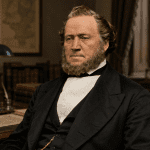
Modern prophets and apostles know better: President Gordon B. Hinckley, for example, kept a portrait of Brigham directly behind his desk, finding strength and inspiration in contemplating it. He often referred to the portrait, commenting that Brigham seemed to “watch over” the work of the Church.
But those who disdain Brigham Young aren’t wrong because accepting their opinions would have bad implications for the Church. They’re wrong because they’re wrong.
**
Several of the quotations used above may be found, with supporting references, in an excellent speech by President James E. Faust, entitled “Brigham Young: A Bold Prophet” (https://speeches.byu.edu/talks/james-e-faust/brigham-young-bold-prophet/).
Hulu Takes Another Jab at the “Mormons”

To read more from Daniel, visit his blog Sic Et Non.
Every week, it seems, there’s a new Hulu or Netflix miniseries focused on Latter-day Saints — and these productions never seem to be positive, friendly, sympathetic, or even balanced. The latest of them — so far as I’m aware! — is Hulu’s Devil in the Family: The Fall of Ruby Franke. With his kind permission, I share something that Christopher Blythe posted a day or two ago on his Facebook page, about Devil in the Family:
I watched the new Ruby Franke docu-series on Hulu. It wasn’t terrible as far as these things go, but, for me, was often hard to watch. I was annoyed by the effort to contextualize my home (“Happy Valley” as the show repetitively called it the first fifteen minutes) and my people in ways that made them seem particularly other from the rest of America in all the worst ways. One of the first silly comments was a guy explaining that “Mormons go on missions to show the world how perfect their lives are.” Uhhhh…. I spent two years on my feet and it definitely wasn’t to convince people we were perfect. Lol. The basic theme of the show was that the faith had caused this once idealized family to seek the appearance of perfection, filled them with guilt, etc. I’m not saying the LDS context isn’t important – I’ve made my career writing about similar things – but I am saying that there is no direct line from LDS-ness to abusing your children, internalized guilt that allows manipulation from psychologists and spouses, or the belief that “woke children” are zombies. But mainly I am exhausted by show after show commercializing my people by stereotyping them as secret hypocrites who present perfection to the world but are actually mentally unstable and dangerous; easily manipulated victims of conmen; sexually repressed; and “in a bubble.” I became a Latter-day Saint 30 years ago and observe our culture professionally. I am convinced that I am surrounded by folks that have lived around the world, speak multiple languages, have overcome great challenges, and are personally and professionally innovative. Sure, I want us to be more mystical and less materialistic, but I am so grateful to have had the opportunity to claim a place among this group of believers.
Meanwhile, in other movie news related to Latter-day Saints, Witnesses is still available for free streaming, contrary to my expectations. And Six Days in August can be streamed from several platforms, though not for free. We probably shouldn’t leave it entirely to Hulu and Netflix to tell our stories for us. They may not have the best interests of the Kingdom at heart.
Perhaps we should make some of our own movies? Today, by the way, our core group of filmmakers captured an interview by John Donovan Wilson of Professor Gerrit Dirkmaat. It’s for the Interpreter Foundation’s documentary series Becoming Brigham, which is now in the first stages of production. I wanted to be there for the interview, which is based on his remarks to the eleventh annual birthday part of the Interpreter Foundation, “Sweeter Than Honey: Brigham Young’s Devotion to Joseph Smith’s Teachings After the Martyrdom.” I regard the interview with Gerrit as a vitally important one for our project, but I was unable to make it.
Also on the subject of cinematography (which seems, for some reason, to be much on my mind of late): I’m very pleased to see that the short film The Good Samaritan — a 45-minute dramatic re-creation of the biblical parable known by that name — won the Audience Choice award at the recent Zions Indy Film Fest. James Dalrymple was the director, while Howard Collett was the producer. I consider them both friends, have worked with both, and look forward, if it proves feasible, to working with them again in the future. Howard, in fact, is our former neighbor and bishop, and is part of a very small — five-member! — reading group in which my wife and I also participate.
One last movie note: I’m hoping to be able to watch this in the not too distant future: “‘Sharing Aloha’: Emotion-rich new documentary about the Polynesian Cultural Center full of ‘magic’:The subjects of a new film by the director of ‘Meet the Mormons’ say he captures the miracles that Hawaii’s most-popular tourist attraction generates in their lives”