




Jesus Christ Always Delivers Us—Come, Follow Me Podcast #23, Judges 2-4; 6-8; 13-16

Scot
As I study the Old Testament something comes to me over and over again. When Jesus said, “Search the scriptures; for in them ye think ye have eternal life: and they are they which testify of me,” he was sending the people to the Old Testament to find Him. When Lehi opened the Plates of Brass for the first time and searched them from the beginning (see 1 Nephi 5:10) and then he “was filled with the Spirit, and began to prophesy concerning his seed (see 1 Nephi 5:17) he was immersed in the Old Testament. When Nephi says, “For my soul delighteth in the scriptures and my heart pondereth them…” he was talking about the Old Testament. When Ammon, Aaron, Omner and Himni converted seven cities of the Lamanites and brought untold thousands to the Savior, they were using only the Old Testament in their teaching! What a treasure we have in the Old Testament!
Maurine
Hello, we’re Scot and Maurine Proctor and we are delighted to be with you again this week as we, yes, delve again into the Old Testament, specifically into the Book of Judges in a lesson entitled “The Lord Raised Up a Deliverer.” As Scot and I read, study and ponder the Old Testament we are constantly asking ourselves these questions, “How is this leading me closer to the Savior Jesus Christ?” “What can I learn about the Atonement of Jesus Christ in this week’s chapters?” And “What symbols and language in this reading helps me understand the great Deliverer more fully?” The Old Testament is full of rich stories about the Deliverer who is Jesus Christ. The whole concept of deliverance is mentioned over and over again throughout this 1,184-page book of holy writ. In fact, it’s not just mentioned, it might be called one of the greatest lessons of God’s dealings with His covenant children: If you keep the covenants you have made with Jehovah, who is Jesus Christ, you will ALWAYS be delivered. He is always good for His promises. He can always be trusted. He is always true. Just as the hymn says that we sing so often, “Israel, Israel, God is speaking. Hear your great Deliverer’s voice!” Let us hear and heed His voice!
Scot
We learn a great deal about the effects of disobedience in the first few verses of Judges chapter 2. Let’s briefly look at them together:
1 And an angel of the Lord came up from Gilgal to Bochim, and said, I made you to go up out of Egypt, and have brought you unto the land which I sware unto your fathers; and I said, I will never break my covenant with you.
2 And ye shall make no league with the inhabitants of this land; ye shall throw down their altars: but ye have not obeyed my voice: why have ye done this?
3 Wherefore I also said, I will not drive them out from before you; but they shall be as thorns in your sides, and their gods shall be a snare unto you.
4 And it came to pass, when the angel of the Lord spake these words unto all the children of Israel, that the people lifted up their voice, and wept. (Judges 2:1-4)
Maurine
I couldn’t tell whether we were reading out of the Book of Mormon or the Old Testament there—or maybe it was a chapter from our own times. Now, this angel was using Divine Imprimatur, which means, he can speak as if he is the Lord God himself. He speaks in first person, as if he is God. Sometimes an angel will say, “Thus saith the Lord…” and then he is delivering a message as a messenger and sometimes, as in this case and often in the Book of Judges, the angel is using Divine Imprimatur.
I love the power of the words, “I said, I will never break my covenant with you.” He has said the same thing in our times:
“I, the Lord, am bound when ye do what I say, but when ye do not what I say, ye have no promise.” (Doctrine and Covenants 82:10)
We worship the one true God, the one and only trustworthy God.
Scot
That reminds me of one time in Egypt when we were marveling at their pantheon of more than 400 gods. I told our tour participants, as we stood before these immense, impressive structures and amazing sculptures and bas relief works of their gods, Horus, Ra, Osiris, Isis, Seth, Ptah, Hathor and Ammon—I said, “you know that when you get to the other side of the veil, you will not meet one of these gods. They don’t exist. They never did. They are made up and not one has ever lived.” It was a great moment for me. My spirit took flight as I contemplated the great blessing it is that we worship the one true God, our Heavenly Father and Jesus Christ whom He has sent! When the peoples of the Old Testament and the Book of Mormon remember this, they are blessed and prospered, when they do not, they are cursed and overcome by their enemies.
Maurine
Now, Joshua lived to be 110 years old and, as we talked about last week, gave his last powerful speech, pleading with the people to choose the God of Israel, and then he died.
Now follow with us in Judges chapter 2, starting in verse 10:
10 And also all that generation were gathered unto their fathers: [now that means, they all died and were buried with their ancestors] and there arose another generation after them, which knew not the Lord, nor yet the works which he had done for Israel.
That is a scary line to me. A generation that does not know the Lord. It certainly makes it plain to see why we are asked to read our scriptures—so that we can remember the Lord. And we are asked to have family home evening—so that we can remember the Lord. And we are encouraged to regularly attend and worship in the temple—so that we can remember our covenants with the Lord. And we are reminded to keep our journals—so that we can remember the Lord.
Scot
Yes, and to teach all of this to our children so they we will remember. We did a very powerful fireside on the Prophet Joseph Smith for about 20 years in many stakes all over the Church. As I was bearing my testimony at the end, feeling the Spirit so powerfully testify that Joseph Smith is a Prophet of God and was God’s instrument in bringing forth the Book of Mormon and in restoring the Church of Jesus Christ to the earth—I would often say, supported by the Spirit, “You know these things and now you must teach them to your children and your children’s children so that they might also know that these things are true!”
So, look what happened to the people after Joshua died, in verse 11:
11 ¶ And the children of Israel did evil in the sight of the Lord, and served Baalim:
12 And they forsook the Lord God of their fathers, which brought them out of the land of Egypt, and followed other gods, of the gods of the people that were round about them, and bowed themselves unto them, and provoked the Lord to anger.
13 And they forsook the Lord, and served Baal and Ashtaroth. [Now, I can’t fathom this, but we’re not studying and reading these things to be critical of our forefathers, but to learn from them and not to fall into the same trap of forgetting our God.]
Maurine
14 ¶ And the anger of the Lord was hot against Israel, and he delivered them into the hands of spoilers that spoiled them, and he sold them into the hands of their enemies round about, so that they could not any longer stand before their enemies.
15 Whithersoever they went out, the hand of the Lord was against them for evil, as the Lord had said, and as the Lord had sworn unto them: and they were greatly distressed.
16 ¶ Nevertheless the Lord raised up judges, which delivered them out of the hand of those that spoiled them.
Now, the book of Judges and the book of Ruth, which we will talk about next week, contain all the Jewish history that has been preserved to us of the times between the death of Joshua and the birth of Samuel. Judges tell us about the history of the Twelve Judges which is like a roller coaster ride through oppression and rest. It reminds me of some parts of the Book of Mormon when the people in a matter of a few verses can go from righteous to wicked.
Scot
The book was compiled long after the events it records; because in chapter 18, verse 30 there is a reference to the captivity of the ten tribes, which doesn’t occur unto 721 B.C. The compiler would have had available earlier writings that he worked into his book, such as the Song of Deborah, the parable of Jotham, and some of the utterances of Samson. The book covers more than 400 years of history.
The book of Judges helps us to understand the development of the house of Israel after the settlement in Canaan. During the period that the book covers, the Israelites formed a confederation of tribes rather than a compact nation. The tribes were united by their recognition of a common descent and still more by their common worship of Jehovah; but, except when the approach of a formidable enemy compelled them to act together, their unity seldom found practical expression and was often overborne by local jealousies. It was only in time of war that a single leader became indispensable and was invested by general consent with something of kingly authority.
The lack of unity is vividly called to the reader’s attention in the closing sentence of the book (Judges 21:25): “In those days there was no king in Israel: every man did that which was right in his own eyes.”
Maurine
This leaves us to glean some lessons for our time and in our study of this book we do not come away empty handed.
One of our favorite characters in this reading is righteous Gideon.
Look in Chapter 6 and let’s help paint the setting:
3 And so it was, when Israel had sown, that the Midianites came up, and the Amalekites, and the children of the east, even they came up against them;
4 And they encamped against them, and destroyed the increase of the earth…and left no sustenance for Israel, neither sheep, nor ox, nor ass.
5 For they came up with their cattle and their tents, and they came as grasshoppers for multitude; for both they and their camels were without number: and they entered into the land to destroy it.
6 And Israel was greatly impoverished because of the Midianites; and the children of Israel cried unto the Lord.
So, we have that same pattern: When things get really rough, the children of Israel either complain or they cry unto the Lord.
Scot
7 ¶ And it came to pass, when the children of Israel cried unto the Lord because of the Midianites,
8 That the Lord sent a prophet unto the children of Israel, which said unto them, Thus saith the Lord God of Israel, I brought you up from Egypt, and brought you forth out of the house of bondage;
9 And I delivered you out of the hand of the Egyptians, and out of the hand of all that oppressed you, and drave them out from before you, and gave you their land;
10 And I said unto you, I am the Lord your God; fear not the gods of the Amorites, in whose land ye dwell: but ye have not obeyed my voice.
So, essentially the Lord reminded them of all the miracles of their fathers being brought out of Egypt, the then super power of the whole world, and how they were not only delivered but all the people who were in the Promised Land were driven out before them—miraculously by the Hand of God.
11 ¶ And there came an angel of the Lord, and sat under an oak which was in Ophrah, that pertained unto Joash the Abi-ezrite: and his son Gideon threshed wheat by the winepress, to hide it from the Midianites.
Maurine
12 And the angel of the Lord appeared unto him, and said unto him, The Lord is with thee, thou mighty man of valour.
13 And Gideon said unto him, Oh my Lord, if the Lord be with us, why then is all this befallen us? and where be all his miracles which our fathers told us of, saying, Did not the Lord bring us up from Egypt? but now the Lord hath forsaken us, and delivered us into the hands of the Midianites.
See, Gideon had been taught well by his parents. He knew of the miracles of deliverance of his forefathers and he knew that the people in his time had sinned.
14 And the Lord looked upon him, and said, Go in this thy might, and thou shalt save Israel from the hand of the Midianites: have not I sent thee?
This is the same kind of language the Lord gave to Joshua.
Scot
15 And [Gideon] said unto him, Oh my Lord, wherewith shall I save Israel? behold, my family is poor in Manasseh, and I am the least in my father’s house.
16 And the Lord said unto him, Surely I will be with thee, and thou shalt smite the Midianites as one man.
There is a pattern introduced here and seen over and over again in the scriptures. The Lord uses the weak things of the world to “come forth and break down the mighty and strong ones.” (see Doctrine and Covenants 1:19; 1 Chronicles 29:1; Acts 4:13; 1 Corinthians 1:27; 1 Nephi 7:8-18; Doctrine and Covenants 35:13; and Doctrine and Covenants 124:1) And Gideon considered himself, as Joseph and Brigham, and David, and Jeremiah and Isaiah and Moses and Nephi and Spencer W. Kimball—one of the weak things of the earth.
President Monson loved Gideon. He tells the story this way:
“Sometimes the task appears overwhelming. We can take fresh courage from the experience of Gideon of old, who, with his modest force, was to do battle with the Midianites and the Amalekites. You will remember how Gideon and his army faced an overwhelming strength of forces vastly superior in equipment and in number. The book of Judges in the Old Testament records that the united enemy, the Midianites and the Amalekites, “lay along in the valley like grasshoppers for multitude; and their camels were without number, as the sand by the sea side for multitude.” Gideon went to Almighty God for his strength.
Maurine
“To his surprise,” President Monson continues, “Gideon was advised by the Lord that his forces were too many in number for the Lord to deliver the enemy into their hands, lest they say, “Mine own hand hath saved me.” Gideon was instructed to proclaim to his people: “Whosoever is fearful and afraid, let him return and depart … from mount Gilead. And there returned of the people twenty and two thousand; and there remained ten thousand.”
I want to just add a footnote here: This always amazed me that with an army of at least 32,000, they were given a free-will choice based on their bravery levels—if they are afraid, they can withdraw and go back to their tents and not engage in the battle. And 22,000 of them withdraw! Incredible!
Back to President Monson:
Then the Lord said, “The people are yet too many.” He instructed Gideon to take the men to water to observe the manner in which they should drink of the water. Those who lapped the water were placed in one group, and those who bowed down upon their knees to drink were placed in another. The Lord said unto Gideon, “By the three hundred men that lapped will I save you, and deliver the Midianites into thine hand: and let all the other people go every man unto his place.”
Scot
“Gideon returned to his forces and said to them, “Arise; for the Lord hath delivered into your hand the host of Midian.” And he divided the three hundred men into three companies, and he put a trumpet in every man’s hand, with empty pitchers and lamps within the pitchers. And he said unto them:
“Look on me, and do likewise: and, behold, when I come to the outside of the camp, it shall be that, as I do, so shall ye do.
“When I blow with a trumpet, I and all that are with me, then blow ye the trumpets also on every side … and say, The sword of the Lord, and of Gideon.” He then said in effect, “Follow me.” His exact words were, “As I do, so shall ye do.”
“At the leader’s signal, the host of Gideon did blow on the trumpets and did break the pitchers and did shout, “The sword of the Lord, and of Gideon.” The scripture records the outcome of this decisive battle: “And they stood every man in his place,” and the victory was won. (Monson, Thomas S., Stand in Your Appointed Place, General Conference, April 2003)
Maurine
President Boyd K. Packer draws yet more from this story for our day:
“Gideon had an interesting way of selecting his recruits. When the men drank water at a stream, most “bowed down … to drink.” Those he passed over. A few scooped up water in their hands and drank, remaining completely alert. They were the ones chosen.
“We live in a day of “wars [and] rumors of wars, and earthquakes in divers places.” As prophesied, “the whole earth [is] in commotion” and “Satan is abroad in the land.” He seeks to destroy all that is good and righteous. He is Lucifer, who was cast out of the presence of God. Against all of that, we have very positive feelings about what lies ahead.
Gideon’s small force succeeded because, as the record states, “they stood every man in his place.”
“It has never been easy to live the gospel of Jesus Christ. It was not easy when He lived, and it was not easy in the early days of the Church. The early Saints were subjected to unspeakable suffering and opposition.
“It has been over 180 years since the priesthood was restored. We now number nearly 14 million members. [And we might add now nearly 17 million members] Even so, we are a tiny fraction when compared to the billions of people on earth. But we are who we are, and we know what we know, and we are to go forth and preach the gospel.”
Scot
“The Book of Mormon makes it clear,” President Packer continues, “that we never will dominate by numbers. But we have the power of the priesthood.
“The prophet Nephi wrote, “It came to pass that I beheld the church of the Lamb of God, and its numbers were few … ; nevertheless, I beheld that the church of the Lamb, who were the saints of God, were also upon all the face of the earth; and their dominions upon the face of the earth were small.”
“President Joseph Fielding Smith said, “While it may be said … that we are but a handful in comparison with … the world, yet we may be compared with the leaven of which the Savior spoke, which will eventually leaven [or lift] the whole world.”
“We can and in due time certainly will influence all of humanity. It will be known who we are and why we are. It might seem hopeless; it is monumentally difficult; but it is not only possible but certain that we will win the battle against Satan. (Packer, Boyd K., The Power of the Priesthood, General Conference, April 2010)
The Lord seems to like small numbers. Yes, if He wanted to He could call down 12 Legions of angels to intervene, but generally He doesn’t. He just stands with us in our battles and as we stand with Him, the battles are won.
Maurine
Scot, I so well remember going to the Ghana Temple dedication in Accra and interviewing the senior missionaries and leaders there. That was the first time we ever held a Youth Celebration just before a temple dedication. And it could not have been a harder place to coordinate such an effort. Few of the kids even had addresses. To get to one youth’s home it was ten miles on the dirt road that passes the water supply station, then turn at the small Coca Cola sign and look for the third cement house on the left. The youth were young in the gospel. They had never seen a Road Show or a play. They were each given a local area director and then, on one full day, they would put the nearly 2,000 kids together and put on a performance for the Prophet.
I remember the colorful native costumes, the indigenous instruments—especially the drums.
Scot
And do you remember those kids were told they could only perform their part for three minutes and they said that it wouldn’t work. These kids were used to sending messages and communicating with drums. They could send whole messages with the drums and in their culture, everyone understood what they were saying. But it might take 15 minutes to communicate a certain thought. “President Hinckley will never understand what we are trying to say if we only have three minutes. We can hardly even welcome him properly.” But, welcome them they did. I was standing right by him when the native missionaries came onto the stage and sang “Called to Serve” directly to the Prophet. Both President and Sister Hinckley were in tears. And then 850 primary children, all dressed in white, entered the stadium, each with a hand on the shoulder of the person in front of him or her, and they sang, in their beautiful African English: I love to see the temple. I’m going there some day To feel the Holy Spirit, To listen and to pray. For the temple is a house of God, A place of love and beauty. I’ll prepare myself while I am young: This is my sacred duty.”
Maurine
And I remember, Scot, you had the hardest time photographing those kids because your own eyes were so filled with tears you could not see to focus. Here, indeed, were the weak things of the world, coming into this stadium with the other beautiful youth and putting on the most beautiful program full of light and power. Here was the army of Gideon that could turn away in enemies of the Church and who were filled with the light and power of God. I will never forget that night and to see, as Nephi had seen, the power of God resting down upon the Saints in Ghana.
And it all reminds me of what the Lord can do with small numbers. It is the loaves and fishes principle.
Elder James E. Faust taught:
“Some months ago, as Elder Spencer J. Condie and I were in the Salt Lake airport, we unexpectedly met a devoted and faithful couple who have been friends for long years. This couple has spent a lifetime of service, meekly, faithfully, and effectively trying to build up the Church in many places in the world. Elder Condie noted, “Isn’t it remarkable what people with five loaves and two fishes do to build up the kingdom of God.” This kind of quiet, devoted service to me is surely a fulfillment of the word of God “that the fulness of my gospel might be proclaimed by the weak and the simple unto the ends of the world, and before kings and rulers”…
Scot
Elder Faust continued: “It has been said that this church does not necessarily attract great people but more often makes ordinary people great. Many nameless people with gifts equal only to five loaves and two small fishes magnify their callings and serve without attention or recognition, feeding literally thousands…
“These are the hundreds of thousands of leaders and teachers in all of the auxiliaries and priesthood quorums, the home teachers, the Relief Society visiting teachers. These are the many humble bishops in the Church, some without formal training but greatly magnified, always learning, with a humble desire to serve the Lord and the people of their wards.”…
“In the listening audience today are Jeff and Joyce Underwood of Pocatello, Idaho. They are parents of Jeralee and their other five children. Jeff works on a building maintenance team that cares for some of our chapels in Pocatello, Idaho. Joyce is a mother and homemaker. One day last July, their daughter Jeralee, age eleven, was going door to door collecting money for her newspaper route. Jeralee never returned home—not that day, nor the next day, nor the next, nor ever.
“Two thousand people from the area had gone out day after day to search for her. Other churches sent support and food for the searchers. It was learned that Jeralee had been abducted and brutally murdered by an evil man. When her body was found, the whole city was horrified and shocked. All segments of the community reached out to Joyce and Jeff in love and sympathy. Some became angry and wanted to take vengeance.
Maurine
“After Jeralee’s body was found, Jeff and Joyce appeared with great composure before the television cameras and other media to publicly express their profound thanks to all who had helped in the search and who had extended sympathy and love. Joyce said, “I know our Heavenly Father has heard and answered our prayers, and he has brought our daughter back to us.” Jeff said, “We no longer have doubt about where she is.” Joyce continued, “I have learned a lot about love this week, and I also know there is a lot of hate. I have looked at the love and want to feel that love, and not the hate. We can forgive.”
“Elder Joe J. Christensen and I, representing the General Authorities, were among the thousands privileged to attend Jeralee’s funeral service. The Holy Spirit blessed that gathering in a remarkable way and spoke peace to the souls of all who attended.
Scot
“Later, President Kert W. Howard, Jeralee’s stake president, wrote, “The Underwoods have received letters from people both in and out of the Church stating that they prayed for Jeralee, and they hadn’t prayed in years, and because of this, they had a renewed desire to return to the Church.” President Howard continued, “We will never know the extent of activation and rededication this single event has caused. Who knows the far-reaching effects Jeralee’s life will have for generations untold.” Many have come into the Church because they wanted to know what kind of a religion could give the Underwoods their spiritual strength.
“I mention the good coming from this tragic event with Jeralee’s parents’ full approval and encouragement. Their sweet daughter was like the lad who had only five barley loaves and two small fishes to give to the cause of the Savior, but by the power of God, countless thousands have been spiritually fed.” (Faust, James E., Five Loaves and Two Fishes, General Conference, April 1994)
Maurine
Whether a young girl in Pocatello, Idaho, or Gideon, the least of a poor family in ancient Manasseh, the Lord can make us instruments in His hands to do His work to bless, lift and strengthen His children. He is not worried about numbers; He only requires faithfulness and obedience. And His promises are sure. He will deliver us from all our enemies because He is the great Deliverer.
That’s all for today. We’ve loved being with you—and thank you for joining us. Next week we will study the Book of Ruth and the first three chapters of First Samuel. As always, thank you to Jenny Oaks Baker for the music that accompanies this podcast and much thanks to our producer, Michaela Proctor Hutchins. Have a great week and see you next time.
“Come, Thou Fount of Every Blessing” Performed by Jenny Oaks Baker. Used with permission © 2003 Shadow Mountain Records
“These Words Shall Be in Thine Heart”–Come, Follow Me Podcast #21: Deut. 6-8; 15; 18; 29-30; 34

Maurine
Hello, we’re Scot and Maurine Proctor and this is Meridian Magazine’s “Come, Follow Me” podcast where today, we’re going to be studying Deuteronomy chapter 6-8, 15, 18, 29-30 and 34. And we have with us a special guest today to discuss this.
Scot
We’re so glad to have Dr. Kerry Muhlstein with us again. This is so fun to be able to discuss these things with him. He has spent a lifetime, a career studying these things, teaching these things, spending time in the Middle East and opening up his mind and heart to the Old Testament.
Kerry is the author of a number of books including God Will Prevail, which Maurine and I have both read and love and also one of my favorites, I Saw the Lord, which is a book about the First Vision. Kerry took the nine different accounts of the First Vision and put them into one flowing text of the First Vision. I absolutely love it. I’ve read it a number of times and just enjoyed so much his insights into the First Vision.
As we begin this discussion today, Kerry, we start in Deuteronomy and it looks like we have a lot of chapters to study and the church leaders seem to think that Deuteronomy must is very important if we’re going to study all these chapters.
Kerry
It is. It’s one of the most important books we can study in in some ways. Deuteronomy is the summary of everything from Genesis 12 through the end of Numbers, certainly Exodus through Numbers. This is Moses summarizing the covenant and the process that Israel has gotten through to be a covenant people and what the covenant is and what they need to do about it.
So, it’s really important for them at that stage in life. This is really Moses’ valedictory address. They’re about to go into the promised land; he’s going to leave them behind. This is really important for them. But it’s equally important for us as a covenant people, who are trying to embark on building a Zion society, to have this wonderful summation of what it means to be a covenant people and the journey that it takes to really be covenant keepers.
Maurine
This Deuteronomy chapter six has some extremely important verses and four through nine really matter. Let’s just read the first couple. It says,
4 Hear, O Israel: The Lord our God is one Lord:
5 And thou shalt love the Lord thy God with all thine heart, and with all thy soul, and with all thy might.
Now, this is beautiful and important to all of us. So, let’s talk for just a minute about why this particularly matters to the Jews.
Kerry
Yes, let’s say to the Jews, but it should matter to us as well. I hope it’s as meaningful for us as it is for them. So, and if it’s alright—and hopefully I can remember this correctly—but I’d just love to read it the way that our Jewish friends would. Shema’ Yisra’el, Adonai ‘Elohenu, Adonai ‘echad
That’s something that they will say again and again and again, and you get this idea; I said Adonai, it really is Jehovah that it says there. But the Jews, out of respect for the name of the Lord, how important that is, how much they should reverence it, and not take it in vain; don’t say that name. And so, they substitute it.
Sometimes they’ll substitute the word Shem which really means name. So, for instance, this year’s youth theme “trust in the Lord” is often said Batach Beshem, “Trust in the name.” That’s just their way of saying “trust in Jehovah” without saying that name. But most often, they substitute the word “Adonai “which means Lord, as in master, or the person who you swear fealty to; this person who is over you.
And so, they’re saying, “Hear Israel that the Lord, or Jehovah, is our God. And He is one, there are no others, there is no one else to worship. There’s nothing else that should take that place in your heart. So, if we go back to our discussion that we had when we talked about the ten commandments and the fact that you have no other gods before God, that nothing else prevails more in your life. This should be the creed of your life. This should be the thing that you think of all the time. I worship God and nothing else. I love God more than anything else. Nothing compares with the place that He has in my heart.
That’s really what is at the core here, and that’s what they’re supposed to think of constantly and be reminded of constantly. It’s what we should be reminded of constantly; that there is only one thing. One, I shouldn’t say thing, but one being. But in a way, I mean things because sometimes we put things above God and what a silly tragedy that is in our lives. But sometimes we do it.
But there should be only one being that has that spot in our hearts and in our minds and in our lives.
Maurine
So, what does it mean, then, to love God with all thine heart and with all thy soul and with all thy might. It seems like it’s with all your emotions, all your will, all your intellect. Everything you have to give, you give to worship God. And love him. Love him. That’s what I like; the loving connection we have.
Kerry
Yes, and we’re familiar with this verse in its New Testament iteration. Because when they ask the Savior, what’s the most important commandment in the law—Now keep in mind that keeping the commandments is our primary obligation under the covenant—So, what they’re really asking Him is what is the most important thing we have to do in the covenant?
The Savior just asked him, well, what do you think? Of course, they go to this verse. This is, again, the foundational, the identity verse for covenant Israel. So that should be anciently, in the Savior’s day, in Moses’ day. It should be in our day.
This should be our identity; that we are someone who loves God. And let’s break these words up. It might help us understand when the Savior quotes it, at least the way we get it in Greek, and I’m sure He was speaking in Aramaic. You know, we have to take this with a grain of salt, but he adds in mind. Right?
So, we have here in Deuteronomy “love the Lord, thy God with all thine heart and with all thy soul and with all thy might.” But the Savior adds in “with all thy mind” and all thy might and we’ll look at perhaps why that is as we go along here. But this idea that, more than anything else, we love the Lord with our heart.
I think you’re right that the heart symbolizes emotions, right? What you feel, your passions, everything about what you feel. And then we get this phrase “with all thy soul.” And the word for soul, it’s not just the Hebrew word, and it’s who you are inside. So, when I say soul in some ways, I mean your spirit. But in some ways, it’s more than your spirit, it’s who you are, what you are. Everything you think, everything you feel, who you are.
This is part of where we’re going to get that mind coming in is that that your spirit has to do with who you are and how you think about things. But the interesting word is the one that is translated as “might.” I think it’s just a little difficult to know how to translate this word. The word is “meod.” And that’s the word you use like for much or very right. So, like if I were going to say I’m very good, I’m tove meod. Or you know, if I do something very much, I say meod. So, if we’re going to literally translate this, we’d say with all your “muchness” with all your “veryness”, right?
I think it’s a way of saying with all that you are, and more; when you’re at your most, as much as you can be. So, it’s your heart and your soul/mind at the very most that they can be. That’s what you worship God with. So, that “might” is the strength, I guess the volume, the intensity that we need to do the other things with; the soul and mind and heart. We should love God with that.
So, for example, and I’ll just say in my book on the covenant, God will Prevail, there’s a paragraph in there that I feel I was the most inspired when I wrote it. I should probably have pulled it out, so I could quote it exactly. But, I have in there a phrase that I feel like encapsulates–It’s my favorite paragraph I’ve written, I think–where it encapsulates this. I can kind of paraphrase it here, but it says something about, that this should be the identity of a covenant keeper. It’s the essence of who we are, the heart of how we think of ourselves and our very identity is someone who loves God. It should define who we are.
Maurine
It seems to me like that is something that grows inside of us. We love the Lord when we’re little Children, but we haven’t had much experience. But as we have experience with Him, we’re more able to love Him, because we remember that when we knelt at the very limits of our endurance, He was there. We remember that he comforted us. We remember that His presence changed our lives.
As we have that accumulation of experiences, we love Him and we are more able to keep this commandment to love him with all those facilities.
Kerry
I think one of the wonderful things is that He increases our capacity to love everyone, including Himself. That love, for all the reasons you just said, and for the reasons, like the joy we feel when we love Him, but also because He changes us into more loving beings, our capacity to love is increased over time.
I can remember feeling like when I got married that I loved my wife as much as you could love a person. Now, I feel like I barely knew what love meant, right?
Being married to her for a long time, having children, those things increase your capacity to love. So that you recognize that the love you felt–as much as I was in love at the altar when we got married–I don’t think I had the capacity to love like I do now. I feel like I was kind of a foolish teenager, almost, even though I was 26. But I feel like I was a foolish teenager pretending to know what love meant. I suspect that another 20 or 30 years from now, I’ll look back on how I feel right now and say yeah, you didn’t really know what love meant. God increases our capacity to love and that includes our capacity to love Him.
Scot
You know, Kerry, I’m taken as we study this Shema’ Yisra’el that you just quoted in Hebrew a couple of minutes ago, I love how the Jews really reverence the true name of God, so much so that they really won’t even say it. I mean, the real orthodox Jews won’t say the name. But it reminds me in the Doctrine and Covenants when we learn the true name of the priesthood. Before the day of Melchizedek, it was called the Holy priesthood after the order of the Son of God.
This is, of course, in section 107:3-4, out of respect or reverence to the name of the supreme being, to avoid the too frequent repetition of His name, the church in ancient days called that priesthood after Melchizedek. So, it really is the priesthood, you know, after the order of the Son of God, this most holy name. I just think that’s fascinating to me to have this holy name–because we live in a world where holiness is not really brought to the fore anymore. People don’t ask what is holy? In the Church of Jesus Christ, we use the word holy a lot, and we go into the temple and we cross under a place where it says Holiness to the Lord. I love the reverence of holiness.
Kerry
I agree—the reverence of holiness and the reverence of that name. We live in a day where any of the names for deity are taken so slightly and used so whimsically and without thought. And to a lesser degree, but still to some degree by members of the Church of Jesus Christ of Latter-day Saints.
I always remember a verse in the Doctrine and Covenants and I can’t remember where it is, but I remember the impact it had on me when I read it, where he said, beware how you take my name on your lips. The idea was don’t take it in emptiness or vanity. For myself, you’ll find that I almost always refer to the Savior as the Savior or one of his other names and I don’t use the name Jesus without stopping and thinking about it.
I have lots of friends who teach about the Savior who just use that name just so quickly in all of the time. I am not going to assume that they aren’t stopping to think about the Savior, but I know that for me, I can’t, I can’t do it that quickly with the reverence that I want to do it. I’m very careful how I use that name. Either Jehovah or Jesus are names that I take very seriously
Scot
I was taught by a friend of ours who’s a sealer in the temple, in our local Mount Timpanogos temple, that he feels the same way as you just described. To the point where, and I’ve never forgotten this, because he said even when we’re saying blessings on the food, he pauses a little bit before he ends a blessing by saying in the name of Jesus Christ, amen.
I mean there’s just that little pause and it’s a pause of reverence. I have never forgotten that. I changed the way I pray.
Kerry
I’ve had that same effect. It was Elder Gene R. Cook that pointed that verse out to me and gave me those ideas. I can’t take credit for that myself, but it’s changed my reverence for the name as well.
Maurine
I love that the Jewish people have the mezuzahs at their door that have these very verses rolled up inside of them, so that as they come and as they go, the name of the Lord and this idea about God being one God and loving Him with all our heart, soul, and might, is always with them. And the same thing with their phylacteries that they wear the little frontlets; little boxes on their forehead when they pray, and then down their left arm.
I think it’s really a reminder that we all need to have that name and that blessing with us all the time; that God is with us all the time. We need to be reminded of that. As we love Him more, we feel that more.
Kerry
I could not agree more. And if we just were to read the next couple of verses, I think it will highlight how much God thinks we do need to be reminded of this.
So again, remember that these two most important verses are verse four and five:
“Here O Israel the Lord. Our God is one Lord. And thou shalt love the Lord, thy God with all thine heart and with all thy soul and with all thy might.”
Now listen to what he says, “and these words, which I command thee this day shall be in thine heart.” He’s telling us you’ve got to have this in your heart. You can’t just say these words, it has to sink down into who you are.
Then look at this, “and thou shalt teach them”, now that the Hebrew word there is the word you use for sharpen. To wet your sword, or sharpen your blade. You’re going to sharpen your children is what he’s saying. I think the idea is teach, I think it’s a good translation, but let’s keep in mind that connotation that we’re making our children the kind of sharp people they need to be.
So, “thou shalt sharpen them diligently unto thy children, and shalt talk of them when thou sittest in thine house, and when thou walkest by the way, and when thou liest down, and when thou risest up.” (v. 7).
This is that idea we get in the Book of Mormon, the importance of teaching the rising generation and he’s telling them, this idea that you love God and only God and more than anything else, you need to be constantly talking about it, whenever you sit down, whenever you’re getting up in the morning, whenever you’re laying down at night. Whatever you’re doing, you have to be doing this to remember Him.
Then we get verse eight and nine,
“And thou shalt bind them for a sign upon thine hand, and they shall be as frontlets between thine eyes.” (v. 8).
Now this is taken very literally by Jews. That’s where you get the phylacteries that you’re talking about or tefillin that where these verses are written, and they’re placed in a little box and you strap them on your head or on your arms. And then we get verse nine, “and thou shalt write them upon the posts of thy house and on thy gates.” That’s the mezuzah; that little thing that where these same verses are written and they’re posted there on the door post. They’re posted in a little box that has on it, the letter sheen, which is the letter, the first letter in Shema. So, Shema’ Yisra’el right there.
It’s so that, even when they see it, they remember that they’re supposed to hear and listen to this and be reminded that more than anything else, as their primary defining identity, they are someone that loves the Lord. That’s one of the great themes of the Book of Deuteronomy, is to remember. Remember what God has done for us.
Now, I find this really interesting. One day I’ll have to do an actual study, like a statistical study, but even when I was on my mission, I got the sense if you were to just go through the Book of Mormon and just list themes and the number of times something is talked about; the first theme is Jesus Christ and His atoning sacrifice. That’s talked about more than anything else. The next one I would say is the covenant with Israel. The next one is to remember and what are you supposed to remember? Jesus Christ in the covenant with Israel.
In the Book of Mormon or the Old Testament, and really the Book of Mormon is, I think, heavily influenced by the Book of Deuteronomy. But in either of those books, you will find one of the major themes is to remember what God has done for us and remember to love Him. The more things we can do to help ourselves remember that–wherever we go, whatever we do, if you have to put mezuzah up or if it’s a picture of Christ for you, or whatever it is–have 100 things to remind you throughout the day to stop from your busyness and think about the Lord for a minute. What a difference that would make in our lives.
Maurine
And it becomes natural over time. It does become your conversation because it’s your favorite thing to talk about. Something that you just learned in scripture becomes your favorite thing to talk about. Scot and I talk endlessly about this because we love it so much and it’s bonding between us. We are bonded by this love for the Lord.
Let us go on to these verses that are 10 through 14 (of chapter 6). And I’ll just read a little bit of that.
10 And it shall be, when the Lord thy God shall have brought thee into the land which he sware unto thy fathers, to Abraham, to Isaac, and to Jacob, to give thee great and goodly cities, which thou buildedst not,
11 And houses full of all good things, which thou filledst not, and wells digged, which thou diggedst not, vineyards and olive trees, which thou plantedst not; when thou shalt have eaten and be full;
So, the Lord is going to be an abundant giver even more than what we have possibly earned. There’s no way we can earn His gifts. He’s just going to give them to us. And I’m interested in your thoughts on that.
Kerry
Yeah. Now there’s an interesting element of this here, because He’s bringing them into a place where someone else has done that, but it’s emblematic of the idea that He will provide for us. Whether it be through someone else or through miracles that He brings about, or whatever it is, He will provide for us things that are beyond what we have done or are capable of doing.
That is the great theme of Deuteronomy, is the blessings that come from keeping covenant. Of course, it starts out here with our obligation in the covenant did love God. But the great theme is the blessings that come from keeping covenant and the importance of remembering that.
So, in fact, if you’ve gone to that next verse after you’ve gotten all these things that you didn’t earn and that are beyond what you can do, that’s the thing we have to remember. There are so many ways that applies to our life that we don’t earn the blessings that we receive, we won’t earn exaltation we don’t deserve them.
We shouldn’t feel bad about that. God’s happy to give it to us, even though we haven’t earned it and don’t deserve it. Just like my grandson shouldn’t feel bad when I give him a gift that he didn’t earn it or deserve it, right. He shouldn’t feel bad about that. I’m giving it to him because I love him and I want to, but we should remember that they come not because of our own greatness, but because of God’s greatness. You’ll see there in verse 12,
12 Then beware lest thou forget the Lord, which brought thee forth out of the land of Egypt, from the house of bondage.
So, it’s that remembering thing again. This brings us to a really, really important element of the Book of Deuteronomy and of the covenant in general. We’ll understand it best if we also think of some of the chapters that we’re supposed to read, and a few that they didn’t have us read.
But if you were to read chapter 28 through 30, it’s one of the best summations of the covenant anywhere in scripture. I’d say Leviticus 26, Deuteronomy 28 through 30 which basically go over the same things. There’s this fantastic summation of the beautiful, amazing, marvelous blessings that come to us when we keep the covenant. But in each case, in the Leviticus iteration and in the Deuteronomic iteration, we get, not just the blessings of the covenant, but the phrase they use is the “cursing.” We could call it kind of the natural consequences that come when you break the covenant.
So, when you make the covenant, you’ve left neutral ground forever. You can no longer just be kind of in the middle. You either keep the covenant and you get these amazing, amazing blessings; wells which you didn’t dig, and trees which you didn’t plant or you get the opposite of it; the water is going to dry up and the trees are going to die and no fruit is going to come and no rain is going to come and nothing grows.
You don’t get anything in the middle. You get either the great blessing or the complete lack of that blessing. Not just a lack, but like a negative space for that blessing, right? It goes the opposite way. And there’s a reason for this, it’s not just because God is mad or something like that, it’s because that’s the tool that God uses to remind us that the blessings weren’t because we’re so great. The blessings were because we kept the covenant and He gave them to us.
He set up in the covenant a cycle or a pattern, and we’ll see this cycle or pattern all over the place. In the Book of Mormon, we call the pride cycle. In the Old Testament in general, we can call it the idolatry cycle. But what it really is, is it’s a covenant cycle or we could call it a covenant corruption cycle, where when we keep the covenant, we are blessed abundantly, but as soon as we forget that those blessings come from God and we think that they come because we’re so great, then we are humbled.
The form of that humbling is the covenant cursings or the reversal of covenant blessings. And when we’re humbled and to the point where we finally remember God, then we’ll start to keep the covenant again and we’ll start to get those blessings again. This covenant corruption cycle we’ll see it everywhere in scripture and each culture has their own little difficulty that they struggle with. In the Book of Mormon, it’s pride in clothing and apparel and turning to their own ideas. In the Old Testament, it’s turning to the idols and so on.
But it’s the same cycle with the same kind of idolatry, you just change what your idol is. It all revolves around whether you remember God and keep your covenant or you forget God and don’t keep your covenant.
Scot
You know, every time we go to Egypt, I think about this because as you well know, Kerry, one of the big water bottle companies–now, it sounds like I’m going off track here, but I’m not—the name of the company is Baraka and that means blessing. Every time I drink one of those bottles of Baraka, I just think, this is the blessing. Then there’s the other side of that, I think if I pronounce it right: Qelalah is the cursing.
I always think about Baraka and Qelalah because I want to have that Baraka when I’m thirsty and I just need that water, I just think of the blessings that the Lord has for us.
Kerry
The dichotomy that you just set up there is beautiful and perfect and it’s exactly what God wants. He has Moses do this and then Joshua will do it later, where you get half of Israel on one place and half on the other side and one side recites the blessings you get from keeping the covenant and the other side recites the cursings that you get when you break the covenant, and God wants you to think of it in those terms: “I’m going to bless you like crazy beyond measure with things that are beyond your capacity if you keep the covenant, and you get the opposite when you don’t.”
I love the way you, you thought of that, let’s have keep in mind our blessings and the commensurate cursing is if we don’t keep the covenant.
Maurine
I think what’s interesting about that in my mind, it’s not that God curses them by sending bad things, it is, like you say, the natural consequences of having His Spirit withdrawn because the Spirit is an organizing spirit, the Spirit brings harmony and love and understanding. And of course, when those things are withdrawn from us, cut off from us, then everything changes, everything is different.
So, I think it’s tempting for people to read these chapters and think that God is cursing them. But, in fact, he’s just letting them curse themselves because He’s withdrawn.
Kerry
I think you’re right. Most or maybe at least much of what happens is the natural result of losing that spirit of those blessings. But I think there is an element that God will specifically humble us. He will find the individual tutoring that we each need. And if that means bringing some tough things into our lives, He’ll do it.
He is determined to bring us back into the covenant. I often say, we can have Him bring us back the easy way or the hard way. And if it takes the hard way, I think God will do it that way. So, sometimes I think it does get to where He’s bringing specific difficulties to us. At least, we see that with Israel as a whole. In some ways it’s natural, in some ways it’s not. Now, I’ll bring Assyria on you. And then naturally what happens is, if I’m not helping you, you lose. You don’t win this battle without me. So, that’s the natural thing. But I think He did kind of bring Assyria, right? So, you’ll see some of both in this way that God works with us as He tries to bring us back to Him.
Maurine
It reminds me of C.S. Lewis writing the Narnia tales, and he made the Christ figure Aslan the Lion because he said God was always stalking him until he would turn and discover who he was. I think that these covenant cursings are that very thing.
It’s the Lord calling to us and turning our head another way because we can see what a mess we make of things without Him. Or we understand that a trial cannot be solved without His help. So, it’s a kindness to us.
Kerry
I agree, and to use that same idea, in the same story. One of the phrases that stands out the most to me from the Narnia series is when they say, Aslan is not a tame lion, right? You don’t control him. He could turn on you, if you aren’t doing things the right way. He could turn on you, you should be careful. He is not a tame lion.
Scot
I do love that.
Now let’s get into Deuteronomy 7 for just a minute because our time just goes so quickly when we’re together like this, we’re having so much fun.
But in Deuteronomy seven in those first couple of verses, it says, “when the Lord thy God shall bring thee into the land, whither thou goest to possess it,” this is the promised land that had been given to Abraham Isaac and Jacob, by covenant, “and hath cast out many nations before thee.”
So, there are seven nations that they’re going to go into; greater and mightier than they are.
“And when the Lord thy God shall deliver them before thee, thou shalt smite them and utterly destroy them, thou shalt make no covenant with them nor shew mercy unto them.”
That’s an interesting thing, because generally we go into nations and preach the Gospel. We’re supposed to gather them into the fold. This is an interesting view as the Lord brings them into the promised land.
He says, you’re going to have to destroy all these nations. What does that mean to us? And how do we understand this now?
Kerry
There are so many elements to that and they’re all worth exploring. So, let’s touch on several for at least a moment. We could go into all of them really in depth. But one of the things we have to remember is that they have had the gospel being preached to them. We don’t usually think of that and we wouldn’t know much about it. But we get to really good clues. One is that Abraham is told that his seed will have to be in Egypt for 400 years, because the land is not ready for them. The land is still the Canaanites’ land. Then we couple that with what Nephi teaches us in first Nephi 17 when he says that the Canaanites had rejected every word of God that had been preached to them and that they hadn’t repented when they’ve been given the opportunity.
You put those two things together and you get the idea that, well, first of all, we know that Abraham was there and that he taught the gospel to at least some people. He had converts and so on. But you get the idea that there are more than Abraham and that for 400 years they’re given the chance to repent.
So the gospel is preached to them for twice as long as the gospel has been in this generation, right? We just celebrated 200 years since the First Vision. They had this opportunity for twice as long and had completely and fully rejected it. So, let’s keep that in mind that they have had opportunity and they have not accepted that opportunity. They’ve very much rejected it.
So, the gospel was preached to them. That’s important to keep in mind.
Second, we need to remember, and we talked about this a little bit when we talked about the tribe of Levi and some of the destruction that happened when they built the golden calf. Let’s remember that their destruction, while it seems like a huge deal to us, and it is, I don’t want to make light of, of death. For mortals, this is a big deal.
But from God’s perspective, being removed from this life and taken to the next life is just stepping from one room to the other. It’s not such a big thing, you’re just putting them in another place where God will continue to work with them as we talked about before.
The last thing to remember and this is really important and this is what God is emphasizing in chapter seven is that you cannot have anything in your life or your culture that will lead you away from me. Get rid of all of it. The way that that Moroni would say it is “Strip yourself of all ungodliness.” You have to get rid of everything. This is a huge theme in the scriptures. The way the Savior would put it is, if your eye offends you pluck it out. If your hand is a problem, cut it off. Or leave your father and your mother if you have to.
Leave behind whatever you have to leave behind, anything that is leading you away from God will be to your detriment. You have to completely and fully purge it from your life.
This is a huge theme in Isaiah. Leave Babylon behind. I love how Elder Maxwell talked about how we’d like to leave Babylon behind, as long as we can keep a summer cottage there, right?
We want to go, we want to be there a little bit every now and then. That’s the natural man in us. We like our sins; we have our favorite sins. The reason we’re sinning is because we like it and it’s pleasing to the carnal side of us, but we have to get rid of that and say I’m going to have nothing to do with ungodliness.
Now we’re going to need God’s help to do that, just like Israel will need God’s help. They have all these people in the promised land, that if they intermingle with them in any way, will lead them to idolatry. God says, you have to completely get rid of everything that would lead you to idolatry. The only way they could ever do that is with God’s help. When they turn to God, He does help them.
But they don’t do this fully, and it turns out God is right. These nations that they don’t fully get rid of lead them to idolatry. It takes them to exactly where God said it would, and takes them away from the covenant and away from him and gives them the same problems that the Canaanites were having.
So, we have to remember that it’s with God’s help, and only with God’s help, that we can get these things out of our lives, but we have to completely get them out of our lives. That sounds harsh when we’re talking about people, right, you have to get these people out of it. The Savior says that sometimes, if you have to cut these people out of your lives, cut them out of your lives, if that’s what it takes to not be unholy.
Now, that doesn’t mean, for example, let’s say that you have a sibling who has made choices that are different than yours. We can still love them and try to bring them back. But if that person is leading us to sin, then we need to cut that off. If we can lead them to goodness, then we don’t cut that off. Right? That’s the difference.
But in this case, God knew these people were going to lead them to sin. And again, when we’re talking about people, that sounds so harsh. But we have to remember that in God’s timetable and in the eternities, these people being removed from mortality and sent to the spirit world just meant that they were being given a chance to be preached to by some better and more powerful missionaries who had a better chance of working with them. That’s really all it means from God’s perspective. Well for us, it seems like such a big deal because the spirit world is something we’re not overly familiar with.
Maurine
Yet, we know that at the time of the flood, Enoch saw a vision of the Lord weeping for the wickedness of his Children and weeping for their destruction. So, I don’t think he takes it lightly either. I think it’s a very painful thing even for God to see this happen.
Kerry
As a parent, I think we can identify with that. When I was a child and sometimes I’d get punished–It turns out I wasn’t always perfect—well I’m still not, but you know, sometimes I was punished. And I can remember my parents saying, “this hurts me more than it hurts you.” I thought that’s the dumbest thing I’ve ever heard anyone say. Then as a parent, I realized it is absolutely true.
When I’ve had to say to my children, “sorry, you can’t go do this thing that you really wanted to do because you didn’t behave correctly.” I think I honestly do feel worse about them not being able to do that than they do.
In fact, I was just talking with my oldest son the other day about a time where he really wanted to do something and I had to tell him he couldn’t, and we left without him and he didn’t do it.
It still pains me to that this day to think about it. He doesn’t remember it at all. It’s like gone from his memory. It was not that big of a deal. But I think about it all the time. It still causes me pain to think about when I had to leave him behind. So, I think you’re right. This is difficult for God. But it’s what is best for the Canaanites and it’s what is best for the Israelites. It’s best for both.
So, He does it on this large scale rather than thinking of it in the short term, which is what we had to do as parents, is to think of the long term when we punished our children, not the short term.
Scot
It reminds me of when the Children of Israel were at the Red Sea and they’ve crossed the Red Sea and then the seas close up on the Egyptians. There’s an apocryphal work that says that the angels in heaven were rejoicing because the Lord, you know, socked it to ‘em and took out the whole army. In this apocryphal work, it said that He silenced them and said, “these are my children too.” So, he doesn’t just do this lightly.
But like you say, Kerry, for him, death is not death. I mean, it’s like Wendy Nelson said, you know our ancestors are anything but dead. They do not like to be called dead. They are very, very much alive.
Maurine
The reference you made to Abraham being told that the land of Canaan was the promised land, but it wouldn’t be theirs until the 4th generation, because, what is said in Genesis, is because God had to wait until the iniquity of the Amorites was full and it was not yet full. I think that is interesting because it suggests also that children couldn’t have grown up there. Spirits sent to earth, couldn’t have grown up there with any chance to choose the Lord. I think that that is an act of generosity, not an act of terror.
Kerry
I agree. We can compare it to that idea of the flood, that this is an act of mercy. That children didn’t have to come down into this terrible situation. I read that to mean I’m going to work with them until it’s clear that no one is going to listen and no change is going to happen.
Then we put them in a different room where we work with them there. You know, we send them to their room, give them a while to cool off, and we’ll try again, is how I read that idea that their wickedness is not full.
Scot
Thank you all for joining us today. This has been a delightful time together with you, our wonderful listeners, and with Dr. Kerry Muhlestein.
This is Scot and Maurine Proctor and next week, we’ll be studying Joshua 1-8 and chapters 23 to 24 in a lesson called “Be Strong and of Good Courage.” That comes from one of our favorite scriptures that we’ve memorized.
We thank Jenny Oaks Baker for the wonderful music that accompanies this podcast. And also, we’re grateful to our producer, Michaela Proctor Hutchins.
Have a wonderful week and we will see you next time.
“Come, Thou Fount of Every Blessing” Performed by Jenny Oaks Baker. Used with permission © 2003 Shadow Mountain Records
We See How the Lord Works in Joseph of Egypt’s Life – Genesis 42-50

Maurine
When Joseph became vizier of Egypt, second only to Pharoah and wearing his ring of authority, he also got a new name that doesn’t exactly roll off our English-speaking tongues. It is Zaphnath-paaneah and what it lacks in clarity, it more than makes up in its meaning which is “savior of the world.” Yes, his starving family will come from Canaan, hoping to buy the corn that Joseph has stored in Egypt, but his name signifies even more than that. We’ll tell you today.
Scot
Hello. We’re Scot and Maurine Proctor and welcome to Meridian Magazine’s Come Follow Me podcast where today we’ll study Genesis 42-50 about Joseph saving his family in Egypt. The transcript for this podcast is at latterdaysaintmag.com/podcast, that’s latterdaysaintmag.com/podcast. While you are there check out the remarkable content on the magazine. Meridian is updated Monday through Friday with articles from some of the top Latter-day Saint writers. You’ll find scripture insights, inspiring stories and learn about your fellow Latter-day Saints’ lives. If something new happens in the Church, we’ve got it! Tell your friends about our podcast and Meridian Magazine. You can sign up for the daily executive summary of the magazine that will come to your inbox each day for free.
Maurine
The seven-years of plenty that Joseph had described from Pharoah’s dream were now at an end, and for two years the world had been in the desperate plight of famine. Joseph opened the granaries of Egypt, and surrounding nations came for food, including some familiar faces from Canaan—ten of Joseph’s brothers. The last time he had seen them was when he was the anguished 17-year-old sold as a slave to Egypt. Joseph was now forty years old, when his brothers “came, and bowed down themselves before him with their faces to the earth” (v. 6), a fulfillment of the dreams Joseph had as a youth.
We will tell this story in more detail in a few minutes, but something beyond the story details begs to be mentioned. We have talked in former podcasts that the stories of Abraham, Isaac, and Jacob are specifically crafted to teach us about the power, protection, prosperity, and much more about the covenants—as if history was designed to demonstrate the unique blessings of being bound to the Lord in covenant. I will be your God, and you will be my people. Let us show you what that means in the lives of Abraham, Isaac and Jacob.
Scot
Joseph’s story gives us another key to understanding the Old Testament. Scripture is written with types and shadows. What does that mean? If you cast a bright light on an object, it will cast a shadow that looks very much like it. It won’t have every detail of the original, of course, but will be similar enough that you can see something of what the original is. You will get a sense that it points to something larger and more tangible.
Types are patterns, templates or molds that repeat themselves through scripture and also point to larger spiritual realities. Types and shadows point to Christ and his doctrine.
In Moses 6:63, we read, “And behold, all things have their likeness and all things are created and made to bear record of me, both things which are temporal, and things which are spiritual; things which are in the heavens above, and things which are on the earth, and things which are in the earth, and things which are under the earth, both above and beneath; all things bear record of me.”
Maurine
Reality and history are organized to bear record of him. The more you understand that scriptures are told in types and patterns, the more they jump out at you. You can see that events, people, places and more all resonate together to invite you to see a larger picture of the way things really are. They testify of Christ.
Let’s look at a couple of those patterns. A pattern that undergirds so much of scripture is departure from home, a mission abroad and then a happy homecoming. We know, of course, that that is our story, but it is also the story of Abraham, Isaac, Jacob and Joseph. We left the protection and shelter of our heavenly home to undertake a mission whose difficulties would be designed to purify us, and we head back to home, sanctified and changed. Abraham, Isaac, Jacob and Joseph have stories that mirror this idea—only with Joseph, home comes to him.
Scot
Another type that we have seen is that when Abraham is asked to sacrifice Isaac, it will be a similitude of what will happen in the future when God, the Father, allows his Son to atone and be crucified. This event also demonstrates God’s goodness, who provided a ram in the thicket as a means of deliverance. We see here that both the ram and Isaac were types of Christ. The Bible makes it clear that the righteous are protected again and again, in every type of situation.
Elder Dallin H. Oaks noted, “Bible stories such as these do not mean that the servants of God are delivered from all hardship or that they are always saved from death. Some believers lose their lives in persecutions, and some suffer great hardships as a result of their faith. But the protection promised to the faithful servants of God is a reality today as it was in Bible times.
“All over the world, faithful Latter-day Saints are protected from the powers of the evil one and his servants until they have finished their missions in mortality. For some the mortal mission is brief, as with some valiant young men who have lost their lives in missionary service. But for most of us the mortal journey is long, and we continue our course with the protection of guardian angels.” (Dallin H. Oaks, “Bible Stories and Personal Protection” https://www.churchofjesuschrist.org/study/general-conference/1992/10/bible-stories-and-personal-protection?lang=eng )
Maurine
So, types, shadows and repeated patterns in scripture are powerful to see and understand, because they reveal the underlying meaning of reality. Ask when you are reading the scriptures: Is this idea part of a larger pattern? Is there something this teaches me that I have seen in other scriptures? Are these all just random stories, or is there a message or thread that is continuous?
We have to work to think this way, because unlike other generations, symbols and types are not a natural language for us.
One of my great personal discoveries came when I was contemplating Joseph and wondering if his life in some way was a type of his posterity, was a type for me. Many church members learn in their patriarchal blessings that they are of the lineage of Ephraim or Manassah, so Joseph is their grandparent. Does his life prefigure ours in some way?
It was one of those moments when the answer leaped at me, a moment of true revelation. I could see it all at once. Joseph had been sent away from home, to a land where he was a stranger, in order to later save his family, the Children of Israel, when the world was starving. If he had not been sold away, he would have not had the power to save his family later. The Children of Israel and their covenant promise to bless the world through their lineage would have been nullified in the arms of death and starvation.
Scot
Joseph acknowledges this to his brothers when they are fearful in his presence.
“And Joseph said unto his brethren, Come near to me, I pray you. And they came near…Now therefore be not grieved, nor angry with yourselves, that ye sold me hither: for God did send me before you to preserve your life…to preserve you a posterity in the earth and to save your lives by a great deliverance” (Gen. 45: 4,5,7).
Joseph is not tangled in resentments and anger, but has been given, obviously through revelation, the bigger picture, the grand view. He was called to be a “savior of the world.”
Maurine
What I saw is that the posterity of Joseph have a similar calling. When Jacob blesses all the brothers, he gives Joseph this special blessing, “Joseph is a fruitful bough, even a fruitful bough by a well; whose branches run over the wall” (Gen. 49: 22). Joseph is told, “The blessings of thy father have prevailed above the blessings of my progenitors unto the utmost bound of the everlasting hills” (v. 26).
The term “whose branches run over the wall” refers to Joseph’s posterity, Lehi, and his family, who are called to leave their homeland and make a journey 2/3 of the way around the globe to a promised land. This sturdy branch will run over the wall—that is, in this case, the ocean, and they will keep records of their dealings with God, and this record will be the Book of Mormon.
Those, in the last days, who are the posterity of Joseph and who have Joseph’s record—the Book of Mormon-have the same calling as Joseph. They were sent away to save a starving world with their record. We, too, are to use this book to save a starving world.
Scot
How is the world starving? In this time, when so many of us deal with the problems of abundance, it may be hard to think of us as starving, but we do have our own kind of famine and it is just as grievous, if not more so. We have lost our way. We have lost our moorings. We have lost the ability to hear the Lord—and we are starving. Amos said it this way:
“Behold the days come, saith the Lord God, that I will send a famine in the land, not a famine for bread, nor a thirst for water, but of hearing the words of the Lord: And [people] shall wander from sea to sea, and from the north even to the east, and shall run to and fro to seek after the word of the Lord, and shall not find it” (Amos 8:11-12).
Joseph’s life prefigures ours. We are to bring a starving world the word of God.
Maurine
Joseph’s life is also a type of Christ. Joseph Fielding McConkie in his book Gospel Symbolism listed 28 similarities between Joseph and the Savior. We’ll quote him on these:
1. Both Jesus and Joseph are granted a new name. Zaphnath-paaneah was Joseph’s new name. For Jesus, “Christ” constituted a divinely given title.
2. Both were good shepherds. Joseph, of course, was a shepherd, and became the recipient of the hatred of his brothers. “In this he can be likened to the Good Shepherd who was hated of the world because he testified that their deeds were evil.
3. “Both were known as the most loved of their father. Few verses in the Old Testament seem more strangely inconsistent with the great patriarch Jacob serving as a model to emulate than the announcement that he “loved Joseph more than all his children” (Genesis 37:3) and that Joseph was favored above his brothers. Those lacking spiritual insight have freely criticized Jacob for this behavior, yet it perfectly represents the favoritism shown by the eternal Father to his firstborn, of whom he has repeatedly said, ‘Thou art my beloved Son’ (Mark 1:11; 9:7; 3 Nephi 11:7; JS-H 1:17).
Scot
4. “Both were clothed in authority and power by their father.” Joseph was given the “coat of many colors”, which is apparently a priesthood garment. The authority and power of Jesus also came from his father.
5. Both were revelators. In Joseph’s case he dreamed dreams that revealed the future to his family and Christ taught of future events.
6. “Both were fully obedient to the will and wishes of their father and responded to their call to serve, saying, ‘Here am I.’ The type is rather remarkable. Joseph‘s brothers were tending their father’s flock, yet they had broken off communication with him. Joseph was sent with word from their father, only to find that they had wandered from Shechem (“the place of the burden”) to Dothan. Such was the experience of Christ, who found that those of his brothers charged with tending his Father’s flock, the children of Israel, had also wandered far from their original pastures.”
Maurine
McConkie reminds us:
7. “Both were promised a future sovereignty. It may be worthy of notice that the two recorded dreams of Joseph hinted at a double sovereignty. The first dream concerned ‘the field” (Genesis 37:7), thus pointing to an earthly dominion; the second dream was occupied with the sun, moon, and stars (Genesis 37:9), suggesting a heavenly rule. This would be in imitation of Christ’s ultimate triumph, which will be both temporal and spiritual.
8. “Both were betrayed by their brothers. It was essential to the story that Joseph’s brothers in their betrayal first strip him of the coat or garment given him by his father. Be it remembered that Christ was also stripped of his seamless coat, which was the symbol of his high priestly office.
9. “Both were cast into a pit—Christ to the world of spirits, Joseph into an empty cistern, where he remained according to Jewish tradition for three days and three nights (Ginzberg, Louis. The Legends of the Jews. 7 vols. Philadelphia: The Jewish Publication Society of America, 1909.2:14; Genesis 37:24; Isaiah 24:22).”
Scot
10. “Both were betrayed with the utmost hypocrisy. “Let us sell him to the Ishmeelites,” said Joseph’s brothers, “and let not our hand be upon him” (Genesis 37:27). When Pilate told the Jews to take Christ and judge him according to their law they responded, “It is not lawful for us to put any man to death” (John 18:31).
11. “Both were sold. It was Judah that sold Joseph for twenty pieces of silver (Genesis 37:26-28), as it was Judas (Greek for Judah) who sold Jesus for thirty pieces of silver (Matthew 26:15).
12. “The blood-sprinkled coat of each was presented to his father. “And they took Joseph’s coat, and killed a kid of the goats, and dipped the coat in the blood; and they sent the coat of many colours, and they brought it to their father” (Genesis 37:31-32). The blood of Jesus Christ as the blood of a scapegoat, a sin offering, was symbolically presented to the Father.”
Maurine
13. “Both blessed those with whom they labored in prison (Genesis 39:21-23; Isaiah 61:1; D&C 138).
14. “Both were servants, and as such all that they touched were blessed.
15. “Both were tempted with great sin and both refused its enticements (Genesis 39; Matthew 4:1-11).
16. “Both were falsely accused: Joseph by Potiphar’s wife, Christ by false witnesses. (Christ did not defend himself against the false charges, and there is no record of Joseph doing so, either.)”
Scot
17. “Both stood as the source of divine knowledge to their day and generation. All the wisdom of Egypt had failed to interpret the king’s dreams before Joseph was sought and successfully did so. So it was with Christ—in him and him alone were the truths to be found by which man could be saved.
18. “Both were triumphant, overcoming all.
19. “Both were granted rule over all. To Joseph, Pharaoh said, “According unto thy word shall all my people be ruled: only in the throne will I be greater than thou” (Genesis 41:40). Christ, in like manner, was welcomed in the royal courts on high, where he sits on the right hand of the Father with “angels and authorities and powers being made subject unto him” (1 Peter 3:22).
Maurine
20. “Both were thirty years old when they began their life’s work. “And Joseph was thirty years old when he stood before Pharaoh king of Egypt” (Genesis 41:46). And of the time when Christ commenced his public ministry we read, “And Jesus himself began to be about thirty years of age” (Luke 3:23).
21. “Both were saviors to their people, giving them the bread of life.
22. “The rejection of both brought bondage upon the people. ‘Just as a few years after his brethren had rejected Joseph, they were forced by a famine (sent from God) to leave their land and go down to Egypt, so a few years after the Jews had rejected Christ and delivered Him up to the Gentiles, God’s judgment descended upon them, and the Romans drove them from their land, and dispersed them throughout the world’ (Pink, Arthur W. Gleanings in Genesis. Chicago: Moody Press, 1950., p. 391).”
Scot
23. “Both were unrecognized by their people. When Joseph’s brothers came seeking the bread of life, they failed to recognize that it was Joseph who extended the blessing that they sought. Only after he had identified himself did they know him. ‘I am Joseph,’ he said. ‘Come near to me…(Genesis 45:3-5). Do not our scriptures prophesy of that day when the Jews shall look upon the Savior and say: ‘What are these wounds in thine hands and in thy feet? Then shall they know that I am the Lord; for I will say unto them: These wounds are the wounds with which I was wounded in the house of my friends. I am he who was lifted up. I am Jesus that was crucified. I am the Son of God. And then shall they weep because of their iniquities; then shall they lament because they persecuted their king.’ (D&C 45:51-53.)
24. “Both would be recognized and accepted by their brothers only at the ‘second time.’ Such was the testimony of Stephen, who declared to a corrupt Sanhedrin that it was only ‘at the second time Joseph was made known to his brethren’ (Acts 7:13); and so it would be with Christ.”
25. “As Joseph’s brothers bowed to him in fulfillment of prophecy, so all will yet bow the knee to Christ (Genesis 43:26-28; D&C 76:110).”
Maurine
26. “Through both, mercy is granted to a repentant people. As Joseph’s brothers sought forgiveness of him, so Christ’s brothers will eventually seek forgiveness of him. In both instances the mercies of heaven are freely given.
27. “After the reconciliation, Israel is gathered. Having manifest himself to his brothers, Joseph charged them to return and bring their father and families to Egypt. So it shall be in the last days. After Israel have returned to their God, they, like Joseph’s brothers, shall be given a change of raiment (Genesis 45:22) and sent to bring all the family of Israel into the kingdom ruled by Christ.
28. “To ailing Jacob, then nearly blind, the Lord said: ‘Joseph shall put his hand upon thine eyes’ (Genesis 46:4). Through him you shall see, through him you shall be gathered, through him you shall be introduced to the king and granted a land from whence you shall increase endlessly.”
Scot
Again, we thank Joseph Fielding McConkie and his book Gospel Symbolism for these parallels between the life of the Savior and the life of Joseph. Aren’t they striking? This pattern of types and shadows, and comparing a life or an event to the Savior, is one of the most salient features of scripture. It is your pattern for understanding the Old Testament.
Now, in the beginning of Genesis 42, we see that Joseph’s ten brothers come to Egypt to buy corn. Their position is truly humble. In fact, they bow to the ground before Joseph in seeking his mercy. They are starving and Joseph has storehouses full of grains.
Are they humbled just because they are compelled to be by their circumstances? Joseph really needs to know. At heart, are they still the murderous brothers who almost slayed him, but sent him off as a slave instead?
Maurine
Alma tells us in the Book of Mormon, “Yea, he that truly humbleth himself, and repenteth of his sins, and endureth to the end, the same shall be blessed—yea, much more blessed than they who are compelled to be humble because of their exceeding poverty” (Alma 32:15).
So have these brothers been compelled to be humble or have they, instead, changed and repented at their very core? Have they spent a lifetime, watching their father, Jacob, mourn away his years, grieving for the loss of Joseph, and known with guilt how wrong they had been to bring such sorrow to their family and wish somehow they could make amends?
It is clear from Joseph’s life and his spiritual power in the Lord, that he has not spent his lifetime boiling with anger toward his brothers, but frankly forgiven them a very long time ago. Remember he reminds them. “Be not grieved nor angry with yourselves, that ye sold me hither: for God did send me before you to preserve life” (Gen. 45:5). Two points are interesting here: 1) that our sins do not thwart the work of God, and that He can even use them for his greater purposes and 2) Joseph, who is a type of Christ, urges that they forgive themselves. Surely the Lord insists that we do the same.
Scot
Elder Jeffrey R. Holland said, “There is something in us, at least in too many of us, that particularly fails to forgive and forget earlier mistakes in life—either mistakes we ourselves have made or the mistakes of others. That is not good. It is not Christian. It stands in terrible opposition to the grandeur and majesty of the Atonement of Christ. To be tied to earlier mistakes—our own or other people’s—is the worst kind of wallowing in the past from which we are called to cease and desist…”
He said, “Let people repent. Let people grow. Believe that people can change and improve. Is that faith? Yes! Is that hope? Yes! Is it charity? Yes! Above all, it is charity, the pure love of Christ. If something is buried in the past, leave it buried. Don’t keep going back with your little sand pail and beach shovel to dig it up, wave it around, and then throw it at someone, saying, “Hey! Do you remember this?” Splat!
“Well, guess what? That is probably going to result in some ugly morsel being dug up out of your landfill with the reply, ‘Yeah, I remember it. Do you remember this?’ Splat.
“And soon enough everyone comes out of that exchange dirty and muddy and unhappy and hurt, when what God, our Father in Heaven, pleads for is cleanliness and kindness and happiness and healing.”
Maurine
If this is necessary in the world, how much more necessary it is within the bounds of our own families where our long knowledge of each other and our proximity makes hurting each other a likely possibility. As covenant people, we are to follow our covenant father, Joseph, who forgave in the most difficult and impossible circumstances. If you have a child who forsakes the Church, and tramples on the values you taught them, we must forgive. If your most heartfelt political idea is trampled on by your brother-in-law, we must forgive them. The Lord can give us the strength to do that, even if we can’t find one cell of forgiveness in our body toward one who has deeply wronged us.
If we are divided, neighborhood by neighborhood, block by block, mile by mile from those who have hurt us, we will eventually live in a world of empty streets with only a light showing here and there where someone lives, as we seek to make distance between us. God wants more than that for us. He wants Zion.
When Joseph’s brothers came, they did not recognize him. He was 40, no longer 17. He was the vizier of Egypt, dressed, undoubtedly with the trappings of his high position, and he spoke in Egyptian to them. To prove that they have truly repented, he accuses them of being spies. This becomes a complicated ruse, which reminds the brothers at every turn that the difficulty they find themselves in might be God’s punishment to them for selling their brother, Joseph.
Scot
They say to themselves, “We are verily guilty concerning our brother, in that we saw the anguish of his soul, when he besought us, and we would not hear; therefore is this distress come upon us” (Gen. 43:21). Joseph, who did not let them know he understood their language. listened to their conversation and sometimes turned and wept. He had lived that anguish of his soul.
Joseph tells them that to prove they are not spies, they should return with Benjamin, their younger brother, whom Jacob had kept at home lest some evil should befall him. He took Simeon, bound him, and kept him. Then their sacks were laden with corn and they left for home. Yet, oh, the distress when they realize that each of them also had their original money in their pack.
Jacob is agonized at the request to take Benjamin to Egypt. “Me ye have bereaved of my children: Joseph is not, and Simeon is not, and ye will take Benjamin away: all these things are against me” (v. 36). But Reuben steps forward and says “Slay my two sons, if I bring him not to thee” (v. 37). This is a pledge of fidelity and loyalty, and we see here a changed Reuben from the man he once was.
Maurine
The famine worsens, and at last there is no choice. They surely must go again to Egypt for food, and they have been told not to come without Benjamin. Judah steps forward to guarantee the boy’s safety with his life, saying that if he brings Benjamin not home, “let me bear the blame forever” (Gen.43: 9). So they leave with their brother Benjamin, bearing gifts for the Egyptians, and double the money, that they might pay back what was in their pack.
They were brought into Joseph’s own house, treated with great hospitality, and Joseph asked, “Is your father well, the old man of whom ye spake? Is he yet alive?” (v. 27). Looking at Benjamin, he asked, “Is this your younger brother, of whom ye spake unto me?” (v. 29). This is a revealing scene that moves our souls all these centuries later. “And Joseph made haste; for his bowels did yearn upon his brother: and he sought where to weep and he entered his chamber and wept there” (v. 30).
The next day, the brothers are sent away, laden with food, but Joseph secrets a silver cup and money into Benjamin’s sack. Joseph sent men after them, saying that a cup is missing, and why have they returned evil for good? The brothers answered to search their bags, and “with whomsoever of thy servants it be found, both let him die, and we also will be my lord’s bondmen” (Gen.44:9).
Scot
Of course, the silver cup is found in Benjamin’s sack and the entire group is brought back to Joseph. Judah—that same Judah who had suggested that Joseph be sold into Egypt—steps forward to plead. He speaks of their father, who is an old man, and that if something should happen to Benjamin, he would die of shock and grief. Judah spoke of what the loss of Joseph had meant to their father, and one more loss, according to Jacob, “will bring down my gray hairs with sorrow to the grave” (v. 29). Judah says “let the lad go up with his brethren” (v. 33) and he would take the punishment instead. His repentance and change of heart is complete. He is not the same brother who sold Joseph away.
Maurine
Now Joseph can’t step away to weep. He cries. He wails, so loud that “the Egyptians and the house of Pharoah heard” (Ge. 45: 2). Joseph tells his brothers who he is and that “God did send me before you to preserve life” (v.5)…to preserve you a posterity in the earth and to save your lives by a great deliverance. What a scene—this reuniting of a broken family, this profound forgiveness of a great soul. Since this is only the second year of a famine that will last seven years, Joseph invites them to go get their father and bring the entire family to Egypt to preserve their lives. “And there I will nourish thee,” (v. 11) Joseph said. Pharoah says to Joseph’s family, “the good of all the land of Egypt is yours” (v. 20).
When Jacob and the 70 souls of the Children of Israel come to Egypt, Joseph takes a chariot out to meet his father and “he fell on his neck, and wept on his neck a good while” (Ge. 46: 29). His family is settled in the prime land in the Nile delta called Goshen.
Scot
With these scenes in our mind, let’s tie back to the Book of Mormon, which we sometimes refer to as the stick of Joseph. Remember in Alma 46 how Moroni rents part of his garment and raises it as a title of liberty with this writing on it: “In memory of our God, our religion, and freedom, and our peace, our wives, and our children” (Alma 46:12). The people rally to him, joined together to defend themselves against the evil Amalickiah. They are doing this in the name of the covenant and say, “We covenant with our God”. In this they are calling upon those covenant promises of protection in their promised land, and they know that with it comes their obligation to Let God Prevail in their lives. They rent their “garments in token, or as a covenant, that they will not forsake the Lord their God: or, in other words, if they should transgress the commandments of God, or fall into transgression, and be ashamed to take upon them the name of Christ, the Lord should rend them even as they had rent their garments” (V. 21). It’s like saying, may we be trampled if we break our covenants.”
Maurine
Then Moroni says a curious thing. “Behold, we are a remnant of the seed of Jacob; yea we are remnant of the seed of Joseph, whose coat was rent by his brethren into many pieces; yea, and now behold, let us remember to keep the commandments of God, or our garments shall be rent by our brethren, and we be cast into prison, or be sold, or be slain” (v. 23). In other words, this story of Joseph’s coat being torn by his brothers is topmost in their minds, and, they see it as a symbol for their covenants. If they don’t keep their obligations in the covenant at this crucial juncture when so much is at stake, they will be rent as Joseph’s coat.
What’s more, they also see themselves as a remnant of Joseph. Just as a remnant of his coat was brought back to Jacob by his brothers when he was sold into Egypt, so they are a remnant of his posterity who have survived in a new promised land.
Scot
They say: “Yea, let us preserve our liberty as a remnant of Joseph; yea, let us remember the words of Jacob, before his death, for behold, he saw that a part of the remnant of the coat of Joseph was preserved and had not decayed. And he said—Even as this remnant of garment of my son hath been preserved, so shall a remnant of the seed of my son be preserved by the hand of God, and be taken unto himself, while the remainder of the seed of Joseph shall perish, even as the remnant of his garment” (Alma 46:24).
This refers back to an old story that is in an ancient document, but not in the Bible. It is written by Thaclabi, according to Hugh Nibley, and this is what he says. “And when Joseph made himself known to his brethren, he asked them about his father. ‘What happened to our father, Jacob?’…They said, ‘He lost his eyesight from weeping.’ Then Joseph gave them the garment so their father would know he lived. He had the good half of the garment with him…it never rotted” or decayed. The other which the brothers took to their father when Joseph was sold into Egypt was smeared with blood, became rotten and perished. (See Hugh B. Nibley, “Teachings of the Book of Mormon, Vol. 3, Lecture 62.)
This story is not like this in the Bible, but clearly Moroni’s people had access to information on Joseph’s coat, that we don’t have, but is still preserved in ancient documents. Here’s another bullseye for the Book of Mormon and demonstrates also the great impact of this story on the sensibilities and covenant understandings of the Nephites.
Maurine
Which leads us to two interesting questions—one easy and one hard. For their scriptures, the Nephites had the Plates of Brass. What language were they written in? That’s easy, because the Book of Mormon tells us they were written in Egyptian. They were bigger and more inclusive than our current Old Testament. This might give us a clue for the second question which is, who wrote them? Who could have supervised the making of them? Here’s a strong possibility. Perhaps is was our Joseph of Egypt, whose many words are recorded on them. He was in Egypt for 93 years, coming when he was 17 and dying at age 110. Serving in the courts of Pharoah, he had access to the wealth of Egypt. He could have done anything, including easily ordering the forging of plates upon which holy records would be inscribed. He was completely faithful to God, and like Nephi, taught in both Hebrew and Egyptian.
What do we know for certain is that when Lehi blessed his son, Joseph, he told him that Joseph of Egypt “truly saw our day.” He had seen his posterity, the Nephites, and knew both that they would obtain a promised land and that they would raise up a righteous branch of the house of Israel.
Scot
His vision expanded further, right into our day to latter-day covenant Israel. When Joseph Smith was born Dec. 23, 1805, in a freezing Vermont winter, this event had been anticipated and seen by Joseph of Egypt. This ancient Joseph had his eye on our day.
“For Joseph [of Egypt] truly testified, saying: A seer shall the Lord my God raise up, who shall be a choice seer unto the fruit of my loins…and he shall be esteemed highly…and unto him will I give commandment that he shall do a work for…his brethren, which shall be of great worth unto them, even to the bringing of them to the knowledge of the covenants which I have made with thy fathers…
Maurine
“Behold, that seer will the Lord bless, and they that seek to destroy him shall be confounded; for this promise, which I have obtained of the Lord…shall be fulfilled. Behold, I am sure of the fulfilling of this promise.
“And his name shall be called after me; and it shall be after the name of his father. And he shall be like unto me; for the thing , which the Lord shall bring forth by his hand, by the power of the Lord shall bring my people unto salvation” (2 Nephi 3: 7, 14-15)
Thus we have access to the ancient covenants today because the Lord restored them through Joseph Smith, that the whole world may be saved and blessed if they would. Joseph of Egypt saw this and knew this—and so his story is fresh to us. His prophecy ties that ancient world to this very moment.
Scot
That’s all for today. Thanks so much for joining us. We’re Scot and Maurine Proctor and this has been Meridian Magazine’s Come Follow Me podcast. Transcripts are available at latterdaysaintmag.com/podcast. Come visit Meridian Magazine daily for articles you’ll love and the latest news on the church. Thanks to Paul Cardall for the music and to Michaela Proctor Hutchins, our producer. See you next week.
Joseph: The Story You Know Well and May Have Never Seen–Come Follow Me Old Testament Podcast #11, Genesis 37-41
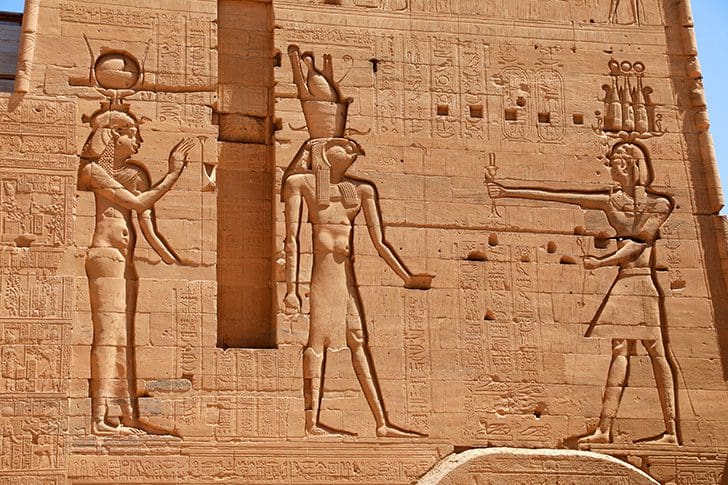
Children can tell the story of Joseph being sold into Egypt. We know it well, with nasty brothers, slave dealers, false accusations, pits of despair and drama galore. What’s most important about this story, however, may not be obvious, and that’s what we are talking about today.
You can also find the podcast on the following platforms: Anchor, Apple Podcasts, Spotify, Breaker, Castbox, Overcast, Pocket Casts, PodBean, RadioPublic, and Stitcher .
Scot
Children can tell the story of Joseph being sold into Egypt. We know it well, with nasty brothers, slave dealers, false accusations, pits of despair and drama galore. What’s most important about this story, however, may not be obvious, and that’s what we are talking about today.
Maurine
Hello, we’re Scot and Maurine Proctor. Welcome to Meridian Magazine Come Follow Me podcast where today we talk about Joseph of Egypt—the story you know well and yet may have never seen before. We will cover Genesis chapters 37-41.
If you are not familiar with Meridian Magazine, now’s the time to find us online. Meridian is updated every day with the best Latter-day Saint content. Remarkable insights on scripture, inspiring stories you’ll never forget, the church and world news of the day, a look at the world through our values as Latter-day Saints. Find Meridian Magazine at latterdaysaintmag.com. That’s mag as in magazine. Again, that’s latterdaysaintmag.com. You’ll find all the transcripts for these podcasts there as well.
Scot
Maurine, you and I go to Egypt every year leading a tour, and we tell the friends we bring with us that Egypt is another Holy Land. This is where some of the events from the lives of Abraham and Sarah happened, where Joseph came as a slave and became second only to Pharoah, where Moses led the children of Israel out of bondage, where Jesus came to escape Herod.
Maurine
Yet, we especially think of Joseph when we are there, because he is our grandfather. We are part of his family. We love to tell our Egyptian tour guide, Hany Tafeek, that we belong here because we are Joseph’s children.
Scot
Then when he came to Salt Lake and went on a tour with us of Welfare Square and saw the warehouses stacked with food as Joseph stored grain in Egypt, he said you really are Joseph’s grandchildren.
Maurine
Let’s start with some context. In our last lesson we learned that Jacob was given a new name, which was Israel, meaning “Let God Prevail.” This is a covenant name, affirming the reality that the essence of the covenant is “I will be your God and you will be my people.” With his wives, Jacob, or now Israel, has 12 sons, so the Old Testament will be the story of this posterity with their ability or failure to live the covenant and the events described will portray that. When the Children of Israel live the covenant, they will be prospered and given very specific promised blessings and, when they do not, they falter, fail, are conquered or scattered. If we miss this underlying thread which ties the Old Testament together, we miss its meaning.
Scot
We use the term “Israel” in various ways, so let’s stop to clarify that for a moment. Israel, as we mentioned is Jacob’s name, and his posterity are the Children of Israel. The Children of Israel is the lineage through which the covenant is carried, and all the faithful are either born into this line or adopted when they make their covenants. When Moses led Jacob or Israel’s descendants out of Egypt, the entire group was called the Children of Israel. Later, after the reign of Solomon, when Israel divided, the southern kingdom around Jerusalem contained two of the tribes and was called Judah. The northern kingdom, where ten of the tribes lived was called Israel. Finally, the word today also refers to the sovereign nation of Israel. We don’t want to get our “Israels” confused.
Maurine
We said that Joseph’s life was more than a story. One the one hand, it is a vivid illustration that “all things work together for good to [those] who love God’ (Rom 8:28). But we will see more as we are told again and again that God is with Joseph. Why is He with Joseph, and Joseph prospers even when the situation looks impossibly dire? It is because being prospered and protected are both covenant blessings. God is not only stronger than any circumstance, but He has perfectly orchestrated events long in advance to bless His covenant son, Joseph, and through him all the Children of Israel. The scripture here is not just to tell us an intriguing story, but one designed to teach us something of God’s attributes. He can and does engineer events to bless Joseph and all of the Children of Israel. Note this. He who has all power and is “more Intelligent than they all” can and does orchestrate events to bless and prosper his covenant children. He does the same for His loyal covenant keepers now. With the Lord things work out.
You may have seen this saying painted on to a piece of home décor. “Everything works out in the end. If it hasn’t worked out yet, then it’s not the end.”
Scot
As Genesis chapter 37 begins, “Israel loved Joseph more than all his children” undoubtedly, in part, because he had also loved Rachel, who had died giving birth to Benjamin. His father gave to Joseph “a coat of many colors” (v. 3). Now, it is easy to trivialize this and say, no wonder the brothers were jealous of him. His father favored him and he got this great outfit.
Of course, there is much more to it. Though we have sung about it and pictured it for years, the “coat of many colors” is a mistranslation. Hugh Nibley calls it “an invention,” that is found in no ancient source. He says, instead of “many colors”, it is a garment of certain marks. “This garment had belonged to Abraham, and it already had a long history…because it went back to the Garden of Eden.” There is only one, and nothing else like it.
Maurine
“Coat of many colors” is a translation from the Hebrew word ketonet passim, which means a long garment which reaches to the wrists and to the ankles. The Latin vulgate refers to it as a garment “worked very subtly with extra threads” or “special embroidery, special technique.” Nibley notes, however, that this garment has marks on it, and Jacob recognized it, though he was nearly blind, at the end of our story, when he felt the marks and recognized it as belonging to his son Joseph. (See Hugh B. Nibley, Teachings of the Book of Mormon, Vol. 3, Lecture 62).
Scholar Don Parry says that Jewish tradition “provides us with some interesting stories concerning the fate of the original priesthood garment of Adam, along with some insights into the magical properties attributed to it two millennia ago.” For example, the Book of Jasher says that Adam’s original garments were given to Enoch, and when he was taken up to God, Noah took them and brought them into the ark. When they left the Ark, Ham stole them and hid them from his brothers, and eventually they ended up with the wicked Nimrod. In the tradition, Esau battled Nimrod, killing him, took the garment and ran away.
Scot
Now, Don Parry says that “The stories of the preservations of Adam and Eve do not agree in the line through which they were transmitted,” but this is how the story goes.
“Abraham passed the garments to his son Isaac and he to his eldest son Esau. When Jacob received from Isaac the blessing intended for Esau, ‘Rebecca took the favorite clothing of her elder son, Esau, which was with her in the house. And she put it on Jacob.’ Isaac then blessed him, noting, among other things, ‘May nations serve you, and the people bow down to you. Become a lord to your brothers, and may your mother’s sons bow down to you.’ The blessing reminds us of the tradition that people bowed down to Nimrod when they saw him arrayed in the garments of Adam.
“Early Jewish commentators saw evidence that Jacob was arrayed in the garment of Adam in Genesis 27:27, where we read that Isaac ‘smelled the smell of his raiment, and blessed him, and said, See, the smell of my son is as the smell of a field which the Lord hath blessed.’ Origen reflected this view, when he cited the Genesis passage and used the term “divine garments.’” (Don Parry, Temples of the Ancient World, Rituals and Symbolism, Salt Lake City: Deseret Book).
Maurine
Hugh Nibley said, “When they placed [the garment] upon the face of Jacob, he smelled also the smell of the Garden of Eden. For behold there is not in all the earth another garment that has that smell in it.” (Nibley, Ibid.)
No matter what pieces and parts of these traditions we can rely on, what is certain is that this special garment given to Joseph from Jacob, was a one-of-a-kind and signified both birthright and covenant blessings bestowed upon him, with the attendant powers, prosperity, protection that would follow. This was not a small gift, and the brothers knew it.
It is intriguing too, that when Jacob wore the garment, the very blessing he received was that nations would serve him and that he would become a lord to his brothers, and that his mother’s sons would bow down to him.
Scot
Yes, this mirrors exactly the dreams that Joseph had. Genesis 37 notes when Joseph said:
7 For, behold, we were binding sheaves in the field, and, lo, my sheaf arose, and also stood upright; and, behold, your sheaves stood round about, and made obeisance to my sheaf.
8 And his brethren said to him, Shalt thou indeed reign over us? or shalt thou indeed have dominion over us? And they hated him yet the more for his dreams, and for his words.
9 ¶ And he dreamed yet another dream, and told it his brethren, and said, Behold, I have dreamed a dream more; and, behold, the sun and the moon and the eleven stars made obeisance to me.
We will see how prophetic these dreams are, for both on a temporal level—when Joseph is next to Pharoah in power in Egypt—and on the spiritual level—Joseph’s assignment to spiritually gather Israel, his brothers will bow to him.
Maurine
Is their anger and boiling resentment toward Joseph justified—especially at this level? It certainly does give us a disturbing snapshot of the character of these sons. Also, the birthright and covenant blessings were significant and life-changing and many among them may have considered themselves the rightful heir to these. Reuben, born to Leah, was the firstborn of the sons, but an act of immorality disqualified him for that role, though he may not have entirely accepted that.
Scot
Simeon and Levi, the two born next to Leah, may have desired the birthright, but their massacre of the Shechemites ruled them out. Judah could have argued that since Reuben, Simeon and Levi were not eligible, he could have been the one for the blessing.
Maurine
Because his mother Bilhah was considered Rachel’s property, Dan could have claimed he was Rachel’s firstborn. Gad, who was the firstborn of Zilpah, could have claimed that he had the birthright after Reuben lost it.
So the scene is set. Envy has done its work. Joseph’s brothers want to eliminate him as the source of pain and irritation in their lives. They conspire against him. Israel sends Joseph to see if all is well with them. It is a journey of about 85 miles from Hebron to Shechem, and then he must go on to the fertile and beautiful Dothan, just south of the Jezreel Valley to find them and their flocks.
You can hear the malice in their words: “Behold, this dreamer cometh. Come now therefore, and let us slay him, and cast him into some pit, and we will say, Some evil beast hath devoured him: and we shall see what will become of his dreams. ” (vv. 19,20).
Scot
Reuben spared him from being immediately slain by his brothers, but, while he is gone, the others stripped Joseph of his coat of many colors and cast him into a pit. We saw one movie portraying this scene which was heart-rending as Joseph in the pit is crying and pleading and shouting to his brothers to pull him out.
Yet, what looks like an absolute tragedy is also the perfect timing of the Lord, for just then some Ishmeelite merchantmen, heading for Egypt pass by. Judah has an idea; they can profit if they sell him as a slave, and for the price of twenty pieces of silver, they do. When Reuben returns, he rents his clothes in anguish, saying, “The child is not; and I, whither shall I go?” (v. 30)
Jacob is agonized when the brothers return without Joseph. He, too, rents his clothes in grief and announces, “For I will go down into the grave unto my son mourning” (v. 35).
Maurine
Imagine Joseph’s feelings at this point. He knows he is utterly despised of his own brothers, who watched callously as he must have screamed and cried to be carried away as a slave. Did the cruel treatment continue with the slave traffickers who had him? What were his prospects? What bottom-line despair he might have hit? After all, at this point he doesn’t know the end of the story as we do. Nobody told Joseph, sold into Egypt as a slave, that he would stand next to Pharoah one day as a ruler. Instead, the present bore upon him with all its weight and difficulty as it does on all of us. Did Joseph think God had utterly forsaken and forgotten him? Why hadn’t God reached out a hand to save him? Couldn’t God’s spirit have touched one of his brothers and made him hesitate and think “don’t do this.”
We don’t know, of course, what he thought, but the point is that we grow up hearing that if you follow the commandments, you will be blessed. That’s true. Yet, also true, is that even for the most righteous, those who go down in history for their integrity, righteousness and obedience, life can be difficult and unjust, and the Lord does not arrest the wicked to stop their actions. Joseph sees the cruelest of injustice at this moment and he will again, when we see him next in Potiphar’s house.
Yet all this was preparing him to later save his family, the Children of Israel from certain death. He had the ability to faithfully persist, firm and unshaken, through the darkest days, while all the time the Lord was leading him to a greater destiny.
Scot
Potiphar was an influential and wealthy man, the captain of the guard. When Joseph is sold to Potiphar, we are reminded again and again of the covenant blessings that are upon him. Remember the blessings of the covenant can be captured in six words that begin with “p”. These are promised land, posterity, priesthood, protection, prosperity and the presence of the Lord.
Whenever you see these words or these ideas in the Old Testament, the text is about the power of the covenant. So, Genesis, chapter 39 drives home the point. “The Lord was with him,” meaning Joseph. In verse two, the “Lord was with him” and put him with “a prosperous man”. We are told in verse three that Potiphar “saw that the Lord was with him, and that the Lord made all that he did to prosper in his hand.” We learn again that Joseph was so trusted that he became overseer in Potiphar’s house and all that he had. We’re told in verse 5 “that the Lord blessed the Egyptian’s house for Joseph’s sake and the blessing of the Lord was upon all that he had in the house, and in the field.”
Could the writer of this story make the reality clearer? Joseph is being blessed with extraordinary covenant blessings even when he is a slave.
Maurine
Clearly, Joseph was a man of spectacular integrity and character. That people could immediately see. What’s more remarkable, is whatever devastation the hatred and betrayal of his brothers had wreaked, Joseph’s soul had not become cankered or corrupted, and he still utterly trusted in the Lord. What this suggests is that this utter trust in the Lord and His promises, fundamentally alters the tragedy and challenges we might face along the way. You want to have a better life? Trust the Lord and don’t resist the challenges you face. He will hold your hand and walk you through.
Yet, now there is a malevolent twist to the story for Potiphar’s wife had eyes for young Joseph for the scriptures reminds us that “he is a goodly man and well-favored.” (v. 6). She seeks to seduce him, not once, but day after day. This again is an interesting note, because our temptations don’t come just once. The Adversary wants to wear down our resolve piece by piece and strand by strand. What we can resist at first may be much harder with incessant temptation, especially at a place where we are vulnerable.
Scot
Joseph, who is so trusted, tells Potiphar’s wife, “There is none greater in this house than I; neither hath he kept back any thing from me but thee, because thou art his wife: how then can I do this great wickedness and sin against God?” One day she is even more aggressive, and as he flees from her, she grabs his garment and it is left behind.
This is one of those seminal moments in scripture that tells how to be. We must not court temptation, or play with it, or suppose that everyone else is doing it, so why can’t I? Like Joseph, instead of falling we must flee. We must run from any power that would corrupt or undermine our souls, which are so precious. I had a bishop in college who described this as the “Get the heck out of there principle,” only he used a stronger word. When you are tempted, be as Joseph and get out.
Maurine
This reminds me of an experience you had when you were a teenager living in Turkey.
Scot
Yes. My friends and I traveled from Turkey to the Holy Land for two weeks together to see the wonderful sites and significant places in the area. One Friday evening, which was the eve of the Sabbath, we wanted to find some really fun place to visit in Jerusalem. This is before I knew much about what Shabbat eve meant to the Jews, and, of course, everything was closed and there was apparently nothing to do. So the ten of us went walking, looking for a place to go. It was late and it was very dark that night. We were in a new place to us and we didn’t know where we were going and we were a little bit scared.
In our wandering we went around the south end of Jerusalem, outside of the city walls where we had been told that there was this amazing Tibetan teahouse, that was supposed to be really fun and still open. As we walked, every time there was a little rustling in the weeds or a wind came up and moved a branch of the tree, the girls screamed and all of us were getting nervous because we didn’t know where we were or where we were going. We walked perhaps three miles in the fearful dark of a strange place.
Finally, the ten of us were met by an Israeli who was driving a military jeep. He stopped because he saw that we were out late at night, and he didn’t think it was particularly safe. He said, “Where are you going?” We answered that we had heard there was a Tibetan tea house somewhere near by in this village, but we could not find it. He said, “I know right where it is, and I’ll take you there.”
So all ten of us hopped in the back and on the sides of his military jeep, and he drove us to the Tibetan teahouse. We got out of the jeep, thanked the Israeli soldier and made our way to the door, which was a series of curtains or beads. Inside, many people were sitting on rugs on the floor with hookahs and smoke filled the room. In the corners, various couples were entwined with each other. I knew immediately that I was not supposed to be there.
None of my friends were members of the Church, so this was a very awkward situation for me. We sat in a circle on one of these rugs, and everyone was ordering tea. I ordered a Schweppes orange. But the thing that was happening to me, nobody knew. My heart was pounding, and I knew had to leave. Everything about that place bespoke darkness. Everything said this is not the place that a good member of The Church of Jesus Christ should be. I was 17-years old, and I wondered if I could walk all the way back to our youth hostel in Jerusalem by myself. It had been a long and scary walk to get there, and I just wasn’t sure I could make it all the way back alone or find my way there without directions. But I knew without any doubt that I had to leave.
As soon as the drinks came, I quickly drank my orange soda and I whispered to the girl next to me that I was going to leave and I would meet them back at the youth hostel. This was a brave thing to do and I felt utterly alone and frightened as I stepped out in this dark, moonless night. I
hadn’t gone far when I was accosted by a very large black dog coming right toward me. I prayed, “Please help me and let this dog not notice me.” The dog walked right by me, and even brushed up against the side of me, but he didn’t snarl or growl or even turn his head when he walked by. I felt like the Lord had made me invisible to him.
I continued until I found the main road that was on the eastern side of the walls of Jerusalem, but by this time I was so frightened that I stopped and said a prayer. I looked up in the heavens and I saw all the stars. I had often prayed to the clear skies at night when I was growing up on my farm in Missouri, and so I prayed again. “Heavenly Father, I felt a strong impression that I needed to leave this place, and now because I followed my impression, I need to be helped and blessed with courage and with strength to overcome the fear of being alone. I closed that simple prayer in the name of Jesus Christ, Amen, and the second I said amen the most amazing feeling of peace came over me. It started at the top of my head and went all through my body, and I started to feel so happy. I started to sing songs from Fiddler on the Roof and also songs from our hymn book. The more I sang, I started dancing in the street because there were no cars that late at night, and I looked up in the heavens and I felt the most amazing overwhelming feeling of peace. It was just a glorious experience. I found my way back to the youth hostel. It took me well over an hour, but I was truly blessed and I felt like following that prompting was one of the great lessons of my life.
Maurine
Joseph set the example by running from temptation, but the consequences were dire. The wife falsely accused Joseph to Potiphar, and he was immediately taken and put in prison. You would think with this accusation, that Joseph would have been put to death instead of sent to prison, but I’ve often thought, Potiphar knew the character of both his wife and Joseph, and there was such a stark contrast between them in integrity. I assume that Potiphar was not fooled, but had his hands tied in sending Joseph to prison.
Now, of course, the covenant promise is still with Joseph, as it always will be. Note how it is said in Genesis 39. “But the Lord was with Joseph, and shewed him mercy and gave him favour in the sight of the keeper of the prison” (v. 21). Joseph was put in charge of the prisoners and, of course, we are reminded again—in case we missed it, “the Lord was with him, and that which he did, the Lord made it to prosper” (v. 23).
These are stories and scriptures for covenant people. This is who you are, says the Lord, and this is what I will do for you.
Scot
Joseph has a gift to interpret dreams and when the king’s butler and the baker have offended him and are thrown into prison, this will be supernally important. Of course, this is a spiritual gift given to Joseph specifically for the events ahead.
The butler and the baker each dream a significant dream, which no one can interpret. The butler dreams of three vines, which bring forth ripe grapes, and he took the grapes and pressed them into Pharoah’s cup. Joseph tells him that this means that in three days he will be restored to his place in Pharoah’s court. The baker’s dream, unfortunately, does not have such a happy ending. The baker dreamed that he had three baskets on his head filled with bakemeats for Pharoah and the birds came and ate them. Pharoah is going to put the baker to death.
Joseph asks the butler to please remember him when he is back in court, but, he is forgotten until Pharoah himself has a significant dream.
Maurine
The scriptures remind us that some dreams are revelations, and this is sometimes the method God uses to talk to us. The Lord spoke to Lehi in a dream and warned him to take his family and leave Jerusalem. To protect the Christ child, Joseph was given a dream that he must take Mary and the baby and flee to Egypt. That pattern is sure.
Here is a story from an article Anne Pratt wrote on Meridian Magazine, “While on his mission, Jason Campbell had a revealing experience with an investigator who had a stunning dream. He writes,
“On my mission to Argentina we met a good man at his door, and he asked what church we were from and if we were Mormon. Before I could answer yes, my companion stuck his arm out to stop me and said, ‘The Mormon church does not exist. We are from the Church of Jesus Christ!’ The man got very excited and invited us in and we had the most amazing discussions with him because he was so spiritually prepared.
“He told us that two years earlier he had had a dream where an angel had come to him and told him that two missionaries from the true church would be sent to his home and he was to ask what church they were from and if they said anything but the Church of Jesus Christ he was not to let us in. He had waited for two years for us to arrive. He embraced the gospel, was baptized along with several of his daughters.”[2]
This dream so touched this man that he watched and waited until his dream was fulfilled and was gathered into the Gospel ‘net.’” https://latterdaysaintmag.com/profound-and-prophetic-dreams-sent-to-help-gather-israel/
Scot
Joseph was 17 years old when he was sold into Egypt, and now he is 30. He has spent a combined 13 years working in Potiphar’s house and being in prison. It must have felt like a lifetime. I can think of no better example of spiritual greatness than Joseph, falsely accused, thrown into prison and, believing that is his lot for life, waits patiently on the Lord without bitterness or blaming, resentment or resistance to God. But God had a plan.
Two years after the butler was returned to his place, Pharoah had a dream that disturbed and weighed upon him and for which all the wise men of the kingdom had no interpretation. It is surprising that this priestly caste in Egypt could not have devised a logical explanation.
Maurine
Pharoah dreamed of seven fat and well-favored cows that came out of the river to feed in the meadows, followed by seven ill-favored and lean-fleshed cows that ate the seven fat ones. Next, he dreamed of seven good ears of corn that grew up on a stalk, followed by seven thin ears that were blasted by the east wind. Then the seven thin ears devoured the seven full ones.
When the Pharoah was so troubled that he did not know the meaning of the dream, at last the butler remembered the man in the prison who had the gift of dream interpretation. Joseph was brought before Pharoah who asked the meaning of his dream. In all these 13 years, Joseph has not forgotten from whence his blessings came. He told Pharoah, “It is not in me: God shall give Pharoah an answer of peace” (v. 16).
Scot
Joseph explained that this dream was of primal importance. There would be seven years of plenty followed by seven years of famine and “it shall be very grievous” (Genesis 41:31). If famine hasn’t been in our experience, we can hardly imagine it. I remember seeing a baby who was dying of starvation in Haiti after the earthquake, so weak he couldn’t cry. Famine is grievous, but there was a way to prepare for this by storing grains during the seven years of plenty. Pharoah recognized the significance of what he must do.
“And Pharaoh said unto his servants, Can we find such a one as this is, a man in whom the Spirit of God is?
“And Pharoah said unto Joseph, Forasmuch as God hath shewed thee all this, there is none so discreet and wise as thou art“(v. 38,39).
Maurine
Joseph is installed as second only to Pharoah. “And he made him to ride in the second chariot which he had; and they cried before him, Bow the knee and he made him ruler over all the land of Egypt” (v 44). Joseph is given a new name which is Zaphnath-paaneah, which means among other things, “savior of the world,” the “giver of the nourishment of life,” and “revealer of a secret.” (See Alonzo Gaskill, The Lost Language of Symbolism, Salt Lake City: Deseret Book).
He is also given Asenath, the daughter of the priest Potipherah to marry. Together they give birth to twins Ephraim and Manassah.
Scot
Now Asenath matters to us, because for many she is also our grandmother. Who was she? That question has been debated for centuries. There are two Rabbinic traditions about Asenath’s descent. The first is that she is an ethnic Egyptian who converted to the Lord and raised her children in the faith. The other is that she is not Egyptian, but a member of the family of Jacob, being the daughter born to Dinah after she was abused by Shechem, son of Hamor. In this tradition, Jacob’s sons wanted to kill the infant, but Jacob brought a gold plate and wrote God’s name on it and hung it around her neck, and she was brought by an angel to the home of Potiphera, whose wife was barren and she raised Asenath as her own daughter. The point is, in either tradition that all was foreseen and planned by God.
So when the famine spread over “all the face of the earth” Joseph opened all the storehouses “and all countries came into Egypt to Joseph for to buy corn; because that the famine was so sore in all lands” (v. 57). Joseph, who withstood real hardship, with such spiritual power had been moved into place to save the Children of Israel.
Maurine
That’s all for today. Find the transcripts for these podcasts at latterdaysaintmag.com/podcast. Next week we’ll study Genesis 42-50. Thanks to Paul Cardall for the music and to Michaela Proctor Hutchins, our producer for this show.
What Are We to Make of Jacob’s Apparent Deceitfulness?

This is article #8 in Jeffrey Bradshaw’s Old Testament article series. See #7 here. https://latterdaysaintmag.com/the-happiest-interlude-in-genesis-abrahams-steward-matches-isaac-with-rebekah/
Question: Why is Jacob so greatly blessed when “the pivotal moments in the scriptural account of [his] life seem to turn on deceit”?[1]
Summary: Jacob’s youthful deceits are proverbial. Indeed, the Savior Himself praised Nathanael by contrasting him with Jacob, saying, “Behold an Israelite [i.e., descendant of Jacob] indeed, in whom[, unlike his forefather, there] is no guile!”[2] However, as in all scripture stories (as in life), we cannot fully understand the lessons of Jacob’s divine tutorial unless we follow it to its end. In the Bible’s version of measure-for-measure justice, the deceiver will be himself deceived. Eventually, among the happy results of Jacob’s crucible of experience, he will learn humility, forgiveness, and that God has His own ways to fulfill His own promises.

Figure 2. Jacob and Esau
The Know
The extent of Jacob’s ambition is illustrated when we read that he struggled in the womb with his twin brother Esau by grabbing his heel.[3] By this, his original name Ya-akov-’el ( = May the god El protect) was supplanted by the nickname ‘Akev ( = “heel”), referring to the reputation he acquired as a “heel-holder.”[4] Jacob’s grabbing of his brother’s heel “becomes a kind of emblem of their future relationship.”[5] It also was a portent of several later episodes where he tried to secure through his own uninspired trickery “blessings that God [was] already willing to grant but that [were] made conditional on [his] asking for them.”[6]
In answer to Rebekah’s prayer about the meaning of the struggle among her two sons that had already begun before birth, she received the answer that “the elder [i.e., Esau] shall serve the younger [i.e., Jacob].”[7] According to BYU professor Catherine Thomas, “This divine announcement prophesied that Jacob, even though second born, should have the birthright and the attached patriarchal blessing. The Lord’s description of these two nations reflects choices made by these people in the premortal world as well as the choices they would yet make in mortality.”[8] By prefacing the story of Jacob with this prophecy, the scripture reader is informed that Jacob’s blessings eventually would be realized through divine intervention, not through “the improper means [Jacob] later employed to obtain his rights.”[9]
In this article, we will take a glimpse at three incidents that illustrate Jacob’s efforts to secure his blessings through “improper means”: 1. his attempt to buy of the birthright from Esau for a “mess of pottage”; [10] 2. his conspiring with Rebekah to trick Isaac into giving him Esau’s blessing; 3. his effort to possess as many as possible of the flocks of his wily father-in-law Laban (though in this latter instance, it was eventually revealed that he was helped by the Lord). In each case — by way of contrast to Abraham[11] and Eliezer[12] — Jacob does not ask in faith[13] and wait patiently for the Lord to bring about promised blessings “in his own time, and in his own way, and according to his own will,”[14] but tries to force God’s hand through his own anxious manipulations. However, by the time he has finished his service with Laban he is ready for his ultimate “wrestle with God,”[15] as will be outlined in the next article in this series.

Figure 3. Jan Victors (1619-1676): Esau and the Mess of Pottage, 1653.
Attempting to buy the birthright. Though there may be more to the story than what we have in scripture,[16] Genesis opens the account by telling us simply that “Jacob sod pottage: and Esau came from the field, and he was faint.”[17]
However, the few words that Esau utters give us what we need to see into Esau’s heart:
It is well known that in biblical dialogue all the characters speak proper literary Hebrew, with no intimations of slang, dialect, or ideolect. The single striking exception is impatient Esau’s first speech to Jacob in Genesis 25: “Let me gulp down some of this red red stuff.” Inarticulate with hunger, he cannot come up with the ordinary Hebrew term for “stew,” and so he makes do with ha’adom ha’adom hazeh—literally “this red red.”[18] But what is more interesting for our purpose is the verb Esau uses for “feeding,” hal’iteini. This is the sole occurrence of this verb in the biblical corpus, but in the Talmud it is a commonly used term with the specific meaning of stuffing food into the mouth of an animal.[19] … [I]n this instance, the writer … exceptionally allowed himself to introduce the vernacular term for animal feeding in order to suggest Esau’s coarsely appetitive character.[20]
The rapid-fire description in verse 34 of Esau’s subsequent behavior (“he did eat and drink, and rose up, and went his way”) “nicely expresses the precipitous manner in which Esau gulps down his food and, as the verse concludes, casts away his birthright.”[21]
However, BYU professor Arthur Henry King (1910-2000) noted that even though “Esau was obviously wrong,” it does not mean that Jacob is right.[22] Jacob’s mother had no doubt already told him about God’s promise that he would receive the birthright, and his attempt to buy it from Esau was not merely unnecessary but also an offensive vote of no confidence in the Lord. Besides, although “the gift of God” may be sold, it cannot “be purchased,”[23] as Nahum Sarna observed:[24]
[I]t is highly significant that the text only mentions Esau’s sale of the birthright but does not state that Jacob bought it. This is contrary to the usual biblical legal style. … The omission in the present story is another way of dissociating Jacob’s eventual ascendancy from the means he adopted.

Figure 4. Jacques Joseph Tissot (1836-1902): Jacob Deceives Isaac
Trying to trick Isaac into giving him Esau’s blessing. Esau’s unworthiness is reinforced by the mention of his marriage to two Hittite women, “which were a grief of mind unto Isaac and to Rebekah.”[25] The issue of succession in the family is brought to the fore by the observation that “Isaac was old”[26] — for that reason he was apparently anxious to give a father’s blessing to “his eldest son,”[27] Esau. Note that under normal circumstances, Esau would have been called the “firstborn,” but scripture studiously avoids using this term since ultimately Jacob, not Esau, will receive the birthright.[28]
Of course, Isaac’s blessing does not convey the birthright itself. “Apparently, [the blessing and the birthright] were separate institutions. Nothing is said about the disposition of property”[29] as would have been the case had it been a birthright blessing.
The most important detail in the preface to the story is that “Isaac’s eyes were dim, so that he could not see.”[30] Isaac’s loss of vision allowed Rebekah and Jacob to carry out their deception. More importantly, scripture seems to imply that Isaac is also blind in a figurative sense: his “perception of reality about Esau’s worthiness to receive the blessing appears to have been clouded.”[31]
The details of Rebekah and Jacob’s conspiracy are not important to the theme of this article.[32] What should be realized, however, is that for a second time, Jacob’s deception is designed to secure Esau’s blessing through his own efforts rather than through patience in God’s promises to him, conditioned on his faithfulness. To his mother, Jacob admits that his actions may reveal him to his father as a “deceiver,”[33] but he “seems to be more concerned with the consequences of detection than with the morality of the act.”[34] Neither one seems to anticipate the high price of physical and emotional estrangement that will result.
Despite his age and blindness, Isaac seems to suspect that something is not right. “Deprived of his eyesight, Isaac summons to his aid the remaining senses of hearing, touch, taste and smell.”[35] Immediately after hearing the first word out of Jacob’s mouth — “My father”[36] — Isaac questions his identity. Heightening the dramatic tension, Isaac then wonders how the venison was obtained “so quickly.”[37] Jacob brazenly “invokes God’s name in an outright lie,”[38] saying that “the Lord God brought [the venison] to [him].”[39] Through the touch and smell of Jacob’s clothing and the taste of the meat, Isaac seems convinced at last and bestows the blessing.[40]
When Esau returned from his hunt, Isaac realized what had happened. Despite Esau’s complaint to his father that Jacob had now “supplanted [him] … two times,”[41] Isaac knew that “the blessing he [had] uttered [under the inspiration of heaven was] beyond recall.”[42] Thus, to Esau, he solemnly reaffirmed the promises of Jacob’s blessing: “yea, and he shall be blessed.”[43]
Though the blessing stood, it is important to note that “Rebekah and Jacob’s trouble is for nothing — the deception is not rewarded.”[44] The blessing Jacob received was not the birthright blessing — “it contains no promises of progeny or land.”[45] Later, however, when Rebekah “is forthright about her concerns” — reminding Isaac of her disgust at Esau’s marriages to the Hittite women and expressing her concern about Jacob’s marriage prospects — “the birthright blessing is finally given.”[46]
Nahum Sarna summarizes the point of this episode:[47]
[In the second blessing], Isaac confirms Jacob’s title to the birthright independently of the deception. Jacob is recognized to be the true heir to the Abrahamic covenant, which is why he must not marry outside of the family.

Figure 5. Jacob Meets Laban.
The deceiver is deceived, but Jacob finally gets Laban’s goat(s). Jacob had been humbled in his hasty flight to Haran to escape the anger of Esau. This prepared to receive a divine encounter in vision[48] and subsequently to make a covenant with the Lord. Thus God actively began a tutorial designed to prepare Jacob for his unique and essential mission in life.
Having arrived in the village of his relatives, Jacob met his match in the wily Laban, his mother’s brother and the father of his future brides. Jacob, the heel-holder, will be the subject of multiple deceptions at Laban’s hand.
Jacob’s sudden appearance as a solitary and an empty-handed refugee must have raised some questions in the mind of the astute Laban. No doubt he recalled “that the last time someone came from the emigrant branch of the family in Canaan, he brought ten heavily laden camels with him.”[49] Although his warm embrace was probably nothing more than standard hospitality, the Jewish scholar Rashi cynically surmised that Laban’s intent was “to see if Jacob had gold secreted on his person.”[50]
Lacking the means to pay a bride-price, Jacob quickly proposed a generous offer to work seven years for Rachel’s hand in marriage.[51] “Laban’s reply is a piece of consummate ambiguity naively taken by Jacob to be a binding commitment.”[52]
After a night where the marriage was consummated, we are told in the terse economy of style characteristic of Genesis that “in the morning, behold, it was Leah.”[53] Laban’s reply when he was confronted by Jacob is similarly to the point: “It must not be so done in our country, to give the younger before the firstborn.”[54] Robert Alter comments:[55]
Laban is an instrument of dramatic irony: his perfectly natural reference to “our [country]” has the effect of touching a nerve of guilty consciousness in Jacob, who in his [country] acted to put the younger before the firstborn. This effect is reinforced by Laban’s referring to Leah not as the elder but as the firstborn (bekhirah). It has been clearly recognized since late antiquity that the whole story of the switched brides is a meting out of poetic justice to Jacob — the deceiver deceived, deprived by darkness of the sense of sight as his father is by blindness, relying, like his father, on the misleading sense of touch. The Midrash Bereishit Rabba vividly represents the correspondence between the two episodes: “And all that night he cried out to her, ‘Rachel!’ and she answered him. In the morning, ‘and,… look, she was Leah.’ He said to her, ‘Why did you deceive me, daughter of a deceiver? Didn’t I call out Rachel in the night, and you answered me!’ She said: ‘There is never a bad barber who doesn’t have disciples. Isn’t this how your father cried out Esau, and you answered him?’”
However, as Nahum Sarna points out, “retributive justice is not the only motif. Just as Jacob’s succession ot the birthright was divinely ordained, irrespective of human machinations,[56] so Jacob’s unintended marriage to Leah is seen as the working of Providence, for from this unplanned union issued Levi and Judah, whose offspring … [sustained] the two great institutions of the biblical period, the priesthood and the Davidic monarchy.”[57]

Figure 6. Jusepe de Ribera (1591-1652): Jacob With Laban’s Flocks.
After having served a second seven years for Rachel, Jacob has obtained a large family, but still lacks the personal means to provide for them independently of Laban.[58] At last, he sees an opportunity to enrich himself through making what seems to be a bargain for his father-in-law. In return for Jacob’s continued service Jacob would ask only for the relatively rare “speckled and spotted cattle, and all the brown cattle among the sheep, and the spotted and speckled among the goats.”[59] We will pass over the details of this episode to focus on its lesson: namely, that once more Jacob’s blessings were, as voiced by Shakespeare’s Antonio, “not in his power to bring to pass, But sway’d and fashion’d by the hand of heaven.”[60]
Two different accounts of Jacob’s actions, meant to assure the multiplication of his sheep and goats, are given in Genesis: one focuses on his implausible strategy of placing specially-prepared sticks in front of mating flocks;[61] the other, relying on divinely suggested and directed propagation of the stronger animals.[62] Sarna points out that these strategies need not be seen as contradictory is one assumes the first was simply an “elaborate display put on by Jacob in order to mask his secret technique.”[63]
Explicitly acknowledging for the first time in scripture that it was God, not him, who deserved credit for the idea that “gave the increase,”[64] Jacob described his revelatory dream to Leah and Rachel.[65] Further, he told them that God had commanded him to “get … out from this land, and return unto the land of [his] kindred.”[66] To this they both agreed heartily.[67]
Having learned through experience, Jacob was ready now to “confess … [God’s] hand in all things, and [to] obey … his commandments.”[68] Thus was fit for the ultimate stage of his divine tutorial, as will be discussed in the next article in the series.
The Why
Shakespeare’s Hamlet once boasted that he would destroy his enemies by “blow[ing] them [to] the moon.”[69] Later, when his “deep plots”[70] failed and his rashness faded, he was left helpless and in despair. It was then that Divine Providence exercised its incontrovertible prerogative, bringing him effortlessly “what he had so long and eagerly desired.”[71] Afterward, he humbly confessed to the agreeing nod of his friend Horatio:[72]
There’s a divinity that shapes our ends,
Rough-hew them how we will —
We learn from the story of Jacob that rough-hewing of one’s own ends, trying to leave God out of the picture, is a tedious, sometimes painful, and always futile pastime.
“Man proposes, but God disposes.”[73] No human folly is more common or more destructive than the attempt to wrest our future from the hand of God so we may place it, as we suppose, securely into our own hands. After the inevitable disaster that follows an awakening from the illusion of exclusive self-reliance, those wise enough to listen will hear the kind, corrective voice of the Father, “I am the gardener here, and I know what I want you to be.”[74]
Thanks to Kathleen M. Bradshaw and Stephen T. Whitlock for their careful proofreading and valuable suggestions.
Further Study
For discussions of the meaning and significance of Jacob’s vision of the ladder, see J. M. Bradshaw, God’s Image 1; J. M. Bradshaw, Faith, Hope, and Charity, p. 34; J. M. Bradshaw, et al., God’s Image 2, p. 395.
References
Alter, Robert, ed. Genesis. New York City, NY: W. W. Norton, 1996.
Bradshaw, Jeffrey M. “The ark and the tent: Temple symbolism in the story of Noah.” In Temple Insights: Proceedings of the Interpreter Matthew B. Brown Memorial Conference ‘The Temple on Mount Zion,’ 22 September 2012, edited by William J. Hamblin and David Rolph Seely. Temple on Mount Zion Series 2, 25-66. Salt Lake City, UT: The Interpreter Foundation/Eborn Books, 2014. https://journal.interpreterfoundation.org/the-ark-and-the-tent-temple-symbolism-in-the-story-of-noah/. (accessed August 21, 2021).
———. Creation, Fall, and the Story of Adam and Eve. 2014 Updated ed. In God’s Image and Likeness 1. Salt Lake City, UT: Eborn Books, 2014. https://archive.org/download/140123IGIL12014ReadingS.
Bradshaw, Jeffrey M., and David J. Larsen. Enoch, Noah, and the Tower of Babel. In God’s Image and Likeness 2. Salt Lake City, UT: The Interpreter Foundation and Eborn Books, 2014. https://archive.org/download/131203ImageAndLikeness2ReadingS.
Bradshaw, Jeffrey M. “Faith, hope, and charity: The ‘three principal rounds’ of the ladder of heavenly ascent.” In “To Seek the Law of the Lord”: Essays in Honor of John W. Welch, edited by Paul Y. Hoskisson and Daniel C. Peterson, 59-112. Orem, UT: The Interpreter Foundation, 2017. https://journal.interpreterfoundation.org/faith-hope-and-charity-the-three-principal-rounds-of-the-ladder-of-heavenly-ascent/.
Brown, Hugh B. 1968. God Is the Gardener (31 May 1968). In BYU Speeches. https://speeches.byu.edu/talks/hugh-b-brown_god-gardener/. (accessed February 28, 2018).
Brown, S. Kent. Class Notes, Old Testament Class, Brigham Young University, 1979.
Ginzberg, Louis, ed. The Legends of the Jews. 7 vols. Translated by Henrietta Szold and Paul Radin. Philadelphia, PA: The Jewish Publication Society of America, 1909-1938. Reprint, Baltimore, MD: Johns Hopkins University Press, 1998.
Josephus, Flavius. “The Antiquities of the Jews.” In The New Complete Works of Josephus. Translated by Paul L. Maier and William Whiston, 47-664. Grand Rapids, MI: Kregel Publications, 1999.
Kempis, Thomas à. 1441. The Imitation of Christ: A New Reading of the 1441 Latin Autograph Manuscript. Translated by William C. Creasy. Macon, GA: Mercer University Press, 2007.
King, Arthur Henry. Class Notes, Reading the Scriptures Class, Brigham Young University, 1980.
LDS Bible Dictionary. In LDS Scriptures. https://www.lds.org/scriptures/bd/prayer?lang=eng. (accessed February 28, 2018).
Mabillard, Amanda. Divine Providence in Hamlet. In Shakespeare Online. http://www.shakespeare-online.com/plays/hamlet/divineprovidence.html. (accessed February 28, 2018).
Mess of Pottage. In Wikipedia. https://en.wikipedia.org/wiki/Mess_of_pottage. (accessed March 2, 2018).
Nibley, Hugh W. 1975. “Sacred vestments.” In Temple and Cosmos: Beyond This Ignorant Present, edited by Don E. Norton. The Collected Works of Hugh Nibley 12, 91-138. Salt Lake City: Deseret Book, 1992.
Ricks, Stephen D. “The garment of Adam in Jewish, Muslim, and Christian tradition.” In Temples of the Ancient World, edited by Donald W. Parry, 705-39. Salt Lake City, UT: Deseret Book, 1994.
Sarna, Nahum M., ed. Genesis. The JPS Torah Commentary, ed.Nahum M. Sarna. Philadelphia, PA: The Jewish Publication Society, 1989.
Shakespeare, William. 1594. “The Merchant of Venice.” In The Riverside Shakespeare, edited by G. Blakemore Evans, 250-85. Boston, MA: Houghton-Mifflin Company, 1974.
———. 1600. “The Tragedy of Hamlet, Prince of Denmark.” In The Riverside Shakespeare, edited by G. Blakemore Evans, 1135-97. Boston, MA: Houghton-Mifflin Company, 1974.
Thomas, Catherine. “Jacob rightly received blessings.” Salt Lake City, UT: Church News, June 25, 1994. https://www.thechurchnews.com/archives/1994-06-25/jacob-rightly-received-blessings-younger-twin-foreordained-to-play-a-major-role-in-covenant-priesthood-line-139586. (accessed January 14, 2022).
Tvedtnes, John A. “Priestly clothing in Bible times.” In Temples of the Ancient World, edited by Donald W. Parry, 649-704. Salt Lake City, UT: Deseret Book, 1994.
Endnotes
[1] C. Thomas, Jacob Rightly Received.
[2] John 1:47. Cf. Psalm 32:2.
[3] Genesis 25:26. Cf. Hosea 12:3.
[4] N. M. Sarna, Genesis, Genesis 25:26.
[5] R. Alter, Genesis, p. 128.
[6] LDS Bible Dictionary, LDS Bible Dictionary, s.v. Prayer.
[7] Genesis 25:23. According to Josephus, it was Isaac rather than Rebekah who enquired and received the answer that the elder would serve the younger (F. Josephus, The Antiquities (New), 1:18:1).
[8] C. Thomas, Jacob Rightly Received.
[9] N. M. Sarna, Genesis, Genesis 25:23.
[10] Wikipedia gives the following account of the origins of this proverbial, non-scriptural phrase (Mess of Pottage, Mess of Pottage):
The phrase alludes to Esau’s sale of his birthright for a meal (“mess”) of lentil stew (“pottage”) in Genesis 25:29-34 and connotes shortsightedness and misplaced priorities. …
Its first attested use, already associated with Esau’s bargain, is in the English summary of one of John Capgrave’s sermons, c1452, “[Jacob] supplanted his broþir, bying his fader blessing for a mese of potage.” In the sixteenth century it continues its association with Esau, appearing in Bonde’s Pylgrimage of Perfection (1526) and in the English versions of two influential works by Erasmus, the Enchiridion (1533) and the Paraphrase upon the New Testament (1548): “th’enherytaunce of the elder brother solde for a messe of potage.” It can be found here and there throughout the sixteenth century, e.g. in Johan Carion’s Thre bokes of cronicles (1550) and at least three times in Roger Edgeworth’s collected sermons (1557). Within the tradition of English Biblical translations, it appears first in the summary at the beginning of chapter 25 of the Book of Genesis in the so-called Matthew Bible of 1537 (in this section otherwise a reprint of the Pentateuch translation of William Tyndale), “Esau selleth his byrthright for a messe of potage”; thence in the 1539 Great Bible and in the Geneva Bible published by English Protestants in Geneva in 1560.[9] According to the OED, Coverdale (1535) “does not use the phrase, either in the text or the chapter heading…, but he has it in 1 Chronicles 16:3 and Proverbs 15:7.” Miles Smith used the same phrase in “The Translators to the Reader,” the lengthy preface to the 1611 King James Bible, but by the seventeenth century the phrase had become very widespread indeed and had clearly achieved the status of a fixed phrase with allusive, quasi-proverbial, force.
[11] See, e.g., Genesis 15:2-5.
[12] Genesis 24:12-14. For the name of this otherwise unnamed steward of Abraham’s household, see Genesis 15:2.
[13] Contrast, for example, the scriptural comment on Abraham’s response to God’s promise: “An he believed in the Lord, and he counted it to him for righteousness” (Genesis 15:6).
[14] D&C 88:68.
[15] Genesis 32:24-30.
[16] For example, Hugh Nibley summarizes “Jewish lore, [which tells of how] Nimrod had [the garment of the priesthood]; then Esau was jealous of Nimrod, who was another great hunter. He lay in ambush, slew Nimrod, took the garment from him, and… ran exhausted to Jacob… [This garment was the birthright which Jacob got from Esau.] That was the deal: he was willing to sell it in a financial sense. … Somebody is always trying to steal the garment; somebody is always trying to fake it. …[A]lways there is the false version of the garment going around” (H. W. Nibley, Vestments, pp. 130-131). For more extensive discussion of this topic, see J. M. Bradshaw et al., God’s Image 2, pp. 309-311; J. M. Bradshaw, Ark and Tent, pp. 35-36.
[17] Genesis 25:29.
[18] Sarna observes that the repetition of the word “red” may indicate “deep red.” He suggests that Esau may have expected blood rather than lentils as the main flavoring of the stew (N. M. Sarna, Genesis, Genesis 25:30):
Blood was considered to constitute the life-essence and was widely believed to contain magical properties. It was a symbol of strength and vitality. A suggestion that Esau thought the “red stuff” to be a blood broth is most plausible. His primitive instincts were aroused by the sight. He expected his vitality to be renewed by drinking it.
[19] R. Alter, Genesis, p. xxiv.
[20] Ibid., p. 129.
[21] Ibid., p. 130.
[22] A. H. King, Class Notes.
[23] Acts 8:20.
[24] N. M. Sarna, Genesis, Genesis 25:34.
[25] Genesis 26:35.
[26] Genesis 27:1. Note, however, that although he is now 137 years old, he will live another 40 years.
[27] Genesis 27:1.
[28] N. M. Sarna, Genesis, Genesis 27:1.
[29] Ibid., Jacob purloins the blesing (27:1-28:9).
[30] Genesis 27:1.
[31] N. M. Sarna, Genesis, Genesis 27:1.
[32] Notably, in light of traditions that speak of Esau’s envy of Nimrod’s purloined priesthood garments as mentioned above, some Jewish sources portray Rebekah as dressing Jacob in Adam’s “wonderful garments,” the high-priestly raiment” (L. Ginzberg, Legends, 1:332). When Isaac smells of Jacob (Genesis 27:27), he is said to have “discerned the fragrance of paradise” (ibid., 1:334). (See also J. A. Tvedtnes, Clothing, p. 657; S. D. Ricks, Garment, pp. 710-713, 730).
[33] Genesis 27:12.
[34] N. M. Sarna, Genesis, Genesis 27:12.
[35] Ibid., Genesis 27:21-27.
[36] Genesis 27:18.
[37] Genesis 27:20.
[38] N. M. Sarna, Genesis, Genesis 27:20.
[39] Genesis 27:20.
[40] BYU professor S. Kent Brown (S. K. Brown, Class Notes) wondered whether this was indeed the case, concluding that “Isaac knew almost the whole time”: “Doesn’t goat’s meat taste different than venison, [even when specially prepared]?”
[41] Genesis 27:36.
[42] N. M. Sarna, Genesis, Genesis 27:33.
[43] Genesis 27:33.
[44] A. H. King, Class Notes.
[45] N. M. Sarna, Genesis, Genesis 27:27.
[46] A. H. King, Class Notes. The birthright blessing is given in Genesis 28:3-4.
[47] N. M. Sarna, Genesis, Genesis 28:1.
[48] For more on the symbolism and significance of this vision, see J. M. Bradshaw, Faith, Hope, and Charity; J. M. Bradshaw, God’s Image 1, p. 34; J. M. Bradshaw et al., God’s Image 2, p. 395.
[49] R. Alter, Genesis, p. 153.
[50] Ibid., p. 153.
[51] Genesis 29:17.
[52] N. M. Sarna, Genesis, Genesis 29:19.
[53] Genesis 29:25.
[54] Genesis 29:26.
[55] R. Alter, Genesis, p. 155.
[56] Genesis 25:23.
[57] N. M. Sarna, Genesis, Genesis 29:25.
[58] In Genesis 29:30, after reminding Laban of his long and productive service, Jacob asks: “now when shall I provide for mine own house also?”
[59] Genesis 30:32.
[60] W. Shakespeare, Merchant, 1:3:92-93
[61] Genesis 30:37-43. I would have used the word “impossible” instead of “implausible” had it not been for the theory put forth by some that “the three plants placed in the watering troughs, each known to contain toxic substances and used in tje ancient world for medicinal purposes, could have had the effect of hastning the onset of the estrous cycle in the anmials and so heightened their readiness to copulate” (N. M. Sarna, Genesis, Genesis 30:32-36).
[62] Genesis 31:8-12. See ibid., Genesis 30:32-36.
[63] Ibid., Genesis 30:32-36.
[64] 1 Corinthians 3:6.
[65] Genesis 31:10-12.
[66] Genesis 31:13.
[67] Genesis 31:14-16.
[68] D&C 59:21.
[69] W. Shakespeare, Hamlet, 3:4:209.
[70] Ibid., 5:1:9.
[71] A. Mabillard, Divine Providence.
[72] W. Shakespeare, Hamlet, 5:1:10-11.
[73] “Homo proponit, sed Deus disponit” (T. à. Kempis, Imitation, 1:19:2). Cf. Proverbs 19:21.
[74] H. B. Brown, God Is the Gardener.
“I Will Be Thy God”—Genesis 28-33
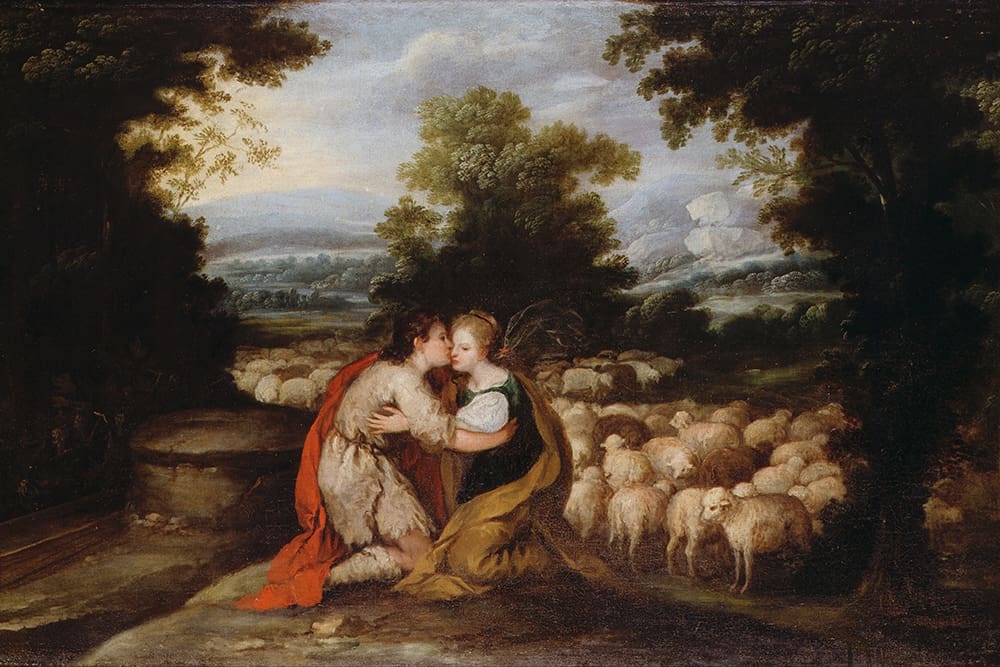
Scot
The story of Jacob in the Bible has all the elements of high drama. True love thwarted, family division, a deceiving father-in-law, a tight escape. If it was a movie you’d want to watch it, but it’s much better than a movie because over arching all, it is the story of the covenant in the lives of real people.
Maurine
Hello, we’re Scot and Maurine Proctor and this is Meridian Magazine’s Come Follow Me podcast, where today we’ll talk about Genesis 28 through 33, titled “Surely the Lord is in This Place”
The Bible covers two thousand plus years of history in 12 chapters and then zeroes in on Abraham, Isaac and Jacob and their posterity for the rest of the 1, 184 pages for this reason. The Old Testament is about the covenant blessings and obligations as they play out over generations. The idea is to teach us what this covenant is, what it means, and the consequences of purposely turning your back on it. We hear of the blessings of Abraham, Isaac and Jacob, and the God of Abraham, Isaac and Jacob, but we could say instead: the God of Abraham, the God of Isaac, and the God of Jacob, because the renewal of the covenant was made afresh with each one. Even if you are born in the covenant, it is not an entitlement. Ultimately this is a promise that each has to choose and live worthy of.
Scot
The covenants we make in the temple are consistent with these ancient covenants. Though the delivery may have been modified somewhat, our covenants have these ancient origins. That is what makes the Old Testament so particularly relevant to Latter-day Saints. We understand the power and blessing of covenants better as we see them play out in the lives of individuals and nations.
The new and everlasting covenant existed before the creation of the world. When we understood that to advance meant that we would be cut off from God’s presence, it is the new and everlasting covenant, through the atonement of Jesus Christ, that would allow our return in a higher and holier state. This is why the covenant is everlasting.
Maurine
Kerry Muhlestein notes, “Once they lost the presence of God, [Adam and Eve] must have felt an immediate and keen need for assurance that they could once again regain it in some way….It is powerful and striking to realize that so soon after separation from Humankind, God was willing to bind Himself to us.” Take note of that. Here we are in a fallen world, where the influences we swim in are corruption, misinformation, and we can’t remember who we are, but the Lord says, “I will take your hand.” This is just like you would do with a child when you came to a busy road. You would take their hand and safely walk them across.
Muhlestein said, After Abraham’s day there is an iteration to the covenant. “Anyone who wanted to be part of the covenant would have to become part of Abraham and Sarah’s seed. Covenantal blessings would focus around Sarah and Abraham’s descendants [or those who were adopted in] from this time forward.” (Kerry Muhlestein, Let God Prevail, Salt Lake City: Deseret Book).
Scot
As with Abraham and us today, Jacob seems to have received the covenant blessings in stages or steps. Remember that when Rebekah was about to give birth to twins, Esau and Jacob, the children were struggling in her womb, and she sought the Lord to understand. He told her that “Two nations are in thy womb, and two manner of people shall be separated from thy bowels; the one people shall be stronger than the other people; and the elder shall serve the younger” (Gen. 25:23). She knew by revelation that Jacob was to receive the covenant blessing.
They were very different sons. Esau was red and hairy and “a cunning hunter” and “Jacob was a “plain man, dwelling in tents” (Gen. 25:27). Isaac preferred Esau, and since he was the older of the twins, intended to give him the birthright blessings. In this case, Rebekah received a revelation that Isaac had not received, and remember in chapter 27, she creates an elaborate ruse to assure that Jacob receives the blessing. The wives of the patriarchs played a responsible role in assuring that the son God had chosen received the birthright as well as the blessings of the covenant.
Maurine
Though in many ways, Esau seemed to disregard the birthright blessings, and was willing to sell them for a mess of pottage, still there is a plaintive moment when Esau learns that Jacob now has both the birthright and this covenant blessing. Esau cries with “a great and exceeding bitter cry, and said unto his father, “Bless me, even me also, O my father” (Gen 27:34). He feels twice cheated. Esau hates Jacob and resolves to kill him. This is the set up to understand today’s lesson, but first an aside.
There are some interesting parallels in the covenant stories of Abraham, Isaac and Jacob, and the story of Joseph fits some of these as well. First, the oldest in the family is to be the birthright son, yet, traditions tell us that Abraham was a younger son, so was Isaac, and so was Jacob. This fits Joseph as well, who was the oldest son of Rachel, but not the oldest son of Jacob. Second, in every case, there was a threat to their lives. Abraham’s father, Terah tried to have him sacrificed, Isaac was taken to be sacrificed, and Jacob’s brother purposed to kill him. Of course, Joseph’s brothers tried to kill him. Third, each of them found refuge in a foreign land. Fourth, Abraham, Isaac and Jacob all had wives who were barren, which was a great irony considering that the covenant blessings were to go through the family line. Fifth, in each case the wives finally conceive through the power of God. Finally, the wife designates the birthright son. This is because the matriarchal line is as important as the patriarchal line and, Sarah, Rebekah, Leah and Rachel were also specifically chosen by the Lord.
Scot
Of course, we know that the importance of the birthright going to the first born was that this was in similitude of the Lord Himself, who is the firstborn of the Father. How can we explain, then, that Abraham, Isaac, and Jacob were not their father’s firstborn sons?
James Ferrell makes an intriguing point about this: “The rule itself can be thought to be in similitude of Christ’s spiritual role and identity. By contrast, exceptions to the rule can be thought to be in similitude of Christ’s temporal role and identity. That is, the one who would come as Messiah would not come in the way most would expect. He would not be mighty in appearance or in political or military power. He would be a Savior who to the spiritually undiscerning would appear unable to save even himself—one whom Isaiah described as having ‘no form nor comeliness; and when we shall see him, there is no beauty that we should desire him . . . despised and rejected of men . . . esteem[ed as] stricken, smitten of God, and afflicted.’ In short, the Savior of the world would not be great in the eyes of the world. He would come in a form that was unexpected, and his lowly station in life would hide his divine origin and mission from those who were without faith. He was, as it were, in the eyes of the world, the younger son—one without station or claim to position or greatness.”
Maurine
Ferrell continues: “One reason the eldest son, birthright rule may have been created was to emphasize the exception to the rule, in order to communicate a central truth about the Lord’s identity. The exception also communicates a central truth about our own identity: Exaltation does not come as a matter of right, whether by physical birth or by religious affiliation. Using the birthright convention metaphorically, being an ‘eldest son’—either because one comes from a certain lineage, for example, or simply belongs to a certain faith—does not entitle one to the blessings of the firstborn. Such blessings come through being born again in Christ, whereby we become members of the ‘church of the Firstborn,’ and therefore become joint-heirs with him.
“Failure to understand the relevance of the exceptions to the rule led many at the time of Christ both to miss who he was and to misunderstand who they themselves were. Mere membership in the family of Abraham did not entitle them to his blessings. The blessings of heaven did not come then, nor do they come now, merely by blood or paper membership in any lineage or church. Rather, the blessings of heaven come to those who, to the best of their abilities given the knowledge they possess, come unto Christ.” (James L. Ferrell, The Hidden Christ: Beneath the Surface of the Old Testament, Salt Lake City: Deseret Book).
Scot
As Genesis 28 begins, Jacob is leaving his home in Canaan to travel north to Haran, to find a wife among his mother’s family. He has been charged specifically by his father, Isaac, “not to take a wife of the daughters of Canaan” (Gen 28.1), and with this discussion of the covenant, we can see why this matters so much. Through his family, through all his posterity, the covenant has to be carried, and so he cannot marry outside of the faith. On his parting, this time without being tricked, his aged, and nearly blind, father, Isaac, offers this blessing: “Give thee the blessing of Abraham, to thee, and to thy seed with thee; that thou mayest inherit the land wherein thou art a stranger, which God gave unto Abraham” (Gen. 28:4).
Yet, it is not just to marry that Jacob leaves. He also has to escape his brother Esau’s wrath because he has vowed to kill him. Jacob’s life is endangered and he must escape.
Maurine
On his journey, Jacob gets to make his own personal and conscious choice to be a part of the covenant. One night he took a stone for a pillow and lay down to sleep when he had a dream of a “ladder set up on the earth and the top of it reached to heaven: and behold the angels of God ascending and descending on it” (Gen 28: Gen. 28: 12). This is a symbol of the way from earth to heaven that consists of steps, gradually leading to the presence of God. It is a symbol of the temple experience where knowledge is given and commitments are made, line upon line, so that participants can become eligible to be with God again.
Jacob understood the covenants he made with God were the rungs on the ladder and to obtain the promised blessings, he too would have to climb. The Lord and Jacob exchanged covenants as we still do in our modern temples.
Joseph Smith connected Jacob’s revelation to the experience of Paul, the Apostle. He said, “Paul ascended into the third heavens, and he could understand the three principal rounds of Jacob’s ladder—the telestial, the terrestrial, and the celestial glories of kingdoms, where Paul saw and heard things which were not lawful for him to utter.” (Joseph Smith Papers, “History, 1838–1856, volume D-1,” 1556).
Scot
The Lord promises Jacob as part of the covenant, “I am with thee, and will keep thee in all places whether thou goest…I will not leave thee, until I have done that which I have spoken to thee of” (Gen. 28:15), and Jacob answers, “If God will be with me, and will keep me in this way that I go…then shall the Lord be my God” (Gen. 28:20). If you really want to understand what a covenant is, there is the very center point, the very essence. God says “I am with thee…I will not leave thee” and the one who covenants, “Then shall the Lord be my God.” The covenant foremost is about your connection to God. When you promise to let Him prevail in your life, He reshapes and transforms you to dwell with Him.
With that promise, if you have made covenants, you have no need to feel unsafe, alone or neglected in a dangerous world. You are in a safe place. Maurine always says, “You are not insecure. You only think you are.” If we could only truly comprehend and believe this covenant promise from the Lord, “I am with thee…I will not leave thee,” our entire lives would be different.
Maurine
When Jacob arose the next morning he said, “Surely the Lord is in this place; and I knew it not.” Sometimes we could say, “Surely the Lord is in my life, and I knew it not.” Jacob exclaims, “How dreadful is this place” (Gen. 28:17). By this he means, how awe-inspiring or holy is this place. It is the very “gate of heaven”. He sets up that stone he had slept on for a pillar, “poured oil upon the top of it” (v. 18), and calls the name of the place Bethel. In Hebrew, “Bet” means house and “el” is the name of God. He calls this sacred place the house of God, or the temple.
Jacob paid a tithing, as did Abraham before him, demonstrating just how ancient this practice is.
An interesting side note is that in legend, Jacob’s stone, sometimes called Jacob’s pillow or the Stone of Scone [pronounced Skoon] made its way to Ireland, Scotland and finally to Westminster Abbey, where it was stolen and now is back in Scotland again. Ancient Gaelic kings were crowned sitting on this stone so great waves of mystery surround it. Could this stone, now held in Edinburgh castle be the real one? Despite all the lore around it, the answer is probably not.
Scot
Jacob continues his journey and finally comes to the well of Laban, his mother Rebekah’s brother and son of Bethuel. A well is the center of life and camaderie in any ancient land, and it was a back-breaking job to water the animals. Water rights were protected by covering the well with a heavy stone which usually required the heft of several men to move it.
Now a scene unfolds that deserves to stay alive through history as Rachel comes to the well, and we have the sense that Jacob fell quickly for this “beautiful and well-favored” young woman. Jacob gives her a kiss, as any kinsman would do, but it seems probable that he was a homesick young man who felt gratified that the Lord had led him to this very well and a kinsman.
Significant meetings at a well recur in scripture. Of course, we think of the meeting of Abraham’s servant with Rebekah; Moses’s meeting with the daughters of Jethro, where he will find his bride, and we remember the Savior meeting with the Samaritan woman at a well. A well symbolizes a source of life. Christ is the living water, so, of course, these life-giving events happen there.
Maurine
As is the case with many of these encounters with women at the well, the hero of our story, Jacob, is brought to Laban’s home. Unlike Abraham’s servant who had come before with camels laden with gifts to find Rebekah for Isaac, Jacob is essentially on the run from his own country and penniless. The contrast is clear.
He works for Laban a month and then a deal is struck. Here are the romantic, yearning ways the scripture describes it. “And Jacob loved Rachel; and said, I will serve thee seven years for Rachel thy younger daughter…And Jacob served seven years for Rachel; and they seemed unto him but a few days, for the love he had to her. (Genesis 29:18)
Here is a story among our covenant parents of devotion and loyalty. Stephen C. Walker wrote, “It’s easy not to notice; there’s much more than we’re see in those twenty-one simple words condensing seven years. But the force of that titanic tribute to the attractiveness of Rachal and the gallantry of Jacob and the power of the human soul for enduring loyalty is almost totally missed if you miss the unwritten detail between those lines, if you fail to put ourself imaginatively in Jacob’s sandals herding goats and sheep in some place…for seven long sun-withered, wind-blasted, grit-flavored, sheep-stinking, backbreaking years of your own ardently impatient youth.” (Steven C. Walker, “Between Scriptural Lines.” Ensign, Mar. 1978, (62-73).
Scot
Life was about to become more complex, because Rachel had a sister named Leah, and a father who found a way to go back on his word.
Camille Fronk Olson said, “Ancient Jewish commentary “claims the girls were fraternal twins and that their marriages to their twin cousins Esau and Jacob were arranged by Rebekah and Laban from the time of the girls’ births. . . . Another Jewish tradition explains that Leah’s ‘tender’ or weak eyes were the result of continual weeping over a marriage contract that promised her to the wicked Esau. . . . The Bible gives no suggestion that any jealousy existed between the two sisters before their marriages. The implication is that Leah and Rachel were close confidantes who shared hopes and dreams for their future families” (Olson, Women of the Old Testament, Salt Lake City: Deseret Book, 67).
Suitors had apparently come for Rachel previously, but we see no indication that any had come to pay the bride-price for her less attractive sister, Leah.
Maurine
Somehow, you feel to weep for both of them as we know what happens. After all this love, all this devotion, all this sweaty, uncompromising work from Jacob, on the bridal night, Leah is switched for Rachel. Olson comments, “The week-long wedding celebration began with a feast attended by members of the larger clan and community. The scriptural narrative does not furnish any clue for whether Leah had the role of bride all week long or just before the official ceremony. Most likely, the dark of night and the bride’s veil prevented Jacob from detecting Laban’s strategy of substituting his elder daughter for the younger as the bride until after their first night together.
“The biblical text reports Jacob’s anger and dismay when he discovered the deception, but no mention is made of the response of Leah or Rachel (Genesis 29:25). What did they think about their father’s marriage schemes for them? Why did the sisters go along with the plan? Did they have a choice?”
Scot
This deception that Laban thrust on Jacob, Rachel and Leah will produce untold pain, division and complexities in this family. Two points intrigue us here.
First, When Jacob learned that Laban had given him Leah instead of Rachel, he says, “What is this thou hast done unto me? did not I serve with thee for Rachel? Wherefore then has thou beguiled me? (Gen. 29:25). Jacob answers him very tellingly, “It must not be so done in our country, to give the younger before the firstborn” (Gen. 29:26).
Jacob has been deceived, and the point here is around the idea of “first born”. Rebekah had it revealed to her that Jacob was to receive the birthright and covenant blessings, but she and Jacob had accomplished it by trickery, though Isaac later confirms his blessing. Now the deceiver is himself deceived, which is indeed a bitter lesson. Jacob had resorted to a ruse, unwilling to let the Lord give him his blessing in His own time and way. With his mother, he had taken matters into his own hands. Was that wrong or inspired? I have always thought it was inspired, but it brings up an interesting parallel.
Maurine
Robert Alter comments: “It has been clearly recognized since late antiquity that the whole story of the switched brides is a meting out of poetic justice to Jacob—the deceiver deceived, deprived by darkness of the sense of sight as his father is by blindness, relying, like his father, on the misleading sense of touch. The Midrash Bereishit Rabba vividly represents the correspondence between the two episodes: “And all that night he cried out to her, ‘Rachel!’ and she answered him. In the morning, ‘and,…look, she was Leah.’ He said to her, ‘Why did you deceive me daughter of a deceiver? Didn’t I call out Rachel in the night, and you answered me!’ She said: ‘There is never a bad barber who doesn’t have disciples. Isn’t this how your father cried out Esau, and you answered him?’”
Second, Nahum Sarnia points out “retributive justice is not the only motif. Just as Jacob’s succession to the birthright was divinely ordained, irrespective of human machinations, so Jacob’s unintended union issued Levi and Judah, whose offspring…[sustained] the two great institutions of the biblical period, the priesthood and the David monarchy.” Most important is that from Leah, through Judah, would come the lineage of the Savior. The Lord’s plan is not thwarted. (Jeffrey M. Bradshaw, “What are We to Make of Jacob’s Apparent Deceitfulness.” https://latterdaysaintmag.com/what-are-we-to-make-of-jacobs-apparent-deceitfulness/).
Scot
Camille Fronk Olson notes, “Written marriage contracts were customary throughout the ancient Near East. Before the wedding day, the groom and the bride’s father (or his representative) signed the contract containing all the accepted negotiations. Consequently, Jacob held a solid legal claim against Laban for failing to meet his commitments in the contract and therefore could have been released from his marriage to Leah. Reflecting his weakened position, Laban proposed an appealing solution the moment Jacob accused him of duplicity. If Jacob would give Leah her due attention during the full bridal week, he could also marry Rachel. Furthermore, Laban did not require Jacob to wait until the negotiated seven additional years of labor were completed before relinquishing his second daughter to him, again indicating Laban’s awareness of his vulnerable position.”
“The only evidence of dowries for Leah and Rachel from their father at the time of their weddings was the gift of a handmaid to each of them. Laban gave his servant Zilpah as a handmaid to Leah and his servant Bilhah to Rachel (Genesis 29:24, 29). No mention is made of any inheritance for them. Years later, when Jacob and his family finally left Haran, Leah and Rachel’s lack of inheritance became an important issue.” (Olson, Women of the Old Testament, Salt Lake City: Deseret Book).
Maurine
This family will have to live with the high emotions of the deception. Jacob and Rachel are sweethearts and Leah is an obligation. Remember that the Lord had told Jacob, “I am with thee, and I will keep thee,” which is exactly what He says to us through our temple covenants. It’s clear, however, that this doesn’t mean that Jacob’s life is without the most wrenching challenges.
It is good to realize that the Lord can be with us, accomplishing his purposes with our lives, and we may still wade through heart-breaking realities. He does not always soften his necessary schooling, but He will hold on to our hand if we submit.
Now we have two sisters, as well as Jacob, who are pulled crosswise by family dynamics. We have no indication that the sisters had been at odds before, but now we have this crack based on a withering reality. Jacob loved Rachel more than Leah. The scriptures suggest that “the Lord saw that Leah was hated”, and so he “opened her womb” (Genesis 29: 30-32).
Scot
“Hated” is a strong word, which may be overstated here. What seems to be true is that he discounted her, valued her less, ignored her, was blind to her. Olson notes: “In this way, Leah represents those whom God loves, even if no one else seems to. Others may not have been sensitive to Leah’s rejection, but God certainly was. His compensatory care and blessing led her to deeper faith and greater reliance on Him. Leah eventually bore six sons and one daughter. The names she chose for her sons reflect her growing realization that she needed the Lord’s grace and enduring love more than her husband’s attentions and an elevated position in the family. Her sons’ names also serve as reminders of our need for Christ, the Son who opens our communication so that God hears us, joins us to the Father with His At-one-ment, and deserves our eternal praises for His sacrifice on our behalf.
“By contrast, the beautiful Rachel was surrounded by Jacob’s love and attention but bore no children. Her cry, “Give me children, or else I die,” gives painful reality to the void in her life (Genesis 30:1). Her husband’s love and visible gifts did not provide an escape from serious disappointment and trials of faith. As He did for Leah, the Lord would also lead Rachel to where only He could help her. Jacob’s angry response to his beloved wife indicates his realization of the same truth (Genesis 30:2). Rachel, Leah, and Jacob all endured uncertainties and adversities which led them to acknowledge that God was their foundation.”
Maurine
Two words are juxtaposed in this story. The one is barren, which in this case means Rachel has not been able to have children. But the hard, dusty, bewildering struggles of our lives can make us all feel barren. We can become barren of hope, barren of faith, lonely and unable to find solutions to the problems before us. The complexities of life dash us and sometimes when we need to know the Lord has heard our prayers, we only hear an echo of our prayer coming back to us in a hollow room. We feel barren and dashed when what we want the most is what escapes us, when the miracle we need right now is undelivered and we are left with ashes. Rachel struggled with barrenness, but so did Leah. Feeling unloved is being barren.
When a woman who hopes to be a mother is barren, her disappointment rains upon her regularly, monthly. She is dashed to weeping regularly. But other kinds of barrenness have that same effect. Barrenness leaves you thirsty and withered in waves of heat that break upon your well-being. In Rachel’s case, she believed that the Lord had purposely withheld this blessing from her, that perhaps she was unworthy.
So the word that goes with “barren” here is “wrestled.” The King James version of the Bible quotes Rachel saying, “With great wrestling have I wrestled with my sister”, but many other translations take it farther. They write that Rachel said, “The wrestlings of God have I wrestled with my sister.” She seems to be expressing here an inner conflict, not understanding why the Lord is withholding a blessing from her. This wrestle to come to know God and how and when He gives and doesn’t, how and when he reveals and doesn’t, is common to a life where our thoughts and understandings are so different than His. Just talk to me, we sometimes plead. Will thou just talk to me? Relieve me. Help me.
Scot
From our vantage, reading these ancient stories we want to say, “Oh Rachel. Have faith and hold on. From you will come Joseph who will save and bless the entire House of Israel.” And “O Leah, you are remembered. You are the mother of the sons from whom spring so much of the House of Israel. From your son Judah, the Messiah will be born.” But when you are in that minute, you don’t know the big picture or see God’s purposes.
Peter said of Christlike attributes, “For if these things be in you, and abound, they make you that ye shall neither be barren nor unfruitful in the knowledge of our Lord Jesus Christ” (2 Peter 1:8). Sometimes it is only the need from that very barrenness that awakens us to know God. Our barrenness can be a blessing to drive us to Him as we realize no one else can really help.
Maurine
After Jesus’s birth, when Herod killed the children of Bethlehem, we see that the longing of Rachel still touches the racial memory of Israel generations later. In Matthew 2: 18, we read, “In Rama was there a voice heard, lamentation, and weeping, and great mourning, Rachel weeping for her children, and would not be comforted, because they are not.”
Olson notes, “For the patriarchs, a son was the assurance of the continuation of God’s covenant with Abraham…Rachel’s plea, ‘Give me children, or else I die’ (Genesis 30:1) was more than an instinctive maternal desire but was a profound longing to fulfill her responsibility to continue the Abrahamic covenant.”
Scot
In this quest for children, Leah would ultimately give Jacob her servant Zilpah and Rachel, would give her servant Bilhah to be additional wives. Between the four of them they would give birth to twelve sons whose posterity are the Children of Israel. We have this tender verse describing when Rachel conceived, “And God remembered Rachel.” So much tenderness is expressed in that. The scriptures say, “God hearkened to her and opened her womb.” When she gave birth to her son she named him “Joseph”, which means “He shall add,” or even more significantly, “He shall gather.” We love those moments when we feel that God has remembered us. In reality, He does not need to remember, because He is always with us.
Jacob was with Laban 20 years, 14 years working to obtain his wives and another six working for Laban taking care of his flocks. We get a glimpse that Laban was a sly character in that he changed Jacob’s wages 10 times, and not in his favor. It was time for Jacob to leave, “Send me away, that I may go unto mine own place, and to my country,” Jacob said, but Laban resisted. “I have learned by experience that the Lord hath blessed me for thy sake” (Gen. 30: 25, 27). Still, Laban agrees to give Jacob his wages.
Maurine
Jacob proposed that his wages shall be all the “speckled, spotted, and ringstraked animals”, in other words the animals of abnormal color and more of a rarity. He goes through the flocks and separates those out, keeping Laban’s flocks separate. But God is with him and Jacob flourishes as his cattle and herds grow in strengths and numbers. This not only angered Laban’s sons, we are told that “Jacob beheld the countenance of Laban, and behold, it was not toward him as before.” The Lord tells Jacob, “Return unto the land of thy fathers.” It is time to go. (Gen. 31: 1-3).
Jacob came empty-handed to see Laban, but he leaves flourishing, both in family and in wealth. Just as God opened the womb of Rachel so she could deliver a child, so did God prosper Jacob. An angel came to him in a dream and told him exactly what to do to prosper with the flocks and herds. This story is clearly about the covenant blessings. Covenants will not erase hardship and real struggle from life. Our covenant father, Jacob, had to take an arduous journey, put himself at risk often, the journey was part of God’s purifying and sanctifying way for him. But the covenant children are blessed and sanctified by their hardships. They are prospered and changed. God even prepares Jacob’s way by sending an angel to Laban’s dream, warning him, “Speak not to Jacob either good or bad” (Gen. 31:24).
Scot
Imagine that journey south toward home in Canaan. Jacob has flocks and herds, wives and children, men and maid servants, and some anxiety.
Now, Jacob must face Esau again. Is Esau still boiling in anger? Does he still want to kill him? Jacob beseeches the Lord, “Deliver me, I pray thee, from the hand of my brother, from the hand of Esau: for I fear him, lest he will come and smite me, and the mother with the children” (Gen. 32:11). This is surely the most impassioned prayer of his lifetime. He is instructed to send great presents to appease Esau, but he can’t be sure of the outcome and while he waits, alone and uncertain, “he wrestled a man with him until the breaking of day” (Gen. 32: 24).
What does this mean? Andrew Skinner notes:
- Jacob wrestled all night for a blessing in the face of great trial, in which he, his family, and the fulfillment of the covenant all faced annihilation.
- Jacob was asked for his name, and he disclosed his own given name to a divine messenger or minister.
- Jacob was then presented with a new name.
- Jacob was next given an endowment of power, which would be recognized in the eyes of both God and men.
- Jacob was finally given an additional blessing, and the divine minister was not heard from again.
“Jacob is being ushered into the presence of God to have every promise of past years sealed and confirmed upon him.”
Maurine
This is clearly a temple experience. Another scholar writes:” The Hebrew word for “wrestled” is yea’abek, which can also mean “embrace.” This leads us to believe that there is, in this fragmentary text, the suggestion of ritual embrace, new name, priestly and kingly power bestowed, which has a parallel in the holy endowment. The man had power to change Jacob’s name, and from this struggle Jacob (“he shall supplant”) emerged as Israel (“let God prevail”). Some see a real change in his nature and way of life from this time on.” (Andrew C. Skinner, D. Kelly Ogden, Verse by Verse, The Old Testament Vol. 1 & 2. Salt Lake City: Deseret Book).
Scot
Jeffrey Bradshaw writes, “We learn from the story of Jacob that rough-hewing of one’s own ends, trying to leave God out of the picture, is a tedious, sometimes painful, and always futile pastime.
“Man proposes, but God disposes.”[xc] No human folly is more common or more destructive than the attempt to wrest our future from the hand of God so we may place it, as we suppose, securely into our own hands. After the inevitable disaster that follows an awakening from the illusion of exclusive self-reliance, those wise enough to listen will hear the kind, corrective voice of the Father, ‘I am the gardener here, and I know what I want you to be.’ (Jeffrey M. Bradshaw, What are We to Make of Jacob’s Apparent Deceitfulness? https://latterdaysaintmag.com/what-are-we-to-make-of-jacobs-apparent-deceitfulness/
Maurine
When Esau and Jacob see each other again, Esau responds with largesse. There is forgiveness and old divisions are buried. The Lord has blessed their wounds and healed them.
That’s all for today. We’re Scot and Maurine Proctor and this has been Meridian Magazine’s Come Follow Me podcast. Next week we’ll study Genesis 37 through 41. Thanks to Jenny Oaks Baker for the music and to Michaela Proctor Hutchins our producer. Sending our love. See you next week.
“Come, Thou Fount of Every Blessing” Performed by Jenny Oaks Baker. Used with permission © 2003 Shadow Mountain Records
The Patriarch’s Story that Stars a Woman–Old Testament Podcast: Genesis 24-27
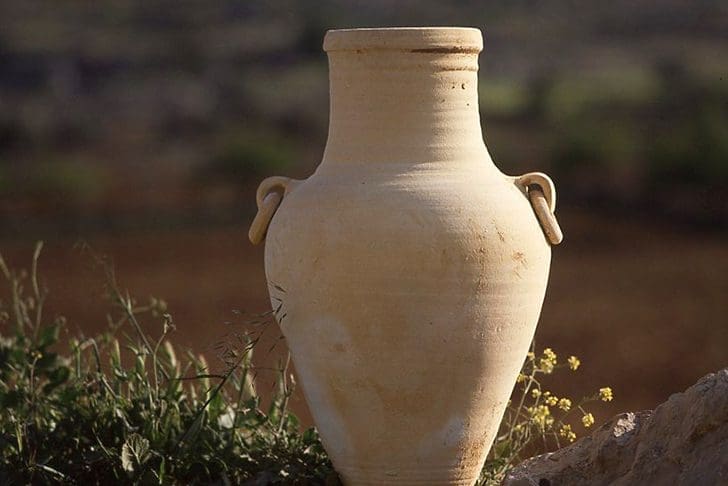
Maurine
In the chapters in Genesis that should be about Isaac, he hardly shows up. He plays a surprisingly passive role, which leads you to think how much we’re missing in his story. After all this is the son, who willingly went with Abraham to be sacrificed and therefore was a similitude of the Savior. This is the son his parents longed for through decades, and then, when we might get a chance to meet him, he is whisked off the stage.
Scot
Hello. We’re Scot and Maurine Proctor and welcome to Meridian Magazine’s “Come Follow Me” podcast where today we’ll talk about Genesis chapters 24 through 27. Remember you can find the transcript for this podcast—and all of them–at latterdaysaintmag.com/podcast. We’d also love it if you’d tell a friend about this podcast.
As chapter 24 begins, we are reminded that to this family, their covenant with God is everything. We are told that Abraham is getting old, “and the Lord had blessed Abraham in all things” (Gen. 24. 1). If his posterity is to be a blessing to the whole earth, Isaac must marry someone who can carry on that covenant line, and frankly, the woman available in Canaan can’t do that. He must look far away. As the very last thing we hear Abraham say in the scriptures, he calls his loyal servant to him, who “ruled over all that he had”, and gave him a sacred and responsible mission, which indicates just how much Abraham trusted him. He is told “Thou shalt go unto my country, and to my kindred, and take a wife unto my son Isaac” (v. 4). Abraham asks the servant to put his hand under his thigh makes the servant swear by “the Lord, the God of heaven, and the God of the earth” (v. 3) that he won’t find a Canaanite woman for Isaac’s wife.
In this image of hand under the thigh as it appears in the Bible, the usual explanation is that the custom that the oath was so important because it pertained to Abraham’s posterity. In the Joseph Smith Translation, the word “hand” replaces the word “thigh”, suggesting almost a handshake to seal the importance of this sacred responsibility.
Maurine
This servant, who is not given a name, but is most likely the steward named Eliezar, deserves that trust, for he becomes the exemplar of everything a good steward should be in his devotion to carrying out his duty. He is utterly trustworthy in every detail, and Abraham knows that he will perfectly reflect and act upon his will. Eliezar’s name means “God is my help”, and he is promised for this important responsibility that “the Lord God of heaven” “shall send his angel before thee” (v. 7).
The servant will travel 850 miles north to Nahor, which is or is close to Haran. This is where Abraham’s brother Nahor is from and where his son Bethuel lives with his children Laban and Rebekah.
He brings with him ten camels, which is an impressive caravan, and they are laden with treasures that are a reflection of Abraham’s wealth and generosity, and the servant’s responsibility to distribute this and act in all things in Abraham’s name. This is an arduous and responsible journey he has been sent on to perfectly accomplish the most important goal as if he were Abraham himself.
Scot
When the servant arrives at the well at his destination, he makes the camels to kneel, and then he prays. “O Lord God of my master Abraham, I pray thee, send me good speed this day,and shew kindness unto my master Abraham.” Note, as the perfect steward, he can also pray in the name of Abraham. It as if Abraham has said, “You are an extension of me.”
A well is a gathering spot Then the steward sets a test so that he can recognize Isaac’s future bride from among all others at the well, who the Lord has chosen to be the mother of the covenant posterity. His test is this:
“Let it come to pass, that the damsel to whom I shall say, ‘Let down thy pitcher, I pray thee, that I may drink and she shall say, Drink, and I will give thy camels drink also: let the same be she that thou hast appointed for thy servant Isaac; and thereby shall I know that thou hast shewed kindness unto my master” (v. 14). Here’s that stewardship idea again. In answering the steward’s prayer, the Lord is showing kindness to his master. Wouldn’t we all love someone of such loyalty acting in our behalf?
Maurine
Let’s look at that idea of stewardship for a moment. The Lord gives His covenant children stewardships as His way of sanctifying and expanding them. Through the responsibility of stewardship, He is inviting us to reach up and beyond ourselves. In this way, He is in the process of transforming us. The covenant path is always one of stretching until we are no longer the small and constricted souls we once were. His stewardships are an invitation for upward growth and expansion so that He can fulfill His covenant promises to us. We have to be more than we are to be able to receive the blessings He wants to give us.
Of course, we have stewardships in our roles as mother, father, daughter, son, grandparent, sister, brother or friend. We have stewardships in our callings. Since our stewardships are designed for changing us through the covenant to prepare us for His presence, it shouldn’t be surprising that sometimes they are very hard and may even seem impossible. We may want to say, “My assignment is what?”
Scot
Yet the Lord gives us real things to do, even if they are tough. He puts people in our way who will depend on us. We are asked to save our dead, and who else will do it? We have children, and our influence will be felt in their lives for an eternity. These assignments are not minor, and God doesn’t whoosh in and move us aside and take over. The Lord works through giving us stewardships that mean something and our fidelity and complete trustworthiness to them have important consequences. If Abraham’s servant had been less loyal, he could have gone some place close, found any woman and brought her back, instead of making his wilderness journey.
How would you like to be Joseph Smith and given the charge to build the Kirtland Temple, when the Latter-day Saints were completely impoverished, living several families to a house, many unskilled in construction and without an architect? Yet Joseph Smith said, he learned this: “When the Lord commands, do it,” and he did! How would you like to be Nephi, called on as his stewardship, to go get the plates from a recalcitrant and thieving Laban? Or how would you like your family’s lives depend on your finding the materials to make a bow? Since stewardships, well performed lead to more stewardships that demand more of our eternal possibility, it was making the bow that qualified Nephi to build a ship to take his family across the great deep.
Sometimes our stewardships are not roles or callings, but what the mighty Lord with his perfect love and perfect intelligence allows to be put in our path. We may be given a stewardship for a physical trial, an emotional pain, discouragement, or chronic pain, and the way we handle that stewardship may impact our eternal life.
Maurine
Perhaps, in the face of the stewardship of trial, we should say, “I can do this with thy help”, instead of “poor me.” Sarah Burton’s story shows how this works, and we will share it here in her own words:
“During 2015, the constant back pain that I had experienced for the prior 8 years, rose to a level of pain that I hadn’t experienced before. I saw lots of doctors, had lots of tests, tried lots of therapies, and even had surgery in hopes that I would figure out “the cure.” (We did not know then what it took about 6 years to understand– that I had a hip deformity combined with scoliosis and arthritis…without a clear fix. My doctors told me that I and other chronic pain patients tended to be difficult puzzles to figure out.
“Anyway, as the pain (and some of the judgment) continued, in July 2015, I remember an undercurrent of bitterness welling up for about 2 or 3 weeks. I would go to the temple and come home with a little bitterness creeping in about how I was trying to do all of the right things—Temple, church, serving my family, scripture study, serving in callings—and yet I was in pain.”
Scot
Sarah said, “And I started to compare my situation with others’. I thought about friends my age (I was 41) and even about my delightful visiting teaching companion (age 75) who could sit in a chair, happy as a clam, talking for 2 hours at a visit, while I constantly shifted in my seat in pain, as a 41 year-old who regularly exercised and ate healthy and who was trying everything possible medically.
“I started to notice for these 2-3 weeks that maybe I was feeling the Spirit withdraw, which is not something I was accustomed to. I normally had felt the undercurrent of the Spirit throughout my life. It scared me to feel like I was getting bitter and starting to feel tempted to be angry right at God. I had never done that before and knew that doing so would cross a line that I didn’t want to cross. I was starting to feel vulnerable and knew I would not be under the same protection of the Spirit if I crossed that line.
“So, I decided that I did not want my disappointment (that sometimes had verged into bitterness) to become full-blown anger. I knew that I had to get serious, exert more faith, and do the spiritual and emotional work necessary to find meaning in the pain that I realized was going to be my long-term companion.”
Maurine
Sarah said, “It took months of processing and imperfect attempts (over and over), but in general I kept trying to stop looking left and right and comparing my situation to others. I tried hard to just look up and try to hear God’s voice to me and to realize that everyone has their own plan, and I had mine. And then I would metaphorically look down, bowing my head in an effort to force my stubborn self to submit and accept whatever was in store for me.
“Of course, I kept trying to do whatever was in my power to try to improve my health situation, but I did so with more patience and with an acceptance that God was ultimately in control. I also took a lot of time to think and to write about the nature of suffering and (surprisingly) the joyous things that can come of it.
“After months of pondering and deliberately and actively practicing faith, Dan gave me a blessing in January 2016. I was so excited and expected that my months of choosing faith would result in a miraculous answer of what would be the key to my healing. But the blessing came out with the feeling of a loving parent bearing what seemed to be bad news—that my chronic pain would remain long-term and that it was actually part of my education that God willed for me.”
Scot
She said, “By now, I have spent 7 years of emotional processing, taking walks and pondering, and writing in my journal. I have come up with a list of mini-sermons that I preach to myself and to motivate myself about the “upside of suffering.” And about every 6 months, a new one seems to formulate in my mind, and I add it to the list. 3 of my favorites are: 1) that suffering gives you special needs that result in special manifestations of the spirit, 2) you become more able to empathize with others who have bitter, long-term problems, 3) and you get the chance to prove your friendship to the Lord by giving the gift of obedience, which can be even more sacred when it is offered in a context of suffering (like the widow who Jesus talked about in the New Testament, who threw into the treasury her last mite). I feel passionate about the chance to show Jesus that I am His friend, and that no suffering will make me leave His side—that’s one that really motivates me when I preach my silent sermons to myself.
“But as spiritually enriching as these 7 years of pondering and writing has coming to know God better has been, I will not pretend that it has been a direct, perfect, straight course. There have been times when thoughts of bitterness creep in and rear their ugly head, and I have to swat them away by silently rehearsing to myself all of the powerful mini-lessons about the blessings of suffering. I will tell my knees to bend, and I will tell my mouth to pray, and I will force my brain to think through those silent sermon that I have written until those words become not just words in my head but feelings in my heart.” (Personal correspondence with Sarah Burton).
Maurine
What I love about what Sarah says here, is that she doesn’t just follow the natural man emotion to become angry with the Lord or bitter about the pain that never leaves her and never will in this life. She has chosen not to let her pain divide her from God. Instead, she has become intentional and has processed through her response, and has chosen faith. “I will tell my knees to bend, and I will tell my mouth to pray.”
Another of her mini-sermons is the combination of two scriptures.
“ . . . ye receive no witness until after the trial of your faith” (Ether 12:6)
And “by small and simple things are great things brought to pass . . . “ (Alma 37:6)
For Sarah this has become one mini-sermon she repeats to herself:
“When we strive as imperfect beings
to obey in ‘small and simple’ ways,
after the ‘trial of our faith,’
a ‘great thing”– a great “witness”–
will be “brought to pass.”
I want to be as trustworthy and aligned with the Lord as Abraham’s servant is with him. I want to be as true to the Lord and intentional in my thoughts when I have the stewardship of trials as Sarah Burton. It is moving to me, and I won’t forget it the next time things are tough.
Scot
Remember, Abraham’s servant has asked the Lord for a sign to indicate Isaac’s bride that she should step forward to give him a drink and volunteer also to give drink to the camels. Now at least twice a day, the well for a village is a lively place as women from the surrounding areas—perhaps as much as two or three or more miles away, come to draw water for their washing, cooking, cleaning and drinking. It is a back-breaking and heavy job both to draw water and carry it away. Camille Fronk Olson said that Josephus recorded that many maidens at the well were drawing water at the time Abraham’s servant arrived but that the others all refused to give the stranger any water before Rebekah came forward “in an obliging manner” (Antiquities, 1.16.2).
The scriptures tell us that Rebekah “was very fair to look upon” and a “virgin” (v. 16), but, what is most impressive is that without calculation or the desire to impress a stranger, she steps forward with vitality, compassion and the Spirit at the right time and the right place to answer the plea of the servant of Abraham. “Let me, I pray thee, drink a little water of thy pitcher” (v. 17). Not only does she quench his thirst, but, then, surprisingly, volunteers “I will draw water for thy camels also, until they have done drinking” (v. 19). (Camille Fronk Olson, Women of the Old Testament).
Maurine
Olson noted, “She “hasted” to give the visitor water after he requested a drink (Genesis 24:18), volunteered to water all his camels and then “hasted” and “ran” until she completed the task (vv. 19–20), and finally “ran” to notify her family of the stranger’s coming (v. 28). Much more important than her beauty, she exemplifies the values of the Abrahamic covenant of hospitality, kindness and a loving welcome to the stranger.
Another covenant word is used to describe this interchange. “And the man wondering at her held his peace, to wit whether the Lord had made his journey prosperous or not” (v. 21). That word prosperous is part of the covenantal promise. Remember when Alma addressed the people of Ammonihah, he reminded them of the promise to their fathers, “Inasmuch as ye shall keep my commandments, ye shall prosper in the land” (Alma 9: 8,13). We may think immediately that the phrase “prosper in the land” refers to material well-being, but it means that the covenant keepers are blessed with the Lord’s strengthening and supporting presence. It means fortunate, more than wealthy. In this case, being led by the Lord to find Rebekah was prospering. Scot, in our own lives, though, it is fascinating how often things “just work out.” We are given ideas or nudges to find solutions to the things we face. That too is being prospered.
Scot
Just a note here about camels. Offering to water 10 camels is an enormous, sweaty, even unpleasant task. Camels are not the easiest animals to hang out with. They can be stubborn, smelly and make the most horrible noises. You and I, Maurine, have ridden a lot of camels in our time. Here’s my experience. I was riding a camel into the desert by the pyramids, that was, in his own mind, done for the day. To even get him to move, the owner was not so gently encouraging him. He resisted and strained at every move, and then he bucked me off. You should know, it’s a much longer way to fall of a camel than a horse.
Maurine
My camel, on that same ride, had decided he was done, so when we turned for home, the camel broke into a gallop. At full-out speed, we raced across the desert. Since it was so high, and since camel saddles have no stirrups, I was flung around on that camel’s back and holding on for dear life, mentally writing my last will and testament.
Scot
But camels are remarkable in the desert. They can carry 400 to 600 pounds, travel one hundred miles a day, go without water up to 15 days and then guzzle 25 to 30 gallons of water in a single session. That’s 250 to 300 gallons. For Rebekah to water those camels would have taken as many as 50 pitchers full. What a woman. After this Herculean task, she invites the servant home.
Abraham’s servant has brought a bride-price for her in the form of a substantial amount of “precious things” for her and her family. This was customary and was both a compensation to the family and a proof that the groom could support her and their family to come. Olson notes, “The two bracelets or bangles given to Rebekah were “a pair” of bracelets (v. 22), a symbolic wedding gift signifying a man and woman becoming bound in marriage. The weight in gold of these initial gifts was the equivalent of several years’ wages. For example, the ten and a half shekels’ weight of gold jewelry the servant gave Rebekah could have purchased five slaves. By offering these lavish gifts, the servant promised the family that Rebekah would be generously accommodated in her marriage to Isaac.”
Maurine
The servant gives gifts to Rebecca and, of course, the bride price to the family. When the servant is first invited into her home, Laban immediately recognizes the significance of his presence and says, “Come in, thou blessed of the Lord…for I have prepared the house, and room for the camels” (vs. 31). This goodly servant, however, will not eat or rest until he has performed his duty and struck the marriage agreement. He acknowledges that his way has been prospered, coming to the very woman, from the very lineage that God has chosen for Isaac. The servant asked the family’s permission, but, they in turn ask Rebekah saying, “We will call for the damsel, and enquire at her mouth” (v. 57). It is significant that her opinion is the final one.
A deal is struck, but Rebekah’s brother and mother said, “Let the damsel abide with us a few days, at the least ten, after that she shall go.” This seems like a reasonable request, but the servant has a higher purpose. He says, “Hinder me not, seeing the Lord hath prospered my way; send me away that I may go to my master” (v. 56).
Scot
Clearly, all the events have made it obvious that this proposal is the Lord’s will, and Rebekah’s answer reflects that. She simply says, “I will go” (v. 58), which is yet another reflection of her testimony and understanding. Surely she might have liked a few days to get ready or say goodbye to her family. But no, the Lord has called her, and she is essentially giving the covenant answer. “Here am I.””I will go”. “I am ready”. If the servant is a hero in this story, so is Rebekah, whose every action and response rings with power and demonstrates that she is fit for the high covenantal role she is about to play. “I will go and do the things which the Lord hath commanded,” says Nephi (1 Nephi 3:7).
In her parting Rebekah is blessed to be the “mother of thousands of millions” (v. 60), reflecting what, in fact, will happen.
Maurine
When Rebekah arrived back in the south country, Isaac had gone out “to meditate in the field at the eventide: and he lifted up his eyes and saw the camels coming” (V. 63) She alit from her camel and covered herself with a veil.
This meeting reminds us of the return of the prodigal son, when his father met him on the road, while he was yet afar off. What had led the father to know his son was coming and come out to meet him? Why did Isaac happen to be there just as Rebekah was coming?
We get a glimpse of the bond between them. “And Isaac brought her into his mother Sarah’s tent, and took Rebekah, and she became his wife; and he loved her: and Isaac was comforted after his mother’s death” (v. 67).
Scot
Isaac was forty when he married Rebekah, and, according to the custom of the time, she was probably a young girl of 14 or so. For twenty years they are married, and she is barren, unable to have children. We don’t have any record of the agonizing sense of loss they both must have felt, or the irony for Rebekah who had been promised to be the mother of “thousands of millions”, but just like Sarah and Rachel, the other covenantal mothers, it is the Lord who finally blesses them to conceive.
She is expecting twins and in her womb the children “struggled within her” (Gen. 25: 22), so she enquires of the Lord and learns that there are two nations within her and “two manner of people” and “the one people shall be stronger than the other people; and the elder shall serve the younger” (v. 23). Thus, she knows before Esau’s and Jacob’s birth that Jacob is to receive the covenantal blessings.
Here is a moment in the Bible that points to pre-mortality, for how could one twin have come to earn or receive a birthright blessing instead of the other, unless these spirits had demonstrated different levels of faith in an earlier world.
Maurine
Elder Bruce R. McConkie said, “Rebekah is one of the greatest patterns in all the revelations of what a woman can do to influence a family in righteousness [Genesis 25:22]….
“Now note it well. She did not say, ‘Isaac, will you inquire of the Lord. You are the patriarch; you are the head of the house,” which he was. She went to inquire of the Lord, and she gained the answer: [Genesis 25:23]. “That is to say, ‘To you, Rebekah, I, the Lord, reveal the destiny of nations that are to be born which are yet in your womb.’…“Rebekah—truly she is one of the most noble and glorious of women!” (McConkie, Ensign, Jan. 1979, 62).
In this heartfelt prayer, Rebekah exemplifies what all mothers need to do, especially in these tumultuous days. Elder Holland compares a mother to a Savior when he says, “Prophesying of the Savior’s Atonement, Isaiah wrote, “He hath borne our griefs, and carried our sorrows.”1 A majestic latter-day vision emphasized that “[Jesus] came into the world … to bear the sins of the world.”2 Both ancient and modern scripture testify that “he redeemed them, and bore them, and carried them all the days of old.” A favorite hymn pleads with us to “hear your great Deliv’rer’s voice!”
Scot
“Bear, borne, carry, deliver. These are powerful, heartening messianic words,” Elder Holland said. “They convey help and hope for safe movement from where we are to where we need to be—but cannot get without assistance. These words also connote burden, struggle, and fatigue—words most appropriate in describing the mission of Him who, at unspeakable cost, lifts us up when we have fallen, carries us forward when strength is gone, delivers us safely home when safety seems far beyond our reach. ‘My Father sent me,’ He said, ‘that I might be lifted up upon the cross; … that as I have been lifted up … even so should men be lifted up … to … me.’
“But can you hear in this language another arena of human endeavor in which we use words like bear and borne, carry and lift, labor and deliver? As Jesus said to John while in the very act of Atonement, so He says to us all, ‘Behold thy mother!’
“Today,” Elder Holland said, “I declare from this pulpit what has been said here before: that no love in mortality comes closer to approximating the pure love of Jesus Christ than the selfless love a devoted mother has for her child. When Isaiah, speaking messianically, wanted to convey Jehovah’s love, he invoked the image of a mother’s devotion. “Can a woman forget her sucking child?” he asks. How absurd, he implies, though not as absurd as thinking Christ will ever forget us.” (Elder Jeffrey R. Holland, “Behold thy Mother”)
Maurine
President Russell M. Nelson pled with women to realize their priesthood power. He said: “We need women who know how to make important things happen by their faith and who are courageous defenders of morality and families in a sin-sick world. We need women who are devoted to shepherding God’s children along the covenant path toward exaltation; women who know how to receive personal revelation, who understand the power and peace of the temple endowment; women who know how to call upon the powers of heaven to protect and strengthen children and families; women who teach fearlessly. (President Russell M. Nelson, “A Plea to My Sisters”) Rebekah’s first child was named Esau, from a Hebrew root meaning “hairy” and his descendants were called Edom, which in Hebrew means “red.” The second son was named Jacob from a Hebrew idiom means “he shall assail, overreach or supplant,” an apt name since his mother knew he would receive the birthright blessing instead of the first child. As they grew, Esau is described as “a cunning hunter, a man of the field; and Jacob was a plain man, dwelling in tents.”
Scot
D. Kelly Ogden and Andrew C. Skinner, note, however, “The translators could have used a more illustrious adjective than “plain,” as the Hebrew word used here has the same root as that used in describing Noah in Genesis 6:9 and Abraham in Genesis 17:1, where it is translated ‘perfect’ in both of those cases.” (Andrew C. Skinner, D. Kelly Ogden, Verse by Verse, The Old Testament Vol. 1 & 2).
At any rate, the boys were very different in nature, and Isaac favored Esau, while Rebecca favored Jacob. This is a paradox for Isaac, because like his father Abraham, before him, the covenant will be renewed through him with all its attendant promises, but Esau dismisses his birthright and it, apparently means very little to him.
We see the famous story of Esau coming in from the field, faint, while Jacob is eating lentil soup. Esau asks for some soup or pottage, and Jacob responds, “Sell me this day, thy birthright.” Esau agrees, saying, “Behold, I am at the point o die: and what profit shall this birthright do to me?” (Gen. 25: 31,32).
Maurine
Skinner and Ogden note: “Esau must have exaggerated his condition of hunger upon returning from the hunt when, upon smelling Jacob’s lentil soup cooking, he reasoned, ‘I am at the point to die, and what profit shall this birthright do me?’ A person generally dies from hunger after a long period of emaciation, rather than dropping over suddenly from strongly stimulated appetite! The writer was impressed, according to verse 34, with the fact that Esau must have ‘despised his birthright’ to trade it for a bowl of soup. There is no question that Jacob took advantage of the opportunity to bargain for the birthright, but to characterize him as a hard, cruel man who would not feed a starving, dying brother without compensation hardly fits the picture.
Scot
Ogden and Skinner continue: “Esau’s passing off his birthright was certainly not just for hunger; the real reason was that intrinsically it meant nothing to him… In modern times an English idiom has been used from this biblical episode to describe something that means little or nothing to us: ‘selling our birthright for a mess of pottage.’
“The picture or even caricature of Esau that emerges at this stage of his life is of the older brother who was worldly—thinking of physical concerns before spiritual matters—dull, and easily outwitted on an empty stomach. Like some young people today, Esau recognized the value of what he lost only after it was gone.”
Maurine
Susan Bednar said to the students at BYU-Idaho,”Everything to which Esau was entitled he sold for something as insignificant as a piece of bread and a can of soup. Why? Were the promised blessings associated with the birthright too far away? Did he forget in that moment that he was the firstborn son? Did he really intend to give up the birthright, or was it just a casual maneuver to satisfy his hunber? Was he thinking, “I can give it away now and get it back later? What series of events, circumstances, and prior choices would have brought Esau to this tragic moment? From our own experience, I believe we can conclude that a grave outcome such as Esau selling his birthright is not usually the result of a sudden impulse, but rather the consequence of small, incremental decisions made day by day.” (Susan K. Bednar, “Covenant Blessings and Responsibilities”)
He further demonstrates his indifference to birth right and covenantal blessings when he breaks his parent’s hearts and causes them “grief of mind” by marrying Hittite women, who were Canaanites and descendants of Ham. The covenant of Abraham could not continue through this posterity, and Esau didn’t care.
Maurine
It is concerning to see so many today who are willing to “sell their birthright for a mess of pottage.” When we hear that people are leaving the Church, particularly the young people whom we know and have heard bear testimony in the past, from our hearts we cry out, “Don’t do it. You have no idea what you are giving up.” “If you have felt to sing the song of redeeming love…can ye feel so now?” (Alma 5:26).
So now we have a scene that, I think must be understood, in the context of Rebekah’s revelation about the twins before they were born. The Lord has told her who is to receive the birthright and the blessings of the covenant. Is this a knowledge that gives her responsibility to act or is she to sit back in faith, because the Lord already has it in His hands? Has she discussed it with Jacob? Is this something he has known his entire life? Had she told Isaac about her revelation? Have they discussed it?
We have missing details so we can’t answer any of these questions.
Scot
Nonetheless, when Isaac is old and quite blind, he calls Esau to him, asks him to go hunting for some venison and bring Isaac some savory meat. When he does this, Isaac will give him his blessings. Rebekah, hearing this, and having known since the twin’s birth which son should receive the covenant blessings, feels she must change the course. She calls Jacob, has him fetch her “two good kids of the goats”, makes this food, and Jacob brings it to his father as if he were Esau. Since Esau is hairy and Jacob is not, the ruse is completed by Jacob wearing some of Esau’s clothing and putting goat skin on his arms. He says to Isaac, “I am Esau thy first born…Sit and eat of my venison, that thy soul may bless me” (Gen. 27:19).
Isaac is not so easily fooled. He wonders how the food could have been delivered so fast and why this son feels and smells like Esau, but has Jacob’s voice. Nevertheless, the blessing is given to Jacob and when Esau learns of this he wails, “Bless me, even me also, O my father.” Isaac blesses him with a goodly blessing, but it is not the birthright or covenant blessing. Later in chapter 28, more of the covenant blessings are bestowed upon Jacob, and we learn that Esau wants to kill his brother. Jacob must leave.
Maurine
Camille Fronk Olson notes, “Rebekah hoped that Jacob would be away in Haran only “a few days” (Genesis 27:44). In actuality, it would be a lengthy twenty years. The Bible narrative reports that Isaac was living in Hebron upon Jacob’s return (Genesis 35:27), but no mention is made of Rebekah.”
[This is particularly noteworthy in that Isaac had said “I know not the day of my death,” implying it was close before Jacob left.]
“Did [Rebekah] ever see Jacob again? Did she see her numerous grandchildren and further hope of her family’s marriage blessing that she would be a “mother of thousands of millions”? (Genesis 24:60). Perhaps most important, did she see her two sons reconciled and commencing the creation of two remarkable nations? The biblical account tells us nothing more about Rebekah except to report that she was buried in the cave of Machpelah, alongside Abraham, Sarah, and Isaac (Genesis 49:31)” (Camille Fronk Olson, Women of the Old Testament).
Scot
That’s all for today. We’re Scot and Maurine Proctor and this has been Meridian Magazine’s “Come Follow Me” podcast. Next week we’ll find out more about what happens to Jacob in Genesis chapters 28-33. Don’t forget to tell a friend about our podcast. Thanks to Jenny Oaks Baker for the music and to Michaela Proctor Hutchins, our producer. See you next week.
Come, Thou Fount of Every Blessing” Performed by Jenny Oaks Baker. Used with permission © 2003 Shadow Mountain Records
Come Follow Me Podcast #40: “I Will Order All Things for Your Good”, Doctrine and Covenants 111-114

Scot
As you begin this week’s reading assignment, and you don’t skip over the headnotes in Section 111, you realize this revelation was given in Salem, Massachusetts. Isn’t the central leadership of the Church in Kirtland, Ohio? What is the First Presidency doing in Salem nearly 650 miles to the east and a whopping 1,500 miles from Western Missouri? Isn’t this the same city of the famous Salem Witch Trials 144 years before in 1692? This will all make sense as we study together this week.
Maurine
Welcome to Meridian Magazine’s Come Follow Me Podcast. We are Scot and Maurine Proctor and this week we have been reading section 111 through 114 of the Doctrine and Covenants with the lesson entitled “I Will Order All Things for Your Good.” Just a quick reminder, the 2026 Old Testament Come Follow Me Calendar has just arrived and we are thrilled. The photography is gorgeous and the aids to your Come Follow Me studies this next year will be wonderful. This is a beautiful, full-color wall calendar with images from Egypt, Israel, and other places. This will help bring the Old Testament to life for you, your family, your friends, your ministering families and your Christmas gift-giving list. Order yours today at latterdaysaintmag.com/2026 That’s latterdaysaintmag.com/2026. You’ll love having this hanging in your home or office.
Scot
Before we answer the questions about Salem, Massachusetts, Maurine, there are two very important events we have to talk about that happened in February 1835 in Kirtland. You remember Zion’s Camp March with its 202 men, 11 women and 7 children? Well, after the horrible attack of the cholera where 68 were afflicted and 14 passed away (including one of the women) the main body returned to Ohio. This had been a great test of their faith, some were disappointed in the whole thing. They didn’t get it. Sometime later the Prophet Joseph said: “Brethren, some of you are angry with me, because you did not fight in Missouri; but let me tell you, God did not want you to fight. He could not organize His kingdom with twelve men to open the Gospel door to the nations of the earth, and with seventy men under their direction to follow in their tracks, unless He took them from a body of men who had offered their lives, and who had made as great a sacrifice as did Abraham. Now the Lord has got His Twelve and His Seventy.” (From Elder Joseph Young’s Account, History of the Church, Vol. 2, p. 182, footnote 4)
Eight of the original twelve apostles were with Zion’s Camp March and all of the Seventy were chosen from that company!
Maurine
On Saturday, February 14, 1835 in the Printing Office located just adjacent to and behind the construction site of the Kirtland Temple, the First Presidency and the Three Witnesses and some select men from Zion’s Camp gathered. Though the charge to find the Twelve had been given to the Three Witnesses in 1829, the Prophet Joseph had consistently said that the time was not right yet. Now, he said, the time had come and the callings were to be made. The Twelve who were chosen, in order of their appointments were: Lyman Johnson, Brigham Young, Heber C. Kimball, Orson Hyde, David W. Patten, Luke Johnson, William McLellin, John F. Boynton, Orson Pratt, William Smith, Thomas B. Marsh and lastly, Parley P. Pratt. The average age of the Twelve was 28! And how did they determine seniority in the Twelve since they were all called at the same time? It was by age. David Patten wasn’t sure whether he was born in 1799 or 1800—but he knew the date was November 14. That was common in those days. He thought he was 34 or 35 years old. This did make a difference because Thomas B. Marsh’s birthdate was 13 days earlier but he knew his was in the year 1800. Thomas became the senior member of the Twelve, therefore, the President of the Quorum—although later it was discovered that David was actually 13 days older.
Scot
And Oliver Cowdery gave the Twelve a solemn charge. Here is a portion of that charge:
“You have been ordained to this holy Priesthood, you have received it from those who have the power and authority from an angel; you are to preach the Gospel to every nation… Let your ministry be first. Remember, the souls of men are committed to your charge; and if you mind your calling, you shall always prosper… it is necessary that you receive a testimony from heaven for yourselves; so that you can bear testimony to the truth of the Book of Mormon, and that you have seen the face of God… Never cease striving until you have seen God face to face… You are as one; you are equal in bearing the keys of the Kingdom to all nations. You are called to preach the Gospel of the Son of God to the nations of the earth; it is the will of your heavenly Father, that you proclaim His Gospel to the ends of the earth and the islands of the sea…Be zealous to save souls. The soul of one man is as precious as the soul of another…[Oliver] then took them separately by the hand, and said, “Do you with full purpose of heart take part in this ministry, to proclaim the Gospel with all diligence, with these your brethren, according to the tenor and intent of the charge you have received?” Each of them answered in the affirmative.” (See History of the Church, Vol. 2, pp. 194-980)
Maurine
That is quite the charge. And you have to remember again, these were very young men for such a task! Four of the Twelve were only 23 years old! And the First Quorum of the Seventy was organized exactly two weeks later, on Saturday, February 28, 1835. Out of small things proceedeth that which is great! And we see it here. I was especially moved by the Twelve bearing the keys of the Kingdom to all nations. That reminded me of Elder Russell M. Nelson when, as a young apostle, he was given the charge over Eastern Europe. And this was when most of those countries were in the Soviet Bloc! Biographer Sheri Dew wrote:
“For the better part of five years, Elder Nelson traipsed back and forth across the Atlantic Ocean seeking meetings with government officials and trying to further the Church’s interests in Poland, Czechoslovakia, Yugoslavia, Bulgaria, Romania, Hungary, the German Democratic Republic, Turkey, Estonia, Ukraine, and the Soviet Union. And that didn’t count the trips to Washington, DC, to meet with ambassadors and other dignitaries from the countries he supervised.
Scot
“He was never wanted and rarely welcome. Many government leaders wouldn’t even give appointments to a man who professed faith in God. Over time, he was both thwarted in his efforts and helped along the way; treated poorly in some circumstances and graciously in others; spied on by secret police and later greeted as friends by officials who got to know him; and treated suspiciously in some corners while being sought for medical consultation by others. Some trips seemed utterly futile, while on others, doors opened he could never have predicted or planned for. Each of these countries was different,” Elder Nelson later reflected. “But the message to me was the same: ‘Work your heart out, Russ. Take the risks. Then when you can’t go any further, I’ll help you.’”
“The message in Bulgaria as well as every other country was the same: “We are not here to do anything but bless the lives of your people,” Elder Nelson summarized. “Our missionaries look at themselves as young and inexperienced in the ways of the world, and of course, initially they are. When they finally realize how helpful they can be, they become an entirely different brand of missionary. The gospel has the power to help people progress, grow, and deal with whatever challenges they’re facing.” Elder Nelson delivered this truth over and over again between 1985 and the early 1990s. During a six-year period he went to the former USSR twenty-seven times and to other eastern bloc countries several dozen times.”
Maurine
“When later asked what he learned from the assignment to open the countries in Eastern Europe for the preaching of the gospel, particularly in light of the many stops and starts, failed meetings, and ups and downs, Elder Nelson replied simply: “The Lord likes effort. He could have said to Moses, ‘I’ll meet you halfway.’ But Moses had to go all the way to the top of Mount Sinai. He required effort from Moses and Joshua and Joseph Smith and from all of the subsequent Presidents of the Church. He requires effort from bishops and stake Relief Society presidents and elders quorum presidents. There is always a test. Are you willing to do really hard things? Once you’ve shown you’re willing to do your part, He will help you.”” (Insights from a Prophet’s Life, Russell M. Nelson, by Sheri Dew, Chapter 40)
And here are these young apostles in the early days of the Church: 27-year-old Parley P. Pratt opened Canada to the Gospel—with apostolic keys, and Heber C. Kimball with Orson Hyde opened the British Isles, again, with apostolic keys.
Scot
Maurine, every time we visit the Latter-day Saints in various nations, as you know, these precious ones are aware of the apostles visits to their countries. Many of them know the very place where their country was dedicated by an apostle. They know many of the miraculous stories of the apostles’ visits. This has become part of their spiritual heritage and foundation.
Now, before we talk more about the mission of the Twelve, it’s important to answer that question about what the First Presidency was doing in Salem, Massachusetts. Look at the date of Section 111—August 6, 1836. This is just over four months after the dedication of the Kirtland Temple. This was indeed a miracle to get this temple completed, but it didn’t come without a heavy price. The cost by most accounts was over $40,000 which, with inflation, would be an equivalent worth of at least $1.2 million dollars in our day’s money. This left the Church in extreme debt. The brethren had heard from one member of the Church that a widow who lived in Salem, had a large amount of treasure hidden in her basement and it would be available to the church. The hope for financial relief was powerful and the brethren thought they would give this venture a try.
Maurine
Salem was an extremely prosperous port city. It had been 14 decades since the Salem Witch Trials where 200 were accused, 30 were found guilty and 19 were executed–14 women and 5 men—including John Proctor. On a personal note, I thought it was funny, Scot, because people ask you all the time if you are related to the famous John Proctor of the Salem Witch Trials and you did the research and you are related to him—but only because you are married to me! That made us both laugh so much.
But, again, Salem had a huge trade in tea, silks, spices, porcelain, ivory and gold dust with China, India and Malaysia. One historian wrote, “Boston was the Spain, Salem the Portugal, in the race for Oriental opulence.” Salem’s hugely profitable trade transformed this New England seaport into a global powerhouse and by this time, the wealthiest city per capita in the United States. (see Stewart, Doug, Smithsonian Magazine, June 2004, Salem Sets Sail). All of this certainly attracted the interest of the brethren in coming here to seek for financial relief.
Scot
The Prophet sought revelation on where they should stay while they were in Salem and if their journey was pleasing to the Lord. They had not found the treasure and were quite disappointed. Look at Section 111, verse 8:
8 And the place where it is my will that you should tarry, for the main, shall be signalized unto you by the peace and power of my Spirit, that shall flow unto you.
I love that verse because we learn so much about the workings of the Spirit of the Lord. I love the word “signalized”—signalized unto you by the peace and power of my Spirit, that shall flow unto you. Those are all very descriptive. Have you ever been in a fast and testimony meeting and you had no plans to bear your testimony and then you get the signal from the Spirit? You hear it all the time from fellow ward members, “I wasn’t planning on bearing my testimony, but I feel like my heart is going to burst and I just had to get up and testify…you know the routine. It happens all the time. And that word flow certainly speaks to my heart.
Maurine
The brethren found lodgings on Union Street, which is a short street, about 750 feet long, in the heart of Salem. It was only a five-minute walk from there to the East India Marine Society Museum. The brethren did go there and learned more about the ancient inhabitants of the area. This museum, established in 1799, is now the Peabody Essex Museum, the oldest continuously operated museum in the United States. In Joseph’s day it had more than 4,000 curios collected by world-traveling sea captains and traders. Now it contains more than one million works of art in 24 historic buildings and a library of 1.4 million books.
In verse 9 of Section 111 we read:
And inquire diligently concerning the more ancient inhabitants and founders of this city;
10 For there are more treasures than one for you in this city. (D&C 111:9-10)
The brethren did not find the money they were looking for to help alleviate the debt pain they were feeling, but Joseph was able to seek more information about his own family lines who had come here—and perhaps this helped lay the foundation, in Joseph’s mind, for future revelations on the great work for the dead. Some may look at this venture as a failure, but the Lord assured them:
I, the Lord your God, am not displeased with your coming this journey, notwithstanding your follies. (D&C 111:1)
Scot
Now, you remember that the Prophet Joseph called Heber C. Kimball to open Great Britain to the preaching of the Gospel. When Heber left for that first mission, he would be leaving his family destitute. Robert B. Thompson, who happened by the Kimballs’ partly opened door described the scene of their parting:
Heber “was pouring out his soul [to God] that he would…make him useful wherever his lot should be cast…that He…would supply the wants of his wife and little ones in his absence…He then…laid his hands upon their heads individually, leaving a father’s blessing upon them and…which thus engaged his voice was almost lost in the sobs of those around, who tried in vain to suppress them. The idea of being separated from their protector and father for so long a time was indeed painful. He proceeded, but his heart was too much affected to do so regularly. His emotions were great, and he was obliged to stop at intervals, while the big tears rolled down his cheeks.” (Proctor, Maurine Jensen and Proctor, Scot Facer, The Gathering, Mormon Pioneers on the Trail to Zion, Salt Lake City, Deseret Book, 1996, p. 17)
Maurine
Heber was joined on this mission by fellow apostle Orson Hyde, and friends Willard Richards, Joseph Fielding, and three other converts from Parley Pratt’s mission to Canada, John Goodson, Isaac Russell and John Snider. All of these latter five missionaries had British roots. They made the crossing to England under July’s fair skies in a quick eighteen days on the packet ship Garrick, perhaps not aware that the mission they undertook would turn a throng of people with British accents into American pioneers. When the missionaries came up the River Mersey and were let down on a small boat from the Garrick due to the tide, they were within six or seven feet of the shore and Heber, feeling the joy and urgency of his mission, leaped onto the pier. The missionaries were overcome by the great contrast in Liverpool of wealth and poverty. They would look one way and see how wealth and luxury abounded and the other way with penury and want.
Scot
The elders joined in prayer to seek the guidance of their Heavenly Father in how to start so great a task as to open the restored Gospel of Jesus Christ to so great a nation. They felt inspired and directed by the Spirit to begin thirty-one miles to the north in Preston, Lancashire, England, where Joseph Fielding’s brother, James lived and preached. Now, you have to remember, young, eighteen-year-old Queen Victoria had just been crowned on June 20, 1837, just a month before the missionaries reached that Liverpool dock. The missionaries arrived in Preston, on Saturday, July 22, the holiday before a Monday parliamentary election. Released from labor at the textile mills and breweries for the day, people crowded the streets, bearing the colorful ribbons of the candidates they supported. Bands played, and political banners flew with an air of gaiety. Just as the missionaries’ coach arrived, a flag was, I believe, Providentially unfurled over their heads reading “Truth Will Prevail” in large, gilt letters. Seeing this, the missionaries cried aloud as if with one voice, “Amen! Thanks be to God. Truth will prevail!” Joseph Fielding went to stay with his brother, James and the other missionaries took lodgings at a flat on the corner of Fox and St. Wilfrid Streets. The next day would be Sunday, July 23, 1837—and Heber would preach the first sermon at the Obelisk in the Marketplace in Preston. On this same day, in Kirtland, Joseph Smith received Section 112 of the Doctrine and Covenants—a revelation directed to Thomas B. Marsh and the twelve.
Maurine
The missionaries found great success this first week especially preaching to the congregation of James Fielding in his Vauxall Chapel that very Sabbath day. They told the Brits of the Restoration of the Gospel in America and the return of priesthood keys from the heavens and the reception of the Book of Mormon. Many in the crowds of listeners were overcome with excitement and joy. By that next Sunday, July 30, 1837, nine candidates were prepared for baptism.
Now, you know that the Adversary, Satan, was not going to let this group get away without some major opposition. He, the devil, could see what would happen if he did not stop this great work and the preaching of the true Gospel of Jesus Christ to the people of England. So, just as there had been an outpouring of light, so the forces of darkness conspired against the work. That early Sunday morning, the day those first baptisms would be performed, Isaac Russell came upstairs from his room to ask for a blessing from Heber because he was tormented by devils. Heber knew Russell had complained of such troubles before and was not certain he fully believed him, yet he began to give a blessing.
Scot
Heber later wrote: “I was struck with a great force by some invisible power and fell senseless on the floor as if I had been shot, and the first thing that I recollected was, that I was supported by Brothers Hyde and Russell, who were beseeching the throne of grace in my behalf. They then laid me on the bed, but my agony was so great that I could not endure, and I was obliged to get out, and fell on my knees and began to pray. I then sat on the bed and could distinctly see the evil spirits, who foamed and gnashed their teeth upon us. We gazed upon them about an hour and a half by Willard’s watch. We saw the devils coming in legions, [thousands of them] with their leaders…They came towards us like armies rushing to battle.”
“They appeared to be men of full stature, possessing every form and feature of men in the flesh, who were angry and desperate; and I shall never forget the vindicative malignity depicted on their countenances as they looked me in the eye…I felt excessive pain, and was in the greatest distress for some time. I cannot even look back on the scene without feelings of horror; yet by it I learned the power of the adversary, his enmity against the servants of God, and got some understanding of the invisible world. We distinctly heard those spirits talk and express their wrath and hellish designs against us.”
Maurine
Orson Hyde later wrote a letter to Heber of this experience: “After you were overcome by them and had fallen, their awful rush upon me with knives, threats, imprecations and hellish grins, amply convinced me that they were no friends of mine…I stood between you and the devils and fought them and contended with them face to face, until they began to diminish in number to retreat from the room. The last imp that left turned round to me as he was going out and said, as if to apologize, and appease my determined opposition to them, ‘I never said anything against you!’ I replied to him thus: ‘It matters not to me whether you have or have not; you are a liar from the beginning! In the name of Jesus Christ, depart!” He immediately left, and the room was clear.” (Whitney, Orson F., Life of Heber C. Kimball, Bookcraft, Salt Lake City, 1945, pp. 129-31)
Now, we have been to those First Lodgings in Preston many times, Scot, and we even take our groups there and tell them this story while gazing up at the very windows of the room where this horrible experience took place. But why would we want to give you all these details? Why the description of this scene of darkness?
Scot
I like what Heber said about this, “yet by [this experience] I learned the power of the adversary.” The Prophet Joseph was shown the same thing in his training sessions with the Angel Moroni. “Now I will show you,” Moroni taught Joseph, “the distance between light and darkness, and the operation of a good spirit and an evil one. An evil spirit will try to crowd your mind with every evil and wicked thing to keep every good thought and feeling out of your mind, but you must keep your mind always staid upon God, that no evil may come into your heart.”
“The angel showed him, by contrast, the difference between good and evil, and likewise the consequences of both obedience and disobedience to the commandments of God, in such a striking manner, that the impression was always vivid in his memory until the very end of his days; and in giving a relation of this circumstance, not long prior to his death, he remarked that ever afterwards he was willing to keep the commandments of God.” (Revised and Enhanced History of Joseph Smith by His Mother, Proctor and Proctor, Bookcraft, Salt Lake City, 1996, p. 109)
Maurine
Heber Kimball was concerned about this experience with darkness and years later was talking to the Prophet Joseph about that day in Preston. “Was there anything wrong with me that I should have such a manifestation?” he asked Joseph.
“No, Brother Heber,” he replied, “at that time you were nigh unto the Lord; there was only a veil between you and Him, but you could not see Him. When I heard of [this experience in Preston], it gave me great joy, for I then knew that the work of God had taken root in that land. It was this that caused the devil to make a struggle to kill you.”
Joseph then related some of his own experience, in many contests he had had with the evil one, and said, “The nearer a person approached the Lord, a greater power will be manifested by the adversary to prevent the accomplishment of His purposes.” (Life of Heber C. Kimball, pp. 131-32)
I do think, Scot, this is something we all need to be aware of. Let me be clear, the adversary, Satan, Lucifer, the Prince of Darkness, hates and spurns this work. He hates Jesus Christ. He hates the work of salvation. He hates families and women and babies. He hates holders of the priesthood. He hates marriage. He hates the scriptures. He hates the prophets. He hates the temple. He will do anything to thwart us from this work.
Scot
And we must shore ourselves up by staying as close to the Lord and to His Church and His prophets as we possibly can. President Nelson said, “But in coming days, it will not be possible to survive spiritually without the guiding, directing, comforting, and constant influence of the Holy Ghost.” (Nelson, Russell M., Revelation for the Church, Revelation for our Lives, General Conference, April 2018) Oh, how we all need this in our lives. And back to that Sunday morning, July 30, 1837 in Preston, England: The missionaries had nine people ready for baptism. And because of the holiday and the Sabbath, hundreds, if not thousands, by some accounts, were gathered at Avenham Park along the banks of the River Ribble when the missionaries came for the baptisms. Two of the converts, George D. Watt and Henry Clegg raced to the river, by tradition, across the bridge there, to see who would be first to be baptized.
Maurine
The exuberant run was a moment in history not lost on its participants. They ran because the silence of centuries when humanity concocted their own religions had ended and God had spoken again. They ran because the priesthood and power and pattern of the ancient church had been restored. They ran because even if their ministers scowled, they had felt the Spirit whispering to them that God knew them intimately and loved them. George Watt, who was twenty-two years younger than Clegg and had youth on his side, won the race. Imagine that scene as those American missionaries entered the waters of the River Ribble with George Watt and Henry Clegg and seven others and raised their arms one by one to the square and boldly baptized them with power and authority from heaven. Hundreds looked on. It was a scene never to be forgotten.
Scot
And I know you remember, Maurine, when I, too, had my own race across that same bridge at the River Ribble there in Preston. I raced our daughter, Michaela, age 12. She had the advantage of youth and well, I had the advantage of age. Youth won out that day, but I loved the experience and the memory. On the same day that the missionaries began preaching in England, Joseph received a revelation concerning the Twelve Apostles. The Lord said in verse 10 of Section 112:
10 Be thou humble; and the Lord thy God shall lead thee by the hand, and give thee answer to thy prayers.
This is given to the Twelve but is said unto us all. Spencer W. Kimball taught:
“When one becomes conscious of his great humility, he’s already lost it. When one begins boasting of his humility, it has already become pride, the antithesis of humility. Humility is repentant and seeks not to justify its follies. It is forgiving of others… Let us not forget to be humble, to remember where our blessings, gifts, and accomplishments really come from. Humility will bring us closer to Christ.” (Spencer W. Kimball, Humility, BYU Speeches, January 16, 1963)
Maurine
And further counsel is given to the Twelve in verse 14:
14 Now, I say unto you, and what I say unto you, I say unto all the Twelve [and this is also unto us all]: Arise and gird up your loins, take up your cross, follow me, and feed my sheep.
Now, first of all, the term “girt up your loins” is so common to us as Latter-day Saints because we sing it in one of our favorite hymns: “Gird up your loins, fresh courage take, Our God will never us forsake.”
But what does it really mean? In ancient times men and women wore long tunics and if they were worn regularly, the person would not be able to do any heavy labor or fight in battle. If you were told to ‘gird up your loins’ you would tuck up the traditional long robe into a girdle, or a belt, so that it would not hamper you from physical activity. The term was a way of saying: “Get ready for hard work and be ready for battle.”
Scot
That’s right. And what does it mean to “take up your cross”? The Prophet Joseph gives the answer in the revealed translation of Matthew 16:24: “And now for a man to take up his cross, is to deny himself all ungodliness, and every worldly lust, and keep my commandments.” (JST Matt. 16:26)
The Book of Mormon expands this doctrine even further in Moroni 10: 32:
32 Yea, come unto Christ, and be perfected in him, and deny yourselves of all ungodliness; and if ye shall deny yourselves of all ungodliness, and love God with all your might, mind and strength, then is his grace sufficient for you, that by his grace ye may be perfect in Christ; and if by the grace of God ye are perfect in Christ, ye can in nowise deny the power of God.
Maurine
Then Moroni goes on in verse 33, of chapter 10:
33 And again, if ye by the grace of God are perfect in Christ, and deny not his power, then are ye sanctified in Christ by the grace of God, through the shedding of the blood of Christ, which is in the covenant of the Father unto the remission of your sins, that ye become holy, without spot.
The Lord is asking us to get ready to work and to work hard and to get ready for battle, because, as we saw in Preston, England at the First Lodgings, it IS a battle. And He then asks us to take up our cross—meaning to deny ourselves of all the things of this world. We are truly not to incorporate Babylon or Babylonian thinking into our souls, whatsoever. We are to keep all His commandments and then we come unto Christ and love Him with all our might, mind and strength. And it is through the merits and mercy of Jesus Christ, and by His grace that we are not only saved, but we are perfected in Him and sanctified in Him. And we, through Him, can become Holy, without spot. That is not only the charge to the Twelve, it is the charge to us all.
Scot
That’s all for today. We’ve loved being with you. Next week our lesson will cover Doctrine and Covenants, Sections 115-120 and is entitled: “His Sacrifice Shall Be More Sacred unto Me Than His Increase.” May the Lord’s choicest blessings be upon you this very week. Our thanks to Jenny Oaks Baker for the inspiring music and to our producer, Michaela Proctor Hutchins. See you next time.
“Come, Thou Fount of Every Blessing” Performed by Jenny Oaks Baker. Used with permission ©2003 Shadow Mountain Records
Come, Follow Me Podcast: “The Power of Godliness”, Doctrine and Covenants 84

Maurine
Once in Nauvoo on a Sunday morning we attended Church with all the missionaries serving there. It was a beautiful sight to see! They were full of joy, enthusiasm, radiance, happiness and just plain excitement for being there. We talked to a number of the senior couples for a few minutes. “Oh, this is our seventh mission,” one sister said. “We love this work so much.” Another said, “Our only regret is we only get to serve here for two years. We so wish it could be longer!” Could these missionaries in Nauvoo be a testimony to the fulfillment of promises given by the Lord in Section 84 of the Doctrine and Covenants? We’ll talk about that in just a few minutes.
Scot
Hello dear friends! We are Scot and Maurine Proctor and this is Meridian Magazine’s Come Follow Me podcast. This week’s lesson is entitled “The Power of Godliness” and includes Section 84, the third longest section in the Doctrine and Covenants.
The Prophet Joseph designated this as a revelation on priesthood and it contains perhaps one of the greatest kept secrets in the Church—the Oath and Covenant of the Priesthood. We will talk about that in detail in this podcast. In the meantime, let’s get back to that scene of hundreds of missionaries in Nauvoo and their enthusiasm and their effervescence. There was something pretty obvious about them—even our Baptist bus driver noticed it.
Maurine
Yes, these are choice people, but they are being blessed by the Lord because of their service to Him. Let’s look at verse 80 for a moment, in section 84:
80 And any man that shall go and preach this gospel of the kingdom, and fail not to continue faithful in all things, shall not be weary in mind, neither darkened, neither in body, limb, nor joint; and a hair of his head shall not fall to the ground unnoticed. And they shall not go hungry, neither athirst.
Now, this may seem like a small thing we’re talking about, but it is not. These dear missionaries, both young and old gathered in such great numbers at Nauvoo were clearly being blessed. They are full of the Spirit of the Lord and they are not weary in mind, neither darkened, neither in body, limb, nor joint. Now, some of the older men had lost a few hairs of their head, but that hadn’t gone unnoticed!
Scot
We wanted to talk about this briefly because it was so clearly obvious as we were around all these missionaries, that they were being blessed and this is a fulfillment of the promise in Section 84 and we are witnesses of this!
And we are also witnesses of verse 88 in Section 84:
88 And whoso receiveth you, there I will be also, for I will go before your face. I will be on your right hand and on your left, and my Spirit shall be in your hearts, and mine angels round about you, to bear you up.
Maurine
A few years ago we were leading a tour and we attended Church on the first Sunday of the trip, as we always do, in the Fayette, New York ward. It was a particular Sunday when a group of six young service missionaries were giving their farewell talks. Each one struggled to say much, but the Spirit was with them and we all were moved to tears. These were young men who had each served in various capacities and were now on their way home.
After the meeting, one of our tour participants came up to us and said, “Did you see them? Did you see them?” We said, “Yes, they were wonderful, weren’t they?” “No! Did you see the angels round about them? In all my life I have never seen angels, but I saw them all around these precious missionaries.”
Scot
Then another tour participant, independent of the first one came up to us and said, “Did you see them?” We said, “Who?” She said, “The angels that were all around these dear missionaries? I’ve never seen angels before, but I saw them clearly today!”
That was a wonderful experience and so we stand as witnesses, not only in this one instance in Fayette, New York, but in multiple instances in the history of the Church and in our midst today.
Now, let’s look at verses three, four and five, speaking here of the New Jerusalem:
3 Which city shall be built, beginning at the temple lot, which is appointed by the finger of the Lord, in the western boundaries of the State of Missouri, and dedicated by the hand of Joseph Smith, Jun., and others with whom the Lord was well pleased.
4 Verily this is the word of the Lord, that the city New Jerusalem shall be built by the gathering of the saints, beginning at this place, even the place of the temple, which temple shall be reared in this generation.
Now, don’t get hung up on the word “generation”—it is interchangeable with the word “dispensation.” So, this very special temple, or complex of temples as the Prophet Joseph envisioned, will be built in this dispensation…
5 For verily this generation shall not all pass away until an house shall be built unto the Lord, and a cloud shall rest upon it, which cloud shall be even the glory of the Lord, which shall fill the house.
Maurine
This is ancient Israel talk, here; it is covenant language—and I always like to look for covenant language:
“And a cloud shall rest upon [the temple], which cloud shall be even the glory of the Lord…”
This is part of the covenant promises—to have the presence of the Lord in our midst. In ancient Israel this was the divine Shekinah—the presence of the Holy One of Israel. The Jews believe that this presence has never left the sacred and holy temple mount in Jerusalem. As you approach the temple mount, there is a sign that reads: “Dear Visitors. You are approaching the holy site of the Western Wall where the Divine Presence always rests. Please make sure you are appropriately and modestly dressed so as not to cause harm to this holy place or to the feelings of the worshippers. Sincerely, Rabbi of the Western Wall and Holy Sites.
They believe that this Divine Shekinah continues to this day.
Scot
There is even a special place of worship, underground, near the foundation of the Western Wall that some feel is the closest to the Divine Shekinah of anywhere in this ancient place. Women especially go to this spot to worship.
Back to the Temple in Independence, Missouri, or the complex of temples, the promise is that His presence, the cloud—even the glory of the Lord or the blessing of His divine presence will come and rest there. This is a wonderful and powerful promise and has not yet been fulfilled in this location.
Maurine
Now, Scot, you keep referring to a complex of temples in Independence. Will you help our listeners understand this?
Scot
Of course. In June 1833, the Prophet Joseph and his counselors in the First Presidency, Sidney Rigdon and Frederick G. Williams, prepared a plat map of the city of Zion—a layout of the City. Edward Partridge had purchased the original temple lot which was 63.27 acres. The plat for the City of Zion was for a square mile of land—640 acres. The center of the plat showed a complex of 24 temples, oriented north and south, twelve of which corresponded to quorums and functions of the Melchizedek Priesthood and twelve of which corresponded to the Aaronic Priesthood. Each temple had the inscription “Holiness to the Lord” engraved upon it. In August 1833, just two months later, a revised plat was drawn and the temples were re-oriented East and West and the plat called for 1 and one-half square miles—or 960 acres. Both plats called for a certain temple to be built first—this temple was to be a “house of the Lord for the First Presidency” and it was to be built on the spot of ground on the 2 acres which is now designated as the “temple lot.”
Now the reason we are going over these things in a little more detail than usual is because it has been 188 years since those plats were drawn and we are certainly getting close every day to the time when these prophecies will be fulfilled.
Maurine
That’s right. The way President Nelson says it is, “You and I get to participate in the ongoing Restoration of the gospel of Jesus Christ. It is wondrous! It is not man-made! It comes from the Lord, who said, “I will hasten my work in its time” (Doctrine and Covenants 88:73).
He also said: “Remember that the fulness of Christ’s ministry lies in the future. The prophecies of His Second Coming have yet to be fulfilled. We are just building up to the climax of this last dispensation—when the Savior’s Second Coming becomes a reality.
“In our time, a whole, complete, and perfect union of all dispensations, keys, and powers are to be welded together (see Doctrine and Covenants 128:18). For these sacred purposes, holy temples now dot the earth. I emphasize again that construction of these temples may not change your life, but your service in the temple surely will.
“The time is coming when those who do not obey the Lord will be separated from those who do (see Doctrine and Covenants 86:1–7). End quote. (Nelson, Russell M. The Future of the Church: Preparing the World for the Savior’s Second Coming, Ensign, April 2020).
We are living in exciting times. It has been fun, Scot, to stand on that Temple Lot in Western Missouri with you so many times. These things are real. All the prophecies will be fulfilled.
Scot
They certainly will.
Now, let’s jump to verse 33 and talk for a few minutes about the Oath and Covenant of the Priesthood.
Elder Bruce R. McConkie taught that “Every person upon whom the Melchizedek Priesthood is conferred receives his office and calling in this higher priesthood with an oath and a covenant. The covenant is to this effect:
“1. Man on his part solemnly agrees to magnify his calling in the priesthood, to keep the commandments of God, to live by every word that proceedeth forth from the mouth of Deity, and to walk in paths of righteousness and virtue; and
“2. God on his part agrees to give such persons an inheritance of exaltation and godhood in his everlasting presence. The oath is the solemn attestation of Deity, his sworn promise, that those who keep their part of the covenant shall come forth and inherit all things according to the promise.” (McConkie, Bruce R., Mormon Doctrine, Bookcraft, Salt Lake City, 1966, p. 480)
Maurine
Perhaps an easier way to remember this great and almost overwhelming covenant is thinking of it as “the oath and covenant of the Father to His faithful sons.” But let’s put this in perspective, speaking as a woman. As we read in Doctrine and Covenants, section 131:
1 In the celestial glory there are three heavens or degrees;
2 And in order to obtain the highest, a man must enter into this order of the priesthood [meaning the new and everlasting covenant of marriage];
3 And if he does not, he cannot obtain it.
So, for a man to obtain eternal life, or the life that the Father lives and all that He has, he cannot do so unless he, with his wife, has entered into the new and everlasting covenant of marriage.
Yes, when a man obtains the Melchizedek Priesthood and the oath and covenant of the priesthood, and is faithful, he can obtain all that the Father has, but he is not doing this alone.
Scot
So, we might say The Oath and Covenant of the Priesthood is an all-encompassing and eternal power that rests upon the worthy sons AND daughters of our Heavenly Father. It includes all the blessings of Abraham, Isaac, Jacob and Joseph AND the commensurate blessings of Sarah, Rebekah, Rachel and Asenath.
This kind of expands our view a bit. This is not a do-it-yourself program, it is a couple and all that we are talking about, including exaltation is as couples. But what of all the single sisters and single brothers in the Church? Or just you precious souls who are listening to the podcast today? All the blessings of the Father are promised to those who are true and faithful to His commandments. It brings us back to the great pre-mortal Council in Heaven when it was said:
25 And we will prove them herewith, to see if they will do all things whatsoever the Lord their God shall command them; (Abraham 3:25)
The ‘they’ there is not just sons of the Father, it is daughters and sons! We are all to be faithful and true, and as we are, all the blessings of the oath and covenant of the Father will be extended to each of us.
Maurine
And I believe that being sanctified by the Spirit unto the renewing of our bodies, which is one of the first blessings mentioned in verse 33, is not the culmination of blessings but the beginning of many that come unto the truly faithful. And all of this is given so that we can better do His work and fulfill His purposes. We become joint heirs because all that we do, all that we think, all that we purpose is for Him and His work. It is like unto Nephi the Disciple, who was given power over the heavens because the Lord knew he would only do His will.
Drs. Robert Millet and Kent Jackson have written:
“Bearing the Holy Priesthood is a sacred obligation, a trust that must not be taken lightly. From the beginning of time the Lord has bestowed the rights of priesthood upon his worthy sons, and at the same time he has counseled that the priesthood—like a double-edged sword—is the instrument for blessing as well as cursing. The worthy and pure recipient qualifies himself and his family for transcendent blessings; the man who receives God’s authority and then proves unwilling to assume the consequent commitments lays the foundation for unhappiness and punishment. God will not be mocked!…
Scot
Millet and Jackson continue:
“The Oath which accompanies the reception of the priesthood is an oath that God swears to man. Just as the Father swore that the Beloved Son should be a priest forever (Ps. 110:4), so also does God swear with an oath that every priesthood holder who abides by his part of the two-way promise (the covenant) shall receive incomprehensible blessings. The Covenant which accompanies the reception of the Melchizedek Priesthood…consists of: (1) those things man promises to do; and (2) those blessings God promises the faithful priesthood bearer. As given in verses 33-44, the Covenant might be represented as follows:
MAN PROMISES
- Obtain the Priesthood(v. 33)
- Magnify Callings in the Priesthood(v. 33)
- Receive the Lord’s Servants (v. 36)
- Beware Concerning Himself (v. 43)
- Give Diligent Heed to the Words of Eternal Life (v. 43)
- [And] Live by Every Word of God (v. 44)
Maurine
[And] GOD PROMISES, Millet and Jackson continue:
- Sanctify Man to the Renewal of the Body (v. 33)
- Man to Become a Son of Moses and Aaron (v. 34)
- Man to Become the Seed of Abraham (v. 34)
- Man to Become a Part of the Church and Kingdom of God (v. 34)
- Man to Become the Elect of God (v. 34)
- Man to Receive Christ and the Father (vv. 36-37)
- Man to Receive All the Father Has (v. 38)
“Man’s promises to God are penetrating but quite straight-forward. Faithful observance of those promises leads to remarkable blessings. Alma taught the people of Ammonihah that righteous priesthood bearers of the past had magnified their callings to such an extent that they “were sanctified, and their garments were washed white through the blood of the Lamb. Now they, after being sanctified by the Holy Ghost, having their garments made white, being pure and spotless before God, could not look upon sin save it were with abhorrence; and there were many, exceedingly great many, who were made pure and entered into the rest of the Lord their God” (Alma 13:11-12). Faithful priesthood service thus leads to the purification of the soul.” End of quote. (Robert L. Millet and Kent P. Jackson, Studies in Scripture, Vol. 1: The Doctrine and Covenants, Deseret Book Company, Salt Lake City, 1989, pp. 316-17.)
Scot
And, of course, we learn from the prophet Melchizedek and from Enoch himself that every one being ordained after this order and calling should have power, by faith, to break mountains, to divide the seas, to dry up waters, to turn them out of their course;
31 To put at defiance the armies of nations, to divide the earth, to break every band, to stand in the presence of God; to do all things according to his will, according to his command, subdue principalities and powers; and this by the will of the Son of God which was from before the foundation of the world. (JST Genesis 14: 30-31)
We’re talking tremendous power that is loaned to man from God. This is all part of the Oath and the Covenant of the Priesthood. I believe it is the assurance of revelation when revelation is needed—living by every word which proceedeth forth from the mouth of God. It is going beyond the reliance of the things of this world to the reliance, assurance and trust of Him Who is the Advocate with the Father. It is the trust of Enos who prayed all day and into the night and then he trusted all things that were said to him.
Maurine
It is the power and faith of Enoch and all the blessings outlined in Moses 7:13:
13 And so great was the faith of Enoch that he led the people of God, and their enemies came to battle against them; and he spake the word of the Lord, and the earth trembled, and the mountains fled, even according to his command; and the rivers of water were turned out of their course; and the roar of the lions was heard out of the wilderness; and all nations feared greatly, so powerful was the word of Enoch, and so great was the power of the language which God had given him.
I believe all of this is according to the oath of the covenant of the priesthood.
And I think we underutilize this power in our lives. I believe we often live in the shallows. We often shy away from all that the Father and the Son have given to us here in this life—for whatever reason.
Scot
I agree. And I think we see glimpses and snatches of these blessings throughout the scriptures and sometimes we don’t recognize that these are all part of the oath and covenant of the priesthood.
I believe that the blessings of the four sons of Mosiah are part of this as enumerated in Alma 26:22:
22 Yea, he that repenteth and exerciseth faith, and bringeth forth good works, and prayeth continually without ceasing—unto such it is given to know the mysteries of God; yea, unto such it shall be given to reveal things which never have been revealed; yea, and it shall be given unto such to bring thousands of souls to repentance, even as it has been given unto us to bring these our brethren to repentance. (Alma 26:22)
Maurine
Exactly! The blessings of knowing the thoughts and minds of others is included as with Alma and Amulek. I think it’s that same covenantal power where we see Joseph of Egypt rising from every situation, breaking every bond, being clothed upon with power and authority and wealth.
And the blessings and promises of Doctrine and Covenants Section 100, verses five through 8 are 5-8 are all part of this:
5 Therefore, verily I say unto you, lift up your voices unto this people; speak the thoughts that I shall put into your hearts, and you shall not be confounded before men;
6 For it shall be given you in the very hour, yea, in the very moment, what ye shall say.
7 But a commandment I give unto you, that ye shall declare whatsoever thing ye declare in my name, in solemnity of heart, in the spirit of meekness, in all things.
8 And I give unto you this promise, that inasmuch as ye do this the Holy Ghost shall be shed forth in bearing record unto all things whatsoever ye shall say.
Scot
And I believe that handbooks, if you will, and instructions for the oath and covenant of the priesthood have been given by President Boyd K. Packer, President Russell M. Nelson, President Gordon B. Hinckley, Elder Kim B. Clark and the Prophet Joseph and many others have been given. These seminal talks all point back to and guide righteous men and women to this Oath and Covenant of the Priesthood. For those of you who only listen to the podcast, you can come to the transcript at latterdaysaintmag.com/podcast and find the references to these various landmark talks.
(See for example the following talks:
David A. Bednar
April 2012
Boyd K. Packer
April 2010
Ministering with the Power and Authority of God
Russell M. Nelson
April 2018
Russell M. Nelson
April 2016
Personal Priesthood Responsibility
Russell M. Nelson
October 2003
We Can Do Better and Be Better
Russell M. Nelson
April 2019
Kim B. Clark
April 2019
The Doctrine of the Priesthood
Bruce R. McConkie
April 1982
The Ten Blessings of the Priesthood
Bruce R. McConkie
October 1977
The Melchizedek Priesthood and the Keys
Dallin H. Oaks
April 2020
Dallin H. Oaks
April 2018
Russell M. Nelson
October 2015)
We have listed a dozen talks in the podcast transcript with links. These seminal talks are just samples of what is available to lead us to a deeper understanding of the oath and covenant of the priesthood. We cannot give too much study, time and pondering to this deepest of topics.
Maurine
I find it interesting, Scot, in this great section 84 that Joseph designates as a revelation on priesthood, that the priesthood line is given for the great Prophet Moses. I think this is no accident. Of course, the Jews look upon Moses as the greatest of all the Prophets. Perhaps someday these twelve verses will play a role in their deeper understanding of the Restoration. And I’ve always found it wonderful that you, Scot, can just tell your priesthood lineage right off the top of your head.
Scot
I can. I was ordained a high priest by my father, Paul Dean Proctor. He was ordained by Mark E. Petersen. He was ordained an apostle by Heber J. Grant. He was ordained an apostle by George Q. Cannon who was ordained an apostle by Brigham Young who was ordained an apostle by the Three Witnesses who received their priesthood under the hands of Joseph Smith and Oliver Cowdery, who were ordained by Peter, James and John who received the holy apostleship from Jesus Christ.
That’s really not that far from me to the source of priesthood power. It’s very humbling.
Maurine
19 And this greater priesthood [or the Melchizedek Priesthood] administereth the gospel and holdeth the key of the mysteries of the kingdom, even the key of the knowledge of God.
20 Therefore, in the ordinances thereof, the power of godliness is manifest.
21 And without the ordinances thereof, and the authority of the priesthood, the power of godliness is not manifest unto men in the flesh;
22 For without this no man can see the face of God, even the Father, and live. (See D&C 84:19-22)
Scot
And, Maurine, I think the next two verses are very interesting, verses 23 and 24:
23 Now this Moses plainly taught to the children of Israel in the wilderness, and sought diligently to sanctify his people that they might behold the face of God;
24 But they hardened their hearts and could not endure his presence; therefore, the Lord in his wrath, for his anger was kindled against them, swore that they should not enter into his rest while in the wilderness, which rest is the fulness of his glory.
So, God was inviting his people in the wilderness to come before Him and to see His face. What an amazing invitation!
Maurine
And they rejected the invitation! In the Kirtland period the Lord issued a similar invitation:
15 And inasmuch as my people build a house unto me in the name of the Lord, and do not suffer any unclean thing to come into it, that it be not defiled, my glory shall rest upon it;
16 Yea, and my presence shall be there, for I will come into it, and all the pure in heart that shall come into it shall see God.
This is not a metaphor or symbolic language. It is about as clear as it can be. And, did this come to pass in anyone’s life? Yes! It did!
Scot
That’s right. We have numerous accounts of the saints having visions of the Savior during the Kirtland period, one of which was from John Murdock:
The visions of my mind were opened, and the eyes of my understanding were enlightened, and I saw the form of a man, most lovely! The visage of his face was sound and fair as the sun. His hair, a bright silver grey, curled in most majestic form, His eyes, a keen penetrating blue, and the skin of his neck a most beautiful white, and He was covered from the neck to the feet with a loose garment, pure white, whiter than any garment I have ever before seen. His countenance was most penetrating, and yet most lovely! And while I was endeavoring to comprehend the whole personage, from head to feet, it slipped from me, and the Vision was closed up. But it left on my mind the impression of love, for months, that I never before felt, to that degree. (Vision of John Murdock in the room of the School of the Prophets, Newel K. Whitney Store, March 18, 1833)
Maurine
I love that description he gives. And I love this account from the same day:
Zebedee Coltrin related that he also saw the Savior, following which he saw God the Father, who “was surrounded as with a flame of fire, which was so brilliant that I could not discover anything else but His person. I saw His hands, His legs, his feet, his eyes, nose, mouth, head and body in the shape and form of a perfect man. . . . This appearance was so grand and overwhelming that it seemed I should melt down in His presence, and the sensation was so powerful that it thrilled through my whole system and I felt it in the marrow of my bones.” (Anderson, Karl Ricks, Joseph Smith’s Kirtland, Deseret Book Company, Salt Lake City, 1989, p. 110).
What this says from these two witnesses is that the Savior issues invitations to His people to come into His presence and to see His face and many have done just that. And the invitation is issued a number of times in the Doctrine and Covenants to each one of us. (See D&C 67:10; D&C 93:1; D&C 38:8; D&C 88:68; D&C 101:23; D&C 130:3)
Scot
Now, this would be a good time to access the podcast script at latterdaysaintmag.com/podcast because we have listed six references that will enhance your studies.
When we came to this earth, the Lord dropped a veil of forgetfulness in our minds and yet, he invites us to pierce the veil with our faithfulness, obedience and our becoming pure in heart. That is one of the great teachings of the Restoration.
On another topic, Maurine, I just have to say how wonderful it is that the Lord gives us little truths and tidbits of knowledge all throughout the Doctrine and Covenants. For example, here in Section 84, in verses 27 and 28 we gain insights into John the Baptist that we have no other place in the scriptures:
27 Which gospel is the gospel of repentance and of baptism, and the remission of sins, and the law of carnal commandments, which the Lord in his wrath caused to continue with the house of Aaron among the children of Israel until John, whom God raised up, being filled with the Holy Ghost from his mother’s womb.
28 For he was baptized while he was yet in his childhood, and was ordained by the angel of God at the time he was eight days old unto this power, to overthrow the kingdom of the Jews, and to make straight the way of the Lord before the face of his people, to prepare them for the coming of the Lord, in whose hand is given all power. (D&C 84:27-28, emphasis added)
Maurine
Now, that’s a story we don’t have in the New Testament. We can ascertain from the practices of the Jews that John was brought to the temple at 8 days old to be circumcised and then was blessed by an angel of the Lord, most likely Gabriel, who is Noah and is also named Elias, unto this power to overthrow the kingdom of the Jews and to make straight the way of the Lord. That is a wonderful, tender scene to think about with aged Elizabeth and humbled Zacharias holding their little 8-day-old infant son and having this experience together with the angel of the Lord coming down from the presence of God. I’m sure they were never the same.
Scot
Speaking of powerful pieces of truth in the revelations, we see another one starting in verse 54 (and you will recognize this one from the administration of President Ezra Taft Benson):
54 And your minds in times past have been darkened because of unbelief, and because you have treated lightly the things you have received—
55 Which vanity and unbelief have brought the whole church under condemnation.
56 And this condemnation resteth upon the children of Zion, even all.
57 And they shall remain under this condemnation until they repent and remember the new covenant, even the Book of Mormon and the former commandments which I have given them, not only to say, but to do according to that which I have written. (D&C 84:54-57)
Can you imagine taking the Book of Mormon lightly? I guess that means if we don’t incorporate it into our daily studies and study and ponder it and immerse ourselves in it to draw closer to Jesus Christ.
Maurine
I remember when President Benson said:
My beloved brethren and sisters, today I would like to speak about one of the most significant gifts given to the world in modern times. The gift I am thinking of is more important than any of the inventions that have come out of the industrial and technological revolutions. This is a gift of greater value to mankind than even the many wonderful advances we have seen in modern medicine. It is of greater worth to mankind than the development of flight or space travel. I speak of the gift of the Book of Mormon…
“By His own mouth He has borne witness (1) that it is true (D&C 17:6), (2) that it contains the truth and His words (D&C 19:26), (3) that it was translated by power from on high (D&C 20:8), (4) that it contains the fulness of the gospel of Jesus Christ (D&C 20:9, D&C 42:12), (5) that it was given by inspiration and confirmed by the ministering of angels (D&C 20:10), (6) that it gives evidence that the holy scriptures are true (D&C 20:11), and (7) that those who receive it in faith shall receive eternal life (D&C 20:14).
Scot
President Benson continued:
“A second powerful testimony to the importance of the Book of Mormon is to note where the Lord placed its coming forth in the timetable of the unfolding Restoration. The only thing that preceded it was the First Vision…
“Think of that in terms of what it implies. The coming forth of the Book of Mormon preceded the restoration of the priesthood. It was published just a few days before the Church was organized. The Saints were given the Book of Mormon to read before they were given the revelations outlining such great doctrines as the three degrees of glory, celestial marriage, or work for the dead. It came before priesthood quorums and Church organization. Doesn’t this tell us something about how the Lord views this sacred work?
He then said:
“Every Latter-day Saint should make the study of this book a lifetime pursuit. Otherwise he is placing his soul in jeopardy and neglecting that which could give spiritual and intellectual unity to his whole life. There is a difference between a convert who is built on the rock of Christ through the Book of Mormon and stays hold of that iron rod, and one who is not.”
Maurine
And finally from President Benson:
“It is not just that the Book of Mormon teaches us truth, though it indeed does that. It is not just that the Book of Mormon bears testimony of Christ, though it indeed does that, too. But there is something more. There is a power in the book which will begin to flow into your lives the moment you begin a serious study of the book. You will find greater power to resist temptation. You will find the power to avoid deception. You will find the power to stay on the strait and narrow path. The scriptures are called “the words of life” (D&C 84:85), and nowhere is that more true than it is of the Book of Mormon. When you begin to hunger and thirst after those words, you will find life in greater and greater abundance.”
We can testify that this is true in our own lives. We love the Book of Mormon. We have made it an integral part of our family culture. The first scripture we ever taught to all of our children was from the Book of Mormon: “And I was led by the Spirit, not knowing beforehand the things which I should do.” (1 Nephi 4:6). The Book of Mormon blesses our lives each and every day.
Scot
And the revelations of the Doctrine and Covenants point us to the Book of Mormon and the Bible, which, taken together, contain the fulness of the Gospel of Jesus Christ.
That’s all for today. We have loved being with you. Obviously, with a revelation like Section 84 we could go on for hours—and you can do that in your own homes! Next week the lesson will cover Section 85-87 and is entitled: “Stand Ye in Holy Places.”
Thanks for to our good friend Paul Cardall for the music and to our daughter, Michaela Proctor Hutchins, who produced this show. Have a wonderful week and see you next time.
A Timeless Story from Nearly 2000 Years Ago Comes to Light with Beautiful Illustrations

In The Hymn of the Pearl,1 our “Once upon a time” begins with:
“When I was a little child, I lived in the Kingdom of my Mother and Father. I delighted in the glory and splendor of my beautiful surroundings and Those who raised me.”
I first encountered these words in an article written by John Welch and James Garrison for F.A.R.M.S. years ago. They described it as an ancient counterpart to “O My Father.”2
Years later, during an Institute class just before COVID, the instructor Mandy Green shared this beautiful hymn with our class. The following Sunday night, as my family gathered, I felt a deep urge to share it with them as well. However, the text was lengthy and fragmented, and I worried I’d lose the little ones’ attention. After everyone left, I had a strong impression to transform it into a children’s book. Though I had never written a book before, the feeling was undeniable. From that moment, I knew this was something I needed to do.
Not long after, I listened to a podcast featuring Mauli Bonner, who was making the movie Green Flake. His words deeply resonated with me: “You do not have to know what you’re doing to do what you have to do.” These words gave me hope and courage to move forward.
While searching for an artist, I discovered the book A Girl’s Guide to Heavenly Mother and was struck by the artwork of Tshikamba. Her piece, Made in Her Image, led me to another of her works, Auset and Heru, depicting a beautiful Egyptian queen and her son—a Heavenly Mother and Son, as I saw it. I immediately knew Melissa Tshikamba had to illustrate the book. I was thrilled when she said, “Yes, this is my thing.”
Because Mandy had reintroduced me to the Hymn, I wanted her to be part of the journey. She graciously contributed the essay in the back. It became a joyful collaboration between the three of us!

The Hymn of the Pearl originates from an apocryphal text called The Acts of Thomas.3 The term “apocryphal” has evolved over the centuries. In early Christian use, it referred to writings read privately rather than in public worship. Such texts were often deemed too profound or sacred for general audiences. While I don’t recommend The Acts of Thomas as a whole, it does contain this beautiful gem.
In the story, Thomas is imprisoned in India, where he has been teaching the gospel. As he prays, those with him ask him to pray for them as well. When he finishes, he begins chanting this hymn.
The hymn begins with a portrayal of a glorious kingdom in the clouds. Susan Cain, in her book Bittersweet, beautifully describes this longing for a heavenly home:
“In the Judeo-Christian tradition, it’s the Kingdom of Heaven; the Sufis call it the Beloved of the Soul. There are countless other names for it: simply home, ‘Somewhere Over the Rainbow,’ or, as C.S. Lewis called it, ‘the place where all the beauty came from.’ In some fundamental way, we’re all reaching for the heavens.”
The Hymn is a ritual text, designed to teach ascension. In its narrative, Egypt symbolizes the profane world—a place of trial and growth. Through these challenges, one “cuts a covenant,” gaining wisdom and becoming more than they were.
Hugh Nibley, in The Treasure in the Heavens, quotes a non-canonical saying attributed to Jesus:
“If you could see your real image, which came into being before you, then you would be willing to endure anything!”
This resonates with Hafiz’s tender words:
“I wish I could show you, when you are lonely or in darkness, the astonishing light of your own being.”
Nibley further explains:
“In the vision given to Joseph Smith in 1832 (D&C 76), it is plain that those who are valiant obtain the crown along with the Son. Here we find the explanation for leaving one’s happy heavenly home for a sojourn in a wicked world. Only by confronting and overcoming the powers of darkness can one claim the highest glory—the kingship itself. Hence the need for the danger and struggle here below.”
The story is traditionally told from the perspective of a boy. With Melissa’s encouragement, we chose to depict our story through the eyes of a girl. My favorite page shows her confronting a sea serpent with all her courage and covenant blessings. Her natural hair flowing powerfully. In that moment, she remembers who she truly is.
This echoes why our prophets and leaders continually remind us of our divine identity. Just as God told Moses, “I have a work for thee… my son,” so too does He have a work for each of us.
President Nelson gave this counsel:
“Ask your Heavenly Father in the name of Jesus Christ how He feels about you and your mission here on earth. If you ask with real intent, over time the Spirit will whisper the life-changing truth to you. Record those impressions, review them often, and follow through with exactness. I promise you that when you catch even a glimpse of how your Heavenly Father sees you and what He is counting on you to do for Him, your life will never be the same. Go to the temple and listen. Listen for who you are and what you will do.”
The story of The Hymn of the Pearl is both timeless and timely. What a privilege it has been to bring this beautiful project to life with the help of so many on both sides of the veil!
Footnotes
1.”Hymn of the Pearl,” trans. Werner Foerster, in Gnosis: A Selection of Gnostic Texts, trans. R. McL. Wilson (Oxford: Clarendon, 1972), 355-8.
2. “The ‘Hymn of the Pearl’: An Ancient Counterpart to ‘O My Father,’” by John W. Welch and James V. Garrison, BYU Studies,36/1 (1996-97):127-34
3. “The Acts of Thomas,” trans. R. McL Wilson, in Apocrypha, ed. Wilhelm Schneemelcher (Westminster: John Knox, 1992), 2:380.