
In early 1840, nine of the Apostles of The Church of Jesus Christ of Latter-day Saints were in the United Kingdom preaching the restored gospel. They had answered the Lord’s call as recorded in Doctrine and Covenants 118, verse 4: “And next spring let them depart to go over the great waters, and there promulgate my gospel, the fulness thereof, and bear record of my name.”
Wilford Woodruff, a convert of just over six years, was initially assigned to labor in Staffordshire and the Potteries area. The young missionary had been experiencing success there when he was unexpectedly directed by the Lord in early March to leave for the south. There he met John and Jane Benbow, and immediately he began preaching to the six hundred members of the United Brethren and their friends. By June, several branches of the Church had been established in Herefordshire with excellent leadership, including Apostle Willard Richards and Thomas Kington, former superintendent of the United Brethren.
As Wilford Woodruff recorded in his journal on June 20, 1840: “The power of God is among the people the Lord is making a short work in this part of the Land. The churches in this part of the vineyard now number 500 souls where a little less than four months since there was not one to be found or the fulness of the Gospel heard.”1
On July 6, 1840, a conference of the Church in the British Isles was held in Carpenters Hall in Manchester. This was a “general conference” of members and leaders, from the 41 congregations in England and Scotland, who traveled to Manchester to meet. At the conference, the leadership in attendance decided that it was time to open the great city of London to missionary work and that Wilford Woodruff, George A. Smith, and Heber C. Kimball would go to London in August.
At the time, London was growing rapidly and was the largest city in the world, with approximately two million people. It was also the capital of the British Empire and had a global reach and influence on culture, industry, and intellectual debate. The Apostles concluded that if the Lord’s Church was to continue to grow in the United Kingdom, it needed a foothold in London.
The week that Wilford prepared to leave Herefordshire for London, in early August 1840, he baptized 40 new friends, making 250 within a month. Particularly difficult was saying goodbye to John and Jane Benbow, who had opened their Hill Farm home, where Wilford had spent so much time preaching. Following the success there, the Benbows were now preparing to emigrate to America with the Saints, paying the way for 40 of the new members to also make the trip to Nauvoo with Theodore Turley, Wilford’s first mission companion in England.
Joining Wilford Woodruff for the trip to London by coach, train, and horse-drawn bus were George A. Smith and Heber C. Kimball. The trio arrived in London on the afternoon of August 18. The three missionaries immediately walked to the home of the only acquaintance they had in the city: Theodore Turley’s sister-in-law, Mary Ann Allgood. She was happy to see them, fed them supper, and then sent them along to an inn in Southwark, a bustling and very noisy neighborhood on the south side of the River Thames, where they could lodge as they started their work in London.
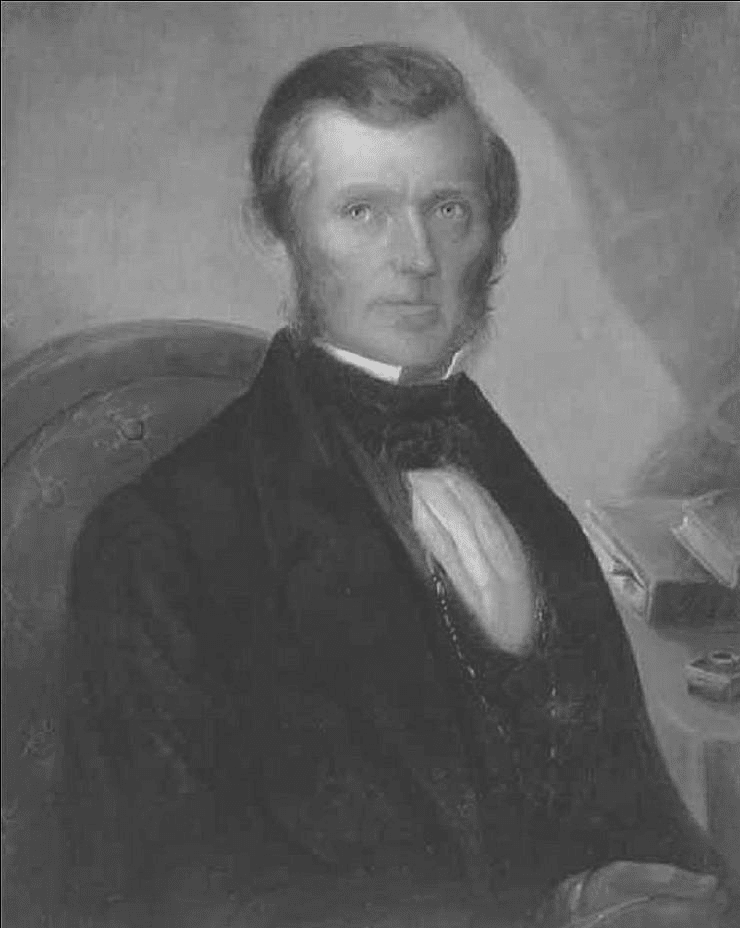
Painting of Wilford Woodruff by Filippo Pistrucci, London, January 1841 Courtesy of the Church History Library, The Church of Jesus Christ of Latter-day Saints

Photo of Heber C. Kimball, ca. 1850 Courtesy of the L. Tom Perry Special Collections, Harold B. Lee Library, Brigham Young University, Provo, Utah

Photo of George A. Smith, ca. 1850 Courtesy of the Church History Library, The Church of Jesus Christ of Latter-day Saints
Awe in London
As had become his habit since the day he joined the Church on December 31, 1833, at age 26, Wilford detailed his impressions of London at the end of his first day there, August 18, 1840, recording the extremes of poverty and degradation he found in the capital city:
O London, as I walk thy street & behold the mass of human beings passing through thee & view thy mighty palaces, they splendid mansions, the costly merchandize wherewith are adorned even as the capital of great Babylon, I am ready to ask myself, what am I & my Brethren here for, & as the spirit answers to warn thee of thine abominations & to exhort thee to repent of thy wickedness & prepare for the day of thy visitation thy mourning thy calamity & thy wo. I am ready to cry out “Lord who is sufficient for these things, O Mighty God of Jacob clothe us with thy power. Let the power of the Priesthood rest upon us & the spirit of our ministry & mission & enable us to warn the inhabitants of this city in such a manner that our garments will be clean of their Blood & that we may seek out the honest in heart & the meek from among men & have many souls as seals of our ministry.”2
The next day, they began their missionary efforts by preaching at Temperance Hall and Smithfield Market, where they experienced even more of the sights and people of London.3
Despite the hustle and bustle, contrasting social classes, and extensive poverty of the city, these missionary Apostles were in awe of the monuments, buildings, and history they experienced in London. As recorded by Wilford Woodruff at the end of his third full day in London, August 21, 1840,
This was the most interesting day of my life as far as viewing the splendid works of man was concerned. I started in company with Elders Kimble, & G. A. Smith, for a walk over the city of London we crossed over London Bridge, through King Williams st & passed through several other streets visited the cup & garden, passed through St Martin street & court, & Leicester square & Sidney Alley, Coventry st, Picadilly, Glasshouse St & we passed through most the whole length of Regent street one of the most splendid streets in the world, we passed through Langham place, All Souls church with a spire naked from its base to the point we also passed through Oxford St. We returned by the way of St Pauls Church, a description of which I shall give another day.4
A couple of weeks later, Elder Woodruff visited the Houses of Parliament and Westminster, and after walking around Buckingham Palace and St. James Park, he recorded seeing Prince Albert out riding in the park:
I walked nearly around this palace & while there I had the privilege of seeing his Royal Highness PRINCE ALBERT While he rode from his Palace across St James Park . . . he was not accompanied by her Majesty Victoria or any other person except his groom, he was dressed in a frock coat & dark pantaloons, he looks well fresh & healthy & in the bloom of life as he is but about 20 years of age. After leaving the [National] gallery & saw all the paintings which the nations has gathered together which are considered the most sublime of any in the world & visiting St Martins Church, I though[t] I had seen as much as my brain would contain in one day.5
Challenges in London
For these three Apostles, social conditions in London made finding those willing to embrace the restored gospel of Jesus Christ much more difficult than their experience in Staffordshire, Lancashire, and Herefordshire. Despite their diligent efforts to find places to preach and people who were willing to listen, they often felt discouraged. In reflecting on the challenges they faced in establishing the Lord’s restored Church in London, the Apostles identified a number of contributing factors.
One such factor was that as London was a melting pot of so many diverse cultures and beliefs, the missionaries first had to disentangle all of the previous notions before they could begin to teach basic gospel principles.
To many Londoners everything the [missionaries] taught seemed but an echo of something else. When they preached baptism, they were accused of being Baptists; when they spoke of the body of Christ being made up of apostles and prophets, they were called Irvingites; when they said that “the testimony of Jesus is the Spirit of prophecy,” they were called Southcottians; if they preached the second coming of Christ, they were confused with the Aitkenites; if they talked of the priesthood, they were called Catholics; and when they told of the ministering of angels, their detractors replied that even the Duke of Normandy would swear that he had the administration of angels every night.6
Another factor at play was that even when the Apostles encountered a minister who was inclined to befriend them, such as the successful and highly esteemed Reverend Robert Aitken and his growing congregation on Waterloo Road in Southwark, his followers did not see the necessity of basic principles and ordinances found in the restored gospel. As summarized by Wilford Woodruff, “Notwithstanding Mr. Akins has some sublime truths yet he is building a great house without any foundation by rejecting the first principles of the gospel.”7
Finding a New Friend in London
Despite the challenges, the three Apostles diligently sought opportunities to share the message of the restored gospel. As recorded on August 27, 1840, by Wilford Woodruff, after nine days in London, “We are making every exertion to find some saints or those who are willing to obey the gospel in this city of London But as yet our searching has been in vain, Priest & People are all Bound up in Bundles of tradition there Bands are made strong & the whole city is given to whoredoms & all manner of wickedness & is ripe for judgment. Still we are determined to spare no pains but to search diligently that we may seek out the honest in heart & the meek of the earth.”8
Finally, two days later on Saturday, August 29, 1840, Wilford Woodruff recorded that they had found a family willing to listen and embrace the message of the restored gospel: “We again went over the city of London to see if we could find the children of God & we found one man & his household that received our testimony & opened his doors for us to preach we appointed a meeting at his house for Sunday evening I think he & his household will soon be Baptized.”9
The following day, Sunday morning, August 30, their new friend Henry Connor led them to Tabernacle Square, where the missionaries found an Aitkenite preaching to about four hundred people. At a break in the preaching, Elder Kimball interrupted and pushed Elder Smith forward to preach. Interested in hearing what an American had to say, but without knowing what religion he represented, the crowd stayed for another twenty minutes to listen to George A. Smith. Discovering what religion the new preacher was from, the previous preacher drove the missionaries away.
Returning that afternoon, Elders Kimball and Woodruff both spoke to the next crowd of listeners: “After opening the meeting by singing and prayer, Elder Woodruff spoke for about thirty minutes, from Galatians 1:8, 9, upon the first principles of the Gospel. Elder Kimball followed upon the same subjects. The people gave good attention and seemed much interested in what they had heard. The inhabitants who lived around the square opened their windows to four stories high; the most of them were crowded with anxious listeners, which is an uncommon occurrence.”10
That evening Elders Woodruff and Smith preached at the Connor home while Elder Kimball preached yet again to a crowd in Tabernacle Square. Compared to what they had become accustomed to in the countryside around Herefordshire and Manchester, this was modest success, but success nonetheless.
On August 31, 1840, Henry Connor, a watchmaker, was baptized at Peerless Pool, a public pool near the Connor home. Following the baptism Wilford Woodruff recorded: “We all three laid our hands upon him & confirmed him, which is the first man that has received the work in the city of London as a seal of our ministry. We returned home & felt to thank God for his goodness in giving us one soul.”11
The next week the three missionaries attempted to preach at the Methodist school in Shoreditch, but were met with enough opposition that they gave up and went back across the river to Ironmonger Row. The three missionaries moved into rooms at 40 Ironmonger Row, across the street from the Connor home, the day before Elder Woodruff left to return to Herefordshire for a conference. This pleasant London location, where much of their success was found, would become the homebase for the missionary work in London for the next two-and-a-half years.
On September 10, 1840, Wilford Woodruff said goodbye to his two companions and returned to Herefordshire to participate in a conference involving the hundreds of new converts there. As he did so, he reflected on his time in London: “I took the parting hand with Elders Kimball & G. A. Smith & the friends in London having spent 23 days in that great city for the purpose of warning the people & establishing the kingdom & we all found as hard work to find saints & build up a church as in any place we ever visited; we Baptized one man & ordained him a priest & 6 others gave in their names to be Baptized on next Saturday or Sunday. I felt to rejoice that our labours were not altogether in vain.”12
Two weeks following Wilford’s departure, Heber C. Kimball reflected on his view of the challenges, but added that he sensed the tide had started to turn:
Brother Woodruff has been gone two weeks, and we baptized only one here in the city before he left. He felt almost discouraged and said he never saw such a hard case before . . . Every door closed against us and every heart. We have traveled from day to day from one part of the city to the other, to find someone that would receive our testimony. It seemed all in vain for some time, but at last we found one Cornelius that was ready to receive our testimony as soon as he heard it. . . . Last night I went into the water and baptized four more. Some more are going on Sunday. The ice is broken in London, and the gospel has got such a hold that the devil cannot root it out.13
While in Herefordshire, Elder Woodruff presided over conferences at Bran Green, Gadfield Elm, and Froom’s Hill, where he learned that the total number of members in that part of the country was 1,007 in 40 branches of the Church. This must have been welcome news after the challenges the missionaries faced in London.
Following the conference in Herefordshire, Elder Woodruff returned to London in mid-October of 1840 to join Elder Smith, Elder Kimball having left to go north already. In London Wilford found the powers of darkness continued to hinder the work. On October 18, 1840, he recorded the following experience: “Meditated upon the things of God until near 3 o’clock & while forming a determination to warn the people in London & overcome the powers of Darkness by the assistance of God; A person appeared unto me which I considered was the Prince of Darkness or the Devil he made war with me & attempted to take my life. he caught me by the throat & choaked me nearly to death. as he was about to overcome me I prayed to the father in the name of Jesus for help I then had power over him & he left me though much wounded.”14
Anxious to move the work forward, the Elders Woodruff and Smith rented Barrett’s Academy, a hall where they could preach for three months; they printed five hundred handbills to hand out and advertise. At their first meeting there, they had about 50 in attendance, but few of them responded favorably.
On October 22, 1840, Elders Woodruff and Smith attended a large Wesleyan Methodist meeting, with prominent Wesleyan preachers and the Lord Mayor of London in attendance. The missionaries heard some true doctrine, but not enough of the truths of the gospel. Elder Woodruff was frustrated that he and his companion couldn’t preach the restored gospel to this gathering. He recorded:
But in the midst of all this scenery who can imagine my feelings none but those placed in [like] circumstances though I had a mission & a message to the Inhabitants of London & stood in there mids[t] ready to deliver it as soon as God opened my way yet I was as little unknown by them, as Jonah was to the citizens of Nineveh while in the whales Belly & I clearly saw & realized that notwithstanding this great display of talent, power & policy, to send missionaries to the heathen they as much need an humble messenger of God to teach them the first principles of the Gospel of Jesus Christ as Nineveh Did a Prophet to cry repentance unto them, I retired home alone meditating upon the signs of the Present generation.15
Soon after, Elder Smith left to return north, leaving Elder Woodruff alone to continue the work in London. Elder Woodruff did not baptize anyone for almost two months. On November 30, 1840, Brigham Young arrived with Elder Kimball but only stayed until December 10. Elders Kimball and Woodruff then continued their efforts to find those willing to accept the restored gospel. Gradually both became more optimistic, and even started to have dreams of “ketching fish.”16
That winter, Elders Kimball and Woodruff preached successfully in Reverend James Albion’s church, Ebenezer Chapel. Reverend Albion was baptized at the end of the year, followed by the baptism of Dr. William Copeland, two of the most influential members to be baptized in the capital city. The elders continued to preach wherever they could—Temperance Hall, Smithfield Market, Hyde Park Corner, Tabernacle Square—always ready to share the gospel, as the Lord encouraged in Doctrine and Covenants 33, verse 8: “Open your mouths and they shall be filled.”
Gradually, with the help of referrals from friends and new converts, the momentum began to build.
The elders didn’t know it yet, but among the children in London at the time they were preaching there were Charles Penrose and George Teasdale, who would later become members of the Quorum of the Twelve Apostles. They also met those who were willing to help them promote their cause, such as Sister Ellen Balfour Redman, who Elder Woodruff described in a letter to Elder Smith on January 11, 1841:
I held three meetings in London, communed with the Saints, had a full house, & while Breaking Bread a Lady entered the door & presented me with a letter of Recommendation from under the hands of Elder L. R. Foster of New York, & who should the Lady be But Sister (Ellen Balfour Redman) I was at her house the last night I was in N. Y. There is something singular about her coming to London; she was taken sick right unto death & counseled to take a sea voyage for her health. Elder Blakeslee & others anointed her & she was carried on Board of a ship to come to London, & a ship never was known to live through such a rough passage 35 days & only 12 hours of fair weather [they] were driven to the cape of Good Hope under Bare poles constant thunder & lightning for 16 nights in succession; the cook jumped overboard because he said the ship was covered with devils, But she arrived Safe in London Dock & has spent a fortnight in this city trying to find us & found me yesterday by a dream that she had Saturday night, & we were happy to meet. . . . She has many acquaintances here & thinks the Lord has sent her here to do good she is now visiting many persons of Rank & preaching the fullness of the gospel unto them she is truly a Bold soldier.17
Church Growth in London
Finally, on February 14, 1841, Elders Kimball and Woodruff organized the London Conference consisting of the London Branch and small branches in Bedford, Ipswich, and Woolwich, with 26-year-old Elder Lorenzo Snow as president of the conference. Elder Snow had been baptized in Kirtland in 1836 and had served two missions in the United States before being called to serve in England from 1840 to 1843, first serving in Manchester and Birmingham before coming to London, where he was called to serve as president of the London Branch.
After almost seven months of missionary work in London, there were now 46 members. Elder Woodruff recorded: “This is a day I have long desired to see, for we have laboured exceeding hard to establish the work in this city, & in several instances it seemed as though we should have to give it up but by claiming the promises of God & holding on to the work of God, the rod of iron we have been enabled to overcome, & plant a church & establish a conference which we are enabled through the grace of God to leave in a Prosperous Situation which has the appearance of a great increase.”18
Elder Snow also spoke of the slow progress of the Church in London a few weeks after the time that the London Conference was organized: “I believe sincerely and strongly that a great work will eventually be accomplished in this vast city, but I can scarcely expect it will be done hurriedly . . . I baptized seven yesterday, making nine that I have baptized in London since Elders Woodruff and Kimball left, and making eleven that have received the gospel in this city since conference.”19
By April of 1841, the number of converts in London had risen to 74, and by August the Church membership in London was nearing 100, with more in the suburbs. By October of 1841, the handful of missionaries serving in London were baptizing every week. The work in London and Great Britain continued to grow and flourish, with over 42,000 joining the Church between 1840 and 1850.

Hyde Park Chapel, London Courtesy of The Church of Jesus Christ of Latter-day Saints
London has continued to be an important center for the Church, with the England London Mission being blessed with a rich harvest as generations of faithful missionaries have served there. Even today, two of the members of the Quorum of the Twelve Apostles—Elders Jeffrey R. Holland and Quentin L. Cook—trace their missionary service to the London mission and service in the Hyde Park Stake, the successor to the London Conference of 1841. Indeed, London has served as a center of strength for the Lord’s Church as His faithful missionaries continue to gather Israel and build the kingdom of God. While the challenges facing today’s missionaries are often similar to those faced by Elders Woodruff, Kimball, and Smith, the blessings and rewards of missionary service are equally as great.
Endnotes (Some historical text has been edited for clarity and readability.)
1 Wilford Woodruff’s Journal, June 20, 1840, p. 132, The Wilford Woodruff Papers, https://wilfordwoodruffpapers.org/p/80g.
2 Wilford Woodruff’s Journal, August 18, 1840, pp. 158–159, The Wilford Woodruff Papers, https://wilfordwoodruffpapers.org/p/l0j.
3 James B. Allen, Ronald K. Esplin, and David J. Whittaker, Men With a Mission: The Quorum of the Twelve Apostles in the British Isles, 1837-1841, Salt Lake City: Deseret Book, 2009, p. 184.
4 Wilford Woodruff’s Journal, August 21, 1840, p. 160, The Wilford Woodruff Papers, https://wilfordwoodruffpapers.org/p/nX5.
5 Wilford Woodruff’s Journal, September 8, 1840, p. 174, The Wilford Woodruff Papers, https://wilfordwoodruffpapers.org/p/1Wj.
6 Men with a Mission, 193.
7 Wilford Woodruff’s Journal, August 23, 1840, p. 162, The Wilford Woodruff Papers, https://wilfordwoodruffpapers.org/p/L84.
8 Wilford Woodruff’s Journal, August 27, 1840, p. 165, The Wilford Woodruff Papers, https://wilfordwoodruffpapers.org/p/OyN.
9 Wilford Woodruff’s Journal, August 29, 1840, p. 166, The Wilford Woodruff Papers, https://wilfordwoodruffpapers.org/p/PZn.
10 From Joseph Smith, History of the Church, 4:183–4.
11 Wilford Woodruff’s Journal, August 31, 1840, p. 168, The Wilford Woodruff Papers, https://wilfordwoodruffpapers.org/p/RoR.
12 Wilford Woodruff’s Journal, September 10, 1840, p. 174, The Wilford Woodruff Papers, https://wilfordwoodruffpapers.org/p/1Wj.
13 As quoted in V. Ben Bloxham, James R. Moss, and Larry C. Porter, eds. Truth Will Prevail: The Rise of the Church of Jesus Christ of Latter-day Saints in the British Isles 1837-1987, Cambridge: University Press, 1987, p. 155.
14 Wilford Woodruff’s Journal, October 18, 1840, p. 193, The Wilford Woodruff Papers, https://wilfordwoodruffpapers.org/p/Pkn.
15 Wilford Woodruff’s Journal, October 22, 1840, p. 201, The Wilford Woodruff Papers, https://wilfordwoodruffpapers.org/p/1kR.
16 Wilford Woodruff’s Journal, December 20, 1840, p. 239, The Wilford Woodruff Papers, https://wilfordwoodruffpapers.org/p/X5l.
17 Letter from Wilford Woodruff to George Albert Smith, January 11, 1841, p. 1, The Wilford Woodruff Papers, https://wilfordwoodruffpapers.org/p/5yNR.
18 Wilford Woodruff’s Journal, February 14, 1841, p. 30, The Wilford Woodruff Papers, https://wilfordwoodruffpapers.org/p/EPK.
19 Quoted in Truth Will Prevail: The Rise of the Church of Jesus Christ of Latter-day Saints in the British Isles 1837-1987.

Steven C. Wheelwright: After receiving his Master’s and PhD degrees from Stanford University, Steve spent most of his academic career at the Harvard Business School serving as a Senior Associate Dean overseeing the MBA program. He also spent almost a decade at the Stanford Graduate School of Business where he served as the Chair of the Strategic Management Department. Since his retirement from Harvard, he served as President of BYU–Hawaii for eight years, and he and his wife, Margaret, have presided over the England London Mission, served as senior missionaries at BYU–Idaho, and presided over the Boston Massachusetts Temple. While serving in the temple they became deeply interested in Wilford Woodruff’s contributions to the temple ordinances after reading Jennifer Mackley’s book, Wilford Woodruff’s Witness: The Development of Temple Doctrine. They are grateful for the blessing it is to have access to Wilford Woodruff’s writings on this topic and chose to assist the efforts of the Wilford Woodruff Papers Project so everyone can learn from his testimony of the Savior and his faithful discipleship.
Kristy Wheelwright Taylor: Kristy is the author of Prepare Me for Thy Use: Lessons from Wilford Woodruff’s Mission Years, published in 2025. She has a Master’s degree in Humanities from Brigham Young University. She spends much of her time in volunteer work and writing for various websites and publications. Along with working as a member of the Wilford Woodruff Papers Board, Kristy spends some of her time as a transcriptionist on the Wilford Woodruff Papers Project. She has loved getting to know Wilford Woodruff better through his writing and is always inspired and surprised by his dedication, tenacity, personality, humor, hard work, and faith. It’s just an added bonus that she gets to work with her dad.