










Part II
The meticulous research done by Terry Bohle Montague to find this story and spend hours with Norm Siebold probing the details is a big reason why T.C. Christensen’s new movie Escape from Germany, rings with such power. She compiled her work into a book called “Mine Angels Round About.” Read Part 1 of this article here.
Missionaries evacuating from the southern and eastern parts of the mission came into the mission home all during that day. President Wood called several of those to a meeting where he told them the surprising news that Holland had closed its borders to everyone but those who had a substantial sum of money.
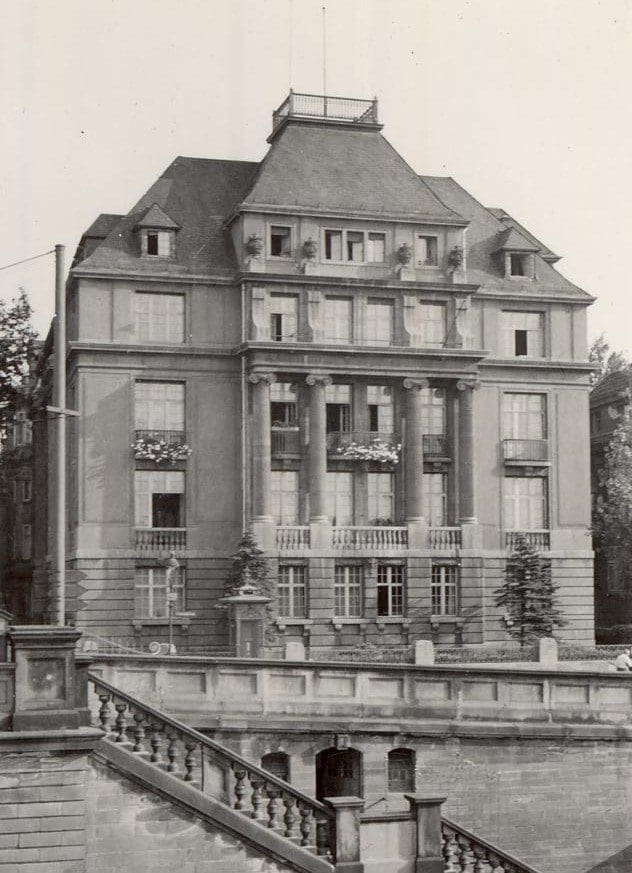
Frankfurt Mission Office
German law said no one could leave the country with more than 10 reichmarks about $2.50). That meant many of those who had evacuated from the northern and western parts of the mission and had already arrived at the German-Dutch border, were almost penniless and stranded. There was no possibility of wiring instructions and additional money to them because the telegraph wires had been reserved for military messages only. Worst of all, after 10:00 p.m. on Sunday, August 27th the military would take over the railway services and civilians would not be guaranteed their destinations. Wood proposed that one of the missionaries travel to border towns with the money needed to get the missionaries either to Rotterdam or Copenhagen, Denmark. He asked for volunteers.
Several missionaries, including Norm Seibold, who had just arrived from Stuttgart, raised their hands. President Wood dismissed the meeting and then, as the men left the room, he asked Seibold to remain.
“Brother, have you ever carried a message to Garcia?” This, in reference to a recent movie.
“No, but l’d be willing to try,” he replied.
President Wood gave Seibold an envelope containing 500 marks as well as railway tickets to Copenhagen. He instructed the missionary to travel the railway lines along the German-Dutch border and search for the stranded missionaries. How Seibold found them would be up to him, but he must see the missionaries were evacuated to safety.
At 4:00 a.m., Sunday, August 2nd, Norm Seibold’s train pulled into the large Cologne railway station. The depot was massed with people – Jews attempting to get out of the country, vacationers trying to get home before the 10:00 p.m. deadline, and foreigners hoping for any train that would carry them out of Germany.
Seibold fought his way out of the crowded railway car and looked up and down the platform. With so many people in the vast Cologne depot, how could he hope to find a few stranded missionaries? But Seibold knew he had been given a special mission and he had faith that help would be provided as he needed it.
Seibold climbed onto a nearby baggage cart and, above the noise and confusion around him, pursed his lips and blew. Out came the first four notes of Do What Is Right.
A few people turned to stare Seibold drew another long breath and whistled the tune again. His first effort netted four fellow missionaries – Ferryl McOmber, Dean Griner, William Manning, and Vern Marrott, who had left his elderly companions, Nikolaus and Katharine Reigler, on the other side of the station.
Seibold handed Marrott an envelope and said, “I’m not going to take the time to explain now because there is none. Just get on this train and then open the envelope. You’ll find instructions inside.”
Marrott, the Reiglers, Griner, and Manning boarded the train headed to Emmerich where they would cross the border to Zevenaar, Holland Ferryle McOmber waited with Seibold in the Cologne station for several more hours, thinking they might intercept other missionaries trying to cross the German-Dutch border. At last, they moved on, arriving in Emmerich at 9 in the morning where they found stranded Elders Grant Baker, Ken Earl, William Alder, and Charles Jenkins Jr.
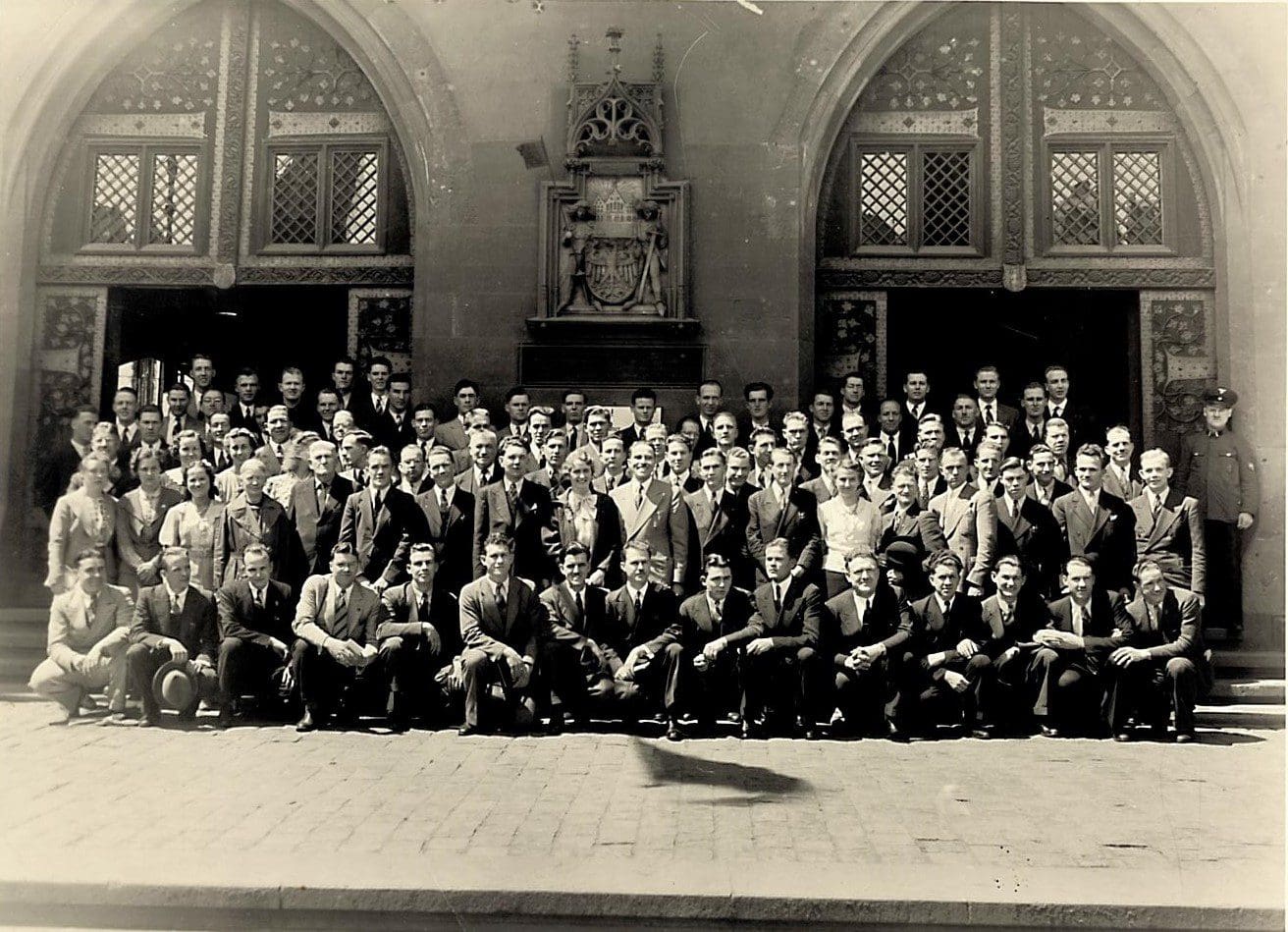
Seibold took out the money President Wood had given him and explained the plan that would take them into Holland.
An Emmerich city policeman happened to be on the station platform and noticed the elders. He also noticed the large roll of cash Seibold held in his hand. At once, he suspected the group of attempting to smuggle money out of Germany. The policeman approached the missionaries and demanded to know their business. Then he ordered everyone to turn their pockets inside out and open their wallets.
Earl held out 20 marks instead of the allowable 10. Seibold showed him the 500 marks.
“Give it to me!” the policeman commanded.
“Over my dead body,” countered Seibold.
The officer’s face darkened.
“Very well, but I must insist you come with me to the police station.”
“I don’t have to go anywhere with you,” retorted Seibold. “You have no authority here. I’ll talk to the military police but I won’t leave this station.
Aware of the watching crowd, the policeman drew himself up with great authority and said, “You are coming with me. Now!”
“I won’t. I’m an American citizen! I demand to see the military police!”
The officer made a move to take hold of Seibold, who resisted.
“Don’t you dare touch me. If you do, there’s going to be a fight!”
The policeman hesitated, uncertain.
“I’m an American citizen! I demand to see the military police!”
The officer glanced around at the astonished crowd. All eyes were on him. “All right,” he said.
The officer escorted Seibold and Ken Ear to an office in the inner recesses of the Emmerich railway depot.
The military police captain heard of the incident with an expressionless face. When the policeman finished, the captain, in harsh tones and strong language, reminded the officer no city policeman had any authority in any railway station. He also ordered the city officer to leave the depot and not return.
The captain turned his attention to the two missionaries who stood before his desk. He demanded an explanation.
When Seibold finished, the captain nodded. He knew of the Mormons. He could understand why the missionaries must leave Germany.
“I’m going to write a pass for you,” the captain told Seibold. “If you have any difficulties in the railway stations as you leave, just show this to the proper authorities.” He wrote, then folded the sheet of paper, and handed it to Seibold who tucked it in his coat pocket.
The pair left the captain’s office, Earl still in possession of his 20 marks and Seibold with the 500. They joined the other waiting elders in the station and the six proceeded to the border on the next train. At the border station, they found Dean Griner and William Manning. “The Dutch officials wouldn’t let us cross,” they told Seibold.
“Where are Elder Marrott and the Rieglers?” he asked. Griner and Manning shrugged in bewilderment. “Even with the extra money, the border agents turned us back but Marrott and the Rieglers passed through without a hitch.”
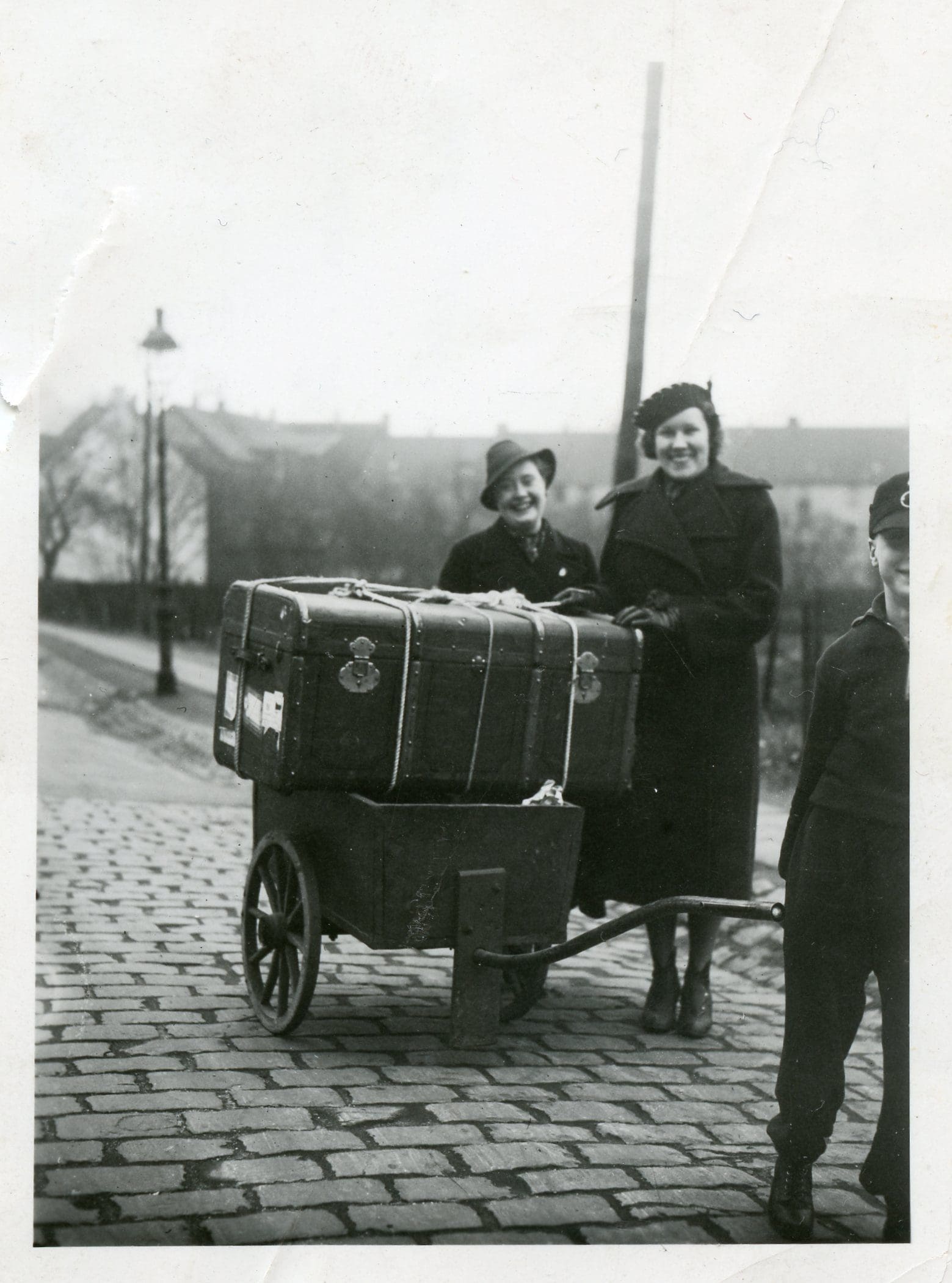
In his journal for that date, Seibold wrote:
“That those two old people got through shall be a testimony to me as long as i live. What we went through in the next 24 hours, those old people could never have stood.”
Seibold, McOmber, Manning, Griner, Baker, Earl, Jenkins and Alder arrived in Zevenaar, Holland, to learn the border had definitely closed. Not just to those without money or “through tickets”, but to everyone.
The border officials rounded up the group of missionaries and herded them through the station to an eastbound train. At 1:00 p.m. they were returned to the Emmerich railway station. The Belgian, French and Swiss borders had already closed, or would be closing in the next few hours. Their only hope of escape appeared to be through Denmark.
Although the government announced regular railway services would continue until 10 p.m., the missionaries discovered the trains no longer ran on schedule. The station agents could not tell them when the next train would be arriving or departing nor where it would be going. Neither would they guarantee them their destinations. But the missionaries had no choice.
Using part of the money President Wood gave Seibold, they bought any available passage left in the ticket office. The next train which arrived in the station was headed north and the missionaries boarded it.
At Munster they were “bumped off” and told the train was “for military personnel only.”
When another northbound train pulled in, the missionaries were refused passage. This train, too, was reserved for troop transport.
The young men decided when the next northbound train arrived, they would take matters into their own hands.
After what seemed like hours, another train arrived at the Munster station bulging with soldiers and pulling flat cars loaded with tanks and trucks. One of the missionares walked up to the engineer and casually asked, “In what direction are you headed?”
“North,” he replied.
The missionary then signaled the others who waited on the platform. As unobtrusively as possible, they gathered their hand luggage. The train whistle blew. Heavy wheels began to turn. The missionaries waited. As the train pulled out of the station, the missionaries dashed off the platform after the moving train. Running until they could get hold of the hand rails on the passenger cars, they swung their luggage and themselves onto the train.
They reasoned the conductor would not put them off while the train was going at full speed and he would not halt the train on their account.
They were wrong. At the next town, the engineer stopped the train and the conductor ordered them off. The military police picked them up and interrogated them. Seibold produced the pass written by the Emmerich police captain and the group was released.
Later, the missionaries were allowed to board a train bound north for Osnabruck where it arrived minutes too late for a train that would have taken them directly to Hamburg.
As with every station the missionaries had been in during the previous 36 hours, the Osnabruck depot was filled with people. While the eight waited in the station, they were joined by six other West German missionaries, Ben Lasrich, Donald Poulton, Louis Haws, Claytor Larsen, Frank Knutti and Ellis Rasmussen.
One of the group asked a station official when the next train was due. The man frowned and shook his head. “No trains for several hours,” he replied.
A few minutes later an unexpected northbound train arrived.
Since they did not know how soon the train would depart, the missionaries wasted little time getting aboard. Two of them climbed into a car and lowered the window. Outside, another pitched luggage through the open window. Then, as the train jerked forward, they boarded. Within seconds, the train moved down the tracks.
In Bremen, the missionaries were once more “bumped off” to make room for the boarding soldiers. After discussing the situation, the missionaries appointed one missionary to watch for incoming trains while the others tried to rest on the wooden benches in the waiting room. Train after train came into the depot but the missionaries were refused passage on each of them. At last, they decided they must change their own luck.
When the next northbound train left the station, they raced after it, threw their luggage aboard, and vaulted into the moving train. Again, they were put off at the next stop.
They appointed a sentry to watch for incoming trains, while the others rested on the benches in the station. They gained passage on the next train going to Hamburg. Again, two of them rushed onto the train and opened the window while the others passed their luggage into the car and then boarded on the run.
They arrived in Hamburg at 11:00 p.m. , just three minutes too late to catch a train that would have taken them directly to Copenhagen via the ferry. Someone in the station told the missionaries there was a train headed for points north which was due to arrive shortly in the nearby town of Altona.
They rushed to Altona and boarded the northbound train at 1:30 a.m.
Two hours later they arrived in Neumuster where they were again “bumped”.
There, they bought some knackwurst soup and, exhausted, put their heads down on the tables in the waiting room and tried to sleep.
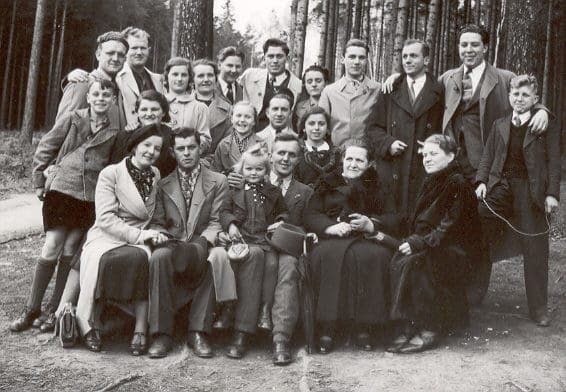
The morning of Monday, August 28th, they learned a train, destined for Kiel, would be arriving within the hour. The station agents felt there was a good chance they would be granted passage on it.
Having not shaved in three days and anticipating their arrival in Denmark sometime in the afteroon, the missionaries cleaned up as best they could in the raitway station.
At 8:00 a.m. the train pulled into the station and the young men squeezed into the already-packed cars. They waited and waited, but there was no sign the train would be departing anytime soon. Although it was still moming, the overcrowded cars were stuffy and uncomfortably warm. The passengers lowered the windows.
After an hour, another train pulled into the depot and stopped next to the one on which the missionanes waited. Its windows were also open and one of the young men suggested they “transfer”. They climbed through the windows of their train and through the windows of the second one. They had no more than found seats, when the train began to move and, within minutes, was on its way to Kiel.
In Kiel, where the missionaries were to change trains again, they employed their usual method of boarding. Two of them climbed into the train while the others remained on the platform to pitch all their luggage through the open windows.
Elder Seibold, a strapping young man who had played guard on the University of Utah football team, was considered the missionaries’ best “pitcher”. Unfortunately, Seibold failed to notice the two missionaries who boarded the train had not yet lowered the window. The suitcase flew through the air and shattered the thick glass.
In stunned silence, they stared at the glass on the platform. If the conductor discovered the broken window, he would turn them over to the military police and there would be another long delay before they could proceed to Denmark.
Fortunately, the conductor stood at the opposite end of the train and had not seen the accident. The missionaries on the platfom kicked the glass under the train and onto the tracks. Then, the elders inside the compartment lowered what was left of the shattered window so none of the glass shards could be seen.
All but two of the missionaries from the platform jumped into the cars. The conductor glanced down the length of the train to see that all passengers were aboard. The two waved and shouted, “Ready!
Ready!’
The conductor hesitated for a few seconds, then signaled the engineer to proceed. The elders on the platform leapt aboard.
Just after noon, the Denmark-bound missionaries arrived in Flensburg, a city on the German-Danish border. The Gestapo scrutinized their passports and searched their belongings. They demanded to see the missionaries’ cameras, opened them, and exposed the film.
The missionaries arrived in Padborg, a Danish border town, at 1:00 p.m. They had spent three days traveling across western Germany in hot, overcrowded raitway cars, rarely having the comfort of a seat. They slept minutes at a time on benches and floors in the various stations, eating almost nothing. They had been arrested, interrogated, threatened on several occasions, and put off trains more than a dozen times.
For those exhausted missionaries, the Danish language sounded like music and the peaceful countryside looked like Heaven.
Norman Seibold wired President M. Douglas Wood in Copenhagen and informed him of the missionaries’ safe arrival. He saw his fifteen fellow elders onto a train bound for Copenhagen. Then, because he could not be certain he had found all the “lost” missionaries, Seibold boarded a southbound train and headed back into Germany.
As the train stopped in cities, towns, and villages along the border, Seibold got off and, whistling Do What is Right, continued searching the railway stations.
In the Neumunster depot, Seibold walked up and down the platform.
A silent but clear urging took him out of the station and into the street. He knew the pass written by the milltary police captain in the Emmerich station would not protect him once he left the train yards.
But, the prompting continued. He went down another street and around a corner. He stopped in front of a gasthaus – a pub. It was not the sort of place a missionary would frequent and Seibold considered what his father would think if he went in. However, the unmistakable feeling came stronger and propelled Seibold through the door.
It was not the sort of place a missionary would frequent and Seibold considered what his father would think if he went in. However, the unmistakable feeling came stronger and propelled Seibold through the door.
There, seated at a table, were two young men in dark suits and white shirts. Seibold recognized them at once.
One of them glanced up. Surprise, then relief flooded his face. He came out of his chair with a bound, hand outstretched. “Am l ever glad to see you,” he said and pumped Seibold’s hand.
“I’ll never forget the look in that man’s eyes,” Seibold later recorded.
The two stranded missionaries had found their way to the gasthaus, exhausted and hungry, and spent the last of their money on lemonade. Until Seibold came through the door, they had no idea what they should do or where they should go.
Seibold gave the pair two tickets lo Copenhagen, enough money for a decent meal, and saw them onto a Denmark-bound train.
Unaware all the stranded West German missionaries were safely out of Germany, he continued his search for another twenty-four hours.
For the lone, weary elder, those 24 hours stretched beyond measurement as he rode the overcrowded trains, without sleep, and with very little to eat. At last, prompted he had fulfilled his responsibility, he returned to the Danish border on Tuesday, August 29.
When Seibold arrived in Copenhagen, President Wood threw his arms around the young man in a mixture of relief, gratitude and joy.
All the West German missionaries were accounted for and safe.
On Friday, September 1st, 1939, the Nazis marched into Poland.
On Sunday, September 3rd, Great Britain declared war on Germany. Within hours, France followed suit and the same day shots were fired over the Rhine River. The war everyone predicted and feared became a reality.
By September 5th, the missionaries leamed, to their great sorrow, they would be evacuated out of Europe and on the 11th, the first of many cargo ships began transporting them to the United States.
The voyage back was fraught with its own perils. Mines, U-boats, cold, storms, and illness accompanied them.
In a June, 1940 Conference address, President Wood quoted a missionary who had been asked if he thought they would survive the voyage home. The missionary replied, “That’s child’s play after the things we have been through in getting out of Germany, I don’t think, after all the trouble the Lord went to there, he would let us drown in the middle of the ocean.”
Most of the missionaries of the West German Mission were reassigned and finished their missions in the United States. Norm Seibold, who had only a few months left of his three-year mission, was released. And he lost his new-found ability to whistle.
The experience of the evacuation has been an enduring one for Norman Seibold. Forty-five years after the event, he was to admit whenever he was in a large crowd, a familiar, urgent feeling rose in him and he felt impelled to look for missionaries.
The experience of the evacuation has been an enduring one for Norman Seibold. Forty-five years after the event, he was to admit whenever he was in a large crowd, a familiar, urgent feeling rose in him and he felt impelled to look for missionaries.
In all those years, had he learned to whistle?
“No,” Norm laughed, “and don’t you ever tell anyone I can’t either.”
After Norman Seibold’s mission, he married Ruby Davenport. They had six children, four of whom are living. Three have served missions. Ruby died in 1971 and, in 1972, Norm married Dona Darly Ostergar. From 1982 until 1994, Norman served as a County Commissioner. Of that time, he says he was “an ornery missionary and an ornery County Commissioner.” He died in 2003.






LorioSeptember 30, 2025
Wow, what a story! Most of us have no idea of the faith and courage needed to follow our leaders and do things that seem impossible. The day will probably come that such faith and courage and obedience will be asked of us. May we be strengthening our faith and courage AND trust in the Lord, His program and His leaders here on earth.