









In this third and final column with an American history theme we’ll pick up around the Spanish-American war in 1898, learn about the Great Fire of 1910 and end with a nail-biting encounter between Mother Nature and “Fighting Admiral” Halsey in 1944. The real strength of these books, and any truly successful non-fiction book about history, is the focus on the individuals involved. Average, ordinary people as well as famous movers and shakers have their stories told, making the topics at hand infinitely more touching and applicable to us today.
“The eternal pull of war on men”
The War Lovers
By Evan Thomas
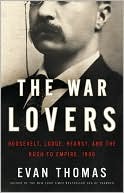 It goes without saying that the decision for a country to go to war should be made very carefully. The inevitable death and destruction that will come on both sides demand the highest standards of accurate intelligence, transparency and integrity during the decision-making process. It’s disconcerting to realize just how prone to manipulation and personal desires the process can be. The War Lovers chronicles the march to war that occurred during the last few years of the 19th century. The Spanish-American War lasted less than a year, but drastically affected the trajectory of the next fifty years (or more) of American history. It led directly to the United States involvement in both Cuba and the Philippines and with American expansionism enthroned as official government policy, the annexation of Hawaii was a logical next step.
Mr. Thomas follows five leading personalities of the time, including three “hawks” who advocated for war. Theodore Roosevelt, later President of the United States, features heavily in Mr. Thomas’s account of events and most of the time, it’s definitely a less-than-flattering picture. The triumvirate of Mr. Roosevelt, Henry Cabot Lodge (a United States senator and Roosevelt’s friend from Harvard) and William Randolph Hearst (the influential publisher of the New York Journal and one of the original yellow journalists) used every possible means at their disposal to push the country closer to war. The details, according to Mr. Thomas, such as why exactly the war would be fought and who exactly they would fight, were less important than other considerations. Mr. Roosevelt, for example, desperately wanted a chance to prove his courage on a field of battle. Mr. Hearst, on the other hand, needed to sell more newspapers.
The two “doves” profiled are less well-known: William James, America’s preeminent philosopher of the late 19th century, and Thomas Brackett Reed, the powerful Speaker of the House. Mr. James was deeply affected by his younger brother Wilkie’s suffering from wounds received during the Civil War. He was particularly concerned that people “should think for themselves” rather than being “passively swept up by the jingoist tide.” Mr. Reed, or “the Czar” as he was known on Capitol Hill, used his vast influence and masterful knowledge of legislative procedure to repeatedly stall or block motions that would have moved the country closer to war. Of course, neither Mr. James or Mr. Reed were ultimately successful, but they courageously maintained their anti-war stance despite great pressure to capitulate to popular opinion.
While not drawing explicit parallels, Mr. Thomas implies that there are some frightening similarities between the Spanish-American War and events of today. Whether you agree with that supposition or not, The War Lovers is a cautionary tale warning readers to beware of manipulation by the media and to be skeptical of politicians’ stated motivations.
“Every hill around town is a mass of flames”
The Big Burn
By Timothy Egan
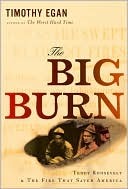 After the hot, rainless summer of 1910, the forests of Idaho, Washington and Montana were little better than kindling. A few lightning strikes, some sparks from passing locomotives, and hurricane-force winds were all that was needed to induce disaster. The largest wildfire in the history of the United States burned 3.2 million acres – an area about the size of the state of Connecticut – taking several towns, countless animals, and 87 people with it.
It may be hard to imagine for those of us who have trained firefighters only a 9-1-1 call away, but in the western United States wilderness in the early years of the 20th century, “organized firefighting was an oxymoron,” and this was particularly true for wildfires. The fledgling United States Forest Service was pitifully understaffed and its initially meager budget had been chipped away to almost nothing by a Congress hostile to the very idea of national forests. Mr. Egan explores the politics behind the conservation movement and its opposition as well as the effects of the Big Blowup on public opinion and government policy.
Mr. Egan uses both famous and obscure characters to tell the story of the Great Fire of 1910. As in The War Lovers, Theodore Roosevelt looms large in the narrative, but this time in a much more positive light as the champion of public lands and conservation. Practically anonymous Italian immigrants Giacomo Viettone and Domenico Brunco died fighting the wildfire, having worked seventeen twelve- to sixteen-hour days without a break. Twenty-six-year-old Ione “Pinkie” Adair homesteaded 160 acres in the middle of the Coeur d’Alene forest and served as cook for a fire crew of 74 men. When the ranger in charge ordered the crew to lie down in a creek to escape the coming flames, she refused, saying “I won’t die here.” Instead she walked thirty miles through the forest, reaching Avery, Idaho, barely ahead of the fire, and clung to the top of the caboose of the last train leaving town.
Disasters bring out the best and the worst of human nature and Mr. Egan captures both sides of the coin, telling how some prominent citizens of endangered towns tried to force their way onto the trains reserved for women and children. Several residents of Taft, Montana, preferred to drink themselves into a stupor rather than evacuate or try to fight the fire. On the other hand, many showed incredible bravery. Ed Pulaski, whose name is immortalized by the axe/pick hybrid he developed for fighting wildfires, saved the lives of dozens of his crew, but suffered horribly for the rest of his life from the injuries he received and grew bitter about the callous disregard the government showed for his men.
It never ceases to amaze me how often common themes show up over the course of history. The early years of the 20th century saw a huge influx of immigrants from Ireland, Greece and Italy who had come to the United States to escape poverty in their native countries. Society was not at all sure what to do with these “undesirable classes,” but many of these immigrants filled a desperate need providing manpower for firefighting crews as well as working in mines, on the railroads, and as soldiers. There was also a mighty ongoing debate between those who supported this radical new idea of the conservation of public lands and those who felt that anything that stood in the way of unbridled private sector growth must be swept aside. Open up a newspaper, peruse your favorite news website, or turn on the radio and you’ll hear echoes of these same issues today.
Hopefully, by remembering those who have gone before us, we’ll be in a position to learn from their mistakes and make better decisions in similar situations.
“The sea…has no generosity”
Halsey’s Typhoon
By Bob Drury and Tom Clavin
 Non-fiction books that are as full of heart-stopping suspense as the best fiction thrillers are rare. Halsey’s Typhoon is one of those exceptional finds. The cold, hard facts of what happened during the tremendous Typhoon Cobra on December 18-20, 1944, are shocking by themselves: 793 men lost at sea, three naval ships capsized and sunk. Mr. Drury and Mr. Clavin write with a page-turning urgency that breathes life into the terrifying experience of sailing through the world’s most powerful storm.
This book also provides powerful lessons in true leadership. When the crisis came, some officers refused to question the orders they had been given to remain on course, even though it put them in the direct path of the typhoon. To do so would be mutiny, after all, and they were duty-bound to obey their commanding officer. As a result, the USS Hull capsized, killing over 200 sailors. Others took stock of the situation and actively chose to disregard the orders that would endanger the lives of their crew, changing course in order to survive. Because of his willingness to think independently and risk court martial, Lieutenant Commander Henry Lee Plage and his ship the USS Tabberer not only came through the typhoon without losing any crew members, they were able to rescue 55 survivors from the capsized ships. Simply put, in these dire circumstances, disregarding orders saved hundreds of lives. Unquestioningly following those same orders cost hundreds of lives.
Mr. Drury and Mr. Calvin point out details and facts that make the story immediate and heart-breaking. For example, describing the one of the destroyer escorts, they mention that “close to 90 percent of her enlisted crew were teenagers with an average service record barely exceeding three months.” Many of the sailors who served in the Pacific during World War II could barely be counted as adults. Allusions to maritime lore from the ancient Greeks to mid-20th-century superstitions are scattered throughout the book and add an authentic nautical feel to the tale. Snippets of ancient Japanese history and meteorology, the process for a naval court of inquiry and a brief biography of Bowditch are worked seamlessly into the narrative, too.
A couple words of caution: I had to ask my dad, an 18-year veteran of the United States Navy, for definitions of some of the jargon in the book. Those without a retired naval officer on hand may have more trouble with some terms, though there is a limited glossary. There is also occasionally some pretty salty language, not unexpected in a book about sailors. But if you are looking for a true story of unsung heroes and ordinary men overcoming incredibly challenging circumstances, Halsey’s Typhoon simply cannot be beat.
**************************
On My Beside Table…
Stilling working on: Angela’s Ashes by Frank McCourt
Also reading: The Journey Takers by Leslie Albrecht Huber
On deck: Room by Emma Donoghue
**************************
Mental illnesses are affecting an increasing number of individuals and families and unfortunately, stereotypes and misunderstandings are plentiful. We’ll take a look at several aspects of this field starting with the next column in two weeks. Come find me on goodreads.com or email suggestions, comments, and feedback to egeddesbooks (at) gmail (dot) com.


