

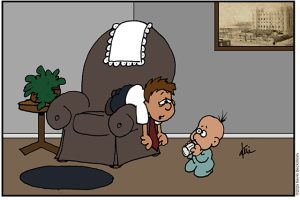





My personal entry into the world was somewhat overshadowed by a much more dramatic event that took place in our family just a few months earlier. My oldest brother was leading a patrol in the jungles of central Vietnam when one of his team members in the rear tripped over a wire, detonating a land mine beneath where my brother was standing. He remembers smelling the smoke and seeing the tops of the trees but recalls little else about the fateful moment. It was in the field hospital that he learned that one leg and half of his fingers had been ripped off during the blast, and attempts to save his other leg eventually failed, leaving him—at 20 years old—as a double amputee.
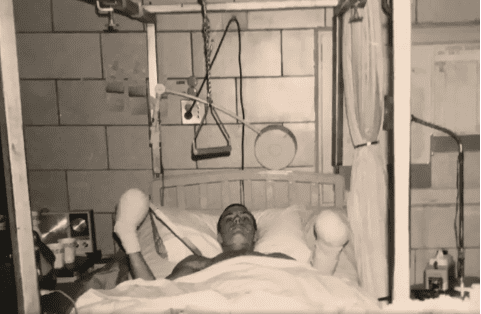
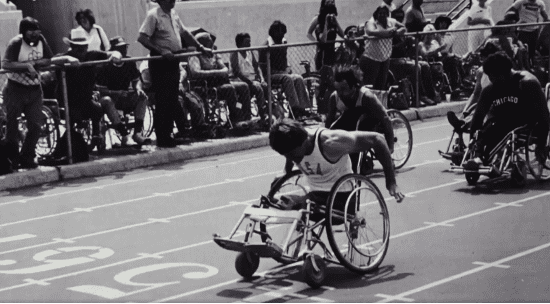
I was of course far too young to witness the excruciating months of recovery that followed or the emotional gyrations the rest of the family endured as my brother fought for his life. In contrast, my earliest memories are of him popping wheelies and waving off others’ attempts to help as he learned to maneuver his wheelchair in ways that astounded me. He eventually went on to join a wheelchair basketball team, to participate in track and field, and even to medal in the Paralympic Games, where he proved to our hometown—and to the world—that the natural athleticism that defined his youth had not been robbed by his tragedy. In every photo published of him, his wheelchair was likewise front and center.
During those same years, I remember frequent visits to the home of my cousin who, at just a year younger than I, had been born with spina bifida and was likewise confined to a wheelchair. But in reality, I’m not sure the term “confined” really applied, as her wheelchair gave us the freedom to do just about anything we wanted to as children…and later as teenagers. I suppose there were limitations to our activities, but somehow, we never really thought about them.
Having grown up with those experiences, it was somewhat of a jolt to me when decades later, I stood in a tiny home in Santo Domingo watching a young father drag himself by his arms across a dirt floor. Paralyzed since contracting polio as a baby, he was demonstrating for us how he had been forced to move around during earlier years, before eventually receiving a wheelchair from a local agency that served those with mobility needs. Even though it was not yet noon, the heat inside the two-room structure was already stifling as the relentless Caribbean sun beat down on the tin roof.
Rique’s dwelling place had not been easy to find. The woman at the agency had scribbled an address on a slip of paper, and our driver took us to the corresponding neighborhood and to what appeared to be the closest house, but the numbers still failed to match exactly. Assuming that a neighbor in a wheelchair would not escape the other residents’ notice, we began to ask around, eventually being directed to a narrow passageway between two of the houses. After we had walked about two meters down an unpaved path, a hidden world opened before us. We had entered a labyrinth of cramped, hastily constructed dwellings that stretched as far as they eye could see, with trails meandering in multiple directions.
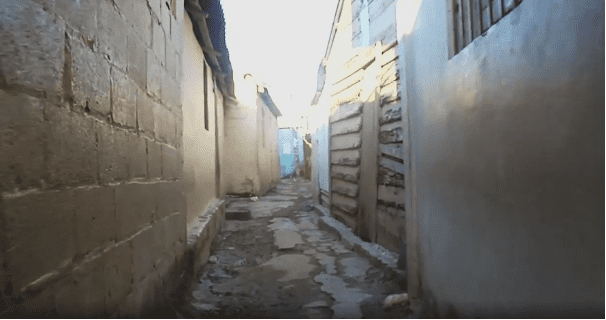
It was an entire “off-the-grid” neighborhood that had sprung up beyond the official mapped streets and residences of the city. I was amazed—almost as amazed as the denizens of the community who could not help but stare as we walked by or as we paused to ask further directions to the house in question. It was clear that this was a section of town that was not in the habit of receiving visitors.
At length we made it to Rique’s door, and he was as charming as his colleagues at the agency had described him. In the years since receiving his first wheelchair, Rique had managed to obtain a receptionist job at the agency, from which he derived an income sufficient to provide the basics for his family. Perhaps the greater gift was the boost that it had provided to his confidence and to his sociality. He became a bit of a celebrity around the office, as well as a regular participant on the local wheelchair basketball team.
As gracious as he and his wife were at receiving us, however, Rique was not shy about relating the challenges of being a wheelchair user in the world that he inhabited. Accessibility ramps on street corners or in buildings were largely nonexistent. Bus drivers would frequently pass by, unwilling to accommodate the additional time and space it would take for a wheelchair user to board. As if to add visual proof to his verbal testimony, he then invited us to follow him as he navigated his chair along the stony path that led outside his neighborhood.
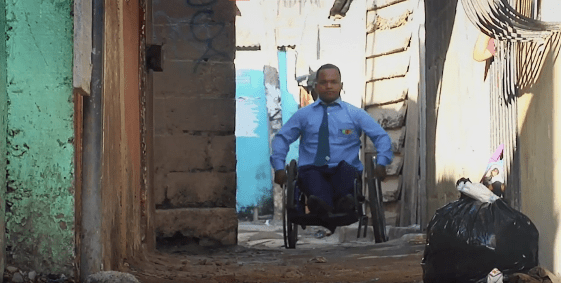
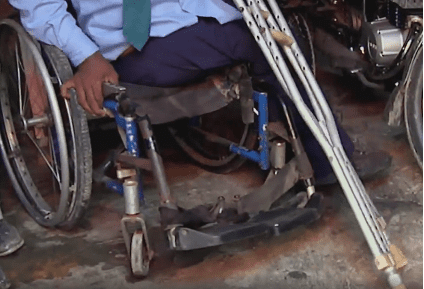
The toll which the bumps and ruts had taken on the chair over the years were painfully apparent. It had deteriorated into a completely dilapidated piece of machinery, with missing parts that left the whole apparatus somewhat uneven and unstable, yet somehow still functional. Watching Rique struggle down the trail, it was difficult to continue withholding the news that awaited him in just a couple of hours.
Having been given the charge to identify someone who could represent to the world the benefits—as well as the vast ongoing needs—of the Church’s humanitarian wheelchair program, we had been somewhat miraculously led to Rique. In looking for experienced organizations through whom the Church could distribute wheelchairs in the Dominican Republic, a diligent missionary couple had formed a relationship with the agency where Rique worked and had become particularly impressed with one of its leaders, a resilient woman who had herself been paralyzed through an accident in later life but who, like my brother, did not allow it to slow her down. When the missionaries connected me with her and I explained our quest, she said to me, “I know exactly the young man you need to talk to!”
Rique certainly did not disappoint. He no doubt wondered why he was receiving a special escort consisting of a few strangers to work that day, but he accompanied us nonetheless, chatting casually along the way. Apparently, he assumed we simply wanted to capture his story, because the astonishment on his face when a coworker entered the office pushing a sparkling new all-terrain chair was unquestionably genuine. After Rique first hopped in, reality still had not dawned on him—he seemed to think he was simply being asked to provide his impressions of the new model. Finally, one of his colleagues whispered the magic words: “Rique, it’s yours.” And then nothing could prevent the broad smile from spreading across his face.
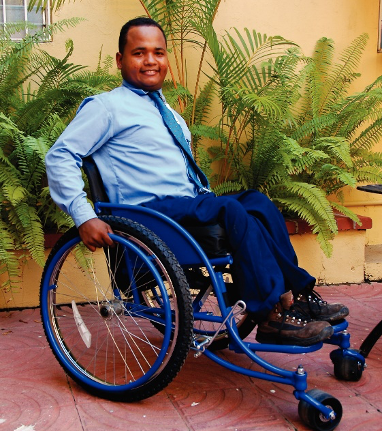
Thousands of other beneficiaries in the Dominican Republic and elsewhere have been fitted for and received all-terrain wheelchairs through Church humanitarian efforts since that time, but the experience with Rique remains one of the most memorable for me. For years thereafter, he became one of the primary faces of the Church wheelchair initiative, but to my knowledge, this is the first time the back story has been shared.
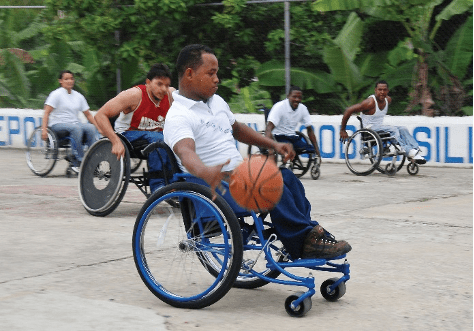
Rique’s return to his neighborhood that evening was a triumphant one. Seeing his new chair, his children ran to jump onto his lap, and various members of the community thronged him to offer their congratulations. We even had the chance, before we took him home, to watch him try out his new chair on the basketball court, an experience that transported my mind hundreds of miles and several years back toward my own brother’s past and brought with it a pang of gratitude that I could be a small part of an effort that would bring to so many others a taste of the freedom that my brother had long enjoyed—freedom of mobility which, until that experience in an obscure neighborhood of Santo Domingo, I had perhaps failed to see for the blessing and miracle that it is.
The video account of Rique’s wheelchair experience can be viewed at https://www.youtube.com/watch?v=mHTUMbvZuo8. To learn more about the Church’s humanitarian efforts related to mobility, visit https://www.latterdaysaintcharities.org/what-we-do/wheelchair?lang=eng.