





Your Hardest Family Question: How do I protect our children from the unhealthy influence of their older sister?

Question
We sent our oldest daughter across the country to an Latter-day Saint school and felt a sigh of relief as we hoped she would be surrounded by goodness, faithfulness, and similar morals. Unfortunately, we discovered that instead, our child is now smoking weed and drinking alcohol, among other things. After finding this out we were completely heartbroken. It is hard to describe the feelings in a parent when your child makes these choices. It’s one of the most terrible and painful things I’ve ever gone through, and I am very familiar with grief and heartache.
We have always done everything right: Family Home Evening every week, scriptures, and prayers every night, church every Sunday, all the church activities, …. literally textbook happy, Latter-Day Saint family. We never saw this coming. While this child struggled with her testimony often…. we were still completely blindsided by this.
We have come to terms with everything and have come to a place where we have accepted it. Unfortunately, for all parents everywhere…. free agency exists. We, of course, will never stop parenting and have our opinions, thoughts and standards be known, as well as our sadness and disappointment. We have made sure to let her know we still love her. So much! And thankfully, our relationship has survived, and we still talk often and happily.
However, there’s one problem we find harder to figure out. This child is the oldest of five kids. Eventually she will want to come home to visit. I would rather she not come at all. I want to protect all our impressionable, young, still developing kids…. some who look up to her so much!
We are terrified of the effect she will have on our other children. We dread the example she will set. We can’t stand the thought of these things happening in our house. We feel the heartbreak all over again when thinking of explaining all of this to our other children. How will we prepare them? How will we protect them? How will we explain it?
We obviously can’t tell our own child to not come home. But how do we let her come home?
Answer
You’ve worked hard to accept the reality of your daughter’s current priorities and it sounds like all this work has been done at a distance. It’s quite different to experience the contrast in person while wondering what influence and impact she’ll have on your efforts to guide your children at home. Even though you can’t program any of your children’s paths, you can still have peace and maintain close relationships with them. Let’s talk about how you can do this.
Before we get into the logistics of how to handle your daughter’s homecoming, I’d like to address your response to the doctrine of agency. In your question, you used the word, “unfortunately”, when talking about the reality of agency. While I do understand the parental pain of watching agency in action as a child disregards God’s laws, I believe it’s important to not blame agency as the problem. In fact, agency is the solution to our fallen state! Elder Robert D. Hales reminded us of this core truth:
“Our agency—our ability to choose and act for ourselves—was an essential element of this plan. Without agency we would be unable to make right choices and progress. Yet with agency we could make wrong choices, commit sin, and lose the opportunity to be with Heavenly Father again. For this reason, a Savior would be provided to suffer for our sins and redeem us if we would repent. By His infinite Atonement, He brought about ‘the plan of mercy, to appease the demands of justice.’”[i]
I want to invite you to trust in agency and rejoice in the fact that you, your daughter, and all your children possess the ability to choose their own path. Even though your daughter isn’t following God’s laws right now, she is living the plan of salvation. Resist the tendency to believe that it should be any other way. You are conscientious and intentional about guiding your children back to the presence of our Heavenly Parents, so I see how painful this is for you. I also believe that when we fully embrace the truth about moral agency, it can flood us with peace and purpose as we trust in God’s plan.
Another truth that can bring you peace is recognizing that your daughter’s journey is far from over. She is currently discovering the law of opposites and will have firsthand knowledge of tasting the bitter, “that [she] may know to prize the good.”[ii] Remember that our Heavenly Parents built a world full of surprises, temptations, dangers, and tragedies. It’s a wild and unpredictable classroom designed to help their children grow to be just like Them.
None of us know what she will choose next or how long it will take for her to learn these important lessons. However, it’s critical that we don’t limit the love and patience of our perfect Heavenly Parents and our Savior, Jesus Christ. C.S. Lewis discovered this Divine Love in his early thirties after years of stubborn atheism:
“I gave in, and admitted that God was God, and knelt and prayed: perhaps, that night, the most dejected and reluctant convert in all England. I did not then see what is now the most shining and obvious thing; the Divine humility which will accept a convert even on such terms. The Prodigal Son at least walked home on his own feet. But who can duly adore that Love which will open the high gates to a prodigal who is brought in kicking, struggling, resentful, and darting his eyes in every direction for a chance of escape? . . . The hardness of God is kinder than the softness of men, and His compulsion is our liberation”[iii]
You are doing all you can do to guide and bless your daughter and your children at home. Please don’t forget that you’re co-parenting with the loving partnership of our Heavenly Parents who are the architects and champions of the role of agency in their great plan of happiness. President Harold B. Lee reassured all earthly parents with this important reminder: “We forget that we have a Heavenly Father and a Heavenly Mother who are even more concerned, probably, than our earthly father and mother, and that influences from beyond are constantly working to try to help us when we do all we can.”[iv]
As you contemplate her returning home and eventually exposing her siblings to her lifestyle choices, it’s critical that you hold tightly to the principles I’ve shared above. I don’t minimize the pain of watching your children practice their agency in ways that bring regret and sorrow. It’s truly a soul-stretching experience that we both love and hate. However, your response to her and your other children will be influenced by your trust in the principle of moral agency.
When your daughter returns home, she’ll be returning as an adult guest who can be expected to follow the house rules. Even though she’s familiar with the home rules and routines, there’s nothing wrong with reviewing your expectations. Speak kindly and clearly to her about what you expect from her as a guest in your home. I also think it’s important to remind her that respecting your rules also means not undermining your authority and influence on your other children. She’s not their parent and can practice deference and respect while she’s in your home.
Even though you can decide whether she enters your home, she still might choose to contact them outside of your home and share her experiences, behaviors, and beliefs with your other children. This is where it’s important to once again embrace the principle of agency and hope that all your children will sense the difference between bitter and sweet. You’ve taught them the sweet and they will eventually encounter the bitter (which may initially taste artificially sweet). Continue offering them light and truth by precept and example.[v]
Of course, you don’t need to broadcast her choices or your disappointment in your daughter’s path. At the same time, you don’t need to hide the reality of her life from your children when it’s presented to them. When your other children discover her lifestyle choices, you can stay close to them and process what they’re seeing, feeling, thinking, and experiencing. You still have a responsibility to reinforce your standards and teach truth to your children. These are excellent opportunities to help them embrace the law of opposites and decide what matters to them.[vi] It’s a gift to your children to help them make sense of opposing feelings and thoughts in the supportive presence of loving parents.
This is also a powerful opportunity for them to learn how to treat others who are different from them. They can learn how to be inclusive, loving, and open to their sister and others. Your children can learn lessons about agency and love as they observe you interact with your daughter. As they watch you stay connected to your daughter and treat her with respect and love, they will know that nothing can separate them from the love of their parents.[vii]
Geoff will answer a new family and relationship question every Friday. You can email your question to him at [email protected]
Download Geoff’s FREE guide to help you quickly end arguments with your spouse: https://www.geoffsteurer.com/3-steps-to-end-your-marriage-argument
You can connect with him at:
Website: www.geoffsteurer.com
Facebook: www.facebook.com/GeoffSteurerMFT
Instagram: @geoffsteurer
Twitter: @geoffsteurer
About the Author
Geoff Steurer is a licensed marriage and family therapist in private practice in St. George, Utah. He is the co-author of “Love You, Hate the Porn: Healing a Relationship Damaged by Virtual Infidelity”, host of the podcast, “From Crisis to Connection”, and creates online relationship courses. He earned degrees from Brigham Young University and Auburn University. He is married to Jody Young Steurer and they are the parents of four children.
[i] https://www.churchofjesuschrist.org/study/general-conference/2010/10/agency-essential-to-the-plan-of-life?lang=eng
[ii] Moses 6:55
[iii] Lewis, C. S., & Barfield, O. (1955). Surprised by joy: The shape of my early life. Chicago. pp. 228-229
[iv] Harold B. Lee, “The Influence and Responsibility of Women,” Relief Society Magazine 51, no. 2 (Feb. 1964): 85.
[v] https://www.churchofjesuschrist.org/study/ensign/1981/12/the-power-of-example?lang=eng
[vi] 2 Nephi 2:11-28
[vii] Romans 8:39
Books That Say “I Love You” Best This Valentine’s Day
Valentine’s Day is one of the best holidays because it celebrates expressions of love, kindness, and friendship. Below is a collection of board books and picture books centered on these themes. The first five titles, which are smaller in size and include board books, are geared toward babies and toddlers. The remaining books are suitable for all ages unless otherwise noted.
 Love from The Big Red Dog, by Norman Bridwell, is a small-sized book with a very big heart. This brightly illustrated, rhyming tale shows how two friends work together and value one another. The classic story features a hardcover and sturdy pages, making it perfect for tiny hands. The love between Emily and her pet dog is evident throughout the book.
Madeline Says Be Kind, based on the character created by Ludwig Bemelmans and illustrated by Steven Salerno, is a sweet story that highlights the value of kindness. When someone falls or help is needed with cleaning up, a kind friend is always there. The rhyming text reinforces caring feelings toward friends and reminds readers that being kind shows how much you care. It’s a lovely book to give to someone you value.
Love Can Be, by Yuli Yav and illustrated by Antonia Woodward, is a board book filled with expressions of adoration and affection. The gentle rhyming text shows that love can be expressed in many ways, quiet or loud, big or small. Whether it’s apples cut into slices with care or quiet moments spent together, the message is warm and reassuring.
 Chicka Chicka I Love You, based on the classic Chicka Chicka Boom Boom by Bill Martin Jr. and John Archambault and illustrated by Julien Chung, is a delightful board book that cleverly reinforces letter recognition through rhyme. The loving message throughout centers on the affection felt for the reader. “I love you and you love me, the way we say it is L, O, V, E!”
Like So, by Ruth Forman and illustrated by Raissa Figueroa, has been recently formatted into a board book and emphasizes the deep bond between family and child, even during difficult moments. The illustrations are gorgeous and fill the open pages with warmth and emotion. The text beautifully compares love to nature; innate, wondrous, and infinite.
Speak Your Heart: A Coco and Bear Story, by Apryl Stott, is a stunning picture book featuring full-spread illustrations created with watercolor paint and digital ink. The story explores the importance of friendship and how to navigate challenges when emotions become complicated. The animal characters are charming and cozy, bundled in warm scarves that add to the book’s comforting feel.
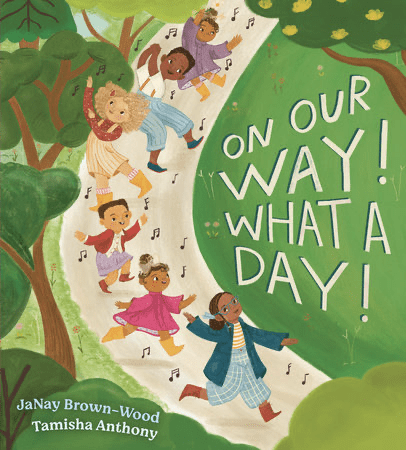 On Our Way! What a Day!, by Janay Brown-Wood and illustrated by Tamisha Anthony, opens cleverly with end-pages that introduce six children, from youngest to oldest. The story follows their joyful journey as they gather small but meaningful gifts, such as a scritchy-scratchy pine cone, jingly-jangly quarters, and clicky-clacky stones, for their Gram’s birthday. Filled with onomatopoeia, rhythm, and heart, this lively story builds excitement and ends with a moment of pure joy.
Olive and Oscar: The Favorite Hat (Ready to Read Level One), by Ariel Bernstein and illustrated by Marc Rosenthal, is a fun and accessible read for new readers. Two adorable elephants are heading to the beach when Olive gives Oscar a new hat. What follows is a playful and endearing story that celebrates friendship and sharing, sure to bring smiles to young readers.
 Valentines Are the Worst!, by Alex Willan, features a glittery, eye-catching cover and humorous end-pages that immediately set the tone. Gilbert the Goblet returns in this entertaining story about his dislike of holidays; this time, Valentine’s Day. As the story unfolds, Gilbert discovers something new about himself and ultimately changes his mind about the holiday. This book is especially fun to read aloud to children ages four through eight, with bright digital illustrations that enhance the humor and charm.
When Your Friends Leave the Church: How to Stay Connected

Friendsgiving Part 2: When someone you love leaves the Church, it can stir up grief, confusion, and love that’s hard to untangle. In this episode of Measure of Her Creation, I sit down with a friend who has left the Church to explore how to hold onto friendship and stay grounded when faith paths diverge. It’s a conversation about empathy, curiosity, and learning to stay connected through shared humanity and grace, even when beliefs differ.
The Logic of Conversion
As an adult convert to the Church of Jesus Christ of Latter-day Saints, I look back and realize my path was not particularly straightforward. My wife was already an active adult convert when we married in our thirties. For the next fourteen years, I supported her and my young stepson in their church activities. While not a member myself, my involvement placed me in the limbo of being a dry Mormon. I was present, even committed in many ways, but still not ready to enter the waters of baptism.
I’ve had a testimony of Jesus Christ for as long as I can remember. Where it came from, I cannot say—my parents were not churchgoers—but it was real. At the same time, I wrestled with what I perceived as the hypocrisy of organized religion. Like the young Joseph Smith, I had no idea which church, if any, was true. Unlike Joseph, however, I never entered a sacred grove to seek a definitive answer in prayer. I felt Christ’s presence in my life and had experienced the comfort and protection of the Holy Ghost—or at least what I sometimes thought of as a very busy guardian angel. For a long time, it seemed enough.
A couple of years before my marriage, I had even taken the missionary lessons. A friend and patrol partner from the LAPD introduced me to the church, but the lessons didn’t stick. When I married, I had did not feel I had the same quarrel with the Church as I had with other religions, yet I still convinced myself I needed to be logically converted before allowing myself to be spiritually or emotionally converted. In hindsight, I recognize this was, at least in part, a delaying tactic. Yet those years were not wasted. They became a season of preparation and growth.
During that time, I did not avoid the Church—far from it. I attended sacrament meetings faithfully, keeping myself tethered to the Saints. I read the Book of Mormon, studied LDS doctrine with intensity, and had long, earnest conversations with knowledgeable friends—friends who never pushed me to be baptized, trusting I would come to it in my own time. I accepted callings, from Cubmaster to co-chairing the Activities Committee with my wife. I planned ward Christmas parties and even wrote and directed two youth roadshows—remember those?
I paid tithing, insisting on doing so as soon as my wife and I were married. When I asked her to include my contribution, she hesitated, asking Are you sure? Somehow, it never occurred to me not to give, even though I had never done so before. Outwardly, I belonged. Every action, every gesture, bore the mark of commitment. And yet, in the quiet, shadowed corners of my heart, I was still wrestling.
My stepson spent a year at BYU and then left on his mission, which I fully encouraged and supported. My wife and I often had the missionaries over for dinner while he was away, but still, I waited for logic to convince me the Church was true.
I see now the challenge lay in my approach. Many who claim they want to be logically converted read the Book of Mormon or study the Restoration with a closed mind, searching only for reasons to disbelieve. Yet Moroni’s promise is clear: by the power of the Holy Ghost ye may know the truth of all things, and I was well aware the witness of the Spirit does not come to the cynical, but to the sincere seeker who approaches with a sincere heart, with real intent, having faith in Christ (Moroni 10:4).
So I chose the opposite path. I came with an open mind, actively searching for reasons to believe the gospel was true—and those reasons were abundant. I had, and still have, questions. But I came to understand that unanswered questions do not cancel out truths already received. As Elder Jeffrey R. Holland has counseled, when issues arise and answers are not immediately forthcoming, hold fast to what you already know and stand strong until more knowledge comes.
Through study, worship, and fellowship, I found answers which brought peace, assurance, and a deep witness that the Book of Mormon truly is another testament of Jesus Christ. That witness did not erase my questions, but it gave me something far greater—a foundation of faith.
To reconcile what I knew with what I did not, I created an imaginary Big Box o’ Questions. Whenever I faced something puzzling or troubling, I mentally placed it in my Big Box o’ Questions, set it on a high shelf, and moved forward with the testimony I already had. Over time, I would revisit the box. Occasionally, what once confused me had now become clear through study or spiritual growth. More often, I found the questions still unanswered. When that happened, I simply placed them back in my Big Box o’ Questions, put the box back up on its high shelf, and again continued walking in faith.
This practice taught me humility and patience. Not every answer is given immediately, and not every question is essential for salvation. As President Dieter F. Uchtdorf once reminded us, in this Church, we embrace truth wherever we find it. But we don’t claim to know everything. We claim that God does, and that He will reveal truth to us in His own time and way.
The turning point came when I realized the gospel and the doctrines of the Church could be distilled into two simple words—love and service. That understanding quieted the nagging voice of doubt and reminded me of what I was truly seeking. As Paul taught, Charity never faileth (1 Corinthians 13:8), and the Savior declared, By this shall all men know that ye are my disciples, if ye have love one to another (John 13:35).
Logic gave me a thousand reasons to delay baptism, but it also revealed the greatest reason to move forward—the gospel of Jesus Christ is true. After years of wrestling with reason, I finally chose to listen to the still, small voice of the Spirit rather than the noisy arguments of the adversary. Those whispers carried more weight than all my intellectual striving. They told me what I had known all along—it was time to stop being a dry Mormon and step into the waters of baptism.
When I did, I found the peace and joy which had eluded me during those fourteen years of searching. My conversion was not the abandonment of logic, but the recognition logic alone could never deliver what the Spirit freely gives—a witness of truth, the cleansing power of Christ’s atonement, and the assurance of love and service being at the heart of discipleship.
In the end, conversion is both logical and spiritual. Logic can point us toward truth, but only faith allows us to embrace it. My journey taught me that while questions are natural, faith in Jesus Christ is essential. As President Russell M. Nelson declared, Faith in Jesus Christ is the greatest power available to us in this life. All things are possible to them that believe.
When faith and reason work together under the guidance of the Spirit, the result is not just belief, but true conversion—a commitment to follow the Savior with all your heart, might, mind, and strength.
Beyond Hollywood Type Love: Choosing Commitment Over Chemistry
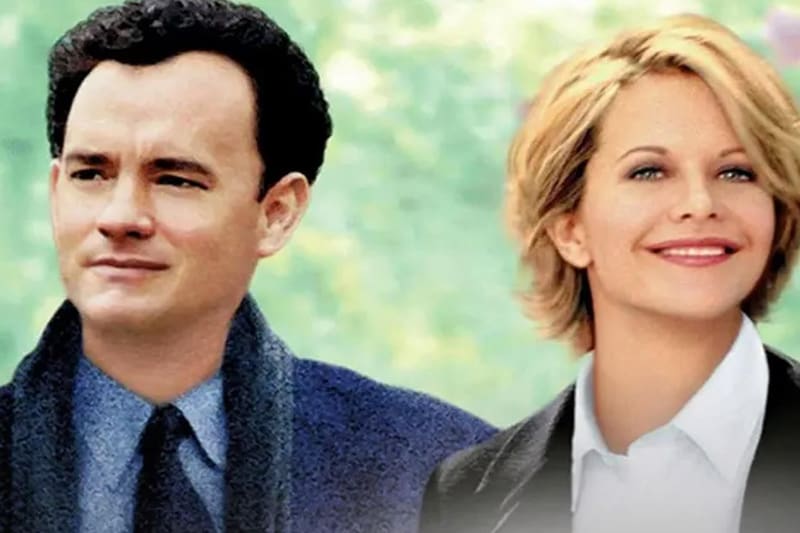
I recently noted a Facebook post made by a friend of mine who had a brief second marriage she had been very hopeful about. But a year later, her husband left her for another woman. She wrote, “I tried to be a loving wife. But who can compete with a fresh supply of dopamine?”
My friend’s story reveals the sickness of a culture that values a chemical reaction more than personal choice, devotion, and honor. I enjoy a good rom-com as much as the next person. But they are all about feeling emotion. In so many ways, clever screenwriters have the main characters saying, “I’ve never felt this way before,” grounding relationship decisions in whether the main character has felt the requisite emotions. But commitment should not depend on emotion. Emotion should depend on commitment.
By itself, emotion is fickle. If emotion is the foundation of commitment, then love is totally unreliable. As the Proverb says, “He that trusteth in his own heart is a fool: but whoso walketh wisely, he shall be delivered” (Proverbs 28:26). In Hollywood movies, emotion conquers everything, including character.
C.S. Lewis wrote in The Screwtape Letters, “humans can be made to infer the false belief that the blend of affection, fear, and desire which they call ‘being in love’ is the only thing that makes marriage either happy or holy.”
BYU Family Studies professor Jason Carroll followed on this idea by observing that, “In some cases, individuals fear committing to what appear to be very promising relationships out of concern that they are not in love enough.” The great folly in this kind of thinking is not so much that one might marry purely in response to emotion but that, once married, that person may begin to question his or her choice when the dopamine high that drove him or her to marry in the first place begins to subside, as it inevitably will.
From a purely rational point of view, this kind of emotion-driven choice makes little sense. Is it reasonable to believe my emotions tell me something useful about another person? My emotions can tell me a lot about myself if I can manage a little self-reflection and honesty. But judging another person by my own emotional reaction to him or her is not just unfair but irrational–and we human beings are often irrational. Think of the dashing and well-spoken serial killer, Ted Bundy, who received fan mail by the wagonload from adoring women–who he might have tried to kill if he had a moment alone with them.
Familiarity does not always breed contempt. In most good marriages, the excitement of a new love interest is gradually replaced by the comfort and reassurance of a partner that time has allowed you to know, trust, and respect. This is a trade worth making. A relationship built only on passion cannot be sustained. But a marriage based on trustworthiness and character is sustainable and can help you intentionally recreate the former passion.
I do not suggest that emotion has no place in marriage. We do almost everything in life because we want to feel good. We marry because we want to love and be loved and feel secure. Security in a relationship is grounded in a long-term commitment. If we manage our thought lives skillfully, we can find the thrill and passion of new love reborn time and time again. As Professor Carroll said, “while feelings of love and happiness are indeed present in good marriages, they are best understood as the fruits of those relationships, not necessarily the roots.” A relationship founded on correct principles will produce the emotions we long for in an authentic and sustainable way.
The roots of a love relationship are choice, commitment, devotion, and loyalty. That is why, in our faith, marriage is bound by a solemn covenant with God as well as with our spouses. In our time, it is popular to say, “I am spiritual but not religious.” While cultivating spirituality is certainly rewarding, the idea of spirituality with religion stripped away deprives the individual of the sacraments and covenants that undergird a consecrated life.
It is not enough simply to feel loving emotions. One must be committed to love and keep loving. While emotions ebb and flow, a covenantal commitment to love is constant. Another popular phrase, probably coined by Kent Nerburn, is “You don’t choose love. Love chooses you.” Again, this is false doctrine and abdicates our responsibility for the promises we make. As father Lehi said, children of God are created “to act for themselves and not to be acted upon” (2 Nephi 2:26). President Thomas S. Monson similarly taught the correct in April General Conference in 1988, saying you should “Choose your love; [and] love your choice.” In other words, love does not fall on us unbidden. We choose it! And then we keep choosing it. When the love of two people is intentionally grounded in their power to choose, it has a strong foundation capable of withstanding the combined powers of earth and hell.
Ultimately, our fleeting emotions do not determine whether our marriages will survive–our choices do. Fatalistically believing that a marriage is destined to survive or fail based on the emotions of two people at a particular moment is nonsense. A few years ago, a young temple-married man came to me for coaching. He told me he loved his beautiful wife “as a friend,” and even claimed she was his best friend. But he had fallen for another woman and had stronger feelings for her than for his wife. This man wanted me to validate his decision to “follow his heart” and leave his wife to pursue a relationship with the other woman. I think he was disappointed that I told him these feelings were smoke and mirrors and would not last.
Some reading this article may doubt whether their feelings for their partners are sufficiently intense to make a commitment to marriage. Others may wonder whether their feelings for the person they currently ”feel” love for will endure. Others who are married may wonder whether their waning emotions or loss of physical attraction for their spouses indicate that they married the wrong person or should divorce and find someone for whom their feelings are stronger. To any who worry and wonder, I want to tell you boldly that you are asking the wrong question.
If you know you can commit yourself to your partner and remain committed to keeping love alive, and you strongly believe your partner can do the same, then you have what it takes to make a marriage where the sweetest feelings of all will prevail–whether you are on a cruise together in Caribbean or holding hands as one of you is confined to a hospital bed with a terminal illness. The thing that will hold you together in good times and in bad is your deep commitment to each other, fortified by a covenant with God Himself, to love and serve one another come what may. As the years pass and you confront life together, your love will deepen far beyond the thrill and excitement of a new love. Since Cathy and I married seven years ago, I have seen her through several serious health crises and major surgery. We have lost a baby to miscarriage. She has seen me through several career changes and, above all others, Cathy was my rock and support in the wake of my sweet 24-year-old son’s tragic death. We have also shared trips to exotic places, two beautiful granddaughters, and writing a book together. These common experiences, flowing from our commitment to each other, have bonded us to each other in a way that a fleeting dopamine high could never really imitate by itself.
In the right context, intense emotional connection is surely one of the most satisfying elements of marriage. You might ask whether I believe particular relationships were “meant to be” and whether the feeling of being “in love” tells us whether the relationship is right. I consider meeting Cathy a blessing from the Lord. But, even in recognizing that blessing, I had to make an intentional choice because I am the one who ultimately lives and builds a life with her. So even if I recognize that the Lord has blessed me to meet someone I have a good connection with, my commitment (and hers) to accept that blessing with all it entails is the determinative factor in whether the relationship will be eternal or not. And feeling powerful emotions for someone else does not change that.
Resources:
Watch for the upcoming video on LILYTube: What Hollywood Gets Wrong About Love and Relationships.
Intentional Courtship can help in this journey.
About the Author
Jeff Teichert, and his wife Cathy Butler Teichert, are the founders of “Love in Later Years,” which ministers to Latter-day Saint single adults seeking peace, healing, and more joyful relationships. They are co-authors of the Amazon bestseller Intentional Courtship: A Mid-Singles Guide to Peace, Progress and Pairing Up in the Church of Jesus Christ of Latter-day Saints. Jeff and Cathy each spent nearly a decade in the mid-singles community, and they use that experience to provide counsel and hope to mid-singles and later married couples through written articles, podcasts, and videos. Jeff and Cathy are both Advanced Certified Life Coaches and have university degrees in Family & Human Development. They are the parents of a blended family that includes four handsome sons, one lovely daughter-in-law, and two sweet little granddaughters.
Purchase Jeff & Cathy’s book Intentional Courtship:
https://amzn.to/3GXW5h1
Connect with Jeff & Cathy:
Website: http://www.loveinlateryears.com/
Podcast: https://anchor.fm/loveinlateryears
YouTube: https://www.youtube.com/c/loveinlateryears
Facebook: https://www.facebook.com/groups/LoveInLaterYears
Instagram: http://instagram.com/loveinlateryears/
Email: [email protected]
Finding Love at 50

On a warm, muggy April day in Southern Ethiopia, I was on a wildlife safari with my girlfriend Cathy Butler. We had just crossed a spectacular lake by boat, where we saw and photographed wild hippos, crocodiles, and exotic birds, and were climbing a steep hill on foot to a plateau for more wildlife viewing. As we hiked up that slope, I said to Cathy, “This is a steep slope but at least we have good footholds.” Cathy immediately saw a metaphor in that statement and asked me to repeat it while she took a video.
Seizing the opportunity, I repeated my statement for the video and said that marriage can be difficult and sometimes feels like an uphill battle, but we have good footholds—such as the restored gospel, life experience, and a mutual commitment to personal reflection and self-improvement. “I love you! Will you marry me?” I asked. Cathy flashed her radiant smile and said “yes.” Newly engaged, we finished the climb and spent the afternoon together, photographing a herd of wild zebras and some majestic African antelope. Later I gave Cathy a set of hand carved wooden goblets I had bought from a local artist, and we toasted our engagement. That was an unforgettable day of two dreams fulfilled.
Author Anne Bauer (the inspiration for this article) observed in her Redbook article, Finding Love at 40, “I was still getting used to the word: boyfriend. It sounded ridiculously adolescent.” That thought occurred to me too. On that safari, I was 50 years old, and my “girlfriend” was 38. Recently, my use of the term “girlfriend” was put into perspective when my 82-year-old father told my 30-year-old son that he needed to “go see [his] girlfriend.” (After more than two years widowed, he is engaged to be married in August.)
The trip to Africa had been Cathy’s idea. I was part of a business and trade delegation to China only four months earlier. But when Cathy told me she wanted to visit her sister in Africa and asked me to come with her, I was enthusiastic. I love adventure. By contrast, Cathy said, “This so not like me.” We had known each other more than two years but had begun dating for marriage just a couple of months earlier. For many years, I had wanted to visit Africa and see for myself the spectacular landscapes and exotic wildlife I had previously seen only in magazines and on television. And this trip was an acid test of how Cathy and I would get along spending two weeks together in a foreign country. The fact that Cathy asked me to join her on this trip was a strong indicator that she was serious about our relationship and wanted to give it a good try. I wanted that too.
As I look back at the boldness of our trip to Africa together, it surprises me. We each had a divorce following a long-term marriage, followed by a brief second marriage and another divorce. Both of us were cautious about becoming entangled in another failed relationship. And yet, there we were, under the hot Ethiopian sun, thousands of miles from home, declaring to each other that we wanted to choose each other and believed we could be together forever.
I had been married “forever” at age 26, finished a law degree, and an advanced law degree, started my own law firm, ran for public office, and my (now former) wife and I were raising two sweet children. In many ways, my first marriage was a sweet time. We had dreams of raising our children, taking on the world, traveling widely, and building a beautiful custom home looking out over Puget Sound. Like Ann Bauer, we “imagined our future in various storybook ways: presiding over Thanksgiving tables, dandling infant grandchildren, rocking companionably on a porch.”
We built our dream home. But before we had lived in it for five years, I lost an election in 2006, the economic disaster of 2008 created significant challenges for my law practice, and in 2009 my wife of 15 years chose to end our marriage. In my early 40s, I was financially broke and alone, and a part-time single-father of two. For several years, I was lonely and dispirited. I felt like a total failure. I couldn’t imagine ever feeling better inside, let alone recovering enough financially to support a family. I felt like creating a “blended family” would be settling for a consolation prize and felt no enthusiasm for it.
Three years after I moved out of our dream home, I moved to Texas for a new career opportunity and began to heal. I had enough financial breathing room to begin paying debts, living on less than I earned, and was able to take a lady to dinner occasionally. I thought I was ready and re-married. But I married someone who was the opposite of my first wife, mistakenly thinking that was the answer. You have a better chance of making a relationship last if you marry someone for who she is rather than for who she isn’t. After six months, I left that marriage and moved back to Utah—about two months after being laid off from my corporate job in Houston.
I met Cathy on St. Patrick’s Day, a little over three months after returning to Utah. Our first date was in July of that year. Dating felt complicated because we were both recently divorced from second spouses. We dated for the better part of a year and then broke up and dated other people while remaining friends. About a year later, I had narrowed my search to three people. One of them, who has remained a wonderful friend to both of us, broke up with me after a weekend we spent together. She told me “You are still in love with Cathy, and you need to go see about that.” I knew she was right. On New Years’ Eve, I didn’t go to a singles dance or a party with anyone I was dating. I stayed at home and wrote Cathy a very vulnerable letter, asking her to date me for marriage. I assured her that our friendship was not at risk if she said no. But I told her that, if she wanted my heart, it was still hers.
Cathy replied to my letter saying, “you sure know how to complicate a girl’s life!” She was also dating two other people who both wanted to marry her. Within a few weeks, Cathy let go of the other men she was dating, and we planned our trip to Africa together. On the way, we stopped in Qatar, visiting the Souk and the spectacular Blue Mosque and discussed Islam with a kind young man from Saudi Arabia. In Ethiopia, we saw exotic wildlife, feasted on injera, explored Ethiopia’s south country and met many wonderful people. And, best of all, we relished spending every minute together.
We were married in the Provo City Center Temple a little over a month after returning from Africa. A little over seven years later, I can honestly say that I have never made a better decision. Like the hill we climbed on that Safari in Ethiopia, our years of marriage have often included moments of steep, uphill slopes. We lost a baby to miscarriage, and Cathy endured several years of serious health problems and major surgery. We have had disappointing career setbacks as well as even larger blessings. And my youngest son was killed in a rock-climbing accident two and a half years ago. But we have good footholds—including each other, our commitment to our marriage, the power of God’s anointing, and our shared beliefs.
I like the way Ann Bauer concluded her article, saying:
“Turning 40 wasn’t at all what I’d expected; rather than hurdling over some milestone, I had the sense of being washed clean. It was the perfect time to start over. And being here with John in this strange place felt like a beginning. “
“Inside, my old faith flared. It was tempered this time with hard-won experience from the past 20 years. Yet I realized I still wanted my storybook ending. And while it hadn’t worked simply to believe willfully in forever, perhaps I could figure out with this quiet, careful man how to make it come true.”
Similarly, for me, being 50 did not feel like hurdling over some milestone. But it did feel like being washed clean as I knelt at the altar in temple with Cathy and began a new life together. Finding love at 50 felt like a precious chance to start clean, with the benefit of all my hard-won experience. It was also a confession that I, too, wanted my storybook ending. While it did not work to just willfully believe in forever and think that love conquers all, I also sensed that, in a quiet and reflective way, with God’s help, Cathy and I could figure out together how to make the fairytale come true.
This week, as we dandled our two infant granddaughters and gathered for special occasions with our beautiful, blended family in all its uniqueness, I knew this was not a mere consolation prize. And I can’t help thinking that life doesn’t get much better than this.
Resource:
Intentional Courtship can help in this journey.
About the Author
Jeff Teichert, and his wife Cathy Butler Teichert, are the founders of “Love in Later Years,” which ministers to Latter-day Saint single adults seeking peace, healing, and more joyful relationships. They are co-authors of the Amazon bestseller Intentional Courtship: A Mid-Singles Guide to Peace, Progress and Pairing Up in the Church of Jesus Christ of Latter-day Saints. Jeff and Cathy each spent nearly a decade in the mid-singles community and they use that experience to provide counsel and hope to mid-singles and later married couples through written articles, podcasts, and videos. Jeff and Cathy are both Advanced Certified Life Coaches and have university degrees in Family & Human Development. They are the parents of a blended family that includes four handsome sons, one lovely daughter-in-law, and two sweet little granddaughters.
Purchase Jeff & Cathy’s book Intentional Courtship:
https://amzn.to/3GXW5h1
Connect with Jeff & Cathy:
Website: http://www.loveinlateryears.com/
Podcast: https://anchor.fm/loveinlateryears
YouTube: https://www.youtube.com/c/loveinlateryears
Facebook: https://www.facebook.com/groups/LoveInLaterYears
Instagram: http://instagram.com/loveinlateryears/
Email: [email protected]
Your Hardest Family Question: Which is more important? Being in love or loving someone?

Sign up for Meridian’s Free Newsletter, please CLICK HERE
Question
I have a question, something I’ve pondered and thought about for a while and can’t come to a clear answer. What’s more important in a relationship, being in love, or loving someone? I’m in a relationship right now and it’s getting a little bumpy. This woman was married to an emotionally abusive man for years. She eventually left him, and, later we started dating. We love each other with all our hearts. We both agree that we love each other more than we could ever possibly love another human being. She is just struggling with the “in love” part. She says she has two jars, a “love” jar, and an “in love” jar. The “love” jar is overflowing, over 100% full. The “in love” jar, on the other hand, is 80% full. She’s really struggling with that, and is now finding herself tempted by “in love” situations with other men. So what’s more important?
Answer
It may seem like an odd distinction to put the word “love” into separate categories, but I think your girlfriend is revealing something important about vulnerability in relationships. Essentially, she’s describing her struggle to let herself love and, in return, to be loved in a committed relationship.
Emotional, physical, and sexual abuse influences our emotions in profound ways. Our emotions guide us through the world by signaling us in subtle (and not so subtle) ways how we should respond to people and situations. Individuals who have been in abusive relationships learn to protect their hearts from getting hurt and can act in unpredictable ways when someone is getting emotionally close enough to hurt them.
This is why your girlfriend is making this separation between “loving” and being “in love.” The latter feels more comfortable to her, as it’s based on infatuation and distance. It’s almost like a romantic crush. The other person stays a mystery and becomes more intriguing. It’s an important stage of relationship formation, but it eventually transitions into a more mature committed love.
She says that her love jar is full, but can’t fully be in love with you. I think she’s created this other jar to protect her from having to stay fully connected to you. Her heart is understandably terrified of getting injured again, so she’s going to create new criteria to distance her from that vulnerability.
She’s allowed herself to feel close to you and began trusting you with her heart. Having been emotionally abused in the past, this is going to feel risky to her. It matters how she copes with these vulnerable feelings. She can surrender to the love you’re offering her and let herself love and be loved deeply, or she can keep looking for the thrill of infatuation with strangers.
It’s emotionally less risky to keep a relationship superficial and focus on romantic feelings. However, this won’t produce the kind of love that will support a committed relationship through the inevitable ups and downs of long-term love. Elder Jeffrey R. Holland described it this way:
“No serious courtship or engagement or marriage is worth the name if we do not fully invest all that we have in it and in so doing trust ourselves totally to the one we love. You cannot succeed in love if you keep one foot out on the bank for safety’s sake. The very nature of the endeavor requires that you hold on to each other as tightly as you can and jump in the pool together. In that spirit…I want to impress upon you the vulnerability and delicacy of your partner’s future as it is placed in your hands for safekeeping—male and female, it works both ways.”[i]
She will continue to feel tempted by “in love” feelings for other men until she fully allows herself to love and be loved by you. As Elder Holland described, this means she will allow her injured heart to be placed directly in your care by choosing to trust you. She can love from a distance and even have loving feelings for you, but it won’t be a true committed relationship until she allows herself to believe that you have her back.
This is a good opportunity for you to initiate some discussions about her idea of emotional safety in a relationship. Gently ask her if she has a fear of vulnerability. Explore what is frightening to her about commitment. See if you can help her find her way through any of those questions. Also, ask if there are some concrete things you can do to be a safe harbor for her.
As she allows herself to be loved and connected to you, other opportunities will become less interesting to her. These other options only exist because she can’t quite allow herself to embrace the love you’re offering her. I hope she will give up some of her well-defended safety so she can experience the thrill of true attachment to another person.
Geoff will answer a new family and relationship question every Friday. You can email your question to him at [email protected]
About the Author
Geoff Steurer is a licensed marriage and family therapist in St. George, UT. He is the owner of Alliant Counseling and Education (www.alliantcounseling.com) and the founding director of LifeStar of St. George, an outpatient treatment program for couples and individuals impacted by pornography and sexual addiction (www.lifestarstgeorge.com). He is the co-author of “Love You, Hate the Porn: Healing a Relationship Damaged by Virtual Infidelity”, available at Deseret Book, and the audio series “Strengthening Recovery Through Strengthening Marriage”, available at www.marriage-recovery.com. He also writes a weekly relationship column for the St. George News (www.stgnews.com). He holds a bachelors degree from BYU in communications studies and a master’s degree in marriage and family therapy from Auburn University. He served a full-time mission to the Dominican Republic. He is married to Jody Young Steurer and they are the parents of four children.
You can connect with him at:
Website: www.lovingmarriage.com
Twitter: @geoffsteurer
Facebook: www.facebook.com/GeoffSteurerMFT
[i] https://speeches.byu.edu/talks/jeffrey-r-holland_how-do-i-love-thee/
Love, Kennedy: Why the Film Had to Be Made

Love, Kennedy opens June 2 in selected theaters.
Some stories have to be told and T.C. Christensen’s new film Love, Kennedy was one of those. On the surface it’s the story of a loving, spunky young girl’s descent into blindness, loss of motor skills, speech and finally cognitive abilities due to Juvenile Batten disease, a rare neurological disorder. That sounds like a downer for a movie premise, but, in fact, true to form, Christensen has created something beautiful and touching that will leave movie-goers moved and uplifted.
I sneaked a peek at my husband’s face as we were watching the film and tears wetted both of our cheeks, not because we were sad, but we were so moved at the poignancy of life and the deep involvement of the Lord in its details.

Kennedy Hansen, who died three years ago on May 30, 2014, wanted her story told because she hoped it would send a message of unswerving faith and courage in the face of crippling obstacles. God lives and He held her hand through what should have been an impossible ordeal.
She was living with her family in West Haven, near Ogden, Utah, when she began to have falls at school. When her parents, Heather and Jason (played by Heather Beers and Jason Wade), took her to the doctor, they received a terrible diagnosis. Kennedy had an incurable and rare neurological disease and victims usually die young.
Still, the Hansens were determined that Kennedy should have her dreams realized, which included being on the cheer leading team, going to a dance, and driving
Her final, and ultimate, dream, however, was that her story be told to help others.
 “If this was a story about a girl who dies, I wouldn’t have made the film,” said Christensen. Instead it is the story of a girl, known for her unconditional love. She was one who sought out the bully who knocked her down on the opposing soccer team to give her a hug.
“She is the victim of undeserved misfortune, something we can identify with” said the filmmaker. “One thing I look for in a story, is for the viewer not to be able to imagine that it gets better, and then it gets better.”
You Have to Hear This Story
Christensen said, when he chooses films to make, he looks for the best story out there. He found this story because after he had given a fireside in West Haven, Utah, where Kennedy Hansen’s family lives. Jason, her father, came up to him after the event and said, “You have to hear a story about my daughter.”
Thousands of others had already heard it. As Kennedy gradually began to exhibit the debilitating symptoms of her disease, Jason, and Heather, began to document the story on a Facebook page, Kennedy’s Hugs.
“It just exploded,” said Heather. We wanted to share her journey and every day to chronicle the inspiring stories. It caught on like wildfire. People are craving that hope and courage to continue on. That was our message and it spread.”
Social media experts contacted the Hansens to see how they attracted such a large following, and how much money they spent advertising their Facebook project. They answered that they had spent no money, but, said Heather, “We had the understanding as a family that we could potentially help others and that was the greater purpose in our tragedy.”
“We were just enveloped in love,” through the ordeal, said Heather.

On that Facebook page, they shared tender feelings like this note written by her father on the day of Kennedy’s death:
“It all came together so perfectly and as she had wished. If you believe in miracles, we saw them today. She fought so hard to be with everyone who came and visited her. The visits were endless and we have never seen someone cry out of sorrow from dawn until dusk. But Kennedy did today. She knew that today she would be going home and we had her pain under control…As each person would tell her goodbye, she would just cry and reach out to them.
“She told us last night that after the cheerleaders made their visits that she would be ready to go. The cheerleaders came…all 27 of them and one by one, they each laid by her side and told her goodbye. She cried with each one of them, knowing their pain. Ultimately, they gathered around her and sang, “Let it Go!” This brought so much peace to her heart.”
A Tough Creative Project
It is easy for a film about the loss of a vibrant teenager to become merely a sentimental tearjerker, mournful and manipulative, designed to compel easy emotion from the viewers. Love, Kennedy escapes that trap, instead, bringing the viewer face to face with the mix of tragedy and majesty that this life is.

T.C. Christensen shows his considerable directorial sensitivity in pulling it off. How did he do it? In part, it is because he is experienced, based on having made many films including The Cokeville Miracle, 17 Miracles, and Elphraim’s Rescue. The film was also extensively tested with audiences to make sure he had struck just the right note.
Among those who seek to create film for Latter-day Saints, Christensen has created a consistent body of work that is unsophomoric, professional and creative—not an easy thing to do when your subject matter is so often topics hard to portray like spirituality, miracles, and God’s hand in the lives of His children.
It is also noteworthy that he has not shied away from those projects and has targeted an LDS audience with scenes that the secular would surely reject.
It also means that he works with a small budget to make a film—around a half a million. In a world fueled by Hollywood films whose budgets can soar from $200 million and beyond. This means, Christensen, looks to his ingenuity to pull it off and wears more hats than most filmmakers.
Since his background is as a highly sought-after director of photography, setting the light and backgrounds so they will be compelling “is just the way I think,” he says. His films always look way better than they cost.
“Most of my film-making friends feel like it is small potatoes to work in this LDS arena. They want to make films for the world that open in 2,000 theaters. I don’t have any problem at all making films for our culture. It works. It is satisfying.”
We’re Telling the Truth
The reason this movie works, according to Christensen is because “We’re telling the truth, and I’m not going to change it. If Kennedy’s friend, Lexi, tells about an experience she has with her after her death, I don’t have shyness about showing it.
“If I was just making this up, it could go into the maudlin, sappy stuff very quickly, but because we say at the beginning that this is a true story, people can just relax and drop into it.”
“There are no made up moments,” said Heather of the film. “We carefully chronicled our experience together.”
Other producers wanted to do the film but Heather said, “We went with T.C. because we knew he would tell the true story. Other producers approached us with money, but we were not comfortable because we knew her story would be changed. The message could not be shared in the way Kennedy wants to share it.
“With this film, I can say to Kennedy, ‘OK, we’ve done it. We’re keeping your legacy alive.” The premiere for the Hansen’s family and friends was on what for them was a tender date, May 30, the third anniversary of her death.
Sharing Personal Moments
Thus, the movie shares moments that are both personal, and difficult. More than two years before Kennedy’s diagnosis, when she was already showing symptoms, Jason had an experience in prayer where he was told, “My son, I need Kennedy to come home.” It was powerful enough that he couldn’t deny it.

Heather said that Jason waited some time to tell her of that experience, and “when he finally told me, I didn’t doubt that he had that experience, but as a mother I wasn’t ready to accept that.”
Jason told her that she needed to get ready for this, but she struggled. “Then finally,” she said, “six months before the diagnosis, I was able to have my own experience where I woke up in the middle of the night and I felt such an overwhelming confirmation that what Jason had been telling me was true. I also heard the words, ‘I need Kennedy home.’”
She said, “Jason carried that knowledge for quite some time, alone. I can’t imagine how he felt with that, but we were prepared, and it made the process even more beautiful.”
“You look back on your life, and you see those tender mercies,” said Heather. “Some miracles you recognize very quickly and the others take some time.”
One miracle that Heather said that wasn’t in the movie was the difficulty she had getting pregnant after they gave birth to Kennedy. She is their only biological child and their large family is all adopted.
The Hansens went to many doctors seeking to have more children, but all of them concluded that since they had already had one child, they should logically be able to have another.
Finally, after extensive testing, the doctors concluded that the Hansens were biologically incapable of having children together. “I had a very difficult time accepting the fact that we couldn’t have more children,” said Heather, “and I didn’t understand it.” The doctors could give no logical explanation for why they had been able to have Kennedy.
“As it turned out,” said Heather, “it was a blessing that we couldn’t have more children, because the neurological disease that Kennedy had is genetic. Both Jason and I carry a recessive gene, and all of our children would have had this. In a sense, God protected us from having to experience what we did with Kennedy again and again.”
The Hansen’s as Team Members
From the beginning, the Hansen’s were intimately involved with the film project. They collaborated with Christensen in the choice of the actor, Tatum Chiniquy, to play Kennedy. In fact, Tatum, who shone in the role, said she felt a closeness to Kennedy that she needed to portray her.
“So many things about Kennedy, Tatum got spot on in the film,” said Heather. The Hansens have stayed close to Tatum since the filming and she has become almost like another daughter to them
To create the script, Christensen had access to Jason Hansen’s journals, Facebook messages and a book the Hansen’s had written about their journey called Kennedy’s Hugs.
An idea that has influenced Christensen’s work comes from his filmmaking hero, Frank Capra, who wrote an autobiography called The Name above the Title. “In that book,” said Christensen, “Capra talks about the decline of morality in film and said that only the morally courageous should be worthy of speaking to their fellow men for two hours in the dark. If I am going to be in a powerful medium like this, I decided I want to influence for good.”
He has with Love, Kennedy.
6 Things I Didn’t Expect About Falling in Love

Click here, to “like” this author on Facebook.
In April of 2014, I was sitting on a cushion on the floor in Nepal, eating dinner at a low table and constantly shifting trying to get comfortable. I’d chosen to sit with the guy next to me because he was so handsome, but within one conversation I classified him as “not my type.” I enjoyed talking to him and definitely enjoyed looking at him, but it was done; he was not for me.
That same man got down on one knee this week at the top of a cliff overlooking a stunning view of Alaska, and asked if I would spend my life with him and without an instant of hesitation, I said yes.
I fell in love with that man in the time between that early experience and the latest one and the surprise I found at learning how wrong my first impression was, represents only one of many aspects of my love story that were completely unexpected.
I’ve longed for this relationship since childhood, searched for it all through adulthood, studied the great loves of literature, the insipid loves of cinema, watched my siblings marry and my friends tie their knots. Even with all that exposure and insight, so much of real life and real love has been a surprise to me.
The most wonderful surprise I could ever imagine.
Lesson 1: I didn’t immediately know he would be “the one”
I’ve told you already that the first few minutes of conversation had me convinced that this man and I had nowhere to go together. But even days later, I thought that I knew what I was talking about when I said ‘it’s a no.’ We were both in Nepal doing humanitarian service and one night the other American girls in the village were matchmaking with the members of our expedition and said he and I would be the perfect pair.
“Why? Just because we’re both tall?”
I assumed that’s about all we had in common, never knowing that we would talk for hours and dance together and seek the same adventures and he would understand my needs before I voiced them and we would travel all over the world together.
My point is, you might not be as wise and intuitive as you think you are. If you initially dismissed someone as “not your type,” but you keep ending up in their life or they keep ending up in yours and you find that you really enjoy their company or their conversation, maybe you misjudged them or the potential of your relationship.
This man that will soon be my husband is totally different than the type of boy I have always been interested in, but he is perfect for me in ways that I could not have foreseen for myself.
I always thought that when I met that person, I would know it. I also thought that if anyone ever threw me a surprise party, I would know it. But the day before my 21st birthday I walked in to a house full of cheering friends I completely did not expect to see and years later, I looked into this man’s eyes many times having no idea I was looking at my husband.
Sometimes you just don’t see stuff coming, so don’t be too hasty in your judgments of good people.
Lesson 2: A little boldness pays off
Three months after we met in Nepal, we got into a conversation over the phone (me in Utah and he in Alaska) that started out with a casual,
“went to lunch with [a mutual friend] today, when am I going to go to lunch with you?”
“If you were in Alaska, we could have all kinds of delicious meals”
“Maybe I should just come up there”
“Well, maybe you should.”
That accelerated quickly. We were kind of teasing and then all of the sudden, we weren’t. We were laughing through it like it was completely hypothetical, but suddenly I was booking a very un-hypothetical plane ticket.
I went up there assuming we were just going to be friends, that seeing a beautiful place with a handsome person is just good for one’s mental health, but I also went because I didn’t want to not go and then always wonder what would’ve happened if I had. On the plane ride up, the lady next to me said, “what are you doing in Alaska?” and internally I said, “I-have-absolutely-no-idea!-I-don’t-know-this-guy-at-all-what-am-I-doing??!!” Out loud I politely said, “visiting a friend.”
It was a risk to fly thousands of miles for a boy. It’s pretty hard to maintain the air of only casual interest with a move like that, but it has paid off in incredible ways. One of those Alaska nights, sitting in a restaurant having one of the most romantic evenings of my life, I looked outside and saw a boat parked nearby called “Wild Abandon.”
That is exactly what love requires I think. Just a little bit of wild abandon.
With great risk comes great reward, this I now know to be true.
Lesson 3: Showing who I really am is what he fell in love with
‘I am who I am and that’s all that I am’, but sometimes in dating I have been known to tone down my eccentricities in the hopes that it would make me more desirable. It’s easy to see the guys you’re interested in pursue other girls and think, “if I were more like her, he’d like me.” “That girl seems to have it all, I wish I was like that.”
You shouldn’t wish to be anything different than the very best version of yourself.
On our first date, the man who’s going to be my husband asked if I would sing for him. I felt so sheepish and I know the mini performance didn’t go well, but I love music and I love musicals and that love came through and he valued getting to know a genuine part of me. Sometimes I’ll get going on a rant about something I feel really strongly about and then stop and think, “oh no, I said too much.” But he always smiles and says he loves seeing what I’m passionate about (even if it’s not an interest we share).
If you’re with someone who doesn’t want to see and understand the deepest and truest part of yourself, then you probably won’t want to be with that person when things get difficult and you don’t have the energy to put up a front anymore. Seek to be valued for the things that make you unique not dilute who you are to be what you think someone wants. You might be totally wrong about what they wanted and lose yourself in the process.
Lesson 4: Saying things that are scary to say, always feels better after
This might be one of the most consistently surprising discoveries that love has brought into my life. I’ve spent a lifetime afraid of hard conversations. Afraid to tell a friend that I wanted him to be more than a friend, afraid to break up with someone that was more invested than me, afraid to say when something hurt me. I can already tell that one of the great blessings of my life will be that I have found someone that brings things out in the open and works very hard to keep the lines of communication open all the time. Ready to listen, ready to understand.
It was an inside joke with my Dad all through high school, that I would come home and tell a story about a heated conversation I had had with someone. I’d tell how they said one thing and I’d responded with a perfectly witty comeback. He’d always say, “Did you really say that?” And of course my answer was always, “no.”
I think it’s pretty common to feel strongly about something but just keep it inside because you don’t want to ruffle feathers or embarrass yourself. As a result, fears and resentments build and become much bigger issues than they should’ve been in the first place.
I’ve begun to get in the practice of just saying, “when you respond that way, it makes me feel like you might not have been listening” or “Next time we’re in this situation, is there any way you could be a little more sensitive to how I look at that?” I really want to avoid getting to the point of angered “you always’s” and “you nevers”. I often feel sheepish to approach these things, worried that we’ll come away from the conversation feeling disconnected or distant. Instead, it always makes us closer.
I always go in scared and come out more in love with him.
Lesson 5: I can do better than my first reaction
Along that same line, loving someone has the power to make you a bigger person than you were before. Sometimes something is said or done and my knee-jerk reaction is annoyance or petty anger. But falling in love has put the microphone up to a voice inside of myself that I didn’t even know was there before. It is a deep, resonant voice that reminds me that I love this person and if anyone in the world deserves the benefit of the doubt from me, he does.
Love means trusting one another with very vulnerable, fragile parts of ourselves. Once someone has trusted you with that, you have to be a wise steward of it or you don’t deserve them.
Lesson 6: He was worth the wait
I’m happy to report to those of you that have read my articles on Meridian since age eighteen and watched my great desires to understand and recognize true love be frustrated or at the very least postponed, that this man was absolutely worth the wait.
I’m so glad that I didn’t panic and grab whoever was nearby to be a companion just so that I wouldn’t have to be alone. I’ve had a life full of many joys, but by far the most overwhelming and wonderful, is the joy of finding someone with whom I feel so deeply connected. Finding a relationship in which I feel so secure and appreciated and valued and wanted has improved every other aspect of my life.
A reader once wrote in and told me that recognizing when you’d found true love is a mystery until it actually happens to you. She compared it to her security guard friend who would work the graveyard shift and anxiously wait for the person that would come to replace him. In the stillness of night time hours, the guard would imagine he’d heard the next guard’s key scrape the lock many times, but when he finally heard the metallic ring of the real key, it was completely different and altogether more real than anything he thought he had heard before. The real thing was unmistakable.
The real thing is unmistakable. And I’m glad that I finally found him.
Click here, to “like” this author on Facebook.
The Tender Mercies of God

In my study of the scriptures a few years ago, I looked up every verse of scripture that had the word “mercy” or the word “mercies” in it. I was interested in discussing the scope of God’s tender mercies—the ways He blesses his children, and the reasons for the multitude of those blessings.
I felt like my immersion in that review of God’s mercies changed my understanding of Him and, consequently, my life. Among other things, I noticed that often the phrases “tender mercies” and “loving kindness” appear together in the scriptures. There is an eternal reason for that. God’s mercies and His perfect, undiluted love flow as a fountain from His divine kindness.
The Lord’s Tender Mercies Have Always Been with Us
In the 25th Psalm, David pleads with the Lord to remember to be as He has always been. The tender mercies and loving kindnesses of God have been a blessing to His children from the days of Adam. “Remember, O LORD, thy tender mercies and thy loving kindnesses; for they have been ever of old” (Psalm 25:6).
Those mercies will be a shield and a protection to us continually: “Withhold not thou thy tender mercies from me, O LORD; let thy loving kindness and thy truth continually preserve me” (Psalm 40:11). And God will not be stingy with those blessings: “Hear me, O LORD; for thy loving kindness is good: turn unto me according to the multitude of thy tender mercies” (Psalm 69:16). Those blessings come from God as the bounty of a banquet table, heaped up and overflowing. They come in multitudes.
The Lord Never Turns His Tender Mercies Away
All of us discover times in our lives when it seems as though God is elsewhere or His phone is off the hook or the service has been interrupted—times when we plead and hope and wait. Those apparent silences may cause us to reflect on our sins and to wonder if we have, by our own iniquities, caused a well-deserved silence in the heavens.
Asaph asks the question for us: “Hath God forgotten to be gracious? Hath he in anger shut up his tender mercies?” (Psalm 77:9). Asaph answers his own question just as we would answer it: “I cried unto God with my voice, even unto God with my voice; and he gave ear unto me” (Psalms 77:1).
Daniel echoes that witness with these marvelous words: “To the Lord our God belong mercies and forgivenesses, though we have rebelled against him” (Daniel 9:9).
When those dark days come, when life’s experiences conspire to teach useful, painful, almost endless lessons, when we wonder where He is and when, if ever, he will return, then we must remember what we have learned in the course of our lives.
We must “bless the LORD . . . and forget not all his benefits.” For He is the one “who forgiveth all [our] iniquities; who healeth all [our] diseases; Who redeemeth [our] life from destruction; who crowneth [us] with loving kindness and tender mercies” (Psalm 103:2-4).
There will be times in our lives when God will allow us, through our struggles, to grow into something stronger and better than we have been before. But His language as He discusses such events is consistent. He promises that we will never be asked to carry more than we can bear, and that no trial will be of a greater duration than we can endure. “For a small moment have I forsaken thee; but with great mercies will I gather thee” (Isaiah 54: 7).
In the 30th Psalm, the promise is made with these words: “For his anger endureth but a moment; in his favour is life: weeping may endure for a night, but joy cometh in the morning” (Psalms 30:5).
We must recognize and we must believe that “it is of the LORD’s mercies that we are not consumed, because his compassions fail not” (Lamentations 3:22).
We Must Remember His Loving Kindness in Times of Trial
So when the challenges come and when we feel forsaken; when difficulties and despair mount up and appear unconquerable, we must remember those tender mercies—that loving kindness—and turn to Him for help.
When David faced three choices, all of them horrifying, he knew at once what he needed to do. “Let me fall now into the hand of the Lord; for very great are his mercies” (1 Chronicles 21:13). In the account of this same crisis in 2 Samuel 24:14, David changes the pronoun: “Let us fall now into the hand of the Lord, for his mercies are great (emphasis added).”
His mercies are very great. In fact, He is “the Father of mercies, and the God of all comfort” (2 Corinthians 1:3), and His mercies are always available. We can seek them at any time and under any circumstances—not because we deserve them, but because God loves us: “We do not present our supplications before thee for our righteousnesses, but for thy great mercies” (Daniel 9:18).
We Must Share the Tender Mercies We Experience With Others
When those mercies come, we must remember them and share them. In that spirit, I will share one that came to me.
My wife and I were shopping in Phoenix. We stopped for lunch with some friends before our return home. When we got in the car, it would not start. The key was as useless as water on a summer sidewalk. I had some concerns about the starter—it had been dragging a little that afternoon. Everyone went back into the house but me.
I sat in the car and offered a prayer. I told my Father of my helplessness and of our need to get the car started so we could do what we needed to do and get home to our children in Snowflake.
The thought came to me to hit the starter motor with a hammer. I wasn’t sure I could find the starter, but I went to the house and borrowed a hammer. Then I crawled under the car and hit what I hoped was the correct piece of equipment a couple of times.
When I got back in the car and turned the key, the car started and ran perfectly. It was certainly a blessing I did not deserve, but “we do not present our supplications before [the Lord] for our righteousnesses, but for [his] great mercies” (Daniel 9:18).
The author of the 89th Psalm wrote of his conviction, which ought to mirror our own: “I will sing of the mercies of the LORD for ever: with my mouth will I make known thy faithfulness to all generations” (Psalm 89:1). I pray that we will feel like singing of His mercies all the time.
FEATURES