



Brigham Young’s 225th Birthday: Remembering When He Outwitted Mark Twain
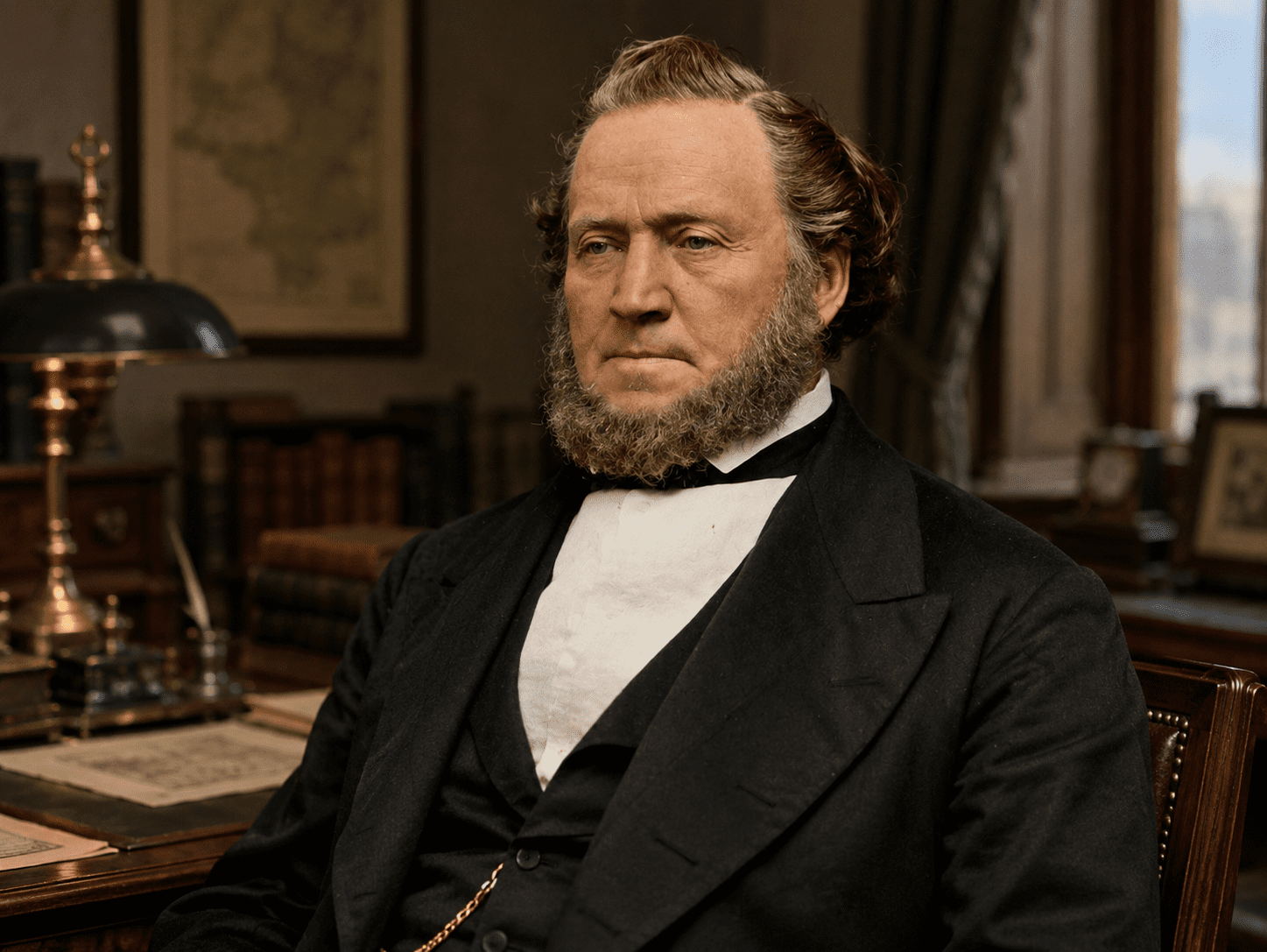
As we approach the anniversary of American Independence this year, references to the 250th birthday of the United States are increasingly common. And understandably so. For any human creation to survive over a quarter of a millennium is no small achievement; two and a half centuries of republican government, freedom, and human rights, however imperfect, are well worth celebration.
Much less widely known, even among active members of the Church, is the fact that Monday, 1 June 2026, will be the 225th anniversary of the birth of Brigham Young, the second (and longest-serving) president of the Church of Jesus Christ of Latter-day Saints. In other words, Brigham Young was born slightly less than twenty-five years after the signing of the Declaration of Independence. He was a true child of the early Republic, born in Vermont, home of the Green Mountain Boys and of the famous farmer-soldier Ethan Allen.
Let that sink in. It’s easy to forget that Brother Brigham was so close in time to colonial America and the War of Independence. George Washington had died only a year and a half before Brigham was born and Thomas Jefferson was less than three months into his presidency. Young Brigham grew up among veterans of the American Revolution and of the subsequent War of 1812, which some called the Second War of American Independence.
One way of marking Brigham Young’s 225th birthday during this year of celebrating America is to note a link between the great Latter-day Saint leader and the famous Samuel Langhorne Clemens, who, under his pen name of “Mark Twain,” is often considered the nation’s greatest writer and, very arguably, its most quintessentially American literary figure. To do so, I’ll draw on Twain’s 1872 travel memoir Roughing It. First, though, a bit of background:
By at least 1860, Orion Clemens (1825-1897), Samuel’s older brother, had concluded that slavery was morally wrong, and so he worked for the election of the Republican presidential nominee, Abraham Lincoln. Following Lincoln’s inauguration as president, Clemens was appointed Secretary to the new government of the Territory of Nevada, where he would sometimes even function as acting chief executive of the Territory in the absence of its governor. His twenty-five year-old younger brother Sam—which is to say, Mark Twain—accompanied him out to Nevada in the summer of 1861. Such a trek westward was a great adventure in the period just before the Civil War and the Transcontinental Railroad, and their journey is the subject of Roughing It, which, like everything from Mark Twain, is well worth reading. I’ll confine myself to some selected passages about the two brothers’ visit to Salt Lake City, which had been founded less than fifteen years before they arrived:
“We had a fine supper, of the freshest meats and fowls and vegetables—a great variety and as great abundance. We walked about the streets some, afterward, and glanced in at shops and stores; and there was fascination in surreptitiously staring at every creature we took to be a Mormon. This was fairy-land to us, to all intents and purposes—a land of enchantment, and goblins, and awful mystery. We felt a curiosity to ask every child how many mothers it had, and if it could tell them apart; and we experienced a thrill every time a dwelling-house door opened and shut as we passed, disclosing a glimpse of human heads and backs and shoulders—for we so longed to have a good satisfying look at a Mormon family in all its comprehensive ampleness, disposed in the customary concentric rings of its home circle. . . .
“Next day we strolled about everywhere through the broad, straight, level streets, and enjoyed the pleasant strangeness of a city of fifteen thousand inhabitants with no loafers perceptible in it; and no visible drunkards or noisy people; a limpid stream rippling and dancing through every street in place of a filthy gutter; block after block of trim dwellings, built of “frame” and sunburned brick—a great thriving orchard and garden behind every one of them, apparently—branches from the street stream winding and sparkling among the garden beds and fruit trees—and a grand general air of neatness, repair, thrift and comfort, around and about and over the whole. And everywhere were workshops, factories, and all manner of industries; and intent faces and busy hands were to be seen wherever one looked; and in one’s ears was the ceaseless clink of hammers, the buzz of trade and the contented hum of drums and fly-wheels.”
Twain was impressed by the industriousness of the place, favorably contrasting its beehive symbol—“with the bees all at work!” he exclaimed—to what he portrayed as the dissolute drunkenness of his own home state, Missouri.
“Salt Lake City,” Twain wrote, “was healthy—an extremely healthy city. They declared there was only one physician in the place and he was arrested every week regularly and held to answer under the vagrant act for having “no visible means of support.””
Twain and his brother Orion visited the foundations of the Salt Lake Temple, still nearly three decades from completion, and enjoyed a long conversation with Heber C. Kimball, Brigham Young’s lifelong friend, a member of the original modern Quorum of the Twelve Apostles as well as a pioneer missionary to England, and, by this time, first counselor in the First Presidency of the Church. President Kimball seems to have favorably impressed Twain, who described him as “a mighty man of commerce” and, although Heber was actually born in Vermont and baptized in upstate New York, as a “shrewd Connecticut Yankee.” (Many years later, a similarly shrewd man is the hero of Twain’s 1889 novel A Connecticut Yankee in King Arthur’s Court.)
On their second day in Salt Lake City, Orion and Sam (Mark Twain) met Brigham Young. Twain’s description of that notable meeting between a great American writer and a great American religious leader is worth quoting:
“We . . . put on white shirts and went and paid a state visit to the king. He seemed a quiet, kindly, easy-mannered, dignified, self-possessed old gentleman of fifty-five or sixty, and had a gentle craft in his eye that probably belonged there. He was very simply dressed and was just taking off a straw hat as we entered. He talked about Utah, and the Indians, and Nevada, and general American matters and questions, with our secretary and certain government officials who came with us. But he never paid any attention to me, notwithstanding I made several attempts to “draw him out” on federal politics and his high handed attitude toward Congress. I thought some of the things I said were rather fine. But he merely looked around at me, at distant intervals, something as I have seen a benignant old cat look around to see which kitten was meddling with her tail.
“By and by I subsided into an indignant silence, and so sat until the end, hot and flushed, and execrating him in my heart for an ignorant savage. But he was calm. His conversation with those gentlemen flowed on as sweetly and peacefully and musically as any summer brook. When the audience was ended and we were retiring from the presence, he put his hand on my head, beamed down on me in an admiring way and said to my brother:
““Ah—your child, I presume? Boy, or girl?””
One of America’s wittiest writers, Twain obviously felt that, in their one encounter, Brigham Young had gotten the best of him.
Now, though, to complete my brief “Americanist” appreciation of Brigham Young for his 225th birthday, I turn to Bernard DeVoto. Although he is often overlooked today and was, quite understandably, not much appreciated in his home state, DeVoto remains one of the foremost writers and most powerful cultural forces to have emerged from Utah. He was a major figure in American intellectual life from about 1930 to his death in 1955.
I first encountered Bernard DeVoto as a high school student in Southern California reading about Mark Twain, on whom he was an expert. His 1932 book Mark Twain’s America remains important reading still today. One of America’s most fully-American intellectuals, he was powerfully attracted to the very American Twain. It was only considerably later that I learned that DeVoto was born and raised as a Catholic in Utah, to a Catholic father and a nominally Latter-day Saint mother. He eventually graduated from Harvard and essentially spent the rest of his life in the American East; particularly in his younger years, he seems to looked back upon his provincial origins with (possibly defensive) contempt. In particular, especially in his earlier writings, his attitude toward the dominant religion of his native state was often marred by sharp and often unfair criticism, sarcasm, derision, and exaggeration. He rarely failed to express his dislike for the doctrines and the origin story of the Church of Jesus Christ of Latter-day Saints. He especially disapproved of Joseph Smith, who, he thought, would have destroyed the Church had he not been murdered.
The recipient of four honorary doctorates, DeVoto published a monthly column in the then-premier journal Harper’s and edited both the Harvard Graduates’ Magazine and the Saturday Review of Literature. Further, among many other essays, articles, and reviews, he wrote five novels and three books devoted to the history of the West (for which he won the Pulitzer Prize, the Bancroft Prize, and the National Book Award).
Over much of his life, though, Bernard DeVoto devoted a notable portion of his creative energy to writing about “Mormonism,” and he later came to regret the tone of his earlier writing on the topic. Particularly noteworthy is his admiration for Brigham Young, whom he describes as, uniquely, the Church’s “great man,” and to whose acumen, good judgment, and administrative skills he continually pays tribute. Brigham is “the foremost American colonizer,” with a “genius of leadership, of foresight, of command, of administration, of effective will.” “He was a great man, great in whatever was needful for Israel.”
And DeVoto wanted his countrymen to appreciate the achievements of the Latter-day Saints as he himself had finally come to appreciate them:
“The story of the Mormons,” DeVoto wrote, “is one of the most fascinating in all American history, it touches nineteenth-century American life at innumerable points, it is as absorbing as anything in the history of the trans-Mississippi frontier and certainly the most varied, and it is a treasure house of the historian of ideas, institutions and social energies.”
Bernard DeVoto sought to establish the place of the Latter-day Saints and, yes, of Brigham Young, within the larger setting of the United States during the Church’s one-hundred-year history to that point. It is, I think, a place that remains underappreciated even in our day.
“Here was a story which I had known all my life, which I knew better than any other in American history. It held as much as any novelist could ask of farce and tragedy, melodrama, aspiration, violence, ecstasy—the strongest passions of mankind at white heat; the Kingdom of God and mob cruelty and martyrdom; bigotry and superstition and delusion; mystical exaltation and the purity of faith; ambition and its overthrow, persecution and social revolt—and all bound up . . . completely and comprehensively . . . with the sweep of a full century of American life.”
In the end, DeVoto concluded that the story of the Restored Church—which, of course, he would never, ever, have described as such—is so overwhelmingly dramatic and grand that no novel could ever begin to do justice to it.
On 1 June 2026, it’s appropriate to give a thought to Brigham Young, and to his contributions to the Church and to the nation in which he lived and died—and to recognize their part in the national symphony that we celebrate in this 250th anniversary-year of the birth of the United States.
**
For my discussion of Bernard DeVoto, I’ve drawn extensively from Leland A. Fetzer, “Bernard Devoto and the Mormon Tradition,” Dialogue: A Journal of Mormon Thought (1971) 6/3: 23-38.
For an ongoing series of mini-documentaries on Brigham Young and his times, accessible at no charge, please go to becomingbrigham.com.
Against Wind and Tide: Wilford Woodruff’s Call to the British Capital

In early 1840, nine of the Apostles of The Church of Jesus Christ of Latter-day Saints were in the United Kingdom preaching the restored gospel. They had answered the Lord’s call as recorded in Doctrine and Covenants 118, verse 4: “And next spring let them depart to go over the great waters, and there promulgate my gospel, the fulness thereof, and bear record of my name.”
Wilford Woodruff, a convert of just over six years, was initially assigned to labor in Staffordshire and the Potteries area. The young missionary had been experiencing success there when he was unexpectedly directed by the Lord in early March to leave for the south. There he met John and Jane Benbow, and immediately he began preaching to the six hundred members of the United Brethren and their friends. By June, several branches of the Church had been established in Herefordshire with excellent leadership, including Apostle Willard Richards and Thomas Kington, former superintendent of the United Brethren.
As Wilford Woodruff recorded in his journal on June 20, 1840: “The power of God is among the people the Lord is making a short work in this part of the Land. The churches in this part of the vineyard now number 500 souls where a little less than four months since there was not one to be found or the fulness of the Gospel heard.”1
On July 6, 1840, a conference of the Church in the British Isles was held in Carpenters Hall in Manchester. This was a “general conference” of members and leaders, from the 41 congregations in England and Scotland, who traveled to Manchester to meet. At the conference, the leadership in attendance decided that it was time to open the great city of London to missionary work and that Wilford Woodruff, George A. Smith, and Heber C. Kimball would go to London in August.
At the time, London was growing rapidly and was the largest city in the world, with approximately two million people. It was also the capital of the British Empire and had a global reach and influence on culture, industry, and intellectual debate. The Apostles concluded that if the Lord’s Church was to continue to grow in the United Kingdom, it needed a foothold in London.
The week that Wilford prepared to leave Herefordshire for London, in early August 1840, he baptized 40 new friends, making 250 within a month. Particularly difficult was saying goodbye to John and Jane Benbow, who had opened their Hill Farm home, where Wilford had spent so much time preaching. Following the success there, the Benbows were now preparing to emigrate to America with the Saints, paying the way for 40 of the new members to also make the trip to Nauvoo with Theodore Turley, Wilford’s first mission companion in England.
Joining Wilford Woodruff for the trip to London by coach, train, and horse-drawn bus were George A. Smith and Heber C. Kimball. The trio arrived in London on the afternoon of August 18. The three missionaries immediately walked to the home of the only acquaintance they had in the city: Theodore Turley’s sister-in-law, Mary Ann Allgood. She was happy to see them, fed them supper, and then sent them along to an inn in Southwark, a bustling and very noisy neighborhood on the south side of the River Thames, where they could lodge as they started their work in London.
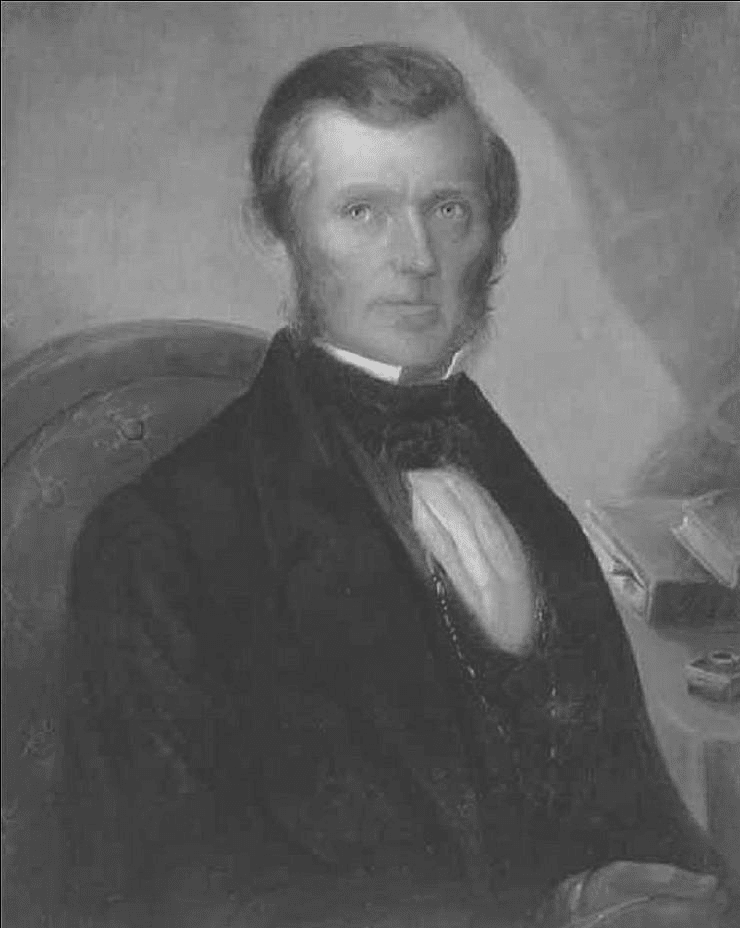
Painting of Wilford Woodruff by Filippo Pistrucci, London, January 1841 Courtesy of the Church History Library, The Church of Jesus Christ of Latter-day Saints

Photo of Heber C. Kimball, ca. 1850 Courtesy of the L. Tom Perry Special Collections, Harold B. Lee Library, Brigham Young University, Provo, Utah

Photo of George A. Smith, ca. 1850 Courtesy of the Church History Library, The Church of Jesus Christ of Latter-day Saints
Awe in London
As had become his habit since the day he joined the Church on December 31, 1833, at age 26, Wilford detailed his impressions of London at the end of his first day there, August 18, 1840, recording the extremes of poverty and degradation he found in the capital city:
O London, as I walk thy street & behold the mass of human beings passing through thee & view thy mighty palaces, they splendid mansions, the costly merchandize wherewith are adorned even as the capital of great Babylon, I am ready to ask myself, what am I & my Brethren here for, & as the spirit answers to warn thee of thine abominations & to exhort thee to repent of thy wickedness & prepare for the day of thy visitation thy mourning thy calamity & thy wo. I am ready to cry out “Lord who is sufficient for these things, O Mighty God of Jacob clothe us with thy power. Let the power of the Priesthood rest upon us & the spirit of our ministry & mission & enable us to warn the inhabitants of this city in such a manner that our garments will be clean of their Blood & that we may seek out the honest in heart & the meek from among men & have many souls as seals of our ministry.”2
The next day, they began their missionary efforts by preaching at Temperance Hall and Smithfield Market, where they experienced even more of the sights and people of London.3
Despite the hustle and bustle, contrasting social classes, and extensive poverty of the city, these missionary Apostles were in awe of the monuments, buildings, and history they experienced in London. As recorded by Wilford Woodruff at the end of his third full day in London, August 21, 1840,
This was the most interesting day of my life as far as viewing the splendid works of man was concerned. I started in company with Elders Kimble, & G. A. Smith, for a walk over the city of London we crossed over London Bridge, through King Williams st & passed through several other streets visited the cup & garden, passed through St Martin street & court, & Leicester square & Sidney Alley, Coventry st, Picadilly, Glasshouse St & we passed through most the whole length of Regent street one of the most splendid streets in the world, we passed through Langham place, All Souls church with a spire naked from its base to the point we also passed through Oxford St. We returned by the way of St Pauls Church, a description of which I shall give another day.4
A couple of weeks later, Elder Woodruff visited the Houses of Parliament and Westminster, and after walking around Buckingham Palace and St. James Park, he recorded seeing Prince Albert out riding in the park:
I walked nearly around this palace & while there I had the privilege of seeing his Royal Highness PRINCE ALBERT While he rode from his Palace across St James Park . . . he was not accompanied by her Majesty Victoria or any other person except his groom, he was dressed in a frock coat & dark pantaloons, he looks well fresh & healthy & in the bloom of life as he is but about 20 years of age. After leaving the [National] gallery & saw all the paintings which the nations has gathered together which are considered the most sublime of any in the world & visiting St Martins Church, I though[t] I had seen as much as my brain would contain in one day.5
Challenges in London
For these three Apostles, social conditions in London made finding those willing to embrace the restored gospel of Jesus Christ much more difficult than their experience in Staffordshire, Lancashire, and Herefordshire. Despite their diligent efforts to find places to preach and people who were willing to listen, they often felt discouraged. In reflecting on the challenges they faced in establishing the Lord’s restored Church in London, the Apostles identified a number of contributing factors.
One such factor was that as London was a melting pot of so many diverse cultures and beliefs, the missionaries first had to disentangle all of the previous notions before they could begin to teach basic gospel principles.
To many Londoners everything the [missionaries] taught seemed but an echo of something else. When they preached baptism, they were accused of being Baptists; when they spoke of the body of Christ being made up of apostles and prophets, they were called Irvingites; when they said that “the testimony of Jesus is the Spirit of prophecy,” they were called Southcottians; if they preached the second coming of Christ, they were confused with the Aitkenites; if they talked of the priesthood, they were called Catholics; and when they told of the ministering of angels, their detractors replied that even the Duke of Normandy would swear that he had the administration of angels every night.6
Another factor at play was that even when the Apostles encountered a minister who was inclined to befriend them, such as the successful and highly esteemed Reverend Robert Aitken and his growing congregation on Waterloo Road in Southwark, his followers did not see the necessity of basic principles and ordinances found in the restored gospel. As summarized by Wilford Woodruff, “Notwithstanding Mr. Akins has some sublime truths yet he is building a great house without any foundation by rejecting the first principles of the gospel.”7
Finding a New Friend in London
Despite the challenges, the three Apostles diligently sought opportunities to share the message of the restored gospel. As recorded on August 27, 1840, by Wilford Woodruff, after nine days in London, “We are making every exertion to find some saints or those who are willing to obey the gospel in this city of London But as yet our searching has been in vain, Priest & People are all Bound up in Bundles of tradition there Bands are made strong & the whole city is given to whoredoms & all manner of wickedness & is ripe for judgment. Still we are determined to spare no pains but to search diligently that we may seek out the honest in heart & the meek of the earth.”8
Finally, two days later on Saturday, August 29, 1840, Wilford Woodruff recorded that they had found a family willing to listen and embrace the message of the restored gospel: “We again went over the city of London to see if we could find the children of God & we found one man & his household that received our testimony & opened his doors for us to preach we appointed a meeting at his house for Sunday evening I think he & his household will soon be Baptized.”9
The following day, Sunday morning, August 30, their new friend Henry Connor led them to Tabernacle Square, where the missionaries found an Aitkenite preaching to about four hundred people. At a break in the preaching, Elder Kimball interrupted and pushed Elder Smith forward to preach. Interested in hearing what an American had to say, but without knowing what religion he represented, the crowd stayed for another twenty minutes to listen to George A. Smith. Discovering what religion the new preacher was from, the previous preacher drove the missionaries away.
Returning that afternoon, Elders Kimball and Woodruff both spoke to the next crowd of listeners: “After opening the meeting by singing and prayer, Elder Woodruff spoke for about thirty minutes, from Galatians 1:8, 9, upon the first principles of the Gospel. Elder Kimball followed upon the same subjects. The people gave good attention and seemed much interested in what they had heard. The inhabitants who lived around the square opened their windows to four stories high; the most of them were crowded with anxious listeners, which is an uncommon occurrence.”10
That evening Elders Woodruff and Smith preached at the Connor home while Elder Kimball preached yet again to a crowd in Tabernacle Square. Compared to what they had become accustomed to in the countryside around Herefordshire and Manchester, this was modest success, but success nonetheless.
On August 31, 1840, Henry Connor, a watchmaker, was baptized at Peerless Pool, a public pool near the Connor home. Following the baptism Wilford Woodruff recorded: “We all three laid our hands upon him & confirmed him, which is the first man that has received the work in the city of London as a seal of our ministry. We returned home & felt to thank God for his goodness in giving us one soul.”11
The next week the three missionaries attempted to preach at the Methodist school in Shoreditch, but were met with enough opposition that they gave up and went back across the river to Ironmonger Row. The three missionaries moved into rooms at 40 Ironmonger Row, across the street from the Connor home, the day before Elder Woodruff left to return to Herefordshire for a conference. This pleasant London location, where much of their success was found, would become the homebase for the missionary work in London for the next two-and-a-half years.
On September 10, 1840, Wilford Woodruff said goodbye to his two companions and returned to Herefordshire to participate in a conference involving the hundreds of new converts there. As he did so, he reflected on his time in London: “I took the parting hand with Elders Kimball & G. A. Smith & the friends in London having spent 23 days in that great city for the purpose of warning the people & establishing the kingdom & we all found as hard work to find saints & build up a church as in any place we ever visited; we Baptized one man & ordained him a priest & 6 others gave in their names to be Baptized on next Saturday or Sunday. I felt to rejoice that our labours were not altogether in vain.”12
Two weeks following Wilford’s departure, Heber C. Kimball reflected on his view of the challenges, but added that he sensed the tide had started to turn:
Brother Woodruff has been gone two weeks, and we baptized only one here in the city before he left. He felt almost discouraged and said he never saw such a hard case before . . . Every door closed against us and every heart. We have traveled from day to day from one part of the city to the other, to find someone that would receive our testimony. It seemed all in vain for some time, but at last we found one Cornelius that was ready to receive our testimony as soon as he heard it. . . . Last night I went into the water and baptized four more. Some more are going on Sunday. The ice is broken in London, and the gospel has got such a hold that the devil cannot root it out.13
While in Herefordshire, Elder Woodruff presided over conferences at Bran Green, Gadfield Elm, and Froom’s Hill, where he learned that the total number of members in that part of the country was 1,007 in 40 branches of the Church. This must have been welcome news after the challenges the missionaries faced in London.
Following the conference in Herefordshire, Elder Woodruff returned to London in mid-October of 1840 to join Elder Smith, Elder Kimball having left to go north already. In London Wilford found the powers of darkness continued to hinder the work. On October 18, 1840, he recorded the following experience: “Meditated upon the things of God until near 3 o’clock & while forming a determination to warn the people in London & overcome the powers of Darkness by the assistance of God; A person appeared unto me which I considered was the Prince of Darkness or the Devil he made war with me & attempted to take my life. he caught me by the throat & choaked me nearly to death. as he was about to overcome me I prayed to the father in the name of Jesus for help I then had power over him & he left me though much wounded.”14
Anxious to move the work forward, the Elders Woodruff and Smith rented Barrett’s Academy, a hall where they could preach for three months; they printed five hundred handbills to hand out and advertise. At their first meeting there, they had about 50 in attendance, but few of them responded favorably.
On October 22, 1840, Elders Woodruff and Smith attended a large Wesleyan Methodist meeting, with prominent Wesleyan preachers and the Lord Mayor of London in attendance. The missionaries heard some true doctrine, but not enough of the truths of the gospel. Elder Woodruff was frustrated that he and his companion couldn’t preach the restored gospel to this gathering. He recorded:
But in the midst of all this scenery who can imagine my feelings none but those placed in [like] circumstances though I had a mission & a message to the Inhabitants of London & stood in there mids[t] ready to deliver it as soon as God opened my way yet I was as little unknown by them, as Jonah was to the citizens of Nineveh while in the whales Belly & I clearly saw & realized that notwithstanding this great display of talent, power & policy, to send missionaries to the heathen they as much need an humble messenger of God to teach them the first principles of the Gospel of Jesus Christ as Nineveh Did a Prophet to cry repentance unto them, I retired home alone meditating upon the signs of the Present generation.15
Soon after, Elder Smith left to return north, leaving Elder Woodruff alone to continue the work in London. Elder Woodruff did not baptize anyone for almost two months. On November 30, 1840, Brigham Young arrived with Elder Kimball but only stayed until December 10. Elders Kimball and Woodruff then continued their efforts to find those willing to accept the restored gospel. Gradually both became more optimistic, and even started to have dreams of “ketching fish.”16
That winter, Elders Kimball and Woodruff preached successfully in Reverend James Albion’s church, Ebenezer Chapel. Reverend Albion was baptized at the end of the year, followed by the baptism of Dr. William Copeland, two of the most influential members to be baptized in the capital city. The elders continued to preach wherever they could—Temperance Hall, Smithfield Market, Hyde Park Corner, Tabernacle Square—always ready to share the gospel, as the Lord encouraged in Doctrine and Covenants 33, verse 8: “Open your mouths and they shall be filled.”
Gradually, with the help of referrals from friends and new converts, the momentum began to build.
The elders didn’t know it yet, but among the children in London at the time they were preaching there were Charles Penrose and George Teasdale, who would later become members of the Quorum of the Twelve Apostles. They also met those who were willing to help them promote their cause, such as Sister Ellen Balfour Redman, who Elder Woodruff described in a letter to Elder Smith on January 11, 1841:
I held three meetings in London, communed with the Saints, had a full house, & while Breaking Bread a Lady entered the door & presented me with a letter of Recommendation from under the hands of Elder L. R. Foster of New York, & who should the Lady be But Sister (Ellen Balfour Redman) I was at her house the last night I was in N. Y. There is something singular about her coming to London; she was taken sick right unto death & counseled to take a sea voyage for her health. Elder Blakeslee & others anointed her & she was carried on Board of a ship to come to London, & a ship never was known to live through such a rough passage 35 days & only 12 hours of fair weather [they] were driven to the cape of Good Hope under Bare poles constant thunder & lightning for 16 nights in succession; the cook jumped overboard because he said the ship was covered with devils, But she arrived Safe in London Dock & has spent a fortnight in this city trying to find us & found me yesterday by a dream that she had Saturday night, & we were happy to meet. . . . She has many acquaintances here & thinks the Lord has sent her here to do good she is now visiting many persons of Rank & preaching the fullness of the gospel unto them she is truly a Bold soldier.17
Church Growth in London
Finally, on February 14, 1841, Elders Kimball and Woodruff organized the London Conference consisting of the London Branch and small branches in Bedford, Ipswich, and Woolwich, with 26-year-old Elder Lorenzo Snow as president of the conference. Elder Snow had been baptized in Kirtland in 1836 and had served two missions in the United States before being called to serve in England from 1840 to 1843, first serving in Manchester and Birmingham before coming to London, where he was called to serve as president of the London Branch.
After almost seven months of missionary work in London, there were now 46 members. Elder Woodruff recorded: “This is a day I have long desired to see, for we have laboured exceeding hard to establish the work in this city, & in several instances it seemed as though we should have to give it up but by claiming the promises of God & holding on to the work of God, the rod of iron we have been enabled to overcome, & plant a church & establish a conference which we are enabled through the grace of God to leave in a Prosperous Situation which has the appearance of a great increase.”18
Elder Snow also spoke of the slow progress of the Church in London a few weeks after the time that the London Conference was organized: “I believe sincerely and strongly that a great work will eventually be accomplished in this vast city, but I can scarcely expect it will be done hurriedly . . . I baptized seven yesterday, making nine that I have baptized in London since Elders Woodruff and Kimball left, and making eleven that have received the gospel in this city since conference.”19
By April of 1841, the number of converts in London had risen to 74, and by August the Church membership in London was nearing 100, with more in the suburbs. By October of 1841, the handful of missionaries serving in London were baptizing every week. The work in London and Great Britain continued to grow and flourish, with over 42,000 joining the Church between 1840 and 1850.

Hyde Park Chapel, London Courtesy of The Church of Jesus Christ of Latter-day Saints
London has continued to be an important center for the Church, with the England London Mission being blessed with a rich harvest as generations of faithful missionaries have served there. Even today, two of the members of the Quorum of the Twelve Apostles—Elders Jeffrey R. Holland and Quentin L. Cook—trace their missionary service to the London mission and service in the Hyde Park Stake, the successor to the London Conference of 1841. Indeed, London has served as a center of strength for the Lord’s Church as His faithful missionaries continue to gather Israel and build the kingdom of God. While the challenges facing today’s missionaries are often similar to those faced by Elders Woodruff, Kimball, and Smith, the blessings and rewards of missionary service are equally as great.
Endnotes (Some historical text has been edited for clarity and readability.)
1 Wilford Woodruff’s Journal, June 20, 1840, p. 132, The Wilford Woodruff Papers, https://wilfordwoodruffpapers.org/p/80g.
2 Wilford Woodruff’s Journal, August 18, 1840, pp. 158–159, The Wilford Woodruff Papers, https://wilfordwoodruffpapers.org/p/l0j.
3 James B. Allen, Ronald K. Esplin, and David J. Whittaker, Men With a Mission: The Quorum of the Twelve Apostles in the British Isles, 1837-1841, Salt Lake City: Deseret Book, 2009, p. 184.
4 Wilford Woodruff’s Journal, August 21, 1840, p. 160, The Wilford Woodruff Papers, https://wilfordwoodruffpapers.org/p/nX5.
5 Wilford Woodruff’s Journal, September 8, 1840, p. 174, The Wilford Woodruff Papers, https://wilfordwoodruffpapers.org/p/1Wj.
6 Men with a Mission, 193.
7 Wilford Woodruff’s Journal, August 23, 1840, p. 162, The Wilford Woodruff Papers, https://wilfordwoodruffpapers.org/p/L84.
8 Wilford Woodruff’s Journal, August 27, 1840, p. 165, The Wilford Woodruff Papers, https://wilfordwoodruffpapers.org/p/OyN.
9 Wilford Woodruff’s Journal, August 29, 1840, p. 166, The Wilford Woodruff Papers, https://wilfordwoodruffpapers.org/p/PZn.
10 From Joseph Smith, History of the Church, 4:183–4.
11 Wilford Woodruff’s Journal, August 31, 1840, p. 168, The Wilford Woodruff Papers, https://wilfordwoodruffpapers.org/p/RoR.
12 Wilford Woodruff’s Journal, September 10, 1840, p. 174, The Wilford Woodruff Papers, https://wilfordwoodruffpapers.org/p/1Wj.
13 As quoted in V. Ben Bloxham, James R. Moss, and Larry C. Porter, eds. Truth Will Prevail: The Rise of the Church of Jesus Christ of Latter-day Saints in the British Isles 1837-1987, Cambridge: University Press, 1987, p. 155.
14 Wilford Woodruff’s Journal, October 18, 1840, p. 193, The Wilford Woodruff Papers, https://wilfordwoodruffpapers.org/p/Pkn.
15 Wilford Woodruff’s Journal, October 22, 1840, p. 201, The Wilford Woodruff Papers, https://wilfordwoodruffpapers.org/p/1kR.
16 Wilford Woodruff’s Journal, December 20, 1840, p. 239, The Wilford Woodruff Papers, https://wilfordwoodruffpapers.org/p/X5l.
17 Letter from Wilford Woodruff to George Albert Smith, January 11, 1841, p. 1, The Wilford Woodruff Papers, https://wilfordwoodruffpapers.org/p/5yNR.
18 Wilford Woodruff’s Journal, February 14, 1841, p. 30, The Wilford Woodruff Papers, https://wilfordwoodruffpapers.org/p/EPK.
19 Quoted in Truth Will Prevail: The Rise of the Church of Jesus Christ of Latter-day Saints in the British Isles 1837-1987.

Steven C. Wheelwright: After receiving his Master’s and PhD degrees from Stanford University, Steve spent most of his academic career at the Harvard Business School serving as a Senior Associate Dean overseeing the MBA program. He also spent almost a decade at the Stanford Graduate School of Business where he served as the Chair of the Strategic Management Department. Since his retirement from Harvard, he served as President of BYU–Hawaii for eight years, and he and his wife, Margaret, have presided over the England London Mission, served as senior missionaries at BYU–Idaho, and presided over the Boston Massachusetts Temple. While serving in the temple they became deeply interested in Wilford Woodruff’s contributions to the temple ordinances after reading Jennifer Mackley’s book, Wilford Woodruff’s Witness: The Development of Temple Doctrine. They are grateful for the blessing it is to have access to Wilford Woodruff’s writings on this topic and chose to assist the efforts of the Wilford Woodruff Papers Project so everyone can learn from his testimony of the Savior and his faithful discipleship.
Kristy Wheelwright Taylor: Kristy is the author of Prepare Me for Thy Use: Lessons from Wilford Woodruff’s Mission Years, published in 2025. She has a Master’s degree in Humanities from Brigham Young University. She spends much of her time in volunteer work and writing for various websites and publications. Along with working as a member of the Wilford Woodruff Papers Board, Kristy spends some of her time as a transcriptionist on the Wilford Woodruff Papers Project. She has loved getting to know Wilford Woodruff better through his writing and is always inspired and surprised by his dedication, tenacity, personality, humor, hard work, and faith. It’s just an added bonus that she gets to work with her dad.
Becoming Brigham, Episode 7—Young Brigham Young, Part Two
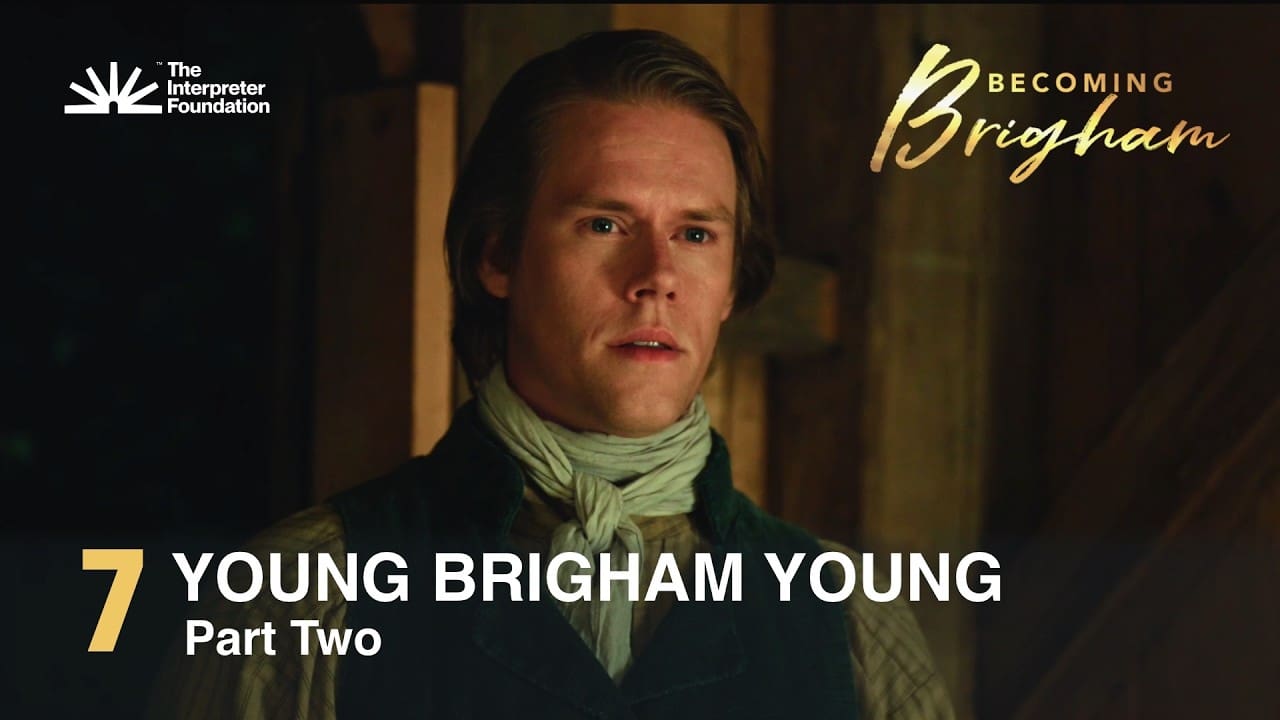
Camrey continues her conversation with Susan Easton Black about the youthful Brigham Young. Our hosts also explore how Brigham came to encounter the Book of Mormon, and how he reacted to this new book of scripture.
Come Follow Me Podcast #37: “After Much Tribulation Cometh the Blessings,” Doctrine and Covenants 102-105
Maurine
The material we talk about today gives us specifics about a dramatic, heart-rending series of events from the 19th century, but is also so relevant for our times, as if the story was written just for us. It simply could not be more to the point.
Scot
Hello our dear friends and welcome to Meridian Magazine’s Come Follow Me podcast . We’re Scot and Maurine Proctor and today we are talking about Doctrine and Covenants 102-105 in a lesson called “After Much Tribulation…Cometh the Blessings.”
Before we launch, we want to thank our sponsor Cardio Miracle. It is a powdered drink, taken daily, that signals your body to create nitric oxide, which is essential to blood vessel health, circulation, and cellular signaling. Our bodies slow down making it as we age. In fact, some studies have suggested that by the ages of 50 or 60, our bodies may make half as much nitric oxide as they did in our young adulthood. Healthy blood vessels make a healthy you. Like sending water to the very end of the row in farming, nitric oxide pushes blood flow and oxygen to the ends of your small capillaries. I take this every day and have for seven years and I’ll never quit.
Maurine
Today, as we study Doctrine and Covenants sections 103-105, you may be surprised how these sections work together to address a major problem facing the Saints, as well as became an important pivotal moment in gospel understanding. Yet, these may be hard to connect together and deeply understand without the back story, which, we just so happen to be giving you today. Section 103 instructs Joseph Smith and the leaders of the Church to organize Zion’s Camp. This, of course, calls for money and resources, and with the loss of the property in Missouri and challenges in Kirtland, the Church is struggling in debt. The Lord gives section 104 to address this problem, and finally Section 105 is given when Zion’s Camp is disbanded at Fishing River.
So let’s take our story back to Missouri. In November 1833, the Saints are driven out of Missouri, forced from the property they had purchased and the land the Lord had consecrated to them.
The mobs rejoiced as they saw the Mormons driven north to Clay County out of their midst.
Scot
These were exiles, first huddled along the banks of the Missouri River and later scattered in counties, looking for shelter and work and seeking redress. What should be done about this? In February, 1834, Parley P. Pratt and Lyman Wight arrived in Kirtland with the sad news of the Missouri Saints and a letter from William Phelps saying that the Missouri Governor Dunklin would be willing to help the Saints return to their homes in Jackson County, but he could not maintain a militia to protect them beyond that. The Church would have to raise and arm a force sufficiently big to maintain the safety of the Saints once these displaced returned back home.
Joseph had already been told in Section 101, that the “the strength of mine house” (Doctrine and Covenants 101:55), would be called to go to Zion and redeem the land and aid “the dispossessed Saints in Missouri…This was no vigilante movement. It was Joseph’s clear intention to work within the law and in cooperation with the state of Missouri in returning the Jackson County Saints to their homes,” (H. Dean Garrett, Stephen E. Robinson, Commentary on the Doctrine and Covenants, Vol. 3). The moment had come.
Maurine
Before Zion’s Camp could leave, however, 8 recruiters, including Joseph, were sent out to find 500 volunteers, as the Lord said was necessary, that these companies could “go up unto the land of Zion by tens, or by twenties, or by fifties, or by an hundred, until they have obtained to the number of five hundred of the strength of my house” (Doctrine and Covenants 103:30). This was not an easy task.
Zion will be reclaimed “by power”, we learn in Doctrine and Covenants 103:15, but the Lord does not specify what power. Joseph is compared to Moses as he is called upon to gather an army of Israel, and as the children of Israel were led out of bondage, “so shall the redemption of Zion be” (v. 18). They will leave not knowing if they will face violence and certainly without the promise that they would all come home. The Lord says, “Let no man be afraid to lay down his life for my sake” (vv. 20, 27).
Scot
Heber Kimball said they gathered “with what means they could spare to go up to Zion and render all the assistance that we could to our afflicted brethren. We gathered clothing and other necessaries to carry up to our brethren and sisters who had been plundered; and putting our horses to the wagons and taking our firelocks and ammunition, we started on our journey.”( http://www.boap.org/LDS/Early-Saints/HCKimball.html)
They had hoped for gathering of 500, but they ended up with only a little over 200. They were hardy, and willing, and about to face an Abrahamic test.
Little money was available among them to make this journey, and they all gave it to a general fund. What that really meant was that they could starve together equally, living on poor rations, with aching and sometimes swollen feet in the march from Kirtland to Jackson County.
Maurine
Wilford recorded: ““He [Joseph] said . . . ‘Brethren, don’t be discouraged about our not having means. The Lord will provide, and He will put it into the heart of somebody to send me some money.’ The very next day he received a letter from Sister Vose, containing one hundred and fifty dollars. When he opened the letter and took out the money, he held it up and exclaimed: ‘See here, did I not tell you the Lord would send me some money to help us on our journey? Here it is.’ I felt satisfied that Joseph was a Prophet of God in very deed.”
Joseph spoke to the group before leaving: “I want to say to you before the Lord, that you know no more concerning the destinies of this Church and kingdom than a babe upon its mother’s lap. You don’t comprehend it. It is only a little handful . . . you see here tonight, but this Church will fill North and South America—it will fill the world. It will fill the Rocky Mountains. There will be tens of thousands of Latter-day Saints who will be gathered in the Rocky Mountains.”
The little group departed on their thousand-mile march to western Missouri, calling themselves “Zion’s Camp.” They armed themselves with weapons, many supplies, and great faith.
Scot
The Lord says, “let not your hearts faint, for I say not unto you as I said unto your fathers: Mine angel shall go up before you, but not my presence. But I say unto you: Mine angels shall go before you, and also my presence and in time ye shall possess the goodly land” (vv. 19,20).
Now the question might be legitimately asked, why did the Lord let their enemies prevail against the Saints in Jackson County any way? He answers here that “those who call themselves after my name might be chastened for a little season with sore and grievous chastisement, because they did not hearken altogether unto the precepts and commandments which I gave them.”
Maurine
The Lord also promised that He would “pour out his wrath without measure in mine own time”(v. 2) on the persecutors, but he has “suffered them thus far, that they might fill up the measure of their iniquities, that their cup might be full” (v. 3). In other words, he allows people their agency to act out their evil intent that it might stand in judgment against them.
This reminds me of the moment in the Book of Mormon where Alma and Amulek are forced to watch the believers, who are their own converts, burn by fire. Alma says, that the Lord allowed it “that the people may do this thing unto them, according to the hardness of their hearts, that the judgments which he shall exercise upon them in his wrath may be just, and the blood of the innocent shall stand as a witness against them” (Alma 14:11).
Scot
Twelve hundred homeless Saints were scattered through the counties of Missouri, their dream of a Zion at the center place vanished like smoke on the wind. Elizabeth Haven, who endured many persecutions, recorded in a letter to a friend: “God moves in a mysterious way, his wonders to perform. Many have been sifted out of the Church, while others have been rooted . . . in love and are the salt of the earth. . . . We are to be tried (everyone who inhabits the celestial kingdom) like gold seven times purified.” (in Scot Facer Proctor, Maurine Jensen Proctor, Witness of the Light, Salt Lake City: Deseret Book).
What the Lord must build first, before Zion can come to be, is people.
Maurine
In verses 5-10, the Lord gives them an if-then proposition. If the people will “hearken from this very hour unto the counsel which I, the Lord their God shall give them,” and hearken “to observe all the words which I, the Lord their God shall speak unto them”, they will “begin to prevail against [their] enemies from this very hour” and “shall never cease to prevail.” If not, that promise does not hold.
So often we want a world with no expectations, where nothing is demanded of us. We believe we are entitled to rewards even if we do nothing or follow the lowest or laziest common denominator of our natures. A God of high expectations might even be offensive to us, opting instead for a world where little is expected of us. That’s not the God we have.
Scot
He tells us why here. “Those who want to build and live in Zion were set to be a light unto the world, and to be the saviors of men.”
This is a calling and a privilege. Who can the Lord send to be a light and the saviors of men in this mortal world, if not us. We’re not much, but we are what he’s got.
“And…as they are not the saviors of men, they are as salt that has lost its savor, and is thenceforth good for nothing but to be cast out and trodden under foot of men” (vv. 9-10). His rewards are conditioned upon obedience.
Maurine
This image of being salt that has lost its savor is interesting. You can trace the history of the world through the need to acquire salt. Roman soldiers were often paid in salt instead of money-thus the word salary comes into our language from salt. Not only does salt improve the flavor of food, but foremost, it is a preservative. It is used to preserve meat, fish and vegetables. When you are called to be the salt of the earth, you are called both to have a positive influence in the life of others, but, more importantly, you are called to preserve a world. That need for preservation is even greater when a world is in decline. It’s a remarkable calling and a powerful one.
How does salt lose its savor? Salt doesn’t lose its savor by becoming old. It does not go stale or mold or rot. Salt loses its savor when it becomes corrupted with something else, another element. If salt is not pure, it loses its savor. That’s quite a metaphor for what the Lord expects. If ye are the salt of the earth, ye are the preservers of the earth, and the Lord will sanctify you, even with hardship, to make you pure. It is his gift to you.
Scot
Before Zion’s Camp could leave for Missouri to help the Saints in the spring of 1834, the Prophet Joseph Smith had to solve huge financial challenges for the Church. H.Dean Garrett and Stephen E. Robinson note, “Joseph wrote to Orson Hyde on 7 April, ‘[U]nless we can obtain [financial] help, I myself cannot go to Zion, and if I do not go, it will be impossible to get my brethren in Kirtland, any of them, to go; and if we do not go, it is in vain for our eastern brethren to think of going.’
“Two years earlier, in April 1832, the united order (or united firm) had secured a five-year loan for $15,000, an immense sum at the time, primarily for purchasing goods and property in Missouri. When the Saints were driven out of Jackson County, not only did they suffer staggering financial losses and abject poverty, but the united order also lost its collateral on this loan and its primary means of paying it back. Added to this were other debts incurred by the order on behalf of the Church in Missouri and in Kirtland. The provisioning of Zion’s Camp also would require a great outlay of funds, as did continuing construction on the Kirtland Temple. Further, an apostate named Philastus Hurlbut was trying to acquire property owned by the united order by suing Church leaders, and defending themselves in court was causing escalating legal fees. And, as always, the needs of Kirtland’s poor Saints also had to be met. For all of these reasons, the Church in the spring of 1834 was deeply in debt.” (H. Dean Garrett, Stephen E. Robinson, Commentary on the Doctrine and Covenants, Vol. 3, Salt Lake City: Deseret Book).
Maurine
Garrett and Robinson continue: “At a conference in Avon, New York, on 17 March 1834, Joseph Smith proposed, besides raising volunteers and contributions for Zion’s Camp, also raising two thousand dollars to pay the debts of the Church in Kirtland. On 7 April 1834, Joseph wrote in Kirtland, ‘Bishop Whitney, Elder Frederick G. Williams, Oliver Cowdery, Heber C. Kimball, and myself, met in the council room, and bowed down before the Lord, and prayed that He would furnish the means to deliver the Firm [the united order] from debt, that they might be set at liberty; also, that I might prevail against that wicked man, Hurlburt, and that he might be put to shame.’ Two days later, Hurlbut lost his lawsuit, was put under bond to keep the peace, and was forced to pay court costs.”
What came two weeks later was Section 104, which contains one of the most emphatic sections in all of scripture on consecration, something the Lord calls “an everlasting order” (v. 1). The scripture has much that is practical. Under the threat of lawsuit from Hurlbut, the brethren had considered dissolving the United Firm or what we generally know as the United Order, but in this section instead the united order in Kirtland and the one in Zion are to operate separately. Stewardships are given. Treasuries are established.
Scot
But here is the key, and the first principle of consecration, said with the greatest clarity.
“I, the Lord, stretched out the heavens, and built the earth, my very handiwork; and all things therein are mine” (D&C 104:14). What is His? The air we breathe, the land we stand on, the food we eat, the things we think we own. Our lives, our time, our talents, all are His.
The Lord as the creator of the earth decrees the rules of stewardship and accountability over it. He says, “It is my purpose to provide for my saints, for all things are mine.”
Maurine
“But it must needs be done in mine own way; and behold this is the way that I, the Lord, have decreed to provide for my saints, that the poor shall be exalted, in that the rich are made low.
“For the earth is full, and there is enough and to spare; yea, I prepared all things, and have given unto the children of men to be agents unto themselves” (vv. 15-17).
Scot
If the Saints would not willingly consecrate, Joseph said, “God shall…prevent them from ever obtaining a place of refuge or an inheritance upon the Land of Zion.”
Those who left on Zion’s Camp in May and June 1834, led by Joseph Smith, traveled about 900 miles from Kirtland to Clay County, Missouri. The participants in that group included names we are familiar with: Parley P. Pratt, Orson Hyde, Wilford Woodruff, Heber C. Kimball, and Brigham Young. These were willing to stake their lives and time on the line for the aid of their ailing friends in Missouri.
“As Wilford Woodruff was settling his business affairs and preparing to join Zion’s Camp, his friends and neighbors warned him not to undertake such a hazardous journey. They counseled, ‘Do not go, if you do you will lose your life.” He replied, “If I know that I should have a ball put through my heart the first step I took in the state of Missouri I would go.’”(in David A. Bednar, On the Lord’s Side: Lessons from Zion’s Camp, https://www.churchofjesuschrist.org/study/ensign/2017/07/on-the-lords-side-lessons-from-zions-camp?lang=eng)
Maurine
“Wilford Woodruff later declared while serving as a member of the Quorum of the Twelve Apostles: ‘We gained an experience that we never could have gained in any other way. We had the privilege of … traveling a thousand miles with [the Prophet], and seeing the workings of the Spirit of God with him, and the revelations of Jesus Christ unto him and the fulfilment of those revelations. … Had I not gone up with Zion’s Camp I should not have been here today.’” (See Bednar https://www.churchofjesuschrist.org/study/ensign/2017/07/on-the-lords-side-lessons-from-zions-camp?lang=eng)
“George A. Smith described in his journal the reaction of the Prophet to the daily challenges of the march to Missouri.
“’The Prophet Joseph took a full share of the fatigues of the entire journey. In addition to the care of providing for the Camp and presiding over it, he walked most of the time and had a full proportion of blistered, bloody and sore feet. … But during the entire trip he never uttered a murmur or complaint, while most of the men in the Camp complained to him of sore toes, blistered feet, long drives, scanty supply of provisions, poor quality of bread, bad corn dodger, frouzy butter, strong honey, maggoty bacon and cheese, etc., even a dog could not bark at some men without their murmuring at Joseph. If they had to camp with bad water it would nearly cause rebellion, yet we were the Camp of Zion, and many of us were prayerless, thoughtless, careless, heedless, foolish or devilish, and yet we did not know it. Joseph had to bear with us and tutor us, like children.’”(See Bednar).
Scot
“On one occasion, three prairie rattlesnakes were found in the spot where Joseph had pitched his tent. Some of the brethren were about to kill them, but Joseph said: ‘Let them alone—don’t hurt them! How will the serpent ever lose his venom, while the servants of God possess the same disposition, and continue to make war upon it?’ The brethren took the snakes carefully on sticks and carried them across the creek to safety. Joseph felt that “men must become harmless, before the brute creation; and when men lose their vicious dispositions . . . the lion and the lamb can dwell together, and the sucking child can play with the serpent in safety.”
“‘Notwithstanding our enemies were continually breathing threats of violence,’ wrote Joseph, ‘we did not fear, neither did we hesitate to [take] our journey, for God was with us, and His angels went before us, and the faith of our little band was unwavering.’” (See Proctor, Witness).
Maurine
After walking eight hundred miles in six weeks, Zion’s Camp arrived in Clay County to a threatening environment and disappointing news. Governor Dunklin refused to fulfill his promise to provide a force to assist the Saints to regain their homes in Jackson County. Rumors had spread that about the size and intentions of the camp, and several hundred Missourians had gathered, threatening attack. Five marauders rode wildly through the camp to warn them of their impending doom.
“When the five men entered the camp, not a cloud was to be seen in the whole heavens, but soon a small cloud like a black spot appeared in the northwest and began to unroll itself like a scroll. In a few minutes, the whole heavens were covered with a pall as black as ink. The storm soon broke with wind, rain, thunder, lightning, and hail. Many Saints fled to a nearby Baptist meetinghouse. Wilford Woodruff remembered: ‘As the Prophet Joseph came in shaking the water from his hat and clothing he said, ‘Boys, there is some meaning to this. God is in this storm.’ We sang praises to God, and lay all night on benches under cover while our enemies were in the pelting storm.”
Scot
Wilford Woodruff continued, “Very little hail fell in our camp . . . the lightning flashed incessantly. . . . The earth trembled and quaked, the rain fell in torrents, and, united, it seemed as if the mandate of vengeance had gone forth from the God of battles.” The water in nearby Big Fishing River, which had been only ankle deep the night before, had risen to forty feet deep, drowned some of the mob, and sent the others running for shelter and galloping off to their homes. They declared that if that was the way God fought for the Mormons, they might as well go about their business.
“While their enemies attacked them from without, a deadly enemy attacked the army from within. Cholera broke out, ravaging about sixty-eight of the men and women, fourteen of whom died. The brethren rolled the corpses in blankets and buried them on the bank of Brush Creek. Heber C. Kimball remembered, ‘We felt to sit and weep over our brethren, and so great was our sorrow that we could have washed them with our tears, to realize that they had traveled one thousand miles through so much fatigue to lay down their lives for our brethren.’” (See Proctor, Witness).
Maurine
Joseph and Hyrum related this account to their mother:
“Soon after arriving at the point of destination, the cholera broke out among us, and the brethren were so violently attacked that it seemed impossible to render them any assistance. They immediately sent for us to lay hands on them, but we soon discovered that this also was the judgment of the Almighty, for when we laid our hands upon them in the name of the Lord in order that they might be healed, the disease instantly fastened itself upon us. And in a few minutes we were in awful distress. We made mute signals to each other and left the house for the purpose of going into some secluded place to join in prayer that God would deliver us from this awful influence; but before we could get a sufficient distance to be secure from interruption, we were scarcely able to stand upon our feet and we were greatly alarmed, fearing that we should die in this western wilderness so far from our families, without even the privilege of blessing our children or giving them one word of parting counsel. Hyrum cried out, ‘Joseph, what shall we do? Must we be cut off from the face of the earth by this horrid curse?’
Scot
“‘Let us,’ said Joseph, ‘get down upon our knees and pray to God to remove the cramp and other distress and restore us to health, that we may return to our families.’ We did so but without receiving any benefit, but still grew worse. We concluded, however, to make a second effort, and when we kneeled again, the cramp seized the calves of Joseph’s legs, gathering the cords into bunches, and then the operation extended in like manner all over his system. He cried heartily unto God, but the heavens seemed sealed against us and every power that could render us any assistance shut within its gates. The universe was still. ‘When we arose again,’ said Joseph, ‘I found Hyrum was in the same situation with myself.’
“We soon came to the resolution of appealing again to God for mercy, and not to rise from our knees until one or the other got a testimony that we should be healed, and he who received the first intimation from the Spirit should inform the other of the same. We prayed some time, first one and then the other, and soon perceived that the cramp began to loose its hold. In a short time Hyrum sprang to his feet and exclaimed, ‘Joseph, we shall return, for I have seen an open vision in which I saw Mother on her knees under an apple tree praying for us, and she is even now asking God, in tears, to spare our lives, that she may behold us again in the flesh. The Spirit testifies to me that her prayers and ours shall be heard’-and from that moment we were healed and went on our way rejoicing.” (Lucy Mack Smith, and Scot Facer Proctor, Maurine Jensen Proctor, editors. The Revised and Enhanced History of Joseph Smith by His Mother, Salt Lake City, Deseret Book.)
Maurine
On June 21, the Saints met with county and militia officials hoping to resolve the issue. Joseph assured them that they were anxious for a settlement to the difficulties upon constitutional principles. These meetings went nowhere, and, finally, Joseph, seeing his little band of Zion’s Camp was badly outnumbered, appealed to the Lord and received Section 105 on June 22, 1834. Here he was assured, “For behold, I do not require at their hands to fight the battles of Zion: for, as I said in a former commandment, even so will I fulfil—I will fight your battles” (v. 14). The Lord said, “I have heard their prayers, and will accept their offering.”
The building of Zion must be postponed “for a little season” (v. 9) “that my people may be taught more perfectly, and have experience, and know more perfectly concerning their duty, and the things which I require at their hands.”
We asked earlier, what kind of power would it take to redeem Zion? Now the Lord gives the answer, “This cannot be brought to pass until mine elders are endowed with power from on high” (v. 11) It is not military power, nor any kind of power that man can scramble together. Instead, “I have prepared a great endowment and blessing to be poured out upon them, inasmuch as they are faithful and continue in humility before me” (v. 12). It is the Lord’s power, and the Lord postpones the building of Zion, until the people are ready to receive it. Zion’s Camp is to be disbanded.
Scot
Steven Harper notes, “The revelation which is both pacifistic and militant, marks a turning point in Church history. It is a document of détente. It calls for a proclamation of peace now even as it foreshadows a future role for the army of Israel. It postpones Zion in Jackson County for an ambiguous ‘little season’ (v. 9). It commands Saints in the meantime to receive the anticipated endowment of power to help them gain experience, to learn their duty and doctrine better, and to increase in number and holiness. They are to continue to purchase western Missouri lands but to avoid gathering in numbers perceived as threatening by non-Mormon settlers.
“Doctrine and Covenants 105 gives Joseph and his army orders to retreat. They are instructed to seek redress lawfully. But the war is far from over. These tactics will buy time ‘until the army of Israel becomes very great’ (v. 26) while more land in Jackson and adjoining counties can be legally purchased. Once it is, the revelation says, ‘I will hold the armies of Israel guiltless in taking possession of their own lands, which they have previously purchased with their moneys, and of throwing down the towers of mine enemies that may be upon them’ (v. 30). First, however, ‘let my army become very great, and let it be sanctified before me, that it may become fair as the sun, and clear as the moon, and that her banners may be terrible unto all nations; that the kingdoms of this world may be constrained to acknowledge that the kingdom of Zion is in very deed the kingdom of our God and his Christ; therefore, let us become subject unto her laws’ (vv. 31–32).”
Maurine
Meanwhile, Latter-day Saints are to “sue for peace, not only to the people that have smitten you, but also to all people; and lift up an ensign of peace, and make a proclamation of peace unto the ends of the earth” (vv. 38–39)…
“The brethren were to return to the house of the Lord in Kirtland, to be endowed with power on conditions of humility and faithfulness (v. 12), and then spread out over the globe to gather Israel. Then, when the army became very great both numerically and in”
“obedience to the law of consecration, they would regain Zion.”
“Back in Kirtland [Joseph] urged the Saints to finish the house of the Lord, and he began holding sanctifying training meetings to prepare the brethren for the solemn assembly.” (Steven C. Harper, Making Sense of the Doctrine and Covenants, Salt Lake City: Deseret Book).
Scot
Some who had come on Zion’s Camp were disgruntled when it was disbanded and questioned the prophet, but the Lord revealed this to Joseph in Section 105. “It is expedient in me that they should be brought thus far for a trial of their faith” (v. 19).
Elder David A. Bednar said, “Because of the failure to reestablish the Saints on their lands in Jackson County, Zion’s Camp was considered by some an unsuccessful and unprofitable endeavor. A brother in Kirtland—one who lacked the faith to volunteer to go with the camp—met Brigham Young on his return from Missouri and asked, “‘Well, what did you gain on this useless journey to Missouri with Joseph Smith?’ ‘All we went for,’ promptly replied Brigham Young. ‘I would not exchange the experience I gained in that expedition for all the wealth of Geauga County,’” the county in which Kirtland was then located.”
Maurine
Elder Bednar continued, “In a most literal way, the physical and spiritual challenges of Zion’s Camp constituted a sifting of the wheat from the tares (see Matthew 13:25, 29–30; D&C 101:65), a dividing of the sheep from the goats (see Matthew 25:32–33), a separating of the spiritually strong from the weak. Thus, each man and woman who enlisted in the army of the Lord faced and answered the penetrating question of ‘Who’s on the Lord’s side?’”
“Indeed, ‘the time to show’ for those faithful men and women was the summer of 1834. But the decision to march with the Prophet Joseph to Missouri was not necessarily a one-time, all-inclusive, or immediate response to the question of ‘Who’s on the Lord’s side?’ The time to show for those Saints arose frequently and repeatedly through mental and physical fatigue, through bloody blisters on their feet, through inadequate food and unclean water, through a multitude of disappointments, through dissensions and rebellions within the camp, and through external threats from vicious enemies.”
Scot
Elder Bednar said, “The time to show came in the experiences and privations of every hour, of every day, and of every week. It was the grand combination of the many seemingly small choices and actions in the lives of these devoted Saints that provided the conclusive answer to the question ‘Who’s on the Lord’s side?’
“How did the testing and sifting that occurred in the lives of the Zion’s Camp participants serve as a preparation? Interestingly, eight of the brethren called into the Quorum of the Twelve Apostles in 1835, as well as all of the Seventies called at that same time, were veterans of Zion’s Camp. At a meeting following the call of the Seventies, the Prophet Joseph Smith declared:
“’Brethren, some of you are angry with me, because you did not fight in Missouri; but let me tell you, God did not want you to fight. He could not organize his kingdom with twelve men to open the gospel door to the nations of the earth, and with seventy men under their direction to follow in their tracks, unless he took them from a body of men who had offered their lives, and who had made as great a sacrifice as did Abraham.’
“Now, the Lord has got his Twelve and his Seventy, and there will be other quorums of Seventies called.”(David A. Bednar, On the Lord’s Side: Lessons from Zion/s Camp, https://www.churchofjesuschrist.org/study/ensign/2017/07/on-the-lords-side-lessons-from-zions-camp?lang=eng).
Maurine
The call to join Zion’s Camp was an opportunity for testing, sifting and proving your spiritual mettle. We mentioned at the beginning of this podcast that these sections were particularly relevant for our time—and they are. Surely when the call came from the prophet to join Zion’s Camp, a great number would not make that sacrifice. Surely, when the group was disbanded, after much sacrifice, without achieving an apparent purpose, many felt justified in criticizing the prophet.
I am surprised at how many not only resist our prophet’s counsel, today,but are angered by it. They don’t want to hear things they don’t want to hear. I love what Elder Bednar continued to say as he reflected on Zion’s Camp.
He said, “As a result of my call in 2004 to serve in the Quorum of the Twelve Apostles, I have a decidedly distinctive perspective about what it means to observe, to learn from, and to follow the Brethren. I now see on a daily basis the individual personalities, the various preferences, and the noble characters of the leaders of this Church. Some people find the human limitations and shortcomings of the Brethren troubling and faith diminishing. For me, those weaknesses are faith promoting. The Lord’s revealed pattern of governance in His Church provides for and attenuates the impact of human frailty. It is truly miraculous to me to witness the Lord accomplishing His will through His servants despite the flaws and failings of His chosen leaders. These men never have claimed to be and are not perfect; they certainly are, however, called of God.
Scot
Elder Bednar said, “Since my call as a General Authority, I have tried to observe and learn as some of my Brethren have faced the effects of aging or the relentless demands of physical limitations and constant pain. You cannot and will never know the private and silent suffering some of these men live through as they serve publicly with all of their heart, might, mind, and strength. Serving with and watching President Gordon B. Hinckley (1910–2008), President James E. Faust (1920–2007), Elder Joseph B. Wirthlin (1917–2008), President Boyd K. Packer (1924–2015), Elder L. Tom Perry (1922–2015), Elder Richard G. Scott (1928–2015), and my other apostolic associates empower me to declare clearly and authoritatively that the Brethren with whom I serve are warriors—noble and great spiritual warriors—in the truest and most admirable sense of that word! Their patience, persistence, and courage enable them to “press forward with a steadfastness in Christ” (2 Nephi 31:20) that is worthy of our emulation.” (Bednar, Lessons).
Maurine
That’s all for today. Next week we’ll discuss Doctrine and Covenants Sections 106-108 in a lesson called “To Have the Heavens Opened”. Thanks to Paul Cardall for our music and to Michaela Proctor Hutchins who produces this podcast. See you next week.
What the Prophet Joseph Teaches Us About How to Deal with the Devil, Part 2

In part 1 of this series, we talked about some of the lessons we can learn from the young Prophet Joseph as he dealt with the adversary. In this article, we explore some of the more complex interactions Joseph or others had with the dark side and how he handled this as a more seasoned prophet. There are many more stories from Church history that could be called upon as examples. I have only chosen a few.
Heber C. Kimball[1] once spoke over the pulpit in the Tabernacle: “What contests [Joseph Smith] had had with the devil; [Joseph] told me that he had contests with the devil, face to face. He also told me how he was handled and afflicted by the devil.”[2] This statement about the Prophet Joseph has motivated me to learn more from him, how he dealt with Satan and to see if there are lessons for each of us in this part of the dispensation. There are. Let’s study them together.
Let’s look now at the spiritually mature, adult Joseph Smith and see if we can learn more about how he (and we) can deal with the temptations and battering of Satan.
Joseph Smith and the devil in Far West
From Heber C. Kimball we learn a great lesson that Joseph taught to him.
“Joseph … said the nearer a person approached to the Lord, the greater power would be manifest by the devil to prevent the accomplishment of the purposes of God.”
Pay attention to that in your own spiritual lives and notice the truthfulness of that statement. There is no need to fear the pursuit of deep spirituality, just know that Satan is tenacious and persistent and has plenty of helpers. But we have more.[3]
Heber continued: “He also gave me a relation of many contests that he [Joseph] had had with Satan, and his power that had been manifested from time to time since the commencement of bringing forth the Book of Mormon.
“I will relate one circumstance that took place in Far West, in a house which Joseph had purchased, which had been formerly occupied as a public house by some wicked people. A short time after he had moved into it, one of the children was taken very sick. He laid his hands upon the child, when it got better. As soon as he went outside, the child was taken sick again. He again laid his hands upon it, so that it again recovered. This transpired several times, and Joseph inquired of the Lord what it all meant, when he had an open vision, and saw it, the devil in person, who contended with Joseph face to face for some time. He said it was his house, it belonged to him, and Joseph had no right there. Then Joseph rebuked Satan in the name of the Lord, and he departed and troubled the child no more.”[4]
Lessons we can learn from Joseph’s admonition above and this horrible experience in Far West?
One. Satan will spurn us, thwart us, tempt us and keep us away from great spiritual experiences as much as he possibly can. “Pray always, that you may come off conqueror; yea, that you may conquer Satan, and that you may escape the hands of the servants of Satan that do uphold his work.”[5]
Two. Inquire of the Lord when you cannot figure out why something is not going the way it should go. Keep inquiring. Pray until you receive an answer.
Three. Be in a position, with righteous priesthood power and, as women, with pure faith in the Lord Jesus Christ and the use of His Holy Name, to rebuke Satan, and cast him out of your home, individual family members and whomever needs to have him cast out. That is so critically important when there are so many lying spirits in the world today who attach themselves to individuals, even to those we love.
Joseph Teaches Heber C. Kimball about the devils in Preston, England
A seven-elder contingency went to England in July 1837 to open the gospel to that nation, led by Apostles Heber C. Kimball and Orson Hyde, and Elder Willard Richards (who would later become an apostle) and four Canadians, Joseph Fielding, Isaac Russell, John Goodson and John Snyder. On the morning of the very first baptisms that were to be performed in that great nation, Sunday, July 30, 1837, the brethren were attacked by legions of devils who tried to destroy them. Heber C. Kimball talked about this experience.

The white building on the right, upper floors, is where the missionaries first stayed in Preston and had the experience with the legions of devils.
““While thus engaged, I was struck with great force by some invisible power, and fell senseless on the floor. The first thing I recollected was being supported by Elders Hyde and Richards who were praying for me, Elder Richards having followed Russell up to my room. Elders Hyde and Richards then assisted me to get on the bed, but my agony was so great I could not endure it, and I arose, bowed my knees and prayed.
““I then arose and sat up on the bed, when a vision was opened to our minds, and we could distinctly see the evil spirits, who foamed and gnashed their teeth at us. We gazed upon them about an hour and a half (by Willard’s watch). We were not looking towards the window, but towards the wall. Space appeared before us, and we saw the devils coming in legions, with their leaders, who came within a few feet of us. They came towards us like armies rushing to battle. They appeared to be men of full stature, possessing every form and feature of men in the flesh, who were angry and desperate; and I shall never forget the vindictive malignity depicted on their countenances as they looked me in the eye; and any attempt to paint the scene which then presented itself or portray their malice and enmity, would be vain.
“I perspired exceedingly, my clothes becoming as wet as if I had been taken out of the river. I felt excessive pain, and was in the greatest distress for some time. I cannot even look back on the scene without feelings of horror; yet by it I learned the power of the adversary, his enmity against the servants of God, and got some understanding of the invisible world. We distinctly heard these spirits talk and express their wrath and hellish designs against us. However, the Lord delivered us from them, and blessed us exceedingly that day.”
Elder Orson Hyde described that terrible morning in a letter to Heber:
“”Every circumstance that occurred at that scene of devils is just as fresh in my recollection at this moment as it was at the moment of its occurrence, and will ever remain so. After you were overcome by them and had fallen, their awful rush upon me with knives, threats, imprecations and hellish grins, amply convinced me that they were no friends of mine. While you were apparently senseless and lifeless on the floor and upon the bed (after we had laid you there), I stood between you and the devils and fought them and contended with them face to face, until they began to diminish in number and to retreat from the room. The last imp that left turned round to me as he was going out and said, as if to apologize, and appease my determined opposition to them, ‘I never said anything against you!’ I replied to him thus: ‘It matters not to me whether you have or have not; you are a liar from the beginning! In the name of Jesus Christ, depart!’ He immediately left, and the room was clear. That closed the scene of devils for that time.”
Now, here’s the lesson from Joseph which is so powerful (and this puts his teaching in context):
“When he returned home, Heber C. Kimball asked the Prophet Joseph Smith, ‘What was the matter of us? What had we done that we had to be submitted to such an experience?’
“Joseph responded, ‘Brother Heber, at that time you were nigh unto the Lord; there was only a veil between you and him, but you could not see him. When I [Joseph] heard, it gave me great joy, for I then knew that the work of God had taken root in that land. It was this that caused the devil to make a struggle to kill you. The nearer a person approaches the Lord, a greater power will be manifested by the adversary to prevent the accomplishment of his purposes.”[6]
Some takeaways from this almost overwhelming brush with the evil ones:
One. In the midst of such darkness, as in the Sacred Grove, as in the small digs in Preston, England, the Lord is always near. This is a lesson we need to remember when all we seem to feel is darkness. Hold on. Exercise great faith. Keep in your mind that Jesus is just beyond us through a veil.
Two. Again, on that morning when the very first baptisms in this dispensation in England were to be performed, Satan attacked those who would, by priesthood authority, do those ordinances. Whenever great light is about to be poured out (like, for example, the First Vision or the Vision of the Three Degrees of Glory), darkness or an onslaught of temptation or challenge will likely be just around the corner. You can take this as a sign that the great spiritual experiences that you are richly given from the Lord are true and verified by the presence of opposition.
Three. Those on the other side of the veil who uphold the work of Satan are committed to our destruction. They are not to be trusted. They will use every means possible to lead us away from the light and teachings and ordinances of Christ.
Joseph Smith and the first Miracle of the Church with the Knight Family
Joseph was very close to the Joseph and Polly Knight family of Colesville, New York. He and Newel Knight, one of the Knight’s 13 children, were especially close and often had “serious conversations on the important subject of man’s eternal salvation.” Joseph and the Knights would employ much prayer in the course of their meetings together and Newel had been called upon to pray vocally in the group. Joseph reported:

Interior of the Joseph and Polly Knight hone in Colesville, New York where this first miracle took place.
“[Newel] deferred praying until next morning, when he retired into the woods; where, according to his own account afterwards, he made several attempts to pray, but could scarcely do so, feeling that he had not done his duty, in refusing to pray in the presence of others. He began to feel uneasy, and continued to feel worse both in mind and body, until, upon reaching his own house, his appearance was such as to alarm his wife very much. He requested her to go and bring me to him. I went and found him suffering very much in his mind, and his body acted upon in a very strange manner; his visage and limbs distorted and twisted in every shape and appearance possible to imagine; and finally, he was caught up off the floor of the apartment, and tossed about most fearfully.
“His situation was soon made known to his neighbors and relatives and in a short time as many as eight or nine grown persons had got together to witness the scene. After he had thus suffered for a time, I succeeded in getting hold of him by the hand, when almost immediately he spoke to me, and with great earnestness requested me to cast the devil out of him, saying that he knew he was in him, and that he also knew that I could cast him out.
“I replied, “If you know that I can, it shall be done,” and then almost unconsciously I rebuked the devil, and commanded him in the name of Jesus Christ to depart from him; when immediately Newel spoke out and said that he saw the devil leave him and vanish from his sight. This was the first miracle which was done in the Church, or by any member of it; and it was done, not by man, nor by the power of man, but it was done by God, and by the power of godliness; therefore, let the honor and the praise, the dominion and the glory, be ascribed to the Father, Son, and Holy Spirit, for ever and ever. Amen.
“This scene was now entirely changed, for as soon as the devil had departed from our friend, his countenance became natural, his distortions of body ceased, and almost immediately the Spirit of the Lord descended upon him, and the visions of eternity were opened to his view. So soon as consciousness returned, his bodily weakness was such that we were obliged to lay him upon his bed, and wait upon him for some time. He afterwards related his experience as follows:
“I now began to feel a most pleasing sensation resting on me, and immediately the visions of heaven were opened to my view. I felt myself attracted upward, and remained for some time enwrapt in contemplation, insomuch that I knew not what was going on in the room. By and by, I felt some weight pressing upon my shoulder and the side of my head, which served to recall me to a sense of my situation, and I found that the Spirit of the Lord had actually caught me up off the floor, and that my shoulder and head were pressing against the beams.
“All this was witnessed by many, to their great astonishment and satisfaction, when they saw the devil thus cast out, and the power of God, and His Holy Spirit thus made manifest. As may be expected, such a scene as this contributed much to make believers of those who witnessed it, and finally the greater part of them became members of the Church.”[7]
This account was taken directly out of the History of the Church and there is much to be learned from it.
One. Just as we witnessed in the Sacred Grove with the young Prophet Joseph, Satan does not want us to pray vocally or to pray at all for that matter. Satan will employ the tactics of making us feel worse and worse in both body and mind to keep us from praying. When we around those that we know and love, we can even detect the presence of an evil spirit because the very countenance of the person can change.
Two. Satan can actually intervene in someone’s spirit and toss them about physically (and mentally). In this situation, as with the Prophet Joseph, it’s important to take the afflicted person by the hand to bring them to consciousness of the presence of an evil spirit.
Three. Faith in Jesus Christ is a key component in casting out Satan and his followers.
Four. Often after evil is cast out, the person is filled with light, joy, happiness and other fruits of the Spirit.[8]
Joseph Smith and the Devils in Kirtland
We learn from Lucy Diantha Morley Allen, daughter of Isaac and Lucy Morley in Kirtland, of an experience many witnessed on her parents’ farm.
“When the Prophet returned [from the Johnson’s in Hiram, Ohio] and learned the condition he called a meeting in a little schoolhouse on Isaac Morley’s farm, and those who desired attended.
“When a crowd was gathered, Joseph arose and said in a powerful voice:
‘Let the spirits be made manifest.’
“Immediately, some began to sing, some to shout, some to cry, etc. When Joseph rebuked them, all became quiet except two, whom he rebuked separately.”[9]
Joseph and Emma’s home in Kirtland with the Kirtland Temple visible on the left in the background.
From Parley P. Pratt we learn of the effect evil spirits can have, even upon the most faithful (including Parley himself):
“About this time, after I had returned from Canada, there were jarrings and discords in the Church at Kirtland, and many fell away and became enemies and apostates. There were also envyings, lyings, strifes and divisions, which caused much trouble and sorrow. By such spirits I was also accused, misrepresented and abused. And at one time, I also was overcome by the same spirit in a great measure, and it seemed as if the very powers of darkness which war against the Saints were let loose upon me.”
John Taylor, who was one of Parley’s converts during his mission to Toronto, Canada just a year earlier, came to Parley at this time, and said:
“I am surprised to hear you speak so, Brother Parley. Before you left Canada you bore a strong testimony to Joseph Smith being a Prophet of God, and to the truth of the work he has inaugurated; and you said you knew these things by revelation, and the gift of the Holy Ghost. You gave to me a strict charge to the effect that though you or an angel from heaven was to declare anything else I was not to believe it. Now Brother Parley, it is not man that I am following, but the Lord. The principles you taught me led me to Him, and I now have the same testimony that you then rejoiced in. If the work was true six months ago, it is true today; if Joseph Smith was then a prophet, he is now a prophet.”[10]
“I went to brother Joseph Smith in tears, and, with a broken heart and contrite spirit, confessed wherein I had erred in spirit, murmured, or done or said amiss. He frankly forgave me, prayed for me and blessed me. Thus, by experience, I learned more fully to discern and to contrast the two spirits, and to resist the one and cleave to the other. And, being tempted in all points, even as others, I learned how to bear with, and excuse, and succor those who are tempted.”[11]
What can we learn from these two situations in Kirtland?
One. Evil spirits can be tenacious and can manifest themselves in different ways through multiple people. We should pray for the spirit of discernment so that can prevent ourselves from being deceived.
Two. The fruits of the spirit of Satan (in great contrast to the fruits of the Spirit) are: jarrings, discords, envyings, lyings, strifes, divisions, trouble, sorrow, darkness. It is good to pay strict attention when we notice any of these “fruits” in our relationships with others or with the Lord.
Three. If you begin to doubt the things you have known in the past, remember, that “if the work was true six months ago, it is true today.” As with John Taylor’s admonition to Parley, so with the Lord’s admonition to Oliver Cowdery:
22 Verily, verily, I say unto you, if you desire a further witness, cast your mind upon the night that you cried unto me in your heart, that you might know concerning the truth of these things.
23 Did I not speak peace to your mind concerning the matter? What greater witness can you have than from God?
The witnesses that have built our testimonies of the truth are from God. They are sure: the reality of a living, loving Heavenly Father and the Divinity of His Only Begotten Son. The truthfulness of the calling and mission of the Prophet Joseph Smith. The fact that the Book of Mormon is holy scripture and is the word of God for our day. And the witness of the Spirit that The Church of Jesus Christ of Latter-day Saint is indeed the Kingdom of God on the earth today—these are all witnessed to us by the Holy Spirit and are warred upon by the spirit of Satan.
Let us learn the tactics and deceits of the evil one and be firm, steadfast and immovable in our witness of the truths that God has given us.
Notes:
[1] Heber C. Kimball was one of Joseph Smith’s most loyal followers. Born in Sheldon, Vermont, June 14, 1801, Heber was called as one of the original members of the Quorum of the Twelve Apostles. His loyalty to Joseph, along with that of Brigham Young’s, was legendary and unwavering.
[2] From a Discourse of Heber C. Kimball delivered in the Tabernacle, Great Salt Lake City, March 2, 1856, Journal of Discourses, 3:230.
[3] See 2 Kings 6:15-17.
[4] Journal of Heber C. Kimball, p.80. Emphasis added.
[5] Doctrine and Covenants 10:5.
[6] Whitney, Orson F., The Life of Heber C. Kimball, Deseret Book Company, Salt Lake City, 1888, pp. 131-32.
[7] Smith, Joseph Jr. and B.H. Roberts, History of the Church of Jesus Christ of Latter-day Saints, Deseret Book Company, Salt Lake City, 1902, pp. 82-84.
[8] Galatians 5: 22-23.
[9] Lucy Diantha Morley Allen, “Joseph Smith, the Prophet,” Young Woman’s Journal 17, no. 12 (December 1906): 537.
[10] Roberts, B.H., Life of John Taylor, Bookcraft, Salt Lake City, 1953, pp 39-40.
[11] Pratt, Parley P. The Autobiography of Parley P. Pratt, Deseret Book Company, Salt Lake City, 1874, p. 144.
New Meridian Column: Tales of a [Mormon] Treasure Hunter

Earlier this year, my 12 year-old daughter Emma volunteered me to speak at her Career Day at school. When her teacher asked what my profession was, she replied, without hesitation, “Treasure Hunter!”. Surprised, her teacher then asked, “What kind of treasure? Sunken ships?” “No” my daughter responded. “My dad travels around the world looking for rare historical books and documents—kind of like Nicolas Cage. That’s what I want to do when I grow up.”
In fact, if my life were a movie, it would be part Indiana Jones, part National Treasure and part Sherlock Holmes. That is, of course, if you edit out mowing the lawn, going home teaching and helping the kids with homework.
In the past twenty-five years, I’ve traveled over 1.5 million miles–to 45 of the 50 states, all over Europe and to North and South America tracking down treasures. I often travel at a moment’s notice. And occasionally, if I’m lucky, I get to take my wife and/or kids along for the adventure.
I’ve tracked down hundreds of items over the past two decades. Many of these books, documents and artifacts have a very interesting story to go along with them. I plan to share these stories in a regular column with Meridian Magazine.

I have a fond place in my heart for Heber C. Kimball, one of the early Apostles of the Church. I first remember hearing the story of how many of my Moon family ancestors were converted by Elder Kimball while he was on his first mission to England. And that is where our first story begins.
Orson F. Whitney, in his wonderful biography The Life of Heber C. Kimball, begins our story:
“On Sunday, the 4th day of June, 1837,” says Heber C. Kimball, “the Prophet Joseph came to me, while I was seated in front of the stand, above the sacrament table, on the Melchizedek side of the Temple, in Kirtland, and whispering to me, said, ‘Brother Heber, the Spirit of the Lord has whispered to me: “Let my servant Heber go to England and proclaim my Gospel, and open the door of salvation to that nation.” ‘ “
The thought was overpowering. He had been surprised at his call to the apostleship. Now he was overwhelmed. Like Jeremiah he staggered under the weight of his own weakness, exclaiming in self-humiliation: “O, Lord, I am a man of stammering tongue, and altogether unfit for such a work; how can I go to preach in that land, which is so famed throughout Christendom for learning, knowledge and piety; the nursery of religion; and to a people whose intelligence is proverbial!”
“Feeling my weakness to go upon such an errand, I asked the Prophet if Brother Brigham might go with me. He replied that he wanted Brother Brigham to stay with him, for he had something else for him to do. The idea of such a mission was almost more than I could bear up under. I was almost ready to sink under the burden which was placed upon me.
“However, all these considerations did not deter me from the path of duty; the moment I understood the will of my Heavenly Father, I felt a determination to go at all hazards, believing that He would support me by His almighty power, and endow me with every qualification that I needed; and although my family was dear to me, and I should have to leave them almost destitute, I felt that the cause of truth, the Gospel of Christ, outweighed every other consideration.
Elder Kimball was a man of faith. A little over a week later, without purse or scrip, he and his companions began walking towards England! It was a difficult journey. However, after much hardship, six weeks later Heber C. Kimball and his companions arrived in Liverpool on July 19th—just seven weeks after Joseph Smith had first spoken to Heber C. Kimball in the Kirtland Temple about going to England.
Heber C. Kimball was so excited upon their arrival, that he leapt from the ship and waded ashore becoming the first Latter-day Saint to set foot in England. After their arrival in Liverpool, these missionaries waited several days for their luggage to clear customs. Rather than stay in Liverpool, they decided to make their way to Preston, where Joseph Fielding’s brother lived. After securing living accommodations, these new missionaries made plans to attend church services that first Sunday.
On Sunday, July 23, Elder Kimball and several other elders sat in Vauxhall Chapel, in Preston, England. This was not an ornate Anglican Church like Westminster Abbey—rather a humble two-story building with two doors, two chimneys and six windows. The chapel belonged to the Reverend James Fielding, brother to one of the elders. Elder Kimball said, “We sat praying to the Lord to open the way for us to preach. The door was opened. Without any request for the privilege, Mr. Fielding announced that an Elder of the Latter-day Saints would preach at three o’clock in the afternoon” That afternoon, Heber C. Kimball declared that, “…an angel had visited the earth and committed the everlasting gospel to man”. Unknown to Elder Kimball, some of the congregation had seen, “dreams and visions of the very men whom the Lord had sent into their midst. Heber C. Kimball, especially upon his arrival in Preston was recognized”.
These missionaries enjoyed immediate success. The first baptisms in England happened in the River Ribble on July 30, 1837. Heber C. Kimball described the first baptisms as follows:
“I had the pleasure, about 9 a.m., of baptizing nine individuals and hailing them brethren and sisters in the kingdom of God. These were the first persons baptized into the Church in a foreign land, and only the eighth day after our arrival in Preston.
A circumstance took place which I cannot refrain from mentioning, for it will show the eagerness and anxiety of some in that land to obey the Gospel. Two of the male candidates, when they had changed their clothes at a distance of several rods from the place where I was standing in the water, were so anxious to obey the Gospel that they ran with all their might to the water, each wishing to be baptized first. The younger, George D. Watt, being quicker of foot than the elder, outran him, and came first into the water.”
Heber C. Kimball must have been very pleased with the success that he enjoyed early in his mission. His wife Vilate was made aware of this success through letters written by her husband. Knowing how much this meant to her husband, at some point Vilate decided to make a hook rug [pictured] for her husband Heber. The oral history from the Kimball family states that Vilate Kimball, wife of Heber C. Kimball, made this hook rug in commemoration of the first sermon preached in England by her husband in Vauxhall Chapel on July 23, 1837.
This is one of the earliest surviving Mormon handicrafts. This tapestry/rug measures approximately 22” X 34” and depicts Vauxhall Chapel in the center with the initials “HCK” [Heber C. Kimball] on the left and the year “1837” on the right.
This precious artifact tells another side to the miraculous mission of Heber C. Kimball and his companions to England in 1837—which was the love and support of a wife thousands of miles away. One can imagine Vilate Kimball, with very little means of support, gathering the scraps of cloth for this hook rug. I’m not sure of the exact date that Vilate made this hook rug. However, the hemp backing dates this artifact to the Kirtland-Nauvoo period of Church History.
This hook rug would have been in the Kimball’s home in Nauvoo and one of the few items taken with them when the Mormons were forced from Nauvoo in 1846. I acquired this precious artifact in 2009. It is a beautiful reminder of the sacrifice and love shown by so many of the early saints.
And now, 178 years later, you know “the rest of the story”.
_____________
Reid N. Moon is the owner of Moon’s Rare Books in Provo, Utah. He and his wife Melanie and their four younger children live in Allen, Texas where Reid teaches Sunday School in the Allen 4th Ward. Reid and his family plan to move to the Provo area this summer [2015].
FEATURES