





Are You Gathering or Scattering Your Sheep?

I spent my childhood in Cache Valley, Utah, where I learned a couple of things about sheep. It was easy to see why Christ used this wonderful symbol for God’s children (and is, himself, The Lamb). Sheep know their master’s voice, they can be rescued and brought back into the fold, they are drawn to the light.
But they have other intriguing traits that many people don’t know about. For example, while we give owls all the credit for being able to see behind them, a sheep can see 300 degrees, and can do this without even turning its head. Likewise we give elephants all the credit in the memory department, but sheep can remember as many as 50 people’s faces and voices, for years. And while we think pigs are quite intelligent, sheep are just as smart and will even self-medicate by eating helpful plants when they’re sick.
However, the trait that makes them most like us is one few people know: they are highly social and even have best friends. This affection for one another touches my heart. And it’s a great reminder that we all need friends to care about, and who care about us. For a new member of the church, new friends are vital. In April of 1999, President Gordon B. Hinckley gave a Conference address titled, “Find the Lambs, Feed the Sheep” and spoke about the importance of reaching out to those who have just set aside a previous lifestyle, friends, possibly even family, to take what is literally a leap of faith.
“We cannot have him walking in the front door and out the back. Joining the Church is a very serious thing. Each convert takes upon himself or herself the name of Christ with an implied promise to keep His commandments. But coming into the Church can be a perilous experience. Unless there are warm and strong hands to greet the convert, unless there is an outreach of love and concern, he will begin to wonder about the step he has taken. Unless there are friendly hands and welcome hearts to greet him and lead him along the way, he may drop by the side. There is absolutely no point in doing missionary work unless we hold on to the fruits of that effort. The two must be inseparable. These converts are precious. Every convert is a son or daughter of God. Every convert is a great and serious responsibility. It is an absolute imperative that we look after those who have become a part of us. To paraphrase the Savior, what shall it profit a missionary if he baptize the whole world unless those baptized remain in the Church? (see Mark 8:36).”
He went on to challenge lifelong members to imagine what it must be like. “It can be terribly lonely. It can be disappointing. It can be frightening. We of this Church are far more different from the world than we are prone to think we are.” He quoted a woman’s letter that said, “When we as investigators become members of the Church, we are surprised to discover that we have entered into a completely foreign world, a world that has its own traditions, culture, and language. We discover that there is no one person or no one place of reference that we can turn to for guidance in our trip into this new world. At first the trip is exciting, our mistakes even amusing, then it becomes frustrating and eventually, the frustration turns into anger. And it’s at these stages of frustration and anger that we leave. We go back to the world from which we came, where we knew who we were, where we contributed, and where we could speak the language.”
Psychologists say that acceptance is as basic a need as safety and shelter. And we gravitate to those places where we feel its magnetic pull. When a rowdy teenager gets rebuffed by the entire mutual, he soon begins hanging out with those who accept him more readily. I have a friend whose adolescent daughter attends a different faith, because the girls are more welcoming there, more excited to see her. This should never happen. As true followers of Christ, we should rejoice with every person who takes that monumental step, and that gladness should translate into action: Shared meals. Conversations. Outings. Friendship. Too often we think someone else will do it, but that someone needs to be us.
President Hinckley went on: “Of course the new convert will not know everything. He likely will make some mistakes. So what? We all make mistakes. The important thing is the growth that will come of activity.” And then, of course, giving the person a calling or a responsibility is important, along with being “nourished by the good word of God.” But neither of those will happen if the new member doesn’t first feel welcome and connected.
As you look at the roster of your ward members (not just those who come to Sacrament meeting), what names are unfamiliar? Could this be a sheep who had no friends, and thus formed close bonds elsewhere? What could be done to make this person feel included? Could they teach a seminar, help with Scouts, belong to a ward sports team, or simply enjoy a visit from someone who isn’t assigned, but just wants to get to know them?
Bringing a human “sheep” back to the fold is not as easy as scooping him up and putting him across your shoulders, but it can be done with genuine love, creativity, and effort. We know the worth of souls is great. Sometimes this takes monumental demonstrations of caring, such as refusing to back off when someone is gruff, or it can take fasting and praying for long periods of time. But often, it’s just the simple, but always rewarding, effort of being a friend.
Watch the music video of Hilton’s song, What Makes a Woman, from her new musical, The Best Medicine (with music by Jerry Williams). Her books are available on her website, here. Hilton currently serves as a Relief Society President.
“Feed My Lambs”: Jesus’ Last Great Teaching

*The phraseology in this paper is taken, variously, from the King James, New English, and New International versions of John.
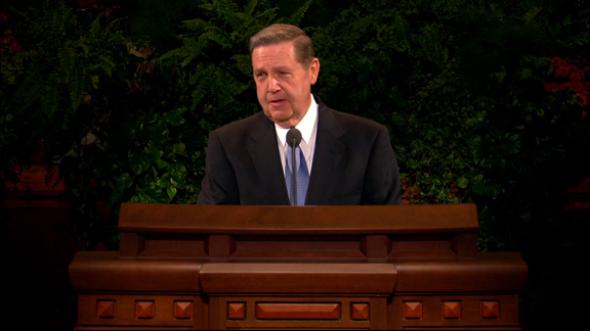
In his 2014 General Conference address, “Are We Not All Beggars,” Elder Jeffrey R. Holland reminds us that in announcing the focus of his ministry, Jesus proclaimed, “The Spirit of the Lord is upon me, because he hath anointed me to preach the gospel to the poor; he hath sent me to heal the brokenhearted, to preach deliverance to the captives, and … set at liberty them that are bruised” (Luke 4:18). Elder Holland says, “Jesus’s first and foremost messianic duty would be to bless the poor, including the poor in spirit. . . . From the beginning of His ministry, Jesus loved the impoverished and the disadvantaged in an extraordinary way.”[i]
It is interesting to note that the final lesson Jesus teaches his apostles not only echoes his first but also represents a culmination of all he has been trying to teach them (and by extension, all his followers). This particular episode is found only in the gospel of John (21:1-19*). Significantly, it takes place at the Sea of Galilee, a prominent location of several previous teaching episodes, including Jesus’ calming the turbulent seas during a storm and Peter’s impetuous attempt to walk upon the surface of the sea.
As Todd Bolen explains, “According to the gospels, Jesus’ earthly ministry centered around the Sea of Galilee. While important events occurred in Jerusalem, the Lord spent most of the three years of His ministry along the shores of this freshwater lake. Here he gave more than half of His parables and here He performed most of his miracles.”[ii] The area around Galilee is also the location of important cities in the Lord’s life, including Capernaum, the place of his habitation when he began his ministry (called by Matthew “his own city”) and the home of Peter, Andrew and Matthew; and Bethsaida (“house of fish” or “house of fishers”[iii]). On this occasion, the disciples, perhaps somewhat disoriented by recent events and uncertain as to their future life without the physical presence of Jesus, return to their home on the shores of Galilee and decide to go fishing. In the account, Peter declares, “I am going out fishing,” to which his fellow apostles respond, “We will go with you.”
The narrative suggests that in spite of fishing all night, by morning they have not caught any fish. As they bring their boat toward the shore, they notice Jesus watching them (although their uncertainty that it’s him prevents them from declaring this with assurance).
He asks, “Friends, have you caught anything?” They respond that they haven’t. Jesus then says, “Shoot the net to starboard, and you will make a catch.” Following his command, they find the net immediately filled to overflowing with more than a hundred and fifty fish. Since Jesus had performed a similar miracle earlier (Luke 5:4-7), it may be that his doing so now is to remind them of the time when he first called them to follow him. Perhaps this similarity is what causes John to exclaim, “It is the Lord!” True to his personality, Peter immediately plunges into the sea and hauls the net full of fish to the shore.
Then comes the great teaching: Jesus has built a fire and prepared a breakfast of bread and fish for his chosen apostles showing them once more that those called to lead must be servants, not masters. Although he has already prepared the meal, he invites them, “Bring some of the fish you have caught.” They are aware, especially after a night of fruitless fishing, that it is Jesus, not they, who is responsible for the harvest of fish, yet graciously, he gives them the credit. He then invites them, “Come and have breakfast.” Note that while they have been laboring through the night, Jesus has taken care to build a fire and find bread and fish for them to eat. That he does more than invite them to sit down and eat is seen in the careful phrasing, “Jesus took the bread and gave it to them, and the fish in the same way.” In other words, he is acting as a gracious host.
As soon as they have eaten their fill, Jesus turns to his chief apostle and asks, “Simon son of John, do you truly love me more than these?” “Truly love,” as the NIV commentary states “refers to a love in which the entire personality, including the will, is involved.”[iv] Scholars have puzzled for centuries over the antecedent of the ambiguous “these.” Is the question, “Do you love me more than these (other apostles) love me?”; “Do you love me more than you love these (other apostles)?” or, perhaps more likely, “Do you love me more than you love these things—including this meal and extra fish I have just provided for you—or perhaps even the world itself?”
Whatever his understanding, Peter answers declarative, “Yes, Lord, I love you.” Jesus responds to this affirmation with an imperative: “Feed my lambs.” Immediately, however, he asks the same question. “Simon son of John, do you love me?” Perhaps thinking that Jesus has not heard his initial response, Peter repeats, “Yes, Lord, you know that I love you.” Jesus then gives a similar but not identical command: “Take care of my sheep [or flock].” Inexplicably, Jesus asks the question a third time, “Simon son of John, do you love me?” Hurt by the insistence of the question, Peter responds defensively: “Lord, you know all things; you know that I love you.” Once more, Jesus gives a similar but not identical command, “Feed my sheep.”
What’s going on here? We need to remind ourselves both of what a great teacher Jesus is and how he teaches through the skillful use of rhetoric, symbolism, imagery, irony and dramatic tension. It is telling that Jesus refers to his chief apostle by his original name, “Simon” (meaning “hearing”) and not by the new name, “Peter” (meaning “rock” or “stone”) Jesus had given him when, along with James and John, he was called to the Savior’s ministry.
The context implies that Jesus may be suggesting to Peter that Peter hasn’t been listening/hearing what Jesus has been trying to teach him. That is, before he was called from his fishing nets, Peter may have been more open than he is now to Jesus’ essential message regarding the poor; it may also be that Jesus intends to humble Peter, to let him know, especially in light of his recent denials of the Lord, that he has fallen short of being the Rock Jesus needs to lead his church.
Also of note is that not only is this the third time Jesus has appeared to his disciples following his resurrection (John 21:14), but that his three questions echo the questions asked of Peter the night of his betrayal and his repeated denials. They also reveal Jesus’ kindness and mercy in giving Peter a chance to redeem himself from his earlier denials since Peter’s repeated “I love you” affirms what his earlier denials had conveyed. Ultimately, the three interrogatives can be summarized as follows: “Do you really understand what loving me means? You will soon be responsible for leading the Church, will represent me on earth and will be charged with teaching others my gospel, including feeding the hungry and caring for the poor. Eventually, you will be put to death for my cause. Therefore, my question to you is, ‘Do you really love me?’”

If Peter’s answer is “Yes,” and if ours is as well, then Jesus’ final command while on earth–“Follow me”–is intended for the saints in both the ancient and the modern church to do as Jesus commands Peter. What is Jesus really saying to Peter and to us? Essentially, I think it is what Peter has missed and what most of us miss: “Peter, I have just fed you and I have provided enough fish for you to feed many others. What are you going to do with all this fish?” Peter, having had his own hunger satisfied, seems to have forgotten the bounty with which he and his fellow disciples have been blessed. He doesn’t ask, as we might expect he would after watching Jesus ministering to the poor for three years, “Lord, to whom shall we give these extra fish?” Apparently, he is no longer even aware of this bounty.
To those of us living in the modern developed-world church, I think Jesus is saying something similar: “I have blessed you with enormous wealth. You live in large houses more spacious than you need and often some of your bedrooms lie empty; you drive expensive cars and pass by the poor on roads and byways. You eat three meals (or more) a day and your larders and pantries are fully stocked. You have enormous freedom of movement and choice. You have more of everything than you actually need and have more luxuries than any previous generation in history. What do you intend to do with all of these things? Do you love me enough to follow me and give generously to the poor?”
Of course, some of us not only do not think of sharing our abundance with others beyond what the Church asks in tithes and offerings, we somehow think we deserve that abundance and may believe that much of what we enjoy is the result of our own industry and our reward for living righteously. We seem to forget that in our time the Church has added a fourth essential mission to its raison d’etre: “To care for the poor and needy.” Many of us have the other missions (to preach the gospel, to redeem the dead, and to perfect the saints) written indelibly in our hearts, unaware that the third cannot be possible without the fourth.
What we seem not to have internalized is that with us God is neither ungenerous nor parsimonious. To those who are thirsty, the Lord does not just offer a drink of water; to land that is parched, he doesn’t just send a little rain; and to souls in need of blessings he does not speak just a few perfunctory words. As he says to Israel, “For I will pour water upon him that is thirsty, and floods upon the dry ground: I will pour my spirit upon thy seed, and my blessing upon thy offspring” (Isaiah 44:2). “To pour” means “to stream or flow continuously or profusely.”[v] Such gracious, abundant overflowing is characteristic of God’s gifts to us. As the poet Robert Herrick expresses it:
God’s hands are round and smooth, that gifts may fall
Freely from them and hold none back at all.[vi]
It is significant that in this last great teaching Jesus uses two different words for love—in Greek, agape (what Paul calls “charity” and Moroni calls “the pure love of Christ”) and philia (“which implies affinity, friendship, and fondness”[vii]). Both are necessary for true disciples. It is also significant that Jesus tells Peter to feed both the lambs (children) and the sheep (adults).
That he first says “lambs” suggests that our primary focus should be on feeding (literally and spiritually) children since they are the most vulnerable and then turn our attention to feeding and caring for adults. That he intends actual feeding (Gk boske, meaning literally “be-herbing”) is clear from his use of that word twice (once in relation to lambs and once in relation to sheep); also, that he intends more than literal feeding is seen in the other word he uses (poimaine, “be-sheperding,” translated variously into English as “tend” “care for” and “shepherd”).
In his conference address, Elder Holland states, “Down through history, poverty has been one of humankind’s greatest and most widespread challenges. Its obvious toll is usually physical, but the spiritual and emotional damage it can bring may be even more debilitating. In any case, the great Redeemer has issued no more persistent a call than for us to join Him in lifting this burden from the people. As Jehovah, He said He would judge the house of Israel harshly because ‘the spoil of the [needy] is in your houses.’”[viii]
Those of us in the modern church, members as well as leaders, need to imagine Jesus’ questions to Peter as directed to us, individually and collectively: “Is the wealth with which I have blessed you and the Church truly being given to the poor and needy in as great a measure as possible? Are there any malnourished children among you? Are there any brothers and sisters who go to bed hungry night after night? If so, are you feeding them?
Are there any naked among you? If so, are you clothing them? Are you providing shelter for the homeless?” It is of course the same great and disturbing teaching Jesus gives in the twenty-fifth chapter of Matthew: “Inasmuch as you have done it, or not done it unto the least of these, my brothers and sisters, you have done it or not done it unto me.” As Francisco Goldman summarizes, “The great metaphor at the heart of the Gospel According to Saint Matthew is that those who suffer and those who show love for those who suffer are joined through suffering and grace to Jesus Christ.”[ix]
As in most of Jesus’ teachings, symbolism is important in this narrative. The fish is an ancient symbol found in most of the world’s religious as well as secular traditions. In the Judeo-Christian tradition, “fish” stand for many things: procreation, fertility, wisdom, regeneration, and evangelism (“fishers of men and women”). The Greek word for fish (ichthus) is an anagram for Jesu Cristos Theou Uios Soter (“Jesus Christ God’s Son Saviour”) and was the symbol by which early Christians identified one another; thus, it is a prime symbol of Christ himself.
Even further, as the Penguin Dictionary of Symbols states, “Since fish was also a food eaten by the risen Christ [Luke 24:42], it became a symbol of the Eucharistic feast and is often depicted alongside bread,”[x] as it is in this episode from John. Consider the possibility that Jesus is linking this last meal which he serves to his disciples with his Last Supper, suggesting that the bread and fish of this occasion are to remind his disciples (and us) not only of his great atoning sacrifice but also that partaking of the food he imparts to them constitutes a reminder of the covenant they have made (and that we make weekly) to follow Jesus, including ministering to the poor.
By feeding them breakfast, he also intends to remind them that their responsibility for those caught in the gospel net does not end with conversion—they are also to care for and nurture them. That Jesus intends his disciples to make the connection between literal and figurative fishing is seen in his earlier promise to Peter, “Fear not; from thenceforth thou shalt catch men” (Luke 5:10). Also, his use of both bread and fish in this episode can’t help but remind the apostles of the miracle of feeding the five thousand, which also took place near the Sea of Galilee (Matt 14:13-21). He might be suggesting that while that feeding from five loaves and two fish required a miracle, dispensing the extra fish to the poor, which they have received through no effort of their own, requires only their minimal effort.
In the work my colleagues and I do for the Liahona Children’s Foundation, whose primary mission is to address malnutrition among Latter-day Saint children, we often encounter the sentiment that giving food to children is tantamount to making them dependent and therefore counter to the Church’s emphasis on teaching self-reliance. My response is that, by divine design, children are dependent on adults to care of them precisely because they cannot take care of themselves.
God has so designed his plan so that as adults we might learn to sacrifice and serve by taking care of our own and others’ children. When people insist that teaching self-reliance to such children is paramount, my usual response is that the best way to teach self-reliance to children is to keep them alive long enough so they will understand what self-reliance means! Those who denigrate the parents of these children as being irresponsible have not looked into the faces of these parents to know both how desperately they wish they had the means to care for their own children and how grateful they are to the saints who contribute through tithes and offerings to the Church as well as through contributions to foundations like Liahona.
Elder Holland states it precisely: “Now, lest I be accused of proposing quixotic global social programs or of endorsing panhandling as a growth industry, I reassure you that my reverence for principles of industry, thrift, self-reliance, and ambition is as strong as that of any man or woman alive. We are always expected to help ourselves before we seek help from others. Furthermore, I don’t know exactly how each of you should fulfill your obligation to those who do not or cannot always help themselves. But I know that God knows, and He will help you and guide you in compassionate acts of discipleship if you are conscientiously wanting and praying and looking for ways to keep a commandment He has given us again and again”[xi] (emphasis added). Jesus is not saying to us, as he said the rich young man, “Go, sell everything you have and give to the poor, and you will have treasure in heaven. Then come, follow me.” He is, as Elder Holland suggests, asking us to do something and will help and guide us to know what that is “if [we] are conscientiously wanting and praying and looking for ways to keep a commandment He has given us again and again” (emphasis added).
I like to think that after Jesus’ questions and commands and his ultimate, “Follow me,” Peter finally understood what Jesus was trying to teach him and called to the other apostles to help him gather up the excess fish and deliver it to the poor. My reason for imagining such a conclusion is not only Peter’s faith and courage that resulted in his later crucifixion at Rome, but also the evidence in his First General Epistle to the Church that suggests he had internalized Jesus’ last teaching and taught it to the members. He wrote, “Now that you have purified yourselves by obeying the truth so that you have sincere love for each other, love one another deeply, from the heart (1:22). . . . Offer hospitality to one another without grumbling. Each of you should use whatever gift you have received to serve others, as faithful stewards of God’s grace in its various forms (4:8-10). . . . Be shepherds of God’s flock that is under your care, watching over them—not because you must, but because you are willing, as God wants you to be; . . . [be] eager to serve; not lording it over those entrusted to you, but being examples to the flock” (5:2-3).
That last great teaching may also be the ultimate challenge to the Restored Church. As Elder Holland says at the conclusion of his masterful address, “In an 1831 revelation to the Prophet Joseph Smith, the Lord said the poor would one day see the kingdom of God coming to deliver them ‘in power and great glory.’ May we help fulfill that prophecy by coming in the power and glory of our membership in the true Church of Jesus Christ to do what we can to deliver any we can from the poverty that holds them captive and destroys so many of their dreams.”
*The phraseology in this paper is taken, variously, from the King James, New English, and New International versions of John.
[i] https://www.lds.org/general-conference/2014/10/are-we-not-all-beggars?lang=eng.
[ii] Todd Bolen, “Jesus and the Sea of Galilee,” Bible and Spade (Fall, 2003),
https://www.biblearchaeology.org/post/2009/03/jesus-and-the-sea-of-galilee.aspx#Article.
[iii] “Bible Dictionary,“ The Holy Bible (Salt Lake City: LDS Church, 1986), 621.
[iv] New International Version (Grand Rapids, MI: Zondervan, 1995), 2121.
[v] https://www.thefreedictionary.com/pour.
[vi] https://www.public-domain-poetry.com/robert-herrick/gods-hands-19580
[vii] Merrill C. Tenney, “John,” NIV Bible Commentary, Vol 2 (Grand Rapids, MI: 1994), 373.
[viii] https://www.lds.org/general-conference/2014/10/are-we-not-all-beggars?lang=eng.
[ix] “Introduction” to The Gospel According to Matthew, Pocket Canon Bible (New York: Grove Press, 1999), xv.
[x] Jean Chevalier and Alain Gheerbrant, trans from the French by John Buchanan-Brown (London: Penguin, 1996), 383-84.
[xi] https://www.lds.org/general-conference/2014/10/are-we-not-all-beggars?lang=eng.

FEATURES