




Miracles in the Waiting
This was originally published by Public Square Magazine. To read more from them, CLICK HERE.
When I was thirteen, my father and I would watch Saturday morning cartoons. It was like a comforting ritual. It was on one of those quiet, gentle mornings that my world was shattered. There was a pound on the door. I opened it and was surprised to find officers with weapons drawn, the air thick with confusion and accusation. Together we woke the rest of the family. Together we watched strangers go through our home. It was not long after that my father was arrested.
For four long years, the courthouse became my second home. Week after week I sat on wooden benches, praying my father would not be swallowed by a witch hunt of lies. And then, one summer afternoon, the world became still. The jury declared him guilty of a crime he did not commit. I left the courtroom without saying goodbye.
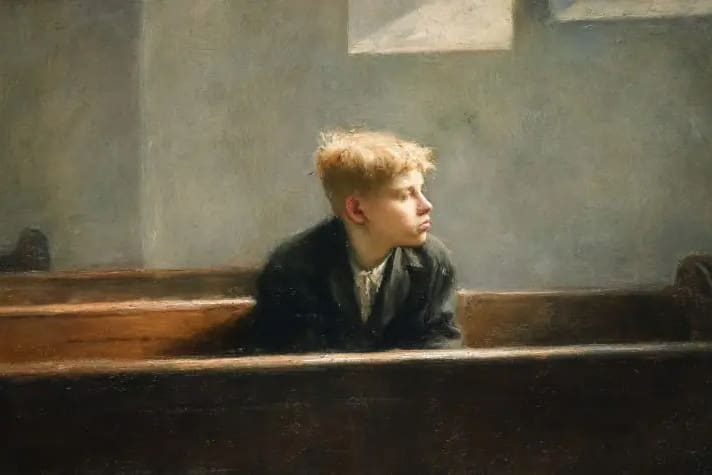
A few weeks later, I sat in church, trying to do anything to fill the void in my heart. A teenage girl—about my age—was speaking to the congregation about the power of God to answer prayers. She spoke about how she lost her keys, searched everywhere, and finally prayed to know where her keys were. “As soon as I prayed,” she said, “I knew exactly where they were.”
I remember sitting there absolutely stunned. My father had been convicted and sentenced just days before, after years of prayers. Why had heaven opened for her but not for me? Surely a set of keys was not more deserving than a boy in need of a father. Was her need somehow greater than mine?
Why does God answer some prayers and not others? Why did Christ heal one soul but walk past another? Why does relief come to some but not to me, even when I know He can give it? These are mysteries I do not pretend to solve.
Could it be, however, that the mystery itself is a whisper of grace—the quiet grace that sustains us while we wait for the answer to such questions? As we wait for our own “miracle”?
Why had heaven opened for her but not for me?
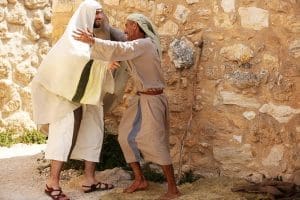
Scripture is chock full of miracles. One of my favorites is the healing of the woman with an issue of blood. We celebrate the moment she touched Christ’s garment and was healed as a miracle. Rightfully so. But if we read too quickly, we miss the first miracle—the miracle that actually made the second possible. She waited. Twelve long years she waited. Twelve years of loss, exhaustion, and likely pleading with heaven, asking, “Why not now?” Bitterness could have understandably taken root. Yet when her moment came, she was not hardened. She still believed. She still approached the Savior and reached. Her waiting had not destroyed her; it had prepared her.
She waited twelve years. Joseph waited thirteen years in slavery and prison. Abraham waited twenty-five years for Isaac. Moses waited forty years to reach the promised land—and died before entering. Adam waited one hundred and thirty years for Seth after losing Abel by the hand of Cain. The woman at the well waited through five husbands before meeting the Messiah and finally feeling seen. I waited four years for my father.
It seems that the Lord has always asked His children to wait. Why would we be an exception?
What are we doing to protect the sacred time we are given while waiting?
The idea of waiting through seemingly unanswered prayers is woven into the path of every disciple. If we pay attention, we begin to see that “waiting on the Lord” is itself a great miracle, like the parting of the Red Sea. In my own life, as I waited for my father’s innocence to be restored, I felt Christ carry me from day to day. The miracle I longed for never came—but a different one did, one more precious to me now. In the waiting, I learned who God was. In the waiting, He found me. In the waiting, He pulled me from dark depths, sustained me, and pushed me back home. How many miracles do we overlook because we are looking for a different one?
Hebrew has a beautiful way of providing new insights into words and meanings. I am no linguist, just a student, but one Hebrew word for “wait” is qavah. It appears in the psalmist’s cry, “Let none that wait on thee be ashamed.” The same root word can also mean “expect” and is often associated with tension-filled waiting for the expected promises of the Lord to be fulfilled. For example, Isaiah uses qavah to foreshadow the long-awaited gathering of Israel, “I will wait for the Lord, who is hiding His face from the house of Jacob, and I will put my trust in Him.” (Isaiah 8:17). The word is derived from a concept of binding two things together in a cord, pulled tight with expectation and anticipation. We are able to wait on the Lord for salvation, or healing, or redemption, or whatever it is we are waiting for because those specific concepts are concomitant with the promises of God. We cannot have healing without the Healer, or salvation without the Savior, or redemption without the Redeemer. Qavah is not the uncertainty of wondering if something will happen, but the quiet assurance that it will.
Another Hebrew word for “wait” is yachal—often translated to “hope.” It is the word used by Job in his famous lament, “Though He slay me, yet will I hope in Him.” (Job 13:15). The connection between waiting and hoping amidst suffering paints a picture of responsibility. Hope is not merely the denial of suffering, but the denial of despair amidst suffering. We must guard the sacred time we spend waiting, protecting the heart from bitterness and bolstering our faith until the dawn of our miracle comes. One’s integrity does not shine until it is tested. The time to shine is in the waiting. So, what are we doing to protect the sacred time we are given while waiting?
The woman with the issue of blood waited in this way. She took responsibility for her waiting. She did not let resentment in, like poison. She protected the fragile place between promise and fulfillment, and when the Savior walked by, she was ready. Waiting, then, mustn’t be a passive suspension of time but a deliberate intention of the soul. Whether we think of qavah—the expectation of God’s promises—or yachal—hope amidst suffering—we discover that waiting is itself a form of discipleship. It is the space where character is shaped, where trust is tested, and where our deepest commitments are revealed. We wait not because we are uncertain, but because we are tethered to something sure, the sure foundation of a promise made by Christ. In the quiet stretch between promise and fulfillment, we learn who we are becoming. And perhaps that is the quiet miracle of waiting: it gathers us, guards us, and prepares us to become the person we were always meant to become.
The Theology of Second Chances

We speak of repentance as if it arrives in a single clean moment, a decisive turn, a line crossed once and never revisited. Life rarely cooperates. Most people do not step from weakness into strength in one motion. They circle. They stall. They make gains, then lose ground, then try again with quieter resolve. The doctrine of redemption meets them there, not at a finish line, but along a road walked in loops.
A second chance suggests a reset, a fresh start with no residue from the past. Lived experience offers something different. Old habits linger. Patterns resurface under stress. A person kneels, commits, rises with hope, then discovers familiar impulses waiting just ahead. Discouragement whispers, you have been here before. Faith answers, then return again.
Scripture supports this slower rhythm more often than we admit. Consider Alma the Younger. His conversion arrives with force, yet his ministry unfolds over years filled with labor, correction, and endurance. He worries over his people, wrestles with his own limitations, and continues the work. A dramatic beginning does not eliminate the need for steady continuation.
Or take Nephi, who builds a ship after repeated attempts, each step met with resistance from brothers who doubt and undermine. Progress comes in increments, one piece of timber, one act of obedience at a time. The record does not present a flawless ascent. It shows persistence under pressure.
Even Enos offers a quieter pattern. His prayer stretches through a day and into the night. Assurance arrives, yet his concern expands outward, first for his own soul, then for his people, then for future generations. Redemption begins within and grows through continued seeking.
The New Testament provides similar texture. Peter denies the Savior in a moment of fear. No lightning strikes him down. No immediate restoration scene resolves his failure. He weeps, he returns to work, and over time becomes a pillar in the early church. His story unfolds as a series of returns, not a single reversal.
These accounts invite a broader view of grace. Instead of a one-time event, grace operates as ongoing assistance, a steady current beneath daily effort. It meets a person at each attempt, not only at the successful one. When someone stumbles over familiar ground, grace does not withdraw in disappointment. It invites another step forward.
This understanding alters how we view repeated struggle. Shame insists repetition proves insincerity. The gospel offers another reading. Repetition can signal persistence. A person who continues to come back, who continues to pray, who continues to try despite failure, demonstrates a kind of loyalty to the covenant path. Progress may appear uneven, yet direction still matters.
There is also a practical wisdom in small gains. Grand transformations draw attention, yet most change occurs in quiet adjustments. A harsh word held back. A temptation resisted for one more hour. A choice to apologize instead of defend. These moments rarely receive applause. They build capacity. Over time, they reshape character.
Community plays a role as well. Wards and families often celebrate visible milestones, baptisms, callings, achievements. The quieter victories can pass unnoticed. A more generous culture of discipleship recognizes effort, not just outcomes. It allows space for imperfect growth. It offers encouragement without pretending weakness has vanished.
This perspective does not excuse sin. It does not suggest complacency. It calls for continued effort with a longer view. Repentance remains a turning, yet many turns may be required along the same stretch of road. Each turn matters. Each return strengthens spiritual muscle.
The Savior’s ministry illustrates patience with those who struggled repeatedly. He taught, corrected, invited, and walked alongside disciples who misunderstood, argued, and faltered. He did not abandon them for slow progress. He invested in them, trusting growth would come through continued engagement.
For modern disciples, this theology offers relief without lowering expectations. It acknowledges difficulty while maintaining direction. A person need not pretend perfection to remain on the path. Honest effort becomes the measure. Willingness to begin again becomes a sign of faith, not failure.
There is a quiet dignity in the long return. It belongs to those who rise after disappointment, who kneel after another misstep, who choose to try again without certainty of success. Their stories may lack dramatic turns. They carry weight through persistence.
Second chances, then, do not arrive once. They appear as often as a person chooses to return. Redemption functions not only in moments of crisis, but in daily decisions to keep moving, to keep believing, to keep aligning life with covenant promises. Grace meets each step, steady and available, asking for one more effort, one more return, one more beginning.
Mental Health Minute – Come Listen to a Prophet’s Voice
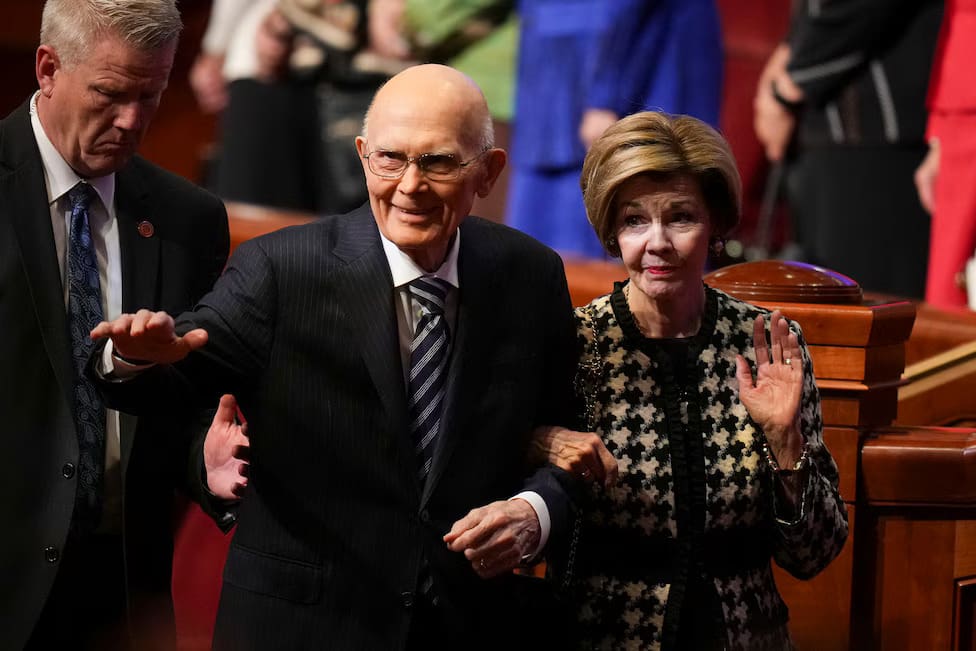
Elder Jeffrey R. Holland welcomed us to General Conference in October 2019. He reminded us of the purpose of conference: “Sisters and brothers, through the incessant din and drumbeat of our day, may we strive to see Christ at the center of our lives, of our faith, and of our service. That is where true meaning lies. And if some days our vision is limited or our confidence has waned or our belief is being tested and refined—as surely it will be—may we then cry out the louder, “Jesus, thou son of David, have mercy on me.” I promise with apostolic fervor and prophetic conviction that He will hear you and will say, soon or late, “Receive thy sight: thy faith hath saved thee.”
In April 2019, Elder Ulisses Soares testified: “we will have the privilege of hearing the voice of our Savior, Jesus Christ, through the teachings of those who pray, sing, and speak to the needs of our day in this conference.”
Elder Dieter F. Uchtdorf opened General Conference in October 2018. “The Savior extends His hand to you. And, as He did to those fishermen who stood long ago on the banks of the Sea of Galilee, with infinite love He speaks to you: “Come, follow me.”
“If you will hear Him, He will speak to you this very day.”
“When you walk the path of discipleship—when you move toward Heavenly Father—there is something within you that will confirm that you have heard the call of the Savior and set your heart toward the light. It will tell you that you are on the right path …”
In April 2020, our dear prophet President Russell M. Nelson encouraged us: “We are to seek, in every way we can, to hear Jesus Christ, who speaks to us through the power and ministering of the Holy Ghost.”
“The purpose of this and every general conference is to help us to hear Him. We have prayed, and invite you to pray, that the Spirit of the Lord will be with us in such rich abundance that you can hear the messages that the Savior has especially for you—messages that will bring peace to your soul. Messages that will heal your broken heart. Messages that will illuminate your mind. Messages that will help you know what to do as you move ahead through times of turmoil and trial.”
As we prepare for General Conference this weekend, write down your questions and concerns, then listen carefully as the Lord, through the power of the Holy Ghost, provides you answers and guides you in a very loving and personal way for your unique and individual needs.
May this General Conference bring us closer to Christ as we strive to hear Him and serve Him even as we invite others to come unto Him and receive all the blessings of His restored gospel.
Elder Cook to BYU Students: Follow the Prophets to Navigate the World of AI
To read more from Larry Richman, Visit Here.
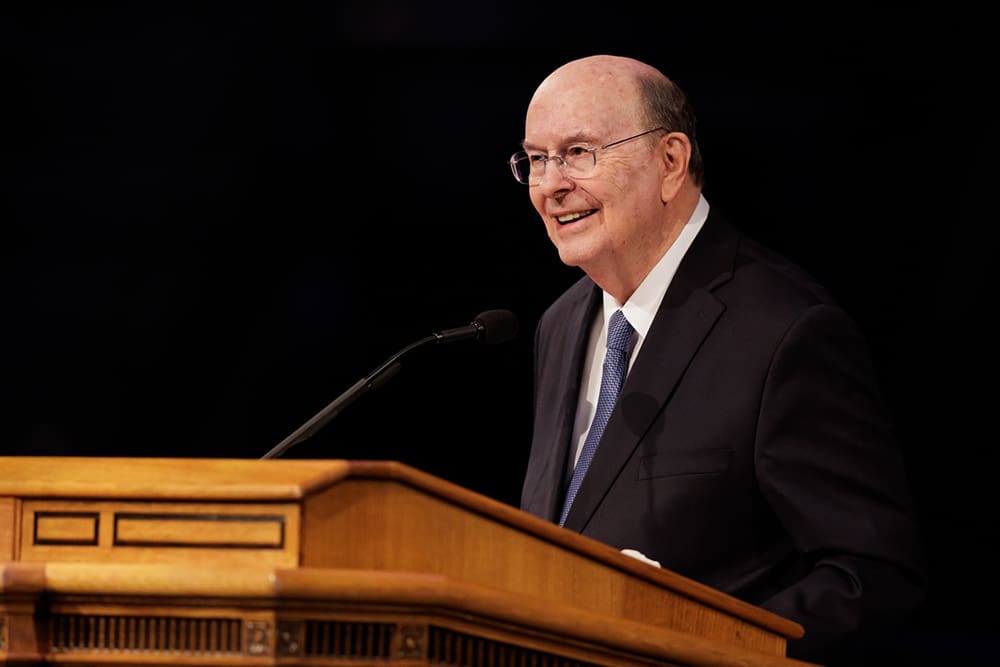
Elder Quentin L. Cook challenged Brigham Young University students this week to increase their spirituality to better navigate the world of artificial intelligence.
In his devotional address, Elder Cook said, “choose truth when deception is easy. Slow down enough to listen to the Spirit and allow Him to direct you. We must all learn to use technology as a servant, not a master. The future of the Church and our very civilization depend on members and individuals who have deep faith, moral courage, and the ability to navigate an increasingly complex world.”
Elder Cook gave his counsel in the context of the accelerating shift now underway in society. He noted that BYU’s 150‑year history has spanned the agricultural, industrial, and information ages — and that today we are moving into the artificial intelligence age. This new era is marked not just by advanced computing power but by systems and algorithms capable of influencing attention, belief, and behavior. He said that these conditions heighten the need for discipleship rooted in spiritual clarity and moral agency.
He explained that technology can help advance the Lord’s work when used under the influence of the Spirit, but when used incorrectly, it can magnify confusion or compromise spiritual sensitivity.
Watch Elder Cook’s talk in the video below:
Hope Is Not Wishful Thinking—It Is Power Anchored in Christ

Recently, in the midst of a difficult experience meant to refine rather than comfort, I was surprised to feel hope. This unexpected awareness helped me recognize the source of what I was feeling—my testimony of Jesus Christ and the covenants and promises which shape my personal relationship with Him. The hope I felt did not remove the challenge, but it turned me toward Christ and opened my heart to what He was teaching me. Rather than eliminating hardship, hope gave it context and direction. It reminded me spiritual growth often begins not with relief, but with trust.
Hope is not a decorative virtue in the gospel of Jesus Christ. For members of The Church of Jesus Christ of Latter-day Saints, hope is a living spiritual force. It sustains faith, strengthens obedience, and steadies the soul when life feels uncertain. It reaches far beyond optimism or positive thinking. Gospel hope is rooted in Jesus Christ and in the promises made possible through His Atonement and Resurrection. It nourishes spiritual health in deeply personal ways and provides perspective and courage during seasons of upheaval.
Latter-day Saint teachings consistently place hope alongside faith and charity as essential to discipleship. When hope weakens, faith often falters, and charity can begin to fade. When hope is alive, discipleship becomes resilient and active. Hope allows us to trust God even when outcomes remain unclear. It anchors the heart to eternal truth when mortal circumstances feel fragile. This kind of hope does not deny pain. It acknowledges hardship while affirming God is present and purposeful.
On a personal level, hope shapes how we understand ourselves and our relationship with Heavenly Father. Many spiritual struggles are rooted in discouragement or fear. Hope gently counters those forces by affirming divine worth and future possibility. It whispers growth is still possible, forgiveness is real, and progress continues even when our steps feel small. This is the same hope that, in moments of personal trial, turns us toward Christ rather than inward toward despair. It sustains prayer when answers seem delayed and strengthens covenant keeping when obedience feels costly.
Hope also protects spiritual health by giving meaning to suffering. Trials can distort perspective, making problems feel permanent and identity feel diminished. Hope restores balance by pointing beyond the present moment. It invites us to see adversity as part of mortal learning rather than evidence of abandonment. This does not minimize pain, but it prevents despair from taking root. A hopeful heart remains open to instruction, correction, and divine guidance.
The Book of Mormon repeatedly links hope with movement. Disciples are taught to press forward with steadfastness in Christ and a brightness of hope. This image suggests progress rather than paralysis. Hope motivates action. It inspires repentance, service, and perseverance. It encourages continued trust even when the road ahead is unclear. In this way, hope becomes an expression of faith rather than a substitute for it.
Hope also deepens charity. When we believe God is still at work in our lives, we become more willing to extend grace to others. Hope widens perspective and softens judgment. It allows us to see people not only as they are, but as they may become through Christ. This outlook nurtures compassion and patience, strengthening families, wards, and communities.
Beyond the personal sphere, hope plays a vital role during times of global upheaval. War, natural disasters, social division, and economic uncertainty can leave many feeling anxious and exhausted. In moments like these, hope becomes a stabilizing influence. It grounds us in the plan of salvation and affirms history is neither random nor abandoned. God’s purposes continue even amid confusion and chaos.
This broader hope encourages engagement rather than retreat. Trusting God’s plan does not excuse inaction—it invites responsibility. Hope motivates service, generosity, and peacemaking. It moves us to lift burdens, comfort the grieving, and participate in healing wherever we can. It fuels the conviction small acts of goodness still matter.
Hope also protects us from fear-based discipleship. Fear narrows vision and isolates. Hope expands vision and strengthens connection. It allows us to face uncertainty without surrendering to cynicism or panic. This steadiness becomes a quiet witness of faith to a world desperate for reassurance.
The doctrine of the Resurrection gives particular power to Latter-day Saint hope. It teaches loss is not final and death does not have ultimate authority. This belief shapes how we experience grief and suffering. It does not remove sorrow, but it fills sorrow with expectation. The promise of restoration allows us to mourn with faith rather than despair.
Ultimately, hope keeps our focus on Christ. When hope is anchored in Him, it does not rise and fall with worldly conditions. It rests on His character, His promises, and His victory over sin and death.
The same hope steadies us in personal trials, sustains us in uncertain times, and draws us toward light rather than fear.
In an unstable world, hope remains a sacred, covenant-shaped gift. It sustains individuals through private trials and empowers communities to respond with compassion and courage. For disciples of Jesus Christ, hope is not passive—it is a commitment to trust God and move forward in faith. It strengthens the soul, enriches discipleship, and quietly testifies God is still at work—both within us and across the world.
Why a God of Order Would Ask Us to Take On the Chaos of Motherhood

Why does it feel like no matter how hard we work, everything keeps falling apart? The laundry reappears, the mess returns, the order never lasts — and sometimes the chaos isn’t just around us, but inside us. In this episode, we explore the law of entropy and what it teaches us about motherhood, mortality, and discipleship. Through scripture, ancient symbolism, and deeply personal stories, we look at water as a symbol of chaos, destruction, and rebirth — and at Jesus Christ as the One who divides the waters, carries us through the flood, and transforms disorder into peace. This is a conversation for anyone who feels overwhelmed, undone, or worn down — and is searching for a Savior who knows how to make a way through the deepest waters of life.
Church Communications in Times of Crisis
This was originally published by Public Square Magazine. To read more from them, CLICK HERE.
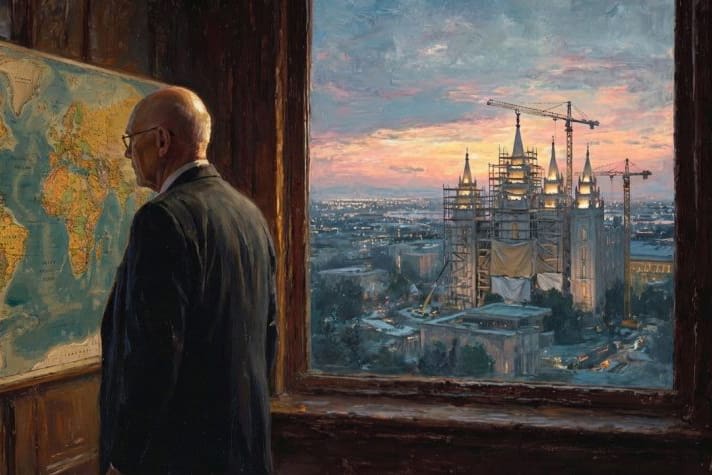
When injustice strikes, will The Church of Jesus Christ of Latter-day Saints speak out?
This question is swirling around the internet in light of recent actions by U.S. Immigration and Customs Enforcement (ICE) officials in Minnesota. Among the most troubling of those actions is the killing of two U.S. citizens by ICE agents in recent weeks, which has sparked protests across the country. Many are deeply concerned about the humanity of ICE’s tactics—and some are questioning the agency’s very existence.
Amid the deaths and pervasive fear and upheaval in Minnesota, many are asking where the Church’s response is. The Church has significant membership in Minnesota and even a temple near St. Paul. Are the Minnesotan Saints forgotten?
Locally, the Church has spoken to the issue.
Locally, the Church has spoken to the issue. As reported by the Salt Lake Tribune, Area Seventy Corbin Coombs wrote to local leaders, urging them to encourage their members to join an interfaith fast of unity and prayer for their community. Local meetings have focused on how disciples should help each other and their communities in this difficult time.
But still, why nothing from Headquarters?
A Global Church
As the Church becomes increasingly global, it appears to be pursuing a kind of institutional federalism, in which announcements are made locally on matters pertaining to those regions. We saw this recently when an area presidency member announced to a congregation of members of the Portland Maine Stake that a new temple would be built near them. President Oaks later stated that he received a strong impression after he assumed leadership of the Church that temples should be announced where they will be built.
The pattern of local announcement recently followed in Canada, when leaders of the Canada Area issued a statement on a proposed Canadian bill that would have jeopardized religious freedom.
And in Minnesota, the pattern followed suit: area leadership communicated messages to the local congregations pertaining to the situation there.
In many ways, this emerging local approach makes much more sense for a global church. As Elder Gong pointed out in the most recent General Conference, “Every Sabbath, members and friends from 195 birth countries and territories gather in 31,916 Church congregations.” Expecting Church Headquarters to comment on every issue facing congregants with ties to 195 countries is simply unrealistic. But the lack of a formal statement does not mean that the leaders do not deeply care. Their care tends to be shown, however, through ministry and ecclesiastical teaching, rather than PR.
The local approach also helps to avoid a form of parochialism, where American Latter-day Saints see their most pressing issues addressed by Church Headquarters, but members from other countries do not. It is true that, in the past, the Church has spoken more frequently on domestic issues, including a statement on immigration as recent as last year. This has made us think of the Church as an American institution, and we expect it to speak to our American issues. While it may seem strange, even wrong, not to have a statement on Minnesota, you could say the same for any number of situations in other countries. For example, should the Church have made a statement about the Iranian protests? About the Sudanese Civil War? About the ongoing oppression of minorities in China?
Many Latter-day Saints live in countries with rampant government corruption and state-perpetrated injustices. If Headquarters comments on American issues, but says nothing about the pressing issues in other countries, what message does it send to non-American Saints? Are their challenges not as important? While American issues are real and significant, we must not assume that they command more attention or concern than the issues of our brothers and sisters in other countries simply because Church Headquarters are in the U.S. As we shift our understanding of the Church as an American institution to a global one, we will likely face the reality, however uncomfortable, that fewer American issues are addressed by Church Headquarters.
On Speaking Out Generally
We often want the Church to be an espouser of moral clarity in our troubled political climate. We want the Church to do it all—save us from this life, and from the next.
That mission calls for different priorities.
And yet even Jesus, the prophesied Davidic King, who “came to preach deliverance to the captives” and to “set at liberty them that are bruised”—even He did not go after the Roman imperial order. Why did he not do more to protest the wrongs of the Romans? Why did he not speak up more about the injustice they perpetrated?
Was his silence complicity? Or was His mission altogether something else?
To say that Jesus did not speak out is not to say that He was passive. Nor is it to say that He did not care about injustice. Indeed, He gave His life to redeem the injustices of this life in the next. And where justice and law would condemn us, He gave his life to give us another chance.
Jesus cared deeply for those affected by the Roman rule. He cared deeply for the poor. He ministered individually to those that the oppressive systems had neglected—or shunned. He taught the worth of every person to God, restoring to them their dignity. His teachings empowered everyone to make this world better, no matter their station.
But His Kingdom was “not of this world.”
If this is His Church, should we expect an approach that does more or less than this?
The world would have the Church to be a more powerful arbiter of social justice. And there is no doubt that religious institutional power is real. For example, the role of Black churches in advancing the civil rights movement was monumental. And many other religious groups have played a powerful role—both good and bad—in shaping the political challenges of the day.
But the Church of Jesus Christ is trying to accomplish something different. The Church is not trying to save the world, however much we want it to, but rather the people of it. Its mission is building disciples who have the discernment to engage in the matters of the day with Christlike principles and resolve.
The Church could thrust its institutional power in many directions, and it may achieve some desirable results. But it stays focused on its mission to prepare the people of this world—living and deceased—for eternal life through Christ. That mission calls for different priorities.
The Church’s political neutrality approach is admittedly dissatisfying to some. With so much wrong in this world, an institution with power has a moral responsibility to do everything it can to change this world, right?
And yet the Church is changing this world for better—through one moral person at a time. But instead of seeking a radical change in systems, it seeks a radical change of heart in individuals.
Sharon Eubank said it best:
I will never discount the one thing this Church does that lifts entire communities in rapid development. It invites men and women of all social classes and backgrounds to enter sacred buildings and make the most binding and important promises of their mortal lives. In those buildings, they promise not to steal or lie, they promise to be faithful to their spouse and children. They vow they will seek the interest of their neighbors and be peacemakers and become devoted to the idea that we are all one family—all valued and alike unto God. If those promises made in holy temples are kept, it transforms society faster than any aid or development project ever could. The greatest charitable development on the planet is for people to bind themselves to their God and mean it.
To the chagrin of some, the Church’s approach to the world’s problems isn’t a top-down, system-dismantling operation. Instead, it seeks to form the character of individuals who can then speak out with moral clarity—who can pursue just causes because they, in their hearts, love what is true and good.
We must recognize that the Church faces a number of challenges any time it contemplates speaking out. In rapidly developing situations, collecting the facts is essential. Rushing to hasty judgments can lead to mischaracterizations of situations. The Church must be careful not to damage its credibility by commenting too soon.
We must seek to apply the principles Church leaders have taught.
In some situations, but not most, verified facts emerge quickly. For example, video evidence of Charlie Kirk being shot, and the context of his speaking engagement, quickly made it clear that the act was likely a political assassination. Given Church Headquarters’ geographic proximity to the event, the warm institutional ties between the Church and Utah Valley University where the shooting took place, and the reality that many in attendance likely had ties to the Church, commenting felt appropriate. But most incidents arrive somewhere else on the spectrum of evidence, context, and proximity—suggesting this response was likely an outlier, not the norm.
It is also very easy for a statement about injustice to be conflated with entire movements or unlawful protest methods that the Church does not wish to endorse. The Church is also careful not to paint targets on the backs of its members, particularly those who live in politically tense areas. And the more the Church is seen like an activist organization instead of a religious one, the more wary other countries are of opening their doors to it. These realities mean that, even when the Church may feel it is necessary to speak up, it has to be extra measured in its response. Responses crafted under these parameters often come out simple and principle-focused, sometimes causing more frustration by members that the response was not more direct or pointed.
Church Activism
Like any institution, the Church also occasionally speaks up on issues that might implicate its mission or operations. For instance, it has sometimes spoken up on issues pertaining to religious freedom, human dignity, or core religious doctrine.
Some fault the Church for doing this, as if institutions should not speak up about the core things for which they stand. The Church’s political neutrality statement explicitly states that “as an institution, it reserves the right to address issues it believes have significant moral consequences or that directly affect the mission, teachings or operations of the Church.” These statements should not come as a surprise, nor is the Church somehow immoral for making these statements and not others. Rather, it merely reflects a mission-aligned organization.
The Church’s political neutrality statement acknowledges that “the application of these principles of political neutrality and participation in an ever-changing and complex world.” It reserves the right of the First Presidency to “seek prophetic wisdom and revelation on these matters.” While the current approach remains, there is always the possibility it could change.
But for now, the task remains for us to become the moral people that the Gospel of Jesus Christ inspires us to become. We must seek to apply the principles Church leaders have taught to the complex real-life situations we face, including in Minnesota. This means more than virtue signaling on social media; it means actually becoming virtuous. In reality, the best response the Church can give is when its members, whose hearts have been changed to love what is just, good, and true, choose to apply those teachings in pursuit of a better world.
A Testimony Can Bend Yet Still Stand

Within Latter day Saint circles, testimony is often spoken of with reverence, yet sometimes with the unspoken expectation it should be unchanging and firm at all times. Many quietly assume a strong testimony never hesitates, never questions, and never feels thin or strained. Real spiritual life, however, rarely conforms to this assumption. Testimony is not a fixed monument. It is something alive, something joined to the rhythms of mortal experience. As people have good days and difficult days, so too does testimony move through seasons of strength and seasons of strain.
A living thing grows, adapts, and responds to its environment. Testimony grows in much the same way. It responds to prayer, scripture, worship, and obedience, but it also responds to exhaustion, disappointment, grief, and confusion. On some mornings faith feels effortless. Words from a conference talk inspire the soul deep within us. Scriptures seem clear and personal. Prayer feels like a conversation rather than a monologue. On days like these, belief feels sturdy and confident, as though nothing could disturb it.
Other days arrive quietly and bring very different feelings. Prayers seem to rise no higher than the ceiling. Scriptures feel distant or opaque. Effort does not seem to bring answers, and the heavens feel closed rather than open. These moments can be unsettling, especially when faith has been framed as something which should always feel warm and certain. Doubt can feel like a personal failure instead of a natural part of spiritual growth.
These periods of uncertainty are not signs of a broken testimony. They are signs of a living one. Something that is alive can feel fatigue. It can be stressed. It can feel thin without being gone. Testimony can bend under pressure without snapping. Even when confidence wavers, belief does not vanish. It remains present, though quieter, waiting for nourishment and care.
Scripture supports this understanding. The Book of Mormon repeatedly shows faithful people who struggle, plead, and question while still choosing to trust God. Alma spoke of faith as a seed requiring patience and steady care. Seeds do not sprout overnight, and they do not grow without being exposed to weather that includes heat, wind, and rain. Growth requires time, and time includes discomfort.
Moments of doubt often arrive during circumstances that seem unfair or overwhelming. Illness, financial strain, loneliness, or unanswered prayers can make God seem distant. When expectations collide with reality, it is tempting to stop moving forward spiritually and wait for conditions to improve. That pause can become dangerous ground. When discouragement leads to stagnation, it creates space for resentment, cynicism, and despair to take root.
The adversary thrives when faith becomes motionless. Discouragement whispers effort is pointless and obedience is wasted energy. This is not usually a dramatic collapse of belief. More often it is a slow settling into spiritual inertia. Testimony does not shatter in these moments, but it can weaken if left unattended.
The remedy taught repeatedly in the restored gospel is simple, though not always easy. Action matters, especially when feelings lag behind. Service becomes a lifeline during seasons of doubt. Turning outward interrupts the spiral of self-focus often accompanying spiritual discouragement. When a person chooses to serve someone else, especially someone carrying heavier burdens, the soul begins to stretch again.
Service does not instantly erase doubt. It does something simpler yet more lasting. It places the believer back into the work of the Lord. It creates space for humility, empathy, and patience. In this space, testimony begins to receive nourishment. Not because every question is answered, but because faith is being exercised rather than shelved.
The Savior taught those who lose their life for His sake will find it. In practice, this often means setting aside the demand for immediate reassurance and choosing to act with trust instead. As acts of service accumulate, something shifts. Perspective widens. Gratitude returns in small but meaningful ways. Testimony, once strained, begins to regain strength.
It is important to remember a wavering testimony is still a testimony. It still connects a person to God. It still counts. Measuring faith only by emotional certainty misunderstands its nature. Faith is not constant emotional confidence. It is sustained commitment, even when feelings fluctuate.
For us as members of The Church of Jesus Christ of Latter day Saints, this understanding offers reassurance. Doubt does not disqualify discipleship. Struggle does not erase belief. A testimony that thins under the weight of mortal experience is not defective. It is human. With patience, humility, and service, it can be strengthened again.
Testimony lives alongside us, shaped by the same experiences that shape character. When cared for through prayer, obedience, and service, it endures. It may bend during storms, but it remains standing, ready to grow stronger again with time and faithful effort.
When You Don’t Feel the Spirit in the Temple
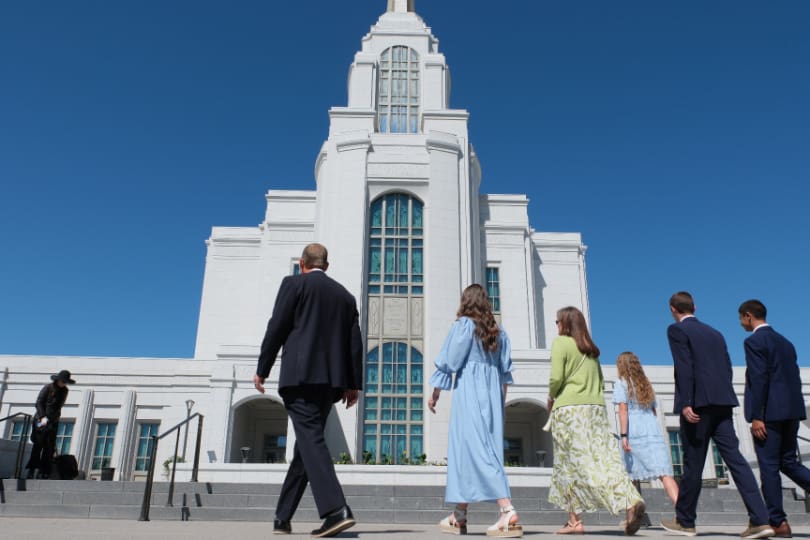
For members of The Church of Jesus Christ of Latter-day Saints, the temple is a sacred place where we go to draw closer to our Heavenly Father and Jesus Christ, to make covenants, and to feel the Spirit. It is often described as a house of revelation, peace, and profound spiritual experience. Many Saints share stories of feeling overwhelming joy, personal guidance, or unmistakable confirmation of the Lord’s love while in the temple. These sacred experiences are real and meaningful, yet sometimes they can create unspoken expectations that everyone who enters the temple will have similar manifestations of the Spirit.
For some faithful members, the experiences of the temple are much quieter, or in some cases even absent, despite their hopes and righteous desires. When expectations of unmistakable moments of revelation in the temple—such as a burning in the bosom, tears, or immediate clarity—do not come, it can result in disappointment, confusion, and feelings of inadequacy. These doubts can leave individual members wondering why they seem spiritually disconnected while others around them are visibly uplifted.
However, these are thoughts cultivated by the adversary. As such it is incumbent upon us to understand spiritual experiences are deeply personal and come in diverse ways and on the Lord’s timetable. Elder David A. Bednar taught many of the promptings and confirmations we receive from the Holy Ghost are subtle, almost imperceptible—like the rising of the sun rather than the sudden flipping on of a light. These quiet whisperings and steady feelings of peace offered by the Spirit can be easy to overlook if we are focused on expecting larger emotional or spiritual experiences.
Elder Boyd K. Packer reinforced this principle stating, We are not always entitled to a strong, powerful spiritual witness. Most often, our confirmation will come through quiet feelings of peace and certainty—a reminder that the absence of a dramatic feeling does not mean the Spirit was absent.
Additionally, not feeling something in the temple does not mean we are unworthy, unloved, or spiritually broken. President Howard W. Hunter encouraged us to always be worthy of a temple recommend, even if we do not always feel the kind of sacred manifestations we may anticipate stating, Let us be a temple-attending and a temple-loving people. Let us go not only for our kindred dead but let us also go for the personal blessing of temple worship, for the sanctity and safety which are provided within those hallowed and consecrated walls.
His words encourage us to find joy in the process of temple worship itself, not just in specific, noticeable experiences. Regular temple attendance strengthens our spirits, shapes our character, and draws us closer to the Savior even when those blessings unfold quietly over time. Our worthiness and devotion are not validated by immediate emotional responses but by our willingness to return, to keep covenants, and to patiently seek the Lord.
Doctrine and Covenants 64:33-34 states, Be not weary in well-doing, for ye are laying the foundation of a great work. And out of small things proceedeth that which is great. The Lord values consistent, faithful effort. Sometimes, continuing to attend the temple without extraordinary feelings is an act of quiet, steady discipleship. The very act of showing up, participating, and desiring to feel the Spirit is a form of worship that the Lord honors. Clearly, even when we do not feel an immediate spiritual reward, our temple service and covenants are building us into who the Lord wants us to become.
However, when we see others weep with joy or hear them share remarkable temple experiences, it can be tempting to equate our spiritual journey to theirs and asking, What’s wrong with me? or Why don’t I feel that way? We must take a step back and realize this practice of spiritual comparisons can be dangerously demoralizing and damaging. Each person’s relationship with God is unique, and the Spirit customizes experiences to our individual needs.
God’s love is not reserved for those who have grand spiritual moments. It is equally extended to those who quietly show up, serve, and keep their covenants even when feelings are not immediately present. Our Heavenly Father knows exactly where we are on our personal spiritual path and provides us with what we need, tailored to our growth. When we see others visibly touched or hear them share remarkable temple experiences, we must resist the urge to feel left out or inadequate. Their spiritual path is not ours. Our role is to trust that God knows how and when to speak to us.
Sometimes we may not feel spiritual impressions in the temple because of other influences. Fatigue, mental health challenges, distractions, grief, anxiety, physical illness, or even unmet expectations can all cloud our ability to feel the Spirit. Heavenly Father understands all these challenges perfectly and judges us with mercy, not harshness. The Lord understands the complexities of mortality perfectly. He is patient with us and will help us, even when we feel we are experiencing periods of spiritual quietness. Sometimes, He allows us to pass through these moments to build our faith and teach us to rely on Him without depending on external signs.
Perhaps the greatest spiritual lesson in these experiences is the power of persistence. Elder Dieter F. Uchtdorf beautifully reassured us stating, If you stumble, do not give up. Never stop striving. Heavenly Father is pleased every time you turn to Him for truth and righteousness—no matter how often that may be. Choosing to keep attending the temple, even when we feel spiritually dry, is a profound act of faith. It shows the Lord that we are committed to Him not because of immediate spiritual rewards, but because we love Him and trust in His promises.
Spiritual feelings may come later, sometimes even after we leave the temple, or perhaps years down the road as we look back and recognize the quiet influence that was with us all along. As Elder Holland once powerfully taught, Some blessings come soon, some come late, and some don’t come until heaven; but for those who embrace the gospel of Jesus Christ, they come. We can trust that the blessings of the temple—whether felt immediately or not—are real and lasting.
Ultimately, not having a spiritual experience at the temple while those around us seem to be uplifted can be challenging, but it does not mean we are failing or that God is distant from us. The Lord honors our consistent effort, our willingness to come, and our faith to keep trying. He knows our hearts and will bless us in His own time and way. The temple is always a place of peace, growth, and sacred work—even if we do not always feel it. As we patiently persist, trusting the Lord’s promises, the spiritual rewards will come—quietly, deeply, and often in ways we did not expect.
The Covenant of One: Discipleship Without Waiting for a Partner


Beyond the Waiting Room
There is a persistent, quiet, psychological pressure that follows many single Latter-day Saints — whether they are navigating the “interim” of extended young adulthood or the raw, unexpected aftermath of divorce. Single life in the church is the haunted by the question: “Am I missing out?” Because we rightly celebrate the “New and Everlasting Covenant” of marriage as our final destiny and most supreme blessing of the Gospel, those who are alone often feel as though they are in a spiritual “Waiting Room” where life feels provisional. We treat our homes like temporary dorms, our goals like placeholders, and even our discipleship as a project that isn’t “whole” until a second signature is added to the covenant.
But the Lord’s servants have offered a definitive corrective to this fear. In his message The Church Is for Everyone in the June 1989 Ensign, President Howard W. Hunter promised: “No blessing, including that of eternal marriage and an eternal family, will be denied to any worthy individual. While it may take somewhat longer… it will not be denied.” In that same article, President Hunter quoted President Spencer W. Kimball’s assurance that “On occasions when you ache for that acceptance and affection which belong to family life on earth, please know that our Father in Heaven is aware of your anguish, and that one day he will bless you beyond your capacity to express.”
You aren’t just “passing time.” You are becoming ever more capable of an eternal partnership.
The idea of a “Covenant of One” involves the brave realization that God is at the center of all your covenants, whether you are married or single, and your life is not on pause while you are single. You are not “half” a person waiting for a missing other half. You are, or can be, one of God’s Covenant people by entering the covenants embodied in baptism, washings and anointings, and the endowment. Through Jesus Christ, you can be forgiven of your sins and be made whole and holy through his infinite atonement. Sanctification is not bestowed upon you by a spouse. Holiness is a quality of soul you forge through the “grind” of your daily choices and, even more, by the gift of divine grace. By being valiant in these individual covenants and learning more deeply about your relationship with Go through those covenants, you aren’t just “passing time.” You are becoming ever more capable of an eternal partnership.
There is a rugged, holy beauty in the person who keeps a promise even when the emotion of the moment has passed and the promised destiny has yet to be fulfilled. Beyond the beauty of a white wedding dress and the celebration of a sacred ceremony there are years of faithfulness, sharing, working to communicate and understand, giving of self, body, soul, and means. The Psalmist describes the one who shall abide in the Lord’s temple as he who “sweareth to his own hurt, and changeth not” (Psalm 15:4). Bravery is the patient continuing of the grind when the initial emotional spark has faded and the “hurt” of loneliness remains. The great Latter-day Saint songwriter Michael McLean has spoken movingly about a dream he had during a nine-year faith crisis where mother Teresa sang to him these words:
“I choose to pray to one who doesn’t hear me.
I choose to wait for love that He conceals.
And though God has chosen for now not to be near me,
I’m keeping promises my heart no longer feels.”
Choosing to remain true to Jesus Christ and stay in covenant with Him can be particularly challenging when we feel that our best efforts have not been rewarded. As Michael McLean also asked, “Am I willing to keep the promises I’ve made to God even when I feel nothing in response to my deepest yearnings? In the most difficult trial of my faith journey, would I hold on to faith or give in to despair?” Staying the course with integrity to your covenants, even when you are subjected to the assumptions and judgments of others, and even when your faith has not yet been rewarded is an Abrahamic test. Staying faithful when you are later than most in receiving the blessing you most long for is a sign between you and the Lord that you are determined to serve Him forever, no matter the cost.
Bunkers and Bridges
For those recovering from the trauma of divorce, the “Covenant of One” can feel like a retreat. It is tempting to view your single status as a protective “bunker,” or a way to ensure no one can ever reject or hurt you again.
Your capacity for joy is not contingent on another person’s agency.
But a bunker is a place of passive reliance. By contrast, discipleship is a bridge. Moving from a bunker to a bridge requires an active energy rather than timid withdrawal. It means deciding your capacity for joy is not contingent on another person’s agency.
Profiles in Solo Courage: Ruth and Moroni
We find the “Covenant of One” in the grit of our scriptural heroes. Consider Ruth. After a devastating loss, she didn’t wait in the “bunker” of Moab for a miracle. She moved to a new field and engaged in the 90 percent grind of gleaning (Ruth 2). She didn’t wait to be rescued; she became the creator of a new lineage through her diligence. When Boaz noticed her, it was because of her reputation for action: “It hath fully been shewn me, all that thou hast done.”
Consider Moroni. For decades, he was true to a “Covenant of One” in total isolation. He had no social pressure and no audience to applaud his 90percent grind. Yet, he chose a trajectory of lonely excellence. He didn’t just survive; he gave his energy to finishing the Book of Mormon in brilliant prose. He was “standardizing” a character of such durability that it would eventually support a global Restoration of truth.
The Hope in the Oar
You are not a “half” waiting for a “whole.” You are a Child of the Covenant in active production.
You are not a “half” waiting for a “whole.” You are a Child of the Covenant in active production. Your “solo season” is not a delay; it is the most intense form of preparation for everything the Lord has promised. Remember that you are not just waiting for marriage. You are building the person capable of it. Cathy and I have a greater appreciation for the relationship we have because it was many years in coming. I was 50 years old on our wedding day and still feel the thrill of knowing, at long last, I was finally joined together with my queen.
Elder Joseph B. Wirthlin gave an inspiring promise to those who have remained strong and kept their integrity despite the fact that many of their hopes and dreams had gone unfulfilled:
“The Lord compensates the faithful for every loss. That which is taken away from those who love the Lord will be added unto them in His own way. While it may not come at the time we desire, the faithful will know that every tear today will eventually be returned a hundredfold with tears of rejoicing and gratitude.”
Trust in the Lord and stay true. Your race is not yet fully run and there is much the Lord still intends to bless you with as you hold on to your faith, hope on and trust on until you see the salvation of the Lord.
Resource:
Intentional Courtship can help in this journey.
About the Author
Jeff Teichert, and his wife Cathy Butler Teichert, are the founders of “Love in Later Years,” which ministers to Latter-day Saint single adults seeking peace, healing, and more joyful relationships. They are co-authors of the Amazon bestseller Intentional Courtship: A Mid-Singles Guide to Peace, Progress and Pairing Up in the Church of Jesus Christ of Latter-day Saints. Jeff and Cathy each spent nearly a decade in the mid-singles community and they use that experience to provide counsel and hope to mid-singles and later married couples through written articles, podcasts, and videos. Jeff and Cathy are both Advanced Certified Life Coaches and have university degrees in Family & Human Development. They are the parents of a blended family that includes four handsome sons, one lovely daughter-in-law, and two sweet little granddaughters.
Purchase Jeff & Cathy’s book Intentional Courtship:
Connect with Jeff & Cathy:
Website: http://www.loveinlateryears.com/
Podcast: https://anchor.fm/loveinlateryears
YouTube: https://www.youtube.com/c/loveinlateryears
Facebook: https://www.facebook.com/groups/LoveInLaterYears
Instagram: http://instagram.com/loveinlateryears/
Email: [email protected]

FEATURES