






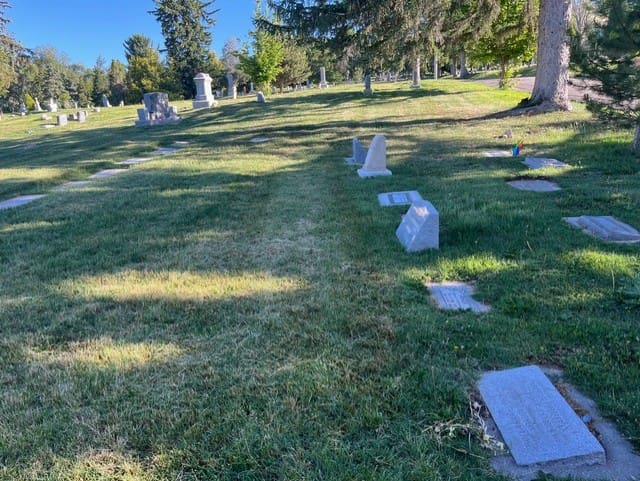
If you go to the Salt Lake Cemetery, the largest city-operated cemetery in the United States, you may notice large areas with few or no headstones. Don’t assume no one is buried there. These unmarked areas may be pauper’s graves, which are called potter’s fields in the New Testament (Matthew 27:3-8). Potter’s fields and pauper’s graves are where unknown, unclaimed, or indigent people are laid to rest.
Pauper’s Graves: In more established communities in the eastern United States and Great Britian, it was a disgrace and blight, a lifetime stigma, on the family’s reputation if a relative died “penniless and was dumped into a paupers’ grave.” “The ultimate disgrace for a Victorian worker’s family was a pauper burial. Having the means to avoid it and provide for a decent funeral that would preserve the family’s standing in the community was the measure of basic respectability.” One of the many difficult aspects of burial in a pauper’s grave was the quality of the coffins. “The coffins were notoriously cheap and ineffectual…. Their quality was so poor that they cracked when a nail was driven in, and unless bodies are carefully handled, they fall out of them” (https://library.fes.de/libalt/journals/swetsfulltext/16653100.pdf).
Stigma: This stigma, although present in the formational years of Salt Lake City, was tempered by the fact that no one, except perhaps Native Americans, had lived in Salt Lake more than twenty years and most everyone was poor. This burial service provided by the community was necessary and appreciated. Today, however, when my friend Becky Anderson found out that her fourth great grandmother, Lydia Kenyon Carter, was buried in a pauper’s grave, she immediately organized her family to purchase a marker for her. Other families have also honored their dead in this way. One of the markers gives the name and dates of the deceased with the caveat, “buried somewhere close by.” Records do not exist for who is buried where in this common grave.
Lydia Kenyon Carter’s story is similar to thousands of others and differs only in the detail. She was born in Benson, Vermont in 1799, the twelfth of fourteen children. She married Simeon Dagget Carter and gave birth to Orlando, Eveline, and Lorain. In 1823, they moved to Ohio. As the story goes, Simeon and Lydia were neighbors of Parley P. Pratt. One day Parley sought safety in Simeon and Lydia’s home as a constable had come to arrest him. Simeon helped him escape, and Parley left a Book of Mormon on his way out. Simeon read the book, he and Lydia joined the Church in Kirtland, and soon they moved to Far West, Missouri. Their fourteen-year-old daughter, Lorain, died there.
After being expelled from Missouri, they moved to Nauvoo, where she became a close friend to Emma Smith and comforted her after the martyrdom. She and Simeon were endowed and sealed in the Nauvoo Temple in December 1845. Simeon served missions. Lydia was often alone. Lydia and Simeon along with about 70,000 others, who had joined the Church of Jesus Christ of Latter-day Saints, crossed the plains before the railroad came in 1869. Lydia and Simeon were members of the Silas Richards Company, leaving Kanesville, Iowa in July 1849, arriving October 29, 1849. A couple of weeks after arriving in Salt Lake, Simeon married another wife. When Lydia died at sixty-seven, Simeon was living with another wife in Brigham City, and she was living with her daughter. Lydia passed away in December 1866 of dropsy. (Today a more specific diagnosis might have been edema due to congestive heart failure (https://www.rxlist.com/dropsy/definition.htm).
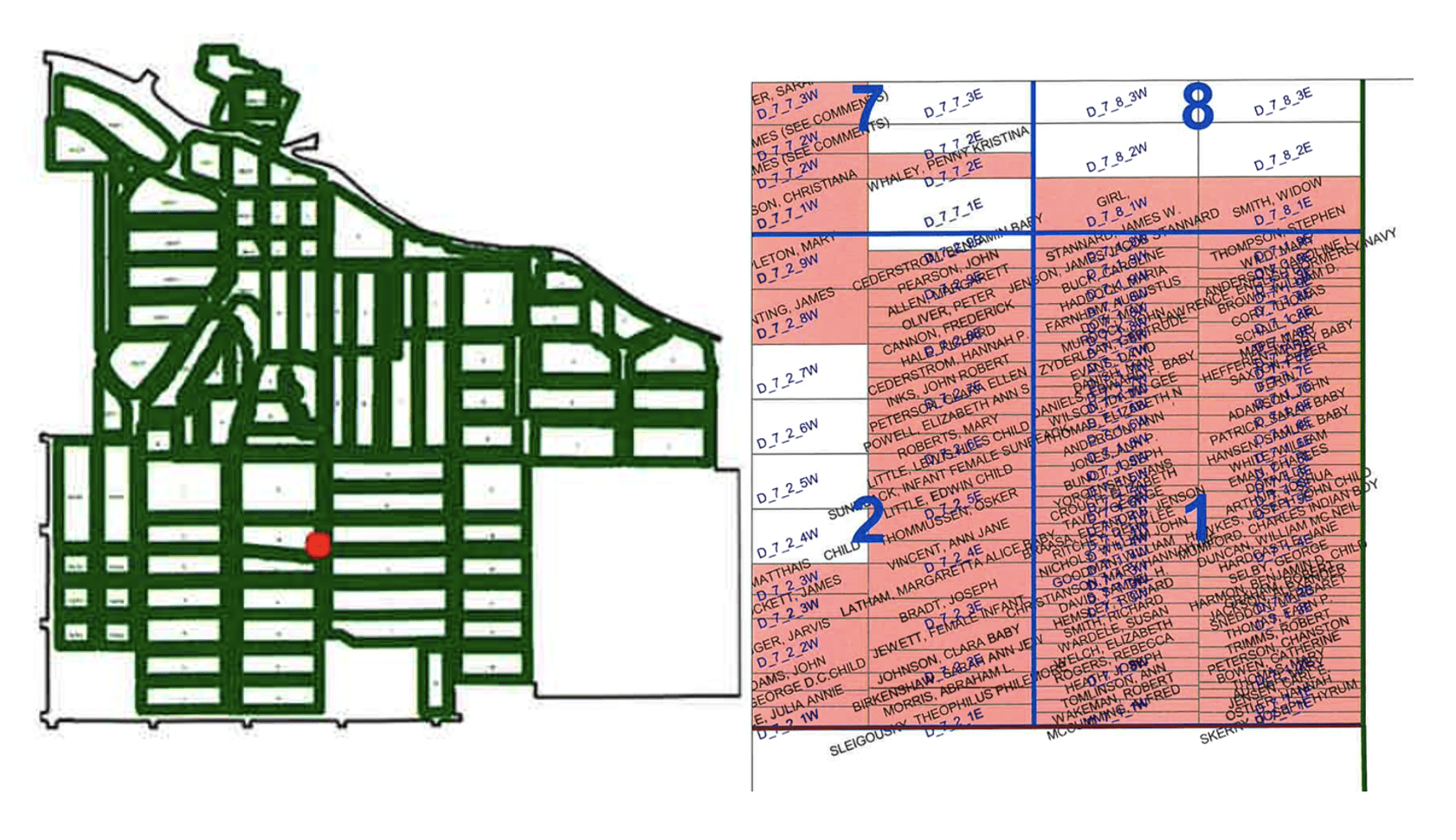
Plat D, Block 7, Lot 1: Becky has figuratively adopted all who are buried in Plat D, Block 7, Lot 1. (The coordinates are about 275 North and Center Street.) She asked me if I would be interested in writing about what she was finding. We went to the site and I took the photo above. We learned this plot was filled, death-by-death, with people who left this frail existence between 1863-66. Each person is in a space measuring forty-nine inches by seven to eight feet. The list below shows the names of those who are awaiting the resurrection in Plat D, Block 7, Lot 1. (We are still in the process of figuring out everyone who is buried there. The cemetery office estimates between eighty and one hundred just in Lot 1. And this is not the only mass grave; there are others nearby as you see in the photo below.
Latter-day Culture: In Latter-day Saint culture, death is a transition not an end, and as with many other cultures, reverence is shown to the physical body, rich or poor, living or dead. The Prophet Joseph Smith taught: “I would esteem it one of the greatest blessings, if I am to be afflicted in this world, to have my lot cast where I can find brothers and friends all around me [and]… to have the privilege of having our dead buried on the land where God has appointed us to gather His Saints together…. The place where a man is buried is sacred to me…. Even to the aborigines [Native Americans] of this land, the burying places of their fathers are more sacred than anything else” (https://rsc.byu.edu/salt-lake-city-place-which-god-prepared/should-we-die).
Book of Remembrance: Part of the respect for the dead is evidenced by the records that were kept since the time of Adam and Eve. Adam kept a genealogy of his descendants and recorded important events during his lifetime. “For a book of remembrance, we have written among us, according to the pattern given by the finger of God” (Moses 6:46). Similar records have been kept by prophets and many others according to the same pattern with whatever tools and technology were available.
How Poor: Now to the question, how poor do you have to be to qualify for a pauper’s burial? The answer is that those buried in pauper’s graves, generally speaking, were on public or private assistance. Today, we might say, they were on welfare. This may indicate that the family of the deceased did not have the money or were unwilling to pay the cost for a private burial plot or other associated costs.
How poor is pauper-grave poor is an important distinction because most everyone in early pioneer Utah was poor. In 1863, about ninety percent of the people in the territory, Utah didn’t become a state until January 4, 1896, had a yearly income between $600 and $1,000. This number does not include what a family could produce on their own farms and gardens. In 1956, Leonard Arrington wrote: “The number of persons in Utah who were in the middle- and upper-income brackets was limited to a mere handful. Only six persons received an income in excess of $5,000 in 1863; this number increased to sixteen in 1864, but dropped to eleven in 1865 and 1866. Only after the railroad came, did the average income increase and that is because those in the upper brackets increased significantly. Some thirty-seven persons received more than $5,000 in 1871” https://issuu.com/utah10/docs/volume_24_1956/s/95990).
This is how a yearly income of $600-$1,000 compares to today (https://www.in2013dollars.com/us/inflation/1863?amount=1000).

Acknowledging the poverty, was it really that expensive to bury someone? Records of the Salt Lake City Council in 1864 set the following pricelist:
Coffin, per running foot – $1.75
Recording – $ .25
Digging grave – $2.00
Recording certificate – $.25
Grave over 4 feet – $3.00
Lot (Lot in Ravine for less.) – $12.00
Conveying Coffin to City – $1.50.
It is interesting to note that this money was to be paid to the sexton (the person whose duties might include, taking care of a churchyard, ringing the church bell, and/or digging graves).
What Happens Today: What happens today if a family cannot afford a burial or cremation? It is basically the same: “Most coroners will pitch in to bury or cremate the remains of your loved one if you can’t. You will have to sign release forms permitting the county to cremate the body. Once the body is cremated, the coroner will likely allow you to claim the ashes for a small fee. However, if you fail to claim the ashes, then the coroner will bury the ashes in a common grave” (https://www.wujekcalcaterra.com/what-to-do-if-you-cant-afford-funeral-costs/). According to (https://www.funeralocity.com/average-funeral-price/ut), the average cost of a full-service burial today in Utah is $8,028. (Full-service cremation is $5,790).
You might be interested in what is considered poverty today. I found the following: “The table below provides examples at various income-to-poverty ratios for a family of four with two children in 2016, illustrating that while a family making $18,250 and one making $6,000 a year would both be considered to be in poverty, income-to-poverty ratios provide a more precise understanding of their economic circumstances”
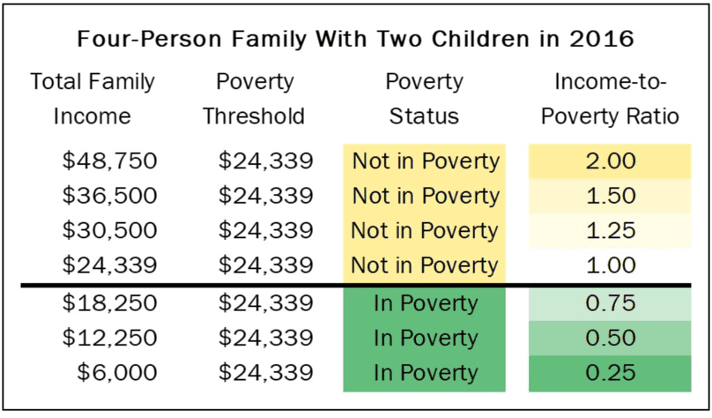
(https://www.census.gov/newsroom/blogs/random-samplings/2020/09/degrees-of-poverty.html).
Story of Sacrifice: In spite of these relevant facts, the real takeaway is in the stories of sacrifice made by faithful saints who left all for the gospel of Jesus Christ only to be buried in Plat D, Block 7, Lot 1. For example, if Professor James William Pigg Stannard had not joined the Church and felt guided by the Holy Ghost to come to Zion, he would have been buried with much pomp, even Queen Victoria would have known about his passing.

In 2019, two new headstones were placed on Plat D, Block 7, Lot 1, honoring James William Pigg Stannard and two of his grandsons, Isaac Jensen and James Jacob Stannard Jensen. These graves were unmarked for 154 years. As you can see on the headstone for Isaac and James, they did not live long. Their grandfather, James William Pigg Stannard, was born in Norwich, Norfolk, England on May 4, 1792 and died February 14, 1865. Even though he was buried in a pauper’s grave, the Deseret News published his obituary on March 1, 1865. Here is a shortened version.
“Professor Stannard became a proficient scholar in the French, Latin, & Greek languages, but his favorite study was mathematics, which he pursued with an ambition characteristic of the man…. He grew up in a 20-room, 2-story home with four servants. He dined with Queen Victoria. He sacrificed everything to come to Salt Lake City to join his wife and four adult children. His wife, Caroline, never made it to Zion. Professor Stannard died four months later after arriving in the Valley of the Great Salt Lake.”
Who Died of What: Becky looked up all the names she could read who are buried in plot 1 and found details of their lives. She found babies and children. She found others like Professor Stannard who died shortly after arriving in Salt Lake City. These are noted as: “newly arrived immigrant.” One man is known as “Danish Man.” And one column of interest lists the cause of death. People buried in Plat D, Block 7, Lot 1 died of convulsions, putrid sore throat, liver complaint, drowning, child bed (complications of giving birth), stillborn, brain fever (encephalitis), cancer, scarlet fever, croup, shot, diarrhea, consumption (tuberculosis), typhoid fever, inflammation of the lung, inflammation of the bowel, kicked by a horse, canker, suicide, accidental poisoning, heart disease, worms, teething.
Receiving Temple Blessings: Becky has found thirteen for whom the temple work has not been done. One example is George Selby who is buried in this plot. He was born in 1810 in Hitchwell, England. He married Sarah Hill who was born in 1815 in Sydmonton, Hampshire, England. They were married in 1834 and sealed by proxy in the Salt Lake Temple in 1977. A note on ancestry.com reads: “No known children.” Doing more research, Becky happily discovered they had six children. The temple work is in progress!


Darflene HutchisonJuly 23, 2024
Thanks so much for this information. I have an ancestor buried there and when I tried to research the exact location I was told the Church owned the lot and members who could not afford a separate burial was buried there, and they couldn't tell me the exact location.. I would love to put up a monument, I guess I will go back to the sexton's office for more information. The plot picture was too small to make out a parfticular name.
SonyaJuly 23, 2024
Wonderful article! Every person matters. Thank you for sharing this information.