













While my young NYC-based family was walking the familiar mile-long route to school one morning, my oldest went ahead on her brand new scooter. I did not remember to instruct her to pause occasionally and let us catch up until she had already gone out of sight. These were the days before children had phones, and I could do nothing but continue on with three even younger children and hope she was not abducted or hit by a car on her way.
At first, I was troubled by the knowledge that if something did happen, it would be my fault for not giving her any kind of instructions about staying in view or staying close. I also began to think of what other adults would say to me if they saw this mere 10-year-old scootering to school through the streets of New York City alone, and how I would be judged by others if something did happen to her.
Soon I was thinking about her, and how really, she was old enough to know she shouldn’t go out of my sight. She should have been thinking about us, and about how far ahead she had gone, and frankly, she should have stopped and turned around by now. I began to grow angry with her for putting me in a situation of fear and social humiliation.
All along that walk to the school, she never did turn around, and I didn’t see her until we arrived at the school, and
instead of being glad to see her safe and sound, I lost my temper. I scolded her fiercely and loudly for going where I couldn’t see her. I told her she was old enough to know better, that she should have thought about her actions, and unleashed all my fear and guilt on her in this public place until tears rolled down her innocent cheeks.
I did my best to tell myself I was right, that she should have known and she deserved my anger, but some hours of self-justification later, I finally saw what I had done. I had been horrible to my own beloved child for selfish, prideful reasons.
She was just riding along, not having any idea she was doing anything wrong, feeling delighted with her new scooter and proud of herself knowing the way along that long route, enjoying being a child. Nobody had warned her that this new scooter freedom came with responsibilities. Even I, the adult, hadn’t thought about those responsibilities until too late, so how could I possibly expect her to think about them? The reality is, I scolded her to punish her for my own selfishness. And I did it publicly. I was saying, I am not a bad mother, look how angry I am at this child who is alone, it is her fault she is unsupervised in New York City, not mine.
By the time I picked her up that afternoon, I was disgusted with myself. Of course I apologized to her immediately, multiple times, but I could not feel better about it. I was haunted by her face, by the memory of what I had done, how I had locked into anger even though I had known better.
I cannot see this as anything but a sin. I could have done better, but I did not, and I harmed someone who had been placed in my protection.
And I cannot pretend it away. It appears before my eyelids when I shut my eyes, it sounds in my ears when I try to sleep.
I cannot undo my thoughts and my vicious venting and I cannot restore the beautiful morning that could have been and I cannot uncry my child’s tears and I cannot replace her memory of her angry, blaming mother with a mother who was kind.
The remorse I feel, the gnawing pang of regret, this is not some external punishment placed upon me by an angry God. For all I care, He could have forgiven me instantly – it would have made no difference to how I felt.
The law of knowledge itself haunts me. That I know the difference between good and evil, and I see that I have done evil, means that I will suffer the pain of regret. I see the harm I have done and I know it is harm.
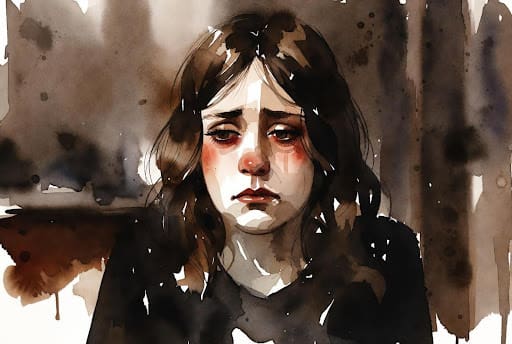
I have partaken of the tree of knowledge of good and evil, and by so doing have lodged its seed in my heart. I can ignore it for a time, but in the end it cannot be appeased by lies and justifications. It tells me, you knew this was wrong. It shows me, she suffers because of you.
I cannot go back in time and undo my actions. I cannot unravel the consequences I set in motion. I cannot return to that moment and do it right. I am doomed to understand that I hurt a child for selfish reasons and nothing I ever do will ever make her not have been mistreated on that day.
I cannot escape it. This is neither whip nor lash, and yet it is the very fires of hell.
This is why I need an atonement.
Not because God is angry, but because he is kind. He understands the impossible situation I have put myself in with my own agency. I cannot undo the harm I have done, so I cannot stop suffering for the harm I have done. If left alone in this predicament, I will suffer eternally.
So I need an atonement.
But more –
I cannot accept an atonement if its only job is to let me off the hook for something I know, I know, I know was wrong
I cannot, cannot, cannot move on to heaven if the wrong I did to her is irreparable.
I cannot do it. It would be an incomprehensible hell to live with God as a person who had permanently damaged one of His children, whether or not He “forgave” me.
But if the atonement touches her, heals her wounds, her sorrow, her pains, her sicknesses and infirmities, if grace is extended to her, and she has a path to complete and perfect healing, if her recovery from my unkindness can be entire, then I do not need to carry its weight with me.
Whether she accepts the healing is her own choice, but the grace still releases me, because it means my harm is not permanent, my wrongdoing not eternal in scope, my sin not unforgivable. If God offers me repentance and healing through Christ, I can accept it. I can hand over the terrible weight of knowledge of my own sin, knowing that even though I cannot undo the harm I have done, it can nevertheless be undone.

I can accept atonement, but her healing cannot be separated from mine. A complete and whole repair and redemption must be available to her for it to be available to me.
And not just to her – to all the others I’ve offended or hurt throughout my life, and all the others who have been hurt by all those others, and on and on throughout the entire history of the human family.
The atonement must be for all of us if it is to be for any of us. So how can we wonder at God’s goodness?
He does not leave us to suffer the torment of our own knowledge of our own sins, but provides a Savior, so that all who will may come, and partake of His healing, and be restored and made whole, every wound healed, every pain eased, every unkindness resolved, every sin robbed of its power and crushed under the foot of Christ.







VRWApril 1, 2026
Another beautiful, open article from Kimberly. This article really hits home for me and I am grateful for reading this. The Atonement is very personal in its application and this article helps me see that. Thanks for sharing.
Corey D.March 29, 2026
Wonderful article with great insight but the bottom line to why there needs to be an atonement is law. Our Heavenly Father is a god of law and order and he would cease to be god if he were not. Law is broken and a price needs to be paid and our Savior paid the price. The atonement was done out of love but it was accomplished through perfect obedience, something we mortals are incapable of doing no matter how great our love may be for Heavenly Father and his son or for each other. You love your daughter, she loves you but you both fell short in the example you shared, for different reasons and different levels of understanding obviously but our Savior covers it all.