






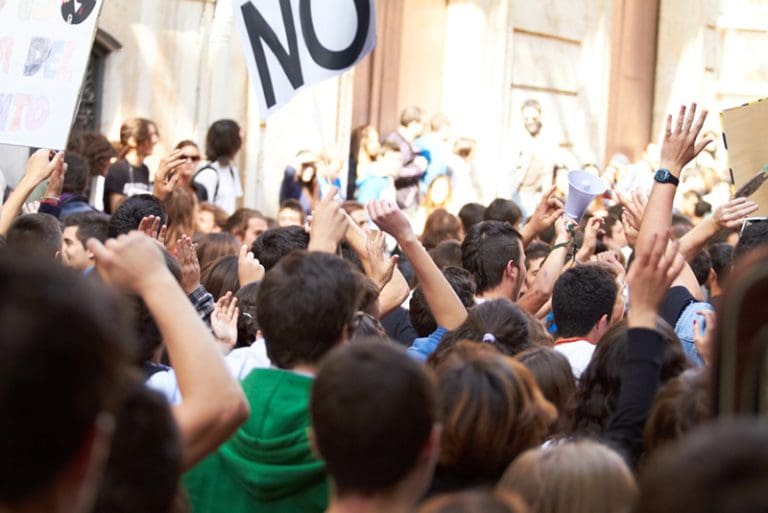


We have seen civil unrest growing in the United States, Canada, and across Europe for years. In recent years, it has accelerated. Most recently, we have witnessed growing antisemitism at an alarming rate. We have witnessed rioting and vandalism against ICE officers, which quickly escalated into bricks thrown from an overpass at cars innocently driving down the street. Many of these riots and violent protests are funded by outsiders and pop up unexpectedly. Would you and your family be prepared to deal with a chaotic situation if you were suddenly trapped in one?
It’s up to us to choose to prepare for the worst or to pretend that we are somehow immune to the violence.
During the past several months, I have thought more and more about those who live in large cities and how their preparations need to differ from those living in a suburban or country setting. However, the past two weeks have made me understand we all need to prepare for civil unrest, no matter where we live.
Any of us may find ourselves in a large city, where violence is more likely, when visiting family, enjoying a vacation, or interviewing for a new job, but even small cities are not immune. We must be prepared to act should we be in the wrong place at the wrong time.
I grew up in Plainfield, a suburb of Newark, New Jersey. When I was young, I experienced the horror and distress of civil unrest. It was during the age of race riots, and people were actually sent into the city where I lived to incite violence. It was very frightening. Violence touched my neighborhood and my high school. We could hear gunfire at night and knew no one was safe on the streets. My parents bought a big dog and endured many sleepless nights with a baseball bat close at hand. Although my father had two Purple Hearts from WWII, we did not have a gun in the house because my mother was afraid of them. I participated in a march demanding safety in our school. We asked for random locker checks and a police presence. We did not riot; we were peaceful, and we got what we asked for. Unfortunately, today, too many marches turn violent.
Whether it is during a march for a cause, a terrorist attack, a random shooter, or a natural disaster, you need a plan if caught in mob chaos. Plan on it and plan for it. Learn what to do and then discuss it with your family. Don’t forget to have a discussion with the kids leaving for college or on a mission.
Large crowds, alcohol, strong convictions, and paid protesters may all be contributors to rioting and chaos. A few years ago, there was a protest march in a nearby city. It was peaceful until the end of the march when the crowd came upon a police presence and began throwing items, attacking police and private cars, and destroying anything in their path. Why were the police there? To protect the cars that had been parked there by the protesters before the march began. They attacked the people protecting their own property.
How can we prepare in case we are caught in a life-threatening mob situation?
- Take a photo. Before leaving for a big event, take a photo of everyone in your party. These can be valuable once things calm down and you are trying to locate a member of your group.
- Dress down. Unless you are attending an event that requires you to dress up, dress down. You can still dress appropriately for a dinner out at a fancy restaurant or the opera, but leave the diamonds at home. You do not want to be a target, and you do not want to stand out if you encounter trouble walking back to your car. If you are attending a rally, wear comfortable shoes and modest, not new-looking clothing. You want to look like the majority of the people in the crowd. You want to look like you belong.
- Carry cash. Carry a small amount of cash to pay a cab driver once you can get out of the chaos, purchase a drink or food while waiting out the situation, or even to slip to someone to help you. There will be pickpockets in every crowd taking advantage of the confusion, so be wise in how you protect your valuables. Keep wallets in vest pockets or make a small cloth pouch to attach to a chain and hang around your neck under a shirt or blouse. If you are traveling to Europe, always do this, as this is a huge problem in European countries.
- Mark your group. Sound strange? Write your phone number and other contact info, even your parking info, on the arm of members of your group with a permanent marker. It will wash off in a few days, but if you are separated, it will help first responders in reuniting you.
- Know the area. If you are attending an event, know where all the exits, restrooms, and medical help areas are. If you are out for the evening, make note of which businesses, restaurants, theaters, drug stores, etc., are open and could provide refuge if needed.
- Arrange a Meeting Place. No matter how hard you try to hold on to each other in a chaotic crowd, the chances of getting separated are very high. Now that you have scoped out the area, arrange a meeting place. Cell phones may not work in a riot situation, as law enforcement may block them for your protection from those using the phones to incite more trouble. Yes, there really are people at many rallies paid to be there to disrupt.
- If you are attending an event, identify those who may be able to help: staff members of the venue, security guards, and police. Their job will be to aid an evacuation in case of an emergency.
- Keep an eye on the crowd. If you notice an increase in the number of people pouring into or leaving the area, it may be a good time to evaluate the situation and leave. If you notice someone alone who doesn’t look like they belong, it may be a good time to leave. Remember, you don’t want to necessarily leave the building if there could be trouble outside, but this may be a good time to head for that restroom or medical station you identified before. Bottom line, if it doesn’t feel right, get out or hide in a safe place.
If you are at a rally and something doesn’t feel right, a speaker is getting the crowd agitated, people are screaming violent phrases, get away now.
You have taken precautions, but still find yourself in a dangerous situation. What now?
- Don’t panic. Staying calm and clear-headed is your number one best tool for escaping harm. You have thought this through, and now is the time for all of that preparation to kick in and take over.
- Avoid confrontation. This is not the time to try to change someone’s mind or to calm down a person who has lost control. Look around and choose a location behind you as a meeting place for your group. If you should be separated, that is where everyone should reassemble, as they can extricate themselves from the crowd.
- Walk Carefully. As you walk, do so carefully, as falling in a crowd can cause injury as people rush past.
- Walk slowly. Keep walking with the crowd, but slowly and toward the outside of the crowd. You will move toward the side of the crowd where your meeting place is. Be patient, don’t push or shove, just walk slowly and purposefully, and others will walk around you.
- Avoid small spaces. If you are inside a venue, avoid following the crowd into small spaces such as hallways, as you can then become trapped with no way to work yourself out of the crowd.
- Avoid law enforcement. This may sound like just the opposite of what you should do, but think about it. If you are in a crowd that has now become violent, who are they most likely to attack: law enforcement? You want no part of that. If you see a police presence ahead, slow down even more and, as quickly as possible, make your way to the back of the crowd. Again, do not turn around and walk away fighting the crowd; simply slow down and let them pass. When the crowd has moved ahead of you, that is the time to turn and run to your designated meeting place or a safe place to shelter if you are not part of a group.
- Duck in. If the crowd is continuing to move forward and has not yet begun vandalizing, duck into a store, restaurant, hotel lobby, or another location quickly. Do not go down an alley, as you may become trapped.
- Get to high ground. If things get really out of hand, law enforcement may use tear gas. As you seek shelter, look for an enclosed store, etc., or a hill or other elevated area.
- If you hear gunfire, run. Chances of being shot while moving go way down. Run in a zigzag pattern as fast as you can and don’t look back. Most gunshot victims die from shots to vital organs. A shot of this type is much less likely if you are running away.
- Find cover. If you do not see a way to run, seek cover. Get behind something that can stop bullets. Thin walls or a door are not enough. Cars are not bulletproof. If you must hide in a car, lie on the floor.
- Leave your belongings. You can replace objects, but your family can’t replace you.
- Stay quiet and barricade the door if you are taking refuge in a room. Move to a corner in case the shooter shoots through the wall. He is much more likely to just move on if he can’t easily get in.
- If confronted by police, stay calm, answer all questions, and show them your hands. Do not reach for an ID or phone.
Bottom line here is, keep calm, walk slowly until you are at the back of the crowd, turn and run away, then, or walk slowly, make your way to the edge of the crowd and duck into a safe place to find shelter.
Remember, most protests begin peacefully; however, it only takes a few people to stir emotions, which can then lead to violent behaviors. The longer the protest and the more people involved, the more likely this is to happen.
If you happen to be caught in the middle of a civil unrest situation or a crowd of people at an event, apply these tips for staying safe. Every study done following a disaster of any kind has found that those who have discussed and planned for a specific situation survived at a much higher rate than those who had not.
Teach your children now. If your children are young, just point out things around them as you spend time together. For example: “that would be a good place to find help if you couldn’t find us” or “it’s really crowded here. I think I want to be near the wall so I don’t get pushed so much”. You would be surprised how these little comments sink in.
If you have a child in high school or leaving for college, have a blunt conversation now. Both high school and college campuses can be havens for protests and, as we have seen lately, for violent attacks. Many of these same tips can be used to escape a shooting or other dangerous situations.
“Luck is what happens when preparation meets opportunity.” –Seneca