









 On February 4, 1846, the first covered wagons left Nauvoo, Illinois, and ferried across the Mississippi River in below-normal, bone-chilling temperatures-and the mass exodus of Mormon pioneers to the Rocky Mountains began. On February 4, 1996, Latter-day Saints gathered near the frozen river in -12 weather to commemorate the sesquicentennial of the exodus. Every year since 1996, missionaries in the Illinois Nauvoo Mission have hosted an annual Mormon Exodus re-enactment.
Mormon Exodus Re-enactment
This year the re-enactment will take place on February 8, starting at 8 a.m. with a continental breakfast at the Family Living Center in Old Nauvoo. At 9 a.m. participants will walk down Main to Parley Street and then to the Pioneer Memorial Kiosk by the river for a flag ceremony and memorial service. Each year those who attend this re-enactment feel the spirit of the early saints who left Nauvoo in 1846 and sacrificed much-sometimes their own lives-for what they believed. For the past two years, Illinois Nauvoo Mission President Russell Gilliland and his wife Karen oversaw the exodus re-enactment as one of their many duties. They walked to the river’s edge and remembered the faith of the early Saints. Now they are returning home and Richard and Nan Hunter will take their place at the water’s edge.
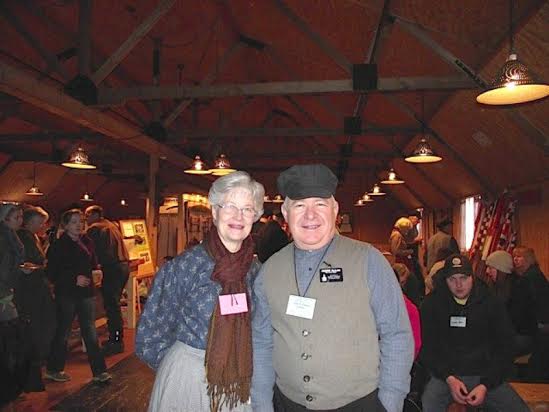 Nauvoo Mission Pres. and Sis. Gilliand
Untold Nauvoo Stories Symposium
In conjunction with the Mormon Exodus re-enactment, the 4th Annual Untold Nauvoo Stories Symposium will be held on February 7 and 8, 2014. The City of Nauvoo, Nauvoo Tourism Office, Joseph Smith Historic Site, and Historic Nauvoo will host the symposium at the Joseph Smith Historic Site Visitors Center from 1:00 to 5:30 p.m. each day. Attendees will hear stories of people, conditions, and events that make Nauvoo unique and significant to American history. Besides scholarly presentations, the symposium welcomes other storytelling genres, such as art, poetry, autobiography, photography, dance, archaeology, film, music, and comedy. Presenters voluntarily give their time and expertise to come to Nauvoo and share their tales about Nauvoo’s diverse past.
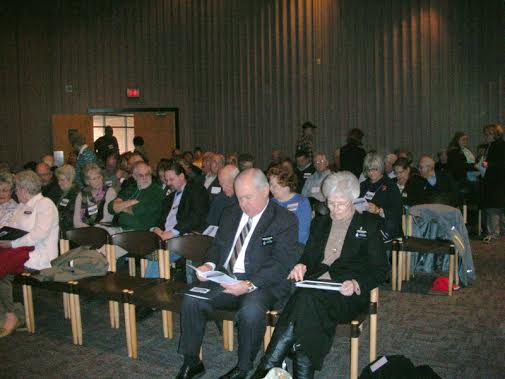 Symposium audience, Gillilands in foreground
Friday’s Symposium
Symposium sessions will begin on Friday, February 7, at 1:00 p.m. with Dr. Theodore Georgopoulos speaking from Paris, France, via Skype. He will discuss French Icarian Nauvoo (1849-1856), a community where the utopian dream was tested politically and socially. His topic is “Law at Icarian Nauvoo: The Constitution of Utopia and the Utopia of a Constitution.”
While traveling the world with the Merchant Marine, Bob Baxter kept in touch with his hometown of Nauvoo and Icarian and Mississippi River history and artifacts. Bob’s presentation will focus on his ancestor Thomas Powell, country doctor and Nauvoo businessman. Thomas’ sister Annette married Emile Baxter and joined the Nauvoo French Icarian community. The town of Powellton, six miles east of Nauvoo in Sonora Township, was named for this man.
 Nauvoo in 1852
Paul DeBarthe and Dawn Cobb will address archaeology in the Nauvoo area.
Archaeologist Paul Debarthe has uncovered prehistoric materials on the Joseph Smith sites, evidence that supports10,000 years of human occupation in Nauvoo. Paul will discuss ancient Archaic and Woodland burials. Dawn Cobb, Human Skeletal Remains Protection Act Coordinator for the Illinois Historic Preservation Agency, coordinates Illinois cemetery preservation. Years ago, looters disturbed Hopewell Indian mounds on a bluff north of Nauvoo. Within this past year, two groups volunteered to restore the mounds to their original shape. Dawn will describe this volunteer effort.
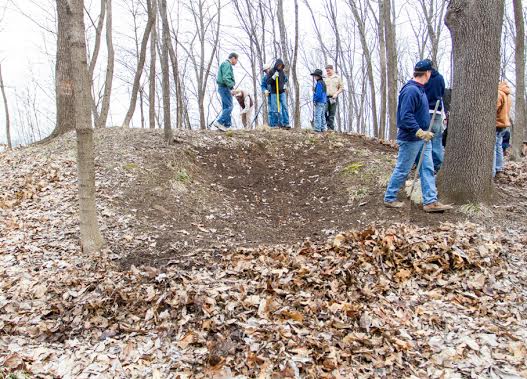 Mounds restoration, photo Tom Simpson
Two speakers will share their insights on Mormon Nauvoo. David Harbin from John Wood Community College in Quincy will discuss how Warsaw Signal editor-in-chief Thomas Sharp turned public opinion against Joseph Smith and those in and around Nauvoo. “Sharp was their sworn enemy,” Harbin said. “Even though he may not have pulled the trigger, he certainly loaded and primed the weapon,’ i.e. the mob that would ultimately murder the Prophet and his brother.” Following Harbin’s presentation, Joseph Johnstun will explore the myth that the Nauvoo City Council ordered the destruction of a brothel owned and operated by John C. Bennett. It was, in reality, a grog shop owned by the son of Reynolds Cahoon.
Passionate about quilt and textile preservation and documentation, Julie Stout will describe early Nauvoo fabrics and how to date them, identify construction styles, and preserve them. After her presentation, Mary Logan, a descendant of French Icarian settlers Emile and Annette Baxter who established Baxter’s Vineyards, will talk about Nauvoo’s wine industry, its key players, and the 600-plus acres of grapes and 23 wine cellars that served this industry.
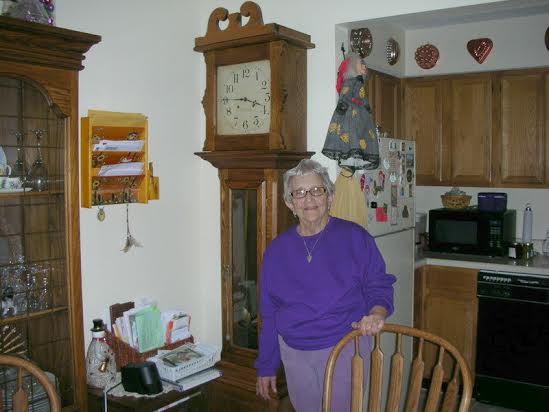 Mary Logan, French Icarian descendant
Karen Ihrig Gilbert will share recollections of Nauvoo’s business district based on her research for “The Way We Were” Walking Tour. “Over the years, the buildings, businesses, and proprietors came and went, leaving a jigsaw jumble of memories,” Karen said. “Some local memories proved to be viable, some misremembered, others right on!” In the same session, I (Rosemary Palmer) will tell an untold story of Nauvoo possibly becoming the location for our nation’s capital.
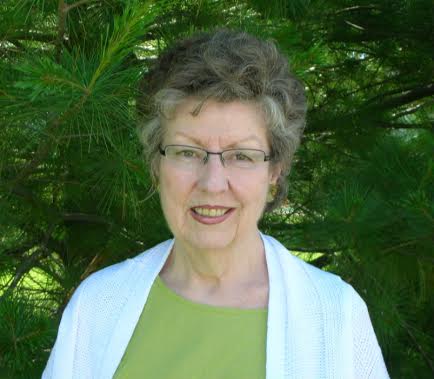 Speaker Karen Ihrig Gilbert
On Friday evening, Hotel Nauvoo will re-open its doors for a buffet dinner, and Irene and Tomasi Tukuafu will provide background music on the harp and other instruments.
After the meal, keynote speaker James Knipmeyer will tell the story of Denis Julien, a French trapper and fur trader who lived in the Missouri-Mississippi River region–including what would become Nauvoo–from 1805 to 1819.Denis Julien traded pelts with Indian tribes along the Des Moines, Mississippi, and Missouri rivers. Few dependable records existed about Julien’s life until James Knipmeyer identified sources to prove he was not as “obscure” as historians previously thought.
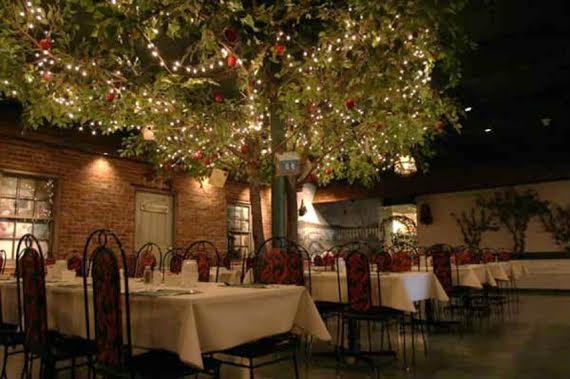 Hotel Nauvoo dining room
Saturday’s Symposium
Following the Mormon Exodus re-enactment on Saturday morning, the Untold Nauvoo Stories Symposium will resume at 1:00 p.m. Father Tony Trosley, a Catholic priest assigned to Hancock County, will discuss the lives of fathers Ireanaeus St. Cyr and Bishop Lefevre who served in the Nauvoo area in the early 1830s. Scott Esplin, a religion professor from BYU, will then address Mormon and Catholic interactions during the restoration of Historic Nauvoo. “Both faiths dominate the Nauvoo skyline with their neighboring church and temple,” Scott Esplin said. And they worked together to define their place in the rural Midwest.
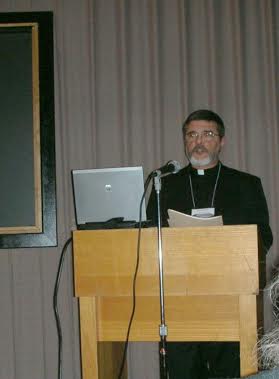 Speaker Father Tony Trosley
Karen Sparrow, an adopted Cherokee, studied the life of Keokuk, chief of the Sac tribe, and wrote his history. She will share stories about him and his connection to Nauvoo. Dressed in Native regalia, Karen and her friend Deerheart Hummingbird will introduce and conclude the presentation with Native songs. Dean Gabbert will then discuss the Mississippi River and Nauvoo. Dean is the author of two Mississippi River novels and a collection of brown-water boating stories.
Famous for her storytelling as a professor of Church History and Doctrine at BYU, Susan Easton Black Durrant, now an emeritus professor, is currently serving as a temple missionary in Nauvoo. She will present a biographical sketch of Isaac Galland from historical and new documents obtained from his posterity. Her focus is Galland’s land speculation in Commerce, Illinois, and his interaction with Latter-day Saints from 1840 to 1842. Following her presentation, Reg Ankrom will discuss the relationship between the citizens of Quincy, Illinois, and the Saints in Illinois through the eyes of Quincy founder John Wood, Congressman Stephen A. Douglas, and Governor Thomas Ford.
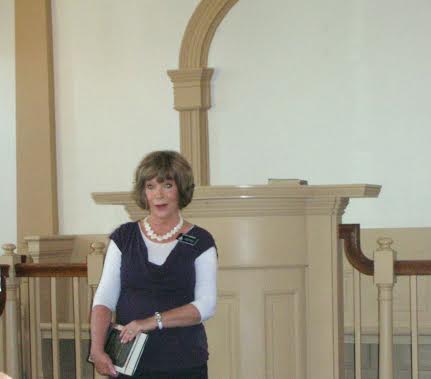 Susan Easton Black Durrant
Lon Simpson and Lachland Mackay will relate stories about Nauvoo after the Mormon period. Lon Simpson, who purchased the Phelps Mix house, studied the family who built the house in 1846. Phelps Mix, a Nauvoo Temple carpenter, mimicked the three arches of the temple when he constructed his house. Lon will share this family’s story. Lachlan Mackay, a descendant of Joseph and Emma Smith, will then relate memories of post-Mormon Nauvoo as told by his ancestor Joseph Smith III.
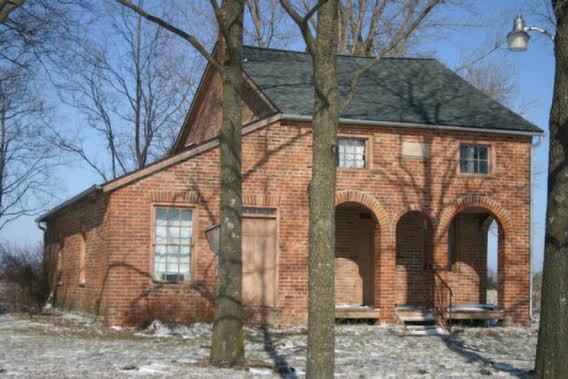 Phelps Mix house, photo Marting Real Estate
Craig Dunn will elaborate on the 1846 battle of Nauvoo, or “Nauvoo’s 9/11” by explaining why it happened, who was involved, and what effect this skirmish had on the community. Lee Ourth will then share stories of growing up in Nauvoo. Lee was born in the William Marks house and has lived 64 of his 80 years in the community. He purchased and lives in Nauvoo’s first stone house, a house built by Davidson Hibbard who came to the area 10 years before the Mormons arrived.
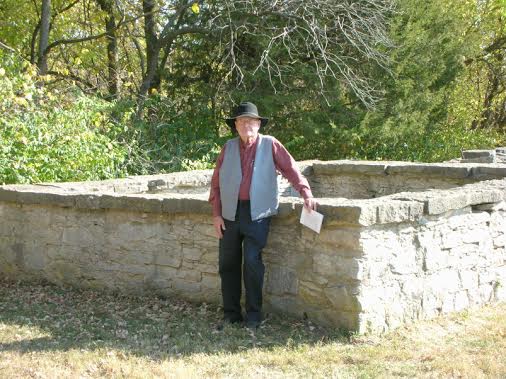 Lee Ourth as Davidson Hibbard at his grave
Jim Topic, professional glassblower, has researched the Nauvoo Blue Cheese Company. Oscard Rhode from Iowa State University founded this company in 1937 after he developed a new blue cheese recipe. Nauvoo’s cool, moist limestone wine cellars seemed perfect for aging cheese, so Rhode purchased an abandoned brewery and converted it into a factory. Jim will relate the company’s story and the desire to revive this industry after its closure in 2003. Following Jim’s presentation, Brock Stout will moderate a panel discussion on Nauvoo’s future with six “New Citizens” who chose to settle in Nauvoo in recent years.
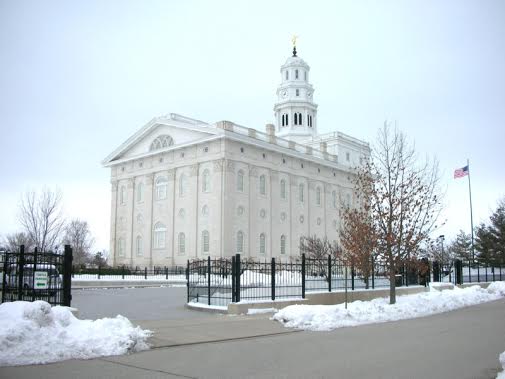
February is a peaceful time to come to Nauvoo and visit its diverse historical past. Plan to attend this year’s Untold Nauvoo Stories Symposium and Mormon Exodus re-enactment on February 7 and 8. For registration and other information, see www.untoldnauvoostories.com.
Rosemary Palmer is Nauvoo correspondent for Meridian Magazine.


Susanne PetersonJanuary 17, 2014
Thank you Rosemary - and all who are working to make this a wonderful event. !
Ken & Eva WhittJanuary 17, 2014
I couldn't return to Nauvoo at this year at the time of the Exodus Re-enactment - but we always love to hear about the continuing living history that is being told and reenacted like it was in early Nauvoo. Maybe - next year!