











A Personal Appeal from Scot Facer Proctor, Publisher of Meridian Magazine
Please don’t scroll past this less than 1-minute read. We are in the midst of our voluntary subscription campaign that we do each year. A number of Meridian readers have jumped right in to subscribe at whatever amount they have chosen (the average is around $40). Most do not participate. We have given you Meridian Magazine now for 25 years for free (and will continue to), but it is not free for us.
Consider all the times you have read Meridian or listened to the weekly Come Follow Me Podcast. Each podcast takes about 11-12 hours to research, write, record and produce. We thank all who have become paid subscribers. It’s a simple ask. We love doing this magazine and hope you will stay with us for years and years to come. Take a minute now (if you have not) and give a subscription amount by CLICKING HERE.
Thank you for being part of the Meridian family!
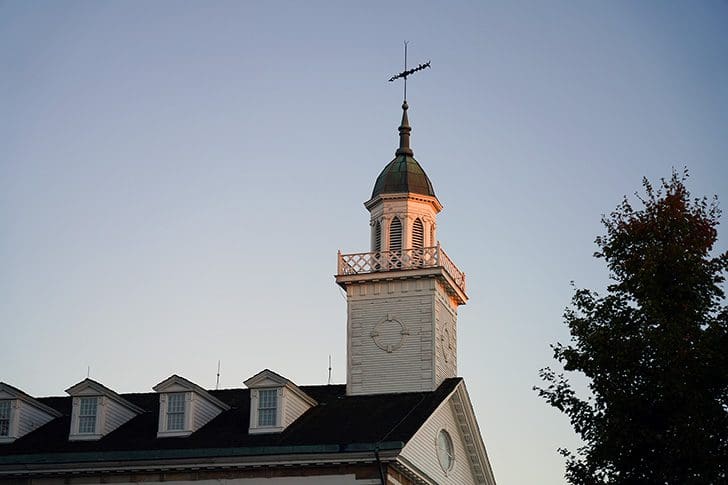
Why are so many of us completely joyous and downright exuberant about the Church’s purchase of the Kirtland Temple?
A question like this was asked at a press conference Wednesday where Elder Kyle S. McKay, Church Historian and Recorder; Matt Grow, Managing Director, Church History Department; and Emily Utt, Historic Sites Curator, shared additional details about this historic transfer of stewardship from Community of Christ to The Church of Jesus Christ of Latter-day Saints.
Undoubtedly, it is that certain spaces are sacred and resonate for generations and then centuries with the heavenly events that happened there. They carry a spirit with them that is tangible, felt, remembered and cherished. Just as certain, Latter-day Saints find these sacred places in many locations.
The Lord asks His people to remember divine manifestations and many times to memorialize them.
Elder McKay said he’d like to take a page from ancient practices: “They preserved Aaron’s rod, and they preserved manna in a jar, and they preserved the tablets for a reason. It was to point them to events, but mostly it was to point them to the God who was guiding them.
“Similarly, in addition to those artifacts, we have records and accounts of God telling ancient Israel to create a memorial, to memorialize a significant event that happened in a given place. I’m thinking now of when Joshua led the people across the River Jordan, as the Lord rolled back the waters. As they get to the other side, while the Ark of the Covenant is still being held in the bed of the river, He commands 12 men, one from each tribe, to go and gather up a stone. They are large stones. They carry them on their shoulders. With those stones they create a monument.
“In Joshua chapter four, we read that the purpose for this is so that when ‘your children shall ask what mean these stones,’ you can tell them of the event that happened here. The most significant explanation of that monument is the last verse, where the Lord says, the reason we want this monument here is so that “all people of the earth might know the hand of the Lord, that it is mighty.’
That ultimately is the purpose for all of the historic sites, all of the artifacts, all of the documents that we preserve.”
Grow noted, “We run an entire program of historic sites. Some of those sites talk primarily about pioneer life or talk about the sacrifice of Latter-day Saints like at Martin’s Cove in Wyoming, or they talk about the migration of the Latter-day Saints across the country.
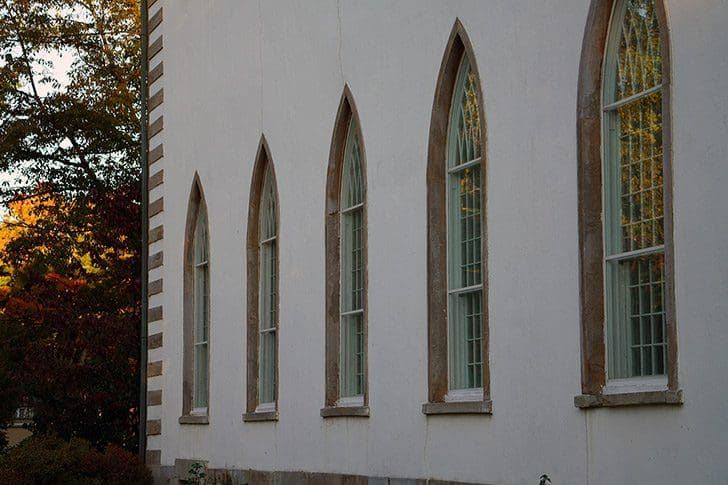
“But the most special of our sites are where heaven and earth came together in really powerful and tangible and concrete ways. So, for us those would be sites like the Sacred Grove, like the banks of the Susquehanna River, and a site like the Kirtland Temple where in Latter-day Saint theology, Jesus Christ Himself appeared and ancient prophets appeared. Those sites where heaven and earth came together for us continue to be sacred ground.”
Now, having the Kirtland Temple as a stewardship is, according to Utt, “an enormous responsibility.”

Though it will open in three weeks for tours, Utt said, “In the next few months we’ll be working with many structural engineers and architects and spending a lot of hours in that building, trying to understand its history, the changes over time, the condition that it is in. We want to work very systemically and thoughtfully to put together those things that will allow us not only to keep the building standing, but really make it accessible and available for people to see. The power of the Kirtland Temple is being in that sacred place and hearing that little creak in the floor and seeing the contribution of individual workers. So, we are going to be very careful as we approach stabilizing and preserving that building to really celebrate those things that make it such a special place.”
The Church has a close relationship with the historians of Community of Christ, and their understanding of the building and its structural history will be drawn upon.
One of the earliest changes to be addressed is how to allow people to tour the third floor of the temple, which has long been off limits to larger groups because of worries about the span of the floor joists and other safety concerns.
Grow said, “For Latter-day Saints, some of the really sacred things that happened in the Kirtland Temple happened on that top floor where Joseph Smith saw a vision of the afterlife and saw Alvin and his parents, and so our initial intent is to keep the tour groups small, and we feel good about taking them to that third-floor space. We’ll have a reservation system for tours, but over time we’ll assess what the building needs going forward.”
For the temple, this is a new chapter, and some have wondered if the temple would be closed any time soon for further restoration?
Utt said: “We are too early to even think of when we would be closing these sites for renovations. We want to do this very carefully and thoughtfully. Good research and analysis take time, so I can imagine working on this for the next several years and then putting together schedules and updates and figure out almost what the building wants us to do with it.”
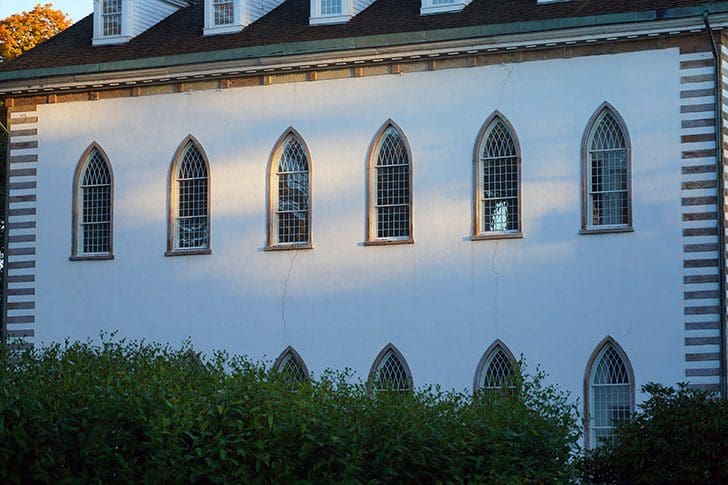
Grow added, “Any time you do this preservation work, there’s lots of questions to determine. Are we taking the building back to what it might have looked like on opening day or what about the rest of the history? What moment are you representing? Of course, there is clear indication in the sources, that the Kirtland Temple was not white as it is today. It was more of a bluish or bluish gray color initially. The Kirtland Temple also had a series of pulleys or curtains on the interior of the temple where the rooms could be partitioned, so there are lots and lots of questions we will be pondering over the next several years, but there are no decisions on anything immediately. The white Kirtland Temple is so iconic and beautiful.”
The significance of the Kirtland Temple to the restoration of Christ’s church is monumental. It’s both personal and global, going forth from this house to fill the entire earth.

Utt said, “The power of a place where Jesus Christ has appeared and the power of a place where ancient prophets have appeared and restored keys is huge. The way I live the gospel today, the ability I have to go to the temple and make covenants is because of the Kirtland Temple, so it is significant to all of us who live, but significantly to me personally because the way I live my life is dependent on events that happened in that space.”
Elder McKay said, “We claim to be the restored Church of Jesus Christ. When Jesus was upon the earth—and you can read about this in Matthew 16—he had a conversation with Peter while the rest of his apostles were listening. He told Peter, I’m going to build a church. It’s going to be built on the rock of revelation and he identified some other hallmarks that included the keys of the kingdom of heaven.
“Whatsoever ye shall bind on earth, shall be bound in heaven. Whatsoever ye shall loose on earth shall be loosed in heaven. Those keys were restored in the Kirtland Temple, so if you talk about a restoration of the gospel, a restoration of the church that Christ built primitively, then a huge part of that, an indispensable part of that, happened in the Kirtland Temple with the visitation first of the Savior, and then Moses, Elias and Elijah. That makes it incredibly significant to our faith and to each individual member of our faith.”
The Documents
The documents are their own gold mine of significance. They include the Bible and notes used for the Joseph Smith Translation, John Whitmer’s history of the church, some correspondence between Joseph and Emma and much more.
Grow said the letters between Joseph and Emma are special because they are written at really critical times in Joseph’s life. “One of the letters is the first time he visits New York City, and he’s kind of overwhelmed with the big metropolis he’s in. Another of the letters is when he is on the Camp of Israel or the Zion’s Camp expedition, at a time of a lot of drama and stress. Another two letters are from Liberty Jail and Richmond Jail so during that crisis in Missouri, and then two of the letters are in the final few days of his life, written from Carthage.
A small museum exhibit will happen in coming weeks where these foundational documents, as well as the Liberty Jail Door, and the portraits of Joseph and Emma Smith will be shown. Then, it appears, that the documents will be stored in the Church History archive and some of the artifacts will be at the Church History Museum. Many of the artifacts will remain in Kirtland and Nauvoo.
What has been noteworthy in this moving of stewardship from one church to another is the friendliness, good will, and spirit of cooperation that has been and will continue between The Church of Jesus Christ of Latter-day Saints and the Community of Christ.
Grow said, “We feel this sacred trust deeply and just as the Community of Christ has over the years preserved these sites and make them accessible to the world, so will we. We’ve had a strong relationship with Community of Christ historians over the years and I would anticipate that that would continue.”





SallyMarch 10, 2024
Thank you for putting the importance of this acquisition into perspective. The Lord has created a way for the Church to acquire it at this time. How blessed we are. We will sing and shout!