





In the book of Exodus, a pattern emerges with striking clarity. Deliverance comes first. Then an offer. Then instruction. Then a path back when failure enters the story. The sequence does not wander. It builds, step by step, into a covenant relationship grounded in identity, direction, and grace.
The opening movement centers on rescue. Israel does not earn freedom from Egypt. No negotiation secures release. The power of the Lord intervenes. Bondage breaks. A people long defined by labor and survival steps into open ground with little sense of what comes next. Liberation answers one question and raises many others. Freedom requires structure or it dissolves into confusion. The Lord answers by extending an invitation with simple force—Be my people.
This offer carries weight beyond belonging. It speaks to identity. A scattered group becomes a covenant community. The invitation does not erase past suffering, yet it reframes purpose. For Latter-day Saints, this moment echoes across dispensations. God gathers. God names. God sets apart. Covenant language binds individuals to Him and to one another. It creates shared direction, shared accountability, and shared hope.
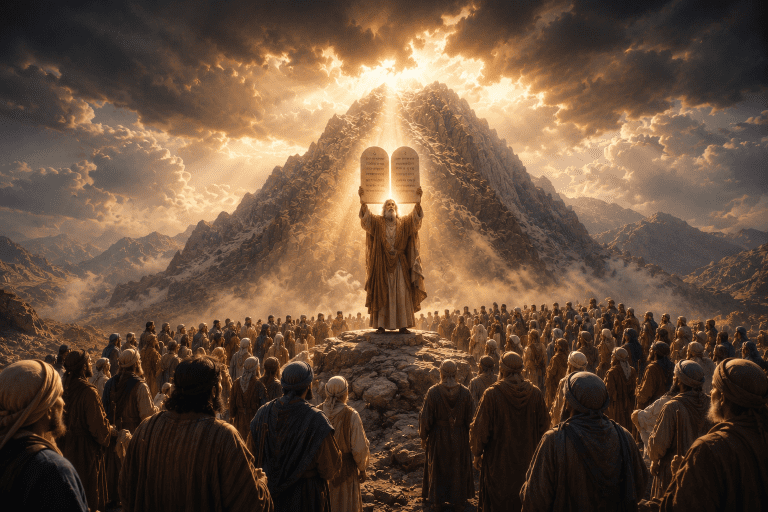
The call alone does not sustain a people. Direction must follow. At Sinai, instruction arrives with unmistakable clarity. The Ten Commandments do not serve as abstract ideals. They define a way of living designed to preserve both relationship with God and stability within the community. No other gods. No graven images. Honor His name. Keep the Sabbath. Honor father and mother. Do not kill. Do not commit adultery. Do not steal. Do not bear false witness. Do not covet. These commandments are not barriers. They provide a framework for honoring a relationship with God first, then with each other.
Each command gives direction. Each one guards something essential. Worship stays centered. Families hold together. Trust remains intact. Desire finds limits. In Latter-day Saint teaching, commandments operate as expressions of divine knowledge. They do not restrict growth. They enable it. Obedience aligns human will with divine intent. It shapes character over time. It builds capacity for greater light.
Obedience in Exodus does not appear as blind submission. It follows a demonstrated act of deliverance. The Lord who freed Israel now directs Israel. Trust grows from experience. In modern Latter-day Saint life, a similar pattern unfolds. Faith in Jesus Christ leads to repentance. Covenants follow. Commandments guide daily conduct. Each step reinforces the last. The structure holds firm because it rests on relationship rather than compulsion.
Still, the narrative does not present an idealized people. Failure enters quickly. While Moses remains on the mountain, impatience rises below. The golden calf appears. Worship shifts. Identity fractures. The same people who heard the voice of the Lord turn toward an image shaped by human hands. The scene carries urgency. It reveals how fragile commitment can become when memory fades or desire overtakes discipline.
At this point, the covenant could collapse. Justice alone would demand consequence. Yet mercy moves into the space created by failure. Moses intercedes. The Lord responds with both correction and continued presence. Consequences remain real. The relationship, however, does not end. A path back opens.
This pattern holds deep significance in Latter-day Saint doctrine. Agency allows choice. Choice brings consequence. Repentance restores. Through the Atonement of Jesus Christ, mercy does not cancel justice. It satisfies it in a way which permits growth beyond failure. Exodus presents an early witness of this principle in action. A covenant people falters, yet the Lord provides a means to continue forward.
Return requires humility. It asks for recognition of error, a turning of heart, and renewed commitment. In Exodus, Israel moves on with the tabernacle at the center of camp. God remains near. The relationship continues, marked by both memory of failure and evidence of forgiveness. In Latter-day Saint practice, return follows a similar course. Confession, forsaking sin, and seeking divine help rebuild what was damaged. Covenants do not vanish with a single misstep. They call for renewed effort.
The sequence of offer, instruction, and mercy forms a complete framework. Remove any part and the structure weakens. Without the initial call, identity drifts. Without commandments, behavior loses direction. Without mercy, failure ends the story. Together, they create a system designed for growth across time.
Exodus does not close this pattern. It introduces it. Later scripture expands it. In the Book of Mormon and modern revelation, the same elements appear with consistent purpose. God invites. God commands. God forgives. Each dispensation carries the same rhythm, adjusted to circumstance yet grounded in eternal principles.
For Latter-day Saints, covenant life grows from this foundation. Baptism marks entry into a relationship first offered by God. The sacrament renews commitment each week. Temple covenants deepen understanding and obligation. Throughout, commandments guide conduct. Repentance restores alignment when deviation occurs. The process remains active, not static. It requires attention, effort, and trust.
Exodus presents a people learning how to live after deliverance. The lessons do not age out. They speak to anyone who seeks structure within freedom. To accept the invitation to become His people means accepting guidance. To accept guidance means accepting accountability. To accept accountability means accepting the need for mercy when shortcomings arise.
The narrative moves forward with a people still imperfect, still learning, yet still bound to God by covenant. The same invitation continues to extend across time. Be my people. Walk in my ways. Return when you stray. The promise holds. The path remains open.