











On Thursday, June 27, 1844, four noble men, Joseph Smith the Prophet and President of The Church of Jesus Christ of Latter-day Saints, Hyrum Smith, the Patriarch and Assistant President of The Church, and apostles John Taylor and Willard Richards were held in the Carthage Jail in an upper bedroom of the building. Some minutes after 5:00 PM, a mob of between 100 and 200 men, with their faces painted black, stormed the Carthage Illinois Jail and within minutes they brutally murdered Hyrum and Joseph. Elder John Taylor was shot several times and severely wounded. Elder Willard Richards (who weighed 300 lbs. and was the largest target in the jail) came through the attack without a scratch. Two sealed their testimonies with their blood and the other two witnesses, Elder Richards and Elder Taylor, left accounts of the event which took place on this date, 181 years ago. Grammar, spelling, and syntax have been corrected and modernized from the original accounts for readability. Photographs are by Scot Facer Proctor.
Apostle Willard Richards
TWO MINUTES IN JAIL.
Possibly the following events, occupied near three minutes, but I think only about two, and have penned them for the gratification of many friends.
CARTHAGE, June 27th, 1844.
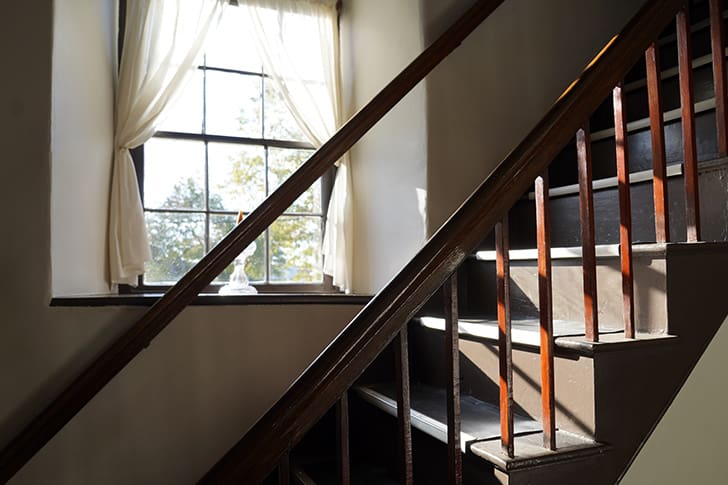 A shower of musket balls were thrown up the stairway against the door of the prison in the second story, followed by many rapid footsteps. While Generals Joseph and Hyrum Smith, Mr. Taylor and myself, who were in the front chamber, closed the door of our room against the entry at the head of the stairs, and placed ourselves against it, there being no lock on the door and no ketch that was useable. The door is a common panel, and as soon as we heard the feet at the stairs head, a ball was sent through the door, which passed between us, and showed that our enemies were desperadoes, and we must change our position.
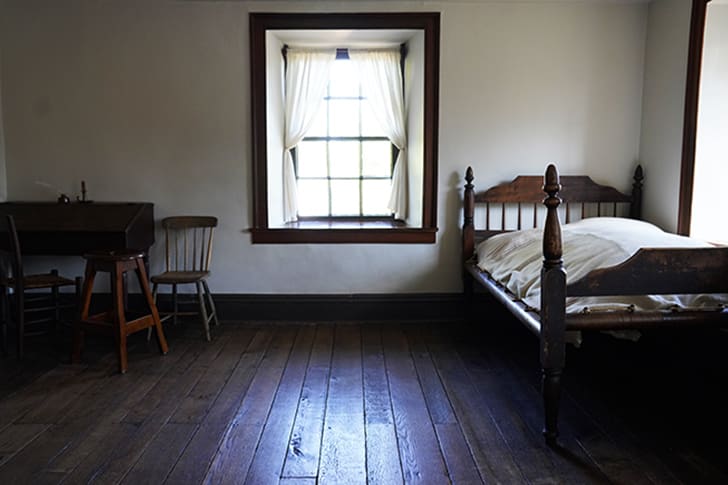
Gen Joseph Smith, Mr. Taylor, and myself sprang back to the front part of the room, and Gen. Hyrum Smith retreated two thirds across the chamber directly in front of and facing the door. A ball was sent through the door which hit Hyrum on the side of his nose when he fell backwards extended at length without moving his feet. From the holes in his vest, (the day was warm and no one had their coats on but myself,) pantaloons, drawers and shirt, it appears evident that a ball must have been thrown from without, through the window, which entered his back on the right side and passing through lodged against his watch, which was in his right vest pocket completely pulverizing the crystal and face, tearing off the hands and mashing the whole body of the watch, at the same instant the ball from the door entered his nose. As he struck the floor he exclaimed emphatically; “I’m a dead man.”
Joseph looked towards him, and responded, “O dear! Brother Hyrum!” and opening the door two or three inches with his left hand, discharged one barrel of a six shooter (pistol) at random in the entry from whence a ball grazed Hyrum’s breast, and entering his throat, passed into his head, while other muskets were aimed at him, and some balls hit him. Joseph continued snapping his revolver, round the casing of the door into the space as before, three barrels of which missed fire, while Mr. Taylor with walking stick stood by his side and knocked down the bayonets and muskets, which were constantly discharging through the door way, while I stood by him ready to lend any assistance with another stick, but could not come within striking distance, with-out going directly before the muzzle of the guns.
 When the revolver failed, we had no more fire arms, and expecting an immediate rush of the mob, and the door way full of muskets—half way in the room, and no hope but instant death from within—Mr. Taylor rushed into the window, which is some fifteen or twenty feet from the ground. When his body was nearly on a balance, a ball from the door within entered his leg, and a ball from without struck his watch, a patent lever, in his vest pocket, near the left breast, and smashed it in “pie,” leaving the hands standing at 5 o’clock, 16 minutes, and 26 seconds—the force of which ball threw him back on the floor, and he rolled under the bed which stood by his side, where he lay motionless, the mob from the door continuing to fire upon him, cutting away a piece of flesh from his left hip as large as a man’s hand, and were hindered only by my knocking down their muzzles with a stick; while they continued to reach their guns into the room, probably left handed, and aimed their discharge so far around as almost to reach us in the corner of the room to where we retreated and dodged, and then I re-commenced the attack with my stick again.
Joseph attempted as the last resort, to leap the same window from whence Mr. Taylor fell, when two balls pierced him from the door, and one entered his right breast from without, and he fell outward exclaiming, “O Lord my God!” As his feet went out of the window my head went in, the balls whistling all around. He fell on his left side a dead man. At this instant the cry was raised, “He’s leaped the window,” and the mob on the stairs and in the entry ran out. I withdrew from the window, thinking it of no use to leap out on a hundred bayonets, then around Gen. Smith’s body. Not satisfied with this I again reached my head out of the window and watched some seconds, to see if there were any signs of life, regardless of my own, determined to see the end of him I loved; being fully satisfied that he was dead, with a hundred men near the body and more coming round the corner of the jail, and expecting a return to our room, I rushed towards the prison door at the head of the stairs, and through the entry from whence the firing had proceeded, to learn if the doors into the prison were open.
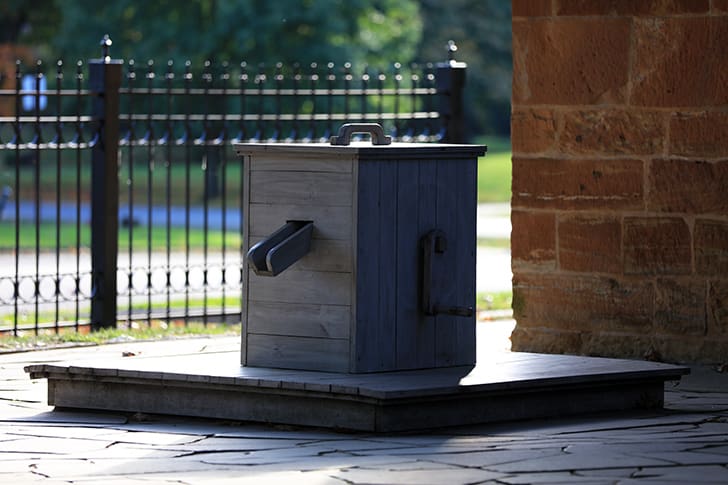
When near the entry, Mr. Taylor called out, “take me.” I pressed my way till I found all the doors unbarred; returning instantly caught Mr. Taylor under my arm, and rushed by the stairs into the dungeon, or inner prison, stretched him on the floor and covered him with a bed in such a manner as not likely to be perceived, expecting an immediate return of the mob. I said to Mr. Taylor, this is a hard case to lay you on the floor, but if your wounds are not fatal, I want you to live to tell the story. I expected to be shot the next moment, and stood before the door awaiting the onset.
–WILLARD RICHARDS.[1]
Apostle John Taylor
Brother Willard says, “Brother Joseph, if there is any scuffing to be done let me get it done and let you go,” and I said “If you will let me go, in a few hours I will have enough men to liberate you even if we tear down the prison.” He objected, preferring peace.
We all of us felt unusually dull and languid with a remarkable depression of spirits. In consonance with those feelings, I sang a song that had lately been introduced into Nauvoo entitled “A poor wayfaring man of grief.”
The song is pathetic and the tune quite plaintive and was very much in accordance with our feelings at the time, for our spirits were all depressed dull and gloomy and surcharged with indefinite ominous forebodings. After a lapse of some time Br. Hyrum requested me again to sing that song. I replied “Brother Hyrum, I do not feel like singing.”
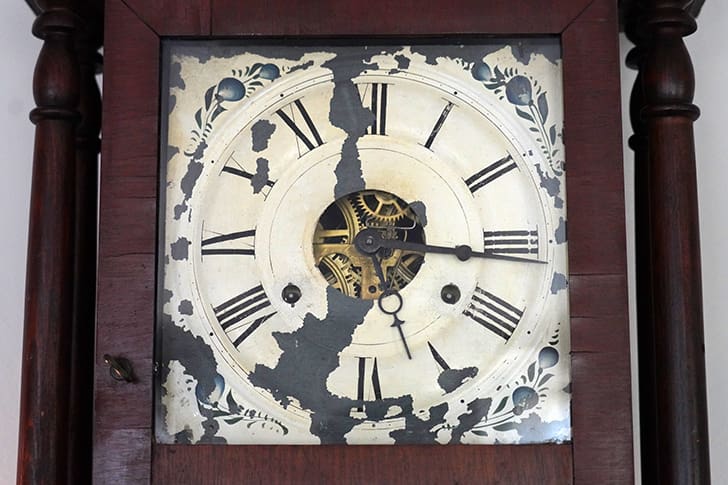 When he remarked; “Oh! never mind, commence singing and you will get the spirit of it.” At his request I did so. Soon afterwards I was sitting at one of the front windows of the jail, when I saw a number of men, with painted faces, coming around the corner of the jail, and aiming towards the stairs. The other brethren had seen the same; for, as I went to the door, I found Br. Hyrum Smith and Dr. Richards already leaning against it, they both pressed against the door with their shoulders, to prevent its being opened; as the lock and latch were comparatively useless. While in this position, the mob, who had come up stairs and strove to open the door, probably thought it was locked and fired a ball through the keyhole…

…at this Dr. Richards and Br. Hyrum leapt back from the door, Br. Hyrum standing right opposite to the door, with his face towards it; almost instantly another ball passed through the panel of the door and struck Br. Hyrum on the left side of the nose and entering his face and head; simultaneously, at the same instant, another ball from the outside entered his back passing through his body and striking his watch. The ball came from the back through the jail opposite the door and jail and must, from its range, have been fired from the Carthage Greys; as the [line or aim] of fire arms shot close by the jail would have entered the ceiling, we being in the second story and there never was a time after that Hyrum could have received the latter wound. Immediately when the balls struck him he fell [on] his back, crying as he fell “I am a dead man. He never moved afterward.
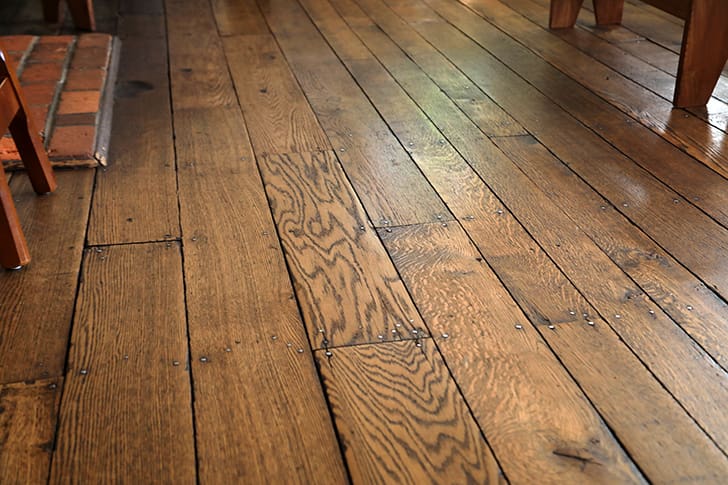
I shall never forget the feeling of deep sympathy and regard manifested in the countenance of Br. Joseph as he drew nigh to Hyrum & leaning over him exclaimed; “Oh! My poor dear brother Hyrum!” He, however, instantly arose, and with a firm quick step and a determined expression of countenance approached the door, and pulling the six shooter (left by Br. Wheelock), from his pocket, opened the door slightly and snapped the pistol six successive times; only three of the barrels, however, discharged. I afterwards understood that two or three were wounded by these discharges, two of whom, I am informed, died. I had in my hands a large strong hickory stick, brought there by Br. Markham and left by him, which I had seized as soon as I saw the mob approach; and while Br. Joseph was firing the pistol, I stood close behind him.
As soon as he had discharged it, he stepped back and I immediately took his place next the door, whilst he occupied the one I had done while he was shooting. Dr. Richards, at this time, had a knotty walking stick in his hands belonging to me and stood next to Br. Joseph, a little further from the door in an oblique direction, apparently to avoid the rake of the fire from the door. The firing of Br. Joseph made our assailants pause for a moment, very soon after, however, they pushed the door some distance open and protruded and discharged their guns into the room when I parried them off with my stick, giving another direction to the balls.
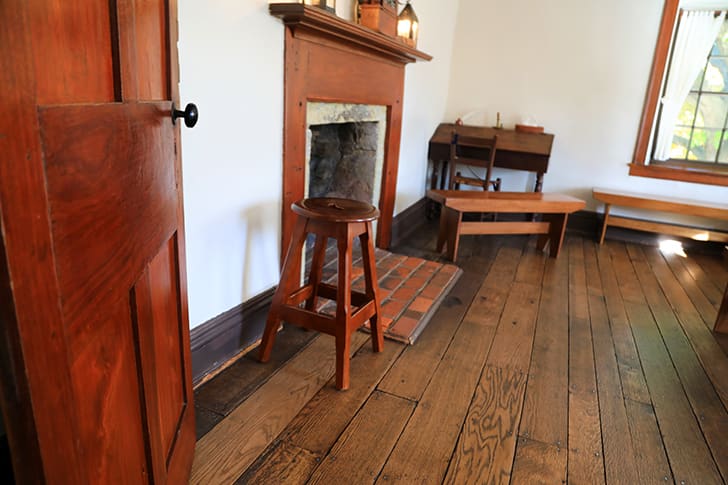
It certainly was a terrible scene; streams of fire as thick as my arm passed by me as these men fired; and unarmed, as we were, it looked like certain death. I remember feeling as though my time had come; but I do not know when, in any critical position I was more calm, unruffled and energetic, and acted with more promptness and decision. It certainly was far from pleasant to be so near the muzzles of those fire arms as they belched forth their liquid flame and deadly balls. While I was engaged in parrying the guns, Br. Joseph said; “That’s right Br. Taylor, parry them off as well as you can.” These were the last words I ever heard him speak on earth.
Every moment the crowd at the door became more dense as they were unquestionably pressed on by those in the rear ascending the stairs until the whole entrance, at the door was literally crowded with muskets and rifles; whilst with the swearing, shouting and demoniacal expressions, of those outside the door and on the stairs and the firing of guns mingled with their horrid oaths and execrations made it look like pandemonium let loose, and was, indeed a fit representation of the horrid deed in which they were engaged.
After parrying the guns for some time, which now protruded thicker and further into the room, and seeing no hope of escape, or protection there, as we were now unarmed, it occurred to me that we might have some friends outside, There might then be some chance of escape; but here there seemed to be none. As I expected them every moment to rush into the room— and nothing but extreme cowardice that kept them out— as the tumult and pressure increased, without any other hope, I made a spring for the window, which was right in front of the jail door, where the mob was standing, and also exposed to the fire of the Carthage Greys, who were stationed some ten or twelve rods off.

The weather was hot, we all of us had our coats off and the window was raised to admit air. As I reached the window and was on the point of leaping out, I was struck by a ball from the door, about midway of my thigh, which struck the bone and flattened out almost to the size of a quarter dollar, and then passed on through the fleshy part to within about half an inch of the outside. I think some prominent nerve must have been severed or injured, for as soon as the ball struck me, I fell like a bird when shot, or an ox struck by a butcher, and lost entirely and instantaneously all power of action or locomotion. I fell onto the window sill and cried out “I am shot.” Not possessing any power to move, I felt myself falling outside of the window; but immediately I fell inside, from to me, at that time, an unknown cause; when I struck the floor my animation seemed restored, as I have sometimes seen squirrels and birds after being shot. As soon as I felt the powers of motion, I crawled under a bed which was in a corner of the room not far from the window when I received my wound. While on my way and under the bed, I was wounded in three other places; one ball entered a little below the left knee and never was extracted; another entered the fore part of my left arm a little above the wrist, and passing down by the joint it lodged in the fleshy part of my hand, about midway in my hand and a little above the upper joint of my little finger.
Another struck me on the fleshy part of the left hip and tore away the flesh, as large as my hand, dashing the mangled fragments of flesh and blood against the wall. My wounds were painful and the sensation produced was as though a ball had passed through and down the whole length of my leg. I very well remember my reflections, at the time. I had a very painful idea of becoming lame and decrepit and being an object of pity, and I felt as though I had rather die than be placed in such circumstances.
It would seem that immediately after my attempt to leap out the window, Joseph also did the same thing, of which circumstance, I have no knowledge only from information. The first thing that I noticed was a cry that he “had leapt out of the window.” A cessation of firing followed, the mob rushed down stairs. Dr. Richards went to the window.
Immediately afterwards I saw the Dr. going towards the jail door, and as there was an iron door at the head of the stairs adjoining our door which led into the cells for criminals, it struck me that the Dr. was going in there and I said to him stop Dr. and take me along; he proceeded to the door and opened it, and then returned and dragged me along to a small cell prepared for criminals.
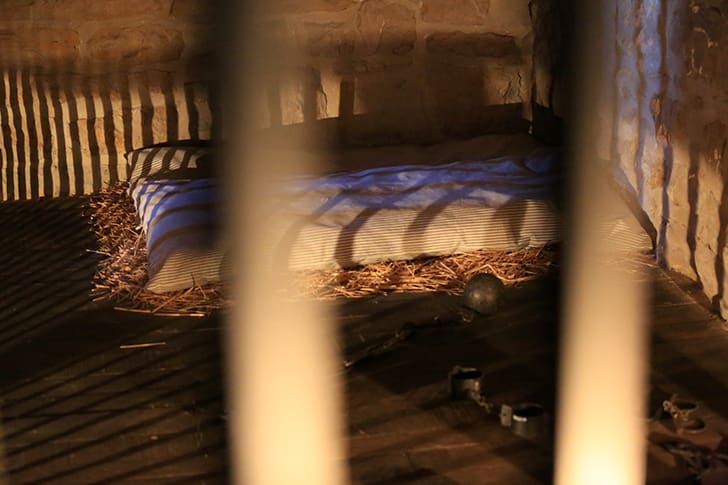 Br. Richards was very much troubled and exclaimed: “Oh! Br. Taylor is it possible that they have killed both Br. Hyrum and Joseph! It cannot surely be, and yet I saw them shoot him,” and elevating his hands two or three times he exclaimed “Oh Lord, my God, spare thy servants!” he then said “Br. Taylor this is a terrible event, and he dragged me further into the cell saying, “I am sorry I cannot do better for you.” and taking an old filthy mattrass he covered me with it and said; “That may hide you and you may yet live to tell the tale; but I expect they will kill me in a few moments.” While laying in this position, I suffered the most excruciating pain.
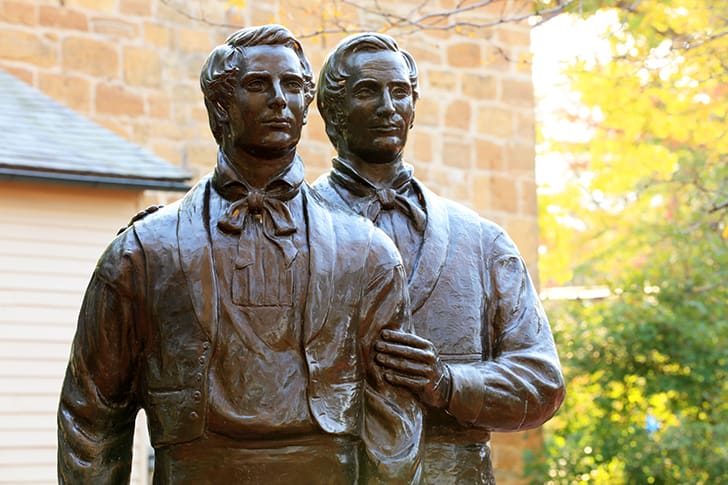
Soon afterwards Br. Richards came to me informing me that the mob had precipitately fled, and at the same time confirming my worst fears, that Joseph was assuredly dead. I felt a dull lonely sickening sensation at the news. When I reflected that our noble chieftain, the Prophet of the living God, had fallen, and that I had seen his brother in the cold embrace of death, it seemed as though there was an open void or vacuum in the great field of human existence to me, and a dark, gloomy chasm, blank or, void in the Kingdom and that we were left alone. Oh! how lonely was that feeling! How cold, barren and desolate! In the midst of difficulties, he was always the first in motion; in critical positions his counsel was always sought: As our Prophet he approached our God and obtained for us his will; but now our Prophet, our Counsellor, our General, our Leader was gone; and amid the fiery ordeal that we then had to pass through, we were left alone without his aid; and as our future guide, for things spiritual or temporal— for all things pertaining to this world or the next— he had spoken for the last time on earth.
These reflections and a thousand others flashed upon the mind. I thought why must the good perish and the virtuous be destroyed? Why must God’s nobility, the salt of the earth, the most exalted of the human family; and the most perfect types of all excellence, fall victims to the cruel, fiendish hate of incarnate devils?
The poignancy of my grief, I presume, however, was somewhat allayed by the extreme suffering that I endured from my wounds.
Soon afterwards I was taken to the head of the stairs and laid there where I had a full view of our beloved, and now murdered Br. Hyrum. There he lay as I had left him, he had not moved a limb; he lay placid and calm, a monument of greatness even in death; but his noble spirit had le[ft] its tenement and gone to dwell in regions more congenial to his exalted nature. Poor Hyrum! He was a good man and my soul was cemented to his. If ever there was an exemplary, honest, good and virtuous man, an embodiment of all that is noble in the human form, Hyrum Smith was its representative.
While I lay there a number of persons came around, among the rest a physician; the Doctor on seeing a ball lodged in my left hand, took a penknife from his pocket and made an incision in my hand, for the purpose of extracting the ball therefrom; and having obtained a pair of carpenters compasses, made use of them to draw or pry out the ball; alternately using the penknife and compasses. After sawing for some time with a dull pen knife and prying and pulling with the compasses, he ultimately succeeded in extracting the ball, which was about an half-ounce one. Sometime afterwards he remarked to a friend of mine that I “had nerves like the Devil to stand what I did, in its extraction.” I really thought I had need of nerves to stand such surgical butchery, and that whatever my nerves might be, his practice was devilish.[2]
From Eliza R. Snow
Eliza R. Snow deeply mourned the deaths of Joseph and Hyrum and using her gift of writing, she penned these words that were published three days after the Martyrdom in the Times and Seasons in Nauvoo. We publish but 18 lines of her 83 line poem:
 Now Zion mourns—she mourns an earthly head:
The Prophet and the Patriarch are dead!
The blackest deed that men or devils know
Since Calv’ry’s scene, has laid the brothers low!
One in their life, and one in death—they prov’d
How strong their friendship—how they truly lov’d:
True to their mission, until death they stood,
Then seal’d their testimony with their blood.
All hearts with sorrow bleed, and every eye
Is bath’d in tears—each bosom heaves a sigh—
Heart broken widows’ agonizing groans
Are mingled with the helpless orphans’ moans!
Ye Saints! be still, and know that God is just—
With steadfast purpose in his promise trust:
Girded with sackcloth, own his mighty hand,
And wait his judgments on this guilty land!
The noble martyrs now have gone to move
The cause of Zion in the courts above.[3]
Notes
[1] (Source: Two Minutes in Jail, 19th Century Mormon Article Newspaper Index; 1844-09-14 Brigham Young University – Harold B. Lee Library)
[2] John Taylor, martyrdom account; handwriting of John Taylor; 67 pages; CHL. John Taylor, Martyrdom Account, pp. 47- 54, The Joseph Smith Papers.
[3] Times and Seasons, 1 July 1844, p. 575.





Carlin BartschiJune 30, 2025
In the mid-1980s we visited Carthage jail with our family and carefully looked around at--and felt the spirit of--that sacred place and relics, including the long-dried blood of Joseph on the floor in front of the window. Not long after the turn of this century my wife and I visited there again with some friends and since it was the friends' first time we were showing them the fateful cell. We approached the window from which Joseph was shot/lept/was killed and looked at the floor. The curator/missionary there said, "If you are looking for Joseph's blood, it is no longer there. President Kimball visited here a couple of years ago and upon seeing the blood still preserved on the floor in-situ, asked that it be cleaned up and varnished over, stating, 'It's time that we let some things heal.'"
Richard JukesJune 28, 2025
Superlative rendition and very sentimental portraits/photographs that bring back the very deep feelings of our tender visit there. Thank you so much for sharing!