




How Joseph Smith was Given the Spirit and Power of all the Prophets

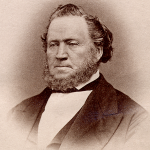
Joseph Smith was a unique individual, differing from every other religious leader in Christian history. Joseph’s brother, Hyrum Smith, once observed, “There were prophets before, but Joseph has the spirit and power of all the prophets” (History of the Church, 6:346).
President George Q. Cannon later explained why this is so. As head of the final dispensation—which Paul described as the “dispensation of the fullness of times in which God would gather together in one all things in Christ” (Ephesians 1:10)—it was Joseph Smith’s right and privilege to be visited and tutored by every former prophet who held priesthood authority and keys.
“He was visited constantly by angels,” President George Q. Cannon said of Joseph Smith. “These various angels, the heads of dispensations, . . . ministered unto him. . . . He had vision after vision in order that his mind might be fully saturated with a knowledge of the things of God, and that he might comprehend the high and holy calling that God had bestowed upon him” (Journal of Discourses, 23:362).
President Cannon further noted: “He, therefore, received the ministration of divers angels—heads of dispensations—from Michael or Adam down to the present time; every man in his time and season coming to him, and all declaring their dispensation, their rights, their keys, their honors. Joseph, the head of this dispensation, Prophet, Seer and Revelator, whom God raised up, received from all these different sources, according to the mind and will of God, and according to the design of God concerning him; he received from all these different sources all the power and all the authority and all keys that were necessary for the building up of the work of God in the last days, and for the accomplishment of His purposes connected with this dispensation. He stands at the head. He is a unique character, differing from every other man in this respect, and excelling every other man” (Journal of Discourses, 23:361).
President John Taylor similarly testified that Joseph received from the leading prophets of all previous gospel dispensations “authority and keys and priesthood power for the carrying out of the great purposes of the Lord in the last days.” Those prophets were “sent and commissioned specially by the Almighty to confer upon him those keys and this authority” (Journal of Discourses, 20:174-175).
President Taylor also noted that the Prophet Joseph was not only conversant with every prophet who officiated at the head of each gospel dispensation, but also with many other angelic ministrants as well: “When Joseph Smith was raised up as a prophet of God, Mormon, Moroni, Nephi and others of the ancient Prophets who formerly lived on this Continent, and Peter and John and others who lived on the Asiatic Continent, came to him and communicated to him certain principles pertaining to the Gospel of the Son of God. Why? Because they held the keys of the various dispensations, and conferred them upon him, and he upon us” (Journal of Discourses, 17:374).
Through the ministry of former apostles and prophets, Joseph Smith came to know the place and role of his ministry in world history. On 12 May 1844, just a few weeks before his death, the Prophet Joseph taught that he “was chosen [to be] … the last and greatest prophet to lay the foundation of God’s work of the seventh dispensation” (The Words of Joseph Smith, comp. and ed. Andrew F. Ehat and Lyndon W. Cook, 1980, 370). He learned that “In the days of Noah, God destroyed the world by a flood, and He has promised to destroy it by fire in the last days” (Teachings of the Prophet Joseph Smith, 1938, 337). Lorenzo Snow once overheard the Prophet respond to the question, “Who are you?” with the reply, “Noah came before the flood. I have come before the fire” (Diary of Abraham H. Cannon, entry for 1 January 1892; as cited in An Apostle’s Record: The Journals of Abraham H. Cannon, 2004, 229).
Not only did ancient prophets know of Joseph Smith and prophesy of his mission, he also knew them personally and intimately. Church member Joseph Bates Noble recalled: “I went to Kirtland….where I saw for the first time Joseph
Smith. I went with him to a field and helped him mow some hay. While
There, he gave me much information in relation to the Book of Mormon, etc. He told me that the voices of the angels became so familiar that he knew their names before he saw them” (A Journal or Diary of Joseph Bates Noble 1810-1834, BYU Special Collections Library, typescript, 3).
It’s one thing to read the Bible, and another thing entirely to know and meet its authors. The Prophet Joseph Smith had that privilege. Several different researchers have compiled lists of personages who appeared to the Prophet Joseph Smith, or who were seen by Him in vision. Here is one such list compiled by Brian L. Smith, of heavenly messengers who taught the Prophet Joseph. (Sources for additional lists of personages to who appeared to the Prophet are provided below.)
The following is a list of many of the personages who appeared to Joseph Smith and restored keys or delivered divine instructions.
| Personage | Selected References | Keys given or nature or appearance |
| God the Father | JS-H 1:17; HC 1:5; D&C 76:2 | Opened this dispensation introduced the Son. |
| Jesus Christ | JS-H 1:17; HC 1:5–6; D&C 76:20–24; 110:2–10 | Called Joseph as a prophet; accepted the temple. |
| Moroni | JS-H 1:30–49, 59; JD 17:374 | Tutored Joseph; gave him keys of stick of Ephraim |
| John the Baptist | D&C 13:1; HC 1:39–42 | Restored Aaronic Priesthood and its keys. |
| Peter, James, John | D&C 27:12; 128:20; JD 18:326; HC 1:40–42 | Restored Melchizedek Priesthood and apostleship and keys. |
| Moses | D&C 110:11; JD 21:65; 23:48 | Restored keys of gathering and leading the ten tribes. |
| Elias | D&C 27:6; 110:12; JD 23:48 | Committed the “gospel of Abraham” |
| Elijah | D&C 110:13–16 | Conferred the sealing power. |
| Adam (Michael) | HC 2:380; 3:388; D&C 128:21; JD 18:326; 21:94; 23:48 | Restored keys (perhaps of the presidency over the earth). |
| Noah (Gabriel) | D&C 128:21; JD 21:94; 23:48 | Restored keys (perhaps of the power to preach the gospel). |
| Raphael | D&C 128:21 | Restored keys (perhaps of the dispensation of Enoch’s day). |
| Various angels | D&C 128:21 | Restored keys (all declaring their individual dispensation). |
| Lehi | JD 16:265–66 | Ministered to him. |
| Nephi | JD 21:161; 16:266; 17:374 | Tutored Joseph; gave him keys. |
| Mormon | JD 17:374 | Tutored Joseph; gave him keys. |
| Unnamed angel | D&C 27; HC 1:106 | Taught concerning use of wine in the sacrament. |
| Unnamed angel | Life of Heber C. Kimball; Temples of the Most High | Sent to accept dedication of the Kirtland temple. |
| Unnamed angel | Biography and Family Records of Lorenzo Snow | Visited Joseph three times; commanded him to practice plural marriage, as previously revealed by the Lord. |
Although keys, instructions, or information may have been given by some of the personages in the following list, they are generally noted as simply having been seen by Joseph.
| Abel | JD 18:325; HC 3:388 |
| Seth | JD 21:94; D&C 107:53–57; HC 3:388 |
| Enos | HC 3:388; D&C 107:53–57; HC 3:388 |
| Cainan | HC 3:388; D&C 107:53–57 |
| Mahalaleel | JD 18:325; D&C 107:53–57; HC 3:388 |
| Jared (Bible) | HC 3:388; D&C 107:53–57 |
| Enoch | HC 3:388; D&C 107:53–57; JD 21:65 |
| Methuselah | JD 18:325; D&C 107:53–57; HC 3:388 |
| Lamech | JD 18:325 |
| Eve | Oliver B. Huntington diary |
| Abraham | D&C 27:10; JD 21:94; 23:48 |
| Isaac | D&C 27:10; JD 21:94 |
| Jacob | D&C 27:10; JD 21:94 |
| Joseph, son of Jacob | D&C 27:10 |
| Twelve Jewish Apostles (Peter, James, and John already counted above) | JD 21:94 (Names in Matthew 10:1–4, Luke 6:13–16) |
| Twelve Nephite Apostles (Includes the Three Nephites) | JD 21:94 (Names recorded in 3 Nephi 19:4) |
| Zelph the Lamanite | Times & Seasons, 6:788 |
| Alvin Smith (Joseph’s deceased brother) | HC 2:380 |
| Paul | TPJS 180 |
| Alma | JD 13:47 |
| “I saw many angels” | Warren Cowdery’s account of the First Vision |
| Satan and his associates | JSH 1:15–16; D&C 128:20; JD 3:299–30 |
Additional Sources for lists of Personages who appeared to the Prophet:
- Brian L. Smith, “Taught from on High”: The Ministry of Angelic Messengers to the Prophet Joseph Smith, in Joseph Smith and the Doctrinal Restoration, BYU Religious Studies Center, 2005, 332–45.
- H. Donl Peterson, in Moroni: Ancient Prophet, Modern Messenger, Cedar Fort Inc., 138-140.
- H. Donl Peterson, Appendix B, in Joseph Smith: The Prophet, The Man, BYU Rel. Studies Center, 1993, 184-186.
- Wayne J. Lewis, Jana Lee Cox, Lee Nelson, 500 Little-Known Facts about Joseph Smith, Cedar Fort Inc., 33-38.
- Hyrum Andrus, Joseph Smith, the Man and the Seer, Deseret Book, 95.
Are the Articles of Faith Outdated?

During my lifetime, I have seen the Articles of Faith go through a cultural change. For many of us, graduation from Primary at age 12 and subsequent advancement to the Mutual Improvement Association included memorizing the Articles of Faith and reciting one of them in sacrament meeting as a rite of passage. It was also customary for missionaries to have personalized business cards. These were often printed with their home contact information and a picture of a temple on one side, and the Articles of Faith on the other. Since it has been 182 years since Joseph Smith wrote these thirteen statements and since these traditions have been discontinued, are we to infer that the Articles of Faith are less important than they once were?
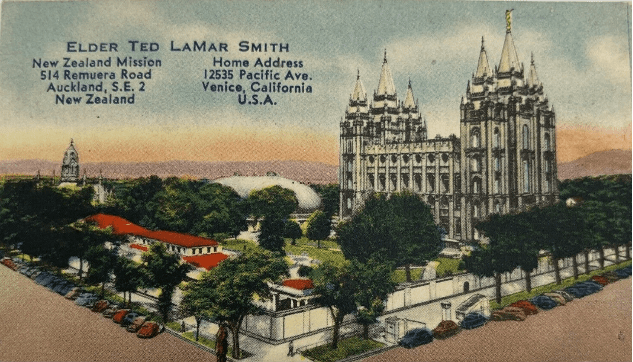
(I found this missionary calling card on the Internet.)
John Wentworth, editor of a Chicago newspaper, requested information on the history and beliefs of the Church of Jesus Christ of Latter-day Saints. In response, Joseph listed thirteen statements of belief at the end of a short history. Mr. Wentworth did not publish Joseph’s letter, so Joseph had it published in the Nauvoo newspaper, Times and Seasons, March 1, 1842.
This list was not the first time a church leader had composed a summary of church beliefs.
In 1834, Oliver Cowdery wrote eight “we believe” statements.
In 1836, Joseph Young wrote five “we believe” statements.
In 1839, Parley P. Pratt wrote eighteen “principles and doctrines.”
In 1840, Orson Pratt wrote nineteen “we believe that” statements.
In 1842, Orson Hyde wrote sixteen essays on gospel topics.
As I read these precursors to Joseph’s thirteen statements, I noted that Joseph used many of the ideas and language from earlier versions. However, his thirteen are the shortest, clearest, most concise, and most evidentiary of a prophetic voice. He left thousands of words on the cutting room floor, so to speak. Two examples of words or thoughts that Joseph did not use:
- From Elder Parley P. Pratt: “The first principle of Theology as held by this Church, is Faith in God the eternal Father, and in his Son Jesus Christ, who verily was crucified for the sins of the world… and in the Holy Ghost who bears record of them” (https://www.josephsmithpapers.org/paper-summary/parley-p-pratt-history-of-the-late-persecution-1839/1#full-transcript).
- From Elder Orson Hyde’s version, or antecedent, of what is now Article of Faith 13: “Everything virtuous, lovely, praiseworthy, and of good report we seek after, looking forward to the ‘recompense of reward.’ But an idle or lazy person cannot be a Christian, neither have salvation. He is a drone, and destined to be stung to death and tumbled out of the hive” (https://www.fairlatterdaysaints.org/answers/Articles_of_Faith/Differing_versions).
Imagine Primary children understanding “drone” and reciting these words in sacrament meeting!
Three additional facts:
- It wasn’t until 1877 that the list of thirteen statements received a name. Orson Pratt coined: Articles of Our Faith.
- While the Articles of Faith is not a complete overview of all core principles of the gospel, it is comprehensive enough for Elder James E. Talmage to write a 458-page book called The Articles of Faith and for Elder Bruce R. McConkie to author a 719-page book titled A New Witness for the Articles of Faith. Over 1,100 pages written about a 398-word document!
- Essential aspects of Church doctrine not mentioned in the Articles of Faith include temple and family history, the three degrees of glory, the resurrection, and the importance of marriage and family.
We know the how, when, what, and where of the Articles of Faith, but we haven’t addressed the why. It seems Joseph wrote The Articles of Faith to answer the question: How is your church different from other churches? To determine whether this is the case, I formulated thirteen questions, one for each article of faith, according to the answer each provides.
Article 1
Question: What doctrine is held by the Church of Jesus Christ of Latter-day Saints regarding the Godhead?
Answer: We believe in God, the Eternal Father, and in His Son, Jesus Christ, and in the Holy Ghost.
Beliefs in Joseph’s time: The prevailing belief about the Godhead in other Christian churches, then and now, is that the Father, Son, and Holy Spirit are three persons in one substance. This doctrine was debated by Arias and Athanasius at the Council of Nicaea in A.D. 325. Emperor Constantine, who wanted to stop infighting between Christian factions, sided with Athanasius who argued that the Son is of the same substance as the Father. Little was said about the Holy Spirit. “Over the next half century, St. Athanasius defended and refined the Nicene formula, and, by the end of the 4th century, the doctrine of the Trinity took substantially the form it has maintained ever since” (https://www.britannica.com/topic/Trinity-Christianity). Neither the word nor the doctrine of the Trinity is found in the Bible.
Article 2
Question: What doctrine is held by the Church of Jesus Christ of Latter-day Saints regarding original sin?
Answer: We believe that men will be punished for their own sins, and not for Adam’s
transgression.
Beliefs in Joseph’s time: St. Augustine, who was born three hundred years after Jesus died, was the first to teach original sin—the concept that all human beings inherit Adam’s sin of eating the forbidden fruit. Most churches believed the greatest calamity to befall humankind was Adam eating the fruit, and that anyone who died unbaptized went to hell. The Joseph Smith Sr. family felt the devastation of this false doctrine when their oldest son and brother died at age 25. The Presbyterian minister who officiated at Alvin’s funeral intimated that because Alvin was not a member of that congregation, he could not be saved (https://www.churchofjesuschrist.org/study/manual/teachings-joseph-smith/chapter-35?lang=eng). This teaching is not in the Bible.
Article 3
Question: What doctrine is held by the Church of Jesus Christ of Latter-day Saints regarding those eligible to receive salvation through the Atonement of Jesus Christ?
Answer: We believe that through the Atonement of Christ, all mankind may be saved, by obedience to the laws and ordinances of the Gospel.
Beliefs in Joseph’s time: Most churches were teaching a limited atonement. They taught that God chooses, elects, or predestinates who will and won’t be saved. Also, they believed what Martin Luther and many other Protestants taught: that salvation comes only by grace. They rejected the idea that works are necessary. They taught that a one-time verbal commitment to Jesus is all a person needs to do to be saved. (I always wonder why He gave commandments if works aren’t part of the salvation equation.)
Article 4
Question: What are the foundational principles and ordinances of the Church of Jesus Christ of Latter-day Saints?
Answer: We believe that the first principles and ordinances of the Gospel are: first, Faith in the Lord Jesus Christ; second. Repentance; third, Baptism by immersion for the remission of sins; fourth, Laying on of hands for the gift of the Holy Ghost.
Beliefs in Joseph’s time: The churches in Joseph’s day baptized by immersion, by pouring water over the head, or by aspersion (sprinkling). Baptism was a rite of entry, a way to be welcomed into a church community. It was not a covenant, nor could it be renewed by partaking of the sacrament for the rest of a person’s life. No churches were confirming the Holy Ghost.
Article 5
Question: Where does the Church of Jesus Christ of Latter-day Saints get its authority?
Answer: We believe that a man must be called of God, by prophecy, and by the laying on of hands by those who are in authority, to preach the Gospel and administer in the ordinances thereof.
Beliefs in Joseph’s time: Ministers of Joseph’s time were typically charismatic, self-appointed men. Since the Protestant schism with the Catholic Church, Protestants believed God called ministers by personal inspiration—nothing official. Baptism could be performed by a minister or by a lay person the minister delegated. John Wesley, who founded Methodism, taught that authority to preach came from the Bible. When John’s brother Charles heard that John had laid hands on Thomas Coke to make him a bishop,
Charles wrote to John:
So easily are Bishops made
By man’s or woman’s whim?
Wesley his hands on Coke hath laid,
But who laid hands on him?
Article 6
Question: What are the leaders and officers within the Church of Jesus Christ of Latter-day Saints called?
Answer: We believe in the same organization that existed in the Primitive Church, namely, apostles, prophets, pastors, teachers, evangelists, and so forth. Beliefs in Joseph’s time: In the 1820s, every Protestant denomination had its own hierarchy. Some ministers were self-appointed. Some fledgling groups had a minister and converts. Some were organized by bishops, others by itinerant preachers. Some met with their members to create constitutions. Some ministers were chosen by majority vote. Some were organized like a business with a president, vice president, secretary, and treasurer.
Article 7
Question: Does the Church of Jesus Christ of Latter-day Saints believe in spiritual gifts?
Answer: We believe in the gift of tongues, prophecy, revelation, visions, healing, interpretation of tongues, and so forth.
Beliefs in Joseph’s time: There were divergent opinions about gifts of the spirit in the 1800s. There were groups like the Shakers that exhibited feeling the Spirit by ecstatic babbling, uncontrollable crying, running in circles, or barking like a dog. (Joseph knew that the presence of the Holy Ghost brought joy and peace, not chaos or commotion.) Some churches taught that spiritual gifts ended when the New Testament was complete. “Spiritual gifts could only be imparted by an apostle and had a limited purpose for the days of ‘in part’ revelation. But now, the miraculous gifts of the Holy Spirit have ceased” (https://www.pblcoc.org/bulletin-articles/spiritual-gifts-have-ceased).
Article 8
Question: Has the Church of Jesus Christ of Latter-day Saints replaced the Bible with the Book of Mormon?
Answer: We believe the Bible to be the word of God as far as it is translated correctly; we also believe the Book of Mormon to be the word of God.
Beliefs in Joseph’s time: Protestants and Catholics believed in the Bible and used many different versions.
Article 9
Question: Do Latter-day Saints believe in visions or revelations that are not included in the Bible?
Answer: We believe all that God has revealed, all that He does now reveal, and we believe that He will yet reveal many great and important things pertaining to the Kingdom of God.
Beliefs in Joseph’s time: Protestants generally did not believe in continuing revelation, which is the idea that God continues to speak to Christians beyond the Bible. They believed that the modern age was not a period of continuing revelation. “All such things…ceased with the apostles…. There [will] never be any more of them” (Joseph Smith-History 1:21). Martin Luther did not believe in continuing revelation nor in the Book of Revelation, the last book of the New Testament. He said: “I leave everyone free to hold his own opinions…. It makes me consider it to be neither apostolic nor prophetic”
(https://www.universitylutheran.church/luther-on-revelation.html).
Article 10
Question: What does the Church of Jesus Christ of Latter-day Saints teach about the Second Coming?
Answer: We believe in the literal gathering of Israel and in the restoration of the Ten Tribes; that Zion (the New Jerusalem) will be built upon the American continent; that Christ will reign personally upon the earth; and, that the earth will be renewed and receive its paradisiacal glory.
Beliefs in Joseph’s time: The Second Great Awakening was a Protestant revival of the early 19th century in which end times and the Second Coming were a major focus. For example, a Baptist preacher, William Miller, predicted that Jesus Christ would return October 22, 1844. He had 100,000 followers in the United States and Canada. In the tenth Article of Faith, the Prophet Joseph added to the prevailing beliefs about the Second Coming: that the Ten Tribes will return as part of the gathering of Israel, that Zion will be built in America and be named New Jerusalem, and that Earth will become a Garden of Eden.
Article 11
Question: What is the position of the Church of Jesus Christ of Latter-day Saints concerning members of other churches, as well as those churches’ beliefs?
Answer: We claim the privilege of worshiping Almighty God according to the dictates of our own conscience, and allow all men the same privilege, let them worship how, where, or what they may.
Beliefs in Joseph’s time: In Joseph Smith-History, he wrote about the strife among the Methodists, Presbyterians, and Baptists who were vying for converts. “For, notwithstanding the great love which the converts to these different faiths expressed at the time of their conversion, and the great zeal manifested by the respective clergy, who were active in getting up and promoting this extraordinary scene of religious feeling, in order to have everybody converted, as they were pleased to call it, let them join what sect they pleased; yet when the converts began to file off, some to one party and some to another, it was seen that the seemingly good feelings of both the priests and the converts were more pretended than real; for a scene of great confusion and bad feeling ensued—priest contending against priest, and convert against convert; so that all their good feelings one for another, if they ever had any, were entirely lost in a strife of words and a contest about opinions” (JS-History 1:6). Joseph’s wording in the eleventh Article of Faith states the respectful and magnanimous position of the Church and sets an extremely high bar, then and now, as members and missionaries strive to take the gospel to the ends of the earth. “We claim” is a bold statement. It is like claiming baggage at the airport. It is yours. You and I claim these rights for ourselves and everyone else.
Article 12
Question: What does the Church of Jesus Christ of Latter-day Saints teach about obeying the laws of the land?
Answer: We believe in being subject to kings, presidents, rulers, and magistrates, in obeying, honoring, and sustaining the law.
Beliefs in Joseph’s time: Here, again, in an article of faith, Joseph addressed a current issue. As Nauvoo grew in notoriety and rivaled Chicago in size and importance, people wondered how the Saints felt about the government, especially since their violent expulsion from Missouri. Did they support national and local authorities and laws or not? The twelfth Article of Faith set the record straight. Joseph made it perfectly clear: Saints obey the laws of the land.
Article 13
Question: What is taught about personal integrity in the Church of Jesus Christ of Latter-day Saints?
Answer: We believe in being honest, true, chaste, benevolent, virtuous, and in doing good to all men; indeed, we may say that we follow the admonition of Paul—We believe all things, we hope all things, we have endured many things, and hope to be able to endure all things. If there is anything virtuous, lovely, or of good report or praiseworthy, we seek after these things.
Beliefs in Joseph’s time: The severe persecution Joseph experienced from boyhood to martyrdom did not change the Christ-like principles he lived and taught. Those attributes were the gospel, again setting a very high bar. The thirteenth Article of Faith was/is an invitation to each member to become a latter-day saint. It was written to be all-inclusive as shown by the use of the word all three times: believe all things, hope all things, endure all things. Simply put, Joseph taught members to do good and be good. He expected, as Heavenly Father and Jesus Christ expect, that members of the church acquire Godly virtues and live them.
What do you think? Are the Articles of Faith outdated? I say, not at all. As part of the Pearl of Great Price, they are canonized scripture. The specific issues addressed are ongoing, as current as today’s news. They are simple and basic, and a meaningful part of the firm foundation the gospel of Jesus Christ provides. We can repeat them, refer to them, memorize or rememorize them, and crystalize these truths of what we believe as a worldwide community of believers.