



Mormon Church Tackles Addiction in Brutally Honest Videos

In honor of National Addiction Recovery Month, The Church of Jesus Christ of Latter-day Saints (also known as “the Mormon Church”) recently released a series of videoshighlighting the struggles and triumphs of individuals fighting addiction.
But these aren’t your typical church videos. The LDS Church, to its everlasting credit, isn’t holding back — they are making a concerted effort to tackle addiction head-on. These videos are real, honest, raw, and in some cases, quite heartbreaking.
The videos, which align with the Church’s 12-Step Addiction Recovery Program, openly address addictions related to drugs, alcohol, food, and sex and even goes so far as to actually depict scenes of drug abuse.
And lest you think these are all just “pray-to-Jesus-until-the-addiction-goes-away” videos, the Mormon Church released a second series of videos and resources that complements their material and one video offering scientific insight as to how the brain functions when it is addicted.
To read the full article on Huffington Post, click here.
Are Mormons Playing the Race Card?
Editor’s Note: The following is an excerpt from an article on the Huffington Post. To see the full article, click here.
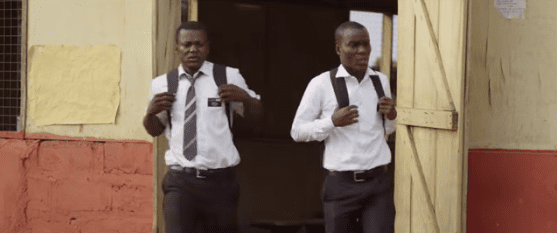
FREETOWN, an indie film (called a “religious thriller”) was released less than two weeks ago in select theaters across the United States. The movie–in it’s first seven days–has grossed nearly a quarter of a million dollars. For most independent films, this amount in its entire run would be a dream. But for a film set in Liberia, featuring a cast of virtual unknowns, its seven-day gross is certainly something that is turning heads.
But the promising first week is not the reason why audiences are talking about FREETOWN. Can you guess what it is? It’s not the box office and not the national theatrical release.
It’s a film about black Mormon missionaries.
It’s no secret that the Mormon Church has somewhat of a controversial past when it comes to issues of race. Until a revelation given to then prophet Spencer W. Kimball in 1978 changed the practice, the church had banned the priesthood from all black members. In fact, many members of the church (myself included) freely admit to not really knowing how to address the priesthood ban practiced and taught throughout the church since the days of Brigham Young. Just last year church leaders released a series of essays on it’s official website, lds.org, taking a scholarly, candid approach to several controversial topics relating to the church. Essays addressed themes such asthe church’s early practice of polygamy, or DNA studies and The Book of Mormon, or yes, even the topic of race and the Priesthood.
So, how are the Mormons handling a theatrically released feature film that draws attention to the “cognitive dissonance” as one of the characters in FREETOWN refers to the priesthood ban? Yes, right in plain sight.
To see the full article, click here.
I’m Grateful for the Opposing Votes
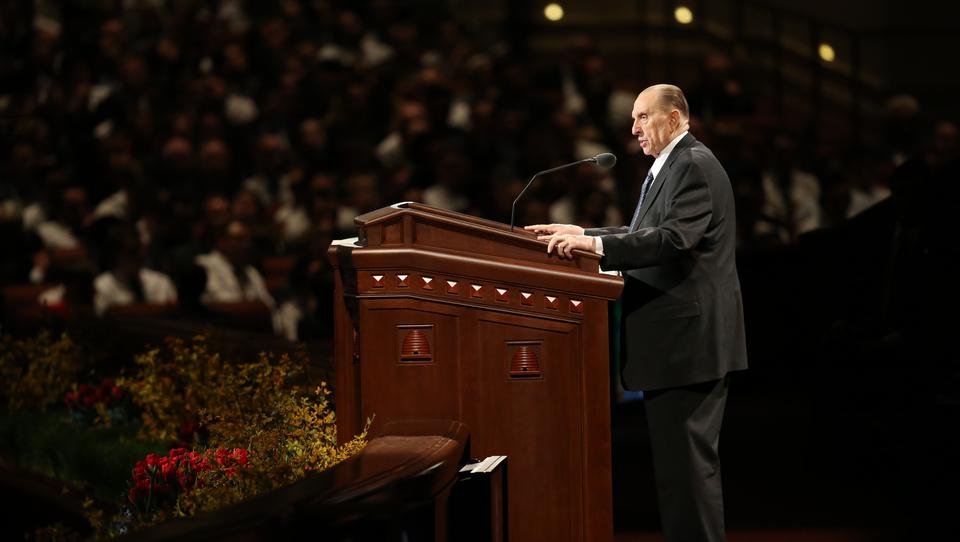
It might sound a little strange, but I’m deeply grateful for the opposing votes that were voiced during the April General Conference.
I had just lain down on my couch and propped my laptop open on my lap when President Uchtdorf read the names of the First Presidency for the sustaining vote. If you’re anything like me, you may have found the shouting that followed more than a little jarring–especially at an event that advocates unity and harmony.
Immediately, I sat bolt upright, thinking that this was the beginning of a riot. But, to my surprise, President Uchtdorf noted the dissension, and calmly moved forward. I quickly scanned the #ldsconf feed on Twitter to figure out what had just happened.
I soon learned about Any Opposed, a group organized with the specific intention of voicing their opposition to the current leadership of the Church.
At first, I was angry.
Why would they do that? I thought to myself. Why would they shout at a peaceful event? How could anyone NOT sustain these leaders–these wonderful, kind men who have spent their lives in the service of others?
As I pondered these questions another, more poignant question came to my mind: Do YOU sustain them, Seth?
I paused, realizing that this thought was not my own, but the whispering of the Spirit.
Of course I do! I thought. I raise my hand every time!
The voice of the Spirit spoke again, this time more forcefully: Yes, but do you SUSTAIN them? Do you support them? Do you believe their counsel to be the word of God, or do you see it as merely suggestion? Do you strive to be a faithful Latter-day Saint, pressing forward to the Tree of Life, or would you rather lie down and simply be comfortable?
My conscience began to sting a little.
But I wouldn’t shout out in the Conference Center, I rationalized. I would never vocalize my opposition like that!
You might not vocalize your opposition ‘like that,’ the Spirit replied, but you vocalize your opposition in numerous, wordless ways: You neglect your callings, you skip church when possible, you doubt the Church’s direction, and you sometimes even doubt that the brethren are really called of God. Simply raising your hand at an event doesn’t mean you sustain the Prophets.
And with that, the Spirit had exposed the hypocrite within me. Despite my outward show of loyalty, I am now painfully aware of just how little I’ve actually supported the Brethren.
Sustaining is much more than the raising of the hand. Instead, it’s a commitment to continuously raise, lift, and support those we believe to be called of God. It doesn’t mean we obey mindlessly; we can pray for further light and knowledge on any subject. However, if we sustain them, we work together to move Zion forward.
Before I heard the opposing votes, the sustaining of Church officers had become a bland, almost meaningless thing to me. Although probably not its purpose, that public display of opposition has suddenly made the ritual of sustaining deeply significant. In my heart, I’ve recommitted to sustaining the Prophets , living my faith, and following the Savior.
To that end, I’m very grateful for the opposing votes—they have awakened and deepened my faith in the Restored Gospel.
New Mormon Message on Suicide Features Seth Adam Smith

Seth Adam Smith made Internet waves when he posted a blog that became television appearances and finally a book called Marriage Isn’t for You. Yet, a new Mormon Message just released about suicide prevention tells another story—one that he is equally eager to share—that is that earlier in his life he attempted suicide. The love and support that brought him back from that brink is portrayed in this 7-minute video.
Elder M. Russell Ballard comments that perhaps the most crucial thing that people need when they are this desperate is an arm of love extended to them. He encourages members not to judge those who are struggling.
FEATURES