





Miserable? Try This Solution!
John and I were living in Washington, D.C. during George H.W. Bush’s presidency. During that time, Barbara Bush became one of my absolute heroes. I had noticed her picture showing up doing simple acts of service: reading to kindergarten children, walking with a patient in a retirement home, working at a food bank, etc. I wondered, with all that a first lady has to do, how in the world did she find time to do so much service?
Then one day the Washington Post ran an article by the reporter assigned to cover Barbara Bush. It was clearly a frustrating assignment. He recounted how she would use disguises to leave the White House so that the press corp wouldn’t know where she was going. He assumed it must have driven the Secret Service crazy! One day he caught up to her as she was returning from a service experience and asked her why she was so involved in simple service and why she wanted no one to know.
Barbara shared with the reporter her experience when her husband was the Chief U.S. Liaison in Beijing, China (This was before the U.S. opened up its first embassy in China.) She didn’t speak Chinese. She wasn’t involved in international policy like her husband was. She became lonely and depressed as he worked long hours every day.
One day she biked to a home for elderly Chinese widows. Although she didn’t speak their language, she found that she could serve them in simple ways by styling their hair, helping them bathe, etc. She began to frequently bicycle to and from the home. She was surprised that her depression lifted as she grew very close to these women.
Later, returning to America, her husband was named the head of the CIA. Her children had grown and moved away. Her husband couldn’t talk with her about his work, due to the sensitive nature of the work of the CIA. Once again, Barbara was haunted by depression. Remembering her experience in China, she started going to a hospice center, where again, she both served and loved the women. The depression quickly resolved.
She insisted to the reporter that service was her healing secret.
Is this a secret that we all should know?
I have a sweet friend who was the object of terrible sexual abuse as a child. She confided to me that one of the most debilitating effects of this horrendous situation was the debilitating powerlessness she felt. Her mother, aware of the abuse, kept silent about it. As soon as she turned eighteen my friend moved far away from her family. But her sense of learned powerlessness overshadowed her accomplishments.
Eventually, she was posted to Afghanistan to work with children affected by AIDS. For the first time in her life, she felt empowered when confronted with suffering. She was surprised that she, herself, was healed through this empowerment. Service had brought her the peace she had sought for so many years.
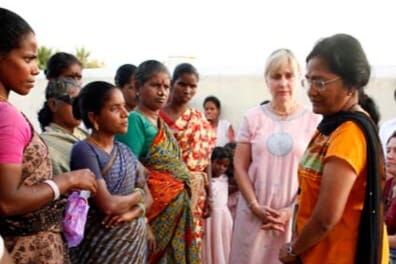
In my work in India with the leprosy-affected, I have had the remarkable gift of being able to work with Padma Venkataraman. Padma is the daughter of the former President of India and was the Permanent Women’s Ambassador to the UN from India for 20 years. She is one of the most incredible women I have ever met.

She stepped down from her prestigious roles to work with the leprosy-affected people of India. Earlier in her life, she had experienced an intestinal blockage and as a result had part of her intestines removed. It has caused her much pain and sickness, often with a resulting fever.
Padma once shared with me that many days she awoke feeling too sick to get out of bed. She said her husband would counsel her, “Get up and go to a leprosy colony, you’ll feel better.” She continued, “Becky, it was like magic. I would feel that I couldn’t even sit up, but when I forced myself to go serve in a leprosy colony, I forgot my pain. It was the best medicine in the world.”
Modern psychiatry tells us to “turn in” and try to understand our pain if we want to find healing. The Savior promises healing in exactly the opposite method, by “turning out.”
In his great sermon on effective fasting, Isaiah counsels us to serve our fellowman if we want to be heard when we, ourselves, approach the throne of grace. It’s as if God’s saying, “Serve me, then I’ll serve you.” How do we serve God? Simple: we serve His children!
Speaking for God, Isaiah asks, “Is not this the fast that I have chosen—to loose the bands of wickedness, to undo the heavy burdens, and that ye let the oppressed go free, and that ye break every yoke. Is it not to deal thy bread to the hungry? That thou bring the poor that are cast out to thine own house? When thou seest the naked that thou cover him?” Then Isaiah promises that as you do those things, “Then shalt thou call, and the Lord shall answer. Thou shalt cry, and the He shall say, ‘Here I am.” (Isa 58:6,7,9)
Abraham Lincoln was certainly no stranger to suffering. He insisted, “To ease another’s heartache is to forget one’s own.” He knew the secret!
I once heard someone say, “We all stagger under the weight of our own crosses.” That immediately resonated with me. And who better knows how to survive a cross than our Savior? We all have many wounds. They come from simply living in a fallen world. Continuing, he said “Some wounds are self-inflicted. Some wounds run deep such as divorce and abuse. Some fester without forgiveness. We need to treat these wounds as soon as possible to keep them from scarring.” None of us want scarred souls!
We put this healing secret to work after the Covid pandemic in India. The pandemic was much worse in India because of the Delta variant that developed there. School was cancelled for two years. Can you imagine? Online learning was relatively sparse and largely ineffective. Many students just hung out watching TV. Entertainment in India is quite different than in America. They have very strict regulations about sexual content in movies, and so, instead, movies tend to be extremely violent.
When the students were finally able to return to school, all across India schools began to experience violence, both between students as well as violence directed towards teachers. It quickly became a national concern.
At Rising Star Outreach, we were also surprised by the violent behavior of the students upon their return. Our school counselor devised a brilliant solution. She established Charity Days in the leprosy colonies. Twice a month the students were taken to one of the leprosy colonies we work with. They helped with the medical clinic, they treated people for lice and scabies, they washed patients’ hair. They played games with the patients waiting to see the doctor.
Back at school the aggressiveness of the students receded remarkably. It was the beginning of a much-needed healing process. To our surprise, it also helped to heal the rift that had developed between the generations in the colonies. The younger generation, subject to the crippling stigma of leprosy, tended to resent their grandparents who had been afflicted with leprosy and sent to live in a leprosy colony. Now the grandchildren were subject to the same stigma since they came from a leprosy colony. It was so sweet to watch as the younger generation learned to love and reconnect with the older generation.
Pres. George H.W. Bush has often been quoted as saying, “We all have something to give. So if you know how to read, find someone who can’t. If you’ve got a hammer, find a nail. If you’re not hungry, not lonely, not in trouble—seek out someone who is.” He had personal experience through Barbara of the truth of that counsel!
Finding opportunities to serve is not difficult. Elder Neal Maxwell suggested that we are surrounded by need every day. He assured us, “We would be staggered and ashamed if we saw fully the unused and unexplored possibilities for service that surround each of us all of the time.”
Elder Uchtdorf has strongly affirmed the healing secret: “Often, the answer to our prayer does not come while we’re on our knees but while we’re on our feet serving the Lord and serving those around us. Selfless acts of service and consecration refine our spirits, remove the scales from our spiritual eyes, and open the windows of heaven. By becoming the answer to someone’s prayer, we often find the answer to our own.”
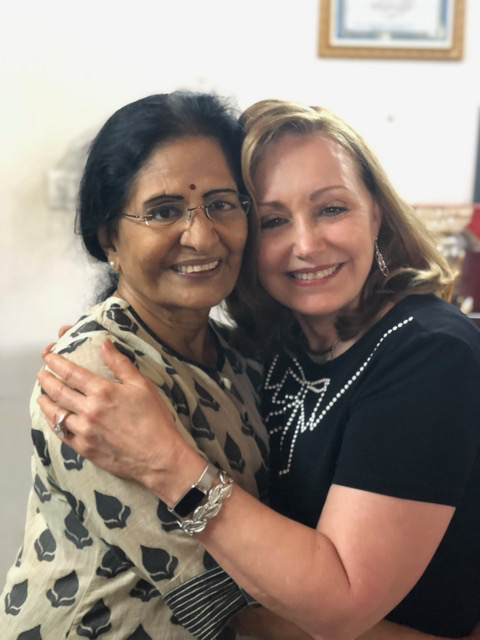
That is a divine insight and a powerful promise! If you want to know if the healing secret is for real—live it! And watch what happens . . .
Do You Ever Feel God has Forgotten You? A Rising Star Outreach Miracle
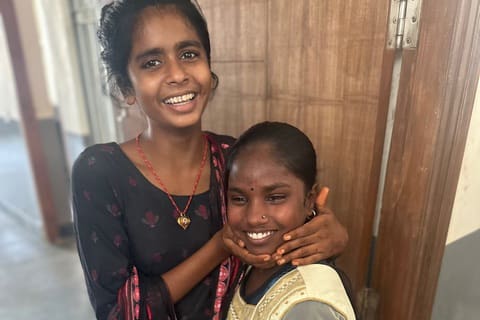
Author’s note: I want to send a heartfelt thanks to all the hundreds of Meridian readers who helped make this story possible. You raised over $400K to build this school. You also contributed enough money to bring dozens of children into the school this year.
Without a school, there would have been nowhere to put Lakshmi! Without the provided tuition, we would not have been able to accept her into our program. She would have been back in the street with no one to care for her leprosy ulcers. God bless you for your generosity that enables us to save and bless lives!
In August 2024, I wrote the story of one of our new students, I called Lakshmi. I have a wonderful update on her. I’m going to repeat the former story:
Lakshmi (not her real name*) was a bright-eyed 10-year-old girl, full of life and dreams, when her world was turned upside down. She noticed unusual white patches on her skin, and as the days passed, they grew larger and more painful. At first, she tried to ignore them, then hide them. Her parents finally took her to the doctor, and the diagnosis shook their small village: Lakshmi had leprosy.
Fear and superstition took hold, and soon Lakshmi’s own family disowned her, abandoning her on the outskirts of the village. A ten-year-old tiny girl! She frantically begged them to keep her. She was terrified. She was all alone. Where would she sleep? Where would she stay? She had no way to gain food; no one to protect her from the dangers of the street, where evil men prey on unprotected children. But the parents would not budge. If they kept her, the entire family would become Untouchables. They turned away and forbade her to follow.
Fearfully, she wandered the streets, shunned by everyone she met. She lived in constant fear and with constant hunger. One day, a kind social worker spotted Lakshmi rummaging through trash for food. She gently coaxed Lakshmi into her car and drove her to the Leprosy Hospital at Little Flower.
Last month, the doctor at the hospital declared Lakshmi safe and cured of the disease, though she had lost one of her toes. Repeated calls to her family went unanswered. The hospital continued to reach out to her family. Finally, her mother came and told the Leprosy Hospital that they were not going to take their child back. The rejection was heartbreaking.
Lakshmi’s future looked bleak. She couldn’t stay at the leprosy hospital. But where could she go? She desperately begged them not to put her back on the street. Her joy in living had completely evaporated, and she sank into depression. The spark in her eyes had gone out. At the tender age of ten, she felt unwanted, unloved, uncared for, and had no hope in sight.
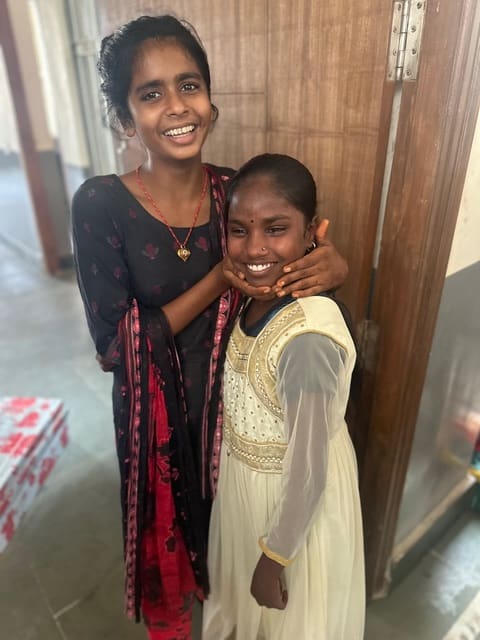
As Lakshmi felt herself sinking into despair, volunteers from Rising Star Outreach visited the hospital. Initially, she tried to shrink and make herself smaller so they wouldn’t notice her. She was so used to being brutally shunned. But they came to her cot and coaxed her into telling them her story. With tears streaming down her face, she told them of the fear, hunger, and rejection she lived with daily. She felt she was cursed by God and had no right to life. Instead of screaming at her to keep away, the volunteers sat on the bed next to her and embraced her. Together, they agreed to be her sponsors to attend the Rising Star Outreach school.
Continuing her story . . .
At Rising Star, Lakshmi found a new family. She was given a bottom bunk to accommodate her left leg and foot, which made accessing the top bunk difficult. She has a loving housemother who adores her. The staff and volunteers embraced her with love and compassion, providing medical treatment, nutritious food, and education.
They taught her to manage her condition and regain her confidence. She quickly became a beloved member of the community. Her friends help her get to the cafeteria, bring her meals, and accompany her to class, creating an environment filled with kindness and support.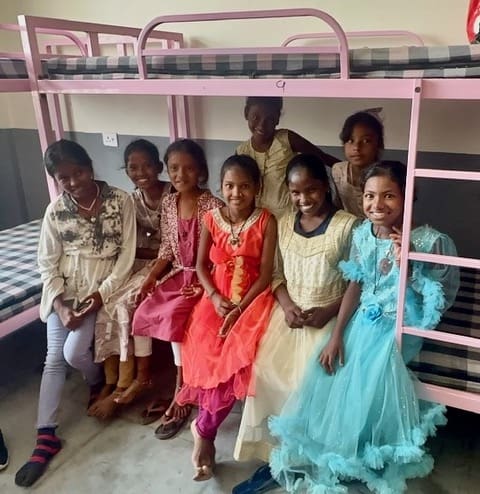
Every day, the open wound in her foot was treated. It had started out as a large ulcer but had nearly disappeared by the time the students left for summer vacation.
Lakshmi begged us to contact her mother again to see if she would accept Lakshmi for the summer vacation. We tried to give her mother encouragement and to help her understand that her daughter was no longer contagious. With hesitation, the mother finally agreed that Lakshi could return home for the one-month summer vacation. Lakshmi was ecstatic!
When her mother came to pick Lakshmi up, our nurse spent time with the mother explaining how to clean Lakshmi’s foot each day until the ulcer was completely healed. It should only take a couple more weeks if the care was given daily. We provided Lakshmi’s mom with all the necessary gauze, antibiotics, and other materials. She promised to continue Lakshmi’s treatment.

When Lakshmi returned at the end of the month-long vacation, we were shocked to learn that the wound had never even once been treated! Before our doctor had even unwrapped her dirty bandage, he was greeted by a foul smell. He was shocked to see that the wound, instead of healing, had increased and consumed a good part of her foot. It looked dangerously infected. Our leader in Bihar, Suku, took her immediately to the leprosy hospital, where the doctor sadly informed him that there was so much sepsis that Lakshmi’s entire leg would have to be amputated. Suku shook his head and staggered backwards with this diagnosis. He could only think of how debilitating this would be for little Lakshmi. Her life had already been so difficult. How could she survive this new tragedy?
Suku relayed this disturbing news to our country leader, who subsequently called me to bring me up to date. “No! No! No!” I fairly screamed into the phone. “Don’t let them take her leg off!” I begged Suku to get her to New Delhi, where hospitals were much more sophisticated. Perhaps they could save her leg. Our doctor, Dr. Rahul, was uncertain she could survive a trip to New Delhi. Besides, he insisted we were doing everything possible for her.
Our American Director, Brett Caywood, and our Indian Director, Prakash Bodhu, had attended an international leprosy conference in Indonesia, where they had met several researchers who were making fantastic progress in the treatment of leprosy ulcers. They jumped in to help.
Prakash and Brett said, “We asked ourselves if we would try any harder if it were our daughter because we knew we should try just as hard to help the Rising Star students as our own children.” Prakash took it from there with multiple calls and follow-ups. He contacted a doctor who worked at a hospital
in Indonesia who had pioneered new methods of treating leprosy ulcers. This doctor, after seeing pictures of Lakshmi’s foot, was willing to try to treat it.
This was now an all-Rising Star effort. Suku quickly worked to get a visa application filled out for Lakshmi. He urged the visa office to process it quickly, as Lakshmi’s very life was at stake. The visa office ultimately rejected the application because, without a father to sign for her, she wouldn’t be allowed out of the country. No amount of explaining the seriousness of the situation would get them to change their minds.
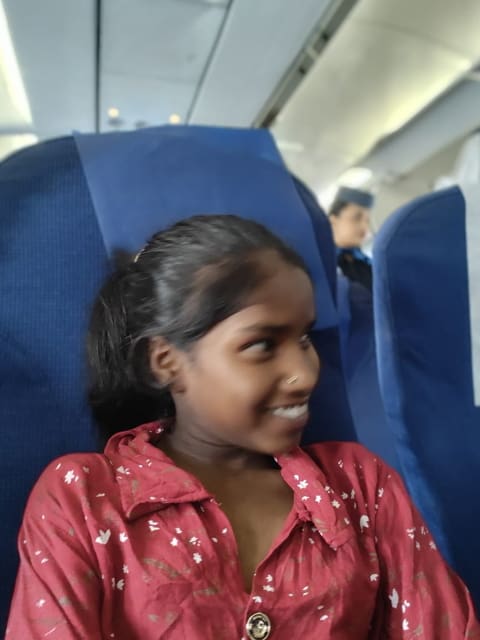
Suku and Prakash worked feverishly trying to find someone—anyone—in India who could treat her. Our doctors at Rising Star also searched diligently. As they were about to give up, someone mentioned the Nirmala Leprosy Hospital, a leprosy hospital in New Delhi run by Mother Teresa’s Missionaries of Charity. They quickly fired off pictures of the infected leg to the hospital. After receiving the pictures of her foot, the Missionaries of Charity said they were willing to try.
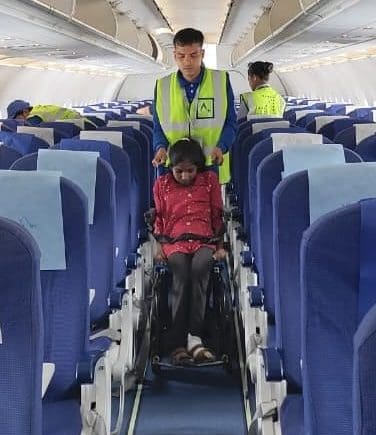
By this point, time was running out. Every hour mattered, as the infection was rising in her leg. Getting Lakshmi to New Delhi was no small task. It is an agonizingly long drive from our campus to the nearest airport, where she could catch a plane to New Delhi. In her critical condition, could she survive such a journey? With many prayers, the journey was made, and Lakshmi made it to her appointment with the Missionaries of Charity.
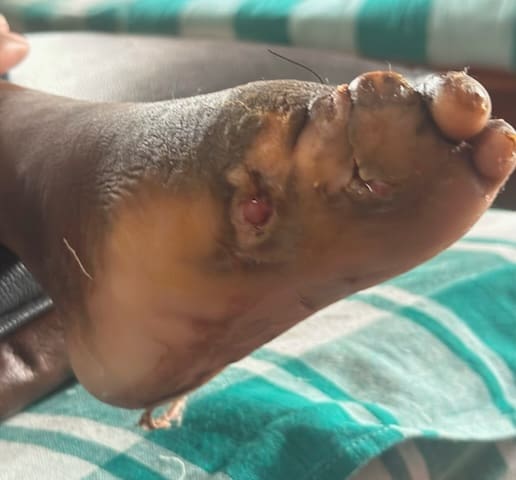
Suku reported to me that as they arrived at the hospital, they were dismayed to see the many patients who had amputations in the ward Lakshmi was assigned to. He said that he and all with him prayed fervently that Mother Teresa’s missionaries would be able to save Lakshmi without removing her leg.
As she was being evaluated, Suku sent messages to all of us, carefully following this saga in the States. We called and asked supporters to join in petitioning God to save her. After carefully examining the now dangerously infected leg, and after much deliberation, the Missionaries of Charity concluded that there was a chance, however slim, that the leg could be saved.
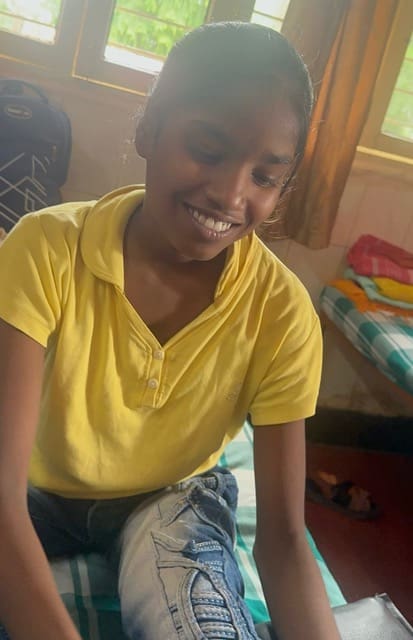
Laskhmi’s treatment would take a minimum of six weeks, during which time she would need to stay at the Mother Teresa Nirmala hospital. Not wanting to abandon her at such a critical time, Suku stayed as long as he possibly could, but finally, tearfully had to leave her in the loving care of the Missionaries of Charity as he returned to oversee our campus in Bihar.
We all asked friends to join us in praying for Lakshmi. Her name was added to prayer roll lists in temples across the United States. Several joined together in a desperate fast.
Lakshmi has now been released from the Nirmala hospital—with two good legs! She’s on her way back to Rising Star Outreach, where all her friends are waiting to welcome the miracle girl!
Sometimes in life, it is easy for us to feel that God has forgotten us. But I am convinced He forgets no one. He even remembers a little child, stigmatized and suffering, in the remotest corner of India.
“I Can See!” Karrupiah’s Blessing

We have a saying at Rising Star Outreach, the charity I work with in India, that we are able to be effective only because of the principle of the Loaves and Fishes. In the New Testament, you will remember that during His ministry, at one point the people following Jesus had been with Him without leaving to go home for refreshment for the better part of the day. They were very hungry. Jesus, in His concern for their hunger, asked if anyone had any food. Only two fish and five loaves of bread were offered.
Jesus took the offering, blessed it, and began to break the food into pieces. He then asked His disciples to distribute the food to the multitude, which numbered over 5,000 men plus women and children. Miraculously the food blessed by Jesus fed the entire crowd. In fact, twelve baskets of food were collected after everyone had been fed. It was a remarkable miracle.
At Rising Star, we sometimes feel that all we have to offer to help fill the tremendous needs of the leprosy-affected people we serve is the equivalent of a paltry two fish and five loaves. Yet, somehow, through God’s grace, the small amount that we have is blessed by God to bless the lives of many people.
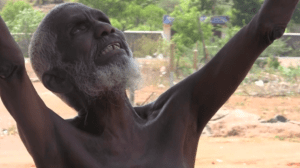
Most of our patients are either blind or going blind because of leprosy’s effect on the eyes. Karrupiah was one of those patients. He had been completely blind for 18 years. He was fascinated, therefore, to hear Dr Krishnakanth at one of the visits of our medical clinic to the Bharathapuram Colony, talk about setting up an eye clinic. Dr. Krishnakanth was signing up patients to have Lasik eye surgery.
Karrupiah quickly came forward and told Dr. Krishnakanth to sign him up for the surgery. Dr. Krishnakanth hesitated only a moment before telling Karrupiah regrettably that he wouldn’t qualify. He had been blind too long. There was no way the surgery would bring back his sight. Furthermore, Karrupiah was old and feeble. Dr Krishnakanth worried that the surgery would be too traumatic for his frail health. But Karrupiah was not to be deterred.
He informed the doctor that he had never seen his two grandchildren and then said, determinedly, “I want to see my two grandchildren before I die.” Dr. Krishnakanth rehearsed all the reasons the surgery would not work, but Karrupiah was insistent. He argued passionately. Finally, Dr. Krishnakanth acquiesced and agreed that Karrupiah could come to the eye clinic.
At the clinic the eye the doctors were hesitant to operate on Karrupiah because of his frailty, but once again, Karrupiah prevailed. He received the treatment and his eyes were bandaged. He was told to keep the bandages on his eyes for three days.
Two days later Dr. Krishnakanth returned to the colony to check on the patients who had received the Lasik surgery. When he entered Karrupiah’s home, he was startled to see that Karrupiah had removed his bandages. He asked him why he had done this prematurely.
Karrupiah turned towards the doctor and said, “Doctor? Doctor? Is that you, doctor?” Then with great enthusiasm he announced, “I am seeing you doctor!” Against all odds his eyesight had returned after all his years of blindness. In a rush Karrupiah continued, “I am seeing my grandchildren, doctor! Thank you, thank you.”
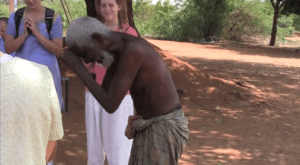
Karrupiah was beside himself with joy. He insisted on meeting the volunteers who had gone to the hospital with him. We brought the volunteers. When he saw them, he waved his arms over his head and cried exultantly, “I see! I see!” everyone was clapping and jumping up and down for joy.
Joyce Hanson was there for this wondrous occasion. When Karrupiah saw her, he noticed the Mickey Mouse watch on her arm. He wanted to know what it was. Joyce carefully explained that it told the time. This was a whole new wonder for him. He was quite taken by the idea, and so Joyce unlatched the watch from her arm and handed it ceremoniously to Karrupiah. “This is now yours to celebrate your miraculously restored eyesight.”
The story doesn’t end there. Shortly thereafter, I was in Laguna Beach to visit Ron and Joyce Hanson. We had a dinner at their country club to honor the nearly two years that they had run our organization in India. Their service in India had been transformative for us. Many of their friends came to join the celebration. I gave a short presentation about their time in India. As part of the presentation, I told the story of Karrupiah and Joyce’s gift to him of her Mickey Mouse watch.
After the dinner, Ron Hanson came up to me with an unusual expression on his face and instructed me to hold out my two hands. Mystified, I did as I was told. Ron placed into my hands a gold Rolex watch. One of the attendees at the dinner had been touched by that story and had taken his own Rolex watch off and handed it to Ron as a donation. We auctioned that watch for thousands of dollars!
The story even goes on from there. Several months later I taught a class at BYU Education Week where I shared this story. After the presentation a woman approached me, with her teenage son in tow. She told me that her son had a gift for me. He related how the story of the Mickey Mouse watch had struck him and said he wanted to participate in this miracle also. He handed me his Oakley sunglasses. His mother quickly explained that for his sixteenth birthday, he had told all his friends attending his party, not to bring him any presents—instead, to donate to his fund to buy a pair of Oakley sunglasses. His friends had been generous. He was finally able to purchase the sunglasses that he had envied for so long.
When he handed them to me, I told him I couldn’t possibly accept his gift; it was too great. But he was insistent. He was smiling radiantly.
On my next trip to India, I took the carefully wrapped precious sunglasses with me. We had a student at our school who was albino. She had a difficult time being in the sun outside because the sun was excruciatingly painful to her. We had brought her sunglasses before, but she refused to wear them—her vanity overcoming her need to see. But when we gave her the Oakley sunglasses along with the explanation that only the coolest people had them, she finally began to wear them and was able to participate in PE classes and our outdoor sports programs.
I share that story because it so beautifully illustrates how one act of kindness can sometimes generate multiple acts of kindness. The interesting thing about this particular story is that the response came from people across the world, who previously had had no connection to each other: the faith of a blind man in a leprosy colony in rural India inspired a generous response from a kind woman from California. Her reaction inspired a man at a dinner party in Laguna Beach. And finally, that generous action inspired a young 16-year-old teenager in Utah. None of those people knew each other, except the leprosy patient and Joyce.
The results of all this inspiration touched several lives, in addition to the lives of the persons responding to the blind leprosy patient. From the sale of the Rolex, dozens of people have benefitted through the program funded by this gift; from the gift of the Oakley sunglasses, a young albino girl in a school in rural India was benefitted. Isn’t it remarkable how the Lord can use our actions to benefit people across the world; people who have no known connection to each other?
One of my sons recently gave my husband a three-player chess game. It was mind-boggling to try to play it, as everything previously learned about playing chess no longer applied in the same manner. Previous learned strategies were completely ineffective. That— from adding one player.
As I look at the way God works in our lives, sometimes from people across the world who don’t know us, I imagine He must be overseeing a chess game with millions of players! And yet in His loving shepherding of our lives, He blesses us in ways we never would have been able to guess.
I like to think of the small acts of love that we each try to do are like tossing the proverbial stone into a pond. The stone splashes down, displacing a couple inches of water. Yet the ripples from that splash go out in ever-widening circles until the entire pond has been touched. Somehow, the Lord is able to take our small acts and use them in ever-widening circles as He blesses the lives of His children.
I’m convinced that the ripples in the story of Karrupiah are still increasing. I have shared that story now many times. I will probably never know in this lifetime; how many people have been impacted by it and inspired to generous actions. I will sometimes get random comments from people I have never met before, that they had heard of a story from our work in India and had taken action in their own neighborhoods.
Satan wants us to feel that too much is required of us; that our service is meaningless; that it is basically a waste. But the truth is just the opposite. No act is too small. God magnifies the principle of the loaves and fishes with however many loaves we have to offer.
This past weekend, I listened to a woman at our ward’s Relief Society women’s retreat. She told of a past involving drugs, drinking, arrests, jail time. She met the missionaries after a couple of women in our ward provided dinner for her. She was staying in a motel in our ward, and somehow, someone learned that she had a need. Our Relief Society arranged for some meals to be sent in, even though she was not a member of our Church. She never came down to meet us, just sent her son to collect the food. We assumed we would never see nor hear from her again.
But this weekend, I was startled to realize that this was the woman that we had sent a few meals to. She shed tears as she talked about how grateful she was to have made so much progress in her life. She seemed radiant as she shared her path of recent personal improvement.
I can only surmise that God must be playing chess again! But in all His brilliance He is still dependent on the giving of two fish and a few loaves of bread. Let’s be the givers!
We All Have Enough to Share (Even When it Doesn’t Feel Like It)
My friend Betty Johnson was a teacher. She arranged her schedule so that she could spend some time one year helping at our school at Rising Star Outreach in Tamilnadu, India. She wrote and shared this story with me:
While serving at Rising Star, I received a care package from my daughter. She sent a flashlight, candy, and other little things. When I received the package, everything in it had been stolen except one piece of red vine licorice.
I wondered what I could do with just one piece of licorice. I decided I would offer it as a reward for good behavior in my small class of nine 8th graders. So, I awarded the piece of licorice to a deserving boy.
Then the most interesting thing happened. He cut the stick of licorice into nine equal pieces and gave each student a tiny piece of his ‘award’. I will always remember how quiet and attentive those students were while he was cutting the licorice. There were no shouts of someone getting more than another, etc. They just patiently waited until the pieces had all been distributed. Nobody ate a piece until everyone was served. Then they all ate their candy together. It was AMAZING. One little stick of licorice. What a lesson for me that was!
One stick of licorice, yet it fed the entire class! Sometimes we erroneously tell ourselves that we would share with others if we had more. Sharing is not a matter of having more; it is a matter of having more heart.
After my mother died, my father lived alone for many years. Each winter we would bring our family to visit him and while there, we would use his home as a base for skiing the beautiful mountain slopes of Utah.
Dad was retired, so I knew he didn’t have a lot of extra income. When we would come with our ten children, I worried about him feeling stressed over the increased food bill for the week. Thinking to put his mind at ease, as soon as I got to Pleasant Grove, where he lived, I headed for the Kohler’s grocery store, so I could buy the necessary food for the week.
Upon arriving back at the house, as I was bringing all the food in from the car, to my surprise, Dad acted hurt and disappointed. “Now what did you do that for?” he asked with some obvious irritation. I explained simply that I was only trying to keep from putting a strain on his budget with all the extra mouths to feed from our family. I was surprised that he was not pleased. In fact, he acted as if I had done something terrible. I was a bit confused.
The next day, I realized what I had done. As Dad and I were coming back from visiting my sister, Diana, as we were about to pass the Kohler’s grocery store, Dad said suddenly, “Pull into the Kohler’s parking lot.” Instead of complying I asked, “Why? I’ve already bought everything we need this week.” But he was insistent. He said, “Well, we’re going to need more butter.” I objected, “Dad, I bought an entire package of butter.” He countered with, “Well, we’re going to need something else.” We were about to pass by the Kohler’s. He insisted strongly, “Pull into Kohler’s!”
I could sense an edge in his voice. So, I reluctantly pulled into the parking lot. We got out of the car and went into the store. Dad kind of wandered around the food aisles a bit. I asked him what he was looking for, thinking I might be able to help him find what he needed. He seemed not to know what he was looking for.
Finally, he said, “Aha! Here it is!” and grabbed some obscure sauce from the condiment shelf. When I asked him what he was going to use the sauce for, he mumbled, “You’ll see.” He now seemed excited as we approached the checkout lanes. There was a lane open, so I quickly headed into the checkout.
He said, “No! No! Let’s use this lane over here” as he took my arm, backed up, and pointed to a checkout lane two rows down, that had a young teenage checkout clerk who was ringing up a long order. Mystified by this crazy behavior, I didn’t even protest.
When the man in front of us finally paid for his groceries and left, I was surprised that the checkout girl broke into a big smile. “Hi Don!” she said enthusiastically. “I wondered if you would be coming in today.”
Dad was clearly pleased. His entire face lit up as he grinned his biggest grin and said, “I know, I wasn’t sure I was going to be able to make it. Thank heavens I remembered I needed this sauce.” This checkout girl rang up his purchase. Then as she prepared to hand him his receipt, she came around the counter and gave him a hug along with his receipt.
She couldn’t have been more than 16 or 17 years old. At that moment, she suddenly seemed like the most beautiful girl in the world to me. What a sweetheart! Dad was beaming! As we walked back to our car, he seemed transformed. Instead of irritated, he was ebullient. “She hugs me every time I come in,” he said exultantly.
Now everything made sense to me. With Mom gone, Dad didn’t get many hugs. This sweet girl had sensed that and made sure that every time he came to the store, he got a hug from her. Consequently, I instantly realized why Dad was so displeased when he saw all the groceries I had bought. He needed an excuse to go to the store every day—he needed that hug! It was the high point of his day every day.
I work in India with people affected by leprosy. I have many opportunities to speak about my work throughout the U.S. and in several foreign countries. Typically, after I speak there is usually a line of people wanting to know how they can get involved in our work. What’s stunning, is that even though I do not mention the Church in my talk, it inevitably turns out that most of the people in line, turn out to be members of the Church. It doesn’t seem to matter which state the forum is in, or even which country I am speaking in. The result is almost always the same.
Why is this? In the Church, we are taught from a young age that we serve God by serving others. It just becomes a part of who we are. It’s part of being a member of the Church.
One of our former Executive Directors at Rising Star Outreach, Amy Antonelli, had a similar experience one time in Palo Alto. She had joined a local service organization. They were preparing for an event. They needed volunteers to help pull off the event. Amy offered to get the volunteers. One of the women said to her, “You’ll need help.” Amy responded that she thought she could handle the assignment herself. The woman warned, “You have no idea how difficult it is to get volunteers in Palo Alto. In this place, no one has time to volunteer.” Amy said “Well, I’m a Mormon. . . .” Before she could even finish her sentence, they all in unison shouted, “YES!!!!” Clearly, problem solved! I love that even non-members of the Church can recognize that as a characteristic of members.
Isn’t that wonderful? We don’t have to have a large bank account or a lot of leisure time. We don’t have to have influential friends or be successful. Each of us has the power within us to bless the life of another person.
When we were serving as Mission Leaders in the Dominican Republic, we challenged our missionaries to spend part of every Prep Day doing volunteer service in their communities. In Monte Cristi, the missionaries began assisting the Mother Teresa Foundation which was providing medical care for the Haitian workers in the Bateys. The Bateys are extremely poor areas of the Dominican Republic where Haitian workers work on sugar plantations or banana plantations. They are not recognized as citizens of the D.R. and so receive no services. They have no access to medical care or even schooling for their children. They earn only pennies per day. The poverty in the Bateys is crushing.
The Mother Teresa Foundation was run by a woman named Petra. She had our missionaries carrying people to and from the clinic for treatment, who were unable to walk. They provided interpretation for the patients and helped with their medications.
After we did a joint medical clinic together, Petra was effusive in her praise of the missionaries. She said of them, “I simply love the missionaries. They’re such good workers! So clean! So respectful! So happy! So humble! And the work that your Church is doing in this country is wonderful!”
Then she said something that stunned me, “It’s not only this country. Your church is doing great work all over the world. In fact, I told my sister who is having problems in Mexico not to waste time looking for help from the Catholic Church. I told her to ‘Go find the Mormons!’” While it drew a laugh from all of us, I have to admit that I was pretty proud to be a part of a Church that even Mother Teresa’s missionaries could recommend without reservation to someone who needed help!
So, let’s all live up to our reputation! And each time we reach out to serve, our own life can be blessed. Pres. Spencer W. Kimball taught, “Only when you lift a burden, will God lift your burden. Divine paradox this! The man who staggers and falls because his burden is too great can lighten that burden by taking on the weight of another’s burden. You get by giving, but your part of giving must be given first.” (The Teachings of Spencer W. Kimball, 251.)
Lewis Carroll once famously said, “One of the secrets of life is that all that is really worth the doing is what we do for others.” Notice he didn’t say it had to be big.
I once read that we each meet around 10,000 people in our lives. If we could change two people for the better this year, and next year each of those could change two more, and the next year each of those could change two more, by the thirtieth year we would have lifted and changed the entire population of the earth! Imagine! These simple acts of service, given freely from the abundance of our hearts, (not necessarily of our pocketbooks) have tremendous power to bless.
We all carry burdens. What a wonderful gift to know that we can lighten our own burdens by reaching out to help others. From the abundance of our hearts, we can lift and heal, often through simple acts of kindness.
An Update on Meridian’s Kids in India

I heard the giggles of the three ten-year-old little girls before I even got to their room in the girls’ dorm at the new Rising Star Outreach campus in Bihar.
Some of you may remember the story of Lakshmi, the little girl who was diagnosed with leprosy, then subsequently abandoned by her mother on the streets of Bihar, in an effort to keep the rest of the family from being labeled as “Untouchables”.
A social worker had found Lakshmi on the streets, terrified and starving. She brought her into the hospital where she could be treated for leprosy. Finally, after some time Lakshmi was declared by the doctors to be leprosy-free. We contacted her mother with the good news, but her mother refused to let Lakshmi return to her family. Little Lakshmi was heart-broken.
After my article about her, several of our Meridian readers offered to sponsor Lakshmi, so we were able to bring her into our school. At first, she was withdrawn and afraid of the other children. She was so traumatized by her time on the streets. Believe it or not, the other children were also afraid of her. Why? Because little Lakshmi had some deformities on one of her feet, from the leprosy. The other children were afraid to catch leprosy from her. They all have an irrational fear the disease because of its impact on their families.
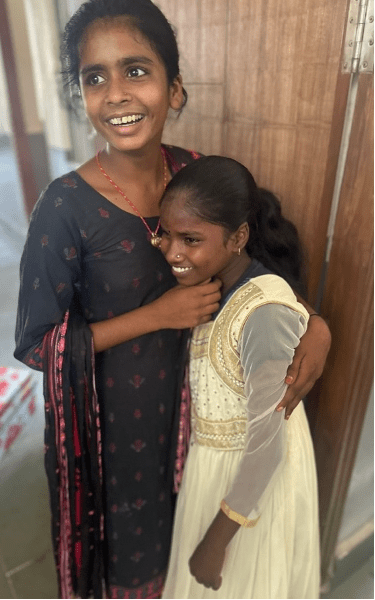
But this week I got to meet Lakshmi and see her in her new surroundings. She has blossomed! She was talkative and enthusiastic. She has two new friends and is excited to be learning. Here is with her new housemother.
We wanted to immediately start filling the empty spots on the campus, but needed sponsors so that we could sustain their education. (It costs us about $1,200 a year for each new child). Once again, Meridian graciously stepped up to the challenge. They ran another campaign for us and once again, you responded! We got nearly 200 new sponsors—enough to bring in 67 new children. Wow! Now our grades K-3 are all filled to capacity.
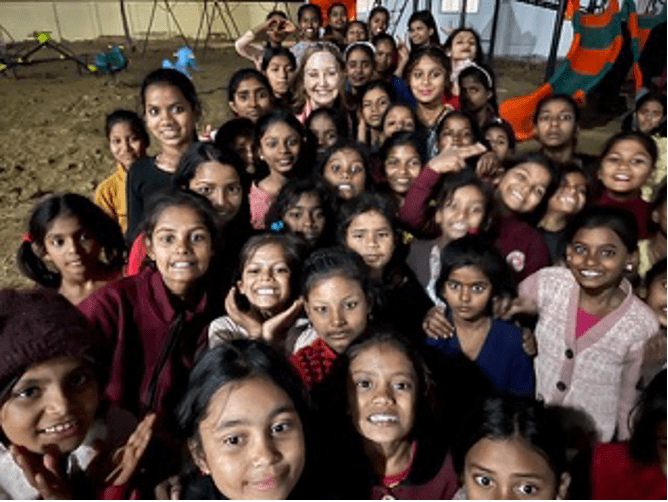
It’s always such a treat to be able to tell a family who has a child on our waiting list that they will be admitted to our school. There are squeals of delight and tears of joy. It’s a very moving moment for all involved.

Lakshmi is not the only child who has had leprosy who we were able to admit. Last week we visited the leprosy hospital at Little Flower because they called to tell us they had another child who had leprosy. Santhosh is 12-years-old. He and his two brothers all contracted leprosy, one by one. Santhosh also has some deformities on his feet from the disease. But he had been treated at the hospital and he was now leprosy free.
The three brothers’ father is severely mentally challenged. I guess the mother was overwhelmed by all these challenges and she threw the three leprosy-affected children into the streets, telling them they no longer had a family. She kept their three sisters, but the boys were told never to try to come back.
One of Santhosh’s older brothers is now working as a helper at the leprosy hospital. He is not deaf, but he cannot speak. The other brother is at Mother Teresa’s institute in Calcutta. His leg has been amputated because of the leprosy.
Santhosh is still in the hospital. He has been begging the doctors to send him to our school. So, we went to meet him. He told us he will do anything to be admitted to our school. He said, “I want to be part of the world instead of sitting in the hospital. I will have some hope in my life!” It melted my heart! He told us he has only been to pre-school, but they shooed him away because of his leprosy. He announced with authority that he will definitely catch up. With his determination, I believe him!
Once again, because of the Meridian campaign, we were able to tell Santhosh that we had a space for him. He began to jump up and down ecstatically. When Prakash asked him how happy he was, he flashed the biggest smile in the world, spread his arms over his head as wide as they could go and shouted, “Uncle, I am this happy!” His joy was contagious, and my heart swelled with gratitude that we could offer him this chance.
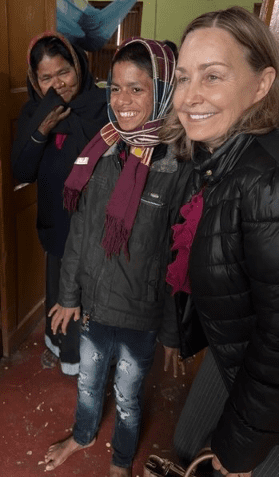
One day while I was at the new school, the children put on a beautiful hour-long dance program. They were darling! Afterwards, Suku (our leader in Bihar) announced that there would be a 5-day government holiday, and the children would be able to return home to be with their families for the five days. They were so excited. They all miss their families.
But Suku noticed that three sisters were off to the side. They did not appear to be happy. He went over to them and was surprised to see that they were all crying. As he talked to them, he realized that they were orphans. Their parents had both had leprosy and had died. They have an older brother who is severely mentally challenged, This brother lives in their old home in the Sitamarhi Colony. The leader in that colony is very kind and has arranged for the brother to be provided food every day. He also personally takes care of him. The colony leader asked us to give the three sisters education and provide housing for them. The first sister came in 2017. Today she is 16 years old. The second one came in 2018. The third one came 2019.
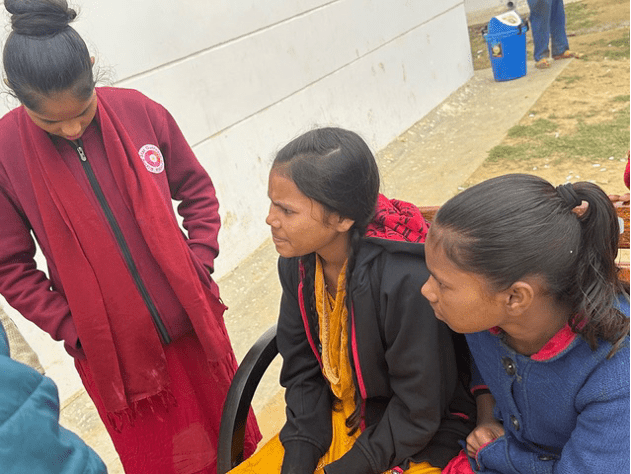
The sisters told Suku they dreaded going home because when they go home, they have to go ragpicking in order to get enough money to eat. They need to make 200 rupees/day ($2.35) off the trash piles in order to have enough money to eat and to buy soap. Some days they are able to make that much money. Other days, they cannot. On those days they do not eat and cannot even wash their hands after returning from the filthy trash piles. They cannot get the stench of the trash off themselves.
The biggest problem is that they are three young, pretty, girls. When they go to the trash piles to ragpick, without parents to protect then, they are an easy target for predators, and they have been molested by the men who are there. Their vulnerability is terrifying, So they didn’t want to leave our campus.
Honestly, sometimes when I hear the children’s stories, I wonder how God is able to stand to have His beautiful children so maltreated. It must break His heart. It certainly breaks my heart!
Suku told them they could stay on the campus, and he would assign a housemother to help them while everyone was gone to holiday. But they tearfully said that they needed to go home anyway. They have been very worried because their mentally challenged brother has become very sick. They need to ragpick to get money for his medicine.
The other students at Rising Star don’t know about their predicament because the three sisters are very ashamed and embarrassed about their situation. So, they never speak about it. They don’t have any warm clothes other than their uniforms, so the other children lend them clothes.
Suku gave them some money for their brother’s medication, as well as money to provide for their daily food and soap. He strictly instructed them they were not to go ragpicking during this school break. He has arranged for them to stay on the campus during future holidays.
They are all three good students. Suku will take them shopping and help them to have some clothes. He will have them help with lunch clean-up to “earn” their clothes, so they can wear them with pride.
What a joy it has been to be here and meet the new students, hear their stories, and rejoice that there is now a place for them. My heart is also filled with gratitude to our donors and to the readers of Meridian Magazine. Together, we have created a place where children without hope can now dream!
If Valentine’s Day is truly all about love, then Meridian readers have given us enough love to provide a future for some of God’s most disadvantaged children. Happy Valentine’s Day!
Together, We Did It!!!

Several years ago, Meridian Magazine had a fundraiser to help finance a new campus for children from leprosy colonies in Bihar, India. Bihar is arguably the poorest state in India where the level of poverty is something most Americans cannot even imagine.
The response was incredible! More than 1,500 readers joined in the campaign. It was unbelievable! Meridian readers donated $422,000 to help build a new campus in Bihar for Rising Star Outreach. This campus was planned to serve 700 children. The potential of its impact would be astounding.
But then the pandemic struck. In India, schools were shut down for two years. But even worse, the renewal of licenses for foreign charities was put on hold for nearly four agonizing years. We began to despair of ever being able to build our desperately needed campus.
But 2024 brought several blessings: the first was the renewal of licenses by the government. We were finally able to purchase land and start the new campus.
Today it stands as a beautiful witness of what can happen when people join together to lift the poor and the outcast.
Last week we dedicated the new campus. What a joyous day! The Andrus families (Brent and Cheri, and Jeremy and Kristin) drove the initial idea of a campus in Bihar, and it has been named after them.

Kristin Andrus captured the sheer ecstasy of the occasion. Look what together we have done!
View this post on Instagram
We already had a student body of 300 students. They have been moved to the campus. They are so thrilled! You’d think we’d invited them into the Celestial Kingdom. They’ve never seen such beautiful buildings.

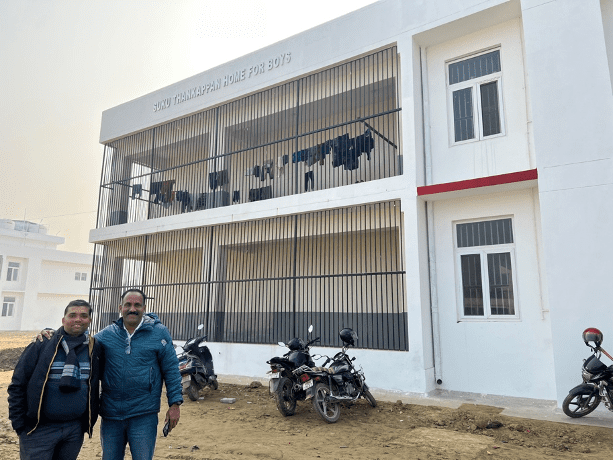
The students’ dorms are wonderful. And they are BIG! They have been built to house a total of 700 children. The boys’ dorm was named for Suku Thankappan, the fabulous director of all our projects in the North of India. Suku gave up a lucrative and prestigious career to come direct our work. He oversaw the construction of the campus. Best of all, he loves the students passionately and they love him back!
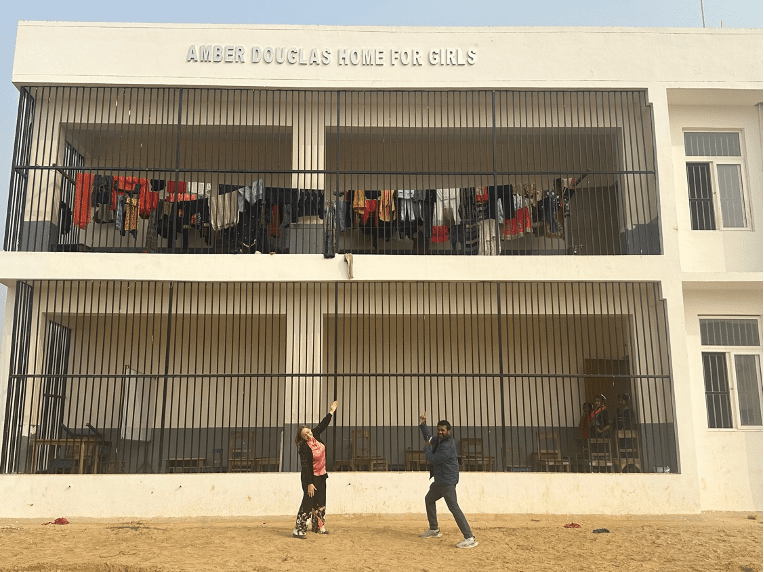
The girls’ dorm was named for my deceased daughter, Amber, whose service to an Indian orphanage is what helped to begin our work. It’s so wonderful that our students now sleep in new bunk beds, instead of on the cold floor. It’s especially cold in the wintertime! The rooms are light and airy. No longer are they in the dark, damp quarters they were in previously.

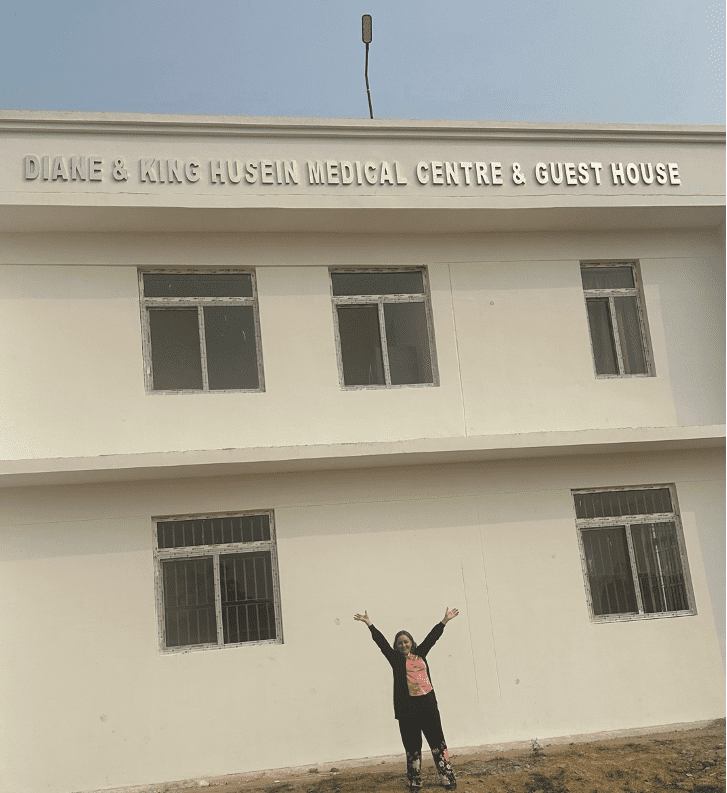
Thanks to Diane and King Husein, the campus also houses a medical clinic where the doctors can provide medical services, not only for our students, but for the people in all the leprosy colonies around. It is the center for our medical units which will deliver thousands of treatments in our fight against leprosy.
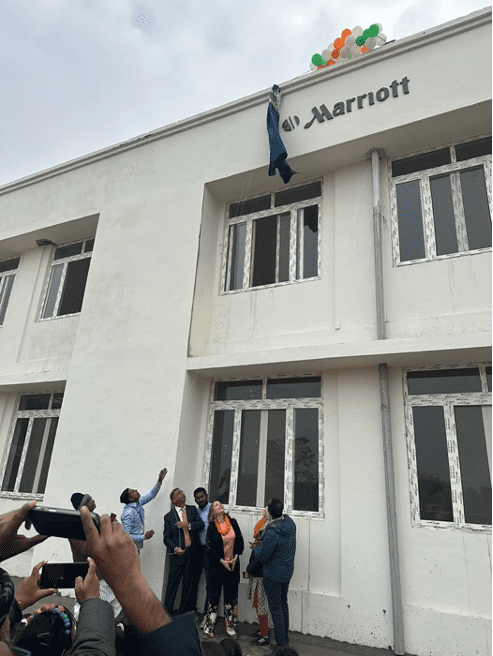
The school is still under construction. In the meantime, we are holding school in the boys’ dorm. The school will include classrooms for grades K-12, computer labs, science labs, and a library. It is named in honor of the Marriott Foundation and hotels. The Marriotts bought the land for us and have been our chief supporter for the past 20 years.
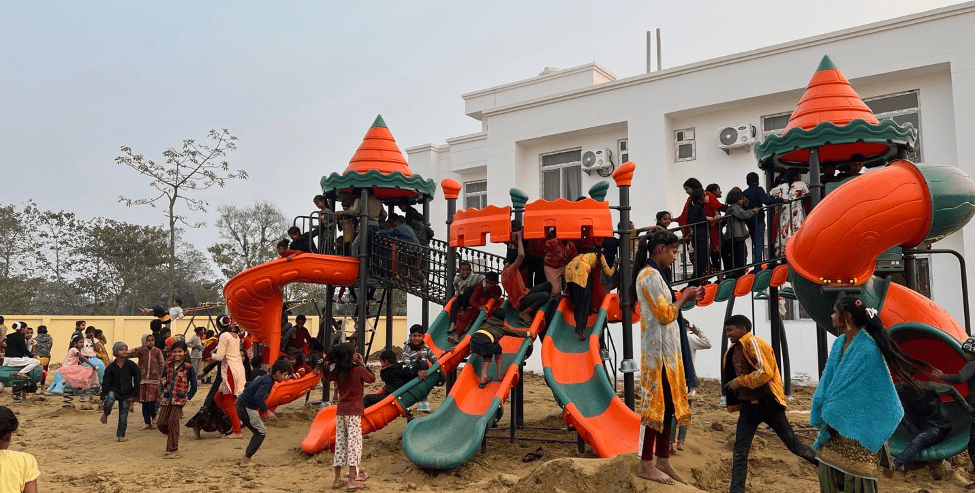
The campus boasts a sewage treatment facility and a reverse osmosis water treatment facility. These are luxuries unknown to most people living in Bihar. But definitely the most cherished thing on the campus is the playground! These children have never seen a playground before. As they saw it going up there were gasps of disbelief. They overwhelmed the play equipment even before we had finished construction of the playground. We kept trying to keep them off it until the construction was completed, but there was no holding them back! We finally just gave up trying. The children’s shouts of joy fill the air until the dark of night. The playground is just outside the Guest House, which houses our volunteers. Hearing the children’s laughter on the playground is the first thing I could hear in the mornings. What a delightful sound to wake up to!
Still to be built are the cafeteria and a dorm for the teachers to live in. Being literally in the middle of nowhere, without housing we would not be able to attract good teachers, thus, the need for a teacher’s dorm.
At the moment, we are using a temporary kitchen and cafeteria.
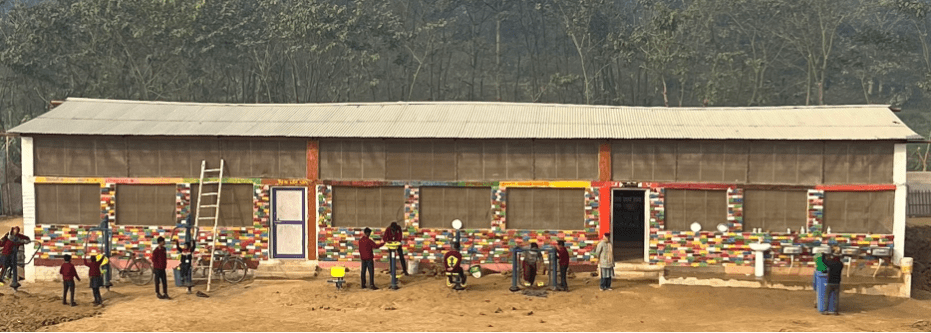
The kids have painted it all the colors of India. Above their colored bricks they have enshrined the seven habits of success, taught by Steven Covey. When the new cafeteria is completed, the temporary kitchen will become the offices of the campus and school leaders.
The new cafeteria will be named for the Proctors and the Meridian readers. It is the next building to be built. It will also host school assemblies and be a wonderful place of gathering. I’ll include a picture in a subsequent article as soon as it is completed!
A beautiful thing that has happened over this journey is the changing of the hearts of the government officials in Bihar. Initially they fought us. They protested the purchase of our land and tried to stop us by stalling needed construction license.
But over these past six years their hearts have begun to change. We were stunned that many of the government officials who formerly opposed us, came to the dedication of the new campus and participated, enthusiastically telling everyone how thrilled they were that we have created this haven for children from leprosy colonies.
We even had a Member of Parliament come and speak about how proud he is of the work we have done! (this is a position similar to a U.S. Senator). He pulled me aside afterwards and thanked me profusely for bringing this change to the people in his state. He added that if we ever needed anything we were to contact him, and he would take care of it. I was totally stunned. But I have learned over and over again in our work in India that God can change hearts!
I had an interesting experience several years ago when the Little Flower charity originally invited us to take over their school in Bihar. In one of my first visits to the school I was accompanied by Maria Padilla, one of our supporters who worked as the head of global supply for Apple computers. Maria wanted to see our computer class.
The class had never seen an actual computer, so Maria passed her laptop around the room for the students to touch and explore. The children were enchanted. Then she pulled out her iPhone. She told the students that she was going to take a video of them sharing their dreams and goals. They looked confused. They had never seen a video before! They had never even seen a movie before!
So, Maria took a short video of me and then played it back to the students. There were gasps of disbelief from the students. Now they ALL wanted a video of themselves. Maria pointed her iPhone at a girl on the front row and asked her what her goals were. The student answered, “Madam, I want to be a nurse.” Maria asked, “What about becoming a doctor?” The student quickly said, “Oh no ma’am, I want to be a nurse.”
Maria then asked the girl next to her to stand and share her dream. The girl said, “I want to be a nurse.” Maria countered with, “Would you like to become a doctor?” The girl responded shyly, “Oh no—a nurse!” Maria then trained her iPhone on the boy in the next desk and asked him the same question. He responded that his goal was to become a nurse. Maria shot me a sidewise glance. . .
In the end, Maria had a video of all 30 students saying they wanted to become a nurse! Exasperated, Maria asked me, “What is the deal with nurses around here?” I responded that in all the years that the Little Flower school had been in existence it had only had two students graduate from the eighth grade. They had both gone on to become nurses. They both ate every day, and they both owned a small home. It was the only vision the students had.
But now, thanks to all of you, their world is expanding. They are now taught by qualified teachers. They are learning about the world outside their new campus. While on the campus this time I had various students share their goals with me. They want to be a policeman, an engineer, an airline pilot, a Bharathanatyam dancer, a designer of AI. What a change! They have learned to dream!
I couldn’t help but wonder if God must marvel at how restricted our own dreams are? Are we like the Little Flower students? God dreams of us becoming as he is. I’m afraid, that sometimes I’m the guilty one of having myopic vision!
All of us at Rising Star Outreach send our heartfelt appreciation to all the readers at Meridian Magazine who so generously support our work and help make it possible. I know that many of you have sacrificed significantly to offer your support. May God bless you all!
How Many People Does it Take to Screw in a Lightbulb?

It costs so little to completely change the life of a child, and in this world where everything seems to go so wrong, you can help something go right. As you read the story below, if you are moved to help, please do. You can make a difference that changes not only one life, but generations to follow.
Please join with other Meridian readers in sponsoring a child (or children) by clicking here.
Several years ago, I had an interesting experience in a very small leprosy colony in India, the Mulgavadi Colony. It was an unusual colony in that there were only about eight remaining colony members. The colony, which originally had more than 40 people, had watched one by one, their friends and neighbors die from leprosy complications.
This colony was also unusual in that the colony members were Christian. Normally, in India, the vast majority of people are Hindu, but this small group of people had been converted to Christianity decades before.
The Mulgavadi Colony is literally in the middle of nowhere. There are no close villages anywhere. Sometime in the past, the government had built a row of concrete rooms for them. The rooms were all connected by common walls. Each room housed a family. There were no bathrooms, no kitchens, just one little room—perhaps 7’ by 6 ‘.
When we came to work with this community, one very small woman, named Saroja, typically would scoot up to me and lay her head against my legs. She was tiny. She probably wouldn’t have reached 4 feet high if she could stand. She had lost one leg though, so I never saw her standing. She lived on the ground. She would scootch around on her derriere using her hands to lift her up enough to push forward a few inches.
She had lost all her fingers to leprosy, so she only had rounded stumps on the end of each arm. One eye had been deformed by the disease. Her voice was high-pitched and squeaky. If you weren’t looking at her when she spoke, you might think you were hearing a small child talk.
Padma usually came with us to this colony. Padma had started some small micro-businesses with the colony members and so came every few months to check on them and offer any help they needed. On this particular night, after scootching up to me and laying her head on my leg, Saroja began to talk very excitedly. She kept pointing to her room. The room was dark. Saroja was now pulling at the pants of my churidar, clutching them with both of her hand stumps. I wondered where she wanted me to go? She’d pull on my pants, then use her arm stumps to lift herself up enough to scoot a couple of inches. She kept repeating this maneuver. I finally let her lead me into the dark room that was her home.
Saroja’s home had only one small cot, on which she slept. There was nothing else in the room. As she talked excitedly, gesturing with her hands, I could make out a light bulb sitting on her cot, in the dark. She was now getting more and more excited, talking a million miles an hour and gesturing excitedly with her hands.
 I don’t speak Tamil. I couldn’t figure out what she was trying to tell me. But she kept gesturing toward the ceiling. There was a small glimmer of light coming in the door from someone’s flashlight outside, And then I saw what she was trying to tell me. On the ceiling was a bare electrical outlet for a bulb. I immediately figured out what she was so desperately trying to communicate.
Somehow, she had gotten a light bulb. But she had no way to screw it into its receptacle in the ceiling, which was nine feet high. Consequently, she had been living in darkness, hoping someone would come along that could connect her light to the power source. I climbed up on the cot but couldn’t come anywhere close to reaching the top of the ceiling.
I went back outside to where Padma was speaking to the rest of the patients in the colony. I told them about Saroja’s dilemma. Everyone came into the tiny room and tried to reach the ceiling, but none of us could reach. One of our volunteers, who had been a cheerleader, suggested we form a human pyramid. We got onto all fours on the dirt floor of Saroja’s room. Our smallest volunteer then climbed up on our backs and was able to reach the ceiling. The bulb was screwed in with a flourish. Light lit up everyone there. We all smiled and laughed as we disentangled ourselves from our “pyramid.”
Fast forward 17 years. We are just finishing a big, beautiful campus in Bihar. This campus will incredibly have the capacity of educating 700 children from leprosy colonies. Bihar is arguably the poorest state in India. The poverty there is overwhelming, even to me—and I’ve been working in leprosy colonies in India for 23 years. You’d think I’d be used to poverty by now! But Bihar is so far behind other states of India, that its poverty grabs you by the throat.
This new school will be a beacon in the midst of this crushing poverty. It will educate children from 22 different leprosy colonies, These are kids who have no hope in life, resigned to lives as their parents have lived—essentially by begging. Many of them have already become beggars. They have no opportunity for medical or dental care, or even for daily food. They have to sneak into nearby fields to use the bathroom as the colonies have no bathrooms. They have to be careful though, because if caught they can be beaten mercilessly by the farmers who own the fields.
Rising Star Outreach began working in this state five years ago, We started by taking over a small school called the Little Flower School. It had not quite 100 students. Today it has 308 students. The waiting list for children to get into our school has been long ever since we took over the Little Flower School.
The excitement of the community when they saw a big new campus going up, has been palpable. Nearly every day, parents come by to plead for us to accept their children into the new school. Our challenge is that we don’t have the funds to accept any more children than we currently have.
It costs us $90 each month for the housing, food, medical and dental care, for the housemothers, teachers and school supplies for each child. We have a sponsorship program where families can send $30 a month to sponsor a child. Thus, we need three sponsors to support each new child.
This campus feels to me as if we have a “light bulb”, but cannot connect it into its power source. It is difficult to tell parents that they must wait a little longer until we can find enough sponsors for their child to attend, particularly when they can see the school buildings being completed. Some of these parents and children have been waiting for five years.
That’s where Meridian Magazine comes in. Scot and Maurine, who have been to our project in Bihar, graciously agreed to appeal to Meridian Readers to help sponsor our students. We told Meridian that we would bring a new student in for every two sponsors they found for us. We are confident that others of our donors will make up the remaining $30 per child.
Each student who studies in our school returns to their families during vacations and teaches their families the things that they have been learning. The families begun to realize that when their child graduates, they will be able to go to college and one day support the entire family.
Our new campus to me is a bit like Saroja’s light bulb. It has so much potential to affect lives. Our new sponsors are like our human pyramid that came together to get Saroja’s light bulb connected to the power source. Saroja’s bulb, once connected filled her home with light. Our students, once connected to our program, have their lives filled with light and opportunity.
I hope you can join with us in creating a “human pyramid” in Bihar. My dream is to fill every seat in the school. At the moment it seems impossible. But I have learned over the years that when caring people come together nothing is impossible!
We like to say at Rising Star Outreach that every child has a story. Our volunteers are constantly sharing amazing stories from the children they interact with. I asked our school social counselor in Bihar to visit some of the children on our waiting list so that I could share their stories with you. Here is a story she sent yesterday:

Meena Kumari (not her real name), a bright-eyed six-year-old, lives in the Sitamarhi Leprosy Colony with her paternal grandparents and siblings. Her life has been marked by challenges from a young age. Her mother left when she was just four, abandoning her and her siblings. Her father, Sandeep, struggled with mental health issues, making it difficult for him to care for the children. He could find no employment, since he carried a double stigma: both leprosy and mental illness. Both are considered to be a curse of God.
Facing these hardships, Meena’s grandparents did their best to provide for their grandchildren. However, the colony’s limited resources and the stigma surrounding leprosy made everyday life a struggle. Their biggest challenge is finding enough money to buy food for the children. They can only pray that the children don’t get sick, because there is no money for doctors or medicine.
Meena’s grandparents’ only hope is to find a school who will accept her. Most schools do not let children from leprosy colonies attend their school. Meena’s grandparents had heard of the Rising Star Outreach of India School, which offered hope and education to children like her. But then they learned that the waiting list to get into the school made hope of acceptance nearly impossible. She longed to learn, play, and make friends. Hoping against hope, they added Meena’s name to the list.
Meena’s name is still on the waitlist. It has been more than a year. She is eagerly awaiting the day she will be accepted, hoping to escape the cycle of poverty and stigma.
Meena’s grandparents, though aged and weary, encouraged her to hold on to her dreams. Her grandfather, a kind-eyed man, would often tell her stories of his own childhood, inspiring her not to give up hope, and to strive for a better life. With the simple faith of a child, she continues to pray every day that she will be accepted.
Help us to get little Meena into school (and maybe even her siblings!). Join our human pyramid to lift up this sweet child high enough for the light to come into her life that will transform her life!
Please join with other Meridian readers in sponsoring a child (or children) by clicking here.
Saving Satya’s Life: Clean Water and a Second Chance at Life

It costs so little to completely change the life of a child, and in this world where everything seems to go so wrong, you can help something go right. As you read the story below, if you are moved to help, please do. You can make a difference that changes not only one life, but generations to follow.
Please join with other Meridian readers in sponsoring a child (or children) by clicking here.
Two-and-a-half years ago, our team from Rising Star Outreach was in the Dheng Colony in Bihar to install a clean water project. The colony had never had access to clean water, but this was about to change! We installed a water purification plant and for the first time ever, the families of this far-away colony were drinking fresh water. We knew it would impact the health of every family going forward.
What we could not change was how the contaminated water they had been drinking may have already impacted the health of the people. In Bihar, the soil has a high concentration of arsenic, which often leaks into the water table. Can you imagine drinking water laced with arsenic? Children are especially sensitive to the toxic effects of this chemical. We were grateful to be able to change their exposure and the trajectory of their lives.

Women in Bihar collect clean water from a water purification plant installed by Rising Star Outreach, improving health and reducing water contamination.

When he passed a dirty old pond on the property, Suku smiled. He immediately enlisted the help of the colonists to drain the pond, enlarge its parameters and clean the filth away. The pond was refilled and stocked with small fishlings. Not only are they able to obtain quality protein in their diets, they have sold more than $2,000 of fish at the nearest village market. The project has employed many members of the colony and given them the chance to live productively without begging. These families now have a consistent income.

The drained pond in a Bihar leprosy colony is being repurposed for fish farming, providing sustainable income and nutrition for the community.
But what about the other families? Suku got the others involved in a project to grow mangos, bananas and guava trees. He brought in backhoes and steam shovels.

Everyone in the colony had to pitch in as irrigation ditches were created to water the rows and rows of fruit trees that were planted. They worked in the blazing sun until they were exhausted. For the colonists, simple tasks such as digging or weeding were particularly difficult because of the ravages of leprosy which had left many of them without fingers, toes, or even hands or feet.

But they caught Suku’s enthusiasm and vision. Was it possible that they could become economically self-sufficient? Suku answered their doubts with his typical enthusiasm: absolutely they could do this!
They worked long and hard dealing with cobras, heat, and monsoons. But their gardens are now flourishing!
As he worked with the colonists, Suku noticed three little children that worked right alongside their parents. The children had all of their fingers, toes, hands and feet. They were determined to help their struggling parents. Suku was impressed with their willingness to do such hard work.
The middle child, Satya, (not her real name) had heard that Rising Star Outreach had a school for children from leprosy colonies. Cautiously, Satya approached Suku and asked him if they could attend the school. At first Suku was hesitant. Yes, Rising Star had a school, but it was very far away. If the children came, they would rarely be able to see their parents. Besides, the school already had a long waiting list. But Suku had been very impressed with the pluck of these three kids. He spoke to the parents and told them he would find a way to admit them to the school. The family was overjoyed.
That’s how Satya, her older sister and her younger brother were able to join Rising Star Outreach School. Satya dove into her schoolwork with the same fervor she had worked to dig ditches for her colony’s farm. While she was far behind the other students, she took it as a personal challenge to catch up. She studied every night until the housemother insisted the lights were to be turned off. She was up early to study again. And it paid off as Satya was soon at the head of her class. She felt triumphant!
Then six months ago, Satya began to experience inexplicable physical problems. She would suddenly fall down in a fit, tremble and shake and be unresponsive until the fit had passed. Concerned, Suku took her to the local hospital. They diagnosed her with epilepsy. They gave her medication, but her condition didn’t improve. The doctors, thinking perhaps her condition was connected to emotional trauma from being separated from her parents, suggested she should be sent home to be with her parents. Satya was heartbroken. She begged Suku to let her stay, but he felt obligated to follow the doctor’s advice.
Once back at home Satya’s condition worsened. Suku worried greatly about her. She was so far away that Suku rarely got any news of how she was doing. In the meantime, thanks to a generous donor, Rising Star Outreach was able to start a medical program with a mobile medical van that could go from colony to colony and offer medical assistance that the people in this area had never had access to before.
One of the first places that Suku sent the new medical team was to Satya’s colony. He wanted to make sure she was getting better. Unfortunately, the doctors returned with news that Satya’s condition had worsened. She had become terribly weak, and her fits were getting more frequent and more debilitating. She was now bedridden, and unable to talk or to recognize anyone.
Panicked, Suku counseled with the doctors. They all agreed Satya would need to go to the government hospital in Patna—another seven hours away. Suku made the necessary arrangements, and Satya was admitted to the AIIMS Hospital in Patna. Tests were ordered. Medications and therapies were started.
Satya has shown remarkable resilience. Thanks be to God, Satya is improving. She is now back home with her parents and growing stronger each day. She is anxious to get back to school.

How grateful we all are that Satya was at the Rising Star Outreach school. Otherwise, she would not have had access to the medical intervention that has saved her life. Her sister and brother are so grateful that her suffering is now being treated. And we at Rising Star Outreach are grateful that no other child in her colony needs to continue to be exposed to contaminated water.
All of these blessings have been provided because of caring people who support our work. Our work changes lives. People live with dignity, instead of begging. Now thousands of people have access to clean water and toilets. Children receive an education that will change the course not only of their lives, but the lives of generations.
During this most recent campaign more than 130 Meridian Readers have helped sponsor children at our new school in Bihar. What an incredible blessing! So many leprosy-affected families whose lives will never be the same—these families will now be filled with hope and possibility instead of with despair and suffering!! We still need more sponsors for children on our waiting list. I hope some more of you can join us in creating real change.
Please join with other Meridian readers in sponsoring a child (or children) by clicking here.
Ragpickers: Among the Most Desperate People on Earth

It costs so little to completely change the life of a child, and in this world where everything seems to go so wrong, you can help something go right. As you read the story below, if you are moved to help, please do. You can make a difference that changes not only one life, but generations to follow.
Please join with other Meridian readers in sponsoring a child (or children) by clicking here.
What is a ragpicker? Most people in America have no idea. I know I didn’t—until I had the opportunity to go to the rag-picking district of New Delhi. It is a trip I can never forget.
Several of us at Rising Star Outreach had been invited by another charity, Project Concern International, to come and witness their program in the rag-picking district of New Delhi. We had been selling Christmas cards that had been made by the children in the project. They made recycled paper from the trash and then hand-painted Christmas cards. To help support their project, at Rising Star, we sold their Christmas cards in America. To thank us, they invited us for a visit.
The rag-picking area of New Delhi is confined to 22 square blocks. All the trash of New Delhi is dumped there every day. There were people who lived on the trash in tiny cardboard huts. They would pick through the trash, gathering plastics, paper, tin, cardboard, etc. for recycling. Everyone in the family worked. Even so, they did not make enough to feed their families. We were informed that some of the children were forced by the parents into prostitution, to make up the difference. There are probably no more desperate people on earth.

I have seen poverty that many people in America cannot fathom. But I was not prepared for the Rag-picking District. We had been invited to walk several blocks, but the stench of the rotting trash, smoldering in 100+ degree heat was nauseating. Flies were swarming in mass, covering every surface, including crawling on my face, arms, and neck. They were in my ears and even trying to crawl up my nose. Maggots were devouring rotting foods. With every step, rats and roaches scurried from beneath my feet.
The children were the most pitiful of all. They ripped wires out of broken radios and cameras and then pounded them with sharp rocks trying to separate the copper from the wires. Like their parents, the children were barefoot. Every child had cuts and abrasions from the broken glass and sharp metal pieces of trash. Their wounds were festering in the heat. I was overwhelmed.

I became emotionally and physically ill. My heart ached for these children. Altogether it was overpowering. I couldn’t continue. Our hosts could see that I was in trouble, and so the walk was abandoned.
I couldn’t imagine being so desperate that I would willingly spend 14 hours a day in that hellhole, trying to scavenge enough recyclables, that I could hopefully sell, so that my family could buy a few grains of rice to eat.
So why am I sharing this with you? I want to tell you about a family from a leprosy colony in Bihar: Kavitha Kumari and her three small children; *Megala (5), Devendran (4,) and Devi (18 months).

Megala and Devendran, eager to learn, are on the waiting list for Rising Star School, their cherished hope for a brighter future. Kavitha’s dreams for her children’s education is what keeps her going, even in the toughest of times.
Kavita Kumari was widowed at 25 and has had the support of the family on her shoulders. They live in a small hut with her deceased husband’s parents. Providing for her family has been a huge challenge.
Jobs in Bihar are extremely scarce. Bihar has an employment rate of 25%. Not unemployment. Employment! One out of four people are employed. Everyone else is trying to make a living by driving an auto-rikshaw, selling tires or anything else they can collect, baking things to sell, or any other method they can find of generating income on their own.
Please join with other Meridian readers in sponsoring a child (or children) by clicking here.
Being leprosy-affected, Kavitha’s challenge to support her family is even more difficult. The prejudice against people affected by leprosy is very intense in Bihar. No one wants to hire them, and people refuse to buy anything a leprosy-affected person is selling. Earning enough money for food becomes a daily life-and-death challenge. Every day, Kavitha and her step-parents venture out to collect old plastic from the trash heaps of Bihar, which they then sell to make a meager living. The children often accompany them, braving the life of rag-pickers in order to survive.
As they collect plastic garbage, Kavitha tells her children stories of her own childhood, of their father who passed away so young, and of her dreams for their future. In the midst of the horrors of rag-picking, the children try to imagine a better life.
The grandmother, Jayasundar, often takes Devi, the youngest, on her lap and sings soft melodies, trying to distract her from the hardships they face. The deaf grandfather sometimes takes a break to watch over them with loving eyes, his silence speaking volumes about his care.
Together, this family of six faces each day with courage, and with hope. Kavitha’s determination to give her children a better life keeps them all going, even in the face of this crushing adversity.
As the sun sets on another day, Kavitha looks at her children, knowing that she will do everything in her power to give them the future they deserve. The waiting list for Rising Star School seems daunting. But they keep their hope alive by working together and talking of hope.
Our sponsorship Director, Kristen Edwards, was able to be in India the day our school started back, after summer break this year. She was at our school in Tamilnadu. Wanting to share her experience with the families who sponsor our children, she wrote:
I recently had the privilege of visiting India to witness firsthand the incredible impact your sponsorships are creating for our students. As part of my visit, I was present on the first day of school. What a treat!
I saw our returning students arrive with the typical mix of anticipation and nerves in their cutest back-to-school outfits. The teachers were waiting for them with big smiles. The students gave their teacher a high-five or hug as they marched into their first day of class. The teachers had a treat for each child. Teachers and parents cheered as each child passed into their class.
There were also new families waiting to meet with our administration to enroll their children in our program. I met a dedicated mother who woke up at 2:30 AM to walk to the bus station and take the bus to be on campus by 11 AM. She told us that she works long hours in the hot sun assisting a brick mason in Chennai, by carrying heavy loads of bricks on her head. She gets paid very little for her work. She knows the importance of education and when she learned about our school that would educate those affected by leprosy, she wanted to be sure her twin daughters and one son could take advantage of this opportunity.
Her children arrived at the campus visibly undernourished, but they squealed with joy as they explored the fish tank and ran up and down the slide with their new-found friends. As I watched them play, I thought of you and the sacrifices you make each day that shape the futures of some of the most vulnerable and deserving kids on our planet.
Before I left that night, I slipped into the girls’ dorm to check on the twin girls whose mother had walked so far to drop them off that morning. One of the twins was snuggled in the loving arms of her housemother. She was completely enfolded in the sweet embrace.
I left so happy inside, knowing that my small efforts with the sponsorship program, working in tandem with the housemothers, was making a real difference in the lives of these darling sisters.
It is thanks to your continued support that we can make a tangible difference in the lives of these children and families, providing them with a pathway to a brighter future.
I know of a senior in high school who started a cookie business and dedicates her profits to supporting one of our students. Another sponsor cleans homes for a living in Texas and uses her salary to sponsor five students. And many of you sacrifice going out to eat for dinner or lunch with friends because you believe in our mission.
I like to think of your sacrifices and the sacrifice of these parents working in concert to create the opportunity these children crave. I am confident that these kids will change their communities because they have the chance.
With appreciation, Kristen Edwards, Sponsorship Director, Rising Star Outreach
 I left so happy inside, knowing that my small efforts with the sponsorship program, working in tandem with the housemothers, was making a real difference in the lives of these darling sisters.
What a contrast! Can you help us get Megala and Devendran into school? We need two sponsors for each one. As I always insist: every child on our waiting list has a story. Every single one has the potential of a successful and productive life, if they can only get the chance to be educated. Help us change lives!
* [Not their real names]
Please join with other Meridian readers in sponsoring a child (or children) by clicking here.
Breaking the Chains of Child Marriage: Kasturi’s Story of Hope

Editor’s Note: Kasturi was 13 years old when her step mother insisted she be married away as a child bride. She did it to rid herself of the girl, a common practice in India.
Katsuri knew of predatory men before because as a young girl at Little Flower, a school for the children of the leprosy-affected in India, the girls couldn’t play outside because of the danger.
All that changed when Rising Star took over the Little Flower school and built protective walls around the girl’s dorm, began offering excellent education to the girls, and then championed Kasturi in her fight to not marry, but stay in school
Now, she has the chance to attend the new Behar School, which Meridian readers helped to finance, but children like her need a sponsor. It costs so little to completely change the life of a child, and in this world where everything seems to go so wrong, you can help something go right. Our goal is to sponsor about 65 more children. Please help us. You can make a difference that changes not only one life, but generations to follow.
Please join with other Meridian readers in sponsoring a child (or children) by clicking here.
Kasturi’s life took a devastating turn when she lost her mother at the tender age of one. Her father remarried, leaving Kasturi in the care of her stepmother who treated her with indifference. She felt unloved and unwanted.
Fortunately, at the age of six Kasturi was accepted at the Little Flower School. She was both nervous and excited. Because the school was many miles from her home, Kasturi had to live at the school in a hostel with 49 other girls.
Life there was also difficult. There was only one housemother, overworked, overstressed and frazzled trying to take care of so many children. The housemother carried a thick stick, which she used to maintain order among the girls. Kasthuri was struck more times than she wants to remember. She felt she was always looking behind her to verify where the stick was, and to make sure it was not aimed at her!
There were several older men who tried to prey upon the young girls. One year four girls became pregnant. The school took action by locking the girls in the hostel during the night. In the morning, they were escorted to the school at 8:00, where they remained until noon.
Because the school was located in a leprosy colony, it was unable to find any qualified teachers. The only instructors were the few adults that had learned how to read before they contracted leprosy. These instructors, however, had other responsibilities, and thus school was only four hours a day. At noon the girls were escorted back to their hostel, where they were locked in until the following morning. Can you imagine?
There was no air conditioning in the hostel or the school. Both were cramped and crowded and unbearably hot. There was little room to walk around and almost no room to play. There were days when little Kasturi felt like she was suffocating.
Due to some miraculous events, Rising Star Outreach was able to take over running the school. We built a wall around the school to protect the girls. We found qualified teachers and were able to extend the school day until 3:00. We put fans and lights in both the school and the hostels.
Please join with other Meridian readers in sponsoring a child (or children) by clicking here.
With the protective wall in place, the girls were able to play in the school courtyard. Afternoons were now filled with games and sports. After a free hour of play, the students then had tutoring sessions until dinner. They were all far, far behind in their studies and had much catching up to do. After dinner, they studied until bedtime with the new lighting.
When Kasturi turned thirteen she had to face another looming threat: child marriage. In her rural leprosy colony, child marriage was a harsh reality. Girls were often forced into wedlock, sacrificing their education and childhood. Kasturi’s stepmother, eager to rid herself of the responsibility of caring for her during school vacations, began arranging Kasturi’s marriage to a much older man.
When she learned about her stepmother’s plans, Kasturi was terrified. She knew what life was like for the women in her colony. She knew that she wanted more. She had been carefully nurturing secret dreams. But a marriage now would rush those dreams. She felt trapped and desperate.
She learned that her stepmother had arranged for her to be married during the upcoming four-day school vacation. Had she endured all these hard years at the Little flower School, just to be married off to a life of drudgery? Trembling, she worked up the courage to tell the school counselor her predicament. Kasturi begged her counselor to convince Suku, Rising Star’s Director, not to send her home for the holiday.
Please join with other Meridian readers in sponsoring a child (or children) by clicking here.
Learning of Kasturi’s plight, Suku met with the stepmother. and tried to convince her to abandon the marriage plans, He explained the dire consequences of child marriage, including the health risks. What’s more, it is a death knell to a girl’s education. It confines girls to a lifetime of oppression. Despite Suku’s arguments, the stepmother was unmoved and determined to go ahead with the marriage.
But Suku wouldn’t back down. He turned to the father, who was clearly reluctant to cross his wife. Suku explained to him that if Kasturi could graduate, she would be able to earn much more money to help the family. Her school should be considered as an investment in the future of the entire family. The father almost agreed, but then after a stern glance from his wife, once again insisted that Kasturi would get married during the upcoming vacation.
Suku was getting more and more frustrated. He would not abandon Kasturi to this future! He also realized that the school would be in great trouble if one of their girls was married at the age of thirteen. He used this to strengthen his argument.
Suku reminded the father that it was illegal to marry a girl at the age of thirteen. Since this would also be putting the school at risk, Suku would thus be forced to call the police and report the parents. They could go to jail.
The threat of calling the police finally broke the impasse. Kasturi’s stepmother, though reluctant, finally relented under Suku’s persistent arguments. Kasturi was saved from the clutches of child marriage. This happened just last week!
I can’t help but wonder what Kasturi’s life would be like if Rising Star Outreach had not been there for her as her step-mother was taking steps to have her married off—a child bride. If she had still been languishing on our waiting list, like so many other children, Rising star would never have known of her predicament.
With Rising Star’s support, Kasturi has been flourishing at school. She is studying in the 5th grade and has been discovering a passion for science and mathematics. She is becoming a confident, determined young woman, inspiring other girls in her community to stand up for their dreams.
Her story serves as a testament to the power an intervention can have in the life of a child. Kasturi’s determination to believe herself worthy of dreaming and capable of achieving her dreams proves that with courage and support, even the darkest circumstances can be overcome.
We like to say at Rising Star that every child is born into this world with unique talents, interests and abilities. We’ve had children who have excelled in almost every field, even though they were nearly all initially beggars on the street, considered by most people, to be worthless.
But we in the Church know that every child has limitless eternal potential. They are each Spirit children of an all-powerful and eternal Father in Heaven.
Like many of you, when I hear the news reports of the suffering of children in Ukraine, Gaza and Sudan, I feel heartsick. I wish there was something I could do. My husband and I were blessed to have the opportunity to sponsor three different families from Ukraine in their move to the United States. I felt so grateful to have even a tiny little thing to be able to do, but it was only a drop in the bucket of suffering.
While there’s not much I can do to help the children in Ukraine, Gaza or Sudan, I am grateful to know that I can reach out and help in a different situation. There are many “Kasturi’s” on the waiting list to get into the Rising Star Outreach school in Bihar, India. Already, 68 Meridian Readers have signed up to help sponsor these children. It will make a phenomenal difference in their lives!
I had the opportunity today to talk to Suku in India. When I told him about the 68 new Meridian sponsors I could “hear” his smile and enthusiasm through the phone! He was overjoyed, because he knows what admission to our school means, not only to a child, but to their entire family.
If there is any way you can help, I would invite you to join us. Each life “saved” is multiplied many times through the generations. I love Mother Teresa’s belief that, We can do no great thing, we can only do small things with great love. I also believe that through such small things, we can change generations.
Please join with other Meridian readers in sponsoring a child (or children) by clicking here.
FEATURES