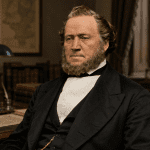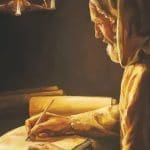





If Joseph Smith Had a Birthday Party, Who Would Come?
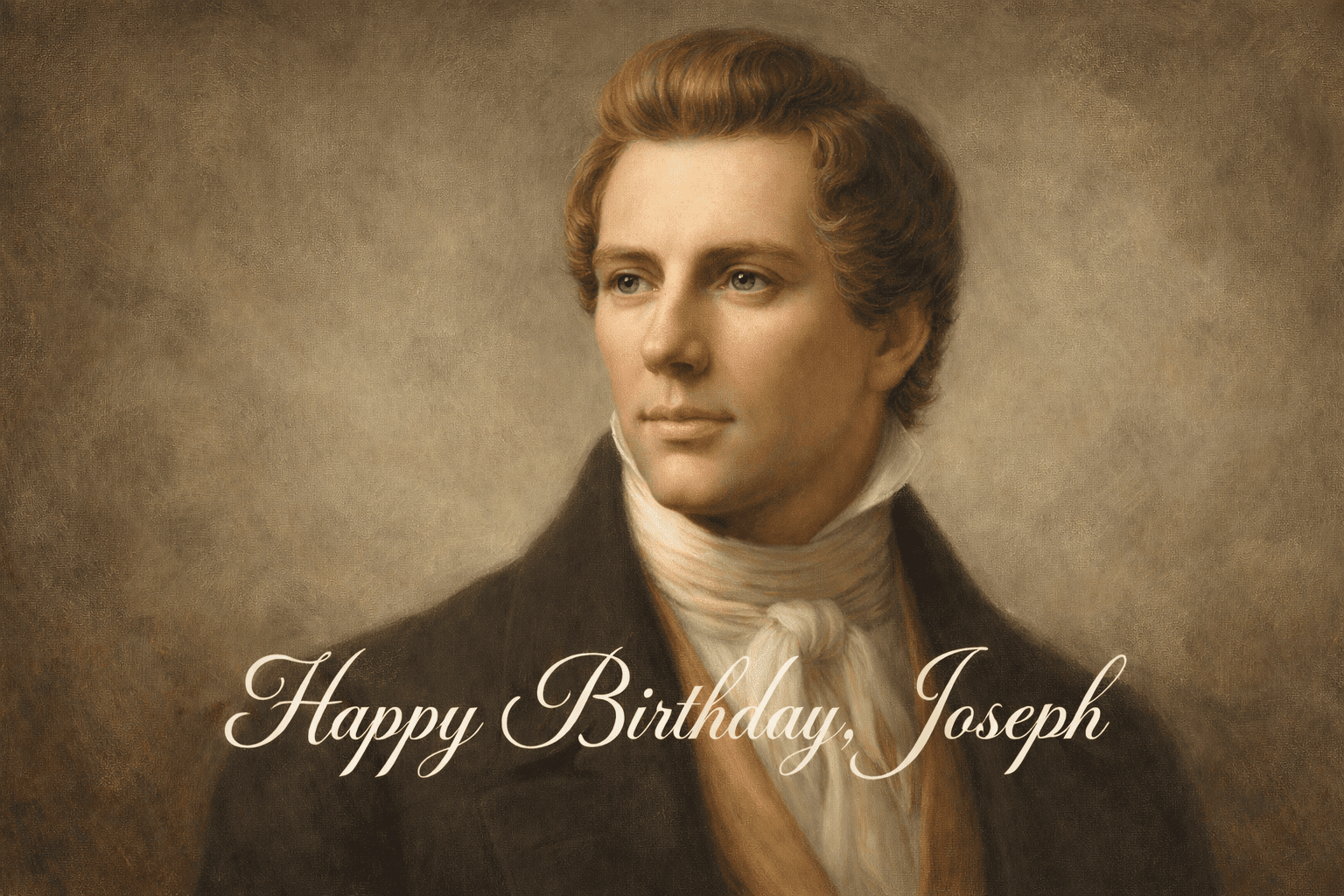
Joseph Smith’s Birthday Party: Who Would Come?
When Joseph Smith met Moroni for the first time, Moroni told him that his name “should be had for good and evil among all nations” (Joseph Smith—History 1:33). I decided to have a birthday party for Joseph on December 23, 2025. He will be 220 years old. I sent invitations to people who said good about him. Here is a sampling of the people who came.
William W. Phelps: Brother Joseph!
Joseph: Brother Phelps!
William W. Phelps: I wanted to be the first at this celebration because of the false witness I bore against you in Missouri. As I said in my letter to you in 1838: “I am as the prodigal Son…. I have been greatly abased and humbled…. I know my situation, you know it, and God knows it, and I want to be saved if my friends will help me…. I have done wrong and I am sorry. The beam is in my own eye…. I ask forgiveness in the name of Jesus Christ of all the saints…. I want your fellowship”1
Joseph: Of course, you are welcome here. I’m sure you remember my words: “Come on, dear brother, since the war is past, for friends at first, are friends again at last”2
William W. Phelps: And I hope you remember the words I wrote about you: “Praise to the man who communed with Jehovah! Jesus anointed that Prophet and Seer. Blessed to open the last dispensation, kings shall extol him, and nations revere”3
…
Miriam Stowell: Hello, Joseph. It’s Miriam Stowell. I am here with my sister, Rhoda.
Joseph: Thank you for coming. I remember you both. When I was working for your father, there was a court case against me in 1830, and you two were called to testify about my character.
Rhoda Stowell: Yes. When we were summoned as witnesses, we were interviewed separately. They asked us about your behavior towards us both in public and private. We told them that you always treated us respectfully. Your accusers realized they had no case, and the charges were dropped.4
Joseph: Thank you. I am grateful to you both.
….
Matthew L. Davis: Hello, Joseph. I was a journalist from New York. I attended a sermon you gave in February of 1840 in Washington, D.C., and met you briefly. You impressed me so much that I wrote about meeting you in a letter to my wife. I told her that you were a “plain, sensible, strong-minded man [and that] everything [you] said [was] in a manner to leave an impression that [you were] sincere.” I told her you didn’t use levity or fanaticism. I said you were dignified in your deportment.” I remember that you had “a ready sense of humor.” I watched you interact with the people there. I saw you “stand up for the rights of others to practice their religion free of violence and discrimination.”5
Joseph: Thank you. Those are kind words.
…
Peter Hardeman Burnett: Joseph, it is so nice to see you again.
Joseph: Peter Burnett! Thank you for coming.
Peter Hardeman Burnett: “I well remember the first time I saw you. It was at Far West, and I heard you preach two sermons. I was so impressed that in June 1839, I acted as your defense attorney.
Joseph: Yes. I recall your bravery, your willingness to defend me with your pistol if necessary.
Peter Hardeman Burnett: That is true. I was a young attorney assisting Alexander Doniphan. We were afraid you might be mobbed, forcibly seized, and hung. I gave some introductory remarks in defense of you and the others who had been kept in Liberty Jail. After Doniphan’s closing remarks in your defense, the “maddened crowd,” which “foamed and gnashed their teeth,” acted in a wild and threatening manner. As tension mounted, “I slipped [my] hand down upon [my] pistol, determined “to spend [my] life, if necessary, to protect [your life]”6
….
Alexander Donaphan: I am here too, Joseph.
Joseph: Why, it’s Brigadier General Alexander Donaphan! Thank you for saving my life when General Lucas held a kangaroo court and declared me, along with my brother Hyrum, Sidney Rigdon, Lyman Wight, Alexander McRae, and Caleb Baldwin guilty of treason. I know you refused to shoot us, saying something like: “It is cold blooded murder. I will not obey your order. … [I]f you execute these men, I will hold you responsible before an earthly tribunal, so help me God”.7
Alexander Donaphan: Of course, I defended you. You were “a peaceable, sober, industrious, and law-abiding people.”8
Joseph: Thank you both for your heroic stance. History remembers, and I will always remember your valiant service.
….
William S. West: Hello, Joseph. You probably don’t remember me. My name is William S. West.
Joseph: Yes, Mr. West, I do remember you. I think you visited me in Kirtland. Did we not have a conversation about the mummies and scrolls and the writings of Abraham?
William S. West: We did. But what stayed with me, and what I wrote a pamphlet about, was the record of Joseph, who was sold into Egypt. I remember you told me that it contained “important information respecting the creation, the fall of man, the deluge, the patriarchs, the Book of Mormon, the lost tribes, the gathering, the end of the world, the judgment, etc. etc.”9 I understand that because of persecution you never finished translating Joseph’s writings and that they were never published.
Joseph: Yes, you are correct. However, in the Lord’s timing, the record of Joseph will be translated and published for the world to read.
William S. West: I look forward to that opportunity. Happy Birthday.
Joseph: Thank you for coming.
….
Mary B. Noble: Hello, Brother Joseph. When I was twenty-three, you came to my father’s home in Avon, New York. The year was 1834. “I can truly say at the first sight that I had a testimony within my bosom that [you were] a man chosen of God to bring forth a great work in the last days.” Your words were “meat and drink to me…. The principles [you] bore of the truth of the Book of Mormon… made a lasting impression upon my mind…. Never did I hear preaching sound so glorious to me as that did. I realized it was the truth of heaven, for I had a testimony of it myself.”10
….
Harold Bloom: Hello, Joseph. I am Harold Bloom. I was born in 1930 and spent my career as a professor of humanities at Yale University. When I heard about this birthday celebration, I wanted to share what I wrote about you.
Joseph: Pleased to meet you, Professor Bloom. Did you write for good or for ill?
Harold Bloom: In the essay I wrote about you, I think I used the phrase “religious genius” about ten times. “As a Jewish Gnostic, I am in no position to judge [you] as a revelator, but as a student of the American imagination I observe that [your] achievement as national prophet and seer is unique in our history. Ralph Waldo Emerson and Walt Whitman were great writers, Jonathan Edwards and Horace Bushnell major theologians, William James a superb psychologist, and all these are crucial figures in the spiritual history of our country. [You] did not excel as a writer or as a theologian, let alone as psychologist and philosopher. But [you were] an authentic religious genius, and surpassed all Americans, before or since, in the possession and expression of what could be called the religion-making imagination.”11
Joseph: Those of generous words. Thank you for coming.
….
Mercy Fielding Thompson: I was baptized in Canada when I was twenty-nine. “I [saw you] under a great variety of circumstances, in public, in domestic and social life and in sacred places. I saw [you] by the bedside of Emma… in sickness, exhibiting all the solicitude and sympathy possible for the tenderest of hearts and the most affectionate of natures to feel. You were also there at the deathbed of my beloved companion…. [Your] tears of love and sympathy freely flowed…. [There were times,] I [saw you] as if carried away by the power of God beyond all mortal conception, when speaking to the Saints in their public gatherings; and in less public places I have heard [you explain] to the brethren and sisters the glorious principles of the gospel, as no man could, except by prophetic power…. Yet you were unassuming as a child.”12
Joseph: Thank you, Sister Mercy. Your husband, Robert, was my scribe and clerk, a man to be trusted. When he died in 1841, we mourned his passing. We missed him. He was a bright and capable man, the co-editor of the Times and Seasons newspaper. And you, Mercy, thank you for your faithful and dedicated service to the gospel of Jesus Christ throughout your life.
….
Robert V. Remini: Hello, Joseph. My name is Robert Remini. I was a history professor at the University of Illinois at Chicago. I wrote a book about you in 2002, titled Joseph Smith. In it, I wrote that you were “unquestionably the most important reformer and innovator in American religious history.”
Joseph: I thank you for that praise, but you know that everything I was able to do, for example, read and dictate the text of the Book of Mormon to my scribes, was by the gift, power, and mercy of God. When God calls a person to do His will, He qualifies them to do it. Such was my blessing.
Robert V. Remini: Yes. I know that about you. I wrote that you were “a man of compelling charisma, charm, and persuasiveness, a man absolutely convinced that his religious authority came directly from God.”13
….
Three officers of the law: Joseph, we are three men who were sent to arrest you at your parents’ home. Our names are not in any historical accounts, and we still want to go unnamed. Here is our story. We burst into the home, and your mother said: “Gentlemen, suffer me to make you acquainted with Joseph Smith, the Prophet.” [We] stared at [you] as if [you] were a spectre. [You] smiled, and stepping towards [us], gave each [of us your] hand, in a manner which convinced [us] that [you were] neither guilty nor yet a hypocrite.” You then sat with us and explained your situation to us in some detail. Then you stood up and said, “Mother, I believe I will go home now—Emma will be expecting me.” Two of us sprang to our feet and offered to go with you to protect you. As we talked amongst ourselves, we said:
1st Officer. “Did you not feel strangely when Smith took you by the hand? I never felt so in my life.”
2nd Officer. “I could not move. I would not harm a hair of that man’s head for the whole world.”
3rd Officer. “This is the last time you will catch me coming to kill Joe Smith, or the Mormons either.”
1st Officer. “I guess this is about my last expedition against this place. I never saw a more harmless, innocent appearing man than the ‘Mormon’ Prophet.”14
Joseph: Thank you for your courageous actions, and thank you for coming.
….
George Manwaring: Hello, Joseph. I am George Manwaring. I never met you in life, as I was born ten years after you and Hyrum were martyred. Although I had only a few weeks of formal schooling, the Lord blessed me to become a music teacher, stenographer, poet, and penman. My Father in Heaven gave me the gift to write hymns. Five of my hymns are in the hymnbook that is in use today. I wrote “Joseph Smith’s First Prayer.” The inspiration for the song came as I contemplated C.C.A. Christiansen’s painting, ”The Vision,” which shows the Father and Son appearing to you. Even though I was blessed to write the words, they fill me with awe every time I think of them.15
Joseph: Thank you, Brother Manwaring, and “awe” is the correct word. I have found it beyond human verbal expression to describe the experience. But you did well. It was a lovely morning in the spring of 1820. I did kneel. The forces of the adversary did fill my soul with deep despair until the light came and dispelled the darkness. I did see God the Father and His Son, and rapture did fill my bosom.
….
It has been an enlightening opportunity to celebrate Joseph’s birthday. As Apostle Franklin D. Richards wrote in the preface to the Pearl of Great Price, 1851 edition: “As impervious as the minds of men may be at present to these convictions, the day is not far distant when sinners, as well as Saints, will know that JOSEPH SMITH was one of the greatest men that ever lived upon the earth, and that under God he was the Prophet and founder of the dispensation of the fulness of times, in which will be gathered together in one all things which are in Christ, both which are in heaven and which are on earth.”
If any of you who read my articles are interested, I have compiled 102 of the essays I wrote for Meridian Magazine into a book, Brass Tacks 2.0. It is available on Amazon.
End Notes
1. Joseph Smith Papers, Documents, Volume 7: September 1839–January 1841, ed. Matthew C. Godfrey and others [2018], 304–5.
2. Teachings of Presidents of the Church: Joseph Smith [2007], 398.
3. Hymns, 27.
4. https://www.fairlatterdaysaints.org/answers/Joseph_Smith%27s_family_as_trustworthy_and_hard-working.
6. Peter Hardeman Burnett, Recollections and Opinions of an Old Pioneer (New York: D. Appleton and Co., 1880), 56–57, [ca. June 1838; Far West, Missouri].
7. History of the Church, 3:190–91.
8. https://bhroberts.org/records/dAzxtc-bSQXKk/alexander_doniphan_describes_the_mormon_missouri_war
9. William S. West, A Few Interesting Facts Respecting the Rise, Progress, and Pretentions of the Mormons, Warren, Ohio, 1837, 16.
11. https://yalereview.org/article/harold-bloom-on-joseph-smith
14. History of Joseph Smith by His Mother Lucy Mack Smith, 254-255.
Come Follow Me, Podcast #3: “The Hearts of Their Children Shall Turn to Their Fathers”, Doctrine and Covenants 2, Joseph Smith History 1: 27-65
Maurine
Do we know every scripture that Moroni told Joseph Smith on his September 21 visit in 1823? Our first answer is, “They are listed right here in Joseph Smith’s history.” Yet Oliver Cowdery told us there are many more. And here’s another surprise—all but two are from the Old Testament.
Scot
Hello, we are Scot and Maurine Proctor and this is Meridian Magazine’s Come Follow Me podcast. Today we will be studying Doctrine and Covenants Section 2 and Joseph Smith-History 1, verses 27-65 for a lesson titled, “The Hearts of the Children Shall Turn to Their Fathers.” Would you tell your family and friends about this podcast or put it on Facebook? We would love that. The podcasts and the transcripts can be found at latterdaysaintmag.com/podcast. That mag is m-a-g as in magazine. So that’s latterdaysaintmag.com/podcast.
Maurine
Hugh Nibley asks a searching question:
After his First Vision, why were people so furiously angry with Joseph Smith? It was not for being a reformer or rebuking a naughty world. In his day, the most popular preacher was the one who could denounce the manners of the times most fiercely and paint the most lurid pictures of wrath to come. Nobody led militant campaigns against even the most rabid preachers of hellfire or swore to drink their blood…the country was full of strange separatist cults with strange social programs and strange moral practices such as the Mormons were falsely accused of, but no one thought it virtuous to burn their settlements or shoot them on sight. In what did the modern prophet’s deadly offense consist?”
Scot
Nibley said, “Joseph, as so many of the Prophets of old, said, “I had seen a light, and in that light I saw two personages who did in reality speak to me.” As soon as he said this to the world, all hell broke loose. That changed everything. And so he testified throughout his life. And so it was for him. “Though I was hated and persecuted for saying that I had seen a vision, yet it was true; and while they were persecuting me, reviling me, and speaking all manner of evil against me falsely for so saying, I was led to say in my heart: Why persecute me for telling the truth? I have actually seen a vision; and who am I that I can withstand God, or why does the world think to make me deny what I have actually seen? For I had seen a vision; I knew it, and I knew that God knew it, and I could not deny it.” (Joseph Smith History, 1: 25)
Maurine
You would think a boy of 14 who said he had a vision would be ignored in his youth, dismissed as inconsequential. That his experience should cause such a ruckus reminds us that Satan knew who this young Joseph really was and would never let him rest. From the First Vision, through those tender growing up times of adolescence, he was “all the time suffering severe persecution at the hands of all classes of men, both religious and irreligious, because I continued to affirm that I had seen a vision” and then there is this poignant phrase, “persecuted by those who ought to have been my friends and to have treated me kindly” (Joseph Smith History-1: 27,28).
So, he comes to the night of Sept. 21, 1823, and he has on his mind, the same thing he did when he had the First Vision, which is the state of his soul. Could his sins be forgiven him? He says that he had been “led…into divers temptations, offensive in the sight of God” Joseph Smith History-1: 28), and by this he meant nothing serious but the levity and the foolish errors of youth.
Scot
As he is seeking the assurance that he is still acceptable in the eyes of the Lord, he makes a striking statement. “I had full bconfidence in obtaining a divine manifestation, as I previously had one.” (Joseph Smith History 1:29). Now, this is from a young man who was just three months shy of 18 years old.
Our experiences with God grow our faith and prepare us for more. When you have seen a prayer answered or felt His stirrings in your soul, you have a growing evidence that God responds to you. That is why opening your eyes to see the Lord’s hand in your life and then writing down those moments, large or small is so important. These prepare you to move forward into an even deeper relationship with God.
We have a friend whose sister is in critical condition in the hospital, who wrote this week on Facebook, “Sometimes we find ourselves praying for a Parting-of-the-Red-Sea kind of miracle and fail to see a multitude of other tender mercies if that’s not the miracle we get.”
Maurine
God’s manifestations to us are all around if we have the eyes to see, and seeing prepares us with faith for more. Joseph Smith had full confidence he would receive a divine manifestation this night.
Oliver Cowdery describes what Joseph’s prayer that night that Moroni first came. Oliver writes, “On the evening of the 21st of September, 1823, previous to retiring to rest, our brother’s mind was unusually wrought up on the subject which had so long agitated his mind—his heart was drawn out in fervent prayer, and his whole soul was so lost to everything of a temporal nature that earth to him had lost its charms, and all he desired was to be prepared in heart to commune with some kind messenger who could communicate to him the desired information of his acceptance with God.
Scot
“At length,” he says, “the family retired, and he, as usual, bent his way, though in silence, where others might have rested their weary frames ‘locked fast in sleep’s embrace,’ but repose had fled, and accustomed slumber had spread her refreshing hand over others beside him—he continued still to pray—his heart, though once hard and obdurate, was softened, and that mind which had often flitted, like the ‘wild bird of passage,’ had settled upon a determined basis not to be decoyed or driven from its purpose.” Citation in original: “Oliver Cowdery, ‘A Remarkable Vision,’ Latter-day Saints’ Millennial Star 1, no. 2 (May 1840–April 1841): 42.” Originally published in Latter Day Saints’ Messenger and Advocate 1, no. 5 (Feb. 1835): 78–79.
Maurine
I love that image of our thoughts as a “wild bird of passage.” How often they are! And how often we wish they were not that way.
When I think of a wild bird of passage, I remember the day that a bird flew into our office through an open window. It could not find its way out, and in its panic it flew from one side of the room to the other in useless flutterings. We watched it swoop from corner to corner, dashing about and making no progress. That sort of panic is in great contrast to Joseph’s determined prayer that would not be decoyed or driven from its purpose.
Scot
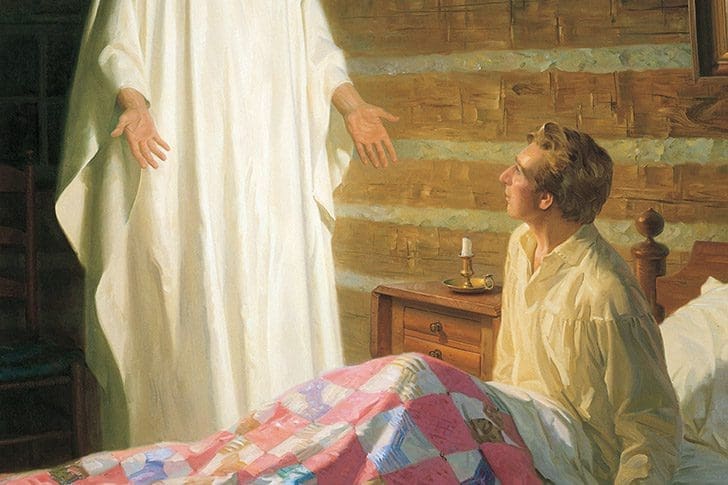
Then a light began to appear in Joseph’s room which continued to increase until the room was lighter than at noonday. We have sometimes seen paintings of Joseph being alone in this room, but remember, this is a pioneer cabin, and his brothers are also there packed into the beds. They did not see what Joseph saw, because this message was not for them.
Joseph’s attempts to describe Moroni are inadequate because we don’t have the mortal words for heavenly things. Joseph said the whiteness of his robe “was beyond anything earthly I had ever seen; nor do I believe that any earthly thing could be made to appear so exceedingly white and brilliant…His whole person was glorious beyond description, and his countenance truly like lightening” (Joseph Smith—History 1: 31,32).
Maurine
Our language here on earth is wholly unable to describe the heavenly. Joseph was, at first, afraid, but as in the First Vision, the first word he heard was a comforting one—his own name. He was known in the heavens and one had come from the presence of God to deliver a message that was particularly for him.
He was told that God had a work for him to do, but he was also warned as he says, that my name should be had for good and evil among all nations, kindreds, and tongues, or that it should be both good and evil spoken of among all people.
This is a prophecy that continues to be fulfilled.
Scot
Let’s get a picture of Joseph in our minds. Parley P. Pratt described him: “There was something connected with the serene and steady penetrating glance of his eye, as if he would penetrate the deepest abyss of the human heart, gaze into eternity, penetrate the heavens, and comprehend all worlds.
“He possessed a noble boldness and independence of character; his manner was easy and familiar; his rebuke terrible as the lion; his benevolence unbounded as the ocean; his intelligence universal, and his language abounding in original eloquence peculiar to himself—not polished—not studied—not smoothed and softened by education and refined by art; but flowing forth in its own native simplicity, and profusely abounding in variety of subject and manner. He interested and edified, while, at the same time, he amused and entertained his audience; and none listened to him that were ever weary with his discourse. I have even known him to retain a congregation of willing and anxious listeners for many hours together, in the midst of cold or sunshine, rain or wind, while they were laughing at one moment and weeping the next. Even his most bitter enemies were generally overcome, if he could once get their ears.” (from The Autobiogrqphy of Parley P. Pratt)
Maurine
Believers and those whose attention he could capture loved Joseph Smith and do so to this day, but detractors have during his life and to this day reviled him, accused him, traduced him, disdained him, belittled him, mocked him and beat him up in the court of public opinion. Many who leave the church will say, “It is that Joseph Smith that I just can’t handle.”
Who was this angel who had entered his room? Of course, Moroni, who had cared meticulously for the plates through 36 years of wandering, until he could bury them in a hill in Manchester New York, not very far from where a young prophet would come to live 1400 years later.
The Lord tells us what Moroni’s specific mission is in Doctrine and Covenants 27:5, “I have sent [Moroni] unto you to reveal the Book of Mormon, containing the fulness of my everlasting gospel, to whom I have committed the keys of the stick of Ephraim.”
Scot
That really is an exciting thing to know that Moroni actually holds the priesthood keys of the stick of Ephraim (which includes what has been published and what will yet be published some day from the sealed portion). Moroni gave a lengthy and profound message to Joseph, and when he was finished, Joseph “saw the light in the room begin to gather immediately around the person of him who had been speaking to me, and it continued to do so until the room was again left dark, except just around him; when, instantly I saw, as it were, a conduit open right up into heaven, and he aascended till he entirely disappeared, and the room was left as it had been before this heavenly light had made its appearance.”
He said, “I lay musing on the singularity of the scene, and marveling greatly at what had been told to me by this extraordinary messenger; when, in the midst of my meditation, I suddenly discovered that my room was again beginning to get lighted, and in an instant, as it were, the same heavenly messenger was again by my bedside” (Joseph Smith—History 1: 43,44).
Maurine
Moroni came three times, repeating without variation what he said, and then adding words of warning. These visits took the entire night, until the cock crowed, indicating morning. We will look at what Moroni taught in two parts, first about obtaining the plates.
Moroni told him that not far away, a record containing the fulness of the everlasting gospel, was buried in a hill on the west side, not far from the top. The plates were deposited in a stone box and “this stone was thick and rounding in the middle on the upper side, and thinner towards the edges, so that the middle part of it was visible above the ground, but the edge all around was covered with earth.” In the box was also the urim and thummim, and the breastplate, so the record could be translated.
Scot
This was clearly not just described to Joseph, but shown in vision, because he recognized the place as soon as he saw it. In addition to what the Joseph Smith’s History tells us about what happened next, here is Lucy Mack Smith’s description of the events of the next day.
“The next day Joseph, his father, and his brother Alvin were reaping in the field together. Suddenly, Joseph stopped and seemed to be in a deep study for some time. Alvin hurried him, saying, “Joseph, you must keep to work or we shall not get our task done.” Joseph worked again diligently, then stopped in the same way a second time. When his father saw that Joseph was very pale, he urged him to go to the house and tell his mother that he was sick. He went a short distance till he came to a beautiful green under an apple tree. Here he lay down on his face, for he was so weak he could go no farther.
“He was here but a short time, when the messenger whom he had seen the night before came to him again and said, ‘Why did you not tell your father what I told you?’ Joseph said he was afraid his father would not believe him. ‘He will believe every word you say to him,’ said the angel.”
Maurine
This is an important point. We’ve said how Joseph had been persecuted since his First Vision, and now he will be adding translating ancient gold plates to the reasons for disdain. What he did have was a loyal, supportive, unwavering family, who would believe him, who would stand by him in every hardship, who would buoy and sustain him, and would take this project as their own.
Lucy continued, “Joseph then promised to do as he was told by the angel and rose up and returned to the field, where he had left my husband and Alvin; but when he got there, his father had just gone to the house, as he was somewhat unwell. Joseph then requested Alvin to go to the house and ask his father to the field, for, said he, I have something to tell him.’ When his father came to him, Joseph rehearsed all that had passed between him and the angel the previous night. Having heard this account, his father charged him not to fail in attending strictly to the instruction which he had received from this heavenly messenger.”
Scot
Moroni had told Joseph “that Satan would try to btempt me (in consequence of the indigent circumstances of my father’s family), to get the plates for the purpose of getting crich. This he forbade me, saying that I must have no other object in view in getting the plates but to glorify God, and must not be influenced by any other dmotive than that of building his kingdom; otherwise I could not get them (Joseph Smith—History 1: 46).
Joseph then left and went to the hill, which was two to three miles distant. Joseph told Oliver Cowdery later that “it seemed as though two invisible powers were influencing, or striving to influence his mind.” One urged him to get the record and treat it as he had been commanded, seeking the glory of God. The other influence urged him to get the record to make himself wealthy and important. The instruction he had received, to ‘pray always—which was expressly impressed upon him, was at length entirely forgotten, and … a fixed determination to obtain [the plates] and aggrandize himself, occupied his mind when he arrived at the place where the record was found.’”
Maurine
Joseph pried open the lid of the box and tried three times to take the plates, but each time received a progressively stronger shock, and finally cried out, “Why can I not obtain this book?”
Moroni appeared to him again, now the fifth time in 24 hours. Oliver said, ““In an instant,” Oliver recorded, “all the former instructions, the great intelligence concerning Israel and the last days, were brought to his mind, … but he had failed to remember the great end for which [the gold plates] had been kept, and in consequence could not have power to take them into his possession and bear them away.” (Latter Day Saints’ Messenger and Advocate, Oct. 1835, pp. 197–98.)
Scot
As Joseph prayed, that confusion of darkness that had shadowed his spirit was dispelled, and he was filled with the Holy Ghost. Two thoughts occur from this. First, just as in the First Vision, Satan tried in every way to attack Joseph and thwart this work, and he would ever be at Joseph’s heels—and still is in our day (attacking the Prophet Joseph)–and second, Satan works upon our minds with confusion, and sudden discouraging thoughts that undermine faith and purpose. When you feel a swirl of heaviness upon you, you can know that the Adversary is probably working upon you.
As Joseph prayed a vision of the starkest contrasts came upon him. At first, the heavens were opened and as Oliver Cowdery’s account says, “Joseph stood gazing and admiring,” until the scene was abruptly changed and Joseph “beheld the prince of darkness, surrounded by his innumerable train of associates.” (Latter Day Saints’ Messenger and Advocate, Oct. 1835, pp. 197–98, also see H. Donl Peterson, “Moroni—Joseph Smith’s Tutor https://www.churchofjesuschrist.org/study/ensign/1992/01/moroni-joseph-smiths-tutor?lang=eng )
Maurine
Moroni explained, “All this is shown, the good and the evil, the holy and impure, the glory of God and the power of darkness, that you may know hereafter the two powers and never be influenced or overcome by that wicked one. Behold, whatever entices and leads to good and to do good, is of God, and whatever does not is of that wicked one: It is he that fills the hearts of men with evil, to walk in darkness and blaspheme God; and you may learn from henceforth, that his ways are to destruction, but the way of holiness is peace and rest.” (Ibid., p. 198.)
Lucy Mack Smith added these details to the story, “While Joseph remained here, the angel told him, “Now I will show you the distance between light and darkness, and the operation of a good spirit and an evil one. An evil spirit will try to crowd your mind with every evil and wicked thing to keep every good thought and feeling out of your mind, but you must keep your mind always staid upon God, that no evil may come into your heart.”
Scot
She continued, “The angel showed him, by contrast, the difference between good and evil, and likewise the consequences of both obedience and disobedience to the commandments of God, in such a striking manner, that the impression was always vivid in his memory until the very end of his days; and in giving a relation of this circumstance, not long prior to his death, he remarked that ever afterwards he was willing to keep the commandments of God.
“Furthermore, the angel told him at the interview mentioned last that the time had not yet come for the plates to be brought forth to the world; that he could not take them from the place wherein they were deposited until he had learned to keep the commandments of God-not only till he was willing, but able to do it. The angel bade Joseph come to this place every year, at the same time of the year, and he would meet him there and give him further instructions.”
Maurine
I find the statement intriguing, he had to be ready not just by being willing to keep the commandments, but able to do so. Ours is a gospel of development, and while we may give our nod to the commandments and even be thrilled by their beauty and promise, living the commandments means transformation and steady growth. This does not happen in a stroke, neither does the Lord gesture your way, and of a sudden you are a new person. He has us on a course of development and sometimes it is very hard. You have to trust in the process.
Scot
So Moroni would be Joseph’s mentor and teacher and friend in the heavy responsibility he was given.
Lucy said, “When Joseph came in that evening after he had first seen the plates, he told the whole family all that he had made known to his father in the field and also of finding the record, as well as what passed between him and the angel while he was at the place where the plates were deposited.
“We sat up very late and listened attentively to all that he had to say to us, but his mind had been so exercised that he became very much fatigued. When Alvin saw this he said, ‘Now, brother, let us go to bed. We will get up early in the morning and go to work so as to finish our day’s labor by an hour before sunset, and if Mother will get our suppers early, we will then have a fine, long evening and all sit down and hear you talk.’”
Maurine
Lucy continued, “The next day we worked with great ambition and were ready by sunset to give our whole attention to the discourse of my son, pertaining to the obtaining of the plates, the goodness of God, his knowledge and power, our own liability to error and transgression, and the great salvation that lay before the faithful. “Now,” said he, ‘Father and Mother, the angel of the Lord says that we must be careful not to proclaim these things or to mention them abroad, for we do not any of us know the weakness of the world, which is so sinful, and that when we get the plates they will want to kill us for the sake of the gold, if they know we have them. And as soon as they do find that we pretend to have any such thing, our names will be cast out as evil, and we shall be scoffed at and all names of evil spoken concerning us.’
Moroni tutored Joseph. We know of at least 22 visits he made to the prophet, but we don’t begin to understand all he was taught.
Scot
Lucy said, “From this time forth Joseph continued to receive instructions from time to time, and every evening we gathered our children together and gave our time up to the discussion of those things which he instructed to us. I think that we presented the most peculiar aspect of any family that ever lived upon the earth, all seated in a circle, father, mother, sons, and daughters, listening in breathless anxiety to the religious teachings of a boy eighteen years of age who had never read the Bible through by course in his life. For Joseph was less inclined to the study of books than any child we had, but much more given to reflection and deep study…
So every year on the same date, Sept. 22, right, incidentally, at the fall equinox, Joseph returned to the hill to receive instructions from Moroni. This means that starting in 1823, and each year following until 1827, when he was finally able to obtain the plates, Joseph received extensive instructions.
Maurine
To get a small sense of it, here is what Lucy said, “In the course of our evening conversations, Joseph gave us some of the most amusing recitals which could be imagined. He would describe the ancient inhabitants of this continent, their dress, their manner of traveling, the animals which they rode, the cities that they built, and the structure of their buildings with every particular, their mode of warfare, and their religious worship as specifically as though he had spent his life with them.”
Scot
In the second part of Moroni’s visit, he quoted a series of scriptures to Joseph, but we learn from Oliver that these were accompanied by visions that were far-reaching and transcendent about what has been and what will be, and what role Joseph Smith was called to play.
When I was young, wanting to understand Moroni’s visit better, I typed out all the scriptures from Joseph Smith—History that were mentioned and added little pieces about what Joseph said Moroni told him—and then I read it aloud and timed it. It came to 17-1/2 minutes. Three times that was only about 52-1/2 minutes. Clearly this would not have taken all the night, and just as clearly, Joseph Smith had not told us all. At the end of verse 41 in the Joseph Smith History account he records: “He quoted many other passages of scripture, and offered many explanations which cannot be mentioned here.” There’s 16 more words that have nearly driven me mad.
But, while Joseph Smith gives us five scriptural passages, we’re grateful that Oliver Cowdery points to another thirty, in a series of three letters given February, April and July of 1835 in The Messenger and Advocate.” We have no particular reason to doubt that Oliver heard this first-hand from Joseph. For a list of these additional scriptures, see the transcript of this podcast at latterdaysaintmag.com/podcast, but they include two passages from Deuteronomy, five from the Psalms, 10 from Isaiah, 9 from Jeremiah, 1 from Joel, 2 from Malachi. [Deut. 32: 23-24; Deut. 32:43; Ps. 100: 1-2; Psalms 107,1-7; Psalms 144: 11-12; Psalms 144:13; Psalms 146: 10; Isa 1:7; Isa. 1: 23-25; Isa. 25-26; Isa. 2:1-4; Isa. 4: 4-5; Isa. 11: 1-16; Isa. 20:11; Isa. 29:13; Isa. 29: 14; Isa. 43:6; Jer. 16:16; Jer. 30: 18-31; Jer. 31:1; Jer. 31:6; Jer. 31:9; Jer. 31:27-28; Jer.31: 32-33; Jer. 50: 4-5; Jer. 2: 28-32; Joel 2:28-32; Mal. 3: 1-4; Mal. 4: 1-6; Acts 3: 22-23; 1 Cor. 27-28)
Maurine
In Joseph’s lifetime, he wrote or dictated four separate accounts of the appearance of Moroni. In the 1842 Wentworth Letter, Joseph Smith wrote that Moroni taught him “that the covenant which God made with ancient Israel was at hand to be fulfilled, that the preparatory work for the second coming of the Messiah was speedily to commence; that the time was at hand for the gospel, in all its fulness to be preached in power, unto all nations that a people might be prepared for the millennial reign.” Moreover, he wrote, “I was informed that I was chosen to be an instrument in the hands of God to bring about some of his purposes in this glorious dispensation.”
Kent P. Jackson wrote, “Although Joseph Smith’s prayer as he went to bed that autumn night was for “a manifestation” to know of his “state and standing” before the Lord (JS—H 1:29), what he received, in addition to that, was a powerful lesson about the mission of God’s people in the dispensation of the fulness of times. Moroni’s message to the young Prophet outlined not only the calling of Joseph Smith, but also the destiny of the Church and kingdom of God from the time of the Restoration until the Millennium.”
Scot
Brother Jackson continued, “Significantly, the Lord’s messenger taught these truths by quoting passages out of the Bible. Since the resurrected Christ also taught by quoting and expounding scripture during his appearance to the children of Lehi in the Americas (see 3 Ne. 22–25), we can view this method of teaching as a significant model to be followed in gospel instruction.
“From the scriptures cited by the Prophet in Joseph Smith—History, we can see that Moroni did not select random passages to outline the future of the Lord’s kingdom. They were chosen specifically to introduce the Prophet to his work. “
Maurine
They were also chosen to demonstrate the continuity of the covenant from the beginning of time.
So here are the major themes:
- The apostasy and scattering. We see it in words like these from Isaiah 1:7 “Your country is desolate, your cities are burned with fire, your land, strangers devour it in your presence…”
- The calling of the prophet Joseph Smithin words like these from Mal. 3:1 “Behold, I will send my messenger and he shall prepare the way before me”.
- The opening of the heavens during the restorationfrom Joel 2: 28, 29. “And it shall come to pass afterward, that I will pour out my spirit upon all flesh; and your sons and your daughters shall prophesy, your old men shall dream dreams, your young men shall see visions:
“And also upon the servants and upon the handmaids in those days will I pour out my spirit.”
Scot
- The coming forth of the Book of Mormon in words like these from Isaiah 29:14: “I will proceed to do a marvelous work among this people, even a marvelous work and a wonder: for the wisdom of their wise men shall perish, and the understanding of their prudent shall be hid.
- The restoration of the priesthood and the sealing keys as in Malachi 4: 5,6: “Behold, I will send you Elijah the prophet before the coming of the great and dreadful day of the Lord. And he shall turn the heart of the fathers to the children, and the heart of the children to their fathers, lest I come and smite the earth with a curse.
- The Gathering of the Elect as in Jeremiah 50:4 “In those days and in that time, saith the Lord, the children of Israel shall come, they and the children of Judah together, going and weeping; they shall go, and seek the Lord their God.
Maurine
- The destruction and purification prior to and during the Second Coming.
- Deliverance for the faithful.
- The Second Coming
- The premillennial and millennial state of the faithful.
This vast teaching of Moroni to Joseph that night was supported by many, many scriptures, but let’s go back to the one in Malachi with which we are so familiar about turning the heart of the fathers to the children and the children to the fathers, that also shows up in Doctrine and Covenants 2. It is an indication of how important it is that it actually shows up in various forms in all of our books of scripture. It is clearly in Malachi; in Doctrine and Covenants 2; in the Joseph Smith History in the Pearl of Great Price; in Luke 1:17, in 3 Nephi 25:6—and many, many more places.
Scot
If we are a people called to prepare the world for the second coming of Christ, this is the way. It is gathering Israel on both sides of the veil. President Russell M. Nelson said, “The Lord is gathering those who are willing to let God prevail in their lives. The Lord is gathering those who will choose to let God be the most important influence in their lives… When we speak of gathering Israel on both sides of the veil, we are referring, of course, to missionary, temple, and family history work. We are also referring to building faith and testimony in the hearts of those with whom we live, work, and serve. Anytime we do anything that helps anyone—on either side of the veil—to make and keep their covenants with God, we are helping to gather Israel.” (Russell M. Nelson, “Let God Prevail” https://www.churchofjesuschrist.org/study/general-conference/2020/10/46nelson?lang=eng )
And a great part of that gathering is in this week’s scripture of turning the hearts of the children to their fathers and the hearts of the fathers to their children.
Maurine
And in this section 2 of the Doctrine and Covenants, received September 22, 1823 it is noteworthy to see that God said that Elijah the prophet would come and on April 3, 1836, he did come to the Kirtland Temple to restore those sealing powers. A prophecy given. A prophecy fulfilled.
That’s all for today. We’re Scot and Maurine Proctor and this has been Meridian Magazine’s Come Follow Me podcast. Next week we will study Doctrine and Covenants Sections 3-5, “My Work Shall Go Forth” Thanks to Paul Cardall for our music and to Michaela Proctor Hutchins who produces this show. See you next week.
Come Follow Me Podcast #2: “I Saw a Pillar of Light”, Joseph Smith History 1: 1-26

Scot
In every dispensation of the world a witness is called to testify to the people of that day and age that he has seen God and has talked with Him and has received instructions and guidance from Him. That witness is called to testify in his day that God lives, that He is real, that He cares about His children, that He hears and answers our prayers and that He has a work for us to do. Faith comes and is increased by listening to and heeding the testimony of that witness. In our day, in this, the dispensation of the fulness of times, that witness is Joseph Smith.
Maurine
Welcome to Meridian Magazine’s Come Follow Me Podcast, we are Scot and Maurine Proctor and we love being with you each week and discussing with you the sacred truths of the Gospel of Jesus Christ. In this year’s lessons we are immersing ourselves in the Doctrine and Covenants, the early history of the Church and naturally in the lives of Joseph Smith and his family and associates. Today we have the immense privilege of exploring and reflecting upon the First Vision and our scriptural text is Joseph Smith History, chapter 1, verses 1-26.
To better understand the First Vision, we need to have some historical and family context for the young boy Joseph and his family.
Scot
We had the great blessing of going back into the Prophet Joseph’s mother’s writings and original dictation of her history. Lucy Mack Smith’s record is one of the great treasures of the Church. Imagine any world leader or spiritual giant having a biography written by his or her mother! We have this in the History of Joseph Smith by His Mother: Lucy Mack Smith.
As we did this project many years ago and became intimately acquainted with Lucy’s turn of phrase or her approach to telling her story, we learned that as we got to know Lucy Mack Smith, we got to know, more personally and more intimately, her prophet son Joseph. Like Mother, like son.
Maurine
All the Mack sisters had a disposition towards lung issues—two of Lucy’s sisters died of consumption, or tuberculosis. Lucy always struggled with her lungs.
In 1802, Joseph Smith, the father of the Prophet and Lucy Mack and their two little sons, Alvin and Hyrum, moved to Randolph, Vermont. They had only lived there six months when Lucy took, in her own words, “a heavy cold, which caused a severe cough. A hectic fever set in which threatened to prove fatal and the physician believed my case to be confirmed consumption. My mother attended me day and night with much anxiety, sparing herself no pains in administering to my comfort, yet I grew so weak that I could not bear the noise of a footfall except in stocking feet, nor a word to be spoken in the room except in whispers.
“One Mr. Murkley, a Methodist exhorter, heard of my afflictions and came to visit me. When he came to the door, he knocked in his usual manner, not knowing that I was so very weak and that the noise would disturb me. This agitated me so much that it was some time before my nerves were settled again. My mother stepped to the door and motioned him to a chair, informing him of my weakness in a whisper.
“He seated himself and for a long time seemed pondering in his mind something he wished to say. I thought to myself, “He will ask me if I am prepared to die.” I dreaded to have him speak to me, for said I to myself, “I am not prepared to die, for I do not know the ways of Christ,” and it seemed to me as though there was a dark and lonely chasm between myself and Christ that I dared not attempt to cross.
Scot
Twenty-six-year-old Lucy continues her record:
“I thought as I strained my eyes towards the light (which I knew lay just beyond the gloomy veil before me) that I could discover a faint glimmer.
“Mr. Murkley left, and my husband came to my bed and caught my hand and exclaimed as well as he could amidst sobs and tears, “Oh, Lucy! My wife! You must die. The doctors have given you up, and all say you cannot live.”
“I then looked to the Lord and begged and pled that he would spare my life that I might bring up my children and comfort the heart of my husband. Thus, I lay all night, sometimes gazing gradually away to heaven, and then reverting back again to my babies and my companion at my side, and I covenanted with God that if he would let me live, I would endeavor to get that religion that would enable me to serve him right, whether it was in the Bible or wherever it might be found, even if it was to be obtained from heaven by prayer and faith. At last, a voice spoke to me and said, “Seek, and ye shall find; knock, and it shall be opened unto you. Let your heart be comforted. Ye believe in God, believe also in me.”
“In a few moments my mother came in and looked upon me and cried out, “Lucy, you are better.” My speech came and I answered, “Yes, Mother, the Lord will let me live. If I am faithful to my promise which I have made to him, he will suffer me to remain to comfort the hearts of my mother, my husband, and my children.”
Maurine
“From this time forward I gained strength continually. I said but little upon the subject of religion, although it occupied my mind entirely. I thought I would make all diligence, as soon as I was able, to seek some pious person who knew the ways of God to instruct me in the things of heaven…
“In the anxiety of my soul to abide by the covenant which I had entered into with the Almighty, I went from place to place to seek information or find, if possible, some congenial spirit who might enter into my feelings and sympathize with me.
“At last, I heard that one noted for his piety would preach the ensuing Sabbath in the Presbyterian church. Thither I went in expectation of obtaining that which alone could satisfy my soul–the bread of eternal life. When the minister commenced, I fixed my mind with breathless attention upon the spirit and matter of the discourse, but all was emptiness, vanity, vexation of spirit, and fell upon my heart like the chill, untimely blast upon the starting ear ripening in a summer sun. It did not fill the aching void within nor satisfy the craving hunger of my soul. I was almost in total despair, and with a grieved and troubled spirit I returned home, saying in my heart, there is not on earth the religion which I seek. I must again turn to my Bible, take Jesus and his disciples for an example. I will try to obtain from God that which man cannot give nor take away. I will settle myself down to this. I will hear all that can be said, read all that is written, but particularly the word of God shall be my guide to life and salvation, which I will endeavor to obtain if it is to be had by diligence in prayer.” (Scot Facer Proctor and Maurine Jensen Proctor, Revised and Enhance History of Joseph Smith by His Mother, Bookcraft, Salt Lake City, 1996, pp. 47-50)
Scot, you can see from Lucy’s account that she was going to do everything in her power to find that true religion, the way back to God that was like the original gospel Jesus had organized in His ministry.
Scot
That’s right. In her day, Lucy would have been called a “seeker”, one who was searching for the original New Testament Church and gospel of Jesus Christ. I love how she said in her covenant with the Lord that “I would endeavor to get that religion that would enable me to serve him right, whether it was in the Bible or wherever it might be found, even if it was to be obtained from heaven by prayer and faith.” Remember, this brush with death for Lucy was in 1802 in pursuit of that true religion would be in her mind and her course for the next 18 years.
Maurine
Let’s take a look inside the Smith home in the times before the First Vision. We get a great sense from Lucy and from her children that this was a home of faith, a home of prayer, a home of scripture reading and a home of love.
From Joseph’s younger brother, William, we get this wonderful view of their home life:
“My father’s religious habits were strictly pious and moral. … I was called upon to listen to prayers both night and morning. … My…father and mother, poured out their souls to God, the donor of all blessings, to keep and guard their children and keep them from sin and from all evil works. Such was the strict piety of my parents.”
William also said: “We always had family prayers since I can remember. I well remember father used to carry his spectacles in his vest pocket, … and when us boys saw him feel for his specs, we knew that was a signal to get ready for prayer, and if we did not notice it mother would say, ‘William,’ or whoever was the negligent one, ‘get ready for prayer.’ After the prayer we had a song we would sing; I remember part of it yet.”
Scot
And the words of that hymn were these (remember, this is being sung nearly every night in the Smith home as the children were growing up):
The day is past and gone,
The evening shades appear;
O may we all remember well
The night of death draws near.
We lay our garments by,
Upon our beds to rest;
So death shall soon disrobe us all
Of what is here possessed.
Lord, keep us safe this night,
Secure from all our fears;
May angels guard us while we sleep,
Till morning light appears.
(Hymn from John LeLand)
This gives us such a view into this faithful Smith family, who by 1820 had 8 living children in their home from ages 22 to 4. Lucy had kept her promise from that night in Randolph when she was 26—and was still seeking with all of her heart that religion that Jesus taught.
Maurine
To understand how refreshing and redefining the First Vision would be, look at the “plain and precious” parts of Christianity which had fallen away. It wasn’t just that God had a body that had been lost in prevailing church doctrines of the sects.. His character and nature had been transformed—almost mutiliated–from being a God of love, our eternal parent deeply invested in our well-being, to formless being of wrath and vengeance.
Jonathan Edwards, in a sermon he gave often in the 18th century, said of sinners, “The God that holds you over the pit of hell, much as one holds a spider, or some loathsome insect over the fire, abhors you and is dreadfully provoked. His wrath towards you burns like a fire; he looks at you as nothing else, but to be cast into the fire.” It is not surprising the Lord in Joseph’s vision said all of the sects were “wrong” and that their creeds were an “abomination in his sight.”
Scot
Now while Edwards is expressing very harsh Calvinism, similar ideas about the nature of God permeated religion and changed the landscape for centuries. God was a force of terror, unyielding judgment, and disdain for his creatures—not sons and daughters. With that loss, people only saw themselves in a mirror dimly.
According to Fiona and Terryl Givens in their recent book, “All Things New”, two essential pieces of the story were lost that changed everything else, 1) premortality and its purposes and 2) the parental nature of God and the reasons why such passionate, unfailing love is turned to each soul’s development. Lost was the idea that mortality was an experience meant to educate His children.
Maurine
Fatal developments followed. If you don’t know the beginning of the story, you don’t understand the end of the story either, nor the God at the story’s center. By the fourth century, the Athanasian Creed, read:
“We worship one God in Trinity, and Trinity in Unity; neither confounding the Persons: nor dividing the Substance. For there is one Person of the Father; another of the Son: another of the Holy Ghost. But the Godhead of the father, of the Son, and of the Holy Ghost is all one.. The Father incomprehensible: the Son incomprehensible; and the Holy Ghost incomprehensible,”
This was the doctrine of the Trinity and it became heresy not to believe this. Once disembodied, God lost all emotional connection to humanity. He could not feel with them or be touched by their misery. He is turned to stone.
Scot
Augustine, who lived from 354-430 AD became a powerful voice in the Christian tradition. He believed that human nature is “so trapped in sin that both body and spirit are twisted up claustrophobically without any escape.’
As a consequence of this new focus on universal sinfulness, Augustine diverted the entire stream of Christian thought, which went from a belief in a gradual process of growth in which one cooperates with God, to the opposite belief in which God decrees who is saved and who is damned independent of our choices.
Thus it went century after century. Martin Luther said, “the only free will humankind possessed…was the freedom to sin.”
So the Christian inheritance when Joseph went into that grove carried some heavy errors that diminished both God and humanity.
Maurine
Now, around 1818 and 1819, there was in the area of Palmyra, as Joseph records, “an unusual excitement on the subject of religion.” (JS History 1: 5) Joseph specifically mentions the Methodists, Presbyterians and the Baptists—all contending for converts and all in an uproar about who was right and who was wrong.
Young Joseph was 12 years old when all this commotion was happening around Palmyra. He was a serious boy, not given to a lot of reading books but much more disposed to deep thought and pondering.
He said, “my mind become seriously impressed with regard to the all-important concerns for the welfare of my immortal soul.” (1832 Account)
And listen to these next words because he sounds so much like his mother: “My mind became exceedingly distressed, for I became convicted of my sins, and by searching the scriptures I found that mankind did not come unto the Lord but that they had apostatized from the true and living faith, and there was no society or denomination that was built upon the gospel of Jesus Christ as recorded in the New Testament.” (1832 Account)
Scot
Joseph had at least three things on his young mind:
The welfare of his eternal soul.
How to obtain forgiveness for his sins, and
Which of the churches he should join.
Joseph recorded:
“During this time of great excitement my mind was called up to serious reflection and great uneasiness; but though my feelings were deep and often poignant, still I kept myself aloof from all these parties, though I attended their several meetings as often as occasion would permit. In process of time my mind became somewhat partial to the Methodist sect…” (JS-History 1:8)
At least one of the preachers or ministers at that time took a special interest in Joseph and we think it was probably Reverend George Lane. He was a Methodist circuit preacher—that meant that he had a number of congregations in the region that he would come around to and preach to them. Joseph was striving to find which Church to join, and likely, because of this interest from Reverend Lane, Joseph became somewhat partial to the Methodists.
Maurine
Joseph’s brother William recalled this:
“Rev. Mr. Lane of the Methodists preached a sermon on ‘What church shall I join?’ And the burden of his discourse was to ask God, using as a text, ‘If any man lack wisdom let him ask of God who giveth to all men liberally.’ And of course, when Joseph went home and was looking over the text, he was impressed to do just what the preacher had said and going out in the woods with child-like, simple trusting faith believing that God meant just what He said, kneeled down and prayed.” (Deseret Evening News, January 20, 1894, 11.)
I love what Joseph says about that particular scripture, James 1:5:
“Never did any passage of scripture come with more power to the heart of man than this did at this time to mine. It seemed to enter with great force into every feeling of my heart. I reflected on it again and again, knowing that if any person needed wisdom from God, I did; for how to act I did not know, and unless I could get more wisdom than I then had, I would never know.” (JS-History 1:12)
Isn’t that a great view into scripture study and paying attention to the promptings of the Spirit?
Scot
Yes, I love this insight into the workings of young Joseph’s heart. And I love the whole approach for us to pay attention to what I call trigger scriptures. James 1:5 was a trigger scripture for Joseph to prompt him to go to the woods to pray.
Let’s look at two more trigger scriptures.
You remember Joseph F. Smith in 1918?
1 On the third of October, in the year nineteen hundred and eighteen, I sat in my room pondering over the scriptures;
2 And reflecting upon the great atoning sacrifice that was made by the Son of God, for the redemption of the world;
6 I opened the Bible and read the third and fourth chapters of the first epistle of Peter, and as I read I was greatly impressed, more than I had ever been before…
11 As I pondered over these things which are written, the eyes of my understanding were opened, and the Spirit of the Lord rested upon me, and I saw the hosts of the dead, both small and great. (D&C 138:1-2, 6, 11)
Those verses in 1 Peter were trigger scriptures for Joseph F. Smith. They prompted him to further pondering and reflection which then opened the window and then the door for revelation.
Maurine
The same thing happened for the Prophet Joseph as he was translating the Bible:
15 For while we were doing the work of translation, which the Lord had appointed unto us, we came to the twenty-ninth verse of the fifth chaper of John…
18 Now this caused us to marvel, for it was given unto us of the Spirit.
19 And while we meditated upon these things, the Lord touched the eyes of our understandings and they were opened, and the glory of the Lord shone round about. (D&C 76: 15, 18-19)
Here is that same pattern—a trigger scripture that led to the reception of Section 76—the great vision of the three degrees of glory.
The pattern is clear and we need to pay attention to this in our personal scripture studies. As you read and study and ponder the scriptures each day, pay close attention to your heart and your spirit, your feelings inside of you. You’ll come across verses that will bring the Spirit of the Lord into your heart as never before. You’ll read something that will cause you to see things differently or open your minds to new vistas of understanding. These are trigger scriptures.
Scot
For those of you who listened to my own personal story on this podcast three times ago, of how I obtained a testimony of the Book of Mormon, you’ll know that Doctrine and Covenants, Section 17, verse 6 was a trigger scripture for me, and, in fact, it changed my whole life.
Joseph used to look up in the heavens at night and ponder. “I looked upon the sun…and…the moon…and the stars shining in their courses,” (1832 Account) and he thought, “if there is so much order in the heavens, why is there not order among man? Why so much confusion in religion?”
Young Joseph was now determined to make the attempt to obtain knowledge from God. Remember, he is concerned about the welfare of his soul, and how to obtain forgiveness for his sins and to know which Church to join.
It was on the morning of a beautiful, clear day, early in the spring of 1820 that Joseph made this attempt. You have to know that our imagination of this Sacred Grove in the early spring is of that unique spring green and a full canopy of trees completely decked out with foliage, but in reality, the trees were barely budding or not budding at all, there would have been no leaves yet—the deciduous leaves in western New York come out all at once in mid to late May.
Now, Maurine, as you know well, I grew up on a wooded farm in Missouri, 220 acres of woods and meadows and streams and fields. In the early spring, long before the forest buds would emerge as leaves, we had beautiful blossoms, the dogwood, the redbuds, the wild cherry. We could look out from our house on the hill and see these beautiful blossoms like fireworks exploding all over our wooded acres.
Maurine
And so it would have been for Joseph in the woods on his family’s farm. No leaves. No or very few buds, but the hophornbeam, the cherry, the elm, the beech and the shagbark hickory blossoms could have been plentiful! The cherry blossoms which are bright white and sometimes tinged in pink would have been at the top of the canopy—perhaps 100 feet above the forest floor.
The shagbark hickory has a unique blossom with a crimson red outside and spring green inside. The elms have white with beautiful red accents. The hophornbeams (or they are called ironwoods) have clusters of blossoms in the form of hops, looking something like an upside-down ice cream cone. So, even though there were no leaves in the early spring, Joseph would have come into a beautiful forest, under a canopy of vibrant blossoms, each signifying a new beginning—the hope of a newness of life. It was a glorious scene, but soon to be made glorious beyond description by the Visitors from on high.
Scot
Joseph went to a place he had previously designed to go to. He wanted to be away from where he could be seen. Stafford Road ran right through their farm. There would have been standing water in the low parts of the grove, so he certainly is not going to kneel in that area. He’s likely to go to a higher point of ground, far enough back from the road and fields of the farm that he will be quite alone. He says he went to a place where he had left his axe in a stump the previous day of work.
He says the most curious thing in one account, that “It was the first time in my life that I had made such an attempt, for amidst all my anxieties I had never as yet made the attempt to pray vocally.” Clearly, the pattern in the Smith home was for the father or the mother to pray.
As he opened his mouth, he heard a stick crack from behind him, then as the sound of footsteps coming toward him. He sprang to his feet to see who was there. Thick darkness surrounded Joseph and he was filled with fear and inappropriate images, and his tongue grew thick and clave to the roof of his mouth so that he could not speak. He felt like he was doomed to utter destruction. Joseph was under attack from Satan himself.
Maurine
He recorded:
“…at the very moment when I was ready to sink into despair and abandon myself to destruction—not to an imaginary ruin, but to the power of some actual being from the unseen world, who had such marvelous power as I had never before felt in any being…
…just at this moment of great alarm, I saw a pillar of light exactly over my head, above the brightness of the sun, which descended gradually until it fell upon me.” (JS-History 1: 16)
There is no question that Satan knew who Joseph was. He looked like a young, 14-year-old inconsequential farm boy from a poor family, but here was the great and mighty prophet Joseph, the fore-ordained head of the dispensation of the fulness of times—and Satan was determined to destroy him before Joseph saw the Lord and was given his mission in mortality.
Scot
I do love the word that pierced the veil and opened this great dispensation. It was simply, “Joseph!” In so many grand spiritual visions and visitations, the supplicant is called by name and hearing your name seems to dispel all fear. “Joseph, This is my Beloved Son! Hear Him!”
Now, there are four primary accounts of the First Vision and five secondary accounts of people who recorded what they heard Joseph say. We’ll be quoting a bit from all of them.
The Father introduced Jesus Christ and then gave instructions not only for Joseph, but for all in this dispensation to “Hear Him!” We are all to hearken to the voice of Jesus Christ and truly Hear Him!
I love the first words that Jesus said to Joseph, “Joseph, my son, thy sins are forgiven thee. Go thy way, walk in my statutes, and keep my commandments. Behold, I am the Lord of glory. I was crucified for the world, that all those who believe on my name may have eternal life.”
Now, the Lord had seen to the forgiveness of Joseph’s sins and He had assured Joseph of the welfare of his eternal soul.
Maurine
Jesus said of the current religious setting, “Behold, the world lieth in sin at this time, and none doeth good, no, not one. They have turned aside from the gospel and keep not my commandments. They draw near to me with their lips while their hearts are far from me.” (1832 Account)
Jesus also “said that all their creeds were an abomination in his sight; that those professors were all corrupt; that: “…they teach for doctrines the commandments of men, having a form of godliness, but they deny the power thereof.”
20 He again forbade me to join with any of them. (JS-History 1:19,20)
So, Joseph now had the answers to his three questions.
Now, I have a question: Do we have a full record of the First Vision? Are we getting a clear picture of all that took place that spring day in 1820? Is there more?
Scot
Maurine, I think the 16 words that have nearly driven me mad from the 1838 account are these:
“…and many other things did he say unto me, which I cannot write at this time.” (JS-History 1: 20)
There is the main part of the vision. There is the depth and the breadth and the width of this grand theophany!
Now, many have cried out in criticism of Joseph that we have four primary source accounts—those accounts that were either written by or dictated by Joseph himself—of the First Vision, each of which is a little different from the other, and five secondary source accounts—those accounts given by contemporaries of the Prophet Joseph, who heard him talk about it and wrote it down.
I say, “Oh! I wish we had five or ten more accounts of the First Vision! I’m hungry to learn everything I can about this most important event since the resurrection of Jesus Christ. I hope with all my heart that someday other accounts will come forth from people’s attics, from antique letters from a paper tucked into an old family Bible. I would be thrilled to learn more.
Maurine
As we said at the beginning of the podcast, Scot, Joseph was to become the witness of Jesus Christ for the whole world in this last dispensation. He saw Him, he saw Heavenly Father, and Joseph boldly testified of this for all the world to hear. And I, too, know that there is so much more Joseph didn’t share about the First Vision. Yet, we do see a pattern from the great heads of dispensations that they are shown in vision the history of the world from the beginning to the ending thereof. They are shown worlds without end. They are shown every inhabitant of the earth who has lived, is living or will ever live upon the earth. They are shown the great plan of salvation, including the Grand Council in heaven. They are show the atoning sacrifice of Jesus Christ. And they are shown much, much more! Do you think Joseph was shown less than the other heads of dispensations? We don’t know, of course, but the pattern is clear. And can you see why it is so important, then, that we have our witness and testimony of the Prophet Joseph?
Scot
One of our favorite moments in teaching institute class was getting to the First Vision and then seeing what some of the things are that we learn from this experience of the Prophet Joseph. As students raised their hands, it was surprising that there answers went on and on and filled the blackboard. Let’s review some of those things now. Oh, before we do, I am going to run a beautiful photo essay about the Sacred Grove and the First Vision this week on Meridian Magazine. You can come and see it starting on Monday, at: latterdaysaintmag.com I’ll show you some angles and scenes you will have never seen before.
Okay, so we learn that God our Heavenly Father and His Son Jesus Christ hear us when we pray and they answer our prayers!
Maurine
We learn that Heavenly Father and Jesus Christ are separate and distinct beings with glorified and perfect bodies of flesh and bones.
Scot
We learn that they are not only glorious beyond description, but they exactly resemble each other in features and likeness.
Maurine
We know of the reality of Satan. We know that he is an actual being and that he can exercise great negative and destructive power and that he will stop at nothing to destroy the work of God.
Scot
We learn that God’s power is greater than that of Satan. We see that when that pillar of light came, Joseph was immediately freed from that destructive force and was filled with joy.
Maurine
We learn that we are to Hear Him! That we are to listen to the words of Jesus Christ and heed them in every particular.
Scot
We know that none of the churches then on the earth was true and that their creeds were false.
Maurine
We know that Joseph Smith was the chosen instrument to bring back the fulness of the Gospel of Jesus Christ back to the earth in these latter days.
Scot
We know that many angels attended Joseph in the vision. (1835 Account)
Maurine
We know that the promise of James is true, that we can ask of God our questions and he will give liberally in response.
Scot
We know that we can be forgiven of our sins. That is very comforting.
Maurine
We know that God still speaks in our day—that His voice did not end at the end of the Bible.
Scot
We learn that simple faith is productive, that it really works.
Maurine
And with that we learn that at the darkest moment, when it seems like all is lost or we are lost, there is that pillar of light that comes and saves us.
Scot
Of course, there are numerous other lessons but I can’t help but conclude with my testimony of Joseph Smith and the First Vision and a pattern that President Nelson teaches us.
I have been going to the Sacred Grove since 1969—more than 50 years. I have carefully studied all the accounts, I have prayed and studied and pondered and fasted about the First Vision. I have read everything I can about Joseph Smith since I was a teenager. I have my own witness that Joseph saw God the Eternal Father and His Son Jesus Christ and that he, Joseph, was called to be the mighty head of the dispensation of the fulness of times. This I absolutely know to be true. I will continue to teach and testify of the Prophet Joseph all my days. Joseph said: “I am going to inquire after God, for I want you all to know Him, and to be familiar with Him. … You will then know that I am His servant; for I speak as one having authority.” (History of the Church 6:305.)
Maurine
Who was the God that Joseph found in that Sacred Grove? One who would refresh and renew and revitalize the failing hearts of so many. It was the God of love. In fact Joseph said, “My soul was filled with love, and for many days I could rejoice with great joy.” (1832 account)
I love your love for the Prophet Joseph—in fact, I have to tell you listeners that when Scot asked me to marry him, he took me to Temple Square and he was leaning against the statue of Joseph Smith and I was leaning against Hyrum Smith. This was truth in advertising.
President Russell M. Nelson taught:
“Brothers and sisters, how can we become the men and women—the Christlike servants—the Lord needs us to be? How can we find answers to questions that perplex us? If Joseph Smith’s transcendent experience in the Sacred Grove teaches us anything, it is that the heavens are open and that God speaks to His children.
“The Prophet Joseph Smith set a pattern for us to follow in resolving our questions. Drawn to the promise of James that if we lack wisdom we may ask of God, the boy Joseph took his question directly to Heavenly Father. He sought personal revelation, and his seeking opened this last dispensation.
Scot
President Nelson continues, “In like manner, what will your seeking open for you? What wisdom do you lack? What do you feel an urgent need to know or understand? Follow the example of the Prophet Joseph. Find a quiet place where you can regularly go. Humble yourself before God. Pour out your heart to your Heavenly Father. Turn to Him for answers and for comfort.
Pray in the name of Jesus Christ about your concerns, your fears, your weaknesses—yes, the very longings of your heart. And then listen! Write the thoughts that come to your mind. Record your feelings and follow through with actions that you are prompted to take. As you repeat this process day after day, month after month, year after year, you will “grow into the principle of revelation.”
“Does God really want to speak to you? Yes!” (Nelson, Russell M., Revelation for the Church, Revelation for our Lives, General Conference, April 2018)
Maurine
That’s all for today. Oh! How we have loved being with you. Thanks for listening and please share the podcast with your family and friends. Invite them to go to: latterdaysaintmag.com/podcast that’s latterdaysaintmag.com/podcast. You can also find the transcripts there. Next week the podcast will cover Doctrine and Covenants, Section 2 and Joseph Smith History 1, verses 27-65 and lesson is entitled: “The Hearts of the Children Shall Turn to Their Fathers”
As always, thanks to Paul Cardall for the beautiful music that accompanies this podcast and thanks to our producer, Michaela Proctor Hutchins. Have a wonderful week and see you next time.
On Unkind Feelings In An Election Year

To read more from Daniel, visit his blog: Sic Et Non.
I’m slowly and carefully reading through the talks that were given in April 2024 at the most recent general conference of the Church of Jesus Christ of Latter-day Saints. This passage, from the remarks that were delivered at that conference by Elder Ulisses Soares of the Quorum of the Twelve Apostles (“Covenant Confidence through Jesus Christ”), stood out to me against the background of the current strikingly toxic and hyper-partisan atmosphere of American political discourse:
The house of the Lord is where we can be transformed in higher and holier ways. So, when we walk out of the temple, transformed by our hope in the promises of the covenants, armed with power from on high, we take the temple with us into our homes and lives. I assure you that having the spirit of the Lord’s house in us changes us, completely.
Although I have no reason to believe that this Brazilian apostle, speaking to members of the Church who are scattered around the world, had politics particularly in mind (let alone specifically American electoral politics), I’m absolutely sure that the quality of our politics and political discussions — right now, I’m disinclined to dignify them with the word debates — would be vastly improved, completely changed, were we to follow Elder Soares’s counsel.
One of the recurring themes in the Book of Mormon is its condemnation of “contention.” The two following passages will serve to represent the spirit of its teaching on this matter:
Nevertheless, there were many among them who began to be proud, and began to contend warmly with their adversaries, even unto blows; yea, they would smite one another with their fists. (Alma 1:22)
For verily, verily I say unto you, he that hath the spirit of contention is not of me, but is of the devil, who is the father of contention, and he stirreth up the hearts of men to contend with anger, one with another. Behold, this is not my doctrine, to stir up the hearts of men with anger, one against another; but this is my doctrine, that such things should be done away. (3 Nephi 11:29-30)
We should not forget that this dispensation — which is to say, the Restoration as a whole — began with the young Joseph Smith’s rejection of the “stir and division,” the “strife,” the “war of words and tumult of opinions,” the “great confusion and bad feeling” that surrounded him and that had divided his community and even his own family. (See Joseph Smith –History 1.)
We see in the Book of Mormon what the ultimate societal result of tribalism and the loss of a cohesive sense of community can be. The account given in 3 Nephi 7 opens as follows:
1 Now behold, I will show unto you that they did not establish a king over the land; but in this same year, yea, the thirtieth year, they did destroy upon the judgment-seat, yea, did murder the chief judge of the land.
2 And the people were divided one against another; and they did separate one from another into tribes, every man according to his family and his kindred and friends; and thus they did destroy the government of the land.
3 And every tribe did appoint a chief or a leader over them; and thus they became tribes and leaders of tribes.
4 Now behold, there was no man among them save he had much family and many kindreds and friends; therefore their tribes became exceedingly great.
5 Now all this was done, and there were no wars as yet among them; and all this iniquity had come upon the people because they did yield themselves unto the power of Satan.
6 And the regulations of the government were destroyed, because of the secret combination of the friends and kindreds of those who murdered the prophets.
7 And they did cause a great contention in the land, insomuch that the more righteous part of the people had nearly all become wicked; yea, there were but few righteous men among them.
It is anything but an attractive picture, although it did serve as the overture to a visit of the resurrected Christ to the New World — after cataclysmic natural destruction.
Lesson 4: The Book of Mormon and the Restoration

Ezra Taft Benson said: “A . . . powerful testimony to the importance of the Book of Mormon is to note where the Lord placed its coming forth in the timetable of the unfolding Restoration. The only thing that preceded it was the First Vision. In that marvelous manifestation, the Prophet Joseph Smith learned the true nature of God and that God had a work for him to do.
The coming forth of the Book of Mormon was the next thing to follow.
“Think of that in terms of what it implies. The coming forth of the Book of Mormon preceded the restoration of the priesthood. It was published just a few days before the Church was organized. The Saints were given the Book of Mormon to read before they were given the revelations outlining such great doctrines as the three degrees of glory, celestial marriage, or work for the dead. It came before priesthood quorums and Church organization. Doesn’t this tell us something about how the Lord views this sacred work?” (in onference Report, Oct. 1986, 3; or Ensign , Nov. 1986, 4).
The Book of Mormon and Our Own Spirituality
The Prophet Joseph Smith said to the Twelve Apostles on 28 November 1841: “I told the brethren that the Book of Mormon was the most correct of any book on earth, and the keystone of our religion and a man would get nearer to God: by abiding by its precepts than by any other book.” ( History of the Churc h, 4:461).
Ezra Taft Benson said: “Now, we have not been using the Book of Mormon as we should. Our homes are not as strong unless we are using it to bring our children to Christ. . . . Our Church classes are not as spirit-filled unless we hold it up as a standard. . . . Reading the Book of Mormon is one of the greatest persuaders to get men on missions. We need more missionaries. But, we also need better-prepared missionaries coming out of the wards and branches and homes where they know and love the Book of Mormon. . . .
“Every Latter-day Saint should make the study of this book a lifetime pursuit. Otherwise he is placing his soul in jeopardy and neglecting that which could give spiritual and intellectual unity to his whole life. There is a difference between a convert who is built on the rock of Christ through the Book of Mormon and stays hold of that iron rod, and one who is not.” (in Conference Report, Apr. 1975, 96–97).
Preparing to Receive the Plates
After Three Years, Joseph Seeks to Know His Status
After his first vision, Joseph was clear on the status of the sectarian world—“that it was not my duty to join with any of them.” He also knew for sure that he could turn to God and get answers. He continued to suffer ridicule and abuse from many people but his family members supported him believingly. He resolved to “continue as I was until further directed.”
Joseph was a Typical Teenage Boy, Living a Normal Life.
It had been three years—a long period of time for a teenage boy—and in all that time he had heard nothing more from the Lord. He began to worry about his spiritual standing. “During the space of time which intervened between the time I had the vision and the year eighteen hundred and twenty-three—having been forbidden to join any of the religious sects of the day, and being of very tender years, and persecuted by those who ought to have been my friends . . . I was left to all kinds of temptations; and, mingling with all kinds of society, I frequently fell into many foolish errors, and displayed the weakness of youth, and the foibles of human nature; which, I am sorry to say, led me into divers temptations, offensive in the sight of God” (JSH 1:28).
The Prophet assures us: “In making this confession, no one need suppose me guilty of any great or malignant sins. A disposition to commit such was never in my nature. But I was guilty of levity, and sometimes associated with jovial company, etc., not consistent with that character which ought to be maintained by one who was called of God as I had been. But this will not seem very strange to any one who recollects my youth, and is acquainted with my native cheery temperament”. Imagine that—a teenage boy acting foolishly, pulling tricks on people, and hanging out with the wrong crowd at times. He was, after all, a youngster, and one who loved life and loved to laugh.
On September 21, 1823, Joseph sought to know his status with the Lord. It having been three years, and feeling “condemned for my weakness and imperfections,” the Prophet lay in bed on the evening of September 21, 1838, and offered prayer to his God. He desired “forgiveness of all my sins and follies” and also asked for “a manifestation to me, that I might know of my state and standing before him.” He says he had “full confidence in obtaining a divine manifestation, as I previously had one.”
In his diary, the Prophet Joseph Smith said of that evening: “When I was about 17 years old, I had another visitation . . . in the night . . . after I had retired to bed. I had not been asleep, but was meditating upon my past life and xperience. I was very conscious that I had not kept the commandments and I repented heartily for all my sins and transgression, and humbled myself before Him whose eyes are on all things.” ( Joseph Smith Diary , [9 November 1835], Church Archives)
The Appearance of the Angel Moroni
The Angel Moroni appeared in Joseph’s bedroom in answer to his prayer. “While I was thus in the act of calling upon God, I discovered a alight appearing in my room, which continued to increase until the room was lighter than at noonday, when immediately a personage appeared at my bedside, standing in the air, for his feet did not touch the floor” (v. 30).
The Prophet described the angel’s appearance. “He had on a loose robe of most exquisite whiteness. It was a whiteness beyond anything earthly I had ever seen; nor do I believe that any earthly thing could be made to appear so exceedingly white and brilliant. His hands were naked, and his arms also, a little above the wrist; so, also, were his feet naked, as were his legs, a little above the ankles. His head and neck were also bare. I could discover that he had no other clothing on but this robe, as it was open, so that I could see into his bosom” (v. 31). He was beholding a resurrected person, so this vision gives us some idea of how resurrected persons look when they appear.
The angel’s robe was not the only thing that was “exceedingly white, but his whole person was glorious beyond description, and his countenance truly like lightning. The room was exceedingly light, but not so very bright as immediately around his person. When I first looked upon him, I was afraid; but the fear soon left me” (JSH 1: 32).
Joseph was not alone in this bedroom. Several siblings lay sleeping beside him. But they were not awakened by either the light or the voice of this angel. It would seem that only Joseph could see and hear him. The others slept blissfully throughout the vision.
The Prophet Joseph Smith said: “On the evening of the 21st of September, A.D. 1823, while I was praying unto God . . . light like that of day, only of a far purer and more glorious appearance, and brightness burst into the room, indeed the first sight was as though the house was filled with consuming fire; the appearance produced a shock that affected the whole body; in a moment a personage stood before me surrounded with a glory yet greater than that with which I was already surrounded.” ( Times and Seasons , 1 Mar. 1842, 707)
Oliver Cowdery said: “The stature of this personage was a little above the common size of men in this age; his garment was perfectly white, and had the appearance of being without seam . . . . [The angel identified himself as Moroni ], “a messenger sent by commandment of the Lord, to deliver a special message, and to witness to him [Joseph] that his sins were forgiven, and that his prayers were heard.” ( Latter-day Saints’ Messenger and Advocate, Feb. 1835, 79).
The angel called Joseph Smith by name and said “he was a messenger sent from the presence of God to me, and that his name was Moroni; that God had a work for me to do; and that my name should be had for good and evil among all nations, kindreds, and tongues, or that it should be both good and evil spoken of among all people.”
Neal A. Maxwell said: “ Throughout the expanse of human history, no prophet has been scrutinized in such a sustained way, on as wide a scale, or for so long a period of time as Joseph Smith, Jr. The communication capacity of this age and the global impact of his work have so ensured. Young Joseph was told that his name would be “both good and evil spoken of” throughout the world. Except from a divine source, how audacious a statement! Yet his contemporary religious leaders, then much better known than Joseph, have faded into the footnotes of history, while the work of Joseph Smith grows constantly and globally.” (in Conference Report, October 1983, Ensign, November 1983, 54.)
Moroni told Joseph about the Nephite plates containing an account of the inhabitants of ancient America and the Savior’s ministry among them. “He said there was a book deposited, written upon gold plates, giving an account of the former inhabitants of this continent, and the source from whence they sprang. He also said that the fulness of the everlasting Gospel was contained in it, as delivered by the Savior to the ancient inhabitants” (JSH 1:34). Moroni told Joseph that “the time that they should be obtained was not yet fulfilled” but that when he did receive them “I should not show them to any person; neither the breastplate with the Urim and Thummim; only to those to whom I should be commanded to show them; if I did I should be destroyed” (JSH 1: 42).
A vision then opened before Joseph’s mind so that he “could see the place where the plates were deposited, and that so clearly and distinctly that I knew the place again when I visited it” (JSH 1: 42).
Moroni also told Joseph about the Urim and Thummim . He described them as “two stones in silver bows—and these stones, fastened to a breastplate, constituted what is called the Urim and Thummim — deposited with the plates; and the possession and use of these stones were what constituted “seers” in ancient or former times; and that God had prepared them for the purpose of translating the book.”
Moroni Departs and Reappears
When Moroni departed, Joseph said, “I saw the light in the room begin to gather immediately around the person of him who had been speaking to me, and it continued to do so until the room was again left dark, except just around him; when, instantly I saw, as it were, a conduit open right up into heaven, and he ascended till he entirely disappeared, and the room was left as it had been before this heavenly light had made its appearance.”
We can imagine Joseph Smith lying there, musing on singularity of the scene, and marveling greatly at what had been told to me by this extraordinary messenger” (JSH 1:44). While he did so, “my room was again beginning to get lighted, and in an instant, as it were, the same heavenly messenger was again by my bedside” (JSH 1:44). Joseph said that he “again related the very same things which he had done at his first visit, without the least variation; which having done, he informed me of great judgments which were coming upon the earth, with great desolations by famine, sword, and pestilence; and that these grievous judgments would come on the earth in this generation.” And then, “he again ascended as he had done before” (v. 45).
Moroni appeared a third time and Joseph said, “so deep were the impressions made on my mind, that sleep had fled from my eyes, and I lay overwhelmed in astonishment at what I had both seen and heard” (v. 46). But we can imagine his great “surprise when again I beheld the same messenger at my bedside, and heard him rehearse or repeat over again to me the same things as before” (JSH 1:46). This time, the angel “added a caution to me, telling me that Satan would try to tempt me (in consequence of the indigent circumstances of my father’s family), to get the plates for the purpose of getting rich. This he forbade me, saying that I must have no other object in view in getting the plates but to glorify God, and must not be influenced by any other motive than that of building his kingdom; otherwise I could not get them.” The angel then ascended into heaven again as he had done before, leaving Joseph to “ponder on the strangeness of what I had just experienced; when almost immediately . . . the cock crowed, and I found that day was approaching, so that our interviews must have occupied the whole of that night.”
Trying to Work
Joseph had been up all night and was exhausted. He tried to work on the farm with his father, as usual, but was not able. His father told him to go home. He started to do so, “but, in attempting to cross the fence out of the field where we were, my strength entirely failed me, and I fell helpless on the ground, and for a time was quite unconscious of anything.” When he came to, he heard a voice “calling me by name. I looked up, and beheld the same messenger standing over my head, surrounded by light as before. He then again related unto me all that he had related to me the previous night, and commanded me to go to my father and tell him of the vision and commandments which I had received”. Joseph did this, returning to the field and “rehears[ing] the whole matter to him. He replied to me that it was of God, and told me to go and do as commanded by the messenger” (v. 50).
Joseph Smith, Sr. from the beginning believed in and sustained the prophetic calling of his son. Soon after D&C 4 was given to him in answer to his desire to know what the Lord would have him do, he became one of the eight witnesses to the Book of Mormon. He became the first Patriarch to the Church December 18, 1833, and an assistant counselor in the First Presidency in 1837, in which calling he served faithfully until his death in 1840.
E. Cecil McGavin noted: “Joseph Smith, Sr. was filled with the testimony of the truth, and was always anxious to share it with others. He was almost sixty when he made the tedious journey…to carry the gospel to his father and mother, his sisters and brothers. Soon after his return [home,] he was imprisoned for a small debt of fourteen dollars, rather than deny the divinity of the Book of Mormon and be forgiven the debt! He was cast into a cell with a condemned murderer and left for four days without food. Later he was transferred to the prison workyard where he preached the gospel and converted two persons whom he later baptized. He was in prison a full month before his family was able to obtain his release” ( The Family of Joseph Smith, [ Salt Lake City, Utah: Bookcraft, Inc., 1965],
Moroni’s Message Clarified Old Testament Prophecies
In explaining the restoration of the gospel during these visions, the angel Moroni quoted or summarized at least five Old Testament prophecies, indicating that they would soon be fulfilled. In 1842, Joseph Smith explained Moroni’s message to John Wentworth, a newspaper editor: The Prophet Joseph Smith said: ”This messenger proclaimed himself to be an angel of God sent to bring the joyful tidings, that the covenant which God made with ancient Israel was at hand to be fulfilled, that the preparatory work for the second coming of the Messiah was speedily to commence; that the time was at hand for the gospel, in all its fulness to be preached in power, unto all nations that a people might be prepared for the millennial reign.” ( History of the Church , 4:537).
Moroni quoted Malachi 3:1–3 These verses about the preparation for the second coming of the Lord, say “the Lord, whom ye seek, shall suddenly come to his temple, even the messenger of the covenant, whom ye delight in” (Malachi 3:1). We know from modern revelation that this “messenger of the covenant” is the Lord himself. We are told that when the Lord comes again he will be like “a refiner’s fire, and like fullers’ soap: And he shall sit as a refiner and purifer of silver” (Malachi 3:23). In other words, he will purge all wickedness from the earth.
The scripture also makes mention of the sons of Levi making offerings again at the temple of the Lord (Malachi 3:3). We should note the heavy emphasis on the temple in these predictions. The restoration has barely begun, and already Joseph is learning of the importance of the temple to the Lord’s work.
Next, Moroni quoted Malachi 4:1 . Joseph said he quoted Malachi 4 “with a little variation from the way it reads in our Bibles.” Instead of quoting Malachi 4:1 as it reads in the Bible, he said: “For behold, the day cometh that shall burn as an oven, and all the proud, yea, and all that do wickedly shall burn as stubble ; for they that come shall burn them , saith the Lord of Hosts, that it shall leave them neither root nor branch” (JSH 1:37) emphasis added to highlight changed words). This prophetic language has multiple meanings. It can refer to the utter destruction of the wicked at the second coming. But it also has symbolic meaning concerning eternal families—that those who choose to do wickedly will not be eternally connected to their ancestors or descendants, but will live singly and without eternal family relationships forever.
Moroni quoted Malachi 4:5–6. Moroni quoted these two verses differently also. He said “Behold, I will reveal unto you the Priesthood, by the hand of Elijah the prophet, before the coming of the great and dreadful day of the Lord. And he shall plant in the hearts of the children the promises made to the fathers , and t he hearts of the children shall turn to their fathers . If it were not so, the whole earth would be utterly wasted at his coming.”
Here, at the very beginning of the restoration, we have Moroni emphasizing the importance of genealogical and temple work, and stating that without it the entire history of the world and plan of salvation would have been a “waste.” It will be 13 years before the keys of this work will be restored (1838), yet the groundwork is already being laid. As if to emphasize its importance, this one scripture appears in all four of our standard works.
How important is temple work, then? And why is this instruction repeated so many times throughout the scriptures?
Again, early in the young Prophet’s life, he is already being taught temple principles and being prepared to be a restorer of these blessings to the earth.
When Moroni quoted Isaiah 11 , h e said that the prophecies contained in this chapter were “about to be fulfilled.” It is interesting to note that in D&C 113, we find the Prophet Joseph Smith explaining the scripture to others, perhaps based on what Moroni told him in this vision. Several of these verses refer to a latter-day prophet who will restore Israel and hold the keys of the priesthood. These refer specifically to the Prophet Joseph himself.
Moroni quoted Joel 2:28–32 about revelation in the latter days and also some of the destructions that will precede the second coming of the Lord, he said also “was not yet fulfilled, but was soon to be.” Then Moroni “quoted many other passages of scripture and offered many explanations which cannot be mentioned here.”
A Period of Preparation
When Joseph Smith was first shown the gold plates at the tender age of 17, he was not yet prepared to receive and translate them. But the Lord prepared Joseph to receive and translate the plates over the next four years. There were a number of things that Joseph had to learn before he could receive the plates:
— The need to be strictly obedient to the Lord’s commandments
— The sacredness of the ancient record
— The power of Satan, who would attempt to destroy both Joseph and the record
— The future destiny of the work to which Joseph had been called
Instruction at the Hill Cumorah
When Joseph first went to the Hill Cumorah, because his vision had been so distinct, “he knew the place instantly,” and used a lever to lift up the edge of the stone coverint the box. Moroni had warned Joseph that he would be tempted to seek the gold plates for worldly gain, and indeed when he first beheld the block of golden plates, he allowed himself to marvel and wonder at their monetary worth. Because of this, when he “made an attempt to take them out, [he] was forbidden by the messenger, and was again informed that the time for bringing them forth had not yet arrived, neither would it, until four years from that time” (JSH-1:53). This was greatly disappointing to Joseph, but he learned an important lesson about righteous motivation and obedience.
Lucy Mack Smith said: ”The angel told him . . . that the time had not yet come for the plates to be brought forth to the world; that he could not take them from the place wherein they were deposited until he had learned to keep the commandments of God—not only till he was willing but able to do it.” ( History of Joseph Smith , 81).
During that first visit to Cumorah, though he could not obtain the plates, the Lord gave Joseph Smith a vision of his glory followed by a vision of the Prince of Darkness so that Joseph would be able to recognize the difference between the two powers, and to resist temptation. (B. H. Roberts, A Comprehensive History of the Church, 6 vols. [ Salt Lake City: Deseret News Press, 1930], 78–80).
According to Oliver Cowdery, Moroni told the Prophet during that first visit, “When it is known that the Lord has shown you these things, the workers of iniquity will seek your overthrow: they will circulate falsehoods to destroy your reputation, and also will seek to take your life.” ( Latter-day Saints’ Messenger and Advocate , Oct. 1835, 199).
Annual Visits
Moroni told Joseph Smith “that I should come to that place precisely in one year from that time, and that he would there meet with me, and that I should continue to do so until the time should come for obtaining the plates” (v. 53). This he did, going “at the end of each year, and at each time I found the same messenger there, and received instruction and intelligence from him at each of our interviews, respecting what the Lord was going to do, and how and in what manner his kingdom was to be conducted in the last days” (v. 54). These annual visits on the 22nd of September, 1823–1827, were days of instruction concerning the restoration and concerning the history and culture of the Nephites.
Lucy Mack Smith said:
Joseph continued to receive instructions from the Lord, and we continued to get the children together every evening for the purpose of listening while he gave us a relation of the same. I presume our family presented an aspect as singular as any that ever lived upon the face of the earth—all seated in a circle, father, mother, sons and daughters, and giving the most profound attention to a boy, eighteen years of age, who had never read the Bible through in his life. . . . The sweetest union and happiness pervaded our house and tranquility reigned in our midst.
He would describe the ancient inhabitants of this continent, their dress, mode of traveling, and the animals upon which they rode; their cities, their buildings, with every particular; their mode of warfare; and also their religious worship. This he would do with as much ease . . . as if he had spent his whole life among them.” ( History of Joseph Smith , 82–83).
Important Family Events While Waiting for the Plates
The Smiths were not wealthy and had to work hard on their farm and in day jobs around the area to support themselves. As the eldest brother, Alvin was an important key to their earning power. He had also labored hard to build a nice frame home for his parents so they wouldn’t have to live in the original log cabin anymore. But during that first year after Joseph’s first visit to the Hill Cumorah, his brother Alvin died, leaving the family in financial difficulty and in mourning. Lucy Mack Smith said:
On the 15th of November, 1823, about ten o’clock in the morning, Alvin was taken very sick [and treatment by several different physicians did not help. After a few days of sickness,] he called Hyrum to him and said, ‘Hyrum, I must die. Now I want to say a few things, which I wish to have you remember. I have done all I could to make our dear parents comfortable. I want you to go on and finish the house and take care of them in their old age, and do not any more let them work hard, as they are now in old age.’ . . . He called for all the children and exhorted them separately in the same strain as above. But when he came to Joseph, he said, ‘I am now going to die, the distress which I suffer and the feelings that I have, tell me my time is very short. I want you to be a good boy, and do everything that lies in your power to obtain the Record. Be faithful in receiving instruction, and in keeping every commandment that is given you. Your brother Alvin must leave you; but remember the example which he has set for you; and set the same example for the children that are younger than yourself, and always be kind to your father and mother . . . ‘ Alvin was a youth of singular goodness of disposition—kind and amiable, so that lamentation and mourning filled the whole neighborhood in which he resided.” (Lucy Mack Smith, History of Joseph Smith , 86–88).
Joseph Meets and Marries Emma Hale.
In answer to the family’s financial crisis, “In the month of October, 1825, [Joseph] hired with an old gentleman by the name of Josiah Stoal, who lived in Chenango county, State of New York . He had heard something of a silver mine having been opened by the Spaniards in Harmony, Susquehanna county, State of Pennsylvania ”. While employed by Mr. Stoal, Joseph boarded with the Hale family in Harmony, Pennsylvania , and there, for the first time, “saw my wife (his daughter), Emma Hale.”
Translation of the Record Begins
The Angel Moroni told the Prophet in 1823 that great persecution would come. According to Oliver Cowdery, Moroni said, “When it is known that the Lord has shown you these things, the workers of iniquity will seek your overthrow: they will circulate falsehoods to destroy your reputation, and also will seek to take your life.” ( Latter-day Saints’ Messenger and Advocate , Oct. 1835, 199).
Joseph and Emma moved back to Joseph’s parents home near Palmyra , where he farmed with his father that spring and summer season (v. 58). The year was 1827, and this was the year in which Moroni had told Joseph he could obtain the plates. Thus, “On the twenty-second day of September, one thousand eight hundred and twenty-seven, having gone as usual at the end of another year to the place where they were deposited, the same heavenly messenger delivered them up to me” (v. 59). Emma rode to the hill with Joseph, in a borrowed carriage, in the middle of the night, and waited patiently in the dark while Joseph met with Moroni and received the plates.
The Angel Moroni warned again as he delivered the plates to Joseph, as he had during their first visit at the Hill Cumorah in 1823: “You are but a man, therefore you will have to be watchful and faithful to your trust, or you will be overpowered by wicked men; for they will lay every plan and scheme that is possible to get it away from you, and if you do not take heed continually, they will succeed.” (Lucy Mack Smith, History of Joseph Smith, 110).
Joseph soon learned that Moroni ‘s prophecies would be literally fulfilled . Leaving the Hill Cumorah, Joseph temporarily hid the plates in an old log. Later, while transferring them to his home, he was attacked several times. This quickly taught Joseph why Moroni had given him the warning concerning the safety of the plates.
Translating Begins in Harmony, Pennsylvania
After Joseph had received the plates, the harassment and persecution in Palmyra became very severe, forcing Joseph and Emma to move to Harmony, Pennsylvania , the home of his inlaws, the Hales. Some of the anger that existed at the time of their marriage had subsided, and the Hales consented to have them return.
Martin Harris, a prominent resident of Palmyra , was one of the first to believe in Joseph Smith’s work. He gave Joseph fifty dollars to assist him in moving to Harmony, Pennsylvania . It was there in the temporary peace of Harmony that the translation began. Persecution soon arose in Harmony. Isaac Hale heard that Joseph had the plates with him and demanded to see them. When Joseph refused his demand, he refused to let them stay.
Joseph purchased a modest home and farm from him nearby across the road, which bordered on the back of the property with the Susquehanna River . Joseph worked on his farm to support his family and translation work was very slow. He learned how to use the Urim and Thummim to translate and managed to copy and translate a few characters. It was there, in that home, that Emma acted as Joseph’s first scribe, but because of his and her many duties very little was able to be translated. She became pregnant with their first child during that time.
In 1879, Emma bore solemn witness of the plates and their miraculous translation:
I know Mormonism to be the truth; and believe the church to have been established by divine direction. I have complete faith in it. In writing for your father I frequently wrote day after day, often sitting at the table close by him, he sitting . . . and dictating hour after hour with nothing between us. . . . He had neither manuscript or book to read from . . . If he had anything of the kind he could not have concealed it from me. . . .
Joseph Smith could neither write nor dictate a coherent and well-worded letter; let alone dictating a book like the Book of Mormon. And, though I was an active participant in the scenes that transpired, and was present during the translation of the plates, and had cognizance of things as they transpired, it is marvelous to me, ‘a marvel and a wonder,’ as much as to anyone else . . .
My belief is that the Book of Mormon is of divine authenticity—I have not the slightest doubt of it. I am satisfied that no man could have dictated the writing of the manuscripts unless he was inspired; for, when acting as your scribe, your father would dictate to me hour after hour; and when returning after meals, or after interruptions, he would at once begin where he had left off, without either seeing the manuscript or having any portion of it read to him. This was a usual thing for him to do. It would have been improbable that a learned man could do this, and, for one so ignorant and unlearned as he was, it was simply impossible.”
The plates often lay on the table without any attempt at concealment, wrapped in a small linen table cloth, which I had given him to fold them in. I once felt of the plates, as they thus lay on the table, tracing their outline and shape. They seemed to be pliable like thick paper, and would rustle with a metallic sound when the edges were moved by the thumb.” (Joseph Smith III, “Last Testimony of Sister Emma,” Saints’ Advocate, 2 [Oct. 1879], 51).
Martin Harris and the Anthon Transcript
Sometime between December 1827 and February 1828, Martin Harris received a vision affirming the divinity of Joseph’s work. Martin had received much criticism from his wife, family and neighbors for his support of Joseph Smith. He desired scientific “proof” of Joseph’s work to convince them—a weakness that persisted in his life.
In February 1828, he traveled to Harmony to obtain a copy of the ancient characters and their translation. He took them east to show them to a “learned man” who could verify their authenticity and accuracy. Eventually, he actually showed them to two learned men.
The first learned man, Professor Charles Anthon unwittingly fulfilled an ancient prophecy made by Isaiah. He recognized the characters as being of ancient origin, and claimed he could translate them, though he certainly could not—the world was years from the time when the Rosetta stone provided a way to translate ancient Egyptian characters. Probably for his own academic career’s sake he sought to obtain the record, and when Martin Harris told him he could not have it because the record was “sealed,” he made his famous and prophecy-fulfilling statement that “I cannot read a sealed book” (Isaiah 29:11; 2 Nephi 27:15) and promptly tore up the certificate of authenticity he had given to Martin. Martin then took the characters to a second learned man, Professor Samuel Mitchell, who also verified their authenticity as ancient characters.
Hard Lessons about Strict Obedience—The Lost Manuscript
Martin’s assistance, both financially and as a scribe were very valuable to Joseph Smith. Convinced of the authenticity of the Book of Mormon plates after his visit with learned men, Martin prepared to come to Harmony to help with translating. His wife insisted on coming with him, but she stirred up so much prejudice toward Joseph that Martin had to take her home before the work could begin.
For the next two months—April 12 to June 14, 1828—Martin was Joseph’s scribe as he translated 116 pages. Those pages were 13 x 17 inches in size, the equivalent of 300 pages of 8 ½ x 11 inch paper. Their work covered the writings and events of the prophet Lehi on the large plates of Mormon.
Martin’s great weakness was pride. He was convinced that if he could show his family their work, they would believe him. He asked the Prophet for permission from the Lord for him to show his family the manuscript. At Martin’s insistence, Joseph asked twice, and both times the answer was “no.” Unsatisfied with the answer he insisted that Joseph ask again.
Joseph was afraid of offending Martin Harris, who had befriended him and supported him with both his money and his time. Joseph was young and had very few friends—especially friends with Martin Harris’ reputation. He was worried about offending his prominent friend and about losing his valuable support. He foolishly pestered the Lord a third time and was told he could do it, though it wasn’t wise.
Martin made a solemn covenant that he would show them only to give people—his wife, her sister, his mother and father, and his brother — and would write to Joseph regularly. Martin then hurried off to Palmyra, where he violated his covenant in order to “test” the Lord. He wanted to see if Joseph would translate the record precisely the same a second time, which he no doubt believed that he would but he wanted scientific proof for his wife and family.
Tragedy struck Joseph’s young family during this time. The following day, Emma prematurely delivered their first child—who died the same day. They named the child Alvin—after Joseph’s beloved deceased older brother. The grave of this first-born child still lies today in the cemetery not too far east of the site of Joseph and Emma’s home. Emma nearly died herself from complications of the childbirth. Joseph sat up with her night after night until she was out of danger and began to mend.
Moroni Withdraws the Record
Meanwhile, Martin Harris had not written to Joseph as promised. Emma eventually convinced him to go Palmyra to investigate what had happened. When he got there he discovered, to his horror, that the manuscript had been lost. Joseph fell into deep anguish and self-condemnation for allowing the record out of his possession. Lucy Mack Smith said:
I besought him not to mourn so, for perhaps the Lord would forgive him, after a short season of humiliation and repentance. But what could I do to comfort him, when he saw all the family in the same situation of mind as himself; for sobs and groans, and the most bitter lamentations filled the house. However, Joseph was more distressed than the rest, as he better understood the consequences of disobedience. And he continued pacing back and forth, meantime weeping and grieving, until about sunset, when, by persuasion, he took a little nourishment. The next morning, he set out for home. We parted with heavy hearts, for it now appeared that all which we had so fondly anticipated, and which had been the source of so much secret gratification, had in a moment fled, and fled forever.” (History of Joseph Smith, 129).
Joseph returned to Harmony in July of 1828, and went to the Lord in prayerful sorrow. Moroni appeared, demanded the Urim and Thummim and condemned him for his serious offense. He offered some hope, however, with a promise: “If you are very humble and penitent, it may be you will receive them [the Urim and Thummim] again; if so, it will be on the 22 nd of next September.” (Lucy Mack Smith, History of Joseph Smith, 134).
The Purposes of God Cannot Be Frustrated
A few days later, in July 1828, Moroni appeared again to Joseph and gave him the Urim and Thummim long enough for him to receive a revelation from the Lord—which is now recorded as D&C 3. This revelation is a thorough scolding of the Prophet for his foolishness and a warning that if he did not learn to be obedient he might lose his sacred calling. I believe it to be one of the evidences of the truth of Joseph’s testimony, because an egotistical fraud would never have published such a stern condemnation of himself and his weaknesses.
In D&C 3, the Lord reminded Joseph that the works of God cannot be frustrated (v. 1). God knows the end from the beginning because “his course is one eternal round” (v. 2). This means that all things, past, present, and future are continually before Him. As Neal A. Maxwell said, “What we mortals encounter as the unforeseen, God has already seen.” ( Ensign , Nov. 1987, 31). We cannot comprehend how this is done because all things in this mortal life have a beginning and an end. But we may rest assured that God knows and comprehends everything, and “it is not the work of God that is frustrated, but the work of men” (v. 3). This should give us absolute confidence in his promises to us.
The Lord will not permit His prophet to lead us astray . While scolding the Prophet Joseph Smith, the Lord said, “although a man may have many revelations, and have power to do many mighty works, yet if he boasts in his own strength, and sets at naught the counsels of God, and follows after the dictates of his own will and carnal desires, he must fall and incur the vengeance of a just God upon him.” The Lord makes a very important assurance in this verse—that if his chosen prophet should stray from the truth and attempt to lead the people of God astray, He will not permit it. He will remove such a prophet before this can destroy His work. We can, therefore, have absolute confidence that we will never go astray so long as we follow the Lord’s Prophet.
L. Tom Perry said: “I pray that all the members of the Church will recognize that there is safety when we follow the prophet and strictly heed his voice.” ( Living with Enthusiasm [Salt Lake City: Deseret Book Co., 1966], 124). J. Reuben Clark, Jr. said: “You will never make a mistake by following the instructions and the counsel of him who stands at the head as God’s mouthpiece on earth” (in Conference Report, Oct. 1945, 166). Ezra Taft Benson said: “Keep your eye on the Prophet, for the Lord will never permit his Prophet to lead this Church astray. Let us live close to the Spirit, so we can test all counsel” (in Conference Report, Oct. 1966, 123). And Joseph Fielding Smith said: “I think there is one thing which we should have exceedingly clear in our minds. Neither the President of the Church, nor the First Presidency, nor the united voice of the First Presidency and the Twelve will ever lead the Saints astray or send forth counsel to the world that is contrary to the mind and will of the Lord.” (“Eternal Keys and the Right to Preside,” Ensign, July 1972, 88).
In the next verses in D&C 3, the Lord chastened Joseph for fearing man (Martin’s opinion of him) more than God. The Lord had entrusted Joseph with the plates and other sacred things and given him strict commandments concerning them (v. 5). This refers in part to Joseph Smith’s first interview with Moroni and the cautions and promises made to him at that time (JS-History 1:33–54, 59). And yet, because of his youth and inexperience he had too often “transgressed the commandments and the laws of God” (v. 6). Because of the “persuasions of men” he had “feared man more than God” (vv. 6–7). Because of this, Joseph had “set at naught the counsels of God, and despise[d] his words” (v. 7). If he had been more faithful and trusting in the Lord “he would have extended his arm and supported you against all the fiery darts of the adversary; and he would have been with you in every time of trouble” (v. 8). Like all of us, Joseph needed to learn to trust the Lord and His promises, no matter how difficult the situation.
The Lord said, “Behold, thou art Joseph, and thou wast chosen to do the work of the Lord, but because of transgression, if thou art not aware thou wilt fall” (v. 9). He reminded Joseph that He is merciful and that if he would repent “thou art still chosen, and art again called to the work” (v. 10). But if not, “thou shalt be delivered up and become as other men, and have no more gift” (v. 11). The Prophet took this counsel to heart. He said to the Saints in Kirtland, “I declare unto you the warning which the Lord has commanded me to declare unto this generation, remembering that the eyes of my Maker are upon me, and that to Him I am accountable for every word I say” (Letter to N.E. Seaton, Esq., Kirtland, January 4th, 1833, in James R. Clark, comp., Messages of the First Presidency of The Church of Jesus Christ of Latter-day Saints , 6 vols. [ Salt Lake City : Bookcraft, 1965–75], 1:312-316 ”. And he counseled the Saints at Nauvoo that “Whatever God requires is right, no matter what it is, although we may not see the reason thereof till long after the events transpire” ( Teachings of the Prophet Joseph Smith , sel. Joseph Fielding Smith [ Salt Lake City : Deseret Book Co., 1976], 256).
At the close of this revelation, Moroni then took back the Urim and Thummim—and the plates—leaving Joseph to think about what he had done for the next two months.
The Designs of Evil Men
The sections of the Doctrine and Covenants are not inserted chronologically. If we look at the headings for D&C 3, D&C 4, and D&C 10, we note the following:
— D&C 3 was given in July 1828.
— D&C 10 was given in September of 1828, though this fact was missed in versions of the D&C prior to 1921.
— D&C 4, a revelation to Joseph Smith, Sr., came after D&C 10 in February 1829.
—D&C 5–9 were all given in April and May of 1829.
We can conclude, therefore, that the next revelation Joseph Smith received after the scolding he received in D&C 3 was the revelation contained in D&C 10.
In D&C 10, the plates and his prophetic calling are restored to Joseph Smith. This revelation was given in September 1828 after what must have been a long and difficult summer for Joseph and Emma. The Lord reminded Joseph that “because you delivered up those writings which you had power given unto you to translate by the means of the Urim and Thummim, into the hands of a wicked man, you have lost them” (v. 1). “And you also lost your gift at the same time, and your mind became darkened” (v. 2). But now, these gifts were “restored unto you again; therefore see that you are faithful and continue on unto the finishing of the remainder of the work of translation as you have begun” (v. 3).
It would have been tempting for Joseph to work overtime now to make up for lost time. It had been one year since he received the plates at the Hill Cumorah, and at this point he had nothing to show for it. All of his work was stolen and lost. But the Lord gave him wise counsel on how to proceed:
— Be diligent—keeping at it until the assignment is finished (v. 4), but . . .
— Do all things with reason—don’t over-do things or go beyond your strength (v. 4).
— Pray always, recognizing that we need the Lord’s help to succeed (v. 5).
Joseph was not to “make up for lost time,” but proceed with wisdom and order. Joseph heeded this advice and did not return immediately to translating. He farmed his land and provided for his family for a while.
How were the 116 page manuscript was lost?
In the Lord’s eyes, “enemies,” including Martin Harris—”the man in whom you have trusted” (v. 6) had sought to destroy the Lord’s work. Martin’s wickedness consisted of “tak[ing] away the things wherewith you have been entrusted” and seeking “to destroy your gift” (v. 7). And once they were in Martin’s hands, other “wicked men have taken them from you” (v. 8). The net effect was that Joseph had “delivered . . . up . . . that which was sacred, unto wickedness” (v. 9).
God revealed the conspiracy of Joseph’s enemies to try to destroy him.
“Satan hath put it into their hearts to alter the words which you have caused to be written, or which you have translated, which have gone out of your hands” (v. 10). Because of these alterations, they now “read contrary from that which you translated and caused to be written” (v. 11). This Satan-inspired conspiracy sought to trap Joseph by comparing their altered manuscript with whatever he re-translated, and then saying that “they have caught you in the words which you have pretended to translate” (v. 13). But God will not permit this conspiracy to succeed (v. 14). He had planned for this eventuality more than 2,000 years earlier in the days of the prophet Nephi by having him keep a second record of events on the smaller plates of Nephi.
The Lord instructed the Prophet not to retranslate the first 116 pages of manuscript, but to translate Nephi’s second set of records instead. These small plates of Nephi contained “things which, in my wisdom, I would bring to the knowledge of the people” they would suit the Lord’s purposes equally well (v. 40). As a matter of fact, “there are many things engraven upon the plates of Nephi which do throw greater views upon my gospel” than what Joseph had previously translated (v. 45). That is because these small plates contained a more sacred or spiritual record as opposed to the more temporal historical record to be found on the large plates (Jacob 1:2–4).
When Joseph Smith originally began translating with Martin Harris in 1828, he evidently started with the Book of Lehi from Mormon’s abridgment of the large plates of Nephi (see heading to D&C 10). There is some indication from the historical record that when Joseph and Oliver began their translation activities one year later in April 1829, they translated the remainder of the large plates (from Mosiah to Moroni ) first, then translated the small plates from 1 Nephi to Words of Mormon to replace the lost 116 pages. Thus, by the time these replacement pages from the small plates were translated (June 1829), it had been nearly a year since the original 116 pages had been lost (July 1828).
One of the evidences of this is the fact that five weeks after they started, 15 May 1829, they were on 3 Nephi and the Savior’s sermon on baptism to the Nephites. Not until arriving at the Whitmer residence in Fayette did Joseph translate the small plates of Nephi, which contain 1 Nephi through the Words of Mormon. We draw this conclusion from the fact that in the original manuscript of the Book of Mormon, John Whitmer’s work as a scribe in Fayette , New York , only dealt with material from the small plates.
The Miracle of Translation
In the spring of 1829, Oliver Cowdery came to be Joseph’s scribe, and in June they moved to the Whitmer farm in Fayette , New York to finish the translation.
There in the peaceful environment of the Whitmer farm in Fayette , New York , Joseph and Oliver completed the translation of the Book of Mormon. The dates of their beginning in Harmony, Pennsylvania , and of their finishing in Fayette , New York are a matter of public record. All told, they accomplished their work of translating about 500 printed pages in about 65 working days. That amounts to about 10 pages per working day.
Oliver Cowdery said: “These were days never to be forgotten—to sit under the sound of a voice dictated by the inspiration of heaven, awakened the utmost gratitude of this bosom! Day after day I continued, uninterrupted, to write from his mouth, as he translated with the Urim and Thummim, or as the Nephites would have said, ‘Interpreters,’ the history or record called ‘The Book of Mormon.’” (Messenger and Advocate, 1 (October 1834), 14–16).
Oliver also said: “I wrote with my own pen, the entire Book of Mormon (save a few pages) as it fell from the lips of the Prophet Joseph Smith, as he translated it by the gift and power of God, by means of the Urim and Thummim, or, as it is called by the book, “holy interpreters”. . . . The book is true. Sidney Rigdon did not write it; Mr. Spaulding did not write it; I wrote it myself as it fell from the lips of the Prophet.” (Quoted in Joseph Fielding Smith, The Restoration of All Things , [Salt Lake City: Deseret News Press, 1945], 114.)
Witnesses of the Book of Mormon
In June 1829, at about the time that the Book of Mormon translation was completed in Fayette , New York , Joseph Smith received D&C 17, which designates those who will be His three witnesses of the Book of Mormon. They are the three who had had the most to do with the coming forth of the book: Martin Harris (who paid for its printing), Oliver Cowdery (who acted as scribe for most of it), and David Whitmer (whose family had provided safe shelter while the work was completed).
They were commanded to bear witness of what they would see.
This would include “a view of the plates, and also of the breastplate, the sword of Laban, the Urim and Thummim . . . and the miraculous directors [Liahona] which were given to Lehi while in the wilderness” (v. 1). It is interesting to note that the Urim and Thummim that Joseph Smith used and that was shown to the three witnesses were the ones “given to the brother of Jared upon the mount, when he talked with the Lord face to face” (v. 1), making them very ancient—nearly 4,000 years old.
These three witnesses would receive this witness only “by your faith . . . even by that faith which was had by the prophets of old” (v. 2). It was that same kind of faith that had allowed Joseph Smith to receive them (v. 5). And thereafter these witnesses will be required to “testify of them, by the power of God” (v. 3), that “you have seen them, even as my servant Joseph Smith, Jun., has seen them” (v. 5). “And this you shall do that my servant Joseph Smith, Jun., may not be destroyed, that I may bring about my righteous purposes unto the children of men in this work” (v. 4).
Bruce R. McConkie said: “Whenever the Lord has established a dispensation by revealing his gospel and by conferring priesthood and keys upon men, he has acted in accordance with the law of witnesses which he himself ordained. This law is: ‘In the mouth of two or three witnesses shall every word be established’ . . . Never does one man stand alone in establishing a new dispensation of revealed truth, or in carrying the burden of such a message and warning to the world. In every dispensation, from Adam to the present, two or more witnesses have always joined their testimonies, thus leaving their hearers without excuse in the day of judgment should the testimony be rejected.” ( Mormon Doctrine , 436).
These three men were promised that if they would do all that they were instructed in this revelation, the Lord’s grace was sufficient to ensure their salvation. In hindsight, this promise is interesting, given their eventual disaffection with Joseph Smith personally and with the Church in general. They displayed weakness in their faith and their characters, but they never did deny their witness of this great event. It is hopeful to note that the Lord’s saving grace is sufficient to save them so long as they do not deny their witness of this heavenly manifestation.
The Eight Witnesses
In addition to the Three Witnesses, eight others were shown the gold plates with the Lord’s permission. These individuals were not shown the plates by an angel (the power of God) but by Joseph Smith. And they saw and handled only the plates, not the other items seen by the Three Witnesses. They were individuals who had assisted Joseph in important ways as he translated the work: Joseph Smith, Sr., Christian Whitmer, Hyrum Smith, Jacob Whitmer, Samuel H. Smith, Peter Whitmer, Jr., Hiram Page, and John Whitmer.
Other Witnesses
During June 1829, while Joseph and Oliver were busy finishing the translation at the Whitmer’s farm in Fayette, Mary Whitmer labored faithfully to take care of their every need, without complaint and despite much persecution from her neighbors and friends. As a reward for her faithfulness, the Angel Moroni appeared to her in broad daylight and showed her the plates. (History of the Church, 1:125–127)
Others knew of the existence of the plates without actually seeing them. We do not know for sure how many had opportunity to lift the plates while they were being moved from place to place to keep them hidden from Joseph Smith’s enemies. But we do know that Joseph’s parents, Lucy and Joseph, Sr., felt them through a pillow case, during this time, as did a man by the name of Joshua McCune. (Brenton G. Yorgason, Little Known Evidences of the Book of Mormon [2003], 19).
Always Faithful to Their Witness
We have the printed witness of both the three witnesses and the eight witnesses in the front of every Book of Mormon. These are their official pronouncements that stand as sentinels of truth against those who would deny the divine origin of the book. It is also interesting to read their unofficial reaffirmations given toward the end of their lives. All of the Three Witnesses and three of the Eight Witnesses later left the Church. Only a few returned, but none ever denied his testimony of what he saw.
Oliver Cowdery said in 1848: “I have never denied my testimony, which is attached to the front page of the Book of Mormon and I declare to you here that these eyes saw the angel, and these ears of mine heard the voice of the angel, and he told us his name was Moroni; that the book was true, and contained the fullness of the gospel, and we were also told that if we ever denied what we had heard and seen that there would be no forgiveness for us, neither in this world nor in the world to come.” (1838–1840) “I wrote, with my own pen, the entire Book of Mormon (save a few pages) as it fell from the lips of the Prophet Joseph Smith, as he translated it by the gift and power of God, by the means of the Urim and Thummim, or, as it is called by that book ‘Holy Interpreters.’ I beheld with my eyes, and handled with my hands, the gold plates from which it was transcribed. I also saw with my eyes and handled with my hands the ‘Holy Interpreters.’ That book is true . . . I wrote it myself as it fell from the lips of the Prophet.” (Ludlow, A Companion to Your Study of the Book of Mormon [Salt Lake City: Deseret Book Co., 1976], 27).
Martin Harris said in 1875: “I had the privilege of being with the Prophet Joseph Smith and with these eyes of men, (pointing to his eyes) I saw the angel of the Lord, and I saw the plates and the Urim and Thummim and the sword of Laban, and with these ears (pointing to his ears), I heard the voice of the angel, and with these hands (holding out his hands), I handled the plates containing the record of the Book of Mormon, and I assisted the Prophet in the translation thereof. I bear witness that this testimony is true” ( Ludlow , A Companion to Your Study of the Book of Mormon, 37–38).
David Whitmer said in 1886: “He (the angel) stood before us. Our testimony as recorded in the Book of Mormon, is strictly and absolutely true . . . ” (1878) “As sure as the sun shines and I live, just so sure did the angel appear unto me and Joseph Smith and I heard his voice and did see the angel standing before us” (Ludlow, A Companion to Your Study of the Book of Mormon, 37).
David Whitmer said one year later (1887), in the last year of his life: “It is recorded in the American Encyclopaedia and the Encyclopaedia Britannica, that I, David Whitmer, have denied my testimony as one of the three witnesses to the divinity of the Book of Mormon, and that the other two witnesses, Oliver Cowdery and Martin Harris, denied their testimony to that book. I will say once more to all mankind, that I have never at any time denied that testimony or any part thereof. I also testify to the world, that neither Oliver Cowdery nor Martin Harris ever at any time denied their testimony. They both died reaffirming the truth of the divine authenticity of the Book of Mormon.” (Address to All Believers in Christ [1887], 8; as quoted in B. H. Roberts, A Comprehensive History of the Church , 6 vols. [Salt Lake City: Deseret News Press, 1930], 1:145).