






Q&A with Napoleon Dynamite Actor Jon Heder, 20 Years After the Film
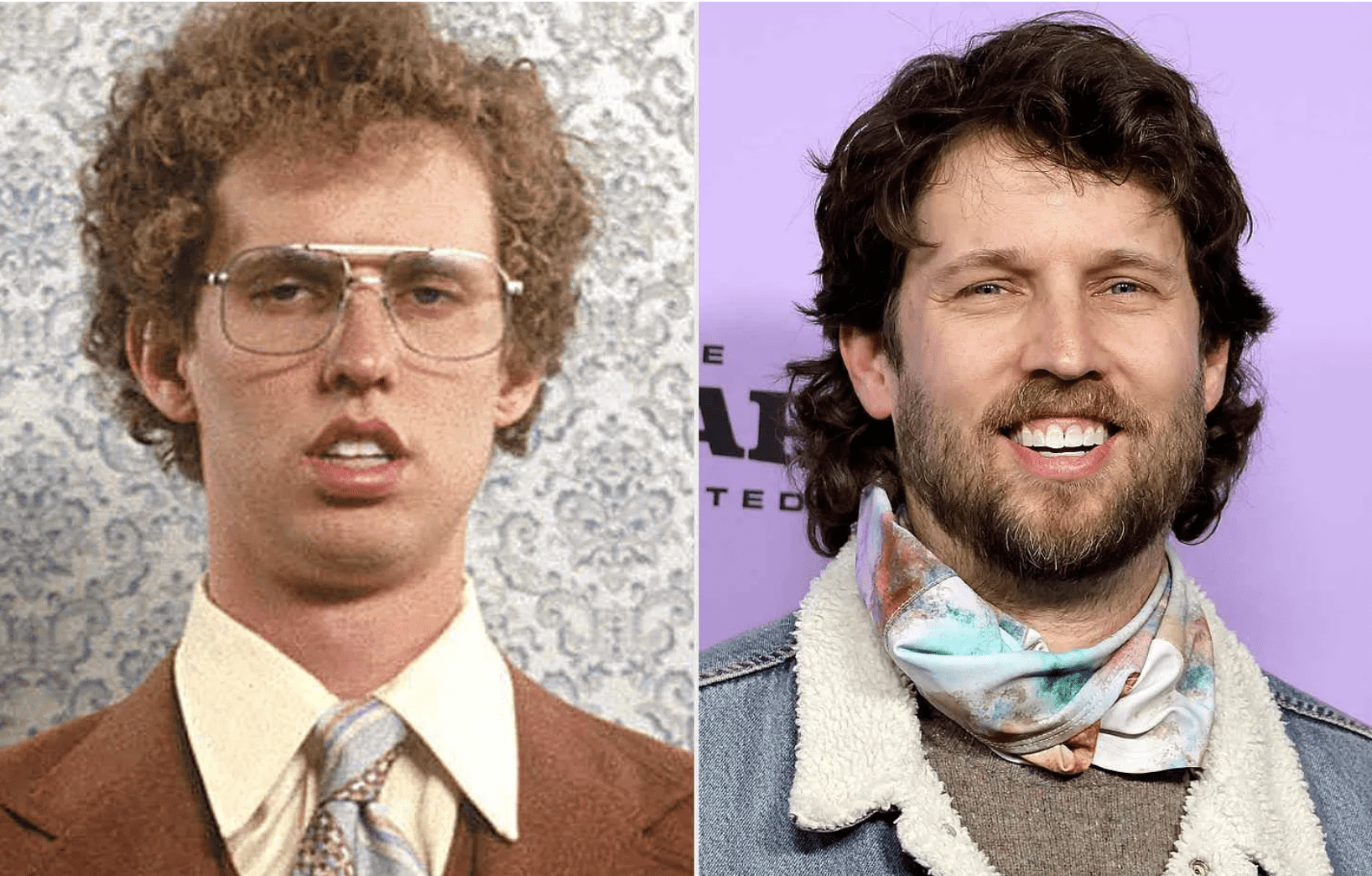
To read more from Isaac, visit Saints and Cinephiles.
My favorite line from the 2004 film Napoleon Dynamite is “Do the chickens have large talons?” Growing up, it was something that my friends and I would quote to each other endlessly. You probably have a different favorite quote, and that’s the magic of Napoleon – a movie so effortlessly bizarre that it captured the hearts of countless Americans, was acquired by Fox Searchlight after premiering at the Sundance Film Festival, grossed $44 million off of a $400,000 budget, and was awarded “Best Movie” at the 2005 MTV Movie Awards. The film’s lead actor, Jon Heder, also won for “Breakthrough Male Performance,” and 20 years later, it’s clear that the film is carried by the nerdy charisma of its star. Heder went on to have a successful career in Hollywood, starring in movies like Benchwarmers, Blades of Glory, and Surf’s Up. Though less in the limelight today, Heder continues to act in movies, most recently reuniting with Napoleon director Jared Hess for the Netflix animated film Thelma the Unicorn.

You rocketed to viral fame in a pre-social media world with your role in Napoleon Dynamite. I have to ask: which line do you get shouted at you the most?
“Tina, you fat lard.” That’s the number one line.
On the streets, when people see you, do they recognize you as Napoleon?
Yeah, yeah. But you know, it’s easier nowadays. Like if you know you know. I can walk by lots of people and they won’t recognize that they’re if they’re not paying attention or looking. And then there’s times where it’s like I’m in a certain place and everybody starts recognizing me. I’ll go to a grocery store, and then every employee in the grocery store is starting to come up. And on the other hand I just did a flight to Palm Springs and came back and I don’t think I was recognized once on the flight. So it’s just kind of weird. Just depends on where I’m at.

I’m curious what influenced your decision to be an actor in the first place? Were there influences or inspirations that you had growing up?
Well, even before I was in high school I was making movies. I have a twin brother, and he and I were always in the arts. We were always involved in creative stuff. We went on adventures. We did lots of drawing. We made books. And then when we got to high school, that’s where all that creative energy turned itself more into making videos. And we were still involved in art and we loved that. But we were like, oh my gosh, we love making videos. I want to make movies. This is what I want to do. I want to go to film school.
And I wanted to go to BYU. I got into the film program, and then, like a lot of film students, I decided I was going to study everything. I didn’t know exactly what I was going to do. So yeah, I took acting classes, but I had done very little acting. In my own videos in high school, I started to get a certain flair for goofing off in front of the camera, having fun, letting go of myself. It was in college that I took this acting class and really liked it, and it just spoke to me and I was like, oh my gosh, I get this. At the same time, though, I was continuing to take film classes, and I took animation classes too.
And then, it was while I was at BYU that I met up with Jared Hess. He was a fellow student. I won’t repeat the whole backstory. But the fact is that Napoleon Dynamite happened while I was still in school. And so really suddenly I’m finishing up my last semester at school with a film under my belt that’s just about to hit theaters, and everybody’s like, oh my gosh. After it got into Sundance and got sold by Searchlight, everybody’s just like, “Dude, your life’s going to change.” I was like, okay. And then I realized, obviously, the biggest door in the world was ready to just swing wide open.

So the door swung wide open, and you went through it. You were in Blades of Glory with Will Ferrell. You were the voice of Chicken Joe in Surf’s Up. What was that process like for you as you were choosing those roles? Were there roles you were turning down? What were you thinking about the direction of your career?
It was an exciting time because it’s kind of like, “Now what?” I wanted to continue acting, but even then, I didn’t grow up always thinking I was going to be an actor. And even then it was like, “Do I want to do serious acting?” But at the same time, a lot of these comedy opportunities opened up, so I could be doing fun stuff.
But I got all these offers for lots of projects that were, to me, inappropriate. They were uncomfortable. They had content that made me just say, “Whoa, I want to be this good LDS boy… it’s who I am, and it just wouldn’t make sense to do this project.” I knew that it was a couple different things coming in at once, a couple different perspectives.
One perspective was just the objective perspective. Being raised the way I was, growing up in the Church, and feeling strong about my testimony and thinking, “Of course, I’ve got to be an example.” I didn’t feel like I had to be. But I’m like, “Well, a lot of eyes are on me now.”

And [Napoleon] was, you know, a little bit of my background. It was the biggest topic when I went and met with everybody down in Hollywood. I met with agents, producers, writers, managers. And one of their first questions, every time, was “Wow, what’s your story? You went to BYU, you’re Mormon. You went on a mission. What’s that all about?” All people knew about us were the sound bites. Nobody knew anything about me.
So I knew that there was going to be an element of decision. I have a lot of favorite actors who do projects that I probably would never do. But I thought to myself, “I’ve got to uphold a certain image.” Not out of guilt, but out of, like, a very personal perspective. I wouldn’t feel right doing this kind of movie. I knew I’d feel uncomfortable watching myself in some of these things. You know, I grew up a pretty liberal film viewer—I would watch anything and everything. And I could put on those film student goggles and say to myself, I can watch anything because I know exactly how to dissect it without letting myself become involved or too affected by the content… I could look through all the naughty bits and say “there’s a good message here”, or “there’s a terrible message here, this is garbage!” But suddenly, I was looking at all these projects and each one was different.
I saw things that were really cool, but I just didn’t like the content, or I’d get offered something terrible, but the content is okay. Like morally and by my own standards, I would feel okay doing it, except that it was poorly written and not good. Each project was different, but you know, all the movies that you just listed off felt like, “Oh yeah, this is fun. I’m okay doing this kind of a film.” I liked pushing the envelope just a little bit for me. For a lot of Hollywood, maybe it was nothing. But for me, I knew I wanted to be putting out a certain image. I didn’t know what my career was going to look like. I wondered if it was possible to have a career doing all these big movies, but all within my comfort zone. And looking back, I’m not saying it’s not possible, but obviously I didn’t go on to just do tons and tons and tons of movies. I’ve done some big movies. But obviously things slowed down. I didn’t have it in my blood to go on to continue to be a big movie star. I just take it as it comes, continue to try to do projects that I like. It feels a little bit like riding the wave.

I feel like that was a very honest response. For better or worse, you are probably the highest profile Latter-day Saint in Hollywood. And I think being an actor, more so than some other profession like grip or gaffer or cameraman, that identity is really front and center. Are there regrets or reflections you have about a role that you took or didn’t take?
Not really. I don’t like to really think so much of regrets. But boy, I wish I knew then what I knew now, or at least to a certain degree. Like if I could go back I’d be more proactive about other things. I shot down a lot of stuff that my agents sent to me. I was repped by CAA, a big agency, and I got a feeling that they’re probably used to getting new clients and pitching them everything, and those clients being like, “Yes, let’s do it. Yes, yes, yes!” And my problem was that I wasn’t good at acting in the boardroom when I was getting pitched something I just didn’t want to do. I was very picky. It’s not that I felt bad about saying no to projects. If I could do it again, I’d want to hit the ground running and really chase the projects that were most interesting to me. There was also so much I just didn’t know, but I don’t regret it. Because if I had gone in there with a stronger desire to be this successful movie star and less anchored in what it takes to try to live the standards of my belief and my faith, then maybe one side would have won out over the other. For me, it was my standards, that was always going to be first. That was my drive, in wanting to show the world that image.
It’s a hard balance to walk, and it’s a huge spotlight. Is there a role that you’re particularly proud of? Or a movie or a show that you wish had a larger audience than it did?
Yep. Pickle and Peanut was this Disney cartoon that ran for two very long seasons. That was one of my favorite projects to do after Napoleon. Of course Napoleon is the one I’m most proud of—it was so personal to me. It started everything– and look at what it’s become, how can I not be proud of that? But, a lot of people know that movie, but not a lot of people know this cartoon I worked on. I just love it to death. It was so funny. It was so fun to make. We’re going on five years since it stopped running, but I’ll still tell anyone who asks to just go watch Pickle and Peanut. I think there’s a life for it; it can still exist!
I’ve done some stinkers and I’ve done some good ones. But “Pickle and Peanut” is the best of them all.

I was not expecting that answer, but I am delighted by it. Last year was the 20th anniversary of Napoleon Dynamite’s premiere at Sundance Film Festival. Tell me a little bit about that experience—what was it like to be back?
I mean, it was a different experience, but it was just cool to be back there. I wish they could have showed our movie in the same theater—that would have been really cool. We had a good handful of some of the cast. But the magic of the first time we were there, we had the whole main cast with us. It was so exciting, but you can’t really replicate that ever again. Back in 2004 we were just this little movie that nobody knew, but the buzz was building and building. And then people see it for the first time, it’s blowing up and they’re loving it. And it was just like this whirlwind of a week.
Of course last year, we were only there for like two days. We had a great audience, but it just wasn’t the same. But I’m not complaining. It was very cool to see how Sundance was celebrating because they had like sweatshirts and swag, they had a tot truck, they were giving out “Vote for Pedro” flyers. They had flash mob dancers dressed as Napoleon. They all had wigs on, and they were walking down the main street of Park City. They had the music booming, and they’d all be doing the dance like they had practiced it. It was weird and crazy. So it was really cool to see that.
Is there any advice you’d give to an aspiring LDS filmmaker?
I feel like it’s different to give advice to filmmakers versus what I would say to actors. I don’t want to separate them, because actors can be filmmakers sometimes, but it’s the difference of being in the spotlight and having the success of now being an image, a face. When you think about [members of the Church] in Hollywood, well, there’s not a lot of names, and the only names I know are the ones who are famously inactive, you know. “I heard so and so was raised Mormon, but not anymore.”
And so it just always seemed as a kid and in college, you hear those things, and you’d think, “Geez, that seems to be the way these people go to Hollywood; they get a little success, then they leave the church.” And of course, there’s success in different forms. But I feel like in the limelight as an actor, it can go to your head and that maybe gets to a point where you’re like, “I want to do these projects, I want to do this and this.”
There’s probably lots of stories of other members who go down to LA to be directors or writers or producers who do the same thing. They leave the church, they become inactive. But you don’t hear those stories as often because you know, they’re not in the limelight.

If I had any advice, I’d say, just figure out what’s important to you and stick to that. Like, you know what you’re going to do, what’s most important to you. And if you’re a faithful member of the Church and you want to go into Hollywood, I mean, it’s just like anything else. It’s a job. Hopefully you get work. Hopefully it becomes a career. But if you’re faithful to it, and you trust in your testimony, then you stay strong and never forget that. Just never forget that. Go to church, read your scriptures, just like you learn in seminary.
Even in the past couple of years, I’ve learned so much about the importance of [scripture study].
Like anything, it’s a muscle, and it’s an exercise. You have to work at it. You can take so much for granted when it comes to your testimony. And if you don’t nurture it, especially if you’re going into Hollywood, it is easy to be consumed.
I feel like I’ve never wavered, though I’ve had hard times. That sounds like a brag. I’m not trying to brag, but I absolutely can feel empathy and understand why certain people do leave. Fame can get to you, absolutely. If I was more talented, it’d probably be even harder. But luckily, I’m not as talented as I think I am. [laughs] So if you gave me more opportunities for Satan to tempt me with his delicious offers, I don’t know…
And yet at the same time, I have some great friends who are still active members who are acting.So it absolutely exists. And it is doable. It’s the conscious kind of choice you make, right? A testimony isn’t location based. If the only thing that’s keeping you in the church is Provo, Utah, then don’t leave, I guess.

Anything else you’d like to add before we wrap things up?
It’s always enjoyable for me to do these kinds of interviews because when I first started in the business, one thing I thought about a lot was that I was unofficially a bit of a spokesperson for the entire Church. Maybe not a spokesperson, but a representative. Instagram and social media didn’t exist when I first started acting. But I was always wondering, should I just throw up a banner– “I’m a Mormon!”– or do I shy away from it? How much do I put it out there? And so I shared my testimony in the best way that I knew that I felt comfortable with. I never shied away from talking about my faith if people asked me, and I would get asked a lot.
But, for years, for so much of my career, I’ve always had this certain element of wanting to show that I can do this without having some big outpouring in every interview I do. I didn’t want to be “Hey, I’m LDS, I do this, I don’t do that.” And sometimes I wonder, are people in the Church even aware that I’m a member or that I’m active. And I want them to know that. I’m absolutely a member and I love the Church. I love the gospel. I have a firm testimony. I go to church! [laughs] That’s what’s most important to me.
Stuck in an Elevator on Christmas Eve: Q&A with Filmmaker Mitch Davis
To help Meridian keep on publishing every day for you, please CLICK HERE (we need your support).
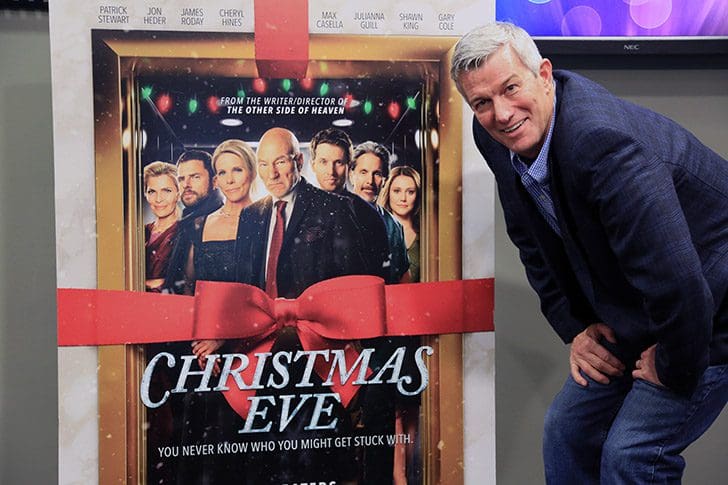
Christmas Eve opens nationwide on Dec. 4 in select theaters.
Christmas Eve is the story of what happens when a power outage in New York City on Christmas Eve leaves 20 people stuck in 6 elevators with resulting romance, irritation and humor.
In this feel-good Mitch Davis comedy, produced by Larry King, everybody is stuck when they are on their way to someplace they’d rather be, and as the saying goes, “You never know who you might get stuck with.”
The six elevators include: a patient who doesn’t know she is dying along with her atheist doctor and medical staff; a boss and the man he has just fired; a group of musicians whose harmony is strained during the night; a shy girl and the photographer who wants to know her; a hardened tycoon who doesn’t know he’s lost everything that matters; and a bunch of lovable oddballs who get a lesson on abstract art.
This is a group of flawed and funny people on a night that will change their lives—all somehow overseen by a higher providence.

Mitch Davis received this script from Tyler McKellar five years ago, and was so taken by it, he worked it over in several rewrites and decided to create this film which entertains and celebrates with an innate wisdom.
Latter-day Saints will recognize Jenny Oaks Baker as one of the musicians in the elevator who plays a remarkable rendition of Silent Night at a climactic point. They will also know Jon Heder (aka Napolean Dynamite) who plays a young man with the misfortune of getting fired on Christmas Eve.

The most well-known star is Patrick Stewart, who signed on three weeks into the shooting of the film to play the jaded magnate who is stuck alone in an elevator that dangles from a skyscraper he is building.
Meridian asked Mitch, who also created The Other Side of Heaven, about the background of Christmas Eve and about the future of LDS filmmaking.

What is Christmas Eve about and why did you want to make this film?
It has a two-edged message. It’s a great movie and it’s entertaining and it’s not like an assignment or chore to go see it. It features major movie stars and a good message that makes you laugh and cry and think. You don’t get a PG rated family-friendly Christmas themed movie like this every day. It is a kind of rarity.
Movies ought to be entertaining in their own right and by all accounts I’m hearing from people that this one is.
The movie works on a few different levels. On the surface it’s just a feel good Christmas comedy that makes you laugh. Beneath that surface there’s a lot of thoughtful spirituality and philosophy going on. That’s a tribute to Tyler McKellar. I’m the second writer on the script and I’ve done a number of rewrites. The genius and original thoughtful nature of the script came just from him. It made me laugh, sigh, and cry, and it made me think.

How have people responded to the movie?
It has been a movie that people have revved up to. I think that there are two kinds of literature. I was an English major at BYU. There I learned to recognize a couple of code words.
When the teacher was introducing a book, if the teacher would say that the author was an able chronicler of the human condition, I knew it was going to be depressing. If the teacher said, this writer celebrates the human spirit, I knew that the work was going to have some energy and hope and faith.
What Christmas Eve does is puts everybody in the human condition, stuck in the elevator on Christmas Eve. We all feel stuck. It allows those same people to overcome their difficult circumstance and pull together. We’re all in this together. We can all lift each other up and help each other through our common humanity.
We can celebrate. We can commiserate, bear one another’s burdens that they may be light and we can bear them with kindness, with humor, with romance, but above all bear them.
Another message is that we are all part of one big family, and it’s not that big a family after all. The world can be as small a place as an 8 x 8 elevator in the end.
There is also the sense in the movie that a Divine Providence is involved.
The final image of the movie is an angel atop a Christmas tree looking down on humanity. There are a lot of things that may seem accidental in our lives that are not that accidental after all. Good or bad we are being watched over. God is a witness and angels are witnesses to our travails and our triumphs and both of those things are providential. Both can build us and make us better.
I don’t want the movie to feel like a sermon, because we have a lot of fun too. Perhaps my favorite line, in one of the more spiritual scenes were Shawn King’s character is defending her faith to the doctor. She says, “I don’t know everything but that doesn’t mean I don’t know anything.”
I like the candor and fortitude with which Shawn delivered that line. She said, “This role was perfectly cast with me in mind because these are the conversations that Larry and I have all the time. He is an atheistic, agnostic Jew and I’m a faithful Mormon. Ask Larry what is going to happen when he dies and he says, ‘I know I’m not going anywhere. I know that.’
I take some pleasure in seeing Shawn stand up, stick her chin up and proclaim what she believes without apology.

The characters in the elevators seem very flawed and human.
I think that nobody cares how superhuman you are until they know how human you are. I think that’s maybe a lesson for Latter-day Saints in a big way. When we made The Other Side of Heaven 15 years ago, we began by showing the character’s flaws—so we could laugh with and understand them.
When I screened that movie for non-LDS audiences, as soon as they could see it took place on the campus at BYU I could see the temperature go down 10 degrees in excitement. When I started to poke fun at us, then I could see the audience begin to relax and say, “You don’t take yourselves too seriously. This is going to be fun.”
Every single character in this movie has some baggage of one sort or another. For any of us to pretend we don’t have issues or problems is dishonest. It doesn’t take audience long to sniff that out. It is so important to me for a character to be relevant. He or she has to be relatable, and for a character to be relatable, he or she has to be human, and for a character to be human, he or she has to be flawed. Any effort to the contrary is futile and self-defeating.
How did you get Larry King interested in this movie?
Larry was a huge fan of The Other Side of Heaven. That movie came out when Shawn’s oldest son left on his mission. Larry was living through the experience of sending out a stepson on a mission. He saw how frightened and tender Shawn was about it, so when he saw this movie about Elder Groberg going to Tonga, he was blown away by it.
I took the Christmas Eve script to them and they jumped on it. Larry is really proud of the movie and excited about it and it’s a great blessing for me.
Will the film be widely distributed?
The movie is opening the US and Canada in theaters in select cities with other website delivery systems. We’re really excited to get this big of release for this movie. We are working with Amplify Releasing, a well respected distributor of independent films. They are a classy company that has fallen in love with the movie, thank goodness.
People can check the website https://www.thechristmasevemovie.com/#tickets for theatrical showings near them and website delivery.
I understand you shot this film in Bulgaria? Why did you make this choice?
Most of the movie takes place inside six elevators, so we realized that we should shoot most of the movie on a sound stage somewhere and discovered that Bulgaria is the least expensive place we could do this. We discovered a great facility that was very inexpensive and 2/3 of the actors in our film are from the UK. For them it was more convenient to fly to Bulgaria than to fly to U.S.
Almost all of our crew was Bulgarian. Sylvester Stallone just shot his movie The Expendables there before we did and I am going to tease him when he comes to our movie premiere, that the crew were all exhausted. Our movie was like going on vacation compared to his, because we weren’t blowing things up.

How did you get Patrick Stewart to play the role?
Because our movie is segmented by elevator, we were able to schedule Patrick’s scenes for the very end of the movie. We were determined to cast a well known actor with gravitas in that role. Starting the movie before he was cast was a very frightening thing to do. We were in the cafeteria eating a nutella crepe, and I had chocolate all over my hand and mouth when my cell phone rang and I saw it was Patrick Stewart who called to say yes.
Why did he say yes?
He loved the script and we had already cast John Heder of Napoleon Dynamite. Stewart is married to a much younger woman who knew Jon Heder’s work and encouraged him to take this role, “Because Jon Heder plays your son and he is a comic genius.”
I’ve been so lucky my last three movies I’ve had two Academy Award winning actors and then Patrick Stewart. Two things make it possible to cast people like that. They have to love the script and the character. You have to have a budget to pay these stars somewhat close to their rate. So many good movies get made without a cast that compels an audience. I was lucky to get a cast that mattered.

What do you think about the movies that are being made today?
Movies are both are reflection of and a precursor to popular culture. Movies reflect who we are and they also project who will we become as a people. It is easy to blame movies for everything that’s wrong in society and to an extent that is correct. But film makers say if I can make money making movie about Bible stories they will do this and to a degree that are now.
An unfortunate thing has happened in the last decade or so for movies. Because so many walls have come down around the world, movies are no longer made just for a U.S. audience. They are made on a spectacular level for a worldwide audience. You make a movie and have to think how will this play in China? What will they think of it in Russia?
Consequently there are more and more big-budget movies and fewer mid-level budget movies. The content of the movie has to be translatable across cultures.
Two things are understood across the world that don’t require sub-titles –sex and violence. When someone gets blown to smithereens or has a motorcycle crash, there is no need for sub-titles. Movies that appeal to the lowest common denominator are made these days because of their popularity with a worldwide audience.
When I was working at Disney, the studio was making 25 to 30 movies a year. Many were low to mid-range budget that sought to address the needs of smaller audiences. They’d say, “The kids will love this one or the Christians will love this one. “
That’s no longer the case. Disney is making 3 to 5 movies a year now with all of the Marvel movies releasing and a few others. They are all movies they have required hundreds of millions of dollars to produce and distribute. It’s harder to make movies that don’t appeal to the lowest common denominator—that uplift, that edify that encourage.
Lately, the Christian market has emerged and demonstrated itself to be formidable. The sad fact is that Mormon filmmakers get left out of that. Mormon filmmakers are not welcomed in the secular halls of Hollywood and they are not welcome in the Christian halls either. Mormons have to make movies for Mormons on a limited budget or they have to transcend Mormon themes to appeal to a larger market.
For those of us who have read President Kimball’s “Gospel Vision of the Arts” about making movies that speak to all the earth, we know that hasn’t happened yet. This is something I am very passionate about.
The barrier to entry for artists have cinema is primarily a financial barrier. If I want to write a poem, if I want to paint a world-class painting, if I want to write a world- class symphony or pop tune, it doesn’t cost me much of anything. All I have to be is talented.
If I want to make a world-class movie, I have to be talented and I have to have tens of millions of dollars. It is easy to step back and say there aren’t any good LDS film makers. We don’t know. There might be a Stanley Kubrick or Sidney Pollack or Stephen Spielberg. We’ll never know because they won’t be given the financial tools to make a movie like the filmmakers I just mentioned.
They only way to get really good at something is to do it over and over. To be given the opportunity to make a feature film once in your life is remarkable, but to do it several times enough to become excellent?
Mormons who want to make movies that matter have to find somebody who believes in you and believes in what you’re going to do enough to risk millions of dollars. It’s a very high risk.
I’m not suggesting that anybody has an obligation to write a check so that some Mormon might become a good film maker. The reality is that filmmaking requires practice. In the world the way you get that is by making lots of movies.
How many silly, vapid movies did Stephen Spielberg make before he made Schindler’s List. He said he made a lot of movies he didn’t care about to get that chance to make Schindler’s List.
The problem for an LDS film maker who has the kind of spiritual integrity to make a movie that matters probably has five kids, three home teaching families and two or three church assignments and doesn’t want to make a movie with certain lowest common denominators in it.
If a Mormon filmmaker is willing to make those compromises to make movies without integrity, then they’ve sold their soul and they won’t be able to make those movies anymore.
How have the Jews been so effective in telling their story?
Two stories are applicable here. When Leon Uris wrote Exodus, he wasn’t sitting around thinking I want to make the quintessential, epic novel about the Jewish people. Some wealthy, successful people said, “This needs to be done.” They commissioned it. They realized that they had an image problem and decided to create a book that sympathetically told their story.
Several years ago, the fabulous Jewish writer Chaim Potok was at BYU and did a forum. I am told a student raised her hand and asked him if he thought Mormons would ever have their equivalent of Chaim Potok and would ever create great literature or art.
Apparently he said, “I don’t think you will. I don’t you are honest enough or passionate enough. You’re just too nice.
When I heard that story, I thought, them’s fighting words. But, he has a point. When I read My Name is Asher Lev, I thought uou could change 10% of the words in that book, and it could be the son of a General Authority living in Salt Lake City.
The LDS Church has exceptional examples of success in just about every arena imaginable. Professional athletes, politicians, business entrepreneurs. What about in film?The frustrating thing is that in my opinion the most important battlefield is the battlefield of popular culture. If we are not in the movie business, then we are just bystanders to popular culture. All we can do is whine about it, but we cannot form it, create it. We ought to be in the business of doing it in a big way. I would just love it if someday some asked, “Who are the great Mormon film makers and there were 10 or 15 or 20. Popular culture is where it’s at.
I don’t think it is a question of talent of commitment. We have popular rock bands. The barrier to entry is just so much lower. It is really a financial conundrum more than anything else.
What is your next project?
My next movie is going to be about the assassination of Joseph Smith based on Dallin H. Oaks and Marvin S. Hill’s book The Carthage Conspiracy. (see carthageconspiracy.com)
I started it three years ago, but put it temporally on the shelf to make this Christmas movie. But that’s a movie I want to do that will open the doors for others to follow.
As long as we are making movies about ourselves, for ourselves, showing them to ourselves and then congratulating ourselves, we are falling far short of our foreordained mission of the prophesied accomplishments stated by President Kimball.
We have to able to transcend the Mormon niche market and create a movie that would be worthy of worldwide distribution with attendant values and movie stars. That’s where we have to go if we want to do what the Jews have done.
See the trailer for Christmas Eve.