





You Don’t Need to Feel Forgiving to Forgive

This article was originally published by Public Square Magazine by Skyline.
Few moments are more defining than those shaped by deep personal betrayal. When recalling these moments, the body often reacts before the mind—muscles tighten, the stomach turns, and the memory returns with clarity. The pain may be lasting, the consequences irreversible. In such moments, two responses emerge side by side: anger and forgiveness—two gifts, one in each hand, and while both feel justified, only one can be given.
This is the essential tension at the heart of forgiveness: not a passive emotion, but an active, deliberate, sacred decision. Forgiveness is often couched in dramatic moments of intense pain and wrongdoing, but it also needs to find its way into everyday moments, like when a loved one or stranger says a careless word or performs a negligent action. These small moments of hurt, if unforgiven, can lead to a lifetime’s accumulation of tension and resentment. There is great power for both the offender and the offended in the words, I forgive you. While it is often assumed that forgiveness must be earned, Christian theology and research present a different view. Forgiveness is a gift extended not only to the offender, but also to release and heal the one who forgives.
What Forgiveness Is and Isn’t
Forgiveness is often misunderstood in its meaning and execution, carrying a wide range of meanings across individuals and cultures. Some may conclude it is unattainable before ever fully understanding what it entails. This word deserves a thoughtful unpacking before being dismissed. Clarifications of what forgiveness is and is not can be helpful.
Forgiveness is not:
- Trusting the person who caused the wrong.
- Earned by the person who caused hurt.
- Forgetting what happened.
- Pretending the offense didn’t hurt.
- Letting the offender perpetuate the harm.
- Reconciliation, or prolonging a relationship.
Forgiveness is:
- A choice to act compassionately.
- Beginning to feel compassion as you act compassionately.
- Given whether or not the other person shows remorse or change.
- Something you do for you.
- A perpetual choice and not a single event.
Psychologist Everett Worthington––a leading expert on forgiveness whose research has informed much of the thinking in this article––identifies two forms of forgiveness: decisional and emotional.
Decisional forgiveness is consciously choosing to forgive—often for our own well-being rather than for the benefit of the offender.
Emotional forgiveness, by contrast, is when feelings of anger begin to soften into empathy and compassion.
While it is often believed emotions drive actions, research and experience suggest the opposite: choices and behaviors gradually shape feelings. Suggesting that often it may be required to act compassionately, before we feel compassion. Anger’s grip is hard and often shapes our journey with forgiveness. Anger can serve as an emotional strategy to overcome feelings of helplessness. However, as President Nelson taught, “anger never persuades,” and the sensation of control is really an illusion: change is up to the offender just as much as our decision to forgive is up to us.
Forgive For Your Own Sake
Worthington’s research shows forgiveness improves mental and physical health, lowers blood pressure, reduces anxiety, and even boosts the immune system. Forgiveness may not change the offender—but it will change the forgiver.
When we decide to release resentment, we begin to, as one Church leader put it, “rise to a higher level of self-esteem and well-being” characterized by emotional clarity and peace. Choosing to forgive doesn’t deny the pain—it simply refuses to let that pain define our path forward.
Examples of Forgiveness
At one point in early Church history, tensions ran high among members. People were hurting each other, holding grudges, and struggling to move forward. In that setting, the Lord gave a clear, striking command: His followers “ought to forgive one another.” Then He added something sobering. While God alone could decide “whom to forgive,” His disciples were not given that same privilege of discretion. They were “required” to forgive “all.”
It isn’t a suggestion. It isn’t conditional. This is a divine directive for healing and unity. The Lord didn’t ask them to ignore justice—He asked them to make room for His mercy by letting go of their desire to carry the offense any further.
Why would the Lord ask something so hard? Perhaps it is because the Lord knows that holding onto hate keeps our minds dwelling on the past and the offender. Focusing on the offense leaves no room for contemplating and engaging with His healing grace and hope in the present.
Jesus, hanging on the cross, uttered the words while looking at His torturers, “Father, forgive them; for they know not what they do.” In that moment, Christ modeled the highest form of forgiveness: extending compassion without having received any apology, show of remorse, or change. He recognized His abusers’ ignorance toward the depths of His pain and the extent of their own sin. Often, offenses are committed in such a state.
Even when buried by regret—when the weight of wrong choices seems too great, or the damage too deep—there is still hope. Healing doesn’t require perfection, only a willingness to turn toward the Savior. His grace reaches to infinite depths. Elder Jeffrey R. Holland tenderly reminds us, “It is not possible for you to sink lower than the infinite light of Christ’s Atonement shines.” The same is true for those who have caused wrong. They, too, remain within the reach of divine love, and those who forgive become more like Christ when hoping for their healing.
The REACH Method
So what is to be done when someone wants to forgive, but doesn’t know how or where to begin?
Start here. The Skyline Research Institute has published a series of short and playful videos focusing on tools and tactics for Peacemaking. These videos expound principles taught in President Nelson’s address “Peacemakers Needed” by complementing them with academic theories in psychology and conflict management. This current article is one in a series of articles published through Public Square, exploring the theories taught in each video more thoroughly.
The following video teaches principles of forgiveness from the perspective of a cat learning to forgive the dog who hurt them.
As shown in the video, these steps give a simple starting place for applying the divine and well-researched principles of forgiveness:
1. Name the Hurt.
Think of the person who hurt you. Let yourself feel the pain. Ask, “What specifically hurts me about this?” Is it betrayal? Injustice? Abandonment?
2. Imagine Speaking to Them.
What would you say if they were sitting before you? Get it all out—no filters. Write it in a letter (even if you never send it).
3. Switch Seats.
Now imagine being them. What might they say? What wounds might they carry? This doesn’t excuse them—it humanizes them.
4. Picture the Two Gifts.
In front of you are two gifts: your forgiveness and your anger. Which will you give them?
This process may need to be repeated many times—that’s okay. Forgiveness is rarely a one-time event. Like any habit, the choice to act with compassion must be practiced, especially in the face of discomfort. It may feel unnatural or insincere at first, but each time we choose kindness, the action becomes a little more familiar, a little more automatic. In any given situation, forgiveness is a muscle that strengthens with use. It’s a neural pathway that, with repetition, begins to favor hope, action, and healing over the depressing and well-worn track of rumination.
If the choice to act compassionately towards an aggressor feels out of reach, recognizing the need to forgive and its benefits is a good place to start. Even aiming for forgiveness softens your heart. Desire to want to forgive.
Based on his research, Worthington developed the REACH method:
- R – Recall the hurt.
- E – Empathize with the offender.
- A – Altruistic gift of forgiveness.
- C – Commit to forgive.
- H – Hold onto forgiveness when emotions rise again.
As the video showed, REACH is enacted step by step by recalling the hurt, imagining the offender’s pain, and choosing to give the “gift” of forgiveness.
The Choice Is Ours
The reality of pain is undeniable, and its depth is often known only to the individual and God. Life frequently confronts people with shocking and disproportionate suffering, much of it undeserved. Such experiences are not uncommon, though they remain deeply personal and often isolating.
Forgiveness does not erase the past—but it reclaims the future. It is not about denying hurt, but about refusing to let that hurt decide who we become. In a world full of real wounds and imperfect people, forgiveness offers something radical: not control over others, but healing within ourselves. Though anger may offer the illusion of power, only forgiveness frees us from the grip of the past and opens the way to peace.
As both research and revelation affirm, forgiveness is not just a moral ideal—it is a practiced, powerful, and divine pathway toward emotional, physical, and spiritual renewal.
The invitation remains: choose the gift of forgiveness. Give it again and again.
Skyline Research proudly hosts TheFamilyProclamation.org, a website dedicated to advancing the principles of The Family: A Proclamation to the World.
Discovering the Word of Wisdom: Going Beyond the Doctrines and Principles

This article is part of a series on the Word of Wisdom. To view all the articles in this series, see Discovering the Word of Wisdom.
This article is part of a continuing series on the doctrines, principles and applications of the Word of Wisdom. In the thirteen articles I’ve written in this series so far, I’ve focused on the doctrine and principles of the Word of Wisdom. Before I go on to discuss the applications, here is a very brief overview of the series to date. Click on any title below for the full article.
- Doctrines and Principles of the Word of Wisdom
In his book Increase in Learning Elder David A. Bednar presents a powerful framework for understanding and applying the gospel.[1] By distinguishing between doctrines, principles, and applications, Elder Bednar reminds us to build our understanding of the gospel on a solid foundation: first doctrines, then principles, and last individual applications. Absent true doctrine and principles, there is no sure foundation for applying the gospel in our lives. I use Elder Bednar’s powerful framework throughout this series to help us better understand the Word of Wisdom.
Distinguishing Between Doctrines, Principles, and Applications. Elder Bednar explains that doctrines, principles, and applications each answer a different question. Doctrines answer the question, “Why?” (e.g. Why are these truths important?). Principles help us understand “What?” (e.g. Given this doctrine, what guidelines should direct our actions?). Applications answer, “How?” (e.g. How do we apply gospel principles given our individual needs and circumstances?).
The Doctrine of the Word of Wisdom. Doctrines are the ultimate source of understanding why things are the way they are, why our Father has given us the counsel He has given us, and why we should desire to follow His counsel. Any understanding of the principles and applications of the Word of Wisdom should be built on the doctrine of the Word of Wisdom. This article is an exploration of that doctrine.
Rethinking Alcohol, Tobacco, Coffee, and Tea. What are the fundamental principles of the Word of Wisdom? Elder Bednar’s work suggests we rethink our understanding of the role alcohol, tobacco, coffee, and tea play in the Word of Wisdom. We typically think of the admonition to abstain from these substances as a gospel principle. A closer look suggests abstinence from these substances is an application of a more fundamental principle that is broader in scope.
The Principle Behind Alcohol, Tobacco, Coffee, and Tea. In this article, I explore the fundamental Word of Wisdom principle behind the counsel to abstain from alcohol, tobacco, coffee, and tea. As important as abstinence is, the underlying principle helps us know how to apply the Word of Wisdom beyond the narrower scope of these four substances.
- The Lord’s Way of Teaching Doctrines and Principles
At this point in the series I explore how the Lord communicates gospel doctrines and principles to us. This exploration is important to unraveling the confusion that is often generated by what some members feel is the lack of clarity in the Word of Wisdom and the role Church leaders take in helping us to apply the counsel.
The Letter of the Law. When we focus on the letter of the law of the Word of Wisdom, we discover that it is not flexible enough to guide us in many real-life situations. When we treat the Word of Wisdom as a list of do’s and don’ts, it becomes impossible for us to confidently make dietary decisions that aren’t explicitly addressed in the revelation.
The Spirit of the Law. While the letter of the law is important, LDS Church leaders consistently teach us that we also need to follow the Spirit of the Word of Wisdom. In this article, I explore the differences between the letter and the spirit of the law. I also suggest how understanding these differences can help us understand some of the long-standing debates and controversies about the Word of Wisdom.
Section 89 as Parable. When we expect the scriptures to give us unambiguous, point blank explanations, we may be misunderstanding the way God teaches us. We may find it useful to think of Section 89 as a parable in that it leaves breathing room for various interpretations, so that we can get out of it what we are ready for.
Why God Doesn’t Over-Explain. Many Saints have puzzled over the meaning of the Word of Wisdom. Why is this revelation, like so many scriptures, at least somewhat obscure? We all want to follow the Lord, so why doesn’t He just make His counsel plain to our understanding? These are questions I explore in this article.
- Principles of the Word of Wisdom Continued: The Foods Ordained by God
 In D&C 89, the Lord tells us He has ordained three foods for our use: plant foods, animal flesh, and grains. He also describes the specific role each of these foods are ordained to perform in the human diet.
Three Foods Ordained by God. In this article I give an overview of the three foods ordained by God and explore what it might mean for a food to be ordained.
The Wholesome Herbs Ordained by God. “Whole herbs” and “every fruit” include all the edible parts of all wholesome plant foods, which include fruits, vegetables, grains, legumes, and nuts and seeds. The Lord ordained these plant foods “for the constitution, nature, and use of man” (D&C 89:10).
Animal Flesh is Ordained by God. In addition to plant foods, the Lord ordained “flesh also of beasts and of the fowls of the air” (D&C 89:12). In contrast to plant foods, these foods are not ordained for our constitution or nature, but instead for our “use” only, and we are asked to use these foods sparingly. In addition, the Lord tells, “it is pleasing unto me that they should not be used” except under certain conditions (D&C 89:13; see also vs. 15).
Are Fish Ordained by God? Just as alcohol, tobacco, coffee, and tea are used as examples of the types of substances that we should not use, is it possible that beasts and fowls are used as examples of the types of foods that should be used sparingly and only under certain conditions? I explore this possibility in this article on fish.
God Ordained Grain as the Staff of Life. Of all the plant foods the Lord ordained for our “constitution, nature, and use,” He tells us that grains are ordained for a special role: to serve as the “staff of life,” or the staple food for humans. In this article, I explain why these foods are critical to the Plan of Salvation and explore the possibility that grains are used as examples of the types of foods that serve this important function.
Applying the Doctrines and Principles of the Word of Wisdom
In contrast to doctrines and principles, which are eternal, Elder Bednar describes applications in this way:
Applications are the actual behaviors, action steps, practices, or procedures by which gospel doctrines and principles are enacted in our lives. Whereas doctrines and principles do not change, applications appropriately can vary according to needs and circumstances. Applications answer the question of “how.” Many applications can grow out of and be associated with a single principle. (see Note 1, p. 156)
For reasons made plain by Elder Bednar’s model, Church leaders generally do not give us specific instructions for how to apply doctrines and principles in our individual circumstances. Rather, like Joseph Smith, they teach correct principles to enable us to govern our own actions. The following story shared by Elder Bednar in 2013 is helpful in demonstrating how LDS Church leaders view these distinctions in the context of the Word of Wisdom:
I was in a large priesthood leadership conference, and we opened it up for questions, and [there was] a new convert who had come from a denomination where they had a very strict dietary code—things you could and could not eat. So his question was, “Elder Bednar, can I eat pork?” And I said, “Let me recommend that you read the 89th section of the Doctrine and Covenants. That contains what’s called the Word of Wisdom, and you’ll find your answer in there.”
He said, “That’s not a very good answer. I just want to know if I can eat pork.” And I said, “You have a copy of the Doctrine and Covenants?” and he said, “Yes,” and I said, “Section 89 is where you’ll find the answer.” And he almost started to get angry. And he just kept saying, “Look, this isn’t a hard question. I just want a yes or no. Can I eat pork?”
 After about three or four minutes, people were starting to get pretty nervous in the congregation, and I just said, “Look, let’s just call this a truce. You’re going to keep asking for a yes or no answer, and I’m not going to give you one, and the only way this is going to work out is you’re just going to have to go read Section 89 and that’s where you are going to find the answer.” And he was not happy; he was really not happy. And I was concerned that maybe he was offended or he thought I was being too hard on him or something.
The next day, when we came for the general session, one of the folks who was there helping with the sound system came up, and he said, “That gentleman from the priesthood meeting came up to me this morning, and he said, ‘I don’t know that I’ll get to see Elder Bednar, but he said you tell him, I found my answer.’”
Now, few things tickle me more. He didn’t say, “I got an answer,” he said, “I found my answer.”[2]
Clearly, the Brethren feel we have been given enough find our answers to the important questions we might ask about applying the doctrines and principles of the Word of Wisdom. If this is the case, is there any value in discussing individual applications of the Word of Wisdom?
The Value of Discussing Gospel Applications
Since we have the doctrine and principles of the Word of Wisdom, what is the value of discussing applications of those principles? Consider, for example, how President Russell M. Nelson is helping us better understand how to keep the Sabbath Holy. In his address in the April 2015 General Conference, he suggested that the various applications of keeping the Sabbath Day Holy (the do’s and the don’ts) were ultimately not useful once he established a mature understanding of how to apply the essential gospel principle. Here is the key text:
In my much younger years, I studied the work of others who had compiled lists of things to do and things not to do on the Sabbath. It wasn’t until later that I learned from the scriptures that my conduct and my attitude on the Sabbath constituted a sign between me and my Heavenly Father. With that understanding, I no longer needed lists of dos and don’ts. When I had to make a decision whether or not an activity was appropriate for the Sabbath, I simply asked myself, “What sign do I want to give to God?” That question made my choices about the Sabbath day crystal clear.[3]
If the principles of the gospel make it “crystal clear” what we should and should not do, what possible value could there be in discussing the applications, the “dos and don’ts”?
Here is where the principles explored in the articles listed above under “B. The Lord’s Way of Teaching Doctrines and Principles” can shed light. These principles suggest that because we are all at different places in our path to understanding, what is a “crystal clear” signal to an apostle is not necessarily crystal clear to each member of the Church. This may be especially true of children, youth, and members with less experience or practice in gospel living.
Given the Lord’s way of teaching us, we should not expect official instructions from LDS Church leaders on how we should apply every aspect of the Word of Wisdom as individuals. Nevertheless, the following are reasons why discussing gospel applications can be very valuable.
It helps us get ideas about how to apply the principles. As useful as it is to President Nelson and many Church members to use the question “What sign do I want to give to God?” additional guidance and suggestions for ways to keep the Sabbath Day Holy can also be useful. Even President Nelson was aided as a younger member by the lists of “dos and don’ts.” Without concrete ideas, our immaturity might lead us to logical, but ultimately unfruitful paths. For example, we might think that spending quality time with our family at professional ball games on the Sabbath Day is a great way to show our love for the Lord (although that could conceivably be appropriate under special circumstances).
It allows us to learn from the experiences of others. As others share their experiences, the consequences of those experiences, and what they learned from them, our own learning can be accelerated. Good examples may resonate with us and help us quickly adopt better practices. Negative examples can help us avoid dangerous side paths that might lead us astray.
It helps us desire higher standards than we might have otherwise. We tend to assume we understand when something makes sense to us, not realizing that there are almost infinite layers of understanding. We can stop short of reaching a higher goal if we falsely believe we fully understand a principle. Change is often difficult, especially dramatic change, but when we see others taking a higher path and testifying of the blessings they are receiving, our sights are raised, and our hopes lifted up. We are motivated to do more to embrace the Lord’s counsel.
Of course there are also dangers in misappropriating ideas and insights shared by others. The way other members apply the principles of the gospel are not the principles themselves. They are the individual applications of the principles, and we should be particularly cautious of turning applications into principles. And we should be careful to not assume that our own interpretation of gospel principles is the one others should adopt. Studying Elder Bednar’s framework on doctrines, principles, and applications can help us understand why this is important and how to keep these distinct.
Next Time: Applications
My understanding is that the Word of Wisdom is the text in D&C 89 (with the added clarification given in the Church handbook). Even among those Church members who are conscientiously trying to apply the principles of the Word of Wisdom, there is a wide diversity of interpretation and applications. I believe this is as it should be. While the doctrine and principles of the Word of Wisdom are simple and powerful, they are not unambiguous, and they do not provide straightforward guidelines to their application.
How then can we profitably discuss applications of the Word of Wisdom? In the next article in this series, I plan to present one model for framing the Word of Wisdom that honors both the letter and the spirit of the law as well as the distinction between principles and applications.
Getting Started
One healthy way of eating in harmony with the Word of Wisdom is a whole food, plant-based diet. For more information, see: “Getting Started.”
Jane Birch is the author of Discovering the Word of Wisdom: Surprising Insights from a Whole Food, Plant-based Perspective and many articles on the Word of Wisdom. She can be contacted on her website, Discovering the Word of Wisdom. Watch the video “Discovering the Word of Wisdom: A Short Film.”
Notes
[1] David A. Bednar, Increase in Learning: Spiritual Patterns for Obtaining Your Own Answers (Salt Lake City, UT: Deseret Book, 2011).
[2] David A. Bednar interviewed by Russell T. Osguthorpe, “The Importance of Teaching in the Gospel, Part 2,” Teaching, No Greater Call podcast series, 16 (2013).
[3] Russell M. Nelson, “The Sabbath Is a Delight,” General Conference (April 2015).
Try Something New
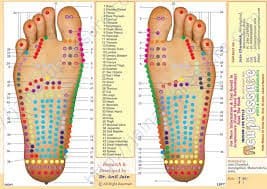
Our family motto, while our children grew up, was “Try something new!” Whether it was encouraging a toddler to be adventuresome and try something new at dinnertime, or a middle-schooler to be brave and join a club, that motto served us all well. During that time, probably 2001 or 2002, I didn’t really have time to attend the monthly Relief Society Enrichment Night, but it was January, and our motto was freshly in mind for the New Year. The mini-class was “reflexology”, which I knew nothing about. It was an easy opportunity to implement “try something new” for myself and our family.
I was only moderately interested and attended to be supportive more than anything else. I knew virtually nothing of “reflexology”, but the guest speaker – an LDS woman from another ward in the Stake, was impassioned and very informative, with lots of charts, on how the feet, head and hands encompass nerves that manage physical responses and health for all the body’s organs and systems. She had become most specialized in the feet and taught us that by identifying the location of these nerves, (called dermatomes) and applying pressure or massaging with a certain technique, it was easy to make adjustments for pain relief and wellness.
She did a brief history comparing acupuncture and reflexology, and then we all took off our shoes and socks and did some practicing! There was a good deal of laughing, as a I recall. I don’t remember her professional status or endeavors for this special knowledge, but it was a nice evening. Period. Paragraph. I had tried something new!
A couple of years later, our 16-year-old daughter, who had spent eight years and countless hours with a specialized orthodontist and oral surgeon to work out some extreme genetic dental issues, was finally ready for her final surgery. It was a complicated multi-faceted surgery to both widen her upper palate and bring her lower jaw into alignment. We had been told that her jaws would be wired shut for six weeks and were well prepared for all that that entailed – including the scary sensation that was often present in the first week of not being able to breathe.
When she came out of the surgery, it was pretty horrific. Her face was incredibly swollen and bruised. The fear of vomiting and the discomfort of not being able to eat or drink were miserable. She was brave and good, but it was just awful. Overwhelmed with it all, there were, indeed, incidents where she panicked with the feeling of not being able to even breathe. Our hearts went out to her in those first few miserable days, and I was open to anything …. Anything at all to help relieve the suffering.
A light bulb went on and I remembered the Enrichment Night lesson on reflexology. I sped to the library (this was before the Internet) and got some books. I quickly located the pressure points on her feet that managed the sinus passageways and breathing, and started massaging per the book instructions.
It was amazing! We could visibly watch her face relax as she was able to breathe better instantly. Her breathing was vastly improved, and we were ever so grateful. I massaged the points regularly over the next several days and had to admit that the doctors and their nurses had not been able to come up with an answer that was anywhere near as effective! (And cheap!)
I became a believer, and far more open to believing in alternative methods for health and wellness.
Really, what did you have to lose by learning and massaging the points on your feet for health?
As the years have gone by and we have been blessed with marvelous people in our life who have special knowledge on alternative health products and practices, there have been several professional foot zoners or reflexologists. With their skills, they can read the health of much of the body, and they often recommend our detox tea, as they can tell, by these reflexology points that there is a need for cleaning the colon, liver, kidneys and blood. Wow! What an amazing thing!
The history of reflexology is very interesting. Though some believe it goes back to ancient China or Egypt, that history is difficult to prove. What is documented, however is research in Europe and the United States going back to the 1870’s.
“By the late 1890s and early 1900s massage techniques were developed in Germany that became known as ‘reflex massage’. This was the first time that the benefits of massage techniques were credited with reflex actions. Dr. Alfons Cornelius published a manuscript in Vienna in 1902 titled Pressure points, Their Origin and Significance. In this work he notes that the application of pressure incited changes in the body. He observed pressure to certain spots triggered muscle contraction, changes in blood pressure, variation in warmth and moisture in the body as well as directly affecting the ‘psychic processes’ or mental state of the patients. Cornelius puts forth his theory of how the application of pressure works: “(It is) a purely mechanical hindering of the sensitive neurons, the neurons of the sympathetic nerve system.” He also stated that conditions show themselves as sensitive pressure points and “introduce the picture of illness long before it is to be recognized as an expression of a neurological problem.”
As the years evolved, more investigation and research were pursued to develop “zone therapy” as a continuing concept that massaging or manipulating the skin on different parts of the body would yield a favorable response to the associated organ.
The research and technique baton was passed from one doctor to another in the United States. Each doctor developing a more practical way to present the information and techniques. They published books, held seminars and trained practitioners. These books were first published in the 1930’s. By 1969 they became popular through major U.S. book publishers. Now there are hundreds of books documenting reflexology, particularly as it relates to the feet.
You can read the fascinating history I have summarized HERE

It all makes perfect sense, and explains why we, as divinely designed mortals, are programmed to walk: Simply walking massages multiple nerve points that positively benefit different parts of our amazing bodies! This is a miracle to me! And a great (and obvious) reason to walk as much as possible every day. With this knowledge, it is easy to understand that those who make a point to walk … as much as possible, get healthy and stay healthy, as long as they keep on walking! Walking as much as possible every day is justifiably promoted as one of the best preventative strategies for longevity.
The research has continued. The practice of reflexology is alive and thriving all over the world.
Several years ago, an enterprising business duo (in Canada) began experimenting with insoles and socks that would continually apply some pressure to these points, these so-called dermatomes. Using research from the 60’s, they imagined something like magic, but scientifically-based. There would be no need for doctor visits or massage … just wear the insoles and/or the socks to continually and gently massage these pressure points.
It may seem like a long shot, but after investing a lot of money, apparently in the millions, in both developing the insoles and the socks, then having them tested independently in both sports and wellness clinics, they were ready. They are just now introducing themselves to the world (August of 2016) and making quite a splash!
We personally learned about the socks last summer through a business friend. It seemed a lot like our herbal detox that continues as a Meridian favorite since 2008. With a deep breath, we remembered that the our detox product was absolutely the real deal, although many poo-poohed it. And still do. While it works better for some than others, it is a very valuable product to those who love it.
While many products have come our way in the years since we began sharing our detox at Meridian, we have quietly ignored them all … until the socks! There was something about it all that was fun and intriguing. Could it be that the socks could be something else to bless lives in a different way? Even so, I delayed answering the email from our friend.
Several months later, I sat down and read through the material. I watched videos of those with diabetes and fibromyalgia finding strength and relief. Those who had had unsuccessful back surgeries were up, walking and feeling better than they had in years. Healthy seniors were doing more and having more fun! Athletes were raving about better performances in running, jumping, golf, basketball, etc.
Instantly I thought of person after person who had pain in their legs, hips and feet. I thought of others with problems with stability, balance and range of motion – particularly the dear senior citizens in my life who are so scared of falling. Then I thought of my adult sons who love basketball, golf and how much they love performing well! They would all be interested in the socks!
Then I read (and confirmed in a conversation with the company’s CEO) that even the US Navy Seals purchase these socks for their incredible athletes because they do, and have clinical proof to back them up, provide extra strength for athletes and those required to use their physical prowess for their professions.
It turns out that college and professional sports teams are buying the socks. Wow! The more I read, the more we realized we had to try them first and see if it was something we would want to help make available to those in our circle of love and influence.
Socks! Nothing more than socks? We were intrigued!
We ordered some and were very excited to give them a try. Little did we know we’d become an instant testimonial! My husband Bob, age 65, has a family history of hernias. Right at the time the socks arrived, he was preparing for hernia repair surgery. He was in a significant amount of pain with it.
The socks arrived. They do NOT look special or unique. It’s hard to believe there’s anything fabulous going on, but when you put them on, they feel GREAT. Just Great. Bob put them on and wore them to bed. The next morning, several hours after getting up, he commented,
“It’s hard to believe, but I feel DIFFERENT. I felt different when I got up in the night to use the bathroom, just better/stronger/different. This morning, though nothing has changed with the hernia, it feels DIFFERENT. And I am nearly pain free.”
He wore the socks for the 2-3 weeks until the surgery was performed. He was not without pain, but it was greatly, significantly reduced. What would have been a very long 2-3 weeks between Thanksgiving and mid-December, became very, very manageable. We had many fun holiday outings and Christmas events that would not have been nearly so pleasant … because of the socks!
I made phone calls to some of the chiropractors and health pros who are now sharing the socks. One chiropractor kept me on the phone for 30 minutes, telling me that he now uses the socks as the “starting point” with his patients. “These are absolutely scientifically revolutionary,” he said to me, “as they bring the body into alignment instantly. Many problems are addressed, and after doing so, the patients’ other problems are much easier to identify and address with my traditional techniques.” His scientific explanations for why they are so powerful was extremely impressive.
During that time, we had a lot of fun doing the “test” as shown in the Youtube video in the photo below. (This woman demonstrates the test, then has the impressive healing of her hammer toe after wearing the socks.)
 While we had watched the Youtube videos, we had felt that people were not being legit and doing it “just for show.” Well, we’ve don’t it numerous times ourselves by now and it is absolutely the real deal!
We call it the “push test.” First, stand side by side with the person being tested NOT wearing the socks, feet firmly planted shoulder width apart. Using shoulder strength, the tester tries to “push” the test person off balance to the side. It is not hard. Next, put on the socks and try it with the same effort. The test person’s stability will greatly increase immediately and they will be very difficult to push off base. The pusher will be very surprised at how solid that person was, who was so easy to push over a moment ago!
We laughed over this with several people, as it is really entertaining and amazing. One of our friends reported feeling the tingles of energy in her feet and legs after putting them on.
In addition to the push test, it’s been great fun to read the testimonials that have come to us, especially the one of the picture below of a woman’s “hammer toe,” and our own good friend who introduced the product to us who has been dealing with hip and leg pain associated with being a construction worker.
 So … how can we NOT offer this to our Meridian friends? It was very much the same with our herbal detox. At first glance, ,it was “just one more gimmicky thing.” On second glance, and thanks to my wonderful husband’s patriarchal inspiration, what if it DID make a big difference for yourself or a loved one? What if it DID work even a little bit and provided even some relief?
Thanks goodness we took the plunge, as that product has helped our family and countless others. We’re so glad the Spirit prompted us to be brave and give it a go. Now we feel the same about the socks! There’s everything to gain, and not much to lose.
If you’re interested in learning more, or ordering a pair.
If not, then be brave and try something new that will bless your life!
Remember … Out of small things, like trying something new, proceedeth that which is great!
Carolyn Allen is the Author of 60 Seconds to Weight Loss Success, One Minute Inspirations to Change Your Thinking, Your Weight and Your Life. She has been providing mental and spiritual approaches for weight loss success both online and in the Washington, DC community since 1999 presenting for Weight Watchers, First Class, Fairfax County Adult Education and other community groups. She and her husband, Bob, are the parents of five children and grandparents of eleven. They are now happy empty nesters in Jackson, Tennessee, close to Memphis,where they center their online business for an amazing herbal detox.
Heavenly Father’s Candy

A couple of years ago my sister asked her 4-year-old granddaughter Abbie about what they had done in Primary that day. “We sang ‘Oh Santa!’ ” she replied with delight. Her six-year old big brother Brigham instantly chided her with “Abbie, we don’t sing about Santa in Primary!” “Oh, yes we do!” she confidently responded. She then proved it by joyfully singing the chorus of “With Wondering Awe” replacing “Hosanna” with “Oh, Santa! Oh, Santa! Oh, Santa is his name!”
I hope you’re laughing, as we have – and do every time we sing that song! In truth, however, how easy it is for children of all ages – including mature adults — to replace the Savior with the world’s substitutes. I’m not saying I don’t believe in Santa, or that he doesn’t come to our house. In fact, I still believe in the great spirit of Santa! After all, he was a real person who practiced and inspired goodness and generosity.
Magical things often happen at Christmas, including finding the motivation to live the laws of health. Even though it is easy to neglect our Heavenly Father’s truest plans and hopes for us in the rush of holiday business and busy-ness, when we take a bit of time to care for our bodies and our spirits at this time of the year, it is a gift for everyone within our circle of love and influence.
C is for Christmas
When our children were young, we once enjoyed a lovely little Christmas library book entitled “C is for Christmas.” The charming story was lavishly illustrated with candy canes, cake, cookies, chocolate, cinnamon buns, cups of cocoa, etc. I remember it all these years later because that little book illustrated not only the text of the book, but my own over-sized December weaknesses and temptations in regard to sugar and goodies. The funny t-shirt slogan that says “Dear Santa, I want it ALL!” describes me to a T when it comes to Christmas treats.
I do not remember how the “C is for Christmas” book ended, but if I were to write my own ending, it would be “C is For Christ Child” with the scripture from Nephi: 1:17-40 “He loveth those who will have him to be their God.”
That being said, we can choose health for Christmas (did you catch all those C’s??) and Him as our God in a very significant holiday way by choosing HIS foods (meaning natural foods, not manufactured foods) for the largest portion of what we eat through the rest of December. This can be a gift to Him and to our families because of all the times during the year that we need his Spirit close, and our own spirits, emotions and health to be at their best, it’s the last two weeks of December. Without a doubt, what we eat determines how we feel both physically and emotionally. By choosing to indulge only at special times with special people, we arrest the distress that overeating, bingeing and private grazing brings.
Although it may be extremely difficult to feel motivated for healthy living choices right now, reading just one or two of the health recovery stories at Meridian author Jane Birch’s website, www.DiscoveringTheWordofWisdom.com, may be the finest inspiration you may ever find of LDS people who have found a happy way to eat well, and their lives, health and physical appearance reveal it in every way. Finding a few moments to do this now, and allowing it to influence you before Christmas is any more upon us may be the greatest personal gift you receive this year. (Just click on the “Stories” link at the top of her website.)
Heavenly Father’s Candy
Would a loving Father deprive his children at Christmas? Of course not!
One of my favorite grandmothers calls fruit “Heavenly Father’s candy.” She always makes sure she has plenty when they come to visit. When you think about it, all of the popular children’s candy is simply duplicating the spectacular colors and flavors that are already available naturally in fruit! The reds, oranges, greens and purples are found in grapes, oranges themselves, kiwis, apples, etc. Somehow, like Abby substituted the word “Oh Santa” for “Hosanna” we’ve substituted candy for “the real thing.”
Is it an unbelievable stretch of the imagination to think that we can offer fruit or crunchy veggies or fruit instead of candy? Listen to this:
As a student of Family Studies at Brigham Young University in the early 70’s, I remember well the insights of a favorite professor, Darnell Zollinger, who said “an apple will lead more than a horse.” When its time for a family or class of pre-schoolers to gather and pay attention,” she taught us, “Bring out a bag of apple slices. Raise it high for all to see. They will then follow your instructions if you do not open the bag until everyone is quiet and listening.”
It works for older children and teens, too. Another excellent teacher I know brings bite-sized pieces of fruit or veggies on a little plate to her classroom. As they raise their hands and participate appropriately, she quietly passes the plate and they take just one. They love it! They do not feel cheated that it’s not candy or cookies, they’re just glad there’s a treat.
What is there about an apple, an orange or a banana or carrots and celery, that enables us to stop eating after a healthy-sized serving … but a cookie, a bag of m&ms or a cookie or a chocolate? Well, one is never enough! A friend who lost 100 pounds said it best about these offending sugary or carbgoodies: “For me, one is too many – and a whole bag is not enough!” In fact, I don’t know anyone who binges on apples. Do you?
How Sugar Works Against Us
For a fascinating (and entertaining!) youtube lecture by a medical doctor on how sugar works and why we are at its mercy, go to https://www.youtube.com/watch?v=5VWi6dXCT7I.
In short: Food (and especially sugar) cravings mean that the body has its signals mixed up. It is legitimately categorized as a drug, albeit a mild one – an opiate/cousin to heroin and morphine. When we are exhausted or blue (a frequent occurrence during the holidays), we have low blood sugar and/or low serotonin, and the body signals the brain that it needs a pick-me-up. This signal causes a sugar craving or carbohydrate craving. During the holidays, the foods that feed these cravings and set us up for the vicious cycle are in ample supply because we often bake and buy them ourselves, and they are given more as gifts.
Serotonin is our basic feel-good hormone. If serotonin is low, we feel sad or depressed. Unfortunately, eating sugars and simple carbohydrates release a short burst of serotonin — we feel good for a moment, but soon return to our low-serotonin state — then crave more sugar and simple carbohydrates. It’s a downward spiral.
How well we know that downward spiral and the sadness/lethargy and feelings of failure they bring. The best way to address it is with proper nutrition! Even as our spirits cannot substitute Santa for the Savior, our bodies cannot substitute candy and refined carbs for proper nourishment.
Some Easy Answers
No matter how busy we are at this time of the year, to beat the blues and the binging, regular meals with an emphasis on vegetables are the answer. My worst time of the day, and I’m sure this is not uncommon, is the 3:00-6:00 stretch. I have found that though I crave a warm cup of cocoa and cookies, if I choose instead warm cup of my herbal tea (check it out) with some fruit or vegetables, a little dish of beans or a slice of whole wheat bread, I’m happy and good until dinnertime. The tea does a wonderful job of curbing sugar cravings, as well as a providing a gentle de-tox and digestive support.
I’m not one for time consuming cooking – any time of the year, but especially in December. I often make a double-size pot of vegetable soup. It lasts for several days and is easy to heat and eat. I stretch it out by adding some cooked legumes, beans and a box of frozen spinach.
We buy the big salad mixes at Costco and add baby spinach leaves for fast, easy dinner-sized salads. We also buy the big bags of frozen veggies to add to brown rice and canned beans. A bowl of oatmeal and fresh fruit makes a wonderful, fast supper on a busy day. It takes an hour and no work to throw potatoes (white or sweet) into the oven and to serve with steamed vegetables. Burritos, with whole wheat tortillas and canned low-sodium beans are always a hit with everyone. We are no longer milk drinkers, and have even weaned ourselves from the cheese that most find essential for satisfying Mexican dishes.
In the same way that we can quickly fill our bodies healthfully, we can fill our spirits healthfully as well. Even 10 minutes of the scriptures is better than none. We have found that listening to the audio version of the scriptures is easy and very rewarding, and great company while you walk vigorously. Another way to gain the spirit is to listen to BYU Education Week lectures on youtube.com. This is a hidden treasury that will bring great health to your spirit and life!
“Accept no substitutes!” Christmas time is here! With happiness and cheer –especially when we wisely choose with every busy day to nourish our spirits with the peaceable gifts of the Savior and healthy foods, the peaceable gifts of nature, to nourish our bodies.
Carolyn Allen is the Author of 60 Seconds to Weight Loss Success, One Minute Inspirations to Change Your Thinking, Your Weight and Your Life, available HERE.
She has been providing mental and spiritual approaches for weight loss success both online and in the Washington, DC community since 1999 presenting for Weight Watchers, First Class, Fairfax County Adult Education and other community groups. She and her husband Bob are the parents of five children and grandparents of ten. They are now happy empty nesters in Jackson Tennessee, close to Memphis where they center their online business and enjoy the beautiful sunsets from their back porch.
Discovering the Word of Wisdom: Before and After Photos

This article is part of a series on Discovering the Word of Wisdom. To view all the articles in this series, see Featured Author Jane Birch.
If you’ve watched “Discovering the Word of Wisdom: A Short Film” you may recall a series of amazing before and after photos about five minutes into the video. (If you haven’t seen the video yet, I hope you’ll take the 12 minutes to watch it: video link). Today I’ll feature some of the stories behind these before and after photos. Each one tells a powerful tale of the blessings that come from embracing a Word of Wisdom diet. I love these stories; they are about much more than weight loss. They are about faith and hope!
Maria Avery — Lost 122 pounds
(pictured above)
When Maria weighed 265 pounds, she was pre-diabetic. She also had a high liver count, acid reflux, and high cholesterol. Considering that diabetes and heart disease ran in the family, she knew she was headed for trouble if she followed these familial footsteps.
After watching the documentary, Forks Over Knives, Maria switched to a whole food, plant-based (WFPB) diet. She lost about 25 pounds in the first nine months, but she was struggling to make the diet sustainable. Whenever she went off plan, she found her cravings came back, and she did not feel well, but she decided it was not worth it to quit. Fortunately, she found a structured WFPB program (Protective Diet) that helped her find success and make her new way of life sustainable. Following this plan led to losing an additional 97 pounds without counting calories, points, or measuring food and with very little exercise. She never felt deprived or hungry and was able to lower her cholesterol, normalize her liver count, and eliminate her need for acid reflux medicine. As a bonus, her skin is no longer oily and her activity level has naturally increased. In August 2014, she ran her first 5K!
Maria says of her journey:
People ask me about having a cheat day. Every day feels like a cheat day to me. I don’t feel I have given anything up, other than my bad health. I have been able to stay on plan and make this a lifelong change to better health. This way of life can be sustainable, enjoyable and is definitely doable. . . . I know that Heavenly Father guided me on this journey. When I was about to give up, he helped me find a whole food, plant-based diet that was sustainable and enjoyable. . . . Reading and studying D&C 89 was a confirmation that I was on the path Heavenly Father wanted for me.
Read Maria’s entire story: “Every day feels like a cheat day to me.” (Note, she lost additional weight after this story was first posted.)

Jeff Sorensen — Lost 80 Pounds
Growing up, Jeff Sorenson was always a little “pudgy.” After marriage, this only got worse. Although his weight went up and down over the years, it was mostly up. Occasionally, dieting brought it down, but dieting always made him feel hungry and the weight loss was not sustainable.
When Jeff was called to be the stake patriarch in 2005, he gave up swimming due to the environment at the pool. Eating the standard American diet (SAD), his weight slowly increased by just half a pound per month, but by February 2012 he had reached his highest weight ever: 262.5 pounds. Worse, there was no end in sight! He knew he wasn’t healthy.
Fortunately, just at this time, he was introduced to a whole food, plant-based diet through the documentary Forks Over Knives. Though reluctant, his wife Judy was willing to try it with him with the hope of curing her life-long debilitating headaches that would last up to several days at a time. When they changed their diet, Judy’s headaches disappeared, and over the next eight and a half months Jeff lost 80 pounds.
Jeff reports:
I have noticed several things since changing my diet. Former aches and pains and physical issues have resolved themselves. I also believe that my mind is clearer and feels younger. I find that I am a much calmer person. I also have more energy. Whereas I would fall asleep just sitting somewhere and also become drowsy when driving, I am more invigorated now! Another difference in eating this way is that I can get full and never feel hungry! . . . by following all the recommendations contained in the Word of Wisdom we will not only be able to “run and not be weary and walk and not faint” but also be enlightened by “hidden treasures of knowledge.”
Read Jeff’s entire story: “I dropped 80 pounds.”

April Thompson — Lost 100 Pounds
Like many people dealing with emotionally difficult situations, April Thompson turned to food. The heavier she weighed, the more miserable and trapped she felt. She eventually got up to 269 pounds. She recalls, “Outside I seemed happy, but inside I was sad. I hated looking in the mirror—yuck! I felt trapped in my body.” She also had pre-diabetic blood sugar levels. April tried several fad diets. She would lose weight, but eventually it came back. They were temporary fixes.
Finally, April turned to the Word of Wisdom, the Savior’s counsel in D&C 89. At first, it wasn’t easy. A low protein diet is the opposite of what everyone says we should do! But she soon learned that there is more nutrition per calorie in fruits, vegetables, grains, and legumes. She also learned to love the deep flavors in these plant foods. She made daily exercise a priority and discovered that it is fun and grew to love the feeling and the energy it gave her.
April had her setbacks. She had to learn the hard way to rely on our Savior and the atonement. It was work, but it was worth it. She lost 100 pounds in all and “escaped the clutches of diabetes.” April concludes:
I know what it’s like to struggle for so many years and then to succeed. . . . I am a lover of people. I’m so sensitive to the pain of others and when it comes to weight loss I know that it’s not easy. . . . I feel strongly that the Lord has given me these experiences to help others.
Read April’s entire story: “I topped the scale at 269 pounds!”
Your Own Success Story!
There is one key feature all three of these stories share in common: they all began with a big leap of faith. No one completely changes their diet and sustains that change without faith. While the scientific literature overwhelmingly supports a diet that is much more whole foods than processed foods and much more plant-based than animal-based, it is hard for the common person to put their faith in science because we hear so many apparently conflicting messages about scientific claims. Fortunately, we Mormons are blessed. God has given only one set of instructions for the diet of His saints in the last days: it is a whole food, plant-based diet as described in D&C 89.
The stories I’ve shared here are not isolated cases. Many people have amazing stories to tell about transforming their lives by embracing the principles found in the Word of Wisdom. Many of these people are not even LDS and have never heard of the Word of Wisdom, and yet God is leading them to these same principles that are so plainly stated in our scriptures. These are God’s principles for health for all the world, not just Latter-days Saints!
I invite you to take the leap of faith. Let’s have faith in the Lord’s counsel in the Word of Wisdom. Let’s experiment on His word. Let’s have hope that our lives can dramatically improve, no matter what our current situation.
For help on embracing a healthy Word of Wisdom diet, see: “Getting Started on a Whole Food, Plant-based Word of Wisdom Diet”
Please Share Your Story
Do you have a story to tell about the blessings you’ve experienced on a healthy whole food, plant-based Word of Wisdom diet? Please contact me if you are willing to share!
Jane Birch is the author of Discovering the Word of Wisdom: Surprising Insights from a Whole Food, Plant-based Perspective (2013) and many articles on the Word of Wisdom. She can be contacted on her website, Discovering the Word of Wisdom.
The Two-word Test That Will Change Your Day

They—the great they—say that most of our stress results from doing things we don’t want to do. Granted, life hands us trials that create stress as well, but much of our daily angst comes from frustration and feeling out of control. Duty-bound. Overwhelmed. Helpless.
As Latter-day Saints, we’re used to living the examined life. We take personal inventory often, measuring our growth in weak areas, setting goals, repenting, striving for constant improvement. We look at our accomplishments, we check off “to do” lists. Yet we don’t always look at the motivations we have for all that we do. And our motivation is key.
We can run around serving all day, we can gather family names for the temple, we can juggle jobs and wash and iron and cook and clean and help with homework until we’re blue in the face (or just blue), but if our motivation isn’t pure, it’s going to leave us feeling burned out and unfulfilled.
Here’s how to get centered again and strip away the exhausting extras. Every time you do something, mentally or verbally say these two words: “So that.” Here’s how it works. “I’m going to the supermarket to buy food so that my family can eat.” It’s a good reason to run that errand! But if you say, “I’m going to the supermarket to buy food because I have to make homemade cookies for the school fundraiser so that Amy Collier won’t sneer at my store-bought stuff again,” you’re doing it for the wrong reason. You’re trying to impress someone, compete, show off, or “be seen of men.” It’s never going to feel right, and the elephant in your room, or in this case—in your brain– will be resentment.
How about purchasing new shoes? “I’m buying new shoes so that I’ll have ones that fit and/or aren’t wearing out.” Good reason to get new ones. But what if it’s “I’m buying new shoes so that I’ll feel better, because shopping always puts me in a good mood.”? Shopping provides an endorphin rush for some people, a thrill, a sense of prosperity. If it’s taking the place of self-examination and constructive action to solve other problems, you’re avoiding an area of unhappiness that you should deal with instead of hide from. And you’re also not managing your finances wisely, which leads to a nagging sense of guilt.
Let’s say you get into your car and think, “I’m commuting more than an hour to work so that we can afford a house in a more prestigious area.” It’s costing you time with the family, and all so that you can impress others. It’s never going to feel right. But what if your long commute is the only job you could find? Now it becomes a sacrifice of time, but a job you’re grateful to have in a terrible economy when others are out of work. Now the drive feels like an investment in keeping your family afloat, rather than an embarrassing choice made from twisted priorities.
This “so that” formula can apply to anything. Going to school, taking a vacation, putting on makeup, losing weight, dating a particular person, watching a TV show, helping a neighbor, reading a bedtime story, taking a bath, mowing a lawn, you-name-it. Each one of those things can be done for a good, wholesome reason. And each one of them can be done for the wrong reason, and be resented, only compounding your problems.
Happy people usually have honest motives and resist doing things for the wrong reasons. They feel they have a measure of control over their lives, and enjoy their work more because they’re doing it with intention, deliberately bettering their lives and the lives of their loved ones. Happy people may have as many problems as the next guy, but they frame them as trials they can address, often with God’s help.
When we’re brutally honest about why we do the things we do, sometimes we’re surprised, and a little dismayed. We find out we have pride issues, insecurities, the need for attention. But that’s okay, because at least we’re in the honest zone now, and we can address the issues and resolve them. Then we can proceed through life far less obligated for the wrong reasons. The tangled web smooths out and we choose more thoughtfully before we take on responsibilities. We actually work in our jobs and callings with more joy and efficiency because we’ve committed to them for the right reasons. It could even be that we work harder than ever, but it feel less exhausting because our motives are love and caring instead of fear or reward.
Honesty is one of the greatest virtues, made greater still when we’re honest with ourselves.
Watch the music video of Hilton’s song, What Makes a Woman, from her new musical, The Best Medicine (with music by Jerry Williams). Her books are available on her website, here. Hilton currently serves as a Relief Society President.
Discovering the Word of Wisdom Pioneers: A 1951 Murder Mystery

This article is part of a series on Discovering the Word of Wisdom. To view all the articles in this series, see Featured Author Jane Birch.
Heart disease is the #1 killer of Americans . . . and of Mormons. This is surprising considering heart disease is a foodborne illness that is largely preventable . . . by eating a Word of Wisdom diet! Ironically, I was introduced to this fact by non-Mormons. Non-Mormons have been using a diet very similar to the Word of Wisdom to help prevent and reverse heart disease for decades.[1] Sadly, not many Mormons know about this diet . . . despite their familiarity with D&C 89.
Last week, in an article, “Preventing Heart Disease,” I summarized some of the pre-1950 research on heart disease and diet. I concluded:
- Research supporting a Word of Wisdom approach to heart disease has been building for over a century.
- Notwithstanding this evidence, dietary approaches to medical issues have always been highly controversial.[2]
- Considering the confusion, the Word of Wisdom is a great advantage to us as a people.
Last week’s brief history sets the stage for two remarkable Improvement Era articles on heart disease and diet written by Latter-day Saint medical doctors. Earlier, I featured the 1969 article by Dr. Ray G. Cowley. This week I feature an even earlier article written in 1951 by Dr. W. Dean Belnap. While many in the medical community were either ignorant of or refused to accept a dietary treatment of heart disease, Dr. Belnap was able to appreciate the accumulating data. Undoubtedly aided by the Word of Wisdom, he was far in advance of most practitioners of his time. He was truly a Word of Wisdom pioneer.
Word of Wisdom Pioneer: Dr. W. Dean Belnap
W. Dean Belnap was born in 1926. He earned his M.D. from the University of Utah in 1947 when he was just 21 years old. He became a practicing physician, a surgeon, and a member of the faculty of the University of Utah College of Medicine and was named a fellow of the American Academy of Pediatrics. He served faithfully in the Church in many important positions, including service as a member of the Youth Correlation Committee of the Church; an adviser to the Priesthood Genealogy Committee; President of the British Mission; councilor in the Singapore Mission Presidency; and mental health consultant to the Area Presidents in three European areas. Dr. Belnap switched from practicing pediatrics to psychiatry in 1981. As a medical professional, he served in both elected and appointed government offices.
In 1951, Dr. Belnap was only 25 years old, but already a practicing physician when he published an article in the Improvement Era that was revolutionary for its time. It powerfully pulled together some of the important lines of research on heart disease conducted during the first half of the 20th century, anticipating many of the major points Dr. Ray G. Cowley made 18 years later. To be clear, some of the evidence Dr. Belnap used is now outdated or even incorrect, but the conclusions have stood the test of time.[3] I find it remarkable that in an era when these answers were relatively unknown and unappreciated, Dr. Belnap managed to present them in a most understandable, even entertaining, format for his fellow Latter-day Saints.
“Self-Punishment,” Improvement Era, 1951
Dr. Belnap’s article, “Self-Punishment,” is a self-proclaimed “murder mystery.” He identifies the crime as heart disease, the #1 killer in America, and asks the intriguing question, “The crime is murder but — who is the murderer?”
Dr. Belnap’s murder mystery unfolds as he walks us through the multiple points of evidence gathered by the “medical crime-police.” In dramatic fashion, Dr. Belnap builds his case, patiently putting the puzzle pieces together, citing leading-edge research of his day. In short, decades of evidence have uncovered the “murder weapons” in this real-life drama. The weapons of heart disease, Dr. Belnap tells us, are “animal protein and animal fat with their bi-product, cholesterol.”
But who, he asks the reader, is the murderer?
It is only after a careful review of the scientific data at his disposal that Dr. Belnap declares that the “medical detective” is ready to name the culprit:
Pointing the finger at Mr. Heavy Meat-eater and Mrs. Plump and Forty, he said, “You are your own murderers. You are digging your graves with your own teeth!”
Dr. Belnap wraps up his murder mystery with this counsel:
If all adults were to go on a diet low in animal foods—a suggestion which sounds utterly fantastic to many people despite its religious and scientific merits—the effect on our daily lives would be revolutionary. . . .
Often it takes a rude awakening to induce us to obey the Word of Wisdom. After a lifetime of ignoring our health in pursuit of pleasure or success, we decide there is nothing to be gained by being “the richest and most well-fed man in the cemetery.” We now are open to persuasion on what to eat and what to leave alone, and we are persuaded that the Lord knew what our bodies need when he inspired our Prophet to advise “meat sparingly.”
The author bears testimony to the divinity and truthfulness of the Word of Wisdom . . . Read it, the Lord makes very clear his will appertaining to the spiritual and temporal health of his children.
Not surprisingly, Dr. Belnap remained a stanch advocate of the Word of Wisdom throughout his life. His diet focused on healthy whole foods, whole grains, and meat very sparingly. He refused all cola drinks, even soda was rare, as was white flour, sugar, and dairy. He believed in pulse, which was the diet of Daniel and his friends in the Old Testament.
We’ve Had the Answers — We’ve Just Lacked the Will
In truth, experts during the era when Dr. Belnap published his article had not yet established the causal link between an animal food diet and heart disease, nor had they discriminated between all the other types of foods that contribute to heart disease. To his credit, Dr. Belnap was tentative where he knew the science was not yet conclusive, but it is clear enough that between the science of his day and the Lord’s words in D&C 89, Latter-day Saints were given more than enough “evidence” to know what to do to dramatically reduce the #1 killer in America by 1951.
Yet most Saints ignored it. Why?
That is the real mystery!
No More Mystery
We have come a long way since 1951. As I discussed in “A Heart-Attack Proof Diet,” we now know with great confidence how to eat to prevent and reverse heart disease. My introduction to the heart-attack proof diet was the beginning of my “discovery” of the Word of Wisdom. That is, I suddenly saw the Word of Wisdom in a whole new light. After all, would it make sense that the Lord’s diet was any less powerful than the heart-attack proof diet documented by whole food, plant-based experts?
Anyone who feels a whole food, plant-based diet is more “extreme” than the Word of Wisdom needs to account for the fact that this diet delivers dramatically better health than does a “moderate” approach to the Word of Wisdom. A moderate approach to the Word of Wisdom does not fully protect us against heart disease. Why would God’s prescribed plan not make us heart-attack proof when another diet does?
Thanks to the fact that so many people in Utah follow at least a moderate version of the Word of Wisdom, heart disease in Utah is among the lowest in the nation, but it could be much lower! Heart disease, a disease primarily caused by not fully embracing a Word of Wisdom diet, is still the leading cause of death and disability in Utah.[4]
My friends: there should no longer be any mystery as to the primary cause of heart disease and the means to prevent it. If there is any mystery regarding the prevalence of heart disease among Latter-day Saints, it is because we have ignored the Lord’s counsel in D&C 89. Let’s embrace the Lord’s guide to the prevention of heart disease and through our example show the world the power of the word of God.
For more help on embracing a healthy Word of Wisdom diet, see: “Getting Started on a Whole Food, Plant-based Word of Wisdom Diet”
My book, Discovering the Word of Wisdom, is now available in Kindle format.
Real Mormons • Real Stories
Victor Werlhof, MD, had a busy practice and little time to take care of himself. Soon he found himself overweight and not in good health. Years of yo-yo dieting ensued. After Vic and his wife joined the LDS Church, their diet took a nosedive. He recalls, “Our first ward activity revolved around red punch and Texas sheet cake . . . We decided that this must be the proper way to eat since these are an inspired people.” But this “inspired” way of eating lead to an eventual diagnosis of heart disease. Ironically, it was the Seventh-day Adventists who taught him how to live the Word of Wisdom! Read his story here.
Next Time in “Discovering the Word of Wisdom”
I find the history of how the Word of Wisdom has unfolded to the understanding of the Latter-day Saints utterly fascinating. The Lord has not yet finished revealing this wisdom to us! Each generation of Word of Wisdom pioneers seems to understand new aspects of the Word of Wisdom. Next week, I pause to consider the dialectical relationship between science and our evolving understanding of the Word of Wisdom.
Jane Birch is the author of Discovering the Word of Wisdom: Surprising Insights from a Whole Food, Plant-based Perspective (2013) and many articles on the Word of Wisdom. She can be contacted on her website, Discovering the Word of Wisdom.
Notes
[1] Jane Birch, “A Heart-Attack Proof Diet,” Meridian Magazine (June 1, 2015).
[2] For a good discussion of the controversial nature of dietary approaches to disease, see Michael Greger, M.D., “Why Do Heart Doctors Favor Surgery and Drugs Over Diet?” NutritionFacts.org (June 2, 2015).
[3] You can find Dr. Belnap’s article, “Self-Punishment,” on my website, along with some notes to point out a few areas that conflict with current science.
[4] U.S. Department of Health and Human Services & Centers for Disease Control and Prevention, “Profiling the Leading Causes of Death in the United States: Heart Disease, Stroke, and Cancer — Utah” (October 31, 2005).
5 Ways to Make Your Family Mealtime Magical

Do your family meals need some perking up? Make summer dinners special with five simple tips to make dinnertime memories worth remembering.
My husband and I listen to a chapter of the Book of Mormon each morning from LDS.org while reading along. It never matters how many times you read (or listen to) the Book of Mormon, there are new things to learn and wonder about.
As I ponder those amazing first eight years (in the wilderness, on the ocean and then in a new land) and then the generations to follow, how little we know about what they ate. There were not “goldfish crackers” for little ones, or the foods we all turn to for quick fillers for teens. As a mother, I can’t help but wonder! Other than the mothers of the 2,000 Stripling Warriors, we know virtually nothing of the wives and mothers who bred and fed their abundant posterity.
With continual warfare and no convenience foods, I can only surmise that they had to rely on simple, nutritious fare. After all, raising all those soldiers surely required a lot of food. And don’t forget all their daughters, small children and the aging segment. I am constantly curious: Were family meals a cultural norm or were ages and/or sexes separated? What did their meals include? Was there a lot of cooking and baking? Or mostly raw food? What were favorite dishes and seasoning? Meat, grain, fruit, seeds and honey are the only foods I have found mentioned specifically so far. (See my link below for a fascinating article on the grains and animals of the Book of Mormon.) I have high hopes that in the hereafter we’ll have opportunities to know more about their culture and lifestyle. In the meantime, our focus is to create happiness, health, character strength and memories worth remembering for our own posterity.
What about you? And what about your mealtime experiences now? Are you seeking to improve the mood, spirit and atmosphere of your meals? Family mealtimes create and define a family in undeniably profound and important ways. Lighter summer schedules and long evenings make June the perfect time to be proactive and creative.
For starters, make an assessment: What are your family dinner experiences now? What are your memories of family dinner while growing up? If you have children at home, what will their memories of mealtimes together be as they leave your home? Are there some things worth carrying into the next generation? If not, what can you do to change that?
President Monson says: “When true values and basic virtues undergird the families of society, hope will conquer despair, and faith will triumph over doubt. Such values, when learned and lived in our families, will be as welcome rain to parched soil.” Ensign, Nov 2000, 64-66
Regular meals together are perhaps the easiest, most regular ways to support this prophetic counsel. Did you know …
- “The average parent spends 38.5 minutes per week in meaningful conversation with their children… “(A.C. Nielsen Co.) By simply eating dinner together each night and making an effort to talk to your kids, you can easily more than quadruple that time. You get to know your child better and isn’t that the whole point of having a family?”
- “Family dinners are more important than play, story time and other family events in the development of vocabulary of younger children.” (Harvard Research, 1996) The dinner table has always been the social center of families, so it is no wonder that that’s where our kids learn to talk. It gives them “real live” demonstrations and practice not only in speech but also social interactions.
- “Frequent family meals are associated with a lower risk of smoking, drinking and using marijuana; with a lower incidence of depressive symptoms and suicidal thoughts; and with better grades in 11 to 18 year olds”. (Archives of Pediatrics and Adolescent Medicine, 2004.) By spending more quality time with your kids over dinner, you will quickly be alerted to any changes in your child, but you also develop a better relationship with your kids. Wouldn’t you want your child to come to you with his problems instead of turning to drinking, drugs, or considering taking his life?
- “The more often teens have dinner with their parents, the less time they spend with boyfriends or girlfriends, and the less likely they are to have sexually active friends”. (National Center on Addiction and Substance Abuse at Columbia University – 2004) Not only do your teens have less time to hang out with boyfriends and girlfriends, having a good relationship with you makes them less likely to search for closeness by becoming sexually active.
- “Adolescent girls who have frequent family meals, and a positive atmosphere during those meals, are less likely to have eating disorders”. (University of Minnesota, 2004) It is up to you to help your children develop a good relationship with food. Not only can you significantly lessen the chances that your daughter will develop an eating disorder, this is also your chance to teach everyone in the family good and healthy eating habits that will last a lifetime.
These studies document this simple truth: Serving up good conversation and sharing each others company is just as or more important as what you actually serve. (I’ll address that aspect in my next article.)
Knowing that family schedules are tricky and that not everyone can be at every meal, we all do the best we can. As adults, set the stage by making it as fun and pleasant as possible. Whether it’s just you as a single, or as a newlywed or retired couple, or a family with a range of ages, it doesn’t need to be difficult to feel special:
Here are five creative ways to perk up your family meals and make memories worth remembering:
1. Easy No-Nos: Simply ban cell phones from the table, turn off the TV and/or radio chatter and don’t answer the phone. Life DOES go on and your time together is enormously enriched without these intrusions. It doesn’t get easier than this: just flip the switch to OFF.
2. Easy Do-Dos: Turn on some peaceful music and light a candle. Yes! For regular weeknight dinners!
It’s amazing how everyone settles down when the candle is lit and the music is on. If you have teenagers and the family can’t agree on what’s peaceful, then just the sound of conversation is enough. (Our favorite peaceful-easy-listening background dinner music is LDS acoustic guitarist Michael Dowdle and blind pianist prodigy Kevin Kern. Their beautiful, relaxing music has graced our meals for years.
We also enjoy the nature CDS from the National Park Series available www.orangetreeproductions.com. Just hearing the first few strains of the “Sounds of the Rocky Mountains” CD brings a thousand happy mealtime memories for me and our family.
Many years ago we purchased a small oil lamp that is the centerpiece of our kitchen table. Rare is the night we don’t light it. This is an easy opportunity to enjoy a beautiful scented candle as well. As our family gets smaller with children growing and leaving, we have some extra room at the end of the table. Recently we’ve added a small table-top fountain in those empty spots. It’s surprising what a joyful thing it is to see and hear the water gurgling over the little rocks. All these little things make the dinner table an exceptionally pleasant place to be so that conversations extend and everyone lingers longer.
3. Conversation: As cell phones are turned off, so are sarcasm, blaming belittling or critical remarks. For dinnertime, it’s truce time and The Golden Rule rules! “Do unto others as you would have them do unto you.” Adults set the tone for mealtime kindness by setting the example of no sarcasm, criticism or belittling remarks. After sharing what’s happening with everyone, have a question of the day for everyone to answer or have individual questions placed underneath plates. I’ve included a long list to get you started at the bottom of the article. You can print out as a PDF, then cut apart and put in a jar. Children of all ages enjoy this.
4. Service: When James and Gerri Condi of Woodbridge, Virginia found themselves wishing their children were more sensitive to each other’s needs, they instituted a “don’t ask, just offer” platform for certain meals. Specifically, instead of asking for the peas if you want more, you would say, “Would anyone like some more peas?” all in hopes that someone would get the hint that YOU would like some more peas. For our family, this often becomes hilarious and endearing as different members become quite animated and creative in their offerings to their siblings. Even without this exercise, mealtimes provide many opportunities to exhibit service that are comforting and gracious. Encourage and praise even the littlest efforts.
5. Reading and Games: Not everyone eats at the same rate. How to keep everyone together a little longer and little ones interested? A good read or a word game! Reading is especially helpful for those of us who are counting calories! It’s easy to avoid seconds when you’ve got a book in your hand and your mouth is busy by reading out loud. Another idea is to get audio books on CD from the library.
Whether it’s a page or two (or more!) from an age appropriate “chapter book” or something else of interest from the newspaper or other source, sharing information is a great family bonder and entertainer. It’s fun to look back through the years on the things we’ve read together at the dinner table. A particular family favorite of mine that I’ll always remember: Incident at Hawk’s Hill – A shy, lonely six-year-old who gets along better with animals than people wanders into the Canadian prairie and spends a summer under the protection of a badger, This is an unforgettable story and beautifully written by Allan Eckert, who won the prestigious Newbery-Caldecott Honor Book Award, as well as many other awards, for this unforgettable true story.
Currently we read two advice columnists from the Washington Post: Miss Manners and Carolyn Hax. Both columnists provide abundant opportunity to observe, explore and discuss human nature, families and relationships. The questions to and responses from Carolyn Hax on relationships are especially savvy, wise and interesting for older teens and couples. Many is the life lesson we have acquired from her that has made mealtime especially emotionally and socially nourishing.
Another family I know clipped out the daily challenging word game from their local newspaper at breakfast time. It stayed on the kitchen counter, and everybody pondered it all day, coming up with the answers to share and finish the puzzle at dinner. Many simple word games for young children can be played without any equipment, just fun thinking and talking!
In conclusion, I don’t know what the Book of Mormon moms did, but I know what I can do: cheerfully perform my part to improve and cherish family meals “for life,” as the hymn Improve The Shining Moment repeats, “is quick in passing, tis as a single day.”
In my next article I’ll explore some easy, creative ways and recipes to make healthy family friendly fare, and some ways to avoid children’s inevitable leftovers. In the meantime, I hope you’ll try some of these tips, or put into some practice some old favorites of your family!
If you have mealtime success suggestions, please send them along to me: [email protected].
Notes and Links: Grains and animals of the Book of Mormon: “Science and the Book of Mormon” by Wade E. Miller, Grains and animals of the Book of Mormon: “Science and the Book of Mormon” by Wade E. Miller, a retired professor of geology and paleontology at BYU
Conversation Starters from “The Ungame” click HERE to print out the PDF or paste into your browser. They are also listed below my bio.
Carolyn Allen is the Author of 60 Seconds to Weight Loss Success – One Minute Inspirations to Change Your Thinking, Your Weight and Your Life. She has been providing mental and spiritual approaches for weight loss success both online and in the Washington, DC community since 1999 presenting for Weight Watchers, First Class, Fairfax County Adult Education and other community groups. She is the owner and president at MyMiracleTea.com, an herbal detox tonic in keeping with the Word of Wisdom. She is the mother of five and the grandmother of a growing number of delightful grandsons and granddaughters and lives with her husband, Bob, in Springfield Virginia, where she serves as the Primary Pianist.
Ungame Questions:
When do you get angry?
If you had to move and could only take three things with you, what would you take?
Do you ever feel lonely? When?
What one quality do you look for most in a friend?
What is the best advice you’ve ever received?
What does freedom mean to you?
Share something you fear.
Name ten famous people you would like to have for parents and why.
If you received $5,000 as a gift, how would you spend it?
What is your favorite sport and why?
Talk about a happy marriage.
When as the last time you cried, and why?
If someone could give you anything in the world for your birthday, what would you
want?
What four things are most important in your life?
What kind of trophy would you like to win?
Share a time in your life when you were embarrassed.
What would you do if you had a “magic wand”?
If you were lost in the woods and it got dark what would you do?
How would you describe yourself to someone who does not know you?
Talk about birthdays.
Make a statement about beauty.
Tell about the neatest birthday present you ever received.
What do you like to do in your spare time?
What do you dislike most about yourself?
What is one of your hobbies?
What do you like to day-dream about?
If you were told you have only one week to live, how would you spend it?
Tell about something beautiful.
Describe a happy family.
What seems to complicate your life?
What would you do if you found $1,000 in a vacant lot?
What is the worst thing parents can do to children?
Talk about one of your bad habits.
What really turns you off?
What do you think about when you can’t fall asleep?
What is something you can do well?
Share a time when you had hurt feelings.
Talk about “goose bumps.”
If you could change your age, what age would you rather be?
If someone were to write a book about you, what would the title be?
What talents do you have (don’t be modest)?
What do you like most about yourself?
Tell about a funny experience.
How do you feel when someone laughs at you?
Describe the ideal father.
Tell about a time when you felt proud of yourself.
Say something about policemen.
When do you feel sad?
What is your favorite food?
Describe the best teacher you’ve ever had.
What do you look when you get angry?
Say something about jokes.
When you are alone and no one else can see or hear you, what do you like to do?
Share one of the happiest days of your life.
If you could become invisible, where would you like to go?
What do you do when you are alone?
Talk about a time when you were very irritated.
What kind of people are the luckiest people in the world?
What do you think your friends say about you when you’re not around?
Describe the ideal mother.
What kind of animal would you like to be and where would you like to live?
What is your favorite room in your house and why?
Give three words to describe how you are feeling right now.
Describe your best friend.
What would you like to do to become famous?
What TV or movie star would you like to invite to your birthday party?
If you could take only three people with you on a trip around the world, who would you
take with you?
What do you think the ideal age is? Why?
Tell about someone you respect and why.
Who or what makes you feel guilty?
What advice would you give a younger brother or sister about life?
What was the most difficult thing you have ever said to someone you loved?
Tell about a time you hurt someone.
What is something you’d like to accomplish before you die?
The Bible’s Best Diet Tips

True confessions: I love to eat. I love to graze. If I had my way, I’d eat 24-7. In truth there have been many periods in my life when I have done just that. The price for those forays, both emotionally and physically, is high for me. I know I’m not alone with these challenges.
Centering my eating around the whole food, plant-based approach as detailed here at Meridian by Jane Birch has been enormously helpful. But I still love to eat too much and too often, and it’s usually not because I’m hungry. It’s odd to think that the Savior and the Bible would have the perfect answer for compulsive, emotional and binge eating, but then again, maybe not. His unbounded love for each of us and oft-repeated request for us turn to him to conquer our weaknesses surely includes this common challenge.
A talk by Elder Paul K. Sybrowsky of the First Quorum of the Seventy (who was a visiting General Authority for a Stake Conference several years ago), has given me a comforting place to turn for strength when my appetite and love for eating starts to rear its ugly head.
He had us turn to John 6:1-14, where the Savior feeds the 5,000. “While this is a story of a miracle, it’s also a story of the importance of reverence – of preparation, and the importance of each individual soul …” he said. “The Savior wanted them to be ready for this experience, so he provided a place where they would be comfortable.”
As we read the passage sentence by sentence together, a floodlight went on and scales were lifted from my own eyes. How could I have missed these thoughts and these verses before? It was as if I’d never read them! While he was sharing these scriptures to explore the Savior’s approach to teaching and the value of each individual, I knew that I had found my answer for managing my often recurring desire to constantly eat.
For ease and review, I have paraphrased it as follows:
“Jesus went up into a mountain, and there he sat with his disciples … When Jesus lifted up his eyes, he saw a great company come unto him and said ‘Whence shall we buy food, that these may eat?’ One of his disciples saith unto him ‘A lad hath five barley loaves and two small fish’ …And Jesus said, ‘make the men sit down.’ Now there was much grass in the place. So the men sat down, . …and the disciples distributed to them that were set down. When they were filled, he said unto his disciples, ‘Gather up the fragments that remain, that nothing be lost.’ (John 6:1-14)
As he read these phrases out loud, slowly and meaningfully, knowledge and a personal plan quickly emerged.
1) We Function Best After a Real Meal
The first and obvious principle, of course, is that none of us does well when we’re physically hungry. Now, we may well have eaten, but if it’s empty calories of junk food that do not nourish the body, we’re still hungry!
The Savior clearly wanted to feed those present physically as well as spiritually. A good teacher knows that we’re better able to concentrate on a spiritual message when we’re physically comfortable. Each of us functions better after we’ve sat down and had a nutritious meal that our bodies will recognize and accept as a genuine feeding.
It brings to mind Brigham Young counsel to the members of the Church sent to rescue the Willie handcart company: “Prayer is good, but when baked potatoes and pudding and milk are needed, prayer will not supply their place on this occasion; give every duty its proper time and place. …”
It is interesting to note that what was available from and provided by the lad were nutritious foods, barley loaves and fish – whole grains and protein! It was not cupcakes, chips and soda or doughnuts, or sweets. This is counsel to us as well that we need food that truly nourishes our physical needs, not things that create a desire for more synthetic foods.
Resolved: When binge eating or eating out of control, look at the picture of the Savior teaching! Prepare a simple sit-down meal with real food, mostly fruits and veggies that are simply prepared, with little or no carbs or sugar. (Our favorite cookbooks are from Amazon: The Forks Over Knives cookbook and the China Study cookbook.)
2) Prepare a Pleasant Place
Elder Sybrowsky pointed out that most of the terrain in the area where this miracle took place is rocky. Then carefully, and no doubt going way out of his way, the Savior found this place of “much grass” that would be pleasant and much more comfortable than the rocky ground to sit on. He prepared a nice place to receive the miracle to come!
For us, how much more enjoyable it is for us to eat in a pleasant place, where the dishes match and the table is cleared off. How little effort is required to add a candle, some music, or a little centerpiece – even when we’re alone. Eating is one of the delights of mortal life, meant to be openly enjoyed in every way. Eating in a pleasant environment is truly preparing for the digestive miracle to come as our bodies absorb the food and apply the nutrients.
Resolved: When bingeing or eating out of control, look at the picture of the Savior teaching. Then clear off the table and create a pleasant place to eat.
3) Sit Down
This is a big one for me – and definitely the biggest culprit of my problems. The physical act of just sitting down to eat a prepared meal, and giving up the mindless grazing on everything in sight eliminates thousands of calories, bites-licks-tastes-nibbles, extended standing in front of the refrigerator or at-the-sink binges, etc.
How much overeating we can and will avoid by simply declaring to ourselves that we do NOT eat while standing up, except at special social occasions.
Resolved: When bingeing or eating out of control, look at the picture of the Savior teaching! Then move to safe eating locations (dining room table, kitchen table, a place at lunch, etc.) and do not eat elsewhere! Decide on those safe eating zones and make sure they include a chair at a table. Put up signs if necessary that declare these other, non-safe areas as “non-eating zones.”
4) Let Leftovers Remain Leftovers
Verse 12 says “when they were filled” he asked the disciples to gather up the leftovers.
That means … they STOPPED eating, even though more food was available. They left food uneaten … This is a BIGGIE that keeps US big!
How often do we just keep eating when we’re full? It takes at least 10 minutes after eating for the body to register it’s full, so it’s easy to 1) extend the pleasant experience of eating tasty food, 2) to eat to just socialize with or eating companions, 3) I find that often continue eating as a way of procrastinating what needs to be done next or 4) Other odd compulsory habits.
For example, in a weird way, for many of us there’s a strange, nonsensical need to “finish” things off, rather than let them remain either on the table, and then to be packaged as leftovers in the refrigerator or freezer for later — as if these things will not be available to enjoy or use later. We may even have a false Depression-era mentality or desire to avoid waste.
So, how do you know when you’re full? And how do you stop eating when you are? What’s a good guideline for how much time it takes to get full and how long it should take?
Resolved: When bingeing or eating out of control, look at the picture of the Savior teaching.
1) Serve food from the stove in portions so it’s not on the table, 2) stop when full, quickly scraping the food away or 3) sprinkle a generous amount salt and pepper on it so that you’ll stop eating.
Dr. Patricia Raymond. M.D. says:
Unlike what the food-service industry has taught us otherwise, the total volume of a meal should be about the amount you can comfortably hold in two cupped hands. What’s the result of those nonetheless heaped plates? Sixty-six percent of us are overweight or obese. We need to learn when to say when. We need to feel when we’re satiated. What is satiety (suh-TIE-uh-tee)? Here’s the definition:
Satiety: The state of being satiated or glutted; fullness of gratification, either of the appetite or of any sensual desire; fullness beyond desire; an excess of gratification which excites wearisomeness or loathing; repletion; satiation. —Webster’s Revised Unabridged Dictionary
A filled-up stomach triggers the release of brain chemicals, making your hunger disappear. Normally, you should feel satiety about 10 minutes after you’re full—not a big help if you wolfed down that entire pizza in record speed. If you just ignore the sensation and keep eating, you will become uncomfortably stuffed.
Fortunately, there are some tricks to cue your body to the feeling of satiety. For example, distractions play a role: Are you eating in front of your TV or computer. If so, you may have missed your cue.
In addition, in 2003, a small University of Florida study found that if you’re obese, your feeling of satiety may be delayed by four to nine minutes—and you can do some serious damage to your calorie counts in that extra time.
I left that Stake Conference marveling at our Heavenly Father’s ability to provide us with not only inspiration and courage, but direct answers and specific guidance! Even for a behavioral challenge that shouldn’t seem like a big deal, but absolutely is.
I went away humming a Primary Song that eventually I added my own verse to:
Tell me the stories of Jesus, I love to hear
Things I would ask him to tell me, if He were here
Talesof the wayside, tells of the sea
Stories of Jesus, tell them to me.
Tell how he gathered his children, both young and old
Tell how he fed and he nurtured, with love untold
Through food for the body, His words for the soul
Come peace, joy and health worth far more than gold.
Lessons from an Afternoon with the Wife of a Prophet

Note From Author: Today’s article includes a colorful PDF to print out of the reminders that your healthy choices are a top daily priority. CLICK HERE or paste https://www.mymiracletea.com/html/meridian_camilla_kimball.html into your browser. If anyone from the old BYU 108th ward during the spring of 1976 was present at this very special luncheon, I’d love to hear from you! [email protected]

Spring is Heavenly Father’s beautiful reminder that the cold, dark winter eventually ends and there is new life just waiting to blossom. Can it be true even of the many daily health choices (how tedious they can become!) that are required to create and establish health? For most of us it is an uphill challenge year round. The long winter, indoor snow days and lack of physical activity often mean extra pounds and a desire to look and feel better for summer. A remarkable experience I had many years ago may serve as some inspiration for you to “spring” into action now.
Dream Big
As a senior at BYU in 1976, I was blessed to serve as the Relief Society President for my student ward. As the end of the school year approached, my counselors and I started to plan a closing social luncheon. We brainstormed together and agreed that a speaker from the Relief Society General Board, or maybe a General Authority’s wife, would make the day. When one of my counselor’s suggested Sister Freda Jensen Lee, the widow of President Harold B. Lee, we all got very excited and I said I’d get to work on contacting her.
2. The Journey of a 1,000 Miles Begins with the First Step
I telephoned the Relief Society offices in Salt Lake. They were pleasant, but unsure about how to reach her, and suggested I call the First Presidency’s office. They gave me the phone number and I quickly called. After explaining who I was and what we were hoping to do, the receptionist cheerfully said, “Oh, I don’t know how you’d reach Sister Lee. Why don’t you just have Sister Kimball come? She’s really good at this type of thing and is much easier to contact.”
The prophet’s wife at our luncheon?! Delighted and surprised, I replied, “Do you really think she’d come?”
“Oh, sure! If she can, she will!”
“Well, how do I go about inviting her?”
“Just write a letter; send it here. I’ll give it to President Kimball to take home!” she said.
That very hour I wrote a nice invitation on pretty stationary, introducing myself and sharing my great love for Relief Society and my desire to create a memorable experience for my dear BYU ward sisters. I offered to provide transportation if necessary.
3. Keep Things to Yourself
My counselors and I agreed not to say anything to anybody until we heard from her.
A couple of weeks later, I was thrilled to receive a lovely letter, apologizing for the delay because they’d been traveling, but confirming that she would be delighted to come, checking on the time for pick-up, providing an address, and in a cute P.S. added that since she was now in her 80’s and no longer driving, she’d take us up on our offer for a ride.
I was ecstatic and quickly called my counselors to rejoice! Later that evening my bishop dropped by the house on some unrelated ward matters and I excitedly shared our plans. Bishop Robert Peters was a kind and very tender man, as quick to laugh out loud as he was to shed a tear. We all adored him.
I was quite surprised at his unusual response: total silence and his face got very pale. He quietly said “Please don’t tell anyone about this. I need to make some phone calls and will get back to you.” This was so uncharacteristic that I knew there was a big problem.
The next day he called and said there was to be a meeting with the stake presidency early on the following Sunday morning at 7:00 a.m. I was to come alone. When I asked what was wrong, he said that there were some scheduling issues that he wished I’d checked with him on before inviting her.
On Sunday morning, I walked to the building on campus and found the room. It was a large, dark room with no windows, and very quiet as I entered. At the end of a very long oak conference table was the entire stake presidency, looking very serious. Bruce Hafen, now of the Seventy, was one of the counselors. The stake Relief Society president, one of the key people in the Women’s Affairs office on campus and my bishop were also there. They were courteous, but there were definitely no warm fuzzies floating around.
4. There’s Always a Way,Things Always Work Out
After a prayer, they got right to the point: Unwittingly, the secretary at the First Presidency’s office, President Kimball, Sister Kimball and I had quietly sailed past the extensive protocol involved with having a prominent Church member speak at BYU. I was to have cleared things on many levels, starting with my bishop, ascending through the administration of BYU, then up to Salt Lake and Church Offices before ever sending an invitation. That I had managed to do so successfully without anyone’s approval or knowledge was an embarrassing situation for many. The stake Relief Society president reported that the BYU Women’s Office had been trying to get Sister Kimball to come to speak to the female students at BYU for several years, but that she had politely turned them down every time. She was very upset to think that the Prophet’s wife was finally coming, but would speak to such a very small group.
To make things even worse, I had scheduled it without permission during the week before finals when extracurricular student activities were to be extremely limited to allow for studying.
No one knew what to do. Alternative dates would not work because the semester was ending. The stake Relief Society President was adamant that it could not be so exclusive. Someone else wanted to consult with President Dallin H. Oaks, who was then President of BYU.
Finally one of the Stake Presidency said, “Well, you’ll just have to write her to cancel this and apologize for the inconvenience.”
5. Take Heart and Speak Up
My little heart was pounding, but I said a prayer and then said to them all:
“I’m so sorry to have caused this embarrassment, but I think she said she’d come because she really wants to – it’s clear she’s turned things down before and knows how to decline invitations. Maybe a small group sounds manageable and fun, and a chance to return to BYU where she was a student, in a very controlled, limited setting. I don’t see how we can un-invite the Prophet’s wife to something she really wants to do! They sacrifice so much for us!”
I think they were a little surprised with my courage to speak up, but they all nodded their heads in agreement. And at last someone said – “Well, it’s a luncheon on a Saturday afternoon. It’s not an all-day deal. We should be able to schedule that if you agree to keep it very simple to allow time for studies. And how about it the stake Relief Society president, her counselors and her board come as additional guests, and we just keep the event very, very quiet.”
Everyone agreed that was the only thing to do, and I left, humbled and grateful that everything was going to be OK.
6. Keep it Simple – Just Keep Moving
The sisters in my Ward, of course, were tickled, and a small, special committee planned a very simple luncheon where several members of the Elders Quorum would be the waiters in white shirts and bow ties.
The night before the big day, I was so excited and nervous that I barely slept. It was one strange dream after another, including one where, dressed in a t-shirt and jeans I looked at my watch and saw that it was 4:00 PM. I had missed the luncheon! And where in the world was Sister Kimball? I went looking for her on campus and found her sitting in a booth at the Cougar Eat, in a little pink suit with a corsage, just patiently waiting for me. She looked up at me and said, “Did I make a mistake about when you were picking me up?” I woke up with a start, and never did go back to sleep.
7. Extend Yourself
At last our special day arrived. Our Relief Society secretary had a car, and off we went. The address Sister Kimball had given us was in a very pleasant neighborhood in Salt Lake. Nothing showy or unusual. Just a nice brick house on a pretty street with well kept yards.
Sitting in the driveway, we were unsure as to who should go to the door and knock, but before we had a chance, the front door opened and out she came! She looked adorable in a red suit with pearls. She hopped in the car before we had a chance to even get out for her, and cheerfully announced, “Hi girls! I’m Sister Kimball! What are your names?”
With that she was off to the races. People think that I talk a lot and have too many stories, but I have a secret: Camilla Kimball had a gift for conversation and story-telling that would win her first prize in any competition. From the very first second, with just one little question, she told us everything we wanted to know about her youth and girlhood growing up in Mexico and her parents. She told us all about being a student at BYU and how unhappy she was that first year.
8. Out of Small Things Proceedeth that Which is Great
She told us all the details about meeting President Kimball and their courtship, how one afternoon on his first visit to see her, he had come to visit after school (she was a teacher), and he simply stayed and stayed and stayed. He had supper with the family. She had a date for the evening, and when the date arrived, she awkwardly asked if Spencer would like to come too. He agreed that he would, and tagged along! Later her original date left her at the dance – that was understandable! — and Spencer took her home.
When one of my counselors asked what it was like to marry a prophet, she sighed, then laughed and said,
“Oh, girls! Girls! On my wedding morning, I looked in the mirror and said, ‘Camilla, is this what you really want to do?’ You must remember that he was just a returned missionary – and a very short one at that!” They were married in her home, since the Arizona, Mesa temple had not been built and the Salt Lake Temple was too far away.
The drive back down to Provo was much too short as she chatted away, with us listening and squeezing in a question here and there. Many of the stories she shared that day were later printed in the book “Camilla” published by Deseret Book in 1980.
9. Go Back and Correct Things
She had covered much of her early life on the ride up, but in the short time to tell her life story, there were important details that had gotten omitted: After visiting the ladies room when we arrived on campus, she rushed out to find me and earnestly implored: “I forgot to tell you that we were later married in the Salt Lake Temple! That’s a very important part! We traveled to Salt Lake as soon as we could!”
10. Food is Not as Important as You Think
The luncheon itself was, indeed, very simple, but nice, in a big sunny room at one of the buildings on campus. I honestly don’t remember what we ate, because the event and the guest were so much more important than anything else. The stake Relief Society president was beside herself to be sitting next to Sister Kimball at the head table, with her counselor and board sitting nearby. Our Elder’s quorum was charming as they served us formally for this very special occasion.
Her talk was short and sweet – no longer than 15-20 minutes. To be honest, I don’t remember much about it, other than how sharp, vivacious and intelligent she was and how much I wanted to be just like her when I reached my 80’s. Afterwards, she graciously allowed us all to take pictures with her. (Sadly, I do not have any of those photos now.) And it was time to take her home.
The ride back was just as loaded with fun stories as the ride up. One in particular that I don’t think is in the book:
11. Feelings Buried Alive Never Die
When she and President Kimball were married, there was only money for a small, simple wedding band. Many years later, when he was established as a leader in business, the Church and their community, she still was wearing this tiny wedding band. One day while shopping at the Kress Five and Dime, she found a “lovely”, rather gaudy glass diamond ring for 25 cents. She laughed and bought it as a joke. Later that evening, she wore it to a special dinner were President Kimball was the guest of honor. She made a special point to use her hand often, and as people joked and admired it, it became the most delightful part of the evening. “Oh, Camilla! You got your ring!” “Yes,” she’d reply. Isn’t it gorgeous?”
The next morning, President Kimball did not go to work as usual. When she asked him if he was ill, he said, “Of course not! But we’ve got something special to do!” That very morning they went to a jewelry store where he bought her a pretty diamond ring to wear with her wedding band. She held up her hand and showed it to us.
12. Go The Extra Mile
When we finally got back to the house, well after 3:00 p.m.., I was sure she’d be exhausted and when I offered to walk her to the door, she took us all by surprise and said, “But don’t you all want to come in and see the museum? That’s what I call it now that we have so many things from so many people from all over the world!”
Imagine! We were being invited into the Prophet’s home! We all quickly scrambled out of the car, and went in to their lovely, though unpretentious, home. President Kimball was traveling, so she was alone, although her deaf sister was living with them. We did not meet her.
13. Appearances Are Not As Important As They Seem
“Oh, my goodness!” She exclaimed when we walked in, “You’ll have to forgive me. We’ve been traveling to the South Seas and I haven’t had time to clean or put everything away!” There were some open boxes and some heavy, thick dust on the leaves of a houseplant that she started flicking it with a Kleenex from her purse. She laughed, so we did too.
14. Keep Your Hands Busy
There was a pretty piano, with the sheet music “I Love You Truly,” and I remembered that President Kimball could play the piano and sing. How fun that it was a love song that was clearly what he’d played last at the piano. As we looked about, there were beautiful needlepoint covers on every chair, including the seats of the dining room table. When I admired them she said, “Well, you have to do something with all those hours waiting at airports and for meetings your husband is attending to end!”
In one corner of the living room was a beautiful upholstered chair that had been passed down to each Prophet from, I believe, Brigham Young. It had been in every Prophet’s home!
15. Keep On Learning and Stay Busy
She shared that she had taken a class every year of their married life. She didn’t care if it was a college or a community class, or what the topic was. She just loved to learn! That year she was taking a geology class, and several fascinating, beautiful cut rocks were on the fireplace mantle. When I asked about a common pebble among them, she said, “Oh! That’s from my grandson! I’d told him I like rocks, so he found it for me! He said it’s special, and since it’s from him, it is!” The same thing emerged from a lovely collection of ornate collector style spoons from around the world. Among the shiny, intricate ones was bunged-up red plastic one with some sequins that a granddaughter had made. In the midst of painted china and exquisite bells was one made out of an egg carton with a feather, also a gift from a grandchild. That she would display these treasures from her grandchildren amongst the treasures from the world told us volumes about what really matters in life.
16. Enjoy Your Neighbors
There was a knock at the door and a neighbor and her little boy came over with some flowers that they’d picked for her. She was so darling with them that you knew she was just a fun neighbor who loved everyone.
17. Angels Fly Because They Take Themselves Lightly
As we made our way to the basement, there were all kinds of things to see and even more for her to tell us about. My favorites, however, was the Pet Rock, another gift from her grandkids. (For those too young to remember this rage, it was a very popular gag-gift with a rock being treated like a pet or a person, with a cute cage, name, etc.) Inside the cage with the pet rock was another, much smaller rock. I asked about it and she said, “Oh, I thought it would be funny to tell my grandkids that the Pet Rock had had a baby!” I thought it was remarkable that someone in their 80’s was following a fad that had tickled a much-younger general population.
My second favorite thing in the basement was a big stack of oil paintings that were resting against a wall. With a twinkle in her eye, she said, “Everyone’s an artist! Everyone wants to paint the Prophet!” They were portraits of the prophet painted by loving, though not especially artistic Church members. She flipped through them and asked us what we thought. As they got progressively worse, she smiled and said how lovely it is to work on our talents, but–and then she propped up a picture that was really remarkable bad–“This one wins the prize!”
At last, it really was time to go. I felt that we must have worn her out, but I genuinely believe that if we’d lingered another five minutes, she would have invited us for supper and told us even more!
After sending her a thank you note, she actually wrote me back, thankingmefor the fun day! And later when I got married, she sent a copy of President Kimball’s Book The Miracle of Forgiveness, with our wedding announcement glued inside the front cover.
In Summary: A Healthy, Happy Life!
Looking back on this event nearly 40 years ago, with the perspective of an adult in her sixties, I’m amazed that something as delightful as this could ever have happened to me. Perhaps, it was so that I would have a good story to tell that may make your health eating choices more enjoyable for the next little while:
Dream Big: Yes, it IS possible to create health and make changes at any age
The Journey of a 1,000 Miles Begins with the First Step: Every healthy choice matters and they all add up
Keep Things To Yourself: When making life-style changes it’s often wises to do it privately, involving just a trusted few and Heavenly Father. Your results will be seen by all soon enough!
There’s Always a Way: Optimism always pays off
Take Heart and Speak Up: When eating out, speak up! Dressings on the sides! Ask the waiter to put half the meal in a container to take home before it leaves the kitchen.
Extend Yourself: No one but YOU can create health. It will not come out to greet you.
Keep it Simple: The healthiest food is that which has the least preparation.
Out of Small Things Proceedeth that Which is Great: enough said!
Go Back and Correct Things: After over-indulging, eat less the next day, drink extra water, exercise more.
Food Is Not As Important As You Think: Find something to do rather than something to eat
Feelings Buried Alive Never Die: Recognize your needs and prayerfully, creatively find a way to address them. Camilla wanted a ring. What do you want or need? Turning to food is not an answer as it solves only one problem: that of being hungry, don’t expect it to do anything more than fill your stomach.
Go The Extra Mile: Just get started with exercising or a walk: promise yourself 10-15 minutes. It’ll feel so good that you’ll want to continue
Appearances Are Not As Important As They Seem: Who cares what you look like? Just get out there and exercise!
Keep Your Hands Busy: A craft or project is the best way ever to stay out of the kitchen.
Keep On Learning: It’s much better to fill our minds than to fill our stomachs.
Have Fun With Your Neighbors: Food is only food, it is not a friend who can make you laugh, brighten your day or give you an opportunity to serve
Angels Fly Because They Take Themselves Lightly: Although health is a priority, keep it in its place and don’t make your eating plan an trial or a burden for those around you.
Once again, there’s a fun PDF for you to print out of these principles for your refrigerator, journal or mirror to remind you that only you can create your health. CLICK HERE or paste https://www.mymiracletea.com/html/meridian_camilla_kimball.html into your browser.
Carolyn Allen is the Author of 60 Seconds to Weight Loss Success, One Minute Inspirations to Change Your Thinking, Your Weight and Your Life, available HERE.
She has been providing mental and spiritual approaches for weight loss success both online and in the Washington, DC community since 1999 presenting for Weight Watchers, First Class, Fairfax County Adult Education and other community groups. She and her husband Bob are the parents of five children and grandparents of eight. They live in the Washington D.C. area where she is the Primary chorister and they team-teach Missionary Preparation for the Annandale Stake CES Institute program.
Click HERE to learn more about them and the herbal detox product they share at Meridian!
FEATURES