





Protecting the Symbols of Christ’s Church: How a Trademark Lawsuit Aligns with Prophetic Guidance
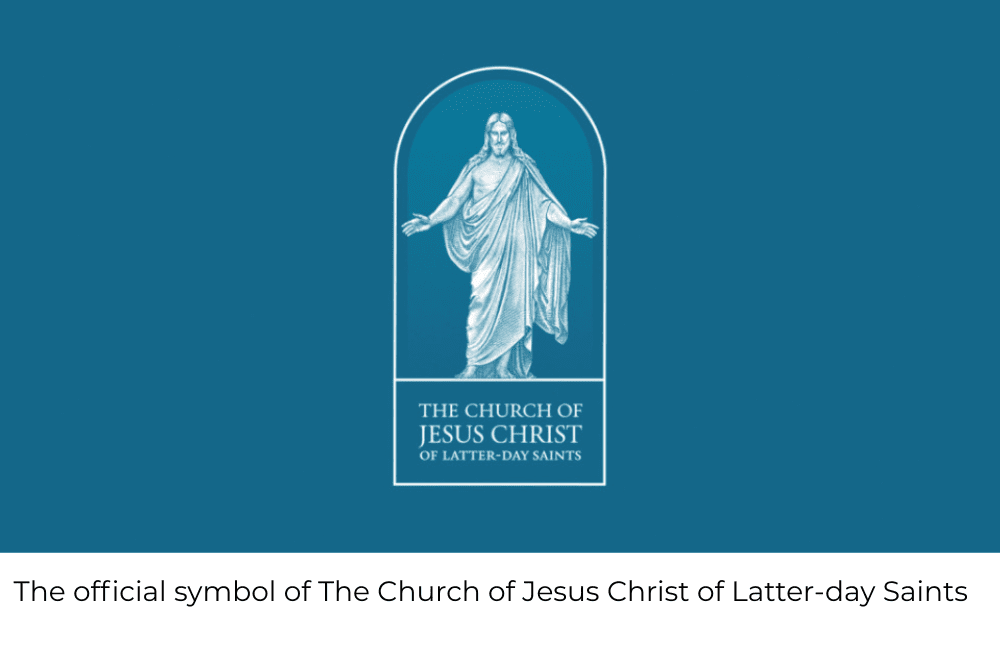
On April 17, 2026, The Church of Jesus Christ of Latter-day Saints filed a lawsuit claiming to have a legal interest in various design elements associated with Church publications, as well as the word “Mormon.” The case was filed against the Open Stories Foundation and John Dehlin, host of the Mormon Stories podcast.
This move has reminded many of us of the 2018 General Conference address by President Russell M. Nelson in which he discouraged using the word “Mormon” to refer to the Church and declared: “To remove the Lord’s name from the Lord’s Church is a major victory for Satan.” Some have wondered whether this new lawsuit contradicts President Nelson’s prophetic emphasis on using the Church’s revealed name rather than calling it the “Mormon Church.”
However, when we look carefully at the history, the prophetic counsel, and even the legal realities, a different picture emerges. The Church’s actions are not only consistent with prophetic teaching but also a natural extension of it.
The Prophetic Foundation: Nearly 50 Years of Consistent Teaching
Long before President Nelson’s 2018 address, Church leaders have been emphasizing the importance of using the correct name of the Church.
1979, President Marion G. Romney: “We, The Church of Jesus Christ of Latter-day Saints”
President Romney acknowledged that the nickname Mormon is associated with the Church and its members, but that the Lord Himself declared in Doctrine and Covenants 115:4 that the proper name of the Church is The Church of Jesus Christ of Latter-day Saints. The name carries identity, mission, and divine ownership.
1990, Elder Russell M. Nelson: “Thus Shall My Church Be Called”
Elder Nelson emphasized that removing the Savior’s name from the Church diminishes its identity and obscures its purpose. He warned that nicknames, even well-intentioned ones, can shift focus away from Christ. He reminded us of a 1982 instruction against using a nickname to refer to the Church: “We feel that some may be misled by the too frequent use of the term ‘Mormon Church’” (Member-Missionary Class, Instructor’s Guide [Salt Lake City: The Church of Jesus Christ of Latter-day Saints, 1982], p. 2).
1990, President Gordon B. Hinckley: “Mormon Should Mean ‘More Good’”
Just six months later, President Hinckley referenced the “excellent address on the correct name of the Church” delivered by Russell M. Nelson and said, “I commend to you a rereading of his talk.” President Hinckley then acknowledged the widespread use of the nickname Mormon. “I suppose that regardless of our efforts, we may never convert the world to general use of the full and correct name of the Church. Because of the shortness of the word Mormon and the ease with which it is spoken and written, they will continue to call us the Mormons, the Mormon Church, and so forth.”
He then encouraged members to live so that the name Mormon would be associated with goodness. This was an acknowledgement that the word Mormon is part of the “brand” of the Church. Like a logo, symbol, or trademark of a popular company, such as Apple, Nike, or Coca-Cola, the word Mormon is associated with The Church of Jesus Christ of Latter-day Saints and its members.
President Hinckley, therefore, urged members to protect that brand by being good examples to the world so that when people hear the word Mormon, they would associate the Church and its members with the idea of “more good.”
2010, Elder Russell M. Nelson: “Be Thou an Example of the Believers”
Many of us still remember that in 2001, the Church launched the mormon.org website, and that in 2010, it included a feature allowing members of the Church to post their profiles and testimonies of the Church. In October 2010 General Conference, Elder Nelson encouraged people to “invite friends and neighbors to visit the new mormon.org website.” He also said, “If you have blogs and online social networks, you could link your sites to mormon.org. And there you can create your own personal profile.”
Many of us still remember how in 2011, the Church launched the “I’m a Mormon” campaign, which featured members of the Church sharing stories about their lives and their faith. However, while members of the Church were identified by the nickname, “Mormons,” the Church was also careful to link the nickname to the full name of The Church of Jesus Christ of Latter-day Saints.
2011, President Boyd K. Packer: “Guided by the Holy Spirit”
For example, shortly before the launch of the “I’m a Mormon” campaign, President Packer acknowledged that the word Mormon is associated with the Church and its members: “Because of the Book of Mormon, we are frequently called the Mormon Church, a title we do not resent, but it is really not accurate.”
2011, Elder M. Russell Ballard: “The Importance of a Name”
Shortly after the launch of the “I’m a Mormon” campaign, Elder Ballard taught that names shape identity and covenant belonging. He urged members to use the full name of the Church whenever possible.
2018, President Russell M. Nelson: “The Correct Name of the Church”
In a renewed effort to encourage the use of the correct name of the Church, the Church discontinued the use of Mormon.org, and President Nelson gave his now-famous address regarding the correct name of the Church. His statement was clear: “To remove the Lord’s name from the Lord’s Church is a major victory for Satan.”
However, his emphasis was not on policing casual conversation on abandoning prior trademarks or brands associated with the Church, but on ensuring that the Church’s official identity—its name, its voice, its symbols—remain centered on Jesus Christ. Since the time the Lord Himself declared the official name of the Church in Doctrine and Covenants 115:4, the message has been consistent: The name of the Church is sacred. Protecting it is a matter of discipleship.
Why the Church Still Protects the Word “Mormon”
At first glance, it may seem contradictory for the Church to discourage the nickname “Mormon” to refer to the name of the Church while simultaneously defending the word “Mormon” in court. But legally and doctrinally, these two actions serve the same purpose: protecting the identity of the Church of Jesus Christ.
1. The Church has used “Mormon” as a trademark for nearly 200 years
When President Nelson was asked about his request that people use the correct name of the Church, and not call it the “Mormon Church,” he added that “We have to be careful to protect the name Mormon.” He elaborated by saying that the Church is not “tossing it out.” Rather, “We just want to be accurate.”
In this regard, the recent Complaint explains: “Plaintiffs have continuously used in commerce marks incorporating the term MORMON for nearly 200 years.” (Complaint, ¶15.) This includes not only the word Mormon, but also:
- Book of Mormon
- Book of Mormon Stories
- Mormon Battalion
- Mormon Handicraft
- Mormon Tabernacle Choir
- Mormon Messages
- Mormon Channel
These uses created a family of marks strongly associated with the Church. In fact, the Church owns U.S. trademark registrations for each of these words, including the word “Mormon.” (Complaint, ¶ 28.)
2. Trademark law requires the Church to defend its marks
If the Church does not protect its trademarks, including those containing the word Mormon, it risks losing exclusive rights to them. That would allow anyone to use the term in ways that imply Church endorsement or authority.
3. The Church clarified this publicly
In its Newsroom article “Getting It Right: Clarifying Trademark and Branding Concerns,” the Church explained that protecting trademarks is a legal responsibility. The Church must prevent confusion about what is and is not an official Church product or message.
In other words, the Church is not promoting the nickname Mormon. It is protecting its identity.
Why the 2026 Lawsuit Was Filed
The Complaint alleges that the defendants’ use of the name “Mormon Stories” and their adoption of a logo designed in a way that resembles the Church’s own light rays and Christus-centered imagery creates confusion about whether the podcast is affiliated with the Church.
The Complaint states that the defendants’ branding “has caused and will continue to cause individuals to be confused and access Defendants’ content mistakenly believing it comes from or is affiliated with or endorsed by the Church.” (Complaint, ¶1.)
As evidence of this confusion, the Complaint quotes numerous comments posted to the Mormon Stories Facebook and YouTube pages. For example, one person wrote, “Hi I’m confused r u for or against the mormon church.” Another added, “I subscribed to his channel immediately thinking it was church affiliated. Very purposefully deceptive.” Also, “Just last year a new convert in my ward went on to Mormon Stories, not realizing it was anti and got caught up in it. I was able to talk to her about it and she realized what was going on.” (Complaint, ¶54.)
The Complaint further notes that the defendants declined to include a simple disclaimer clarifying that their podcast is not affiliated with the Church and, after agreeing to cease using copyrighted images, “used a copyrighted image of a Church temple to advertise a podcast episode.” (Complaint, ¶2.)
Crucially, the Church emphasizes: “The Church does not seek, in any way, to influence the content of Defendants’ podcast.” (Complaint, ¶3.) This is not about silencing criticism. It is not about controlling speech. It is not about suppressing ideas. It is about preventing confusion. It is about protecting sacred symbols. It is about preserving the identity of the Church of Jesus Christ.
The Sacred Weight of Symbols: Why Protecting Trademarks Protects the Name of Christ
An organization’s brand consists of tangible and intangible elements that can affect the sense of familiarity and trust people have in the organization. This can include visual elements, such as a logo, color, or font, or things we don’t see, such as the values, purpose, and mission of the organization. These elements work together so that when you see the familiar logo, typeface, and colors of a company you trust, you can feel confident that you know what you are getting when you walk into the store or place an order online from that company.
An organization’s brand is so valuable that our laws provide it with legal protection. Many well‑known companies have gone to court to protect the colors, shapes, and text of their logos because, in trademark law, these visual elements function as powerful identifiers of the source. Think of the Disney typeface, the brown color of UPS trucks, or the McDonald’s golden arches. As these design elements become associated with an organization, the law treats them as part of the company’s identity. If another business adopts a similar look, even unintentionally, consumers may assume a connection that doesn’t exist. For that reason, companies are not only allowed but often required to defend these visual marks or risk losing exclusive rights to them.
Trademark law holds that if you do not defend a mark, you lose it. However, protecting a brand is not just about protecting your legal rights or crushing your competition; it’s about preventing confusion and preserving the integrity of what that symbol represents.
Similarly, in religious worship, symbols are not merely decorative. They are declarations of identity. The scriptures teach that the Lord’s people have always been marked, sealed, or set apart by sacred signs: The blood on the doorposts at Passover, the priestly garments of ancient Israel, the menorah, and the emblems of the sacrament, among many others. These outward symbols point to inward values, beliefs, and commitments.
The Church’s modern symbols function in much the same way. From the Christus statue to the light‑rays motif in various logos. These symbols are visual testimonies of what we believe, who we are, and whose Church this is. This is why protecting trademarks is not just about corporate image management. It is about safeguarding the sacred identity of the Church itself. When a symbol represents the Church, it represents the name of Christ. And when that symbol is misused, misappropriated, or imitated in ways that cause confusion, the name of Christ is obscured.
The 2026 Complaint makes this point clear. The Church alleges that the defendants adopted a logo “calculated to imitate the Church’s logos”, including the light‑rays design, colors, and font that has become widely associated with official Church materials. The concern is not aesthetic similarity. It is spiritual confusion. When a symbol that represents the Church is used in a context the Church did not authorize, the public may reasonably, but incorrectly, assume that the message is the Church’s message.
President Nelson’s 2018 teaching that removing the Savior’s name from the Church is “a major victory for Satan” applies not only to the official name of the Church, but to the misuse of the symbols we trust that are associated with the Church, such
as the logos, fonts, and even the word “Mormon.” If the Church’s identifiers can be replicated freely, then anyone can speak in the Church’s voice, borrow its authority, or cloak their message in its familiar and trusted imagery.
Protecting the colors, typeface, images, and even nicknames associated with the Church is therefore not a contradiction of prophetic counsel. It is a fulfillment of it. It is one more way the Church ensures that when people encounter its symbols, they encounter the teachings and authority of Jesus Christ, not a counterfeit, not a confusion, not a competing voice. In a world of noise, clarity is a form of discipleship.
The Larger Principle: Clarity in a Confusing World
In a world overflowing with voices, some faithful, some critical, some misleading, the Church has a responsibility to ensure that members and seekers can: “identify, recognize, and trust materials created or authorized by the Church.” (Complaint, ¶4.) This is not merely a legal concern. It is a spiritual one. When the identity of the Church becomes blurred, the identity of Christ becomes blurred. When the voice of the Church becomes confused with other voices, the voice of Christ becomes harder to hear. Protecting trademarks is simply one way the Church protects the clarity of its witness.
A Call to Clarity
Legal disputes can easily become sources of division, misunderstanding, or suspicion. Disciples of Christ are invited to:
- Seek understanding before judgment
- Value clarity over confusion
- Honor the name of Christ in all we do
- Avoid contention, and
- Remember that the Church’s identity is not just a brand. It represents sacred covenants
As explained in the Church press release regarding the suit, “In November 2025, the Church contacted Open Stories Foundation privately about concerns with its branding. The goal was to resolve the matter privately and amicably. The Church then engaged in good-faith mediation and proposed several options to reduce confusion while minimizing disruption.
When those efforts did not result in resolution, the Church filed a complaint in federal court to protect its intellectual property.” The Church’s efforts to protect its name, its symbols, and its trademarks are ultimately efforts to protect the name of Jesus Christ, which stands at the center of our faith.
Conclusion: The Name and Symbols We Bear
When we were baptized, we took upon ourselves the name of Jesus Christ. When we partake of the sacrament, we renew that covenant. When we speak of His Church, we speak of His name. Protecting the symbols associated with that name legally, doctrinally, and spiritually is not a contradiction. It is a sacred stewardship.
The Church’s recent legal actions, far from conflicting with prophetic teaching, reflect nearly fifty years of consistent counsel: Honor the name the Lord has given His Church. Protect it. Defend it. Cherish it. This includes the symbols that represent His name and His Church. For in doing so, we honor Him whose name it bears.
Currents: Church Trademark Lawsuit; Missionary Hero in Samoa; Ben Sasse on Dying and More

Catch the current. Here’s some of the news, views and perspectives that particularly impact Latter-day Saints and their values. This kind of news has no slow weeks.
One
Ex-Member John Dehlin of “Mormon Stories” Walked Away from Mediation with the Church over “Unreasonable Demands”

The Church of Jesus Christ of Latter-day Saints has just released a statement: Getting It Right: Clarifying Trademark and Branding Concerns https://newsroom.churchofjesuschrist.org/article/getting-it-right-clarifying-trademark-branding-concerns that tells the story of failed legal mediations with John Dehlin of the Open Stories Foundation and the “Mormon Stories” podcast which the church has now filed in court as a trademark and copyright complaint.
The Church reports:
In November 2025, the Church contacted Open Stories Foundation privately about concerns with its branding. The goal was to resolve the matter privately and amicably.
The Church then engaged in good-faith mediation and proposed several options to reduce confusion while minimizing disruption. When those efforts did not result in resolution, the Church filed a complaint in federal court to protect its intellectual property.
Why does this matter?
The Church holds registered trademarks and copyrights so people can clearly identify what is and is not official Church communication. Names, logos, and visual design elements help people know when content represents the Church.
This case concerns branding choices that incorporate Church-protected names and design elements in ways that may lead people to believe the podcast is produced by or affiliated with the Church when it is not.
Why was mediation unsuccessful?
The primary issue is ongoing confusion about whether “Mormon Stories” is affiliated with the Church. To address that, the Church proposed a simple solution: a brief disclaimer that the podcast is not affiliated with or endorsed by The Church of Jesus Christ of Latter-day Saints. This is a common and straightforward way to help audiences understand the source of content. That step was not adopted. As a result, the likelihood of confusion remains, and the church moved forward to protect its trademarks.
The “Mormon Stories” podcast has been a long parade of people telling their complaints and concerns about the Church, but the Church’s issue legally here is not about the content, which the podcast is free to continue, but the misuse of the church’s own trademarks, colors and logos which are an infringement.
It appears this the solution proposed by the Church was minor, not “unreasonable”, but it now will be in the hands of the court.
Two
Missionary Hero Died Saving Five Children https://pacific.churchofjesuschrist.org/missionary-hero

It’s been seven months since his death, and missionary Elder Aaron Ahkau Matapa Patiole is still remembered as a hero in the island of Samoa.
Aaron Ahkau Matapa Patiole, from Sydney Australia, had been on his mission in Apia, Samoa for eleven months before he was struck by a car and killed.
The 21-year-old was walking along a street with his companion, helping five children return home on a Sunday afternoon last November.
Elder Patiole pushed the children to safety over a fence to his companion, to avoid a swerving car. On this day, Elder Patiole returned to his Father in Heaven.
A week later, the five children and their family were baptised by Elder Patiole’s companion, Elder Timoteo from California.
At Aaron’s funeral more than 1,000 people crowded into the church and then he was laid to rest in the Cawdor near his home in Australia.
Each day, Aaron’s mother Sister Patiole travels to Cawdor before sunset to visit the resting place of her son. This sweet woman waits for the sunset to fall over where he is laid; a poignant and beautiful reminder that as Sister Patiole commented “he is in a better place. And we’ll see him again as we understand the Plan of Salvation.”
Three
High Ranks for Utah and also for BYU Law School

The Deseret News reported, “Utah ranked No. 1 in country for economic outlook. Here’s what lawmakers say is secret to success” https://www.deseret.com/politics/2026/04/15/utah-economy-leading-tax-day/
Utah had an especially high rating because of its “pro-taxpayer reforms in recent years,” the report found, such as the adoption of a flat personal income tax rate, pension reform, and “an innovative approach to property tax reform.”
“The thing that we know works and helps keep Utah’s economy going and flowing and creating those opportunities for our citizens, is a low tax rate,” Utah House Speaker Mike Schultz said on Wednesday. “It almost didn’t happen this year because we didn’t have the revenue that we’ve seen over the last five or six years. But what did we do? We stepped in and we evaluated every dollar spent in the state of Utah, and we were actually able to go in, reduce the inefficiencies, take and reallocate funds to areas where it was more efficient, and freed up additional money to where we could have a tax cut this year.”
BYU Cracks Another Top-25 Poll https://www.deseret.com/utah/2026/04/13/byu-university-of-utah-law-school-ranking/
The national polls have been familiar homes for Brigham Young University over the past year.
Both the Cougar football and men’s basketball teams were mainstays in the recent rankings. And now BYU is once again listed among the nation’s top 25 — albeit in areas of torts and civil procedure rather than touchdowns and jump shots.
BYU’s J. Reuben Clark Law School is ranked No. 24 in the U.S. News & World Report’s 2026 Best Law Schools survey.
Four
Ben Sasse Teaches us All How to Die https://www.deseret.com/faith/2026/04/13/ben-sasse-cancer-faith/

How do you live when you know you are dying? Ben Sasse, 54, former Republican senator from Nebraska and president of the University of Florida was diagnosed with Stage 4 pancreatic cancer, in December. According to the Deseret News, he wrote on X: “Advanced pancreatic is nasty stuff; it’s a death sentence. But I already had a death sentence before last week too—we all do.”
In a podcast with New York Times writer, Ross Douthat, Sasse shared his thoughts:
The most moving part of the conversation, in my view, came at the very end when Douthat asked Sasse if he was angry at God for the health challenge he’s up against. Sasse responded that he wasn’t. “Not at all?” Douthat probed further. Sasse continued:
“No. I wouldn’t want a sovereign God to defer to all of my prayers with a yes. I’m not omniscient. I don’t know what the weaving together of the tapestry of full redemption should look like, but I know going through the period of suffering that I’m going through is a benefit because it is a winnowing.”
“I’m filled with dross,” Sasse continued. “This suffering is not salvific, but it’s sanctifying, and I’m grateful for it.” Later he said he was “grateful that cancer is a stake against my delusional self-idolatry.”
Five
With just 2% of the U.S. population, how did Latter-day Saints take over your Instagram feed? https://www.yahoo.com/lifestyle/family-relationships/article/mormons-are-just-2-of-the-us-population-so-how-did-they-take-over-your-instagram-feed-120000045.html
This question has been popping up in numerous media stories, and while we think they miss on several of their answers, this much is obvious. For good or ill, Latter-day Saints produce a plethora of social media influencers who grab big audiences.
The reason for their popularity can be debated, but it may be that the presence of some of these moms and families that appear answer some longing for or fascination with a world that is quietly disappearing—especially intact families that focus on raising their children.
This article points to the need for perfectionism in our culture that stems from a past of being persecuted.
Their early history of persecution is the reason the Church became so invested in the appearance of perfection, according to John Dehlin, a member who runs the popular podcast Mormon Stories, which vows to help listeners grapple with hard truths about the history of Mormonism. “We were tired of being the laughingstock of America,” says Dehlin. “We were literally targeted by the federal government. I think what we did [in response] is we became the all-American church.”
Perfection became an unofficial doctrine of the Mormon faith. When we think of Mormons now, we often think of the perfect family: a mother and father and many beautiful children who are all dressed in color-coordinated outfits. In the Mormon religion, there is a premium placed upon the pursuit — and attainment — of perfection, especially in the family sphere.
Six
Justice Clarence Thomas Warns Progressivism is a Threat to America https://www.foxnews.com/politics/justice-thomas-warns-progressivism-threat-democracy-rare-public-remarks
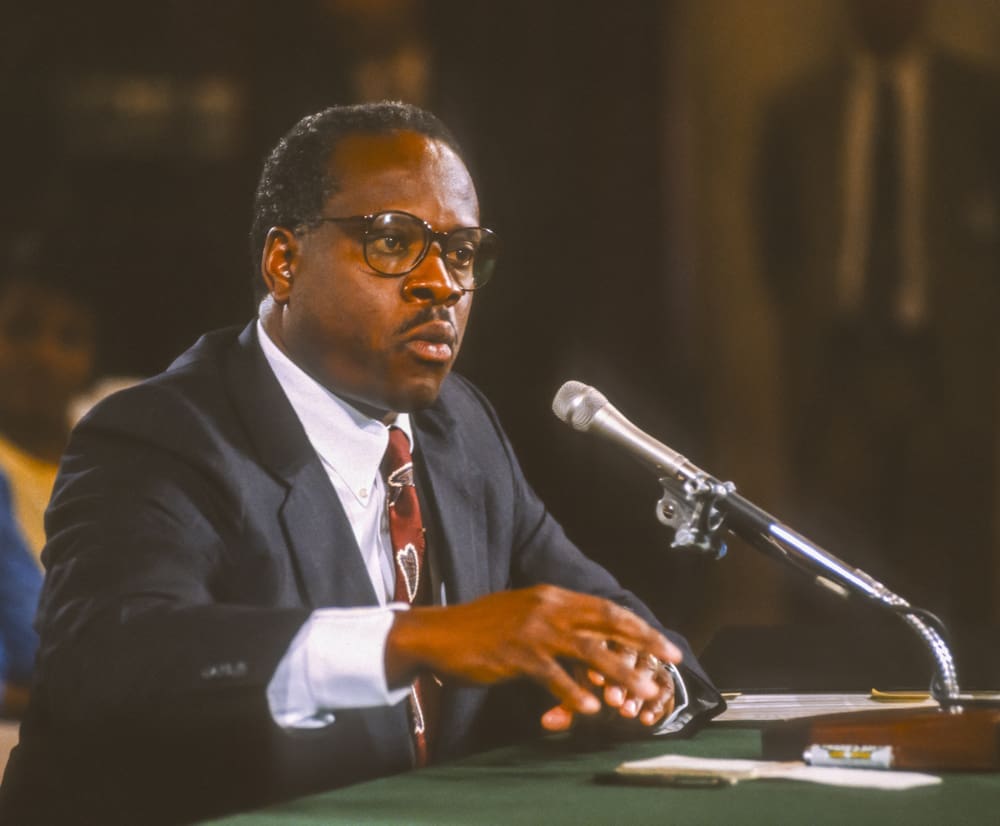
In a rare public address, Supreme Court Justice Clarence Thomas, the longest serving justice, gave a fiery critique of modern progressivism as he addressed a packed auditorium at the University of Texas at Austin.
He said Wednesday that values embraced by the nation’s founders have “fallen out of favor” in recent decades and urged younger generations to stand up for their principles.
“I think if we don’t stand up and take ownership of our country, and take responsibility for it, we are slowly letting others control how we think and what we think,” he told the audience. Progressivism seeks to replace the basic premises of the Declaration of Independence, and hence our form of government,”
It holds that our rights and our dignities come not from God, but from the government,” Thomas said. “It requires of the people a subservience and weakness incompatible with a Constitution premised on the transcendent origin of our rights.”
FEATURES