





Becoming Brigham Episode 9 – A Place of Revelation
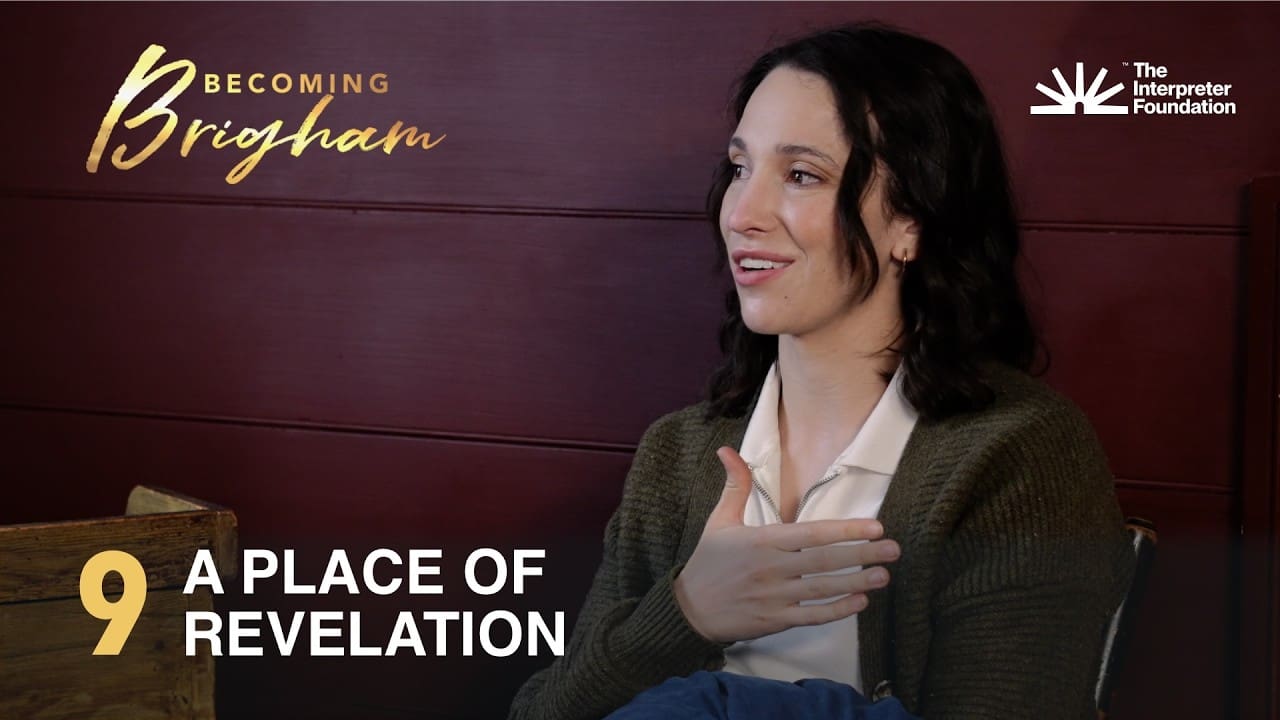
Sometimes humble settings and ordinary people set the stage for extraordinary spiritual experiences. While discussing Brigham Young’s surprising interactions with the prophet Joseph Smith, our hosts explore the historic Newell K. Whitney store. This original 1830s building became far more than a community store. It served as the Church’s headquarters, Joseph and Emma’s home, and the setting for the School of the Prophets.

Becoming Brigham, Episode 6—Young Brigham Young, Part One

We tend to think of Brigham Young as the stern-faced old man from the few existing photos. But what was he like during his formative years? Our hosts explore this question, and Camrey interviews Susan Easton Black to get the historian’s perspective on the young Brigham.
Becoming Brigham, Episode 4: Why Brigham Young?

Is there any purpose to revisiting the life and times of Brigham Young? Don’t we already know everything there is to know about this sometimes-controversial historical figure? Camrey, Dan and John are joined in a roundtable discussion by Matt Grow, who is the managing director of the Church History Department.

Come Follow Me Podcast #44: “A Voice of Gladness for the Living and the Dead”, Doctrine and Covenants 125-128

Scot
As the Restoration of the Fulness of the Gospel continued to unfold in the early 1840’s, one revealed doctrine thrilled the Latter-day Saints beyond imagination. Yes, there were some references to this doctrine in the Holy Bible, but no Christian denomination at that time understood it, and none practiced it. When the Prophet Joseph first made public this amazing truth on Saturday, August 15, 1840, many of the Saints present were so excited, they immediately ran to the Mississippi River to begin the practice. And what is this doctrine? Baptism for the Dead. Today we’ll talk about this glorious truth in detail.
Maurine
Welcome to Meridian Magazine’s Come Follow Me Podcast. We are Scot and Maurine Proctor and we are so happy to be with you again this week. Before we start, let’s remind you that we have created a beautiful Come Follow Me wall calendar for next year’s study of the Old Testament. Each page is a stunning photograph from the Old Testament lands, inviting you scene-by-scene into an ancient world where our favorite biblical stories happened. And week by week the Come Follow Me study lessons are shown to help you keep track of your studies. It’s just a beautiful and significant gift and perfect for all the people you love this Christmas. See it at latterdaysaintmag.com/2026, that’s latterdaysaintmag.com/2026.
Welcome to Meridian Magazine’s Come Follow Me Podcast. We are Scot and Maurine Proctor and we are delighted to be with you again this week as we give our 145th Podcast. We love being with you each week and are excited to cover sections 125 through 128 of the Doctrine and Covenants today with the lesson entitled “A Voice of Gladness for the Living and the Dead.”
As many of you know, Scot has created what he calls The Kirtland Diary for Thoughts and Personal Revelation. This provides daily space to write down thoughts and ideas, insights, revelation or just appointments and birthdays. You have to know that Scot has been passionate about photo-documenting the Church History sites for all of his adult life. He has pulled out all the stops on The Kirtland Diary and given his warmest, best, most moving pictures of Kirtland and Hiram, Ohio. This is a perfect gift for children, grandchildren, ministering families and just friends on your gift-giving list. Come and see The Kirtland Diary at latterdaysaintmag.com/Kirtland that’s simply latterdaysaintmag.com/Kirtland
Scot
In order to understand the coming forth of this most wonderful doctrine of salvation for the dead, we first have to go back in time about 17 years—to the late fall of 1823. As you well remember, some six weeks after young Joseph was told about the plates by the Angel Moroni, Alvin, Joseph’s oldest brother and dearest friend, took ill and within a short time he passed away. He left the family devastated by his absence. They could hardly look upon his place at the table without bursting into tears. And what hurt even more, the Presbyterian minister said at his funeral that because Alvin had not been baptized, he would be forever damned. All of this combined caused Lucy Mack Smith to write:
“Thus was our happiness blasted in a moment. When we least expected the blow, it came upon us. The poisoned shaft entered our very hearts’ core and diffused to deadly effect throughout our veins. We were for a time almost swallowed up in grief, so much so that it seemed impossible for us to interest ourselves at all about the concerns of life.” (Revised and Enhanced History of Joseph Smith by His Mother, Edited by Scot Facer Proctor and Maurine Jensen Proctor, Bookcraft, Salt Lake City, 1996, p. 119.)
Maurine
The Prophet Joseph later wrote: “Alvin, my oldest brother—I remember well the pangs of sorrow that swelled my youthful bosom and almost burst my tender heart when he died. He was the oldest and noblest of my father’s family. He was one of the noblest of the sons of men. Shall his name not be recorded in this book [the Book of the Law of the Lord]?” (Ibid, p. 120)
Now, fast forward to January 21, 1836, when, on that occasion in his office on the third floor of the Kirtland Temple, Joseph was shown a vision of the celestial kingdom.
2 I saw the transcendent beauty of the gate through which the heirs of that kingdom will enter, which was like unto circling flames of fire;
3 Also the blazing throne of God, whereon was seated the Father and the Son.
4 I saw the beautiful streets of that kingdom, which had the appearance of being paved with gold.
5 I saw Father Adam and Abraham; and my father and my mother; my brother Alvin, that has long since slept;
6 And marveled how it was that he had obtained an inheritance in that kingdom, seeing that he had departed this life before the Lord had set his hand to gather Israel the second time, and had not been baptized for the remission of sins. (D&C 137 2-6)
Scot
And you can see that this experience began to open Joseph’s heart and mind to the doctrine that was revealed to him and made public by him just four years later. In the 1836 vision the voice of the Lord said:
7 … All who have died without a knowledge of this gospel, who would have received it if they had been permitted to tarry, shall be heirs of the celestial kingdom of God; (D&C 137:7)
As Joseph continued to study the scriptures and to ask the Lord questions, this doctrine and ordinance would be restored.
Now, for you and me, this doctrine is quite easy to understand and we can look at it logically through the scriptures. 1) The worth of souls is great in the sight of God (see D&C 18:10) and 2) no unclean thing can enter the Father’s presence (See 1 Nephi 10:21; Alma 11:37; Alma 40:26; 3 Nephi 27:19; and Moses 6:57, for example) and 3) baptism, which makes one clean, is required for entrance into the heavenly kingdom of God for all who have reached the age of accountability or who are capable of sin in all ages of the world, and 4) untold millions and billions of our Heavenly Father’s children have gone to the grave without having been baptized by one who has the proper authority and many of these have never heard of Jesus Christ.
Maurine
As President Joseph Fielding Smith taught: “Baptism is literally, as well as a figure of the resurrection, a transplanting, or resurrection from one life to another—the life of sin to the life of spiritual life.” (Teachings of the Presidents, Joseph Fielding Smith, Chapter 13, p. 173)
And ALL (except for little children and those not capable of sin) must receive this ordinance.
What happens to all the untold billions of our Heavenly Father’s children who died knowing nothing of Jesus or of His sacred ordinances? Are they all to be forever damned as the preacher said of Alvin Smith?
Of course not!
And, of course, we have this wonderful passage in 1 Corinthians, chapter 15 verse 29:
29 Else what shall they do which are baptized for the dead, if the dead rise not at all? why are they then baptized for the dead?
Scot
Maurine, I have to cut in here for a couple of footnotes to what we’re saying. I wanted to see what the Christian world says about this verse in 1 Corinthians. What do their brightest and most notable say in their commentaries? Here are some few explanations they give.
This one is from Matthew Henry’s Concise Commentary on the Bible:
“Perhaps baptism is used here in a figure, for afflictions, sufferings, and martyrdom…What is, or will become of those who have suffered many and great injuries, and have even lost their lives, for this doctrine of the resurrection, if the dead rise not at all? Whatever the meaning may be, doubtless the apostle’s argument was understood by the Corinthians.”
And here’s an explanation from Barnes Notes on the Bible:
“There remain two other opinions, both of which are plausible, and one of which is probably the true one. One is, that the word baptized is used here as it is in Matthew 20:22-23; Mark 10:39; Luke 12:50, in the sense of being overwhelmed with calamities, trials, and sufferings; and as meaning that the apostles and others were subjected to great trials on account of the dead, that is, in the hope of the resurrection; or with the expectation that the dead would rise.”
Maurine
In Meyer’s New Testament Commentary he wrote:
Luther’s explanation, adopted again recently by Ewald and others, that “to confirm the resurrection, the Christians had themselves baptized over the graves of the dead…
And the Benson Commentary states:
“[S]ome, “In token of their embracing the Christian faith in the room of the dead, who are just fallen in the cause of Christ, but are yet supported by a succession of new converts, who immediately offer themselves to fill up their places, as ranks of soldiers that advance to combat in the room of their companions, who have just been slain in their sight.”
And the Bibleref.com site finishes the confusion with this commentary:
“Nothing in any of Paul’s writings, or elsewhere in the Bible, suggests there is value in being baptized on behalf of another person, living or dead. The New Testament is clear that individuals are responsible to God for their own sin and their own personal faith in Christ for the forgiveness of that sin.”
Scot
Now, let’s hear from Elder Bruce R. McConkie’s commentary on this same verse:
“Based on the eternal principle of vicarious service, the Lord has ordained baptism for the dead as the means whereby all his worthy children of all ages can become heirs of salvation in his kingdom. Baptism is the gate to the celestial kingdom, and except a man be born again of water and of the Spirit he cannot gain an inheritance in that heavenly world. (John 3:3-5.) Obviously, during the frequent periods of apostate darkness when the gospel light does not shine, and also in those geographical areas where legal administrators are not found, hosts of people live and die without ever entering in at the gate of baptism so as to be on the path leading to eternal life. For them a just God has ordained baptism for the dead, a vicarious-proxy labor. (D&C 124:28-36; 127; 128; 1 Cor. 15:29)” (Mormon Doctrine, 2nd ed., p. 73.)
“Baptism for the dead is thus one of the signs of the true Church. Where a people have the knowledge of this doctrine, together with the power and authority from God to perform the saving ordinances involved, there is the Church and kingdom of God on earth; and where these are not, there the Church and kingdom of God is not.” (McConkie, Bruce R., Doctrinal New Testament Commentary, Volume 2, p. 395)
Maurine
This all brings us back to the very next verse in 1 Corinthians, just eight words:
30 And why stand we in jeopardy every hour? (1 Corinthians 15:30)
We know that God’s work and His glory is to bring to pass “the immortality and eternal life of man.” (See Moses 1:39) We know that He will do everything possible to offer salvation without money or price to all who will accept the Savior Jesus Christ and follow His commandments and ordinances.
Scot
Now, fast forward to Saturday, August 15, 1840. We talked last week about the conditions in Nauvoo in those early days. There were mosquito-infested swamps in the Nauvoo Flats and many people were dying of malaria. Seymour Brunson, a personal friend of the Prophet Joseph, had passed away.
“At the funeral, Joseph offered words of comfort to Seymour’s widow, Harriet, and the thousands of Saints in the congregation. As he spoke, he looked at Jane Neyman, whose teenage son Cyrus had died before being baptized.
“Knowing that Jane was worried about the welfare of her son’s soul, Joseph decided to share what the Lord had taught him about the salvation of those, like his own brother Alvin, who had died without baptism.
Maurine
“Opening the Bible, Joseph read the words of the apostle Paul to the Corinthians: “Else what shall they do which are baptized for the dead, if the dead rise not at all? Why are they then baptized for the dead?” He noted that Paul’s words were evidence that a living person could be baptized vicariously for a deceased person, extending the benefits of baptism to those who were dead in body but whose spirits lived on.
“Joseph said God’s plan of salvation was designed to save all those who were willing to obey the law of God, including the countless people who had died never knowing about Jesus Christ or His teachings.
“Shortly after the sermon, Jane went to the river with an elder of the church and was baptized for Cyrus. When Joseph heard about the baptism later that evening, he asked what words the elder had used in the ordinance. When they were repeated back to him, Joseph confirmed that the elder had performed the baptism correctly.” (Saints, The Story of The Church of Jesus Christ in the Latter Days, Volume 1, The Standard of Truth, 1815-1846, Chapter 35, pp. 421-22)
Scot
What’s wonderful about this scene is the not only the faith of Harriet Brunson and Jane Neyman, but hundreds of others, in the next few days, enthusiastically went to the river and in some cases RAN to the river, to be baptized in behalf of their beloved ancestors, parents, children or brothers and sisters who had died not receiving the ordinance of baptism in this life.
And, Maurine, one of the most touching of these is Emma herself. She went down to the river and was baptized for her precious older sister, Phoebe Elizabeth Hale. Phoebe had married Denison Root in 1819 and then given birth to eight children. They were married 17 years, then Phoebe passed away on Christmas Day in 1836 just eleven months after her youngest child’s birth. In many ways, this may have been Emma’s “Alvin Experience” and weighed upon her. So, with great delight she was baptized by one who had authority for and in behalf of her dear Sister, Phoebe. And numerous stories could be told about others who joyfully performed this ordinance in behalf of loved ones who had passed.
Maurine
Now, you can imagine with so many Latter-day Saints going down to the river or to nearby streams and performing these baptisms for the dead, that the possibility of poor record keeping or having no witnesses might become an issue—and it did. By January of 1841, just five months after that first public announcement of the doctrine, Joseph received a revelation that baptisms for the dead were intended to be performed only in temples. This presented a challenge because the Nauvoo Temple would not be fully completed and dedicated until May 1, 1846 when most of the Saints would have already left the city to go west.
At that October, 1841 conference—what we would call General Conference—the prophet announced that no further baptisms were authorized until the font in the Nauvoo Temple was completed. The Saints went to with their might. They installed a beautiful hand-carved wooden font in the temple’s basement, enclosed by a temporary frame structure. Brigham Young dedicated the baptismal font in a public meeting on Monday, November 8, 1841. Thousands of proxy baptisms would be performed here before the entire temple was dedicated.
Scot
With any new doctrine or practice or ordinance in this dispensation, there is often instruction, commentary and explanation that follows. In the midst of all this excitement, look at the Chronology a little more closely to understand the context of this revelation [we can ad hoc some more details as needed]:
15 August 1840
Baptism for the Dead is taught publicly at Seymour Brunson’s funeral.
14 September 1840
Joseph Smith, Sr. passes away.
16 December 1840
Charter for the city of Nauvoo, the Nauvoo Legion and university is granted
4 Feb 1841
Joseph is commissioned Lt-General of the Nauvoo Legion
6 Apr 1841
The Cornerstone is laid for the Nauvoo Temple
Maurine
4 June 1841
Joseph is arrested on old Missouri charges
9 June 1841
Two-day trial begins at Monmouth, Illinois before Judge Stephen Douglas
7 Aug 1841
Don Carlos, Joseph’s younger brother, passes away at age 25.
15 Aug 1841
Joseph and Emma’s 14-month-old son, Don Carlos, passes away.
8 Nov 1841
The baptismal font is dedicated in the Nauvoo Temple
Scot
6 Feb 1842
Emma and Joseph have a stillborn son.
17 Mar 1842
The Female Relief Society of Nauvoo is organized with Emma as President
4 May 1842
The Temple Endowment is first introduced in this dispensation
6 May 1842
An assassination attempt on former Governor Lilburn W. Boggs in Missouri leads to accusations of Joseph Smith and Orrin Porter Rockwell
19 May 1842
Joseph is elected Mayor of Nauvoo
Maurine
8 Aug 1842
Joseph is arrested for alleged complicity in the Boggs assassination attempt
Later August 1842
Joseph goes into hiding
1 Sept 1842
Joseph writes an epistle while in hiding which becomes Section 127
6 Sept 1842
Joseph writes a second epistle to the Saints, in hiding, which becomes Section 128
And we could fill events and happenings between every line we have just reviewed. The work on the Nauvoo Temple was accelerating. The Twelve were in England much of this time and their many converts began arriving in Nauvoo—at first many families at a time, and then a steady flow of hundreds at a time. Nauvoo was becoming a bustling city that rivaled Chicago in size.
Scot
And the Lord, in His infinite mercy and wisdom, was providing the saving ordinances to not only the Living, but also to those who had passed beyond the veil. Jesus Christ continued to give aid and comfort and revelation to the prophet Joseph.
2 “And as for the perils which I am called to pass through,” Joseph wrote to the Saints, “they seem but a small thing to me, as the envy and wrath of man have been my common lot all the days of my life; and for what cause it seems mysterious, unless I was ordained from before the foundation of the world for some good end, or bad, as you may choose to call it. Judge ye for yourselves. God knoweth all these things, whether it be good or bad. But nevertheless, deep water is what I am wont to swim in. It all has become a second nature to me…
3 Let all the saints rejoice, therefore, and be exceedingly glad; for Israel’s God is their God, and he will mete out a just recompense of reward upon the heads of all their oppressors.
Maurine
Here’s a quick note, something to pay attention to in your studies of the Prophets of the Church. Notice verse 1 in section 128:
1 As I stated to you in my letter before I left my place, that I would write to you from time to time and give you information in relation to many subjects, I now resume the subject of the baptism for the dead, as that subject seems to occupy my mind, and press itself upon my feelings the strongest, since I have been pursued by my enemies. (D&C 128:1, emphasis added)
Whenever you hear the President of the Church use these kinds of words, like occupying his mind or pressing feelings—you can expect revelation.
Joseph would give us all the ordinances and instructions for the temple during this 1842 to 1844 period.
Scot
Here’s President Spencer W. Kimball during his first conference, during a training session of the Regional Representatives, April 4, 1974:
“Now, all of you have much to do with the missionary work of the Church in stakes or missions. May I now discuss with you some of the things which have been uppermost in my mind.” (As reported in the October 1974 Ensign, When the World Will Be Converted)
President Kimball became known for his constant push of missionary work and taking the Gospel to all the world.
And from President Russell M. Nelson, listen carefully:
“One of the things the Spirit has repeatedly impressed upon my mind since my new calling as President of the Church is how willing the Lord is to reveal His mind and will. The privilege of receiving revelation is one of the greatest gifts of God to His children.” (Revelation for the Church, Revelation for our Lives, April 2018, General Conference)
Look how he has since asked us to learn how to Hear Him and to seek for and receive personal revelation.
Maurine
Back to Nauvoo. When news of the assassination attempt of former Governor Lilburn W. Boggs reached Nauvoo and Joseph’s ears about May 14, 1842, things became more tense than ever. The initial suspect in the shooting was a silversmith named Tompkins in Independence, Missouri, but guess who stepped in to make sure Tompkins was acquitted? A citizens committee headed by one General Samuel D. Lucas—the same notorious man in Far West who had sentenced Joseph Smith and his companion prisoners to be shot in the town square the next morning.
Now Scot, let’s put all this in further context to gain a greater understanding of the Prophet Joseph in these last years of his life in Nauvoo before the Martyrdom. I think sometimes we, as tourists, go to Nauvoo and we do the pioneer games with our children, we take a carriage ride and hear stories of faith, we see the Temple upon the hill overlooking the horseshoe bend of the river and we get such a picture of peace and calm and serenity and the perfect retreat for the Latter-day Saints.
Scot
Right! But from the middle of May, 1842 on to the end of his life, add this truth to your imagination: Because of the constant prowl of Missourians and ne’er do wells who wanted to arrest Joseph or kidnap him and take him over the river to Missouri—remember, Missouri is just over 12 miles downriver—Joseph was seldom walking the streets of Nauvoo without ten, twenty or even thirty armed guards around him. His life was always threatened and his bodyguards were there to keep him safe.
And David Kilbourne, the postmaster directly across the river at Montrose, Iowa, sent a letter to Governor Thomas Reynolds of Missouri, saying: “that he “should not entertain a doubt that [the assassination attempt] was done by some of Joe’s minions at his instigation.”
Maurine
And the former Mayor of Nauvoo and member of the Church, John C. Bennett, had been excommunicated for immoral behavior and now had turned actively and aggressively against Joseph and the Church. He began to publish false claims against the Prophet and against Porter Rockwell starting rumors that spread far and wide very quickly. All of this combined to make things extremely dangerous for Joseph. By the first of August, 1842, warrants were issued by Governor Carlin of Illinois for Joseph Smith and Porter Rockwell. Adams County undersheriff, Thomas King, and his men arrived in Nauvoo on August 8 to make the arrests. Joseph had been arrested by Thomas King the year before and had been acquitted by Circuit Court Judge Stephen A. Douglas. On this round, Joseph was saved by a writ of habeas corpus under authority of the city charter of Nauvoo.
Habeas corpus is a recourse in law through which a person can report an unlawful detention or imprisonment to a court and request that the court order the custodian of the person, usually a prison official, to bring the prisoner to court, to determine whether the detention is lawful. In this case, it probably saved Joseph’s life—and it enraged Governor Carlin who felt undermined by a city charter over his executive office.
Scot
So, you can see with all this going on and attempts of extradition of Joseph to Missouri, he had to make a careful plan. As author Morris Thurston relates in a BYU Studies article: “On August 11, [Joseph] called an unusual council meeting after nightfall on a small island in the Mississippi River between Nauvoo and Montrose, Illinois. His wife Emma, his brother Hyrum, and other Church leaders and Mormon lawmen, including Newell K. Whitney, George Miller, William Law, William Clayton, and Dimick Huntington, set off from the Nauvoo shore in a skiff. Shortly after they arrived on the island, Joseph Smith and Erastus H. Derby arrived in a skiff from the Iowa side. There in the darkness they discussed the state of affairs and what to do about them. Judge James H. Ralston of Quincy, Illinois, and lawyer Stephen W. Powers of Keokuk, Iowa, were nearby, having promised to stay vigilant and to provide legal assistance on both sides of the river as needed by the Mormon prophet.”
Joseph determined to go into hiding. This helps you understand the first sentence in Section 127:
1 Forasmuch as the Lord has revealed unto me that my enemies, both in Missouri and this State, were again in the pursuit of me; and inasmuch as they pursue me without a cause, and have not the least shadow or coloring of justice or right on their side in the getting up of their prosecutions against me; and inasmuch as their pretensions are all founded in falsehood of the blackest dye, I have thought it expedient and wisdom in me to leave the place for a short season, for my own safety and the safety of this people.
Maurine
Joseph went into hiding for a number of weeks. He had a secret, hidden room for emergencies beneath his own dining room in the old homestead where his family was living at the time. But he would spend time in various safe houses and locations in Latter-day Saint communities in Illinois and Iowa and in the attic of Edward Hunter’s home in Nauvoo. Edward and Ann Hunter’s home was located just below the temple construction site on the slope coming down from “the bluff” to “the flats” of Nauvoo.
Remember, this is hot, humid Nauvoo where the temperatures can soar to over 100 degrees and the humidity be 95 – 99%. This is late August and early September. Joseph is hiding in the attic of the Hunter’s home. Where does all the heat of the house go in a setting like that? To the basement? No! To the attic. So, amidst all the strife and the possees coming after Joseph and the fear for his own safety and being separated from his precious family, he writes the following words:
22 Brethren, shall we not go on in so great a cause? Go forward and not backward. Courage, brethren; and on, on to the victory!
Isn’t that just stunning?! In that setting—he calls for courage and reminds us of this great cause.
Scot
Maurine, you know this, but when we took our four grandsons this past June to Nauvoo, this was our morning and evening ritual after our prayers with them. We put our hands all in at once and then folded them together like a cinnamon roll and said, “Shall we not go on in so great a cause?!” This really bound us together.
And I have to say, it would be hard for any person to not be discouraged or at least extremely worried in the circumstances he found himself in, but then look what he does: He reviews some of the major blessings of the unfolding restoration:
20 And again, what do we hear? Glad tidings from Cumorah! Moroni, an angel from heaven, declaring the fulfilment of the prophets—the book to be revealed.
[so there he reminds us of the coming forth of the Book of Mormon, given to Joseph by an angel of the Lord]
A voice of the Lord in the wilderness of Fayette, Seneca county, declaring the three witnesses to bear record of the book!
[There’s the reminder of the fulfillment of prophecies that three witnesses would be shown the plates by heavenly means and that this, indeed, did take place.]
Maurine
The voice of Michael on the banks of the Susquehanna, detecting the devil when he appeared as an angel of light! The voice of Peter, James, and John in the wilderness between Harmony, Susquehanna county, and Colesville, Broome county, on the Susquehanna river, declaring themselves as possessing the keys of the kingdom, and of the dispensation of the fulness of times!
[This was the reference to the restoration of the Melchizedek Priesthood and the apostolic keys being given by the ancient apostles and that Satan was thwarted by Mighty Michael himself to stop it]
21 And again, the voice of God in the chamber of old Father Whitmer, in Fayette, Seneca county, and at sundry times, and in divers places through all the travels and tribulations of this Church of Jesus Christ of Latter-day Saints!
[That’s a fascinating reference to something we do not know about: the voice of God in the chamber of old Father Whitmer. And he says it quite casually like Amulek in the Book of Mormon who, when he introduces himself, talks of his ancestor, Aminadi, “and it was that same Aminadi who interpreted the writing which was upon the wall of the temple, which was written by the finger of God.” (Alma 10:2) What?! We know nothing about this story!
Scot
And the voice of Michael, the archangel; the voice of Gabriel, and of Raphael, and of divers angels, from Michael or Adam down to the present time, all declaring their dispensation, their rights, their keys, their honors, their majesty and glory, and the power of their priesthood; giving line upon line, precept upon precept; here a little, and there a little; giving us consolation by holding forth that which is to come, confirming our hope! (D&C 128:20-21)
This method of communication and teaching that Joseph is using is brilliant. In hard or extremely difficult times, remind yourself of all the things that YOU DO KNOW and this will draw you closer to the Lord and His Spirit, yes, even “confirming our hope!” Nephi used the same method as he tried to get his brothers to help him build the ship. He reminded them no less than ten times of the things that he knew they knew. (See 1 Nephi 17: 17-48 and count the times Nephi says: Ye know or Ye also know)
Maurine
It’s a great teaching approach when a child is discouraged or has lost her way to remind her what she already knows. Start with the simplest things: “Darling, you know that you have had your prayers answered in the past, like at girl’s camp. You know that the priesthood works, remember when Daddy was healed from that horrible brown recluse spider bite? You know that the Spirit is real, remember our family home evening when we were talking about your great grandmother and you felt that feeling of love in your heart?” See, the Lord wants us to never forget our roots, never forget His teachings, His foundational truths—and as we remember, we will be lifted out of immediate darkness and discouragement.
Scot
And I know that this doctrine, this most glorious and beautiful doctrine and ordinance of Baptism for the Dead is part of the fulness of the Gospel of Jesus Christ. This is a sure sign of the character and nature of the God we worship that He is bringing about the salvation of His children on both sides of the veil. It brings us such joy to talk about these things. And we have to end this podcast with a tender story from our family.
Maurine
In 2007 we spent the entire summer in the British Isles with our two youngest daughters, Mariah, age 17, and Michaela, age 12. We were mainly doing family history research and just immersing ourselves in our ancestral homelands. These islands are very dear to our hearts. We planned one morning to do baptisms for the dead in the Preston England Temple. This would be Michaela’s first time to experience this. I remember as we went in the door to the temple, it was like we were going through a waterfall of the Spirit. We all felt it. The temple workers were so kind to us as visitors from America. Every part of the experience was wonderful and we were able to do a number of baptisms and confirmations, this same ordinance that had been revealed to Joseph Smith in Nauvoo.
Scot
On the way out of the baptistry area, just before leaving the temple, this kind, courteous, wonderful older English brother stopped our two girls to talk to them. He taught us all something we will never forget. In his beautiful English accent he said, “You know, I spent my career with the Royal Air Force and one of my duties on occasion was to stand near the Queen as she would lay a wreath on the tomb of the unknown soldier. And you know what? That’s all she could do for the dead—she could only lay a symbolic wreath of flowers as thanks—but what you two have done here today in the temple is provide real saving ordinances for the dead. This is something that really counts. You have done more than the Queen of England for the dead. And I thank you for your service here this morning.” He then kind of stepped back and saluted our daughters and said, “Thank you again.”
And so it is, in the ongoing restoration of the fulness of the gospel of Jesus Christ in these latter days, one of the great and wonderful truths restored is that all who have ever lived on this earth will have the opportunity to accept the ordinances of baptism and the laying on of hands for the gift of the Holy Ghost whether in this life or in the next. That is stunning.
[Together] Shall we not go on in so great a cause?!
Maurine
That’s all for today. We have loved being with you and talking about these great truths for Sections 127 and 128. Next week’s lesson will cover Doctrine and Covenants Sections 129-132 entitled: “When We Obtain Any Blessing from God, It Is by Obedience” Our sincere thanks to Jenny Oaks Baker for the beautiful music and to Michaela Proctor Hutchins, our daughter and the wonderful young 12-year-old who grew up and now produces this show. Have a wonderful week and see you next time.
“Come, Thou Fount of Every Blessing” Performed by Jenny Oaks Baker. Used with permission © 2003 Shadow Mountain Records
The Missouri Extermination Order: Faith Under Fire
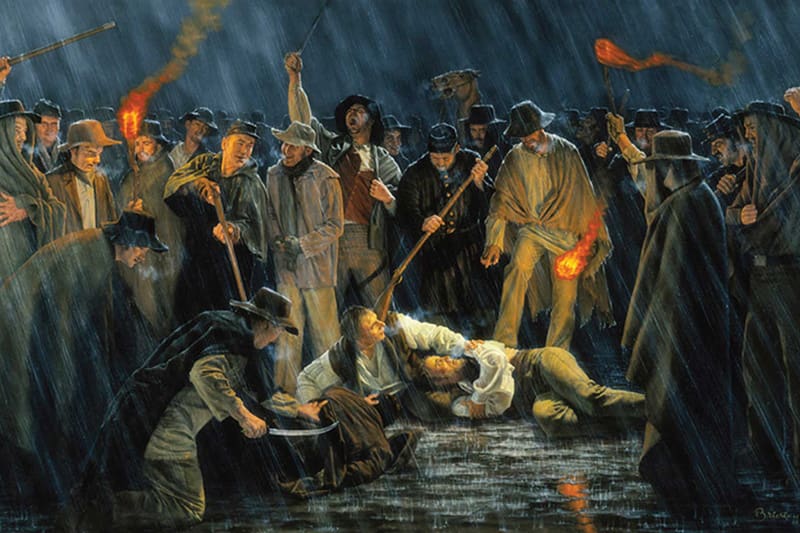
In October 1838, Governor Lilburn W. Boggs of Missouri issued one of the most infamous orders in American history. Known as the “Extermination Order,” it commanded that the Latter-day Saints be treated as enemies and “exterminated or driven from the state.” With a single decree, the state turned its full power against a religious community whose only aim was to worship God in peace.
The consequences devastated the Saints. Families fled their homes. Mobs killed men. Women and children ran for their lives in the cold of winter with little more than the clothes they wore. Yet in this crucible of suffering, the Saints chose faith. They learned discipleship’s cost, practiced forgiveness’s courage, and demonstrated the unshakable power of covenant loyalty.
The Context of Fear and Suspicion
Missouri in the 1830s simmered with political volatility and social division. When thousands of Latter-day Saints moved in, their new neighbors bristled. The Saints voted as a bloc, bought land in large numbers, and openly proclaimed their mission to build Zion. Old settlers viewed them as a threat to their way of life.
Misinformation, prejudice, and fear stirred mobs to violence. Armed groups clashed. When reports—many exaggerated—reached Governor Boggs, he chose eradication over reconciliation. With Executive Order 44, he declared open season on the Saints.
The Consequences of Violence
The order unleashed unspeakable suffering. At Haun’s Mill, a mob massacred men and boys. Raiders looted homes and torched farms. Mothers carried infants into the freezing woods. Thousands abandoned homes, fields, and livelihoods. They carried only their faith.
The Extermination Order remained on the books until 1976, when Missouri Governor Christopher Bond rescinded it, calling it a “blot” on the state’s history. For nearly 140 years, the order reminded the nation how easily society can trample religious liberty.
The Enduring Power of Forgiveness
The Saints refused to let this decree define their future. They carried scars, but they also carried faith. They rebuilt lives in Nauvoo, then pressed on to the Rocky Mountains, where they raised a global church. They remembered the injustice, yet they chose to forgive.
Their example speaks to us today. Each of us faces betrayal, prejudice, or persecution—if not from mobs, then from relationships, workplaces, or communities. We may not control how others treat us, but we can control how we respond. The Saints in Missouri teach us that faith under fire refines discipleship, and forgiveness unlocks God’s healing power.
Lessons for Our Day
- Defend religious liberty.
It remains fragile, and we must protect it for ourselves and for all people. - Let faith flourish in exile.
The Saints lost land and safety, but they never lost their covenant identity. - Choose forgiveness over revenge.
Forgiveness does not excuse injustice, but it frees us from bitterness. - Consecrate suffering into strength.
Missouri’s ashes led to Nauvoo’s beauty and Salt Lake’s strength. Persecution produced perseverance. Tragedy yielded testimony.
Come Follow Me Podcast #37: “After Much Tribulation Cometh the Blessings,” Doctrine and Covenants 102-105

Maurine
The material we talk about today gives us specifics about a dramatic, heart-rending series of events from the 19th century, but is also so relevant for our times, as if the story was written just for us. It simply could not be more to the point.
Scot
Hello our dear friends and welcome to Meridian Magazine’s Come Follow Me podcast . We’re Scot and Maurine Proctor and today we are talking about Doctrine and Covenants 102-105 in a lesson called “After Much Tribulation…Cometh the Blessings.”
Before we launch, we want to thank our sponsor Cardio Miracle. It is a powdered drink, taken daily, that signals your body to create nitric oxide, which is essential to blood vessel health, circulation, and cellular signaling. Our bodies slow down making it as we age. In fact, some studies have suggested that by the ages of 50 or 60, our bodies may make half as much nitric oxide as they did in our young adulthood. Healthy blood vessels make a healthy you. Like sending water to the very end of the row in farming, nitric oxide pushes blood flow and oxygen to the ends of your small capillaries. I take this every day and have for seven years and I’ll never quit.
Maurine
Today, as we study Doctrine and Covenants sections 103-105, you may be surprised how these sections work together to address a major problem facing the Saints, as well as became an important pivotal moment in gospel understanding. Yet, these may be hard to connect together and deeply understand without the back story, which, we just so happen to be giving you today. Section 103 instructs Joseph Smith and the leaders of the Church to organize Zion’s Camp. This, of course, calls for money and resources, and with the loss of the property in Missouri and challenges in Kirtland, the Church is struggling in debt. The Lord gives section 104 to address this problem, and finally Section 105 is given when Zion’s Camp is disbanded at Fishing River.
So let’s take our story back to Missouri. In November 1833, the Saints are driven out of Missouri, forced from the property they had purchased and the land the Lord had consecrated to them.
The mobs rejoiced as they saw the Mormons driven north to Clay County out of their midst.
Scot
These were exiles, first huddled along the banks of the Missouri River and later scattered in counties, looking for shelter and work and seeking redress. What should be done about this? In February, 1834, Parley P. Pratt and Lyman Wight arrived in Kirtland with the sad news of the Missouri Saints and a letter from William Phelps saying that the Missouri Governor Dunklin would be willing to help the Saints return to their homes in Jackson County, but he could not maintain a militia to protect them beyond that. The Church would have to raise and arm a force sufficiently big to maintain the safety of the Saints once these displaced returned back home.
Joseph had already been told in Section 101, that the “the strength of mine house” (Doctrine and Covenants 101:55), would be called to go to Zion and redeem the land and aid “the dispossessed Saints in Missouri…This was no vigilante movement. It was Joseph’s clear intention to work within the law and in cooperation with the state of Missouri in returning the Jackson County Saints to their homes,” (H. Dean Garrett, Stephen E. Robinson, Commentary on the Doctrine and Covenants, Vol. 3). The moment had come.
Maurine
Before Zion’s Camp could leave, however, 8 recruiters, including Joseph, were sent out to find 500 volunteers, as the Lord said was necessary, that these companies could “go up unto the land of Zion by tens, or by twenties, or by fifties, or by an hundred, until they have obtained to the number of five hundred of the strength of my house” (Doctrine and Covenants 103:30). This was not an easy task.
Zion will be reclaimed “by power”, we learn in Doctrine and Covenants 103:15, but the Lord does not specify what power. Joseph is compared to Moses as he is called upon to gather an army of Israel, and as the children of Israel were led out of bondage, “so shall the redemption of Zion be” (v. 18). They will leave not knowing if they will face violence and certainly without the promise that they would all come home. The Lord says, “Let no man be afraid to lay down his life for my sake” (vv. 20, 27).
Scot
Heber Kimball said they gathered “with what means they could spare to go up to Zion and render all the assistance that we could to our afflicted brethren. We gathered clothing and other necessaries to carry up to our brethren and sisters who had been plundered; and putting our horses to the wagons and taking our firelocks and ammunition, we started on our journey.”( http://www.boap.org/LDS/Early-Saints/HCKimball.html)
They had hoped for gathering of 500, but they ended up with only a little over 200. They were hardy, and willing, and about to face an Abrahamic test.
Little money was available among them to make this journey, and they all gave it to a general fund. What that really meant was that they could starve together equally, living on poor rations, with aching and sometimes swollen feet in the march from Kirtland to Jackson County.
Maurine
Wilford recorded: ““He [Joseph] said . . . ‘Brethren, don’t be discouraged about our not having means. The Lord will provide, and He will put it into the heart of somebody to send me some money.’ The very next day he received a letter from Sister Vose, containing one hundred and fifty dollars. When he opened the letter and took out the money, he held it up and exclaimed: ‘See here, did I not tell you the Lord would send me some money to help us on our journey? Here it is.’ I felt satisfied that Joseph was a Prophet of God in very deed.”
Joseph spoke to the group before leaving: “I want to say to you before the Lord, that you know no more concerning the destinies of this Church and kingdom than a babe upon its mother’s lap. You don’t comprehend it. It is only a little handful . . . you see here tonight, but this Church will fill North and South America—it will fill the world. It will fill the Rocky Mountains. There will be tens of thousands of Latter-day Saints who will be gathered in the Rocky Mountains.”
The little group departed on their thousand-mile march to western Missouri, calling themselves “Zion’s Camp.” They armed themselves with weapons, many supplies, and great faith.
Scot
The Lord says, “let not your hearts faint, for I say not unto you as I said unto your fathers: Mine angel shall go up before you, but not my presence. But I say unto you: Mine angels shall go before you, and also my presence and in time ye shall possess the goodly land” (vv. 19,20).
Now the question might be legitimately asked, why did the Lord let their enemies prevail against the Saints in Jackson County any way? He answers here that “those who call themselves after my name might be chastened for a little season with sore and grievous chastisement, because they did not hearken altogether unto the precepts and commandments which I gave them.”
Maurine
The Lord also promised that He would “pour out his wrath without measure in mine own time”(v. 2) on the persecutors, but he has “suffered them thus far, that they might fill up the measure of their iniquities, that their cup might be full” (v. 3). In other words, he allows people their agency to act out their evil intent that it might stand in judgment against them.
This reminds me of the moment in the Book of Mormon where Alma and Amulek are forced to watch the believers, who are their own converts, burn by fire. Alma says, that the Lord allowed it “that the people may do this thing unto them, according to the hardness of their hearts, that the judgments which he shall exercise upon them in his wrath may be just, and the blood of the innocent shall stand as a witness against them” (Alma 14:11).
Scot
Twelve hundred homeless Saints were scattered through the counties of Missouri, their dream of a Zion at the center place vanished like smoke on the wind. Elizabeth Haven, who endured many persecutions, recorded in a letter to a friend: “God moves in a mysterious way, his wonders to perform. Many have been sifted out of the Church, while others have been rooted . . . in love and are the salt of the earth. . . . We are to be tried (everyone who inhabits the celestial kingdom) like gold seven times purified.” (in Scot Facer Proctor, Maurine Jensen Proctor, Witness of the Light, Salt Lake City: Deseret Book).
What the Lord must build first, before Zion can come to be, is people.
Maurine
In verses 5-10, the Lord gives them an if-then proposition. If the people will “hearken from this very hour unto the counsel which I, the Lord their God shall give them,” and hearken “to observe all the words which I, the Lord their God shall speak unto them”, they will “begin to prevail against [their] enemies from this very hour” and “shall never cease to prevail.” If not, that promise does not hold.
So often we want a world with no expectations, where nothing is demanded of us. We believe we are entitled to rewards even if we do nothing or follow the lowest or laziest common denominator of our natures. A God of high expectations might even be offensive to us, opting instead for a world where little is expected of us. That’s not the God we have.
Scot
He tells us why here. “Those who want to build and live in Zion were set to be a light unto the world, and to be the saviors of men.”
This is a calling and a privilege. Who can the Lord send to be a light and the saviors of men in this mortal world, if not us. We’re not much, but we are what he’s got.
“And…as they are not the saviors of men, they are as salt that has lost its savor, and is thenceforth good for nothing but to be cast out and trodden under foot of men” (vv. 9-10). His rewards are conditioned upon obedience.
Maurine
This image of being salt that has lost its savor is interesting. You can trace the history of the world through the need to acquire salt. Roman soldiers were often paid in salt instead of money-thus the word salary comes into our language from salt. Not only does salt improve the flavor of food, but foremost, it is a preservative. It is used to preserve meat, fish and vegetables. When you are called to be the salt of the earth, you are called both to have a positive influence in the life of others, but, more importantly, you are called to preserve a world. That need for preservation is even greater when a world is in decline. It’s a remarkable calling and a powerful one.
How does salt lose its savor? Salt doesn’t lose its savor by becoming old. It does not go stale or mold or rot. Salt loses its savor when it becomes corrupted with something else, another element. If salt is not pure, it loses its savor. That’s quite a metaphor for what the Lord expects. If ye are the salt of the earth, ye are the preservers of the earth, and the Lord will sanctify you, even with hardship, to make you pure. It is his gift to you.
Scot
Before Zion’s Camp could leave for Missouri to help the Saints in the spring of 1834, the Prophet Joseph Smith had to solve huge financial challenges for the Church. H.Dean Garrett and Stephen E. Robinson note, “Joseph wrote to Orson Hyde on 7 April, ‘[U]nless we can obtain [financial] help, I myself cannot go to Zion, and if I do not go, it will be impossible to get my brethren in Kirtland, any of them, to go; and if we do not go, it is in vain for our eastern brethren to think of going.’
“Two years earlier, in April 1832, the united order (or united firm) had secured a five-year loan for $15,000, an immense sum at the time, primarily for purchasing goods and property in Missouri. When the Saints were driven out of Jackson County, not only did they suffer staggering financial losses and abject poverty, but the united order also lost its collateral on this loan and its primary means of paying it back. Added to this were other debts incurred by the order on behalf of the Church in Missouri and in Kirtland. The provisioning of Zion’s Camp also would require a great outlay of funds, as did continuing construction on the Kirtland Temple. Further, an apostate named Philastus Hurlbut was trying to acquire property owned by the united order by suing Church leaders, and defending themselves in court was causing escalating legal fees. And, as always, the needs of Kirtland’s poor Saints also had to be met. For all of these reasons, the Church in the spring of 1834 was deeply in debt.” (H. Dean Garrett, Stephen E. Robinson, Commentary on the Doctrine and Covenants, Vol. 3, Salt Lake City: Deseret Book).
Maurine
Garrett and Robinson continue: “At a conference in Avon, New York, on 17 March 1834, Joseph Smith proposed, besides raising volunteers and contributions for Zion’s Camp, also raising two thousand dollars to pay the debts of the Church in Kirtland. On 7 April 1834, Joseph wrote in Kirtland, ‘Bishop Whitney, Elder Frederick G. Williams, Oliver Cowdery, Heber C. Kimball, and myself, met in the council room, and bowed down before the Lord, and prayed that He would furnish the means to deliver the Firm [the united order] from debt, that they might be set at liberty; also, that I might prevail against that wicked man, Hurlburt, and that he might be put to shame.’ Two days later, Hurlbut lost his lawsuit, was put under bond to keep the peace, and was forced to pay court costs.”
What came two weeks later was Section 104, which contains one of the most emphatic sections in all of scripture on consecration, something the Lord calls “an everlasting order” (v. 1). The scripture has much that is practical. Under the threat of lawsuit from Hurlbut, the brethren had considered dissolving the United Firm or what we generally know as the United Order, but in this section instead the united order in Kirtland and the one in Zion are to operate separately. Stewardships are given. Treasuries are established.
Scot
But here is the key, and the first principle of consecration, said with the greatest clarity.
“I, the Lord, stretched out the heavens, and built the earth, my very handiwork; and all things therein are mine” (D&C 104:14). What is His? The air we breathe, the land we stand on, the food we eat, the things we think we own. Our lives, our time, our talents, all are His.
The Lord as the creator of the earth decrees the rules of stewardship and accountability over it. He says, “It is my purpose to provide for my saints, for all things are mine.”
Maurine
“But it must needs be done in mine own way; and behold this is the way that I, the Lord, have decreed to provide for my saints, that the poor shall be exalted, in that the rich are made low.
“For the earth is full, and there is enough and to spare; yea, I prepared all things, and have given unto the children of men to be agents unto themselves” (vv. 15-17).
Scot
If the Saints would not willingly consecrate, Joseph said, “God shall…prevent them from ever obtaining a place of refuge or an inheritance upon the Land of Zion.”
Those who left on Zion’s Camp in May and June 1834, led by Joseph Smith, traveled about 900 miles from Kirtland to Clay County, Missouri. The participants in that group included names we are familiar with: Parley P. Pratt, Orson Hyde, Wilford Woodruff, Heber C. Kimball, and Brigham Young. These were willing to stake their lives and time on the line for the aid of their ailing friends in Missouri.
“As Wilford Woodruff was settling his business affairs and preparing to join Zion’s Camp, his friends and neighbors warned him not to undertake such a hazardous journey. They counseled, ‘Do not go, if you do you will lose your life.” He replied, “If I know that I should have a ball put through my heart the first step I took in the state of Missouri I would go.’”(in David A. Bednar, On the Lord’s Side: Lessons from Zion’s Camp, https://www.churchofjesuschrist.org/study/ensign/2017/07/on-the-lords-side-lessons-from-zions-camp?lang=eng)
Maurine
“Wilford Woodruff later declared while serving as a member of the Quorum of the Twelve Apostles: ‘We gained an experience that we never could have gained in any other way. We had the privilege of … traveling a thousand miles with [the Prophet], and seeing the workings of the Spirit of God with him, and the revelations of Jesus Christ unto him and the fulfilment of those revelations. … Had I not gone up with Zion’s Camp I should not have been here today.’” (See Bednar https://www.churchofjesuschrist.org/study/ensign/2017/07/on-the-lords-side-lessons-from-zions-camp?lang=eng)
“George A. Smith described in his journal the reaction of the Prophet to the daily challenges of the march to Missouri.
“’The Prophet Joseph took a full share of the fatigues of the entire journey. In addition to the care of providing for the Camp and presiding over it, he walked most of the time and had a full proportion of blistered, bloody and sore feet. … But during the entire trip he never uttered a murmur or complaint, while most of the men in the Camp complained to him of sore toes, blistered feet, long drives, scanty supply of provisions, poor quality of bread, bad corn dodger, frouzy butter, strong honey, maggoty bacon and cheese, etc., even a dog could not bark at some men without their murmuring at Joseph. If they had to camp with bad water it would nearly cause rebellion, yet we were the Camp of Zion, and many of us were prayerless, thoughtless, careless, heedless, foolish or devilish, and yet we did not know it. Joseph had to bear with us and tutor us, like children.’”(See Bednar).
Scot
“On one occasion, three prairie rattlesnakes were found in the spot where Joseph had pitched his tent. Some of the brethren were about to kill them, but Joseph said: ‘Let them alone—don’t hurt them! How will the serpent ever lose his venom, while the servants of God possess the same disposition, and continue to make war upon it?’ The brethren took the snakes carefully on sticks and carried them across the creek to safety. Joseph felt that “men must become harmless, before the brute creation; and when men lose their vicious dispositions . . . the lion and the lamb can dwell together, and the sucking child can play with the serpent in safety.”
“‘Notwithstanding our enemies were continually breathing threats of violence,’ wrote Joseph, ‘we did not fear, neither did we hesitate to [take] our journey, for God was with us, and His angels went before us, and the faith of our little band was unwavering.’” (See Proctor, Witness).
Maurine
After walking eight hundred miles in six weeks, Zion’s Camp arrived in Clay County to a threatening environment and disappointing news. Governor Dunklin refused to fulfill his promise to provide a force to assist the Saints to regain their homes in Jackson County. Rumors had spread that about the size and intentions of the camp, and several hundred Missourians had gathered, threatening attack. Five marauders rode wildly through the camp to warn them of their impending doom.
“When the five men entered the camp, not a cloud was to be seen in the whole heavens, but soon a small cloud like a black spot appeared in the northwest and began to unroll itself like a scroll. In a few minutes, the whole heavens were covered with a pall as black as ink. The storm soon broke with wind, rain, thunder, lightning, and hail. Many Saints fled to a nearby Baptist meetinghouse. Wilford Woodruff remembered: ‘As the Prophet Joseph came in shaking the water from his hat and clothing he said, ‘Boys, there is some meaning to this. God is in this storm.’ We sang praises to God, and lay all night on benches under cover while our enemies were in the pelting storm.”
Scot
Wilford Woodruff continued, “Very little hail fell in our camp . . . the lightning flashed incessantly. . . . The earth trembled and quaked, the rain fell in torrents, and, united, it seemed as if the mandate of vengeance had gone forth from the God of battles.” The water in nearby Big Fishing River, which had been only ankle deep the night before, had risen to forty feet deep, drowned some of the mob, and sent the others running for shelter and galloping off to their homes. They declared that if that was the way God fought for the Mormons, they might as well go about their business.
“While their enemies attacked them from without, a deadly enemy attacked the army from within. Cholera broke out, ravaging about sixty-eight of the men and women, fourteen of whom died. The brethren rolled the corpses in blankets and buried them on the bank of Brush Creek. Heber C. Kimball remembered, ‘We felt to sit and weep over our brethren, and so great was our sorrow that we could have washed them with our tears, to realize that they had traveled one thousand miles through so much fatigue to lay down their lives for our brethren.’” (See Proctor, Witness).
Maurine
Joseph and Hyrum related this account to their mother:
“Soon after arriving at the point of destination, the cholera broke out among us, and the brethren were so violently attacked that it seemed impossible to render them any assistance. They immediately sent for us to lay hands on them, but we soon discovered that this also was the judgment of the Almighty, for when we laid our hands upon them in the name of the Lord in order that they might be healed, the disease instantly fastened itself upon us. And in a few minutes we were in awful distress. We made mute signals to each other and left the house for the purpose of going into some secluded place to join in prayer that God would deliver us from this awful influence; but before we could get a sufficient distance to be secure from interruption, we were scarcely able to stand upon our feet and we were greatly alarmed, fearing that we should die in this western wilderness so far from our families, without even the privilege of blessing our children or giving them one word of parting counsel. Hyrum cried out, ‘Joseph, what shall we do? Must we be cut off from the face of the earth by this horrid curse?’
Scot
“‘Let us,’ said Joseph, ‘get down upon our knees and pray to God to remove the cramp and other distress and restore us to health, that we may return to our families.’ We did so but without receiving any benefit, but still grew worse. We concluded, however, to make a second effort, and when we kneeled again, the cramp seized the calves of Joseph’s legs, gathering the cords into bunches, and then the operation extended in like manner all over his system. He cried heartily unto God, but the heavens seemed sealed against us and every power that could render us any assistance shut within its gates. The universe was still. ‘When we arose again,’ said Joseph, ‘I found Hyrum was in the same situation with myself.’
“We soon came to the resolution of appealing again to God for mercy, and not to rise from our knees until one or the other got a testimony that we should be healed, and he who received the first intimation from the Spirit should inform the other of the same. We prayed some time, first one and then the other, and soon perceived that the cramp began to loose its hold. In a short time Hyrum sprang to his feet and exclaimed, ‘Joseph, we shall return, for I have seen an open vision in which I saw Mother on her knees under an apple tree praying for us, and she is even now asking God, in tears, to spare our lives, that she may behold us again in the flesh. The Spirit testifies to me that her prayers and ours shall be heard’-and from that moment we were healed and went on our way rejoicing.” (Lucy Mack Smith, and Scot Facer Proctor, Maurine Jensen Proctor, editors. The Revised and Enhanced History of Joseph Smith by His Mother, Salt Lake City, Deseret Book.)
Maurine
On June 21, the Saints met with county and militia officials hoping to resolve the issue. Joseph assured them that they were anxious for a settlement to the difficulties upon constitutional principles. These meetings went nowhere, and, finally, Joseph, seeing his little band of Zion’s Camp was badly outnumbered, appealed to the Lord and received Section 105 on June 22, 1834. Here he was assured, “For behold, I do not require at their hands to fight the battles of Zion: for, as I said in a former commandment, even so will I fulfil—I will fight your battles” (v. 14). The Lord said, “I have heard their prayers, and will accept their offering.”
The building of Zion must be postponed “for a little season” (v. 9) “that my people may be taught more perfectly, and have experience, and know more perfectly concerning their duty, and the things which I require at their hands.”
We asked earlier, what kind of power would it take to redeem Zion? Now the Lord gives the answer, “This cannot be brought to pass until mine elders are endowed with power from on high” (v. 11) It is not military power, nor any kind of power that man can scramble together. Instead, “I have prepared a great endowment and blessing to be poured out upon them, inasmuch as they are faithful and continue in humility before me” (v. 12). It is the Lord’s power, and the Lord postpones the building of Zion, until the people are ready to receive it. Zion’s Camp is to be disbanded.
Scot
Steven Harper notes, “The revelation which is both pacifistic and militant, marks a turning point in Church history. It is a document of détente. It calls for a proclamation of peace now even as it foreshadows a future role for the army of Israel. It postpones Zion in Jackson County for an ambiguous ‘little season’ (v. 9). It commands Saints in the meantime to receive the anticipated endowment of power to help them gain experience, to learn their duty and doctrine better, and to increase in number and holiness. They are to continue to purchase western Missouri lands but to avoid gathering in numbers perceived as threatening by non-Mormon settlers.
“Doctrine and Covenants 105 gives Joseph and his army orders to retreat. They are instructed to seek redress lawfully. But the war is far from over. These tactics will buy time ‘until the army of Israel becomes very great’ (v. 26) while more land in Jackson and adjoining counties can be legally purchased. Once it is, the revelation says, ‘I will hold the armies of Israel guiltless in taking possession of their own lands, which they have previously purchased with their moneys, and of throwing down the towers of mine enemies that may be upon them’ (v. 30). First, however, ‘let my army become very great, and let it be sanctified before me, that it may become fair as the sun, and clear as the moon, and that her banners may be terrible unto all nations; that the kingdoms of this world may be constrained to acknowledge that the kingdom of Zion is in very deed the kingdom of our God and his Christ; therefore, let us become subject unto her laws’ (vv. 31–32).”
Maurine
Meanwhile, Latter-day Saints are to “sue for peace, not only to the people that have smitten you, but also to all people; and lift up an ensign of peace, and make a proclamation of peace unto the ends of the earth” (vv. 38–39)…
“The brethren were to return to the house of the Lord in Kirtland, to be endowed with power on conditions of humility and faithfulness (v. 12), and then spread out over the globe to gather Israel. Then, when the army became very great both numerically and in”
“obedience to the law of consecration, they would regain Zion.”
“Back in Kirtland [Joseph] urged the Saints to finish the house of the Lord, and he began holding sanctifying training meetings to prepare the brethren for the solemn assembly.” (Steven C. Harper, Making Sense of the Doctrine and Covenants, Salt Lake City: Deseret Book).
Scot
Some who had come on Zion’s Camp were disgruntled when it was disbanded and questioned the prophet, but the Lord revealed this to Joseph in Section 105. “It is expedient in me that they should be brought thus far for a trial of their faith” (v. 19).
Elder David A. Bednar said, “Because of the failure to reestablish the Saints on their lands in Jackson County, Zion’s Camp was considered by some an unsuccessful and unprofitable endeavor. A brother in Kirtland—one who lacked the faith to volunteer to go with the camp—met Brigham Young on his return from Missouri and asked, “‘Well, what did you gain on this useless journey to Missouri with Joseph Smith?’ ‘All we went for,’ promptly replied Brigham Young. ‘I would not exchange the experience I gained in that expedition for all the wealth of Geauga County,’” the county in which Kirtland was then located.”
Maurine
Elder Bednar continued, “In a most literal way, the physical and spiritual challenges of Zion’s Camp constituted a sifting of the wheat from the tares (see Matthew 13:25, 29–30; D&C 101:65), a dividing of the sheep from the goats (see Matthew 25:32–33), a separating of the spiritually strong from the weak. Thus, each man and woman who enlisted in the army of the Lord faced and answered the penetrating question of ‘Who’s on the Lord’s side?’”
“Indeed, ‘the time to show’ for those faithful men and women was the summer of 1834. But the decision to march with the Prophet Joseph to Missouri was not necessarily a one-time, all-inclusive, or immediate response to the question of ‘Who’s on the Lord’s side?’ The time to show for those Saints arose frequently and repeatedly through mental and physical fatigue, through bloody blisters on their feet, through inadequate food and unclean water, through a multitude of disappointments, through dissensions and rebellions within the camp, and through external threats from vicious enemies.”
Scot
Elder Bednar said, “The time to show came in the experiences and privations of every hour, of every day, and of every week. It was the grand combination of the many seemingly small choices and actions in the lives of these devoted Saints that provided the conclusive answer to the question ‘Who’s on the Lord’s side?’
“How did the testing and sifting that occurred in the lives of the Zion’s Camp participants serve as a preparation? Interestingly, eight of the brethren called into the Quorum of the Twelve Apostles in 1835, as well as all of the Seventies called at that same time, were veterans of Zion’s Camp. At a meeting following the call of the Seventies, the Prophet Joseph Smith declared:
“’Brethren, some of you are angry with me, because you did not fight in Missouri; but let me tell you, God did not want you to fight. He could not organize his kingdom with twelve men to open the gospel door to the nations of the earth, and with seventy men under their direction to follow in their tracks, unless he took them from a body of men who had offered their lives, and who had made as great a sacrifice as did Abraham.’
“Now, the Lord has got his Twelve and his Seventy, and there will be other quorums of Seventies called.”(David A. Bednar, On the Lord’s Side: Lessons from Zion/s Camp, https://www.churchofjesuschrist.org/study/ensign/2017/07/on-the-lords-side-lessons-from-zions-camp?lang=eng).
Maurine
The call to join Zion’s Camp was an opportunity for testing, sifting and proving your spiritual mettle. We mentioned at the beginning of this podcast that these sections were particularly relevant for our time—and they are. Surely when the call came from the prophet to join Zion’s Camp, a great number would not make that sacrifice. Surely, when the group was disbanded, after much sacrifice, without achieving an apparent purpose, many felt justified in criticizing the prophet.
I am surprised at how many not only resist our prophet’s counsel, today,but are angered by it. They don’t want to hear things they don’t want to hear. I love what Elder Bednar continued to say as he reflected on Zion’s Camp.
He said, “As a result of my call in 2004 to serve in the Quorum of the Twelve Apostles, I have a decidedly distinctive perspective about what it means to observe, to learn from, and to follow the Brethren. I now see on a daily basis the individual personalities, the various preferences, and the noble characters of the leaders of this Church. Some people find the human limitations and shortcomings of the Brethren troubling and faith diminishing. For me, those weaknesses are faith promoting. The Lord’s revealed pattern of governance in His Church provides for and attenuates the impact of human frailty. It is truly miraculous to me to witness the Lord accomplishing His will through His servants despite the flaws and failings of His chosen leaders. These men never have claimed to be and are not perfect; they certainly are, however, called of God.
Scot
Elder Bednar said, “Since my call as a General Authority, I have tried to observe and learn as some of my Brethren have faced the effects of aging or the relentless demands of physical limitations and constant pain. You cannot and will never know the private and silent suffering some of these men live through as they serve publicly with all of their heart, might, mind, and strength. Serving with and watching President Gordon B. Hinckley (1910–2008), President James E. Faust (1920–2007), Elder Joseph B. Wirthlin (1917–2008), President Boyd K. Packer (1924–2015), Elder L. Tom Perry (1922–2015), Elder Richard G. Scott (1928–2015), and my other apostolic associates empower me to declare clearly and authoritatively that the Brethren with whom I serve are warriors—noble and great spiritual warriors—in the truest and most admirable sense of that word! Their patience, persistence, and courage enable them to “press forward with a steadfastness in Christ” (2 Nephi 31:20) that is worthy of our emulation.” (Bednar, Lessons).
Maurine
That’s all for today. Next week we’ll discuss Doctrine and Covenants Sections 106-108 in a lesson called “To Have the Heavens Opened”. Thanks to Paul Cardall for our music and to Michaela Proctor Hutchins who produces this podcast. See you next week.
Elder Bednar to Rededicate the Hill Cumorah Historic Site

The following is excerpted from the Church Newsroom. To read the full article, CLICK HERE.
The Hill Cumorah Historic Site in Palmyra, New York, will be rededicated on Sunday, September 21, 2025, at 1 p.m. EDT. Elder David A. Bednar of the Quorum of the Twelve Apostles will preside at the dedication and offer the dedicatory prayer. On-site participation is by invitation and requires a ticket.
The Hill Cumorah is among 30 historic sites operated by the Church of Jesus Christ across the United States. These sites highlight the heritage of the Church and help visitors understand significant events in Church history.
Latter-day Saints believe that the Book of Mormon was originally written in an ancient language on metal plates, often referred to as gold plates. The final writer in the book, a prophet named Moroni, buried the plates in the hill now known as Cumorah in about A.D. 420. About 1,400 years later, Moroni, then an angel sent from heaven, guided a young man named Joseph Smith to the plates. The angel Moroni first visited Smith, the founding prophet of The Church of Jesus Christ of Latter-day Saints, on September 21, 1823, when Smith was 17. Moroni showed him the gold plates for the first time the following day. On September 22, 1827, after four years of preparation, he was allowed to take the plates from the hill. He translated the record to English by the gift and power of God.
Today, the Book of Mormon’s witness of Jesus Christ is published in more than 100 languages.
The Church of Jesus Christ has welcomed visitors to the hill since 1928, when it completed the purchase of the property. A monument featuring a statue of the angel Moroni was dedicated on the hill in 1935. From 1935 until 2019, the hill was the site of a pageant celebrating the Book of Mormon and the Church’s history. The pageant attracted tens of thousands of visitors each year.
To read the full article, CLICK HERE.
Did the Nazis Spy on the Church?
This article was originally published on FromtheDesk.org.
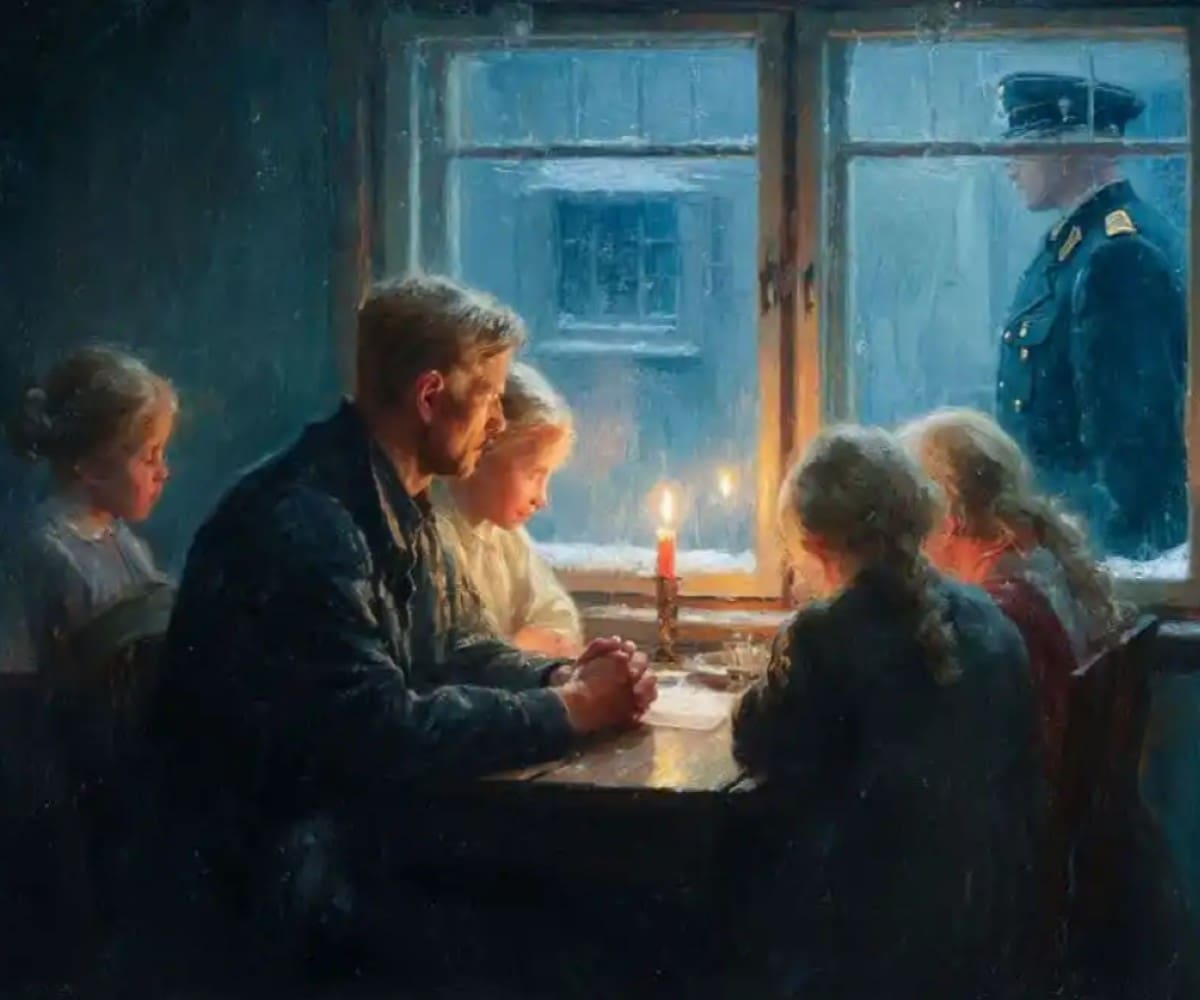
The government of Adolf Hitler spied on The Church of Jesus Christ of Latter-day Saints during World War II. Recently uncovered documents offer an unprecedented glimpse into how the Third Reich monitored the Church and subjected its membership to systematic surveillance, censorship, and intimidation. A 1937 report even details notes made about President Heber J. Grant during a series of sermons. This interview with Stephen O. Smoot explores key insights into Church-state tensions, missionary activity, and the persecution of individual members, including resistance figures like Helmuth Hübener.
What new documents about Nazis and Latter-day Saints did you examine with the B. H. Roberts Foundation?
In my work for the B. H. Roberts Foundation, I examined a 500-page dossier from the Nazi Party’s intelligence agency, the Sicherheitsdienst (SD), preserved in the Federal Archives (Bundesarchiv) in Berlin. This collection includes surveillance reports on Church meetings, internal Nazi correspondence about the Church, and files on individual Latter-day Saints and missionaries, offering unprecedented insight into how the Nazi regime viewed and monitored the Church.
How large was the Church in Germany during the 1930s?
When Adolf Hitler took power in 1933, there were roughly 8,000 Latter-day Saints in Germany and Austria. By 1939, when war broke out, that number had grown to about 13,000 members. Although small relative to Germany’s overall population and other Christian denominations, it represented one of the strongest Latter-day Saint communities outside North America.
What was the extent of surveillance on Latter-day Saints in Nazi Germany?
The Nazis monitored the Church nationwide through informants, interrogations of missionaries, and observation of meetings. Local leaders and members were scrutinized, and senior Nazi officials received regular reports on Church activities and publications. The surveillance was systematic and coordinated throughout the Reich, not limited to isolated incidents.
Why were the Nazis suspicious of Latter-day Saints?
Suspicion stemmed largely from the Church’s foreign base in the United States. Its missionary efforts, teachings on political neutrality and pacifism, and financial ties to America also raised concerns. Nazi officials additionally objected to perceived “Jewish influences” in Church practices, such as Sabbath observance and tithing, and resented funds flowing from Germany to Church headquarters in the United States.
Latter-day Saint doctrines were deemed bizarre or deviant, and there were also (of course!) suspicions of secret polygamy still being practiced in the Church.
Read the full story here.
Family History Focus: Pioneer Day Tips, Tools and Stories
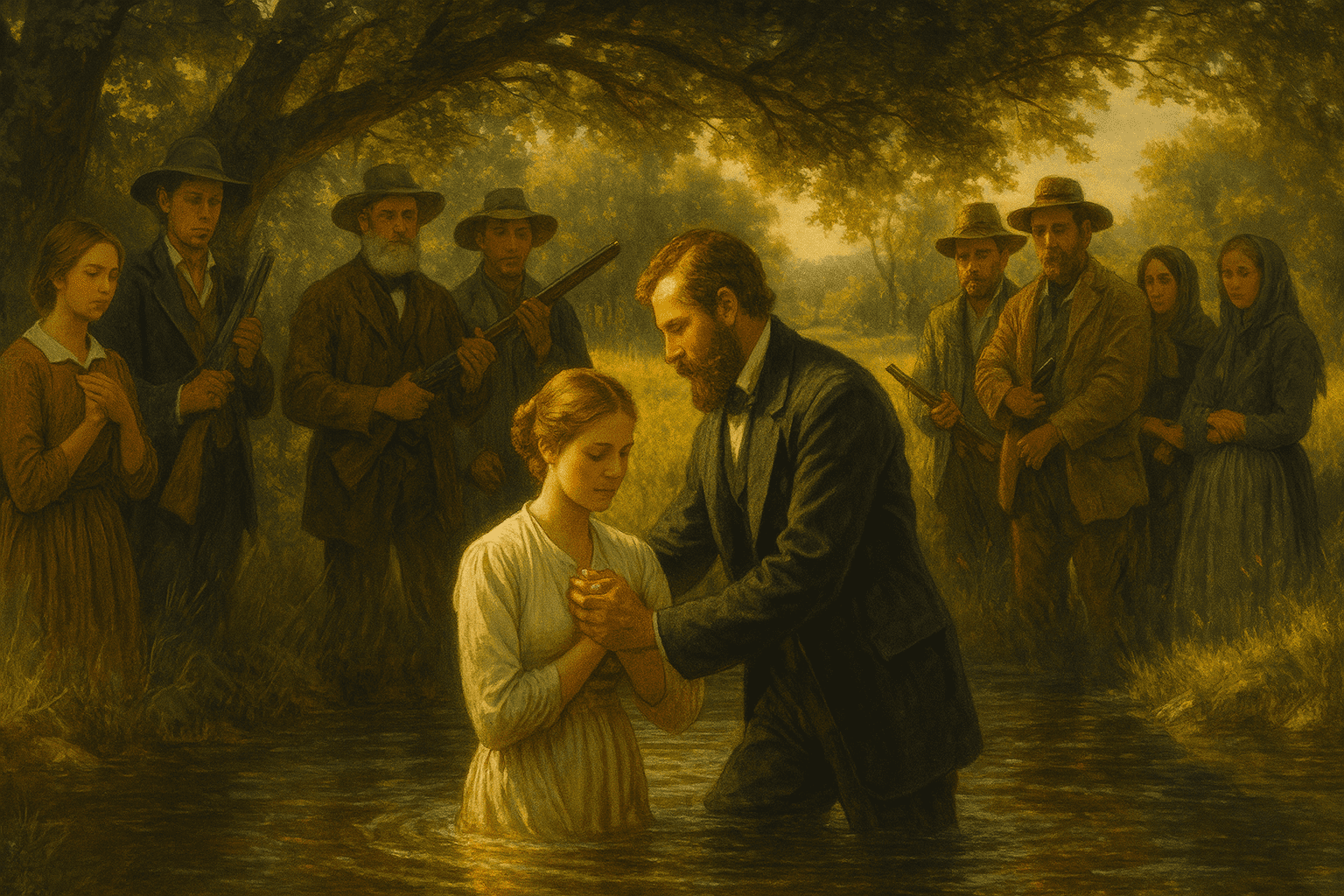
When it’s Pioneer Day celebration time, “Family History in Focus” has to take a little time to honor and celebrate pioneers of all kinds. This week’s column is a smorgasbord of sorts – a tip or two on thinking about pioneers, a tool or two for personal history with pioneers, and a story or two from my pioneer history to encourage your own remembrances.
Pioneer Day and Remembrance
Pioneer Day is all about remembrance. First celebrated in Utah on July 24th in 1857, Pioneer Day emerged as a holiday to remember the courage, endurance, faith and sacrifices of early Latter-day Saint pioneers. The activities and festivities that take place in honor of Pioneer Day are wide-ranging and diverse. Families and communities participate in picnics, parades, outings, historical re-enactments, festivals, rodeos, contests—and much, much more. The point is to remember those who came before and pointed the way toward a more hopeful future.
Many social media posts and other varieties of remembrance were played out on Pioneer Day, but we need not limit ourselves to July 24th to remember our ancestors or others we revere as pioneers. To end the month of July, I’m going to encourage you to do four things to celebrate Pioneer Day-Month! Read along and find a few things to do!
1) Reach out to a Pioneer
Who exactly should we celebrate as a “pioneer” anyway? Is it only those folks who crossed oceans or prairies in the gathering of early Latter-day Saints? No—let’s dig a little further.
President Thomas S. Monson spoke beautifully of the pioneer spirit, and he noted:
“We’ve heard much about the pioneers of 1847 and their trek across the plains and entrance into the Salt Lake Valley. We shall hear more as this sesquicentennial year (1997) moves along. Not surprisingly, as the pioneer theme is presented, each goes back in memory to his or her own family line. There are usually examples to identify and which fit the definition of a pioneer: ‘one who goes before, showing others the way to follow.’” (“Pioneers All,” April 1997).
There are many, many individuals who work and strive today to forge a new future for themselves and their loved ones. Perhaps you are inspired by a Latter-day Saint ancestor. Perhaps you take courage from a fellow faith community member, neighbor or friend who has managed challenges or quietly inspired you. In noting that we are “pioneers all,” President Monson encourages us to be attentive to examples all around us and celebrate them.
So, for our first act of pioneer remembrance, I encourage you to reach out to a pioneer that you identify that is living today. Let them know that you have noticed them. Let them know that they have inspired you. Let them know you appreciate their pioneering efforts in life. Write a note or call them – and write at least 4-5 lines or call for at least a few minutes. Remembrance starts with recognition of those who have “gone before, showing others the way to follow.”
2) Discover a Pioneer Relative or Link
Pioneer Day is also an opportunity to learn about possible pioneer ancestors that we may not know much about. Who knows where there might be a connection?
FamilySearch is making this process a bit easier through a couple of its currently available activities online. Either log in or create your free account after you find your way to the FamilySearch website at www.familysearch.org. Then, take advantage of the following tools to find a pioneer connection:
- Discover a Pioneer – Go to the following page in FamilySearch, https://www.familysearch.org/en/campaign/pioneers – or, find it under the “Activities” link (“Pioneers”). This page will allow you to see names and information of pioneer relatives, your relationship to them, and any further information about their life and experiences.
- My Female Pioneers – Under “Activities,” find the “Female Pioneers” link or go to https://www.familysearch.org/en/campaign/femalepioneer and learn about the women that shaped your family experience! I celebrate women like May Louise Hunt, Annie Campbell, Mary McQuarrie, and Emeline Whiting.
- Pioneer Child – Walk a Mile in Their Shoes – This link under “Activities” allows you to take a brief quiz, a fun activity to do with a child or grandchild in your life, that links you to a pioneer child by comparing traits. Engage a child and take the quiz! Go to https://www.familysearch.org/en/campaign/pioneerchild.
3) Share a Pioneer Story
Part of the fun of personal and family history is sharing experiences and stories! So, pick one that is of interest to you, and then share it with those you care about via a social media site you use, a family group chat, or in a phone call or email.
This means you need to take a little time and maybe call a relative who will know a good ancestral story from a pioneer or two, or pull out that family history and dust it off and do a little reading, or . . . you get the picture. Dig a little. Learn a little. Ask some questions. Be curious. Learn a story and share it with others.
If you struggle to find a story from your own ancestral history, then find another that inspires you and share it. The world is full of great stories.
4) Listen to a Couple Stories from Family History
Since part of the purpose for this feature column is to pass along some stories, here are a couple for you to enjoy in celebration of Pioneer Day. Both come from the life of one Sylvester Henry Earl, my great-great-grandfather on my mother’s side. Sylvester Henry Earl was born in 1815 and died in 1873.
Sylvester Henry Earl first heard the message of the restored gospel in 1836 in Ohio, then subsequently spent time in Illinois and received baptism in early 1837 as a new Latter-day Saint. He was soon engaged in missionary labors and through these efforts met the woman who would become his future wife, Lois Caroline Owen. Here is the story of their meeting and her baptism in 1838, as told by their son Joseph Ira Earl in a letter. The story follows:
“Following the death and burial of his mother, Sylvester and his two brothers, Wilber and James, traveled to Schuyler County, Illinois, and there Sylvester held a series of proselyting meetings in the fall of 1838 in the vicinity where Ira Owen and his family lived.
(Note by writer, Ken Earl: Several Missionaries, including Charles C. Rich and Solomon Wixom, wrote in their journals of having proselyted in Schuyler County and the surrounding area starting back in 1832 after Rich joined the Church. John T. Earl, Sylvester’s brother, lived in Morgan County, not far away, where Rich and Wixom had visited and stayed many times.)
The following is paraphrased from Joseph’s letter to his son Ira:
At the close of one of the meetings, Sylvester announced that a baptismal service would be held at 4:00 P.M. at a river site near the bridge crossing the LaMoine River (commonly called Crooked Creek, which was situated a half mile or so east of where Ira Owen’s family lived), and that anyone wishing to be baptized should now make it known. A 20-year old girl by the name of Lois Caroline Owen was the only person who offered to be baptized. Those in attendance were amazed, her parents, Ira and Betsy Ann Castle Owen, were astonished, and her brothers were enraged. Disapproving, too, were male cousins of Lois. Sylvester dismissed the meeting and everyone went to their homes. Her parents tried to get Lois to change her mind, but she would not. Her mind was made up, though she shed many tears as she struggled with the thought of doing something of which her parents and family disapproved. Yet she knew that the Spirit had borne witness to her spirit that what the Latter-day Saint Elder, Sylvester Earl, had taught in those meetings was true. She despaired as her brothers got down their guns and commenced to clean and load them, declaring that no Mormon would baptize their sister. A couple of Lois’ cousins, also came with guns and with the same determination that her brothers had. Even so, as she pondered and prayed about the decision she had made, peace and joy came into her soul; God had heard her prayers; she knew that all was going to be well with her.
As the hour drew near for the baptismal services, Lois and her friends went to the river’s edge. Townspeople also gathered as Ira and Betsy Owen walked slowly to the appointed place. The six young men, with loaded guns, were also present.
Soon Elder Sylvester Earl was seen approaching the river bank with quick step and head erect, surveying the situation as he walked to the river’s edge. He called the meeting to order and asked that they join in singing a hymn, but certainly one which they did not know, for it had been written by a Mormon convert, Parley P. Pratt; hence, he likely sang it alone, or with his companions:
‘The morning breaks, the shadows flee
Lo, Zion’s standard is unfurled,
The dawning of a brighter day
Majestic rises on the world.
The clouds of error disappear
Before the rays of truth divine,
The glory bursting from afar
Wide o’er the nations soon will shine.’
A prayer was offered in which the Lord was implored to shed forth His light upon the assembled congregation and that peace and quietness would prevail. Sylvester then stepped onto a nearby log and for the next half hour or so held the assembled crowd’s attention as he told them about the restoration of the Gospel of Jesus Christ: that the authority to baptize in the name of Christ had been restored, that the ordinances of God could now be administered with authority, that the Zion of the last days was to be built up, that Israel was to be gathered from the nations of the world, and a people prepared to meet the Savior at his coming. His sermon and Lois’ continuing determination must have had the desired effect of dispelling the plans of those who had come to make sure that Lois would not be baptized, for he then stepped down from the log, took Lois Caroline Owen by the hand and led her down into the stream of water where he baptized her with the words: “Lois Caroline Owen, having been commissioned of Jesus Christ, I baptize you in the name of the Father and of the Son and of the Holy Ghost, Amen.” Lois then sat down on the log and he confirmed her a member of the Church.
During this entire service – the speaking, the baptism and confirmation – not a word was spoken by anyone in the assembled crowd. In fact, Lois’ brothers and cousins had sat on the grass with their guns in hand and heads bowed. After she was confirmed, Ira and Betsy Owen embraced Lois and told her that, despite their disapproval of her decision to be baptized and their harsh words earlier, she was welcome in their home.” (from Volume 1, “Joseph Ira Earl, Calista and Viola Earl: Southern Nevada Pioneers,” 1988).
While the story reflects the missionary effort of Sylvester Henry Earl, it also reflects the courage of Lois Caroline Owen and the faith it took for her to move forward, and the willingness of her parents and other family members to make peace with her spiritual decision.
What’s the second Sylvester Henry Earl story – well, I share it since it ties into those early 1847 Latter-day Saint Pioneers. Sylvester Henry Earl was a member of the 147-strong group that led the emigration efforts and traveled to the Salt Lake Valley in 1847 with Brigham Young and other leaders. According to family legend and available documents, he was one of ten men assigned as part of a “gun crew” responsible for a cannon that was towed along with the wagon train, though it was likely never used. One family member has told me that Sylvester got tossed out of camp one day for “fighting,” but I’m still trying to track that story down—see how one story leads on to another story in family history?
Well, enjoy reflections on the pioneers in your life, and take a little time to pursue these remembrance activities as part of your Pioneer Day-Month activities!
What Is FAIR? Inside the 2025 Conference on Latter-day Saint Apologetics
I well remember the very first annual conference convened by what was then called the Foundation for Apologetic Information and Research, or FAIR. It was in 1999. All of the speakers, I think, stayed at the home of FAIR’s then-president, in Ben Lomond, California, not far from Santa Cruz. And then, for the next couple of days, we trooped dutifully over to a nearby Latter-day Saint chapel, where we delivered presentations to each other. There were very few in the audience beyond the speakers themselves, who, when they weren’t actually presenting their remarks, did double-duty as listeners. The meeting was held in the chapel’s Relief Society room, which was entirely adequate for the size of the gathering.
The organization has come a very long way since then. For one thing, “FAIR” is now its actual name, and no longer merely an acronym for its real title. (And it now has a motto: “Faithful Answers, Informed Response,” which, when examined, seems curiously reminiscent of, well, “FAIR.”) For another, the annual meeting now attracts audiences in the hundreds, as well as additional viewers online.
For those who take an interest in the issues and controversies that always swirl around the Restoration of the Gospel of Jesus Christ, as for those who are interested in defending its claims, the annual FAIR Conference has become one of the most anticipated events in Latter-day Saint apologetics and scholarship. It brings top scholars, speakers, and faithful members together to explore Gospel questions, to tackle tough issues, and to strengthen testimonies. Over the years, subjects have ranged across such fields as history, science, archaeology, philosophy, sociology, law, and theology, all presented in an accessible manner by thoughtful people who seek to help defend the Gospel and share evidence of its truth. It’s a good place to look for answers, either for yourself or for loved ones who might be encountering challenges to their faith. It’s also an excellent place, simply, to deepen your understanding of the restored Gospel and its history.
Some Latter-day Saints are put off by the term “apologetics,” which—although fairly common among our Protestant and Catholic fellow-Christians—is rarely used among us. They wonder why anybody should feel the need to “apologize” for the doctrines of the Restoration.
But this is to misunderstand the word. The original sense of the English verb “to apologize” isn’t to say “I’m sorry.” That meaning appears to come later. The original sense is “to defend.” It comes from the Greek word “apologia,” which refers to “a speech in defense”—for example, in a trial. A classic example is Plato’s “Apology,” in which Plato recounts the remarks that his teacher, Socrates, gave to his accusers in Athens in 399 BC. They are anything but an “apology” in our modern sense. Rather, they are a (genial but still rather defiant) defense of the actions and the mode of life for which he had been brought to trial.
In the New Testament, the classic passage about apologetics is 1 Peter 3:15, though I’ll quote the following verse (3:16) as well:
“Be ready always to give an answer to every man that asketh you a reason of the hope that is in you with meekness and fear: Having a good conscience; that, whereas they speak evil of you, as of evildoers, they may be ashamed that falsely accuse your good conversation in Christ.”
That’s the King James version of the passage. It’s important, I think, to know that the Greek word that the King James translators rendered as “answer” is nothing other than “apologia.” Thus, Peter is saying that Christian believers should “be ready always to give a defense to every man that asketh you a reason of the hope that is in you.” Accordingly, and for the sake of clarity—King James words like “fear” and “conversation” can confuse modern readers—I also quote 1 Peter 3:15-16 in the Common English Bible translation:
“Whenever anyone asks you to speak of your hope, be ready to defend it. Yet do this with respectful humility, maintaining a good conscience. Act in this way so that those who malign your good lifestyle in Christ may be ashamed when they slander you.”
So do we have an obligation to prepare ourselves to defend the claims of the Gospel? Not everybody is called, of course, to be a scholarly advocate of the Restoration. Still, if, as President David O. McKay taught, every member of the Church should be a missionary, all of us should try to equip ourselves to justify our beliefs to those with whom we come in contact. When asked why we believe what we believe, we shouldn’t just stand there, tongue-tied. In a famous essay of his called “The Weight of Glory,” C. S. Lewis—who, in my judgment, has no serious rival as the most prominent Christian apologist of the twentieth century—put it in rather military terms and had special reference to philosophy, but I think that his point can easily be applied more generally. Here is what he said:
“To be ignorant and simple now—not to be able to meet the enemies on their own ground—would be to throw down our weapons, and to betray our uneducated brethren who have, under God, no defense but us against the intellectual attacks of the heathen. Good philosophy must exist, if for no other reason, because bad philosophy needs to be answered.”
This year’s FAIR Conference, the twenty-seventh in a row, will be held—curious as it may sound!— in the Show Barn at Thanksgiving Point (2975 Thanksgiving Wy, Lehi, UT 84043). An evening session on Wednesday, 6 August, will open the conference: Aaron Sherinian is a public affairs professional with extensive international experience who currently serves as the Managing Director of the Church Communication Department for the Church of Jesus Christ of Latter-day Saints. He will deliver remarks that evening under the title “Fluent in Our Faith: Identifying Evidence of the Glad Tidings of the Gospel in Our Everyday Reality.”
Thereafter, on Thursday and Friday (7-8 August), sessions will run from 9 AM until roughly 5 PM. The topics covered will range widely, from questions of gender equality in the Church, faith crises, the Church and child abuse, coping with life’s disappointment, and peacemaking through a Mesoamerican approach to the Urim and Thummim. Other topics will include the role of women in defending the Church, working through times of “spiritual silence,” a case for “contention,” the lived experience of Latter-day Saint women, and concepts of doctrinal purity and doctrinal drift, as well as mathematical modeling of the plates of the Book of Mormon. One interesting speaker, scheduled for Thursday, will be Brandon Mull, The New York Times bestselling author of the “Fablehaven,” “Dragonwatch,” “Beyonders,” “Five Kingdoms,” and “Candy Shop War” series.
It must candidly be admitted, though, that I’ll be the concluding speaker at the final session of the conference on Friday. Conference organizers have adopted the custom of having me conclude the conference because it’s an effective tool for reducing grief and separation anxiety at the close of excellent meetings that will not reconvene for a full year. My remarks help to ease conference patrons back into the routine and humdrum world of ordinary life.
I will be addressing the question of “Brigham Young and Slavery” and, to a lesser degree, Brigham Young and race. The topic seems to me an important one for several reasons. First of all, believing Latter-day Saints regard him as an apostle of the Lord Jesus Christ and as a prophet, a seer, and a revelator. The line of priesthood authority that leads the Church of Jesus Christ of Latter-day Saints even today comes, overwhelmingly, through him. The mode of apostolic presidency that we still follow is rooted in the succession of the Twelve, led by Brigham Young, to the leadership of the Church after the deaths of Joseph and Hyrum Smith in 1844.
And yet we can’t avoid the fact that President Young said some things about race that make us wince uncomfortably in the twenty-first century. Indeed, to make matters even worse, he presided as territorial governor of Deseret over the enactment of an 1852 law that established and legally recognized slavery.
Or did he? Very recent scholarship has carefully examined that law and has overturned much of what I, at least, had ignorantly assumed about it. (Part of our modern problem is our simplistic and uninformed understanding of how labor and employment were categorized in antebellum America.)
I propose to share some of the results of this recent scholarship that, I believe, greatly reduce (although they don’t altogether eliminate) the challenges posed to contemporary Latter-day Saints by Brigham Young’s racial attitudes—and that have furnished weapons to critics of the Church for at least the past century.
The scholarship to which I refer wasn’t created with apologetic intent, but I intend to turn it in that direction. I will cite not only the conclusions of the scholars, with whom I believe my own conclusions will be consistent, but statements of Brigham Young and others who were directly involved in the discussions of race, slavery, and servitude that threatened to divide the Church and its settlements in the Great Basin West prior to Abraham Lincoln’s Emancipation Proclamation, which rendered some of the relevant issues moot. For me, this new scholarship has been deeply helpful, and I think that some of its results need to reach a general audience.
Elder Neal A. Maxwell (1926-2004), formerly a member of the Quorum of the Twelve Apostles, was very fond of something that the late English Anglican philosopher, theologian, and biblical scholar Austin Farrer wrote about C. S. Lewis. Elder Maxwell cited it often and, since then, it has become a favorite among Latter-day Saint defenders of the faith:
“Though argument does not create conviction,” Farrer wrote, “lack of it destroys belief. What seems to be proved may not be embraced; but what no one shows the ability to defend is quickly abandoned. Rational argument does not create belief, but it maintains a climate in which belief may flourish.”
I invite you to participate in the 2025 FAIR Conference, whether in person or online. For registration, the full program, and other details, see here: https://www.fairlatterdaysaints.org/conference/august-2025-fair-conference.
FEATURES