









When I was a little boy, my mother used to frequent a little fabric shop on Pine Street in Rolla, Missouri called Dent’s. It was a very old-fashioned store with hardwood floors and bolts of cloth stacked neatly on shelves behind the counter. The women who sold the cloth would generally just measure the cloth out to my mom by the length of their arms. What if mom wanted the women to be more accurate in their measurements? Well, let’s get down to brass tacks.
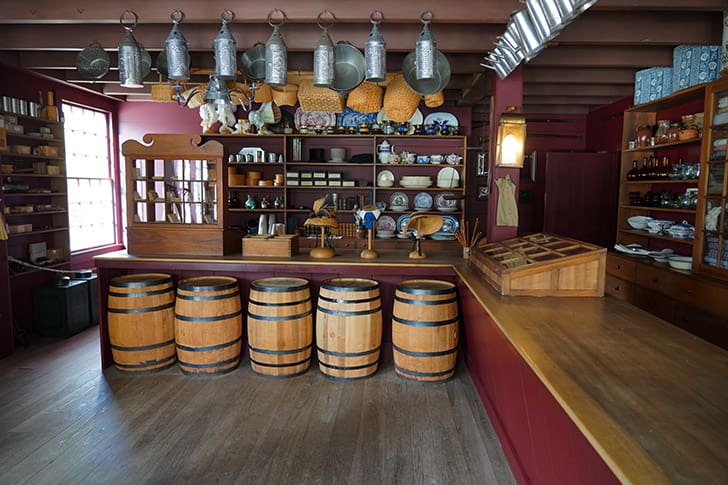
This is not a non-sequitur. One of my favorite Church historical sites to visit is the Newel K. Whitney Store in Kirtland, Ohio. This place is extremely significant to our history and those who helped to restore this original structure after the Church purchased the building in 1978 were careful to make the restoration as accurate as possible to the late 1820’s and early 1830’s when the store was in its heyday. With the use of Bishop Whitney’s own records of his inventory at the time, visitors are treated to a very accurate representation of the store.
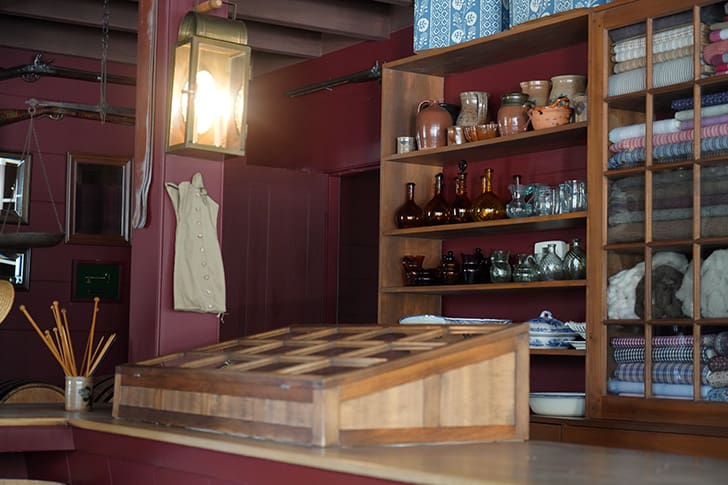
He carried bolts of lovely fabric brought in from the east. It was common in his day (as it was in my childhood at Dent’s) to hand-measure out the cloth, based on the length of the man or woman’s arm. This is similar to ancient times when measurements were done in royal cubits, the length of the king’s arm from his elbow to his fingertips.
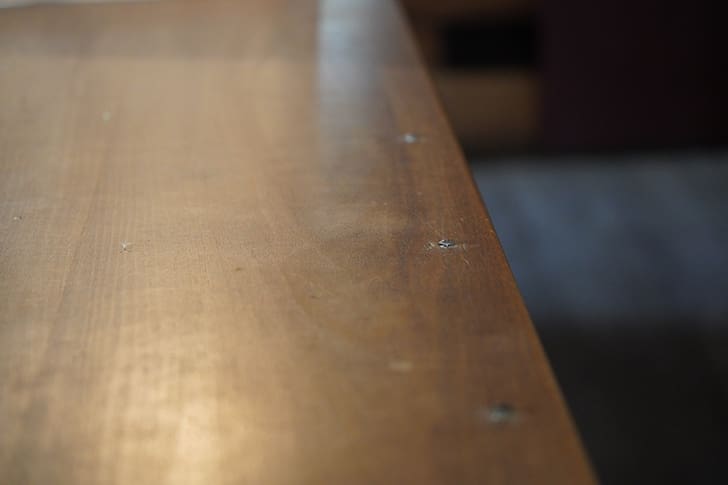
If one was not comfortable with or did not trust the storekeeper to measure out the cloth by hand, one could say to him, “Let’s get down to brass tacks.” In the store, right on the counter, were three or four brass tacks pounded carefully right into the wood. The measurement of 36 inches could quickly be made. “Let’s get down to brass tacks” meant you wanted an accurate measurement of the cloth and it would be done in that manner.
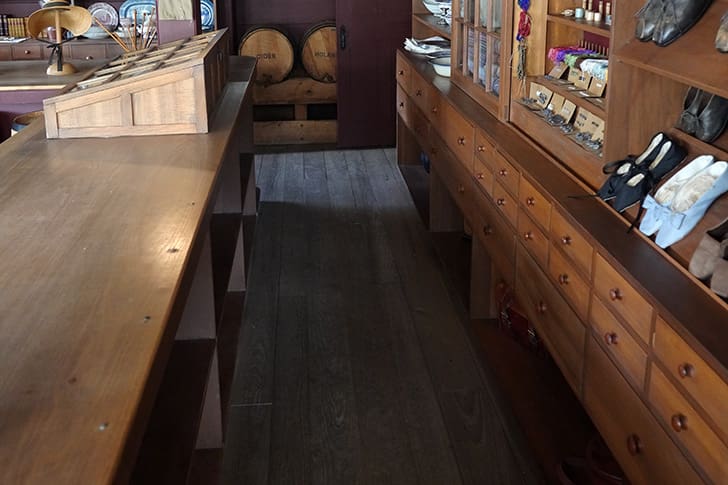 So, if you ever visit Kirtland and the Newel K. Whitney store, right as you enter the main door, just to your right on that first open counter space—you will see the brass tacks!
And now you can picture this.








KathleenSeptember 3, 2024
Thank you! I LOVE explanations of the origin of expressions. I say so many of my grandmother's without knowing from whence they came, including this one. I recently learned about 'the baby and the bathwater.'