




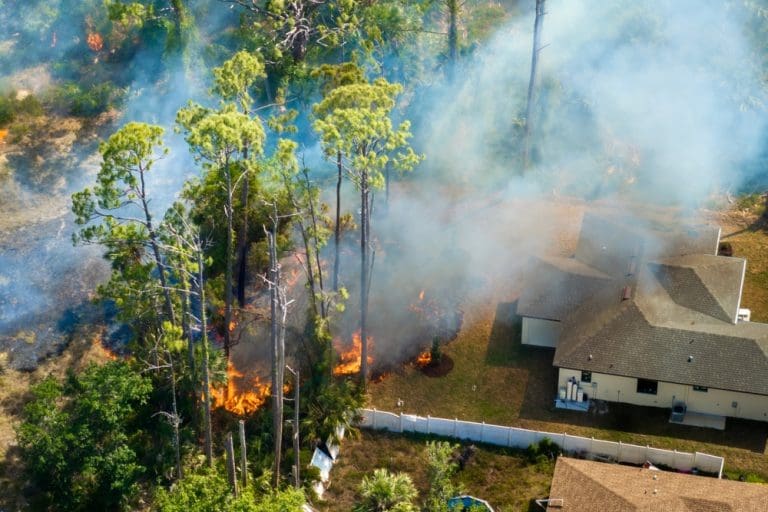


This past week high fire danger warnings were issued in several states. Yes, it is winter but massive fires do happen during the winter months. Many of these are driven by high winds and many are in densely populated areas.
I clearly remember the Oakland Hills fire in October 1991. It was truly one of the most frightening scenes I have ever witnessed. We watched on live television as house after house literally exploded from the heat of the fire. One minute there stood a gorgeous million-dollar home, and the next it was fully engulfed by the inferno. Before the fire was contained, 25 lives were lost, and 3,354 homes and 437 apartments or condominiums were destroyed in this upscale community that overlooks Berkeley, Oakland, and the San Francisco Bay Area. The economic losses totaled 1.5 billion dollars.
Another San Francisco Bay Area community experienced a devastating fire caused by the explosion of a gas pipeline. Fortunately, there was a school open house at the time of the explosion, meaning many families were thankfully away from their homes. Eight people died and 60 were injured.
The 2018 Camp Fire in Northern California’s Butte County began on the morning of November 8, 2018 when hardware on a poorly maintained Pacific Gas and Electric Company (PG&E) transmission line in the Feather River Canyon failed during strong winds. Those winds rapidly drove the Camp Fire through the communities of Concow, Magalia, Butte Creek Canyon and Paradise, mostly destroying them. The fire burned for two weeks and was finally contained on Sunday, November 25 after burning 153,336 acres. The Camp Fire caused 85 fatalities, displaced more than 50,000 people and destroyed over 18,000 structures, causing an estimated $16.5 billion in damage.
In 2022 Operation Christmas Ornaments served survivors of the Marshal Fire in Boulder County, Colorado. It began on December 30,2021 and destroyed over 1,100 buildings including 1040 homes. What made this winter fire so devastating? Wind.
The Eaton Fire affecting Altadena and Pasadena in Southern California began on the evening of January 7, 2025, in Eaton Canyon in the San Gabriel Mountains, and a powerful Santa Ana wind event drove the fire into foothill communities, particularly Altadena. The fire killed at least 19 people and destroyed more than 9,000 buildings, becoming the fifth deadliest and the second most destructive wildfire in California history. The fire was fully contained on January 31 after burning for 24 days.
Simultaneously the Palisades Fire began in the Santa Monica Mountains of Los Angeles County and grew to destroy large areas of Pacific Palisades, Topanga, and Malibu before it was fully contained on January 31. It spread to 37 sq miles killed 12 people, and destroyed 6,837 structures, making it the tenth-deadliest and third-most destructive California wildfire.
Just as with wildfires, neighborhood fires can spread quickly and fast become overwhelming. They are propelled by accelerants such as gasoline from cars, explosions in propane tanks, or by gas leaks, as in San Bruno. Residential fires can quickly ignite brush, trees, outbuildings, cars, and homes. No household sprinkler system, fire extinguisher, or garden hose is up to the task of containing such fires.
Before Wildfire Threatens
- Have a building professional inspect your property and offer recommendations for reducing the wildfire risk.
- Have a landscaping professional inspect your property and make recommendations for reducing your risks.
- Regularly clean roof and gutters.
- Inspect and clean chimneys at least once a year. Make sure you inspect the damper and spark arrester as well.
- Install 1/2-inch mesh screen beneath porches, decks, floor areas and the home itself. Also, screen openings to floors, roof and attic.
- Install a smoke/carbon monoxide detector on each level of your home, especially outside bedrooms. Test batteries monthly and change them once a year. Changing them on the same day each year will help you remember. Choose a day such as a birthday or holiday.
- Purchase at least one good, large, fire extinguisher (ABC type).
- Purchase at least one fire blanket.
- Purchase or organize items that can be used as fire fighting tools: a rake, axe, handsaw or chainsaw, hose, bucket, shovel and bag of sand.
- Enclose eaves and overhangs.
- Cover house vents with ¼ inch, or smaller, wire mesh. Any attic vent, louver, attic fan, or other opening may allow embers and flaming debris to enter your home and ignite.
- Use fire resistant siding and roofing materials. If you currently have a shake roof or wood siding, replace it as soon as possible. Shake roofing and wood siding will allow your home to be engulfed in a very short time.
- Choose safety glass for windows and sliding glass doors. Radiated heat passing through a windowpane can ignite combustible materials inside. Dual- or triple-pane thermal glass, fire resistant shutters, and drapes all help reduce the risk.
- Consider installing protective shutters or heavy fire-resistant drapes.
- Prepare for water storage. After a fire, water supplies may be limited. When possible, create and maintain a small pond, well or pool and store extra water.
- Install freeze-proof exterior water faucets on at least two sides of your home and near other structures on the property. If you cannot do this, make sure you have the materials available to wrap and protect your pipes so in the event of a fire you don’t find yourself without water.
- Consider purchasing a generator to provide power after the fire has passed. Electric service will probably be down for several days.
- Make sure your house number is clearly visible from the road making it easier for fire fighters to find your home quickly.
- Purchase escape ladders for second floor bedrooms.
- Make a list of the phone numbers, both landline and cell, for your neighbors. We have friends who were involved in a San Diego wildfire and they never received an evacuation warning but they noticed the flames approaching and called their neighbors’ cell phones, and knocked on their doors as they were evacuating. Thanks to their efforts everyone on their block made it out safely.
Create a Family Plan
- Teach children about fire safety. Keep matches out of their reach.
- Teach older children to use a fire extinguisher.
- Teach your family to have a bucket of sand or water nearby when barbecuing, using tools or toys that create sparks, or when using fireworks.
- Post fire emergency telephone numbers in a place easily accessible.
- Plan several escape routes away from your home – by car and by foot – and practice them as a family.
- Review with your family how officials will warn you if there is danger.
- Create a plan in case you are not at home when the emergency arises, and your children need to evacuate.
- Teach your family about the importance of keeping your property clean to help prevent fires.
- Plan two exits from your home in case doors or windows are blocked by an exterior fire. Practice evacuating using both exits.
- Practice evacuating your home in the middle of the night.
- Plan how your family will stay in touch if you are separated by a wildfire. All family members should know the name and phone number for your out-of-state contact.
- Choose a meeting place outside your neighborhood in case you can’t return home. Hold a drill to practice gathering at this location.
- Post emergency telephone numbers by every phone and teach your children how and when to use them.
- Teach children how to call 911.
Create a Neighborhood Plan
Talk to your neighbors about what they are doing now to prepare for this fire season and how they might be able to respond to fire reports in the area. There may be things you can do together to prevent the spread of fire, and to survive if one occurs.
- Gather and distribute a list of home and cell phone numbers for emergencies.
- Decide on a channel to use on walkie talkies to communicate during a crisis.
- Identify potential fire hazards.
- Determine which hazards can be corrected by working together.
- Notify the proper authorities to correct the problem.
- Identify roadways which are blocked or poorly marked. During a fire the line down the center of the road may be your only guide. If roads need attention notify the city or county authorities.
- Create a plan for how the neighborhood could work together after a wildfire. Make a list of your neighbors’ skills such as medical, construction or technical.
- Consider how you could help neighbors who have special needs such as seniors or people with disabilities.
- Make plans to take care of children who may be on their own if their parents can’t get home.
- Make a list of neighbors with heavy equipment and other firefighting tools.
- Develop a neighborhood plan for things that need to be done.
- Develop a neighborhood phone tree.
- Plan a neighborhood meeting with the fire department to have questions answered and to get advice.
Create a Safety Zone Around Your Home
Design and landscape your home with wildfire safety in mind. All vegetation is fuel for a wildfire, though some trees and shrubs are more flammable than others. The greater the distance between your home and the vegetation, the greater your protection.
Take steps now to reduce the potential for disaster. Homes built in pine forests should have a minimum safety zone of 100 feet. Fire spreads very quickly uphill. Homes built on a steep slope therefore, will require additional protection. The steeper the slope, the more open space you will need to protect your home. All other homes should have a 30-foot safety zone around them.
- Move shrubs and other landscaping away from the sides of the house.
- Cut and water lawns often.
- Prune branches and shrubs to allow for 15 feet between vegetation and chimneys and stove pipes.
- Prune tree limbs 15 feet above the ground.
- Prune tree limbs so they don’t overhang the roof.
- Replace highly flammable vegetation such as pine, eucalyptus, junipers and firs with less flammable varieties. If in doubt, ask your local fire department or landscape professional for suggestions.
- Remove vines from the walls of your home, out buildings and garden walls.
- Remove all dead tree branches from the ground-level up (these act as ladder fuels for the approaching fire).
- Clear the area of leaves, brush, and fallen limbs.
- Remove debris from under sun decks and porches.
- Replace wooden decks with non-combustible materials such as concrete, brick, rock, or man-made materials. Building a deck structure at ground level will eliminate the danger of a fire starting under a deck.
- Use non-combustible patio furniture and covers.
- Adding a brick or rock wall around your property will help prevent a grass fire from threatening your home.
- Patios and pools are also great improvements in a 30 foot safety zone.
- When possible, install electrical lines underground.
- If you notice branches around power lines ask the power company to clear them.
- Avoid using bark and wood chip mulch.
- Stack firewood 100 feet away and uphill from any structure.
- Store combustible or flammable materials in approved safety containers away from your home.
- Keep the gas grill and propane tank at least 15 feet from any structure. Clear an area 10 feet around the grill.
- Clear at least a 10-foot area around propane tanks.
- Dispose of newspapers. Do not allow them to stack up.
- Place stove, fireplace and grill ashes in a metal bucket far from structures. Soak with water.
- Have garden hoses that are long enough to reach any area of your home and other structures on your property.
When Wildfire Threatens
If you are warned that a wildfire is threatening your area, listen to your radio for reports and evacuation information. Follow the instructions of local officials immediately. While you wait for the order to evacuate:
- Back your car into the garage or park it in an open space facing the direction of escape. Shut the doors, but do not lock them, and roll up windows. Leave the key in the ignition or make sure it is in your pocket at all times. Close garage windows and doors, but leave them unlocked. Disconnect automatic garage door openers, just in case the electricity goes out.
- Gather your family members if they are at other locations or make arrangements for them to remain where they are if they are in a safe area.
- Gather pets into one room, making them easy to find when it is time to leave.
- Evacuate large animals, such as horses, to a safe location.
- Arrange temporary housing at a friend’s home outside the threatened area.
- Notify your out-of-state emergency contact of your plans and give them the phone number and address of the place you will evacuate to.
- Load your Five-Day kits and important family possessions in your car.
- Place pet supplies and leashes in the car.
- Place maps in the car with at least 2 evacuation routes clearly marked. Never rely on GPS.
- Change into protective clothing including long pants, long-sleeved shirt, heavy socks and sturdy shoes.
- Have hand towels or bandanas ready for each member of the family.
- Contact your neighbors to make sure they have heard the warnings.
- Close all windows and vents.
- Move flammable furniture into the center of the home away from windows and sliding-glass doors.
- Move all flammable patio furniture indoors.
- Turn on a light in each room and also your outdoor lights, to increase the visibility of your home in heavy smoke.
Now it’s time to act. Copy this article and place it in your binder and begin checking off items. Some things can be done at the last minute, but many can be done once or once a year, and you are done. Home fires happen every day and more and more suburban fires are happening. It can happen to you.