







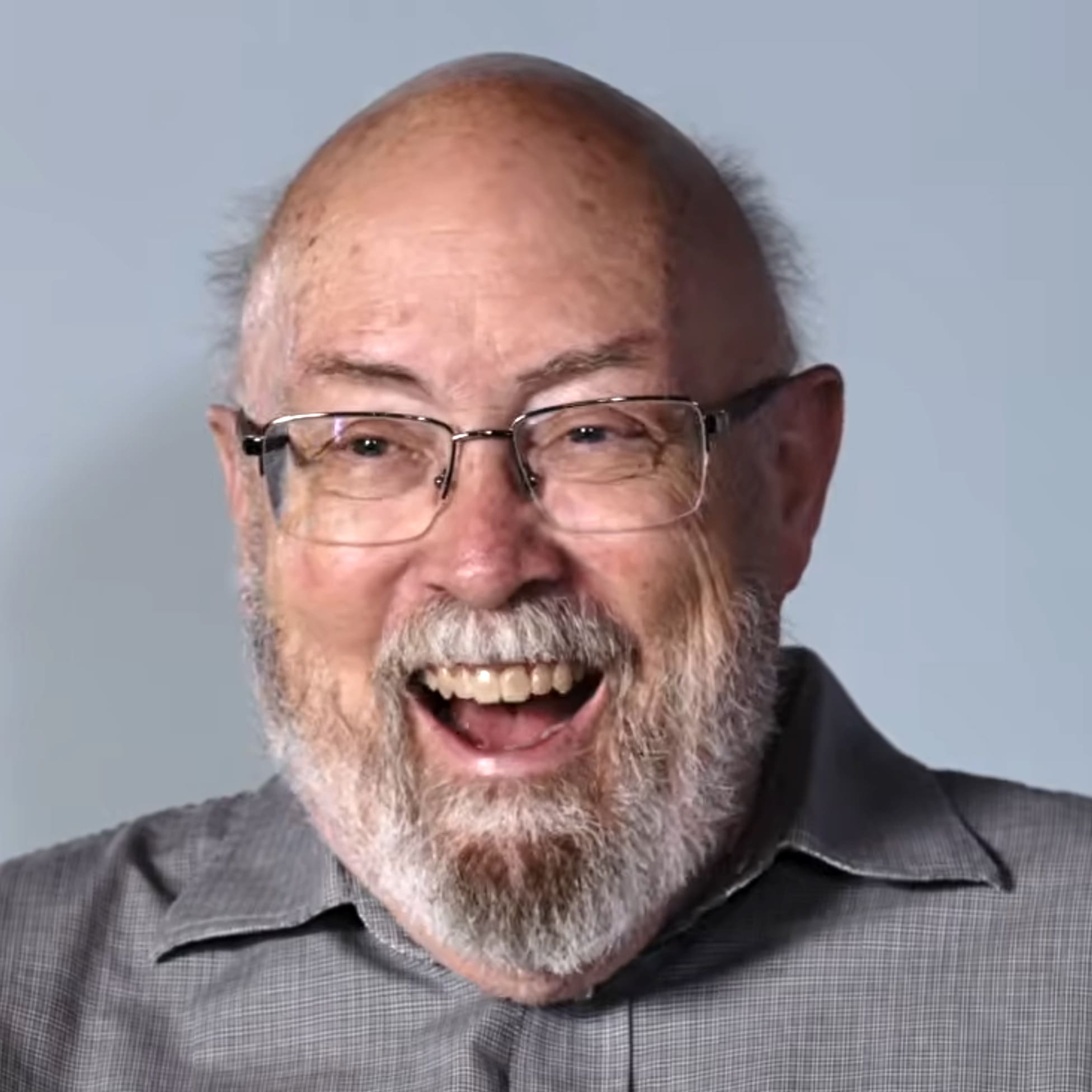

To read more from Daniel, visit his blog: Sic Et Non.
“Burying the lede” is a phrase from journalism. It means to withhold the most important information in a story until later. The “lede” is the introductory section of a news story, usually the first paragraph, and delaying, hiding, or “burying” it is generally regarded as bad journalistic practice. After all, many consumers of the news won’t read past the headline.
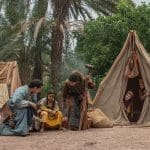
I won’t commit that error in this column, so here’s the “lede”: The Interpreter Foundation’s 2021 dramatic film Witnesses is now available for free streaming throughout the current month, February 2025. Its accompanying 2022 docudrama, Undaunted: Witnesses of the Book of Mormon, is now permanently available for free streaming. We’ve released them online in support of this year’s “Come, Follow Me” curriculum, which focuses in February on the coming forth of the Book of Mormon and on the witnesses to the golden plates.
Happily, too, the Foundation’s 2024 theatrical movie, Six Days in August, which tells the dramatic story of the succession crisis that followed the deaths of Joseph and Hyrum Smith in 1844, is now streaming from a variety of commercial platforms. I’ll provide information at the close of this column about how to access these films.
I want, though, to give a bit of my own personal background story for these films. What is it that has led me, a mild-mannered (and now retired) BYU professor of Islamic studies and Arabic, to become a movie mogul? Why am I devoting so much time and effort to making films when I could, instead, be working on my backswing and immersing myself in daily games of Bingo and Solitaire?
Even where I grew up in greater Los Angeles, there were only a few television channels when I was young. Moreover, although the current generation may find it difficult to imagine, there were no videotapes or DVDs or Blu-rays for rent, and no streaming platforms. As a result, we couldn’t simply think of just any movie that we wanted to see and then watch it at our convenience. Instead, we were at the mercy of a small handful of network and local programmers.
Still, I’ve been interested in film for a long time. In fact, I was already a discriminating consumer of cinematic art even as a precocious child: One summer, for example, KHJ-TV Channel 9 (now KCAL-TV) broadcast the 1956 version of “Godzilla, King of the Monsters!” nine times in the space of a week, and I watched every single showing. Indeed, after all the intervening decades I can still hum important parts of the musical score—especially the stirring theme that plays as the Japanese navy takes Dr. Serizawa’s secret invention, the “Oxygen Destroyer,” out to sea to put an end to the giant reptile.
However, my sophisticated cinematic tastes took a quantum leap forward during my undergraduate years at BYU. There were still no videos or streaming services, but the student-run Film Society and the university’s exceptional International Cinema screened old reel-to-reel movie prints that I had never seen. Once or twice, I even took night classes that ran vintage American films. For the first time, I discovered such classics as John Ford’s “How Green Was My Valley (1941), “Citizen Kane” (1941) and “The Magnificent Ambersons” (1942) by Orson Welles, Frank Capra’s “It’s a Wonderful Life” (1946), the haunting “Portrait of Jennie” (1948), and Elia Kazan’s “On the Waterfront” (1954)—though, of course, I still recognize “Groundhog Day” (1993) as the greatest film ever made. I was enraptured and, at one point, I seriously thought for at least a week of scrapping everything else to become a film historian.
But I didn’t drop everything else. In the end, and even despite a brief flirtation with economics, my strong interest in the premodern history of religion and religious thought—and the pivotal influence of such figures as Hugh Nibley and Truman Madsen—prevailed. I focused on the ancient and medieval Near East, and eventually on Islamic studies. But I also saw that there was much to be done in the study, advocacy, and defense of the scriptures and doctrines of the Restoration—in what is (outside of the Latter-day Saint community, anyway) commonly termed “apologetics.” And that’s why, despite my retirement, I haven’t retired. I’m still too busy.
Back in 2006 and 2007, while I was affiliated with the Foundation for Ancient Research and Mormon Studies (FARMS), I was peripherally involved with the two landmark “Journey of Faith” documentaries about the Book of Mormon that it produced. They are still available online at https://journeyoffaithfilms.com, and are very much worth watching. They persuaded me of the powerful potential of film to convey the results of faithful scholarship to a large audience. But my decades-long interest in film and my commitment to advocating and defending the faith really came together in 2017, when the Interpreter Foundation—pursuing an idea suggested by my theater-major wife, and with Mark Goodman, James Jordan, and Russell Richins as our core filmmaking team—produced a 25-minute piece about an important Latter-day Saint composer (and former Tabernacle organist) entitled “Robert Cundick: A Sacred Service of Music.”
It was my wife’s and my first venture as co-producers, and it was something of an experiment, to see what we could do. We concluded that the enterprise had been a success—it was, for example, broadcast on BYUtv—and that what we had created was of sufficiently high quality that we could honorably continue. So, again working with Brothers Richins, Jordan, and Goodman, we decided to try our hand at something even bigger.
I had been deeply impressed by the witnesses of the Book of Mormon since at least the time, soon after its initial publication in 1989, that I first read Richard Lloyd Anderson’s “Investigating the Book of Mormon Witnesses.” I had continued to study and to think about the Witnesses, and I felt that their story was insufficiently known and that, even among Latter-day Saints, the power of their testimonies was not fully appreciated. So, I was thrilled when our filmmakers proposed creating a major film—and eventually two films, both a dramatic movie and an accompanying docudrama—about the Witnesses. I didn’t need to be persuaded. I had thought about such a film for many years. I simply never imagined myself in the position to actually make it.
These are the two movies—“Witnesses” and “Undaunted”—that we now offer freely to viewers. I believe deeply in the message that they attempt to convey.
In the lead-up to their creation, I solicited statements about the Witnesses from four of the leading historians of the Church. These four scholars happened to be friends of mine, and I hoped that their stature and authority would help the Saints, and others who might be interested, to understand something of the significance of the testimonies of the Witnesses. I share them again here, with the same intent.
First, I requested a statement from the late Richard Lloyd Anderson, J.D., Ph.D., a Professor Emeritus of Church History and Doctrine at Brigham Young University. He was, by several light years, the premiere authority on the Book of Mormon Witnesses:
“Thousands of authorized copies of the Book of Mormon,” he wrote, “have reprinted the signed experience of the eleven Book of Mormon witnesses, Three who described that an angel held and turned the individual plates of an ancient New World Bible and Eight who narrated how they were given an ordinary experience of “hefting” the record and examining the carefully crafted characters on it. About 200 reported interviews with these eleven are collected, which report the constant affirmation of these witnesses of seeing and lifting this historic, prophetic record, with its independent account of Christ visiting America.”
My second statement comes from Richard L. Bushman, Ph.D., Gouverneur Morris Professor of History Emeritus at Columbia University, former Howard W. Hunter Visiting Professor in Mormon Studies at Claremont Graduate University, and a former president of the Mormon History Association:
“The testimonies of the three witnesses,” he said, are “the closest we come to rational evidence for Mormon belief. Three men attest to a sensory encounter with the gold plates and a divine being. In an age of skepticism, when all religious belief is under attack, their statement becomes more relevant every day.”
The third comes from the late James B. Allen, Ph.D., Lemuel Hardison Redd Jr. Professor Emeritus of Western History at Brigham Young University, a former Assistant Church Historian for the Church of Jesus Christ of Latter-day Saints, and another former president of the Mormon History Association:
“The testimonies of the witnesses to the Book of Mormon,” he said, “make Joseph Smith’s account much harder to dismiss than it would otherwise be. Plainly, since others announced that they, too, had seen and “hefted” and heard, this means that, whatever else it was, Joseph’s account must reflect more than merely private imagination or simple personal dishonesty. If the witnesses are judged to be reliable men of good character, their declarations pose a serious challenge to anyone who considers the claims of the Restoration.”
My fourth invited statement came from Thomas G. Alexander, Ph.D., another Lemuel Hardison Redd, Jr., Professor Emeritus of Western History at Brigham Young University and yet another former president of the Mormon History Association:
“Imagine the publication and distribution of the Book of Mormon without the testimony of the witnesses,” Professor Alexander invited us. “If there were none, Joseph Smith would have had to rely on his own word that he translated the plates. Many, perhaps most, people would probably have rejected the word of an uneducated farm boy. Joseph had enough difficulty even with the witnesses convincing others of the truthfulness of his story. Other people including the eight witnesses saw the plates, but only the three witnesses saw them in the possession of the heavenly messenger who delivered them to Joseph. The Lord asked them to testify to the truthfulness of Joseph’s ministry, which they did. Most important, during their lifetimes all three witnesses left the church. Oliver Cowdery and Martin Harris returned to the fold, but David Whitmer remained in Richmond, Missouri, estranged from Mormonism throughout the remainder of his life. Nevertheless, in spite of rumors to the contrary, all three continued to insist on the truth of their witness.”
We invite you to learn more about the Book of Mormon Witnesses. We invite you to enjoy these films. We also encourage you to go onto sites such as IMDb and give the films your honest rating. (Critics of the Church have been gleefully rating them as negatively as possible.) Moreover, if you like them we encourage you to share them with others. (On the other hand, if you don’t like them, I hope that you’ll forget ever having heard of the movies. “These are not the droids you’re looking for.”) Candidly, too, we would welcome your tax-exempt support for future filmmaking. Interpreter is a nonprofit foundation, overwhelmingly led and staffed by volunteers, but significant expenses are unavoidable.
**
As noted above, “Witnesses” will be available throughout February for free streaming. Its docudrama sequel, “Undaunted: Witnesses of the Book of Mormon,” is freely available into the indefinite future. Both can be accessed at “The Witness Initiative”: https://witnessesfilm.com.
Venues for watching “Six Days in August” are listed at “JustWatch”: https://www.justwatch.com/us/movie/six-days-in-august-2024.
“Robert Cundick: A Sacred Service of Music” is available for free streaming at https://interpreterfoundation.org/vid-now-available-for-viewingrobert-cundick-a-sacred-service-of-music/.




Robert StarlingFebruary 17, 2025
Bless you, Brother Dan. You're doing a great service to the Lord's Kingdom, and to His children. In our era when fewer people read books, the visual medium becomes more and more important.
Jenny SvendsenFebruary 17, 2025
I wasn't able to get the link either, as it asks only the state I'm from, I live in Canada