







Scot
Sometimes we project our modern-day experiences on those early days in the Church and we can’t figure out why somebody did something the way they did it, or why didn’t so-and-so talk to the Prophet Joseph about this or that. We really cannot do this. In our studies this week we will be talking about some of those early elders who had traveled a thousand miles to get to Western Missouri, had fulfilled a small mission, held a special conference, had dedicated the land of Zion and a temple site in Independence, Missouri, had buried the first person to die in Zion and now, they were turning around and making their way back the thousand miles to Kirtland. You can learn a lot in 2,000 miles of walking in a wilderness land, and here’s what the Lord wanted these elders to know.
Maurine
Welcome to Meridian Magazine’s Come Follow Me podcast. We are Scot and Maurine Proctor and we are delighted to be with you, our many dear friends and family throughout the world. This week’s lesson will cover Doctrine and Covenants, Sections 60 through 6 with a lesson entitled “I Am with the Faithful Always.” Can you do us a favor and tell a friend about this podcast? They can go to latterdaysaintmag.com/podcast to find all of the podcasts. The transcript for each podcast is also there at latterdaysaintmag.com/podcast. We hope you are reading Meridian Magazine, which is updated with remarkable and timely new stories every weekday. You don’t want to miss it. You can sign up for your free subscription at latterdaysaintmag.com/signup.
Now, remember the setting for this week’s lesson. Joseph Smith and Sydney Rigdon and many others have made their first trek to Missouri and they have now finished up their conference and various other duties in this extreme western portion of the United States. It has been revealed to the Prophet Joseph that this is the land to be consecrated for the Latter-day Saints and they will refer to it as Zion.
You have to understand that from this point on in the early history of the Church, there will be two leadership centers of the kingdom of God for a number of years: Kirtland, Ohio and Zion in Western Missouri. Many times, throughout the Doctrine and Covenants, when Zion is referenced, it is specifically referring to this land in Western Missouri—not just the future City of the New Jerusalem or the Pure in Heart—a Zion People—although from the beginning of the dispensation of the fulness of times, this is what the Lord is trying to create.
Scot
That’s right: The Lord is trying to create a Zion society, His covenant people—those who will follow him at all hazards, at all costs. These are those who will “Let God Prevail” in their lives. These are Latter-day Covenant Israel. These are those who understand that “in coming days, it will not be possible to survive spiritually without the guiding, directing, comforting, and constant influence of the Holy Ghost.” (See Nelson, Russell M. Revelation for the Church, Revelation for Our Lives, General Conference, April 2018). Those who would be a Zion people are those who hold fast to the word of God (see 1 Nephi 15:24) and these are “they that are wise and have received the truth, and have taken the Holy Spirit for their guide, and have not been deceived.” (see D&C 45:57) These are those who will be valiant in the testimony of Jesus (See D&C 76: 51, 79).
And in fact, the Lord makes it clear in Section 60 about His servants sharing their witness of Him and spreading the glad tidings of great joy:
2 But with some I am not well pleased, for they will not open their mouths, but they hide the talent which I have given unto them, because of the fear of man. Wo unto such, for mine anger is kindled against them.
Maurine
And that talent that the Lord is referring to here can be as simple as the testimony of Jesus or a testimony of this latter-day work. The Lord wants us to share our witness of Him. And notice that the reason the Lord gives that some do not open their mouths is because of “the fear of man.” What is it that will really happen when we share our feelings and our testimony? What is it that man can do? We are safe, our dear friends, and the Lord has promised He will fill our mouths with what to say (Doctrine and Covenants 100: 5,6).
5 Therefore, verily I say unto you, lift up your voices unto this people; speak the thoughts that I shall put into your hearts, and you shall not be confounded before men;
6 For it shall be given you in the very hour, yea, in the very moment, what ye shall say.
That’s quite a promise and both Scot and I have experienced the fulfillment of this promise numerous times in our lives. The Lord is good to His word. You can trust Him.
Scot
Then Elder M. Russell Ballard taught:
“God has spoken through His prophet and announced to the world that “the Standard of Truth has been erected” and that “no unhallowed hand can stop the work from progressing.” That is undeniably and indisputably true. We have seen it for ourselves, in decade after decade, from the time of the Prophet Joseph Smith to [today]. Persecutions have raged. Calumny and lies and misrepresentation have attempted to defame. But in every decade from the time of the Restoration forward, the truth of God has gone “forth boldly, nobly, and independent.” … we are well on our way to penetrating every continent, visiting every clime, sweeping every country, and sounding in every ear.
“This is God’s work, and God’s work will not be frustrated. But there is still much to be done before the Great Jehovah can announce that the work is done. While we praise and honor those faithful Saints who have brought us to this point of public prominence, we cannot afford, my brothers and sisters, to be comfortable or content.”
Maurine
Elder Ballard continued:
“We are all needed to finish the work that was begun by those pioneering Saints…and carried out through the subsequent decades by faithful Saints of every generation. We need to believe as they believed. We need to work as they worked. We need to serve as they served. And we need to overcome as they overcame.
“Of course, our challenges are different today,” he continues, “but they are no less demanding. Instead of angry mobs, we face those who constantly try to defame. Instead of extreme exposure and hardship, we face alcohol and drug abuse, pornography, all kinds of filth, sleaze, greed, dishonesty, and spiritual apathy. Instead of families being uprooted and torn from their homes, we see the institution of the family, including the divine institution of marriage, under attack as groups and individuals seek to define away the prominent and divine role of the family in society.”
Scot
Elder Ballard concluded:
“This is not to suggest that our challenges today are more severe than the challenges faced by those who have gone before us. They are just different. The Lord isn’t asking us to load up a handcart; He’s asking us to fortify our faith. He isn’t asking us to walk across a continent; He’s asking us to walk across the street to visit our neighbor. He isn’t asking us to give all of our worldly possessions to build a temple; He’s asking us to give of our means and our time despite the pressures of modern living to continue to build temples and then to attend regularly the temples already built. He isn’t asking us to die a martyr’s death; He’s asking us to live a disciple’s life.” (Ballard, M. Russell, The Truth of God Shall Go Forth, General Conference, October 2008)
So, back to those elders in the early days who would not open their mouths because of fear. Let’s go forward to Section 62 and see the great blessings that come from opening our mouths.
Maurine
“…ye are blessed, for the testimony which ye have borne is recorded in heaven for the angels to look upon; and they rejoice over you, and your sins are forgiven you.” (D&C 62:3)
That is a powerful promise. Your testimony is recorded in heaven for the angels to look upon? And they, the angels, rejoice over you! Who are those angels? Are they your ancestors? Are they the ancestors of those who have received your testimony and embrace the gospel of Jesus Christ?
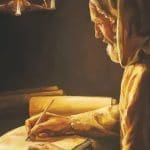
President Spencer W. Kimball talked about the importance of recording your thoughts and feelings and testimony in your own personal journals:
“On a number of occasions I have encouraged the Saints to keep personal journals and family records. I renew that admonition. We may think there is little of interest or importance in what we personally say or do—but it is remarkable how many of our families, as we pass on down the line, are interested in all that we do and all that we say.”
Scot
And I can attest to this next part of President Kimball’s teachings on this:
“Any Latter-day Saint family that has searched genealogical and historical records has fervently wished its ancestors had kept better and more complete records. On the other hand, some families possess some spiritual treasures because ancestors have recorded the events surrounding their conversion to the gospel and other happenings of interest, including many miraculous blessings and spiritual experiences…
“We hope you will begin as of this date. If you have not already commenced this important duty in your lives, get a good notebook, a good book that will last through time and into eternity for the angels to look upon. Begin today and write in it your goings and your comings, your deeper thoughts, your achievements, and your failures, your associations and your triumphs, your impressions and your testimonies. We hope you will do this, our brothers and sisters, for this is what the Lord has commanded, and those who keep a personal journal are more likely to keep the Lord in remembrance in their daily lives.” (Kimball, Spencer W., President Kimball Speaks Out on Personal Journals, Ensign, December 1980, emphasis added)
Maurine
We can bear our testimonies to our families regularly. You may already have a family that has grown generationally.
Scot and I do an annual Cousins’ Camp for all the grandchildren who are six years old and over. This is fairly simply. We just gather all these little ones and take them to the mountains or even in our backyard and we go from 4:00 in the afternoon until about Noon the next day. We have themes and one year the theme was faith and miracle stories from our own family line. It’s amazing when you have these little children around a campfire, away from their parents, up in the mountains or in a forest campground, and you are talking to them as grandparents—trust me: You have their attention. These children listen! And it is then that we not only tell wonderful family stories, but we bear powerful testimonies of what we know to be true.
Scot
And there is something about having that crackling fire and looking up at the stars and hearing the gentle breeze rush through the pine trees that is a perfect setting to bear testimony of Jesus Christ and of the power of the priesthood and of the efficacy of faith in Jesus Christ and of your absolute knowledge that Heavenly Father is there and that He is aware of each of these little ones by name (I say little ones, but some of them are taller than me now). I look at that firelight reflecting off the eyes of these ones I love and I can testify to you that they hear us. You can see the Spirit working on their hearts. There is something sacred about these moments at Cousins’ Camp.
Maurine
Elder Hyrum M. Smith, grandson of Hyrum Smith the Patriarch wrote:
“In this Revelation [Section 62] we are told that angels are scrutinizing the records kept of the testimonies of the Elders [and I’m sure the Sisters] and that they rejoice over the witnesses. It appears from this that the ministry on earth has its effects beyond the veil as well as on this side. An Elder [or Sister] who bears his [or her] testimony to the truth does not know how far-reaching the result may be, though his [or her] visible audience may consist of but few.” (Smith, Hyrum M. and Sjodahl, Janne M., The Doctrine and Covenants Commentary, Revised Edition, Deseret Book Company, Salt Lake City, 1978, p. 371)
And what about that last promise in section 62, verse 3:
“and your sins are forgiven you.” ?
Scot
I’ve wondered about that too. In fact, I used to try to bear my testimony as often as possible in Germany because I was counting on this added blessing of a forgiveness of my sins!
And I’ve made it a habit of recording my testimony of the Book of Mormon each and every time I finish reading it. So, I have dozens of little hand-written testimonies of that great book that I will place in my personal history.
Drs. Stephen Robinson and Dean Garrett, professors at Brigham Young University, have written about this:
“Even though we are not yet perfect, our honest but imperfect attempts to live the gospel and teach it to others are acceptable to God. Our ultimate innocence, worthiness, and perfection are in the end his work rather than ours and constitute the highest blessings of his atonement (see D&C 76: 69). Through Christ, the official tapes of our lives may be edited, so to speak, and every sin and unworthiness removed. And if through Christ all our mistakes are removed from the records, then we are left with perfect records!” (Robinson, Stephen E. and Garrett, H. Dean, A Commentary on the Doctrine and Covenants, Volume 2, Deseret Book Company, Salt Lake City, 2001, p. 185)
The very thought makes reason stare.
Maurine
Elder Dieter F. Uchtdorf gives us five simple suggestions on how we can open our mouths in this great work of the Lord:
“First, draw close to God. The first great commandment is to love God. It is a primary reason why we are on this earth. Ask yourself, “Do I really believe in Heavenly Father?”
“Do I love and trust Him?”
The closer you draw to our Heavenly Father, the more His light and joy will shine from within you. Others will notice that there is something unique and special about you. And they will ask about it.
Scot
“Second, fill your heart with love for others. This is the second great commandment. Try to truly see everyone around you as a child of God. Minister to them—regardless of whether their names appear on your ministering sister or brother list.
“Laugh with them. Rejoice with them. Weep with them. Respect them. Heal, lift, and strengthen them.
“Strive to emulate the love of Christ and have compassion for others—even to those who are unkind to you, who mock you and wish to cause you harm. Love them and treat them as fellow children of Heavenly Father.
Maurine
“Third, strive to walk the path of discipleship. As your love for God and His children deepens, so does your commitment to follow Jesus Christ.
You learn about His way by feasting upon His word and heeding and applying the teachings of modern prophets and apostles. You grow in confidence and courage to follow His way as you communicate with Heavenly Father with a teachable, humble heart.
“Walking the path of discipleship takes practice—each day, little by little, “grace for grace,” “line upon line.” Sometimes two steps forward and one step back.
“The important thing is that you don’t give up; keep trying to get it right. You will eventually become better, happier, and more authentic. Talking with others about your faith will become normal and natural. In fact, the gospel will be such an essential, precious part of your lives that it would feel unnatural not to talk about it with others. That may not happen immediately—it is a lifelong effort. But it will happen.
Scot
“Fourth, share what is in your heart. I am not asking that you stand on a street corner with a megaphone and shout out Book of Mormon verses. What I am asking is that you always look for opportunities to bring up your faith in natural and normal ways with people—both in person as well as online. I am asking that you “stand as witnesses” of the power of the gospel at all times—and when necessary, use words.
“Because “the gospel of Christ … is the power of God unto salvation,” you can be confident, courageous, and humble as you share it. Confidence, courage, and humility may seem like contradictory attributes, but they are not. They reflect the Savior’s invitation not to hide gospel values and principles under a bushel but to let your light shine, that your good works may glorify your Father in Heaven…
“Pray not only for the missionaries to find the elect. Pray daily with all your heart that you will find those who will come and see, come and help, and come and stay. Keep the full-time missionaries in the loop. They are like angels, ready to help!
Maurine
“Fifth, trust the Lord to work His miracles. Understand that it’s not your job to convert people. That is the role of the Holy Ghost. Your role is to share what is in your heart and live consistent with your beliefs.
“So, don’t be discouraged if someone does not accept the gospel message immediately. It is not a personal failure.
“That is between the individual and Heavenly Father.
“Yours is to love God and love your neighbors, His children.
“Believe, love, do.
“Follow this path, and God will work miracles through you to bless His precious children.” End of Quote. (Uchtdorf, Dieter F., Missionary Work: Sharing What Is in Your Heart, General Conference, April 2019).
Remember, these elders in the early days of the Church were young and inexperienced. They were just learning about the restored gospel of Jesus Christ. They were just barely familiar with the newly published Book of Mormon. And they naturally had some fears opening their mouths. We certainly know what that is like, but we have so many more resources and so much more knowledge and understanding of this great work. I think Elder Uchtdorf’s counsel is so good for each of us to ponder and then to put in practice.
Scot
Now, as the Prophet Joseph and Sidney Rigdon and Oliver Cowdery and about 8 others were returning from Independence, they took canoes down the Missouri River. You have to understand, the Missouri River crosscuts the state of Missouri and it is flowing from west to east. So, if they were to float downstream from Independence, they will eventually end up at the confluence of the Mississippi River, which is just north of where St. Louis was established. It was natural for them to try to take the fastest way to head back east. Roads in those days, in this wilderness, were few and far between and they were very poor indeed. A fast-flowing river seemed to be the natural highway to the east.
Maurine
You have to know, the Missouri River is really a big river. It is the longest river in North America at 2,341 miles, and flows at a rate of 86,340 cubic feet per second. That is a lot of water! Do you remember, Scot, that one time when we were photographing the Missouri River near Council Bluffs and Winter Quarters and we were standing right on the shore, trying to set up the perfect shot? That water is muddy and fast-flowing and as we were getting ready to press the shutter, we heard the little quack, quack, quack sounds of tiny newborn mallard ducklings. We looked down and there were five or six of them that had gotten separated from their parents and the current was just sweeping them down the river. We almost wanted to jump in to save them but we knew that would endanger our own lives.
Back to these elders on this very river: On the third day of their float trip down river, they experienced some very frightening experiences. Some of the canoes capsized and a few of the brethren nearly drowned. The Prophet Joseph recorded:
“Nothing very important occurred till the third day, when many of the dangers so common upon the western waters, manifested themselves; and after we had encamped upon the bank of the river, at McIlwaine’s Bend, Brother Phelps, in open vision by daylight, saw the destroyer in his most horrible power, ride upon the face of the waters; others heard the noise, but saw not the vision.” (History of the Church, Vol 1: 202-203.)
This experience caused Joseph to pray about these things and he received a revelation that next morning which we now have as Section 61.
Scot
“3 But verily I say unto you, that it is not needful for this whole company of mine elders to be moving swiftly upon the waters, whilst the inhabitants on either side are perishing in unbelief…
“14 Behold, I, the Lord, in the beginning blessed the waters; but in the last days, by the mouth of my servant John, I cursed the waters…
“16 And it shall be said in days to come that none is able to go up to the land of Zion upon the waters, but he that is upright in heart.”
I believe this is where the doctrine comes from that gives us the rule that full-time missionaries are not allowed to swim during their missions.
Maurine
And you can imagine how William Phelps would have been shaken up as he beheld this vision of Satan riding upon the very waters where he had just been on a canoe! It would have been utterly terrifying. But here is the Prophet Joseph who had faced Satan 11 years earlier in the Sacred Grove and who had overcome him by faith in Jesus Christ and faith in his Heavenly Father.
“Nevertheless, all flesh is in mine hand, and he that is faithful among you shall not perish by the waters.” (D&C 61:6)
Our responsibility and calling is to be faithful and true to the Lord and He will bless us given whatever circumstances we find ourselves in and whatever dangers we face.
Scot
We have a very sacred experience that goes right along with this from my family. In October 1910, my grandfather, William Henry Facer, was called to serve in the Central States Mission—which, at that time included Kansas, Missouri, Oklahoma, Arkansas, Texas and Louisiana! He spent most of his time in Texas and, in fact, for those of you listening from Houston, he opened that city to the gospel, with his companion and four others, in 1912!
In those days the missionaries were allowed to swim and on one particularly delicious preparation day, William Henry Facer and ten other elders went to the beach on the Gulf of Mexico for a few hours of relaxation, swimming and sun. I have a picture of all eleven of them that is one of the classics in our family collection. I carry it in my phone. My grandfather was a good swimmer but he especially enjoyed relaxing and swimming on his back. He was just doing what he thought were a few strokes on his back and after a time he decided to see if the water was still shallow below him. He stood up to touch the bottom and he couldn’t find it. He looked to see where the other elders were and they were about the size of ants on the distant shore. The currents had taken him far out into the Gulf and he could feel it still pulling him far away from shore.
Panic began to take ahold of him, but he turned and started swimming towards shore. He worked and worked and swam and worked and he looked up and he hadn’t made any progress. He could feel himself getting very tired and fatigued and it frightened him. At this point he heard a voice, and it was NOT the voice from the heavens: “You’re not going to make it. You’re going to drown.” And there was a sense of victory in that voice.
He immediately began to pray to Heavenly Father and he made a sacred personal covenant with Him: “Dear Heavenly Father, I am far out here in the Gulf of Mexico and I am losing my strength. If you will strengthen me, and help me get back safely to shore, I covenant with you that I will carefully raise my children in the gospel and send each one of them on missions. Please help me. Please. In the name of Jesus Christ, amen.”
At this point, the other voice was still trying to talk to him, but he felt a surge of strength come into his body and he started swimming with all his might and with renewed courage to make it safely to shore. He did make it back.
He married my grandmother, Martha Amanda Holbook, April 14, 1914. Together they had 8 children, two of whom died in childhood. He sent his four sons, Bill, Keith, Reed and Norman on missions and his two daughters, Martha and Donna as well. As the youngest, Norman, received his father’s blessing, from my grandfather, someone asked Grandpa, “Dad, why have you been so diligent in sending us all on missions? Norman is the last, and we will all have served. Why this insistence and faithfulness?” With the family gathered around, this was the first time he told the family about the experience in the Gulf of Mexico and the covenant he had made. I’m so grateful my Grandfather was true to that covenant.
Maurine
I’ve always loved that story and I’m so eternally grateful that your Grandfather was saved on that occasion so that I could have you! And the promises of the Lord are sure.
There are two verses in Section 62 that I don’t want us to miss. One is verse 1 and one is verse 6:
1 Behold, and hearken, O ye elders of my church, saith the Lord your God, even Jesus Christ, your advocate, who knoweth the weakness of man and how to succor them who are tempted.
Now that really helps me to draw closer to Jesus Christ, to absolutely know that HE knows the weakness of us mortals and He knows how to succor us as we are tempted. When Joseph Smith taught in the Lectures on Faith that “three things are necessary in order that any rational and intelligent being may exercise faith in God unto life and salvation…
The second thing is that we have to have “a correct idea of his character, perfections, and attributes.” (Lectures on Faith 3: 2-5).
As I study the scriptures I am always looking to understand the attributes of God so that I can exercise better more effective faith in Him. And this verse, section 61:1, really tells me a lot about Him. He doesn’t condemn or disdain me when I am tempted, but instead succors and strengthens me.
Scot
And verse 6 is really a wonderful one to understand an amazing attribute of God. Listen carefully:
6 Behold, I, the Lord, have brought you together that the promise might be fulfilled, that the faithful among you should be preserved and rejoice together in the land of Missouri. I, the Lord, promise the faithful and cannot lie. (D&C 61:6)
The Lord Jesus Christ and Heavenly Father and the Holy Ghost cannot lie. It’s not just that they will not lie, they CANNOT lie. I really put my trust in that attribute and have exercised that trust numerous times. It’s the same thing that the Prophet Enos heard from the Lord when he had prayed all day and into the night. Remember?
5 And there came a voice unto me, saying: Enos, thy sins are forgiven thee, and thou shalt be blessed.
6 And I, Enos, knew that God could not lie; wherefore, my guilt was swept away. (Enos 1: 5-6)
If you, our dear and precious listener, absolutely know that God cannot lie, then you can exercise great faith in Him. I repeat: If you absolutely know that God cannot lie, then you can exercise great faith in Him.
Maurine
And, Scot, I love this last verse we will mention today from section 61, verse 36:
36 And now, verily I say unto you, and what I say unto one I say unto all, be of good cheer, little children; for I am in your midst, and I have not forsaken you;
Now, remember, God cannot lie. He cannot lie. And He tells us here that He is in our midst—one of His names is Immanuel—God with us—and He has not, He will not, He cannot forsake us. Whatever your trials, whatever you are facing, whatever struggles are upon you—and these are difficult times—He is with us. This I know. This I am sure of. This I believe in.
Maurine
So here’s a question brought up Section 63
Why is it that a sign from the Lord does not necessarily convince people to join the Church? In fact, could it be true that a sign may not even bolster faith that much? Could it actually be, instead, that a faith based on signs alone may be a weak one? We’ll explore this apparent contradiction today.
Maurine
Ezra Booth was described as a “preacher of much more than ordinary culture, and with strong natural abilities.” (Joseph Smith, History of The Church of Jesus Christ of Latter-day Saints, ed. B. H. Roberts, 7 vols. ((Salt Lake City: The Church of Jesus Christ of Latter-day Saints, 1932-51)), 1:215.)
In 1831, he with his friends, John and Elsa Johnson of Hiram, Ohio, began studying the restored gospel. Together, they decided they wanted to learn more by visiting Joseph Smith in Kirtland. This visit was partly out of curiosity and partly to see for themselves about this new doctrine.
Elsa had, what was described as a “lame arm”, and for some time it had been useless. She could not do her regular work nor lift her hand above her head to do the washing for her very large family.
As they talked in a circle with Joseph Smith, the subject turned to supernatural gifts conferred on the early apostles.
Scot
Someone said, ‘Here is Mrs. Johnson with a lame arm; has God given any power to men now on the earth to cure her?’ A few moments later, when the conversation had turned in another direction, [Joseph] rose, and walking across the room, [took] Mrs. Johnson by the hand, [and] said in the most solemn and impressive manner: ‘ Woman, in the name of the Lord Jesus Christ, I command thee to be whole,’ and immediately left the room.”
She was healed immediately and returned to full use of her arm.
Both Ezra Booth and the Johnsons recognized that this was a miraculous blessing and joined the church. Later, Ezra attended the fourth general conference of the church in June 1831, where he required priesthood help.
Maurine
“Ezra Booth was bound, and his countenance was distorted, and numbers of the brethren looked at him, and thought it was a wonderful manifestation of the power of God, but to their astonishment, Joseph came forward and rebuked the foul spirit, and commanded it to depart, in consequence of which Booth was relieved.” (George A. Smith, in Journal of Discourses, 26 vols. ((London: Latter-day Saints Book Depot, 1854-86)), 11:4.)
Now Ezra had seen at least two miracles or signs of the Lord’s love and priesthood power, and on June 7, he was called by revelation to go on a mission to Missouri. “On the mission Ezra lost his faith in the prophetic calling of Joseph Smith. President Joseph Fielding Smith explains, ‘Through the performance of a miracle he was baptized, and from that time he desired to make men believe by the performance of miracles, even by smiting them, or with forcible means.” George A. Smith said, “He having formerly been a Methodist minister, commenced preaching the Gospel without purse or scrip, and he did so until he found, (using a common expression,) it did not pay.’” (Susan Easton Black, Who’s Who in the Doctrine and Covenants, ((Salt Lake City: Deseet Book, 1997).
Scot
Ezra began preaching against the Church, including writing letters.
Stephen C. Harper said, “Booth’s letters claimed that Joseph’s revelations were false and that Zion in Missouri was a scam upon the gullible. Booth justified his failure to do what the revelations commanded and persuaded himself and perhaps others that Joseph was ‘quite dictatorial’ and no prophet after all. But what about that nagging miracle Ezra had witnessed? The fact that Elsa Johnson was healed could not be denied, even by Joseph’s most outspoken antagonists. So a subsequent history explained that the ‘infinite presumption’ of Joseph Smith gave Elsa Johnson a ‘sudden mental and moral shock—I know not how better to explain the well attested fact—electrified the rheumatic arm—Mrs Johnson at once lifted it up with ease, and on her return home the next day she was able to do her washing without difficulty or pain.’ (Stephen C. Harper, Making Sense of the Doctrine and Covenants, ((Salt Lake City: Deseret Book, 2008).
Though they sound ridiculous, Ezra Booth’s words certainly damaged the church.
Maurine
This isn’t the only time we’ve seen people dismiss remarkable signs or miracles. Do you remember in 3 Nephi, that the night of Christ’s birth is signified by a day, a night and a day without any darkness? Could there be a more significant sign? This is how it is described:
“For behold, at the going down of the sun there was no darkness; and the people began to be astonished because there was no darkness when the night came.
“And there were many, who had not believed the words of the prophets, who fell to the earth and became as if they were dead, for they knew that the great plan of destruction which they had laid for those who believed in the words of the prophets had been frustrated; for the sign which had been given was already at hand.
“And they began to know that the Son of God must shortly appear; yea, in fine, all the people upon the face of the whole earth from the west to the east, both in the land north and in the land south, were so exceedingly astonished that they fell to the earth (3 Nephi 1: 15-17).
Scot
“And it had come to pass, yea, all things, every whit, according to the words of the prophets” (3 Nephi 1: 20) This should be enough to convert the people right? For some, it certainly is, but It is mind-boggling that for many it isn’t.
Soon “it came to pass that… the people began to forget those signs and wonders which they had heard, and began to be less and less astonished at a sign or a wonder from heaven, insomuch that they began to be hard in their hearts, and blind in their minds, and began to disbelieve all which they had heard and seen—
“Imaging up some vain thing in their hearts, that it was wrought by men and by the power of the devil, to lead away and deceive the hearts of the people; and thus did Satan get possession of the hearts of the people again, insomuch that he did blind their eyes and lead them away to believe that the doctrine of Christ was a foolish and a vain thing (3 Nephi 2: 1,2).
Maurine
The Lord could give us the most dramatic sign of his presence and his power at any time in our lives. He could demonstrate his majesty and miracles this moment to us if He chose. Yet, it is clear that what makes us grow, what transforms and converts us, what moves us to transcend beyond our current selves, what strengthens faith and brings us light is not the sign that comes before we believe. Signs were never meant to convert. God is not about the business of making us believe with signs that are undeniable, because it simply does not work. It is not how we are made. If that what was good for us and would accomplish God’s purposes to make us like Him, we would see signs everywhere to talk us into believing.
It’s not that way. It’s not, “Show me a sign, and then I’ll believe.” Signs and miracles are given in abundance, but the order is significant. Signs follow them that believe.
Scot
I’ve found that when I’ve talked to friends who have left the church, they can easily dismiss the signs they’ve seen and the miracles they’ve known. They say, that was just a coincidence. Or I was sure lucky. Or if they talk about experiences where they have felt the power of the Holy Ghost, they can dismiss it as “I was just being emotional. I was fooling myself.” I have seen how easy it is for former believers to revise their spiritual history and retell it to themselves in an entirely new narrative that may not only leave out God and the gospel, but disdain them.
Signs make reluctant believers at best, whose faith can be smitten when there isn’t another sign and then another. A constant barrage of signs does not necessarily create a sturdy believer, but the faithful will surely find that signs follow—and what’s more they have the eyes to recognize these tender mercies as they happen.
Maurine
Section 63 says it this way:
“But, behold, faith cometh not by signs, but signs follow those that believe.
“Yea, signs come by faith, not by the will of men, nor as they please, but by the will of God.
“Yea, signs come by faith, unto mighty works, for without faith no man pleaseth God (Doctrine and Covenants 63: 9,10,11).
If signs are not the usual method God uses to develop our faith, it means that faith comes first. It means we are asked to act in faith before we have seen the signs. It means we use our will, our agency and all of determination to choose God and choose to trust Him. We say, “I trust you, even when I can’t always see you. I trust you, even when I am not fed a steady diet of signs.”
Scot
Faith precedes the miracle. Our God is a God of miracles, but there is an order. Faith comes first.
President Spencer W. Kimball wrote, “Throughout the Church hundreds of thousands of faithful Saints have truly consecrated their lives and their energies to the work of the Lord, secure in the assurance that thereby they please him.
“It is a disappointment, however, to find many others who are not willing to trust the Lord—or to trust in his promise when he says, ‘Prove me and see.’ I often wonder why men cannot trust their Lord. He has promised his children every blessing contingent upon their faithfulness, but fickle man places his trust in ‘the arm of flesh’ and sets about to make his own way unaided by him who could do so much.”
Maurine
That phrase from the Lord that is “prove me and see” says, “Do what I ask, and then trust that the blessings will flow. Trust that all things are in my hands. Trust that I am doing something significant for your well-being and eternal life right now.” President Kimball said:
“The Lord has challenged us:
“. . . prove me . . . if I will not open you the windows of heaven, and pour you out a blessing, that there shall not be room enough to receive it. (Malachi 3:10.)
”The prophet Moroni stopped abruptly in his abridging to offer his own inspired comments concerning the matter of faith:
“’I would show unto the world that faith is things which are hoped for and not seen; wherefore, dispute not because ye see not, for ye receive no witness until after the trial of your faith. (Ether 12:6.)’”
Scot
President Kimball continued, ”Father Adam understood this basic principle:
“’…an angel of the Lord appeared unto Adam, saying: Why dost thou offer sacrifices unto the Lord? And Adam said unto him: I know not, save the Lord commanded me.’ (Moses 5:6.)
”He showed his unwavering faith—and since the witness and the miracle follow rather than precede the faith, the angel then sought to enlighten him, saying:
“’This thing is a similitude of the sacrifice of the Only Begotten of the Father. . . (Moses 5:7.)
Maurine
President Kimball said, “In faith we plant the seed, and soon we see the miracle of the blossoming. Men have often misunderstood and have reversed the process. They would have the harvest before the planting, the reward before the service, the miracle before the faith. Even the most demanding labor unions would hardly ask the wages before the labor. But many of us would have the vigor without the observance of the health laws, prosperity through the opened windows of heaven without the payment of our tithes. We would have the close communion with our Father without fasting and praying; we would have rain in due season and peace in the land without observing the Sabbath and keeping the other commandments of the Lord. We would pluck the rose before planting the roots; we would harvest the grain before sowing and cultivating.
Scot
President Kimball said, “If we could only realize, as Moroni writes:
“’For if there be no faith among the children of men God can do no miracle among them. . . .
“And neither at any time hath any wrought miracles until after their faith; wherefore they first believed in the Son of God. (Ether 12:12, 18.)
“To the scribes and Pharisees who demanded signs without the preliminary faith and works the Lord said:
“’An evil and adulterous generation seeketh after a sign. . . . (Matthew 12:39.)
Maurine
President Kimball notes, “’Paul speaking to the Hebrews, said:
“’By faith Noah being warned of God of things not seen as yet, moved with fear, prepared an ark to the saving of his house. . . . (Hebrews 11:7.)
“As yet there was no evidence of rain and flood. His people mocked and called him a fool. His preaching fell on deaf ears. His warnings were considered irrational. There was no precedent; never had it been known that a deluge could cover the earth. How foolish to build an ark on dry ground with the sun shining and life moving forward as usual! But time ran out. The ark was finished. The floods came. The disobedient and rebellious were drowned. The miracle of the ark followed the faith manifested in its building.” (Spencer W. Kimball, Faith Precedes the Miracle. ((Salt Lake City: Deseret Book, 1972).
Scot
It is too easy to base our own faith on signs and to be sign seekers. We’ve heard people say, and sometimes we may be those people, “God just doesn’t answer my prayers.” We may be looking for a sign to prop up our beliefs. It is counterproductive for our spiritual lives to base our faith and devotion on seeing constant signs. Needing a constant reminder that God is there makes us wavering and shallow in our faith. It is like awakening in the morning and checking the weather to see what the temperature will be today to determine if you are happy. Our faith cannot be so shallow that we must be constantly spoon-fed miracles to convince us to hold on.
We obey and are faithful because that is what we have chosen with determination. We have chosen righteous, daily habits because we have chosen to be devoted disciples of Jesus Christ. He doesn’t have to continually convince us.
Maurine
Yet, Scot, we have learned that if our faith and devotion is something we offer without wavering, wonderful things do happen and we see blessings everywhere. Signs do follow those who believe. Faith and this loving relationship with God, opens our eyes to just how much He is intertwined in our days.
Scot
One year we decided to use our journals to record how we see the Lord’s hand in our lives every day.
When I first began recording this, there were times when I had to think hard. Had I seen the Lord’s hand this day? But, then, it was as if my eyes became more attuned to His hand, and I could see Him everywhere. My eyes were opened. I could see that all the good things in my life were a flow of blessings from him. It became not just easy to record them, but a special delight. I have always been a grateful person, but my gratitude has swelled to a flood as I’ve seen how intimately the Lord blesses me every day.
Maurine
It didn’t take much time because we wrote only two or three sentences a day in a special journal that records how we had seen the Lord’s hand today, but my love and appreciation for Him grew.
I saw Him everywhere. An idea that just popped into my head, the miracle of seeing a newborn grandbaby blessed, the love that poured into my soul for others, the things I sometimes “just knew” with conviction
Scot
Sometimes we see remarkable miracles and signs because they do follow them that believe.
Scot
Faith precedes the miracle, and this is what faith looks like. Signs follow those that believe.
President Kimball said, “Know this, that just as undaunted faith has stopped the mouths of lions, made ineffective fiery flames, opened dry corridors through rivers and seas, protected against deluge and drouth, and brought heavenly manifestations at the instance of prophets, so in each of our lives faith can heal the sick, bring comfort to those who mourn, strengthen resolve against temptation, relieve from the bondage of harmful habits, lend the strength to repent and change our lives, and lead to a sure knowledge of the divinity of Jesus Christ. Indomitable faith can help us live the commandments with a willing heart and thereby bring blessings unnumbered, with peace, perfection, and exaltation in the kingdom of God.”
Maurine
We know that Section 63 was motivated by a very specific purpose. The headnote tells us:
“In these infant days of the Church, there was a great anxiety to obtain the word of the Lord upon every subject that in any way concerned our salvation; and as the land of Zion was now the most important temporal object in view, I enquired of the Lord for further information upon the gathering of the Saints, and the purchase of the land, and other matters.”
Thus, we see in this section some specific assignments given to people like Newell K. Whitney and Oliver Cowdery, but we also see some chastisement toward the rebellious, the unbelieving and the adulterers.
Scot
The Lord speaks of anger and judgment and plucking out the wicked. To untrained ears, this may sound harsh. Here’s a sample.
“Hear the word of him whose anger is kindled against the wicked and rebellious” (v. 2).
“Let such beware and repent speedily, lest judgment shall come upon them as a snare, and their folly shall be made manifest, and their works shall follow them in the eyes of the people” (v. 15)
“And until that hour there will be foolish virgins among the wise; and at that hour cometh an entire separation of the righteous and the wicked; and in that day will I send mine angels to pluck out the wicked and cast them into unquenchable fire” (v. 54).
Maurine
We have spent some time during this podcast talking about a loving God, who sends miracles, signs and the Spirit to those with faith. Is this description of a God who plucks out the wicked consistent with that?
Two ideas are important to remember in relationship to this question. First, as asked, God is giving them instructions on how to build Zion, and thus before specific instructions on any other thing, He, who cannot lie, must first address the conditions of their hearts.
Brigham Young said, whenever the Saints go to build Zion, they build Babylon instead. Even with all the best intentions, it is impossible to build Zion if their hearts are not pure. It will be a fruitless and painful endeavor.
God who cannot lie, must tell them the truth about the consequences of their own weaknesses.
Scot
Second, and this is such an important understanding, God does not impose commandments upon us. Instead, He tells us what is true. The law is co-eternal with God. God is God because He perfectly follows and embodies the law. His power, His glory, His love, His joy are all consequences of His perfect understanding of the law. He did not create the law. It is.
For His children to someday be as He is, they have to master living the law as well. When Jesus gave the portion of the Sermon on the Mount that we call the Beatitudes, it was:
5 Blessed are the meek: for they shall inherit the earth.
6 Blessed are they which do hunger and thirst after righteousness: for they shall be filled.
7 Blessed are the merciful: for they shall obtain mercy.
8 Blessed are the pure in heart: for they shall see God (Matt. 5:5-8).
And so forth.
Maurine
That series of “blessed” means “oh the happiness of”. It is the meek, the merciful, the pure in heart who are happy. The condition of their hearts, in perfect alignment with the commandments, is the source of happiness. So God is not imposing commandments upon us. He is teaching us how to live them so we can attain the state of happiness.
In the same way, breaking the commandments, living not according to what is, the law that is co-eternal with God, brings as a natural consequence unhappiness.
We can see this easily with our bodies. If we abuse them with drugs or alcohol, they respond with dis-ease and loss of health. God did not impose that on us. It was a natural consequence of our choice.
Scot
So God warns us about wickedness because He loves us. He, who sees all, knows where our choices will lead. We can pretend that there is no truth, but that will only hurt us. We can believe that somehow there is my truth and your truth as if we were the measure and our little sphere the source of truth. That will only break our hearts and leave us stupid.
Scholar James Lindsay wrote, “Truth is the truth…Your truth will not do; neither will my truth…The truth is humbling, and it is liberating in the genuine sense of the word. We as mere men, are subject to the truth of the world and the truths of our own nature as being in this world, and we are not above them. We can understand ‘your truth’ and ‘my truth’ merely as suggestions—not conclusions…The goal is understanding the world as it is, including ourselves, our place within it and how we might best relate to one another.
Maurine
Lindsay continued, “It is the pursuit of getting things right, knowing that any discomfort this creates will protect against greater discomforts when the lie of our folly is eventually revealed to us by the world itself. Lies may for long be sustained against people, but they cannot be sustained against the world, which merely is and doesn’t change because we hope it will or, in our smallness and fear, believe we need it to.
“We have no options except to humble ourselves before that which is true or to rise in our hubris against it only to eventually be humiliated by it. By recognizing this, we can orient ourselves with that which is true—what many of faith have called God…and free ourselves from the limitations of our own short-sightedness, stupidity, and greed…When man goes with the Way—and how it is truly—then he is free and things go well. It is by asserting ourselves against the Way that we create our own catastrophes and suffer the inevitable consequences. By humbling ourselves to how the world really is, which is to the truth, we free ourselves from the suffering that always follows from the disastrous combination of ignorance and pride.” (James Lindsay, “The Values of a Post-Woke World” https://newdiscourses.com/2021/03/values-post-woke-world/?utm_source=BenchmarkEmail&utm_campaign=ND_Newsletter_-_5-19-21_-_The_Values_of_a_Post-Woke_World&utm_medium=email )
Scot
We can be so grateful that God makes the truth clear to us, that He tells us what is. But we live in a world where more and more that is not appreciated. Our national culture and much of the western world has rejected that there is a truth that underlies the universe and being itself. Many don’t like a truth that is anything beyond themselves and their idea of the way things should be. All authority and even God’s authority is rejected. We see that if we reject truth, we will run right up against its reality and be hurt. How kind the Lord is to make things clear to us.
In Section 63, He gives us this wonderful promise for those who can align themselves with Him and what is.
“But unto him that keepeth my commandments I will give the mysteries of my kingdom, and the same shall be in him a well of living water, springing up unto everlasting life” (v. 23)
Maurine
We also learn this:
“He that endureth in faith and doeth my will, the same shall overcome, and shall receive an inheritance upon the earth when the day of transfiguration shall come” (v. 20).
In that day of transfiguration, the earth will be renewed and the righteous will be resurrected.
As for the earth. According to Elder Bruce R. McConkie: We believe”—it is an official, a formal, a canonized pronouncement—”that the earth will be renewed and receive its paradisiacal glory.” (A of F 10.) All things when first created—the earth and all forms of life—were paradisiacal in nature and were pronounced by their Creator as ‘very good.’ (Moses 2:31.) There was no sin, no sorrow, and no death in that day. And the Great Creator blessed the earth and all things on its face. Then came the fall, and the earth which God had blessed was cursed. ‘Cursed shall be the ground for thy sake,’ he said to Adam; ‘in sorrow shalt thou eat of it all the days of thy life. Thorns also, and thistles shall it bring forth to thee, and thou shalt eat the herb of the field.’ (Moses 4:23-24.) …
“Later, with reference to all men, the divine account says: ‘And God cursed the earth with a sore curse, and was angry with the wicked, with all the sons of men whom he had made.’ (Moses 5:56.) That curse now prevails; it is in full operation, and it will continue so to be until the millennial day. Then the earth and all things that remain after the day of burning will return to a paradisiacal state, a state in which all things will be blessed and prospered as they were in the primeval day. A thing cannot be renewed unless it was new in the first instance. The earth was paradisiacal once, and it will become so again.” (Bruce R. McConkie, The Millennial Messiah, ((Salt Lake City: Deseret Book,
Scot
As for man, Section 63 teaches:
“Yea, and blessed are the dead that die in the Lord, [for], when the Lord shall come, and old things shall pass away, and all things become new, they shall rise from the dead and shall not die after, and shall receive an inheritance before the Lord, in the holy city.
“And he that liveth when the Lord shall come, and hath kept the faith, blessed is he; nevertheless, it is appointed to him to die at the age of man.
“ Wherefore, children shall grow up until they become old; old men shall die; but they shall not sleep in the dust, but they shall be changed in the twinkling of an eye” (vs. 49-51).
What a remarkable promise.
Maurine
That’s all for today. We’re Scot and Maurine Proctor and this has been Meridian Magazine’s Come Follow Me podcast. Please tell your friends about this and post it on Facebook. We hope you are also reading Meridian Magazine. The articles and writers are timely, inspiring and faithful. You can sign up for a daily newsletter to come right to your inbox at latterdaysaintmag.com/signup.
Next week we will be studying Doctrine and Covenants Sections 64-66 called “The Lord Requireth the Heart and a Willing Mind”. Thanks to Paul Cardall for the music and to Michaela Proctor Hutchins who produces this show.