







I recently noted a Facebook post made by a friend of mine who had a brief second marriage she had been very hopeful about. But a year later, her husband left her for another woman. She wrote, “I tried to be a loving wife. But who can compete with a fresh supply of dopamine?”
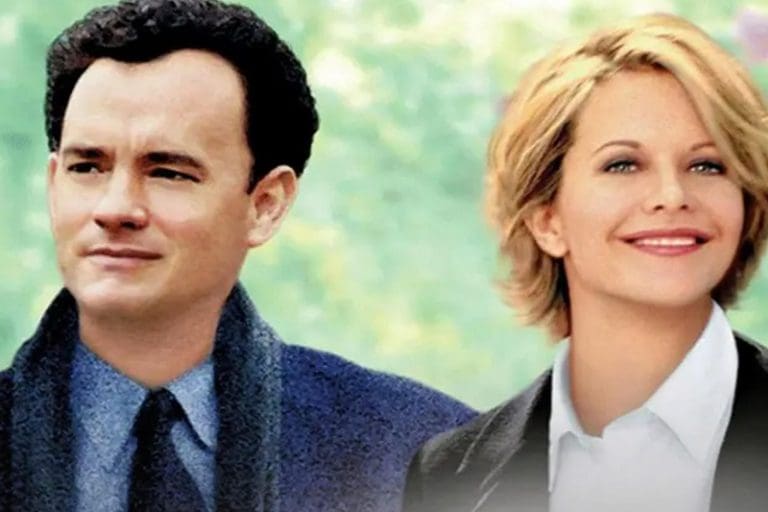
My friend’s story reveals the sickness of a culture that values a chemical reaction more than personal choice, devotion, and honor. I enjoy a good rom-com as much as the next person. But they are all about feeling emotion. In so many ways, clever screenwriters have the main characters saying, “I’ve never felt this way before,” grounding relationship decisions in whether the main character has felt the requisite emotions. But commitment should not depend on emotion. Emotion should depend on commitment.
By itself, emotion is fickle. If emotion is the foundation of commitment, then love is totally unreliable. As the Proverb says, “He that trusteth in his own heart is a fool: but whoso walketh wisely, he shall be delivered” (Proverbs 28:26). In Hollywood movies, emotion conquers everything, including character.
C.S. Lewis wrote in The Screwtape Letters, “humans can be made to infer the false belief that the blend of affection, fear, and desire which they call ‘being in love’ is the only thing that makes marriage either happy or holy.”
BYU Family Studies professor Jason Carroll followed on this idea by observing that, “In some cases, individuals fear committing to what appear to be very promising relationships out of concern that they are not in love enough.” The great folly in this kind of thinking is not so much that one might marry purely in response to emotion but that, once married, that person may begin to question his or her choice when the dopamine high that drove him or her to marry in the first place begins to subside, as it inevitably will.
From a purely rational point of view, this kind of emotion-driven choice makes little sense. Is it reasonable to believe my emotions tell me something useful about another person? My emotions can tell me a lot about myself if I can manage a little self-reflection and honesty. But judging another person by my own emotional reaction to him or her is not just unfair but irrational–and we human beings are often irrational. Think of the dashing and well-spoken serial killer, Ted Bundy, who received fan mail by the wagonload from adoring women–who he might have tried to kill if he had a moment alone with them.
Familiarity does not always breed contempt. In most good marriages, the excitement of a new love interest is gradually replaced by the comfort and reassurance of a partner that time has allowed you to know, trust, and respect. This is a trade worth making. A relationship built only on passion cannot be sustained. But a marriage based on trustworthiness and character is sustainable and can help you intentionally recreate the former passion.
I do not suggest that emotion has no place in marriage. We do almost everything in life because we want to feel good. We marry because we want to love and be loved and feel secure. Security in a relationship is grounded in a long-term commitment. If we manage our thought lives skillfully, we can find the thrill and passion of new love reborn time and time again. As Professor Carroll said, “while feelings of love and happiness are indeed present in good marriages, they are best understood as the fruits of those relationships, not necessarily the roots.” A relationship founded on correct principles will produce the emotions we long for in an authentic and sustainable way.
The roots of a love relationship are choice, commitment, devotion, and loyalty. That is why, in our faith, marriage is bound by a solemn covenant with God as well as with our spouses. In our time, it is popular to say, “I am spiritual but not religious.” While cultivating spirituality is certainly rewarding, the idea of spirituality with religion stripped away deprives the individual of the sacraments and covenants that undergird a consecrated life.
It is not enough simply to feel loving emotions. One must be committed to love and keep loving. While emotions ebb and flow, a covenantal commitment to love is constant. Another popular phrase, probably coined by Kent Nerburn, is “You don’t choose love. Love chooses you.” Again, this is false doctrine and abdicates our responsibility for the promises we make. As father Lehi said, children of God are created “to act for themselves and not to be acted upon” (2 Nephi 2:26). President Thomas S. Monson similarly taught the correct in April General Conference in 1988, saying you should “Choose your love; [and] love your choice.” In other words, love does not fall on us unbidden. We choose it! And then we keep choosing it. When the love of two people is intentionally grounded in their power to choose, it has a strong foundation capable of withstanding the combined powers of earth and hell.
Ultimately, our fleeting emotions do not determine whether our marriages will survive–our choices do. Fatalistically believing that a marriage is destined to survive or fail based on the emotions of two people at a particular moment is nonsense. A few years ago, a young temple-married man came to me for coaching. He told me he loved his beautiful wife “as a friend,” and even claimed she was his best friend. But he had fallen for another woman and had stronger feelings for her than for his wife. This man wanted me to validate his decision to “follow his heart” and leave his wife to pursue a relationship with the other woman. I think he was disappointed that I told him these feelings were smoke and mirrors and would not last.
Some reading this article may doubt whether their feelings for their partners are sufficiently intense to make a commitment to marriage. Others may wonder whether their feelings for the person they currently ”feel” love for will endure. Others who are married may wonder whether their waning emotions or loss of physical attraction for their spouses indicate that they married the wrong person or should divorce and find someone for whom their feelings are stronger. To any who worry and wonder, I want to tell you boldly that you are asking the wrong question.
If you know you can commit yourself to your partner and remain committed to keeping love alive, and you strongly believe your partner can do the same, then you have what it takes to make a marriage where the sweetest feelings of all will prevail–whether you are on a cruise together in Caribbean or holding hands as one of you is confined to a hospital bed with a terminal illness. The thing that will hold you together in good times and in bad is your deep commitment to each other, fortified by a covenant with God Himself, to love and serve one another come what may. As the years pass and you confront life together, your love will deepen far beyond the thrill and excitement of a new love. Since Cathy and I married seven years ago, I have seen her through several serious health crises and major surgery. We have lost a baby to miscarriage. She has seen me through several career changes and, above all others, Cathy was my rock and support in the wake of my sweet 24-year-old son’s tragic death. We have also shared trips to exotic places, two beautiful granddaughters, and writing a book together. These common experiences, flowing from our commitment to each other, have bonded us to each other in a way that a fleeting dopamine high could never really imitate by itself.
In the right context, intense emotional connection is surely one of the most satisfying elements of marriage. You might ask whether I believe particular relationships were “meant to be” and whether the feeling of being “in love” tells us whether the relationship is right. I consider meeting Cathy a blessing from the Lord. But, even in recognizing that blessing, I had to make an intentional choice because I am the one who ultimately lives and builds a life with her. So even if I recognize that the Lord has blessed me to meet someone I have a good connection with, my commitment (and hers) to accept that blessing with all it entails is the determinative factor in whether the relationship will be eternal or not. And feeling powerful emotions for someone else does not change that.
Resources:
Watch for the upcoming video on LILYTube: What Hollywood Gets Wrong About Love and Relationships.
Intentional Courtship can help in this journey.
About the Author
Jeff Teichert, and his wife Cathy Butler Teichert, are the founders of “Love in Later Years,” which ministers to Latter-day Saint single adults seeking peace, healing, and more joyful relationships. They are co-authors of the Amazon bestseller Intentional Courtship: A Mid-Singles Guide to Peace, Progress and Pairing Up in the Church of Jesus Christ of Latter-day Saints. Jeff and Cathy each spent nearly a decade in the mid-singles community, and they use that experience to provide counsel and hope to mid-singles and later married couples through written articles, podcasts, and videos. Jeff and Cathy are both Advanced Certified Life Coaches and have university degrees in Family & Human Development. They are the parents of a blended family that includes four handsome sons, one lovely daughter-in-law, and two sweet little granddaughters.
Purchase Jeff & Cathy’s book Intentional Courtship:
https://amzn.to/3GXW5h1
Connect with Jeff & Cathy:
Website: http://www.loveinlateryears.com/
Podcast: https://anchor.fm/loveinlateryears
YouTube: https://www.youtube.com/c/loveinlateryears
Facebook: https://www.facebook.com/groups/LoveInLaterYears
Instagram: http://instagram.com/loveinlateryears/
Email: [email protected]