









The Chosen, the international hit TV series on the life of Jesus, was unusual in the world of film and television from its inception. The show’s first season started as a crowdfunding campaign that raised more than $10 million, breaking the record for highest crowdfunded media project of all time by nearly double. It was a bold statement made by a passionate public that they wanted to see this material made, even if studios didn’t think it would sell. They wanted it so much, in fact, that they were willing to give their own money to make it happen.
Now in production on its 6th season, the ardent, grassroots support continues and the world is taking notice. The Chosen is trying to accomplish something monumental, in addition to the intended seven seasons on the life of Jesus with production value that rivals big studio movies, but without big studio support; the show’s creator and co-writer Dallas Jenkins hopes the show will reach 1 billion people. With more than 280 millions viewers and counting, the reality of that goal is getting closer and closer.
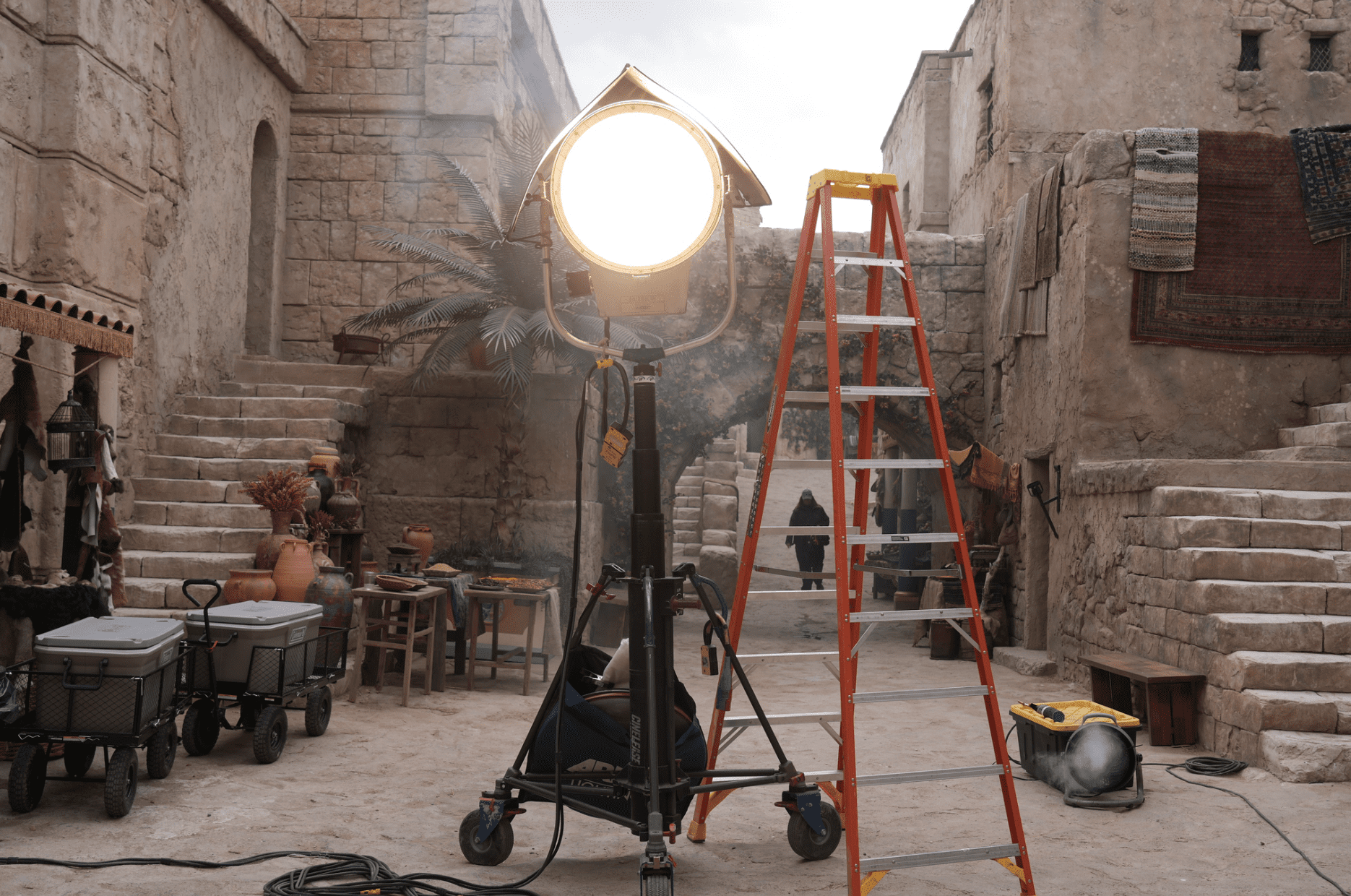
But all that, though very impressive, I already knew. It was what I learned on a recent visit to the set of The Chosen where they were filming a portion of Season 6 at a miniature Jerusalem owned by The Church of Jesus Christ of Latter-day Saints in Goshen, Utah, that deeply impressed me.
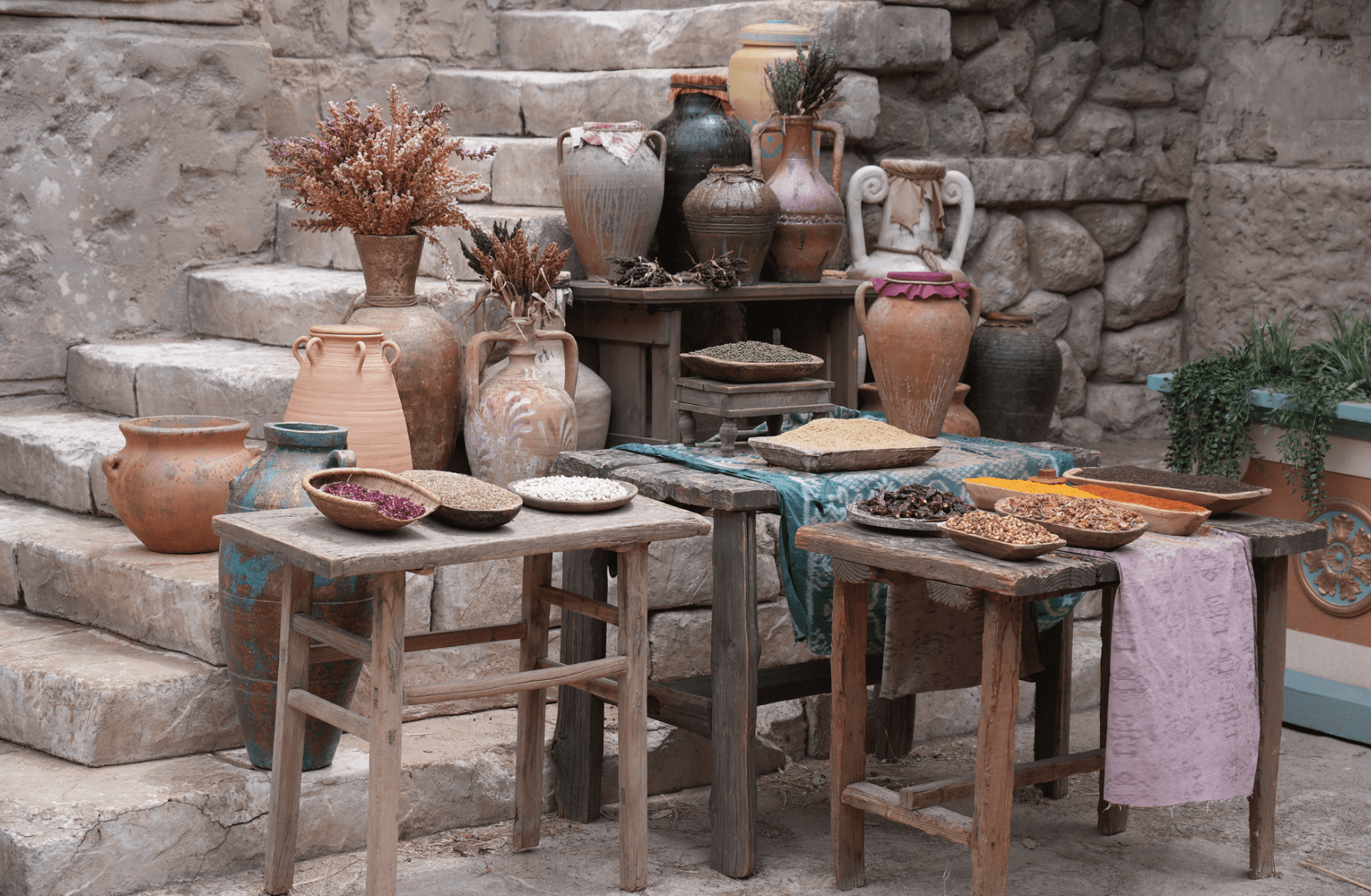
As a background to my experience, I’ve been on many film sets before. I have been an extra (and occasional hand double) on sets with Hallmark, Paramount Plus, Disney Channel, HBO, Amazon Prime, and many independent productions in addition to directing a few of my own short films. I had even been down to the Goshen set before for other projects.
But there are a few things that truly set The Chosen apart that I was amazed to learn in my brief stroll through their shoot day:
-
The level of personal investment of everyone involved
We arrived on a very unusual day for the production. They were filming a portion of Christ’s journey of carrying his cross to Golgotha and there was a quiet respect from everyone waiting for their next instruction to bring this world-changing moment to life. The only problem was that the clouds were darkened and waves of rain and thunder were coming and going, making it difficult to proceed.
As the extras were released for an early lunch in the hopes that the storm would pass while they ate, we were invited to journey down to explore the now empty set. As we walked, a man on a golf cart passed by us going the other way and called out, “you can’t even film the crucifixion without the heavens weeping!” It was such a striking comment from someone who may have been a gaffer or a transpo guy or an AD. I have no idea what his job was, but his conviction became immediately clear. Though the comment was made in light humor, it came from a place of, not only knowledge of the events of the crucifixion, but also respect for them. Every person we spoke with seemed to be treating the subject matter with very personal deference, though they came from differing faith backgrounds. When I asked Dallas Jenkins if he felt added pressure as they film the crucifixion season of the show, he said, “we think every aspect of Jesus’s life is important to get right. We have taken seriously and felt a weight and responsibility since season 1.” That sentiment was clear throughout our visit in everyone with whom we interacted.
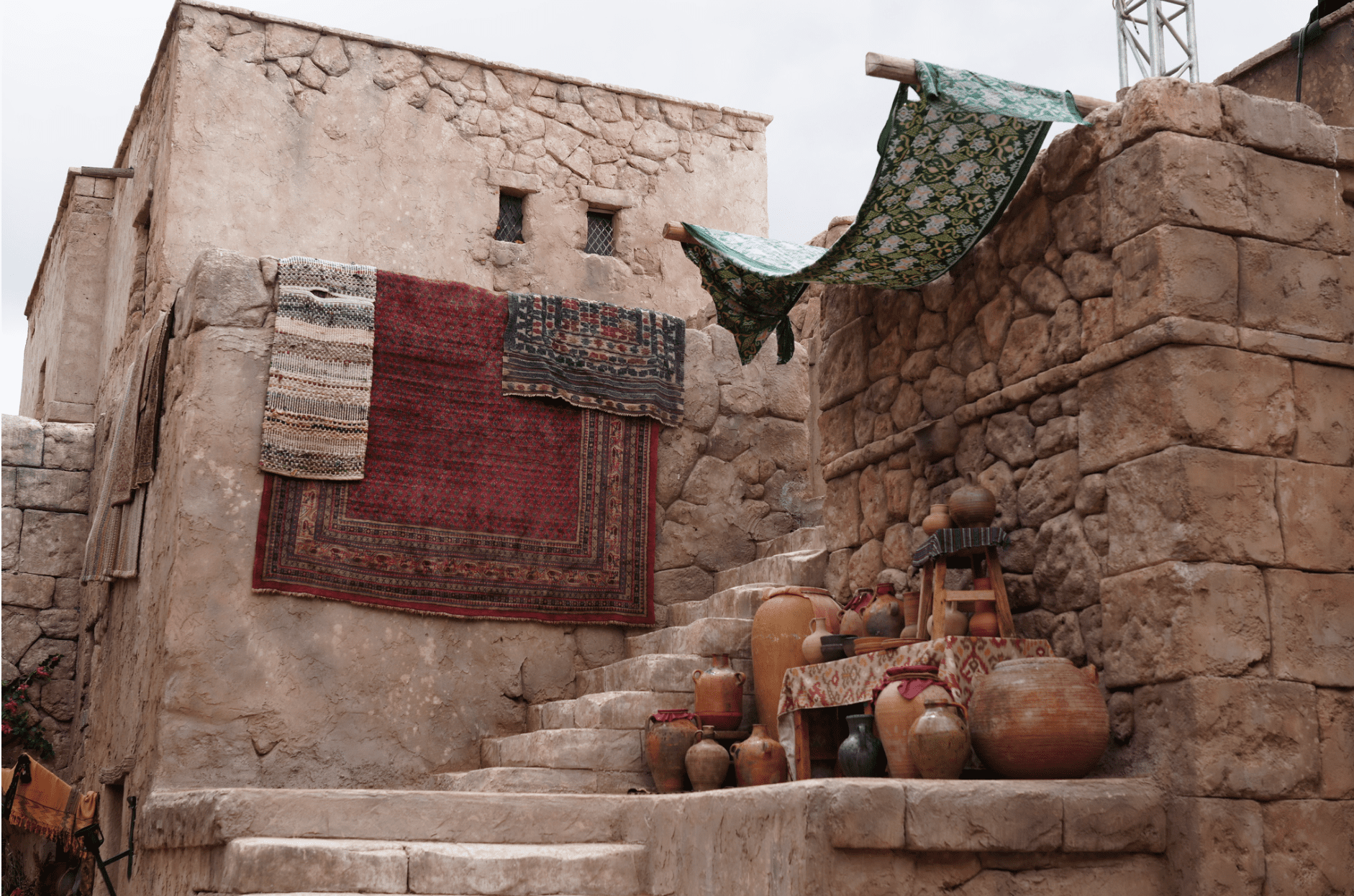
That deep investment in the reality of the story is particularly highlighted by the efforts of the Art Department in creating, as often as possible, a real physical space for the actors to perform in. B.J. Forman, the department coordinator, said they give the actors “a 360-degree set 99% of the time. They are completely immersed in their world. There are no limitations as to what their staging or blocking can be…I’ve never seen anything like that.” Truly, that is unheard of in today’s cinematic world of fantastical settings that are actually actors in blue screen rooms with almost nothing practical to see or interact with. Forman also mentioned that the Church Motion Picture Studio representatives that manage the Goshen set said The Chosen had added more detail than any other production that had ever come through and that many of the changes they made ended up becoming permanent alterations to the set because those that manage it liked them so much.
-
Extras that volunteer and costume themselves
The level of personal investment usually found on a big set, particularly among the extras, is fairly low. Some are first timers, excited to see how everything works; a few are just there for the free food; some hope they’ll be noticed and get some kind of big break. But their relationship to the show itself is usually fairly transactional. I once worked for a day on a political TV series for Amazon that I thought was some sort of drama. A friend and I sat and made up funny backstories for our background characters that might fit with what we thought was some kind of hard-hitting political premise. It wasn’t until someone came in and shouted to another crew member, “Ok, can we get set up to get a POV shot for the dog?” and a giant droopy blood hound lumbered through that I thought, “Oh. Maybe this is a comedy.” I still have never looked up or watched the show. It was a funny day and life moved on. Extras are usually in and out and rarely think much of the project again.
Contrast that with Hannah Teoh, who flew 17 hours from Singapore to be on set with The Chosen. It wasn’t her first time coming and I’m certain she’d do it again. It was originally the enforced idleness of COVID that led her to investigate the show. “I said, ‘every faith-based show I’ve ever seen is a little cheesy. I’m not going to watch anything faith-based’, but I was bored, so I watched it and it blew my mind. The story telling was refreshing. It reaffirmed so much of my faith that was important to me, and I said to myself, if this is crowd-funded, I am going to back them for sure.”
So, she not only donated to the production’s crowdfunding campaign, but she paid her own way (more than once) to come across the world, and be part of the show.
Lucy and Brandon from Jacksonville, Florida came to be background for The Chosen with just 11 days left before their wedding. “We’re super excited about it. The wedding is in Florida. When they heard we were leaving just a few days before the wedding to be in the show, our parents, our vendors, our wedding coordinators are saying ‘where are you going the week before the wedding?’” He also acknowledged that “my phone has been blowing up all day with the birthday texts. It’s also my birthday.”

Brandon and Lucy
A birthday and a wedding, but Brandon seemed overjoyed to be in Goshen, Utah on The Chosen set instead of celebrating with friends or planning his big day. Watching him light up as he told me how he’d never really liked the concept of religion before, but watching The Chosen had intrigued him enough to read the Bible and now he had joined a church he was joyfully involved with, really showed me that this isn’t just an interesting show, it has the power to change lives.
Of course, the power at the center of that lies with the profound impact of the Savior’s life itself, but this production was willing to take the risk and the creative license to bring that story before a burgeoning audience in a new way and it means something to so many.
-
Creative Paths to Funding an Expensive Endeavor
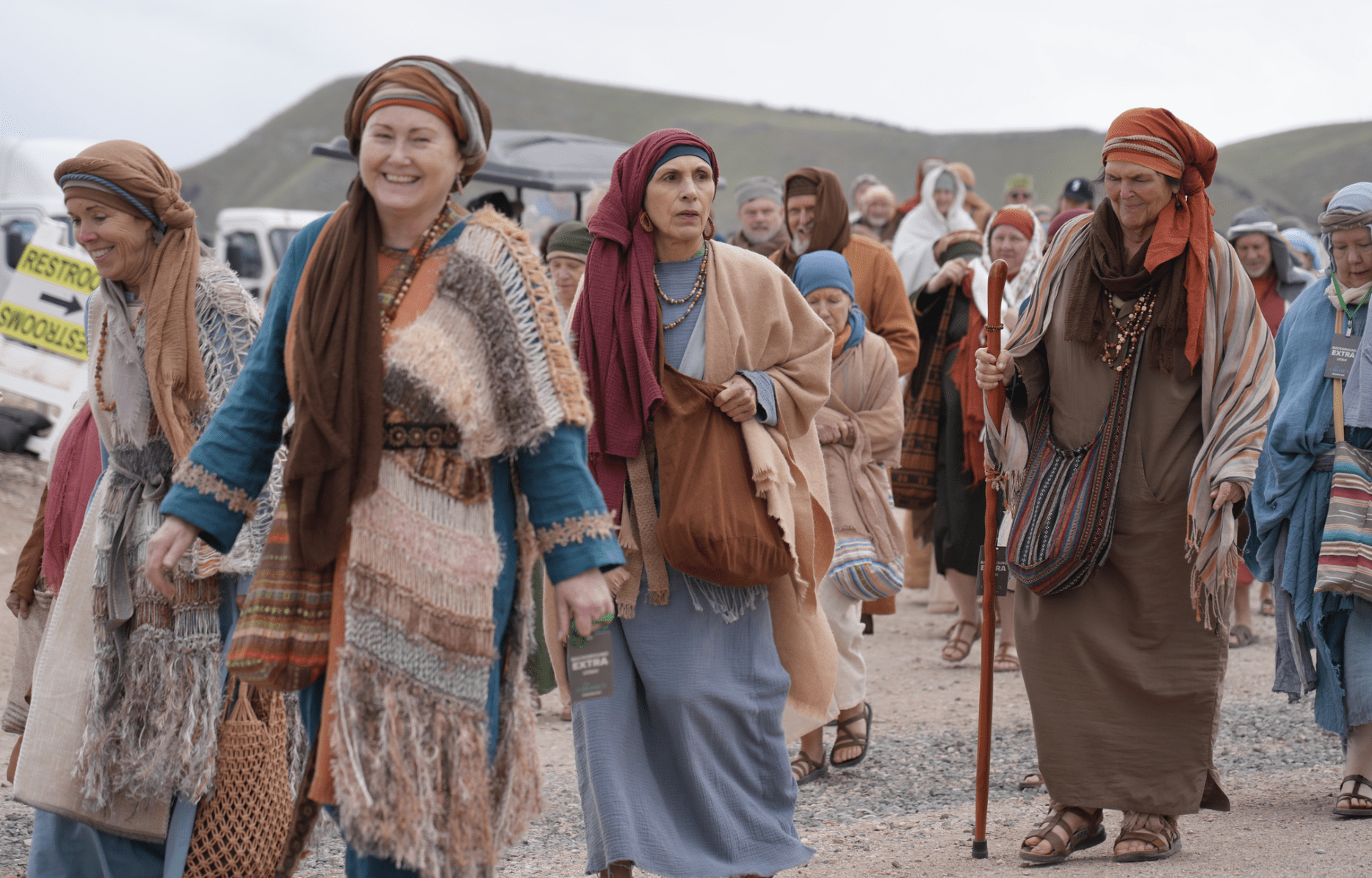
Continuing to make the show is an ongoing and unbelievable expense. But I’m impressed with the creativity involved in making the budget stretch. Those deeply impassioned extras came to set on their own dime, brought their own costumes (with the help of a costume guide that was distributed to each to keep the color scheme consistent and as historically accurate as possible). For the one day that we visited, they had 600 extras. To costume them traditionally would cost the production no less than $30,000 and to pay them regular rates in Utah for that one day would probably cost around $75,000. So, a traditionally structured production would’ve spent more than $105,000+ for that one day of shooting just to have the extras there. But The Chosen approached it differently by opening the way for those who would feel it a privilege to be on set to fill those roles instead. These fans have the chance to crowdfund with their very presence and make it possible for the show to go on while they make a memory they’ll keep forever.
Another endeavor that served the purpose of creating and sustaining a loyal fanbase while continuing to fund the show was ChosenCon. Much like ComicCon or Salt Lake City’s FanX, the event invites fans to gather for panel discussions, break-out sessions and chances to meet the cast and creators of the show. Fans are thrilled to get the up close and personal look at what makes their favorite show come to life and get to leave with memories of meet and greets and merch while also having helped the show’s funding for another season.
The Chosen has also taken the unique approach of sometimes releasing episodes in theaters. Its most recent theatrical release illustrated just how much fans continue to show up for them. The Chosen: The Last Supper grossed over $11 million on its opening weekend coming in at number 3 at the box office. It became only the third faith-based film since 2020 to open to at least $10 million at the box office.
It is remarkable to me that the team at The Chosen, who are so dependent on the support of their fanbase, have found a way to open their doors and include them and interact with them in so many different ways rather than just keep asking for money and say the resulting show itself should be enough of a reward. It has sort of created its own little behind the scenes culture which has served to send its message even further than it would’ve gone without it. Everyone that has a personal interaction with the production goes away feeling loyal to it, comes home and tells their friends about it, tells their coworkers why they took time off of work to go to a conference or a shoot day; the word of mouth that comes from their powerful, personal moments is undoubtedly unmatched and the goal to reach a billion viewers gets that much closer.

-
Getting to bear testimony on a national stage
And the spreading of the message of the show by word of mouth has been essential because national networks aren’t always quick to book guests from faith-based productions. Though this show has the unique advantage of being a continuing series, so networks get a chance to see what the response was to a talk show appearance; then the next season premieres, and there’s more to talk about and the potential for another visit from the actors or creators of the show. The publicity team has the chance to build relationships over time and try again, and again for spots on the national stage.
This most recent season saw Jonathan Roumie (the actor who plays Jesus) appearing on The Tonight Show with Jimmy Fallon, Good Morning America, and The View. It is a beautiful and unique opportunity to hear such respectful and reverent discussion of doctrinal themes on the national stage, when religion and religious people are much more often the butt of jokes than the subjects of, or even participants in, thoughtful dialogue.
Roumie was asked on The View how he takes care of himself in order to “be the person people would like you to be and also stay who you are”. He answered, “For me, it really comes down to making sure that I’m right in my own relationship with God. For me that means acting out my faith, practicing my faith and then trying to live…[what] Jesus taught. He set a really high bar, it’s not easy to follow in his footsteps…but I try my best…” On a previous visit to The View, his personal story that culminated in “…get on my knees and surrender my entire life and my career and everything I had up to that point over to God” was met with cheers of agreement. It is unique that The Chosen has paved the way for someone to say something like that and discuss their personal spiritual journey and be met with not only respect, but sometimes assenting applause on national television.
“[The Chosen] is something that’s for everyone. Not just for one group, it’s for all groups” was actress and host Whoopi Goldberg’s conclusion at the end of Roumie’s most recent visit to The View.
I’m sure telling the greatest story ever told in as accessible and faithful a way as possible was always the primary goal of The Chosen, but getting to testify before a growing and global audience again and again must be a rewarding side effect.
All told, I walked away from my brief visit to The Chosen set quite stunned by the commitment around every corner and the creativity that has grown out of that commitment to innovate ways to make what seemed impossible, possible. It made me more certain than ever that film is too powerful a medium to abandon to corruption or immorality. Instead, we see our faith perspectives can and should find a home in the industry as The Chosen has. There is room for the religious at the table. We just have to have the courage to show up and do the work, and realize that our stories are worth telling and there are people out there that are ready and waiting to hear them.



CarolynJune 11, 2025
I enjoyed this article very much and learned a great deal about the inner workings of the production. I have a different take on including the interview from The View. Like many, I too find this show offensive, brash, and lacking in social value. What I found profoundly interesting in this interview was seeing a very different side of each of the women of The View. Who knew they could actually be calm, soft spoken, respectful, and yes, even inclusive. This change of behavior came from the very subject matter, our Savior Jesus Christ, His ministry, gospel, and example for all humanity no matter where or when we are born into mortality. He can and does change hearts and behavior. Thank you for your article and everything included in it. Will I watch The View? No, but I have perhaps a bit more tolerance for the women on it, and I certainly have even greater respect for the actor portraying Jesus. His soft spoken courage has given me the courage to testify of the Savior. Thank you.
Doris WilliamsJune 10, 2025
Mariah, I love the Chosen and I loved your article. Your descriptive, sensitive, beautiful writing just brought everything to life regarding The Chosen's production, fan participation, the amazing way things are funded, and each involved person's humility and respect for Jesus' life and works. Thank you so much.