






These days I’m teaching the Old Testament in early morning Seminary. Did I mention it is early in the morning? Though my brain may not be fully awake, even at that hour there are some pretty sharp, inquiring minds at work in the room. You’d have to get up even earlier in the morning to fool this group of teenagers, and I love that about them. These kids are at the age where the brain kicks in and begins to question everything that has been loaded into it during the first stage of life.
Studies on the teenage brain tell us that during the period between ages 13 and 25 the brain, already 90% formed, enters a period of refinement. Unused synapses are “pruned” and the frontal areas, so crucial for making choices and controlling behavior, become more streamlined and able to function rapidly. Some of the more annoying qualities of adolescence (thrill-seeking, peer-clinging, defiant behaviors) are actually essential in preparing the teenage brain for the great ‘exodus’ that will define his or her future, namely, the move away from home and family. A recent article in National Geographic makes this interesting statement about adolescence:
“The period’s uniqueness rises from genes and developmental processes that… play an amplified role during this key transitional period: producing a creature optimally primed to leave a safe home and move into unfamiliar territory.
The move outward from home is the most difficult thing that humans do, as well as the most critical—not just for individuals but for a species that has shown an unmatched ability to master challenging new environments.” (“Beautiful Brains,” by David Dobbs. National Geographic, November 2011)
Plagues and Miracles
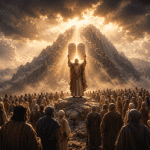
The move from a safe home into unfamiliar territory also aptly describes the spiritual path of the teenager. Thus, it seems fitting to enter into the books of Genesis and Exodus with two-dozen teenagers, and see what we can find to guide us.
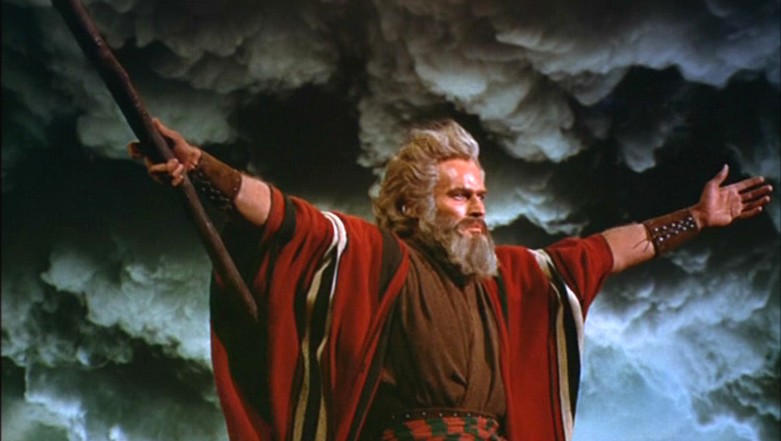
What we find are miracles, certainly, but not warm, cozy ones. We don’t find gentle, heartwarming moments with health suddenly restored or blindness cured, as we find the New Testament under the ministering hands of the Savior. No, here we find a more frightening set of circumstances. God sends a flood to destroy mankind, but then miraculously gathers a faithful few onto the ark. He gets the Egyptians’ attention with famine, flood and plague, and then sends his prophets to show His power. And in the meantime, everybody (most of the prophets included) makes big mistakes, and suffers consequences. It’s pretty scary stuff that warrants an adult rating. In the Old Testament we have definitely left the safe home of simple faith and entered into “unfamiliar territory.”
That’s why I think the Bible is great reading for teenagers. For one thing, it’s difficult, and causes the mind to stretch and reach, which is so good for that still-growing muscle. Better still, most of the great theological questions are raised in the Bible (many of them in the book of Genesis alone) but not all of them are answered.
We could, for example, spend the whole year discussing the first line: “In the beginning, God created the Heavens and the Earth.” Generations of theologians, scientists and Bible readers have spent centuries discussing just how that came about. And the paradoxical situation where in order to obey one commandment Adam and Eve must choose to disobey another is most recognizable to teenagers, forced every day to choose between confusing options and find the greater good. The Old Testament invites us to take the first giant step into spiritual adulthood. With its puzzling and inspiring stories, it encourages us to both think and believe.
Unfortunately, in today’s society, spiritual adults are an endangered species, and thus the climate is a pretty chilly one for the thinking believer. In school, through the media, and in almost every other setting, our kids are taught that to believe in God is foolish, and that intelligent people put aside all that superstitious nonsense as they reach adulthood. It is a pleasure to be a voice in the wilderness, assuring young people that it is not necessary to give up on God, and that He may, in fact, empower one to think more clearly and rationally from a basis of faith. But that doesn’t mean it will always be smooth sailing. The great believer/ thinker Joseph Smith said, “A fanciful and flowery and heated imagination beware of, because the things of God are of deep import, and time, and experience, and careful, and solemn, and ponderous thoughts can only find them out. “
The Difference Between God and Santa Claus
As we talk about the miracles in the Bible we have to find a way to separate fact from fiction. Ironically, one of the best ways to do this is to read a lot of fiction. As children we are told fairy tales and mythological stories. They are an important part of every culture; these legends and stories help the child come to terms with all of the unseen dangers of existence. (See my article “Harry Potter and the Uses of Enchantment,” Meridian archives, for a further discussion of this point.) When we are little we simply believe in Santa, the Tooth Fairy and the boogey man. In addition, fairies might sprinkle dust to help us fly, and if we click our heels three times and think, “There is no place like home,” we will miraculously get there.
From fairy tales and stories we move to novels, works of fiction and fantasy where the laws of nature apply and yet don’t apply. Marvelous coincidences occur in fiction (that rarely occur in real life) that move the narrative along and cause a resolution of the conflict. The poor girl finds, just at the last moment, that she is an heiress. The missing grandfather turns out to be the person living next door. X actually does mark the spot where the missing treasure can be found, and the poor man finds it and is saved. One of my students put it this way: “We have Greek myths, and old legends, and fictional stories, and the Bible with its Eden and ark and flood and plagues. What is the difference between the false stories and the true ones?”
The difference can be found in the difference between God and Santa Claus. When we are children we believe that Santa will bring us gifts if we are good. Now, many adults have never progressed beyond the childish view of God as Santa Claus, and grow bitter and angry if God does not, in fact, bring them the things on their list. (In fact, behind many of the cynical, sophisticated philosophies one reads about life and its lack of meaning, one can feel the hurt and anger of the child who, though worthy, didn’t get what they expected out of life.) But, as Paul told us, there comes a time to stop thinking like a child and put away childish things. God isn’t Santa Claus, and the Old Testament makes that point in big, bold statements. God is a loving being, but he is great and powerful too; you don’t want to get on the wrong side of Him.
He is a far more complex being than we can understand as children.
The Old Testament, flawed as it is, issues a humbling challenge to us: we may not be as smart as we think we are. God thoughts are not ours, and it takes a lifetime of solemn and ponderous thought on our part to even begin to find Him out.
So what is the difference between the miracles of the Bible and fictional stories? The difference is in their power. Unlike the wishful thinking in the myths and fairy tales, there is an actual, moving power behind the events in the Bible. It is like the difference between a model of a car and one with a real engine. When you put the key in the engine of a car, it lurches forward; it has power in itself. It can take you somewhere, or it can run over you, but it’s real. Santa is a story and God is really there. When He acts, things happen, though we don’t always understand them. This is why missionaries don’t have to “sell” the gospel. They only have to hand over the key to the car, by inviting people to get on their knees and pray about the scriptures. When they do so in faith, the car lurches forward and begins to move, and the awed investigator hangs on for the ride. If you pray about Santa, you end up with a story. If you pray to God, a new power is unleashed in your life. As Alma said, “Is this not real?” It is.
Miracles Happen
In fiction, miraculous things happen: Jane Eyre hears her soul mate’s voice at the moment she is about to commit herself to another man. Oliver Twist is caught ‘stealing’ from his own lost grandfather. All of those characters in Shakespeare’s comedies (I can’t keep them straight) stumble over each other in forests or far-distant cities and get happily together again. The unlooked-for coincidence, the deus ex machina, the “sudden joyous turn” in the narrative that G.K. Chesterton describes, is at the heart of fiction. Just when there is no hope, something amazing happens, and everyone lives happily ever after.
I contend that we love this quality in fiction because in our hearts, we believe in miracles, the real ones. And, according to the Book of Mormon, belief is the magic ingredient that actually makes miracles happen in real life. In my experience, most people believe in miracles, though they may not be religious. Stop any person on the street and ask if anything miraculous has ever happened to them, and you will hear a story. There is hardly a person who hasn’t had something stranger than fiction happen in their ‘real’ lives. Here are three examples from my own ‘real life’ of experiences that are stranger than fiction. Coincidentally, all have to do with that great magnet for miracles, missionary work:
1. Thirty-five years ago, when I was studying Japanese in the Language Training Mission in Hawaii, Spencer W. Kimball gave a talk and called for more missionaries, thousands more, from all the countries of the world. He admitted that this would take a miracle, and then held up a picture of Sarah, laughing as she heard the ‘holy men’ tell Abraham that she would bear a son. In his gravelly voice Pres. Kimball, said “Is anything too hard for the Lord?” He called for missionaries to come out of every nation, to teach their own people. That seemed impossible at the time. When I arrived in the Sendai mission I was assigned to the only Japanese sister. (There were a handful of Japanese elders as well.) A month later, Pres. Kimball came to Japan, and the Japanese missionaries went to hear him give this same talk in a stadium in Tokyo. All of my future Japanese companions heard him speak, and miracles happened in each of their lives that caused them to literally drop what they were doing and go on missions. At the end of my mission there were 28 Japanese sisters and around 40 Japanese elders in our mission alone. It was a miracle.
2. We have a dear young friend who has recently completed a mission. The eighth of ten children in a most interesting family, he is the first to remain faithful in the church into adulthood. We invited his family over for dessert, and invited the missionaries as well. One of the elders gave a message about prayer, and asked if anyone had ever experienced the answer to a prayer. The father of this family, an avowed atheist, quietly shared an experience where, while hiking, he began to slip down a hillside to an almost certain death, and had a voice clearly tell him what to do to survive. He spoke with reverence as he bore testimony of the heavenly voice. He was an atheist, but he was saved by a heavenly voice. It was a miracle.
3. Just last week I awoke early in the morning, unable to sleep. The app on my phone that lets me listen to the scriptures wasn’t working, so in desperation I turned to the Mormon radio channel. There was a show on called “Why I Believe” and a woman was telling the story of her conversion in Arkansas in 1972. I listened drowsily and then suddenly my eyes snapped open as she repeated what her missionary, Elder Green, had said to her the first day she came to church, and how she knew he spoke with God’s inspiration, something he could not himself have known. She was talking about my brother, Alan! I was able to call him later and let him know that forty years after the event, his efforts in the mission field continued to bear fruit. What were the odds that I would awake in the night and tune into a station I never listen to, just in time to hear my brother mentioned, so that I could let him know that he was appreciated and loved for his service? It was small, but it was definitely a miracle.
As we begin to talk about miracles, even small ones, we should mentally remove our shoes. We are on sacred ground. Unfortunately, many miracles happen unnoticed, and this is a shame, because they are an unceasing source of joy in a dark world. As we read fiction and experience the unexpected, joyous turns of narrative that bring resolution in people’s lives, we are better prepared to appreciate the real miracles that happen in our own life narratives. As we recognize them, express gratitude for them, write them down and share them with our children, miracles will increase in our lives, and so will our faith.
In the midst of the plagues of Egypt there fell three days of darkness. Egyptians couldn’t see a thing, and fell all over each other. But the scripture tells us, “The Israelites had light in their dwellings.” One of the functions of great literature is to shed light in our dwellings in the midst of a dark world. Great fiction can lead us in the mental and spiritual exercise of opening what Dickens called “our shut-up hearts” and making room for the miraculous.
With that as a starting point, a thoughtful faith can grow toward a perfect brightness, and when real miracles occur, we will recognize them for what they are, small beacons to light us on our journey.
Marilyn Green Faulkner likes to read and talk about books, and is the author of Back to the Best Books: How the Classics Can Change Your Life. Available at amazon.com. This year, give a great book for Christmas!