










Too often we cling to fairy tales instead of to history.
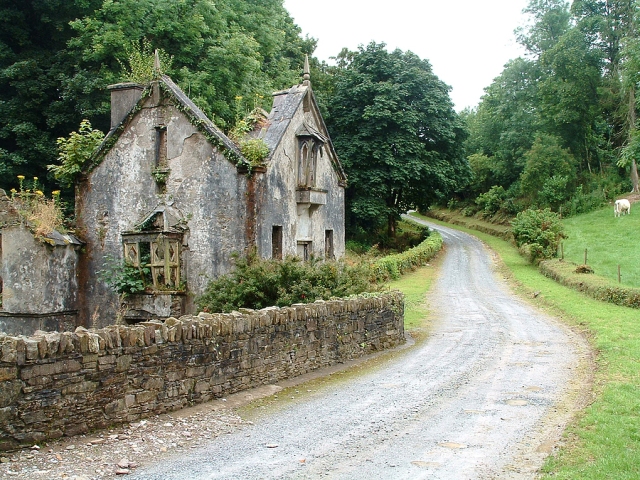
This month we celebrate Saint Patrick’s Day, in honor of the man who brought Christianity to Ireland. But the story is a fairy tale. And although there is significant evidence it is a fairy tale, the fairy tale persists
The fairy tale persists because the original records of how Christianity came to Ireland were lost. It persists because some deliberately rewrote the history. It persists because too many modern scholars and lay people, including Latter-day Saints, ignore the truth.
To understand the true history we must look not only at how Christianity came to Ireland, but to the whole British Isles. For the basic and wonderful answer is the same. Christianity was taken to the British Isles by Christ’s apostles and seventies.
Did not Jesus command His leaders “Go ye therefore and teach all nations…?” (Matthew 28:19).The British Isles were definitely not least among those nations. In fact they were among the very first to receive the gospel in that dispensation as well as our own.
Eusebius is one of many ancient historians showing the apostles obeyed Christ’s command and went. “The apostles passed beyond the ocean to the isles called the British Isles.” Sir Henry Spelman, a respected British scholar, “It is certain that Britain received the faith in the first age from the first sowers of the word.” Polydore Vergil, a Roman Catholic scholar, agreed. “Britain was of all kingdoms the first that received the Gospel.”
Modern scholars of the world agree Christianity was there early, but dismiss claims the apostles took it, substituting assumptions it came with the Roman military. However, Latter-day Saints can put more trust in Christ’s word being obeyed and fulfilled.
And Tertullian in 192 A.D. wrote, “Regions in Britain which have never been penetrated by Roman arms have received the religion of Christ”[i] And there are many faith-based scholars and historians who relate supporting evidence. Among them Alford considered one of the most learned of Roman Catholic historians who wrote, “It is perfectly certain that before St. Paul had come to Rome, Aristobulus was absent in Britain.” [ii]
A British historian, Gildas, told when the gospel came. “We certainly know that Christ, the True Sun, afforded his light, the knowledge of His precepts, to our Island in the last year of the reign of Tiberias Caesar, A.D. 37.” Others agree with similar dating.
One authority suggests Paul didn’t address Peter when he wrote to the Romans (See Romans 1:7), though that was the custom, because Peter had been banished with other Jews from Rome by Claudius and was in Britain.[iii]
Freculphus Platina[iv] claims that in addition to apostles, other disciples came to the British Isles seeking refuge from Roman persecution. He gave the date of their arrival as A.D. 37. John is likely referring to such flights for refuge when he wrote Revelation 12:13-17 showing the Saints fleeing into the wilderness to escape powers of the serpent.
King Arviragus gave early Christian refugees in Britain a gift of land upon which to build a church. The Domesday Survey of 1088 A.D. confirms this gift, and it still stands in British records. An engraving of a brass plate from that ancient church was found, which states, “The first ground of God, the first ground of the Saints in Britain, the rise and foundation of all religion in Britain, the burial place of the Saints.”[v]
William of Malmesbury claimed a “mass of evidence” confirmed the antiquity of this very early Christian church made of wattlework in Glastonbury, England. He added “Moreover there are documents of no small credit, which have been discovered in certain places, to the following effect: No other hands than those of the disciples of Christ erected the Church at Glastonbury…” [vi]
Interestingly, its dimensions were similar to those of Israel’s Wilderness Tabernacle. Unfortunately in time, superstitious and apostate accumulations have belied its association with the simple disciples.
Ireland also received the gospel from apostles, not from Patrick. Patrick himself said Christianity and Christian churches already existed when he arrived. In a letter determined by scholars as “genuine,” he wrote, “In the days of old, the law of God was well planted and propagated in Ireland; I do not wish to take credit for the work of my predecessors; I share the task with all those whom God has called and foreordained to preach the Gospel.”[vii] Patrick was a good man, and his work did re-strengthen Christianity there, though his life has since been overlaid with many false legends.
We must understand that while today British, Scottish and Irish churches have many differences, this was not so in the beginning. They were completely united in their faith in regard to both beliefs and practices. Terms for this early Christianity, British, Scottish, or Irish are interchangeable.
The brief summary given here is only part of many significant evidences to these truths.
So why are these surprising truths not generally known?
These truths were lost because the New Testament does not contain the records of the preaching of the gospel to all the nations. We do have some legends regarding some of that work, i.e., that Thomas took the gospel to India. But for the most part, except in regard to Paul, records of the gospel’s being preached in distant lands were lost. This is partly because of the destruction of records by many different groups.
The Romans carried out destruction of Christian records under various Roman dictators such as Diocletian in 290 A.D. In fact, one of the goals of this destruction was scriptures held by Christians in the British Isles. Not only were records destroyed but many Christians there suffered persecution and even death.
Later, in the Fifth century, Huns, Vandals, Goths and others moved throughout the Roman Empire and burned institutions, thus blindly destroying records. Scholars from the Continent fled to Ireland, as far as they could go, taking religious and other manuscripts to safety. Later, however, Ireland lost many of these “libraries and with them almost all the historical sources for [their] earlier period and its spiritual culture.”[viii] Norwegian Vikings and then Danes were the record burners this time.
The Dark Ages got their name because of the great scarcity of histories or records of the first 500 years in Europe. Records were made, but later destroyed.
However, some records escaped destruction, and have gradually seeped to light showing Christianity was taken to the British Isles by the apostles and accepted rapidly.
Meanwhile, the Romans, who had destroyed the early records of Christianity in the British Isles, rewrote a lot of the history. At first, Roman war records, like most war records, portrayed their British enemy as ignorant and barbaric. The roads which the British had built were portrayed as being built by the Romans. The Druids were portrayed as cults of pagans and magicians, who offered human sacrifice.
The Roman Church then claimed the gospel was brought to Ireland by Saint Patrick, as the servant of Rome. They also claimed it was Augustine and forty monks who took the gospel to England. There is an admission of this kind of rewriting of history. “To manipulate ancient writings, to edit history in one’s own favour, did not appear criminal — in the ages of faith— if the end in view were otherwise [considered] just and good.”[ix]
However, more and more evidences have gradually come to light, many of them correct histories written by Roman Church historians, showing that the apostles themselves were the true source for the Gospel in the British Isles.
When Christianity did come, it was accepted very quickly, especially in Ireland. “Francoise Henry says, “In Ireland where Christianity entered without conflict, the conversion was carried out very gently… ” and notes their art and their spirituality merged quickly into Christian art and spirituality.[x]
And it entered purely. “In both creed and ritual this old Irish Christianity came into existence completely independent of Rome…. It entered into the life of the people of Ireland without fixed dogmas or any striving for ecclesiastical power.”[xi]
While visiting one of the Middle Age monasteries still standing in Ireland, this writer learned that early Irish monasteries had little similarity to those of the Roman Church. They were centers where priests were married and lived with their families. They were primarily centers of refuge for these and other families from marauders from the sea. Here were places with towers built with high openings to escape and to try to preserve records, since so many in the past had been destroyed.
At first, British Isle and Roman Christianity, when it became established about 350 A.D., co-existed peaceably — one north, one south, for centuries. Later, when great councils were held, the British Isle Christians were given preferential treatment, because the Roman Church officially recognized them as the first to accept Christianity.
While there were some differences in beliefs and practices, the Romans at first cared little whether Christians living in distant nations worshipped differently.
But about 596 A.D. conflict between Roman Christianity and British Isle Christianity began, as missionaries from both sought converts on the Continent. Under Pope Gregory I, the decision was made to bring British Isle Christianity under their control. And recent changes in the Isles made them ripe for such control.
.
*Due to a previous invasion by the Saxons, (between 446 and 501 A.D.), original British Isle Christians and leaders had fled to the north and to the west.
* When forty Roman monks led by Augustine arrived in Britain, they were welcomed in the Southeast by a Saxon King, Ethelbert. They were allowed to set up a center for Roman Christianity at Canterbury.
*Through King Ethelbert the Roman monks gained influence in southern England and began to baptize the Saxons living there.
* Both British Isle Christianity and Roman Christianity continued to function in England for a long time, each in their own geographical realms of influence.
* In time, however, Roman monks held meetings with all British Isle Christian leaders, requesting they accept Roman teachings, mode of baptism, other rituals and customs.
* The British Isle priests repeatedly refused. They felt the Roman Church had changed many things, while they felt they were preserving the purer form of Christianity.
*Eventually, one particular issue, the date of Easter, was brought before the King of Northumbria to decide. Not greatly learned, he was persuaded by a Roman priest that Peter himself had given them the date for Easter, and he declared that Roman Christianity should have precedence thereafter.
*By edict of a King, British Isle Christianity therefore fell under the dominion of Rome. But the British Isle priests continued to resist this takeover for centuries.
* The resistance against Romanization continued longest in Ireland, indeed until the eleventh century A.D.
Jacok Streit, born and raised in Switzerland, expresses deep gratitude for the Irish missionaries who brought Christianity to his ancestors in Switzerland thousands of years earlier. His is one of the records of this struggle between British Isle Christianity and Roman, but it also told in other respectable histories
Part II: Christianity was accepted quickly in the British Isles because they were of the House of Israel.
Since the Lord had stated His mission was to take His gospel first to “the lost sheep of Israel,” it would be very consistent to send His apostles to those lands where large bodies of Israel lived. If no one else knew their whereabouts, He did, as he did in the Americas.
When the Apostle James wrote his epistle, “To the twelve tribes which are scattered abroad, greeting,” to whom was he writing? Was he really writing an epistle with no hope of finding listening ears?
Paul before Agrippa (Acts 26:7) also spoke of all the tribes “instantly serving God day and night, [for the] hope to come.”
The British Isle Druids, who have been greatly misrepresented, were a very advanced culture, and were ready recipients for Christianity.
There are many evidences that the Druids and the people in the British Isles were of the House of Israel.[xii] Among other things: It was animal sacrifice not human sacrifice they practiced; they had cities of refuge; they had similar harvest festivals. They believed in the immortality of the soul and were payers of tithing. Several archaeologists, studying their ancient structures point out they are connected to the Semitic and patriarchal religion.[xiii]
Accumulating evidence points to the apostles taking the gospel to the British Isles and that its receptivity there was due to their ancestral faith.
Surprisingly, there is much evidence that many of the Irish were descendants of Judah. Although I have personally spoken with some who disclosed their patriarchal blessings showed they were of Dan.
Here are some of the evidences of early Jewish connections:
Anciently, they were recognized as of Jewish descent by others in the British Isles:
The Welsh traditionally called the Irish “Iddew” and the country itself “Iddewan” or Jewsland.
Ever present symbols of Judah exist throughout Ireland. We missionaries including the Mission President marveled at these symbols of Judah displayed prominently in the houses of government and throughout the cities on public service equipment. For example, the national symbol of Ireland is David’s harp.
Other significant symbols, seen everywhere, are three red lions; a rampant, red lion; and a red hand with a cord connected with it. These are not only symbols of Judah, but are specifically symbols of Zarah, one of the twin sons of Judah, who began to be born first, had a red cord tied around his hand, then withdrew it to be born second (See Genesis 38:27-30). Some ancient Irish believed they were descendants of Judah through Zarah.
Jewish/Irish Names
After I returned from Ireland and was visiting the Harold B. Lee Family History Library, I saw a book entitled, Irish Families: Their Names, Arms and Origins, by Edward MacLysaght. Inside were lists of names that appeared Jewish such as Coen, and variations Coyne, Kyne, Kilcoyne. The book said, “Coen (and especially the form Cohen) appears Jewish, but when met in Ireland it is almost always a true Irish name.”
(p. 98). But the truth seems to be: it was first of Judah, then Irish.
This is of particular interest because the name Cohen signifies a priest or Levite. And there is much evidence that a major group of the Druids were a priestly class.
The British Isles were prepared for Christ’s coming.
Ancient people in these Isles knew about Christ before He came. Many ancient mounds in Ireland and Britain testify of this. A great number were built containing a central passageway shaped like a cross. In Ireland at Knowth, not only the central mound, but nearly twenty surrounding mounds are almost all built containing this same cross-shaped structure inside. In fact, soon after Christ came, this area became a central site for Early Irish Christianity.
The Irish saw and understood signs of Christ’s crucifixion
Irish historians have repeatedly relayed a story about King Conor Macnessa of Ulster (died A.
D. 48) who asked why there was darkness over all the earth at a certain time, and was told by his Chief Druid, Bacrach, it was due to Christ’s current crucifixion in Palestine.[xiv]
Did Christ visit people in Northern Europe, such as the Irish?
There are some evidences the resurrected Christ visited peoples in Northern Europe, as He did in the Americas. At this time, however, the evidence is sketchy. Since the Book of Mormon said He would visit His “lost sheep” in other areas, to discover such evidence would not be surprising. Here are some tentative evidences.
There are many legends of Christ’s coming to Glastonbury. However, because the legends claim He visited during His mortal life, they are confusing and generally ignored.
It has been noted that a great time of peace came to Ireland at the same time as Christ, “a peace that lasted for centuries…”[xv] A similar time of peace came to the Americas, due to the visit of Christ among them and acceptance of His Gospel (4 Nephi 1:2-3, 15-24).
The Book of Mormon records that people in the Americas knew beforehand about Christ, saw signs of His crucifixion, were visited by Him after His resurrection, and experienced a lengthy period of peace thereafter. There seem to be parallels with all of this in Ireland.
When we understand the truth of the heritage of the people in the British Isles, it is easier to understand why they were selected to be one of the first of all nations to hear the gospel.
Particularly, since most of those in Judah living in Judea had rejected Him, it must have been of great comfort to the Lord to have preserved another branch of Judah, of the House of Zarah, to be receptive to His word, at least for a time.
Eventually, as we have seen, British Isle Christianity came completely under the power of the Gentiles and apostasy. The deaths of the apostles, with none newly sustained, meant automatically a death to priesthood authority and to the guidance of divine revelation. And apostasy eventually overcame all of Christianity.
There would then be, as prophesied, a “Time of the Gentiles”, which would last until the time of the Restoration of Latter-day Israel as prophesied by all the prophets. No wonder when Latter-day apostles took the Restored Gospel to the British Isles Joseph Smith told them ancient apostles had blessed the land. And no wonder there were so many there who were prepared to hear.
Lenet Read teaches Gospel Doctrine in Orem, UT. She graduated from BYU with a major in English Literature. While raising five children, and now enjoying 21 grandchildren and 2 greatgr., she published over 20 articles in Ensign and other church publications, as well as several books. Her interest in this topic came while serving a mission to Ireland between 2003-05.
[i] Reverend R.W. Morgan, St Paul in Britain (London: Covenant Publishing Co. Ltd.) 1930, p. 126.
[ii] Quoted in Morgan, p. 131. Aristobulus was one of the seventy and mentioned in the “Epistle to the Romans.”
[iii] Cornelius a Lapide, in Argum epist. St. Paul ad Romanos, Chap. XVI.
[iv] Many different sources cite these same statements by Eusebius, Vergil, Tertullian, Gildas and Freculphus
[v] Spelman’s Concilia, Vol I, page 9.
[vi] Malmesbury, History of the Kings, pp. 19, 20, as quoted by many, including Isabel Hill Elder, Celt, Druid, and Culdee (Britain: Covenant Publishing Company), 1973, pp. 93-94.
[vii]Cerbelaud-Salagnac, Georges, and Bernadette Cerbelaud-Salagnac, Ireland, Isle of Saints (London: Burns & Oates), 1966, p. 35
[viii] Jakob Streit, Sun and Cross: From Megalithic Culture to Early Christianity in Ireland (Great Britain: The Bath Press) 1977, p. 219.
[ix] Dr. Barry, an historian of the Latin Church
[x] Streit, p. 68.
[xi] Streit, p. 72
[xii] “The thought is becoming almost universal in the British Isles that Israel is there, where we have always known them to be.” Anthony Ivins, The Lost Tribes, pp. 14-15. Many other authorities agree. The fact that so many church members have come out of those lands and designated as “Ephraim” is one proof.
[xiii] Sir Norman Lockyer, Edward Davies, and William Stuckeley are some cited.
[xiv] Registered by the Pagan annalist Phlegon in his chronology of the Olympiads, Bk. 13 under ol.202-4, as cited by Isabel Hill Elder, p. 71, footnote 78.
[xv] Streit, p .64







Richard OrangeNovember 23, 2020
Dear Lenet Reading, I'm pleasantly surprised to see more and more Mormons take an interest in their possible Hebrew heritage. I would like to know the primary source which stated that the Welsh called the Irish Jews. Thank you very much, it will be a great help to my personal research! God bless you.
Kaare ByeDecember 5, 2013
I was converted by the Mormon Tabernacle Choir age 15 1950. Singing Handels Messiah. Latter though the gospel by Elder LaThaire Nielsen, in Trondheim Norway. Emigrated to Utah 1957. Got married t Bernice Gines 24 oct 1958 SL Temple.5 kids