




Photography by Scot Facer Proctor
Dear Haiti:
I miss you. I think about you all the time. It was one year ago today that both our lives changed forever. When I first heard about the earthquake I was completely indifferent towards you. I callously thought how maybe the earthquake was a good thing, because Haiti had a reputation for being a slum anyway. Maybe destroying all the buildings would actually help them? After all, could they really have that much to lose? Besides, the media exaggerates everything. It couldn’t really be that bad. But then the pictures and images began pouring in, and I was so ashamed of my first initial thoughts. When I realized what complete and horrible devastation had occurred my heart changed- forever. I immediately began looking for ways I could help.
Two weeks later, I found myself on a plane with the Utah Hospital Task Force flying to Haiti. On a plane of 138 people I knew two faces- Scot and Maurine Proctor. No one knew what to expect when we arrived. We were both exhilarated and terrified at the same time. I will never forget flying into Port-au-Prince. There was no electricity on the island. It was nearly midnight as we flew into pitch darkness. There were no city lights, no little dots of life showing on the mountains. There was just darkness. But there was one beautiful shining beacon in the Port-au-Prince Bay- the USS Comfort! When I saw it I cried. I knew that no matter what happened, that ship was out there to rescue and save lives.
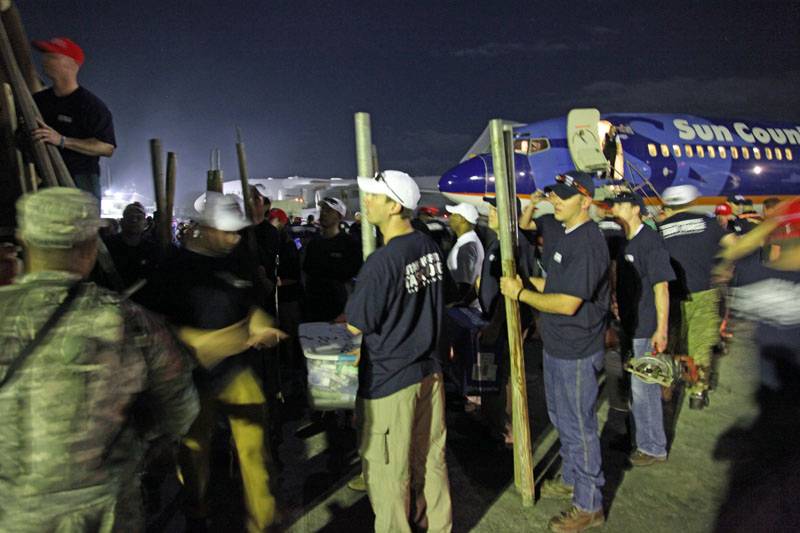
Within minutes of landing I knew that my life was changing in more ways than one. We were met on the tarmac by the U.S. Air Force and quickly handed off to the U.S. Army, who we came to rely upon for transportation. The next few weeks in Haiti gave me an experience most Americans will never know. I was personally protected and cared for by the U.S. Military. I came to rely on and love the military more than I ever knew possible. For most Americans our military is serving in far away lands. We do not see them in daily action. But our volunteers down there served side-by-side with these wonderful soldiers and came to respect them in a very new way.
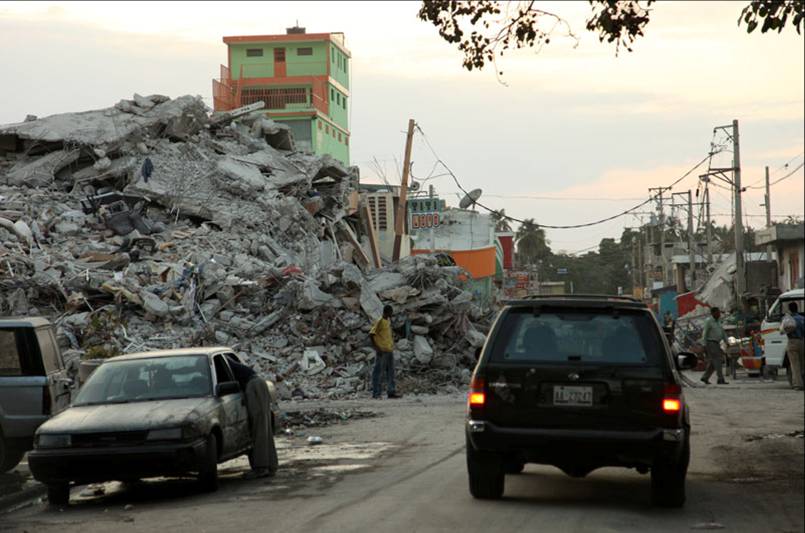
When morning came, what had been images of Haiti’s devastation suddenly became a reality. We met orphans, we held them, we hugged and kissed them, and we completely fell in love with them. We saw building after building just leveled to the ground. On my third day in-country I found myself staring at a strange street. I couldn’t figure out what seemed so different about it. It took me several minutes before I realized that it was the first – and only – street I saw in Port-au-Prince that didn’t have any visible damage. By then I had seen miles and miles of destruction and ruins. It was the undamaged street that was the anomaly, not the ruins. The media had not exaggerated the extent of the damage. It was all true.
Before we arrived in Haiti we had seen pictures of the tent cities. Like I said, I’m a skeptic when it comes to the media and was fairly confident that the images were probably blown out of proportion. Some of Port-au-Prince had to still be standing, right? It just wasn’t possible that an entire town had left their homes to go live in tents in the parks. I had a hard time believing that it was possible. It was the first of many things I would be wrong about.
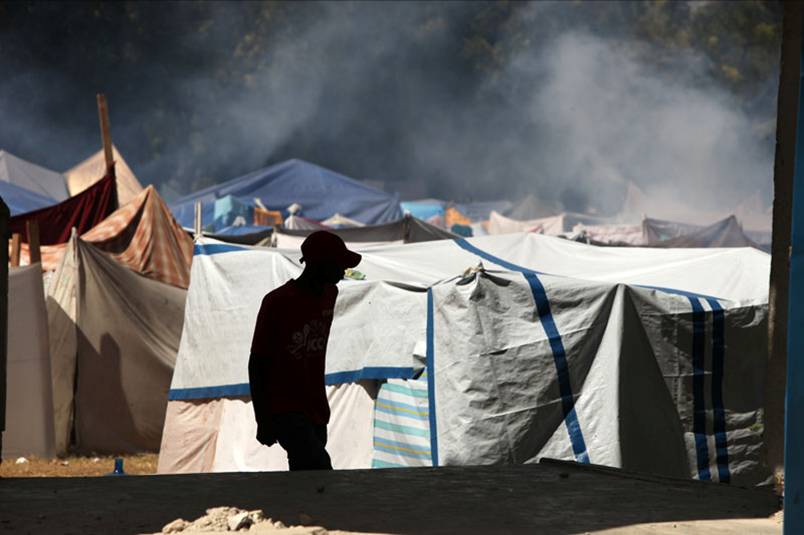
The tent cities were everywhere. Any possible open area of land- schoolyards, parks, backyards, fields, etc. If there was open space, there were tents on it. But they weren’t tents in the American sense of a tent- something with a zipper door, a tarp beneath, a fly on top. No, these tents were constructed out of sheets people were able to salvage from the rubble of their homes. The tent “poles” used to be brooms or mops, or sometimes just sticks. No one had “floors” to their tents. They were living on the dirt, sleeping on the ground.
Immediately it began to sink in that this wasn’t happening to just a few of the people- it was happening to everyone. Even the president of the country was living in a tent.
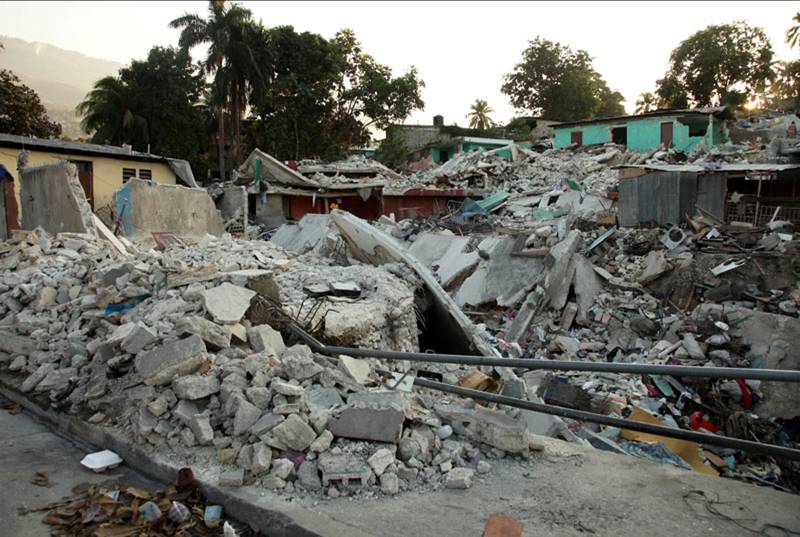
I think it is hard for Americans to understand how an entire country could fall like that. The earthquake didn’t just hurt the slums. It hurt everyone. Everyone lost everything. Even the wealthier people lost their homes and jobs. I remember driving past (riding in the back of an Army transport vehicle with an armed escort) one larger home. It was in one of the nicer sections of town. It looked like an American townhouse, except the top two floors were completely caved in. And down below there was a garage, completely crumpled, but I could still see the back end of a Mercedes and a Land Rover hanging out. After a moment I realized if there were two cars in the garage, it probably meant the family was still inside. And judging from the wreckage, they probably did not survive.
During my few weeks there I served in a hospital, at a clinic, and I spent a few days outside of Port-au-Prince in a town called Croix de Bouquets. Roughly translated it means “Woods Cross,” which had special meaning to our group of Utah based volunteers. Out in “Woods Cross” I was on a team of fifteen men, and me, the sole female. We worked out in the relentless sun each day to build a temporary shelter to help an orphanage called Foyer de Sion.
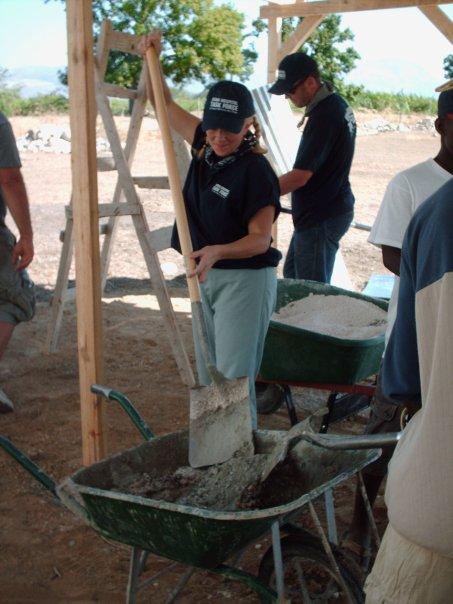
Back in the States I heard people asking why the Haitians weren’t doing more for themselves. Were they lazy and letting all the foreigners do the work? The answer is no! Haitians are not lazy! Out in Croix de Bouquets we worked hard. I admit, I didn’t have a whole lot to offer a construction crew at first. I was there as their first aid person, but I wasn’t going to just sit around. I got up and got to work, helping and learning as much as possible.
At first we had an audience of several Haitian men and boys, who came to see what we were doing. They kept their distance, but slowly got closer and closer to us. Then we learned the real trick to getting something done. Hand me, the girl, a hammer or a shovel, and three Haitian men will quickly step up, take it from her, and get the job done right. In the eight days I spent out there, I’m not sure I managed to complete one project alone. The Haitian men were more than happy to work- if someone would just give them a hammer.
(And they were more than happy to teach me how to mix concrete the Haiti way. I am now a pro at mixing concrete.)
Occasionally I still have flashbacks to my time there that make me want to sit down and cry.
There are still nights where I allow myself to sit in the dark and relive an entire memory. Sometimes it is holding a patient’s hand in a hospital. Sometimes it is watching the children play soccer in the field while we built the outdoor kitchen at the orphanage. Sometimes I just remember a simple detail, like the pink hardware store we passed in Croix de Bouquets. I can still remember the vivid colors, the paintings outside, and the beautiful tropical flowers hanging from the pots. It was one of the few beautiful and intact buildings I saw. I vividly dreamed about that crazy building. I remember feeling the little earthquake (aftershock) that last night we slept on the roof at the orphanage. Oh my gosh that scared me. If an earthquake so small scared me so bad, I can’t imagine how terrified you were, Haiti, when the big one hit, and the world came tumbling down.
I served in your hospitals, where I was amazed at the kindness and goodness of the Haitian people. I met mothers who bravely stayed by their babies’ bedsides as nurses and doctors who did not speak their language poked, prodded, and amputated. How scared those mothers must have been?! And yet, it wasn’t uncommon to walk past a tent where a family was huddled around a dying member, and hear them sing praises and hymns. I often wonder, would I have such faith?
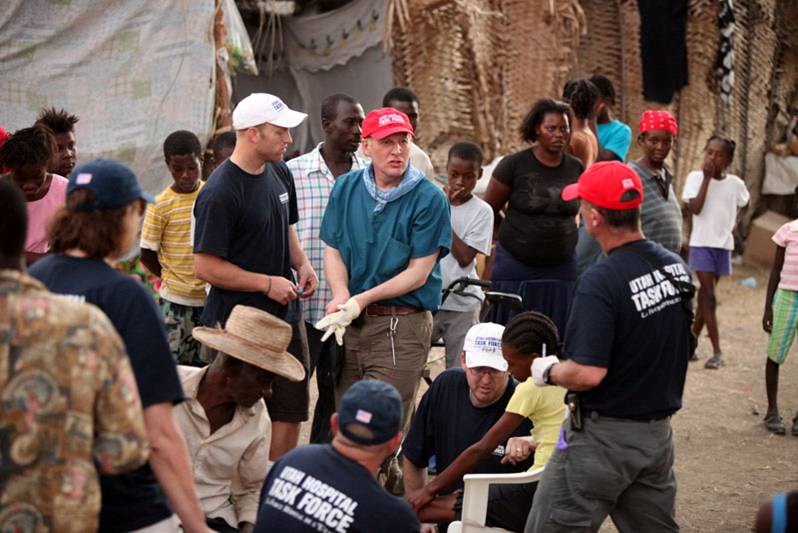
The doctors and nurses came from around the world to help. We worked side-by-side with volunteers from other faiths and countries. There was no discrimination, no biases in the hospital tents. Everyone was equal. And the U.S. Army 82nd Airborne Golf Company, out of Ft Bragg, NC, was there to protect us and keep the peace when necessary. When things got to be too much, and I just needed a break from all of the sickness and death, I would go down to the pediatrics tent, and see the children. They would sit there on their little hospital beds, in hot, stuffy tents with no fans or air conditioning, with their mothers beside them. These little darlings with their huge smiles and amputated limbs. I would go from bed to bed and give them hugs and smiles. Or teach them how to give high fives, or fist bumps. I’d get my daily dose of hope and happiness, and return to the med-surg ward, where life was coming to an end for all but one of my patients.
It has been a year now since you were hurt, Haiti. And in many ways you have made many improvements. But there is such a long ways to go. Many people have a hard time comprehending the enormity of the situation there. There are over one million people displaced and homeless, still living in dirt floor tents. The way I see it there is a three fold problem- short term needs, long term needs, and medical care.
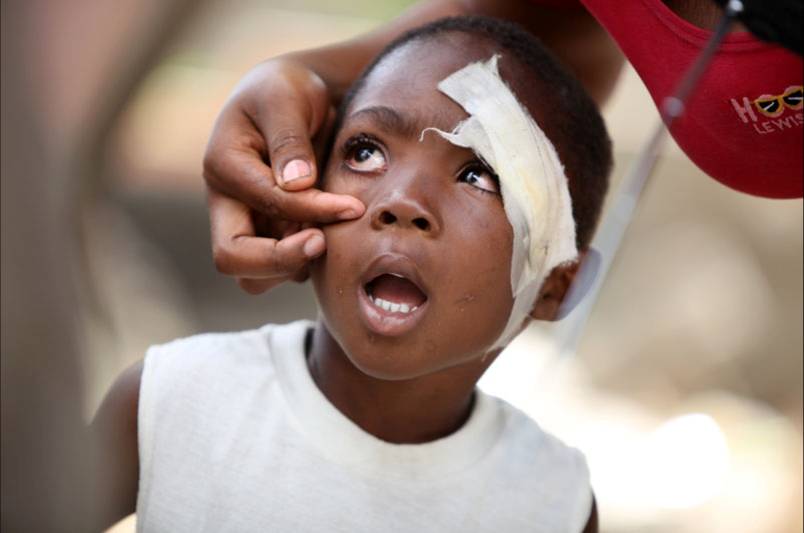
The short term needs include food, shelter, and medical care. The long term needs include jobs, infrastructure, and sustainability. And improved access to quality medical care is needed everywhere. I heard somewhere that nearly half the country was physically injured in the earthquake. There are thousands of physically disabled individuals now (living in tents). There needs to be planning to accommodate how all of these amputees and disabled individuals will access buildings and schools. How will they get the therapy they need? The need for aid in Haiti has not decreased. But I fear the interest and devotion to helping Haiti has decreased.
I think it is hard for the public at large to fully understand the situation in Haiti. They can’t understand how after one year there is still so much need. The best way I can explain it to others is to ask them to imagine what they would do if all in one day they lost their job, their house, all of their furniture, all of their food storage, their cars, and half of their family was killed? All you have is the clothes you are wearing. You run to the bank, hoping to get whatever cash you can, but you get there and the bank has been destroyed. You run to your nearest relative’s house and discover it has been destroyed too, and half of the family inside is missing or dead. How would you respond? How would you react? Where would you go next? How long would it be before you could get your life back together? If you were a father that had just lost his wife and one child, and all you had left was a young toddler with an amputated leg, what would you do next?
Haiti didn’t suffer a set back. Haiti suffered total devastation. They have to rise from the ashes- but first they have to clear millions of tons of ashes and rubble away. This isn’t the work of a few months or years. This will be the work and defining mark of an entire generation.
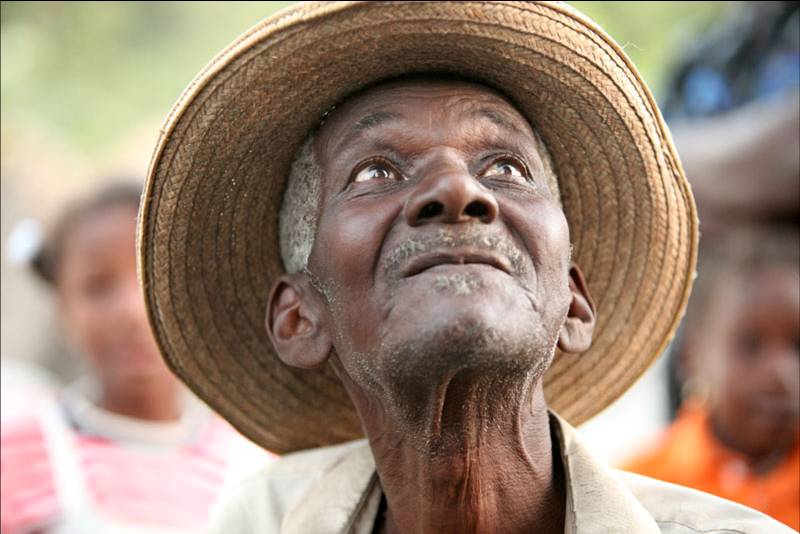
But Haiti, your people were an inspiration to me. How they could lose so much and yet still praise God every day was something to behold! I will never forget one specific man. I was with a few other volunteers, walking through a tent city near the destroyed National Palace. We needed to hitch a ride back to our camp. One of the most beat up, awful looking cars I have ever seen pulled up. It was at least twenty years old, was missing a back seat, lacked side windows, cracks across the windshield, and literally had springs sticking out of the passenger side seat.
When my companions wanted to jump in this car I thought they were crazy. But we managed to fit five of us, plus the driver, in a car with only two seats. We began talking to the man, and asked what happened to him during the earthquake. He told us he lost his wife and daughter, and his home. But then he praised God and said he was so thankful, because even though he lost his family, God had blessed him so much, and had left him this car. So now he had a job as a taxi driver and a place to sleep, when so many had nothing else.
As we reached our destination we reached to pay him. He insisted that he did not need our money. “God had sent us to help his people, and he had been sent to help us.” He couldn’t take our money. We quickly wadded up bills and threw them through the missing windows, and ran off. We couldn’t let him leave empty handed. What kind of faith, humility, and gratitude that took to see the world through that man’s eyes.
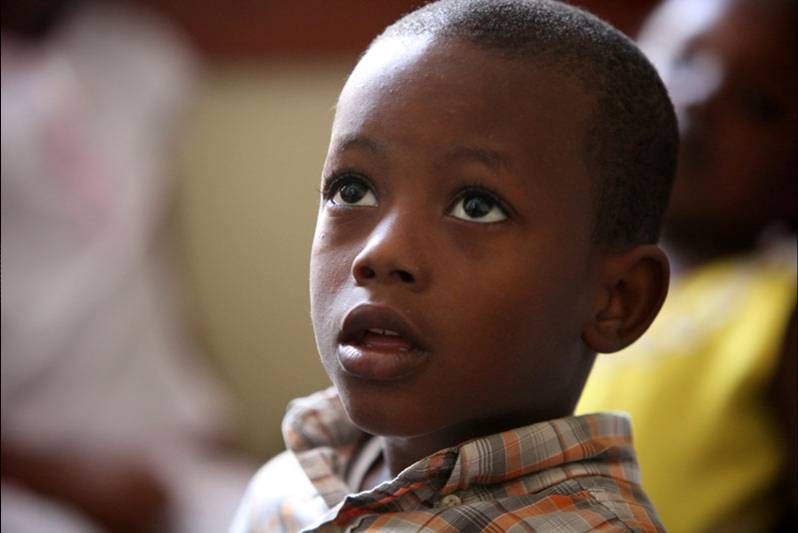
Here on the one year anniversary of that awful earthquake I find myself still wanting to return to your shores. I still want to give you so much more. There are days it all feels like a strange nightmare, a distant memory. I wonder if all that I saw was real? And then I wake up and realize, it was all real. This is your reality and you are still living in this nightmare.
Oh Haiti. I want to do so much more for you. If I could find a program that would send me back down there, I’d be there in a heart beat. Get well, Haiti. Get better. We’re here for you and want to help. We will never forget what we saw, and we won’t let the world forget about you either.