






Check Evil at the Door
By Steve Farrell
Liberty Letters, John Dickinson, Letter 16
There are blatant differences between the Founders of yesteryear, and the political pygmies that all too often masquerade as defenders of liberty and law today.
The former studied history, the classics, and original source documents – the latter, political propaganda, secondhand mush, and three-second sound bites. The former considered the moral absolutes of the Bible and Natural Law – the latter, the moral relativism of the Humanist and Communist Manifestos. The former defended a few fundamental God-given rights via limited government – the latter, the right to do almost anything and everything via big government.
Little surprise, then, that law and liberty as once understood are on the way out – moral anarchy and absolute forms of government, on the way in.
But the news is not all bad.
Witness the resurgence of genuine conservatism on the Internet, on talk radio, in the home school movement, in Christianity, and in the record voter turnout this last election, driven by pivotal state referendums against gay marriage, socialist handouts for illegals, and coast to coast worry over a presidential candidate with a dicey rsum.
A slumbering giant is awakening. But why did it take so long? The Founders would call our wait-for-a-crisis approach, foolish.
John Dickinson explains:
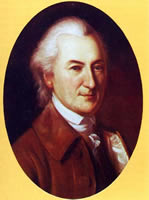 “Are [we] ignorant that usurpations, which might have been successfully opposed at first, acquire strength by continuance, and thus become irresistible?”
He was saying, ‘beware the power of precedent,’ and ‘an ounce of prevention is worth a pound of cure.’
It was 1767 common sense. Dickinson was writing his “Letters From A Pennsylvania Farmer,” discussing the need to hold the line against a second attempt of England to impose a tax on the colonies (the first was the Stamp Act), through duties on English imports, like paper.
Root principles were on the line.
The first, the rights of man, “particularly . that great one, the foundation of all the rest – that [our] property acquired with so much pain and hazard, should be disposed by none but [ourselves or our representatives].”
Property and consent – without these – men are “slaves,” even if the burden imposed is not yet felt.
And that was the case. Initially, this tax, like America’s first income tax in our day, was “gentle and kind.” But that wasn’t the point. “We have a statute, laid up for future use, like a sword in the scabbard”, he said. That was the point.
Next, the tax was the unjust sort that socialists impose today. The bill’s purpose was “to defray the expenses of defending, protecting, and securing his Majesty’s DOMINIONS in America.”
However, “His Majesty’s DOMINIONS,” noted Dickinson, “comprehended not only the British colonies, but also the conquered provinces of Canada and Florida, and the British garrisons of Nova Scotia. .
“What justice,” he asks, “is there in making us pay for ‘defending and securing’ THESE places? What benefit can WE, or have WE ever derived from them? None of them was conquered for US; nor will ‘be defended, protected or secured for US. .”
“They who feel the benefit, ought to feel the burden,” he concluded.
What’s wrong with that? He’s right.
Then there was the matter of propaganda and the gullible gulls. For the tax was not marketed as a tax, but a mere ‘regulation of trade.’
Dickinson dragged the fraud out into the light of day. “An act of parliament, commanding us to do a certain thing, if it has any validity, is a tax upon us for the expense that accrues in complying with it .”
Ever heard of hidden taxes? This was America’s first. A political trick. And political tricks are always dangerous.
“[N]ames [do] not change the nature of things. Indeed, we ought firmly to believe, what is an undoubted truth, confirmed by the unhappy experience of many states heretofore free, that UNLESS THE MOST WATCHFUL ATTENTION BE EXERTED, A NEW SERVITUDE MAY BE SUPPLIED UPON US, UNDER THE SANCTION OF USUAL AND RESPECTABLE TERMS.”
We need to call a spade a spade. And designs, designs
Which leads to Dickinson’s final point. Motives matter.
“Ought not the people . to watch? to observe facts? To search into causes? to investigate designs?”
Prime Minister Greenville revealed that England’s goal was “to bind the colonists in all things.” Tucker likewise advised the crown to subvert the colonists ability to “be supplied with all things from within themselves,” lest they get to thinking that they can “set up for themselves.”
Get real. Political motives ought never be blindly received as holy and pure. Men and nations do conspire. Political naivet is a threat to liberty.
Dickinson was right. Pay now or pay later. Which will it be?
Meridian Columnist Steve Farrell is associate professor of political economy at George Wythe College, press agent for Defend Marriage (a project of United Families International), a pundit with America’s News Page, NewsMax.com, and the author of the highly praised, inspirational novel, “Dark Rose” (available at amazon.com).
For you West Coast night owls, try and catch KDWN contributor Steve Farrell on Mark Edwards’ “Wake up America!” talk radio show on 50,000-Watt KDWN, 720 AM, 10 p.m. to midnight; or on the worldwide internet at AmericanVoiceRadio.com (preferred access at WakeUpAmericaFoundation.com)
2005 Meridian Magazine. All Rights Reserved.