









By Dr. Rick Hawks
Click to Order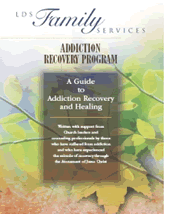 Preston, a recovering drug addict, said, “I was raised in the LDS Church, but at the age of 14 I started using drugs and alcohol. The decision to use turned into a 17-year addiction problem. Then, when I was 31 years old, I located an ARP (Alcohol Recovery Program) group in my area. The ARP meeting has helped me to stay clean for the past four years. It is a wonderful program! It provides an avenue for addicts to become clean and to get involved in the Church again.”
LDS Family Services sponsors Addiction Recovery Support meetings to assist individuals who desire freedom from addiction and a better life through gospel fellowship. ARP is a 12-step program adapted with permission from A.A. World Services, Inc., to include the Savior, Jesus Christ, as their higher power.
The program assists substance/pornography abusers, their families, and friends who desire a better life free of addictions.
Preston added, “The ARP program made me feel like the Church still cared for and loved me. And, that they wanted the ‘Lost Sheep to return to the fold.’ They weren’t judging me for my weaknesses and transgressions, but helping me to work the necessary steps to seek repentance.”
All meetings are ongoing, free, confidential, and last between 60 and 90 minutes. Anyone suffering from an addiction, or who would like to help someone else overcome a problem, can attend. Children can also be present if accompanied by an adult or guardian.
In the ARP meetings, experienced group leaders create a safe environment where participants can encourage one another and implement gospel principles in their efforts to recover and heal. The attendees support one another, strive to solve common problems, and share experiences of faith and hope in the Lord Jesus Christ. Missionaries preside over the meeting and give a short message and then a facilitator conducts the sharing portion of the meeting. Everything that is expressed in the room is kept confidential.
Those who attend have the option of sharing personal addiction stories, testimonies about how they have worked a particular step, etc., or they can choose not to share anything at all.
Another recovering addict explains, “If you were to hear some of the stories shared by those in attendance outside of the meeting, you would probably want to judge them. However, the Spirit is so incredibly strong at each meeting that no one even thinks about judging someone else. You just want to embrace them. It is amazing! You will not find such a spirit of unity anywhere, considering the circumstances.”
Former addict Preston, who is now a facilitator, related his experience in working with the people at the ARP meetings, “The camaraderie at the meeting is amazing. It is essentially a 12-week course, but people keep coming back because of the support they receive. I’ve created good, trusting friendships with the other addicts as well as with facilitators of the meetings.”
Sara, an attendee of an ARP group, says that the benefits of attending the group are phenomenal. She initially went to the meeting “for my husband’s problems.” It wasn’t an hour into the meeting that she realized how much the program could benefit her own life as well. “I have attended the ARP group for about a year; and by doing so, my understanding and testimony of the Savior’s Atonement has increased tremendously, I have developed higher self-esteem, and have made life-long friends,” she said.
Along with support from others, one will find help by using the new ARP guidebook. Written from the point of view of men and women who have suffered from various addictions and who have experienced recovery, the booklet is based on the Twelve Steps of Alcoholics Anonymous, which have been adapted into a framework of the doctrines, principles, and beliefs of The Church of Jesus Christ of Latter-day Saints. One recovering addict says, “I have shown the online version of the booklet to my friends and they all want a copy when it comes out in print; and not all of them are even LDS. It is such a good addiction recovery guide.”
Each of the twelve steps is presented in an easy-to-understand language and is divided into three sections:
- One or two pages explain the rationale for the Key Principle of each step. Honesty is the Key Principle for Step One.
- Two or three “Actions Steps” are presented and outlined for the addict. For Step One, Honesty, these action steps are “Become willing to abstain,” “Let go of pride and seek humility,” and “Admit the problem; seek help; attend meetings.”
- The third section of each of the 12 steps is the “Study and Understanding” portion. This section truly sets the book apart from others. Based on the principle that “writing is a powerful tool for recovery,” that it will give time to “reflect,” help “focus” thought to better “see and understand the issues, thoughts, and behaviors surrounding addiction,” this section contains anywhere from seven to twenty scriptures, statements from Church leaders, and questions for “prayerful study and writing.” Blank lines are provided after each question so that it becomes a personal journal providing a record of thought and a measurement of progress for the person using it.
One example of the “Study and Understanding” section from Step One is, “Write about ways you have lied and attempted to hide your addiction from yourself and others. How has this behavior caused “ugliness and chaos”? One group member shared, “If you truly work the questions, it is amazing how much insight you can gain into your personal life and that makes it easier to free yourself of addiction.”
The booklet’s introduction says that “addictions can include the use of substances such as tobacco, alcohol, coffee, tea, and drugs (both prescription and illegal), and behaviors such as gambling, codependency, viewing pornography, inappropriate sexual behavior, and disorders associated with eating.” The applications in the LDS Family Services Addiction Recovery Program have led and continue to lead many away from these devastating behaviors. Though the ARP meetings help you become closer to the Savior and help “free” you from addiction, they should not replace sacrament meeting attendance and regular visits with your bishop.
Finally, an Idaho group member articulates her ARP experience this way, “If you long to gain control of your life, rid yourself of bad habits, and learn how to use the Atonement in your daily life, then the ARP group meeting is a great place that can make this all possible.”
If you are interested in finding a program near you, go to the Provident Living website and click on one of the area/states listed. A PDF file will open in a new browser. You will see a list of addresses, phone numbers, and other important details that will enable you to find the program nearest you. You may want to contact the agency before attending to be sure meeting times or places have not changed.
If you do not find a meeting close to you and feel that there is a great need for an ARP group in your area, contact the LDS Family Services Agency nearest you. Ask to speak with the director and express an interest and need in beginning an ARP program. The director will evaluate the circumstances in the area and then request permission from LDS Headquarters in Salt Lake to instigate the new group.
The ARP booklet is available at the Mental Health Resource Foundation’s website.
Sponsored by: Mental Health Resource Foundation
“One of the world’s finest libraries of mental illness, addiction, and emotional resourcesfor Latter-day Saints and other religious denominations.”
2006 Meridian Magazine. All Rights Reserved.